
We need to expand our team of proofreaders as we aim to increase the rate of republication of Satsvarūpa Mahārāja’s books as well as new books that he writes.
This includes a need for fluent bilingual Spanish and English speakers to proofread Spanish translations (we currently have around 20 Spanish translations waiting to be proofread).
Anyone interested in this particular service should contact Manohara dāsa at [email protected]
If you would like to help, please contact Kṛṣṇa-bhajana dāsa at [email protected] or [email protected] and we will find you a service that utilizes your talents.
Remember that haiku? “Reposing on a desk/they invite me once again/my red japa beads.” That got published and a famous American haiku-ist called it “inviting.” Nowadays, they (beads) are hardly out of my hands. They are being used, worked, shiny, old reds. I use a glove so I don’t get a bleed, sore skin.
******
You a fireman?
You a Harvard student?
No, I is a chanter in
a Scottish stop, in
a “mark cottage” with friends
doing the best we can.
******
We were nonsenses in this lifetime and previous lives.
But we are devotees, pure spirit souls eternally. Don’t
eulogize maya more than Krsna.
Krsna is kind
to come in His holy name.
In His pastimes in
Kali-yuga, by Caitanya’s
grace. All hail Hare
Krsna, chant and chant—
it will work upon you.
******
We have 1) overall confidence and conviction that nama is working on us for our benefit and it is the best activity, but 2) I have a thorough “realization” that we don’t feel “anything” because of our solid block of nama-aparadhas. In this situation, we go on with it.
******
Get along, little doggie. This room is private. I am the first one up in the house. Light the candles. Go. The meter on the wall records the use of electricity by dials and by a circular thing with a marker on it. My japa motor runs like that too, recording the count. And does it record a cost I have to pay?
******
Hope to get through the day of sixty-four, but if I’m physically not able, I’ll have to accept that too. I’m here recording a desire to do it, at the start. In case you wonder why I don’t write more during the day, it’s a choice, either pen a few words or do more japa. I can’t seem to think it’s worth it to stop my habit to continue increasing the quota. I’ll be glad to tell in pen at least twice a day, here at the start and when I reach sixty-four and can say, “We did it.”
******
108 beads in a loop around his head. Merry, safe japa is the best way to go. We are on a week-long vrata and so far so good. We invite you to join us sometime. Seems a great way to associate and help others, get a secluded house and turn on some friends.
******
Waiting for lunch. I developed first stage of headache around 10. The twinge pain has gone down. I’m hopeful to continue after lunch and do the nineteen remaining rounds to reach sixty-four. Even if pain comes back, I can chant silently.
pp. 16-19
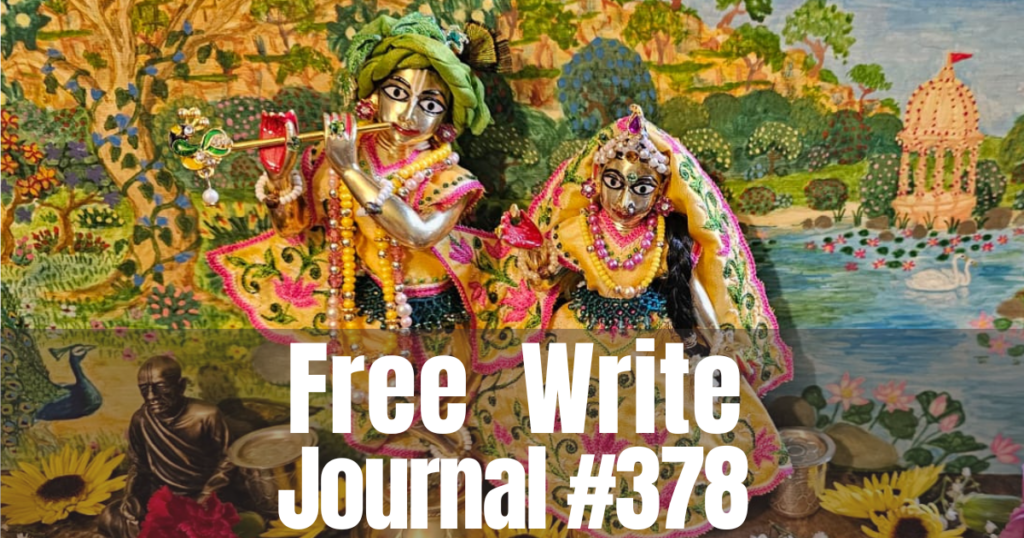
Pujari, it was nice swimming in the channel of puja. You don’t do it expertly, but I like it anyway. Don’t follow all the book rules. Pink shocking, or what do they call it? Bright pink and black and gold. I built up the dress, I mean I put on one piece after another…Pink plumes and peacock feather on His turban. Gold stick. And listening to the glories of the holy name. One might ask, “Siksastakam says chanting brings great bliss, is this against the principal of bhakti as free of motive?” The reply according to Bhaktivinoda Thakura is that the pleasure of the gopi manjaris is only in the pleasure of Radharani. So, we seek pleasure in that way. If you seek it for yourself that’s not pure, but go on chanting and you’ll reach the higher stage. Heard that as I washed Their bodies in warm water with a firm paper towel, and dried Them with a soft tissue.
By puja you are okay. I am writing this thinking the whole time in the back of my mind, “Can I grow pearls and smell flowers in Krishna’s service?” Can I hide in a crypt? Can I dance à la Wagner Hynes? Huh? Can I do this for Krishna?” I put it in the back of my mind and go on to pay attention to one thing at a time. The thing is to serve the Lord of the senses by dressing Him in dhoti first and then kurta, and then the top-piece or whatever it’s called…These things each day are for your service. Contemplate.
The pujari is in his notebook world. I saw the moon, I saw the mind’s eye. I saw what I wanted in my own eye. Hare Krishna antics believe as a sore response. Don’t make sense. When drawing, is it possible that a well-drawn picture can be Krishna conscious even if not with words or forms of the Lord? But why don’t you do it directly Krishna conscious? I can’t always come to that point – you feel pressure to do it expertly or the words don’t come spontaneously – I want to make an art from where I’m at, you understand? Yes, I think so. (EJW 30: Seeking the Easy Way Part One, pp. 192–93)
There was a time when we all had apples. We could write any words and be assured they connected to Krishna. We are always with Krishna but forgetful of it. Srila Prabhupada makes it sound easy. Just take what he says and don’t analyze it to death. Try to follow it with faith. Hare Krishna. I sent home for forty sets, and ten arrived. I wanted to go to Vrndavana and then Jagannatha Puri, where they all sell “Jagannatha tongues,” brittle and hard. You are assured on the beach of seeing the sky and the sea and thinking of Lord Caitanya’s air. But in Ireland I can go out.
I’d like to be a serious devotee who knows all the sastras and deep meanings and has vijnana. He just reaches into his deep realizations on all occasions and says the right thing. In line with Srila Prabhupada at all times. You can’t expect that. You are about to go onward in free-write where anything is allowed. The service will do you good, a pilot pen, a Sheaffer too. The accumulated wisdom. Getting up from bed, he can’t expand himself into nine or even two. He can’t hear purely the amorous pastimes of Krishna without blushing. Now, your love is for peace and quiet and production. You can’t solve a problem. Can, with your assistant, arrange how to break fast, how to store up prunes. You are a small timer and will have to say good-bye to all things in this life, they will be utterly forgotten as you transmigrate. Why don’t you (and the people of the world) take this seriously? Kirtaniya sada hari, keep Lord Hari’s names with you and you will be saved from plunged into the samsara ocean. (EJW 30: Seeking the Easy Way Part Two, pp. 26–27)
Deity is Krishna. Gave a photo to someone and she put it on her altar and said, “Dear Radha-Krishna, You can relieve him of headaches if you like.” Don’t bribe Him. Let Him play with Radha in mock serious tones of the pearls for each of the gopis and inscribing their name on it and sending it to them, to Radha-kunda where Radha is with Her gopis (sitting under an asoka tree in a grove). Happy walking and talking in Krishna consciousness. Yes, devastation has come even to holy lands. Krishna has a way of testing us. He’s taking us where He wants. I’m trying to write and save as much as I can.
Deity is not statue. Red turban, gold flute, red and gold today. Radha allowed me to dress Her, and Krishna stood firm. Necklaces, it’s all in the devotion. They need no ornaments from me but want to see what my heart is. How much am I willing to give and do? The mild summer day dawning and the birds chirping by the creek. I’m telling you, Radha and Krishna are not mere statues. Please Lord, be kind. He’s here in our home. The people may not see what I see. He’s in the core of the heart. Serve Him. Srila Prabhupada wanted us to spread the word. Bring Krishna consciousness to as many people as possible. Make hay while shines or even if it rains. (EJW 30: Seeking the Easy Way Part Two, pp. 75–76)
pp. 169-74
When my feet healed, I took a vacation at my parents’ summer home in Avalon, New Jersey. Not having learned my lesson, I tried LSD again. This trip featured many visions of a skull and crossbones. I also explored the realm beyond death by reading The Tibetan Book of the Dead. I do not recall where I obtained this book, but I was already browsing in that area. It had a fascinating picture in the front, of the author, W.Y. Evans-Wentz. The British university scholar was completely decked out like an Easterner and was posing with a Tibetan monk. He was smiling., One thought, “Look at that guy! He’s really living with them completely!” The epigraph page stated, “Sri Krishna’s Remembering,” and then, “Many lives, Arjuna, both you and I have lived, I remember them all, but thou dost not.” I thought, “Wow, that’s a really good epigraph. This epigraph proves the whole basis of The Tibetan Book of the Dead. That’s Krsna from the Bhagavad-gita.” In the Introduction, The Tibetan Book of the Dead states, “This is actually a handbook that has been used by Tibetans for many centuries for what to do at the time of death. They believe that the time of death is very crucial and determines where you go next, because we have many lives.” So people were supposed to intone mantras from this book and it would help them make the passage at death.
The first paragraph in the Preface went straight to my heart: That the living do come from the dead, as Socrates intuitively perceived as he was about to drink the hemlock and experience death. This treatise maintains, not in virtue of tradition or belief, but on the sound basis of the unequivocal testimony of yogins who claim to have died and re-entered the human womb consciously.
Yogis who remember dying and being born again—it blew my mind. More than abstract arguments, this blunt assertion convinced me that it could be done. The Preface went on to say that it was very important for Western humanity to learn how to die and transcend death. It was much more important than the exploration of outer space. It was, “humanity’s paramount problem, the problem of birth and death.” The preface stated that the book would teach scientific and yogic understanding of desirable and undesirable after death experience. “By right practice of the art of dying, death will then, indeed, have lost its sting and been swallowed up in victory.” The preface was stimulating. It readied me for an esoteric and serious treatise. But even before the book began, I found a motto which gave me more illumination than anything else in the book:
Shri Krishna’s remembering:
“Many lives, Arjuna, you and I have lived,
I remember them all, but thou dost not.”
(Bhagavad-gita, iv, v)
This was a reconfirmation of the statement that yogis could experience being born again, except now it was proved by Sri Krishna’s remembering. I did not exactly know who Sri Krishna was, except that He was one of the great Mystics and Authorities. He could directly experience living many lives, but others could not.
Several times more, the “Avatara Krsna” and the Bhagavad-gita were mentioned, along with the Buddha, as advocating the doctrine of pre-existence and rebirth. The edition I read contained a psychological commentary by Dr. C.G. Jung, geared to help Westerners understand Oriental teachings. Jung said that the peaceful and wrathful deities which meet the soul after death are “projections of the human psyche, an idea that seems all too obvious to the enlightened European. . . . But although the European can easily explain away these deities as projections, he would be quite incapable of positing them at the same time as real.” According to Jung, The Tibetan Book of the Dead should be seen both as metaphsyical fact and as stemming from human consciousness. It was a paradox, Jung said, and if one could not handle that, he should know that he was encumbered by Occidental prejudice.
Later, when I finally met His Divine Grace Srila Prabhupada, I was sufficiently influenced by The Tibetan Book of the Dead to think that A.C. Bhaktivedanta Swami would teach it as part of his syllabus. In my early misconceptions, I thought that Prabhupada was offering a spiritual version of an academic course on Eastern religions, and that we would study the books of many different cultures of the East. After attending Prabhupada’s lecture for a week or two, I asked one of his followers, Raymond, whether Swamiji was going to teach The Tibetan Book of the Dead after we completed our study of the Bhagavad-gita. Raymond smiled and said according to the Swami, the study of the Bhagavad-gita was sufficient in itself. Raymond explained that the Bhagavad-gita contained what was in all other scriptures, but gave new information. I was embarrassed at my foolish question, and decided to take the Bhagavad-gita more seriously.
One of the great boons of studying the Bhagavad-gita with Srila Prabhupada was that there was no frustrating hovering between the real and the unreal. Prabhupada made it clear that there was a spiritual reality as fully personal as the material worlds. When Sri Krsna discussed the individual atma as a person, and described the transmigration of the self and the Supersoul, these were not projections of human unconsciousness, but absolute truths. They were not paradoxes, but could be revealed to serious students when their minds and senses became purified. As Sri Krsna said, “To those who are con¬stantly devoted to serving Me with love, I give the understanding by which they can come to Me” (Bg. 10.10).
Prabhupada also defined the highest perfection in a way that satisfied me more than anything I had heard. All the Eastern teachings I had encountered, along with their commentators, spoke of impersonal merging as the highest state. Anything personal was a vestige of illusion, and had to be given up according to the texts I had read. But exactly what happened after that, in nirvana or white-light samadhi, was nothing that anyone was supposed to really comprehend. It was emancipation and it was beyond all matter, but what was it? The words of the Buddha quoted in the Tibetan Book of the Dead went in the right direction, but deliberately stopped short of further information.
pp. 50-56
In the question and answer session, the visiting sannyasi picked up each slip of paper and read it. Without his eyeglasses, he could see only a smudge of lines. If he were an airline pilot, he wouldn’t be able to read any gauges. Soon you have to retire if you get something like a brain cyst, as one man here has, who is not even old. Life is no joke. One thinks,
“If that happens to me, that I must drop all other activities and be consumed by disease or face the end quickly by another way, I hope I can ‘retire’ in the sannyasa sense of the word and simply chant like Bhaktivinoda Thakura in his very last days when he stopped outer communication and entered samadhi. But be realistic, how can you expect the same last stage as a great saint?”
So until then, be busy, friends, with your good work. And be sure your work is connected to Krsna and guru and is the best effort.
The visiting sannyasi answered a question, “How can we keep friendships amid quarrels and problems?” He replied that we should consider the devotee as a person in a solitary room early in the morning. He does his sadhana for a few hours and then opens the door and faces the world. He has gained inner strength to face the problems. He is an atmarama (to some degree) and can be charitable. Such persons, who first perform their own sadhana, can then lead others and communicate or absorb the shocks of life together.
Someone asked about prayer. The sannyasi wished he had a life of prayer, but he answered anyway from the general tradition. He said, “Chanting is the best prayer, two and a half hours a day at least.”
Someone asked, “In the Bhagavad-gita, Krsna says His devotee will never perish. What does this mean exactly?” The sannyasi said it doesn’t mean that a devotee never loses a battle to the demons. But finally, the demon dies and the devotee dies. The demon is then vanquished, and the devotee’s good acts make him triumph over death. Srila Prabhupada once compared ISKCON devotees to Jatayu, who was defeated and killed by Ravana, but who was brought back to Godhead by Lord Rama.
During Friday night, while the sannyasi tried to sleep, he sometimes woke and heard noises. He heard voices outside on the road and passing cars. He heard a door creaking open and shut. He heard someone clear his throat and he knew that was his assistant, Narahari, returned from India. Finally, the visiting sannyasi fell into desired sleep. He thought, “I hope I’m well enough to go on harinama Saturday night, because they are expecting me to go.”
The sannyasi was up early as usual, just like the man in the example he gave in his answer last night, the man who stays alone in his room to practice pre-mangala-arati sadhana. At 3:30 A.M., Narahari knocked on the door and entered. The sannyasi was glad to see his friend.
“This afternoon, we are all going on harinama in Verona. They are even bringing an ox and a cart. So recover and come with us. Now you should shave and bathe and get some extra rest.”
The author is sitting with Narahari. They speak briefly regarding the sannyasi who is their mutual friend. After a while, the author changes the subject. He asks, “Do you know any songs about Mary?”
Pausing a moment, Narahari began singing “The Rose of Tralee.” He was suddenly filled with emotion, such that he had to pause for split seconds a few times in the midst of the ballad’s lines—or perhaps he paused from an emotion of effort to reach the right notes. He sang a bright Irish tenor:
The pale moon was rising above the green mountains
The sun was declining beneath the blue sea
When I strayed with my love
Near the pure crystal fountain
That stands in the beautiful vale of Tralee.
She was lovely and fair,
like the rose in the summer
Yet it was not her beauty alone that won me.
Oh no, ’twas the truth in her eyes ever shining
That made me love Mary, the rose of Tralee.
The visiting sannyasi was in the next room and overheard the singing. He soon began humming to himself, “Yeah, ’twas the truth in her eyes ever shining/That made me love Mary, the rose of Tra-lee. That made me love Krsna, the rose of Tralee, that made me love Radha, the rose of Tralee, that made me love Lalita, the rose of Tralee, that made me love Rupa- and Rati-manjaris, the rose of Tralee, ’twas the truth in their eyes ever shining that made me love the devotees, the rose of Tralee …”
Today’s verse is trnad api sunicena. This is discussed in the last chapter of Caitanya-caritamita. Lord Caitanya says, “I will now tell the easiest way to attain the ultimate goal, krsna-prema.” What is that? It is trnad api sunicena.”
The sannyasi was a little behind in his schedule and had no time to write careful Post-its for his lecture. He would have to count on what he already knew theoretically. Be smaller than a blade of grass and more tolerant than a tree if you want to chant the Hare Krsna mantra. Tolerate people’s criticisms of you the way the tree tolerates people’s cutting it and the tree, when thirsty, never even asks anyone for water. Follow that example and don’t mind what people do to you. You can defend yourself if necessary, but know that this is a world where people always criticize. Go on chanting with dependence on the holy name, as did Haridasa Thakura. Oh, but we can’t do this unless we have a higher taste? No, that is not true. Even a little “lower taste” is sublime. It is not actually lower, it is a drop of the nectar from above, from the lotus feet of Mahaprabhu. Accept it gratefully. In such a state of mind, one can chant the holy name of the Lord constantly.
pp. 25-30
A story should serious and like my Sheaffer pen, “no nonsense.” It should not be a worried, chewed-at cuticle. It should definitely be from the heart and not some chic, artsy teaser. Mean it and say it plain. But as for excesses, what can I say? They do occur. Even a quiet raconteur chortles sometimes, and some storytellers spit out chewing tobacco. Myself, I am quite a laughable object nowadays, with my teeth out and no replacements, so I seem to be a new, old fellow whose nose hooks down more and who smiles like old ladies in Vrndavana who are not about to get dentures and fake the world. So I may laugh.
But doesn’t it matter if you have a good yarn to tell, like Marlow, the storyteller in Conrad’s Heart of Darkness? Remember? The characters who gathered to hear the story were carefully chosen—adventurers, or maybe a businessman too—a kind of “old boy’s club” with no ladies. They sat arond a table with a bottle of liquor and smokes, a candle burning down while Marlow led them, each paragraph beginning with quote marks, into the heart of darkness.
Literature.
I’m writing this in the big room. This is the story. I’ve discovered it. The table has three sections, the kind you can spread out if you have a big family or guests. Like the Guarinos when they got together, the table covered with white cloth and the elders saying, “Mangia! Mangia!” On the table is tiffinware, the stainless steel Indian plates and little cups, a water bottle, farina in a bag, cardamom powder . . . the stainless dish rattles when I move my hand to write.
The room is quiet like a library. M. is reading KRSNA book. He told me he is reading of Krsna after He leaves Vrndavana. He very much likes Krsna’s dealings with Rukmini. He perked my interest. It’s a treat awaiting me, but for now I’ll stick with Lord Siva and Daksa and Lord Visnu, and then Dhruva and Prthu Maharaja in the Fourth Canto. I hope when I get to KRSNA book again I’ll be chastened and ready for it, not thinking it’s a kiddie’s video of “The Terrible Agha Demon.”
He told me his heart went out to Rukmini, who wanted Krsna to be her husband. But her brother wanted her to marry Sisupala. She went to Durga’s temple . . . then when she was Krsna’s wife, He teased her one day saying that He was unqualified . . . M. liked it all.
“Yeah,” I said, “I wrote about that in Chota’s Way and quoted excerpts, the speech where Rukmini reverses Krsna’s self-criticism. ‘You say that only beggars are Your devotees, but who are those beggars? They are the topmost transcendentalists like Narada, who have given up all material activities and who wander on the earth to teach Krsna consciousness.’”
The main thing is don’t grind an axe. Then it’s a story. And if your hand twitches, put it in. But dont reach too far for an effect. Don’t stoop too low, and yet . . . it’s all instinct, and it’s parampara.
Today is Ekadasi. I drank “only” one and a half glasses of pineapple juice for breakfast and nothing else.Then for lunch no sabji, nothing except a tomato-kind of spicy soup. The idea is to partially fast and allow air to pass in the stomach; you get relief. But I took two and half small metal bowls of the soup—and I’ve got indigestion. My stomach is churning as if I had over-indulged in a big meal. I don’t get this when I eat heartily, two bowls of dal, six capatis, rice, sabji, sweets . . . but today I get it. It’s ironic, but I don’t appreciate the humor of the situation. I took Tums, and I may take more.
All this is happening in the big room, which is like a public library except no kids are going to barge in here barely restrained by the librarians or single men browsing and a good-looking girl looking for Emerson or Thoreau. No noise, no library like that.
Maybe my story is not in this room. I have my back turned to the room. The story could be in my chest, in my boyhood, in my wrist (which I noticed while writing when I was on LSD). In such madness.
This story could be the only story I know worth telling—that I am saved now from madness and whatever may happen from adhibhautika enemies. I can turn to the holy name. I am trying to say that.
I’m a boy after school hours in a library forgetting himself, not writing his homework because he already did that. I am my Uncle Jim, gritting his teeth, and plotting to break a girl’s heart, but I know nothing about it because I’m too young. All I know is that Uncle Jim and I share the same room, and when he comes home late at night he wakes me up while dropping coins into his glass savings jar. I complain to my father about it, who talks to his younger brother Jim and eventally Jim moves out.
Two oak trees on either side of a wandering cement path leading to our front door (Great Kills, Staten Island, 1950) like the opening of a Looney Tunes full-color cartoon.
All these things in the past. Do sadhus of India know with what we have to contend? Srila Prabhupada knew. I am a police sergeant (in the library) studying for an exam. He has to know law and guns and handcuffs. I’m a professor escaping the grind, whose intelligence is stolen by maya and Darwin. I’m a mayor. A footloose—reaching out as far as I dare. The apostate cultist who skipped college goes back to read Walt Whitman and is thrilled by his cosmic “I-ness,” and he believes it. Sucker. But here I am employing that same lying technique from Song of Myself—I am a professor, a housewife, whereas I am not actually those brahmas. God is all, in all, knows all lives. But I or Whitman know barely one jiva and the rest is fiction, puerile fiction.
So I sit at this desk which is filled with jars and herbal tea bags with labels in Italian and a blender and a plate for Srila Prabhupada, a bottle of mustard oil, and my own books, and the story runs on like the fridge motor. All this time Madhu I presume is reading the KRSNA book. But I won’t berate myself. I have read two and half hours today in Prabhupada’s books and will read more. This is my recreation, my story.
pp. 117-121
I am the son of a fireman. He graduated to become a battalion captain in the New York Fire Department. That was a good achievement for him.
He wasn’t proud of me. He disowned me. He once asked me when I was about 20 years old, what I wanted to do with my life. I told him I wanted to be a college professor. He said to me, “That’s the end of the line.” By that remark he meant that a college professor would be a low achievement. He meant that’s the last thing you should try to become. I was disappointed that he said that, because I thought being a college professor was pretty good.
But I am digressing. What I really want to be talking about is God, Kṛṣṇa. Kṛṣṇa is the Supreme Personality of Godhead. If I could become His pure devotee, I’d have achieved the highest goal. Anything other than words and achievements for Kṛṣṇa is useless.
I want to be a devotee of Rādhā and Kṛṣṇa.
I believe thoroughly that Kṛṣṇa is God and that Rādhārāṇī is His consort.
I believe that my spiritual master, His Divine Grace A. C. Bhaktivedanta Swami Prabhupāda, is a pure devotee of God, and I am most, most fortunate to have him as my spiritual master. He never disowned me. He never said I was wrong to practice Kṛṣṇa consciousness. Of course, I wasn’t the greatest devotee of the Lord. I made some mistakes, but I know he forgives me because he is so merciful. This is a piece about Prabhupāda.
Here is another piece about Śrīla Prabhupāda.
He is putting me through a test at this time of my life, in my 80s. I am getting frequent headaches, and they pain me, and they hamper my attempt at active service for my Lordship.
If I pray to the Lord, it should not be to ask to get physically well.
I should pray to Him to glorify His holy names.
And I should pray to Him to keep me on the right track.
I need more strength to chant the Hare Kṛṣṇa mantra:
Hare Kṛṣṇa Hare Kṛṣṇa Kṛṣṇa Kṛṣṇa Hare Hare
Hare Rāma Hare Rāma Rāma Rāma Hare Hare
I am using a Dictaphone to make this prayer to Kṛṣṇa, but I have been chanting it seems for a few minutes and there are no number increases on the Dictaphone. It should have a higher number now than one, but it’s at number one, and I’ve been chanting for quite a while. I hope that it will work right, and that God will receive this poem, even though the Dictaphone is moving very, very slow. I want it to go faster, and I want to preserve the words. I want to bind them in a book with my editor and I want other people to read them and benefit by them. Why don’t the numbers go up?
But if I am chanting sincerely then the Lord will let them go up, up to Him. It must be heart to heart. The machines don’t matter; it’s the prayer from the heart. I wrote a little book called Entering the Life of Prayer. I became criticized for that by some because it was a Kṛṣṇa conscious prayer book thoroughly, but it had quite a bit of influence of Christian saints, so my fellow Krishnaites didn’t like that. But now my Krishnaites like that prayer book—Entering the Life of Prayer.
On I go, up the mountain, chanting the names of my Lord. I pushed another button, and finally the Dictaphone went up to two. My headache is also climbing—it went up to two. I must keep up these practices sincerely so that God will recognize me, and my prayers will reach Him. There is nothing more authentic than prayer from the heart. Please Kṛṣṇa, accept me, please take my prayers as authentic. I love you. I love Śrīla Prabhupāda. I love those sincere like-minded devotees of mine. May I go on praying to them.
I have been praying for a while, and we are only at number 2. The headache is rising too. I think I’ll just have to quit in a few moments, and call on the walkie-talkie machine to my Godbrother and ask him to carry me into bed. I have Parkinson’s disease and I can’t walk by myself. He will have to hold me with my arms around his shoulders and he will take me into bed.
O Lord, O pure devotees of the Lord, O pure energy of the Lord, Śrīmatī Rādhārāṇī, help my numbers rise so that I can feel that I am actually accomplishing prayer on my Dictaphone.
Lord, You believe me, and You accept my love, so even if it isn’t moving so quickly, I will go to bed soon and trust that the numbers are somehow registering with the Lord Himself and with my beloved spiritual master.
It has been said about gurus—and it applies to Śrīla Prabhupāda—that he is as hard as a thunderbolt and as soft as a rose. Prabhupāda has treated me this way, mostly like a rose. But I just wish the numbers would rise on this machine.
By using it in our ‘forced’ method, I have come up to four on the machine, but that doesn’t seem natural.
Oh, to heck with all these mechanics! I am praying from the heart right now, and if I keep it up, the numbers will increase. And if they don’t increase, I’ll chalk it up to the darned mechanics. I will pray, and I will pray, and whether the numbers go up or not, I will know that He is hearing me and accepting my prayers.
Now let me stop for a while and go to bed. I trust I will get ‘credit’ for this attempt I am making in the last quarter of an hour before 6 P.M:
kṛṣṇa! kṛṣṇa! kṛṣṇa! kṛṣṇa! kṛṣṇa! kṛṣṇa! kṛṣṇa! he
kṛṣṇa! kṛṣṇa! kṛṣṇa! kṛṣṇa! kṛṣṇa! kṛṣṇa! kṛṣṇa! he
kṛṣṇa! kṛṣṇa! kṛṣṇa! kṛṣṇa! kṛṣṇa! kṛṣṇa! rakṣa mām
kṛṣṇa! kṛṣṇa! kṛṣṇa! kṛṣṇa! kṛṣṇa! kṛṣṇa! pāhi mām
rāma! rāghava! rāma! rāghava! rāma! rāghava! rakṣa mām
kṛṣṇa! keśava! kṛṣṇa! keśava! kṛṣṇa! keśava! pāhi māmO Lord Kṛṣṇa, please protect Me and maintain Me. O Lord Rāma, descendant of King Raghu, please protect Me. O Kṛṣṇa, O Keśava, killer of the Keśī demon, please maintain Me.
—Caitanya Mahāprabhu, Cc Madhya 7.96
And I will continue chanting sixteen rounds again, just like I promised I would to Prabhupāda—it must be over 50 years ago. Pray to God! Pray to God! Serve Him, be active, never give up. As Gopala Kṛṣṇa Mahārāja has passed away, and as Jayapatākā Mahārāja is about to pass away, so I am about to pass away. But I pray that I may finish one more book, especially this The Writer of Pieces.
pp. 210-14
Meetings each day. The little knot of a twinge is always ready to go off behind the right eye. Cat-and-mouse game. The editor is taking out references to my illness in a book I wrote because people won’t be interested in my condition. They want to hear the notes I kept while reading Caitanya-caritamrta, but what about the human element, that I struggled? Aches and pains don’t belong in a book.
I asked Bhaktisiddhanta Prabhu where he and his artists get there ideas. He said they paint out of their own heads and hearts; they don’t use models. And I presume they don’t study western artists. He did mention Rodin in our conversation.
Today I was properly suited up, no big western coat, but a chadar over my sweatshirt, and I was carrying a danda. I met the old devotee who gives out the Tulasi leaves and caranamrta in our temple, who has been here for years. We made obeisances to each other and then I embraced him. One of his legs is a little crooked, and he walks with a stiff gait. We didn’t exchange any words, just that greeting. The stone floors are cold at this time of the year. I’m still not looking with devotion at the arca-vigraha at the main mangala-arati, but the Prabhupada murti in the Samadhi Mandir evokes a presence I cannot ignore. I like the way he looks so somber, almost gaunt, with his long face, warm chadar, knit cap and boney wrinkled hands.
Standing in the ranks, everyone bundled in sweaters, chadars, jackets. I timed my participation carefully so that I could make a quick exit to the temple room. I wanted to be there before they blew the conches.
In Vrndavana, trees on Bhaktivedanta Marg are flourishing. ”Jaya Radhe” painted on each of them. The new tamala tree in the Krishna-Balarama courtyard is also growing nicely. Gurukula kids wear sleeveless maroon sweaters these days, yellow dhotis–still distinctive. The kids are mostly brown colored, although some are white from Europe and America.
I saw hogs and monkeys as I walked by. I’m the servant of my master, ISKCON’s Founder-Acarya.
Vrnda is Tulasi, is favorite, is
lore
Radha is yore
and new always
but not allowed to speak of Her
unless you are pure.
She is Bhakti-mata.
Follow Prabhupada even when
you are dull, dogmatic, blind,
eye sore, unclean –
clean up this place, this heart!
Clean up crude oil from Yamuna
and all will be well – will you die entranced?
You’ll die.
It will be a rainy sad day
sun will shine despite your
death and new baby monkeys will
frolic and pick lice
and pilgrims will go to temples as usual
while British Airways will run on time.
into the sea,
into the Yamuna, ashes.
Don’t bury me on a lone prairie
as if I was a maha-bhag.
After Sivarama Swami finished giving the class, I hesitated and almost left without greeting him. Then I turned and we embraced and talked for about three minutes. We were heading out the door and he said, ”So now you’re going back upstairs?” I said, ”Yes.” He was gently letting me return to my reclusive situation. I felt a tinge of regret as I left. I suppose my regret is expressed by the part of me that would like to be more social. Or perhaps I don’t like to be seen as such a weak person who always has to “go back upstairs”. But I can’t have everything. If I have chosen loneliness/aloneness, that’s not so bad, if only I can make something out of it.
I mentioned that I attended Sivarama Swami’s class. Sometimes I did not attend the class. I was always afraid of getting a headache. I felt the institutional pressure that a sannyasi is supposed to attend the full morning program, and yet I knew that that obligation really wasn’t necessary and that many sannyasis didn’t attend the full program. But I often went to the class and sat through it although it was demanding on me in terms of psychological pressure and possible headaches. When a “big” devotee was giving the class I always tried to attend.
As I gave myself permission to write, I also gave myself permission not to attend the morning program. I was one of the first senior devotees to break down in health and so I allowed myself to not attend the morning program. It’s easier to do that in Vrndavana if you’re not living in the temple, in the guesthouse but if you’re living outside. Now in Vrndavana it has become acceptable to live outside the temple and not to attend the morning programs. It’s done by many sannyasis. The last time I visited Mayapura I only attended one mangala-aratika in the two weeks we were there and I only visited the temple once in the afternoon and saw the Deities. But I felt guilty and bad about it at the same time and it makes me now want to go there.
Because it’s so much acceptable now that a devotee doesn’t have to attend the morning programs, the pressure doesn’t really come from the institution. But it comes from within myself. Prabhupada wanted us to attend the morning program. It is still an unresolvable issue in ISKCON. Some devotees don’t like it that senior devotees and sannyasis don’t attend the morning programs. But the sannyasis don’t go, and that’s it, as far as they are concerned. In Vrndavana, sannyasis like to go and stay at the Govardhana Palace instead of the Krishna-Balarama Mandir, and they have their own programs there of reading together and doing separate bhajana in the morning. The last time I went to Vrndavana I stayed in a room in a house belonging to the sannyasis and I rented a room there. I didn’t leave the room much at all. I stayed there and chanted extra and wrote a journal. I got sick several times and that was part of the reason I just stayed in my place. But aside from that I had no desire to go to the morning programs and I took the privilege of knowing that it wasn’t required of me. And I was saving my energy for and evening class that I gave.
One reason this topic remains an issue is that the hard-core devotees who attend Prabhupada’s morning program don’t accept the validity of devotees doing individual bhajana, Deity worship, extra japa, early morning study, writing etc. But the devotees who do these separate private bhajanas see this as valid and as advanced.
pp. 71-77
Although the higher stages are
beyond my realization, I believe
in them with faith. To discuss
them from the books
is to know the truth.
Also, even in the beginning
there are symptoms
and real-life accounts.
Thus I can complete the course
I have here outlined
and point to the highest goal.
The next is ruci, and then bhava-
taste, attachment, and love.
Even to survive,
there must be higher advancement.
Restraining the senses
cannot be done
by artificial imposition.
If a doctor tells the patient
not to eat,
the patient still retains his desire.
When a transcendentalist
restricts himself,
it doesn’t diminish his desire
for material things
until he experiences
a higher taste.
By the mercy of Lord Caitanya
the taste is given freely
especially in this fallen age
by chanting Hare Krsna.
And there is no food as sublime
as Krsna prasadam,
and only a blind fool
can fail to see
the superior feelings
among the devotees.
And so he gets a higher taste
to chant and hear and be with Vaisnavas.
One drop of that genuine taste
in Krsna consciousness
can raise him above
the whole ocean of material desires,
so that even if he tries
he cannot leave Krsna.
Bhakti has become
like drinking hot molasses:
it’s so nice and sweet
he cannot stop,
although he complains that it’s too hot.
Krsna has even warned
if you still want the taste
of laughing with family and friends
in material life,
then don’t look at Govinda
standing in the moonlight:
He will steal away your heart
and you will never go back.
For even the glimmer of ruci
can conquer the attraction
of 33 million demigods.
Maharaja Pariksit
was sitting on the bank of the Ganges
for seven continuous days
without food or drink
hearing Srimad-Bhagavatam
from Sukadeva Gosvami.
I was not there,
and I do not realize it fully,
and I cannot do what he did,
but I love to hear about him;
until the end of my days
I will go on hearing daily,
nityam bhagavata-sevaya,
what Pariksit asked Sukadeva
and what Sukadeva replied.
This is also a kind of taste,
a small taste,
by which I can rise beyond
all other literature.
At least I know the secret;
only the Bhagavatam can satisfy
and take me back to Godhead.
I kick away all speculation.
Prabhupada says
you must have bhava,
feeling and love,
to carry on the worship
of the Deity in the temple.
Without bhava you will resent it:
“Our guru has given us a burden.”
You will think Him a statue
and offer Him dead flowers,
thinking it doesn’t matter
since He is only stone.
Without bhava,
the temple will close
like old temples in India
and cathedrals of Europe,
empty museums,
with no bhava.
So we must go to the higher stages
by regulated practice
and by crying out our heart’s desire
in intense longing.
When will the day come
when my offenses ceasing
taste for the name increasing
I can chant the holy name in ecstasy?
When will the day come
when I can relish the books of the Gosvamis
and offer my respects
to every Vaisnava
and every living entity
by preaching krsna-prema?
To reach this stage
I can only cry
and break my head
against the rock.
With hope against hope,
somehow or other,
I must persist
on the order of my guru.
Worse rascals than I
have been raised to love of God.
I am insignificant
and cannot claim
to be The Worst rascal.
Even I can be uplifted;
ruci and bhava are possible
even for you and me.
It takes work,
and that work should not be resented.
It is just:
to the bold goes the prize.
Deserve and then desire. If you
take to it cheaply you will only
imitate pure love.
Let us not forget
what we were.
We have been saved from the pit of snakes.
For countless births we have been wrong,
only recently taken this song
of Hare Krsna mantra.
Let us not forget
what we did.
We were sinners long
before we took to this sacred, healthy life.
Let us not forget
as Prabhupada wrote to his Guru Maharaja:
“Personally I have no hope
for any direct service
for the coming crores of births
of the sojourn of my life,
but I am confident that some day or other
I shall be delivered
from this mire of delusion
in which I am at present
so deeply sunk.
With all my earnestness
I pray at the lotus feet
of my divine master
to allow me to suffer the lot
for which I am destined to suffer
due to my past misdoings.
But let me have this power
of recollection:
that I am nothing but a tiny servant
of the almighty absolute Godhead
realized with the unflinching mercy
of my divine master.
Let me therefore bow down at his lotus feet
with all the humility at my command.”
Viraha Bhavan Journal (2017–2018) was written by Satsvarūpa Mahārāja following a brief hiatus in writing activity, and was originally intended to be volume 1 in a series of published journals. However, following its completion and publication, Mahārāja again stopped writing books, subsequently focusing only on what became his current online journal, which began in August of 2018.
At first, I took it hard that I would have to live surrounded by the firemen, and without my own solitude. After all, for decades I had lived in my own house with my own books and my own friends. I was also now a crippled person who couldn’t walk, living among men who did active duties. But when Baladeva explained it to me, how it was not so bad living continually with other firemen and living in the firehouse with its limited facilities, I came to partially accept it and to accept the other men. I came to accept my new situation. I would live continually in the firehouse and mostly not go outside. I would not lead such a solitary life but associate with the other firemen.
Let me write sweet prose.
Let me write not for my own benefit
but for the pleasure of Their Lordships.
Let me please Kṛṣṇa,
that’s my only wish.
May Kṛṣṇa be pleased with me,
that’s my only hope and desire.
May Kṛṣṇa give me His blessings:
Kṛṣṇa Kṛṣṇa Kṛṣṇa Kṛṣṇa Kṛṣṇa he
Rāma Rāghava Rāma Rāghava
Rāma Rāghava rakṣa mām.
You mentioned that your pathway has become filled with stumbling blocks, but there are no stumbling blocks. I can kick out all those stumbling blocks immediately, provided you accept my guidance. With one stroke of my kick, I can kick out all stumbling blocks. —Letter by Śrīla Prabhupāda, December 9, 1972.
The Writing Sessions are my heart and soul. I’m trying my best to keep up with them. I am working with a few devotees, and they are far ahead of me. I wander in the wilderness of old age. I make my Writing Sessions as best I can. Every day I try to come up with a new subject. Today I am thinking of my parents. But I don’t think of them deeply. They are long gone from my life. Śrīla Prabhupāda wrote a poem when he was a sannyāsī, and he said now all my friends and relatives are gone. They are just a list of names now. I am like that too. I am a sannyāsī with a few friends. I love the books of Śrīla Prabhupāda. I try to keep up with them. I read as much as I can and then listen to his bhajanas.
The metaphor is song. Explain it. Yes, particulars may not seem interesting or profound to readers who want structured books.
Wait a minute. Don’t pander to readers or concepts of Art. But Kṛṣṇa conscious criteria are important and must be followed. So, if your little splayed-out life-thoughts are all Kṛṣṇa conscious, then it’s no problem.
I am near the end of my days. But I do like the company of like-minded souls, especially those who are Kṛṣṇa conscious. Yes! I am prone to Kṛṣṇa consciousness. I have been a disciple of Bhaktivedanta Swami Prabhupāda for maybe almost sixty years. Sometimes I fail him. But I always bounce back and fall at his feet. It is a terrible thing that I sometimes do not have the highest love for him. It is a terrible thing. Actually, however, I never fall away from him. He always comes and catches me and brings me back to his loving arms.

This edition of Satsvarūpa dāsa Goswami’s 1996 timed book, Upstate: Room to Write, is published as part of a legacy project to restore Satsvarūpa Mahārāja’s writings to ‘in print’ status and make them globally available for current and future readers.
A factual record of the reform and change in ISKCON guru system of mid ’80s.

Readers will find, in the Appendix of this book, scans of a cover letter written by Satsvarūpa Mahārāja to the GN Press typist at the time, along with some of the original handwritten pages of June Bug. Together, these help to illustrate the process used by Mahārāja when writing his books during this period. These were timed books, in the sense that a distinct time period was allotted for the writing, during SDG’s travels as a visiting sannyāsī
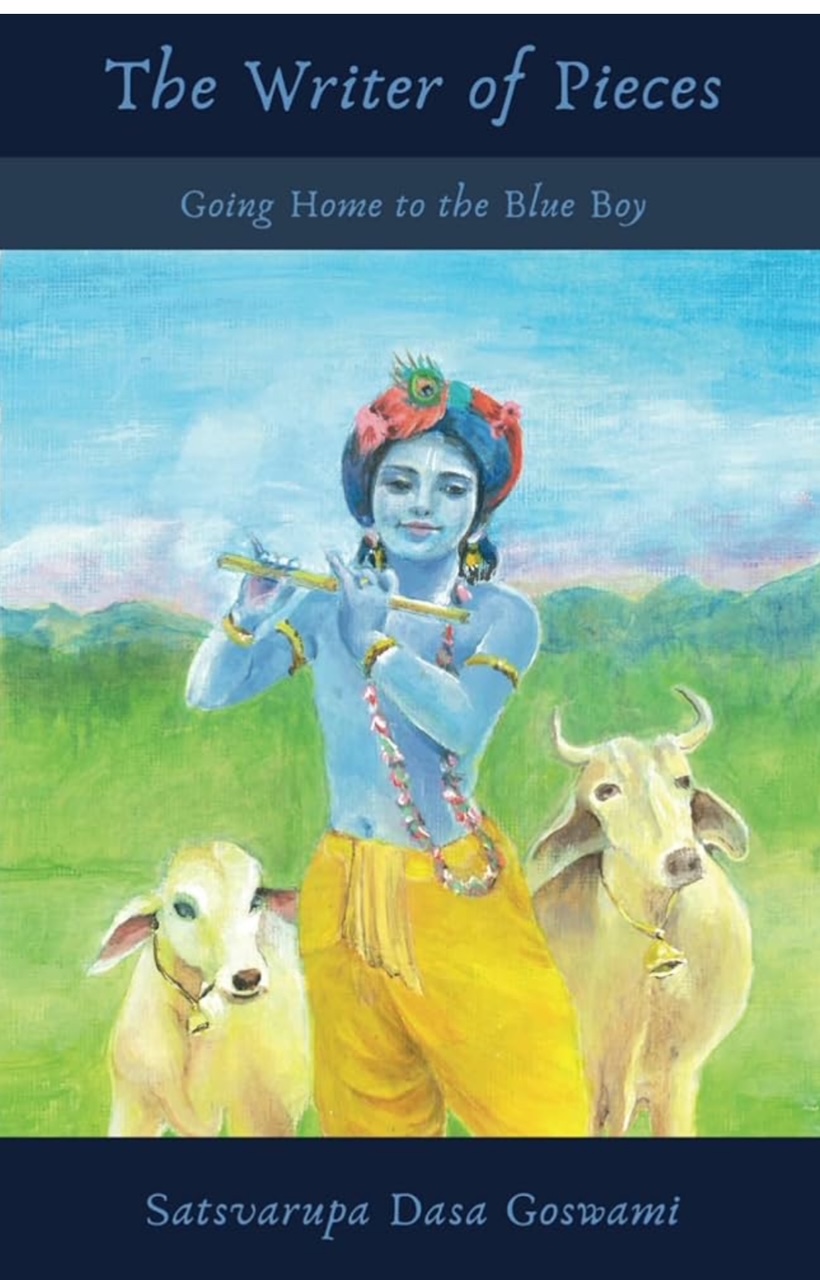
Don’t take my pieces away from me. I need them dearly. My pieces are my prayers to Kṛṣṇa. He wants me to have them, this is my way to love Him. Never take my pieces away.
Many planks and sticks, unable to stay together, are carried away by the force of a river’s waves. Similarly, although we are intimately related with friends and family members, we are unable to stay together because of our varied past deeds and the waves of time.
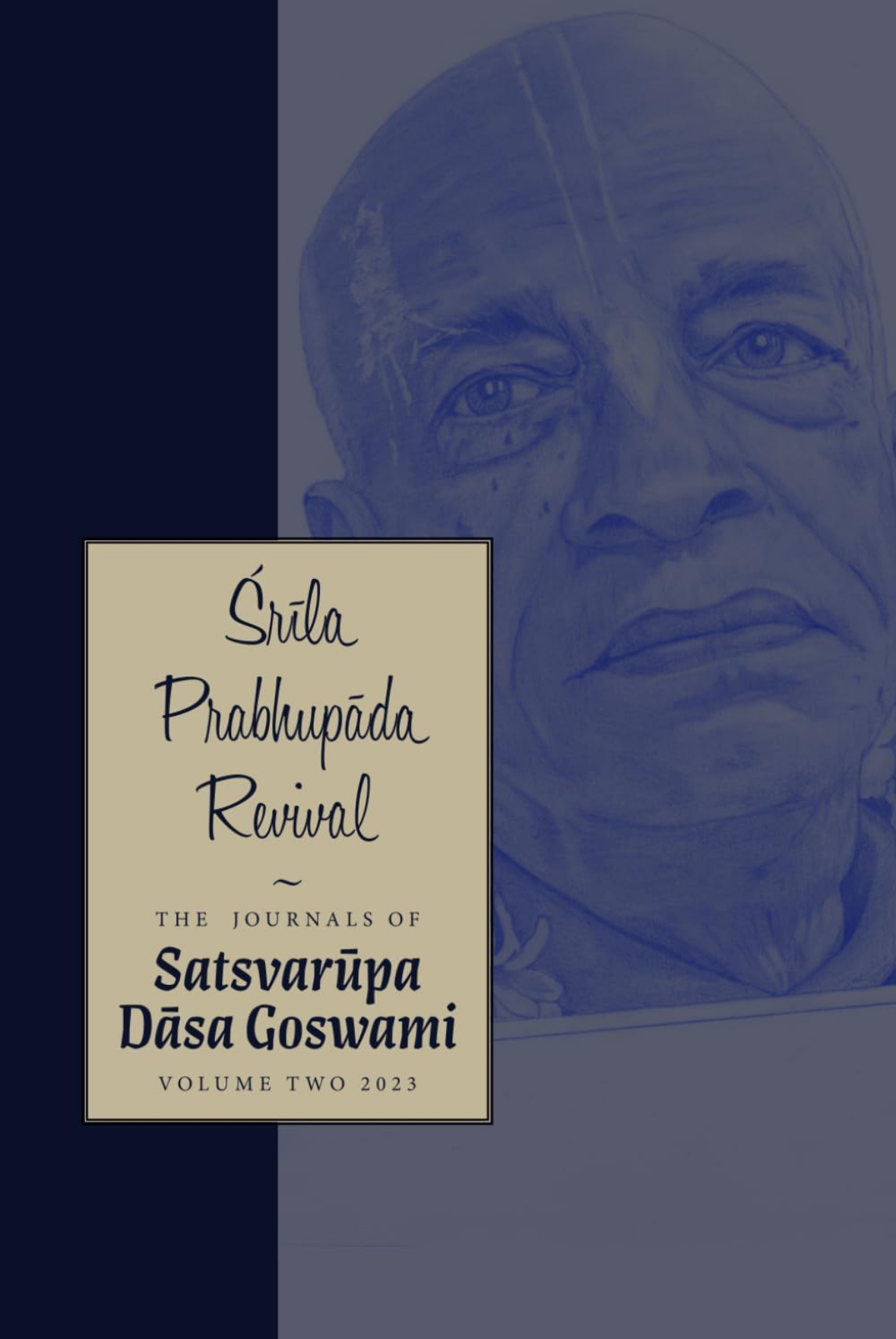
To Śrīla Prabhupāda, who encouraged his devotees (including me) To write articles and books about Kṛṣṇa Consciousness.
I wrote him personally and asked if it was alright for his disciples to write books, Since he, our spiritual master, was already doing that. He wrote back and said that it was certainly alright For us to produce books.
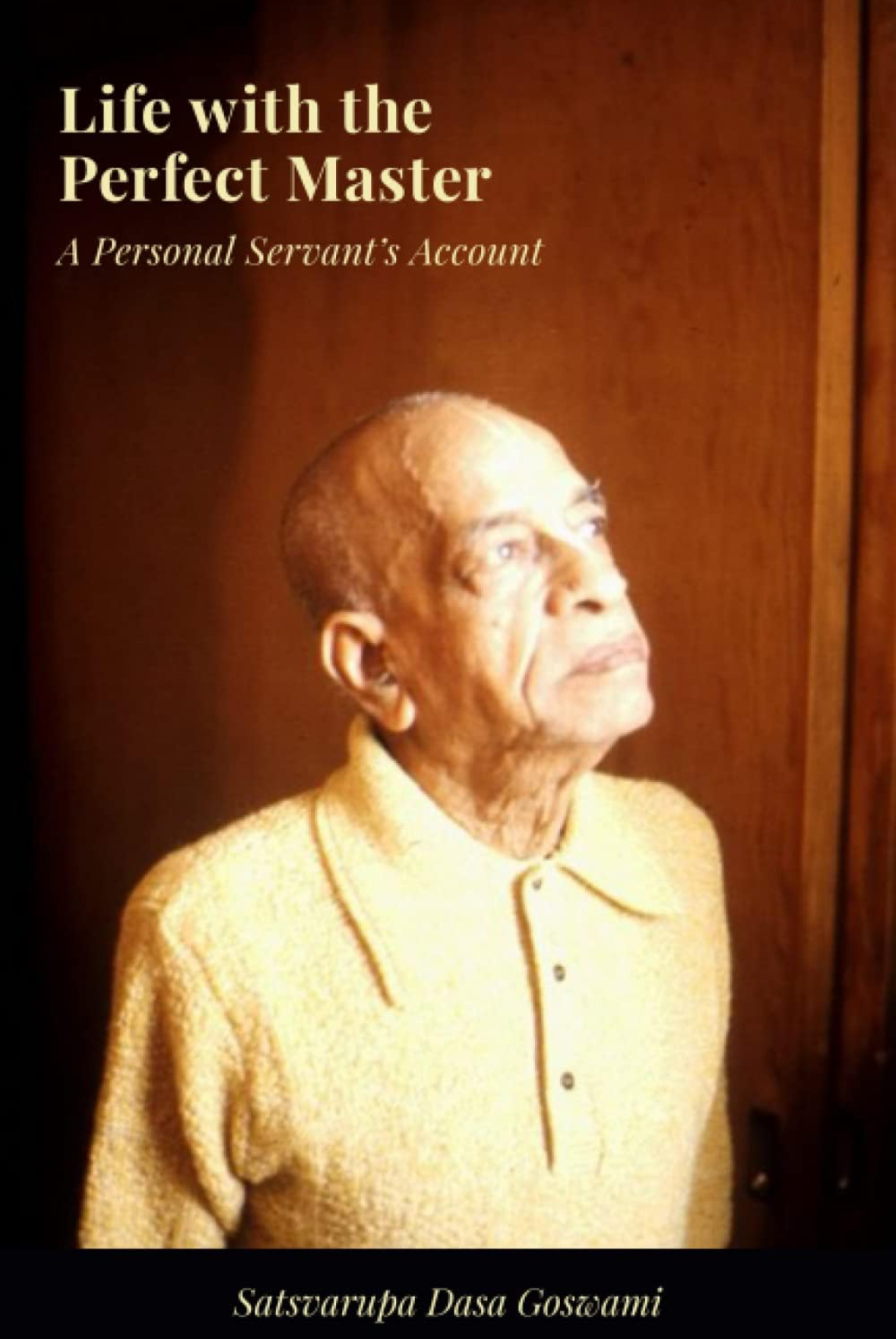
I have a personal story to tell. It is a about a time (January–July 1974) I spent as a personal servant and secretary of my spiritual master, His Divine Grace A.C. Bhaktivedanta Swami Prabhupäda, founder-äcärya of the International Society for Krishna Consciousness. Although I have written extensively about Çréla Prabhupäda, I’ve hesitated to give this account, for fear it would expose me as a poor disciple. But now I’m going ahead, confident that the truth will purify both my readers and myself.
First published by The Gītā-nāgarī Press/GN Press in serialized form in the magazine Among Friends between 1996 and 2001, Best Use of a Bad Bargain is collected here for the first time in this new edition. This volume also contains essays written by Satsvarūpa dāsa Goswami for the occasional periodical, Hope This Meets You in Good Health, between 1994 and 2002, published by the ISKCON Health and Welfare Ministry.

This book has two purposes: to arouse our transcendental feelings of separation from a great personality, Śrīla Prabhupāda, and to encourage all sincere seekers of the Absolute Truth to go forward like an army under the banner of His Divine Grace A.C. Bhaktivedanta Swami Prabhupāda and the Kṛṣṇa consciousness movement.
A single volume collection of the Nimai novels.
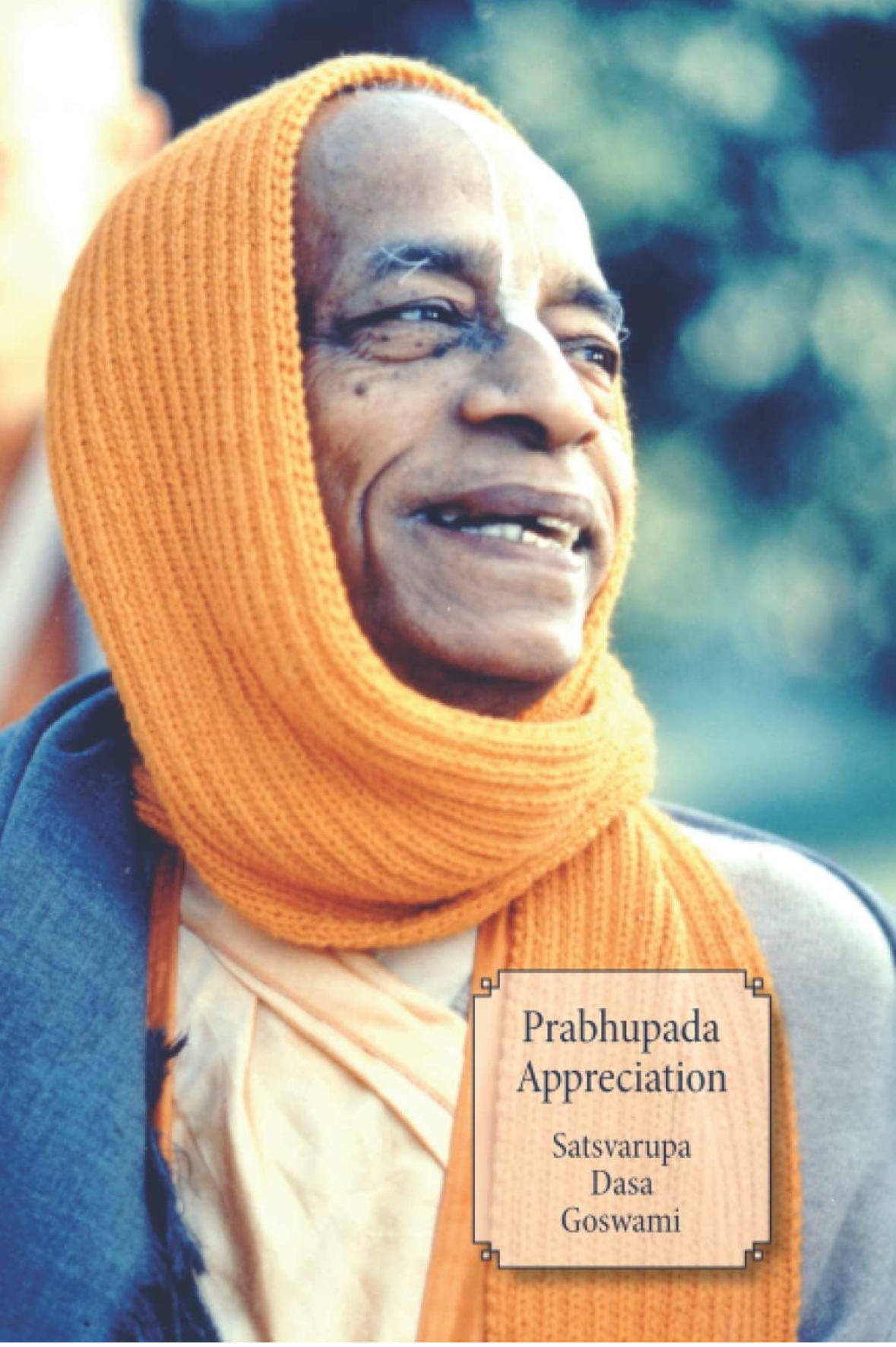
Śrīla Prabhupāda was in the disciplic succession from the Brahmā-Mādhva-Gauḍīya sampradāya, the Vaiṣṇavas who advocate pure devotion to God and who understand Kṛṣṇa as the Supreme Personality of Godhead. He always described himself as simply a messenger who carried the paramparā teachings of his spiritual master and Lord Kṛṣṇa.
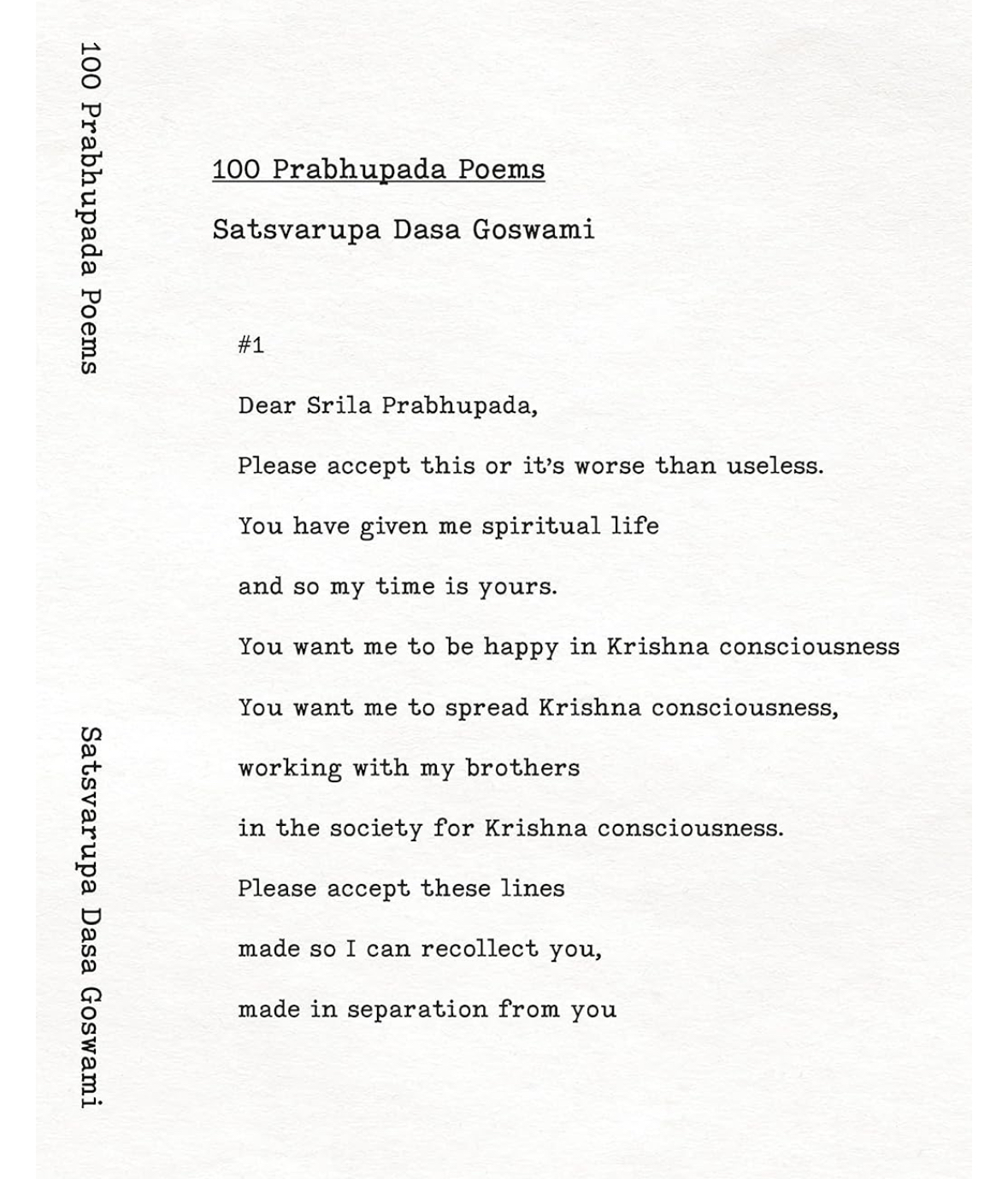
Dear Srila Prabhupada,
Please accept this or it’s worse than useless.
You have given me spiritual life
and so my time is yours.
You want me to be happy in Krishna consciousness
You want me to spread Krishna consciousness,
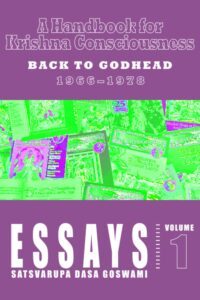
This collection of Satsvarūpa dāsa Goswami’s writings is comprised of essays that were originally published in Back to Godhead magazine between 1966 and 1978, and compiled in 1979 by Gita Nagari Press as the volume A Handbook for Kṛṣṇa Consciousness.
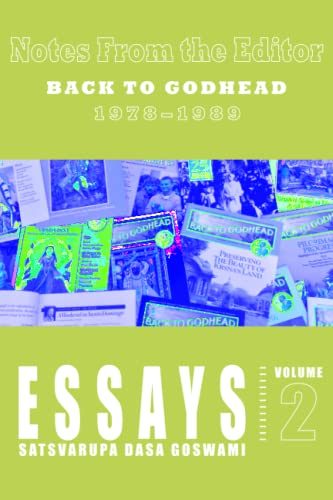
This second volume of Satsvarūpa dāsa Goswami’s Back to Godhead essays encompasses the last 11 years of his 20-year tenure as Editor-in-Chief of Back to Godhead magazine. The essays in this book consist mostly of SDG’s ‘Notes from the Editor’ column, which was typically featured towards the end of each issue starting in 1978 and running until Mahārāja retired from his duties as editor in 1989.
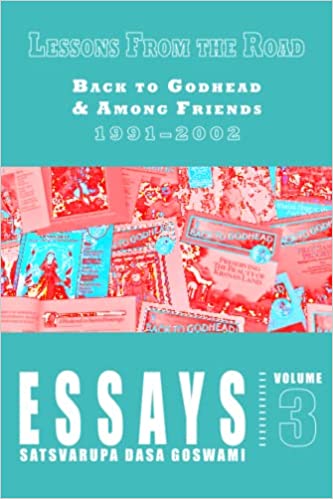
This collection of Satsvarupa dasa Goswami’s writings is comprised of essays that were originally published in Back to Godhead magazine between 1991 and 2002, picking up where Volume 2 leaves off. The volume is supplemented by essays about devotional service from issues of Satsvarupa dasa Goswami’s magazine, Among Friends, published in the 1990s.

“This is a different kind of book, written in my old age, observing Kṛṣṇa consciousness and assessing myself. I believe it fits under the category of ‘Literature in pursuance of the Vedic version.’ It is autobiography, from a Western-raised man, who has been transformed into a devotee of Kṛṣṇa by Śrīla Prabhupāda.”
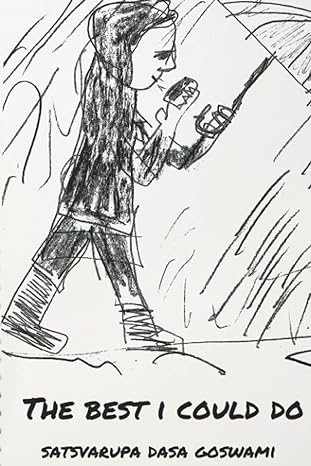 The Best I Could Do
I want to study this evolution of my art, my writing. I want to see what changed from the book In Search of the Grand Metaphor to the next book, The Last Days of the Year.
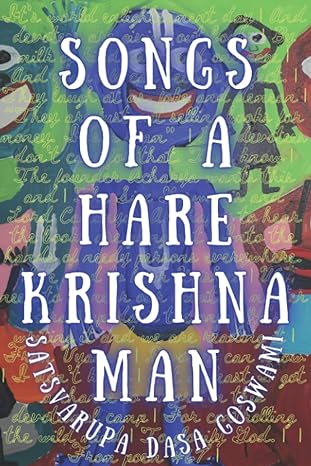 a Hare Krishna Man
It’s world enlightenment day
And devotees are giving out books
By milk of kindness, read one page
And your life can become perfect.
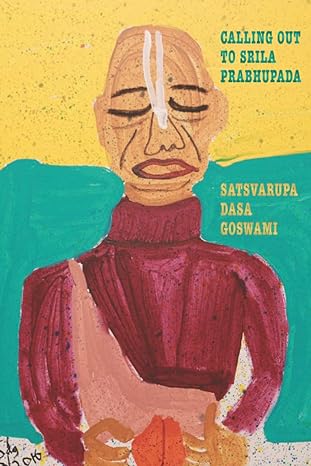 Calling Out to Srila Prabhupada: Poems and Prayers
O Prabhupāda, whose purports are wonderfully clear, having been gathered from what was taught by the previous ācāryas and made all new; O Prabhupāda, who is always sober to expose the material illusion and blissful in knowledge of Kṛṣṇa, may we carefully read your Bhaktivedanta purports.
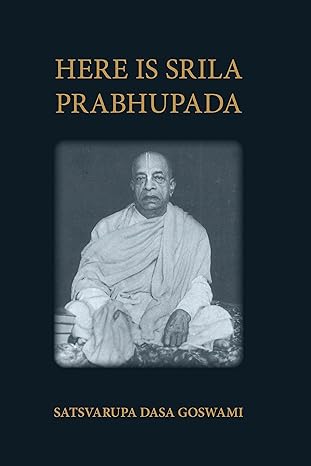
I use free-writing in my devotional service as part of my sādhana. It is a way for me to enter those realms of myself where only honesty matters; free-writing enables me to reach deeper levels of realization by my repeated attempt to “tell the truth quickly.” Free-writing takes me past polished prose. It takes me past literary effect. It takes me past the need to present something and allows me to just get down and say it. From the viewpoint of a writer, this dropping of all pretense is desirable.
 Geaglum Free Write
This edition of Satsvarūpa dāsa Goswami’s 1996 timed book, Geaglum Free Write Diary, is published as part of a legacy project to restore Satsvarūpa Mahārāja’s writings to ‘in print’ status and make them globally available for current and future readers.