

We need to expand our team of proofreaders as we aim to increase the rate of republication of Satsvarūpa Mahārāja’s books as well as new books that he writes.
This includes a need for fluent bilingual Spanish and English speakers to proofread Spanish translations (we currently have around 20 Spanish translations waiting to be proofread).
Anyone interested in this particular service should contact Manohara dāsa at [email protected]
If you would like to help, please contact Kṛṣṇa-bhajana dāsa at [email protected] or [email protected] and we will find you a service that utilizes your talents.
The main thing is to fix your mind on the sound of the chanting. As you strain and yearn to keep your attention fixed, this naturally brings a mood of devotion. This is the way you serve the holy name. Just as when cooking, if you try very hard not to burn the preparation, to spice it nicely, and to keep it cooking nicely, then you express your devotion in this way. You may think separately from the cooking, “Please, Krsna, accept this nice preparation I am cooking for You.” But the main devotion is in cooking it nicely for Krsna. So you have to actually chant nicely, and as you concentrate on it this is the best meditation. In later stages spontaneous thoughts of Krsna will come. But you simply keep your mind fixed on hearing the holy name.
******
You must be attentive and control your mind. Don’t chant unconsciously. That implies that you have an intellectual conception of chanting: “I just can’t get into it. It’s not important.” Sometimes people will read directions how to operate something, but they have so many other responsibilities that they just can’t pay attention to the directions. It doesn’t mean anything to them. It’s not important to them. They may say, “Somebody else can do it. I can’t concentrate on it. It’s just too trivial.” So don’t minimize the holy name in the back of your mind. It’s absurd if you cannot actually accept that you’re supposed to use your best intelligence to concentrate on the repetition of the holy name.
******
If you have an eight-track mind that disturbs you when you are chanting Hare Krsna, the only remedy is to put Krsna on all the eight tracks. Krsna says in the Gita, wherever the mind goes you have to bring it back under the control of the higher self. Be conscientious.
******
To say “I tried hard—I almost made it” is not perfection. If you chant with offenses, then your chanting will be offensive. Still, that doesn’t mean that you stop the chanting or stop the preaching. We should be encouraged just by our trying even though imperfect. Just go on. Maybe we won’t attain Krsna for some time by our devotional service, but we have to keep trying—being satisfied by the japa and the nectar we obtain by that trying. The higher stage of chanting is love, and at that point there is no more trying. It is spontaneous.
******
But not that the best chanter of the names of Krsna has developed his chanting like some great weightlifter. “Oh, he is a very famous chanter. He tried day after day for many years, and now he has perfected his chanting. He can control his mind!” I remember talking to one professor practicing Buddhist meditation. He was explaining how to keep all different thoughts out of the mind. When some thought enters like an intruder, then with great prowess you push it out; when another thought enters you push that thought out. In this way you meditate—very strenuously. We may think, “Now I’m avoiding the first offense, now I’m avoiding the second offense, now I’m avoiding all ten offenses —I’m awake, I’m attentive,” etc. But we are not like the juggler who puts another spinning plate on top, then another, then another, and then he is perfect. In other words, the holy name is Krsna, who when fully pleased appears on the tongue of an ideal chanter. He is not created by the chanter.
******
Ultimately only loving service pleases Him, and that is done by linking with one who is already known to Krsna. Of course, Krsna knows everyone, but in terms of devotional service it is different. I may say I have been a big rascal and now I am letting out a great crying of love, “O Krsna! O Krsna! Krsna!” He’ll say “Oh? Who is this with all these protestations of love for Me? Who is this upstart?” But, if He is informed by one of His intimate associates like Radharani, “This person chanting is actually a very good devotee. I recommend him,” then He will say “Oh, then all right.” He won’t take you without a recommendation; this is mercy.
******
Our trying to chant nicely is satisfying to Krsna, and He responds; but ultimately it is not just by our hard endeavor that He does so. In the Bhagavatam Prahlada tells his father, “You cannot know Krsna by the practice of austerities or sannyasa regulations or grhastha regulations.” And he mentions severe examples like going into the river up to your neck on a cold day. It is not that we can finally try so hard to chant our japa that we beat down the holy name into submission—”Now I’ve got you under my foot!” No, you have to cry for Krsna! And the chanter must be avoiding offenses in his service. Krsna will be attracted not just by hard endeavor but by rubbing yourself in the dust of the lotus feet of the pure devotees.
pp. 93-96
To be truthful you first have to know the truth. Being truthful is not just a matter of refraining from telling lies. There is a legend that young George Washington was very truthful because he admitted, “I cannot tell a lie; it was I who cut down the cherry tree.” But that is not truthful. Young George was candid in honestly admitting that he did a stupid thing. Real truthfulness, however, begins when one knows the Supreme Personality of Godhead, the Absolute Truth:
Just try to learn the truth by approaching a spiritual master. Inquire from him submissively and render service unto him. The self-realized soul can impart knowledge unto you because he has seen the truth
—Bg. 4.34
The Absolute Truth is Krsna, as He is described in the first verse of Srimad-Bhagavatam:
O my Lord, Sri Krsna, son of Vasudeva, 0 all-pervading Personality of Godhead, I offer my respectful obeisances unto You. I meditate upon Lord Sri Krsna because He is the Absolute Truth and the primeval cause of all cause of the creation, sustenance and destruction of the manifested universes. He is directly and indirectly conscious of all manifestations, and He is independent because there is no other cause beyond Him. It is He only who first imparted the Vedic knowledge unto the heart of Brahmaji, the original living being. By Him even the great sages and demigods are placed into illusion, as one is bewildered by the illusory representations of water seen in fire, or land seen on water. Only because of Him do the material universes, temporarily manifested by the reactions of the three modes of nature, appear factual, although they are unreal. I therefore meditate upon Him, Lord Sri Krsna, who is eternally existent in the transcendental abode, which is forever free from the illusory representations of the material world. I meditate upon Him, for He is the Absolute Truth.
—Bhag. 1.1.1
One can study this verse for his entire lifetime to appreciate how Krsna is the Absolute Truth. In his Introduction to Srimad-Bhagavatam, Srila Prabhupada takes the phrase param satyam from this verse and translates it “the Absolute Truth.” He then defines param satyam as “the ultimate source of all energies.” In other words, the Absolute Truth is the cause of all causes, and Srimad-Bhagavatam, in the first verse, has hit the target of the Absolute Truth by defining Him in His personal feature as the Supreme God. God is a personal term to describe the controller. There are many gods, or controllers, but when we speak of the Supreme Godhead, then we mean Krsna, the cause of all causes.
So the Absolute Truth as the Supreme Person, Sri Krsna, is revealed in Srimad-Bhagavatam’s opening verse. In fact, the entire Vedic literature is proclaiming Krsna as the Absolute Truth. This is also stated in Bhagavad-gita [10.8], aham sarvasya prabhavah — the Absolute Truth is that from which everything else emanates. Since there are countless living beings coming from the Absolute Truth, the Absolute Truth must also contain personality. Elsewhere in Srimad-Bhagavatam, the author, Srila Vyasadeva, describes that the highest feature of the Absolute Truth is Bhagavan, the Supreme Person.
Atheistic philosophers deny Krsna as the Absolute Truth and even deny Him as a historical person. They also deny the existence of the spirit soul and reject the concept of a personal God. Yet despite their evolution¬ary theories, speculations about life coming from chemicals, and wild theories about creation, they are unable to explain the origin of existence. The question vital for every human being—”What is the meaning of existence? Where have I come from? What is the mission of life beyond animal survival? What is after death?”—cannot be reduced to chemical and biological theories. The answers to these questions lie in the realm of philosophy. But philosophy without religion is dry speculation, whereas religion without philosophy is merely sentiment. Srimad-Bhagavatam’s presentation of Lord Krsna as the Supreme Truth, however, satisfies the criteria of both perfect philosophy and perfect religion. The perfect philosophy is Vedanta, wherein the cause of all causes is explained with logic and reasoning, and the perfect religious practice is bhakti-yoga, or devotional service to the Supreme Lord.
Persons seeking the Absolute Truth, who are dissatisfied with material sense gratification and mental speculation, must approach the genuine authorities in disciplic succession. Even if a person wants to learn a mundane skill, he has to learn from authorities. In the philosophic search for truth there are many contesting philosophers, all speculating on the mental level. But the only possible way to reach transcendence is the path of the acaryas, the recognized saintly philosophers who have themselves realized the Absolute Truth through the process of disciplic succession. The words of Vedic authorities like Sukadeva Gosvami, Srila Vyasadeva, and others, and the evidence of their personal spiritual attainment, are sufficient to convince a sincere inquirer.
Once we recognize that Krsna is the Absolute Truth, there is an obligation to distribute this truth widely and thus combat falsity. Most people blindly try to deny the fact that everything in this universe is owned and con¬trolled by the Supreme Lord. Only if civilized human¬ity recognizes the proprietorship of God can there be peace and prosperity in the world. For want of this most basic knowledge of the Supreme Personality of Godhead as the proprietor, men violate the laws of God and nature, incurring great karmic suffering.
Knowledge of the truth makes us free. The concept of the body as the self is false, as anyone who witnesses the death of a dear one can testify. We see our friend, relative or pet is gone, and yet the body remains. The body, therefore, is not the self but the vehicle that car¬ries the self, just as a car carries the driver. The real self is the eternal spirit soul. Life in the material world, suf¬fering the changes of birth, death, disease, and old age, is not the true, constitutional situation of the self. We are meant for the eternal, spiritual world. The spiritual world is true, and only due to a false notion of the self (false ego) are the living entities imprisoned in the material world birth after birth. Distribution of the knowledge of Krsna consciousness is meant to free the soul from his bondage to material life.
pp. 121-23
Who will go: the Visiting Sannyasi and Narahari, who will drive fast.
Why are they going? To preach the glories of Lord Krsna as ordered by Srila Prabhupada.
Will this take place on a high level? That depends on how much the Supreme Lord is willing to appear in my words. This is described by Srila Prabhupada in his purports to the narration of Dhruva Maharaja:
“Devotees are always interested in hearing about the Lord’s transcendental qualities, and they’re always eager to glorify these qualities, but sometimes they feel inconvenienced by humbleness. The Personality of Godhead, being situated in everyone’s heart, specifically gives a devotee intelligence to describe Him. It is therefore understood that when a devotee write or speaks about the Supreme Personality of Godhead, his words are dictated by the Lord within” (Bg. 9.4, purport).
Are you feeling inconvenienced by humbleness?
Unfortunately I’m inconvenienced by various anarthas. Therefore I admit that this story is going to be more what happened to some conditioned souls trying to practice vaidhi-bhakti and sannyasa-dharma in ISKCON in 1994, rather than a story of full glorification with the Supreme Lord in the center.
They are scheduled to leave their place near Brescia. They will leave on April 20, which is the appearance day of Lord Ramacandra, at five in the morning. If Lord Ramacandra desires, they will be able to go on time and with His blessings. They’ll head south on Autostrade 21 which connects to A-7, to A-26 and into A-10. This brings them down through the small city of Alessandria and on to Torino. They plan to stop at 8 A.M. but not take breakfast because it’s a fasting day. They estimate 300 kilometers in three hours. After a little rest and japa, they will continue and try to make another 200 kilometers and stop for lunch. They will bypass Genova, go down the Riviera coast, and cross the borders of Monaco and into Nice, France. They’ll keep driving along the Cote d’Azur. Their schedule is to reach Aix-en-Provence by 3 P.M. There they will set up for the night, probably parked at a gas station beside trucks and cars.
The second day of travel they will do some early morning sadhana of japa and then leave by 5 A.M. The itinerary is to pick up Route A-8 and travel until it turns into A-7, then N-119, A-9 and then stop at 7:30 A.M. for breakfast. After two hours (including rest time)
they will drive on until a lunch stop and another break, another driving stretch, and reach the Spanish border at 4 P.M. They will set up for the night.
Third day of travel they again leave at 5 A.M. They hope to drive 250 kilometers along A-2 and stop for breakfast then rest, continue again another 200 kilometers, lunch again, continue driving again at night, then reach the ISKCON farm around 5:30 P.M.
Narahari tried to join the European automobile club, but he couldn’t due to the fact that his residence is in Ireland and the car is registered in Italy. The devotees wanted this membership because on two previous visits to Spain the car broke down on the highway, and it took a long time before they could get rescued and fixed. Devotees in Spain said that there’s a jinx in their country, or something like that. Narahari also complained that their Renault master van has an unusually small gas tank; he tried to get a bigger one but couldn’t do it. The van only runs for three hours before needing to refill. Basically it appears to be in good shape and has been recently serviced.
Their van is chock-full of cooking supplies, Prabhupada’s books and other paraphernalia, so that it’s a self-sufficient “traveling bhajana-kutir.” Narahari has been looking into all his different supplies and filling the different cubbyholes with everything needed from rice to pots to screwdrivers, to desk light bulbs, votive candles — literally hundreds and hundreds of items which only he knows about to full extent and which the Visiting Sannyasi knows about partially.
The van is legally owned, but there’s a complication. It’s overdue for a road test. Narahari said it’s no problem for traveling in other countries, and he’ll do it in the future when they return to Italy.
In these last days before they begin traveling, they have been frequenting a local store that operates a facsimile machine. With the luxury of having their “own” FAX number, they’ve been engaged in rapid communications with an Ayurvedic doctor in Canada to locate some source of anti-constipation medicine, with a devotee in New York who wants to come and join them in Spain, and who they’re asking to bring some books, with a devotee who promises to forward the Visiting Sannyasi’s mail to Spain, and the details for these communications go back and forth, sometimes with four or five FAXes a day. Seeing the benefit of this kind of rapid exchange, Narahari included in one of his FAXes to New York a request for some information about compu¬ters and the possibility of their keeping a computer with FAX capability in the van. When the Visiting Sannyasi saw this message, he said, “Hold on. I don’t want this. If we get a FAX, then that means we have a FAX number.”
“No one has to know it,” said Narahari.
“They’ll find out. And the next thing you know, they’ll ask us to be on COM and LINK and we’ll never have any peace. Please give up this idea of a FAX in the van.”
Story thus far:
The Visiting Sannyasi took part in an informal symposium of devotees arranged by the editor of Back to Godhead. The editor wanted them all to talk about community and hoped he could use it in his magazine.
During that meeting, the Visiting Sannyasi mentioned that he sometimes wrote poetry. Another member remarked, “I think a sannyasi has to do a lot more than write poetry if we are going to develop true community in our movement.” This remark drew several assents: “Yeah!” “Right!” All this was later published in the magazine and it made our sannyasi feel ashamed and guilty. And chagrined. He started writing again but kept the poems to himself and kept even the practice of writing a secret. He also tried to show a profile in various ways of one tangibly engaged in duties of sannyasa preaching.
The sannyasi had several problems connected with the writing of poetry. He was frustrated because he had so little time to write or even think in that way. Another problem was that whenever he expressed himself, he found he was filled with worldly allusions and images, whereas a Vaisnava poet ought to write about Krsna directly. He found statements in Srila Prabhupada’s writings which supported his poem-writing, and he took it as solace. He found such support not only in direct references encouraging disciples to write and pray but in many other places. For example, he took courage from a 1967 letter by Srila Prabhupada encouraging Murari dasa to go on playing his guitar in the kirtana and there was no need to learn to play sitar—”the best part of valor is to utilize properly whatever talents and qualifications we have got for the service of the Lord” (Letter of August 3, 1967).
The Visiting Sannyasi confided all this to his companion and brahmacari assistant, Narahari dasa. Narahari sympathized deeply and encouraged his friend to go on writing poems if it inspired him in Krsna consciousness.
pp. 66-70
Text 39
atheha dhanyā bhagavanta itthaṁ
yad vāsudeve ’khila-loka-nāthe
kurvanti sarvātmakam ātma-bhāvaṁ
na yatra bhūyaḥ parivarta ugraḥOnly by making such inquiries in this world can one be successful and perfectly cognizant, for such inquiries invoke transcendental ecstatic love unto the Personality of Godhead, who is the proprietor of all the universes, and guarantee cent-percent immunity from the dreadful repetition of birth and death.
Suta Gosvami praises the sages’ inquires. This is one of those inspiring verses to give us strength to hear krsna-katha. I like to quote such verses to devotees to remind us all to read and chant. The Krsna consciousness movement is active in response to Srila Prabhupada’s order that we preach, but he probably gave even more instruction on hearing. He wanted both. He said of himself, “Because I was good at sravanam, therefore I am good at kirtanam.”
Suta praises the sages because their questions were transcendental. They didn’t ask, “Where is the bathroom?” Everybody asks mundane questions, but only a devotee can ask the kind of questions that free him from the dreadful repetition of birth and death.
A devotee’s questions are about the Personality of Godhead. Krsna is unknowable except to the extent that He reveals Himself, but Krsna does not reveal Himself to the nondevotees. He reveals Himself to those who want to know Him out of devotion. Otherwise, He is a mystery. Because they fail to worship His lotus feet, even the perfected brahmavadis fall back down into the material world. They don’t know where else to go.
The pure devotee is guaranteed liberation. What more assurance do we want? Well, usually we want to know if it’s possible to become one hundred percent liberated with only fifty percent investment on our parts. But we cannot cheat Krsna. Or, we can engage in cheating, but we will not attain genuine realization and success. Therefore, we have to inquire into the meaning of life, into the meaning of the Supreme Lord, and we have to make those inquiries in the association of devotees.
All right, then what about this? This verse assures us that a devotee is immune to repeated birth and death, but it doesn’t assure us that a devotee is immune from suffering. Prahlada Maharaja was tortured, Narada Muni lost his mother when he was only five years old, Queen Kunti suffered on behalf of her sons, Vasudeva and Devaki lost all their children and spent years in prison, and even Prabhupada appeared to experience tribulation. What about that?
I remember a disciple asking Prabhupada this question on a morning walk. Prabhupada said that at least a devotee knows that when he is suffering, he is suffering for the last time. His suffering is not useless, but it is purifying him so that he can go back to Godhead. At least we can take that much solace when we are suffering.
Beyond that, however, we shouldn’t approach devotional service as a means to relieve or eliminate suffering. Bhakti is not a painkiller. If we approach devotional service in that way, we are looking for salvation—a material desire—and not pure devotion. I remember one Indian man who complained to me that his wife was threatening to divorce him. Then he joined the temple, attended it regularly, and his wife divorced him anyway. He became disappointed in Bhagavan. We shouldn’t be like that. Krsna consciousness is not to be approached as an antidote to suffering, although ultimately, it relieves the greatest pain.
Once a devotee approached Prabhupada in tears and asked, “Why does Krsna make us suffer?” Rather than respond gently, Prabhupada became stern. “You should not come to Krsna to reduce your suffering. Come to Krsna to surrender and to serve.”
This will be our last time suffering in this place of suffering. When we go back to Godhead there will be no more misery. Rather, we will enjoy eternal, transcendental pleasure serving Krsna.
As for those great devotees who suffered, they weren’t suffering in an ordinary way. They were always in contact with Krsna and remained in internal bliss.
We should be grateful to the sadhus from whom we can inquire confidentially and with trust about Krsna. These inquiries are the only way in which we can invoke love of Godhead. Therefore, the association of learned Vaisnavas is the greatest gift. Prabhupada said we shouldn’t dare to think we are Vaisnavas, but that we are the servants of the Vaisnavas. The servant inquires, “How may I serve Krsna?”
What is a cent percent devotee? It means someone who has attained perfection. Sometimes a student excels on a test and receives a perfect score. There is a similar rank in spiritual life. A pure devotee makes no mistakes, and the teacher blesses the student with recognition of his achievement. In devotional terms, it means no karma or jnana. Ready to go back to Godhead.
The expert spiritual master stimulates us to ask questions. In the beginning, out of ignorance, our questions may not be focused on the Absolute Truth. We may want to know what we will get out of serving Krsna. Will we be free of pain? How does the universe function, anyway? If the questions are directed toward Krsna, the guru will lead us forward into the heart of bhakti.
According to this verse, it’s not good to be silent. Although in other places the silent worker is praised, nowhere does the sastra praise dullness. To make inquiry means we have to be at least curious. Gradually, curiosity develops into eagerness to hear. Eagerness to hear is as good as voicing a question. What we are meant to give is our undivided attention. The material world is not conducive for mental focus, but yoga means to practice control of the mind and senses.
The beginning of asking questions may be recognizing and nurturing that side of us that is serious and devotional. Often, devotees tend to disregard that side in their attempts to practice humility. We don’t have to mock ourselves. Better to go forward on our most sincere foot and ask questions regardless of that other voice that tells us we are being holy Joes or that our sincerity isn’t real. There is no point in starving ourselves spiritually in the name of humility. Then we will also be in a better position to seek answers to our daily dilemmas in our sadhana.
pp. 34-37
Writing sessions are my daily bread, my writing staple. Writing sessions are rough-hewn free spirits. They are rich, like a forest filled with trees and undergrowth and wildlife. They are my “wild garden.” They are my way to “churn the milk ocean.” They are my exercise for the spirit, my way to relax, my prime writer’s duty. They are my way to fill notebooks. It’s practice.
Writing sessions return to the same themes over and over. In that way, they represent my life and they are true to that life. Writing sessions are the matrix from which other things may come. I keep returning to them, heeding the little voice in my head that says, “Isn’t it about time you get to working on writing sessions again?”
Writing sessions cannot really be defined in terms of genre. Having said that, I will give a simple and stark definition of what they are: they are timed (usually one-hour) writings in which I write whatever comes.
Here are some other statements about them that I have culled from the sessions themselves:
“I am performing this [writing session] for myself, for my betterment, so that I may come to praise and serve guru and Krsna one day, and not for my selfishness.”
“A desire to think over alone what has happened.”
“Don’t write to explain yourself to an objective reader so that no one will misunderstand you. That’s a bore. You’re not in a court of justice. Just speak as the flute blows.”
“You mean you go on writing even when you don’t have sober intent of a Krsna conscious topic in mind?
“Yes, because the loss of control helps me to get access to material without the censor-editor.”
“Every sentence proclaims a sorrow that I am not Krsna conscious and that I have to die and that all these people are here … we don’t seem to be doing what we should, not enough. Can’t say it. Can’t feel it. Can’t even dream it.”
“If you ask me what I think of something, I say, ‘I don’t know. I’ll have to do a writing session to find out.’ That’s a joke, but there’s truth in it.”
I began the journey toward my present writing around 1977 when I read Writing Without Teachers by Peter Elbow. He taught “free-writing,” something I later discovered was being taught by a whole generation of writing teachers. In 1977, despite its popularity among writing teachers, free-writing was still a challenged concept. Now it is taught across the writing school curriculum.
“Free-writing” means writing whatever comes to mind within a certain time limit. As a method, it is meant to free a writer from writer’s block. Writer’s block paralyzes a writer when it makes him unable to write and stifles him when he gets stuck on the surface, writing with competence but no heart.
Therefore, free-writing was intended as a warm-up to other writing. Elbow suggested a writer give himself a time limit and then write without concern for grammar, punctuation, spelling, or coherent communication. He said that the free- writer shouldn’t stop to think at all, but should write whatever comes to mind, even if that means writing repeatedly, “I can’t think of anything to say.”
He said that free-writing should not be used to produce publishable writing but should serve only as a warm-up. He also said that an author would write some of his best lines during a free-write session, but that it would be laziness or even cheating to scoop from those lines to develop a finished piece. Then he described how although he was once interested in what his free-writing produced, now he simply throws it in the trash.
I remember when I first started free-writing, I was living in Los Angeles and working as editor-in-chief for Back to Godhead magazine. I was interested in the technique because I was trying to improve my own writing. At that time, I was trying to write a book on varnasrama to fulfill Prabhupada’s request that I write something called, “All Things Fail Without Krsna.” At Peter Elbow’s advice, I started to use free-writing as my warm-up. But I didn’t find it satisfying. It seemed too roundabout and I couldn’t get to the point. I thought I couldn’t discover what it was I wanted to say simply by writing and writing and writing about it.
Free-writing didn’t have a real impact on my writing until almost ten years later when I read Natalie Goldberg’s book, Writing Down the Bones. Goldberg calls free-writing “writing practice,” and she gives it rules: keep the hand moving, don’t think, go for the jugular (go for whatever is filled with energy), don’t be logical, use first thoughts. Her emphasis on how to be free of the internal editor, her dedication to writing practice as a way of life, and her definition of writing practice as something more than journal-writing were all helpful to me in my own writing.
That’s when I coined the phrase “writing sessions” for my free-writing. Not long after that, I wrote Shack Notes. (Shack Notes contains definitions of what writing practice is to me. If you would like to read those definitions, they’re gathered in the Introduction to that book.)
Writing Shack Notes was exhilarating. I wanted to see whether expressing my feelings in a relaxed way throughout many sessions during a concentrated writing time would help me discover myself. I wanted to know whether the actual person I was was different from the person I knew I was supposed to be according to institutional expectations. It was one of the first times in my twenty-five years as a devotee that I allowed such release from the strictures and asked myself whether I wanted to be a devotee of Krsna.
We are often afraid that if we let our guards down, we will fall into may a and leave Krsna consciousness. We have all seen devotees who have maintained their guards fall down suddenly. It’s almost as if they discovered some latent or repressed desires. I wanted to know whether I really wanted to be a devotee, whether I was spontaneously attracted to devotional service. Writing sessions were a good way to carry out that internal search.
I wrote the Shack Notes sessions at different times of the day, starting at one o’clock in the morning. I would write for more than an hour before stopping and then go on with my morning sadhana of hearing and chanting. Later, I would go out in the shack behind Samika Rsi’s house and write again, and then again in the afternoon. During that time, I was writing for about five and a half hours a day.
When I first began free-writing in earnest, I spent a lot of time battling the inner censor and critic. These internal voices ordered me to stop free-writing, to stop writing at all. The censor tried to convince me I wasn’t writing devotionally enough. The critic had a slightly different angle. He said I wasn’t writing anything valuable. It took a lot of energy to fend these voices off. I dialogued with them, argued back and forth, and tried to kill them off for good, but they are still there, always ready to attack. I doubt I’ll ever be free of them forever, but I no longer mount such bloody, frontal attacks that consume entire writing sessions. Just by writing regardless of their opinion is triumph enough.
pp. 286-92
We have our own way
please believe me
you took the part that
once was my heart
he played behind her
singing he’s delayed
a half second behind the
beat hang back and
airy.
They call him Pres.
But you know it all comes
from the supreme and
some acknowledge it
directly as religion.
That’s not always the
best way to “preach.”§
The viola! Surprise
is sometimes better.
Or the indirect—leave
it to the reader.
They don’t like the
Gita-thumping sermon.
As for me—
he has rhythm if that’s
important.
I got rhythm. Something happy. But if I try to think of it, it will probably dampen any complexities and dualities. Only Krishna works, and He’s so far away, like a beautiful star, the Southern Cross. Oh yes, at least I listened well today.
“I don’t like his book,” he said of Poor Man. “I can’t even understand it.” But the other person said, “Why should he say he can’t understand it? He’s lived in the West.” Yes, it is filled with Western allusions. Marlborough cigarette cowboys, baseball players and jazz musicians. Even if one does know of them, why should they be put in a spiritual book? Now that’s a better question. The answer is . . . he can’t think of something else to say. Yes, the ladies are speaking philosophical prayers from the roofs of Hastinapura, but I may not be one of them. The gopas were whispering into Krishna’s ear or shouting a boast to Him, and the gopis were casting sidelong glances and playful words, cutting jokes in Sanskrit. The trees and the birds were appreciating Him. All—all but you down here in the Hebrides.
You depend on Krishna and
on His devotees. You are
a freeloader in some
ways.
Getting the gravy, on
the bandwagon the
homeless men’s shelter.
He says his prayers at a
rapid clip—they all do that—
and some prayers to patron
saints.
Don’t forget not to ask
for anything since He
already knows.
Pray rockabye baby
put me to sleep. Pray
Krishna, you know best
how to handle a
reluctant soul.
My feet are dragging
but you and I know I must
give up this place and
my attachment to fame
and ease.
Make it happen, O Lord,
when You will. Thank
You for letting me write,
thank You for letting
me go.
Bhadra and Silavati’s—sleep, sleep your life away. Extra nap in the house before we left and nap in the back seat in the car as we rode here. I wasn’t exactly sleeping. I rehearsed the parts of my lecture. Who was the man who was envious of Srila Haridasa Thakura? Ramacandra Khan. And the other? Gopala Cakravarti. Who was envious of Ambarisha Maharaja? Durvasa Muni.
What about my own envy? Yes. And how to remedy it? Appreciate that they are pleasing Srila Prabhupada. You do this by using your intelligence. Make friends with them who please Srila Prabhupada or serve them. Don’t try to tear them down or their valuable service. Also, be glad you’re you and no one else.
Here I am “doing nothing,” either sectarian Krishna consciousness or broad-minded just listening to people with problems. I write books and live with a headache syndrome. Don’t dare to tell what I’m really thinking to a lecture audience. But at least here, getting it off your chest, your ambivalent and confused “feelings.”
Your belief is somewhat superficial. Or is it deep personally but troubled on the surface?
Sliding I told them to
please regret no
longer.
The devotee couldn’t
think what to say.
He quoted Bellow:
“Only fifteen minutes a day
can I write clearly.”
I said I’d like
explain to 150 students—
I’m responsible for—
that I am this way.
Accept it.
Which way?
Semiretired?
Fired?
Fried?
Thoreauvian.
No. What kind of guru
are you? I’ve got a lecture
with the history outlined,
but I hate explaining that stuff.
Just tell them something
new. Say
I live on the top of
a hill. You know I pray
sometimes a tiny spark
of it. Keep your mouth shut.
But I like his anxiety
for his family.
Keep your mouth shut.
Open it to lecture. Your
lecture outline looks like
shit to me.
Speak from experience.
There’s a leak in this
faucet. I live at home
and wait for the
inspiration.
Getting sentimental over
you he slows down
to end it.
What have you been doing? Did you multiply the capital he gave you? Or did you waste away? Like the first time the Swami left us for San Francisco and came back a few months later.
Yes, I remember those times—so many you could bring up . . . Going to Mayapur and Vrndavana. The issues now forgotten. Sweet and innocent, but power-hungry.
There’s no way a guy can
be a burnout in this movement
and not go back to Godhead.
Maybe it’s good to absorb shocks. As I glance at poems from a 1984 collection, I see a distrust of going alone, a sense that I must stay on the frontlines of duty. For me, God consciousness meant to fry myself in the fires of stress. There was no other way to prove my loyalty to Prabhupada. Passing thoughts of peace or of doing things my own way were temptations to accept defeat:
Sometimes I think I should go away
to be alone, to chant and hear,
but I know I cannot do it;
I would sink in lust and perish.
There is no point renouncing real duty.
You mean that the first work is to know yourself in something other than the svarupa-siddhi way? You mean give no real importance to the fact that you are a generic spirit soul but an individual? If that’s what you’re saying, how does one go about it? Is it time to explore mundane psychology?
No, I don’t mean that. But take care of yourself and think it out. I’m not going to come out with it here. Find out what you need to know by plumbing your own heart.
I know I sound as if I think I have an inside track, and that’s exactly why I don’t want to say too much here. Let me stick to my own work. When it’s my turn to lecture, I hope to tell simple truths and avoid manipulating others.
We have to be who we are and offer that to Krishna—our intention has to be pure.
pp. 150-54
Los Angeles
5th August, 1969My Dear Satsvarupa,
Please accept my blessings. I am in due receipt of both of your letters, one dated July 31, 1969 and the other August 2, 1969. The letter of August 2nd appears to be a practical proposal. The calculations for the house are nice. But everything should be done very carefully. If the landlord allows you to take possession of the house on payment of $12,000 on the terms and conditions as stated by you, then you must enter the house immediately, and we take it for granted it is Krishna’s offer. As far as you having to pay $6,000 down payment by October, from your calculation it appears that you shall be able to pay it. So in that case, the money paid by Giriraj may be deposited in a separate bank account for this purpose. If things go on according to your calculation, this opportunity must be taken; but I am always afraid of persons like Mr. Payne. You know the incident in New York how the real estate man, Payne, entrapped us by $6,000. I think Giriraj’s father is a lawyer, so he can help you in this connection, or any other lawyer friend. So if things are done very carefully, this scheme is approved by me. If they will give you immediate occupation of the house, and if there are no other tenants there, then it is all right. But if there are tenants, it will be botheration. We cannot deal with tenants, so if they are there, you may not accept it. But if the house is occupied by ourselves only, then it is all right. I think Giriraj is a very intelligent boy, so do everything carefully, and let me know the result. If this house can be occupied as our own, then the press department may be established in Boston immediately. If I go to New York on my way to Europe, then most probably I will stop at Boston also to see the new house. So do everything very carefully, and I shall await your further report in this connection.
Please offer my blessings to the others. I hope this will meet you in good health.
Your ever well-wisher,
A.C. Bhaktivedanta Swami
P.S. I have also received another letter by Special delivery. So everything is Krishna’s Grace. Take the risk for Krishna but do everything very diligently. I sanction it.
We were moving forward to purchase the new house. It seemed like such a great deal. Prabhupada liked the idea of a bigger building and in this letter, mentions that perhaps the ISKCON Press would be moved to Boston. It’s obvious from this letter that he went over my calculations on how we would pay for the house, and of course, he reminded me of the time we were cheated in New York by Mr. Payne. Prabhupada trusted us to negotiate this deal on ISKCON’s behalf, but he was also aware of how easily we could be cheated.
Our real estate agent’s name was Mr. MacDonald. He was a cheater, an Irish-American, crass and materialistic. He came from South Boston, and he reminded us of a tough, cheap, foul-mouthed gangster. The owner of the house was an undertaker. He had used the house to showcase his coffins and to store his supplies. (I still remembering finding bottles of embalming liquid in the basement.) They pretended to be interested in us, but we could see through their artificiality. They seemed willing to risk us as buyers, even though it was obvious that we were all young, that none of us had money or a business, and that all we did to support ourselves was to sell magazines on the street. They probably thought they could suck some money out of us until we defaulted and then foreclose and keep their profits. When Giriraja and I met with MacDonald and the owner during a pre-purchase meeting, they suddenly told us to wait and they went outside to confer. I found it odd how they withdrew from the room and then returned in a positive spirit, ready to accept our offer.
Giriraja was careful and cautious. We expected to be cheated, so we decided to show the contract to Giriraja’s father. As far as we could see, however, it was a good deal. The house was selling for $75,000. They were giving it to us with a $12,000 down payment.
I told Prabhupada we could earn the money by increasing our book and magazine distribution. I had held an ista-gosthi with the devotees—the few of us that were there—and told them that my paycheck was the sole support of the temple. To pay for this house, we would have to increase our magazine distribution dramatically. This was at a time when the devotees had dramatically increased their distribution, but we needed still more. It was a risk, but the devotees were spirited.
We had a sweet group of devotees in Boston in those days—Nanda-kisora and Jahnavi, Vaikunthanatha, Jadurani. All of them agreed to do the needful. It was such a good deal that we didn’t want to pass it up.
Our mortgage payments were to be over a thousand dollars a month. When we finally did move in, we were late with our payments a few months in a row. Even though Mr. MacDonald had been nice to us when we were still potential buyers, he would come by and curse us with foul language when we were late.
Finally, he and the owner called us in for a meeting at the owner’s funeral parlor. (Actually, the owner used to sell us old flowers.) The owner and Mr. MacDonald were of similar character, so it was a hard-nosed meeting. The owner told us that because we had been late twice, he was going to add an extra thousand dollars onto the purchase price as a penalty. If we didn’t agree to the increase, he would evict us immediately. “But I very much like your group and what you are doing,” he said, “and that’s why I am adding on the extra thousand dollars. You have to learn discipline. It’s for your own good.”
We assured him that we would pay on time in the future and we presented our excuses for being late, but we only gave the appearance of accepting the thousand-dollar penalty.
As soon as we returned to the temple, however, I called an ACLU lawyer named Friedman, who had helped us with problems in the past. He was young and idealistic, and when I related the details of our meeting with MacDonald and the owner, he immediately became angry and told us that MacDonald had no right to charge us an extra thousand dollars, that it wasn’t legal, and that he would do something about it. I’m sure he saw us as idealistic kids being cheated by tough businessmen.
MacDonald was furious that we had dared approach a lawyer. To make matters worse, we publicized the event by speaking about it with a reporter from Boston magazine. I spoke candidly about the initial terms under which we had purchased the property and told him about our dissatisfaction with MacDonald’s dealings. MacDonald became even more furious.
We never did fail in making our payments, although we were late once in a while. I appreciated that even from a distance, Prabhupada knew to warn us not to trust these men despite the fact that they were so well- dressed. He knew they were only interested in cheating us. At the same time, Prabhupada encouraged us to take the risk.
pp. 14-19
The Holy Name is absolute. Even if you chant mockingly or by accident or the sounds aren’t spaced—words like “Ramada”—still, it has the effect of chanting the Holy Name. The inmates knew this and so they chanted, knowing even a poor recitation was the most important thing to accomplish in a day. The numerical strength is also important. So don’t excuse yourself. Meet you in the spiritual world. Don’t fall behind.
The sun began to pour through the window blinds. Another day had begun. They filed into the temple room to watch a few brahmanas undress and bathe and redress Radha-Govinda. Then they went down for breakfast. There was an early-morning guest so they got prepared to see him and embrace him, half-regretful that it would take away some japa time. But they tried for it later. Hare Krsna, Hare Krsna, Krsna Krsna, Hare Hare/ Hare Rama, Hare Rama, Rama Rama, Hare Hare.
Inmates recover in this way. They live in harmony under the shelter of the Holy Name.
Light blue, chipped teeth,
mashed hand, my good friend
brings an unbroken sringasana
across the sea and now
Radha-Govinda and Prabhupada
are joined happily on the little
altar in Radha’s barn.
We can climb the stairs and
sit on our rockers and
listen to Swami sing a half-
hour and join in the chorus.
We can bathe them in the morning.
No time to do Prabhupada in
weakened condition. Pray to him
early in the morning even
if it takes a walk upstairs,
you can do it. Hare Krsna
music and art.
Light blue means
he’s not outgoing but he’s happy
he gets to go near the
japa quota and he’s so
dependent on dear friends
who don’t mind taking care of
him even though he’s
a grownup man.
He’s making it up, he
never loved and read
like he said in his
younger days. He’s making up
everything as he goes along
praying to keep a decent reputation.
He’s keeping to the outskirts but
meeting famous people as they
come through. They lecture to
crowds and give him a little
private time in his private
room of the sanatorium.
Keep the tune. To a friend
who does not mind he plays
“Coming on the Hudson” and
says “I just like it always
even though now I’m an
enrolled renunciate for
my whole life.”
I dig it says A.
and they don’t let the others hear
because they couldn’t understand a monk
loving God in his own
way each one, and God accepts them all.
“I got an astrology reading,” said Bhakta Tim on his bed, “and it said if I could handle it, a pilgrimage would be good for me for a few weeks in October and November this year. But I’d have to have someone help me administer my medicines and so on.”
Some of the other subpersons gave their different opinions that he probably wasn’t up to it but some said it was an excellent idea and he ought to get off his duff and go and get the mercy.
One of them quoted from the Brhad-bhagavatamrta which had just been read to them at lunchtime where it said that the highest goal can be attained by chanting the Holy Names of God and visiting holy places.
Another remarked, “But it’s such a strain to go to India, so austere for a weak fellow like you, Bhakta Tim. You have to take astrology with a grain of salt. It could turn out to be a nightmare. You know you’d meet up with all kinds of people you don’t like. And your regulated life like we have in the sanatorium wouldn’t be possible But what do I know? There’s great benefit in going to the dhama they say, and that’s an absolute truth.”
“Maybe if some of you guys went with me,” Tim said, “you could help me get through it.”
“I ain’t going nowhere,” said Anuttama dasa. “We have a very good deal right here for being with good people, being taken care of, and there’s no shortage of hearing and chanting. We’re in the best circumstances. So don’t throw that away in a premature trip to wild India.”
“But it’s not ‘India,'” said another. “That’s just the covering. If Bhakta Tim goes, he’ll have to suffer the covering to get to the inside. He’ll have to be prepared for that. Good things don’t come so easily.”
“You’re getting your pains every day right here, in the best situation for an invalid. How can we fly off and act like a rigorous renunciate? And look, Swami Swims has a cane, and he has to wear those orthopedic shoes. He wouldn’t even be allowed in the temple.”
“Don’t put Tim down. Encourage the idea. If not this year, then the next.”
There was an important statement for me when Gopa-kumara was about to tell his own life story to the brahmana, when they were together in Vrndavana. One might think to talk about oneself is not bona fide. Gopa-kumara didn’t want to appear puffed up talking about himself. But he knew talking about what he had gone through to reach the goal of perfection was the best way to instruct the brahmana.
So he was confident and went ahead. The commentator says, “Experience is the best form of proof.” There may be other statements about the best form of proof, but there it is in Brhad-bhagavatamrta, and I rejoiced to see it and present it to you now. Even if your experience is not the experience of one who has reached the goal of truth, describing it is the best way of instructing someone or telling them what is real, what is true. Mary Oliver entitles her latest poetry book, What Do We Know? We know what we have experienced, that’s for sure. It may be faulty knowledge, but we know it happened. The person who hears from us will get authentic stuff. Even if it is a tale of woe, an uncouth tale, a tale of what we should not do. Of course, the experience of a perfect person is perfect proof in the very best sense. But I have taken it to mean that the experience of a struggler is also the best way to get a particular kind of truth. He’s not bluffing, and you can learn from him. In other words, one form of teaching by experience means, “Do as I did,” and the other is, “Don’t do as I did,” and both are instructive and even inspiring.
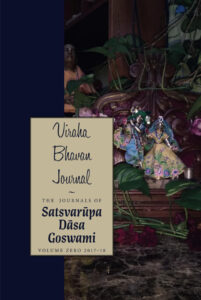
Viraha Bhavan Journal (2017–2018) was written by Satsvarūpa Mahārāja following a brief hiatus in writing activity, and was originally intended to be volume 1 in a series of published journals. However, following its completion and publication, Mahārāja again stopped writing books, subsequently focusing only on what became his current online journal, which began in August of 2018.

At first, I took it hard that I would have to live surrounded by the firemen, and without my own solitude. After all, for decades I had lived in my own house with my own books and my own friends. I was also now a crippled person who couldn’t walk, living among men who did active duties. But when Baladeva explained it to me, how it was not so bad living continually with other firemen and living in the firehouse with its limited facilities, I came to partially accept it and to accept the other men. I came to accept my new situation. I would live continually in the firehouse and mostly not go outside. I would not lead such a solitary life but associate with the other firemen.
Let me write sweet prose.
Let me write not for my own benefit
but for the pleasure of Their Lordships.
Let me please Kṛṣṇa,
that’s my only wish.
May Kṛṣṇa be pleased with me,
that’s my only hope and desire.
May Kṛṣṇa give me His blessings:
Kṛṣṇa Kṛṣṇa Kṛṣṇa Kṛṣṇa Kṛṣṇa he
Rāma Rāghava Rāma Rāghava
Rāma Rāghava rakṣa mām.
You mentioned that your pathway has become filled with stumbling blocks, but there are no stumbling blocks. I can kick out all those stumbling blocks immediately, provided you accept my guidance. With one stroke of my kick, I can kick out all stumbling blocks. —Letter by Śrīla Prabhupāda, December 9, 1972.
The Writing Sessions are my heart and soul. I’m trying my best to keep up with them. I am working with a few devotees, and they are far ahead of me. I wander in the wilderness of old age. I make my Writing Sessions as best I can. Every day I try to come up with a new subject. Today I am thinking of my parents. But I don’t think of them deeply. They are long gone from my life. Śrīla Prabhupāda wrote a poem when he was a sannyāsī, and he said now all my friends and relatives are gone. They are just a list of names now. I am like that too. I am a sannyāsī with a few friends. I love the books of Śrīla Prabhupāda. I try to keep up with them. I read as much as I can and then listen to his bhajanas.
The metaphor is song. Explain it. Yes, particulars may not seem interesting or profound to readers who want structured books.
Wait a minute. Don’t pander to readers or concepts of Art. But Kṛṣṇa conscious criteria are important and must be followed. So, if your little splayed-out life-thoughts are all Kṛṣṇa conscious, then it’s no problem.
I am near the end of my days. But I do like the company of like-minded souls, especially those who are Kṛṣṇa conscious. Yes! I am prone to Kṛṣṇa consciousness. I have been a disciple of Bhaktivedanta Swami Prabhupāda for maybe almost sixty years. Sometimes I fail him. But I always bounce back and fall at his feet. It is a terrible thing that I sometimes do not have the highest love for him. It is a terrible thing. Actually, however, I never fall away from him. He always comes and catches me and brings me back to his loving arms.

This edition of Satsvarūpa dāsa Goswami’s 1996 timed book, Upstate: Room to Write, is published as part of a legacy project to restore Satsvarūpa Mahārāja’s writings to ‘in print’ status and make them globally available for current and future readers.
A factual record of the reform and change in ISKCON guru system of mid ’80s.

Readers will find, in the Appendix of this book, scans of a cover letter written by Satsvarūpa Mahārāja to the GN Press typist at the time, along with some of the original handwritten pages of June Bug. Together, these help to illustrate the process used by Mahārāja when writing his books during this period. These were timed books, in the sense that a distinct time period was allotted for the writing, during SDG’s travels as a visiting sannyāsī
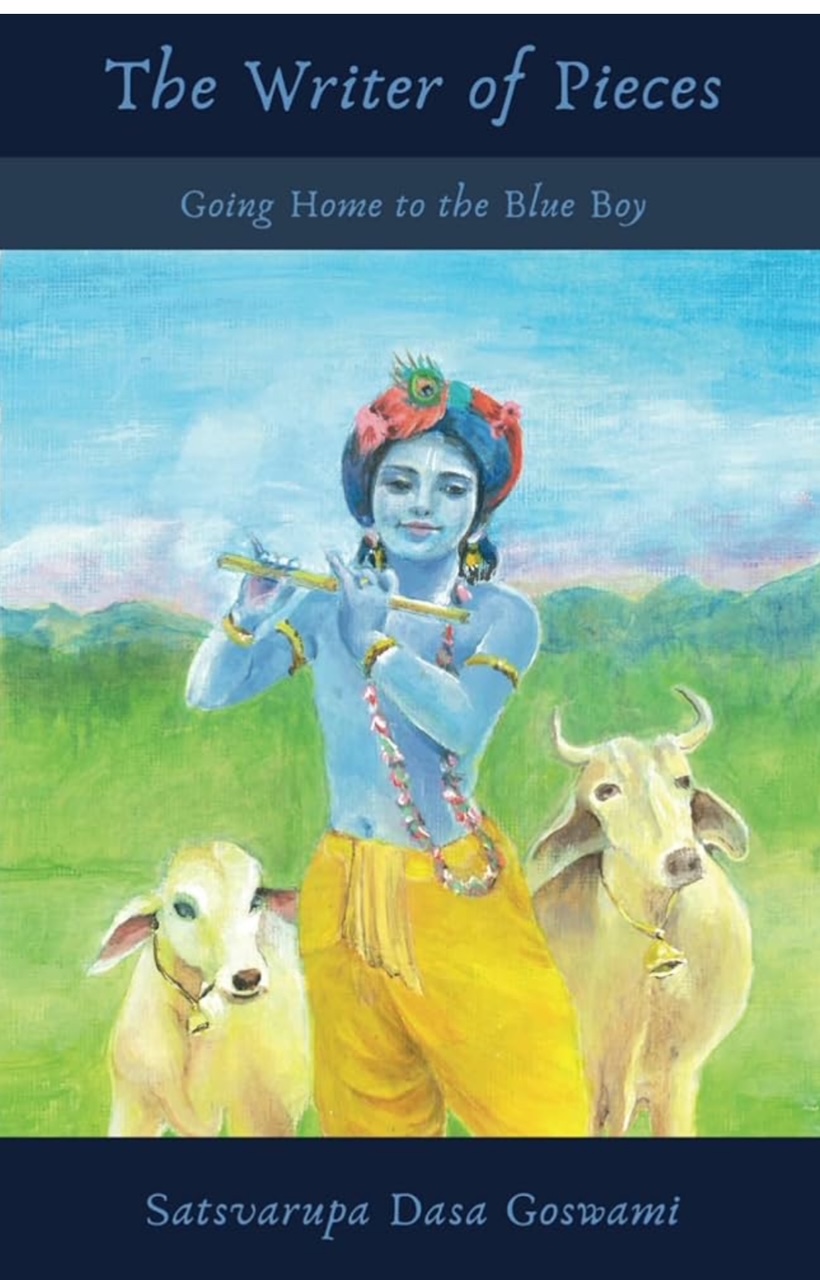
Don’t take my pieces away from me. I need them dearly. My pieces are my prayers to Kṛṣṇa. He wants me to have them, this is my way to love Him. Never take my pieces away.

Many planks and sticks, unable to stay together, are carried away by the force of a river’s waves. Similarly, although we are intimately related with friends and family members, we are unable to stay together because of our varied past deeds and the waves of time.
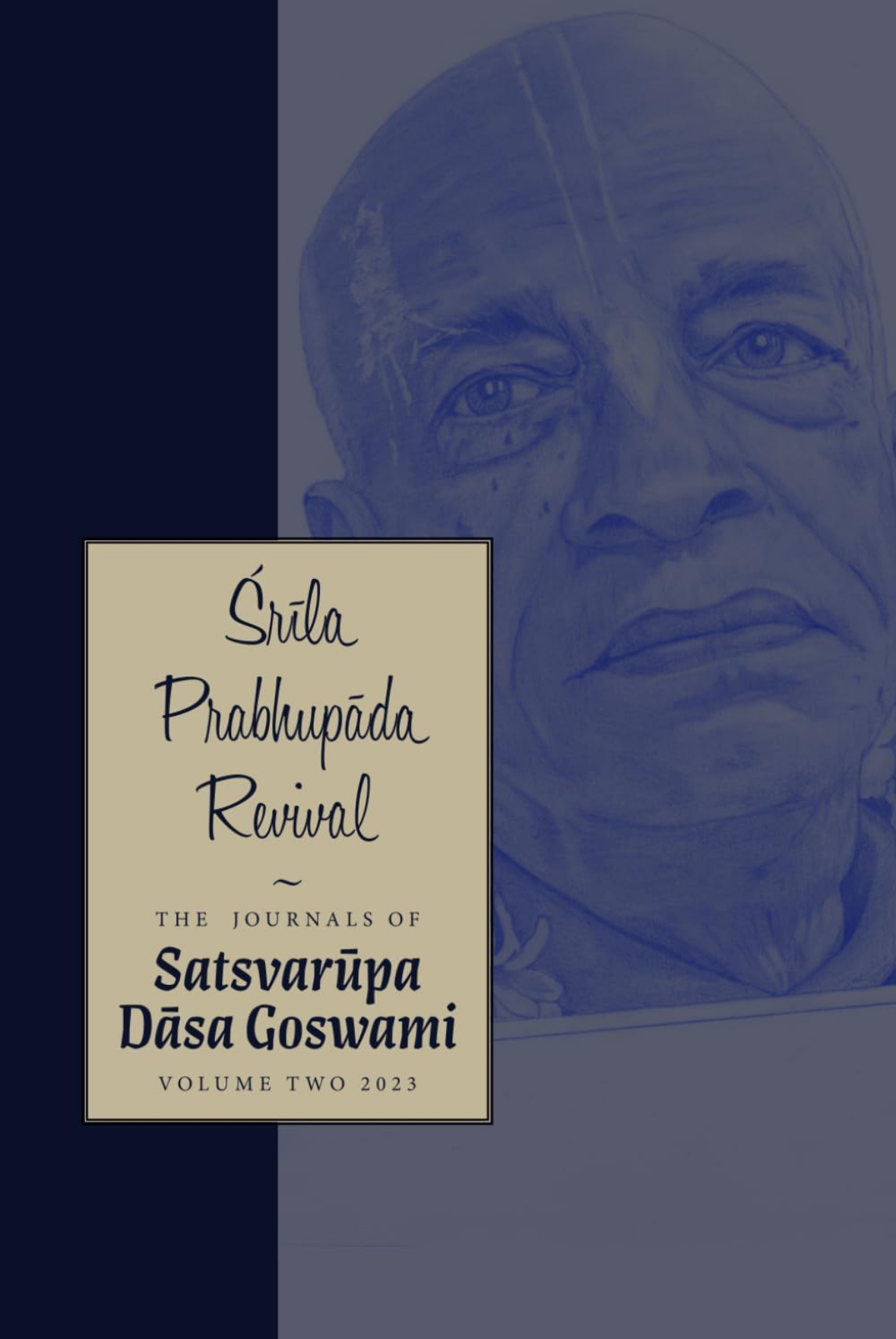
To Śrīla Prabhupāda, who encouraged his devotees (including me) To write articles and books about Kṛṣṇa Consciousness.
I wrote him personally and asked if it was alright for his disciples to write books, Since he, our spiritual master, was already doing that. He wrote back and said that it was certainly alright For us to produce books.
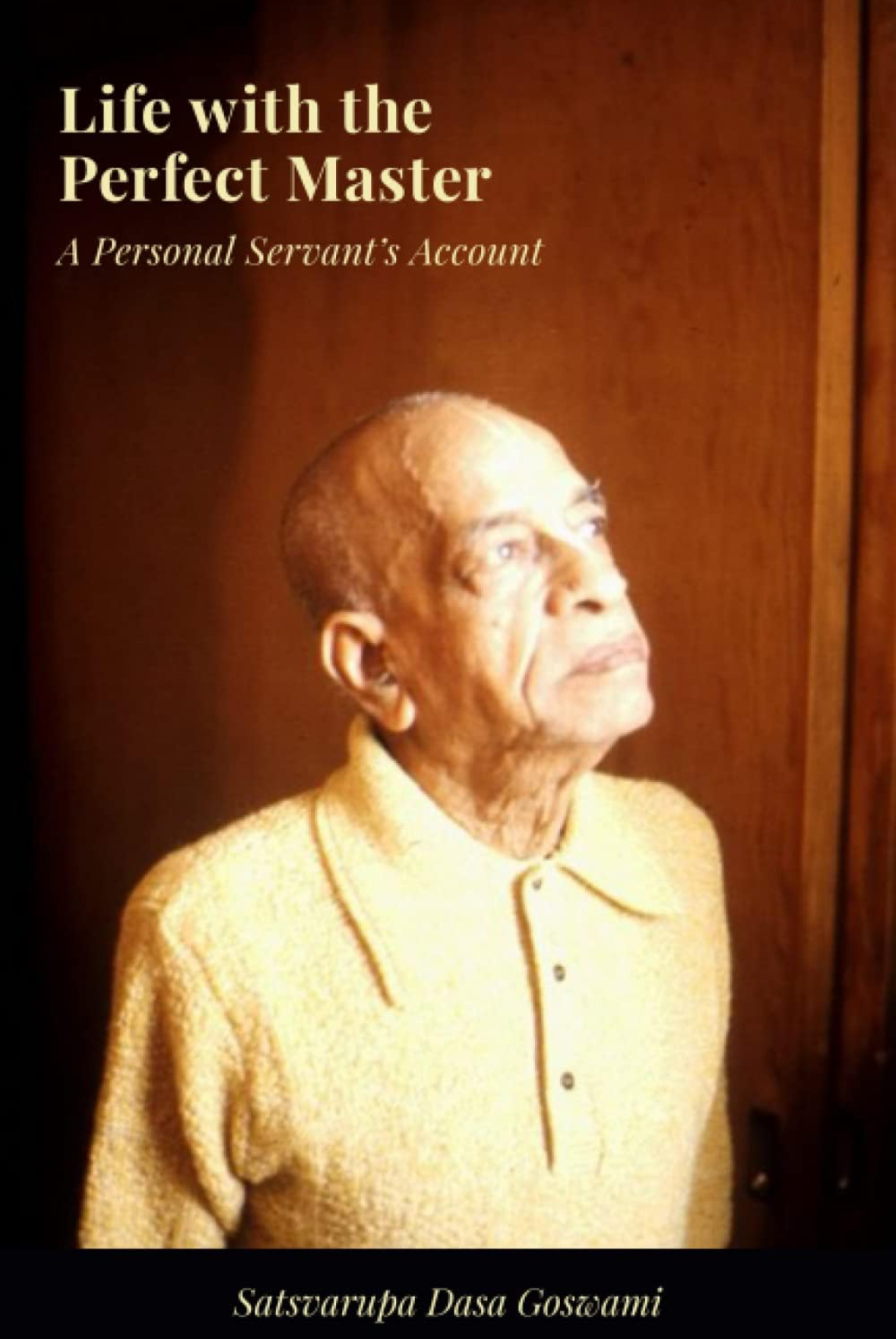
I have a personal story to tell. It is a about a time (January–July 1974) I spent as a personal servant and secretary of my spiritual master, His Divine Grace A.C. Bhaktivedanta Swami Prabhupäda, founder-äcärya of the International Society for Krishna Consciousness. Although I have written extensively about Çréla Prabhupäda, I’ve hesitated to give this account, for fear it would expose me as a poor disciple. But now I’m going ahead, confident that the truth will purify both my readers and myself.

First published by The Gītā-nāgarī Press/GN Press in serialized form in the magazine Among Friends between 1996 and 2001, Best Use of a Bad Bargain is collected here for the first time in this new edition. This volume also contains essays written by Satsvarūpa dāsa Goswami for the occasional periodical, Hope This Meets You in Good Health, between 1994 and 2002, published by the ISKCON Health and Welfare Ministry.

This book has two purposes: to arouse our transcendental feelings of separation from a great personality, Śrīla Prabhupāda, and to encourage all sincere seekers of the Absolute Truth to go forward like an army under the banner of His Divine Grace A.C. Bhaktivedanta Swami Prabhupāda and the Kṛṣṇa consciousness movement.
A single volume collection of the Nimai novels.
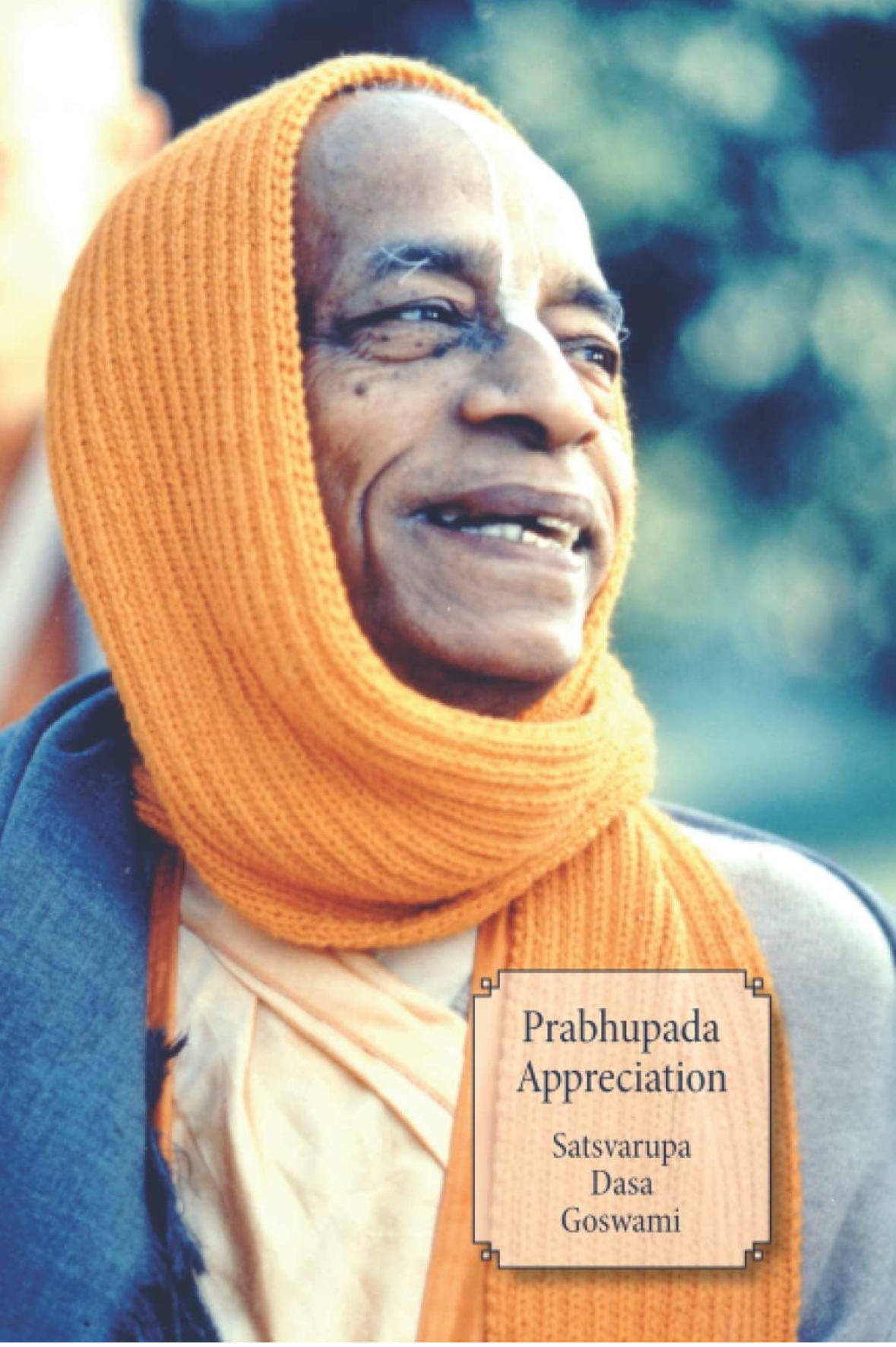
Śrīla Prabhupāda was in the disciplic succession from the Brahmā-Mādhva-Gauḍīya sampradāya, the Vaiṣṇavas who advocate pure devotion to God and who understand Kṛṣṇa as the Supreme Personality of Godhead. He always described himself as simply a messenger who carried the paramparā teachings of his spiritual master and Lord Kṛṣṇa.
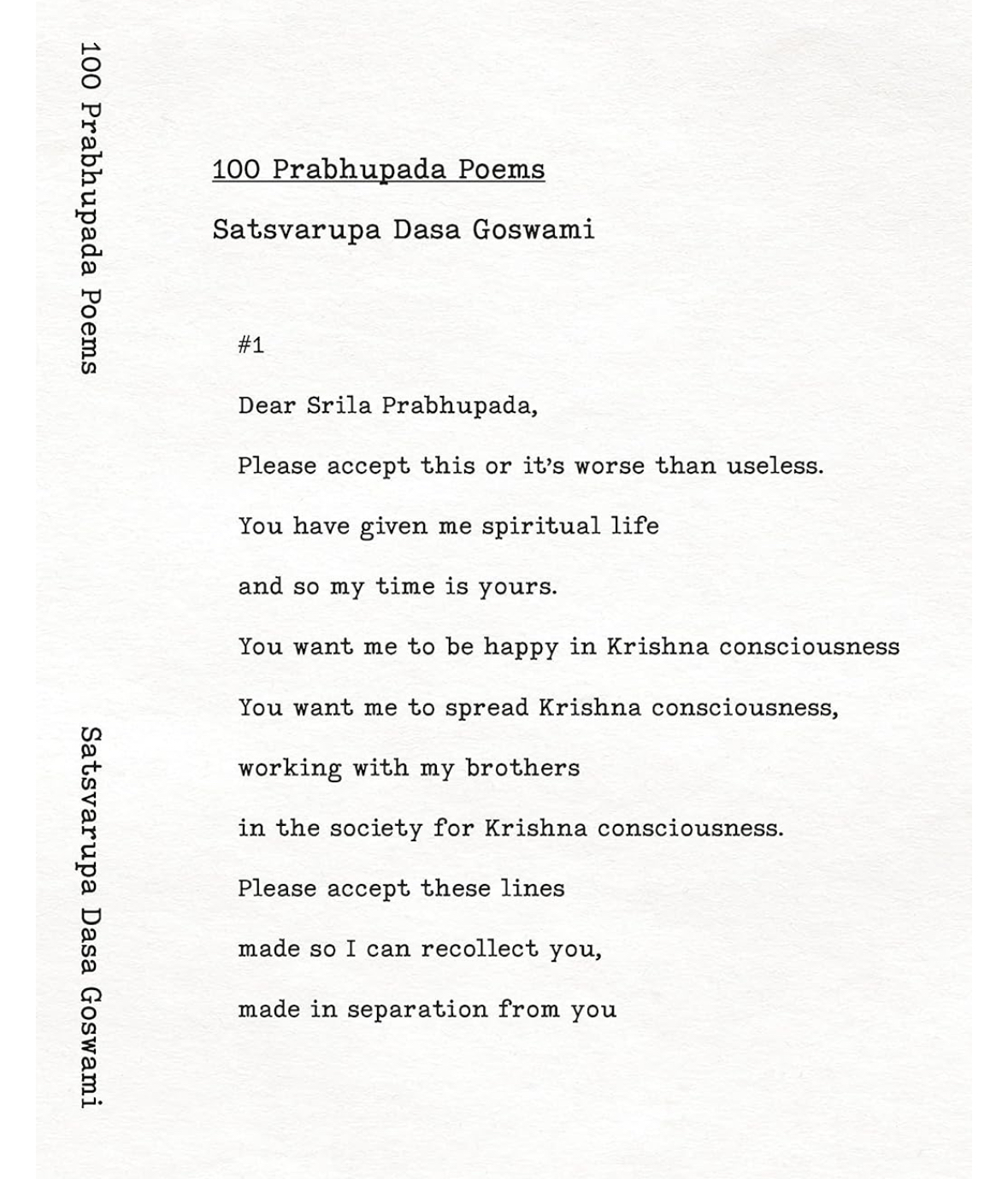
Dear Srila Prabhupada,
Please accept this or it’s worse than useless.
You have given me spiritual life
and so my time is yours.
You want me to be happy in Krishna consciousness
You want me to spread Krishna consciousness,
This collection of Satsvarūpa dāsa Goswami’s writings is comprised of essays that were originally published in Back to Godhead magazine between 1966 and 1978, and compiled in 1979 by Gita Nagari Press as the volume A Handbook for Kṛṣṇa Consciousness.
This second volume of Satsvarūpa dāsa Goswami’s Back to Godhead essays encompasses the last 11 years of his 20-year tenure as Editor-in-Chief of Back to Godhead magazine. The essays in this book consist mostly of SDG’s ‘Notes from the Editor’ column, which was typically featured towards the end of each issue starting in 1978 and running until Mahārāja retired from his duties as editor in 1989.

This collection of Satsvarupa dasa Goswami’s writings is comprised of essays that were originally published in Back to Godhead magazine between 1991 and 2002, picking up where Volume 2 leaves off. The volume is supplemented by essays about devotional service from issues of Satsvarupa dasa Goswami’s magazine, Among Friends, published in the 1990s.

“This is a different kind of book, written in my old age, observing Kṛṣṇa consciousness and assessing myself. I believe it fits under the category of ‘Literature in pursuance of the Vedic version.’ It is autobiography, from a Western-raised man, who has been transformed into a devotee of Kṛṣṇa by Śrīla Prabhupāda.”
 The Best I Could Do
I want to study this evolution of my art, my writing. I want to see what changed from the book In Search of the Grand Metaphor to the next book, The Last Days of the Year.
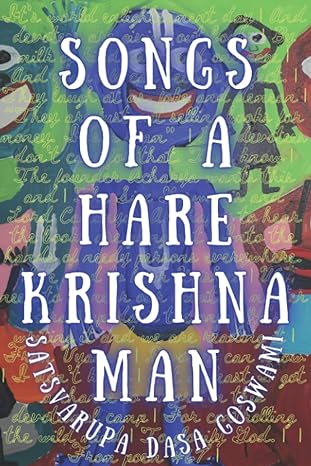 a Hare Krishna Man
It’s world enlightenment day
And devotees are giving out books
By milk of kindness, read one page
And your life can become perfect.
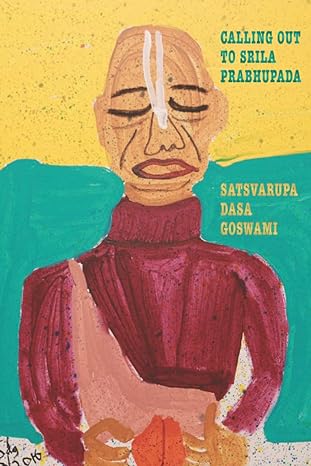 Calling Out to Srila Prabhupada: Poems and Prayers
O Prabhupāda, whose purports are wonderfully clear, having been gathered from what was taught by the previous ācāryas and made all new; O Prabhupāda, who is always sober to expose the material illusion and blissful in knowledge of Kṛṣṇa, may we carefully read your Bhaktivedanta purports.
I use free-writing in my devotional service as part of my sādhana. It is a way for me to enter those realms of myself where only honesty matters; free-writing enables me to reach deeper levels of realization by my repeated attempt to “tell the truth quickly.” Free-writing takes me past polished prose. It takes me past literary effect. It takes me past the need to present something and allows me to just get down and say it. From the viewpoint of a writer, this dropping of all pretense is desirable.
 Geaglum Free Write
This edition of Satsvarūpa dāsa Goswami’s 1996 timed book, Geaglum Free Write Diary, is published as part of a legacy project to restore Satsvarūpa Mahārāja’s writings to ‘in print’ status and make them globally available for current and future readers.