
We need to expand our team of proofreaders as we aim to increase the rate of republication of Satsvarūpa Mahārāja’s books as well as new books that he writes.
This includes a need for fluent bilingual Spanish and English speakers to proofread Spanish translations (we currently have around 20 Spanish translations waiting to be proofread).
Anyone interested in this particular service should contact Manohara dāsa at [email protected]
If you would like to help, please contact Kṛṣṇa-bhajana dāsa at [email protected] or [email protected] and we will find you a service that utilizes your talents.
Krsna appeared in the womb of ISKCON. Although the chanting of the holy name is absolute, if chanted by someone performing sinful acts, then the full effect is not there. Allen Ginsberg went to India and brought back the holy name even before Prabhupada, but how effective was that marijuana-homosexual chanting? The holy name has to be chanted by one who is serving Srila Prabhupada in the International Society for Krishna Consciousness. Then the chanting is pure. Then the full effect is there.
******
There is no “secret” to japa; it is a struggle. There is no easy shortcut. The secret is to surrender to the struggle. The secret is to be afraid of death and to take it as very urgent that you must chant Hare Krsna. We used to have a slogan, “Chant while you can,” on some posters and show a scary picture of a graveyard. So we have to think like that: “Chant while you can.” That is the secret.
******
You develop love of Krsna by crying as a child cries for the mother, “Krsna, son of Nanda, I am stuck in this ocean of birth and death. Please save me and fix me as one of the atoms at Your lotus feet.”
******
The best thing is that you just pray to the holy name and hear the sound. The stage of thinking of Radha and Krsna and Their forms will come automatically. It cannot be so much forced. When the mind wanders, bring it back in a mood of prayer and supplication, thinking, “O holy name, I want to chant, I want to hear, I want to be engaged in Your service by chanting and hearing.” Then simply practice the mantra yoga of vibrating with the tongue and hearing with the ear.
******
Don’t make interpretations or imaginations on the holy name. As far as the love Krsnadasa Kaviraja speaks of in Caitanya¬caritamrta, that is the highest stage. We should aspire to that and make endeavor.
******
As far as controlling the mind, two senses engaged are sufficient. If we engage the process of hearing and the process of chanting with the tongue, then these two senses can capture the mind on the Hare Krsna mantra.
******
We have to invest more and more our thinking, feeling, and willing into our chanting, not thinking that we will surpass this chanting or that the chanting will lead to something different from chanting. I told this several times to one devotee who said he chanted sixty-four rounds on Janmastami. As he chanted he had this feeling that something was going to happen, that if he chanted enough, “it” was going to happen. But his conclusion at the end was that he was still a rascal, even after chanting sixty-four rounds. Another conclusion is that it’s not by chanting that “it” happens but “it” is happening while we chant. What we have to do is just invest more of our consciousness into it.
******
There is a pseudo-spiritual hippie impersonal philosophy that what’s really happening is whatever is happening now. It’s summed up in that phrase, “Be here now.” I had a friend who used to say, “As far as eternal, there’s no afterlife. But there is eternal—eternal means now, what’s happening now.” Actually that philosophy leads to hedonism—the moment, whatever is happening, is all there is, so you have to really get into it. And sometimes they try for spirituality that everything right now is holy, and this is what is transcendental. You just invest yourself, invest meaning into the temporary life, and that is religious. But that’s bogus because there is another life; there is Krsna, the Supreme Personality of Godhead, beyond this world. It’s not that this is all there is, so you have to invest everything here. We don’t subscribe to that philosophy. But we can take that mentality. We can apply it—”Be here now”—because we have got eternal transcendental life given to us in Krsna consciousness. The chanting is Krsna, so for us that is true, that everything is here. “Be here now”—Kona is actually here in His name. All you have to do is get into it or get with it, that this is Krsna’s name.
pp. 100-3
Dear Srila Prabhupada,
My mind is my enemy, as the brahmana of Avanti-desa concluded. I come to you for relief. Your soft saffron, your kind look upon me, your youthfulness, your mercy. You sit behind your desk and chant on your beads. This is your last room on this earth. You preached all over the world and then came here to leave for the spiritual world.
That mind of mine, Srila Prabhupada, finds fault with Godbrothers, feels the tiredness of my body—my mind harasses me. He tells me I’m the best and then says, of course, that it’s not true. He stands alone and criticizes everyone and everything as superficial and flawed. What will we do with him? Why is he so insecure? At least I get relief when I see Radha-Syamasundara, Krsna-Balarama, and Gaura-Nitai.
In your last days, you spoke to your disciples about preaching and the basic philosophy of spirit versus matter. You spoke of Krsna’s will, which would determine whether you stayed in the world. You didn’t speak much about where you were going.
We can speculate on that next life or we can be intent about knowing our own places in the spiritual world, but I want to follow your example and preach in this world while regularly chanting and hearing of the name and nature of the Supreme Lord and His entourage as given in the Bhagavatam and Caitanya-caritamrta.
By studying and preaching I can forget the petty concerns of my anxious mind. The mind will be engaged in higher topics. You want this, Srila Prabhupada. There is no good reason for faultfinding or the constant lamentation over superficiality. Simply go to Krsna’s name, fame, qualities, and pastimes. Simply preach on the order of the spiritual master.
The double bed is low. I remember crowding around it during your last hours. Srila Prabhupada said we have to die like human beings, like Bhismadeva. Think of Krsna at the end. Either serve actively as long as we can and retire at the very end or keep going until the last breath.
Where will we go? We may not know. But we will go.
It’s Saturday—sparrows chirping loudly, cinema songs, and more visitors than usual. One lady wears an Indian Airlines cabin luggage tag on her bag. Where are they coming from? So many people were outside we had to thread through them before we could enter. Their clothes are all according to their region, but I don’t know how to tell which comes from where.
Srila Prabhupada, your Samadhi Mandir is so full of life. The populace is streaming in and out your doors. An ISKCON brahmacari explains to an older man, maybe his father, who you are. The hired pigeon-chaser is active and noisy. One of the Indian pujaris is cleaning the altar in front of you. I just came from reading the cleansing of the Gundica temple pastime.
Imagine if we did that here. Now there are a few leaves on the floor and a puddle of water in a place where we want to bow down.
Our brahmacari is sweeping up the leaves and the puddle, cleaning his heart. He wears the Vaisnava tilaka clear and artistically in twelve places.
Now another large group enters. Today they are well-dressed, not villagers with worn-out clothes, but city folk—men in fashionable Western clothes, ladies in clean saris. Some remind you of Americans—blue jeans, caps with beaks, fat mammas.
The crowds move in and out like breathing. Sometimes it’s quiet and empty and then it fills up with people. Srila Prabhupada draws them in and then lets them go, draws them in and then lets them go.
It would be nice if everyone had more to do with Srila Prabhupada and became his follower, chanting on japa-mala and reading his Bhagavad-gita As It Is. The Centennial aims to increase public awareness of Srila Prabhupada, and I’ll try to do something too.
He himself says that people are not interested because they are attached to sense gratification. Srila Prabhupada insists, “No illicit sex, no intoxication, no meat-eating, and no gambling. Chant Hare Krsna at least sixteen rounds.” For most people, even for a lord of England, this is “impossible.”
I look up and can’t even see Srila Prabhupada. A solid wall of visitors blocks my view. I wonder what they are thinking as they look up to him. I can’t help but feel it’s incomplete, the half a moment in which their minds and senses are arrested by the shiny golden murti and then they’re out the door again.
Out of thousands, only a few seek perfection. Out of those who achieve perfection, hardly one knows Me in truth. What is true for Sri Krsna is also true for His pure representative. Hardly one knows Srila Prabhupada in truth.
As I watch the visitors, I beg for more enthusiasm and depth. I don’t want padding or show-off phoniness in my own declarations of prabhupada-seva. I look for true affection and connection. It’s there, I simply have to uncover it. Just as the brahmacari is sweeping the floor with a broom, always attentive to keeping the place clears, so I want to be a serious, simple caretaker of the samadhi mandira that’s in my heart.
When I leave Vrndavana, I want to remember how we circumambulated his murti here. I want to feel the pull of this most sacred and relevant holy place. I’m a stranger everywhere else in Vrndavana. I am expected to give my rupees and keep moving. I’m not welcome. I don’t understand the people or the mood. The great acaryas in the past are unapproachable by me. They are so intense. But with Srila Prabhupada, I’m at home. I have no material home, so this is my home. He is my father. He knows me. He won’t forget me.
(Today I congratulated the brahmacari who was cleaning the Mandir. He then told me that he’s part of a group who are tending to the Mandir for a period of four months. They’re all disciples of H.H. Bhaktisvarupa Damodara Maharaja. This one brahmacari and his friend are from Burma and a few of the others are from Manipur.)
pp. 59-62
Caitanya Mahāprabhu continued traveling and visiting temples and deities. At Mallikārjuna tīrtha, He saw the deity of Lord Śiva and induced the people there to chant the Hare Kṛṣṇa mantra. He went to Ahovala, saw the Nṛsiṁha Deity and offered His prayers to the Lord there. Then He went to Siddhavaṭa, where He saw the Deity of Rāmacandra, the Lord of Sītādevi. At that place, a brāhmaṇa invited the Lord to take lunch. The brāhmaṇa constantly chanted the holy name of Rāmacandra and otherwise didn’t speak a word. The Lord then went to see the temple of Trivikrama and later went back to Siddhavata, where He again visited that brāhmaṇa who previously was chanting the name of Rāma. But this time He found the brāhmaṇa was constantly chanting the Hare Kṛṣṇa mahā-mantra. Lord Caitanya asked him, “My dear friend, kindly tell me what’s your position now?” The brāhmaṇa said that since his childhood, he had always chanted the name of Lord Rāma. But now, due to the influence of Lord Caitanya, he’s lost his lifelong practice. Since seeing Lord Caitanya, the name of Kṛṣṇa has been tightly fixed on his tongue, and the name of Lord Rāmacandra has gone far away. He then quoted from the scriptures:
“‘The pious results derived from chanting a thousand holy names of Viṣṇu three times can be obtained by only one utterance of the holy name of Kṛṣṇa.
“‘According to this statement of the śāstras, the glories of the holy name of Kṛṣṇa are unlimited. Still I could not chant this holy name. Please hear the reason for this.
“‘My worshipable Lord has been Lord Rāmacandra, and by chanting His holy name I received happiness. Because I received such happiness, I chanted the holy name of Lord Rāma day and night.
“‘By Your appearance, Lord Kṛṣṇa’s holy name has also appeared, and at that time the glories of Kṛṣṇa’s name awoke in my heart.
“‘Sir, You are that Lord Kṛṣṇa Himself. This is my conclusion.’
“Saying this, the brāhmaṇa fell down at the lotus feet of Śrī Caitanya Mahāprabhu” (Cc. Madhya-līlā, 9.33–37).
Walk on the boardwalk with my two comrades. They talk of Leibniz, Kierkegaard, Woody Allen, professional boxers, a recent book called Love’s Executioner, the pleasant weather. I’m mostly silent, and it’s difficult walking. No kṛṣṇa-kathā. A burly man comes by and sits in the gazebo with us. He says, “That was a long walk.” Then he lights up a Camel cigarette. We laugh ironically. He says smoking is good for your health. His father lived to a hundred and five and smoked every day. Nitāi-Gaurāṅga said his uncle died in his fifties from lung cancer and was a smoker.
“I’m sorry to hear that,” says the Camel smoker. He’s from San Francisco, visiting here on a kind of holiday, but it’s boring, there’s nobody here.
“It’s the off-season,” says Nitāi.
“There is no off-season in San Francisco,” says the burly, friendly man.
We exchange a few pleasantries and then separate. “So long.” The waves come in.
Back at the house, I finish my sixteen rounds.
Millions of people came to see Lord Caitanya because of His beauty and spiritual potency. Among them was a cult of Buddhists, who came to establish their own cult by argument. Vaiṣṇavas do not accept the truth based on logic and argument but by the truth of the revealed scriptures. But because preachers have to meet those who defend on logic and argument, the Vaiṣṇava preacher should also be able to defeat the nondevotees with strong, logical arguments. Lord Caitanya did this when He met the Buddhists on his southern tour. Bhaktivinoda Ṭhākura states that according to the Buddhists, there are ten principles of gaining knowledge. Lord Caitanya broke each and every one of those principles with strong arguments. The Buddhist philosophers felt both shame and fear. They became very unhappy, and they began to make a plot against Lord Caitanya. They took a plate of untouchable food and gave it to Him to eat as mahā-prasādam. Prabhupāda takes the opportunity to define what is actually prasādam. He says that sometimes preachers in the Kṛṣṇa consciousness movement have to accept food in a home where the householder is a non-Vaiṣṇava. But if the food is offered to the Deity, it can be taken. Ordinary food cooked by avaiṣṇavas should not be accepted by Vaiṣṇavas. “Even if an avaiṣṇava cooks food without fault, he cannot offer it to Lord Viṣṇu, and it cannot be accepted as mahā-prasādam.” Lord Kṛṣṇa says He accepts food that is offered to Him with love and devotion.
“Kṛṣṇa can accept anything that is offered by His devotee with devotion. An avaiṣṇava may be a vegetarian and a very clean cook, but because he cannot offer Viṣṇu the food he cooks, it cannot be accepted as mahā-prasādam. It is better that a Vaiṣṇava abandon such food as untouchable” (Cc. Madhya-līlā 9.53, purport).
When the untouchable food was offered to Lord Caitanya, a very large bird appeared, picked up the plate and flew away. The bird then dropped the plate on the Buddhists. The plate fell on the head of the eldest Buddhist, cutting his head with the edge. He became unconscious, and his disciples ran to the feet of Lord Caitanya begging that He forgive their spiritual master and bring him back to life. Lord Caitanya replied to the Buddhist disciples, “You should all chant the names of Kṛṣṇa and Hari very loudly near the ear of your spiritual master” (Cc. Madhya-līlā 9.59). When they did this, their spiritual master regained consciousness, and he also began to chant the holy name of Lord Hari. In actuality, they all became Vaiṣṇava devotees as a result of this chanting. But it was the disciples of the Buddhist guru who chanted. They chanted, and he responded, so they were his guru, and he was the disciple.
pp. 45-49
My Godbrother Ghanasyama dasa brahmacari (later awarded the sannyasa title Bhakti Tirtha Swami by Srila Prabhupada) and I were members of a traveling team distributing Srila Prabhupada’s books at the universities. So as not to alarm professors and librarians–who had their own stereotyped idea of how book salesmen should appear–we wore business suits and grew long hair or wore wigs. One freezing winter day, Ghanasyama and I found ourselves walking across the campus of the University of Wisconsin in Milwaukee, wearing overcoats we had purchased for two dollars each at a charity store and carrying our heavy book valises. Just as we were about to part company and go knocking on professors’ doors, Ghanasyama turned to me and said, “Wow! Who would have imagined that spiritual life would be like this?” My Godbrother and I laughed together to find ourselves serving our spiritual master in a way we had never before dreamed of. The contrast between our salesperson’s appearance and our actual lives as brahmacaris, as well as the contrast between what we had previously conceived of as spiritual activity and our present, unusual roles, made us both laugh. And the humor was pleasantly sustained by our strong convictions that selling books in Srila Prabhupada’s service was genuine spiritual life, and that acting in this way liberates us from material desires.
In a similar way, many of Srila Prabhupada’s followers find themselves in situations which smash their previously held stereotyped ideas of religious life. Just to be a servant is something most of us never thought of as either spiritual or desirable. A servant, we thought, was a black slave in the pre-Civil War days of America, or a hired valet or traditionally dressed butler as might appear in the Hollywood movies. Who could imagine that being a servant of God–and not even a direct servant but a servant of the servant of the servant of God, one hundred times removed–is actually the highest spiritual position?
Before meeting with Krishna consciousness, some of us may have thought that spiritual life must be dry or even boring, and meant fasting of observing vows of silence. If so, we were pleasantly surprised to find that it is filled with festivals and chanting Hare Krishna in ecstatic, dancing congregations, and feasting on sumptuously cooked prasadam. And upon reading Srila Prabhupada’s books, we may have been surprised to find not dry, intellectual wrangling but the delightful pastimes of the Supreme Lord and His associates. The childhood pastimes of Krishna in Vrndavana are very playful and charming, and Lord Caitanya’s pastimes are sometimes humorous, as when His devotees engage in joking or when they play at water sports. And Lord Caitanya’s dealings with His devotees are always loving. Srila Rupa Goswami encourages the devotees to engage in exchanges of love with each other by sharing and accepting gifts, by giving and accepting prasadam, by revealing their minds intimately, and by hearing the personal revelations of others. Spiritual theater, art, and music, as well as opportunities for wide travel, makes for a busy, active life.
The real conclusion of this phenomenon–and it is a triumphant one experienced by every devotee–it that despite the seemingly unusual activities which the Krishna consciousness devotee may occasionally take on in this world, Krishna consciousness is actually liberation from all material affairs. But even if we grant that Krishna conscious devotee is acting on the liberated platform, a big question remains: What do we mean by liberation?
Ultimately, liberation is not the goal of spiritual life, but it is an automatic byproduct of devotional service. As stated by the Vaisnava saint Srila Bilvamaìgala, “If I have unflinching devotion unto the lotus feet of the Supreme Lord, then mukti, or liberation, serves me as my maidservant.” A pure devotee serves the Supreme without any motive; he does not serve the Lord with the motive of some material return or even with the hope that by serving he will become liberated. As Lord Caitanya writes in His Siksastaka prayers,
O almighty Lord, I have no desire for accumulating wealth, nor have I any desire to enjoy beautiful women; neither do I want numbers of followers. What I only want is that I may have Your causeless devotional service in my life, birth after birth. (Siksastaka 4)
Out of humility, the pure devotee does not think himself fit for liberation. He is willing to be born again in the material world, and his only request is that he be allowed to associate with pure devotees and not forget his beloved, the Supreme Personality of Godhead. Although he does not serve for the purpose of going back to Godhead, the pure devotee’s mind and activities are so pleasing to Krishna that He brings His pure servant to Him for eternal association in the spiritual world.
Although the devotee’s services to the spiritual master are multifarious and easily award one liberation, they sometimes bring the devotee into direct conflict with the material world. These occasions provide tests of one’s sincerity and trust in Krishna consciousness. It is one thing to enjoy the liberated status of devotional service when one’s activities provide humorous contrasts to stereotyped ways of life. But when the execution of one’s spiritual duties seems to bring one only trouble, the tendency is to have second thoughts and in a different mood ask oneself, “Is this what I came to spiritual life for?”
Once while I was distributing books on a street in Tucson, Arizona, a storeowner assaulted me and broke my sannyasa rod over my head and shoulders. And once while singing in a kirtana at the Boston Commons, a thrown bottle hit me in the head. Many devotees have gone to jail for the offense of chanting Hare Krishna in public places. While living peacefully in their temples and ashrams, devotees have been shot at and bombed. The news media regularly blasphemes and abuses the Krishna consciousness movement, and if a devotee decides to dedicate his or her life to Krishna consciousness, there is a good chance that he or she will be rejected by family, friends, and society.
Aside from tolerating the negative attitudes, a devotee must be responsible to push on the mission of Krishna consciousness in a revolutionary spirit. The Krishna consciousness movement is not quietism or mere armchair speculation. It is war against maya. Thus we can understand that liberation does not mean that one simply meditates “I am eternal” and does nothing. In the Krishna consciousness movement, seemingly material duties are undertaken not for anyone’s personal gratification but for the purpose of pleasing Krishna. One who willingly undertakes and who does not resent the headaches and entanglements which may result from practical devotional service in this world, becomes very dear to Krishna and enters into an intimate relationship with Krishna in the spiritual world.
In an earlier essay, we quoted Prabhupada’s aphorism “Deserve and then desire.” One cannot enter into his relationship with Krishna and the gopis simply by desiring, but one has to deserve this by the good credits of service unto the spiritual master. Therefore a devotee should never feel sorry if his devotional service leads him into many difficulties and burdens. One should be assured that these burdens are qualifying him and training him to become the eternal associate of Krishna. The more burden and responsibility one is willing to take for Krishna, the more dear he becomes to the Lord.
pp. 241-44
He wasn’t writing much.
Sometimes weeks went by,
only a few digits each morning.
Demanding work had prevented him:
managing Bombay temple construction,
training us up in Vrndavana,
healing an ISKCON schism in Mayapur,
or worrying.
A conspiracy was working itself out
of his spiritual movement.
Was a trusted disciple in trouble?
Or it might be his personal health.
But diminishing in his writing
shouldn’t be, it was wrong,
it was like dying.
Sincere disciples had to right it,
find a place where he could go,
like Hawaii, peaceful, where
sometimes he had done
hundreds of digits per day.
He agreed, and even mentioned
Aurobindo’s practice of seeing people
only one day a year.
Just think, Prabhupada constantly writing—
at least for some time!
So he went, with a determined, trained group,
servant, editor, typist, cook,
and an attitude—
to concentrate on Srimad-Bhagavatam,
now in the Seventh Canto.
We loved to see him at writing,
knew it wasn’t ordinary work,
went best when there were no door slams
(knew also not to demand him
to produce as if it were factory labor).
But we waited outside the door,
eager to see early morning results,
carrying out the tape to be typed,
good news for the world.
We had seen him
sometimes through a keyhole,
the microphone in hand,
pausing a second, then speaking,
head moving for emphasis,
his private audience with Krishna. And yet
he was addressing everyone for thousands of years
—and all-scholarly! Vaishnava-siddhanta!
Deep in the universe of eternal Sanskrit,
twelve commentators from different centuries
rushing together just as sages all came
to the meeting of Pariksit and Sukadeva.
Now they flew to join the Bhaktivedanta purports,
combined meeting of minds, speakers, hearers,
descending from spiritual planets,
to the clean, quiet room and desk of Prabhupada,
to the lips, the mouth, the gestured words,
the clicking off and on of the “pause” button.
We saw the externals, knew it was eternal
but could only wonder
at the extent of the intimacy
—Prabhupada, Krishna, and the acaryas.
We could not even explain our own
inconceivable pleasure.
He had said it was his most
important service to his Guru Maharaj,
so for us also, it was like a benediction moon,
better than money, fame, women,
better than sports, politics, business.
It was extended, full kirtana,
singing and dancing,
the perfection of our family love,
and the most serious preaching to the world.
And, in Hawaii,
he immediately increased
to 200-300 digits a day.
One night he shut his door
at nine P.M. and stayed up all night,
finishing the Seventh Canto
“completed in the temple of the Panchatattwa
by the mercy of Sri Krishna Chaitanya . . .”
On Waikiki Beach one morning,
his servant exclaimed joy
that Prabhupada was working so fast.
“Oh, I can finish very quickly,”
Prabhupada said, “but I have to present it
for their understanding. It requires
deep thought. very carefully,
to present it for the common man.”
And who was that common man?
It is me, and you, and everyone.
The big scholar is a common man—
he knows nothing of Krishna—
and Prabhupada made sure to give him
Krishna many times on every page.
The intellectuals, world-leaders,
youth-in-search, future generations, black, white, yellow races, all are common men, kirata-hunandhra-pulinda-pulkasa, because wherever you go, you find no one knows Krishna unless he has read these books. Common men become rare souls, led by his purports into comprehension—Krishna is the Supreme.
He knew these books were like gold.
They are also very grave, he said,
not everyone can understand,
but more than ever before
he was making it possible,
and as soon as he would write it,
it would be rushed—but carefully—
into print, and rushed,
sometimes not so carefully—
into the hands of conditioned souls.
Even Jagai and Madhai could be saved
at least by the touch,
and if he could read a single page . . .
Devanagari script, romanized spelling,
word-for-word synonyms, English text,
elaborate purport,
what he had begun in India in 1960
became his life’s method,
a complete tradition unto itself.
Were we pleased to be there
when he produced them,
or are we pleased to hear of it now?
Are we pleased to hear how they were sold?
But now we have to do it,
read them and distribute.
That is a life’s work also
for whoever is his follower.
The reading—every day—
is the best way to remember him.
He said so—to hear him
resonant in your mind and thinking,
creates faith anew,
builds strong the fibers of conviction,
or as he said, “protects us against
the onslaught of the atheist.”
We will see Krishna in Srimad-Bhagavatam
and know He is everywhere, always with us.
The careful reading daily
will also put us transcendental
to the constant tricks of fate and illusion
that try to plague us and harass us.
We will be safe and sound,
even in calamity,
when we remember Krishna
in the pages of the Bhagwat-book
from the purports of the Bhagwat-person,
and from that regular reading,
we will go back to Godhead.
The distribution—also every day
the best engagement for a devotee,
and Krishna says he is the best servant.
The honesty of living obedient—
“That you have received this knowledge
is not enough; you must
distribute it to others.”
How? Where?
Wherever people are,
for sale or gift,
by persuasion, or by mail,
to the passing crowds,
to people in their homes,
in classrooms—or if you know
a better way, then do it,
figure it out, but give them out.
And when you see someone reading,
who before knew nothing
and when later you see him
becoming a Krishnaite,
then you know, this is the potency.
This is why Prabhupada
stayed up all night,
and why we were so happy
to be with him
as he produced his priceless books.
pp. 286-92
Recently I spoke to an acquaintance who is practicing “meditation” and I asked him the goal of his practice. The answer was, “liberation. To merge with the one.” Expressions such as “annihilation of the ego” and “merging with the Supreme” are commonly passed back and forth in this age of the widely attended Yoga and meditation class. Regarding liberation, one significant question is, “What is liberation?” And also, we want to know—what are the chances of a person actually gaining liberation? For answers, we best go to the source of the very concept of liberation and the place where all its techniques are elaborately and carefully taught; that is, the scriptural literature of India, called the Vedas. Yoga technique and meditation are given in gist in the Bhagavad-gita, spoken by Lord Krsna, the Personality of Godhead, and expounded further in the Srimad-Bhagavatam which is considered the postgraduate study of the Bhagavad-gita.
Liberation generally refers to freedom from the bodily concept of life. But unless there is positive, non-bodily activity or spiritual activity, then liberation is a merely theoretical, lip-service liberation. To sit in a posture of meditation and think, “I am moving the moon, I am moving the sun, I am moving the stars,” and then 10 minutes later to be dictated to by the tongue—“I must have a cigarette”—is not liberation; nor at the time of death can such a “yogi” be expected to be liberated to the spiritual sky. Without practical devotional service to Krsna, Giver of Liberation, the idea of liberation is just a negative concept of material life. The Vedic literature describes four material categories of civilized life, and liberation is among them. The first is religiousness. This means to perform sacrifice, churchgoing or pious acts with the aim of being rewarded by promotion to a heavenly material planet. The aim behind such acts is personal gratification; by being religious I will be rewarded. It is noted by A. C. Bhaktivedanta Swami in the Srimad-Bhagavatam that nowadays the church, mosque or temple is an empty place because the people believe that they can get their desired economic ends without making prayers to God. Therefore, the second material activity of civilized persons is economic development—building, making money, doing business. The third activity is sense gratification culminating in sex life. In fact, sex life is the essential background for the first two material activities. The fourth, mukti or liberation, is a little different, although it is a material activity. After being frustrated by all the material activities and seeing that either failure or success are really failure due to the disadvantages of birth, death, disease and old age, a person desires liberation. He desires to become one with the Supreme. He is too bitter with all his experiences to be happy in material life. But in itself this is only a negative concept. By such liberation he thinks he wants to lose the individuality which has caused him so much pain, and instead, to merge with the oneness of spiritual existence.
The background for understanding liberation starts with gaining true identity of the self. In the beginning stages it expresses itself in the desire to be one with the Spirit. This is called Brahman realization. If someone is actually realized in Brahman that is a great thing. It is called brahma-bhuta stage, and it is characterized by joyfulness. The joyfulness is due to understanding that, “I am not this body.” This is carefully described by Lord Krsna in the Second Chapter of the Bhagavad-gita. The living entity is there declared to be spirit-soul, or Brahman. In the Third Chapter Lord Krsna reveals that for full realization of Brahman, you have to work in Brahman. Bhagavad-gita (3.5) says, “Nobody can refrain from doing something, not even for a moment.” And in his Purport to that verse, A. C. Bhaktivedanta Swami writes, “This is not a question of embodied life; it is the nature of the soul to be always active. The proof is that without the presence of the spiritual soul there is no movement of the material body. The body is only a dead vehicle to be worked by the spirit soul and therefore it is the nature of the soul itself to be always active, and cannot stop even for a moment. The spirit soul has to be engaged in the good work of Krsna consciousness, otherwise it will be engaged in occupations dictated by the illusory energy.” When one realizes “I am Brahman,” that means he has no death, just like Krsna, the Supreme Brahman. This is a joyful position, “I am not this perishable body, that is not my self, I am spirit soul.” That is all well and good, but then, what do I do? It is not that the liberated state is without activities. This question was asked by Sanatana Gosvami, the learned disciple of Lord Caitanya: “You have said that I am already liberated, now what are my duties in the liberated state?” The impersonalists, however, do not like to take up the devotional service path; they are simply desirous of merging into the One, described as the brahmajyoti effulgence. That destination is explained in the Gita. Brahmajyoti is not material, it is the spiritual effulgence coming from the Body of Sri Krsna; it is eternal spiritual light. This light illumines the spiritual world and the naturally dark material world is lit by its reflection. And to merge in this light is the goal of the impersonal liberation. A. C. Bhaktivedanta Swami, who is a fully realized devotee of the Personality of Godhead, states the disadvantages of aiming at the brahmajyoti as the topmost goal:
In the brahmajyoti the spirit souls on account of their impersonal views are devoid of a body, exactly as here in maya there are ghosts who are devoid of any gross bodies. The ghost, being devoid of a body, … suffers terribly because he is unable to satisfy his senses. The spirit souls in the brahmajyoti, although they have no desire for sense gratification, … feel inconvenience like the ghost; and they fall down again in … maya’s atmosphere and develop a material body. In the Bhagavatam therefore it is said that persons who are impersonalists and do not develop the dormant devotional attitude, their intelligence is not pure; because for want of a spiritual body, they come down again to the material world. In the Bhagavad-gita it is clearly said by the Lord that the only way of not coming back to the material world is to be promoted to the spiritual planets. For the impersonalists there is no such assurance of not falling down in the whole Vedic literature. The conclusion is that without developing the spiritual body and without being situated on one of the spiritual planets, the so-called liberation is also illusion, or it is not complete. A spirit-soul who falls down from the brahmajyoti to the Kingdom of maya may have a chance of associating with a pure devotee, and then he may be elevated to the spiritual planets of Vaikuntha or to the Goloka Vrndavana. From the brahmajyoti there is no direct promotion to the spiritual planets …
—Letter to Rupanuga, July 24, 1969
(Back to Godhead, Vol. 1 #32 (January/February 1970)
pp. 95-99
Go ahead, go ahead, tell something to help people. Expose gently the inhuman situation in their religion and the lack of prayer in thy own heart. Ask, why do we have to rush through those japas?
Exposed, thy own heart – I cannot do much practical beyond these arts. When a man needed a plain rope to pull one car by another car, I could do nothing. Let me (here we go, reaching for the metaphor) provide the rope here then. The thick braided one that pulls you children out of the well. A rope on demand.
“Yes, I have one. Take, take it. Pull all your people out.” I am not a useless person in a skirt. I have what you need. You are like a demigod come to my door disguised as a beggar. You are God in need and I do not fail you.
Expose your failures. Be sorry. Get ready for the next test, study how to do better. It’s in science that one’s son didn’t do well and his family was concerned because it was the important subject. Couldn’t he maybe major in English?
Is there a place for just
singing, singers?
Transfer this embarrassment and shame into something you can do. And don’t’ blame Melodeon, he has his own troubles. Don’t blame Hemanta, Eire or even yourself. (But I perhaps blame the U.S.A. to some extent.) And Lewis Carrol, his excellent book.
He knows he doesn’t have far
to go, he and his chats
people like.
Here is the day after a storm,
heavy debris. Tuneful you are
still alive. Before night
comes you’ll get your car
out of the flood,
you’ll find a warm place to eat
and drink and bed down. As
for me I won’t even leave this
place
But maybe I should
simple melodies you
did forget
can’t make light of
another’s sufferings
with useless commiserations.
Then turn to the suffering of
the world (ex-welfare
worker) and in your own japa-
mala hold in your hands
Get off the false self and
its mind and intelligence
as taught in Sankhya
get onto Lord Caitanya’s
new generation my
timed books
get free of dross and petty
remorses – that guy’s already
well on his way…
Oh mind I ask once again
could you please…
would you please… hear the
Hare Krishna name. No one
is here to say, “Cult!” or
tease you, berate your
prayer, your failure…
Snuffy Smith.
In a dream, Srila Prabhupada was on a walk with followers. I ran real fast to catch up! By that time he’s paused to go somewhere. I made a public speech but he wasn’t present to hear it. Then he returned to the group and the walk continued and then back at the house, some men, not me, went inside for attention. Do you want it? Then get right.
Krishna and guru are ready to give. You have to ask for it.
Snuffy and Hermanta built their fire on the cliffs and they got out their book, Srimad-Bhagavatam. The Kumaras were still teaching Prthu Maharaja. They gave the example of rivers and compared them to uncontrollable sense desires. Best thing in such a situation is to ride on the stronger current of bhakti which is like the sea that overwhelms the rivers. Somehow or other, material desires have to be stopped.
Good to hear from that book. Hope they don’t get kicked off the hill. They found a little cove where they are reciting Srimad-Bhagavatam by the sunlight and they hope the recitation would bless the inhabitants, not only of Surtsey, but the whole world.
Find some place deep
within at least where you care
you know the feeling factor
but don’t be misled.
Hare Krishna Hare Krishna
stops your breath
and you cannot even think
oh he struggled to
stay awake but t’was
to no avail. Oh how he
sought to tell the windy
hill a tale
of his making or even stolen
(as Shakespeare did) but
couldn’t find one.
They were happy in
some artistic studio or
wild free jazz loft in
1960s when I was
subdued by the Swami
sweating in the kirtanas
with hands up and
saved attitude.
Evangelists on Lower East
Side distributing Back to Godhead and
incense to the head
shops.
The Sharp brothers…
send me to Boston I
gravitate to that story
And here on the crater-
like moon…Boy the air
is fresh here and
Krishna is in the natural
elements raw…
Take my sandwich… I
have nothing to say to
you. But the author will
answer a few
letters at length
explain to a pal just
authorji slipped
from midnight rising
and lost all toehold
of reading Srimad-Bhagavatam
one thing after another
tell them, encourage the
student in the university
and the old woman with
the mending bones, a
little blarney jive from
my position
as if we didn’t have
to slide all the way
downhill.
You don’t give the time of day to anyone. Don’t tell your secrets. People should be kind, tells a storyteller. A man never hit his horse and so she was always faithful to him. But one day in a race he hit her and she won the race but kept running and jumped off a cliff killing herself and breaking the man’s thigh.
So what? Where is Krishna? He is everywhere, in every grain and flower. Raindrop.
Most of the time Madha-
vendra Puri is reaching
out to accept the bowl of
ksira
but I don’t notice it.
Mostly I think about
Vrndavana and don’t
go there,
return to pumping out another
letter. “What about after
you die?” he asked. I
said I have no plans.
What about all these
pictures of Radha-Krishna
and varied subjects
Do with them…Why
don’t you attain prema
as soon as possible?
I answered by saying I was
doing what I could,
keeping the body alive
with physical exercise and
pills and daily food and air
—so you can
live.
Hemanta Swami got a response from his letters to devotees in Scandinavia. Two brahmacaris joined him from Denmark, and a householder couple came from Sweden. The brahmacaris went out on book distribution, selling Prabhupada’s books to passersby. They gave a percentage of their collection to Hemanta to help pay his rent, and they squeezed in at HS’s house. On Saturdays, the devotees and the Green House students went out on harinama sankirtana in public, and the police left them alone. The harinamers tasted bliss as they sang and danced while some curious Greenlanders looked on.
pp. 23-26
A Godsister sent a statement from an herbal book that nourishment (good health practices and attitude) means to add onto your life. Pain and disease may appear as truth in life, so in health practice, we should not seek a fix, cure, or even balance. Rather, we should just gain the stamina to accept with grace the pains life sends.
The doctor is bald in front and has long hair in back. He’s also very thin, as is not unusual with Indians.
******
I wonder what this writing will become and how it will serve. I had a dream last night that a blues singer made a song out of his sorrowful remembrance of a dead friend. Someone recorded the song and then we all had it and could sing the lyrics and melody. The blues singer tried composing many songs, but none of them came up to the high level of that most inspired occasion. This dream seems to represent a view of expression in art. I tend to favor thinking that many occasions, all occasions are worth writing about and are memorable. If we strive to capture only the very best, we will end up with many continued attempts and preconceptions of the “best art,” as if we were looking for universal symbols or something so big that it was capable of making that just right expression. I try to go beyond that and leave a trail of many good songs.
******
They have their own ways here. We’re going to try and follow it all, including their morning prayer schedule, the enema, whatever. If we find that some of it is too much for us, we may drop some of it. I do want to do the detoxification program though. Just give me time enough to write my songs and to read the Caitanya-caritāmṛta. I don’t want to forget these projects while I’m working on my health. I need the strength to write and read not only in the future, but now. However, working to gain strength can be just as stressful as not having the strength.
This may mean I learn to write whenever I can. I’m also aware that I don’t want the writing to merely record health data. It should discuss the attempt to see Kṛṣṇa consciousness. Leap from the nature path clinic to the Akash Ganga. It doesn’t always have to make sense.
******
We are not among devotees here. No “Rādhe-Śyāma!” here. We’ll need to keep in touch with the integrity of Kṛṣṇa conscious sacred texts, the holy name, and the object of our worship—the purpose of life, Lord Caitanya and Śrīla Prabhupāda.
This fallen old devotee
of Prabhupāda
celā of the Swami
wants to gain strength
to fight the battles
with māyā.
******
Flies, mosquitoes—we have both.
We also have servants who don’t knock on the door, but just open it and come in. The only way to keep them out is to lock the door. It’s awkward to accept service from someone who is only doing their job—no love involved—but if you refuse them, they’d be out of a job. One comes in with our papaya on a covered plate. Another brings water bottles. Today I met the sweeper who cleans my toilet.
The doctor is good at yoga. He chants oṁ during āsanas. Madhu and I hope we can improve our health so we can serve Kṛṣṇa and Śrīla Prabhupāda better. There’s a Śrīla Prabhupāda Centennial sticker in my room—put here by a previous occupant.
We have words too. And books to read, especially Caitanya-caritāmṛta. It refreshes my spirit. He taught beyond stereotypes.
There’s no desk to write on here. I use a legal pad folder on my knee. The ink sinks in anyway.
Maybe while I’m here, new ways of thinking will come. I’ll be sitting in the steam bath and—who knows? Maybe an idea of how to survive in spiritual life, how to see ISKCON kindly, something, will occur to me.
******
Prabhupāda, be kind to us. Give us service to Kṛṣṇa. At airport, a group gathered sitting around a large photo of Satya Sai Baba. They were greeting all those who came off the plane. I stared at the photo, but didn’t look at his followers. He had a mop of hair and sat casually. One has to be careful not to commit offense, but neither can we accept bogus incarnations or those who blaspheme Lord Caitanya and Lord Kṛṣṇa.
******
I am just here, you see,
to better myself with
mud packs. I heard they
might stimulate the veins’
ability to contract and expand
and maybe standoff that spastic
motor disability.
I heard that
Kṛṣṇa is kind to all His
devotees, but the internal
are the best and sometimes one
may promote oneself to
that level by His grace.
******
Man, you gotta get used to brushing away flies. If you were a cow, there would be no end to it. Of course, your consciousness would be duller.
One could say any ISKCON temple
is a clinic for the soul,
for intensive development of bhakti,
but why don’t we feel that way?
Temples are work and politics and
pressure and rituals, and long
lectures in the morning and
people often bored or not
liking each other.
They haven’t solved basic problems
such as how to make money
or sort out psychological disorders—
yet we are striving for the highest
spiritual ethic and ecstasy.
“It’s a madhouse,” said one
GBC guru. His friend
replied, “And you are one of
the leaders of the madhouse.”
******
Kṛṣṇa-darpaṇam. Hand moving. Truth. Juices. Ether in stomach. Cold water bath (I didn’t like that much). Prefer a snack, a snap (rest), and a volcano of words, and to say my Hare Kṛṣṇa mantras in a prayerfully attentive way.
In a place like this, with so much emphasis on the body, you have to bring your own bhakti program and practice it. Nourish your Kṛṣṇa consciousness. It’s up to you to draw yourself close to the fire in the heart just as someone who has been out in the cold draws near the fireplace. The fire of bhakti is kindled by the holy names. Try for it.
******
The health clinic routine is busy. I’m never sure when I’ll get time to write. I need at least 10–15 minutes without interruption to do a writing session, preferably half an hour. Therefore, when I get less, but still manage to scratch down a few lines, I’ll collect them at the end of the day into notes.
******
I am reluctant to discuss too explicitly what’s going on here. My yogi pants don’t fit well—legs too short and waist too big. I pray t0hat Lord Caitanya may not be offended by my being here. They placed Śrīla Prabhupāda’s picture on their altar in the prayer hall—he’s the only guru there—because ISKCON provides occasional clientele.

Viraha Bhavan Journal (2017–2018) was written by Satsvarūpa Mahārāja following a brief hiatus in writing activity, and was originally intended to be volume 1 in a series of published journals. However, following its completion and publication, Mahārāja again stopped writing books, subsequently focusing only on what became his current online journal, which began in August of 2018.

At first, I took it hard that I would have to live surrounded by the firemen, and without my own solitude. After all, for decades I had lived in my own house with my own books and my own friends. I was also now a crippled person who couldn’t walk, living among men who did active duties. But when Baladeva explained it to me, how it was not so bad living continually with other firemen and living in the firehouse with its limited facilities, I came to partially accept it and to accept the other men. I came to accept my new situation. I would live continually in the firehouse and mostly not go outside. I would not lead such a solitary life but associate with the other firemen.

Let me write sweet prose.
Let me write not for my own benefit
but for the pleasure of Their Lordships.
Let me please Kṛṣṇa,
that’s my only wish.
May Kṛṣṇa be pleased with me,
that’s my only hope and desire.
May Kṛṣṇa give me His blessings:
Kṛṣṇa Kṛṣṇa Kṛṣṇa Kṛṣṇa Kṛṣṇa he
Rāma Rāghava Rāma Rāghava
Rāma Rāghava rakṣa mām.
You mentioned that your pathway has become filled with stumbling blocks, but there are no stumbling blocks. I can kick out all those stumbling blocks immediately, provided you accept my guidance. With one stroke of my kick, I can kick out all stumbling blocks. —Letter by Śrīla Prabhupāda, December 9, 1972.

The Writing Sessions are my heart and soul. I’m trying my best to keep up with them. I am working with a few devotees, and they are far ahead of me. I wander in the wilderness of old age. I make my Writing Sessions as best I can. Every day I try to come up with a new subject. Today I am thinking of my parents. But I don’t think of them deeply. They are long gone from my life. Śrīla Prabhupāda wrote a poem when he was a sannyāsī, and he said now all my friends and relatives are gone. They are just a list of names now. I am like that too. I am a sannyāsī with a few friends. I love the books of Śrīla Prabhupāda. I try to keep up with them. I read as much as I can and then listen to his bhajanas.
The metaphor is song. Explain it. Yes, particulars may not seem interesting or profound to readers who want structured books.
Wait a minute. Don’t pander to readers or concepts of Art. But Kṛṣṇa conscious criteria are important and must be followed. So, if your little splayed-out life-thoughts are all Kṛṣṇa conscious, then it’s no problem.
I am near the end of my days. But I do like the company of like-minded souls, especially those who are Kṛṣṇa conscious. Yes! I am prone to Kṛṣṇa consciousness. I have been a disciple of Bhaktivedanta Swami Prabhupāda for maybe almost sixty years. Sometimes I fail him. But I always bounce back and fall at his feet. It is a terrible thing that I sometimes do not have the highest love for him. It is a terrible thing. Actually, however, I never fall away from him. He always comes and catches me and brings me back to his loving arms.

This edition of Satsvarūpa dāsa Goswami’s 1996 timed book, Upstate: Room to Write, is published as part of a legacy project to restore Satsvarūpa Mahārāja’s writings to ‘in print’ status and make them globally available for current and future readers.
A factual record of the reform and change in ISKCON guru system of mid ’80s.

Readers will find, in the Appendix of this book, scans of a cover letter written by Satsvarūpa Mahārāja to the GN Press typist at the time, along with some of the original handwritten pages of June Bug. Together, these help to illustrate the process used by Mahārāja when writing his books during this period. These were timed books, in the sense that a distinct time period was allotted for the writing, during SDG’s travels as a visiting sannyāsī
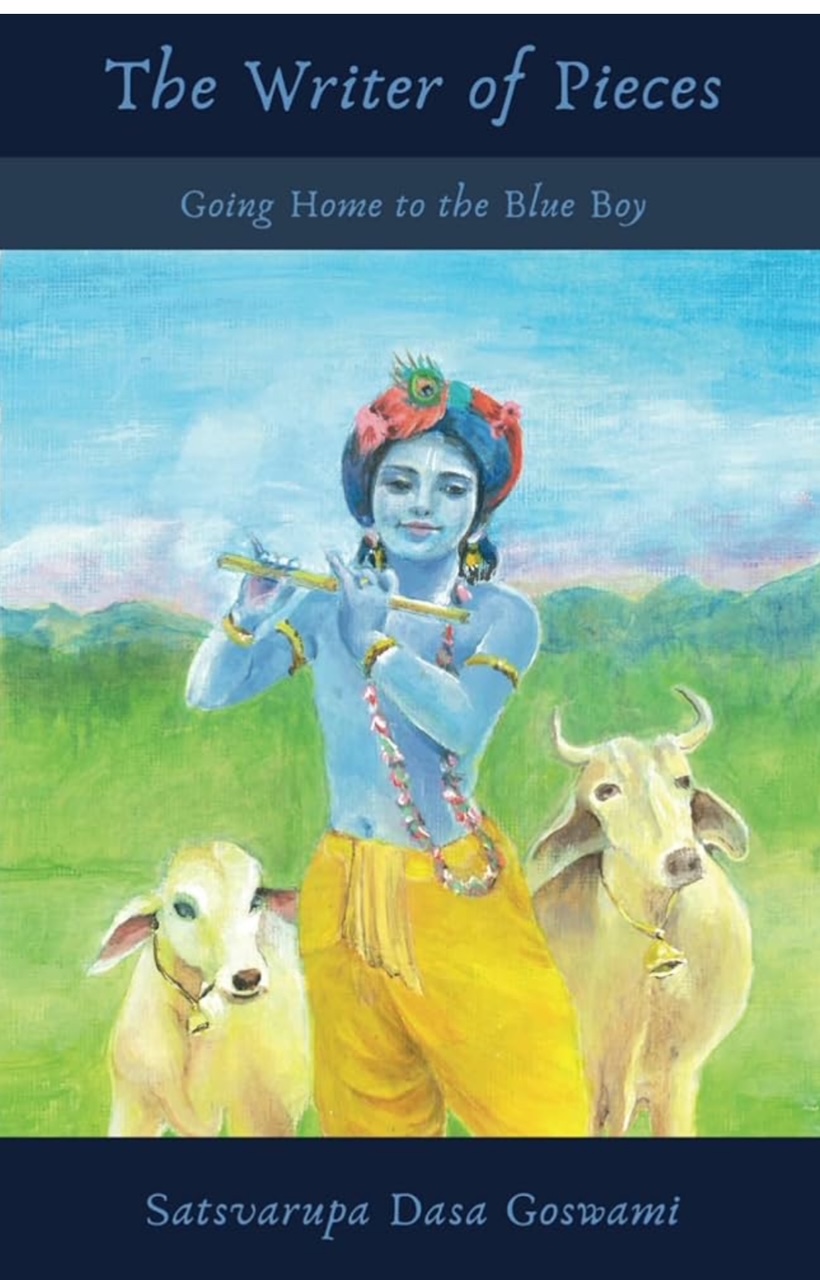
Don’t take my pieces away from me. I need them dearly. My pieces are my prayers to Kṛṣṇa. He wants me to have them, this is my way to love Him. Never take my pieces away.

Many planks and sticks, unable to stay together, are carried away by the force of a river’s waves. Similarly, although we are intimately related with friends and family members, we are unable to stay together because of our varied past deeds and the waves of time.
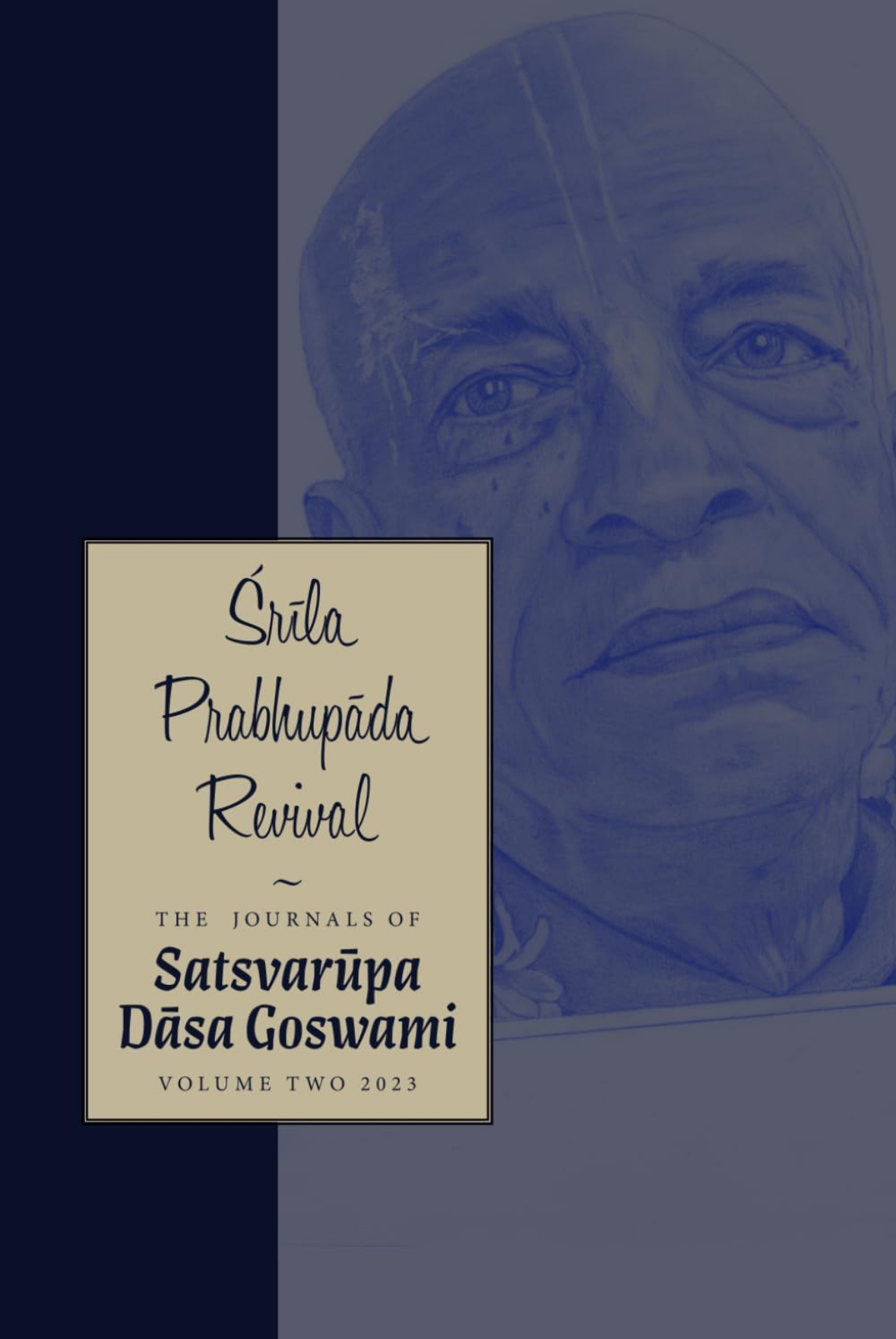
To Śrīla Prabhupāda, who encouraged his devotees (including me) To write articles and books about Kṛṣṇa Consciousness.
I wrote him personally and asked if it was alright for his disciples to write books, Since he, our spiritual master, was already doing that. He wrote back and said that it was certainly alright For us to produce books.
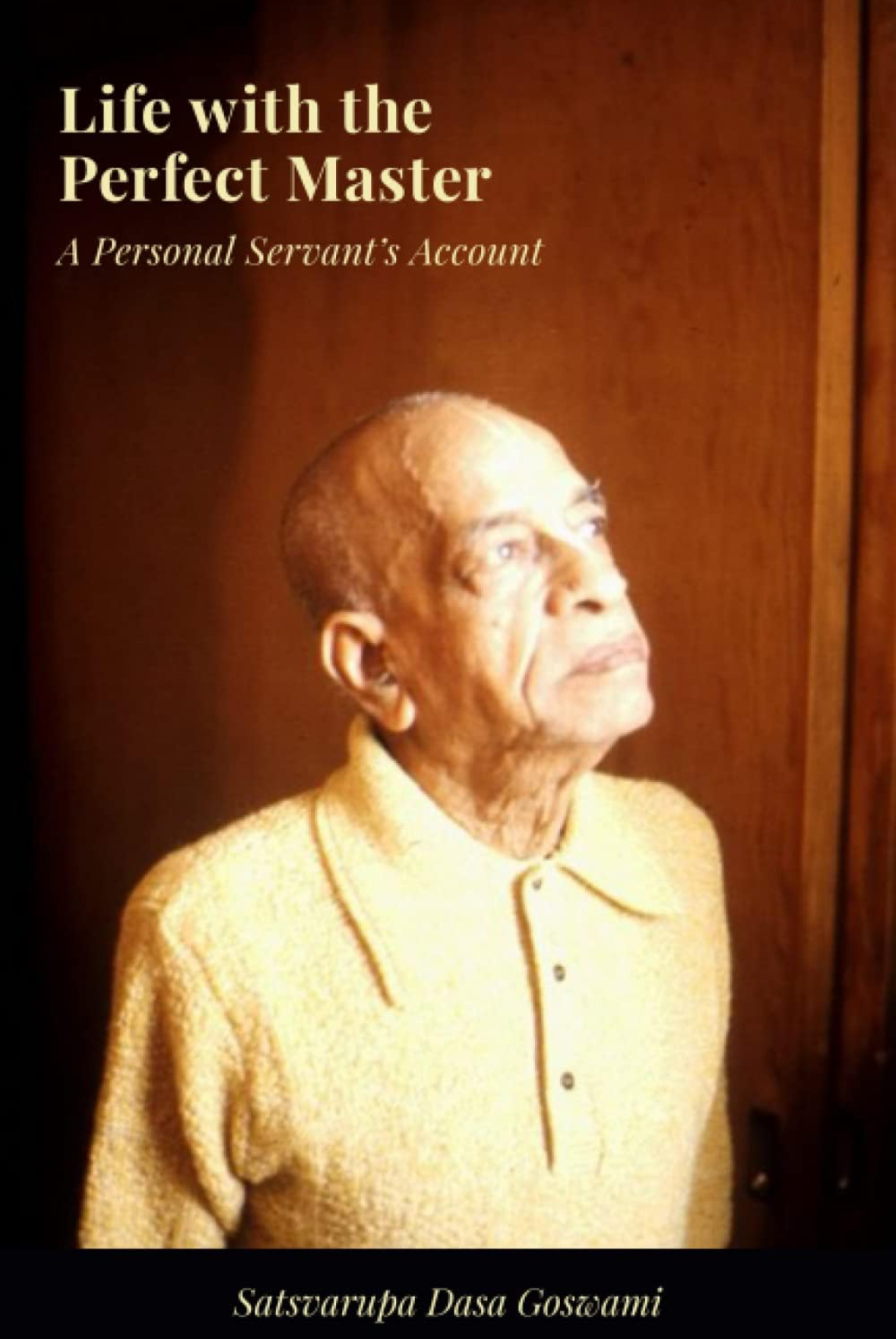
I have a personal story to tell. It is a about a time (January–July 1974) I spent as a personal servant and secretary of my spiritual master, His Divine Grace A.C. Bhaktivedanta Swami Prabhupäda, founder-äcärya of the International Society for Krishna Consciousness. Although I have written extensively about Çréla Prabhupäda, I’ve hesitated to give this account, for fear it would expose me as a poor disciple. But now I’m going ahead, confident that the truth will purify both my readers and myself.

First published by The Gītā-nāgarī Press/GN Press in serialized form in the magazine Among Friends between 1996 and 2001, Best Use of a Bad Bargain is collected here for the first time in this new edition. This volume also contains essays written by Satsvarūpa dāsa Goswami for the occasional periodical, Hope This Meets You in Good Health, between 1994 and 2002, published by the ISKCON Health and Welfare Ministry.

This book has two purposes: to arouse our transcendental feelings of separation from a great personality, Śrīla Prabhupāda, and to encourage all sincere seekers of the Absolute Truth to go forward like an army under the banner of His Divine Grace A.C. Bhaktivedanta Swami Prabhupāda and the Kṛṣṇa consciousness movement.
A single volume collection of the Nimai novels.
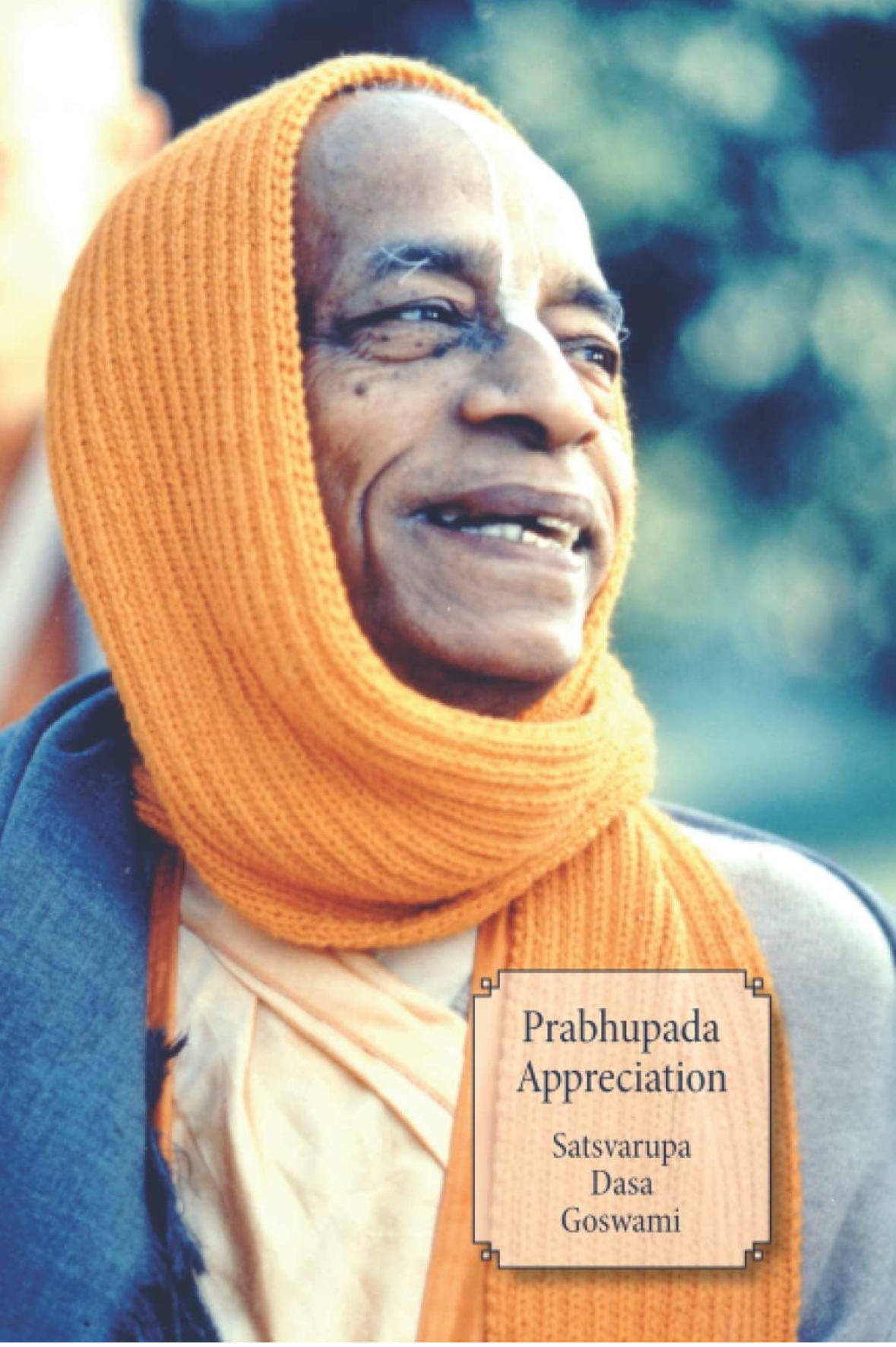
Śrīla Prabhupāda was in the disciplic succession from the Brahmā-Mādhva-Gauḍīya sampradāya, the Vaiṣṇavas who advocate pure devotion to God and who understand Kṛṣṇa as the Supreme Personality of Godhead. He always described himself as simply a messenger who carried the paramparā teachings of his spiritual master and Lord Kṛṣṇa.
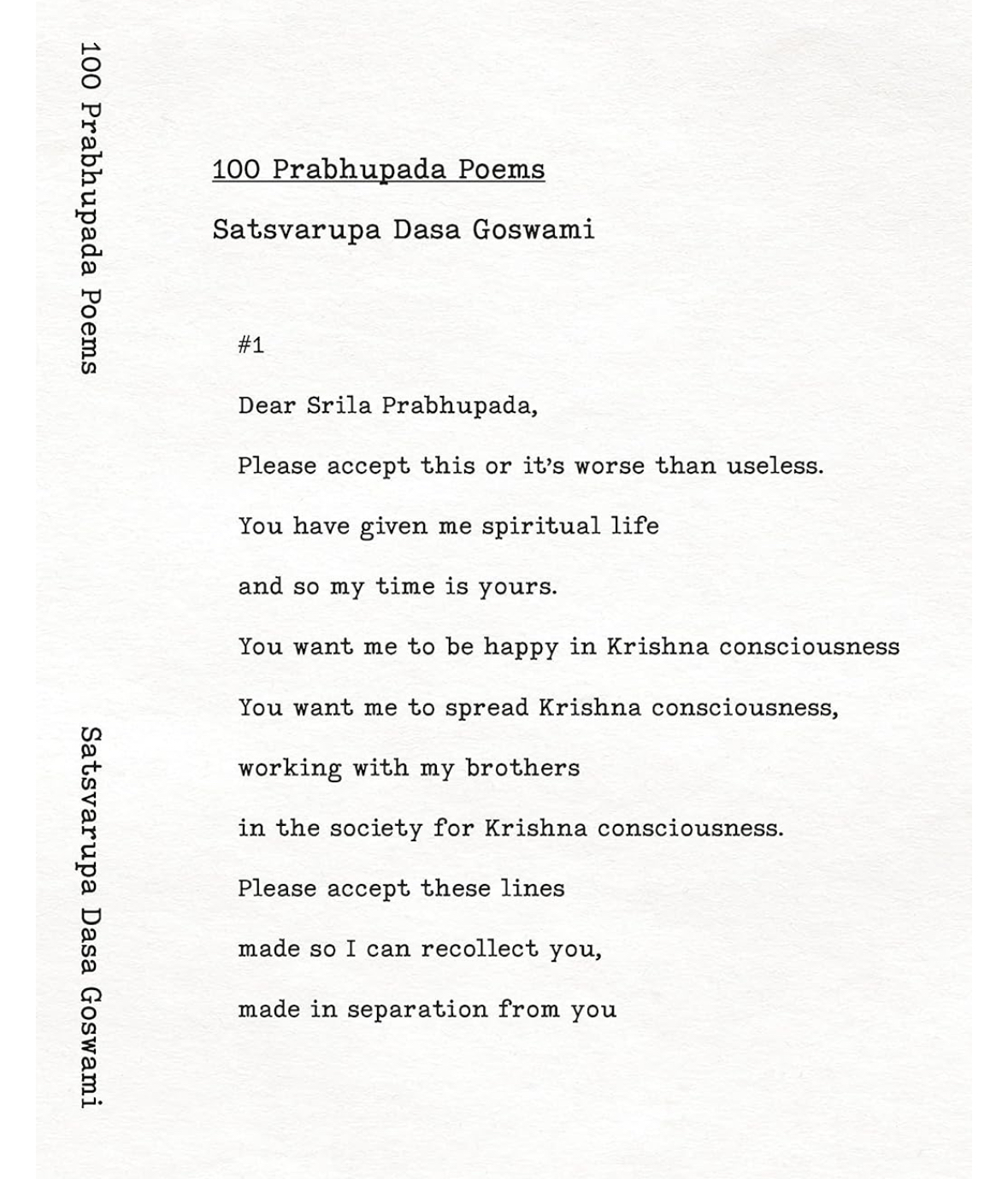
Dear Srila Prabhupada,
Please accept this or it’s worse than useless.
You have given me spiritual life
and so my time is yours.
You want me to be happy in Krishna consciousness
You want me to spread Krishna consciousness,
This collection of Satsvarūpa dāsa Goswami’s writings is comprised of essays that were originally published in Back to Godhead magazine between 1966 and 1978, and compiled in 1979 by Gita Nagari Press as the volume A Handbook for Kṛṣṇa Consciousness.

This second volume of Satsvarūpa dāsa Goswami’s Back to Godhead essays encompasses the last 11 years of his 20-year tenure as Editor-in-Chief of Back to Godhead magazine. The essays in this book consist mostly of SDG’s ‘Notes from the Editor’ column, which was typically featured towards the end of each issue starting in 1978 and running until Mahārāja retired from his duties as editor in 1989.

This collection of Satsvarupa dasa Goswami’s writings is comprised of essays that were originally published in Back to Godhead magazine between 1991 and 2002, picking up where Volume 2 leaves off. The volume is supplemented by essays about devotional service from issues of Satsvarupa dasa Goswami’s magazine, Among Friends, published in the 1990s.

“This is a different kind of book, written in my old age, observing Kṛṣṇa consciousness and assessing myself. I believe it fits under the category of ‘Literature in pursuance of the Vedic version.’ It is autobiography, from a Western-raised man, who has been transformed into a devotee of Kṛṣṇa by Śrīla Prabhupāda.”
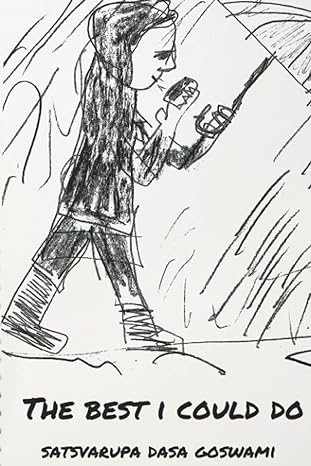 The Best I Could Do
I want to study this evolution of my art, my writing. I want to see what changed from the book In Search of the Grand Metaphor to the next book, The Last Days of the Year.
 a Hare Krishna Man
It’s world enlightenment day
And devotees are giving out books
By milk of kindness, read one page
And your life can become perfect.
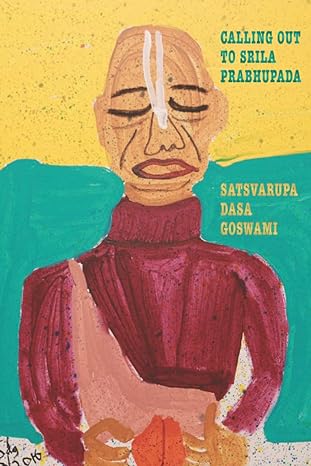 Calling Out to Srila Prabhupada: Poems and Prayers
O Prabhupāda, whose purports are wonderfully clear, having been gathered from what was taught by the previous ācāryas and made all new; O Prabhupāda, who is always sober to expose the material illusion and blissful in knowledge of Kṛṣṇa, may we carefully read your Bhaktivedanta purports.
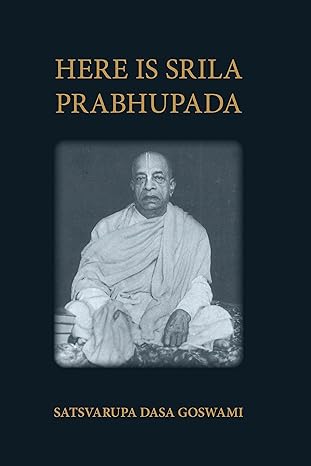
I use free-writing in my devotional service as part of my sādhana. It is a way for me to enter those realms of myself where only honesty matters; free-writing enables me to reach deeper levels of realization by my repeated attempt to “tell the truth quickly.” Free-writing takes me past polished prose. It takes me past literary effect. It takes me past the need to present something and allows me to just get down and say it. From the viewpoint of a writer, this dropping of all pretense is desirable.
 Geaglum Free Write
This edition of Satsvarūpa dāsa Goswami’s 1996 timed book, Geaglum Free Write Diary, is published as part of a legacy project to restore Satsvarūpa Mahārāja’s writings to ‘in print’ status and make them globally available for current and future readers.