
We are still expanding our team of proofreaders as we aim to increase the rate of republication of Satsvarūpa Mahārāja’s books as well as new books that he writes.
As many of you know, during the July 4th festival just held, a total of 18 new and re-edited and published books were present, and we hope to present a similar number at Satsvarupa Maharaja’s Vyasa-puja observance this December.
Our call for proofreaders includes a need for fluent bilingual Spanish and English speakers to proofread Spanish translations (we currently have around 20 Spanish translations waiting to be proofread). Anyone interested in this particular service should contact Manohara dāsa at [email protected]
If you would like to help, please contact Kṛṣṇa-bhajana dāsa at [email protected] or [email protected] and we will find you a service that utilizes your talents.
There are ten offenses in chanting Hare Kṛṣṇa. They involve not only the time when we sit down to chant japa, but our whole devotional life. These offenses—disobeying the orders of the spiritual master, committing deliberate sins on the strength of chanting, blaspheming the devotee—have to do with more than correct pronunciation of the names of the Lord. So whether we can carry out the orders of the spiritual master is our test. By the time you sit down to chant, it’s already determined by your service attitude—you’ve either already committed the offenses, or you haven’t. Offenseless chanting and following the spiritual master’s orders are interdependent.
By chanting carefully, you get the strength to follow the orders of your spiritual master, as you associate with Kṛṣṇa’s name. But we know that if you associate without offense, it is much more effective. Following the four rules and living in devotional service assures you of avoiding the ten offenses.
The chanting of Hare Kṛṣṇa has the power to eradicate all sins, but if you become an offender to the holy names of the Lord, then you have no chance of being delivered.
******
The second offense is to take the names of the demigods, like Brahmā and Siva, to be equal to or independent of the name of Lord Viṣṇu, or Kṛṣṇa. We see this offense especially in those mistaught in the name of Hinduism or Vedic culture that there are many gods and they are all the same. No. Kṛṣṇas tu bhagavān svayam: Kṛṣṇa is the Supreme Personality of Godhead. He has many names, but only the names of the Supreme Lord are in the category of hari-nāma kīrtana, and they cannot be compared to these names that one chants for material benefit.
The name of Kṛṣṇa is not different from Kṛṣṇa. It is actually Kṛṣṇa Himself. So one has to understand the place of the holy name. It is not a name designating a god; it is actually God, Kṛṣṇa. The sound vibration is not different from Kṛṣṇa. But although the Supreme Lord has different names, one should not distinguish between them. He shouldn’t confuse the names of demigods with the names of God, or he becomes like the atheist. He does not actually understand the value of the name of God. God is one; He is supreme. His name, we have already explained, is different from any other name. It is purifying, liberating, and can’t be compared with any other meditation or mantra. So if you take the name of an ordinary being, or even an exalted demigod like Lord Brahmā, Lord Śiva—if you confuse the name of a demigod with the name of God, this is offensive to the holy name. The demigods are also expansions of Kṛṣṇa, neither independent of nor equal to Kṛṣṇa. God is one, supreme; He has no competitor.
There is a prevalent misunderstanding of Hinduism. It is a fact that many demigods control different parts of the universe, but people commonly think all these gods are equal. They think Hinduism is a religion of many gods, polytheism. Don’t become part of this hodgepodge mish-mash that goes in the name of Hinduism. Actually there is no such thing as Hindu in the scripture. The word is not there; it is not a Sanskrit word. It is a mistake, a misnomer. The Mohammedans on India’s border called the people living by the Indus River Sindu and then the word became Hindu. And now Hindu means anything. You can be an atheist, you can worship a ghost, you can worship the demigod, Durgā—anything you like—and still be called a Hindu. India’s national leaders are proud that anything can be Hindu. But under that misnomer, if you say, “Yes, it is perfectly right and religious. Our leaders, our gurus, say that any worship is good. You worship a dog, you worship a ghost, you worship a politician, you worship Kṛṣṇa. It’s all the same. Everything is one”—that’s an offense. The Lord is the Supreme Truth. Everything is coming from Him. He has many names, but don’t confuse these names or think them equal to ordinary names of material personalities.
There are many names of God—Jehovah, Allah—in different religious cultures. Any name can be chanted, with the understanding that this is a name of the Supreme. But to take any other name to be the same as the name of God is an offense. And we are chanting this name Kṛṣṇa because we are following Lord Caitanya, who chanted Kṛṣṇa and who gave us evidence that this is the supreme original name for the Supreme Being. So we have to defend our position when some rascal speaks otherwise, and for ourselves, we cannot even consider worshiping any demigod side by side with Lord Kṛṣṇa. Kṛṣṇa wants exclusive worship—anyābhilāṣitā-śūnyaṁ—unalloyed devotional service. Don’t make such a mistake.
pp. 148-52
Dear Srila Prabhupada, I led the singing in your Samadhi this morning. The pujari giggles a little when I talk with him—he is a friend and helps me get through “Guruvastakam” without a mistake. It’s good to externalize devotion to Srila Prabhupada with loud singing. The gurukula boys were there. By the end of the kirtana it was rocking with a good beat.
I am fallen, devoid of deeper feelings, and even theoretical knowledge of rasa. Still, I like to stand before Radha-Syama and memorize Their features. Radha wore a long apron today. Krsna’s chest. Now I come before you in your room. I turned on the fan when I entered—for my pleasure. How foolish and forgetful I am. Maybe it’s too cool for you.
The letter on your desk is to Sudama, January 1972. Sudama was sticking it out in Japan at that time. You wrote to him, “You are setting the example of determination which others may see and follow. In this way, go on increasing and such sincerity is noticed by Krsna. He is helping you to approach nearer and nearer to His lotus feet.”
Srila Prabhupada, your words imply all the mellows of conjugal rasa and any other valuable secrets we may wish to learn. Nothing is missing from your instructions. By following your orders, everything will be revealed to us—when we are qualified.
You also asked Sudama to send you blank tapes for recording your lectures in India. “Mark the mail package, ‘valueless.'” Srila Prabhupada, you said you heard that Kartikeya dasa had returned to our camp. “Engage him artfully; he can become a great preacher.”
Srila Prabhupada, when I was singing, I thought of you approving my actions. You are right and devotees are right and my singing is right—everything I’m doing is right, but the quality needs to be increased.
O Prabhupada, may we live in you until we die; may we serve in this life and the next. May we study your words and repeat them with joy and conviction. May we know Krsna and Radha through you.
Just before coming here, Srila Prabhupada, I made an outline for a lecture on the last chapters of Caitanya-caritamrta, Antya-lila. It leaves me feeling uplifted—”The Lord’s Madness of Separation.” I know nothing about it, but just to read those verses and assemble them for class uplifts me.
Prabhupada, let me be pure. I read in Siksastakam how Srimati Radharani cares only for Krsna’s pleasure. I want to be like that too, but I want to approach that devotion through you.
You said that we are moved by desire. You said you came to America because you had a desire to preach. Desire also carries us to our next body. Under all my rhetoric, what and whom do I love? What do I actually desire to achieve? Who am I? The answer to those questions determines where I will go and in what capacity I will live and serve. Who would be such a fool as to maintain or cultivate material desire? Prabhupada, you worked to save us, save me. Therefore, you are the personification of the preaching spirit. Please make me in your image.
The door was locked at 4:30, so we sat in an outdoor alcove under the low branches of the trees, sipping water from a coconut which the pujari gave us as maha-prasadam in the Samadhi Mandir. Now they’ve let us in.
Selling beadbags and books at the counter. Her duty is to open the rooms and sit there. She wants to do it. We each have some service, voluntary or compulsory. I want to come here. I’m also compelled.
We all hope we can improve. Why else do we come to Vrndavana and roll in its dust and go out on parikramas to the most sacred places? We ask for a boon. We ask the dust to grant us a drop of appreciation for Vrndavana and for devotional service. I do the same when I come to Srila Prabhupada’s room. Here it’s most direct. I face my spiritual master. One might even say it’s frightening to come so directly in front of he who can order you to do whatever he likes. One could also be cynical: “You don’t have to do what he says. You can make up some excuse and say you didn’t hear him or you don’t believe he can instruct you after his disappearance. Besides, you get headaches.”
I’m not that fearful or cynical, although I may have a touch of each. I used to like to come before Srila Prabhupada. I fully trusted him. I knew it was in my own soul’s interest to do as he said. That full faith of my youth—I want to recapture it. Maybe I’m more surrendered now. Now I take into account more my total self and I’m more aware of my limits. I act maturely on his order. But there was something nice back then. “What do you want me to do? Where shall I go?” Sometimes the tests were too great. He allowed us to express our inclinations.
I’m waiting for the meetings to end so I can go forth and try to do it, to serve Prabhupada without the close support of these tirtha visits (I’ll miss them).
Prabhupada, Prabhupada, the whirring of the fan and its motor remind me that prayer to you is a constant thing. I like to chant Hare Krsna with a sigh and with a tone that goes deeper than the conversations around me. I chant the maha-mantra in service to you.
The letter to Sudama is still on your desk. Someone said if I liked, I could continue to read one of your letters each day when I’m away from here and imagine that I’m in your room. I doubt it will be the same.
A dirty beggarwoman is standing in the middle of the Samadhi Mandir. They allow her to take caranamrta, which she collects in a clay pot. Then two guards come in and throw her out. One guard gave her a push out the door and the other slapped his stick on the ground. They didn’t want anyone begging in the Mandir
Srila Prabhupada, do you notice the change in weather?
All he does is chase pigeons all day by clapping his hands. Maybe he even does it at night in his sleep. And I, with a bubbling spring of writing practice, clap my hands to chase away the blues.
pp. 340-47
Because he had no material desire
nothing material could encourage him;
but news of the books going out,
seeing his young followers take it seriously,
hearing competition between the temples,
translations into different languages,
favorable reviews by esteemed professors,
seeing copies of just-published volumes,
these were the sweet juices
encouraging Srila Prabhupada.
As long as books were being printed
and widely distributed
the illness of his body
was relieved;
and problems for money
for construction in India
were solved.
“I never thought this Krsna Consciousness Movement would have been so successful,”
he said. “Actually, the whole thing rests
upon these books. There is no such
literature anywhere in the world
as our books. So go on selling
more and more books!”
His clear message—
received from his Guru Maharaj
and carried down to us—
get the books out,
by hook or by crook,
which doesn’t mean criminally,
but you have to find a way;
you cannot say,
“I cannot give out these books.”
It is his order for all time.
That is Prabhupada.
Everyone knows that’s what he wants.
And that is what the people need.
In the limousine
he revealed his thoughts:
the leaders of India were fighting
and he wanted to offer them
—both Indira Gandhi and Jayaprakash Narayan—
the wisdom of the Bhagavad Gita.
So he had written letters to them,
if they would listen to him.
In the Vedic age it used to be
that they would listen.
Now they don’t.
But he asked us,
“What do you think? I have written a draft
of a letter this night. Let us take a chance.
We want good for everyone,
and this is the only medicine,
Hare Krsna. for all wrongs.”
We sannyasis replied pragmatically
that the letters might not be read,
and one of us said, “What about writing
a letter to the U.S. President?”
We were embarrassed and foolish in our remarks,
but we were also aware
that Prabhupada didn’t have to ask our advice
and we were awed by his great concern.
We also believed in his capacity
to solve their problems,
if they would listen.
We saw his insight into the times,
the upside-down nature of the age,
when the deepest, most influential soul
has only a few young men to speak to,
and the leaders will not listen.
As we rode Prabhupada asked
how things were going in Denver.
I said the devotees
were distributing many books.
“That is the most successful,” he replied.
Suddenly I saw it—
if the people of the city did nothing else
but buy his books
and to some extent read them,
then Denver was a good place to preach,
even if it was otherwise
a beef-raising capital.
When we arrived at the scenic park,
the sun rose so brightly in golden rays
that any photos taken that morning
captured a portrait of flooding light,
Prabhupada walking wrapped in grey,
his disciples’ chilly, bright faces
adoring his discourse
and his personal way.
That was the morning he said
devotees do not have to work like asses,
but Krsna will provide for them.
We were laughing and debating,
as he beat down the charge
that a devotee is a parasite-escapist.
“Open your eyes!” he loudly challenged.
“We are enjoying our Father’s property.
They are escaping or we are?
Just see how foolish they are!”
In the Denver temple
they allowed the women
to dance up front.
Sannyasis and brahmacaris were
face to face with dancing women.
One of the sannyasis
requested them to stay in the back,
as in any other temple—
But Svarat dasi, wife
of the temple president,
took it as unbearable insult
and decided to leave
husband, temple, spiritual life—
she was seen going tearfully
by Upendra das who in a sudden move,
brought the case to Srila Prabhupada.
He agreed to see her and
she came in crying.
“What is the problem?”
“They make us dance at the back!”
“That’s all right,” consoled Prabhupada,
looking to Upendra and then to her,
“you can dance in the front,” he said,
and he spoke assuringly—
“Spiritual life is not easy.
We sometimes have to tolerate
but go on chanting and hearing.”
As any disciple would,
in the soothing rays of his compassion,
Svarat dasi calmed down,
and the next morning
she was dancing up front,
but eventually the sannyasi had his way
and she retired to the back.
The woman’s tears,
and Upendra’s move were both unpopular
for bringing our spiritual master
into such an emotional case;
yet it afforded us another view
of Prabhupada’s personal handling,
as he stressed his strongest wish,
that we somehow remain
in his Krsna Consciousness Movement.
He asked the Mayor of Evanston
to donate a large building
even after being told by the mayor
that he wanted it for his City Hall.
Prabhupada asserted a solution to crime
based solely on the transcendental power
of the Holy Name and prasadam
to purify the hearts of criminals.
When challenged that his plan
was like so many religions
Prabhupada replied, “No,
we are strictly following,
and it is potent.”
Then he challenged
his sannyasi disciples
to get out, hold meetings.
A sannyasi should do more
than ring the temple bells.
Not only teach the devotees in class,
and not only distribute the books,
but speak on the books
to important people,
tell them what is lacking
now that they are admitting
they are baffled
and want to stop crime.
Sri Govinda das arranged
for the Sheraton Hotel hall,
a prasadam buffet,
a pillow for Prabhupada,
and reporters came.
Prabhupada was elegant,
aristocratic philosopher,
in saffron silk.
His English usage was clear,
but they could not understand him
as he explained varnashrama-dharma.
“Do you know that what you say goes
against everything American?”
“But we can train you,” said Prabhupada.
“As you are training engineers,
you can train first-class and second-class men.”
He could have been silent,
and stayed in Vrndavana;
he obtained no selfish pleasure
sitting on a pillow in the hotel
(which he regarded as a brothel).
It was no special treat for him
to talk with snappy, irreverent journalists
who cannot listen to philosophy
for more than ten seconds
before they blow their mental fuses.
But he came among them because
he and the previous acharyas wanted to help.
And now society’s leaders were admitting,
they do not know how to solve crime.
As the mayor had remarked to him,
“We can use a new approach
because we are not successful now.”
But the reporters were not concerned
to waste time hearing the Vedas,
they were more interested
in the Swami’s “expensive gold watch,”
and they wrote down snide notes
about the adoring nature of
Prabhupada’s disciples,
like flies looking for a sore.
“The old man” they saw,
“the retired businessman from India.”
And when, at their request,
he spoke about women
then suddenly they had their story
—the Swami was a “male chauvinist!”
Walking quickly to the phone
or to go write up their stories,
the reporters felt rewarded—
instead of spiritual chit-chat
they’d got an angle against the Swami
for saying—get this now—
“Women are less intelligent than men!”
When Prabhupada heard
they were putting it on the news, radio and TV,
and that another TV crew was coming out to see him
he was amused, and pleased—
at least they were saying “Hare Krsna.”
They are not explaining it fully,
about spiritual equality, said Brahmananda,
or about great women in Krsna Consciousness.
Yes, great women are chaste and faithful,
said Prabhupada, like Kunti and Gandhari.
All souls are equal,
but bodily they are different.
And women should be protected
from exploitative men.
But the feminist TV crew
who came into his room
knew only the body,
and demanded all are equal.
“Then why does the woman
bear the child, and the man cannot?”
That one they couldn’t answer,
but it didn’t matter to them—
they were too angry to hear him.
They wanted liberation
through the body,
and they thought he was against them.
“In that case,
if they do not like to hear,”
Prabhupada later said,
“then let us chant Hare Krsna,
that’s all.”
Writing in parampara from
Vyasadeva and 4 million years
ago to the sun god …. 60 years
ago to my Srila Prabhupada.
******
Yes, 60 years ago Prabhupada
formed his ISKCON and it’s
rolling on since then growing
into a huge, huge snowball.
******
Many, many mistakes but
a pure central movement
with millions, newcomers
who can save the world
from its ruinous Kali-yuga path.
(tanka: 5-lines)
******
Our Prabhupada
wearing a winter cadar
in Upstate New York weather
heading eventually for spring.
Our Prabhupada is leading us.
(5 lines: tanka)
******
I dedicate this one to my
old friend, my Godbrother
Bhurijana who is deeply
immersed in Vraja-bhava.
******
I followed his footsteps
one day in a walk through
Vrndavana, and he showed
me the places of Krsna’s lila
******
He has written many books
of Bhagavatam overview
and I have written many
too. We will not last much longer
in this world but we hope
(5 lines: tanka)
******
—We hope to join with Prabhupada
as he turns the key to the
back door of Goloka-dham
and we enter forever with him
******
The nurse asked
what year this was and I
glanced at the senior-citizen clock.
Thus I proved myself free
of old-age dementia.
******
I told her I had
arthritis, but that is just
for the body. I am not
this body, I am spirit soul.
When the body expires, where will I go?
(5 lines: tanka)
******
One poet wrote, “When they
ask where I have gone, tell
them, ‘He had business
in another world.’” Lets hope he went
to Goloka, joining with his Guru Maharaja
(5 lines: tanka)
Don’t know what to do
when to get up
when to go out?
Another PT is coming
to test my strength
******
I flick a bug off
my desk. He flies away.
Did my finger cripple him?
Nothing is perfect.
What do you mean?
The Lord is perfect.
******
N.G.’s book: Three Simple Lines
but you can break the rules
if your heart is in the right place
******
Write for everyone in the world
if you love the golden guru
you can do that
******
It is a sad, violent, chaotic
state, this 21st century. There
is one great boon. Tell everyone
about it.
******
Today read several pages
from Srimad-Bhagavatam. Now I’m arranging to
hear Prabhupada every day
This is not a haiku
but important advice.
******
I was advised not to write or hear
so much about Prabhupada; it will
limit my audience. But it’s a
matter of life or death.
******
Keep going. Hit targets
of bhakti haiku. I
am grateful that I am
living in good association.
******
“Your haiku lack
enlightened moments.” That
is because I am
an ordinary bloke.
haiku at midnight
catch the mysterious a-ha
moment and make it true,
a spiritual gift from Supersoul.
******
He’s got parkinson’s disease
he don’t do lectures, he don’t
do kirtana—then what
does he do?—He does plenty
bhakti haiku and that’s plenty for him!!
******
I don’t need fame for my haiku.
I just want them to fly and sing
like a bluebird (or a wood thrush).
******
Gimme, gimme, gimme
that Hare Krsna food!
(Sung before a wild audience
of hip, hungry seekers)
******
In a periodical called Modern Haiku which contains the work of many different poets, a man named Tom Clauson
was awarded $50 from / Modern Haiku for
his haiku of “The chipmunk—
standing / for a better view”
published in the Autumn issue 2025.
Coincidence!! I wrote an identical haiku:
******
Standing on his rear legs
to get a better view,
the chipmunk
but I didn’t submit it to their journal. I save my haiku to put them in a book,
Bhakti Haiku and Essays
I’m glad my chipmunk poem
was printed as a favorite even though I wasn’t recognized
or given a cash prize.
Further Clarification: The chipmunk poem that won a $50 prize appeared in Modern Haiku magazine.
******
One should hear with rapt attention from the real person, and then he can at once realize the presence of Lord Krsna in every page. The secret of knowing Bhagavatam is mentioned here. No one can give rapt attention who is not pure in mind. No one can be pure in mind who is not pure in action. No one can be pure in action who is not pure in eating, sleeping, fearing and mating. But somehow or other, if someone hears with rapt attention from the right person, at the very beginning, one can surely see Lord Krsna in the pages of Bhagavatam. (S.B. Canto 1, Chapter 3, “Krsna Is the Source of All Incarnations”, Text 44)
******
Waiting—
for the chiropractor
for the artist
for a urine urge
for a poem
******
Waiting—
“for Godot”
for words from Krsna
for a visitor
for a drop in temperature
******
Waiting—
for an audio by Bhurijana
Jagannatha Suta
the answer to a prayer
a homemade haiku
******
Waiting—
for harbingers of spring
more snowstorms
sparrows, robins, squirrels….
******
“Haribol.” I greet the
chiropractor who talks
while he works. Of such people
Bala says he’s got me “in a
headlock.”
(tanka: 5 lines)
******
Yes Lord Caitanya kept His halo
and His upraised arms. Yaso
said his rendition of Issa
looked like Baladeva Vidyabhusana
We are not afraid
we are not afraid
Yaso met a neighbor who
was 70 years old and said
he was not afraid of death.
******
Feel death in your shoulder
blades and neck
It’s known as arthritis
******
I’ve been looking more than once through
collections of death poems
I can’t decide on my own
but I’ve already decided what is best:
Hare Krsna Hare Krsna Krsna Krsna Hare Hare
Hare Rama Hare Rama Rama Rama Hare Hare
******
Wandering in my mind, not
choosing which is best.
Why don’t you settle it once and for all—
the Hare Krsna mantra and the names of your guru.
******
It is very difficult for me to express the enormity of the change that has gone over me. I change in all ways. The change is in consciousness. The change is in adapting new ways of……
I have been lying in bed here and trying to estimate this change. It has to do with the use of haiku. I cannot keep up with the change that has taken place with me and other persons such as Rama Raya and many other persons. I wish to get a chance to bring about …… I’m trying to express it now.
I hope I will be able to express this change in writing my Essays as part of my Bhakti Haiku and Essays.
On February 12 I was writing haiku and then Essay, but it didn’t come out very well. I also felt some tension in my head, so I went back to bed with a pain pill. The pain subsided, and I felt very great changes going on within myself. I don’t want to exaggerate it when I say there were big changes. But it was like that. Let me try to express it, what kind of changes. I was working with my editor, who suggested I talk in themes and not just write random haiku. He suggested 6 things that I was already working on. One of them was the time of season, then winter, then Prabhupada the instructor, then old age, then moments/past reflections, then the little life, then writing these poems.
Some of it I forget. But the best I can remember right now is that I chose the theme of death. I wrote some about it. I thought about death and tried to write some about it in essay form. Then I tried to write on the theme of old age. Then I thought of the theme of change itself, and how I was undergoing a change.
I was writing about old age, but it wasn’t coming out so well. It was random, etc.
I went back to bed but just stayed awake and thought and felt about CHANGE itself. I was undergoing change. I was undergoing change, I say it again.
It is now 11:30 P.M. February 12. I have gotten up from bed with the intention of doing some writing, either of a string of haikus or choosing one of the themes my editor suggested and trying to write either in essay form or in a series of thematic poems, haiku. I lay in bed and thoughtfully went over how much I was changing. I can’t express it very clearly, but it was good, I was optimistic about it. I hoped that when I woke up the next morning I would be continuing with the theme of change, and when I woke up the next day I could continue with it. Just now I think I will try to write a string of haiku and pick up a theme or several themes in this way. The theme I dealt with already was death, and then old age.
******
I am undergoing CHANGE—
for the better, for good.
Make haiku with magic
moment.
******
I keep thinking change,
total complete complete. It is good.
Transformation.
pp. 95-97
Although the sky remained overcast, they could see the breakers crashing in over black rocks and sea gulls hovering near them. Quite exciting, even for a dullard. They finally found a little shack, nothing more than that. Swami was very happy to find that no one was there. He jumped in and started singing songs he made up about San Francisco waves crashing over the rocks, Nara crashing too, now we’ll have some fun, we’ll picnic and then we’ll write…, but shortly after they got there, a large tourist group, which they had passed on the road, joined them, and everything changed.
Our group had been eating sandwiches and making small talk, but mostly enjoying silence and chanting japa. This huge group of about a dozen people came in, and their leader pointed across the ocean to a house on the other side, which he said was the house that Jack Benny once lived in. Fortunately, they only stayed for about five minutes and then they left. That was a great relief.
I, Swamiji, began complaining that my hands were very cold. Nara put his big hands around mine, and they were so warm and big, like catchers’ mitts. He said, “I can’t believe how cold your hands are.” I bathed in the warmth of his fleshy, big hands. I said, “Doctor’s always telling me that my extremities are very cold because I have poor circulation there.” Rasa dasa, who was along for the trip, said that his wife also had cold extremities due to poor circulation. My hands warmed up quickly, and I got ready to write. But what is there to write about?
When will that day come when tears will come to my eyes by chanting Your holy names, and my voice will be choked up by uttering the name “Krsna”? This world is vacant without you, I shall cry. And it will feel that way. There will be nothing. She is unhappy without Krsna, and then when Krsna comes to Her, She is unhappy again for another reason. Radha and Krsna, Radha and Krsna. It is hard to understand. Just try to be a good devotee. Try to say your prayers, try to say your prayers. Try to say the name, naked, thump-thump-thump, with the very beat of your heart, thump thump-thump thump-thump. You don’t have to think of those difficult pastimes, just thump-thump, thump-thump, thump-thump. Hare Krsna, Hare Krsna, Hare Krsna. You don’t even have to keep your eyes open. When you open them, you see you’re in a cold shack all alone. It’s so nice to be all alone.
Oh, they want me to write different kinds of books with less reference to Krsna. Make it so you can throw it out of the ballpark, the confines of Yankee Stadium, way, way out there, so that everyone in Mexico can read it, where they worship their Virgin of Guadalupe, or they don’t worship anybody. Way, way, way out there, where the tsunamis are hitting the beach, way out there into the heart of Iraq, Baghdad, South Korea, 55th Street, New York City, California, the smart kids, the one individual who is my reader, whom I am in love with but don’t need to ever meet, but I’d like to hear from him too, that sweet pie, that porkpie hat, although he’s passed away, he can read from the dead. He’s a one hundred percent American who’ll be remembered before we’re all dead. That’s what they want me to do.
Do I have to remove Krsna’s names to do it? No, you just have to be stronger in all ways so that they can’t say in their crotchety ways, “Oh, this is Hare Krsna stuff, this is fatally parochial, this is running into the canon.” No, I’ll stuff it back into their pipes so they can smoke it. I’ll stuff it back into their rear ends. I’m mad as hell. They won’t keep me confined. I’ll tell them where to get off. They’ve kept me so petrified by those remarks. I mean Murray, who said, “You too soon wrap it up in the canon. You should read Rumi. He’s fearless,” and Kowit with his remark, “You are fatally parochial.” I’ll keep Krsna and not be fatally parochial. I’ll prove that He is everywhere. Right, Walt Whitman? I am the locomotive, I am the woman in labor, lopping off the soldier’s gangrene arm, but doing it the right way, the Krsna conscious way, everything is everything, the sun is the sun, a book that’s Krsna conscious but doesn’t proselytize itself. It’s not a born-again fundamentalist book but it’s a fundamentalist fundamentalist fundamentalist. As fundamentalist as the rocks and the waves pouring it. Hallelujah, Haribol. I won’t hide my cards, but I won’t be a preacher to bother your ass.
pp. 361-67
For months now, I have preferred using a printed sheet rather than handwriting. I am spending all day filling in rows of these very simple shapes. I do this to keep count of my japa. It is rather artistic. I can do them myself, or an artist can do them for me.
I like the idea, and so do Baladeva and Manohara. My life now is completely taken up in chanting japa, with only a little writing and commenting on quotes. It is a new way. I fill the page with these checks and numbers in the boxes. I partly do it because it is the only way I can remain sufficiently free of headaches to write or dictate, but it is also a very pleasing design and a symbol of my japa count. The quotes are best when they tell of my japa consciousness, quotes from Kṛṣṇa conscious books.
Even if he be distressed or degraded, any person who chants the holy name of the Lord, having heard it from a bona fide spiritual master, is immediately purified. Even if he chants the Lord’s name jokingly or by chance, he or anyone who hears him are immediately free from all sins.
—Śrīmad-Bhāgavatam 5.25.11
It is the favorite thing I like to do now, counting my rounds. I add them up at the end of the day, and they come up to high numbers. My quota of 16 rounds, and beyond.
[Haridāsa Ṭhākura to Lord Caitanya]:
“The letters of the holy name have so much spiritual potency that they act even when uttered improperly.”
—Caitanya-caritāmṛta, Antya-līlā 3.59
******
I was among the first devotees to receive initiation from Śrīla Prabhupāda and taught how to chant japa. He told us to go out and buy 108 beads, each one with a hole in it. The beads were to be made of tulasī. However, we could find no tulasī in New York City. So, under his authorization, we went to a store called Tandy’s Craft and Bead Store, and there we bought a substitute for tulasī beads—sizeable red wooden beads—and made a hole in all of them. Then, under his direction, we strung a piece of strong string through the holes, and strung them together until we had a circle of 108 beads. Under his direction, we tied a small knot between each of the beads. He also gave us smaller beads for counting, which I’ll tell you about. So, we individually tied the beads together, stringing them through the holes, until we had a circle of 108.
Then he told us, a little later, to get a number of small beads, which we should use to count on. We would use these to count on after we had chanted a round, or chanted the Hare Kṛṣṇa mantra one time on each bead all the way around the circle, or rosary. He told us to chant loud enough so that we could hear ourselves. We personally strung our own beads, and were very excited that Prabhupāda would show us how to chant. When our string of beads was complete, and the beads were strung together with a tiny knot in between each one, Prabhupada showed us by taking the bead in his hand. He said our index finger should not touch the bead as we moved it through our hand. Then, we chanted one bead, and moved it to the next, without touching the index finger. When we had chanted one mantra, Hare Kṛṣṇa Hare Kṛṣṇa Kṛṣṇa Kṛṣṇa Hare Hare / Hare Rāma Hare Rāma Rāma Rāma Hare Hare, we moved with our right hand to the next bead in the circle, and repeated chanting the Hare Kṛṣṇa mantra. We chanted only with our right hand, and didn’t use our left hand. This is the story of us being taught by Prabhupāda to make the string of beads and chant “a round” of 108 beads, and then go back, without touching the head bead, and chant the next round in the other direction.
I may have been the first to bring this up to him, but I asked how we should keep count of our rounds, and he taught us to use a string of small beads, counter beads. Later, Prabhupāda taught us to keep the japa beads clean in a clean cloth bag. In the beginning, we didn’t have bags, and we strung the beads around our necks. One was known in the streets as a Hare Krsna person by him or her being seen with the beads strung around our necks, and this got us a significant reputation on the Lower East Side.
I chanted happily like this for decades, but then I met with physical medical troubles that made me unable to chant out loud. First of all, I started getting frequent headaches, maybe in my 40s. It finally came to the point where I couldn’t chant out loud without getting headaches, so I started chanting silently in my mind. We are supposed to chant on beads, and loudly enough so that we can hear it, but not use a system like I use with printed sheets with boxes, and a ‘clicker.’ I also had a problem with my hand becoming uncoordinated. So I reverted to this method of checking boxes on a sheet of paper. I don’t think I can go back to chanting loudly. I am treating myself as an exception—I want to tell both stories—Śrīla Prabhupāda teaching us how to chant, and then the story of one person who had to devise another method that worked around the difficulty.
Śrīla Prabhupāda didn’t like us to change things, and for this reason some devotees don’t like ‘clickers’ and call them “instruments of offense.” There was no use of boxes or checks, as we have done or put in the ‘model’ pages of this Volume 5. This might be considered a concoction of how to chant japa. Nor did we use ‘tally counters’ to count but we used a string of beads. The hand-written model that we have preliminarily designed for Volume 5 of the Journal might be thought of as a concoction, except there are no hard and fast rules for chanting the mahā-mantra:
“Caitanya Mahāprabhu says there is no hard and fast rules and regulations for this chanting. So, you can chant the holy name of God anywhere, everywhere, and wherever it is possible.”
—Śrīla Prabhupāda Lecture, Olympia Theater,
Paris, June 26, 1971One can constantly chant any name of the Lord and thereby constantly associate with Him. There are no hard and fast rules for chanting His names. At any time and any stage of life one can freely chant them …
—Mukunda-mālā-stotra, Text 1, purport
Prabhupāda taught me how to chant on wooden beads and for decades I happily chanted on those red beads. As I grew older, I developed some handicaps which disabled me from being able to chant in the way Prabhupāda taught me. I developed frequent migraine headaches, and couldn’t even chant one round without the start of one. So, I had to chant silently in my mind, and not chant loud enough to hear, it as you are supposed to do. That was not so bad, and eventually I learned how to do it to my satisfaction. I also developed a dysfunction in handling the beads to finish a round. I would come near the end of a round and then start going in the opposite direction, without finishing the round. These problems turned me to innovations by which I could chant 16 rounds with a special method. That method is displayed here—the models I have developed for counting, and also using a tally counter (sometimes called a ‘clicker’). It is important that I explain and justify why I do such a strange thing with the tally counter and use the pages with the boxes and checks.
pp. 110-15
The following verse is not for preaching, but for relishing. It was spoken by Sri Madhavendra Puri at the end of his life.
ayi dīna-dayārdra nātha he
mathurā-nātha kadāvalokyase
hṛdayaṁ tvad-aloka-kātaraṁ
dayita bhrāmyati kiṁ karomy aham“O My Lord! O most merciful master! O master of Mathura! When shall I see You again? Because of My not seeing You, My agitated heart has become unsteady. O most beloved one, what shall I do now?”
The previous verse states: “Madhavendra Puri recited this verse again and again at the end of his material existence. Thus uttering this verse, he attained the ultimate goal of life.” Although I say this verse is to be relished, Prabhupada writes that there are only three persons who can even understand its meaning.
This verse is quoted again in the Antya-lila when Madhavendra Puri’s disappearance is discussed in connection with his two disciples, Ramacandra Puri and Isvara Puri. Madhavendra Puri was experiencing vipralambha in the mood of 8rimati Radhardni. This verse is the first expression of this mood in our sampradaya. Caitanya Mahaprabhu loved this verse and it evoked ecstatic transformations in Him whenever He remembered it.
“It is stated that only three people know the meaning of this verse: Madhavendra Puri, who spoke it, Srimati Radharani, because these are Her words, and Lord Krsna. There is no fourth person.”
This is not a frequently quoted verse, but it is important for the advanced understanding of Kona consciousness.
When Lord Caitanya was touring South India, he sang the following song:
Krsna Krsna Krsna Krsna Krsna Krsna Krsna he! Krsna Krsna Krsna Krsna Krsna Krsna Krsna he!
This verse was also recorded by Kavi-karnapura, but Krsnadasa Kaviraja Gosvami reveals it in this context. We can imagine the Lord walking alone all over South India singing this song. He was happy to live as a simple sannyasi and pray for Krsna’s protection. “Krsna protect Me!” We can also sing this song. It will remind us that although we are always alone in this world, we don’t have to be afraid. Krsna will protect us and maintain us.
brahmanda bhramite kona bhagyavan jiva
guru-krsna-prasade paya bhakti-lata-bija
According to their karma, all living entities are wandering throughout the entire universe. Some of them are being elevated to the upper planetary systems, and some are going down into the lower planetary systems. Out of many millions of wandering living entities, one who is very fortunate gets an opportunity to associate with a bona fide spiritual master by the grace of Krsna. By the mercy of both Krsna and the spiritual master, such a person receives the seed of the creeper of devotional service.
This verse is among the most frequently quoted Caitanya-caritamrta verses. It is a concise description of both the material and spiritual situations. The verse also explains karma, the bhakti-lata-bija, the role of guru and Krsna, and the rarity of a devotee’s association.
Lord Caitanya spoke this verse to explain the different gradations of living entities and the rareness of devotional service. We can appreciate this verse even more when we read it in context. Two verses earlier, Lord Caitanya said: “Because a devotee of Lord Krsna is desireless, he is peaceful. Fruitive workers desire material enjoyment, jnanis desire liberation, and yogis desire material opulence; therefore they are all lusty and cannot be peaceful.” A pure devotee is superior to all other persons.
Here is a verse instructing us how to approach the Srimad-Bhagavatam. This verse was spoken by Svarupa Damodara Gosvami after he criticized a Bengali poet who had misunderstood both Lord Jagannatha and Caitanya Mahaprabhu. Srila Prabhupada would sometimes quote this verse in conjunction with Bhagavatam 1.2.18, “By regular attendance in classes on the Bhagavatam and by rendering of service to the pure devotee, all that is troublesome to the heart is almost completely destroyed, and loving service unto the Personality of Godhead, who is praised with transcendental songs, is established as an irrevocable fact.”
yāha, bhāgavata paḍa vaiṣṇavera sthāne
ekānta āśraya kara caitanya-caraṇe“If you want to understand Srimad-Bhagavatam,” he said, “you must approach a self-realized Vaisnava and hear from him. You can do this when you have completely taken shelter of the lotus feet of Sri Caitanya Mahaprabhu.”
kali-kālera dharma — kṛṣṇa-nāma-saṅkīrtana
kṛṣṇa-śakti vinā nahe tāra pravartanaThe fundamental religious system in the age of Kali is the chanting of the holy name of Krsna. Unless empowered by Krsna, one cannot propagate the sankirtana movement.
ISKCON devotees have a special attachment to this verse because it is our proof that Srila Prabhupada is a gaktyavega-avatara. This verse was originally spoken by Vallabhacarya to Lord Caitanya, but it has universal significance.
This chapter is meant to serve only as a taste. Here is a list of other verses the reader may find of interest:
Adi 13.123, which is a verse on the absolute necessity to surrender to Lord Caitanya. There are other verses like this elsewhere in the Caitanya-caritamrta. We should be aware of these verses and understand that Caitanya Mahaprabhu’s cult is not sectarian. Those who profess Vaisnavism but don’t accept Lord Caitanya are making a serious mistake.
Adi 14.1, “Things that are difficult to do become easy to execute if one somehow or other simply remembers Lord Caitanya Mahaprabhu. But if one does not remember Him, even easy things become very difficult. To this Lord Caitanya Mahaprabhu I offer my respectful obeisances.” This verse is reassuring. It is a prayer—something to hold onto during the day. If things are becoming difficult, check yourself and see if you are remembering Lord Caitanya.
Madhya 19.152 explains what happens when a person receives the seed of devotional service: “If he waters the seed gradually by the process of sravana and kirtana [hearing and chanting], the seed will begin to sprout.” This verse, and the one preceding it, teach an important doctrine. We often say that love of Krsna is dormant in everyone’s heart. This verse proves that statement.
In Antya 6.236, Lord Caitanya gives concise instructions about the ideal behavior of one in the renounced order of life: “Do not talk like people in general or hear what they say. You should not eat very palatable food, nor should you dress very nicely.”
Antya 20.28: “Wherever there is a relationship of love of Godhead, its natural symptom is that the devotee does not think himself a devotee. Instead, he always thinks that he has not even a drop of love for Krsna.”
pp. 356-62
December 31, 1968
My dear Satsvarupa,
Please accept my blessing. I beg to acknowledge receipt of your letter of December 27, 1968, along with one very beautiful picture of Jadurany’s. I am so pleased to see this wonderful portrait, and please convey my heartfelt thanks to Jadurany for her fine endeavors.
Regarding the article suggested by Rayrama, you are correct in your doubts that Radha-Krsna-leela should not be discussed in Back to Godhead. In the Srimad Bhagavatam there are so many philosophical discussions, and we should concentrate on these philosophical aspects. Otherwise, the less intelligent will surely understand Radha-Krsna-leela as simply nonsense boy-and-girl sex life. Hanuman Prasad Poddar and company are all mundane types, and they have no entrance into actual spiritual activities. Superficially they pose themselves as great devotees, but we can feel their pulse; ultimately they are impersonalists. We should not depend upon writings from such unauthorized sources. Strictly we should avoid publishing these confidential topics in Back to Godhead. This is dangerous for the conditioned soul.
Although such Krsna-leela can do some good to the mundane people in the long run, to understand the philosophical aspects of Bhagavad Gita and Srimad Bhagavatam in the beginning is essential. I do not know why Rayrama has asked you to send such an article. It is not to my sanction. We shall be very careful about mundane sex life. That is the pi0vot of conditioned life. You are intelligent enough, and I hope that Krsna will help you in these matters.
I hope you are well.
Your ever well-wisher,
A.C. Bhaktivedanta Swami
******
In this letter Śrīla Prabhupāda forbids us to present confidential topics in Back to Godhead. It is interesting that he wrote this while writing Kṛṣṇa’s confidential pastimes in Kṛṣṇa book.
Throughout Śrīla Prabhupāda’s life, he was dedicated to delivering the rāja-vidyā rāja-guhyaṁ, the most confidential knowledge of the Absolute Truth—kṛṣṇa-kathā. Yet he was also dedicated to protesting the misuse of kṛṣṇa-kathā by Māyāvādīs or other materially motivated persons (professional Bhāgavatam reciters and prākṛta-sahajiyās).
In this letter Prabhupāda is concerned that unless persons who speak kṛṣṇa-kathā carefully present Kṛṣṇa’s pastimes, those reciters can ruin the proper understanding of the hearers. Descriptions of the rāsa dance are especially not meant for the public. Śrīla Prabhupāda was preparing to translate all the chapters of the Tenth Canto in his Kṛṣṇa book, but he was compiling the book carefully and beautifully, always giving philosophical explanations so the reader would not be misled.
When we read Prabhupāda’s Kṛṣṇa book, we must not mistake the pastimes of Rādhā-Kṛṣṇa for mundane love affairs between a young man and woman. The affairs of Rādhā and Kṛṣṇa are on the highest level of spiritual reality, but when the spiritual world is reflected into the material world, the highest point becomes the lowest. In the perverted reflection (the material world), the love affairs of Rādhā and Kṛṣṇa become the abominable affairs of illicit sex between man and woman in the mood of mundane enjoyment. The Rādhā-Kṛṣṇa pastimes of the rāsa dance are the highest technology of the science of Kṛṣṇa, and they can be understood only by the topmost devotees. Only they can deliver these pastimes to others. Innocent persons can benefit from hearing kṛṣṇa-kathā only from a Kṛṣṇa conscious master like Śrīla Prabhupāda, who knows the means of presenting topics about Kṛṣṇa according to time and place. If one reads all of Prabhupāda’s books—from Bhagavad-gītā through the Bhāgavatam—only then can he appreciate the rāsa dance.
In Back to Godhead, we should present philosophical topics frequently discussed by the previous ācāryas. Śrīla Prabhupāda later told us how we should present in Back to Godhead the first two levels of transcendental realization: (1) Information to awaken people’s awareness of God. People have no information of God and are therefore sunk in the worst condition of ignorance. The first service, therefore, in delivering Kṛṣṇa consciousness to them is to awaken their knowledge of their relationship with God by philosophical presentations. There are many philosophical arguments and presentations made by the previous ācāryas that oppose the atheistic and impersonal version of reality. Before a person can understand anything in transcendental knowledge, he has to first understand that he is not his body, but spirit soul and an eternal servant of God.
(2) We must present information which instructs people in the activities of devotional service. When we acknowledge that Kṛṣṇa is the Supreme Personality of Godhead and that we have a relationship with Him, then we are eligible to hear about the activities of devotional service—hearing, chanting, and the many practical ways we can engage our senses in the Lord’s service under the spiritual master’s direction.
The third and fourth levels of Kṛṣṇa consciousness—to hear Rādhā-Kṛṣṇa’s pastimes and to directly absorb ourselves in love of God—should not be prematurely presented in a magazine such as Back to Godhead, which is intended for wide distribution. As we see later in this letter, Prabhupāda does not take this transgression of introducing rāsa-līlā into Back to Godhead casually; rather, he is uncompromising: “It is not to my sanction.”
Prabhupāda gave me a charge of his own confidence by saying, “You are intelligent enough, and I hope that Krsna will help you in these matters.” We should not be overconfident or think we maturely understand Kṛṣṇa consciousness and how to deliver it to others. Rūpa Gosvāmī says we should never think of ourselves as great preachers, but should simply try to be an instrument in serving the previous ācāryas; but even serving as that instrument requires some confidence. If we have no confidence, we will hesitate and won’t be able to speak. Our confidence has to rest in faith in our spiritual master, the previous ācāryas, and the message we are delivering. However, by practicing and receiving encouragement from our spiritual master, we will be able to deliver the message properly and understand various intricacies, such as which topics of kṛṣṇa-kathā are suitable to a particular audience according to time and place.
Prabhupāda’s saying, “You are intelligent,” meant to me, “I benedict you with intelligence.” His stating that he hoped Kṛṣṇa would help me meant that I required help from Kṛṣṇa because I was prone to making the same mistakes that Prabhupāda mentions in his letter. Prabhupāda’s saying he hoped Kṛṣṇa would help me meant that with the good wishes of a pure devotee, surely Kṛṣṇa’s blessings would follow.
We have to remain vigilant, using our keen intelligence as far as possible to remember the instructions of our spiritual master, never discussing Kṛṣṇa conscious topics in a way he has not authorized. In this way, each of us is responsible for safeguarding the purity of the paramparā. Prabhupāda never spoiled his cornucopian distribution of the fruits of love of God by including in it anything inappropriate or tinged with the mundane.
Viraha Bhavan Journal (2017–2018) was written by Satsvarūpa Mahārāja following a brief hiatus in writing activity, and was originally intended to be volume 1 in a series of published journals. However, following its completion and publication, Mahārāja again stopped writing books, subsequently focusing only on what became his current online journal, which began in August of 2018.

At first, I took it hard that I would have to live surrounded by the firemen, and without my own solitude. After all, for decades I had lived in my own house with my own books and my own friends. I was also now a crippled person who couldn’t walk, living among men who did active duties. But when Baladeva explained it to me, how it was not so bad living continually with other firemen and living in the firehouse with its limited facilities, I came to partially accept it and to accept the other men. I came to accept my new situation. I would live continually in the firehouse and mostly not go outside. I would not lead such a solitary life but associate with the other firemen.
Let me write sweet prose.
Let me write not for my own benefit
but for the pleasure of Their Lordships.
Let me please Kṛṣṇa,
that’s my only wish.
May Kṛṣṇa be pleased with me,
that’s my only hope and desire.
May Kṛṣṇa give me His blessings:
Kṛṣṇa Kṛṣṇa Kṛṣṇa Kṛṣṇa Kṛṣṇa he
Rāma Rāghava Rāma Rāghava
Rāma Rāghava rakṣa mām.
You mentioned that your pathway has become filled with stumbling blocks, but there are no stumbling blocks. I can kick out all those stumbling blocks immediately, provided you accept my guidance. With one stroke of my kick, I can kick out all stumbling blocks. —Letter by Śrīla Prabhupāda, December 9, 1972.
The Writing Sessions are my heart and soul. I’m trying my best to keep up with them. I am working with a few devotees, and they are far ahead of me. I wander in the wilderness of old age. I make my Writing Sessions as best I can. Every day I try to come up with a new subject. Today I am thinking of my parents. But I don’t think of them deeply. They are long gone from my life. Śrīla Prabhupāda wrote a poem when he was a sannyāsī, and he said now all my friends and relatives are gone. They are just a list of names now. I am like that too. I am a sannyāsī with a few friends. I love the books of Śrīla Prabhupāda. I try to keep up with them. I read as much as I can and then listen to his bhajanas.
The metaphor is song. Explain it. Yes, particulars may not seem interesting or profound to readers who want structured books.
Wait a minute. Don’t pander to readers or concepts of Art. But Kṛṣṇa conscious criteria are important and must be followed. So, if your little splayed-out life-thoughts are all Kṛṣṇa conscious, then it’s no problem.
I am near the end of my days. But I do like the company of like-minded souls, especially those who are Kṛṣṇa conscious. Yes! I am prone to Kṛṣṇa consciousness. I have been a disciple of Bhaktivedanta Swami Prabhupāda for maybe almost sixty years. Sometimes I fail him. But I always bounce back and fall at his feet. It is a terrible thing that I sometimes do not have the highest love for him. It is a terrible thing. Actually, however, I never fall away from him. He always comes and catches me and brings me back to his loving arms.

This edition of Satsvarūpa dāsa Goswami’s 1996 timed book, Upstate: Room to Write, is published as part of a legacy project to restore Satsvarūpa Mahārāja’s writings to ‘in print’ status and make them globally available for current and future readers.
A factual record of the reform and change in ISKCON guru system of mid ’80s.

Readers will find, in the Appendix of this book, scans of a cover letter written by Satsvarūpa Mahārāja to the GN Press typist at the time, along with some of the original handwritten pages of June Bug. Together, these help to illustrate the process used by Mahārāja when writing his books during this period. These were timed books, in the sense that a distinct time period was allotted for the writing, during SDG’s travels as a visiting sannyāsī
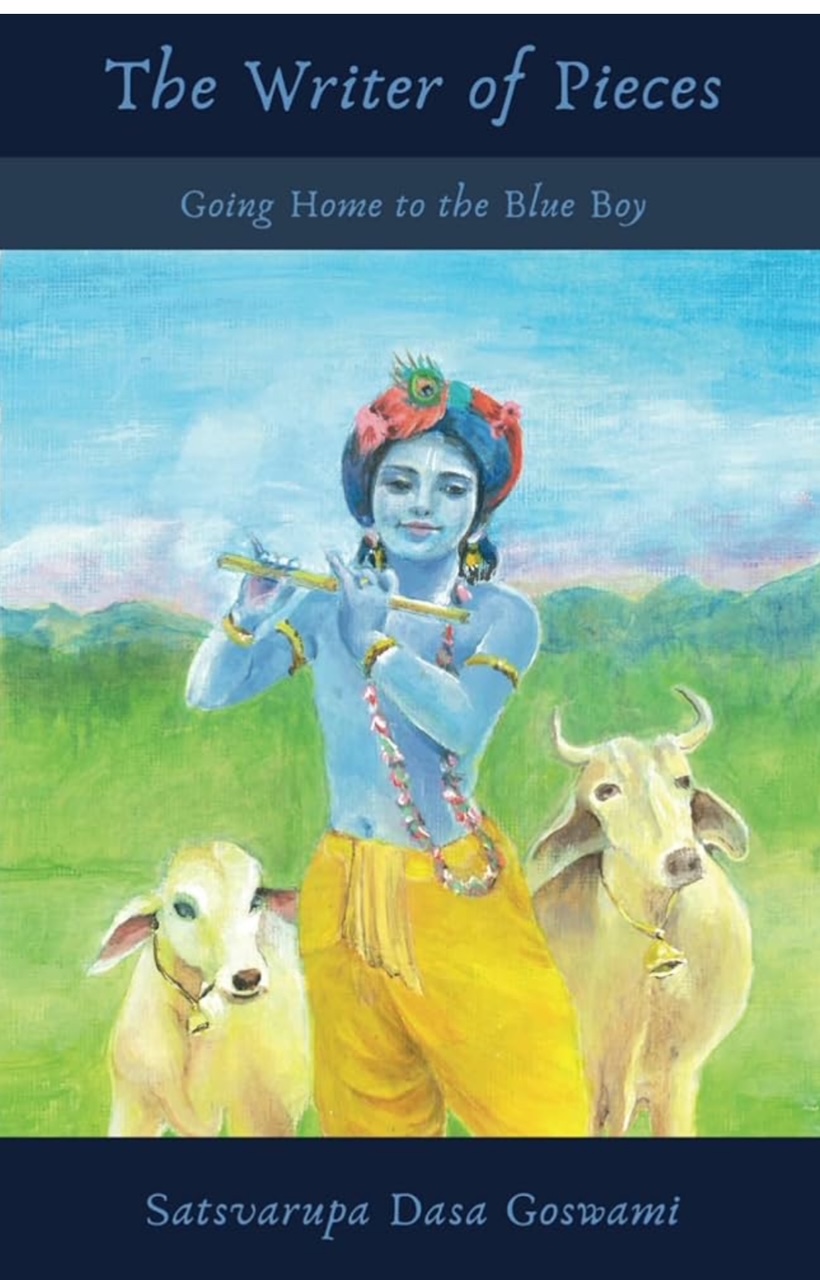
Don’t take my pieces away from me. I need them dearly. My pieces are my prayers to Kṛṣṇa. He wants me to have them, this is my way to love Him. Never take my pieces away.

Many planks and sticks, unable to stay together, are carried away by the force of a river’s waves. Similarly, although we are intimately related with friends and family members, we are unable to stay together because of our varied past deeds and the waves of time.
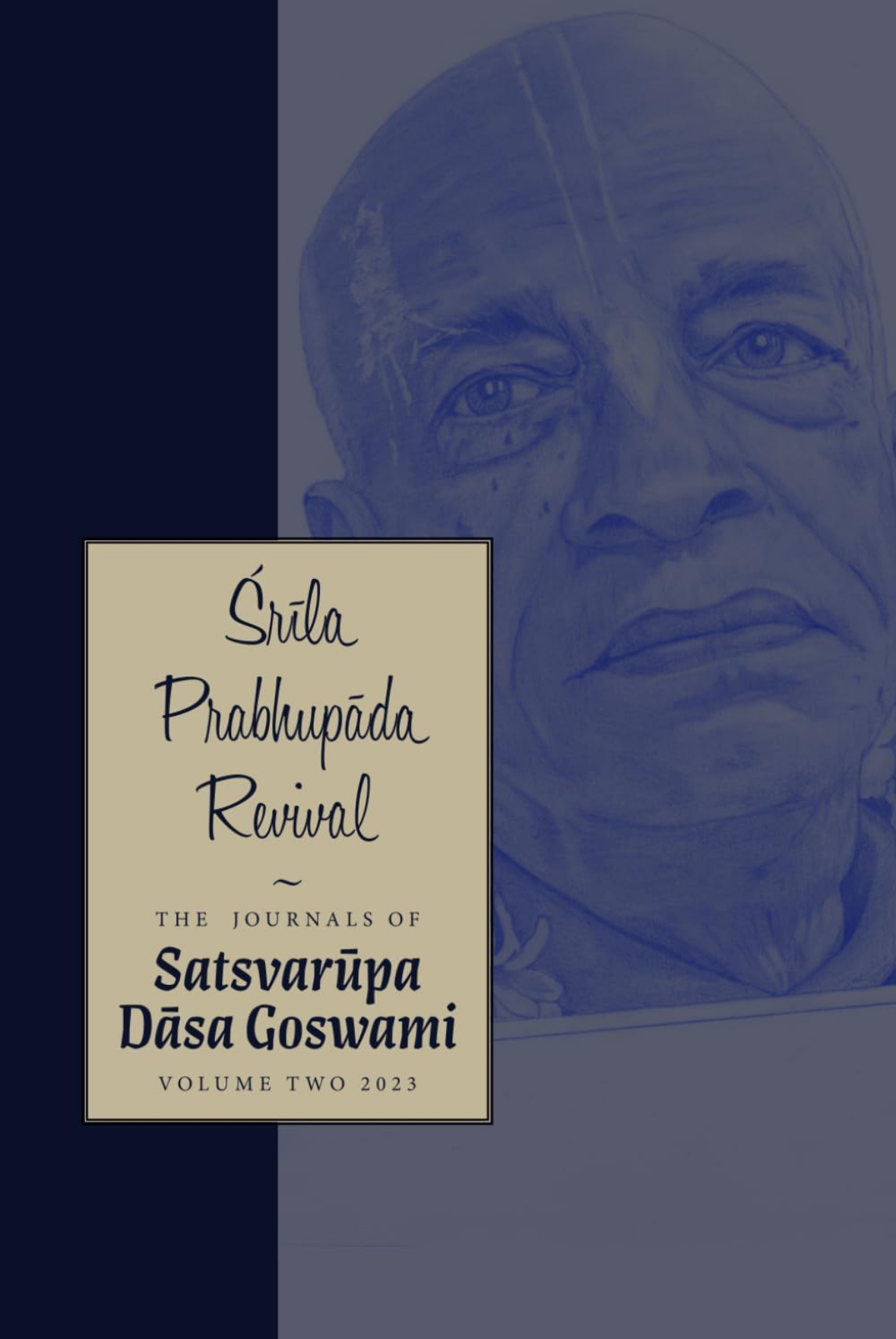
To Śrīla Prabhupāda, who encouraged his devotees (including me) To write articles and books about Kṛṣṇa Consciousness.
I wrote him personally and asked if it was alright for his disciples to write books, Since he, our spiritual master, was already doing that. He wrote back and said that it was certainly alright For us to produce books.
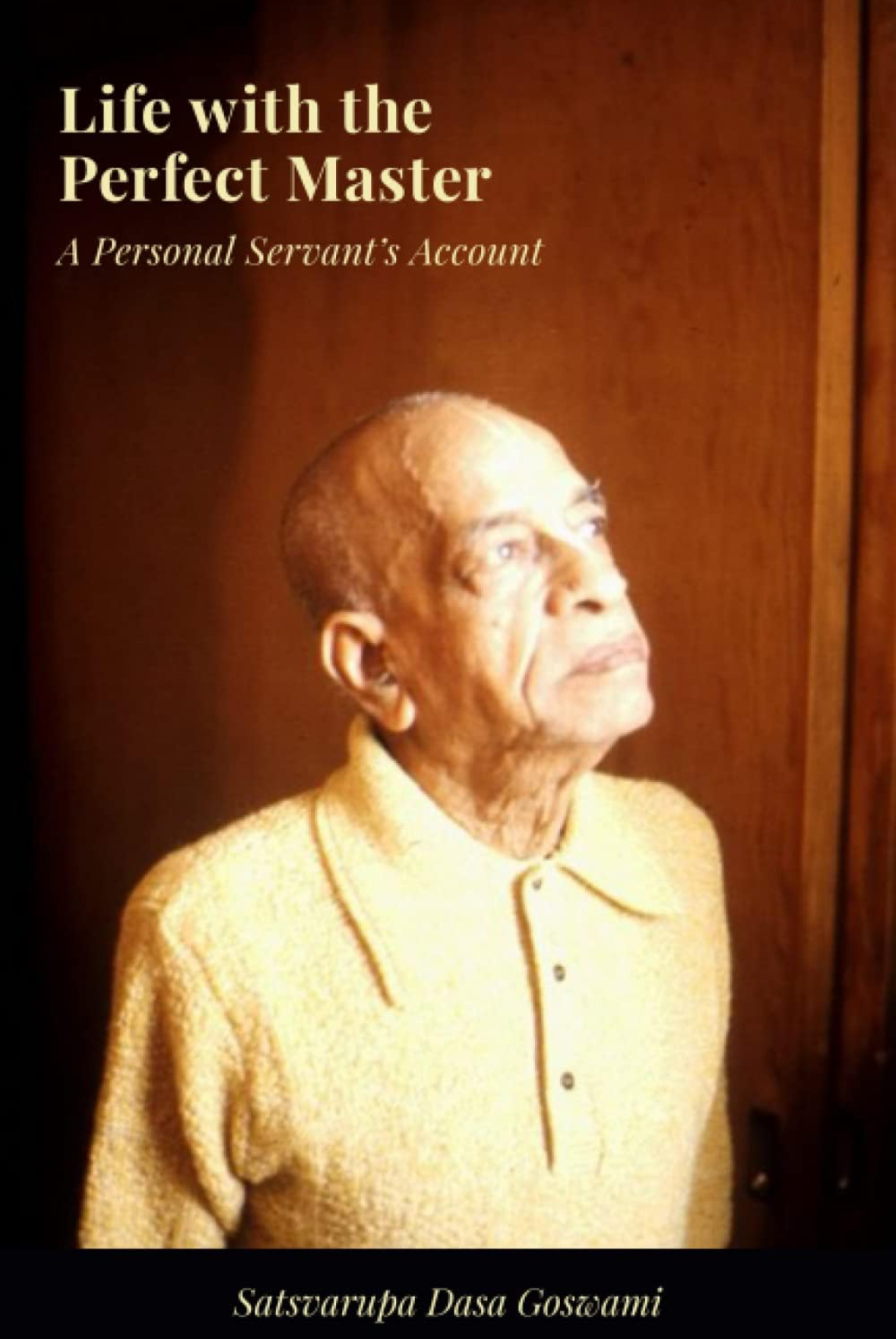
I have a personal story to tell. It is a about a time (January–July 1974) I spent as a personal servant and secretary of my spiritual master, His Divine Grace A.C. Bhaktivedanta Swami Prabhupäda, founder-äcärya of the International Society for Krishna Consciousness. Although I have written extensively about Çréla Prabhupäda, I’ve hesitated to give this account, for fear it would expose me as a poor disciple. But now I’m going ahead, confident that the truth will purify both my readers and myself.
First published by The Gītā-nāgarī Press/GN Press in serialized form in the magazine Among Friends between 1996 and 2001, Best Use of a Bad Bargain is collected here for the first time in this new edition. This volume also contains essays written by Satsvarūpa dāsa Goswami for the occasional periodical, Hope This Meets You in Good Health, between 1994 and 2002, published by the ISKCON Health and Welfare Ministry.

This book has two purposes: to arouse our transcendental feelings of separation from a great personality, Śrīla Prabhupāda, and to encourage all sincere seekers of the Absolute Truth to go forward like an army under the banner of His Divine Grace A.C. Bhaktivedanta Swami Prabhupāda and the Kṛṣṇa consciousness movement.
A single volume collection of the Nimai novels.
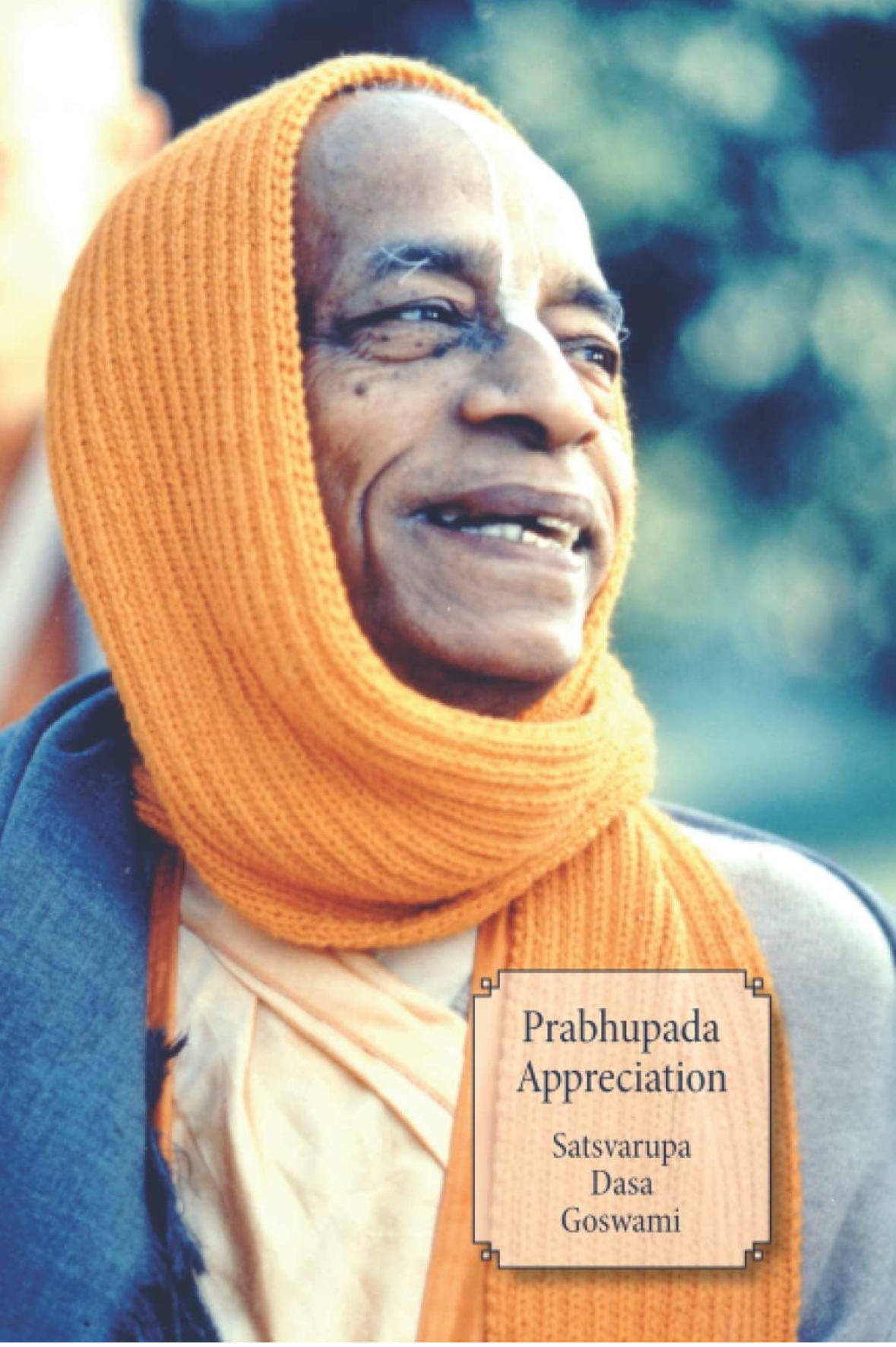
Śrīla Prabhupāda was in the disciplic succession from the Brahmā-Mādhva-Gauḍīya sampradāya, the Vaiṣṇavas who advocate pure devotion to God and who understand Kṛṣṇa as the Supreme Personality of Godhead. He always described himself as simply a messenger who carried the paramparā teachings of his spiritual master and Lord Kṛṣṇa.
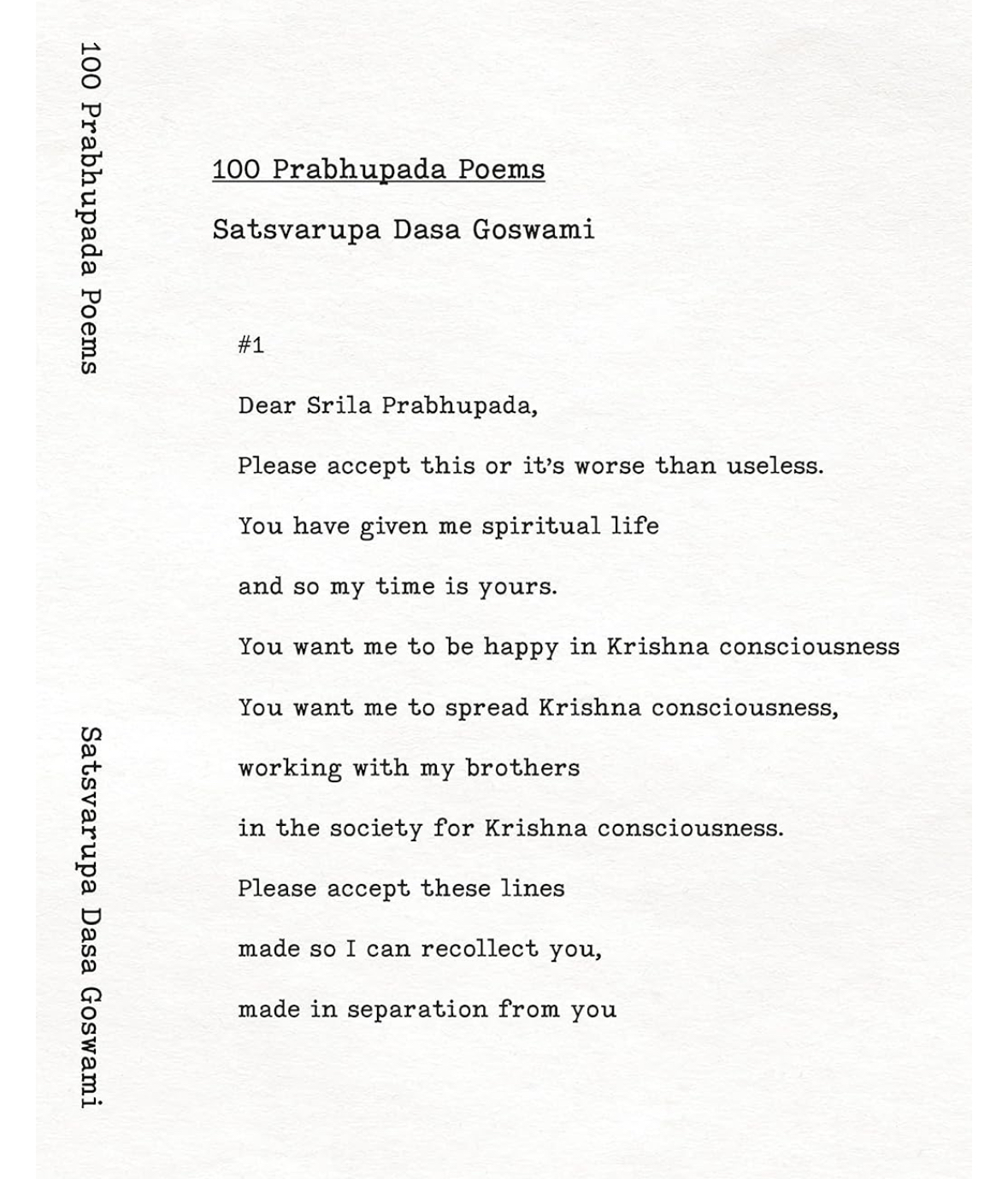
Dear Srila Prabhupada,
Please accept this or it’s worse than useless.
You have given me spiritual life
and so my time is yours.
You want me to be happy in Krishna consciousness
You want me to spread Krishna consciousness,
This collection of Satsvarūpa dāsa Goswami’s writings is comprised of essays that were originally published in Back to Godhead magazine between 1966 and 1978, and compiled in 1979 by Gita Nagari Press as the volume A Handbook for Kṛṣṇa Consciousness.

This second volume of Satsvarūpa dāsa Goswami’s Back to Godhead essays encompasses the last 11 years of his 20-year tenure as Editor-in-Chief of Back to Godhead magazine. The essays in this book consist mostly of SDG’s ‘Notes from the Editor’ column, which was typically featured towards the end of each issue starting in 1978 and running until Mahārāja retired from his duties as editor in 1989.
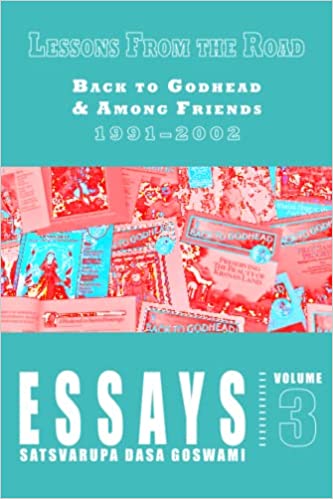
This collection of Satsvarupa dasa Goswami’s writings is comprised of essays that were originally published in Back to Godhead magazine between 1991 and 2002, picking up where Volume 2 leaves off. The volume is supplemented by essays about devotional service from issues of Satsvarupa dasa Goswami’s magazine, Among Friends, published in the 1990s.

“This is a different kind of book, written in my old age, observing Kṛṣṇa consciousness and assessing myself. I believe it fits under the category of ‘Literature in pursuance of the Vedic version.’ It is autobiography, from a Western-raised man, who has been transformed into a devotee of Kṛṣṇa by Śrīla Prabhupāda.”
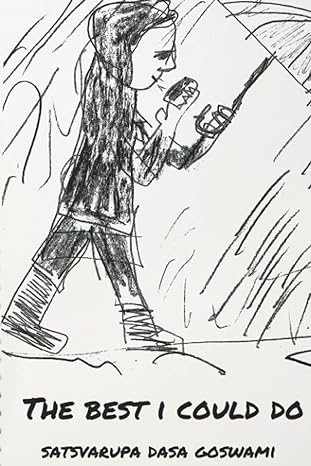 The Best I Could Do
I want to study this evolution of my art, my writing. I want to see what changed from the book In Search of the Grand Metaphor to the next book, The Last Days of the Year.
 a Hare Krishna Man
It’s world enlightenment day
And devotees are giving out books
By milk of kindness, read one page
And your life can become perfect.
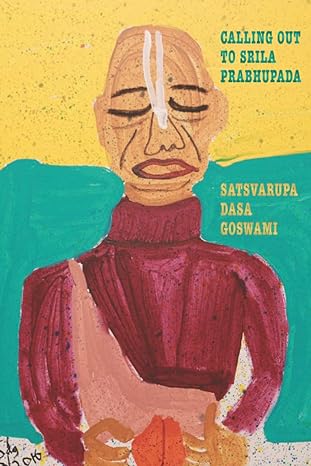 Calling Out to Srila Prabhupada: Poems and Prayers
O Prabhupāda, whose purports are wonderfully clear, having been gathered from what was taught by the previous ācāryas and made all new; O Prabhupāda, who is always sober to expose the material illusion and blissful in knowledge of Kṛṣṇa, may we carefully read your Bhaktivedanta purports.
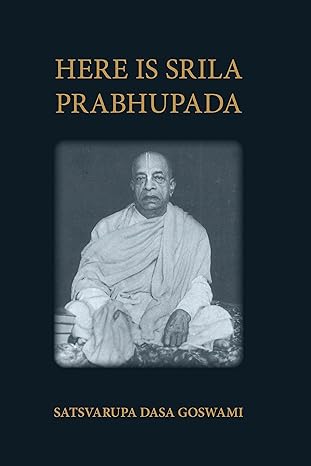
I use free-writing in my devotional service as part of my sādhana. It is a way for me to enter those realms of myself where only honesty matters; free-writing enables me to reach deeper levels of realization by my repeated attempt to “tell the truth quickly.” Free-writing takes me past polished prose. It takes me past literary effect. It takes me past the need to present something and allows me to just get down and say it. From the viewpoint of a writer, this dropping of all pretense is desirable.
 Geaglum Free Write
This edition of Satsvarūpa dāsa Goswami’s 1996 timed book, Geaglum Free Write Diary, is published as part of a legacy project to restore Satsvarūpa Mahārāja’s writings to ‘in print’ status and make them globally available for current and future readers.