
We are still expanding our team of proofreaders as we aim to increase the rate of republication of Satsvarūpa Mahārāja’s books as well as new books that he writes.
As many of you know, during the July 4th festival just held, a total of 18 new and re-edited and published books were present, and we hope to present a similar number at Satsvarupa Maharaja’s Vyasa-puja observance this December.
Our call for proofreaders includes a need for fluent bilingual Spanish and English speakers to proofread Spanish translations (we currently have around 20 Spanish translations waiting to be proofread). Anyone interested in this particular service should contact Manohara dāsa at [email protected]
If you would like to help, please contact Kṛṣṇa-bhajana dāsa at [email protected] or [email protected] and we will find you a service that utilizes your talents.
There are ten offenses in chanting Hare Kṛṣṇa. They involve not only the time when we sit down to chant japa, but our whole devotional life. These offenses—disobeying the orders of the spiritual master, committing deliberate sins on the strength of chanting, blaspheming the devotee—have to do with more than correct pronunciation of the names of the Lord. So whether we can carry out the orders of the spiritual master is our test. By the time you sit down to chant, it’s already determined by your service attitude—you’ve either already committed the offenses, or you haven’t. Offenseless chanting and following the spiritual master’s orders are interdependent.
By chanting carefully, you get the strength to follow the orders of your spiritual master, as you associate with Kṛṣṇa’s name. But we know that if you associate without offense, it is much more effective. Following the four rules and living in devotional service assures you of avoiding the ten offenses.
The chanting of Hare Kṛṣṇa has the power to eradicate all sins, but if you become an offender to the holy names of the Lord, then you have no chance of being delivered.
THE THIRD OFFENSE is to minimize or blaspheme the order of the spiritual master. The spiritual master gives the holy name. Sampradāya-vihīnā ye mantrās te niṣphalā matāḥ. Unless you receive the mantra from the spiritual master in sampradāya, it will not have effect. One reason that I chant japa with my disciples each morning is to emphasize the connection between chanting and receiving the mantra from the spiritual master. Unless we have received the mantra in sampradāya it will not have effect. Then only can you receive the authority to chant the holy names of the Lord.
One should not minimize the spiritual master, who is himself practicing the holy name, who is immersed in the taste of the holy name, and who is teaching the holy name, and one should not think that some other teacher or teaching is higher. The Māyāvādīs think that Vedānta philosophy is the ultimate. But no, the holy name is the highest knowledge. So one should never forget that his spiritual master, in giving the holy name, is giving the highest teaching; there is nothing more profound. Ṣaṭ-karma-nipuṇo vipro mantra-tantra-viśāradaḥ. The guru must be Vaiṣṇava. The Vaiṣṇava guru who gives you the holy name is the greatest teacher.
The spiritual master, as stated in the Caitanya-caritāmṛta, is the manifested presence of Kṛṣṇa. He is the mercy of Kṛṣṇa, manifested in the spiritual master. So he is carrying the instruction of Kṛṣṇa. If you neglect that or disobey that, then what is your chanting of Hare Kṛṣṇa? It is useless. So when you recognize the spiritual master as the representative of God, you must follow his instruction. How can we disobey him and expect to make progress? “Well, now he’s here. I’ll take initiation and behave nicely today, but then tomorrow I’ll do something against his order. He will never know.” But he will know. Kṛṣṇa will know, and it will be very bad for me if I do this. This defiance, gross or subtle, is a kind of suicide. There should be no question of this.
Every morning we pray, yasya prasādād bhagavat-prasādo, but sometimes we forget what it means. The verse means that by the grace of the spiritual master one gets the mercy of Kṛṣṇa. If one does not please the spiritual master, then he has no chance of progress. This applies to our chanting Hare Kṛṣṇa. So how can you disobey the instructions of your spiritual master and still be successful in your chanting? These offenses contradict the spirit and the essence of chanting. How can one possibly chant while disobeying the order of the spiritual master and expect Kṛṣṇa’s blessings? The spiritual master’s orders are the same as Kṛṣṇa’s, because the spiritual master is the via media to Kṛṣṇa. We have heard this verse many times, yasya deve parā bhaktir yathā deve tathā gurau / tasyaite kathitā hy arthāḥ prakāśante mahātmanaḥ. That is, only unto those great souls who have faith in both the Lord and the spiritual master are the imports of Vedic knowledge automatically revealed. So that includes also only to those who have that faith can the chanting of Hare Kṛṣṇa be revealed. Prabhupāda explains in Caitanya-caritāmṛta, “Believing in the words of His spiritual master, Lord Caitanya introduced the saṅkīrtana movement, just as the present Kṛṣṇa consciousness movement was started with the belief in the words of our spiritual master. We wanted to preach. We believed in his words and tried somehow or other to fulfill them. And now this movement has become successful all over the world. Therefore, faith in the words of the spiritual master and the Supreme Personality of Godhead is the secret of success.”
So how can we displease or disobey the guru’s order and say, “But it is all right. I am chanting Hare Kṛṣṇa.” That chanting will not be effective. I have to chant with the blessings of my spiritual master.
Even if we don’t yet chant completely without offense or we don’t even understand completely, we chant on the order of our spiritual master as Lord Caitanya did, considering Himself like a fool. “I firmly believe that simply by chanting the holy name of the Lord I can remove all the misconceptions of the material world. I do this because I firmly believe in the words of my spiritual master. Although the Māyāvādī philosophers do not like this chanting and dancing, I nevertheless perform it on the strength of my spiritual master’s words.”
Śrīla Prabhupāda was chanting Hare Kṛṣṇa when he came to New York City in 1966. One could have thought, “Well, he’s Indian, sannyāsī. This is his religion. It’s not mine.” But then when you become his disciple, his servant, then you chant Hare Kṛṣṇa, because he’s the spiritual master and he says that this is the process. And when you become the servant and you chant in that way, then the name will reveal itself to you. But you can’t chant without that connection with the spiritual master as his servant. This is the meaning of dīkṣā. “It is the spiritual master who delivers the disciple from the clutches of māyā by initiating him into the chanting of the Hare Kṛṣṇa mahā-mantra. In this way, a sleeping human being can revive his consciousness by chanting Hare Kṛṣṇa, Hare Kṛṣṇa, Kṛṣṇa Kṛṣṇa, Hare Hare / Hare Rāma, Hare Rāma, Rāma Rāma, Hare Hare. In other words, the spiritual master awakens the sleeping living entity to his original consciousness so that he can worship Lord Viṣṇu. This is the purpose of dīkṣā, or initiation.” So for any disciple to make advancement in spiritual life, he must guard carefully against this offense. He must not neglect the orders of the spiritual master.
pp. 184-88
“We shall call our society ISKCON.” Prabhupada had laughed playfully when he first coined the acronym.
He had initiated the legal work of incorporation that spring, while still living on the Bowery. But even before its legal beginning, he had been talking about his “International Society for Krsna Consciousness,” and so it had appeared in letters to India and in The Village Voice. A friend had suggested a title that would sound more familiar to Westerners, “International Society for God Consciousness,” but Prabhupada had insisted: “Krsna Consciousness.” “God” was a vague term, whereas “Krsna” was exact and scientific; “God consciousness” was spiritually weaker, less personal. And if Westerners didn’t know that Krsna was God, then the International Society for Krsna Consciousness would tell them, by spreading His glories “in every town and village.”
“Krsna consciousness” was Prabhupada’s own rendering of a phrase from Srila Rupa Gosvami’s Padyävali, written in the sixteenth century. Krsna-bhakti-rasa-bhavita: “to be absorbed in the mellow taste of executing devotional service to Krsna.”
But to register ISKCON legally as a nonprofit, tax-exempt religion required money and a lawyer. Carl Yeargens had already gained some experience in forming religious, political, and social welfare groups, and when he had met Prabhupada on the Bowery he had agreed to help. He had contacted his lawyer, Stephen Goldsmith. Goldsmith, a young Jewish lawyer with a wife and two children and an office on Park Avenue, was interested in spiritual movements. When Carl told him about Prabhupada’s plans, he was immediately fascinated by the idea of setting up a religious corporation for an Indian swami. He visited Prabhupada at 26 Second Avenue, and they discussed incorporation, tax exemption, Prabhupada’s immigration status, and Krsna consciousness. Mr. Goldsmith visited Prabhupada several times. Once he brought his children, who liked the “soup” the Swami cooked. He began attending the evening lectures, where he was often the only nonhippie member of the congregation. One evening, having completed all the legal groundwork and being ready to complete the procedures for incorporation, Mr. Goldsmith came to Prabhupada’s lecture and kirtana to get signatures from the trustees for the new society.
Prabhupada is lecturing.
Mr. Goldsmith, wearing slacks and a shirt and tie, sits on the floor near the door, listening earnestly to the lecture, despite the distracting noises from the neighborhood. Prabhupada has been explaining how scholars mislead innocent people with nondevotional interpretations of the Bhagavad-gita, and now, in recognition of the attorney’s respectable presence, and as if to catch Mr. Goldsmith’s attention better, he introduces him into the subject of the talk.
I will give you a practical example of how things are misinterpreted. Just like our president, Mr. Goldsmith, he knows that expert lawyers, by interpretation, can do so many things. When I was in Calcutta, there was a rent tax passed by the government, and some expert lawyer changed the whole thing by his interpretation. The government had to reenact a whole law because their purpose was foiled by the interpretation of this lawyer. So we are not out for foiling the purpose of Krsna, for which the Bhagavad-gétä was spoken. But unauthorized persons are trying to foil the purpose of Krsna. Therefore, that is unauthorized.
All right, Mr. Goldsmith, you can ask anything.
Mr. Goldsmith stands, and to the surprise of the people gathered, he makes a short announcement asking for signers on an incorporation document for the Swami’s new religious movement.
Prabhupada: They are present here, you can take the addresses now.
Mr. Goldsmith: I can take them now,yes.
Prabhupada: Yes, you can. Bill, you can give your address. And Raphael, you can give yours. And Don… Roy… Mr. Greene.
As the meeting breaks up, those called on to sign as trustees come forward, standing around in the little storefront, waiting to leaf cursorily through the pages the lawyer has produced from his thin attache, and to sign as he directs. Yet not a soul among them is committed to Krsna consciousness.
Mr. Goldsmith meets his quota of signers—a handful of sympathizers with enough reverence toward the Swami to want to help him. The first trustees, who will hold office for a year, “until the first annual meeting of the corporation,” are Michael Grant (who puts down his name and address without ever reading the document), Mike’s girlfriend Jan, and James Greene. No one seriously intends to undertake any formal duties as trustee of the religious Society, but they are happy to help the Swami by signing his fledgling Society into legal existence.
According to law, a second group of trustees will assume office for the second year. They are Paul Gardiner, Roy, and Don. The trustees for the third year are Carl Yeargens, Bill Epstein, and Raphael.
None of them know exactly what the half a dozen, legal-sized typed pages mean, except that “Swamiji is forming a Society.”
Why?
For tax exemption, in case someone gives a big donation, and for other benefits an official religious society might receive.
But these purposes hardly seem urgent or even relevant to the present situation. Who’s going to make donations? Except maybe for Mr. Goldsmith, who has any money?
But Prabhupada is planning for the future, and he’s planning for much more than just tax exemptions. He is trying to serve his spiritual predecessors and fulfill the scriptural prediction of a spiritual movement that is to flourish for ten thousand years in the midst of the Age of Kali. Within the vast Kali Age (a period which is to last 432,000 years), the 1960s are but an insignificant moment.
The Vedas describe that the time of the universe revolves through a cycle of four “seasons,” or yugas, and Kali-yuga is the worst of times, in which all spiritual qualities of men diminish until humanity is finally reduced to a bestial civilization, devoid of human decency. However, the Vedic literature foretells a golden age of spiritual life, beginning after the advent of Lord Caitanya and lasting for ten thousand years—an eddy that runs against the current of Kali-yuga. With a vision that soars off to the end of the millennium and beyond, yet with his two feet solidly on the ground of Second Avenue, Prabhupada has begun an International Society for Krsna Consciousness. He has many practical responsibilities: paying the rent, incorporating his society, and paving the way for a thriving worldwide congregation of devotees. Yet he doesn’t see his humble beginning as limiting the greater scope of his divine mission. He knows that everything depends on Krsna, so whether he succeeds or fails is up to the Supreme. He has only to try.
pp. 340-47
I want to be a devotee writer. I am a devotee writer. I write Kṛṣṇa conscious books, and of course I want my books to be paramparā and to please Śrīla Prabhupāda and Kṛṣṇa. Sometimes we can please Prabhupāda and the Lord by innovative ways. I am thinking in my own writing of trying something new, but I want to be sure it is pleasing to Prabhupāda. I decided to write to some ISKCON intellectuals and writers, asking them what they think of my proposal for an innovation. Here is what I am thinking of: first of all, the kind of writing I like to do is journal. I have written quite a few journals. But I would like to insert in my journals some śāstra or Kṛṣṇa conscious kathā, but in a novel fashion. More specifically, I am wondering whether it is alright to insert into my journal quotes or paraphrases from English and world literature that seem to touch upon Kṛṣṇa consciousness, and tease that out of them while offering some Kṛṣṇa conscious discussion and analytical commentary.
To this end, I think of Prabhupāda in the Bowery days in 1965 and 1966 urging his audience, which was largely made up of hippies, musicians, writers, painters, etc., by saying to them, “If you like to make music, then go ahead and be a musician, but do it for Kṛṣṇa, link it to Kṛṣṇa.” One of his favorite phrases he used on the Bowery was “dovetail it!” He asked his new disciples to dovetail what they were doing and do it in a Kṛṣṇa conscious way—make it an offering to Kṛṣṇa.
I have a deep attraction to and a deep background in English literature and world literature, although I didn’t attend any prestigious schools. I did have a dynamite teacher in one of the colleges I attended, and we studied so much in world literature and in English literature, and that became like my religion; I so much love those two kinds of literature. And I write. In my Kṛṣṇa conscious writings I haven’t written much about ‘other’ books, books which I consider to be very good literature. I would like to introduce readers to the kind of literature I used to read before meeting Prabhupāda and even since then, by writing something about those books and their authors.
One time I asked Prabhupāda, “What is the position of those people who I considered heroes when I was younger, my literary heroes? Do they have any value at all? They’re not God conscious.” He said, “Their sincerity is their God consciousness.” That knocked me over! “Their sincerity is their God consciousness!”
At first, I didn’t fully understand the purport of what Prabhupāda had said, but I was grateful for his answer, which was a kind of concession to me because he knew I admired the authors and musicians who had been my heroes before coming to Kṛṣṇa consciousness, and this was very important for me.
Since then, I have come to understand Prabhupāda’s statement in the context of Bhagavad-gītā and I am indeed very happy to have discovered from it the title for this book: Mama Tejas, A Spark of My Splendor. The words come directly from Śrī Kṛṣṇa, the Supreme Personality of Godhead, as spoken in the Bhagavad-gītā, Chapter Ten, verse forty-one:
yad yad vibhūtimat sattvaṁ
śrīmad ūrjitam eva vā
tat tad evāvagaccha tvaṁ
mama tejo-’ṁśa-sambhavam
Know that all opulent, beautiful and glorious creations spring from but a spark of My splendor.
Those authors and musicians whom I looked up to when I was younger were accomplished in their art of writing literature or creating music. A devotee can find within such ‘great works’ a tiny spark of Kṛṣṇa consciousness, whether the authors or musicians were fully aware of it or not in their sincere attempts to communicate some simple realizations they had gained in their pursuit of honest, meaningful expression. In their own ways they were sometimes seekers of the truth. Their best works could be considered “opulent, beautiful and glorious creations,” and any little gems they had been able to express in their attempt to capture some kind of truth with their work are the sparks of Kṛṣṇa’s splendor. Finding these gems is possible for the devotee developing the ability to see Kṛṣṇa in everything and everything in Kṛṣṇa:
yo māṁ paśyati sarvatra
sarvaṁ ca mayi paśyati
tasyāhaṁ na praṇaśyāmi
sa ca me na praṇaśyati
For one who sees Me everywhere and sees everything in Me, I am never lost, nor is he ever lost to Me.
—Bhagavad-gītā 6.30
This is the theory underlying my writing experiment. The question is, will the result be a work of Kṛṣṇa conscious literature. I want to find out.
******
I had a meeting this morning with Śraddhā dāsī, who is my friend Ravindra Svarūpa Prabhu’s secretary. Ravindra Svarūpa is no longer well enough to correspond with me, but Śraddhā has been working with him for years and so knows his opinion on matters such as this. She explained:
Ravindra Svarūpa told me that Prabhupāda himself had quite an education in English literature. He went to Scottish Churches College, and these things were required, so it was surprising to Prabhupāda that his disciples did not always have a good background in English literature! He would make some references sometimes, and his disciples would not catch the reference. So that’s one thing that comes to mind. Prabhupāda himself had a background in these things. Prabhupāda used this background. For example, “Simple living, high thinking.” He certainly used that, but he didn’t originate it, but it certainly is a very common phrase now in the devotee world, and Śrīla Prabhupāda helped to bring that in.
Then I can speak to Ravindra Svarūpa Prabhu’s own use of this and his understanding. Just recently, maybe a few weeks ago, we had a class where he was reading one of his past essays, and he quoted Yeats. And in this essay, he was going through one of Yeats’ poems and explaining its Kṛṣṇa conscious connections. In the conversation after he read the article there was a lot of appreciation from the devotees because it brought them even more faith. He was looking at the poem through the lens of Kṛṣṇa consciousness … bringing his understanding of Kṛṣṇa consciousness to the poem but also saying this is a lived experience. As you said, Prabhupāda said, “Their sincerity is their God consciousness. Yeats was a very sincere person in many ways, and there were some realizations in the way he talked about death and life and it comes out, and if you have that Kṛṣṇa conscious lens, you can see what he was trying to say.
The devotees were expressing that it actually built their own faith, that we’re not in this little microcosm of our own little world, and it only applies to us, but other people outside of that who are sincere, sincere seekers, have had some realizations. They are not going to have the realization of Rādhā-Kṛṣṇa and Goloka Vṛndāvana (laughs) normally, but there is some truth of what is life and what is death and experience of life, right, that actually gave them even more faith and the importance of practicing Kṛṣṇa consciousness.
They’ve also shared that they felt it was a really good way for others who may not be so connected with devotees or Kṛṣṇa consciousness directly to read something like that and have somebody explain it, unpack it, and then become even more interested in Kṛṣṇa consciousness, like, “Wow, there’s these connections!” He quoted Yeats as a way of emphasizing what he was saying in Kṛṣṇa consciousness.
I always appreciated that myself, that we don’t need to divorce one from the other, but we need to be strong in our Kṛṣṇa consciousness so that we can see through the proper lens, how it manifests in these other writings and literature.
pp. 356-58
What is Krishna Consciousness?
While visiting Los Angeles in 1971, Prabhupada took a walk through a park. After walking for some time, Prabhupada and the devotees came upon a section of the park that was fenced in. The gate was open, but a sign said, “Unauthorized Do Not Enter.” Prabhupada began walking toward the gate. Karandhara told Prabhupada that he should not pass through the gate. Three times he told Prabhupada it was unauthorized. Finally, Prabhupada stopped, looked at Karandhara and said, “Mahajano yena gatah sa panthah: ‘One should follow in the path of the mahajanas.’” He then proceeded through the gate. Prabhupada chose the path that led directly to their car and thus saved a long walk back the way they had come.
Once some devotees acquired a special mechanical device for lifting the top of the ratha cart. The devotees assured Prabhupada that Nara-Narayana dasa could assemble the mechanism, but Prabhupada said they should form a committee and consult together rather than have just one man take on the work. He said it should not be that only one man understood and that everyone else did not know what he was doing.
When the devotees told Nara-Narayana what Prabhupada had said, Nara-Narayana felt bad, thinking that Prabhupada doubted him. But then the devotees sat down and had their meeting. They soon realized that neither Nara-Narayana nor anyone else among them had the ability to construct the complex device. Nara-Narayana then resolved to always consult others before beginning a project.
Once, in Hyderabad, Prabhupada stayed in a room with a slanting roof. He asked his servant, Hari Sauri, to put a picture of Srila Bhaktisiddhanta Sarasvati on top of the almira. But because the roof slanted, Hari Sauri could not figure out a way to hang the picture. Prabhupada said it took a little intelligence, and then he related a story. Christopher Columbus and a companion were sitting at the table. “Actually, your going to America was not anything special,” said the gentleman. “You didn’t plan to go there, it was an accident. Anybody could have done it, but you just happened to be the first.” Columbus then put an egg on the table and said, “Make this egg stand on its end.” The man tried and tried but he could not balance the egg. Finally, he gave up in desperation. Columbus then took the egg and tapped the big end until it became flat. Then he stood the egg on its end. “Well,” the man said, “you didn’t say I could break the egg.” “It takes a little intelligence,” answered Columbus.
After telling this story, Prabhupada then tilted the picture so that it was resting on the wall in the opposite way from that of a conventional picture. In this way he was able to slip the picture between the almira and the slanting roof.
In Bombay, Srila Prabhupada was visited by a follower of Rama-Krishna who claimed that Rama-Krishna was an incarnation of God. The man explained how Rama-Krishna had saved a drunkard. Prabhupada asked if this fact made Rama-Krishna an incarnation of God. Prabhupada said that he had converted thousands of drunkards—“Not only drunkards, Western drunkards,” he said. “Therefore I am much bigger incarnation than him.”
Prabhupada visited Gorakhpur in 1971 and while there he had an intimate exchange with his disciples.
When asked how a devotee should decide between various services to offer to Krsna, Prabhupada told the disciple to inquire from his spiritual master. The disciple expressed a doubt, thinking that his questions might seem foolish. “No, don’t speculate.” Prabhupada said, “You should immediately ask your spiritual master.”
“Then I would be asking you questions all day long and you’d have no time to do anything else,” the disciple said.
“No,” Prabhupada said, “you are welcome, you are welcome.”
In London in 1969, Trivikrama dasa was giving Prabhupada a massage. Prabhupada was preaching about how Krsna has form. Prabhupada turned and put his arms on Trivikrama’s shoulders and said, “Just as Trivikrama has form, Krsna also has form.”
Prabhupada once stayed in a small room that had a ceiling which was higher in the middle than it was around the walls. Prabhupada liked the room very much. He said it reminded him of his room at the Radha-Damodara temple. “To me, this is sense gratification,” he said.
In Mayapur in 1976, Srila Prabhupada held an evening darsana for his devotees. Someone brought in sweets and Prabhupada’s servant put them away. Prabhupada asked the servant why he didn’t serve the prasadam. The servant replied that there were too many devotees in the room and that he would pass out the prasadam as everyone was leaving. Prabhupada quickly answered, “They will never leave,” and the devotees all shouted, “Jaya Srila Prabhupada!”
pp. 307-310
My Dear Lord Kṛṣṇa …
——————————————————————
I want to write a prayer to You today on the subject of my mother and father. They are both dead. I did not have any communications with them since 1968, when my mother visited my wife and I at our apartment in Boston. The visit was civil, and my mother bought me a new suit and bought Jadurāṇī some art supplies. We took them on a tour of the storefront temple and showed them Jadurānī’s paintings, and we spent some time conversing in our apartment, where we had no soft furniture, only stiff wooden chairs. Only after they left did I hear from my mother-in-law, Mrs. Koslovsky, that my mother was ashamed, angry, and in the mood of disowning me after her visit. She was shocked at the poverty and cultishness of our life, and no doubt she told that to my father and he agreed.
What I want to ask You in this prayer is whether I handled my relationship right with my parents? After that visit, we had no more communications. I think I had one more phone call with my father, in which he was sarcastic and insulting toward Kṛṣṇa consciousness and the Swami. My mother said to me on a phone call, “As long as you are with them, we don’t want anything to do with you.” They rejected me. They disowned me, and all because I became a member of the Hare Kṛṣṇa movement. For me to persist in keeping a relationship with them, I would have had to tolerate blasphemy of You and Prabhupāda. So I think I did the right thing by not persisting in phoning them, write to them, or visiting them. Do you agree with me?
My mother was very narrow-minded when it came to religion. She was an Irish American Roman Catholic with not a drop of ecumenical spirit in her faith. My father rarely went to church, but he was a U.S. Navy officer and an NYC Fire Department captain and couldn’t stomach that I would convert to a religion from poverty-stricken India. I was heartbroken at first that they disowned me on such flimsy grounds, but Prabhupāda assured me that everything was all right. I should dry my tears and carry on my service to him. I don’t think there was any more I could have done to have kept the family bonds. I am just praying to You to assure me of this. I know some devotees have managed to keep affectionate relationships with their parents, and I admire them for it. But it was not possible for me and others. I don’t hate my parents for the way they treated me, I just accept it as providential. You didn’t want me to subject my faith to the treatment they felt compelled to give me. I pray that my mother and father (and sister and brother-in-law and their children) all make spiritual advancement in their religious lives. I hope they had happy lives. And I hope You will forgive me for not being able to win them over to my choice of rendering devotional service to You and Prabhupāda. Perhaps I was too fanatical. But they really gave me no choice. Please bless them, and please bless me. I failed to satisfy my parents, but my spiritual master indicated to me by his words and, more importantly, by the look in his eyes, that I had done the right thing.
******
My Dear Lord Kṛṣṇa …
——————————————————————
I am feeling far away from You, yet close to You. I feel far away in terms of what I know a pure devotee feels for You. In kṛṣṇa-prema, the devotee is fixed on You, is absorbed in You, and is always trying to please You. I am not that fervent. I am not in ecstatic joy or separation, crying tears, working hard for You. I’m not like St. Francis of Assisi with his stigmata or Svarūpa Dāmodara, living with You and feeding You ecstasies with songs to promote Your mood of viraha in the mood of Rādhārāṇī. I’m not like Śrīla Prabhupāda, always wrapped in ISKCON thought. Yet I am with You in a constant way. I’m almost always writing this journal about You or chanting Your holy names. I chant more mechanically than from the heart, but I chant because I know it is important.
I like the fact that I feel close to You, and I don’t like the fact that I feel distant from You. I’d like to increase the one and decrease the other. Everyone should feel close to You and want to increase their love for You. They shouldn’t be satisfied that they are absorbed being a writer or a baseball player. Everyone should desire to be intensely God conscious. No one should be satisfied to be “laid back’ at not being a devotee.
So I pray to You to feel closer. I suspect that loving You would involve more anxiety on my part. Love of God isn’t just a contented feeling. It’s a feeling of wanting to increase, of not doing enough, of feeling separation from You. Maybe I want to be more content in my favorable feelings toward You. Śrīmatī Rādhārāṇī prays, “You can crush Me in Your embrace or make Me brokenhearted by not being present before Me, but You are always My worshipable Lord, unconditionally.” How intense is Her devotion to You. She is not like a religionist who goes to church or temple once a week and makes some ritualistic prayers. She’s mad about You. That is real love of God. And Lord Caitanya, appearing as Your devotee, has that identical form of love.
It would take Your mercy to make me a more fervent devotee. It would be good for me. I ask You to grant it to me. I would like to do my part in increasing my intensity of devotion to You. I know I can do it if I try and if I desire it. But ultimately, it is up to Your mercy. I pray for it.
pp. 49-52
I know Prabhupada will take me back…. I need to accept myself back too, and not just because of this issue but to learn to accept the limits being imposed upon me by health and temperament and be myself freely.
“When a living entity is accustomed to think of a particular subject matter or become absorbed in a certain type of thought, he will think of that subject at the time of death. . . . one will think of the subject that has occupied his life when he was awake, lightly sleeping or dreaming, or while he was deeply sleeping.” (Bhag. 4.28.28, purport) Thus King Puranjana gave up his body while remembering his wife. That’s a good warning not to dwell on past attachments and not to create new ones. At the time of death, we won’t be making those pretty speeches to bedside friends that we may have planned. We will be forced to reveal our inner selves.
I was impressed by my Godbrother’s Radha-Krsna Deities. They were not installed, he said, but what does that mean? My Srila Prabhupada—is he installed? I don’t even remember. I did some little pouring ceremony, I think, but the real installation is in the heart. How deeply installed is he?
Hare Krsna. Fifty-eight-year-old man changes course in life. Learns to love the Lord. After showing me his Deities, my Godbrother gestured to the small computer on his desk and said, “Here’s another deity.” Yes, I knew immediately what he meant. I have my pen and legal pads.
“All actions are taken into account, and the living entity is offered a new body by his superiors.” We do have superiors and we cannot avoid them. We will have to accept a new body, a next life, whether we remember it later or not.
Still, every situation has its new advantages. For example, Puranjana’s attachment to his wife made him take a woman’s body in his next life, which wasn’t a step up, but his pious acts allowed him to become the wife of a great devotee. We have to learn to take advantage of whatever good points our situations offer. Krsna always provides new opportunities to surrender the self and to culture our Krsna consciousness more.
In the class yesterday, my Godbrother emphasized that we have to come to the mode of goodness in all our acts. He spelled it out. Bhakti is most effective when practiced from the mode of goodness. I was inspired to hear it.
The higher authorities render justice to the jiva according to his desires. We can’t expect a different result as if we are complete mercy cases. Although mercy is causeless, we are more likely to come under the hand of universal justice, even as it is administered by Krsna, to bring us to a purer platform. We have to take responsibility for the desires that live on in our psyches—those things we desire while we’re awake, lightly sleeping, dreaming. Krsna, Krsna, I wish to dream of You. I also hope to become a better devotee in the few years left to me.
Vaidarbhi married King Malayadhvaja, who was both a great devotee and a king who stood as firm as the Malaya Hill. Srila Prabhupada says a great devotee is firm and makes other devotees similarly firm. “With his devotional flag unfurled, he always stands fast to conquer other conceptions of transcendental realization.” (Bhag. 4.28.29, purport) He can even conquer the kingdom of God, by Krsna’s grace.
Lord, let me in.
Some letters answered, but always more coming in. Feeling restless and not wanting to go inward. I thought of going next door to see Madhu just to talk, but that’s just restlessness. I feel like being entertained rather than sitting alone with my own face and this page.
My Godbrother gave the example of the Pentecostals up all night singing country songs about Jesus. Are they pure devotees? They eat pigs and drink liquor, and maybe have loose sex, but they call out to Jesus. Or, for all we know, they could be living always in the mode of goodness. Is it possible to dwell in lower-mode habits while (slovenly) performing devotional service? He had analyzed everything well.
If I don’t have a headache in the afternoon, I’ll go again to his class.
Krsna, the truth is . . .
I’m playing the typewriter like Horace Silver, pounding at silvery keys, music to my ears and eyes, the blues, the Krsna conscious blues. All you people are invited to my website. I count on your blessings.
Chant Hare Krsna. It’s an ancient chant, a mercy chant, and it’s free. All you have to give is your life. His shoulders hunch in a loose jive over the piano.
Hey, I thought you was leaving such mundane reference behind?
Okay, I’m at a pandal in New Delhi with thirty thousand other people. It looks like Ebbets Field on the day of a big game. I’m singing with Nelson Mandela and Mother Teresa and a star hoop player from the Bronx. Then we discuss Mid-East suffering.
No, we discuss the dawn, and when we can see it, the lake. That’s more mode of goodness.
I’ll be okay. I want more than anything to love spontaneously and sincerely, to please the Almighty. I don’t mean the Giant or the Horn of Plenty. I mean the Lord of Vraja-dhama.
Sakhyam atma-nivedanam is the advanced platform of raganuga. “A neophyte devotee cannot actually become a preacher.” (Bhag. 4.28.30, purport)
I advertised my desire to love Srila Prabhupada as I used to in 1966 when I was pure and innocent. Relative and absolute. So many things we discussed in two days. Now it is over, and he’ll be leaving early tomorrow morning. I asked him how he came to receive the Radha-Krsna Deities on his altar. There was a story behind it. Then he asked about the shack in Shack Notes: “Was that a transparent shack?” I said it was only a wooden frame covered with mosquito netting and that it was in a man’s backyard. We changed the subject again and talked about how he believes Srila Prabhupada-lilamrta was empowered by the GBC and will always be Srila Prabhupada’s official biography. I thanked him for that.
That’s how it went. No one knows the purport of this song because I don’t always give it. It’s buckshot from the hip. It’s flowers. I mean no harm.
I find relief when I apply paint. Pain is art—the ache for God.
Oh, I don’t know. You can’t say it. There are many things we can say, but some we can’t. We paint or cry or both. Words bleed—”Nitai,” “help.” The words of his song-singing bleeding down my arm to this page. Something true.
“That shack, was it transparent?”
I had little to say. That’s my private madness. It was an awkward beginning to a free-write career. I am never content.
pp. 1-8
We have a 9:30 A. M. appointment in Dublin with the motor registration department. Prove again that I am Stephen Guarino and have always lived in the USA and now I intend to live permanently in Ireland. Give us the license plate, etc. As of now, 12:30 midnight, I don’t know where we’ll be staying in Dublin. When I thought we’d be in the preaching center, I decided to accompany and pacify myself with writing Dublin Pieces. It’s hectic, the construction work going on Just a few yards from the building where the devotees stay. It’s obvious we are Just temporary tenants. Not much comforts. We plan to be there four days but maybe instead we will stay in someone’s flat. Still, wherever you are, write. That is your nature.
You may make mistakes. Preach to yourself to purge out doubt and weakness. Dreamt my enemy burnt his eyes. I don’t wish ill to others but freedom to do my service. Let it go out to be read by others. These pieces are more for myself in following the river of the process.
I packed articles in the van yesterday. Gradually overcoming the disappointment that there is so little space in the back of the van. Lower my own stress, please. Don’t find fault with M. If you think he’s controlling you too much, then speak up and tell him. Get relief. Basically . . . this life of much writing is required of me as bhajana to Sri Krsna so I can produce some publishable things. Drawing to amuse yourself, to blend, to intertwine. Oh, and I thought that when I am in Dublin to sometimes paste in flotsam and jetsam—like momentous—even if they are mundane, to remember this time and place, and springboard from them.
Just finished Madhya-lila Chapter 14. Svarapa Damodara speaks of the glories of Srimati Radharani in Vrndavana, compared to which Dvaraka and Vaikuntha are only a drop in the ocean.
Yeah, the Blimstones and Flintstones. I fantasized, “Sir, if you had time and if you had expertise, you could conduct any kind of interview to test whether I am a lifelong resident of the USA. I would prove to you I am a genuine article. My 1940s, 50s, and 60s memories could not be manufactured by a foreigner. Since 1966 I can tell you life in America and as a Hare Krsna member.” But they have no such interview test. Or perhaps the short version of it is Just to hear my accent. I wear “USA” and Olympic circles sewn onto my saffron sweatshirt. I speak like one of the: “Don’ bodder y’hear?” I look like an older man who you should not harass like a youngster. The skin is beginning to seriously sag under my chin and on the sides, Jowls. I can expect more of that as I grow older. I don’t think it’s fat as much as general sagging, aging, falling apart. So you ought to write and read and chant while you can.
Devotees in Ireland quarrel among themselves and I can’t stop that, but I sense their affection for me. They write me letters and say it was good that I spoke to the group. Spoke about cleaning the Gundica temple, cleaning our hearts. Lord Caitanya collected more dirt than all others. I said, “My writing is like this—be introspective and seek out anarthas (anartha-nivrtti).” The next morning I read from Cc. to them, the pastimes.
Lord Caitanya’s devotees from Bengal came to join Him after He returned from His Southern tour of India. They had always been thinking of Him in separation.
So the disciples here write me in letters that they are trying and that our relationship is very meaningful. I respond that I will never forget you.
Why put mundane pieces in your writing? Can you avoid saying the metal crane descended like a hook lowered from the sky, and you see it swinging just a few yards from the building of the preaching center? The T.P. is a disciple of Harikesa Maharaja. I am no great preacher to him. I suffer when I compare myself to leading GBC men. Either I think myself better in my own way, or I think they don’t like or appreciate me. Neither do I want them to come where I am—as in my dream where a leader decided to get in on the art scene where I was. He wanted to drive his car into the hallway. No, leave me to write.
Let’s get this show on the road. We are scheduled to leave at 5:00 A.M.. Chant more rounds in the van. Think of Krsna in Vrndavana. Svarupa Damodara is suddha-vraja-vasi. Lord Caitanya loved to hear him speak of Vrndavana before the devotees. Aitota. The garden. Srivasa Thakura in the mood of Narada is under the influence of Krsna’s opulences (aisvarya).
I too want to be under His influence and not the influence of Dublin city. I can’t help but be affected by it. I plan to tell you, or write down some of these effects, if only to clear myself of them. And perhaps I can preach in the city if anyone will come in the morning when I’m there. They expect you to do something worth their traveling to Dublin from Wicklow. I feel pressured to perform something special but it is really up to them to tune in and be receptive. Remember writing advice: “spend all, don’t hold back, don’t save for later.” I’ll follow that but I can’t hype, act up, and imitate as if I’m a pure devotee. Neither do I want to wrangle and tell them, “You should do this, you should do that, don’t quarrel, etc.” How are you? We are getting old.
Ill luck
let go
Guinness stout
the crane lowers with a bundle
of cut wood or metal rods.
Don’t look now but the girls
and guys are passing under in a danger
zone. Do you want to go out there
and find a few distilled words
in a bookshop? Or write your own, exclusively trained by His Divine Grace. “We don’t read some rascals’ books,” said Srila Prabhupada. “We don’t read Mr. John’s philosophy. We read Bhagavatam, we read Bhagavad-gita As it is.” I want to be like that too. Sit in the bare room on whatever chair or floor-cushion is available, and in the daylight read one of these books as time goes by. Take it in carefully—or else how will you preach?
Dublin pieces means writing pieces in a series and means that I am fractured and distracted there, not whole, and it means here are little pieces of that city, like the tiny pieces of plaster. I could understand if you said “Vrndavana Pieces” or “Vrndavana dust” or even “Here is a piece of dust from the hall where we chanted to the 430, 000 people.” Or here is a chip from the lectern where I spoke to the archbishop. But you say only, “Here is the place where I stayed for four days and wrote and worried and read. Yes, read, and did and didn’t. Fell short in the mundane city but didn’t despair. Get it together enough to write on a stiff board, “Hare Krsna, Hare Krsna, Krsna Krsna, Hare Hare.”

Viraha Bhavan Journal (2017–2018) was written by Satsvarūpa Mahārāja following a brief hiatus in writing activity, and was originally intended to be volume 1 in a series of published journals. However, following its completion and publication, Mahārāja again stopped writing books, subsequently focusing only on what became his current online journal, which began in August of 2018.

At first, I took it hard that I would have to live surrounded by the firemen, and without my own solitude. After all, for decades I had lived in my own house with my own books and my own friends. I was also now a crippled person who couldn’t walk, living among men who did active duties. But when Baladeva explained it to me, how it was not so bad living continually with other firemen and living in the firehouse with its limited facilities, I came to partially accept it and to accept the other men. I came to accept my new situation. I would live continually in the firehouse and mostly not go outside. I would not lead such a solitary life but associate with the other firemen.
Let me write sweet prose.
Let me write not for my own benefit
but for the pleasure of Their Lordships.
Let me please Kṛṣṇa,
that’s my only wish.
May Kṛṣṇa be pleased with me,
that’s my only hope and desire.
May Kṛṣṇa give me His blessings:
Kṛṣṇa Kṛṣṇa Kṛṣṇa Kṛṣṇa Kṛṣṇa he
Rāma Rāghava Rāma Rāghava
Rāma Rāghava rakṣa mām.
You mentioned that your pathway has become filled with stumbling blocks, but there are no stumbling blocks. I can kick out all those stumbling blocks immediately, provided you accept my guidance. With one stroke of my kick, I can kick out all stumbling blocks. —Letter by Śrīla Prabhupāda, December 9, 1972.

The Writing Sessions are my heart and soul. I’m trying my best to keep up with them. I am working with a few devotees, and they are far ahead of me. I wander in the wilderness of old age. I make my Writing Sessions as best I can. Every day I try to come up with a new subject. Today I am thinking of my parents. But I don’t think of them deeply. They are long gone from my life. Śrīla Prabhupāda wrote a poem when he was a sannyāsī, and he said now all my friends and relatives are gone. They are just a list of names now. I am like that too. I am a sannyāsī with a few friends. I love the books of Śrīla Prabhupāda. I try to keep up with them. I read as much as I can and then listen to his bhajanas.
The metaphor is song. Explain it. Yes, particulars may not seem interesting or profound to readers who want structured books.
Wait a minute. Don’t pander to readers or concepts of Art. But Kṛṣṇa conscious criteria are important and must be followed. So, if your little splayed-out life-thoughts are all Kṛṣṇa conscious, then it’s no problem.
I am near the end of my days. But I do like the company of like-minded souls, especially those who are Kṛṣṇa conscious. Yes! I am prone to Kṛṣṇa consciousness. I have been a disciple of Bhaktivedanta Swami Prabhupāda for maybe almost sixty years. Sometimes I fail him. But I always bounce back and fall at his feet. It is a terrible thing that I sometimes do not have the highest love for him. It is a terrible thing. Actually, however, I never fall away from him. He always comes and catches me and brings me back to his loving arms.

This edition of Satsvarūpa dāsa Goswami’s 1996 timed book, Upstate: Room to Write, is published as part of a legacy project to restore Satsvarūpa Mahārāja’s writings to ‘in print’ status and make them globally available for current and future readers.
A factual record of the reform and change in ISKCON guru system of mid ’80s.

Readers will find, in the Appendix of this book, scans of a cover letter written by Satsvarūpa Mahārāja to the GN Press typist at the time, along with some of the original handwritten pages of June Bug. Together, these help to illustrate the process used by Mahārāja when writing his books during this period. These were timed books, in the sense that a distinct time period was allotted for the writing, during SDG’s travels as a visiting sannyāsī
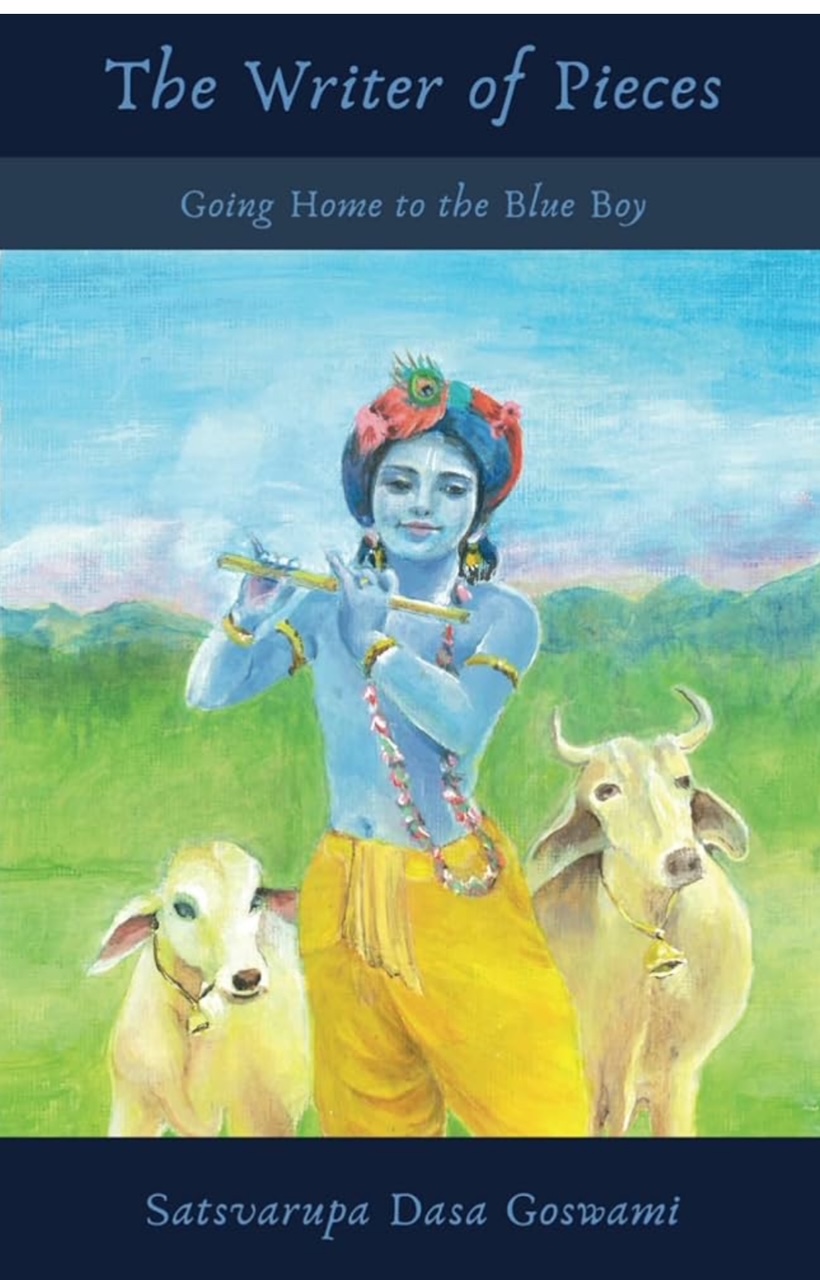
Don’t take my pieces away from me. I need them dearly. My pieces are my prayers to Kṛṣṇa. He wants me to have them, this is my way to love Him. Never take my pieces away.

Many planks and sticks, unable to stay together, are carried away by the force of a river’s waves. Similarly, although we are intimately related with friends and family members, we are unable to stay together because of our varied past deeds and the waves of time.
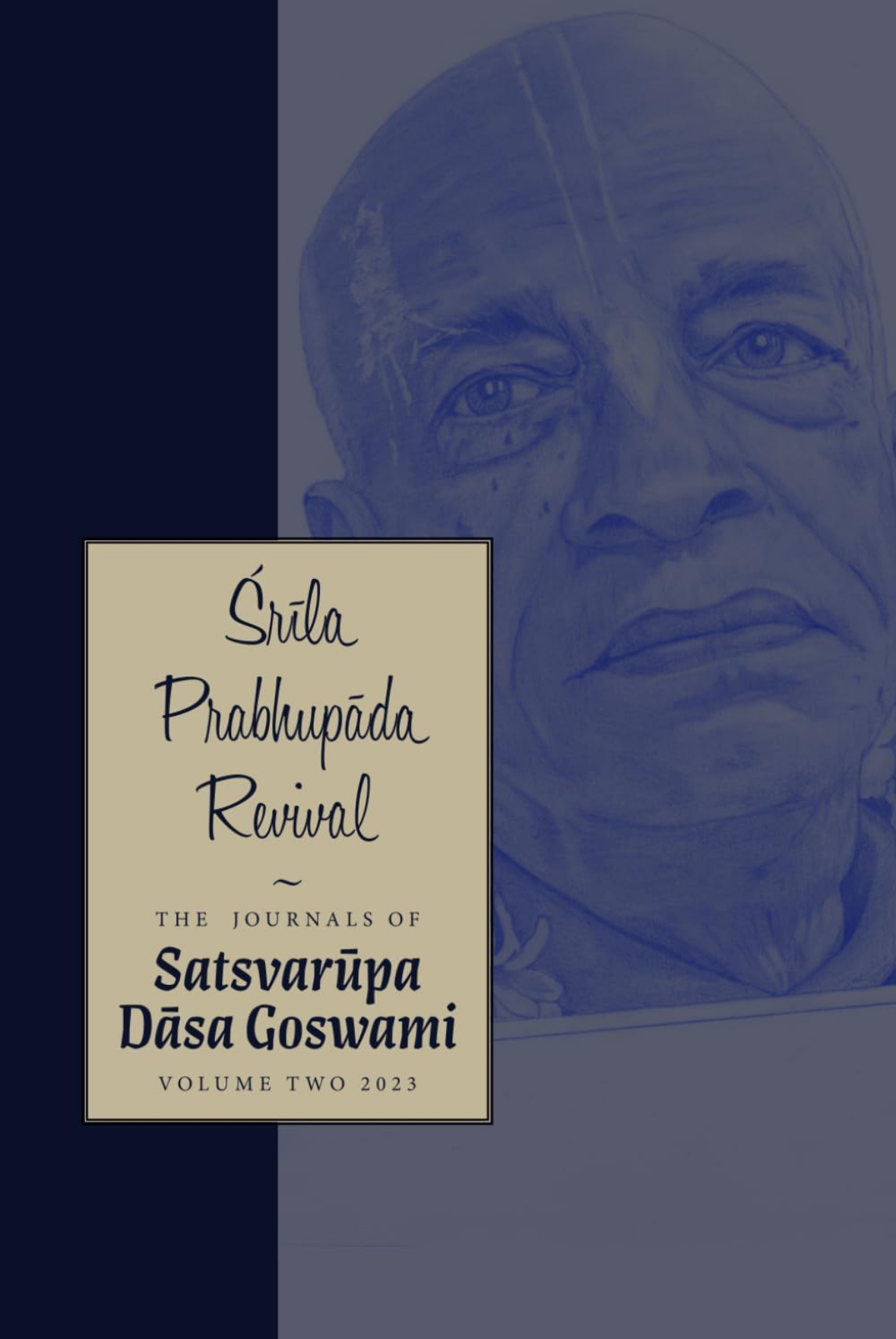
To Śrīla Prabhupāda, who encouraged his devotees (including me) To write articles and books about Kṛṣṇa Consciousness.
I wrote him personally and asked if it was alright for his disciples to write books, Since he, our spiritual master, was already doing that. He wrote back and said that it was certainly alright For us to produce books.
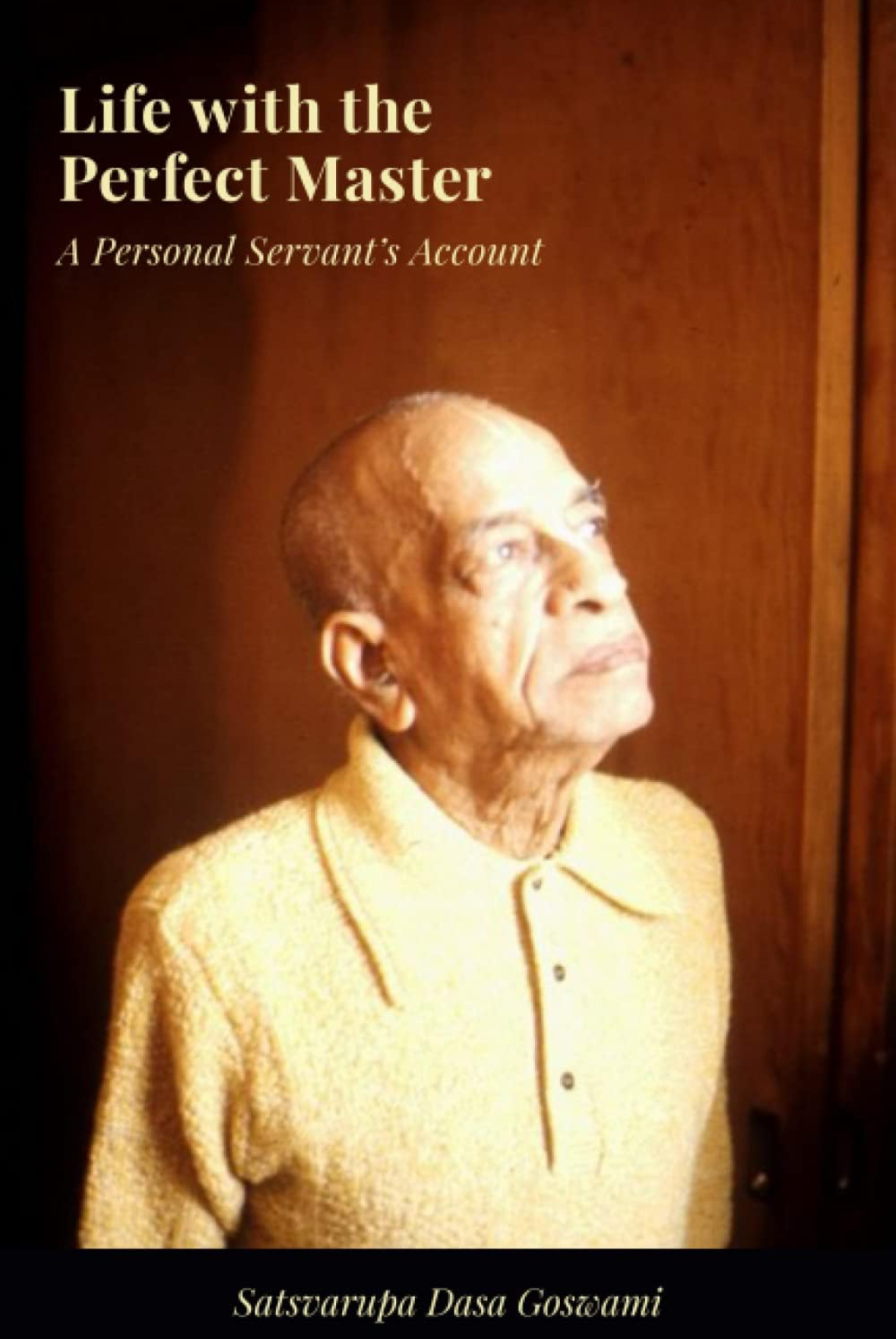
I have a personal story to tell. It is a about a time (January–July 1974) I spent as a personal servant and secretary of my spiritual master, His Divine Grace A.C. Bhaktivedanta Swami Prabhupäda, founder-äcärya of the International Society for Krishna Consciousness. Although I have written extensively about Çréla Prabhupäda, I’ve hesitated to give this account, for fear it would expose me as a poor disciple. But now I’m going ahead, confident that the truth will purify both my readers and myself.

First published by The Gītā-nāgarī Press/GN Press in serialized form in the magazine Among Friends between 1996 and 2001, Best Use of a Bad Bargain is collected here for the first time in this new edition. This volume also contains essays written by Satsvarūpa dāsa Goswami for the occasional periodical, Hope This Meets You in Good Health, between 1994 and 2002, published by the ISKCON Health and Welfare Ministry.

This book has two purposes: to arouse our transcendental feelings of separation from a great personality, Śrīla Prabhupāda, and to encourage all sincere seekers of the Absolute Truth to go forward like an army under the banner of His Divine Grace A.C. Bhaktivedanta Swami Prabhupāda and the Kṛṣṇa consciousness movement.

A single volume collection of the Nimai novels.
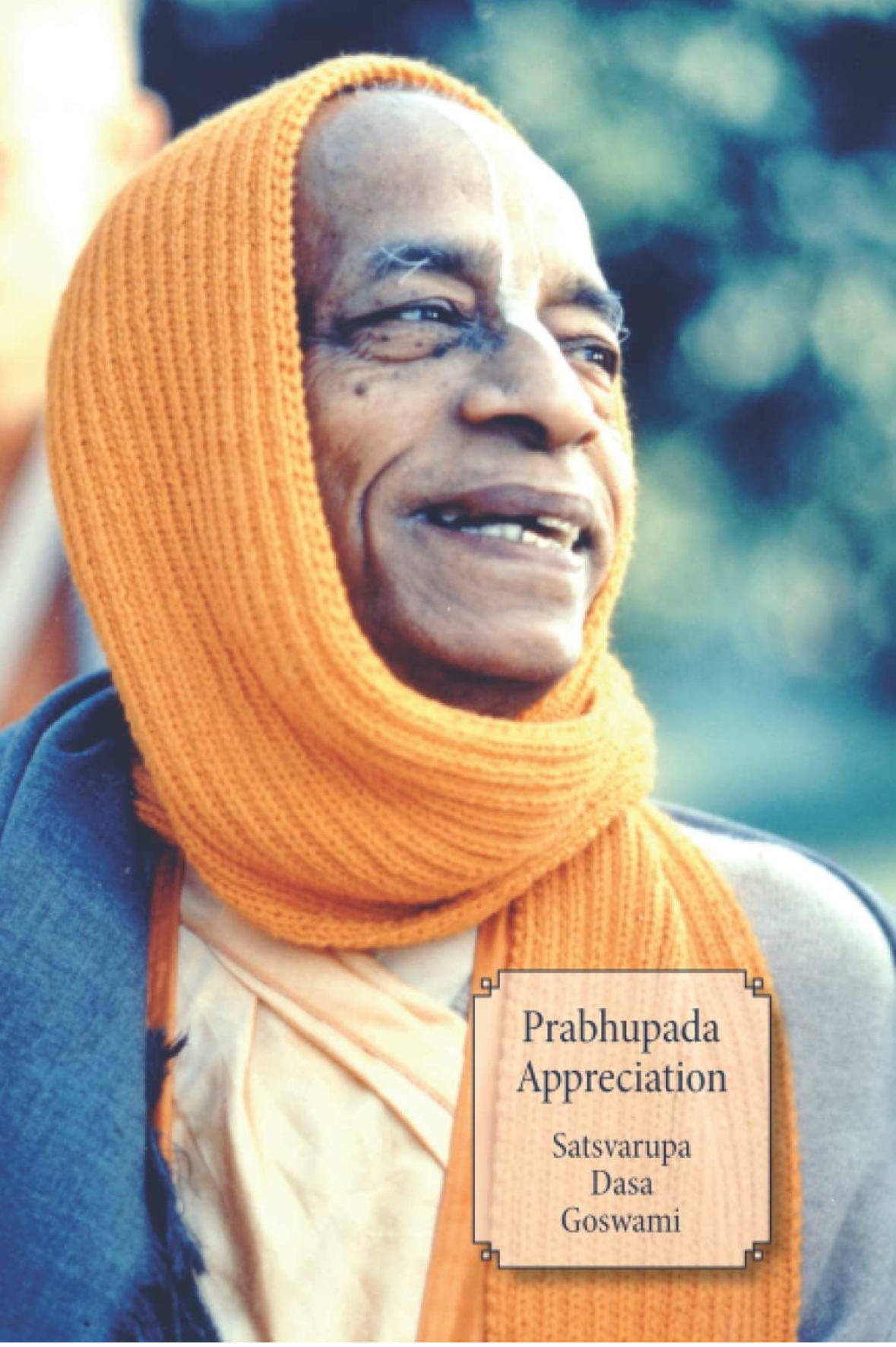
Śrīla Prabhupāda was in the disciplic succession from the Brahmā-Mādhva-Gauḍīya sampradāya, the Vaiṣṇavas who advocate pure devotion to God and who understand Kṛṣṇa as the Supreme Personality of Godhead. He always described himself as simply a messenger who carried the paramparā teachings of his spiritual master and Lord Kṛṣṇa.
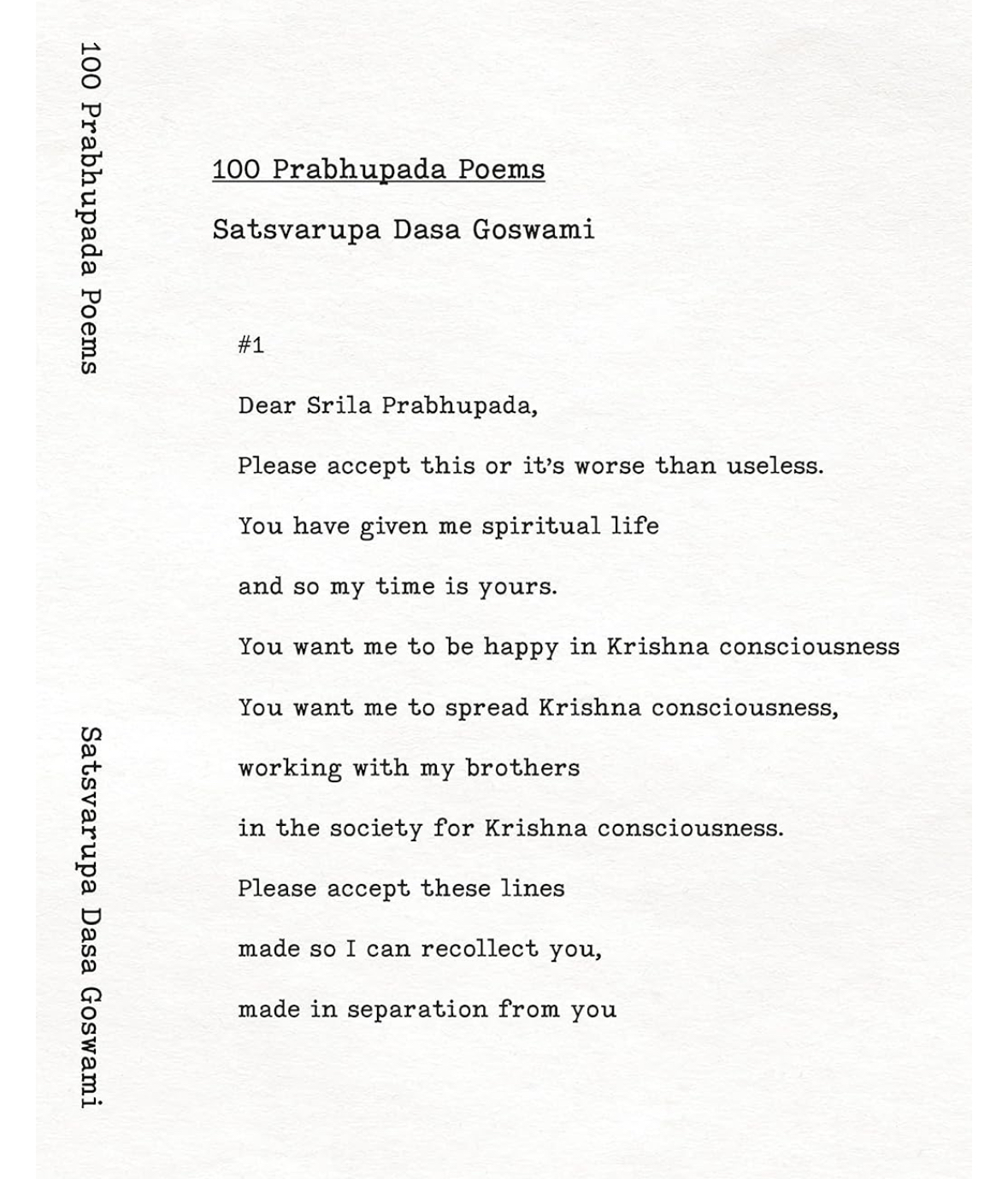
Dear Srila Prabhupada,
Please accept this or it’s worse than useless.
You have given me spiritual life
and so my time is yours.
You want me to be happy in Krishna consciousness
You want me to spread Krishna consciousness,
This collection of Satsvarūpa dāsa Goswami’s writings is comprised of essays that were originally published in Back to Godhead magazine between 1966 and 1978, and compiled in 1979 by Gita Nagari Press as the volume A Handbook for Kṛṣṇa Consciousness.

This second volume of Satsvarūpa dāsa Goswami’s Back to Godhead essays encompasses the last 11 years of his 20-year tenure as Editor-in-Chief of Back to Godhead magazine. The essays in this book consist mostly of SDG’s ‘Notes from the Editor’ column, which was typically featured towards the end of each issue starting in 1978 and running until Mahārāja retired from his duties as editor in 1989.

This collection of Satsvarupa dasa Goswami’s writings is comprised of essays that were originally published in Back to Godhead magazine between 1991 and 2002, picking up where Volume 2 leaves off. The volume is supplemented by essays about devotional service from issues of Satsvarupa dasa Goswami’s magazine, Among Friends, published in the 1990s.

“This is a different kind of book, written in my old age, observing Kṛṣṇa consciousness and assessing myself. I believe it fits under the category of ‘Literature in pursuance of the Vedic version.’ It is autobiography, from a Western-raised man, who has been transformed into a devotee of Kṛṣṇa by Śrīla Prabhupāda.”
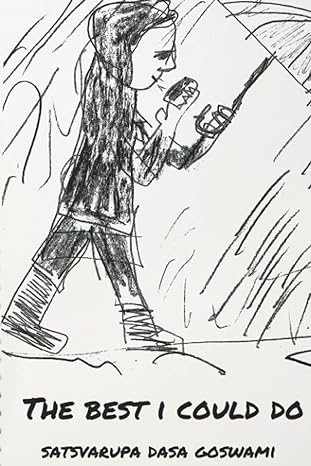 The Best I Could Do
I want to study this evolution of my art, my writing. I want to see what changed from the book In Search of the Grand Metaphor to the next book, The Last Days of the Year.
 a Hare Krishna Man
It’s world enlightenment day
And devotees are giving out books
By milk of kindness, read one page
And your life can become perfect.
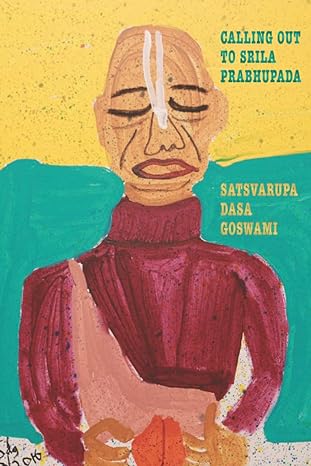 Calling Out to Srila Prabhupada: Poems and Prayers
O Prabhupāda, whose purports are wonderfully clear, having been gathered from what was taught by the previous ācāryas and made all new; O Prabhupāda, who is always sober to expose the material illusion and blissful in knowledge of Kṛṣṇa, may we carefully read your Bhaktivedanta purports.
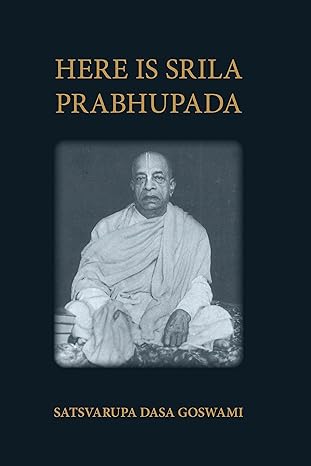
I use free-writing in my devotional service as part of my sādhana. It is a way for me to enter those realms of myself where only honesty matters; free-writing enables me to reach deeper levels of realization by my repeated attempt to “tell the truth quickly.” Free-writing takes me past polished prose. It takes me past literary effect. It takes me past the need to present something and allows me to just get down and say it. From the viewpoint of a writer, this dropping of all pretense is desirable.
 Geaglum Free Write
This edition of Satsvarūpa dāsa Goswami’s 1996 timed book, Geaglum Free Write Diary, is published as part of a legacy project to restore Satsvarūpa Mahārāja’s writings to ‘in print’ status and make them globally available for current and future readers.