
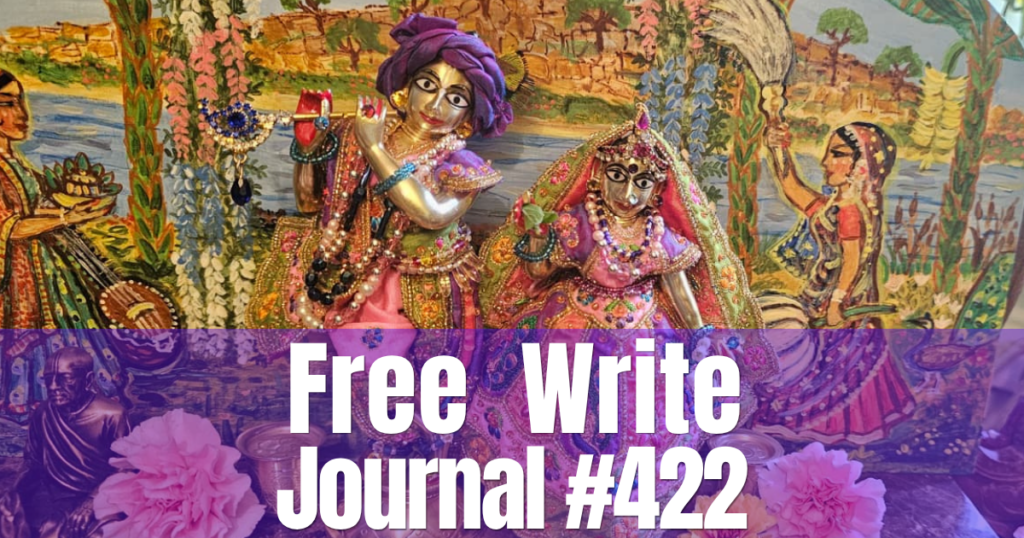
Godbrothers, disciples, friends and well-wishers around the world are warmly invited to attend the 87th Vyasa-puja birthday celebration of His Holiness Satsvarupa Maharaja. Traditionally, devotees have gathered in Stuyvesant Falls, New York for this special annual event. Unlike in past years, this year’s event will be held completely online—there will be no in-person gathering. Guru Maharaja’s caretakers emphasize that Guru Maharaja wishes to spend the time peacefully, in a recuperative way, and not entertain visitors at all on that day. (Those who gather or drop by will be politely invited to leave.)
The date of the online event will be Saturday, December 5, 2026. Additional program details, including the online schedule of events and participation information, will be shared shortly.
Through the gift of technology, this year’s celebration presents a wonderful opportunity for devotees throughout the world to come together in honoring Guru Maharaja by attending the online Zoom program. Devotees, especially Guru Maharaja’s direct disciples are encouraged to celebrate privately or in small groups wherever you happen to be in the world. One can faithfully offer kirtana, heartfelt homages, and prasadam, beautifully expressing the spirit of Vyasa-puja in a uniquely personal way to please the spiritual master, as devotees such as Ramila Mataji of New Zealand do every year.
In addition, a printed Vyasa-puja book with homages from Godbrothers, disciples and friends will be put together and presented to Satsvarupa Maharaja on his birthday; any written expression of one’s connection with him is welcome and will be included in the book. The address for sending in an homage is [email protected]
All glories to Srila Satsvarupa dasa Goswami Maharaja!
your servants at SDG Tributes
We are still expanding our team of proofreaders as we aim to increase the rate of republication of Satsvarūpa Mahārāja’s books as well as new books that he writes. As many of you know, during the July 4th festival just held, a total of 18 new and re-edited and published books were present, and we hope to present a similar number at Satsvarupa Maharaja’s Vyasa-puja observance this December. Our call for proofreaders includes a need for fluent bilingual Spanish and English speakers to proofread Spanish translations (we currently have around 20 Spanish translations waiting to be proofread). Anyone interested in this particular service should contact Manohara dāsa at [email protected]
If you would like to help, please contact Kṛṣṇa-bhajana dāsa at [email protected] or [email protected] and we will find you a service that utilizes your talents.
The holy name, character, pastimes and activities of Kṛṣṇa are all transcendentally sweet like sugar candy. Although the tongue of one afflicted by the jaundice of avidyā (ignorance) cannot taste anything sweet, it is wonderful that simply by carefully chanting these sweet names every day, a natural relish awakens within his tongue, and his disease is gradually destroyed at the root.
—Upadeśāmṛta
Reaching the quota today was a struggle. I thought, “I can chant so many rounds at Gītā-nāgarī but not while traveling.” But somehow, I made it by 9 P.M. (I even thought of staying up with the lights out and finishing when it seemed I couldn’t do it.) I thought, “This isn’t preaching. I should sacrifice this quota in favor of preaching.” But then I thought, “Hare Kṛṣṇa mantra is ultimate. It is what you must do at the time of death. The most important thing for me to achieve is pure Kṛṣṇa consciousness.” By the last round I really felt that I was praying. I also thought how the chanting, when you are praying (not just counting off numerical beads and names), is literally transcendental—above and beyond all other considerations—surrender at His lotus feet.
satataṁ kīrtayanto maṁ
yatanyaś ca dṛḍha-vratāḥ
If even for a moment remembrance of Vāsudeva, the Supreme Personality of Godhead, is missed, that is the greatest loss, that is the greatest illusion, and that is the greatest anomaly.
—Viṣṇu Purāṇa
kṛṣṇa-sambandha vinā kāla vyartha nāhi yāya
Not a moment should be lost. Every moment should be used for Kṛṣṇa or connected with Him.
—Cc. Madhya 23.22
Twenty-five rounds. I really want to keep it up. It’s beneficial. It makes me feel I am more prepared for the end of my life—chanting Hare Kṛṣṇa now. I must chant at times throughout the day in order to reach the quota. That must is beneficial.
… chanting His name and all such activities are transcendental. None of the gross or subtle senses shall be otherwise engaged. Such realisation of transcendental activities by the devotee is made possible by many, many years of apprenticeship in the devotional service, but simply by attraction of love of God in the Personality of Godhead as it was developed in Nārada Muni, by hearing, is highly effective.
— Śrīmad-Bhāgavatam (1962) 1.5.27, purport
Chanting this quota is becoming a part of my daily sādhana. I’m very grateful that Prabhupāda and Kṛṣṇa have allowed me to undertake this little increase. It is an insignificant increase in one sense, but I very much value it in my life. I plan to suspend it during the upcoming 8-day writing period and then to return to it. I have to keep it by my own willpower. It can save me.
A person who is actually a follower of Śrī Bhaktivinoda Ṭhākura must immediately accept the request of Lord Caitanya Mahāprabhu by offering respectful obeisances unto His lotus feet and thus beg from Him the Hare Kṛṣṇa mahā-mantra. If one is fortunate enough to beg from the Lord this Hare Kṛṣṇa mahā-mantra, his life is successful.
—Cc. Ādi 9.36, purport
Today I went down to the bare 16 rounds minimum, because I am on an 8-day marathon until August 20th, writing the biography at a disciple’s house away from the temple and all other obligations. When I return to the Vancouver temple, however, it will be crucial that I immediately return to 25 rounds.
Today I returned to my quota of chanting 25 rounds. I should keep it up now. The main joy I feel comes, I think, just from fulfilling the increased vow itself, but I think the deeper benefits must be there and by and by I will see them—just as, by and by, the preoccupied plane passenger notices the increased altitude of his plane.
Revival of the dormant affection or love of Godhead does not depend on the mechanical system of hearing and chanting, but it solely and wholly depends on the causeless mercy of the Lord. When the Lord is fully satisfied with the sincere efforts of the devotee, He may endow him with His loving transcendental service. But even with the prescribed forms of hearing and chanting, there is at once mitigation of the superfluous and unwanted miseries of material existence.
— Śrīmad-Bhāgavatam 1.7.6, purport
I heard of war and it was as if I had forgotten death.
ahany ahani bhūtāni
gacchantīha yamālayam
śeṣāḥ sthāvaram icchanti
kim āścaryam ataḥ paramAt every moment the souls are flocking to the house of death, but a foolish person thinks he will not die. This is the most amazing thing.
—Mahābhārata 313.116
Death is certain. And not only is death predicted, but one’s death and one’s suffering as well. If this is so, chanting Hare Kṛṣṇa is certainly vital. Ante nārāyaṇa-smṛtiḥ. It is that which we must do at the end of life.
pp. 52-56
The defense never rests. Sometimes “a good offense is the best defense,” and you mount a frontal attack. Oh well, at least I’m up. But I hear the gremlin’s voice calling me a fool. He thinks I’m Elmer Fudd.
The messages of Godhead are powerful antidotes to the atheistic charges made by mudhas in the age of Kali. Those who seek relief from the vices of this age will take shelter in this Bhagavata Purana. What I write is not Purana, but I can still give the Bhagavata on this page. I’m an authorized receiver and distributor of the philosophy of bhakti.
I decided not to use the prayers spoken by the priests of King Nabhi in my lecture because there was no possible way I could cover all the points in an hour. The priests prayed to Lord Visnu to please help them remember Him:
“Dear Lord, we may not be able to remember Your name, form and qualities due to stumbling, hunger, falling down, yawning or being in a miserable diseased condition at the time of death when there is a high fever….” (Bhag. 5.3.12)
(One might add, we also forget You even while we serve You on the guru’s order, or even while our tongue utters Your holy name.)
“We therefore pray unto You, 0 Lord, for You are very affectionate to Your devotees. Please help us remember You and utter Your holy names, attributes and activities, which can dispel all the reactions of our sinful lives.” (Bhag. 5.3.12)
Too many points. My audience might not be able to handle them all at once. All right, then I’ll speak on Srila Prabhupada.
Poets of old wrote on parchment or banana leaves, and they didn’t mince words.
Does this age permit levity? Used to be you had to be liberated to write.
Nowadays, who gets the inspiration? Or are we back to nine-tenths perspiration? Where’s the Buddha-sattva descending, the certainty that “God told me this”? It’s still available, still there for those who desire only to serve.
Because Krsna trusts His devotees. Behold! The reader cries for it; a writer strives to attain it. While waiting, he picks through his whims.
As I was saying .
poets of old
in the hold of a galleon
had to row the boats and
many great authors suffered.
Cervantes was a slave and
escaped to write his book.
In a time of war
they discover ore in unlikely places.
I’m one of them, I am,
also a son of God
but in miniature, dirtied
by my experience in the modes.
(Nothing a good dose of
Bhagavatam can’t cure.)
The priests and Nabhi were embarrassed that although they were praying for material boons, Lord Visnu appeared. They were afraid they had disturbed Him by their petty requests.
“We have no other power than to offer our respectful obeisances and prayers unto You, the transcendental Person. The chanting of Your auspicious transcendental qualities will wipe out the sins of all mankind. That is the most auspicious activity for us, and we can thus partially understand Your supernatural position.” (Bhag. 5.3.4-5)
Simple prayers from the heart will satisfy the Lord. He doesn’t need paraphernalia or clever words. The priests regretted that they were not on the path of pure devotional service. I regret it too.
“By inviting You to this negligible sacrifice for some material motive, we have certainly committed a great offense at Your lotus feet. Therefore, O Lord of lords, please excuse our offense because of Your causeless mercy and equal mind.” (Bhag. 5.3.15)
“. . . Although You are full in Yourself, please, out of Your causeless mercy, accept a little service from us, Your eternal servants.” (Bhag. 5.3.4-5)
My place of worship is this desk. This pen is okay. Hand too. Heart is all I’ve got, plus some diminishing days. It’s all I have. I have to use it.
So, dear Lord, please accept a prayer from Your servitor who wants to bow down to You in lively, honest writing. May he offer this song.
May he leave the offering he wrote on Your altar. He wants to make up for his sins.
Wants to take part in the preaching against atheism.
Proclaims You are great.
Fights atheists, demons who invade
but never feels the heart of a pure devotee.
No cry of pain,
only of false ego.
Put it aside
and cry anyway. Please
accept the praise coming through
the brass horn of the
player who was born
on this earth and has been through
the wringer.
Now at Your feet
by guru’s order I
sing, but like the brahmana
at Rangaksetra, don’t know how
I have dared to bring my beastly face
into the hall
into the mall—
have dared
but won’t omit
krsna krsna krsna he
krsna krsna krsna he
krsna krsna pahi mam!
Sounds of glory
sounds of pain
sounds of holy name.
Yes, I can be assured it’s coming out all right,
although flawed.
May Lord Krsna see
a sincerity in me
and reject the chaff
of my offering.
I wanted to sing and write but
the line wasn’t right.
It only proves I can’t force my way into His
presence.
So chant Hare Krsna on His invitation. This is His secret, powerful entrance to love of God, given freely.
I do. I will.
pp. 336-40
I looked out the skylight and felt how I am bound and cannot get beyond. Can I know why? At any rate, I cannot get beyond.
We read in Caitanya-bhagavata about the many, many wild and ecstatic symptoms of Lord Nityananda and His devotees in Panihati, Saptagram, and other places. They uprooted big trees during kirtana, roared like lions, danced like madmen, and swooned in ecstasy, falling down like rows of banana trees cut down by a storm.
I have expressed my quietness and my proclivity for writing, exposed my poverty, asked to be delivered. I cannot uproot big trees and run around roaring. When ISKCON devotees have their own versions of “mad kirtanas,” it’s too raucous for me. But what can I say about those kirtanas after reading how Lord Nityananda’s associates behaved? All alone in the house. Say goodbye to the day. M. promises, “Tomorrow will be a heavy packing day.”
The remedy for offensive chanting (states the Padma Purana) is constant chanting. So I will write constantly and try to be better. The dhāma will upgrade me as long as I can serve there and not be an offender. If I am an offender, I will get kicked out of Vrndavana and suffer terribly.
But I can’t negate what I have done here. I can’t, in a last-day mood, turn against the four weeks of patient nurturing. Neither do I have to exaggerate their worth. They are what they are.
The imprint made by Srila Prabhupāda on the soul never goes away. He carries it with him wherever he goes. Come to Wicklow, and it appears. Go to Vrndāvana, and it will grow. He has saved you once and for all.
Let me take a drink of water; let me go down to the bathroom and clip my fingernails—anything to get out of surrendering to this writing. So it is a way of saranagati. You are tired of sitting, and the confession you need to make is difficult . . . but if you stay and do it, it proves itself.
And your awkward jump into krsna-katha … I was reading Radha-rasa-suddha-nidhi. I can’t repeat those pastimes in the kunja. I need a drink of water badly right now, so please excuse me.
Everything will be all right. Srila Prabhupāda consoled us. I hear a sheepherder shouting. Go to the window to hear it better. Water in the pipes. Otherwise, all is peaceful here. You are used to it and don’t expect more to happen—you want this peace. Uneventful is good.
So Kṛṣṇa is very pleased if a devotee becomes a devotee of Srimati Rādhārani.
I drink water now out of sheer embarrassment and anxiety that I have nothing in me to write. Or does it mean I don’t dare to say it? Swallow the water like an alcoholic with his liquor, “Sri Visnu.”
Time for promises: I will read Prabhupāda’s books. I definitely will chant my sixteen rounds. I will stick to ISKCON. I will inquire from my Godbrother friends and be submissive. I will tolerate my pains. I will do okay. I will try my best not to let any friends down, at least in important ways. May we be lenient with each other. Oh, I will do my best.
When you go to Vrndāvana, you can bow down to the roots of the old trees, but everything will be ruined if you maintain envy toward the devotees.
When you go to Vrndāvana, you will look for a “sweet” well. You will bathe in Rādhā-kunda.
(I need to open a window. My head is feeling weak. At the window: a magpie, marigolds, the sound of sheep.)
When you go to Vrndāvana, you will take your pens out, and Baladeva will have brought you notepads. Bow down in the dust and pray, “May this endeavor receive the mercy of the dust of Vrndāvana.” I will accept whatever arrangements are there for me. The wall of heat is waiting. Rādhā-Syamasundara will be giving Their darsana. I will probably worry about what others are thinking of me. It will be a chance for serious, tangible advancement, as it was last year, by the mercy of the rasika Vaisnavas. At least a chance will be offered by the dhama.
In the letters, I said,
Yes, when I come to Guyana again, I would like to stay at your house. I don’t think your talks were “mundane personal, troubles.” You didn’t waste my time; I didn’t think you were speaking as if you were better than the other devotees, but rather, I accepted you as impartial. But if you think these were your shortcomings, we can all improve. But please don’t think I didn’t like you. I liked the stay at your house and the breeze blowing the curtains and the utter simplicity of it and the fact that the expenses are so low you don’t have to worry about money. Therefore, I said you have an ideal situation to increase your sadhana. Your desire to take part more in ISKCON is good, and I know your involvement will increase in a natural way.
I am repeating this just to show myself that I can preach and assure someone and mean it. Just give me a subject, especially a submissive devotee with a desire to improve, and I can go at it. But left to myself, I feel the emptiness beneath the counseling words that I give to others. The emptiness that moves in as soon as I don’t read sastras for half a day. And this so-called emptiness is just a pause before mays moves in.
I think it’s good to face the emptiness, at least for certain periods, and that’s what writing is. Teresa of Avila said she wished she had two hands to write her over-flowing realizations, but she also lamented when she wrote, her lack of love for the all-deserving, all-attractive Supreme Godhead. She was full of instructions and ecstasies in her line.
So I come here with a sense of abundance, but also a need, a desire to face the emptiness and go past it.
Kṛṣṇa dances and plays in the forest with His cowherd boys. Most of them don’t know He is always thinking about Rādhā. The priya-narma-sakhas, such as Subala, Ujjvala, and Madhumangala, know Rādhā’s glories to some extent. But the sakhis know of them to the full extent, and the gopi-manjaris are the most inclined to Rādhā. They want to see Her supreme over Kṛṣṇa.
Today I heard Śrīla Prabhupāda say (lecture in Vrndāvana, 1974) that no one is greater than Kṛṣṇa. Then he paused and said, “There is one who is greater than Kṛṣṇa, Rādhārani. Yes, Rādhārānī is greater than Kṛṣṇa.” The devotees laughed and smiled and oohed and ahhhed, and then Srila Prabhupāda said, “But that is out of love.” He said that actually Kṛṣṇa is the greatest. Rādhā never thinks She is greater, but always aspires to be the dasi of Krsna. Interesting to hear.
pp. 22-25
The especially valuable part of this morning’s meeting was when they spoke about my personal shortcomings. I had been expressing in different ways my inability to feel actual regret for the mistakes of the GBC and gurus. Jagadisa Goswami then began speaking his realization about this. He said Prabhupada discusses the godly and ungodly qualities in Bhagavad-gita as daivi-sampat and asuri-sampat. The asuri-sampat, or ungodly qualities, are described as anger, conceit, harshness, etc. Jagadisa Goswami said that since I didn’t manifest these symptoms to the degree that other leaders have manifested them, perhaps I am therefore not so guilty, and that is why I do not feel regret. When he said this, I could not accept such a complimentary viewpoint. This prompted the others, and they began to point out my personal involvement in perpetuating mistakes.
Even though I am quieter than most, nevertheless I have been an apologist for the system which we now see as defective and want to change. Prabhupada has sometimes described the GBC as the”watchdogs” of the Krsna conscious society. But if the watchdog does not bark when there is danger, then that is his fault.
As these shortcomings were pointed out, they sounded very familiar to me. I know well my weakness in being influenced by others and not asserting the truth. When one does this repeatedly, he loses the instinct to ascertain and assert the truth, and he goes along with the crowd. In this case the “crowd” is an elite of which I am an intimate member.
The fault of going along with things has been mine for a long time and has prevented me from setting an example of real leadership when it was most wanted. I think back to 1967 when we boys were being tricked by the real estate man, Mr. Paine. Both Kirtanananda and Brahmananda were befuddled by the cheater, and at one point Prabhupada wrote me a letter stating that I should follow what he said and cut off the dangerous relationship with Mr. Paine. I was convinced that Prabhupada was calling on me personally to carry out his will, and I knew that Brahmananda and Kirtanananda were not enlightened on the subject. But when I went to them and showed them Prabhupada’s letter, they gradually convinced me that we should continue the policy of cooperating with Mr. Paine. They said that Prabhupada would approve of it. Thus from an early stage in my spiritual life I began losing opportunities to carry out the truth.
Aside from these personal faults, I am a member of the GBC, and therefore I have to share faults, such as the neglect in completing Srila Prabhupada’s Samddhi.
Jagadisa Goswami also pointed out that I do not associate enough with my Godbrothers. He said that I cannot expect to make reforms and admit mistakes all on my own. It will come about by continued association with Godbrothers. But my tendency, he said, is to mostly surround myself with a few disciples, and this promotes an illusory view. I think it would be more accurate to say that I tend to be alone, and I engage the services of a few devotees to protect me in this desire. But I will try to increase my association with Godbrothers who can help me pull through.
Jayadvaita Swami also encouraged me to gain realization and preach for the cause of reform through writing. He said that I have a power to express myself in this way, and so I should use it. I am already thinking of a letter that I would like to write to a guru-Godbrother, and I am sure Krsna will give me more opportunities to write in an attempt to bring about the change—although it is already very late, and our credibility is low.
Before Sesa left for America, we walked for an hour together by ourselves. I confided to him my anticipation, but also my fear, at the prospect of apologizing to the devotees for wrongs. Sesa advised that I surrender to it, since the Vaisnavas are asking for it. Even if I don’t as yet have complete intellectual conviction, once I start surrendering, it will come.
In the KRSNA book, Lord Brahma presents himself to Lord Krsna as “the most presumptuous living entity.” After his stealing the boys and calves, Lord Brahma finally came to his senses and admitted his mistake. On this occasion, Lord Brahma not only made an immortal speech of humble and philosophical realization, but he was prepared to act on it. He prayed at the lotus feet of Lord Krsna to give him a future birth as the humble grass in the Vrndavana forest (or at least in the area immediately outside Vrndavana) “so that when the devotees go out they will walk over me.”
In the examples of spiritual regret in the sastra, most of the offending devotees (like Lord Brahma and Lord Indra) overestimate themselves and minimize Lord Krsna, and so they apologize directly to Him. They regret their material desires. I tend to excuse myself and think that I did not act out of material desire in acting as zonal acarya. And yet, I admit (and regret) that vague material desires are still within me.
But there are specific offenses to which I’m still partially blind. I should not minimize the sufferings that have been forced upon my Godbrothers in unjustly making them subordinate to myself and the other gurus. Furthermore, we have offended Prabhupada for acting as if we were almost on his level—and for misguiding his movement.
It’s true that Prabhupada asked us to act as regular gurus and to take disciples. But the acceptance of large private vyasasanas, the placing of ourselves above our Godbrothers, and the enmity which that caused were not things ordered or approved by Srila Prabhupada.
The GBC and the initiating gurus have lost the respect of their Godbrothers. We are not offering the devotees of ISKCON effective, pure leadership. The most obvious evidence of this is that some of the most prominent leaders have broken their sannyasa vows. And sometimes, even after falldowns were exposed, we did not take decisive action to correct the wrongdoer. There is other evidence, such as the Society’s failure to complete Srila Prabhupada’s Samadhi while offering many excuses why it isn’t getting done. So it seems appropriate at this time that we change our attitudes and actions if we want to be actual spiritual leaders. An essential element in this change is the realization and expression of regret.
pp. 213-17
I have been struggling for fifteen years with chronic migraine headaches. I can no longer distinguish between the illness’s intrusion on my life and the life itself. Headaches have become a part of me, as much as my hands or my eyes or the devotional work I perform every day. Over the years I have followed various health regimens, and I am currently working with an allopathic specialist. Although Vedic culture favors the Āyurveda school of treatment. Śrīla Prabhupāda did not insist that his disciples get treated by the Āyurvedic process. Being pragmatic, Prabhupāda allowed his disciples to follow whatever medical cures were suitable for devotees and available locally. The two characteristics that typified Prabhupāda’s attitude toward illness were (1) that it is a serious thing and should be treated promptly, and (2) that one ultimately has to depend on Krishna for the results.
I have noticed over the years that more and more devotees are contracting illnesses, either acute or chronic. And it seems that this is more likely to happen as the devotees grow older. As a doctor once said:
If you live long enough, you will probably develop a chronic disease; cancer, pulmonary disease, arthritis, Parkinson’s, and so on. I take no glee in saying this, I only want to remind you that flesh, like all things, inevitably decays and dies; Chronic illness is part of a normal process.
—Be Sick Well, by Jeff Kane, MD
Since so many of us are going to have to contend with illnesses, and since the chronic illnesses change our self-image and our personalities in various ways, it is important for us to know and follow what Prabhupāda has instructed in this matter.
As for Prabhupāda saying that a devotee should take care of his health, I follow this by continuing to be hopeful about medical treatments. Even if I cannot completely eliminate my physical disease, I try to control it and to gain at least a certain percentage of cure if possible. I do not become hopeless or cynical about making yet another attempt at a regimen toward improved health, even with a chronic disease.
But what did Prabhupāda mean when he said that we should depend on Krishna in our illnesses? First of all, I think this refers to our understanding of why we have illness in the first place. Serious illness is often a bewildering and shattering experience if one doesn’t understand God consciousness. When a healthy materialist is struck with a disease he may think, “Why did this happen to me?” But a devotee knows that we suffer in this world because that’s the nature of the material body. And specifically, a devotee thinks that he is getting a little token karmic reaction for past sinful activities. This is the spirit of the famous verse beginning tat te ’nukampāṁ su samīkṣamāṇaḥ. The devotee always remains in a positive loving relationship with Krishna and tries to see how the experience can purify him.
Depending on Krishna also means that although we should try to cure our illness by some standard medical practices, we should not be overly attached to the result. We should know that ultimately everything is under the control of Providence. We should stop our practices of chanting and hearing. Neither should we become overly absorbed in health cures to the point where we may not be depending on Krishna for the result.
But what if illness or old age makes it impossible for a devotee to engage in devotional service the way he or she used to? Then the devotee must make an important adjustment. Many persons have made courageous adjustments to their lives when they contracted some debilitating disease or suffered a crippling accident. An athlete becomes a counselor, or a frivolous and selfish person may become a compassionate worker. In devotional service, if we cannot travel internationally then we can at least preach locally, or if we cannot meet with many devotees personally then we can at least write letters, or if we can’t do that then we can chant Hare Krishna. We are fortunate that as long as we have consciousness, we can perform some kind of devotional service for Krishna. And there is no need to be depressed about the reduction of our outer activities.
Recently when a devotee wrote to me about his chronic disease, I was able to write back with some advice drawn for my own experience:
“I’m glad to hear that there is at least a little improvement in your health. I can empathize with you because I too am limited by a fragile condition which can quickly incapacitate me. As devotees, we want to be active, and we are also reacting to the social pressure of others. These pressures create mental anxieties for those who are ill in addition to whatever stress the physical malady causes.
“One thing I have realized recently in my chronic illness is that I have to make a new definition of what is normal for me. I can’t think back to the old days when I used to be quite active and working long hours and think it still applies. An ill person has to allow that old self to ’die’ and then accept, at least for the time being, a new smaller self. If we can get through the day by applying our new standards, we can only be satisfied with that. And within those limits we can strive for quality. The challenge of increasing the quality of our lives makes them fresh and full of opportunity.
“That you get different responses from devotees—some think you are in māyā and others are more sympathetic—shows what the Bhagavad-gītā teaches; fame and infamy are fragile, people are fickle, and we cannot live to please others. As you say, “There is much substance in it since those things can change within a minute.”
In my own case I have by force been removed from active management as I was doing it in ISKCON and forced to become more inward. But this has made me able to discover another side of myself, and I am very happy to have been able to make that discovery.
pp. 142-45
We’re at a P-stop. I have my earplugs in after reading Bhagavad-gita. In my reading, Krsna is beginning to describe a few of His splendorous manifestations in the world, as a common man can experience them. Arjuna says he never tires of hearing this nectar. Srila Prabhupada says a superior devotee not only wants to hear about Krsna Himself, but wants all humankind to hear and accept Lord Krsna as the Supreme Personality of Godhead.
I was thinking of editions of the Bhagavad-gita to facilitate travel—size and clarity of print, and so on. Thinking of reading habits, ways to take the nectar. A little pocket book might be nice of just the Sanskrit and English, a small one similar to those Shambala Pocket Editions. Then thinking about which Bhagavad-gita As It Is I should carry to India. The deluxe is the best (even though the paper is thin), but is it too heavy to carry around? These are nice, external considerations. The internal is to actually taste the nectar. Srila Prabhupada asserts that transcendental reading remains fresh despite repeated readings. This I want.
You can’t know all about Krsna, but you always relish hearing about Him. This is more important and more fun than discussing what’s wrong. We may have a responsibility to discuss what’s wrong and seek a remedy for institutional ills, but that doesn’t exclude the importance of continuing to relish Krsna’s statements in Bhagavad-gita and the krsna-katha of Bhagavatam. I know my Godbrother knows this, but I am writing it to remind myself.
Write as well as read. I am meant for this. One Godbrother said that he doesn’t have writer’s “karma,” the drive to write. Do I have it? A little, and I expand on it, use it. I didn’t feel much like writing just now, but I have begun anyway. I can develop it, but it’s likely that many practical people cannot see the usefulness of it. They will write if they think it can be something “nuts and bolts,” something that accomplishes a purpose. Then they try to control it and make it come out right. They don’t feel the joy of ink coming onto a page.
Would like to explain the art of improvisation. Why? One may think that on principle you cannot write for weeks without planning and expect it to come out as a publishable book. Then how do you write a publishable book? Oh, they say, by planning it. Then out-lining it and writing a first draft and several others and then submitting it to an editor. I do submit my work to an editor, to proofreaders, a copyeditor, etc., but I like the main bulk of it to remain.
Thought if I lost eyesight, I could hear krsna-katha. I could also speak it. Chanting and hearing is to vibrate with the tongue and to hear with the ear. Writing and printing is a kind of crutch for Kali-yuga. Yet it’s glorious.
“Citralekha” means one who is excellent in drawing pictures. Be like that. If not expert—citra—be a lover of drawing. I’d like that. Unload feelings, splash colors as you did twice this year and would like to do twice every year. “Paint as you like and die happy.”
Read the books and go on reading them. Draw pictures of people reading. Sometimes I sketch from a live model and try for accuracy, and when I am in a lucky mood, I draw how it feels within to read a book, to hold it in my hands. Peter London’s book on art is wonderful for me, at least the first hundred pages.
Paint and draw ever more
Citralekha drew pictures of
various heroes of the Yadus
and Usa picked out the one
she’d dreamt of as her
lover. She became shy when
she saw the picture of Pradyumna who was to become her father-in-law, and when Citralekha drew Aniruddha, Usa cried out, “That’s him! That’s the one!”
Rain on roof of this van. Spotlight run by battery. When I feel raindrops, I’ll close the overhead vent. I explained to my Godbrother my open secret of reading in the very early morning. When I said midnight, he wanted to write it down, although he later said he couldn’t rise that early. I immediately said, “Of course not. You are a preacher and have evening engagements.” But I am happy to give up those engagements so I can rise at 12. Midnight might not be auspicious by Vedic standards (Nanda Maharaja was arrested for going into the water too early), but Srila Prabhupada set the example and I do it to follow him. Do I imitate? If so, it’s the child’s practice, another way of being with my master, I suppose.
I told him that this early rising is part of my inner life. It’s not vague mysticism; I don’t get up and meditate silently and I don’t enter raganuga-bhajana, but I read for an hour (almost) in one of Srila Prabhupada’s books, then I write for an hour (almost), and then chant for an hour and a half. These are the big three activities that constitute inner life for me—reading, writing, and chanting.
Someone may say that my description of inner life is external, and it can be seen that way. I am describing how I turn the pages of the book, or write with a pen, or finger my beads and enumerate mantras. But that doesn’t mean it doesn’t have an inner spark. Why else would I do it? I don’t read any book at this hour; I read Srila Prabhupada’s book. I don’t write any thing; I free-write and steer to Krsna consciousness (with or without gremlins along for the ride). I don’t chant “Coca-cola” or “Mr. John;” I chant Hare Krsna Hare Krsna, Krsna Krsna Hare Hare/ Hare Rama Hare Rama, Rama Rama Hare Hare. The inner is outer and the outer is inner, if you know what I mean.
All right, all right
get ready to go and
die happy,
after hundreds more posters colored by you,
loved and loving in return your friends,
yeah, after Vrndavana-Mayapur, after plane tickets—
exactly when I can’t tell you
and it’s not something M. and I
can plan or go to the travel
agent about (although in another
sense, death is something you
do plan for, as the karmis
with their insurance and picking out
a tombstone!)—after
the tea and biscuits and
the T. S. Eliot references
are done—or before—or anytime—
death comes and that’s
it. But the soul goes on.
I pray dear Lord carry me,
carry me as soul, as I depart now
from my friends and memories,
blessing ISKCON with good
fortune, if I have any power
to bless,
let me go in peace and honorably
despite panic and pain and
not as a mere stoic. Don’t be
tight-lipped but cry
tears
of joy
and ask the Lord to
let you remember Him and
be with Him and His devotees
in the next life.
At 70 miles per hour
I’ve already written about what’s wrong with ISKCON, including some of the main objections I’ve heard. Here are more.
It don’t plant ‘taters,
it don’t plant cotton
and those that plant them
are soon forgotten.
It is an aardvark (eats ants). It is a dinosaur, prehistoric. They eat white sugar and too much ghee, use aluminum pots, plastic spoons and plates.
They make noise early in the morning, singing and bang-ing a drum.
Funny looking haircuts. Women with pierced ears and noses. Incorporate rock music as bhajana.
They don’t go out and sing on the streets like they used to. It used to be that all devotees were happy to sacrifice and dedicate their efforts to the Swami, Prabhupada. Now that’s gone. It’s not the same as in the old days when everyone worked for the Swami. How can we get that spirit back? Is it possible?
Who can we trust?
No letters from Prabhupada anymore.
pp. 28-32
At least the chanting is a part of your life. Now make the speaking and thinking also part of your life. Then it can improve. Otherwise, you remain unconscious. Up until now, I thought maybe it wasn’t something to be done, or I wasn’t interested in doing it. I thought it was entirely done by performing service. But now we see indications in Prabhupada’s books, man-mana bhava mad-bhakto—you should always think of Krsna.

It’s nighttime, and I am about to take rest. I want to add a positive note that several times today I prostrated myself down in that posture and prayed, once in the shack and several times in my room. I just gave to Krsna some thought that was on my mind. I would very rarely do such a thing previously, although I would consider it to be good. So it is a gain that I can do it several times in one day. Now let me try to increase it. I may feel lazy and not want to walk over and bow down, but do it and continue to do it more and more. Hare Krsna.
It was raining heavily until just now, 5:30. The roads are wet. Hare Krsna, Hare Krsna, Krsna Krsna, Hare Hare, Hare Rama, Hare Rama, Rama Rama, Hare Hare. Krsna is the Supreme Personality of Godhead. I am praying to Him. Prabhupada said we should pray always, but pray to whom? Pray to Krsna. You are the Supreme Personality of Godhead. Janmastami is coming up in a couple of weeks. We are making plans to see Your Lordships at New Mayapura dhama, where You are very beautifully manifested in two different Deity forms, Radha-Krsna and Krsna-Balarama.
My dear Lord, as You know, yesterday Prabhupada dasa asked me about the Christians. He said, “They seem to have high devotion.” I said, “Yes,” and he said, “but they have it to the wrong thing.” I said, “No, it is not wrong; it is just a simple devotion.” They do not know God in His spiritual abode and His different intimate activities as Krsna. Bhaktivinoda Thakura has explained this: God has appeared in different parts of the world and people have taken to Him according to their karma or guidance or good fortune or whatever. We have come to Krsna consciousness, which is the most satisfying and the fullest manifestation of Krsna, the Supreme Personality of Godhead.
Nevertheless, I can benefit from the devotion of these rare saints because they are seeking eternal life and devotion to God. They are certainly not interested in karma-kandiya. For example, St. Therese simply wants to love God and she wants Him to be loved in the world. She desires that even when she goes to the kingdom of God, she may somehow work for the salvation of souls. That is preaching bhakti. These are the similarities to Krsna consciousness. The differences are there, and I should just be careful that the subtle differences do not affect me. Some of the differences are, for example, their emphasis on the sufferings of their guru, the son of God, Jesus Christ; or the concept that there is no one but Him in the Trinity. The Trinity in itself is all right, but there are other sons of God that He has sent to different parts of the world. Prabhupada even said in one letter that if you want to know about the sufferings of the master, then ponder the crucifixion of Jesus Christ. That means that one who becomes a devotee or preacher has to suffer. If one wants to attain to God consciousness in a pure state, he does have to be prepared to suffer, tapo divyam. I needn’t be afraid of the saints, but just understand them in a Krsna conscious way. I should be aware of how the subtle differences may affect me. Then I can gain from their examples of devotion, fearlessness, and surrender to God, and their detachment from the body and from this temporary world.
Pure Krsna consciousness, however, is the joy of Godhead in the specific form of Sri Krsna, as we derive from Vedic literature. Also, the tangible example of a pure devotee in my life is Srila Prabhupada, and I am following his instructions. My dear Srila Prabhupada, please accept this strange offering, which due to my conditioned nature, is not all coming from the Vedic culture. I am trying to offer myself to you in the complete way, to surrender finally (although it is never complete), and I am getting help from the saints.
Since beginning this retreat, I have added time in the day, for recitation of prayers, solitary walks talking out loud, and interjected prayers during japa. The main addition is to work toward thinking of Krsna all the time in a personal way. I am trying to develop a sensation which is almost a physical thing, so that within myself, no matter what’s happening, I can turn and make a prayer to Krsna, either one of those word prayers or just thinking about Krsna in a spontaneous way. Another related point is that as an outcome of prayer, I am realizing my offenses—or I am understanding that I should realize my offenses. I want to feel what I have done wrong, as with the guru issue, and also my whole conditioned state in coming to the material world. I want to realize my tininess, my lack of love of God, lack of surrender, and, realizing these lacks, I am praying to Krsna in a dependent way. This should be coming out.
From prayer, I want to practice virtues like loving service to other devotees. I want to be more conscious of that because I want to be with Krsna and surrender to Him. Because I am always with Him and because He is the source of everything, how can I do nonsense things for sense gratification or act cruelly toward others? He is there and I want to please Him, to be His devotee.
My dear Lord Krsna, it is very nice how Francis of Assisi worshiped You through the material elements. This morning, those elements are certainly very beautiful, so refreshing. It has been raining; now it has stopped. It’s the third week in August. It is pleasantly cool and the trees and road are soaked. The sky is very clear now at six o’clock, sort of an eggshell blue. Birds are chirping. A little woodrat is running across the road. One feels glad to be alive even on the physical level, walking and doing some exercise, trying to remember Krsna. I would like to remember that this beautiful situation is all due to Your Lordship. Hare Krsna.
pp. 347-51
Please, please be merciful to us and send us specific personal instructions so that we may adequately serve the feet of Srimati Tulasi-devi !
We beg to remain your humble servants eternally.
Vidya-devi dasi and servants to Srimati Tulasi-devi , Los Angeles
Questions:
om govinda-vallabham devim
bhakta-caitanya-karinim
snapayami jagad-dhatrim
hari-bhakti-pradayinim
“Now I am bathing the mother of the universe, the bestower of krsna-bhakti , the enlivener of the living force of the devotees and the dear one of Govinda.”
cayanodbhava-duhkham ca
yad hrdi tava vartate
tat ksamasva jagan-matah
vrnda-devi namo stu te
“O mother of the universe, please forgive whatever misery exists in your heart caused by the cutting of your leaves. O Vrnda-devi , let me offer my obeisances unto you.”
om tulasy amrta-janmasi
sada tvam kesava-priya
kesavartham cinomi tvam
barada bhava sobhane
“O Tulasi, you are born from nectar and always dear to Lord Kesava. Now, for the service of Krsna, I am picking your leaves, O one who is shining brightly.”
My dear Vidya dasi,
Please accept my blessings. I am in due receipt of your letter dated September 27, 1976.
If it is not possible for Tulasi to survive the winters when planted in the ground, then a suitable house should be provided for her. Even in the Canadian temples, which are in a much colder climate, they are keeping Tulasi nicely. Why should there be so much difficulty in Los Angeles, which has such a nice climate? Just do everything very carefully. Tulasi flourishes where there is love and devotion.
In answer to your questions: (1) Tulasi is one devotee who appears wherever there is devotion to Krsna. (2) Tulasi’s body is spiritual. (3) Yes, jewelry is all right. (4) If possible. (5) Tulasi leaves should be offered to the Deity. (6) If possible. (7) Yes. (8) Yes. (9) You may cut the dead branches, but what is the necessity? (10) I never said that. (11) No. (12) Yes. (13) Use the wood for beads as far as possible, the balance may be placed within the earth. (14) I said no chemical sprays. (15) Undisturbed means what? (16) Use common sense and if you have none then consult with others. (17) No. (18) Don’t try to introduce something new. The most important thing is the love and devotion.
Hoping this meets you in good health.
Your ever well-wisher,
A.C. Bhaktivedanta Swami

Viraha Bhavan Journal (2017–2018) was written by Satsvarūpa Mahārāja following a brief hiatus in writing activity, and was originally intended to be volume 1 in a series of published journals. However, following its completion and publication, Mahārāja again stopped writing books, subsequently focusing only on what became his current online journal, which began in August of 2018.

At first, I took it hard that I would have to live surrounded by the firemen, and without my own solitude. After all, for decades I had lived in my own house with my own books and my own friends. I was also now a crippled person who couldn’t walk, living among men who did active duties. But when Baladeva explained it to me, how it was not so bad living continually with other firemen and living in the firehouse with its limited facilities, I came to partially accept it and to accept the other men. I came to accept my new situation. I would live continually in the firehouse and mostly not go outside. I would not lead such a solitary life but associate with the other firemen.
Let me write sweet prose.
Let me write not for my own benefit
but for the pleasure of Their Lordships.
Let me please Kṛṣṇa,
that’s my only wish.
May Kṛṣṇa be pleased with me,
that’s my only hope and desire.
May Kṛṣṇa give me His blessings:
Kṛṣṇa Kṛṣṇa Kṛṣṇa Kṛṣṇa Kṛṣṇa he
Rāma Rāghava Rāma Rāghava
Rāma Rāghava rakṣa mām.
You mentioned that your pathway has become filled with stumbling blocks, but there are no stumbling blocks. I can kick out all those stumbling blocks immediately, provided you accept my guidance. With one stroke of my kick, I can kick out all stumbling blocks. —Letter by Śrīla Prabhupāda, December 9, 1972.

The Writing Sessions are my heart and soul. I’m trying my best to keep up with them. I am working with a few devotees, and they are far ahead of me. I wander in the wilderness of old age. I make my Writing Sessions as best I can. Every day I try to come up with a new subject. Today I am thinking of my parents. But I don’t think of them deeply. They are long gone from my life. Śrīla Prabhupāda wrote a poem when he was a sannyāsī, and he said now all my friends and relatives are gone. They are just a list of names now. I am like that too. I am a sannyāsī with a few friends. I love the books of Śrīla Prabhupāda. I try to keep up with them. I read as much as I can and then listen to his bhajanas.
The metaphor is song. Explain it. Yes, particulars may not seem interesting or profound to readers who want structured books.
Wait a minute. Don’t pander to readers or concepts of Art. But Kṛṣṇa conscious criteria are important and must be followed. So, if your little splayed-out life-thoughts are all Kṛṣṇa conscious, then it’s no problem.
I am near the end of my days. But I do like the company of like-minded souls, especially those who are Kṛṣṇa conscious. Yes! I am prone to Kṛṣṇa consciousness. I have been a disciple of Bhaktivedanta Swami Prabhupāda for maybe almost sixty years. Sometimes I fail him. But I always bounce back and fall at his feet. It is a terrible thing that I sometimes do not have the highest love for him. It is a terrible thing. Actually, however, I never fall away from him. He always comes and catches me and brings me back to his loving arms.

This edition of Satsvarūpa dāsa Goswami’s 1996 timed book, Upstate: Room to Write, is published as part of a legacy project to restore Satsvarūpa Mahārāja’s writings to ‘in print’ status and make them globally available for current and future readers.
A factual record of the reform and change in ISKCON guru system of mid ’80s.

Readers will find, in the Appendix of this book, scans of a cover letter written by Satsvarūpa Mahārāja to the GN Press typist at the time, along with some of the original handwritten pages of June Bug. Together, these help to illustrate the process used by Mahārāja when writing his books during this period. These were timed books, in the sense that a distinct time period was allotted for the writing, during SDG’s travels as a visiting sannyāsī

Don’t take my pieces away from me. I need them dearly. My pieces are my prayers to Kṛṣṇa. He wants me to have them, this is my way to love Him. Never take my pieces away.

Many planks and sticks, unable to stay together, are carried away by the force of a river’s waves. Similarly, although we are intimately related with friends and family members, we are unable to stay together because of our varied past deeds and the waves of time.
To Śrīla Prabhupāda, who encouraged his devotees (including me) To write articles and books about Kṛṣṇa Consciousness.
I wrote him personally and asked if it was alright for his disciples to write books, Since he, our spiritual master, was already doing that. He wrote back and said that it was certainly alright For us to produce books.
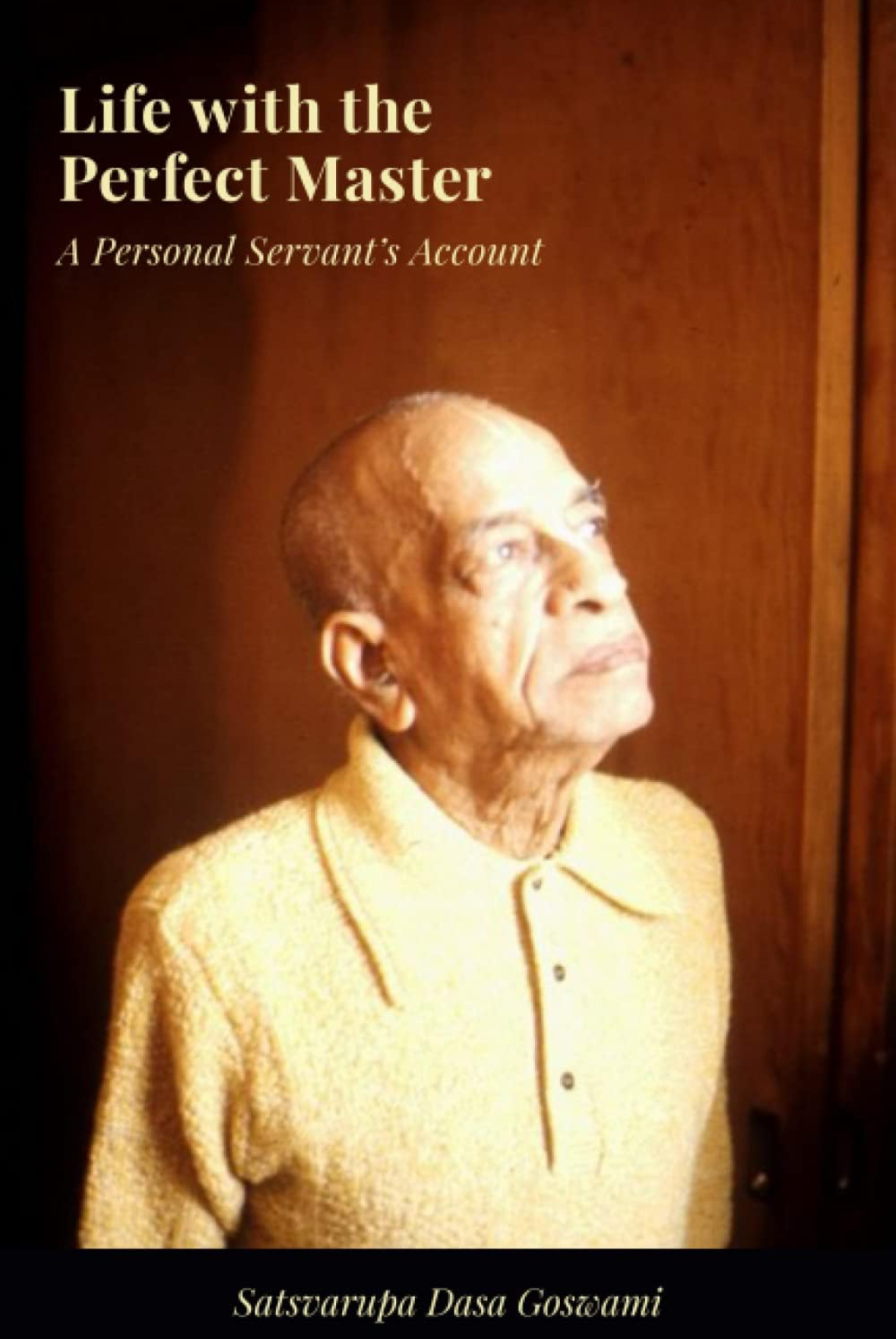
I have a personal story to tell. It is a about a time (January–July 1974) I spent as a personal servant and secretary of my spiritual master, His Divine Grace A.C. Bhaktivedanta Swami Prabhupäda, founder-äcärya of the International Society for Krishna Consciousness. Although I have written extensively about Çréla Prabhupäda, I’ve hesitated to give this account, for fear it would expose me as a poor disciple. But now I’m going ahead, confident that the truth will purify both my readers and myself.

First published by The Gītā-nāgarī Press/GN Press in serialized form in the magazine Among Friends between 1996 and 2001, Best Use of a Bad Bargain is collected here for the first time in this new edition. This volume also contains essays written by Satsvarūpa dāsa Goswami for the occasional periodical, Hope This Meets You in Good Health, between 1994 and 2002, published by the ISKCON Health and Welfare Ministry.

This book has two purposes: to arouse our transcendental feelings of separation from a great personality, Śrīla Prabhupāda, and to encourage all sincere seekers of the Absolute Truth to go forward like an army under the banner of His Divine Grace A.C. Bhaktivedanta Swami Prabhupāda and the Kṛṣṇa consciousness movement.
A single volume collection of the Nimai novels.
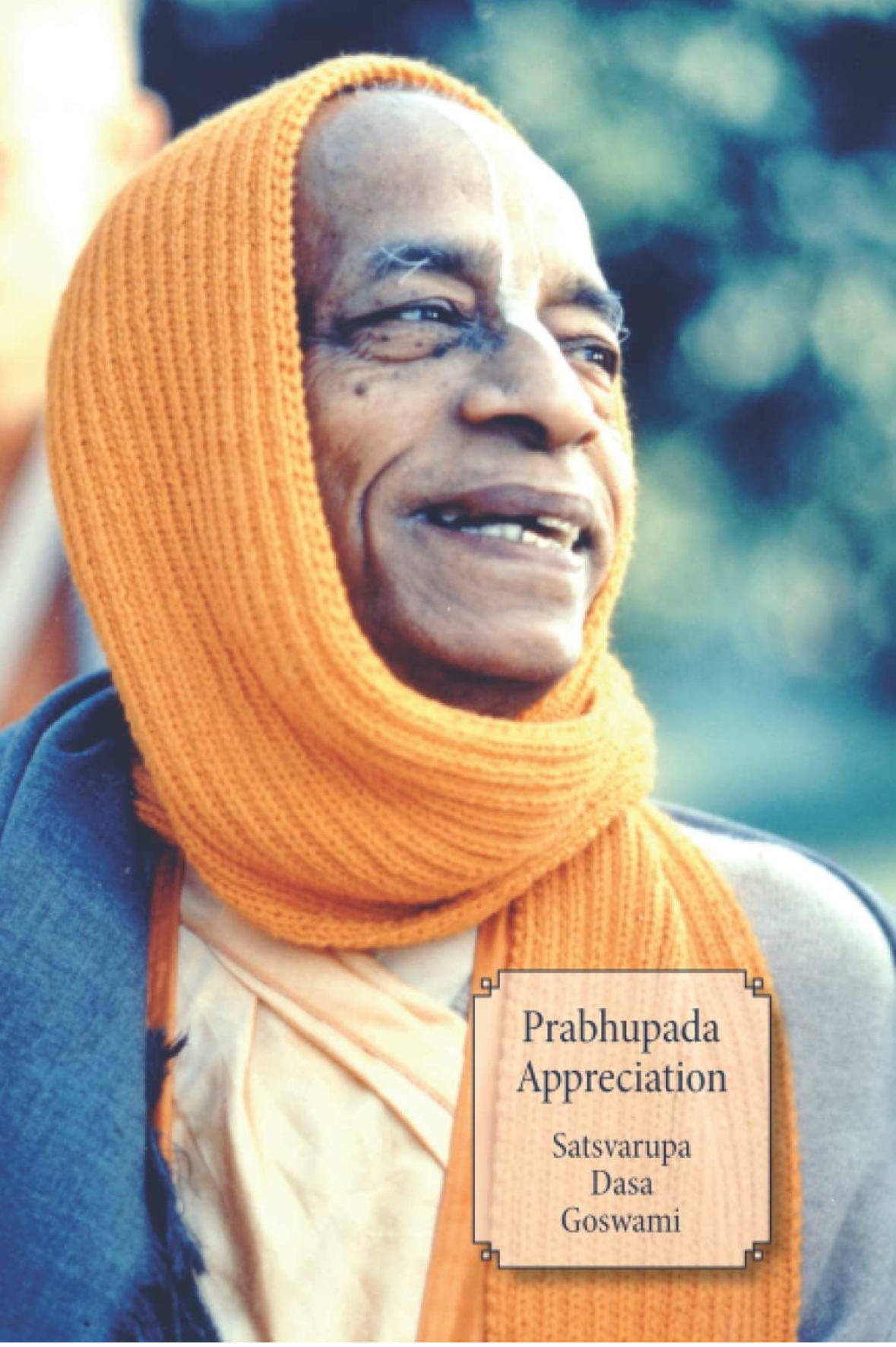
Śrīla Prabhupāda was in the disciplic succession from the Brahmā-Mādhva-Gauḍīya sampradāya, the Vaiṣṇavas who advocate pure devotion to God and who understand Kṛṣṇa as the Supreme Personality of Godhead. He always described himself as simply a messenger who carried the paramparā teachings of his spiritual master and Lord Kṛṣṇa.
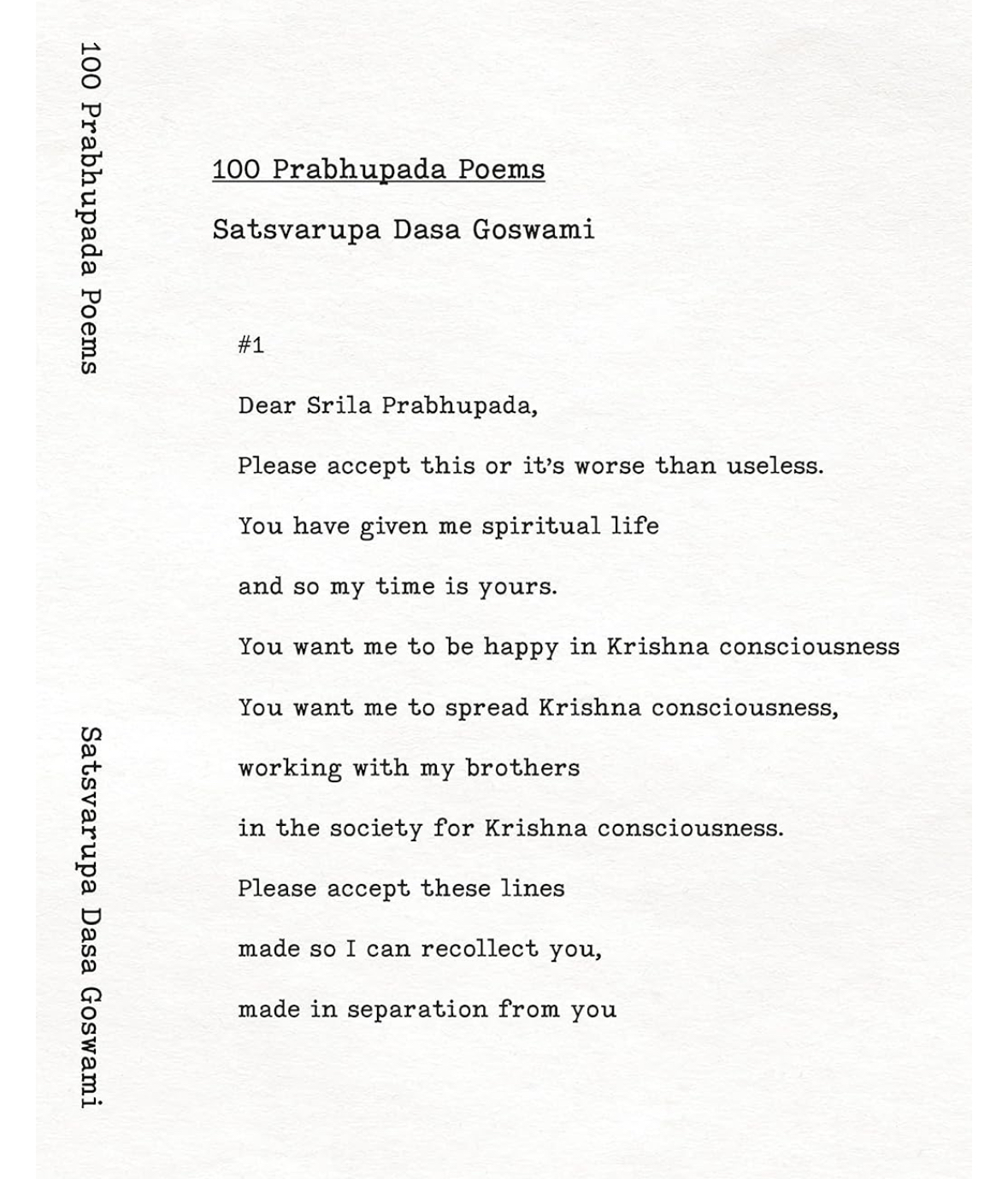
Dear Srila Prabhupada,
Please accept this or it’s worse than useless.
You have given me spiritual life
and so my time is yours.
You want me to be happy in Krishna consciousness
You want me to spread Krishna consciousness,
This collection of Satsvarūpa dāsa Goswami’s writings is comprised of essays that were originally published in Back to Godhead magazine between 1966 and 1978, and compiled in 1979 by Gita Nagari Press as the volume A Handbook for Kṛṣṇa Consciousness.

This second volume of Satsvarūpa dāsa Goswami’s Back to Godhead essays encompasses the last 11 years of his 20-year tenure as Editor-in-Chief of Back to Godhead magazine. The essays in this book consist mostly of SDG’s ‘Notes from the Editor’ column, which was typically featured towards the end of each issue starting in 1978 and running until Mahārāja retired from his duties as editor in 1989.

This collection of Satsvarupa dasa Goswami’s writings is comprised of essays that were originally published in Back to Godhead magazine between 1991 and 2002, picking up where Volume 2 leaves off. The volume is supplemented by essays about devotional service from issues of Satsvarupa dasa Goswami’s magazine, Among Friends, published in the 1990s.

“This is a different kind of book, written in my old age, observing Kṛṣṇa consciousness and assessing myself. I believe it fits under the category of ‘Literature in pursuance of the Vedic version.’ It is autobiography, from a Western-raised man, who has been transformed into a devotee of Kṛṣṇa by Śrīla Prabhupāda.”
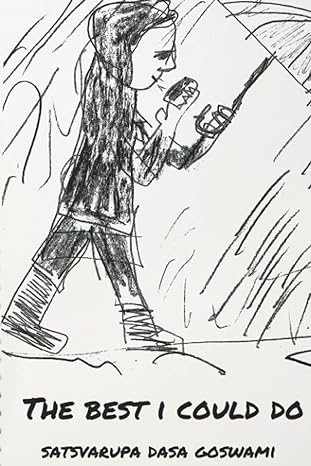 The Best I Could Do
I want to study this evolution of my art, my writing. I want to see what changed from the book In Search of the Grand Metaphor to the next book, The Last Days of the Year.
 a Hare Krishna Man
It’s world enlightenment day
And devotees are giving out books
By milk of kindness, read one page
And your life can become perfect.
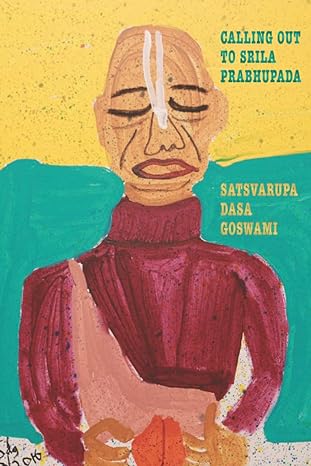 Calling Out to Srila Prabhupada: Poems and Prayers
O Prabhupāda, whose purports are wonderfully clear, having been gathered from what was taught by the previous ācāryas and made all new; O Prabhupāda, who is always sober to expose the material illusion and blissful in knowledge of Kṛṣṇa, may we carefully read your Bhaktivedanta purports.
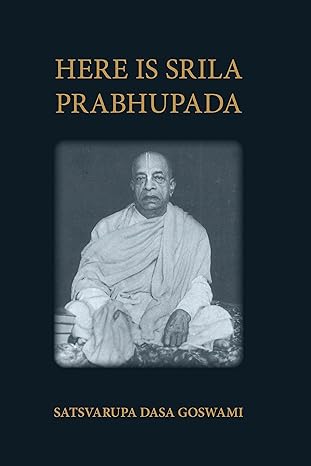
I use free-writing in my devotional service as part of my sādhana. It is a way for me to enter those realms of myself where only honesty matters; free-writing enables me to reach deeper levels of realization by my repeated attempt to “tell the truth quickly.” Free-writing takes me past polished prose. It takes me past literary effect. It takes me past the need to present something and allows me to just get down and say it. From the viewpoint of a writer, this dropping of all pretense is desirable.
 Geaglum Free Write
This edition of Satsvarūpa dāsa Goswami’s 1996 timed book, Geaglum Free Write Diary, is published as part of a legacy project to restore Satsvarūpa Mahārāja’s writings to ‘in print’ status and make them globally available for current and future readers.