

Godbrothers, disciples, friends and well-wishers around the world are warmly invited to attend the 87th Vyasa-puja birthday celebration of His Holiness Satsvarupa Maharaja. Traditionally, devotees have gathered in Stuyvesant Falls, New York for this special annual event. Unlike in past years, this year’s event will be held completely online—there will be no in-person gathering. Guru Maharaja’s caretakers emphasize that Guru Maharaja wishes to spend the time peacefully, in a recuperative way, and not entertain visitors at all on that day. (Those who gather or drop by will be politely invited to leave.)
The date of the online event will be Saturday, December 5, 2026. Additional program details, including the online schedule of events and participation information, will be shared shortly.
Through the gift of technology, this year’s celebration presents a wonderful opportunity for devotees throughout the world to come together in honoring Guru Maharaja by attending the online Zoom program. Devotees, especially Guru Maharaja’s direct disciples are encouraged to celebrate privately or in small groups wherever you happen to be in the world. One can faithfully offer kirtana, heartfelt homages, and prasadam, beautifully expressing the spirit of Vyasa-puja in a uniquely personal way to please the spiritual master, as devotees such as Ramila Mataji of New Zealand do every year.
In addition, a printed Vyasa-puja book with homages from Godbrothers, disciples and friends will be put together and presented to Satsvarupa Maharaja on his birthday; any written expression of one’s connection with him is welcome and will be included in the book. The address for sending in an homage is [email protected]
All glories to Srila Satsvarupa dasa Goswami Maharaja!
your servants at SDG Tributes
We are still expanding our team of proofreaders as we aim to increase the rate of republication of Satsvarūpa Mahārāja’s books as well as new books that he writes. As many of you know, during the July 4th festival just held, a total of 18 new and re-edited and published books were present, and we hope to present a similar number at Satsvarupa Maharaja’s Vyasa-puja observance this December. Our call for proofreaders includes a need for fluent bilingual Spanish and English speakers to proofread Spanish translations (we currently have around 20 Spanish translations waiting to be proofread). Anyone interested in this particular service should contact Manohara dāsa at [email protected]
If you would like to help, please contact Kṛṣṇa-bhajana dāsa at [email protected] or [email protected] and we will find you a service that utilizes your talents.
In this verse from Śrīmad-Bhāgavatam we find the words puraiva puṁsāvadhṛto dharā-jvaraḥ. The word puṁsā refers to Kṛṣṇa, who was already aware of how the whole world was suffering because of the increase of demons. Without reference to the supreme power of the Personality of Godhead, demons assert themselves to be independent kings and presidents, and thus they create a disturbance by increasing their military power. When such disturbances are very prominent, Kṛṣṇa appears. At present also, various demoniac states all over the world are increasing their military power in many ways, and the whole situation has become distressful. Therefore Kṛṣṇa has appeared by His name, in the Hare Kṛṣṇa movement, which will certainly diminish the burden of the world. Philosophers, religionists, and people in general must take to this movement very seriously, for man-made plans and devices will not help bring peace on earth. The transcendental sound Hare Kṛṣṇa is not different from the person Kṛṣṇa.
nāma cintāmaṇiḥ kṛṣṇaś
caitanya-rasa-vigrahaḥ
pūrṇaḥ śuddho nitya-mukto
’bhinnatvān nāma-nāminoḥ—Padma Purāṇa
There is no difference between the sound Hare Kṛṣṇa and Kṛṣṇa the person.
—Śrīmad-Bhāgavatam 10.1.22, purport
Twenty-five rounds completed.
I gave initiation to 16 devotees today.
Traveling all day from Vancouver to Philadelphia.
The vow is the main thing, the vow to keep it up, and a conviction that it must be kept up if possible.
I really felt happy chanting my last required rounds from dusk to nightfall walking around outside my cabin.
Yes, I will have to die and leave this place.
To avoid the prostitute, Haridāsa Ṭhākura pleaded that he had to finish his prescribed rounds. I also can avoid prajalpa by the plea of finishing my 25 rounds. But if there are preaching, fighting duties, I can’t avoid them by chanting “in a secluded place.” But the taste of increased vow, the knowledge of the strength it is giving, is important for preaching.
One thing gained by increasing japa is that one is able to chant more. This may sound like a truism. What does it mean, by chanting more I am able to chant more? It means that what is very difficult in the beginning, namely enduring the bitter taste of unrealized chanting, becomes easier. It is Rūpa Gosvāmī’s famous maxim that the jaundiced patient will become cured by taking the medicine of the holy name.
I remember our old flyer, “Stay High Forever, No More Coming Down.” In this case, the “high” is to stay transcendental. It does not mean to be intoxicated; it means to be above the clouds of the material modes of fear and attraction. By chanting I can understand that I am not this body—I’m the servant of Kṛṣṇa. This is the greatest gain.
As the plane flies higher, the city buildings look smaller and smaller, and then one goes above the clouds. So as one increases his chanting, and to some degree simply by increasing the quantity, he leaves behind so many temporary, agitating thoughts. Success is learning how to stay in transcendental consciousness and at the same time deal with all contingencies, take on all difficulties, and go through all things, remaining transcendental by chanting Hare Kṛṣṇa, Hare Kṛṣṇa, Kṛṣṇa Kṛṣṇa, Hare Hare / Hare Rāma, Hare Rāma, Rāma Rāma, Hare Hare.
Progressive chanting is like cooking halavā. One mixes farina with water, and sometimes it seems it won’t solidify into the right texture. One has to mix and mix the liquid mixture. Then at a certain point everything catches, and the halavā’s texture comes out. So by chanting and chanting, one wonders when his chanting will actually come to the mature point, but then like the halavā, suddenly it all begins to come together.
What is unwanted is the mentality of trying to cash in. One gets a little savings, and rather than build it up, he wants to cash it in. He gets excited about the slightest advancement and wants to right away paint pictures in words, or to enjoy ecstatic bliss. But one should just go on and on, not expecting any respect or admiration as an advanced chanter of the holy name. Tṛṇād api sunīcena taror api sahiṣṇunā / amāninā mānadena kīrtanīyaḥ sadā hariḥ—“In such a state of mind, one can chant the holy name of the Lord constantly.”
As I began to think seriously of an intensive writing schedule for Līlāmṛta work, it occurred to me the vow of 25 rounds might have to go. The quota takes an extra 1 1/2 hours. That’s a lot of time. Yet I have the ability if I want.
The increased vow keeps me aware—in an essential, total, and proper emotional way—that I will have to chant at death. It makes me more likely to continue chanting in time of emergency. It helps me preach better on that same point.
But if writing needs the time, I can’t vow to take less time with my disciples and Godbrothers who want to see me. That is already determined. I need to see them and to answer their letters.
Less sleep?
Faster rounds?
It could be said that this extra chanting is appropriate for Parīkṣit Mahārāja—and this I also must do at the end—but it is not conducive to a full workload of service.
So when ready to actually introduce the writing schedule, I should do so, and see what happens to the chanting.
It seems, at least, that at any opportunity I will now be more inclined to increase my japa—not that after 16 rounds I never touch my beads again for the rest of the day, having “finished” my rounds.
pp. 197-200
Geographically, this chapter ranges widely over the United States, then leaves for London, goes to Amsterdam, and ends at the lotus feet of Srila Prabhupada in Bhubaneshwar, India. In the fall of 1976, I was fully engaged with college classroom preaching in New England. We tried a more intensive approach with bhakti-yoga classes, working out of Amherst, Massachusetts. By then, the library party members dwindled and I had to go out as one of them selling books. Then the emergency hit—the first “brainwashing” case against ISKCON in the York courts. On the GBC’s order, I went out to solicit professors for their testimony in favor of Krsna consciousness. During this period, I began writing the book that Prabhupada had asked me to write while he was in Detroit, “Things Undertaken Without Krsna Fail.” I became quite involved researching materialistic sources, and then discovered another type of writing: “My real writing strength, if any, is ‘from-life.’”
Later in the diary we will hear how Prabhupada warned me not to do research in mundane thinkers for writing this book. As for the autobiographical writing, I began attempting a fictionalized account of my own life prior to Krsna consciousness, climaxing when I met the pure devotee. Even Srila Prabhupada vas a somewhat fictionalized figure. Both these works, Things Undertaken Without Krsna Fail and the autobiography, were ‘ever completed. They began with some groping, some inspiration, many hours of work, but somehow or other they never survived.
Neither could I give up the idea that I had a vocation for writing and that I could actually serve in that way, even though the present demands of ISKCON were (and still are) so urgent. What was especially difficult in the beginning of writing was to adjust the faithful devotional attitude with the attitude of a life-observing writer. I wanted more than anything else to be faithful to Srila Prabhupada and the rsnaam. At first, I didn’t know how to mix this with the creative process. I wound up on frequent detours. I recall working with particular intensity in a room in Amsterdam, just prior to going to be Prabhupada’s secretary. I wrote, typed, edited, retyped, and talked about it with my editor and friend, Mandalesvara Prabhu. He encouraged me in this attempt at shooting for the rhinoceros. The Library Party members, Ghanasyama, Mahabuddhi, and others were in Amsterdam, and we went on harinama together. They also helped me prepare the questions that I should ask Srila Prabhupada on behalf of the Library Party about how we could continue to distribute books to the scholars.
At the St. Louis convention of the American Academy for Religion, I set up a small table and directly approached people in the lobby asking for signatures. A reporter from the Los Angeles Times noted what we were doing and an article subsequently appeared in his paper. It was regarded as favorable publicity at that time, and Ramesvara and others patted me on the back for my public relations work. It was certainly a cast in which I had done nothing expert at all, but just made an attempt, like the little bird trying to empty the ocean with he beak.
The friendly scholars of Hinduism also invited me for an informal gathering at their hotel room one night. I brought a pot of sabji, capatis and nectar drink from the St. Louis temple and acted as a humble servant of the scholars to give them Krsna prasadam. They sat around in a bedroom, speaking either academically about Hinduism, or talking in a most frivolous moot of prajalpa. They were, of course, drinking liquor and smoking. Cigarettes. One of the professors told a long story about how he and his friend, who were high on marijuana in India, imagined a small puddle to be a big river. Everyone listened and laughed hilariously. One eminent professor held forth his opinion that Ramanuja was actually an impersonalist and that Vaisnavism had, in a high, sophisticated sense, the same conclusions as Sankara. I had to wince upon hearing this, but I just did not feel it was my place to strongly preach at this gathering when they were all sitting around in such a relaxed, casual mood.
One of the professors, Thomas Hopkins, was the friendliest toward me, and he was certainly the biggest eater of prasadam, taking seconds and thirds. Another young professor, a Harvard graduate, asked the group whether they thought that any yoga or spiritual discipline was necessary in order to be learned in Hinduism. His remark was mostly replied to with jokes of various sorts. On the one hand, it was a thrilling occasion for me to be in the same room with many of the big-time Indologists in America, but by Krsna’s mercy, their frivolousness made a deep impression on me. Since then it has been very hard to take them seriously.
Our fallen state cannot be over-exaggerated, yet the emphasis should be that we are presently in the liberated condition in devotional service. Kali is a sea of vices but, hari-nama is the one wonderful thing.
I remember reading in literature themes of this nature, such as Eugene O’Neill’s “curse of the misbegotten,” Lord Byron’s guilt, and in our century, being born into a legacy of impending nuclear war where we feel the shadow of doom before we even start. There is a tendency when one faces this bad karma to be morose or hopeless. The mercy of the pure devotee is that the fallen soul somehow takes the part of the mahatma despite his recent degraded position. This is sometimes controversial. Smartas say the Westerners cannot be sannyasis and brahmacaris or brahmanas until the karma and guna of our next life.
Narada says it is the symptoms which should be judged, not the birth. Also, the guna and karma change as we take prasadam.
Our recent sinful activities are absolved. We should not dwell on them. We are not crippled devotees. We are happies, not hippies. This is the transforming power of the sankirtana movement.
We find statements elaborating on this in the Fifth Canto of the Bhagavatam. It is described there that the jiva has his desires and is accordingly put into a body. He has freedom to act, but he must accept a body according to the Supreme Lord’s will. He is not carried by blind, cruel destiny or a cruel God, but his own acts put him under the force of karma, under the will of God. (Unfortunately, the doom-conscious “hero” continues to enact sinful life. He does not help himself but sometimes curses his lot and blames God while continuing to be absorbed in material thoughts. He can be free if he surrenders and engages fully in bhakti. Mam ca yo ‘vyabhicarena, bhakti-yogena sevate. If he engages fully in devotional service, he comes to the Brahman platform.)
Prabhupada writes, “All impediments will be cut to pieces. Sex desire may be the permanent disease of the Western people, but we are not ‘Western people,’ we are Hare Krsna people.”
Don’t resent the position we are in due to past karma. You cannot avoid it, but go on with your duties and don’t come back again in such a situation.
“A liberated soul—who realizes he’s not this body—disregards past activities in such a way that they produce no reactions.”
The soul can’t be known materially; it has to be accepted on authority. In the same way, one cannot see his father as proof that such-and-such man is his father. He has to hear from his mother, the authority.
On the soul in Bhagavad-gita 2.29:
“Some look on the soul as amazing, some describe him as amazing, and some hear of him as amazing, while others, even after hearing about him, cannot understand him at all.”
More and more we hear modern psychologists and scientists want to discount the soul. “Soul” was a concept for the self used thousands of years ago; now there is so-called new information. But still they cannot explain life. They cannot combine the elements of life. “In the future” they say they will do so.
“Perhaps one has no idea that one must think of the soul, and also make a solution of the material miseries.” Or they attempt to learn, but are misguided, and they accept the Supreme and the individual soul as one.
They don’t know that the goal of life can’t be reached as long as one takes the body as the self.
pp. 63-67
The sannyasi and his disciples had a simple meeting on Ekadasi evening. He arranged a line-up of bhajanas, some of which he sang and some he asked others to sing. They were all on the theme of Lord Caitanya and His associates. The temple owned an excellent Indian harmonium, and the young man who played rsnaam kept a steady, no-nonsense beat.
First they sang the Ṣaḍ-gosvāmy-aṣṭakam. Through a translator, the sannyasi commented on some of the verses. lie said we cannot imitate the six Gosvamis, but we love to hear of their ideal, saintly life. He meant what he said; he loved the brief portraits of gosvami life given in those verses, and he knew Srila Prabhupada sang it often and recommended it “if you want to know what is a gosvami.”
Then he asked Dhama dasa to sing. Dhama’s back was forcing him to make unusual facial expressions and to sometimes stand and stretch and to sit in different positions seeking relief. He sang jiv jago in a gruff, but sweet voice.
The sannyasi said, “We get a nice picture in this bhajana of Lord Caitanya going on harinama sankirtana at dawn. We can’t go out at dawn or people would call the police or yell, ‘We’re trying to sleep!’ We go out in the streets when the people are up. We have confidence that if they hear the holy name, they will be benefited.”
There were about ten devotees in the room. The harmonium chords swelled up and the drum and karatalas and voices carried them through their mental tedium. You could tell that the participants were into it as they sang, with faces absorbed in the mellows. Of course, you can’t read minds, but they looked pleased to be together, and in the kirtana-rasa.
Next the sannyasi sang “Hari haraye nama-krsna.” He said verse seven was one of his favorite prayers, tadera carana-sevi-bhakta-sane bas. Then someone sang “Parama-koruna,” then he sang “Gauranga bolite habe,” and finally, “Ye anilo prema-dhana.” After that, he told them his plan to go to Mayapura at the end of the year and said they could join him if they were free.
“Is there any prasadam to distribute?” he asked. One of the women handed him a large bowl containing four apples and a knife.
“Just like 26 Second Avenue,” he said, and he began cutting the apples into slices and then giving them out.
He went back to his room and thoughts about Narahari and India came to his mind again. He had to take care of his personal items without the assistance of Narahari. He gathered his clean clothes for the next day and put water in the hot water bottle. One of the devotees came to tell him the latest news. But the sannyasi didn’t want to talk about it much. He just wanted to take rest and end the Ekadasi in the mood that was generated during the evening bhajana.
At midnight, the sannyasi rose and began writing. He was composing a series of memoirs of Srila Prabhupada based on letters Srila Prabhupada had sent to him. But he paused in that work to think of the classes he had to give today. Again there would be one in the morning and one in the afternoon. The morning would be a reading of Caitanya-caritamrta, but he would interrupt the reader and make comments. He saw one comment he wanted to make about sahajiyas. Another section was Advaita Acarya feeling sorrow for the suffering of the conditioned souls. For that, the sannyasi selected statements from Srila Prabhupada’s book, Renunciation Through Wisdom. Srila Prabhupada recommended that industrialists in India should arrange for Deity worship in their factories, and they should distribute prasadam to their workers. Other statements stressed that complex material problems can be solved only by people turning to devotional service. Srila Prabhupada: “If the number of Lord Krsna’s devotees even slightly increases, there will immediately be a resurgence of peace and prosperity in the world.” The sannyasi found a great quote by Bhaktisiddhanta Sarasvati in the book. It stated that the neophyte’s ringing of the bell during Deity worship is a million times more valuable spiritually and materially than charitable workers building many hospitals or feeding thousands of the poor. Srila Prabhupada stated that “when devotional service to the Lord is neglected, every other activity is illusory and futile.”
And so the time passed and the sannyasi was busy, even taxed, but in a pleasant way, although he didn’t leave the temple building.
They asked the sannyasi if he would go with them on Saturday for harinama in the streets of Verona, the day before Gaura-Purnima. He agreed. He thought, “After my advocating harinama in the lectures, how can I refuse? It’s the best way to observe Gaura-Purnima, especially since I couldn’t go to India.”
By late morning, he received a phone call from Narahari in India. It was a decent phone connection and he could hear and speak without shouting.
“’Mission accomplished,” said Narahari.
pp. 151-59
Dear Prabhupada, this is the time
when I praise you.
Only now? Also on the prow of the ferry boat.
On the walk I praised harinama.
But how could I have the gall
or why would anyone want to hear me talking
about japa? It doesn’t make any sense, me
the atheist from Brooklyn College.
So it’s praise to you
that I walk as a sadhu.
I always make mistakes.
I think I’m being humble when I’m proud.
And you are there to correct me,
“Don’t say you are a Vaisnava but a servant of.
You are aspiring to be a servant of Vaisnavas.”
You turned in my direction.
I came forward carrying my danda.
I’m glad you recruited me into this army
of saffron men. You gave me the
inspiration to move with your
biggest servants and preachers.
Prabhupada, you look dainty and
like a prime minister who can decide
whether to release nuclear weapons;
you send young men to the battlefront.
Your right hand is turned down and one finger
extends down the walking cane,
your left hand, palm turned up, holds a flower.
A gray wool scarf is wrapped around your neck.
Your stride looks like a dancer’s
and you turn back in my direction.
I inch forward
to hear you.
The more I think of it—
you gave me everything good.
Out of fear I think I can’t own up to it
but when I look at you it’s possible again.
You say the world has to be divided
into four orders . . . the sun is the center
of all power in the universe.
In the same way Krsna is giving out
light and heat. I forget what you say,
find your voice rough
unless I’m strong and receptive.
I keep hearing
and beneath my squeamishness
I take in and believe whatever you say.
This is not the way I would actually talk to you.
It’s my mind talking, fighting
for my love for you.
Let me see another picture of you,
let me read you in the right time of day
and it will come rushing back.
When I prepare a lecture it’s completely lined
with quotes from you. Who can say
I am not your representative?
I say I’m not sometimes and so do envious people.
The fact is you are the ruling guru.
Hundreds surround you outside
the ISKCON building in Evanston, Illinois.
You look down not impressed
and not enjoying being the center.
And when the governor speaks at the opening
of Krishna-Balaram Mandir, you calculate
what’s in it for Krsna.
You like it when we read your books.
“I am so strong,”
Prabhupada says. “I kick on their faces!”
He’s talking about the Mayavadis.
Dr. Patel is disturbed to hear it.
“You are a guru,” the doctor says, meaning
he wants to protest but he doesn’t dare.
He mumbles a defense
of faith in Mayavadi leaders
and Prabhupada comes on stronger,
“I have to speak the truth
it doesn’t matter if you don’t like it.”
A little later down the beach
Dr. Patel tries again:
Ramakrishna was a saint.
“He worshiped Kali,” Prabhupada replied,
“and claimed to have become God.
But in Bhagavad-gita Krsna says
that if one worships a demigod
his intelligence is gone. How
can such a person become God?”
The doctor can’t accept it,
he sees them all as saints.
“This mentality has ruined India,”
Prabhupada says.
We listen, we agree.
Even to this day and until we die
we will never accept the Mayavadis.
He was so strong.
He lives forever.
He is somewhere with Krsna.
We are living on his orders.
We offer him food.
He will accept it if we do it nicely
the way he accepted when he was here in the 1970s.
In the same way, put the plate there
and I’m glad to say that’s
all I have to do.
The mystery of how it gets offered
to Lord Krsna and turned into divine remnants—
it’s all taken care of just by cooking
and offering to our Guru Maharaja.
still, my whole day is more or less
in his service. Dressed and looking
and talking like him, I can’t claim
I’m thinking like him . . . but
I do try to dovetail all this.
I am a candidate like those musicians
on the Bowery, who came in 1966,
to whom he said,
“Just offer your music and poems to Krsna.
Is it difficult? You don’t have to change anything.
Even if you don’t do anything else
but come here and chant and hear and take prasadam
you become perfect.”
I’m not bragging that after thirty years
of discipleship
I’m like an uninitiated hippie
on the Lower East Side.
But I am counting on his
liberal essence.
And the truth of his preaching—
that we dovetail our consciousness with the Supreme
and just do what we would do anyway,
make some poem or song
but do it for the Supreme.
God is Krsna and the Swami is our guru.
I can’t help but count on that.
I heard the beginning of Prabhupada’s
“Varnasrama College Talks,”
on a morning walk, Vrndavana 1974.
Devotees are still discussing what he wanted.
He had a clear vision and threw out lots
of ideas like sparks. Now see what you
can manage.
There should be a college
and they can teach asramas, brahmana,
ksatriya—who will learn how to kill—
vaisyas will protect cows
and sudras will go to school to learn
obedience.
It should be a boarding school.
Hrdayananda Maharaja asked the most questions
because he was actually interested in doing it.
Prabhupada had much to say, not just
a curriculum from a dean of studies—
he said the Western world has no philosophers
and so Freud becomes a philosopher.
“Don’t mind” (that he is lambasting Western culture),
“but they’re all no better than animals.”
I want to hear you and appreciate,
that’s my main business.
I can tell others what you said,
Prabhupada, because I took the time
to hear it clearly.
Maybe I can be a teacher of prabhupada-katha
in the varnasrama college.
Tell them, “Just remember that he spoke
all this in Vrndavana, while walking.
He wanted us to start a new chapter
of human life in the Western world.
He called us all mlecchas,
but said we could be reclaimed.”
I want to go hear some more
and tell what he said.
pp. 135-38
I want to pray to You today to ask You to give me the desire to hear and chant about Your pastimes. I think this is the greatest blessing I could ask from You. This is the blessing possessed by Your great devotees. More than anything else, I want to be with You by the process of hearing about You and chanting Your names. Once I possess this gift, I will naturally want to give it to others. Unless people are consumed with the desire to know You and be with You, they will not have a desire to share it with others. It is like that even in the material world. If a person is very excited about baseball, he wants to be with others to hear about baseball, to talk about it with them, attend baseball games, watch the results and root for his home team. There are many radio and television shows and newspapers where various sports are discussed, and people participate in the discussions with great interest. They phone in to experts and give their opinions and ask questions about the latest news in sports. They live in a whole world of interest in whatever sport it may be—horse racing, NASCAR, baseball, football, and so on. And the same is true with those people who are political “junkies.” They cannot hear enough about the latest ruse, scandals and prophesies about politics around the world. How do they gain these interests? They do it by associating, perhaps at an early age, with others who have a burning interest in these matters, or they gain it by a natural proclivity to take part in the worlds of mundane interests. To gain an interest in You, oh Lord, one has to also associate with Your devotees, read the scriptures with Your activities and take part in the sadhana practices, which inspire them even more to take part in rsna-katha. I have reached a certain stage where I am very interested in Your activities, and I want to develop my relationship with You. But it is not enough. It is not all-consuming. The great devotees hear of nothing else, they speak of nothing else, they take part in nothing else but talks of You and Radha and Your associates. They are consumed with the desire to tell others about this to increase the interests in Krsna consciousness around the world. They have this desire because they know that Krsna consciousness is the most valuable thing in the world. They have become convinced of this, and now it has become their entire life. I want to increase my consuming interest in You so that I become a person like Narada Muni, who always sings Your glories and tells others of Your glories. Can You help me to increase my absorption in You? I know You can do it, because You can do anything. You an even decrease a person’s interest in You if they are offensive. You can certainly increase a person’s interest in You if they show signs of desire to be Your unflinching devotee. But will You do it? I know this depends in large part on my own willingness and interest to be consumed by Your pastimes. When You see my interest is increasing, then You will gladly increase it more and fill me with interest in You.
Much of this has to do with learning, education in the importance of Vedic knowledge. When I come to understand that I need You more than anything else and that nothing else is of importance, then naturally my interest will increase, and You will reciprocate with me. Prabhupada has said that religion without philosophy is fanaticism, and philosophy without religion is dry mental speculation. I must increase my knowledge of the importance of Krsna consciousness so that You will fill my mind with a desire to love You more. Please fill my philosophy with the desire to know You and make my religion a burning desire for bhakti.
I am petitioning You for all these improvements because I believe that nothing can take place without Your mercy. I pray for Your mercy to make me a better devotee. I want to improve, and yet, frankly, I do not see myself improving rapidly, or at all. What choice do I have, then, but to pray to You for impetus to work? Please enlighten me in one way or another in the importance of working for Krsna consciousness and striving by my own sweat and blood to improve. My exclusive concentration on Krsna consciousness must come from my own conviction, and You must be the convincing agent. Please forgive me for this helplessly dependent prayer, but I see no other way than to ask for Your mercy. Please make me strong. Please make me desire to be strong. Please claim me as Your own.
pp. 135-39
Oh, it’s 5:30 in the morning and he’s
making porridge in a kitchen
effusive warming heat from
electric heater, hands clenched
in writing fists
so quickly push
buttons in rote.
You could be singing
Lord Hari’s names.
Her tongue chanted by itself
even while she heard
the Bhagavata
so, the speaker was wrong
to insult and accuse
her of doing two things at once.
Don’t make fun
don’t blaspheme
don’t cream out
don’t assault no one
trinkle trinkle
don’t be a dolt optoid
don’t take drugs
snugs your feet in a
lone cold bed for nap
and up to serve.
Be a preacher and exemplar
I say here things to do:
clean your floor and toilet
be a bird-hopper happy
singer
Be a serious confession-
hearer and maker pray
to Lord
for service.
Get out of world go to
Supreme. There’s no end
to good things to do
anywhere you can
always remember the Lord
Is that so hard?
Refrain from cuffing a
Vaishnava. Keep to yourself
if you can.
The epic boast was
not yours.
Little person I love you too
got a minute to hear my
song
got it wrong hello?!…
pp. 145–47
******
Where are we? I don’t know. We heard
that I got tired and the dread
headache came. No, I won’t be afraid.
Medicine will stop it. You were wandering
into the forests
some Vaishnavas were on a pilgrimage, see
walking to a holy mandira. That’s good.
Yeah, they were barefoot, and one of the members
was a big man with a big belly.
I say this purely out of reverence
for the culture. I’m allowed to joke because
I love it. I’m not mocking.
The pilgrims? Where are we? I
don’t know the answer. Wandered into
the jungle and never came out?
Drowned in a pukkar?
Is this the birthplace of Vrinda
puja?
Is this the place where you have
an ancient manuscript written by a sage
about bhakti in Urdu and Tamil
but it’s Gaudiya?
He doesn’t know. For a hundred rupees
we will show you the shoe, the loom
of his father and mother who
departed for the spiritual world.
Watching TV, the pujari is busy
polishing His jewels.
Get a big meal, got a busload
of German tourists with
water
bottles from Japan.
I want only some strength to
perform in 9 a.m. meeting asking
the editor – where are we? I
don’t know.
Sure, you know, we are in Wicklow
in ISKCON, we’re on top our
future is brilliant.
We are going right through.
Why do you say you don’t know?
We are on the road repaired to
bhakti.
But I mean I personally don’t
know just purely for myself.
Who cares for you?
Your guru knows all
and you should know too
stop this silly confessing.
I don’t know I thought you would.
I do.
I am more sure about basics
than I let on here. The
rest we will find out soon.
Just keep wandering on
keep treading.
pp. 166–68
******
Hold ’em, Joe. You should be on top. Get in
the car let’s drive to the west and north. We
got to meet with our old man.
Hindu man’s land don’t like
Calypso Joe.
“At the carnival they sang Harry
Krishna” and some dopes I mean panditas
I mean respectable politically connected
good folks, I love them–
objected.
We took it to ISKCON and they said
we are neutral the holy name
is always good. Hare Krishna
can’t be tainted
but we go on record that
we don’t like wasted lives and
semen and spoiled karma in
the name of carnival
fun and even what you call
your proud culture of Pan.
Hold ’em Harry
is it blasphemy or not?
We said already Hare Krishna you
can’t ruin. It’s backfire on|
you the boomerang
now
let’s make a truce
all dance with us in a
kirtana of mixed race
we’re not the body.
We are hold ’em
Joe and Hindu no
we are none of that
we are that too tat
tvam asi
hold a yajna wave your
green and white faded
flags on long poles.
Potholes, little cars
Guinness Stout that ’68
all is maya we are the
black Orpheus jog going
to hell and come back
alive.
Give up sin and have fun.
Give up fin and thin and
just relax you could
chant Hare Krishna in that pure
atmosphere but I
know you can’t so at least you
did say Hare Krishna Hare Krishna
Krishna Krishna Hare Hare
Hare Rama Hare Rama Rama Rama Hare Hare.
Get it right.
Try now just follow
just sing after me now one
two, three
Hare Krishna Hare Krishna
Krishna Krishna Hare Hare
Rama Rama Rama Rama
no, you got it mixed up.
pp. 168–70
******
He defied God read a
newspaper then
balled it up, threw it
in the fireplace and
lit it into a blaze –
got out of control!
Tried to stop it and
burnt his hand. That
is the karma from on
high. Serves him
right and he’s glad
he got the burn
(which wasn’t so painful
but instructive.)
p. 174
******
Read scriptures; serve Krishna,
write songs not like great,
learned, direct associates of the
Lord, Visvanatha Cakravarti,
but who you are
waving the victory flag
of your ISKCON.
p. 177
******
Go quick as you can for me to be with Thee
gorse I said and comfy
comefree. Be free as a bird
we say
No one is free, he said. We all have to die
and if you want to be God
that freedom is not yours.
You can be free for
serving the Lord that’s possible
and the best thing there is
“Freedom” I said yesterday
and he said, “Hmm.”
What did I mean? I was thinking
of the kind of freedom
freedom from strife
free from maya
and chains.
But not freedom from service
to guru. Lock me in there.
I want no one in my way
just a little freedom
Hare Krishna Hare Krishna clear
the mind of gunk so he can
hear the holy names.
p. 187
******
O smarty pants
“They don’t deserve it” he said,
the brothers conservative don’t
deserve to see this art and
Mr. Boyle, the teacher of
Patri in school days can
be chucked off. We are
free now and can write
and paint as we like to
please Krishna.
p. 197
pp. 20-23
What’s the difference between a story and a writing session? ….
Calm down. Foul play. False start. We will do this my way, you hear
No, no, we want to do it God’s way.
At any rate, start again. You were saying . . .
I was saying that I started out like a steeple-chase
but after two steps I felt my heart drop.
What do you mean by that?
I mean the original purpose—I lost the guts for it. Lost the love, fumbled it, old feet, stumbled.
But why?
I don’t know. All the forces of civilization and conditioning, I guess. Or maybe just plain good sense, “You can’t do that!”
Do you think it would have been better to persist? Was there a pristine energy, a Krsna consciousness as good as spring?
Maybe. Maybe a young boy and he’s afraid he’ll get killed. Such things happen on the way to the market. Oh where have you been, billy boy, billy boy, oh where have you been? But I think it was better I had persisted. Do you want to do another take and try again?
Bang I was off at the start havin’ a pint of Hare Krsna japa, and before I knew it me friend Jinks comes in the room. M. sez, “Me and Jinks are goin’ out to make a phone call.”
I sez, “Don’t leave me alone because the guy is supposed to come to fix the bathroom light and the stove. And I can’t speak Italian.”
But Jinks has a cheap car insurance and says he has to drive so the two of us has to go . . .
Here’s the fictional part: they go and leave me alone. The guy comes to fix the light and he speaks English. He wants to be preached to. I told him first thing is to know you are not this body. Then who are you? Bhagavad-gita teaches. He sat down on the soft cushioned couch and I sat on a nearby hard chair and told him. I hadn’t done this in a long time. Tears started to flow in me for lack of heart. I couraged and continued.
“So life isn’t for only prosecuting the four animal needs, eating, mating, sleeping, and defending. They can be done as animals do, with no restrain. Yet we humans make it a whole endeavor. These are not the actual problems for purposes of life. The purpose is to solve birth, death, old age, and disease.”
The repairman had no teeth. His face was pock-marked. Hadn’t I seen him on a bicycle stopping for a red light, a delicate-boned old, old man surprising you by driving slowly on a bicycle through a town square in modern Italy? And here he was like a chimera in the tiled room of the rented apartment.
“What was you sayin’?” he said. He was like a turtle, sticking his head out out of the socket.
“I was saying, love is for getting out of the cycle of birth and death. Bhagavad-gita teaches that. It’s not another religion, although it comes from India.” I was trying to figure my strategies, what to say and what to leave out for the maximum effect. I figured he was not an educated person and might have trouble with the terminology and the concepts. He was also a chimera and I expected to see him roll on his back like a turtle on its shell.
If he rolled like that, what would I do? I’d have to ex-plain it. It could get messy. Also I didn’t want to delay him in his main purpose which was in my interest also, that is, fixing the bathroom light and stove.
Without a light this morning I couldn’t see and the tape recorder fell off the shelf when I was trying of listen to it while sitting on the toilet bowl. You need light in order to put on Vaisnava tilaka and to do so many things. You can’t even pee straight into the bowl. It’s dangerous.
And M. needs the stove. He says, “I can’t make any sweets.” That’s his department, cooking, but I would hope that he can cook interesting sweets.
Yet here was the repairman sitting submissively in the room and I could not neglect him. Was I more interested in cooked sweets or in saving one’s soul? Was I more concerned to be alone to write or active to help someone by saying the vibration into his ear, as I did, Hare Krsna Hare Krsna, Krsna Ki§na Hare Hare/Hare Rama Hare Rama, Rama Rama Hare Hare.
“This is the age of Kali,” I said.
“Kali. C-O-L-L-E-Y,” he said.
Oh gosh, I’ll have to explain so much, I thought. He may think that this is too Indian.
Sure enough he said, “How come you wear those robes and not the serge brown of our Franciscans, who look well-tailored by the institution with hood, and it goes all the way down to their feet and an elegant, brown cord at the waist?”
I said, This is the same as them. We are from the spiritual world.
“Could you say that chant again?”
I told him. Then I was satisfied and figured he’d tak¬en in all he could, all that the traffic would bear and I had also extended myself as far as I wanted.
“Could you fix the light?”
“I’ll give it a try.” He fixed it by using a ladder to reach the ceiling and he replaced the bulb. The stove was more complicated. He said he would have to come back another time. And so he left out the front door and I sighed and was controlled and alone chanted a pint, that is, a round, walking over the tiled floor.
Oh this is the garden of Eden
and here on threshold we stand
. . . hold my hand.
What do you mean? This is not strongly your voice. This is no story. Neither is it bona fide.
It is. I wanted to do a story. I told you. I’m not a baby who used to urinate in his bed. I’m a man and always was. My father was strong in muscles and ready to fight anyone in fist-a-cuffs. I inherited that. My moth¬er is a scaredy-cat; I am more like her but with his potential lurking.
And when I was 26 I met my spiritual master, His Divine—I am almost ashamed to put his holy name in this story because it’s so meager. But you see, I trail this stuff, it’s still with me. So I wanted and this came. Did I answer you sufficiently?
About the steeple-chase start. Was this the heart you were talking about that slipped and fell? Was there anything else and something else and something more substantial and glorious? I have to submit this story to my newspaper and it must have something to it. Were you about to tell a better story and lost the inspiration?
Maybe. But I settled with this and I’m fairly satisfied. The men are now coming up the stairs and back into the house. We’re going to make our quotas. Even if the guy didn’t fix the light we could have used a candle. I think I’ll live . . . And when we die we will not be forgotten by Srila Prabhupada.
Reporter: “Is he the one?”
Yes. In the picture. He’s the one who came to America.
Reporter: “What do you recken he’d think of this?”
That’s a touchy question. I think of it a lot and don’t
have the answer for you. It’s not something you can print in your tabloid: Toothless Monk Doubts His Zany Writing Appeals To Master.
Reporter: “Hm. And that’s all?”
Take a cookie. Take an apple. Take a Bhagavad-gita.
“No thanks.”
Hare Krsna. They go to the door and the one exits and the other recommences chanting japa, walking over the tiled, rugless floor. He and his friends talk a little how tomorrow is Ekadasi. They hint that he ought to have only one cup of fruit juice in the morning and one bowl of soup at lunch. Give the digestive organs a rest. “No,” he says, “give me a little more.” They quiet down and only chant, three persons doing japa, like religious monks anywhere. Monks are monks, just as scholars are scholars. Rainfall and misty sky darkens chill but winter is over. Winter is over.
pp. 28-33
Good and bad. All good feelings pass through you and some are silly like nice, wool socks and goodies and some are profound, the happiness of devotional service. You can’t always distinguish. You can’t get all the different things done that are on your schedule. This is the way I like it, quiet and on my own, yet I will attend their simple Gaura-Purnima function after three days. I will speak something about Lord Caitanya while sitting in a small room. Lord, Lord, You are kind to us.
Listen, I have my flight too. I know you do also. But listen to me for awhile. So says the writer, and if he’s lucky he gets some reader or readers. In a thumbnail sketch. In a long book. Some lonely-like-himself-soul can read.
An interesting little essay here by Mother Mary Claire saying there is a difference between loneliness and being alone. We do it, we who choose so for religious purposes, not to cut ourselves off from humanity and preaching. I hope that my aloneness will be acceptable to Prabhupada. I take it in the pragmatic way that when I am alone I get more literary work done and can share it as preaching. And alone, I take time to read his books and then I can preach. But also, I go alone …
Like the solitary sailor, we deliberately choose our aloneness as part of a personal quest. We are people engaged on a search. It is always a search for God, but it is also a quest that brings us to a place of exposure to a deep heart-searching, listening awareness of the fundamental, crying need of the world. This is precisely the monk or nun’s chief service to humanity. In aloneness, we learn to share in a basic way in the emptiness and lossness that people today often know, but also often try to block out and ignore.
—from “Aloneness Not Loneliness”by Mother Mary Claire
She also says she prays for all people when she is alone. That’s a hard one for me to relate to although I like it. Pray for people. I suppose I don’t have much faith in it because I didn’t hear Prabhupada talk of it much. Yet he did. Advaita Acarya prayed for Lord Cai-tanya to come. Prahlada prayed that everyone, demons too, may become peaceful in bhakti-yoga. You don’t want to petition the Lord. I have much to learn of pray.
Mother Mary Claire also says that, “In our love for God is contained our love for all.” Prabhupada definitely says that, and therefore one person’s practicing Kisna consciousness alone helps all people. Bhaktisiddhanta Sarasvati said that a pujari’s ringing a bell in the temple is doing more for the welfare of society than many who open hospitals and feed the poor. If you satisfy God, everyone will be satisfied. I don’t have to know exactly how it works. This sort of alone is not a replacement for going out to meet people and talk with them. Yet it is a way that calls some of us. “Through their constant aloneness they have acquired a deeper capacity for communication with their fellow human beings and more urgent desire to penetrate to depths where human need is at its greatest.”
I tend to say that my way is best, as do the book distributors, the cow protectors, and everyone else in ISKCON or out of ISKCON. We enthuse ourselves that way. But I prefer to be accepted as one kind of worker in ISKCON. We may not have separate orders like the Catholic Church, Jesuits, and Carthusians, etc. We are all in one preaching wing of Lord Caitanya’s movement known as ISKCON. But still there is variety in the unity. I am alone trying to fuel the movement with a message of my own. It is not a message that says, “Everyone should go alone and free-write.” I don’t say I’m the best for doing this. But I claim this territory.
We claim for Krsna. I am in a tulasi house or attic room alone writing this for you, for us. Not enough time to do all the nice things I’d like to do.
In mid-March, the year is still not too old. The morning is delicious and light enough by 6 A.M. for me to go out. So far I have not been noticing nature’s details much; I am more absorbed in thinking out loud on a vital subject, my relationship with His Divine Grace.
Once someone did a “Brghu-muni” reading for me (astrology), and it said that I should not say the name of my spiritual master. I thought this was a crazy thing and didn’t follow it. But I see the point in it lately. Don’t take his name cheaply or in vain. Everyone is shouting “Prabhupada for 1996.” Sometimes I prefer to say, “Yours in his service,” rather than, “Yours in the service of Prabhupada.” I say His Divine Grace, and I like to say “the Swami.” He who called my name. He is in his picture, but he is more than that. We don’t know all of him. He gave us, and what he gave us we should take and live with it. But know that there is more to him. You will satisfy him by carrying out his order intelligently and diligently.
Don’t come into my room while I am writing.
I heard you coming up the stairs so
started typing quickly so you’d keep away.
My parents used to think I was working at
writing only when I typed up what
I’d already written.
The sound of the machine convinced them
maybe I wasn’t so worthless and wrong to write.
Maybe I could sell something
the manual typewriter
pounded away under my fingers
but got stuck keys.
I sent a novel, Sagittarius, to an agent who said
thanks for it but we can’t sell this kind of thing.
It was marijuana prose.
Dreams and things not really happening
to me that’s
the same kind of delicate imagery you like to do last
year in Gite Stories. Some day it may
come back again,
a madness of outpouring stories and fiction
in Krsna consciousness. How nice!
The force that drives the green flower
dries my green age—is Krsna.
I get up at midnight
with no Miles Davis tunes,
“Round About Midnight” necessary for me,
but even with that burden I would get up
or while worrying about Bill Clinton’s sure demise.
He’ll never get elected, and it don’t matter a damn.
Krsna is in control. All the idiots . . .
I saw headlines, nine Republican candidates converged to
New Hampshire where they have early presidential elections
for nomination by their party. See those nine guys so blatantly maneuvering for power. I am a loyal member-follower of the GBC. Just keep a distance is all.In the yew tree, the poet wrote, are birds and my yew tree bears the wind. Poets are nice guys often but maybe not.
I got to pay attention to KC but you say
it’s all-encompassing so not maya
to be looking around at everything and remarking
this too, this too can be seen through sastra,
and then it is not maya. And I
should not be a person encaptured by her.
Last night I saw an Ekadasi moon so bright I thought it was maybe full, but they are not full on the eleventh day. We ate a little bit of fruit. It was Sunday, so at lunch they served Gauranga potatoes and some veg, and I don’t remember, some potato patties, and then a dessert too rich. Madhu showed me what gets left over when you make clarified butter, a milky scum so thick it couldn’t even be cleaned from the pot. His point was how can you expect to digest desserts of creamy milk like they served yesterday? Yes, I thought, I prefer a hot fruit pie with a crisp, flaky crust. But maybe he has something against that too. Better not eat at all, like Raghunatha Gosvami, so enamored by Krsna’s pastimes and names that he doesn’t need to assuage the tongue. I wish I had love of God but don’t wish enough or act. Write.
Brahma is also afraid of his death, and thus he performs devotional service to the Lord, just to release himself from the clutches of illusory energy. . . . Similarly, a human being who does not develop a sense of responsibility before he dies is no better than the madman who tries to enjoy material life very happily without concern for the future.”
—Bhag. 3.11.33, purport
Ah yes, ISKCON’s got its culture too. You don’t have to run to the zoo rhyming.

Viraha Bhavan Journal (2017–2018) was written by Satsvarūpa Mahārāja following a brief hiatus in writing activity, and was originally intended to be volume 1 in a series of published journals. However, following its completion and publication, Mahārāja again stopped writing books, subsequently focusing only on what became his current online journal, which began in August of 2018.

At first, I took it hard that I would have to live surrounded by the firemen, and without my own solitude. After all, for decades I had lived in my own house with my own books and my own friends. I was also now a crippled person who couldn’t walk, living among men who did active duties. But when Baladeva explained it to me, how it was not so bad living continually with other firemen and living in the firehouse with its limited facilities, I came to partially accept it and to accept the other men. I came to accept my new situation. I would live continually in the firehouse and mostly not go outside. I would not lead such a solitary life but associate with the other firemen.
Let me write sweet prose.
Let me write not for my own benefit
but for the pleasure of Their Lordships.
Let me please Kṛṣṇa,
that’s my only wish.
May Kṛṣṇa be pleased with me,
that’s my only hope and desire.
May Kṛṣṇa give me His blessings:
Kṛṣṇa Kṛṣṇa Kṛṣṇa Kṛṣṇa Kṛṣṇa he
Rāma Rāghava Rāma Rāghava
Rāma Rāghava rakṣa mām.
You mentioned that your pathway has become filled with stumbling blocks, but there are no stumbling blocks. I can kick out all those stumbling blocks immediately, provided you accept my guidance. With one stroke of my kick, I can kick out all stumbling blocks. —Letter by Śrīla Prabhupāda, December 9, 1972.

The Writing Sessions are my heart and soul. I’m trying my best to keep up with them. I am working with a few devotees, and they are far ahead of me. I wander in the wilderness of old age. I make my Writing Sessions as best I can. Every day I try to come up with a new subject. Today I am thinking of my parents. But I don’t think of them deeply. They are long gone from my life. Śrīla Prabhupāda wrote a poem when he was a sannyāsī, and he said now all my friends and relatives are gone. They are just a list of names now. I am like that too. I am a sannyāsī with a few friends. I love the books of Śrīla Prabhupāda. I try to keep up with them. I read as much as I can and then listen to his bhajanas.
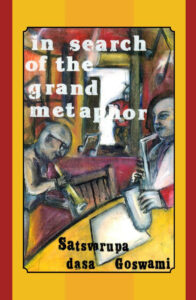
The metaphor is song. Explain it. Yes, particulars may not seem interesting or profound to readers who want structured books.
Wait a minute. Don’t pander to readers or concepts of Art. But Kṛṣṇa conscious criteria are important and must be followed. So, if your little splayed-out life-thoughts are all Kṛṣṇa conscious, then it’s no problem.
I am near the end of my days. But I do like the company of like-minded souls, especially those who are Kṛṣṇa conscious. Yes! I am prone to Kṛṣṇa consciousness. I have been a disciple of Bhaktivedanta Swami Prabhupāda for maybe almost sixty years. Sometimes I fail him. But I always bounce back and fall at his feet. It is a terrible thing that I sometimes do not have the highest love for him. It is a terrible thing. Actually, however, I never fall away from him. He always comes and catches me and brings me back to his loving arms.

This edition of Satsvarūpa dāsa Goswami’s 1996 timed book, Upstate: Room to Write, is published as part of a legacy project to restore Satsvarūpa Mahārāja’s writings to ‘in print’ status and make them globally available for current and future readers.
A factual record of the reform and change in ISKCON guru system of mid ’80s.

Readers will find, in the Appendix of this book, scans of a cover letter written by Satsvarūpa Mahārāja to the GN Press typist at the time, along with some of the original handwritten pages of June Bug. Together, these help to illustrate the process used by Mahārāja when writing his books during this period. These were timed books, in the sense that a distinct time period was allotted for the writing, during SDG’s travels as a visiting sannyāsī
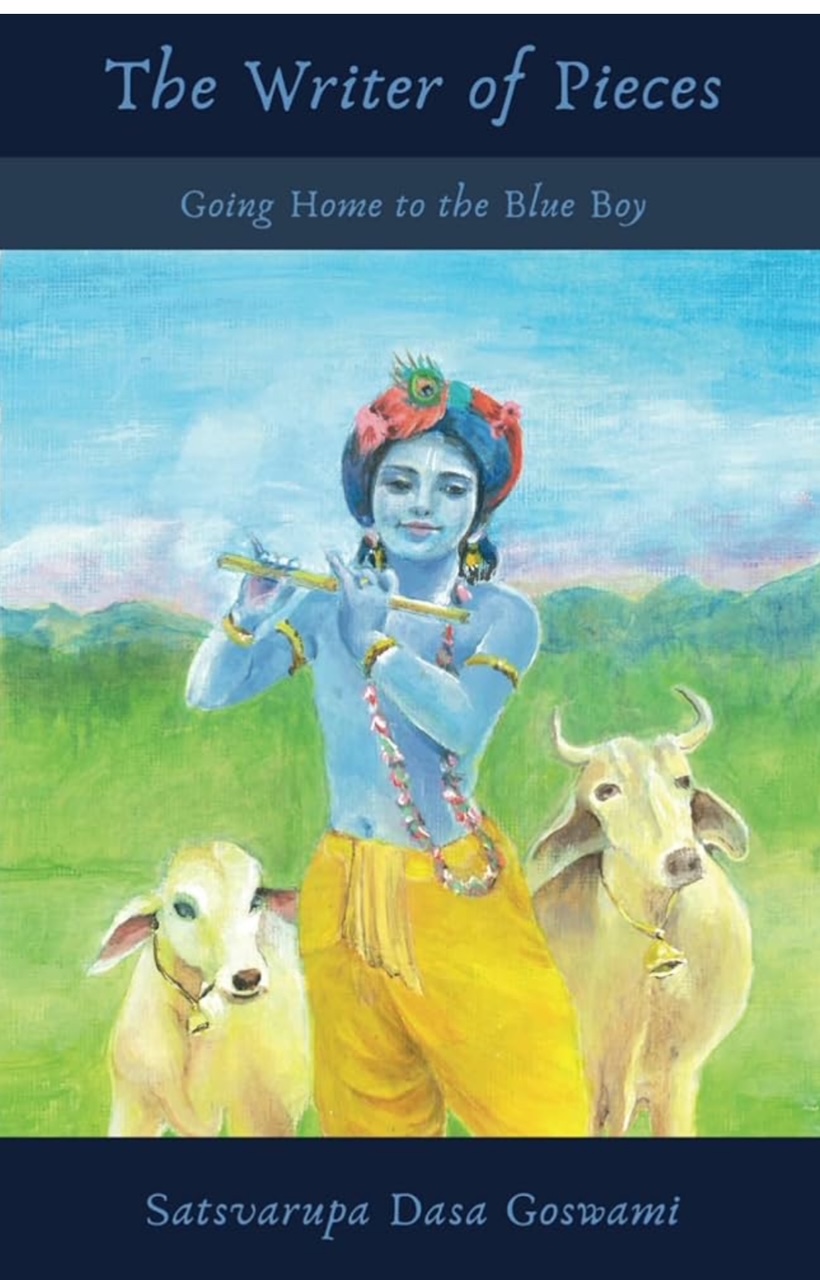
Don’t take my pieces away from me. I need them dearly. My pieces are my prayers to Kṛṣṇa. He wants me to have them, this is my way to love Him. Never take my pieces away.

Many planks and sticks, unable to stay together, are carried away by the force of a river’s waves. Similarly, although we are intimately related with friends and family members, we are unable to stay together because of our varied past deeds and the waves of time.
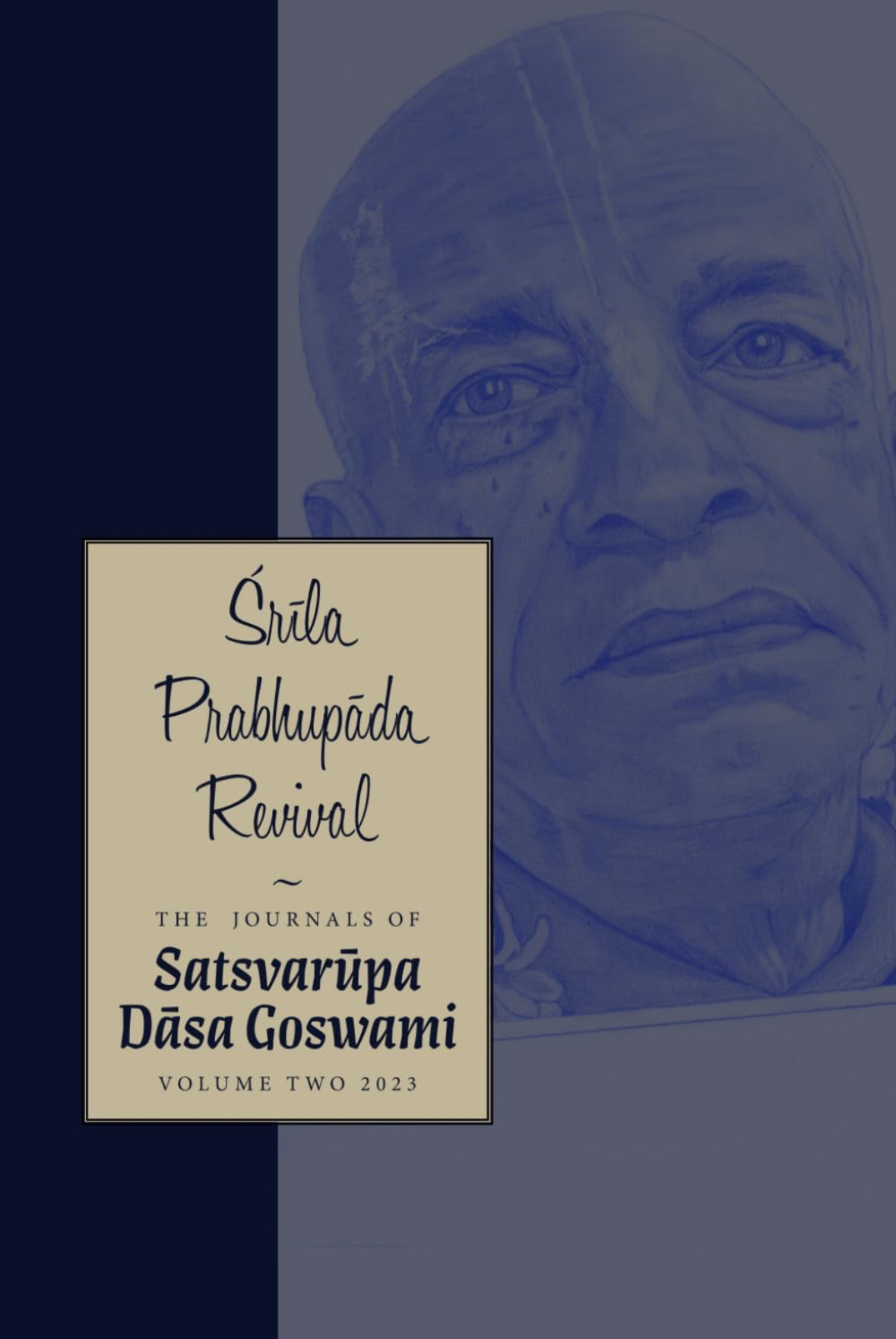
To Śrīla Prabhupāda, who encouraged his devotees (including me) To write articles and books about Kṛṣṇa Consciousness.
I wrote him personally and asked if it was alright for his disciples to write books, Since he, our spiritual master, was already doing that. He wrote back and said that it was certainly alright For us to produce books.
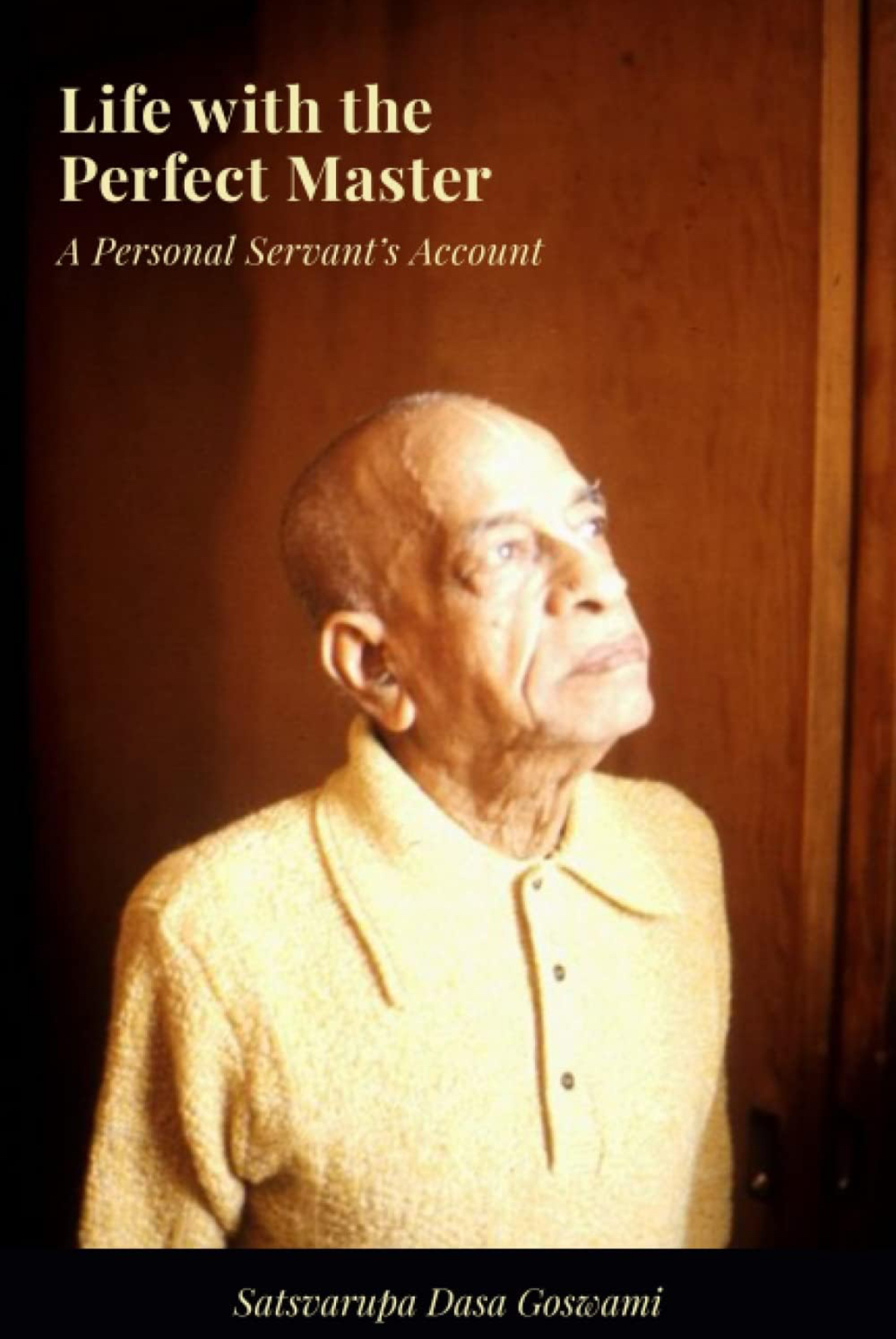
I have a personal story to tell. It is a about a time (January–July 1974) I spent as a personal servant and secretary of my spiritual master, His Divine Grace A.C. Bhaktivedanta Swami Prabhupäda, founder-äcärya of the International Society for Krishna Consciousness. Although I have written extensively about Çréla Prabhupäda, I’ve hesitated to give this account, for fear it would expose me as a poor disciple. But now I’m going ahead, confident that the truth will purify both my readers and myself.

First published by The Gītā-nāgarī Press/GN Press in serialized form in the magazine Among Friends between 1996 and 2001, Best Use of a Bad Bargain is collected here for the first time in this new edition. This volume also contains essays written by Satsvarūpa dāsa Goswami for the occasional periodical, Hope This Meets You in Good Health, between 1994 and 2002, published by the ISKCON Health and Welfare Ministry.

This book has two purposes: to arouse our transcendental feelings of separation from a great personality, Śrīla Prabhupāda, and to encourage all sincere seekers of the Absolute Truth to go forward like an army under the banner of His Divine Grace A.C. Bhaktivedanta Swami Prabhupāda and the Kṛṣṇa consciousness movement.

A single volume collection of the Nimai novels.
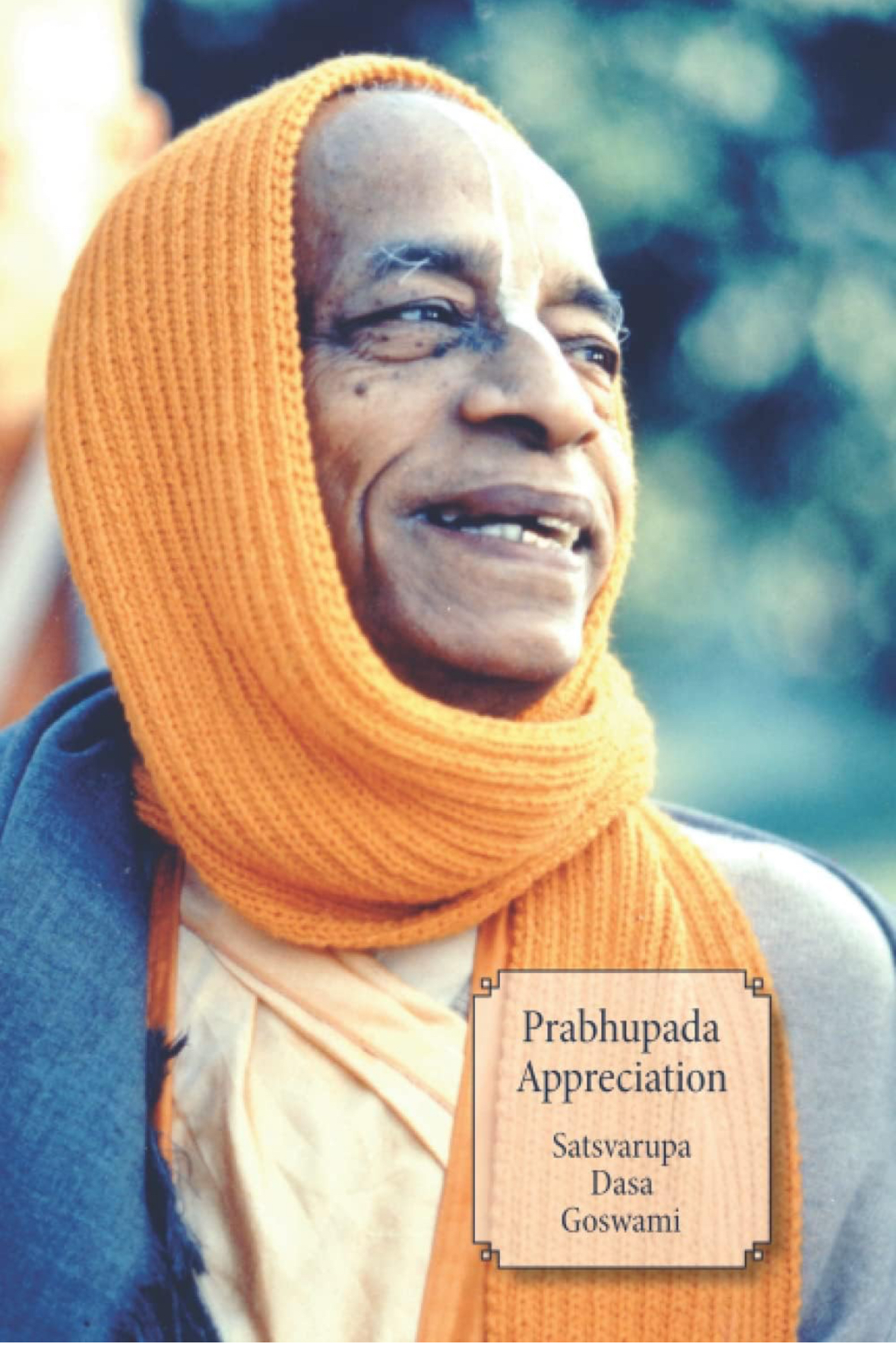
Śrīla Prabhupāda was in the disciplic succession from the Brahmā-Mādhva-Gauḍīya sampradāya, the Vaiṣṇavas who advocate pure devotion to God and who understand Kṛṣṇa as the Supreme Personality of Godhead. He always described himself as simply a messenger who carried the paramparā teachings of his spiritual master and Lord Kṛṣṇa.
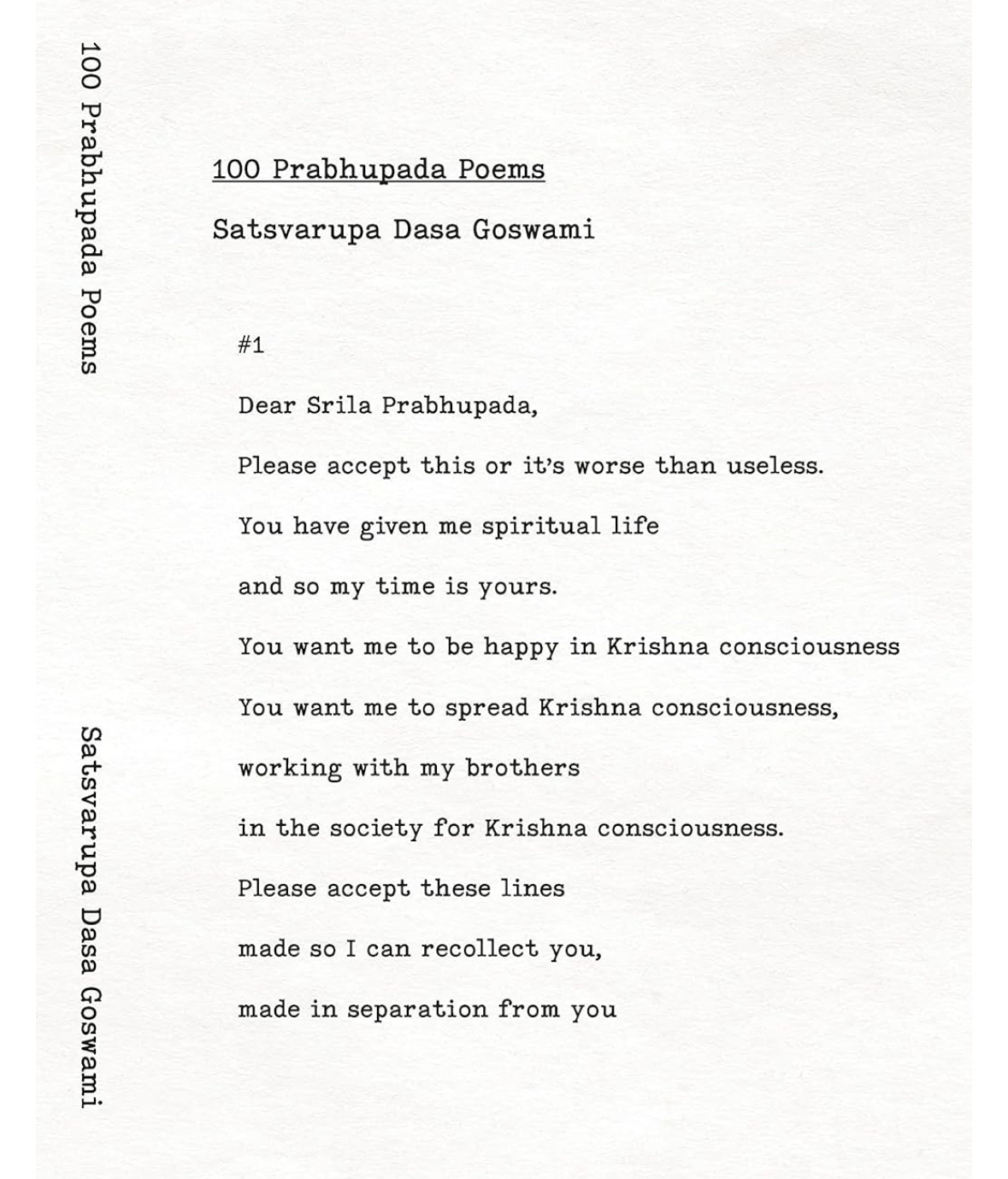
Dear Srila Prabhupada,
Please accept this or it’s worse than useless.
You have given me spiritual life
and so my time is yours.
You want me to be happy in Krishna consciousness
You want me to spread Krishna consciousness,
This collection of Satsvarūpa dāsa Goswami’s writings is comprised of essays that were originally published in Back to Godhead magazine between 1966 and 1978, and compiled in 1979 by Gita Nagari Press as the volume A Handbook for Kṛṣṇa Consciousness.
This second volume of Satsvarūpa dāsa Goswami’s Back to Godhead essays encompasses the last 11 years of his 20-year tenure as Editor-in-Chief of Back to Godhead magazine. The essays in this book consist mostly of SDG’s ‘Notes from the Editor’ column, which was typically featured towards the end of each issue starting in 1978 and running until Mahārāja retired from his duties as editor in 1989.
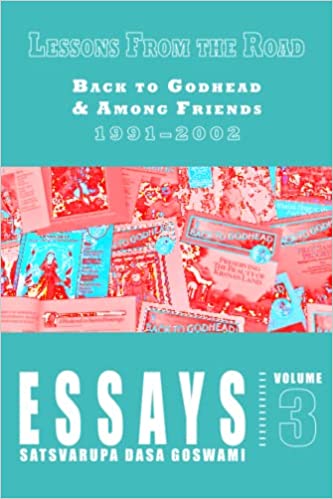
This collection of Satsvarupa dasa Goswami’s writings is comprised of essays that were originally published in Back to Godhead magazine between 1991 and 2002, picking up where Volume 2 leaves off. The volume is supplemented by essays about devotional service from issues of Satsvarupa dasa Goswami’s magazine, Among Friends, published in the 1990s.

“This is a different kind of book, written in my old age, observing Kṛṣṇa consciousness and assessing myself. I believe it fits under the category of ‘Literature in pursuance of the Vedic version.’ It is autobiography, from a Western-raised man, who has been transformed into a devotee of Kṛṣṇa by Śrīla Prabhupāda.”
 The Best I Could Do
I want to study this evolution of my art, my writing. I want to see what changed from the book In Search of the Grand Metaphor to the next book, The Last Days of the Year.
 a Hare Krishna Man
It’s world enlightenment day
And devotees are giving out books
By milk of kindness, read one page
And your life can become perfect.
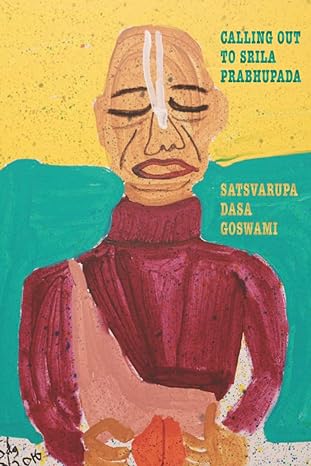 Calling Out to Srila Prabhupada: Poems and Prayers
O Prabhupāda, whose purports are wonderfully clear, having been gathered from what was taught by the previous ācāryas and made all new; O Prabhupāda, who is always sober to expose the material illusion and blissful in knowledge of Kṛṣṇa, may we carefully read your Bhaktivedanta purports.
I use free-writing in my devotional service as part of my sādhana. It is a way for me to enter those realms of myself where only honesty matters; free-writing enables me to reach deeper levels of realization by my repeated attempt to “tell the truth quickly.” Free-writing takes me past polished prose. It takes me past literary effect. It takes me past the need to present something and allows me to just get down and say it. From the viewpoint of a writer, this dropping of all pretense is desirable.
 Geaglum Free Write
This edition of Satsvarūpa dāsa Goswami’s 1996 timed book, Geaglum Free Write Diary, is published as part of a legacy project to restore Satsvarūpa Mahārāja’s writings to ‘in print’ status and make them globally available for current and future readers.