
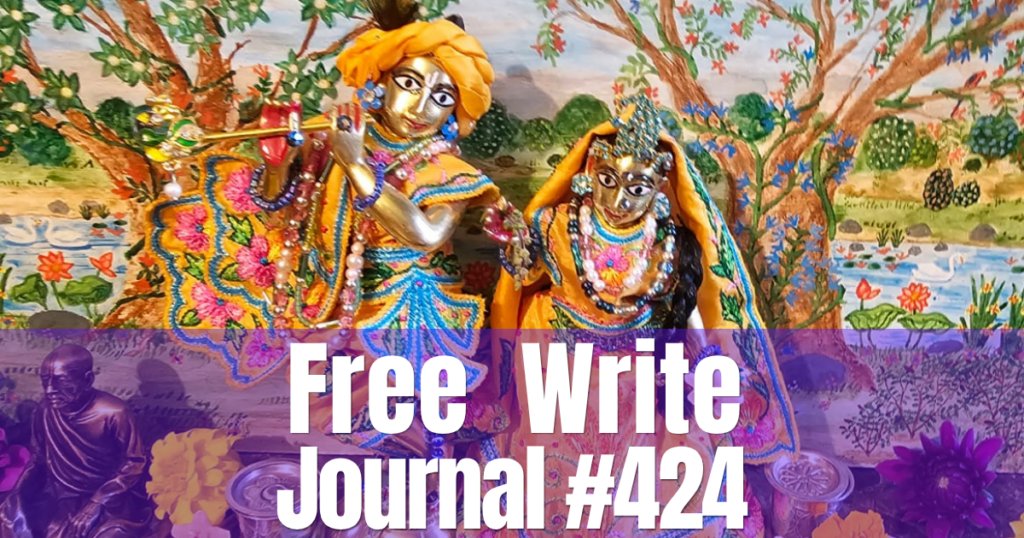
Disciples showed me their
plan to celebrate my birthday.
I appreciate.
But I don’t like terms
such as “world-wide celebration”
and reporting big book
distribution on that day
I prefer my followers to observe
a quiet day chanting,
and perhaps reading my
books about Srila Prabhupada.
Please no hype.
Disciples may privately cook a feast
and distribute the remnants.
Don’t disturb the harmonious
mood of the temples or
the gurus and their disciples.
Godbrothers, disciples, friends and well-wishers around the world are warmly invited to attend the 87th Vyasa-puja birthday celebration of His Holiness Satsvarupa Maharaja. Traditionally, devotees have gathered in Stuyvesant Falls, New York for this special annual event. Unlike in past years, this year’s event will be held completely online—there will be no in-person gathering. Guru Maharaja’s caretakers emphasize that Guru Maharaja wishes to spend the time peacefully, in a recuperative way, and not entertain visitors at all on that day. (Those who gather or drop by will be politely invited to leave.)
The date of the online event will be Saturday, December 5, 2026. Additional program details, including the online schedule of events and participation information, will be shared shortly.
Through the gift of technology, this year’s celebration presents a wonderful opportunity for devotees throughout the world to come together in honoring Guru Maharaja by attending the online Zoom program. Devotees, especially Guru Maharaja’s direct disciples are encouraged to celebrate privately or in small groups wherever you happen to be in the world. One can faithfully offer kirtana, heartfelt homages, and prasadam, beautifully expressing the spirit of Vyasa-puja in a uniquely personal way to please the spiritual master, as devotees such as Ramila Mataji of New Zealand do every year.
In addition, a printed Vyasa-puja book with homages from Godbrothers, disciples and friends will be put together and presented to Satsvarupa Maharaja on his birthday; deadline sending written Vyasa Puja entries to be included in the Vyasa Puja book is November 21.
The address for sending in an homage is [email protected]
All glories to Srila Satsvarupa dasa Goswami Maharaja!
your servants at SDG Tributes
We are still expanding our team of proofreaders as we aim to increase the rate of republication of Satsvarūpa Mahārāja’s books as well as new books that he writes. As many of you know, during the July 4th festival just held, a total of 18 new and re-edited and published books were present, and we hope to present a similar number at Satsvarupa Maharaja’s Vyasa-puja observance this December. Our call for proofreaders includes a need for fluent bilingual Spanish and English speakers to proofread Spanish translations (we currently have around 20 Spanish translations waiting to be proofread). Anyone interested in this particular service should contact Manohara dāsa at [email protected]
If you would like to help, please contact Kṛṣṇa-bhajana dāsa at [email protected] or [email protected] and we will find you a service that utilizes your talents.
The above entry practically signals the end of my vow of 25 daily rounds. I’m soon adding serious writing of Prabhupāda-līlāmṛta to my daily life. To chant 25 rounds, I calculated, takes me some 4 hours, 15 minutes. I can’t afford so much time.
I told Maṇḍaleśvara this, but he thought my keeping the vow seemed important. I agreed, citing how the extra chanting helps me deal with ISKCON controversies, with their discussions of things not Absolute, of things that may or may not be Kṛṣṇa conscious. Then he asked if I could chant faster. Welcome suggestions, both to keep the vow and to try chanting faster.
Today I chanted some of the rounds faster. It sounded a little odd, rushed, but 25 rounds now becomes possible in less time. Maybe I will be able to keep the quota. Prabhupāda has said 16 rounds should be done in 2 hours, whereas I always take longer. So why not “rush it” or pick up speed to reach the pace that he himself kept (as we hear on his japa tape) and that he recommends to us. At that pace I should be able to do 25 rounds in a little over 3 hours. That much time I could afford. So let me speed it up, chant at a fast clip, even if at first it seems rushed or odd to me.
Try not to give up the quota that keeps you in advanced consciousness of the holy name, even while adding writing to your daily life.
Question: But can you chant at high speed for the whole duration? Isn’t that like trying to sprint for a long distance?
Answer: Well, if you are so tired that you can’t keep up speed, then maybe you should put aside japa until the time you can keep it up. Admittedly, it is strenuous.
Question: But where is such time?
So the answer to the question depends on my complete schedule, including my writing. For the present, at least I will try to keep the quota. I’ll chant faster.
Twenty-five rounds. Good to be back on quota. It seemed easy to do 25. I’m assuming this mechanical aid of speed, with the mechanical quota of 25 rounds, will lead to churning my dormant love for the holy name of Kṛṣṇa. It (ruci) won’t happen until He is pleased with me, due to my service attitude.
A Madhyama-Bhāgavata is Always Chanting
As in the previous year, one of the inhabitants of Kulīnagrāma submitted a petition to the Lord, saying, “My Lord, kindly tell me what my duty is and how I should execute it.”
The Lord replied, “You should engage yourself in the service of the servants of Kṛṣṇa and always chant the holy name of Kṛṣṇa. If you do these two things, you will very soon attain shelter at Kṛṣṇa’s lotus feet.
—Cc. Madhya 16.69–70
A person who is always chanting the holy name of the Lord is to be considered a first-class Vaiṣṇava, and your duty is to serve his lotus feet.
Purport:
Śrīla Bhaktisiddhānta Sarasvatī Ṭhākura says that any Vaiṣṇava who is constantly chanting the holy name of the Lord should be considered to have attained the second platform of Vaiṣṇavism. Such a devotee is superior to a neophyte devotee who has just learned to chant the holy name of the Lord. A neophyte devotee simply tries to chant the holy name, whereas the advanced devotee is accustomed to chanting and takes pleasure in it. Such an advanced devotee is called madhyama-bhāgavata, which indicates that he has attained the intermediate stage between the neophyte and the perfect devotee. Generally, a devotee in the intermediate stage becomes a preacher. … an intermediate devotee is greatly attracted to chanting the holy name, and by chanting he is elevated to the platform of love. If one chants the holy name of the Lord with great attachment, he can understand his position as an eternal servant of the spiritual master, other Vaiṣṇavas, and Kṛṣṇa Himself. Thus, the intermediate Vaiṣṇava considers himself kṛṣṇa-dāsa, Kṛṣṇa’s servant. He therefore preaches Kṛṣṇa consciousness to innocent neophytes and stresses the importance of chanting the Hare Kṛṣṇa mahā-mantra.
—Cc. Madhya 16.72
pp. 152-54
If by chance such a moment comes when I can once again see Krsna, then I shall worship those seconds, moments, and hours with flower garlands and pulp of sandalwood and decorate them with all kinds of jewels and ornaments.
—Caitanya-caritamrta, Madhya 2.38
In our own little way, we are also worshiping the hours and minutes when we were with Srila Prabhupada. One way to worship sacred time is to ask it, “Please come forward so that we may praise you with words and tell the world what it was like. Kindly come forward and reveal yourself, minutes and hours in which I was with Prabhupada.”
Almost as soon as I began seeing Srila Prabhupada, I also began fondly remembering him and what he said. After attending his morning class at 26 Second Avenue, I would walk east one block to First Avenue and then walk north to the Fifth Street Welfare Office. Just before Fifth Street was a very big apartment building, and I used to stand in the entranceway under a roof and “kill time” before going in to punch the clock. I remember standing there and reviewing some of the philosophy that Prabhupada had spoken. He had said that any activity, if coated with bhakti, becomes a type of yoga. When fruitive activities are coated with bhakti, they become karma-yoga. Philosophical speculation coated with bhakti becomes jnana-yoga, and pure devotional service activities are bhakti-yoga. What a wonderful philosophy!
I worship the moments spent with Swamiji in his apartment. On one particularly quiet night, I was the only one with him. The front doorbell rang and I went down to see who it was. It was Donald, a pudgy, bespectacled young man from uptown. He was maybe the only non-hippie coming to the storefront at that time. He was a junior executive with the Pepsi-Cola company, and he usually dressed in shirt and tie. When I met him at the door, he asked if he could come up to see the Swami. I replied, “He’s alone tonight, so let me see if it is all right.” I went back upstairs and said, “It is someone who wants to see you.”
Prabhupada asked, “What is he like?” I told Prabhupada that Donald appeared very respectable, he was not a crazy person. When Prabhupada heard that, he gladly gave his permission, and I went down to let Donald in. He came upstairs, took off his stylish raincoat, and went in to sit down with Swamiji in his room. I stayed in the other room where I had some typing to do. But I overheard Donald asking academic questions about the position of Lord Siva in relationship with Krsna. Donald later got initiated and was given the name Dvarakadhisa, but within a few years, he had stopped coming to the temple.
Remembering and worshiping the minutes may be done by offerings of flowers, just as we do in arati. But I also have the feeling of shooting into the past like a sportsman hitting targets with a bow and arrow. The targets are there waiting, all the minutes and hours of the past.
Inevitably, we turn toward memories that we’ve enjoyed many times. But that doesn’t make them less important or less worshipable. If we remember a favorite moment once again, it may bring out new lights.
One time, my supervisor, Mr. Rice, shouted over in my direction, “Mr. Guarino, you are gonna have to complete the Garcia case so that she can get a check this afternoon. I want you to stay in the office and do it, so don’t go out to lunch until 1:00. Is that all right?” It was not all right, but what could I say? So I went to the hallway phone booth and dialed the Swami’s number. The thing I was most attached to in the world was going every day at noon to have lunch with the Swami and the boys. So Mr. Rice’s command drove me to the radical move of phoning up Swamiji. This was in the early days, before I was initiated.
I heard the phone ring and the Swami answered, “Hello?”
I said, “Swamiji, this is Steve.” I can’t remember for sure, but I think I added, “Do you remember me?” At least that was definitely on my mind.
Swamiji said yes, he remembered me.
I said, “I won’t be able to come today at noon for lunch because I have to stay in the office and work. But I’ll come over at 1:00. Could you ask the devotees to please save some prasadam for me?”
“Yes,” said Prabhupada. He made it sound like it was not a problem. As I hung up, I was very pleased that I had made that phone call. Nowadays it doesn’t seem like the proper way to treat Prabhupada, and in the later years of ISKCON with Prabhupada, there was no question of doing such a thing. First of all, you wouldn’t be able to reach Prabhupada by phone; you would reach his secretary. But in those days it was right, and it was nice. It was a way to surrender and develop friendship. I very much wanted to go and be with him and eat his prasadam.
It turned out to be a better treat than usual because by the time I got there, all the boys were gone. Swamiji was there and the rug was still rolled back. The office had been demanding—so much bureaucracy and talk and nonsense, and now I had only one hour before I had to plunge back into it. I came to take shelter with the Swami.
He told me to sit down, and so I waited alone in the room. He made up the plate and then came in and put it before me on the floor. I said, “Thank you,” and I bowed down before him.
He said, “Yes.”
Nowadays we bow down so many times, but this was the first time that I bowed down. When I had met Swamiji at the door, I did not bow down, and neither did I bow down to him in the temple. When he saw this boy finally bowing down, it pleased him and he said, “Yes.” I knew it was a significant step forward. Although now I bow down hundreds of times, I wonder if I’m actually surrendering and worshiping? But that time, I overcame my pride and really did it, bowed down before the rice, dal, and capatis, and especially at the bare, lotus feet of Srila Prabhupada.
pp. 42-44
It’s been a few days since I last wrote. The day after I gave Indrajit the note, Indrajit’s father resumed his duties. I was downhearted at the sight of his hard, grown-up face. I thought of saying something, but didn’t. But that same evening, Indrajit came to see me. Now I know he wasn’t coming on official duties.
“I went and played with Prahlada,” he whispered close to my cell. He was smiling, and I thought that he lit up the dim corridor with his effulgence.
“Did you like it?” I asked.
“Yeah! I’m going again. Every day, if I can. My dad says it’s okay since he’s the emperor’s son, but I didn’t tell my dad what Prahlada is doing. Haribol!” Indrajit pushed something into my cell with his hand, and then he ran away.
It was a letter from my son, printed in his own handwriting:
Dear Pitaji,
Please accept my humble obeisances at your feet. All glories to Narada Muni who wanders throughout the universe praising Lord Hari and who was kind to a hunter, and who is the spiritual master of Vyasadeva and Dhruva and Prahlada. All glories to Prahlada Maharaja, who showers blessings upon us in the shape of the transcendental sound, Hare Krsna!
Mom and I were ecstatic to get a note from you and to know where you are. We are praying for you. I know you must be feeling good because you wrote “Haribol,” and you induced the boy Indrajit to join our kirtana.
I have heard that it will not be long before Krsna acts, as He says in Bhagavad-gita,
paritranaya sadhunam, vinisaya ca duskrtam . . . yada yada hi dharmasya glanir bhavati Bharata…
I am proud that my pita is so brave and Krsna conscious. Mom sends her love.
your affectionate son,
Daitya dasa
P.S. We have an altar now at home. This is maha-prasadam from the Deity.
P.P.S. Prahlada Maharaja said this: “O my friends, O sons of demons, everyone including you, can revive his original, eternal spiritual life and exist forever simply by accepting the principles of bhakti-yoga.”
The maha-prasadam was a morsel of dried halava. I knew it would be blissful, so I didn’t gulp it. I worshiped it first. My prison practice has been to imagine opulent offerings for the Deity, but since it is all done in my mind, sometimes the offering suddenly disappears and I can’t get back to it. I will be preparing sweet rice in one pot and steaming sabji in another pot, when suddenly my mind goes to some past demoniac scene, eating meat or laughing at Vaisnavas and so on. Or I just space out and the offering gets forgotten. And as for the daily slop they bring us, it’s hard to “honor” it. Still, I do it. I thank Krsna for providing us the bhakti method whereby we can give Him our devotion with prayers when we eat. I recite the Sanskrit and then I say to Krsna that I know we would be eating lumps of sin if we didn’t offer the foodstuff with prayers. I ask Him to let the prayers be more important to me than the sense gratification of eating afterwards, and I ask to be able to honor the prasadam.
I have taken only a pinch of the halava, and I’m saving the rest. Suffice to say the halava prasadam is one of the best things I’ve ever tasted, and it was just a tiny pinch. Maha-prasadam-seva ki jaya!
Indrajit came to see me again in the early evening. “So the boys are your friends now?” I asked. “Did you see Prahlada Maharaja?”
“Yeah! He was dancin’ with his arms raised up. He had a flower garland with roses in it. He was singin’ and we all danced round him. I never seen demon boys like that!”
“Did you talk with them?”
“Yeah, but I mostly listened. I ain’t able to understand so good. But I like dancin’ and singin’ Hare Krsna. And they gave me some food. Hey, Mr. Harsasoka, what’s an atma?”
In the almost total darkness, I told Indrajit about the atma, the spirit self. Then he asked about Paramatma. I told him he had a good memory for the words. Paramatma, I said, is the supreme soul from whom everything comes. And He kindly resides in each person’s heart to guide us. We have to turn to Him.
pp. 16-19
Note to the Editor:
Now I am writing about how to live in Kṛṣṇa consciousness during the experience of headaches, which I am having now in September 2023. Help me write this. Help me set a goal for the week. My japa is my weakest link of my sādhana. I get headaches within two minutes of trying to chant. I do best when I am sleeping or drowsing, but that’s not real Kṛṣṇa conscious activity. “Mana Kṛṣṇa.” How do I think of Kṛṣṇa when I am ill? Give me some ideas. I don’t want the writing to be boring, merely describing the exercises that I do, the routines that I do, but some mental activity that I have, trying to think of Kṛṣṇa consciousness, struggling to obey the rules for an invalid.
******
My instruction to my Editor: put an imaginative thought and something that I’ve read in Prabhupāda’s books. I’m asking you to do a lot there, a lot of imaginative writing, but go ahead and do it. You have my permission.
******
A few weeks ago, Jayādvaita Swami was visiting Alachua and staying at the home of our gṛhastha friends, Pañca-tattva dāsa and Yauvanānanda-devī dāsī. Mahārāja gave evening classes for a week, and we were invited to attend, so naturally we took advantage of this offer. After one of Mahārāja’s classes, devotees were talking casually and I overheard Vegavati dāsī say, “Today, I forgot that I was a spirit soul!” I pondered on this statement and concluded that most of the time she remembers that she is a spirit soul. I have tried many times to maintain that consciousness, especially when I am chanting my rounds, but I find it very difficult. I realized that a fully Kṛṣṇa conscious person must always be in that consciousness, conscious of their identity as a spirit soul, but also always aware of the presence of Kṛṣṇa in His all-pervasive feature, as the localized Paramātmā, and as the Supreme Personality of Godhead, and of their own relationship with Him, at least as an eternal servant, part and parcel. What joy, to be always in that consciousness, even in the midst of so many potential material distractions! Mother Vegavati must have been having a troublesome day for her to need to notice that she had momentarily forgotten her identity as a spirit soul.
Then, just last Saturday, here in Wales, we went to the morning program at the Swansea ISKCON temple, to see Śrī Śrī Pañca-tattva, and Their servants, our friends, the Swansea devotees. Padyāvalī-devī dāsī organized the program and prasādam. During the class, in which we took turns randomly picking a verse from Bhagavad-gītā As It Is, reading the verse and purport, and then having a discussion about what we had just read, Padyāvalī picked Bg. 6.19:
yathā dīpo nivāta-stho
neṅgate sopamā smṛtā
yogino yata-cittasya
yuñjato yogam ātmanaḥ
As a lamp in a windless place does not waver, so the transcendentalist, whose mind is controlled, remains always steady in his meditation in the transcendent self.
Purport
A truly Kṛṣṇa conscious person, always absorbed in transcendence, in constant meditation on his worshipable Lord, is as steady as a lamp in a windless place.
I want to be as steady as a lamp in a windless place, in my Kṛṣṇa consciousness. I tried to imagine what it is like for you, Guru Mahārāja, having to deal with severe headache pain and the other symptoms associated with migraines, while trying to maintain absorption in transcendence. The severity of your condition reflects the severity of the test Kṛṣṇa is putting us all through, how to understand and respond in Kṛṣṇa consciousness. This is how you are teaching us.
Your servant,
pp. 82-84
Everything we write is selection, a tiny selection. And we want the selection. We want the Kṛṣṇa consciousness. However, Kṛṣṇa consciousness is not a small thing, it’s not one stripe in the rainbow. It is everything. Therefore we say be bold sometimes and smear the colors, and know that you will eventually come out with better Kṛṣṇa conscious creations. You never leave the lotus feet of the spiritual master. Trust in your own good will about that. Yes, respect maya and don’t be picked up by her, or it may take you eons before you are back on your feet.
But I am saying we can venture out on His behalf and make the most beautiful things possible. Peter London says you’ve got to not be so quick to find the safe and recognizable forms in your painting. Keep going with feeling and expression, don’t be afraid of mistakes. As for vagueness, we don’t want that ultimately, but there is a stage where you are not clear, and so you can’t make forms appear prematurely.
Yes, I like it, and I do like to be artsy and talk artsy to impress people. But there is also a fault if you just plod along and tell things too much by rote. The goal is the best for Kṛṣṇa. And see Him in all things. Prabhupāda said that Kṛṣṇa’s greatness is not just that He is the universal form, but He is the smallest. He is so small you can’t even imagine it. And in the higher stage of God consciousness (which can’t be imitated), one sees God everywhere.
So all pictures are good, all welcome. I don’t want to make judgment. Whatever I try is a try. The simple childlike drawing of Kṛṣṇa lifting Govardhana Hill. I wanted to get it done quickly, but there are so many figures in that one, the hill and Nanda and the gopis and a cow, at least one cow, and the udders of the cow and the brown hill, and something should be growing on the hill . . . There it is, and you’re very glad you did it. Anyone can see the lila, even though Kṛṣṇa’s pinky is longer than His other fingers. The sky is very gray, there are slashes of rain, long, black marks, and yellow jagged lightning. Everyone knows how to draw lightning and clouds.
The next page is an unmistakable Lord Nrsimhadeva tearing apart the demon. Blood on the floor, red crumbling crayon smeared with your own fingers as if you are smearing the blood of the demon, and it goes onto the golden mane, and drops of it on the typewriter keys. His eyes are red, two shades of gold and yellow in His mane. You feel wild and exhilarated, but it’s all simple childlike drawing, and your ferocious half lion-half man is even a bit round and chubby. Never mind, He is the destroyer, and you can see that too. His hands and arms are strong to tear apart the guts of the chocolate-faced Hiranyakasipu. His mouth is a roaring circle, and His teeth jagged.
Next I tried something abstract. All right, let it go. Don’t say what it is. Miró? Your own. Why and wherefore? I like colors and forms, and God is in control.
Next page, some cartoony faces with rich mixtures of yellow and gold, almost edible, like pizza or baking bread or a pie with fruits under the surface but you can’t see it, it’s still baking. And the lump of a hand, the dough-like, the smiling, a jagged lipstick smile, and a white face querying.
The next page is blank, waiting for you. But don’t think you are God just because He lets you move colors and smear them as if with your own will. Go mad, go on, and keep it in bounds. Give us more Kṛṣṇa consciousness, even if it’s a bit unorthodox. Remember you are not so wild, therefore I let you go wild.
pp. 291-93
Ex-disciple writes me so say he no longer believes in the theology of Krsna consciousness. He talks about this with some of his friends, who also have doubts. If I would like to talk about it, he would be glad to share. Doesn’t sound like he’s coming to “confession” or that he’s confused. Why talk to me and infect me with atheism and agnosticism? I could take him on, but it sounds like an intellectual wrestling match. JS and others would be better than I. Give him some friendly reply about my illness and that I’m not in shape for the boxing ring or debate. I have my own faith nurtured, now share it with those who wish to have theirs nurtured. If you’d like to hear my latest talk, I’ll send it to you free. You’ll see where I’m at.
Hear bona fide lecturers coming from Prabhupada. Raise your flame. Ollie says we have very few lecture tapes here by anyone, even Prabhupada.
Soren Kierkegaard, a Lutheran, almost went so far in his renunciation and other pure teachings that a Lutheran bishop said, “He ought to go and join them,” gesturing toward the Catholic church down the block. SK did not believe in free sex in marriage. He believed in dedicating everything to Christ—Purity of Heart Is to Will One Thing. No other motives but to serve and please Him. That’s what we say. Nothing we do should be tinged with self-motive. But if there is something you like to do or are good at doing, then do it for Krsna. If you give up your talent and don’t offer it to the Lord, it’s phalgu-vairagya, false renunciation.
The priest was asked, “Is it all right if I love being a jockey and I dedicate all my earnings and skill to Krsna?” Yes, it seems so. If the Lord knows me as the best sculptor, athlete, singer, violinist, banker, financier, and I dedicate it all to Him? Yes, as long as you don’t cheat and don’t keep anything for yourself. Don’t try to be proud about it.
No, I’ll live in a small cottage away from the hue and cry, but I’ll cry out. Lord, give me space, sacred space to see I am a worm and do not love You. This talent has no worth, but let it help the movement. Let us purify our ways. Maybe this money can help—help everyone in the world.
I have fooled and wasted
and haven’t even learned to
improve. You mean you
dream like a Romantic
and can’t give it up?
Why don’t you come down to
earth and be a Realistic? You’ve been
told the truth in Krsna.
Don’t listen to that group who
have become atheists. They’re
the foolish hearts. You are
foolish for shying and playing
on bicycles and talking with
Mexican cleaning ladies
and thinking you’re attractive
and thinking you’re not too old
to fall in love. The
seat of affections is
reserved, a soft throne,
Radha and Govinda.
That’s where your heart should
be cleaning and residing for
when They come.
Crying out, ”We’ve got
the place ready, Your Lordships,
we’ll have a Vyasa-puja
for the guru. He can do a
joking talk where everyone
tells their most embarrassing
moment and how they
learned from it and no longer
have a foolish heart.”
For the Queen of Hearts
and her tarts and
footmen and the eggs
on the wall and the
madmen and ladies
in attendance.
I am not atheist but not
much of a scholar. I know
the important things. Keep
it to myself. Who’s got
the lectures that will
cure us of the foolish heart?
I’m so bored,
you’ve got to have something
under the Letter, something dynamic,
something humble and aromatic, Krsna consciousness.
Come, give it to me now.
pp. 62-65
The Zooey part of Salinger’s book, Franny and Zooey, was also originally a separate story published in The New Yorker. Zooey reveals his resentment towards his older brothers, Buddy and Seymour, for introducing him and his kid sister Franny and indoctrinating them into the teachings of transcendentalists at a young age and turning them into “freaks” who had difficulty fitting in with the general population (p.103). He cites as an example his compulsion to secretly and sincerely recite “The Four Great Vows” before every meal (p.104).
Early on in this part of the book, Zooey is in conversation with his mother, who is anxious about Franny and her ongoing difficulty in dealing with her older brother Seymour’s suicide. Zooey gives a summary of The Way of a Pilgrim and The Pilgrim Continues His Way, and how the man in the story masters the Jesus Prayer (after explaining its relation to statements in the Bible and by Christ) and becomes “overjoyed with his new spiritual life” (p.111), emphasizing the need for a “qualified teacher … guru” (p.112).
Hare Kṛṣṇa devotees have noted the word “japa” in this long short story. It comes in a sentence by Zooey, who’s talking to his mother. In this discussion between Zooey and his mother, Salinger reveals the eclectic nature of his own spiritual influences, mixing Orthodox Christianity with Buddhism and Advaita Vedanta, resulting in what for him was a kind of conclusion in the impersonalism of oneness, although the latter is not fully revealed at this point in the book. Instead, he talks about …
“…japam. Japam is just the repetition of any of the human names of God. Or the names of His incarnations—His avatars, … The idea being that if you call out the name long enough and regularly enough and literally from the heart, sooner or later you’ll get a … response …”
—Salinger, J. D., Franny and Zooey,
Back Bay Books paperback edition,
23rd printing, 2024, p.113
… completing his explanation of what he believed Franny to be engaged in when she’s deep in her state of silent chanting. Through the characters of his book, Salinger tells the benefits of saying the Jesus Prayer incessantly, under the supervision of a bona-fide guru and then on one’s own. F. & Z. is a great book for Kṛṣṇa-izing. All you have to do is change the word “Jesus” to “Kṛṣṇa,” and you’ve got pure Kṛṣṇa consciousness. So, dear reader, please accept my dovetailing on this one. I’ve gone to bed to rest in hopes of calming down my headache. Let’s see what happens and how soon I can come back to continuing this “story.”
******
As the reader approaches the three-quarter mark in the book, the focus shifts to Zooey counseling and preaching to Franny, who is not without her own realizations, despite Zooey’s assumptions. Franny is depressed, distraught even, and Zooey wades in with, “This is Kali-yuga, buddy, the Iron Age. Anybody over sixteen without an ulcer’s a goddam spy” (pp.140–141). Zooey questions Franny’s motive for chanting the Jesus Prayer, asking if it is different in any way from people asking for material benefits when they pray. On p.147 Zooey probes, “… is there all the difference in the world, for you, in which side somebody lays up his treasure—this side, or the other?”
Zooey then tells Franny about something one of their brothers said to another: “Walt once told Walker that everybody in this family must have piled up one helluva lot of bad karma in his previous incarnations” (p.153). To devotees, this would not seem an unusual statement, but for the general public in the 1950s and 60s West, any mention of reincarnation and all that it implies would have been unusual and very thought-provoking.
Gradually Zooey preaches to Franny, step-by-step dismantling what he sees as her erroneous view of the Jesus Prayer, reluctantly replacing it with his own world view which he believes puts Franny’s into proper perspective (pp.166–170). Salinger uses the term “Christ consciousness” in the same way devotees use “Kṛṣṇa consciousness” as he writes Zooey presenting his arguments to Franny (p.170). Zooey eventually realizes that he is upsetting his sister, so he leaves the room (p.172).
pp. 60-63
Japa and prayer are potent and sometimes we shy away from them thinking, “They will bring me ‘too quickly into Krsna’s presence and He will force me to surrender.”
On the surface,’ this fear seems laughable, but for some, it is quite real. “I already like the service I am doing for Krsna; in fact, I love it. But what if He wants me to change and do something else? If I pray to Krsna to teach me His way, I may be forced to renounce more than I want to.” In fact, Lord Krsna states that if a devotee serves Him sincerely but still retains material ambitions, Krsna’s first mercy on him is to crush him, “and thus the wretched fellow has no one to turn to but Me.” (SB 10.88.8) A statement like this may enforce the fears of surrendering to surrender as something too harsh. But Lord Krsna further states that He will replace the material attachments with “the taste of My lotus feet.” In other words, Krsna will make us supremely happy if we surrender to Him, even if in the beginning we are a bit panicky about losing our material attachments.
Our actual predicament in material life is already fearful, surrounded as we are by dangers and miseries of birth, death, disease, and old age. Prayer doesn’t increase our fears; but gives us shelter in the Supreme. As for surrendering to the Supreme; Krsna will, give us the strength to do that; as we serve and pray, “Please give me the strength the serve You.”
A person may feel he cannot find any time to chant and hear about Krsna. This problem persists, even after one develops a desire for spiritual life. We have so many things to do just to survive, and sometimes we think we have to sacrifice japa and prayer as mere luxuries. Here again a balance is required, but we owe it to ourselves not to be forced into a situation where we find “no time” for basic, daily devotions.
One may claim, “I never took a vow to pray. I vowed to chant sixteen rounds and follow the four rules, that’s all.” And yet the scriptures state that all the regulative principles are meant to serve the one basic principle—always remember Krsna. Prayer means a spiritual state of consciousness—Krsna consciousness. How can you do without it? We are always conscious, no matter how busy we are with duties for survival. Lord Krsna doesn’t ask us to abandon all duties, but to think of Him. “Think of Me and fight.” And that “think of Me” means prayerful consciousness: “Krsna, please help me.” As long as we are alive, we have time—although our time is running out. It is up to us to find the ways and means to think of Krsna and not claim there is no time.
A subdivision of “no time” is “I’m too fallen to think of Krsna.” This implies that prayer is for monks or pure devotees only. But this is not a fact. Prayer is very suitable for everyone, including the most fallen. When they met Lord Caitanya, Dabira Khasa and Sakara Mallika prayed like this:
Sir, we belong to the lowest class of men, and our associates and employment are also of the lowest type. Therefore we cannot introduce ourselves to You. We feel very much ashamed, standing here before You.
Dear Lord, let us inform you that no one is more sinful than us, nor is there any offender like us. Even if we wanted to mention our sinful activities, we would immediately become ashamed. And what to speak of giving them up!”
—Cc. Madhya 1.189-190
We are very depressed at being unfit candidates for Your mercy. Yet since we have heard of Your transcendental qualities, we are very much attracted to You.
Indeed, we are like a dwarf who wants to capture the moon. Although we are completely unfit, a desire to receive Your mercy is awakening within our minds.—Cc. Madhya 1.204-205
Many other difficulties could be mentioned, since the material world is infinitely complex and the material mind is also. But all difficulties can be overcome by the grace of Krsna. Krsnadasa Kaviraja states that difficult things will become easy if we think of Lord Caitanya. By the mercy of the spiritual master, a lame man can cross mountains. As Lord Krsna states,
“If you become conscious of Me, you will pass over all the obstacles of conditioned life by My grace. If, however, you do not work in such consciousness but act through false ego, not hearing Me, you will be lost.” (Bg. 18.58)
Viraha Bhavan Journal (2017–2018) was written by Satsvarūpa Mahārāja following a brief hiatus in writing activity, and was originally intended to be volume 1 in a series of published journals. However, following its completion and publication, Mahārāja again stopped writing books, subsequently focusing only on what became his current online journal, which began in August of 2018.

At first, I took it hard that I would have to live surrounded by the firemen, and without my own solitude. After all, for decades I had lived in my own house with my own books and my own friends. I was also now a crippled person who couldn’t walk, living among men who did active duties. But when Baladeva explained it to me, how it was not so bad living continually with other firemen and living in the firehouse with its limited facilities, I came to partially accept it and to accept the other men. I came to accept my new situation. I would live continually in the firehouse and mostly not go outside. I would not lead such a solitary life but associate with the other firemen.
Let me write sweet prose.
Let me write not for my own benefit
but for the pleasure of Their Lordships.
Let me please Kṛṣṇa,
that’s my only wish.
May Kṛṣṇa be pleased with me,
that’s my only hope and desire.
May Kṛṣṇa give me His blessings:
Kṛṣṇa Kṛṣṇa Kṛṣṇa Kṛṣṇa Kṛṣṇa he
Rāma Rāghava Rāma Rāghava
Rāma Rāghava rakṣa mām.
You mentioned that your pathway has become filled with stumbling blocks, but there are no stumbling blocks. I can kick out all those stumbling blocks immediately, provided you accept my guidance. With one stroke of my kick, I can kick out all stumbling blocks. —Letter by Śrīla Prabhupāda, December 9, 1972.

The Writing Sessions are my heart and soul. I’m trying my best to keep up with them. I am working with a few devotees, and they are far ahead of me. I wander in the wilderness of old age. I make my Writing Sessions as best I can. Every day I try to come up with a new subject. Today I am thinking of my parents. But I don’t think of them deeply. They are long gone from my life. Śrīla Prabhupāda wrote a poem when he was a sannyāsī, and he said now all my friends and relatives are gone. They are just a list of names now. I am like that too. I am a sannyāsī with a few friends. I love the books of Śrīla Prabhupāda. I try to keep up with them. I read as much as I can and then listen to his bhajanas.
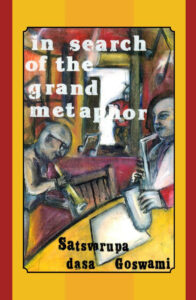
The metaphor is song. Explain it. Yes, particulars may not seem interesting or profound to readers who want structured books.
Wait a minute. Don’t pander to readers or concepts of Art. But Kṛṣṇa conscious criteria are important and must be followed. So, if your little splayed-out life-thoughts are all Kṛṣṇa conscious, then it’s no problem.
I am near the end of my days. But I do like the company of like-minded souls, especially those who are Kṛṣṇa conscious. Yes! I am prone to Kṛṣṇa consciousness. I have been a disciple of Bhaktivedanta Swami Prabhupāda for maybe almost sixty years. Sometimes I fail him. But I always bounce back and fall at his feet. It is a terrible thing that I sometimes do not have the highest love for him. It is a terrible thing. Actually, however, I never fall away from him. He always comes and catches me and brings me back to his loving arms.

This edition of Satsvarūpa dāsa Goswami’s 1996 timed book, Upstate: Room to Write, is published as part of a legacy project to restore Satsvarūpa Mahārāja’s writings to ‘in print’ status and make them globally available for current and future readers.
A factual record of the reform and change in ISKCON guru system of mid ’80s.

Readers will find, in the Appendix of this book, scans of a cover letter written by Satsvarūpa Mahārāja to the GN Press typist at the time, along with some of the original handwritten pages of June Bug. Together, these help to illustrate the process used by Mahārāja when writing his books during this period. These were timed books, in the sense that a distinct time period was allotted for the writing, during SDG’s travels as a visiting sannyāsī
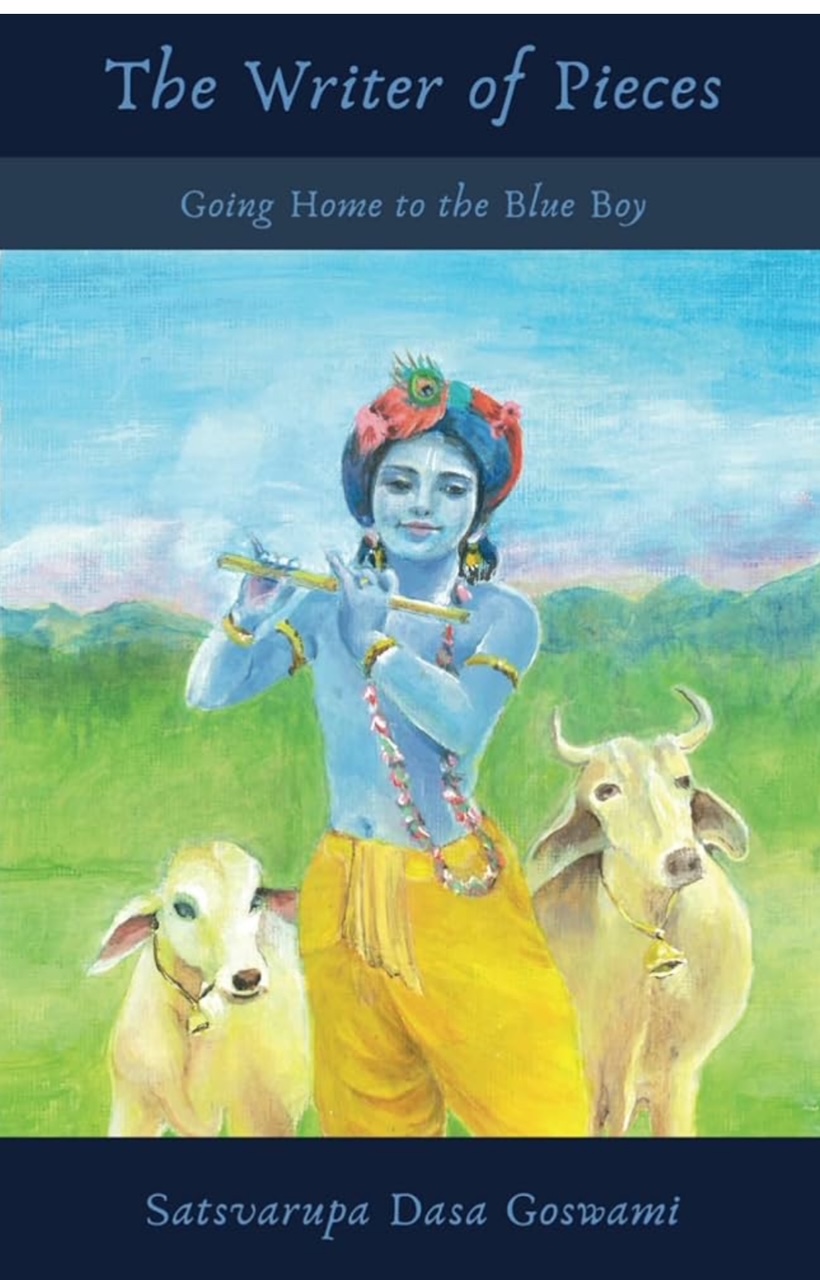
Don’t take my pieces away from me. I need them dearly. My pieces are my prayers to Kṛṣṇa. He wants me to have them, this is my way to love Him. Never take my pieces away.

Many planks and sticks, unable to stay together, are carried away by the force of a river’s waves. Similarly, although we are intimately related with friends and family members, we are unable to stay together because of our varied past deeds and the waves of time.
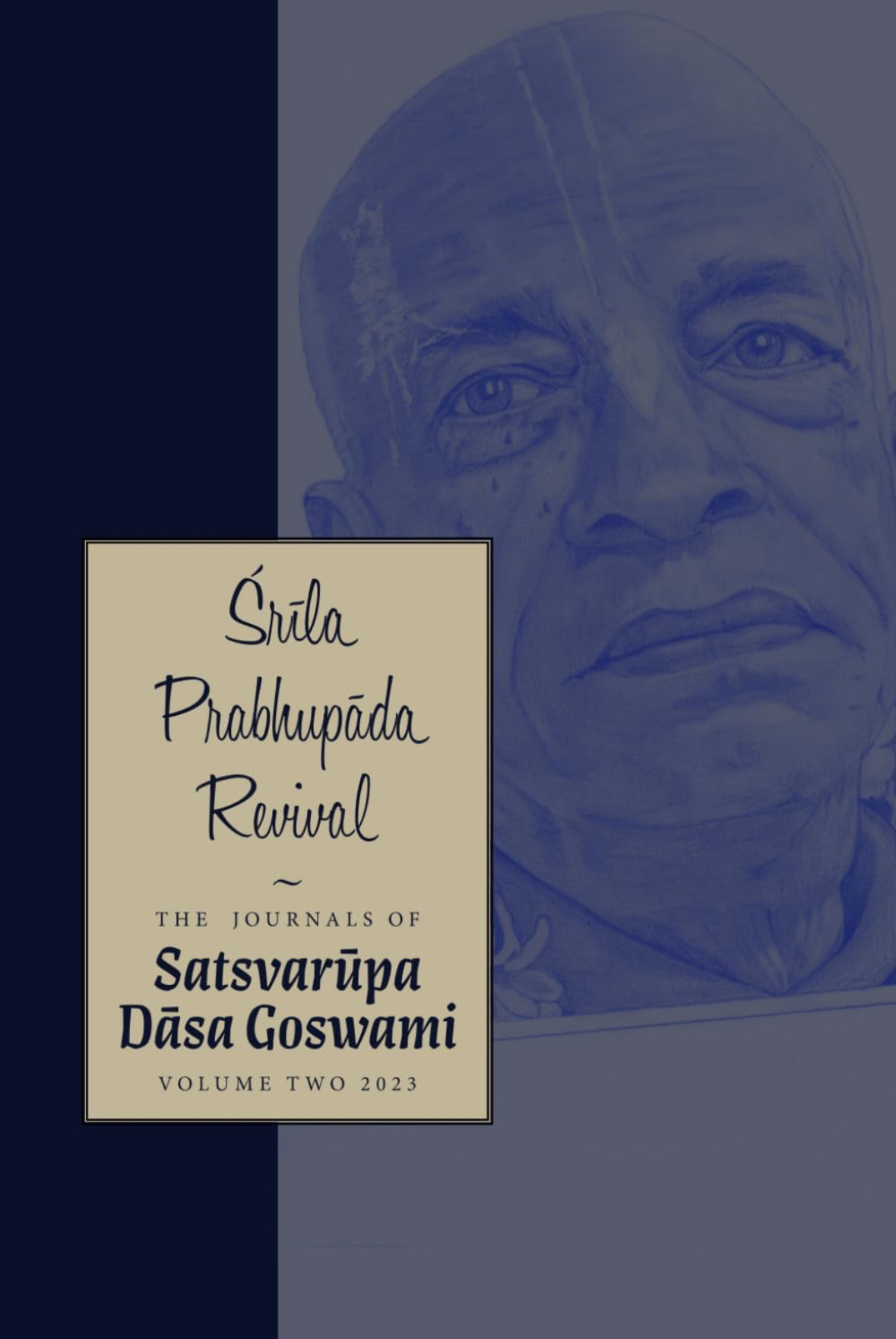
To Śrīla Prabhupāda, who encouraged his devotees (including me) To write articles and books about Kṛṣṇa Consciousness.
I wrote him personally and asked if it was alright for his disciples to write books, Since he, our spiritual master, was already doing that. He wrote back and said that it was certainly alright For us to produce books.
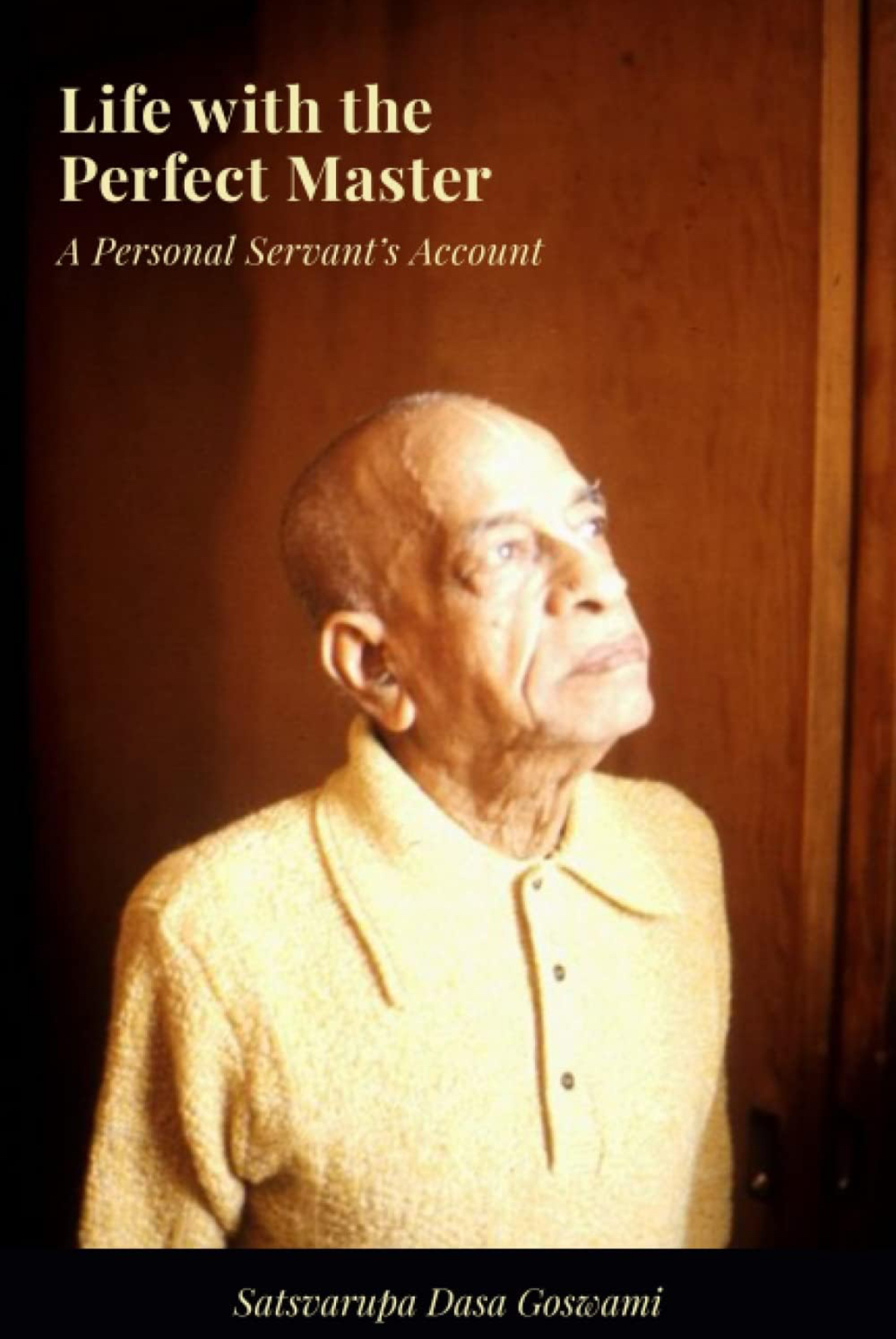
I have a personal story to tell. It is a about a time (January–July 1974) I spent as a personal servant and secretary of my spiritual master, His Divine Grace A.C. Bhaktivedanta Swami Prabhupäda, founder-äcärya of the International Society for Krishna Consciousness. Although I have written extensively about Çréla Prabhupäda, I’ve hesitated to give this account, for fear it would expose me as a poor disciple. But now I’m going ahead, confident that the truth will purify both my readers and myself.

First published by The Gītā-nāgarī Press/GN Press in serialized form in the magazine Among Friends between 1996 and 2001, Best Use of a Bad Bargain is collected here for the first time in this new edition. This volume also contains essays written by Satsvarūpa dāsa Goswami for the occasional periodical, Hope This Meets You in Good Health, between 1994 and 2002, published by the ISKCON Health and Welfare Ministry.

This book has two purposes: to arouse our transcendental feelings of separation from a great personality, Śrīla Prabhupāda, and to encourage all sincere seekers of the Absolute Truth to go forward like an army under the banner of His Divine Grace A.C. Bhaktivedanta Swami Prabhupāda and the Kṛṣṇa consciousness movement.
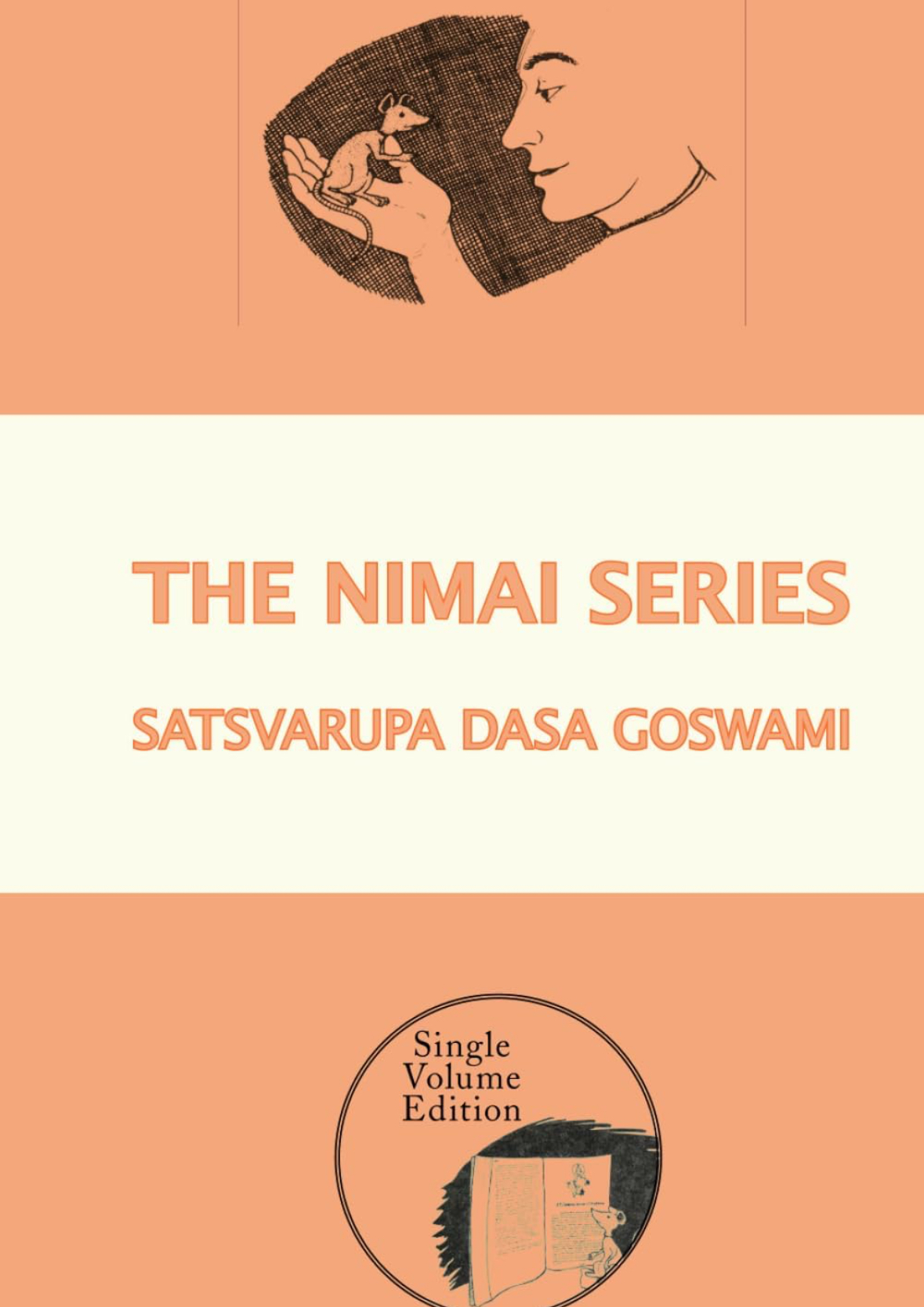
A single volume collection of the Nimai novels.
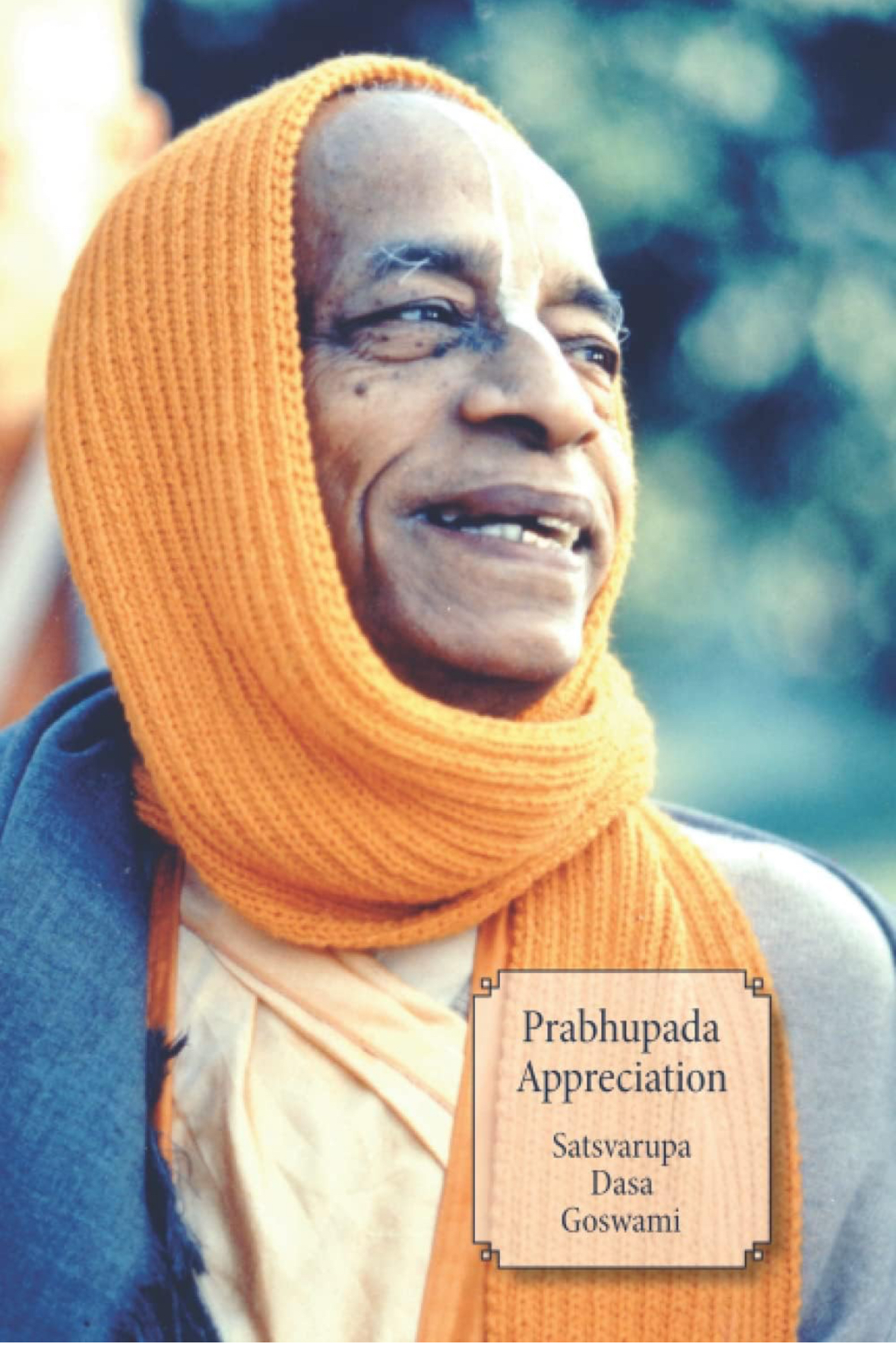
Śrīla Prabhupāda was in the disciplic succession from the Brahmā-Mādhva-Gauḍīya sampradāya, the Vaiṣṇavas who advocate pure devotion to God and who understand Kṛṣṇa as the Supreme Personality of Godhead. He always described himself as simply a messenger who carried the paramparā teachings of his spiritual master and Lord Kṛṣṇa.
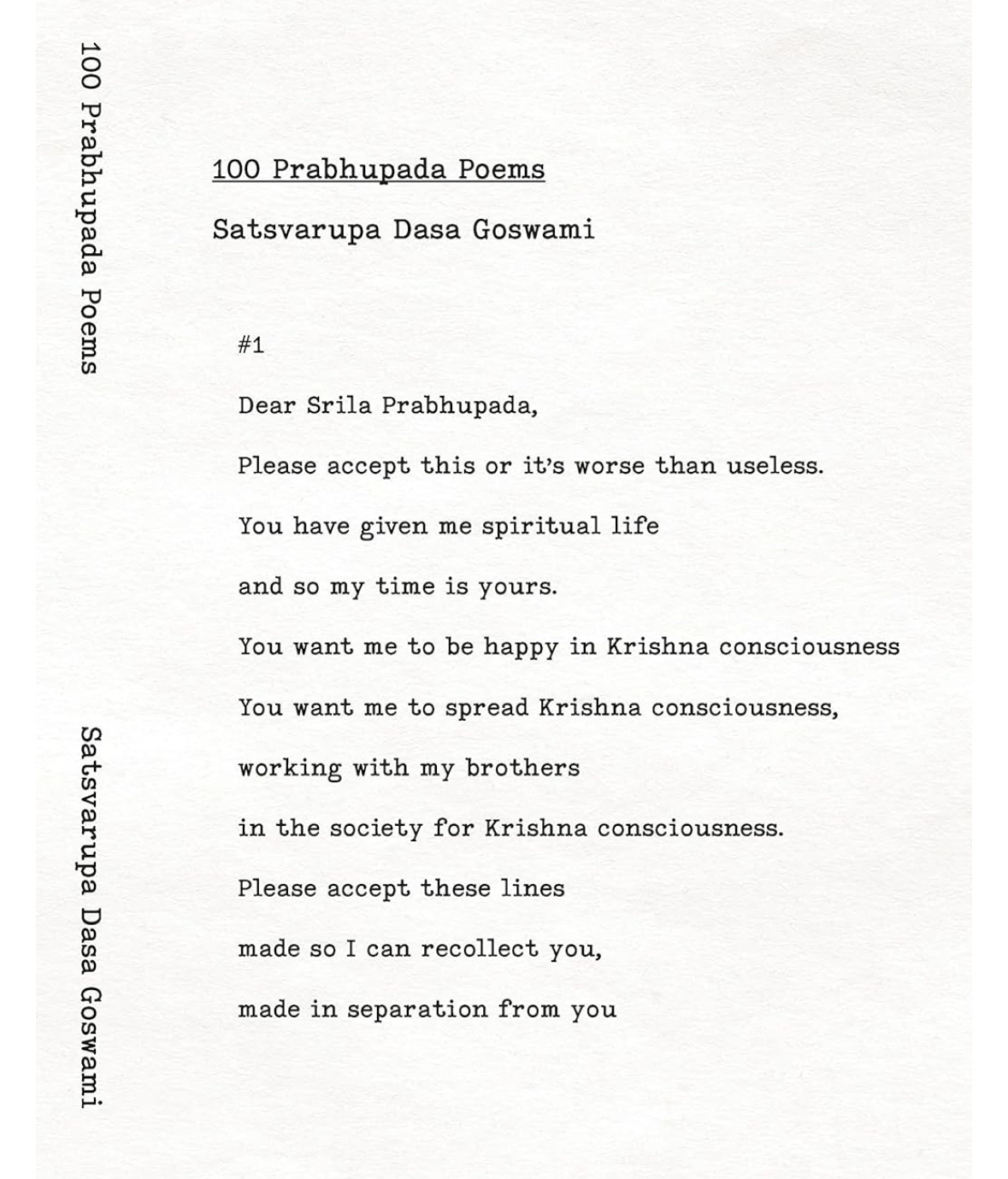
Dear Srila Prabhupada,
Please accept this or it’s worse than useless.
You have given me spiritual life
and so my time is yours.
You want me to be happy in Krishna consciousness
You want me to spread Krishna consciousness,
This collection of Satsvarūpa dāsa Goswami’s writings is comprised of essays that were originally published in Back to Godhead magazine between 1966 and 1978, and compiled in 1979 by Gita Nagari Press as the volume A Handbook for Kṛṣṇa Consciousness.

This second volume of Satsvarūpa dāsa Goswami’s Back to Godhead essays encompasses the last 11 years of his 20-year tenure as Editor-in-Chief of Back to Godhead magazine. The essays in this book consist mostly of SDG’s ‘Notes from the Editor’ column, which was typically featured towards the end of each issue starting in 1978 and running until Mahārāja retired from his duties as editor in 1989.

This collection of Satsvarupa dasa Goswami’s writings is comprised of essays that were originally published in Back to Godhead magazine between 1991 and 2002, picking up where Volume 2 leaves off. The volume is supplemented by essays about devotional service from issues of Satsvarupa dasa Goswami’s magazine, Among Friends, published in the 1990s.

“This is a different kind of book, written in my old age, observing Kṛṣṇa consciousness and assessing myself. I believe it fits under the category of ‘Literature in pursuance of the Vedic version.’ It is autobiography, from a Western-raised man, who has been transformed into a devotee of Kṛṣṇa by Śrīla Prabhupāda.”
 The Best I Could Do
I want to study this evolution of my art, my writing. I want to see what changed from the book In Search of the Grand Metaphor to the next book, The Last Days of the Year.
 a Hare Krishna Man
It’s world enlightenment day
And devotees are giving out books
By milk of kindness, read one page
And your life can become perfect.
 Calling Out to Srila Prabhupada: Poems and Prayers
O Prabhupāda, whose purports are wonderfully clear, having been gathered from what was taught by the previous ācāryas and made all new; O Prabhupāda, who is always sober to expose the material illusion and blissful in knowledge of Kṛṣṇa, may we carefully read your Bhaktivedanta purports.
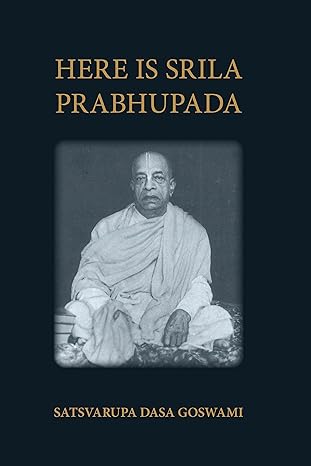
I use free-writing in my devotional service as part of my sādhana. It is a way for me to enter those realms of myself where only honesty matters; free-writing enables me to reach deeper levels of realization by my repeated attempt to “tell the truth quickly.” Free-writing takes me past polished prose. It takes me past literary effect. It takes me past the need to present something and allows me to just get down and say it. From the viewpoint of a writer, this dropping of all pretense is desirable.
 Geaglum Free Write
This edition of Satsvarūpa dāsa Goswami’s 1996 timed book, Geaglum Free Write Diary, is published as part of a legacy project to restore Satsvarūpa Mahārāja’s writings to ‘in print’ status and make them globally available for current and future readers.