
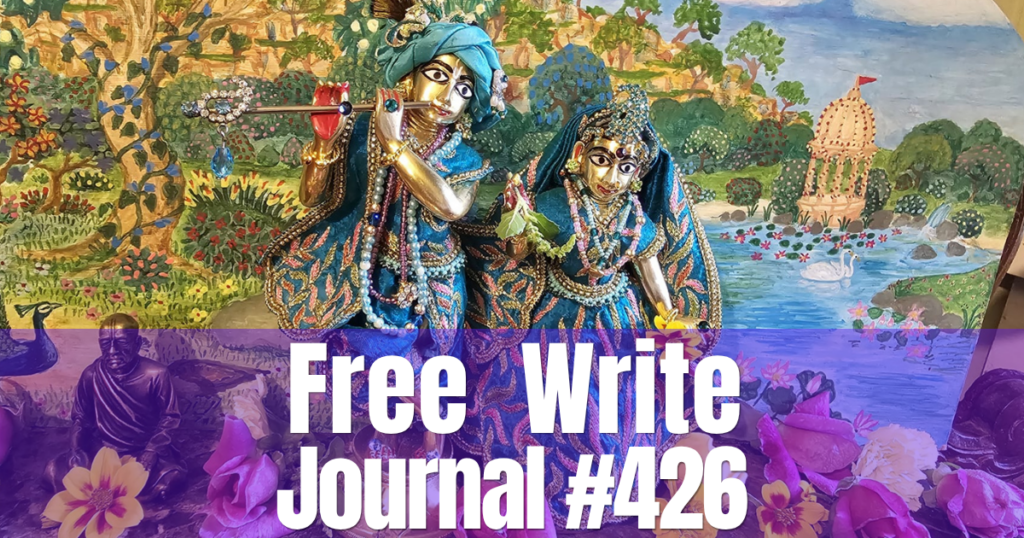
Disciples showed me their
plan to celebrate my birthday.
I appreciate.
But I don’t like terms
such as “world-wide celebration”
and reporting big book
distribution on that day
I prefer my followers to observe
a quiet day chanting,
and perhaps reading my
books about Srila Prabhupada.
Please no hype.
Disciples may privately cook a feast
and distribute the remnants.
Don’t disturb the harmonious
mood of the temples or
the gurus and their disciples.
Godbrothers, disciples, friends and well-wishers around the world are warmly invited to attend the 87th Vyasa-puja birthday celebration of His Holiness Satsvarupa Maharaja. For more information about this event, please visit:
https://satsvarupadasagoswami.com/sdgreading/celebrating-the-87th-vyasapuja/
We are still expanding our team of proofreaders as we aim to increase the rate of republication of Satsvarūpa Mahārāja’s books as well as new books that he writes. As many of you know, during the July 4th festival just held, a total of 18 new and re-edited and published books were present, and we hope to present a similar number at Satsvarupa Maharaja’s Vyasa-puja observance this December. Our call for proofreaders includes a need for fluent bilingual Spanish and English speakers to proofread Spanish translations (we currently have around 20 Spanish translations waiting to be proofread). Anyone interested in this particular service should contact Manohara dāsa at [email protected]
If you would like to help, please contact Kṛṣṇa-bhajana dāsa at [email protected] or [email protected] and we will find you a service that utilizes your talents.
It’s 5:30 PM, 23 rounds done. Six rounds I chanted on beads of devotees to be initiated. This in itself is a great responsibility in chanting—that I am somehow a giver of the holy name in sampradāya. So I have to be a good chanter, since I am a spiritual master, serving the holy name by awarding harināma dīkṣā.
Chanting in circumstances where I have to be quiet, I continue fingering the beads, counting, reciting in my mind. My tendency and ability to do this increases.
Also in sleep, dreaming—whenever a flicker of consciousness comes and I am in control, then I push through the mahāmantra and then slide again into dreams; but wherever a space of deliberate consciousness comes, I make my desperate prayer, a message—cry for survival—the Hare Kṛṣṇa mantra.
Today, by Kṛṣṇa’s grace, I found time to do more than 25 rounds. We flew to Guyana, then a 45-minute car ride to West Demerera. Guyana’s sights, sounds, and smells, and my own personal self—I could describe these things, but for this notebook I am concerned for japa. So, it was done.
Preaching to guests last night was as good as chanting on beads. This is a japa notebook, and although looking for the advantages for the cause of japa, I have to admit that such preaching is also chanting. Chant whenever you can, without cutting back on other things. There is time to be found if you are not lazy, if you are willing to chant and count the holy names, rather than sleep when not needed or daydream.
Today 16 rounds done by 6:00 AM—a fast, concentrated pace. But to do more will be a problem as I have meetings all day. Finished with about 23.
Today, a travel day, from Guyana to New York. 25 rounds done by 3:00 PM. The day wound up with over 7 hours air travel, 3½ by car, and I chanted 29 rounds. Jaya!
I need inspiration to keep going. Duty isn’t enough, because I don’t have to chant 25 rounds. Inspiration: while putting the little bead bag in the hand of my Prabhupāda deity, while putting his extended finger into it, I felt, “Yes, chanting is bliss, is the way to Kṛṣṇa.” Then I wanted to go and chant like him.
But even the peaceful atmosphere seems to hang on me, and doubts come, “Why are you here trying to chant extra rounds? What does it mean? Why do it? Why are you just chanting? Why do you do these extra rounds after 16? Why have you attached so much importance to chanting at a certain speed and to chanting extra rounds?” One answer is this is my response to the advice to “always, constantly chant Hare Kṛṣṇa.”
“Please chant Hare Kṛṣṇa.”
I am, I am.
I don’t feel like doing more. What do you think of that, oh japa reformer?
Well, somehow, I got 25 done before the day ended. It feels good—the accomplishment. The next morning also knowing I persisted and got it done continues as a good assurance.
Our duration of life is not very long, and there is no certainty when we shall be ordered to leave everything for the next stage. Thus, it is our duty to see that not a moment of our life is wasted in topics which are not related with Lord Kṛṣṇa. Any topic, however pleasant, is not worth hearing if it is devoid of its relation to Kṛṣṇa.
—Śrīmad-Bhāgavatam 1.16.6, purport
Such a quote makes you want to be chanting. Hare Kṛṣṇa mantra is certainly related to Kṛṣṇa, and the time is never lost, even if only mechanically the name is uttered.
The leader of the worldwide Hare Krsna movement, A.C. Bhaktivedanta Swami Prabhupada, writes in his Bhagavad-gita As It Is Chapter 12, verse 16 purport: “A devotee never takes the part of a particular party; therefore he is carefree.” But Srila Prabhupada also notes in his books and speeches that if a God-conscious person doesn’t speak out against corruption, unnecessary warmongering and massive, unfair deportation of immigrants, he gradually loses his spiritual potency, just as a cracked pot leaks water. The recent midterm elections in the U.S.A. proved the vast majority of citizens are fed up with the present government’s unpopular policies and demand a change. Prominent religious leaders like Popes Francis and Leo, as well as the Archbishop of Canterbury, have made strong criticisms against U.S. government policies. Many citizens believe the ongoing war between the U.S. and Iran was actually provoked by the U.S. As this war drags on with no end in sight, the U.S. is experiencing a crisis of oil shortage, as well as higher and higher prices of all commodities.
A high-level spat has occurred between Pope Leo and President Trump. The news media reports Trump as having described Leo as “weak on crime and terrible on foreign policy” (NPR, April 13, 2026), while portraying himself as a Jesus-like figure. The pope criticized leaders who spend billions on wars, and said the world was “being ravaged by a handful of tyrants.” (April 16, 2026 address at St. Joseph Cathedral, Bamenda, Cameroon) Pope Leo also voiced his concern about Trump’s threat that “a whole civilization will die tonight” (April 7, 2026 on Truth Social) if Iran did not agree to U.S. demands to end the war and open the Strait of Hormuz.
Sane citizens must band together and act for reform of their leaders in this crisis situation. God conscious persons could do no better, in addition to direct action for reform, than to pray for peace and correct their own misguided behavior.
pp. xi-xiii
My spiritual master came into this world to execute the mission of Caitanya Mahaprabhu. He executed it, and when it was required, he left this place and went to another place —to do the same business. It is called nitya-lila. Just like the sun rises at six o’clock, and when it is seven o’clock here, it is six o’clock in another place, and it is eight o’clock in another place. So we have no reason to lament over his disappearance. We should simply remember his activities. That is required. Vaisnavera kriya mudha vijne na bhujhaya. We cannot understand the activities of the Vaisnava. But a Vaisnava comes for some particular mission. (From a lecture by His Divine Grace A. C. Bhaktivedanta Swami Prabhupada, delivered February 8, 1977, in Mayapur, India, on the Appearance Day of his spiritual master, Srila Bhaktisiddhanta Sarasvati Thakura.)
This book has two purposes: to arouse our transcendental feelings of separation from a great personality, Srila Prabhu-pada, and to encourage all sincere seekers of the Absolute
Truth to go forward like an army under the banner of His Divine Grace A. C. Bhaktivedanta Swami Prabhupada and the Krsna consciousness movement.
The statements I have made herein are not my private opinions, but are, among Srila Prabhupada’s disciples, standard responses to His Divine Grace’s disappearance; and they are in accord with the direction of the scriptures regarding how a disciple should behave upon the departure of his spiritual master. The scriptural references that form the basis for this collection of lectures are the same verses discussed by thousands of Prabhupada’s disciples at the time of his disappearance in—November, 1977. At that time, as the painful news spread around the world, those who knew and loved Srila Prabhupada were gripped by a fearful, unrestricted grief. “On that day, O my master, I made a cry of grief; I was not able to tolerate the absence of you, my guru.” At that time, we saw everything around us in the overwhelming atmosphere of separation from our spiritual master. As one Vaisnava poet says,
My spiritual master has just left this world. Now when I visit Radha-kunda, it appears to me like the gaping jaws of some monster. And when I see Govardhana Hill, it appears to be rearing before me like a python.
Even I, who consider myself a poor follower, could speak of no other topic in my morning lectures for the next month. This was the only thing that seemed to have any importance: Prabhupada is gone. What does it mean? What will we do now?
Then the days of grief turned into the second week of December and the Christmas holidays, the time when ISKCON devotees all over the world dedicate themselves to distributing Srila Prabhupada’s books in “marathon” efforts. Would we not have a marathon immediately after Srila Prabhupada’s disappearance? Certainly we would. Our leading book distributors seized the opportunity to urge us more than ever: “Now, let us prove that in Srila Prabhupada’s physical absence we can follow his transcendental instructions.” And that year saw the biggest wave ever in the history of our book distribution, as hundreds of thousands of pieces of literature, Prabhupada’s books, were distributed during the holidays. It was certain proof that although we were greatly distressed by Prabhupada’s disappearance, through his teachings we were revived, in his teachings he lived, and by following them we were with him. The waves of the Krsna consciousness movement have continued to increase and should go on increasing, because following Srila Prabhupada’s order in separation is the substance of our relationship with him.
Nevertheless, it is a fact that the world is now bereft of its greatest spiritual leader, and this is no small loss. The Vedic literature describes this present Age of Kali (quarrel and hypocrisy) as the most disturbed and degraded time, and anyone can see that the world situation is now critical. Potentially, Srila Prabhupada’s disappearance is a world catastrophe, because without his guidance there will be no hope of peace and well-being — there can only be destruction. Although we have Srila Prabhupada’s instructions—and if we follow them he is still there to guide us—if we deviate, he is no longer present to redirect us. It is now entirely the legacy of his disciples to strictly carry out his orders and to protect and enlarge his mission and turn the tide of the times.
Srila Prabhupada’s instructions to me on June 21, 1974, in Melbourne, Australia, convey his vision for the future of Krsna consciousness and the world. I said to Srila Prabhupada, “Devo¬tees sometimes think we are planning for the long-term future when we distribute our books to schools and libraries; but if everything is going to end in nuclear war. . .” ”
“Assure them,” said Srila Prabhupada, “that there will be no nuclear war if they take to Krsna consciousness. And even if there is nuclear war, that is not going to end everything. For-merly there was the brahmastra [a weapon of Vedic times similar to today’s nuclear bomb]. Everything is under the control of the Supreme Lord. We are not afraid of the nuclear bomb, because the soul cannot be killed by the atom bomb. Do you know that? Have you read it? So what do they want to do in fear of the nuclear bomb to sit down and do nothing and cry?”
I said, “Well, we are asking people to invest in sixty volumes of Srimad-Bhagavatam, but they might say, ‘I don’t want to make such a long-term investment in the future, because there is nuclear war ahead.”
“Then why are they going to the University? Why don’t they stop eating? Do they mean one should not go for an education and should not have any hope and should stop everything?”
“Yes,” I said, “some think like that—that it is doom.”
Srila Prabhupada expressed concern for people’s having been put into such a consciousness. Then he repeated that I should assure people that there will not be such a war if they become Krsna conscious. “In fact, because of our Krsna consciousness movement, there will be no nuclear war. But if there is, the soul cannot be killed, so we are not afraid the bomb will kill the soul.”
So even though the world situation is bad and worsening because of the influence of the Age of Kali, we should know that Srila Prabhupada had full faith in the process of Krsna consciousness. If we follow him, certainly we will receive Krsna’s blessings, and the collision course of the world will be changed.
This book is intended for all thoughtful persons. It is not only for Srila Prabhupada’s disciples and followers, but for anyone who is willing to hear the science of spiritual life. According to the Srimad-Bhagavatam, unless a human being is eager to inquire into the Absolute Truth and take up devotional service under the Supreme Personality of Godhead, then he is no better than an animal. The reader of these lectures should approach His Divine Grace grila Prabhupada directly by reading his translations and commentaries of the Vedic literature: Bhagavad-gita As It Is, Srimad-Bhagavatam, Caitanya¬caritamrta, Nectar of Devotion, and many other books (all published by the Bhaktivedanta Book Trust) and should understand further the eternal, blissful realm of Krsna consciousness.
All glories to Srila Prabhupada!
SDG
July 6, 1979
Ekadasi, beginning of Caturmasya Vrata
Gita-nagari Farm Project
Port Royal, Pennsylvania
pp. 420-32
With Prabhupada
during Jhulan-yatra,
when villagers danced in the
courtyard of Krishna-Balaram temple,
I was also there.
The most shocking thing was his thinness.
Several times he said my name.
On a night watch
I got to rub his back
sitting on his bed
under mosquito netting,
while dawn revealed
the temple domes.
All my hopes were fulfilled
just to serve him.
I had heard the leaders say
“Prabhupada is staying in the world
to draw out our love.”
But I was unable
to be with him
except to do my duties
in the Los Angeles office.
But for a week in August
there were a few moments
when I entered the caring,
loving mood.
Once he was silent,
and we were chanting before him.
My miserable, miserly heart
finally burst forth,
and I knew
that he was my beloved preceptor
and I glimpsed his kindness,
his action to save me.
I saw myself as I used to be,
as hopeless until he had come,
and I recognized him now
as the same saving person.
In dialogue with his secretary
over a number of days,
Prabhupada decided
that he should go West again
for psychological enthusiasm.
Because staying in Vrndavana
was “slow death.”
“Prabhupada, if you go West,”
urged Tamal Krishna.
“just seeing the devotees
will give you new life.”
But there was an astrological warning
that he should not travel
until September had passed,
and also his U.S. green card had expired.
But when the papers came through
he clapped his hands,
applauding the chance.
“No more discussion.
I will go at once.”
The night before going,
his health relapsed
and the trip became uncertain.
But he was peaceful on his roof,
and that was another farewell for me
as he recalled my name.
“You brought mangoes and fruit,”
reminiscing of the days at 26 Second Avenue
while frankincense poured
from a clay pot in Vrndavana, and we each massaged his legs.
He didn’t seem well enough to travel,
but it was happening—
in the middle of the night.
He was carried to the car,
laid down on a mattress in the back,
and driven slowly to New Delhi.
In the airport waiting room,
sitting on a wheelchair,
he silently acknowledged
his faithful disciples.
“No need to speak,” I thought,
“you have given me more than enough,
yet I always demand like a child.”
His nod was sufficient
in the last minutes
before his parting for London.
Like Rantideva in thinness,
but unmistakably Prabhupada,
he was carried to the London plane
with later plans for New York
and the Pennsylvania farm.
Better to die in battle was
his theme, and the hope was
that he wouldn’t. leave.
He also gave us a prayer,
“My dear Lord Krsna, if You desire,
please cure Srila Prabhupada.”
I said it as often as the maha-mantra
usually not out loud,
but uttered deep within,
imploring and yet
(as expertly worded by him),
it was no demand on Krsna, but
just letting Him know
we dearly loved Prabhupada
and needed him to stay.
If Krsna desires . ..
and if He does not. . ..
In any case we prayed,
as he had allowed us.
pp. 250-53
June 1968
June 13, 1968
My dear Satsvarupa,
Please accept my blessings. I thank you for your letter dated June 8, 1968, as well as for the booklet you have sent describing my activities in Boston. Your endeavor to utilize energy twenty-four hours for Krsna Consciousness is a great qualification. I am very glad to know that you are risking $350.00 a month for taking a nicer accommodation for our temple. I quite appreciate this attempt. And Krsna will surely help you. I have sent one letter to Miss Rose, and try to keep friendship with her. She will gradually become more and more interested in our temple affairs. Everyone had dormant love for Krsna, and we have to give one a possible chance to awaken it. Miss Rose was taking gradual increased interest in our temple, and I think if you flatter her a little bit more, she will come to the Krsna Consciousness platform and may be a great help to the center.
I am so pleased to learn that the new temple location will be near the business district. In business circles there is a popular English saying that you can earn more by sitting in one place than by traveling to many places provided you can sit down in a place with due consideration. Similarly, if actually you have selected a nice place, that place itself will act as advertisement for popularizing our Krsna Consciousness.
For the time being Devananda must stay with you; he should not come here for the present. When we shall form a Sankirtan party for the European tour I shall call him. Please show him this part of my letter, and I hope he will understand. He is a very good, nice, sober boy, and he will be a good help to your activities.
In the meantime, I have received one letter from James. I am enclosing his letter. I do not know what he wants to know from me. This boy is a new boy, and he might have so many ideas within his brain, and if you can train him for your purposes, he will be a great service. We may always expect that we get always untamed boys and girls, and so we have to train them up. That depends on our capacity. So if you can tackle this boy, he may be also a good assistant. Our whole program is to train the untrained. No-body is in Krsna Consciousness, and we are trying our best to bring them to that platform.
Hoping you are all well.
Your ever well-wisher,
A.C. Bhaktivedanta Swami
******
This was the first letter Prabhupāda wrote me from Montreal after visiting us in Boston for the month of May, Prabhupāda refers to the booklet I sent him. During his stay I kept a journal of his speeches and activities, which ran to nearly fifty single-spaced, typewritten pages. I had entitled it Swami in Boston and sent it to him. (I have since drawn from that booklet to write Prabhupāda-līlā.) Prabhupāda’s thanking me for this booklet was an indirect approval of what I later expanded into my main service—writing about Prabhupāda.
I always had the urge to observe Prabhupāda’s activities and share them in writing with devotees. I also used to photocopy his letters and send them to other centers. This was curtailed, however, when Prabhupāda indicated that some of his letters were confidential; their instructions were not always meant to be applied generally.
In philosophic discussions about the emphasis of different services and the policies of ISKCON, we should be careful of proving our case by quoting Prabhupāda’s letters. I do not think they have the same weight in philosophical matters as Prabhupāda’s purports. Although they are also absolute, they were addressed to certain persons and were written at certain times. Prabhupāda’s purports, however, are addressed to all humanity and are applicable for at least the next 10,000 years.
pp. 170-73
I got a job with the welfare department of New York City, and moved from my parents’ house to my own apartment on the north shore of Staten Island. One day in that St. George apartment, with plain off-white walls, I sat on the bed and tried to do Nothing. I just sat there and thought, “Is this the Tao?” But my whole life at that time was meaningless. I felt it then, especially when a young boy told me, “You’ve got nothing!” I recall waking one morning and visualizing the insides of the refrigerator where there were only a few slices of cold meat. It seemed like a symbol of my sterility—cold meat, no friends, and little hope. So, when I read Lao Tzu and some of Chuang Tzu, I somehow extracted out of it—wrongly or rightly—a hunch that I should just sit down on my bed and do nothing. But it soon became dry and purposeless. I gave it up after an hour or so, but thought, “Maybe you have to practice it a long time, or else you don’t have the right idea at all.”
The ancient Taoists were mystics. Was I one? What did it mean to me? As I try to recall, I think of what Western philosophers signify when they say “speculation.” They use the word favorably, as metaphysical insight. In my paperback approach to “The Way,” I was speculating. I ruminated while riding on the Staten Island ferry. The call from the East to Something Beyond appealed to me. I liked the peace of “The Way” and the gentle word play. My quick loyalties were aroused, and so it became “a thing” for me. In Taoism I found “a new bag.”
It blunts sharpness,
Resolves tangles;
It tempers light,
Subdues turmoil.
A deep pool it is,
Never to run dry!
Whose offspring it may be
I do not know:
It is like a preface to God.
I could not exactly apply any of this in my welfare office. Yet it was not something that you had to act on. My reading of “The Way” gave me a new confidence that there was something other than what was happening externally. The poems of Lao Tzu seemed to say it was okay if you do not know what it is, as long as you know that it is.
I do not know its name;
A name for it is “Way.”
Pressed for a designation,
I call it Great.
Great means outgoing,
Outgoing, far-reaching,
Far-reaching, return.
The Way taught the philosophy of “let it be.” But working in the city, I could not do much of that: “By letting go, it all gets done; the world is won by those who let it go!” (48) Neither did I have friends or sages to share it with deeply. But that was all right—it was something to hold inside. At least part of me aspired to be quiet, no matter what was going on; The Way was unfolding.
Touch ultimate emptiness,
Hold steady and still.
… This, I say, is the stillness,
A retreat to one’s roots;
Or better yet, return
To the will of God …
What shall I say now about The Way? I do not want to reject it all as “nonsense Chinese voidism.” Personally, it gave me gentle hope that there was a Center to all existence. It was literally a preface to God, a getting ready for the Wiseman who would soon appear in my life. I know Godbrothers who also think fondly of their pre- Krsna conscious reading of Lao Tzu. As long as we accepted the teachings of Bhagavad-gita when they came to us from Srila Prabhupada, we were not harmed but benefited by genuine mystical teachings. Even the Vedas are arranged in progression:
When the activities for sense gratification, namely the karma-kanda chapter, are finished, then the chance for spiritual realization is offered in the form of the Upanisads, which are part of different Vedas, as the Bhagavad-gita is part of the fifth Veda, namely the Mahabharata. The Upanisads mark the beginning of transcendental life…. This transcendental position is achieved in full Krsna consciousness when one is fully dependent on the good will of Krsna.
—Bhagavad-gita 2.45, purport
Lao Tzu did not negate God consciousness for me. He was only reticent. The same is Yue of Confucius: “Tze Kung said, Our Master’s views on culture and refinement are for all to hear, but what he has to say about the nature of man and the ways of God, no one ever hears” (Analects, V:XII).
In the Mentor edition of Tao Te Ching which I read, there is also this statement about Confucius:
The great Chinese felt that he had been divinely appointed to teach moral excellence and he would not say more than he knew. ‘God begot the virtue in me. It was not my own.
In a life punctuated with LSD hallucinations and heartbreak and dryness, the Old Ones’ poems were moral and uplifting. And this was at a time when I thought I was too hip to take moral advice from the usual sources. Lao Tzu was one of those first instructors who introduce you to the path. He did not hurt me with his “preface to God,” and even now I see it with a “swanning” eye. By Prabhupada’s grace, I can draw the milk out of the mixture of water and milk. Yes, The Way cannot be named. He is adhoksaja. He deliberately resists your attempts to know Him.
Deluded by the three modes (goodness, passion, and ignorance) the whole world does not know Me who am above the modes and inexhaustible.
—Bhagavad-gita 7.13
I am never manifest to the foolish and unintelligent. For them I am covered by My internal potency, and therefore they do not know that I am unborn and infallible.
—Bhagavad-gita 7.25
With our blunt senses we cannot see Krsna; we cannot chant the name of God. But, by the mercy of Lord Caitanya, the most magnanimous of all wise men, we can begin to purify our minds and senses and chant the holy names. Then we may behold the inconceivable form of the Supreme Lord. So The Way which was revealed by mystics throughout the centuries in many lands is one way, seen variously according to the viewpoints of the different teachers, and distinguished by factors of time, persons, and place. The highest feature of The Way is bhakti-yoga, love of Krsna.
This, I say, is the stillness:
A retreat to one’s roots;
Or better yet, return
To the will of God.
pp. 178-182
Kṛṣṇa is trying to place Arjuna in pure consciousness. We have discussed this for so many days, that we are not this dull body. If we miss this understanding then we may have to take a lower body.
You’ll be glad to hear that once begun (this yoga process), you are guaranteed to have a human body in the next life. Any yoga will continue. Prabhupāda quotes a śloka spoken by Nārada to Vyāsadeva (the śloka says that if you take to Kṛṣṇa consciousness you will not be the loser). Yoga connects one to the spiritual level. Understand Kṛṣṇa philosophy. This exists all over the world. Don’t take Kṛṣṇa philosophy as sectarian.
Discrimination is the best part of valor. Prabhupāda says to his audience, “If you have read the whole Bhagavad-gītā, and I hope some of you have read the whole Bhagavad-gītā …”
Anything done in consideration of the body is material. Anything done for the Supreme is spiritual. It may be the same activity but if it is done from the spiritual platform (it is transcendental). This is buddhi-yoga, devotional service (do everything for Kṛṣṇa).
This requires a guide. One has to take a spiritual master. This is dvija, second birth. One must begin it. It is imperative. One has to seek out a Kṛṣṇa conscious person. We have already explained … If I give up all my duties and take to Kṛṣṇa consciousness, even if I don’t complete it, I am not a loser. If one takes to the transcendental plane and he can’t complete, he falls down, then in his next life he is born into a rich family, aristocracy or highly advanced family. Śucīnāṁ … brāhmaṇa or aristocracy.
That’s for one who hasn’t completed the course, but for the successful, he goes back to Godhead.
In your country you have very rich families like Ford and Rockefeller. I do not know their activities, but in India there are many rich family (and they are still pious). Prabhupāda describes how he wrote to a very rich family in India, the Singhanias. He proposed to them that he wants to build a nice Rādhā-Kṛṣṇa temple in Manhattan and he asked for their assistance. The family man of the Singhanias wrote back, “Yes, I can help you if I get currency exchange.” Prabhupāda says the Singhanias have a temple (Dvārakādhīśa). They have property and they pay rent to the Deity. (If we are able to get money) “we shall let you know how to spend” (for Kṛṣṇa). In the Singhania family, if one of the brothers is absent from paying respects to the Deity in the morning, then he is fined. He has to pay 10 dollars or 10 rupees to the pūjārī. Life should be molded that you are always thinking of Kṛṣṇa. He gives the example of a married woman who falls in love with another man. She goes about her household duties very attentively but she is always thinking, “When will I be able to meet with my lover again.” When there is ecstasy (one thinks like that) the impression always remains. We are holding this class. It is culture. The impression will remain. Our aim should be not to fail. Anyone who knows about the birth and activities of Kṛṣṇa he goes back to Godhead and doesn’t return. (Just by coming to these classes and giving your aural reception) you’ll be free from material attachment. Prabhupāda mentions again about the two kinds of people, the miser (kṛpaṇa) and the liberal person (brāhmaṇa).
He mentions Cāṇakya Paṇḍita and says in New Delhi there is a section called Cāṇakya Purī where all the embassies are located. He said he had to study the Cāṇakya-ślokas in his M.A. class. He then recites the śloka and gives a rough translation in English: “This body is destined to be destroyed. But a man can use his human form of life for the highest cause. He is most intelligent.”
Two men are working, one is expert and the other spends all day and can’t repair the machine. Prabhupāda gives his own example and says sometimes the tape recorder breaks down and he cannot fix it. He calls in Karl and he quickly fixes it. In material life after you work eight hours you are tired of it. But in spiritual life you have to work twenty-four hours. You won’t feel fatigue. He gives his own example and says he is always doing something reading or writing, something or writing. He feels disgusted when he has to go to sleep. He says to the audience that they can ask “Mr. Paul” if this is not accurate (about Prabhupāda’s activities). He mentions the Six Gosvāmīs of Vṛndāvana who slept only one and a half hours out of twenty-four. One becomes fearless and blissful. These are the symptoms.
If you learn the trick, a spiritual person doesn’t have to take the results of good or bad. He is transcendental. “Try to understand.” Kṛṣṇa induced Arjuna beyond good or bad. If you do good work, you can become educated, have beauty, be rich etc. But you cannot avoid janma-mṛtyu-jarā-vyādhi, birth death disease and old age. You work from the transcendental plane for the supreme good. Arjuna, after learning Bhagavad-gītā, (took up Kṛṣṇa’s order and fought). (For spiritual life) you need a guide. Kṛṣṇa was the guide to Arjuna. (Now Kṛṣṇa is not present) but you need a representative of Kṛṣṇa. The representative is just like a lawyer who knows the law books. One who understands Bhagavad-gītā as it is and is fully aware (of the Kṛṣṇa science) can become a spiritual master.
It appears that Prabhupāda has been talking to the same audience for some days. He refers to the fact that he has already spoken about the subject matter. He repeats things that he has said earlier. But he advances in the second chapter. During the lecture there was no noise. Afterwards he asked for questions but there were none. It was a great lecture. Thanks to Prabhupāda foresight in recording it with his reel-to-reel tape recorder, we can hear it perpetually, even 50 years later and in the future.
pp. 146-48
Dear friends,
I’ve been out walking in the rain. It’s a beautiful experience having raindrops bounce off your raincoat while you’re all alone under a gray, dawning sky. I stopped to bask in the freshness of everything, to bask in the solitude. I wondered who I would write to today. Shall I write to the tree, the one with the heavy broken branch? Should I write to Prabhupada? But the feelings I have for Prabhupada right now seem too deep to put into words. So I chose to write to my friends.
But what do I want to say? I want to say this: it was raining and now it has stopped, and I have been out walking in it. Surely a friend can appreciate that this is vital communication. We go to our friends to share good things and for help in bad times. My friends are Krsna conscious devotees; we share Krsna consciousness. I hope that we can achieve our param-gati, our final goal of direct service to Krsna in the spiritual world. I hope to see Krsna even now, looking with my eyes, my God-given eyes, at the hills and the sky. This letter is my way of saying hello to a friend, wherever he or she may be. Waving to each other over distances, confirming the like-mindedness of Krsna consciousness among friends.
As I walked home, I saw the stretch of road leading to the cottage and wanted to cover it as best I could. It’s not only a physical distance, but
also a stretch of time. The sky was beginning to lighten and I wanted to take advantage of the moment. Communication isn’t the only way to use time, but it’s a way that I know. I strive to communicate, but behind the communication is the subtle desire to be more in love and more awake and more alive to the beauty and protection of Krsna. We are usually half-dead, just coasting. Communication, even though we may talk about so many things, tends to sound like idle pleasantries because what we really want to say is I wish I loved Krsna. Is it possible that by talking with you I can increase my attachment to Krsna? And is it possible that you too can be drawn closer to Krsna? I want to use my time in the best way possible, and the best way is to talk about Krsna. As a person who reads letters, I sometimes become impatient if somebody talks about too many ordinary, external things. Now those things may be sweet and personal and written in a mood of sharing, but I find it hard to spare the time. Why then, do I try to foist this external and sometimes lengthy correspondence on you? My other correspondents expect me to respond point for point and as soon as possible. But I don’t mind if you don’t read these letters for months or even years, and you never need to answer them. The letters are there for you to pick up whenever you want. As interested friends, you have told me that you want to hear whatever is going on with me, just like a mother does, or a close relative.
How are you, my friends? I hope you’re practicing Krsna consciousness in your own sphere, not feeling too lonely or too attracted by maya. You have your day; I have my day. We may seem far away from each other, but we can be connected by service. We can chant and depend on Krsna and get enlightenment from the same source, so there’s no need to be lonely in the sense of feeling bereft.
What is it we want most? What will nourish us? The sastras say it’s to associate with Krsna in a loving way, to try to please His senses. That may seem like distant theology instead of a solution to immediate concerns, but we shouldn’t take it that way. The immediate emotional needs we have may be misguided to some degree, if we’re expecting too much from a marriage or even a friendship. But these relationships, including our relationship and correspondence, can be fulfilling when we help each other and point each other to the goal. We have some purpose together which is enduring. Therefore, I’m saying that relationships are significant, but they have to have Krsna at the center, because then we can actually be close.
I remember Prabhupada picking up the phone in his apartment in 1966 and talking to a yogi named Yogi Dankara. Prabhupada said, “Yes, I love you too, but not this skin love.” That phrase stuck in my mind. The love we want to offer to each other is not this skin love.
Skin love is based on a false premise. It’s outrageous, in fact, because in order to experience sex pleasure with a person, I have to take the part of Krsna Himself and try to be the enjoyer, the connoisseur of rasa, the debauchee, the stealer of other men’s wives. These are all Krsna’s prerogatives, not mine. This behavior is bad enough in a mildha, but it’s much worse in a devotee. If after regularly hearing that Krsna is the adi-purusa a devotee still acts pervertedly, then he’s not a devotee. Bhaktivinoda Thakura says such a devotee may wear neckbeads, but he’s actually a kalichela, a devotee-servant of Kali-yuga.
I reach out to you, dear friends, not in an abstract way and not in a role as teacher, but in love, based on our nourishing each other in love for Krsna.
Let me close by saying I’m glad you are there and that we can share a spiritual affection. This satisfies some undeniable need we have. Then, being a bit more atmarama, when we go to the scriptures and hear their high call for renunciation and devotion to the Supreme, we’ll be better able to follow. We won’t think that we first have to get some love in some other way. And whatever we do learn and feel from the scriptures, we can share.
pp. 44-51
I surrender in the morning, rising.
Krsna is king; I raise my hands to Him.
What is the sense of pretending to rule or enjoy?
Unsurrendered we wander lost.
I surrender to my senses in my folly;
Whatever my mind wants, or the tongue,
words, taste, belly, sex organs, I go with them
and wind up with a shrunken body and fearful mind.
Who is the exception?
I surrender my wife and family and goods, said Bhaktivinoda Thakura,
To Krsna, the Lord of my life.
I will maintain my life and home
as Ktsna’s servant and use everything to please Him.
This is best surrender.
Krsna promises the surrendered soul relief from sin’s reaction;
giving up the unwanted and feverish,
a relief, an act of love,
giving up a heavy burden, a mad pride.
Free will exerted, he gives everything to God
and owes nothing to anyone else.
It is difficult because we fear
we will be bereft if we give to Him.
“I’d rather die than surrender
my God-given right to do as I please.”
But the rub is I am driven mad.
He was the most surrendered,
he gave up Vrndavana residence and peaceful chanting
and entered hell on the order of his guru.
He acted in oneness with the Lord
and everything he did was blessed.
Now the world has Krsna consciousness.
“Take sex pleasure away and I’m emasculated, take my
money and I’m miserable,
take my food and I’m dead.”
(I don’t know He provides for this soul,
I don’t trust.)
But Krsna promises, “My devotee is never vanquished,
and I take him to the other side of birth and death.”
If I insist, He allows me unsurrender, and the bitter reaction, the proud possession of myself.
We all surrender, anyway, at death.
Last breath, then next life. Shall it be given in love
or only when beaten down by blows of death?
Final surrender is eternal life of bliss and knowledge;
he enters Krsna’s abode of unlimited freedom.
He surrenders the false
and gains eternal
loving service to the Lord.
These are symptoms, the ways of allowing Krsna to take charge of your soul.
Blue smoke in the distance,
the chickens far away
cry unaware.
On this mountaintop
I read
in Prabhupada’s book,
how Krsna reveals Himself
to the sincere chanter
of His Holy Name.
The sunshine falls peacefully,
playful lizards don’t disturb,
the warm winds whistle through the pines.
I look up
and catch myself again,
a shallow reader of Bhagavatam.
One white cloud
is like the nuclear bomb;
bluegray clouds above,
like Krsna’s own body
and the sunshine flashes
off and on.
Srila Prabhupada,
please guide us
away from our poor ways.
Give us shelter.
Help us in trouble;
guide us through duty.
Dear Lord, today
please grant me an hour or two
to read your pure devotee’s books.
pp. 10-13
SB 1.3.29
janma guhyaṁ bhagavato
ya etat prayato naraḥ
sāyaṁ prātar gṛṇan bhaktyā
duḥkha-grāmād vimucyate
Whoever carefully recites the mysterious appearances
of the Lord, with devotion in the morning and in the
evening, gets relief from all miseries of life.
COMMENT: The appearance of the avataras is described as mysterious. One has to study it carefully and deeply, with sincerity and devotion. Consider each of these words because Srila Prabhupada doesn’t choose them cheaply. We should hear Bhagavatam with depth, devotion, and sincerity if we want to get the result. “Hearing the Bhagavatam means more than simply attending a class. Of course, even someone who attends a class gets benefit.” Prabhupada said that even the cockroaches in the walls at 26 Second Avenue benefited by hearing the kirtana. We have to enter into the mysteries and hear with our hearts.
Srila Prabhupada makes it sound enticing. What is this devotion that can come from reciting this chapter of the Bhagavatam? What is that depth of mystery which is to be understood? Does one who worships the Lord’s incarnations come to understand
the hidden reasons for Their particular appearance? Does the list reveal a hidden meaning for each unique incarnation—the inner meaning of Jamadagni’s power to kill disobedient kings, Narada and Buddha’s ability to create faith in the masses, Rama and Dhanvantari’s fame? By hearing carefully, will we be able to see the beauty of Balarama, Mohini, and Vamana? Will the transcendental knowledge given by Dattatreya, Matsya, Kurma and Kapila suddenly enlighten our hearts? Will we be able to see into and actually practice the renunciation exhibited by Nara-Narayana? And what about that most extraordinary feature of all, that manifested by the primeval Lord Sri Krsna: “His internal energetic manifestation of His pastimes with the cowherd girls”?
Although Prabhupada went over the list of principal incarnations carefully, he didn’t emphasize that we have to worship all of the incarnations. He emphasized only the source of the incarnations. Therefore, the implication in text 29 is that we are better off spending our time hearing with devotion about the birth and activities of the Supreme Personality of Godhead, Sri Krsna. This is another mystery, another depth to the confidential knowledge offered within the greater instruction. Krsna is the source of all incarnations. It stands to reason that we should worship Him in His original form. Why go to a plenary part when the full manifestation is present before us, inviting us?
As for the inner meaning within the appearance of Sri Krsna Himself (“the most extraordinary feature”), that is something to which we can aspire to understand, but gradually. In approaching madhurya-rasa, we have to read with depth and devotion, but it also requires spotless purity to understand the mystery of the loving service exchanges between Krsna and the gopis. Srila Prabhupada has mentioned several times that the Bhagavatam is designed for progressive realization of Krsna’s smiling face (the Tenth Canto). Therefore, verse by verse, we are guided gradually by the twin bhagavatas (pure devotee and book) to Vraja Krsna. Each bit of information we gather, each teaching by each incarnation or devotee, is meant to keep us on the progressive path to Vrndavana. Prabhupada states in the Preface, “It should be gone through chapter by chapter, one after another. The reading matter is so arranged with the original Sanskrit text . . . that one is sure to become a God-realized soul at the end of finishing the first nine cantos. The Tenth Canto is distinct from the first nine cantos because it deals directly with the transcendental activities of the Personality of Godhead, Sri Krsna.”
Hey man, this is good stuff! Better than
sweet tapioca on an Ekadasi morning,
gullets no matter how well
and much better than rasa
they are made. Infinitely
better than cookies and
apple pie.
They say a yogi should eat moderately. He should eat to live, not live to eat. Live for a devotee means hearing about Krsna. I say a devotee should not be moderate in his intake of krsna-katha. O brothers, take to your full satisfaction!
Morning and evening,
the mysteries.
Those who cannot enter complain,
“It’s ordinary philosophy,”
and sometimes we complain too. We
want more nectar, raganuga practice,
Vraja, not Dhanvantari
or Parasurama, Arjuna.
How can we complain?
Better to hear, learn
the connection, the mystery—how this
world leads to that,
how the current of pastimes
relieves our distress
and delivers us to happiness within the self.
The mysterious incarnations are revealed to the devotees. Were you there when they crucified my Lord?
Were you there
when those mysterious incarnations . . . ? Hand works and back hunches into a scholar’s slouch—I practice no asanas these days. (He knocked at the door and walked in. I said, “Don’t you know this is my writing time? Unless it’s an emergency . . . ” and then he backed out.)
They brought up an old, heavy, manual typewriter. Old type-writers are disappearing from this earth in favor of computers. I will go out computer illiterate.
I do say foolish things in public, and in print I relax.
They’re starting up a Prabhupada bhajana over the loud-speaker. Why not? It drowns out the crows, car horns, children’s yells, people passing in the streets.
Here there are no highway laws, no peddler laws, no sewage laws, no health restrictions. You can set up a business selling tea and cookies right next to the raw sewage flowing through the gutter and no one will complain. There are also no laws against spiritual hearing. If a sadhu speaks, many will come to hear day and night the guhyam topics of Srimad-Bhagavatam.

Viraha Bhavan Journal (2017–2018) was written by Satsvarūpa Mahārāja following a brief hiatus in writing activity, and was originally intended to be volume 1 in a series of published journals. However, following its completion and publication, Mahārāja again stopped writing books, subsequently focusing only on what became his current online journal, which began in August of 2018.

At first, I took it hard that I would have to live surrounded by the firemen, and without my own solitude. After all, for decades I had lived in my own house with my own books and my own friends. I was also now a crippled person who couldn’t walk, living among men who did active duties. But when Baladeva explained it to me, how it was not so bad living continually with other firemen and living in the firehouse with its limited facilities, I came to partially accept it and to accept the other men. I came to accept my new situation. I would live continually in the firehouse and mostly not go outside. I would not lead such a solitary life but associate with the other firemen.
Let me write sweet prose.
Let me write not for my own benefit
but for the pleasure of Their Lordships.
Let me please Kṛṣṇa,
that’s my only wish.
May Kṛṣṇa be pleased with me,
that’s my only hope and desire.
May Kṛṣṇa give me His blessings:
Kṛṣṇa Kṛṣṇa Kṛṣṇa Kṛṣṇa Kṛṣṇa he
Rāma Rāghava Rāma Rāghava
Rāma Rāghava rakṣa mām.
You mentioned that your pathway has become filled with stumbling blocks, but there are no stumbling blocks. I can kick out all those stumbling blocks immediately, provided you accept my guidance. With one stroke of my kick, I can kick out all stumbling blocks. —Letter by Śrīla Prabhupāda, December 9, 1972.

The Writing Sessions are my heart and soul. I’m trying my best to keep up with them. I am working with a few devotees, and they are far ahead of me. I wander in the wilderness of old age. I make my Writing Sessions as best I can. Every day I try to come up with a new subject. Today I am thinking of my parents. But I don’t think of them deeply. They are long gone from my life. Śrīla Prabhupāda wrote a poem when he was a sannyāsī, and he said now all my friends and relatives are gone. They are just a list of names now. I am like that too. I am a sannyāsī with a few friends. I love the books of Śrīla Prabhupāda. I try to keep up with them. I read as much as I can and then listen to his bhajanas.
The metaphor is song. Explain it. Yes, particulars may not seem interesting or profound to readers who want structured books.
Wait a minute. Don’t pander to readers or concepts of Art. But Kṛṣṇa conscious criteria are important and must be followed. So, if your little splayed-out life-thoughts are all Kṛṣṇa conscious, then it’s no problem.
I am near the end of my days. But I do like the company of like-minded souls, especially those who are Kṛṣṇa conscious. Yes! I am prone to Kṛṣṇa consciousness. I have been a disciple of Bhaktivedanta Swami Prabhupāda for maybe almost sixty years. Sometimes I fail him. But I always bounce back and fall at his feet. It is a terrible thing that I sometimes do not have the highest love for him. It is a terrible thing. Actually, however, I never fall away from him. He always comes and catches me and brings me back to his loving arms.

This edition of Satsvarūpa dāsa Goswami’s 1996 timed book, Upstate: Room to Write, is published as part of a legacy project to restore Satsvarūpa Mahārāja’s writings to ‘in print’ status and make them globally available for current and future readers.
A factual record of the reform and change in ISKCON guru system of mid ’80s.

Readers will find, in the Appendix of this book, scans of a cover letter written by Satsvarūpa Mahārāja to the GN Press typist at the time, along with some of the original handwritten pages of June Bug. Together, these help to illustrate the process used by Mahārāja when writing his books during this period. These were timed books, in the sense that a distinct time period was allotted for the writing, during SDG’s travels as a visiting sannyāsī
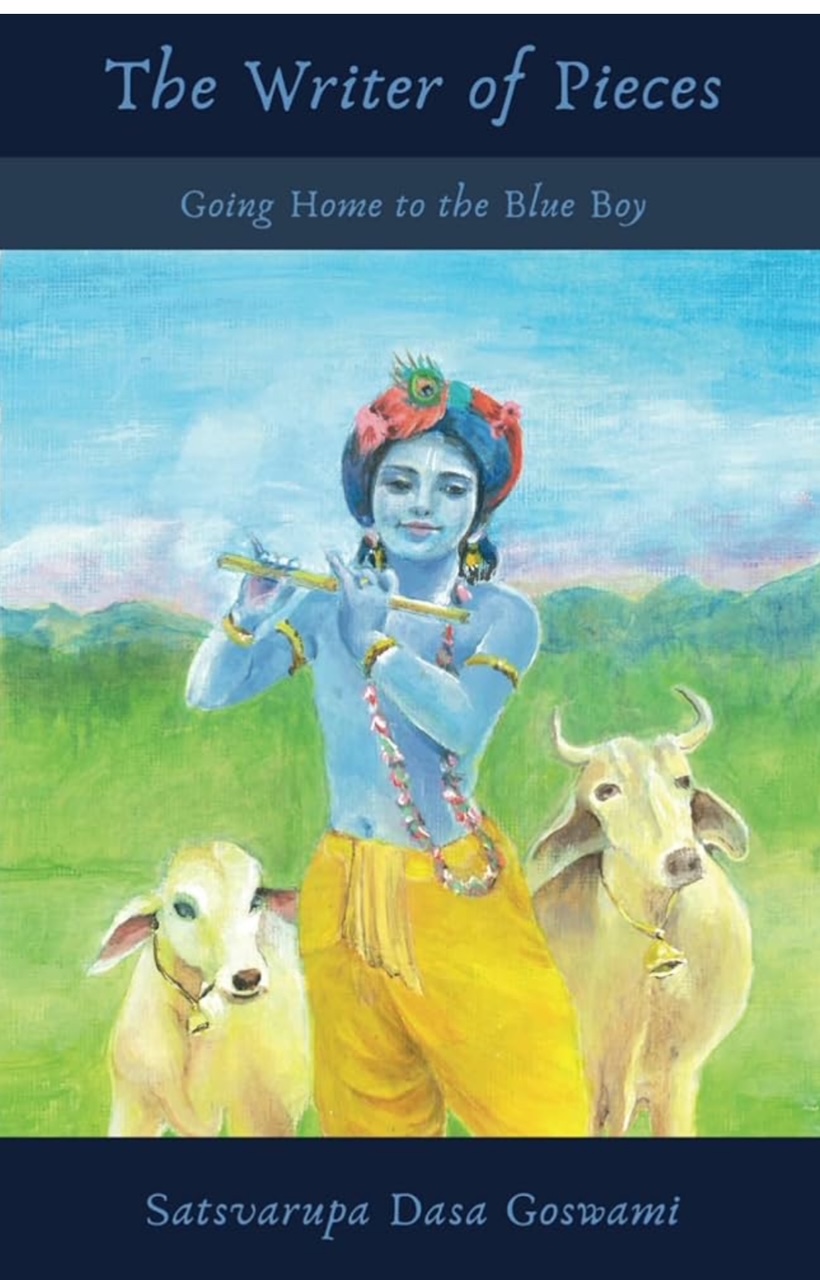
Don’t take my pieces away from me. I need them dearly. My pieces are my prayers to Kṛṣṇa. He wants me to have them, this is my way to love Him. Never take my pieces away.

Many planks and sticks, unable to stay together, are carried away by the force of a river’s waves. Similarly, although we are intimately related with friends and family members, we are unable to stay together because of our varied past deeds and the waves of time.
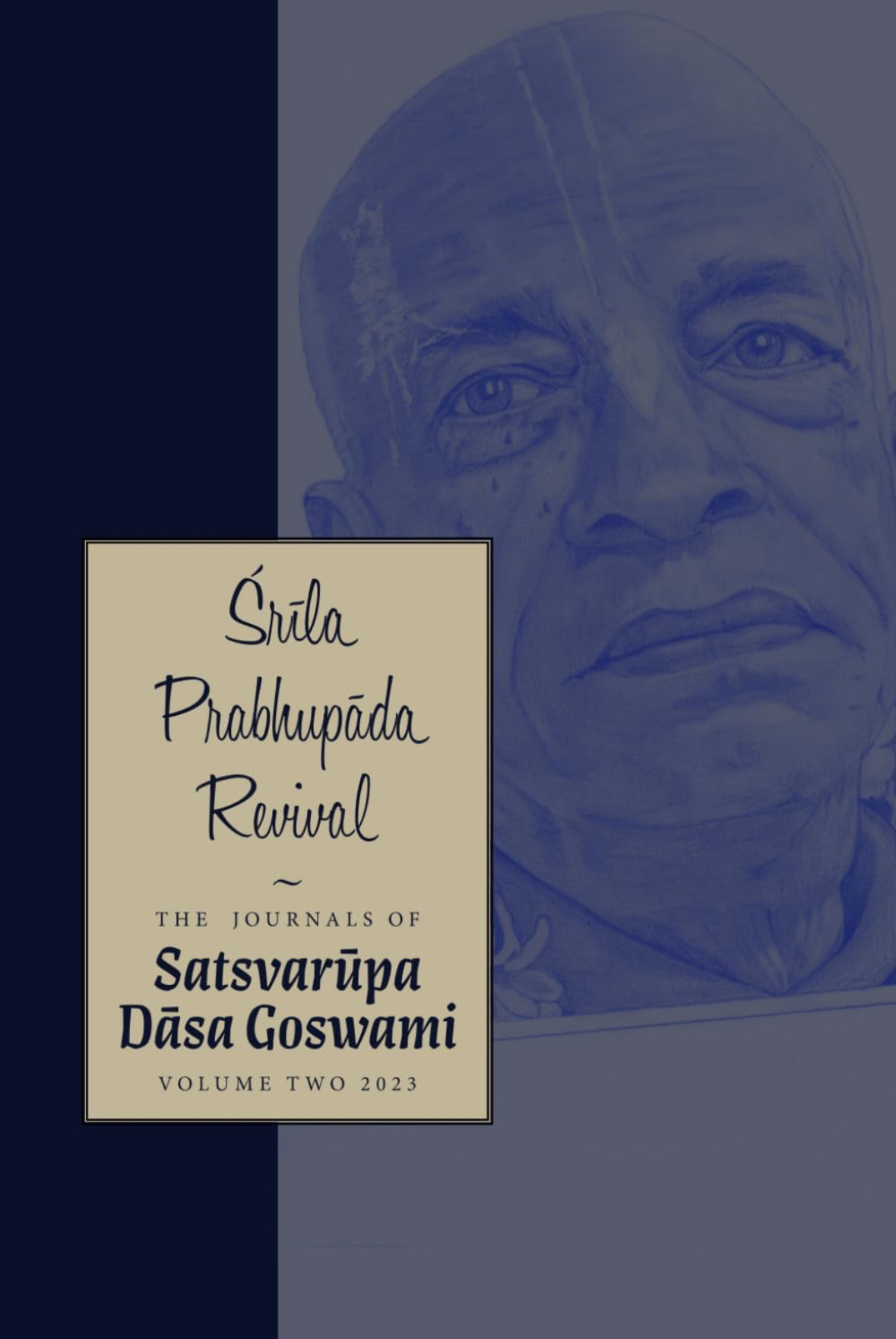
To Śrīla Prabhupāda, who encouraged his devotees (including me) To write articles and books about Kṛṣṇa Consciousness.
I wrote him personally and asked if it was alright for his disciples to write books, Since he, our spiritual master, was already doing that. He wrote back and said that it was certainly alright For us to produce books.
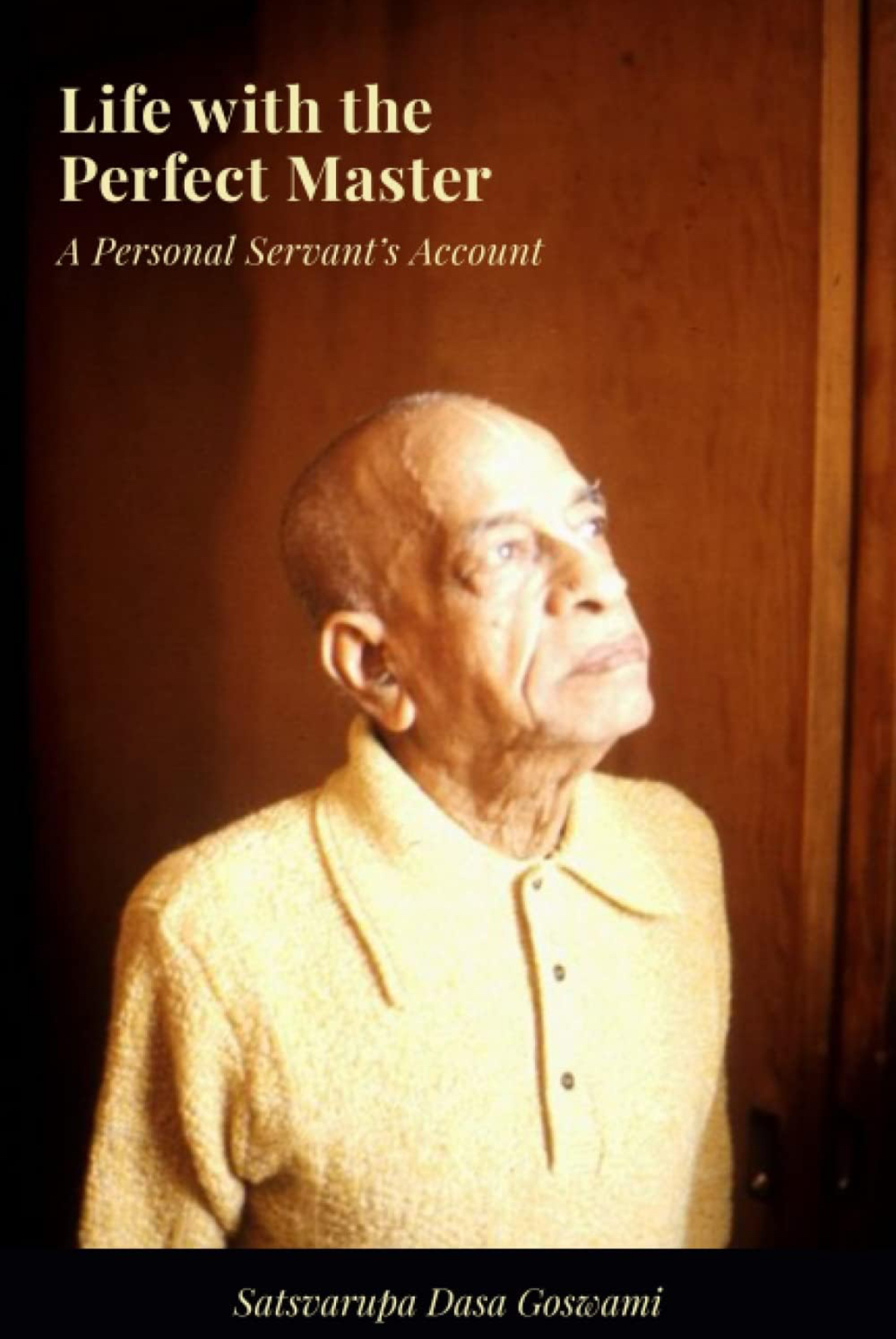
I have a personal story to tell. It is a about a time (January–July 1974) I spent as a personal servant and secretary of my spiritual master, His Divine Grace A.C. Bhaktivedanta Swami Prabhupäda, founder-äcärya of the International Society for Krishna Consciousness. Although I have written extensively about Çréla Prabhupäda, I’ve hesitated to give this account, for fear it would expose me as a poor disciple. But now I’m going ahead, confident that the truth will purify both my readers and myself.

First published by The Gītā-nāgarī Press/GN Press in serialized form in the magazine Among Friends between 1996 and 2001, Best Use of a Bad Bargain is collected here for the first time in this new edition. This volume also contains essays written by Satsvarūpa dāsa Goswami for the occasional periodical, Hope This Meets You in Good Health, between 1994 and 2002, published by the ISKCON Health and Welfare Ministry.

This book has two purposes: to arouse our transcendental feelings of separation from a great personality, Śrīla Prabhupāda, and to encourage all sincere seekers of the Absolute Truth to go forward like an army under the banner of His Divine Grace A.C. Bhaktivedanta Swami Prabhupāda and the Kṛṣṇa consciousness movement.
A single volume collection of the Nimai novels.
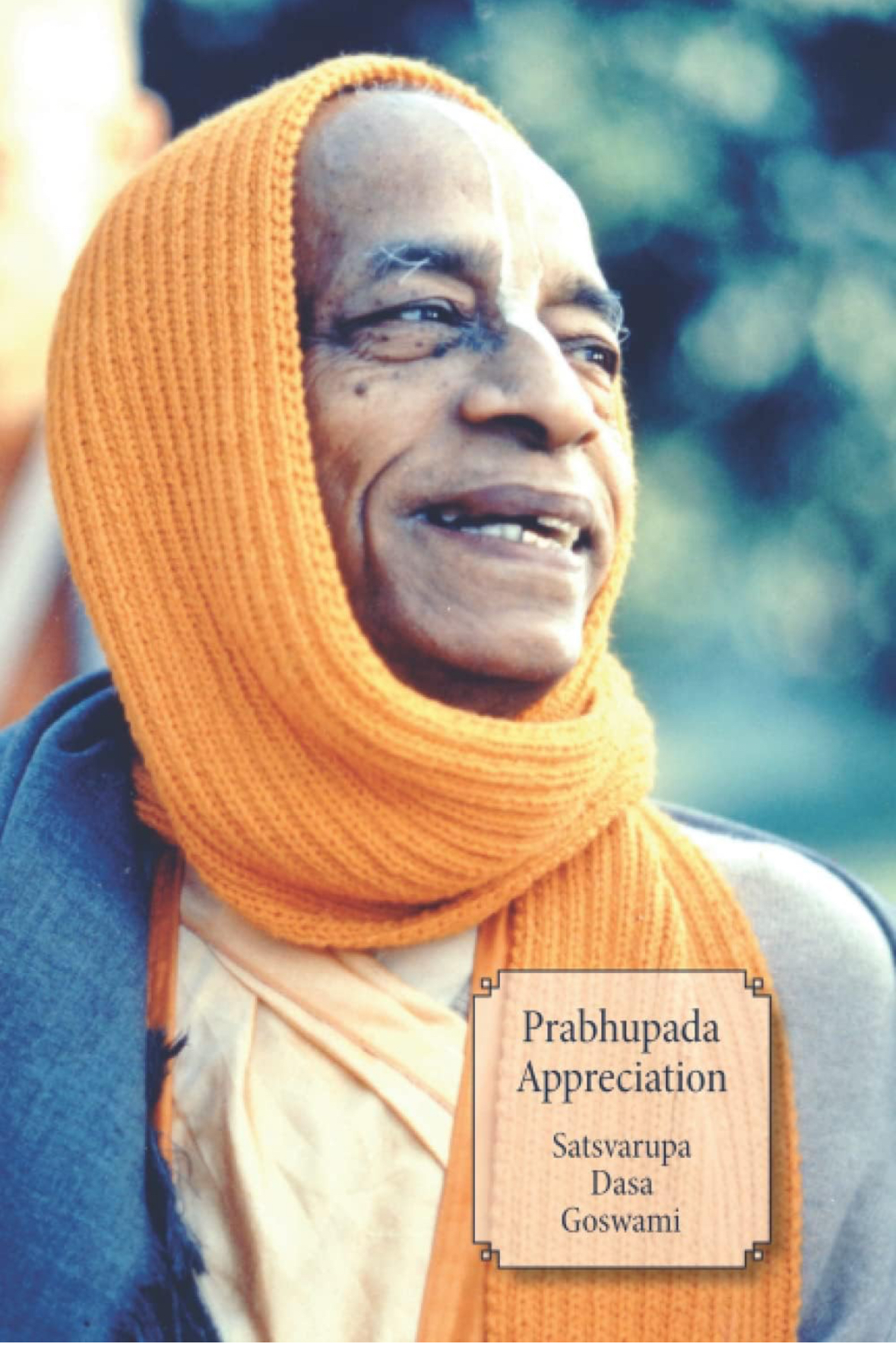
Śrīla Prabhupāda was in the disciplic succession from the Brahmā-Mādhva-Gauḍīya sampradāya, the Vaiṣṇavas who advocate pure devotion to God and who understand Kṛṣṇa as the Supreme Personality of Godhead. He always described himself as simply a messenger who carried the paramparā teachings of his spiritual master and Lord Kṛṣṇa.
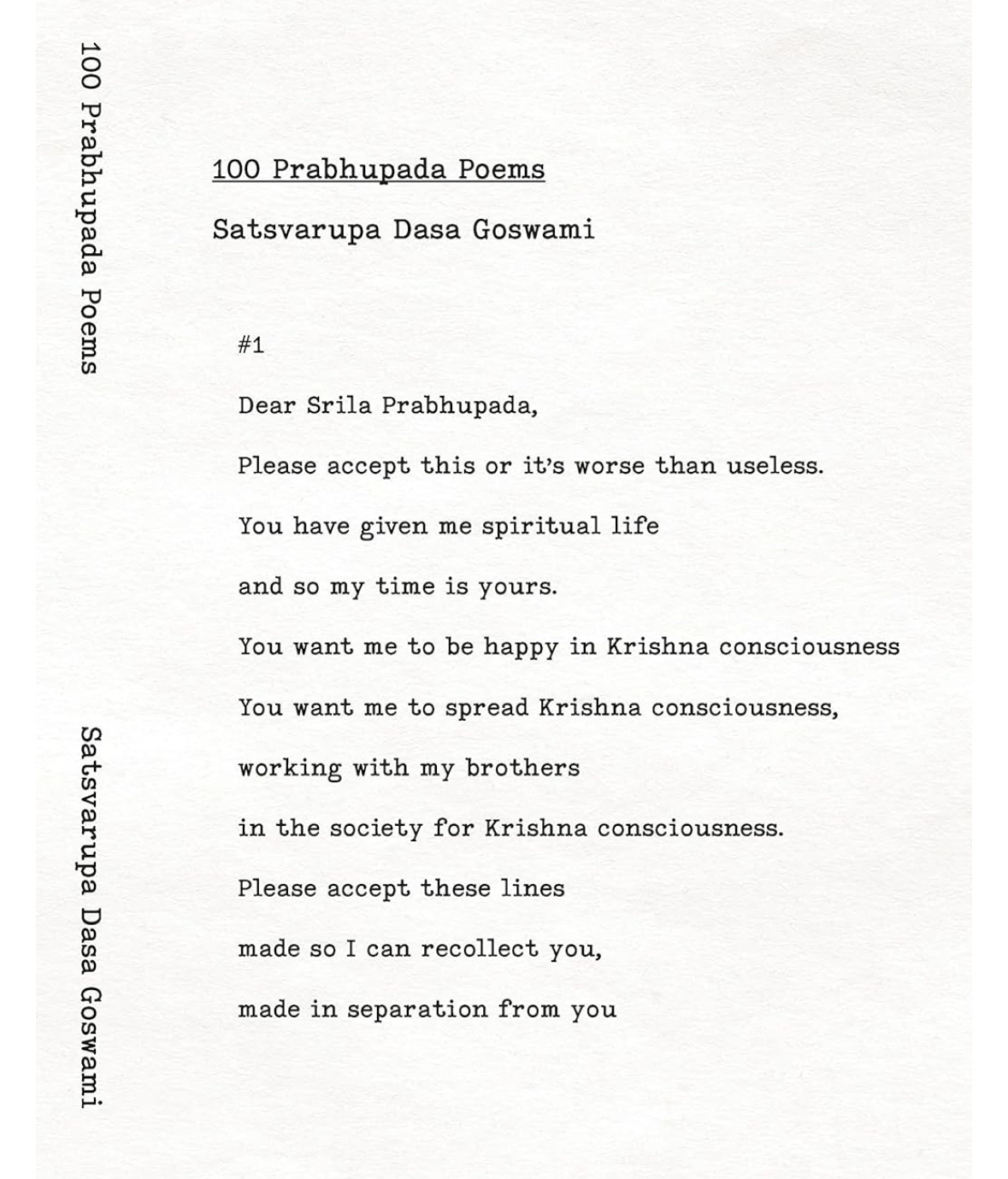
Dear Srila Prabhupada,
Please accept this or it’s worse than useless.
You have given me spiritual life
and so my time is yours.
You want me to be happy in Krishna consciousness
You want me to spread Krishna consciousness,
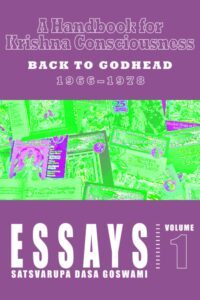
This collection of Satsvarūpa dāsa Goswami’s writings is comprised of essays that were originally published in Back to Godhead magazine between 1966 and 1978, and compiled in 1979 by Gita Nagari Press as the volume A Handbook for Kṛṣṇa Consciousness.

This second volume of Satsvarūpa dāsa Goswami’s Back to Godhead essays encompasses the last 11 years of his 20-year tenure as Editor-in-Chief of Back to Godhead magazine. The essays in this book consist mostly of SDG’s ‘Notes from the Editor’ column, which was typically featured towards the end of each issue starting in 1978 and running until Mahārāja retired from his duties as editor in 1989.

This collection of Satsvarupa dasa Goswami’s writings is comprised of essays that were originally published in Back to Godhead magazine between 1991 and 2002, picking up where Volume 2 leaves off. The volume is supplemented by essays about devotional service from issues of Satsvarupa dasa Goswami’s magazine, Among Friends, published in the 1990s.

“This is a different kind of book, written in my old age, observing Kṛṣṇa consciousness and assessing myself. I believe it fits under the category of ‘Literature in pursuance of the Vedic version.’ It is autobiography, from a Western-raised man, who has been transformed into a devotee of Kṛṣṇa by Śrīla Prabhupāda.”
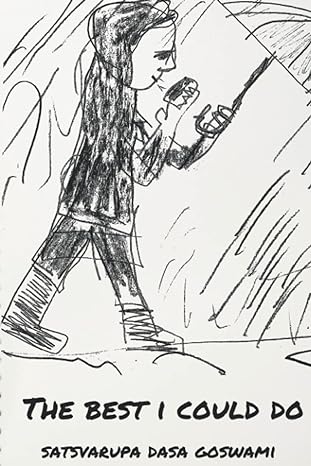 The Best I Could Do
I want to study this evolution of my art, my writing. I want to see what changed from the book In Search of the Grand Metaphor to the next book, The Last Days of the Year.
 a Hare Krishna Man
It’s world enlightenment day
And devotees are giving out books
By milk of kindness, read one page
And your life can become perfect.
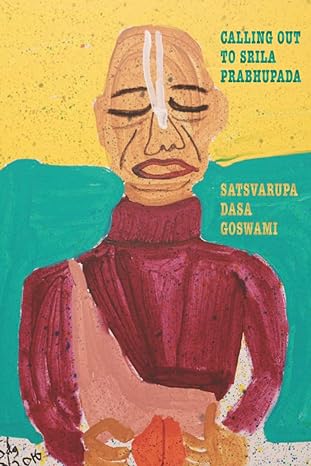 Calling Out to Srila Prabhupada: Poems and Prayers
O Prabhupāda, whose purports are wonderfully clear, having been gathered from what was taught by the previous ācāryas and made all new; O Prabhupāda, who is always sober to expose the material illusion and blissful in knowledge of Kṛṣṇa, may we carefully read your Bhaktivedanta purports.
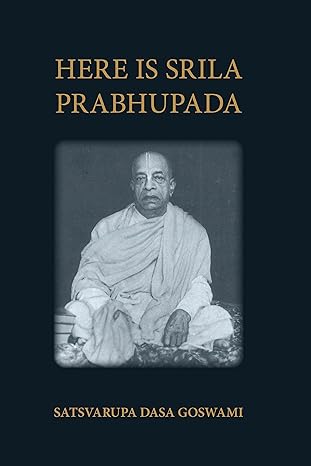
I use free-writing in my devotional service as part of my sādhana. It is a way for me to enter those realms of myself where only honesty matters; free-writing enables me to reach deeper levels of realization by my repeated attempt to “tell the truth quickly.” Free-writing takes me past polished prose. It takes me past literary effect. It takes me past the need to present something and allows me to just get down and say it. From the viewpoint of a writer, this dropping of all pretense is desirable.
 Geaglum Free Write
This edition of Satsvarūpa dāsa Goswami’s 1996 timed book, Geaglum Free Write Diary, is published as part of a legacy project to restore Satsvarūpa Mahārāja’s writings to ‘in print’ status and make them globally available for current and future readers.