
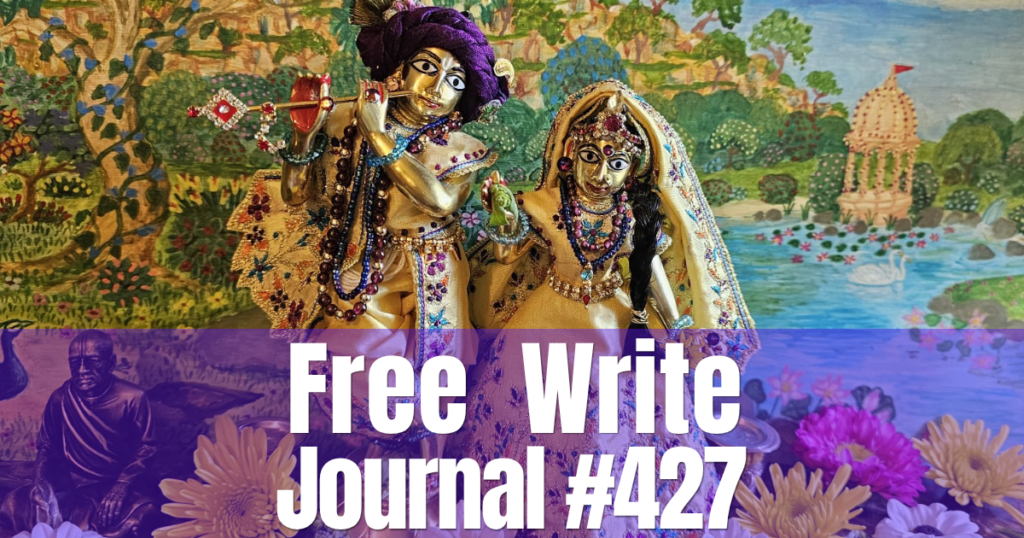
Disciples showed me their
plan to celebrate my birthday.
I appreciate.
But I don’t like terms
such as “world-wide celebration”
and reporting big book
distribution on that day
I prefer my followers to observe
a quiet day chanting,
and perhaps reading my
books about Srila Prabhupada.
Please no hype.
Disciples may privately cook a feast
and distribute the remnants.
Don’t disturb the harmonious
mood of the temples or
the gurus and their disciples.
Godbrothers, disciples, friends and well-wishers around the world are warmly invited to attend the 87th Vyasa-puja birthday celebration of His Holiness Satsvarupa Maharaja. For more information about this event, please visit:
We are still expanding our team of proofreaders as we aim to increase the rate of republication of Satsvarūpa Mahārāja’s books as well as new books that he writes. As many of you know, during the July 4th festival just held, a total of 18 new and re-edited and published books were present, and we hope to present a similar number at Satsvarupa Maharaja’s Vyasa-puja observance this December. Our call for proofreaders includes a need for fluent bilingual Spanish and English speakers to proofread Spanish translations (we currently have around 20 Spanish translations waiting to be proofread). Anyone interested in this particular service should contact Manohara dāsa at [email protected]
If you would like to help, please contact Kṛṣṇa-bhajana dāsa at [email protected] or [email protected] and we will find you a service that utilizes your talents.
The leader of the worldwide Hare Krsna movement, A.C. Bhaktivedanta Swami Prabhupada, writes in his Bhagavad-gita As It Is Chapter 12, verse 16 purport: “A devotee never takes the part of a particular party; therefore he is carefree.” But Srila Prabhupada also notes in his books and speeches that if a God-conscious person doesn’t speak out against corruption, unnecessary warmongering and massive, unfair deportation of immigrants, he gradually loses his spiritual potency, just as a cracked pot leaks water. The recent midterm elections in the U.S.A. proved the vast majority of citizens are fed up with the present government’s unpopular policies and demand a change. Prominent religious leaders like Popes Francis and Leo, as well as the Archbishop of Canterbury, have made strong criticisms against U.S. government policies. Many citizens believe the ongoing war between the U.S. and Iran was actually provoked by the U.S. As this war drags on with no end in sight, the U.S. is experiencing a crisis of oil shortage, as well as higher and higher prices of all commodities.
A high-level spat has occurred between Pope Leo and President Trump. The news media reports Trump as having described Leo as “weak on crime and terrible on foreign policy” (NPR, April 13, 2026), while portraying himself as a Jesus-like figure. The pope criticized leaders who spend billions on wars, and said the world was “being ravaged by a handful of tyrants.” (April 16, 2026 address at St. Joseph Cathedral, Bamenda, Cameroon) Pope Leo also voiced his concern about Trump’s threat that “a whole civilization will die tonight” (April 7, 2026 on Truth Social) if Iran did not agree to U.S. demands to end the war and open the Strait of Hormuz.
Sane citizens must band together and act for reform of their leaders in this crisis situation. God conscious persons could do no better, in addition to direct action for reform, than to pray for peace and correct their own misguided behavior.
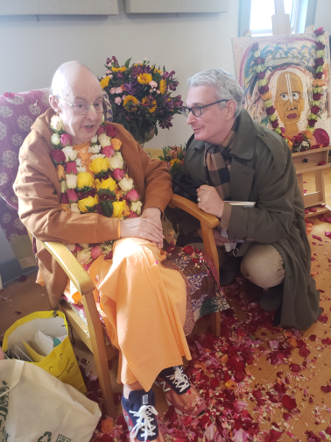
I write these words as a humble offering in glorification of Śrīla Satsvarūpa dāsa Gosvāmī, my dear friend, senior godbrother, and an early disciple of His Divine Grace A. C. Bhaktivedānta Svāmī Prabhupāda.
It has recently occurred to me that devotees of the present generation—what to speak of those yet to come—may not be fully aware of the pioneering service he rendered over the course of his long and dedicated life in Kṛṣṇa consciousness. His publishing oeuvre is, without exaggeration, more extensive than that of any other living Vaiṣṇava, and its importance cannot be overstated.
From his seminal multi-volume Śrīla Prabhupāda-līlāmṛta to the introspective Japa Reform Notebook, from Nīti-śāstras: Sayings of Cāṇakya and Hitopadeśa as Quoted by Śrīla Prabhupāda to Mama Tejas: A Spark of My Splendor—one of my personal favorites—Satsvarūpa Mahārāja’s works illuminate Gauḍīya Vaiṣṇavism while simultaneously demonstrating how a devotee may be deeply personal, expressive, and artistic in presenting Kṛṣṇa consciousness.
Indeed, his disciples have undertaken the noble task of republishing his many books—numbering in the hundreds—in thoughtfully designed editions meant to nourish devotees of today and generations yet unborn.
Be it known: Satsvarūpa dāsa Gosvāmī joined Śrīla Prabhupāda at 26 Second Avenue in the early months of 1966. At that time, he was working as a social worker and cultivating his natural inclination as a writer. Who knew that Kṛṣṇa had a plan for him to become one of the preeminent writers of the Hare Kṛṣṇa movement?
In a spirit of sacrifice, he donated his earnings to help sustain the fledgling temple, and Śrīla Prabhupāda personally encouraged him to write for Back to Godhead magazine, and he soon became its chief editor. Later that same year, he was sent alone to establish a preaching center in Boston, marking the beginning of a lifetime of leadership and service.
He became one of the original members of the Governing Body Commission and accepted sannyāsa initiation in 1972. His service included extensive college preaching and numerous administrative responsibilities, yet throughout, Śrīla Prabhupāda consistently encouraged his literary efforts and expressed pleasure upon seeing his early works, such as Readings in Vedic Literature and Handbook for Kṛṣṇa Consciousness.
In 1978, he was entrusted by the GBC with the monumental responsibility of composing Śrīla Prabhupāda-līlāmṛta, the authorized biography of Śrīla Prabhupāda. It is said that Śrīla Prabhupāda himself had indicated Satsvarūpa dāsa Gosvāmī as a fitting author for such a sacred undertaking.
To accomplish this, Satsvarūpa Mahārāja assembled a dedicated production team, as the Bhaktivedanta Book Trust was then heavily engaged in numerous other projects. For nearly five years, this team labored with diligence and devotion, ultimately producing the original six-volume life of Prabhupāda.
Thereafter, the same team continued under the name Gītā Nāgarī Press, facilitating the publication of Satsvarūpa Mahārāja’s vast and varied literary output. His writings span biography, devotional practice, reflections on devotee life, prayer, essays, poetry, journals, fiction, and art. These diverse genres are unified by a striking honesty and transparency, offering readers an intimate glimpse into the inner life of a practicing devotee. Truly, within his works, there is something for everyone.
In addition to his literary achievements, Satsvarūpa dāsa Gosvāmī is also an accomplished and widely appreciated “outsider” artist—unschooled in the conventional sense, yet vibrant, immediate, and deeply alive in expression.
Over the course of his career, he produced more than 2,500 works of art, many of which are displayed in private homes and offices, while others have been incorporated into the design of Gītā Nāgarī Press publications. Notably, one hundred of his pieces were acquired by the Museum of Sacred Art for their permanent collection.
Although he has now ceased painting due to health considerations, his artistic legacy remains substantial and enduring. All of this was accomplished despite maintaining a heavy institutional workload of management during the 1970s, 80s, and 90s, and even while enduring chronic migraine headaches.
Now retired from extensive travel, he continues to write and to correspond with devotees, remaining ever engaged in the service of guru and Kṛṣṇa.
As we look toward the future, it is my sincere hope that devotees of all generations will come to know the name and person Satsvarūpa Dāsa Gosvāmī—through the recorded history of ISKCON and, most importantly, through his precious books.
His life stands as a testament to steady service, creative expression, and deep fidelity to the instructions of the spiritual master. If we take the time to hear his voice through his writings, we will find not only historical insight, but also guidance, vulnerability, and the living example of a devotee striving, with sincerity, to serve Śrī Kṛṣṇa at every step. In this way, his legacy will continue to instruct, inspire, and uplift all who encounter it.
Every morning I have a japa class about a half hour long. With a small group of disciples I sit and chant. I read from a compilation about chanting the holy name. I also talk about chanting. This morning we read a selection about how chanting helps control the restless mind, from Śrīla Prabhupāda’s lecture published in the first American issue of Back to Godhead. He said, “It does no good to absent-mindedly chant the name of Kṛṣṇa while your thoughts are elsewhere. Chanting will bring our uncontrolled mind under control.” These readings help us focus on the importance of what we are doing—chanting.
I was just out walking. Suddenly, walking back towards the cabin in the rather cold October sunlight, my surroundings seemed unfamiliar and I experienced a discontinuity of thought, like the feeling you have when you suddenly wake up, especially in the middle of the day, and try to grab hold of an identity. Then I thought, “Yes, at this time especially, it is important that you are chanting Hare Kṛṣṇa—when you do not know where you are, when nothing is familiar. Such a state will come one day, when, familiar or not, you will have to leave everything that is so-called familiar, even your body and the well-worn path to your house; and that is the working of inevitable time to bring you to death.” At that time, when nothing can be grabbed onto and you have to leave even your own mind’s thoughts, then you must be able to CHANT HARE KṚṢṆA. If then instead you try to grab hold of that which can no longer save you, if you cry out to that which you are leaving, then that action becomes karma, and again you come back to the material world and play at being familiar and comfortable and ambitious and living, as if it were permanent. So I want to do all my duties and have normal consciousness, yes, but I want to become attached to this chanting, chanting deeply, attached to the holy name.
Do your duty, but maintain an aloofness from whatever is not lasting. Attachment to chanting and hearing is the essence of Kṛṣṇa conscious work in the Kṛṣṇa consciousness movement. Don’t shirk the nitty-gritty work of ISKCON but don’t become caught up in temporary anxiety or pleasure. The art is of being on the mark—Kṛṣṇa conscious. The chanting and hearing is essence. Even when dealing with a practical problem, Śrīla Prabhupāda was seeing it and soon speaking of it in absolute terms. Chanting especially promotes this: leave everything aside and chant the holy name. Then we can take up even our most demanding preaching duties in this world with vigor and endurance.
Twenty-five rounds by 2:30 PM. I couldn’t help flirting with the idea of someday chanting continuously for a stretch, of giving up all responsibilities and staying in India and just chanting—“I want to become purified so that I can write about Prabhupāda.” But I thought then, “Why don’t you go on chanting at least a few extra rounds (above 25) even now; why wait for India? Just chant for a few months.” But I don’t think you could do it, nor is it practical. Yet the thought of desiring it was encouraging. I feel something is awaiting, if I could let go and chant even for a month.
At first such chanting would seem difficult, but once past a certain stage you just go on and on. The chanting does not go on automatically; you have to keep on deliberately chanting. But your will begins to allow you, with no other thought except the next bead, the next round, and with no serious deception or play-ecstasies—but just chanting, actually, constantly. It is a giving up of responsibility, and yet it is not void, or sleep, or sense gratification. It is one thing—japa vrata, bṛhad vrata.
Very busy preaching day up to 10:00 PM in two different cities, Philadelphia and Delaware; yet, somehow, even while riding in the car, I managed to complete 25 rounds. (The last round was done late.)
So, this shows that somehow, even when very busy, you can complete the quota.
O brāhmaṇas, just accept me as a completely surrendered soul, and let Mother Ganges, the representative of the Lord, also accept me in that way, for I have already taken the lotus feet of the Lord into my heart. Let the snake-bird—or whatever magical thing the brāhmaṇa created—bite me at once. I only desire that you all continue singing the deeds of Lord Viṣṇu.
— Śrīmad-Bhāgavatam 1.19.15
Twenty-five rounds.
I really doubt you will be able to do it tomorrow—the installation of Sītā-Rāma in Washington, D.C. But rise and see how many rounds you can do.
A very successful festival of Śrī Rāma Vijayotsava. 16 rounds.
Today a doctor was feeling my pulse. I was quiet and the room was quiet, while he timed the pulse. I thought to myself, “Hare Kṛṣṇa, Hare Kṛṣṇa, Kṛṣṇa Kṛṣṇa … Then I thought how I don’t take the chanting seriously; but it is, after all, the spiritual process that will be most available and most approachable in that time of emergency—death—when all other facilities for meditation and remembrance are removed. Therefore it is very important to practice chanting as much as possible, even if you can’t keep your time of demise in your mind.
From Śrī Kṛṣṇa Nāmāṣṭakam:
O Lord, in this poem, which describes Your glories, I do not ask for anything other than devotional service to You. Please grant that to me.
The above makes me think of someday writing something also about the holy name. That is going on in a certain level in Sādhu-bhūṣaṇām’s “Japa Reform Notebook.”
pp. 26-30
I like my new home and the fact that we are always traveling and not so much in touch with the telephone. I saw one camper
with the name “Escaper,” and it reminded me that we cannot escape time and death. And I cannot escape the duty of serving Prabhupada. But serving in this moving bhajana-kutira, reading and writing, has resulted, after even a few days, in an increased taste for visnu-smaranam. “Chanting produces more chanting,” Prabhupada once said, and so it is with reading and also speaking the philosophy. I hope I can remain enlivened this way and enthuse the men who travel with us. I hope our party can contribute to ISKCON and not be simply touring. Yet Srila Prabhupada said spiritual life should be like “recreation only,” transcendental to the modes. . . And the sannyasis and brahmacaris especially may enjoy the footloose aspect. Spiritual life is meant to be joyful, so why should I be surprised or guilty to feel so?
Even with a headache, sweet breezes flow
through the Kamadhuk.
Our traveling life began prematurely. The motorhome and trailer were not properly stocked or arranged, so we had to do all that here in Raleigh. The men on the party, including myself, are also not yet completely committed or aware even of what we are trying to do. So the campground was a good place to begin.
Some of the people camping here go daily to look at the archives at the state capitol. This week there was a genealogy convention in Raleigh. We overheard a man at the payphone talking excitedly, “I have discovered my roots!” Some of the men seem to be backwoodsmen who leave daily at six for construction work. Our immediate neighbor is a man from New Jersey who is a specialist in the computer field, and he can’t find work at home. He greeted me with “Shalom!” and said, “I have got some of your books, of course.” He asked where we had been and said he hadn’t seen devotees in years. We gave him, and a woman copies of Bhagavad-gita, Readings in Vedic Literature and the biography of Prabhupada.
In the front of this campground they sell recreational vehicles. We saw one old couple, probably in their late sixties, purchasing a twenty-foot Ithasca. He looked like a retired farmer, wearing faded blue jeans held up with suspenders. He was overweight and arthritic, and leaned against the counter while his wife wrote out the check for $24,126. She then proudly took possession of the two sets of keys and a pack of owner’s manuals. It seemed like they were packing all their dreams in a tin can.
The dhama is in a woody section away from main roads. The cement-top, geodesic temple is a pleasing sight. One thinks, “Here is another of Prabhupada’s centers, way out here in North Carolina. A few men were sitting around a picnic table, and one of them got up to greet us as our caravan rumbled onto the property. I asked for Bir Krsna Goswami, and they directed me to his cabin in the woods.
Unfortunately, as soon as we had pulled out of Raleigh, I began to get the old pains behind the right eye. But I couldn’t stop now, so I went with a devotee named Mrdanga dasa, who led me over to Maharaja’s cabin. As soon as we entered the wooded path it reminded me very much of Gita Nagari. I was impressed to think how Bir Krsna Maharaja spends most of his time in this peaceful setting. Halfway into the woods, we met him coming to greet us. The other devotees dropped away, and Bir Krsna Maharaja and I continued to go back to his cabin. It is a classic, simple log cabin with a little porch overlooking a thick blackberry patch.
Once inside, he began to speak of the project as “small time,” and “simple.” But I sincerely praised him, because I know he has done everything here in a pure way. He came here four years ago, without any support, but with the determination to build up gradually. He did not engage in any businesses, nor today does he allow any devotees to engage in businesses, except for householders living outside. Whatever he has built here has come from donations from Indians, or by whatever little money they get from straight book distribution. I told him many of our temples are suffering now for not following these principles. Whenever we borrow money and buy big buildings, then we have to send devotees out on sales.
Bir Krsna Maharaja said that he has an aversion to managing, even in this small project. He has written a book that he is just about to print. One of his disciples is a monk in the Catholic church, and the book will consist of dialogues on different subjects between him and the monk. Bir Krsna Maharaja then asked me whether I had taken darsana of their Deities, Radha- Golokananda. He said he is feeling enlivened by personally taking part in the Deity worship. Naturally, all these things were impressive to hear.
But after about a half hour of talk, I admitted that I was not feeling well. He accompanied me back to the temple to take darsana of the Deities, and now I’m resting in the Kamadhuk, while the Sunday Festival commences.
“You’re not this body.” Strawberry turnovers.
Bir Krsna Maharaja is extending to me all the etiquette given to a Vedic guest. He asked if there was anything I needed, such as a chair to sit on during mangala-arati. And he asked me to give all the classes.
In the Srimad-Bhagavatam class this morning there was a statement about the Lord’s rasa, and I asked Bir Krsna Swami and Gopiparanadhana Prabhu to speak after my lecture. The verse is a prayer by Lord Brahma in which he states, “I offer my obeisances unto Him who by His pastimes enjoys creation, maintenence and dissolution of the cosmic manifestation.” The question I asked was how Kisna can be engaged in rasa enjoyment with the material world, since it involves so much suffering for the living entities?
Bir Krsna Maharaja stated that we should not think of the material world simply as punishment for the living entities. It is also an auspicious chance for them to become rectified through punishment and through the Lord’s mercy — and thus go back to Godhead.
This reminded me of the prayers by the Vedas personified at the beginning of creation. The Vedas personified say that of all the Lord’s qualities the most wonderful is His compassion, which He exhibits when He opens the creation again. If the Lord did not make creation, then how could the conditioned souls have a chance to go back to Godhead? They cannot be forced back to Godhead, but they have to be given a chance while in the course of their material enjoyment to change their will toward surrender to Krsna.
Gopiparanadhana Prabhu said that this controversy of whether the Lord enjoys the sufferings of the living entities, created a schism in the Sri Sampradaya in the thirteenth century. He said that in our sampradaya we understand that Krsna is always kind toward His parts and parcels. If they are suffering, it is part of a large plan of the Lord.
This reminded me of an incident in Prabhupada’s boyhood. Prabhupada described that once when he was being very independent and naughty, he would not allow his mother to bathe him. He began banging his head on the ground and blood came. At that moment a neighbor came by and accused Prabhupada’s mother of cruelty. But actually the mother was simply taking care of her naughty child. And even if the mother punishes the child, that is also a partial display of her “rasa“— loving, caring, and sometimes reprimanding the dependent child. Similarly, we should see how Krsna is always transcendental, and always relating with good intentions towards the jivas.
Gopiparanadhana is a Sanskrit whiz and a humble, likable devotee. In a two-minute conversation I had with him, just before greeting the Deities, he said amazing things. I opened by asking, “What do you plan to do after finishing the translation of the Tenth Canto of Srimad-Bhagavatam?”
He said, “I’m going to study Vedanta and Upanisads and write commentaries.”
“I heard Garuda and Sadaputa were planning to do a scientific commentary on Vedanta,” I said.
“It’s not so easy,” he smiled. “You just don’t sit down and write one book on it, Baladeva Vidyabhusana wrote five different commentaries.”
“Really? Five?”
“I intend to make it my life’s work.”
I asked if I could meet with him later because I was starting to write a commentary on Prameya–ratnavali.
“Do you have Bhaktisiddhanta Sarasvati’s commentary?”
“I didn’t know he wrote one,” I said, “no one told me.”
“Maybe they didn’t know. I have it on microfilm. It’s an original Bengali edition from 1925.”
“Maybe I shouldn’t even do it if he has already done it.”
“No,” Gopi said thoughtfully, “his can be expanded on.”
I lamented that I didn’t know Sanskrit, and he said that if I liked, by a simple arrangement to hear transcendental nectar in Hillsboro, North Carolina, he could teach me grammar in two weeks. Then it was time to go see the Deities.
pp. 36-41
I am cynical
and disbelieving but I want
the real thing for me.
I mean just by holding a picture
of Radha, is that
the way? Prabhupada didn’t
demonstrate tha1t.
But an ISKCON guru could
help, couldn’t he? Couldn’t
he serve by chanting holy names
in the ear?
Couldn’t he serve?
Serve in the school of free
expression. To flee to thee
enunciate.
Gosh, I’d like to make it clearer,
Nrsimha dasa.
But what can I do? No
ghosts. I’m listening to voices
tho’ that want Out.
“Let me out!” Let me speak.
OJ Simpson, is he in
jail? My thumb hurt from
this writing. So much depends upon
the opposing thumb and forefinger.
Man’s whole early progress
and advancing over the monkeys is
due to this – can make stone axe,
and hinges and wheels.
Oh bosh and crap I said
to Dr. Pessen, if giraffes were
more intelligent despite their
toes…
Listen pal, don’t overeat
the brain that functions
outside of krsna-katha.
No – I say this is within
(Crushing flying bugs of many
varieties at this hour – in Mayapur)
I say all is Brahman.
But
She said I thought St. Teresa
of Avila (Who? I can’t hear so well
and your enunciation is a foreign
tongue – St. Teresa (louder)
is in Krishna consciousness? Oh yes, I said but
I meant
she is but in a vague way.
She probably never uttered the
word “Krishna.” Or “Syama,”or
saw Him that way. So you
can rightly call it love of
God
but vraja-rasa, Vraja
consciousness is very rare.
You better believe it, apples
aren’t so great in India but
you can be happy
without them.
Please give me joy.
He said I have been here 10
days in Mayapur “transcendentally
enjoying,” along with his son. Now they went on
to Puri.
What’s all this moving around
and pilgriming?
A reformed ISKCON sannyasi
said, “Come to the dhama and
serve – that’s the secret. Don’t
be a monk but I mean a pilgrim.
Seeking. But give.”
Oh, I see.
He got the clues right and
inspired wisdom authority.
Come to the dhama to serve
by vigorous dancing, he said.
Oh, I can’t do that.
But my heart does.
And my words.
If I could love a little doll,
like a doll of Gaura or
maybe Nrsimha. No rules, just
love Him like a pet object.
What? That’s whimsy
brother! Keep your whimsy
at least confined to short
stanzas.
I mean a marble or brass…
I know, I know, but
Prabhupada said don’t make
it a plaything, a farce.
You feel better now as if you’ve been
to a doctor?
Whew, this is gettin’ real and
body rank, brother.
Don’t mind me, there is however
no harm in some truth-letting.
Yes, come to think of it
I do feel joy in little things.
Relief and sigh! I am no
longer right now for the
present moment, afflicted
by headache
Halley-loo-ya
See you later.
It’s Mayapur, “Stir up the Magic of Puja” read a
billboard
I saw coming out of Calcutta
yesterday. Lord of pujas
and hooligans, fallen stars.
The elk and the elephant,
I haven’t seen the zoo yet
but from America mail came
with a brand new better
stick-on denture adhesive.
I really got off on that.
Gur milk is too strong.
Give me more note pads.
This is Mayapur where
you can’t commit offenses.
Everything you do is blessed.
The Two Brothers reign.
They bring you to gopi-bhava.
I’m on good behavior.
I am settin’ an example,
sending a message by this
year not travelin’ to Vrindavan.
Dear Child Nimai, give
me blessings of foot dust
of Nadia,
Dear Prabhupada, let me read
your books and find
it there so even when
I read Bhagavata-mahatmya
it’s in the consciousness of your
follower.
Bosh Bosh. I must
read him mostly.
I want that.
This is in Mayapur,
home of jazz,
home of kirtana band,
thump-be-thump the
stars, the sky,
the peanut butter sandwich
in the sky of my memory, here
in Mayapur mail comes and NY Times
telling of Ozzie and Harriet and
Groucho Marx, good old
stars,
you better kick ‘em out
and for that the sharp nails
of Nrsimha will do.
Okay, I don’t hate you but
I got to part from you –
and so with love and
get out!
Let the way be cleared for
the appearance of Gaura-
Nitai in my heart.
Once and for all.
Can a horse ride a pony?
Can a nonsense write a
Vaishnava poem?
Do you love me? – sang the
teenage rival.
You know what it’s like, viraha
from Krishna? You don’t?
Well, I do. It’s kick-a-poo.
It’s me and I have to die.
Attached to Art? Give it up, you
said to Krishna, at the end. I’m
getting tired of hearing all this talk
of death. With all respects to the
devotees, who did it – Christ said
let the dead bury the dead.
Prabhupada said, “Death is not
wonderful. Life is wonderful. And
this is life, Krishna consciousness.”
You die and then live again.
Let’s live until we have to die.
Let’s travel in the West and speak
and write our best. O Navadvipa –
I heard one can’t commit the offense
of overeating here and if you sleep
it’s as good as making personal obeisances.
I just talked to six, my disciples.
That’s all. I told them of our delayed
Alitalia flight and how they cheated us –
said it was nonstop to Bombay but
stopped in Kuwait City.
Yeah, I told them. My teeth held in
firm, my head didn’t fall off the neck.
I didn’t lust, I bluffed, I looked at
my watch and beyond myself – the news of
viraha from Krishna came through, things
I’d read in Bhagavatam. I praised
Bhagavatam. Now I’m telling you all
this. Somehow, it’s all important,
sweat stained shirt underarms.
Srila Prabhupada singing on loudspeaker out
to the dhama, the titmouse (bird in
Gita-nagari, cold fall there). All I could
enumerate…why should I hide from
you. I’m in liberal audharya dhama.
Lord Caitanya’s grace.
pp. 47-51
Mild winter continues. This thirteen-day retreat is turning more into a drawing-painting time. It’s even edging out my other writing, and what to speak of reading and so on. It’s a special time, and I don’t know when I will get another time like this. Especially our ingredients are having plenty of room to work on the art, and Baladeva being here supplying me with art materials and encouraging me, even driving me on to produce and produce. I’m using poster boards and doing paintings four panels long. Did one this morning of Swamiji in the temple with devotees and another one with Swamiji doing Bells before Panca-tattva. I did a pictures of myself, Steve or Satsvarupa dasa back there with him. It’s a kind of nice way to go back and live. The mood is sweet. The faces are smiling. It’s all simple, and life isn’t like that exactly now, but I’m going to keep drawing these as long as I can. It’s not saccharine-sweet, but it is just a time that I can recall and make happy pictures. The next two I’m planning out are one of Swamiji eating lunch with the boys and girls and Swamiji in that formal portrait by the birdbath. In the actual portrait he’s by himself, but I’m going to add figures of devotees. This is what I’m doing and thinking of, even while I chant japa and even while I walk on the asphalt road in The Woods.
Not only are the paintings happy but they’re Krsna-centered—Prabhupada-centered. It’s such a happy breakthrough for me to be able to paint their forms without being intimidated by the fact that I don’t have skill. After all, these are endearing forms, worshipful forms. I worship them in other ways, although I’m not qualified as an expert devotee. So now I’m worshiping by drawing pictures of these beloved forms. And I’ll get better at it although I’ll never get so great that it’ll be a likeness. And who can draw a likeness of Krsna anyway? He’s so beautiful. He’s inconceivably beautiful. It might be said that the crude attempt is even more suggestive of the form of the Lord because it leaves everything to the imagination of the viewer. It makes Him think of Krsna rather than find faults in the painting because the faults are super-obvious. Then to “do” Swamiji again and again—just so that it looks like him so that someone will look and say, “Oh, that looks likes the Swami.” They may chuckle the way I attempted to draw him. It doesn’t really look like him so much but it’s not an insulting portrait. He doesn’t really look ugly, it’s just my crudeness. And so I do him again and again in saffron and light tan and pink colors—meaning his skin, his turtleneck jersey stretched at the neck, and the khadi dhoti and so on.
Oh, is that what it was like when the Swami was there? You wore those red beads around your neck all the time, huh? And you used to stand by him and hang around in the temple with him? He teach you how to chant? He’d sit like that on the dais and you’d stand around him? You actually sat with him up in his room and shared prasadam? That must have been nice. Hare Krsna Hare Krsna, Krsna Krsna Hare Hare/Hare Rama Hare Rama, Rama Rama Hare Hare. Did they really dance that wildly in the park? Was there a dog there? Were the girls like that? Was there a black guy playing a wooden recorder, or did you make that up? Hare Krsna Hare Krsna, Krsna Krsna Hare Hare/Hare Rama Hare Rama, Rama Rama Hare Hare.
Last of the evergreens standing in the suburban woods. Some deer live here too.
It’s happening in 1995 just like it was in 1966. Swami’s laundry hanging on a line in his worship room. Gladiolas bought for the occasion of the filming by the CBS T.V. crew who ordered our spiritual master, “Pray now, Swami, bow down.” Prabhupada submitted because he wanted to show them on T.V. a slice of Krsna conscious life at the Second Avenue ashrama where he did bow down for Panca-tattva. And so he wasn’t bowing down on the order of the CBS T.V. crewman but just doing what he usually did on the order of his guru because of love in heart. He took the cue from the crewman because that crewman was also, at least for that moment, serving Krsna and trying to make a nice presentation. So it was like a service that a disciple might render the way Arjuna asked Kprja, “Please drive my chariot.” It was something like that. The Swami bowed down and rang those bells. Those chimey bells that they have in Catholic churches—genuflect Catholic Mass. You hit your chest softly with your fist and say, “I’m guilty. I’m profoundly guilty.”
But when Swamiji bowed down and we bowed down with him, we said, “Hare Krsna Hare Krsna. O Lord Caitanya, please let us chant Hare Krsna on our beads.” We didn’t know what was ahead. We didn’t know things like falldown or death or Swami leaving us. Infights of the institution—schisms, GBC meetings. But did you think that you were going to be something special? Are you something special? I don’t think so.
pp. 11-15
These “supremely valuable prayers” are the only verses left by Lord Caitanya. He assigned the writing of His doctrine to His disciples, especially the Gosvamis of Vrndavana, Rupa, Sanatana, and Jiva. But the eight verses, Siksastaka, reveal the entire mission and teachings of Lord Caitanya.
ceto-darpaṇa-mārjanaṁ bhava-mahā-dāvāgni-nirvāpaṇaṁ
śreyaḥ-kairava-candrikā-vitaraṇaṁ vidyā-vadhū-jīvanam
ānandāmbudhi-vardhanaṁ prati-padaṁ pūrṇāmṛtāsvādanaṁ
sarvātma-snapanaṁ paraṁ vijayate śrī-kṛṣṇa-saṅkīrtanamGlory to the sri-krsna-sankirtana, which cleanses the heart of all the dust accumulated for years, and extinguishes the fire of conditional life of repeated birth and death. This sankirtana movement is the prime benediction for humanity at large because it spreads the rays of the benediction moon. It is the life of all transcendental knowledge. It increases the ocean of transcendental bliss, and it enables us to fully taste the nectar for which we are always anxious.
Lord Caitanya begins, “All glories to the chanting of Hare Krsna!”—param vijayate sri-krsna-sankirtanam. This first verse of Siksastaka states several reasons why sahkirtana, (congregational chanting of the holy names,) should be glorified. The first reason is because it cleanses the heart of all the dust that’s been there for many years. This refers to an internal cleansing process. If we neglect to clean a room, soon dust will appear on the furniture and under the bed. But the dirt which the chanting of Hare Krsna cleans is the dirt of material desires within the heart. Whenever we desire something and forget the pleasure of Krsna, the Supreme Personality of Godhead, that is a “dirty desire.” Otherwise nothing is innately good or bad. But if we desire anything other than pleasing the Supreme Personality of Godhead, that is inauspicious.
Lord Caitanya has composed His verse with many poetic metaphors. The dirt which gathers within is like dust on a mirror. If we look into a dusty mirror we cannot see our face. Similarly, we cannot see our original self because of the dirty covering on the mirror of the mind. We cannot see our spiritual self. And unless we take action to clean this inner mirror, then our whole life will be in forgetfulness of God and our relationship to Him. We will continue to think that we are this body. We will think that we are a man or a woman or that we are born in a particular country and so on. We will try to seek our happiness in terms of the body. But the body can not give us happiness, and therefore we remain in ignorance trying to be happy. But if we can discover the spiritual self, then we will be happy.
The real self is comparable to a piece of valuable gold which is covered by a lump of dirt. Unless we wash away the dirt we cannot enjoy the benefit of the original gold. So the chanting removes all the dirty coverings and reveals our original spiritual nature. That nature is full of bliss and eternity, and exists in a loving relationship with Lord Krsna.
Lord Caitanya also says that the chanting puts out a fire, maha-davagni. There is a large fire, like a forest fire, raging within us. This is the fire of birth and death. When we die, due to the dirty things in the heart, we have to take another material body. This process of dying and being born again is very painful to the living entity. We try to forget it, but actually we are always in anxiety, especially about our oncoming death. And according to Vedic knowledge, we do not die only once, but our desires lead us to take bodies again and again.
In another important Vaisnava song, the Guruvastakam, the same fire is mentioned. There it is states by Visvanatha Cakravarti, that just as a cloud pours water on a forest fire to extinguish it, so the spiritual master delivers the material world by putting out the fire of material life.
When we chant Hare Krsna in japa and kirtana, we can sometimes think of these metaphors which Lord Caitanya has used. It is true that our heart is being cleaned of dirt. And the chanting produces a very nice rain which is putting out the fire of birth and death. Thus Lord Caitanya praises the chanting not in sentimental terms, but based on the actual work that the holy name performs on the conditioned soul. It cleans the dirt, it brings the downpour of rain—and it is a blessing.
Lord Caitanya says that the chanting of Hare Krsna is the best blessing because it spreads the rays of the benediction moon. This refers to the phenomena of the waxing moon. At the beginning of a fortnight the moon starts very small and grows gradually to a full moon. Spiritual progress is like that. You begin from a little bit and it grows and grows as long as you practice.
The waxing moon of spiritual life is not only one person’s private concern. When the chanting is widely distributed then the blessings go to everyone. Just as the blessing of the moon is appreciated by everyone in the world, so the chanting of Hare Krsna can spread in the same way. Therefore sometimes a great acarya is compared to the moon, because he distributes the holy name all over the world.
Lord Caitanya further says that the chanting of Hare Krsna is the life of all transcendental knowledge. When a person is seeking spiritual information he consults gurus, sometimes goes on spiritual pilgrimages and performs austerities. But the essence of all this is to love God. Some spiritual processes conclude with an impersonal understanding of the Absolute. But that is not the life of transcendental knowledge; that is the death of transcendental knowledge. However, if we chant Hare Krsna, then the name of the Lord is present. And then there is no question of impersonalism.
Lord Caitanya finally says that by chanting Hare Krsna you get a taste for the nectar for which we are always anxious. He is well aware that we are all looking for pleasure. Commercial advertisers are also aware everyone is seeking pleasure and so they play upon this desire, claiming “We have the taste,” “The taste is here.” But the tiny taste which sense gratification can give by stimulating the tongue or belly or genitals or ears, is not satisfying to the real self. The pleasure that the soul experiences is many times greater than any pleasure. It is the nectar for which we are always anxious.
pp. 43-45
Vibhu Prabhu again asked Nimai dasa to go out on traveling sankirtana for the Christmas marathon.
“If you could just be the driver of the van,” Vibhu requested, “and do back-up services for the book distributors, that would be a great help. It would free one of the others brahmacaris to do book distribution. You drive, and do things like purchase and prepare prasadam and be the treasurer and do the laundry. What do you think?”
In his new mood of surrender, Nimai agreed to do it. “I have never lived outside of the temple,” he thought, “but that’s what boldness is—to just try.”
“Let me think about it overnight,” said Nimai. “I’ll tell you for sure tomorrow.”
In the evening, while distributing hot milk in tiny lotas to the mice, Nimai asked them what they thought of traveling sankirtana. The two new bhaktas were goofing off, and spilling their milk. It was actually only to Chota dasa that Nimai had asked the serious question.
“It sounds exciting,” said Chota looking up from his milk with a white-stained snout. “But what would we actually do?”
“Well I am supposed to be the driver,” said Nimai, “so most of the time we’d just be on our own. I suppose you’d have to all live in some kind of box or cage. I’ll tell the other men that you are coming along as my pets.”
From this initial description of traveling sankirtana, Chota’s brother and cousin looked frightened.
Nimai continued, “Sometimes we will park the van in a campground or a parking lot while the men are distributing books. I’ll run errands during the day for them. And then sometimes we will stay at the homes of friends and life members of Krsna consciousness.”
“If we went to people’s houses,” said Chota, “then maybe I could visit the mouse communities there and tell them about Krsna.”
And so Chota and Nimai discussed all the managerial details and spiritual implications of their going on traveling sankirtana. They also asked the newcomers to honestly speak their minds whether they wanted to go. The brother and cousin of Chota said that it sounded a bit “heavy,” but if Chota Prabhu thought that they could do it, they were willing to give it a try.
“Well, that’s exactly how I feel about it,” said Nimai. “If it gets too much for me, or for any of you, then we can just come back. Although I don’t think the other devotees will be so pleased with me for that.”
On this occasion, the new mice asked Nimai if he could give them devotee names.
“The names I give,” said Nimai, “are not your initiated names. They are just like spiritual nicknames. Because you both came together, and you seem to me like twins, I’ll give you the names Yamala and Arjuna, which are names of twin trees that were directly touched by Baby Krsna.” Nimai and his group celebrated by drinking sweet milk, until the mice became intoxicated, and they all fell asleep.
Nimai made a wooden box about 3 feet by 2 feet with caging and plenty of air holes for breathing, and he stuffed it with paper shredding, according to the directions of Chota. This was the traveling ashram for the mice. “You’ll be a bit cooped up,” said Nimai, “but the men will also be cooped up in the van. That’s the austerity of travel.”
Nimai reported back to Vibhu and said that he was willing to be the sankirtana driver, on the condition that he be permitted to take his pet mice with him in a box. Vibhu’s eyes rolled when he heard that, but he was desperate to get another book distributor out on sankirtana. If this was what it took to get Nimai, then why not?
But some of the brahmacaris strongly objected.
Vita dasa said, “It’s bogus! They’re filthy creatures. I hate mice! I am not going to sleep in the same van with them.”
Dhrstaketu dasa, who was the leading book distributor, also objected. “What if one of them gets out of the box?” he asked, “I don’t want one of those things running along my leg at night! It’s weird and has nothing to do with Krsna consciousness!”
Bhima dasa was the second biggest book distributor. He also thought that the pet mice were maya. But he shared Vibhu Prabhu’s reasoning about doing the needful, and he also had tolerance for Nimai’s eccentricities. Bhima told the other men, “It takes all kinds of people to form a Krsna consciousness movement.” He reminded them how Prabhupada had tolerated so much when he first came to America, sometimes abandoning strict rules and regulations of a sannyasi just in order to preach. Prabhupada had even lived for a while in an apartment with cats, and he had to put his sattvic food in the same refrigerator with meat. Why couldn’t they also tolerate a little inconvenience in order to push on the sankirtana movement?
“Tell that to the knucklehead,” said Vita dasa. “Why should we adjust to his madness? He should just drive and give up his stupid attachment to rodents.”
“Of course you are right,” said Bhima. “But devotional service is voluntary. Nimai said he’ll come with us only if his pets can also come.”
Eventually Bhima dasa prevailed and the men accepted it for the ultimate sacrifice of sankirtana. They were prepared to face hundreds of insults daily from the nondevotees when they attempted to give them Prabhupada’s books; they were already enduring freezing cold weather, threats of violence and police arrests, so they figured they could also tolerate Nimai dasa, who was after all, a kind of devotee.
And so the party of six men and three mice set out in the Dodge Ram van for a scheduled month and a half of sankirtana on the road.
pp. 291-94
My dear Lord Krsna, I finished my sixteen rounds. But I will not be able to chant the extra hour and a half. I want to spend some time writing to You. I know You through the scriptures. For the devotees, You are the swift deliverer from death. In Your original form, You are humanlike—a beautiful adolescent in your topmost form. Everyone loves You in Vrndavana and Srimati Radharani loves You the most. Even the cows and trees love You, and Your parents and younger and older gopas and gopis. This is your confidential form in Goloka Vrndavana. It is rare for a spirit soul to enter this spotless nara-lila with You, but it is possible for all living beings. One has to contact a pure devotee spiritual master and take shelter of him. He can recommend you to Krsna. But we have to be a hundred percent detached from material pleasures and a hundred percent inclined to satisfy You. If we hold onto the lotus feet of the spiritual master, You may accept us even if we are not perfect. That is why it is so important to follow Srila Prabhupada, exactly as he trained us, so that he will recognize us and recommend us to his Lord.
Radha and Krsna are the epitome of service and worship. Their pastimes are the purest and most sublime and may be appreciated only by the rarest connoisseurs of spiritual culture. You, Radha, and You, Krsna, are my Lords. Your relationship is the sweetest thing in all the worlds. I begged to be cleansed of material dirt so that I can approach You in Goloka Vrndavana.
Words cannot describe the beauty
of Krsna’s face. Words cannot describe
the thrill the gopis feel in His embrace.
Words cannot describe the pain
that Radharani feels in Krsna’s
separation.
Words cannot describe Her hot tears.
the uselessness of words
of consolation.
Words cannot describe Her joy
on seeing Him return in the evening
with the cows and Their exchange of
sidelong glances.
Words cannot describe Radha’s joy
at Krsna’s touch. Words cannot describe
because the feeling is too much.
Words cannot describe the Lovers’ bliss
in Their tryst. Words cannot describe
but I’ll attempt it if you insist.
It’s like a happiness
a million times better than when Siva
and Parvati get together.
It’s like the ocean of bliss
increasing, it’s like
the highest taste unceasing, increasing
until there’s no end in sight,
it’s like an unending night of love
that words cannot describe.
gītvā ca mama nāmāni vicaren mama sannidhau
iti vravīmi te satyaṁ krīto ’haṁ tasya cārjunaThey who chant My name and thus live with Me—I promise you, that I give Myself to them, O Arjuna!
—Adi Purana
I united Radha-Krsna to Hare Krsna by the simple method of seeing the Deities and having faith that the Name is Radha and Krsna. I had some desire to chant well and invested my feelings in the chanting. I paid attention to the syllables of the mantra and didn’t wander to other things. But it was hard not to be distracted by my shoulder. On Thursday I will find out what’s wrong with it and what further work has to be done. Until then, my mind will be occupied with it. So the best thing was that I did chant at a decent pace. The weakest thing was my lack of concentration.
I’m waiting for the miracle,
the big change to take place. My chanting
will transform to suddha-nama, and
I’ll see Krsna’s face.
I’m waiting for the miracle, my change
into a preacher bold who speaks to many
people and converts them to devotees.
I’m waiting for the miracle, where ISKCON
becomes a loving home of friendly,
noncompetitive people.
I’m waiting for the miracle where
millions will start chanting
Hare Krsna and stop eating meat.
But better not expect the miracles
to take place. Be realistic and work
humbly at an average pace.
It’s up to Krsna to make miracles,
and all that we can do is stay at our duty
and be true to our guru.
Lord Krsna manifested His all-pervasive form so all the cowherd boys could simultaneously massage His legs when He was fatigued. They sang sweet songs in soft voices about His pastimes, putting Him to sleep. The boys were free from sins, and their only desire was to please Krsna. They are called mahatmas, and the word also applies to Krsna. Mother Yasoda was the most fortunate of all of Krsna’s mothers, including Devaki, because she got to enjoy Krsna’s babyhood and boyhood pastimes, and more than any other mother, she gave Krsna her breast milk to be sucked by Him.
Sanatana Gosvami gives half a dozen meanings for a word in his Brhad-bhagavatamrta commentary. In one verse, he addresses Maharaja Pariksit as “maharaja.” In addition to expected meanings regarding “maharaja,” another meaning is as follows: “Or else the term may indicate that the fondness cherished by the cowherd boys for Krsna is supremely splendid; it is the maharaja of loving sentiments. Although this sneha, or love, is always present within the boys, in this setting of intimate service, it now rises to the peak of its potency. It radiates with infinite brilliance, leaving all contamination far behind.”
pp. 142-44
Srila Prabhupada, you know how ISKCON campuses get controversial with “issues.” That was going on even when you were here. In 1976, it was the sannyasis versus the grhasthas issue. This year it’s something else. I don’t come to your Mandir to discuss the issues, but to get away from them.
It’s quiet in here right now. Even the pigeon-chaser isn’t here. It’s blazing hot outside and the radio is blaring over the sound system. This is my bomb shelter, Srila Prabhupada. Please, Prabhupada, let my inner life continue. I want to remember you and not forget you, just as a faithful wife honors her religious relationship with her husband exclusively. It’s called fidelity. Honor.
Some people said they liked my lecture on the day that you arrived in America. Someone said, “We were floating in Prabhupada nectar. Only you could have done it.” Who am I? I do want to be able to love like that, always researching something you have written or some event or significance in your life story. That work is never finished. The work you did goes on for me. I keep finding novel ways to present my meditations of you and to approach you.
As time passes, our tests change. Memories are harder to retain. After all, everything is occurring within a small span of time, your lifetime and whatever time of my life is left.
In 1966 you told me, “You are a young man. You will live a long time and I will die before long.” You asked me to seriously dedicate my “long” life to Krsna consciousness. By your grace, I am doing it. I am no longer a young man and you have gone on to your nitya-lila.
Srila Prabhupada, give me the strength and endurance to grow in my attraction to your books. Today a Godbrother was telling me that he was reading your Second Canto purports and that they were powerful and wonderful. I liked hearing that. I also want to experience that and then describe it to others. This is what I want to accomplish in this life.
I say so many foolish things, things I don’t mean to say. And I allow myself to feel hurts and slights even when people don’t mean to hurt me. If they do mean to hurt, or they are merely clumsy or preoccupied, why should I feel so concerned or injured? I have Srila Prabhupada’s lotus feet. No one can take them away from me as long as I hold on to them.
The letter on your desk is to Gargamuni Maharaja, January 1972. You gave us the honorable titles, “Swami” and “Maharaja” and then called us by those names. You created our fortune and status. You drew service from us for Lord Caitanya’s mission.
In this letter you said the “Goswami” at Radha-Damodara temple had illegally usurped your verandah. You told your disciple not to bother the Goswami, but “simply go and come and see that no interruptions on my rooms are made.”
Regarding the verandah: “Most likely you will have to fight a case against him with the District Manager of Mathura.”
Today I heard you answer a question about whether one should serve Gaura-Nitai Deities or Radha-Krsna Deities. You said it is not stereotyped. One has to inquire from the spiritual master and receive instruction. How confident we felt when we surrendered to you and you told us what to do, as in this letter. The devotee could come and go from your rooms without disturbing the temple owners, yet be prepared, if you ordered, to take them to court. What did you want us to do? We inquired and then tried to carry out your wishes. We were confident that pleasing him was the best aim of life and the best way to please Krsna. The essence of that relationship remains.
I look up and see the sunlight mixed with the open curtains and the shiny leaves outside the window. Scratching a mosquito welt on my arm. My back is tired. The day turns toward 5 P.M.
I feel satisfied to have escaped from the superficiality and turmoil of the day, to come here and to have written in your tirthas. (I remember on the U.S.S. Saratoga, I would escape once a day. I won’t write how I did it, but strange as the comparison is, I want to say that I need this visit to your rooms and I appreciate it.)
I don’t come here out of my own intelligence, I am drawn here by you. You lived among us, Srila Prabhu-pada, and therefore these places exist in my memory of you. Because they exist, I am drawn to them. My being drawn to you is as natural as iron filings being drawn to a magnet. As soon as I saw the announcement in your storefront window, I went to see you. I have never stopped. You drew me to you. A guru! India! Bhakti! The Hare Krsna mantra, the promise of eternal life, Krsna! Your knowledge and words to convince us. A guru for us on the Lower East Side. An escape from our dangerous lives. I must have a relationship with you from my past life. Whatever our relationship is, you draw me to you.
I beg to break through the barriers. “If you love me, then I will love you.” As the rainy season creates muddy water in the Ganges and yet people bathe freely there, so the pure devotee is transcendental, despite his appearance of age and infirmity.
pp. 37-40
I am about to go on the roof and walk and chant with the other men. This is the only time I go outside. I do not give them very much. I do not give lectures. I read a couple of pages from my journal in the evening, and then we read aloud from Vidagdha-madhava. I keep to myself, and now I am reading The Nectar of Devotion. The days are passing slowly, and I am looking forward to leaving. A party is going to Ter Kadamba this morning, but the three-hour car ride dissuades me from going. I do not see much when I go there. My eyes are not anointed with love. Wherever I am, I experience dissatisfaction. I do not like to write about it. It is not the whole story, but it is partly true. I am glad my body is not suffering from a violent car crash or debilitating illness. I am glad that I am not burdened with managerial duties. I am glad that I can relish a Krsna conscious book and write a few lines each day.
My japa and writing has not been as good here as in my own bhajan kutir. I appreciate being in Vrndavana, but I am not making the most of it. I wish I could make words out of nothing. I wish I could come closer to Radha-Krsna without going to the lila-sthalis. When I go to the places, I do not get much closer, unless it is a special, “undesignated,” place, picked out by Bhurijana Prabhu. Krsna created out of His own self the way a spider creates a web out his saliva. (This example is given in Srimad-Bhagavatam.) So could I create words of devotion in a similar way, spun out of my own self? Yes, you have devotional feelings within yourself, and you just have to spin them out. Make then sincere. Say “Krsna, I love You.” It is true, my love for Krsna is dormant, lying within my heart; it is covered by the layers of obstacles of offences (anarthas). Break free. Krsna and Radha, I love You both. I just want to be Your servant in the spiritual world. But you have to deserve, and then you can desire. You deserve by working for Krsna’s mission in the material world. Then you gain the right to play with Them in Goloka Vrndavana.
The amplified voice of the sadhu drifts from the distance. He is singing pretty well. The whining of the worksman’s saw is unpleasant. Nearby, a bird is sounding a one-note song. Occasionally you hear a shout from a child. From next door I can hear voices of Narayana-kavaca and Caitanya Candrodaya. I cannot make out the words, but the sound of their speech is very clear. So it’s a sound-filled atmosphere. Still, I have my privacy sitting alone in the room. There is a photo of Radha-Syamasundara above my bed, and beneath that is the photo of Govardhana Silas. On another wall – an embroidered banner of black Krsna wearing a yellow dhoti sitting cross-legged and playing His flute.
I have read some more in The Nectar of Devotion. Many verses were quoted stating that devotional service is superior to karma, jñana and even liberation. It is amazing that pure devotees do not even desire to be freed from the cycle of birth and death but want only to constantly hear and chant about Krsna and render Him unalloyed service. Such devotees are very rare but that is the perfect standard of bhakti. The point is also made that anyone, regardless of his or her birth, can take to Krsna consciousness and make all success.
A painful headache all morning despite two medications. I lay in bed in the dark. It makes me feel at home, justifies my lack of activities. How can a man go to Ter Kadamba with a splitting headache? There is supposed to be a large group lunch at 1:00 P.M., but I have to recover a lot before I am able to attend.
Every night we are having readings from Vidagdha-madhava by Srila Rupa Gosvami. Such wonderful literature! It is better then any novels or poetry I have read. How fortunate I am to enjoy it in the company of devotees. The book describes the purva-raga, or first love, between Radha and Krsna. Radha has just heard Krsna’s name for the first time, and He has just heard the name Radha for the first time, and yet They fall in love with the person who belongs to that name. Radharani says that She has fallen in love with three persons simultaneously: the person whose name She has heard, “Krsna”; the person who is playing the flute that She has just heard for the first time; and the person She has seen on the picture painted by Visakha. Visakha assures that She, Radharani, is not going mad and that these three persons are actually one. Radha becomes relieved on hearing this, but Her desire to attain this person increases in manifold ways. Reading from the book out loud has the tendency to be tedious compared to hearing from a spontaneous speaker. If we just listen with attention and concentration, we will overcome any tediousness and experience the nectar which Rupa Gosvami is empowered to give us.
Viraha Bhavan Journal (2017–2018) was written by Satsvarūpa Mahārāja following a brief hiatus in writing activity, and was originally intended to be volume 1 in a series of published journals. However, following its completion and publication, Mahārāja again stopped writing books, subsequently focusing only on what became his current online journal, which began in August of 2018.

At first, I took it hard that I would have to live surrounded by the firemen, and without my own solitude. After all, for decades I had lived in my own house with my own books and my own friends. I was also now a crippled person who couldn’t walk, living among men who did active duties. But when Baladeva explained it to me, how it was not so bad living continually with other firemen and living in the firehouse with its limited facilities, I came to partially accept it and to accept the other men. I came to accept my new situation. I would live continually in the firehouse and mostly not go outside. I would not lead such a solitary life but associate with the other firemen.
Let me write sweet prose.
Let me write not for my own benefit
but for the pleasure of Their Lordships.
Let me please Kṛṣṇa,
that’s my only wish.
May Kṛṣṇa be pleased with me,
that’s my only hope and desire.
May Kṛṣṇa give me His blessings:
Kṛṣṇa Kṛṣṇa Kṛṣṇa Kṛṣṇa Kṛṣṇa he
Rāma Rāghava Rāma Rāghava
Rāma Rāghava rakṣa mām.
You mentioned that your pathway has become filled with stumbling blocks, but there are no stumbling blocks. I can kick out all those stumbling blocks immediately, provided you accept my guidance. With one stroke of my kick, I can kick out all stumbling blocks. —Letter by Śrīla Prabhupāda, December 9, 1972.
The Writing Sessions are my heart and soul. I’m trying my best to keep up with them. I am working with a few devotees, and they are far ahead of me. I wander in the wilderness of old age. I make my Writing Sessions as best I can. Every day I try to come up with a new subject. Today I am thinking of my parents. But I don’t think of them deeply. They are long gone from my life. Śrīla Prabhupāda wrote a poem when he was a sannyāsī, and he said now all my friends and relatives are gone. They are just a list of names now. I am like that too. I am a sannyāsī with a few friends. I love the books of Śrīla Prabhupāda. I try to keep up with them. I read as much as I can and then listen to his bhajanas.
The metaphor is song. Explain it. Yes, particulars may not seem interesting or profound to readers who want structured books.
Wait a minute. Don’t pander to readers or concepts of Art. But Kṛṣṇa conscious criteria are important and must be followed. So, if your little splayed-out life-thoughts are all Kṛṣṇa conscious, then it’s no problem.
I am near the end of my days. But I do like the company of like-minded souls, especially those who are Kṛṣṇa conscious. Yes! I am prone to Kṛṣṇa consciousness. I have been a disciple of Bhaktivedanta Swami Prabhupāda for maybe almost sixty years. Sometimes I fail him. But I always bounce back and fall at his feet. It is a terrible thing that I sometimes do not have the highest love for him. It is a terrible thing. Actually, however, I never fall away from him. He always comes and catches me and brings me back to his loving arms.

This edition of Satsvarūpa dāsa Goswami’s 1996 timed book, Upstate: Room to Write, is published as part of a legacy project to restore Satsvarūpa Mahārāja’s writings to ‘in print’ status and make them globally available for current and future readers.
A factual record of the reform and change in ISKCON guru system of mid ’80s.

Readers will find, in the Appendix of this book, scans of a cover letter written by Satsvarūpa Mahārāja to the GN Press typist at the time, along with some of the original handwritten pages of June Bug. Together, these help to illustrate the process used by Mahārāja when writing his books during this period. These were timed books, in the sense that a distinct time period was allotted for the writing, during SDG’s travels as a visiting sannyāsī
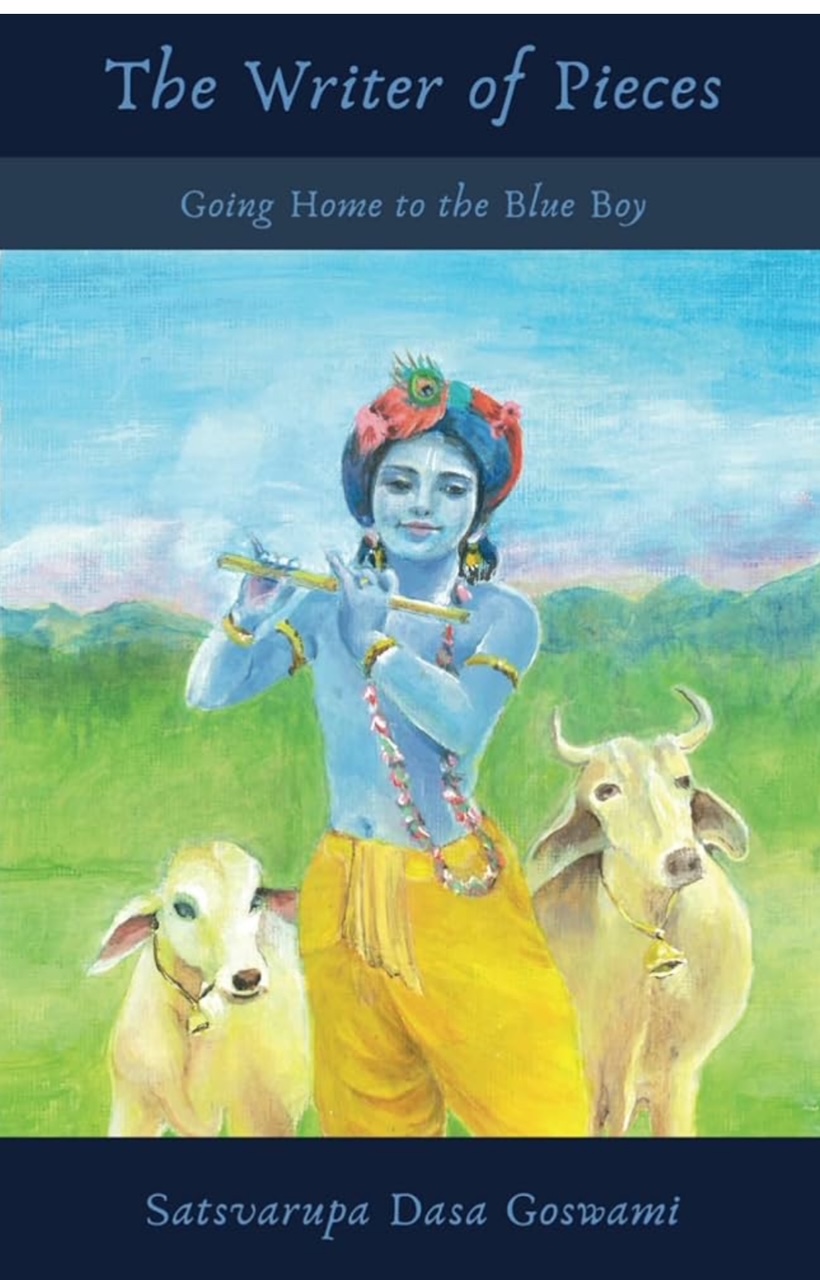
Don’t take my pieces away from me. I need them dearly. My pieces are my prayers to Kṛṣṇa. He wants me to have them, this is my way to love Him. Never take my pieces away.

Many planks and sticks, unable to stay together, are carried away by the force of a river’s waves. Similarly, although we are intimately related with friends and family members, we are unable to stay together because of our varied past deeds and the waves of time.
To Śrīla Prabhupāda, who encouraged his devotees (including me) To write articles and books about Kṛṣṇa Consciousness.
I wrote him personally and asked if it was alright for his disciples to write books, Since he, our spiritual master, was already doing that. He wrote back and said that it was certainly alright For us to produce books.
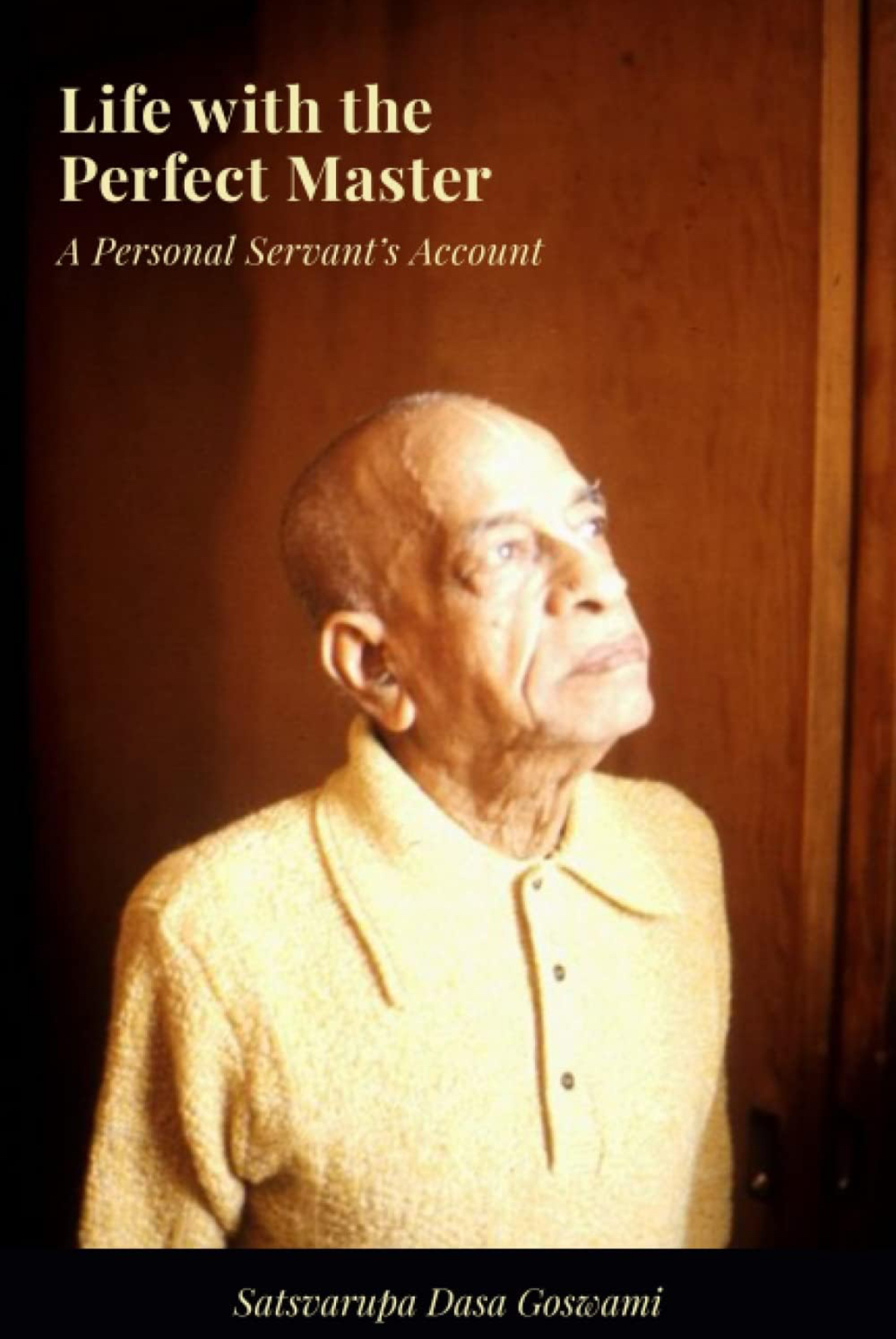
I have a personal story to tell. It is a about a time (January–July 1974) I spent as a personal servant and secretary of my spiritual master, His Divine Grace A.C. Bhaktivedanta Swami Prabhupäda, founder-äcärya of the International Society for Krishna Consciousness. Although I have written extensively about Çréla Prabhupäda, I’ve hesitated to give this account, for fear it would expose me as a poor disciple. But now I’m going ahead, confident that the truth will purify both my readers and myself.

First published by The Gītā-nāgarī Press/GN Press in serialized form in the magazine Among Friends between 1996 and 2001, Best Use of a Bad Bargain is collected here for the first time in this new edition. This volume also contains essays written by Satsvarūpa dāsa Goswami for the occasional periodical, Hope This Meets You in Good Health, between 1994 and 2002, published by the ISKCON Health and Welfare Ministry.

This book has two purposes: to arouse our transcendental feelings of separation from a great personality, Śrīla Prabhupāda, and to encourage all sincere seekers of the Absolute Truth to go forward like an army under the banner of His Divine Grace A.C. Bhaktivedanta Swami Prabhupāda and the Kṛṣṇa consciousness movement.
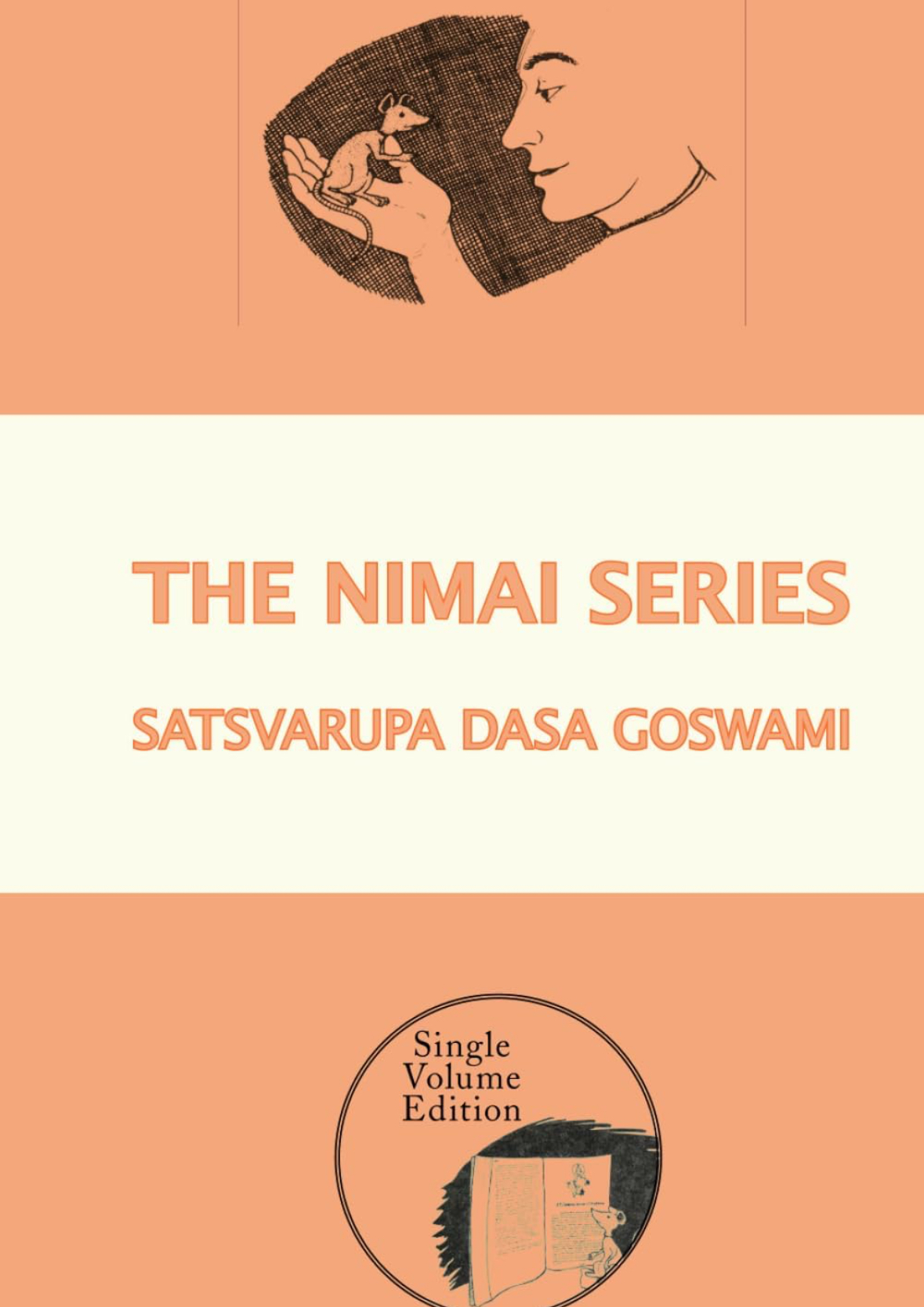
A single volume collection of the Nimai novels.
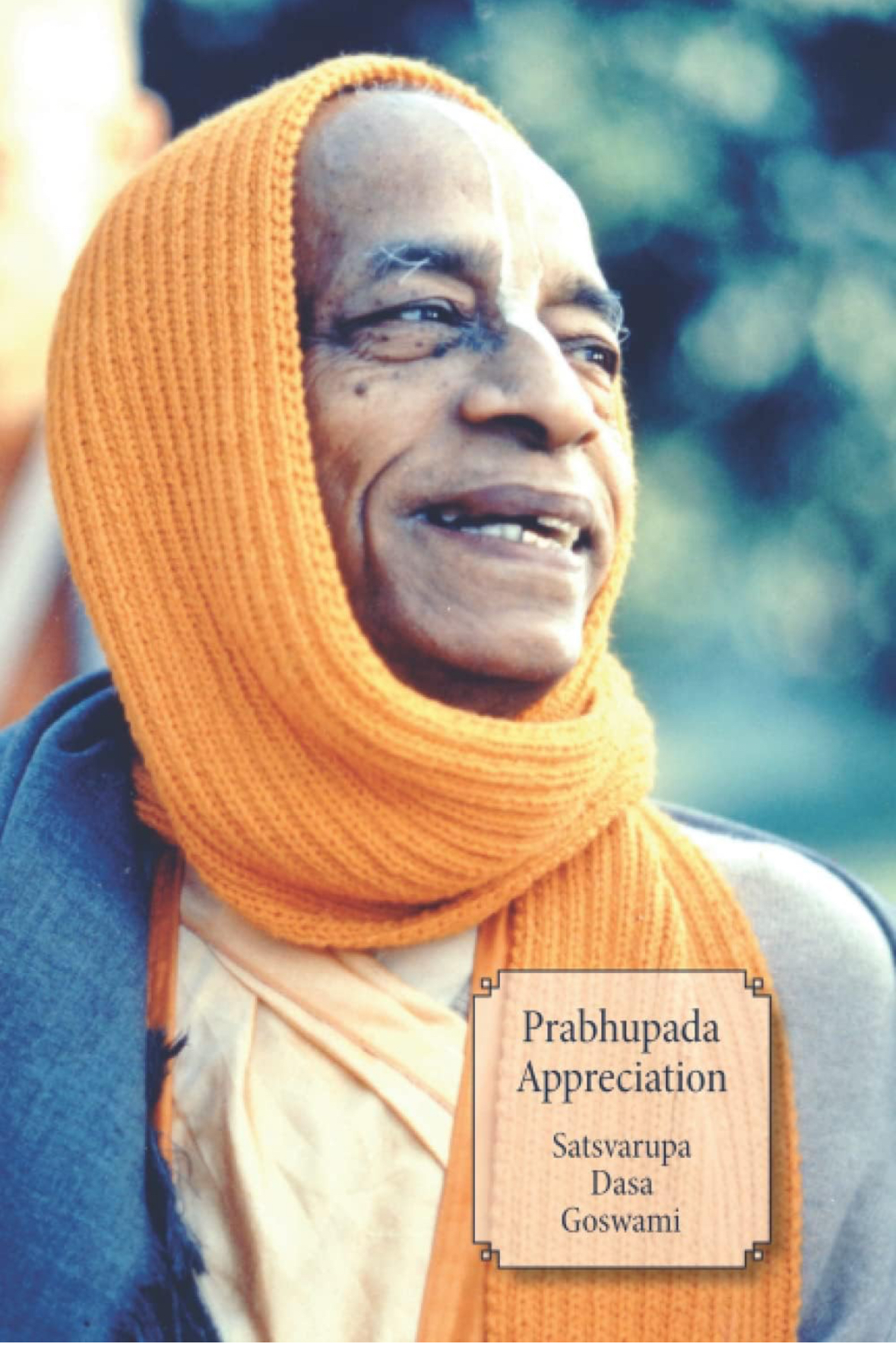
Śrīla Prabhupāda was in the disciplic succession from the Brahmā-Mādhva-Gauḍīya sampradāya, the Vaiṣṇavas who advocate pure devotion to God and who understand Kṛṣṇa as the Supreme Personality of Godhead. He always described himself as simply a messenger who carried the paramparā teachings of his spiritual master and Lord Kṛṣṇa.
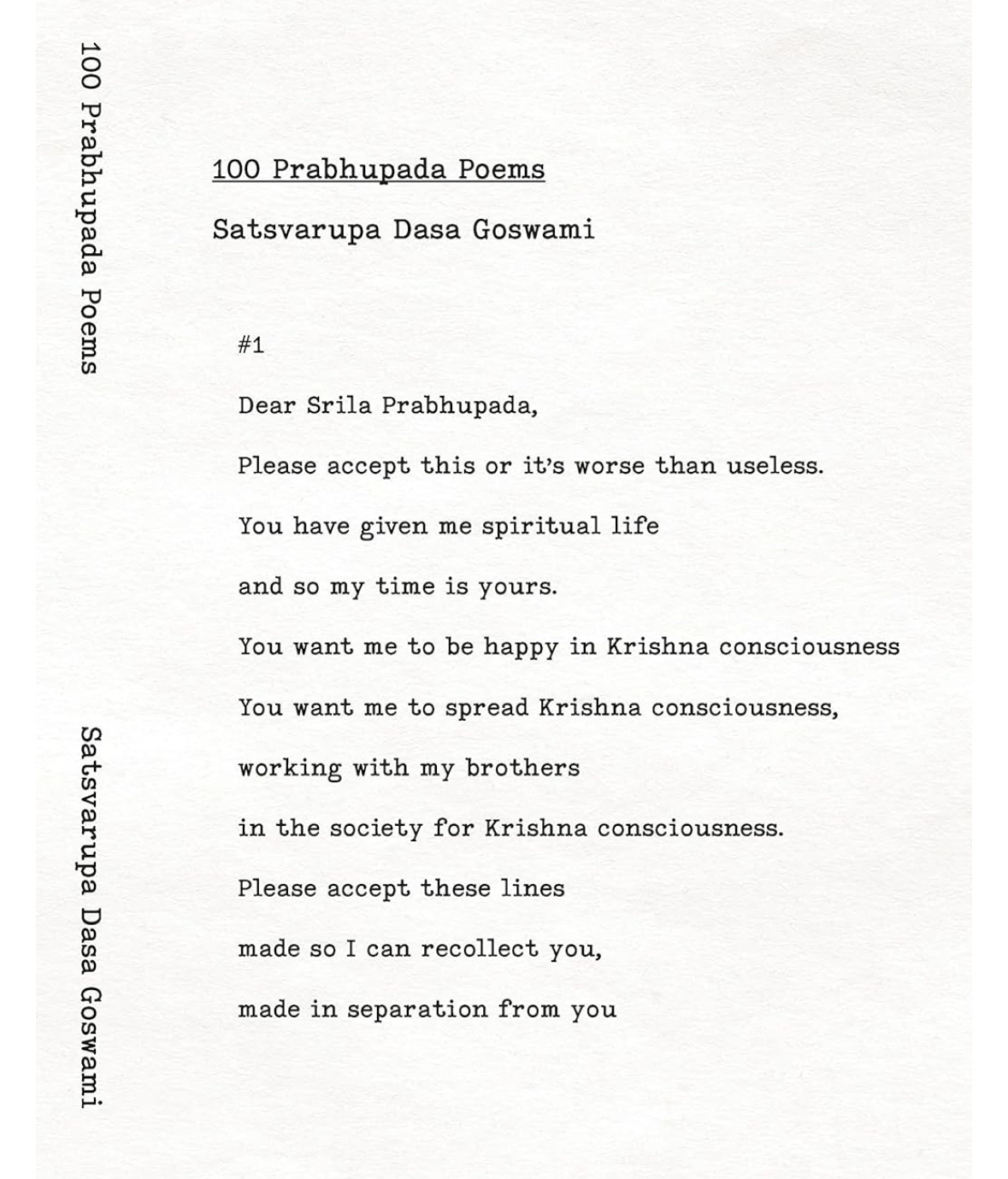
Dear Srila Prabhupada,
Please accept this or it’s worse than useless.
You have given me spiritual life
and so my time is yours.
You want me to be happy in Krishna consciousness
You want me to spread Krishna consciousness,
This collection of Satsvarūpa dāsa Goswami’s writings is comprised of essays that were originally published in Back to Godhead magazine between 1966 and 1978, and compiled in 1979 by Gita Nagari Press as the volume A Handbook for Kṛṣṇa Consciousness.
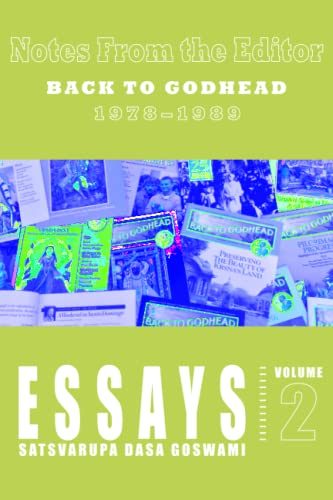
This second volume of Satsvarūpa dāsa Goswami’s Back to Godhead essays encompasses the last 11 years of his 20-year tenure as Editor-in-Chief of Back to Godhead magazine. The essays in this book consist mostly of SDG’s ‘Notes from the Editor’ column, which was typically featured towards the end of each issue starting in 1978 and running until Mahārāja retired from his duties as editor in 1989.
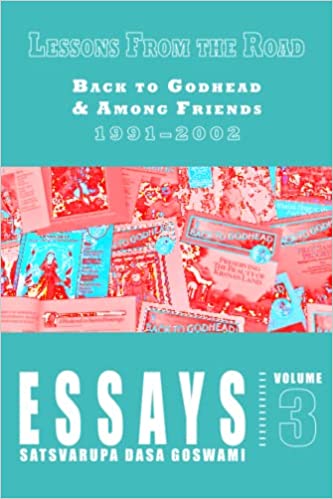
This collection of Satsvarupa dasa Goswami’s writings is comprised of essays that were originally published in Back to Godhead magazine between 1991 and 2002, picking up where Volume 2 leaves off. The volume is supplemented by essays about devotional service from issues of Satsvarupa dasa Goswami’s magazine, Among Friends, published in the 1990s.

“This is a different kind of book, written in my old age, observing Kṛṣṇa consciousness and assessing myself. I believe it fits under the category of ‘Literature in pursuance of the Vedic version.’ It is autobiography, from a Western-raised man, who has been transformed into a devotee of Kṛṣṇa by Śrīla Prabhupāda.”
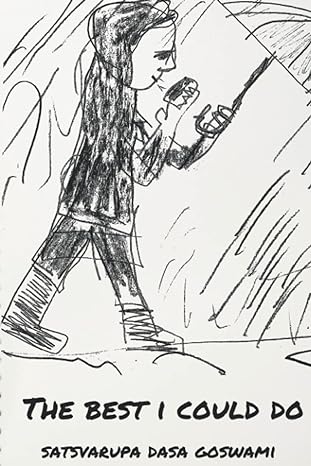 The Best I Could Do
I want to study this evolution of my art, my writing. I want to see what changed from the book In Search of the Grand Metaphor to the next book, The Last Days of the Year.
 a Hare Krishna Man
It’s world enlightenment day
And devotees are giving out books
By milk of kindness, read one page
And your life can become perfect.
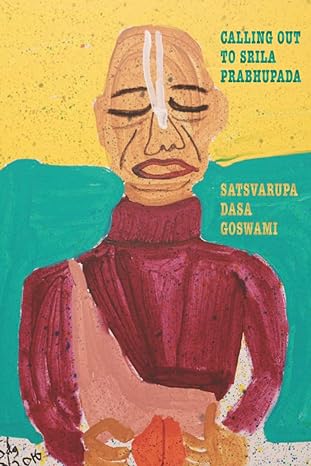 Calling Out to Srila Prabhupada: Poems and Prayers
O Prabhupāda, whose purports are wonderfully clear, having been gathered from what was taught by the previous ācāryas and made all new; O Prabhupāda, who is always sober to expose the material illusion and blissful in knowledge of Kṛṣṇa, may we carefully read your Bhaktivedanta purports.
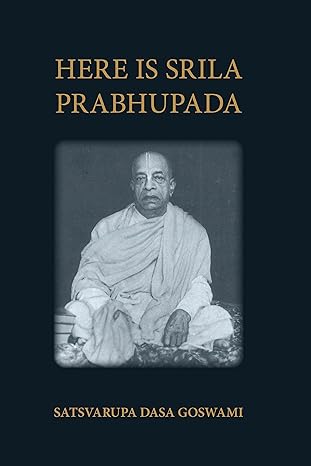
I use free-writing in my devotional service as part of my sādhana. It is a way for me to enter those realms of myself where only honesty matters; free-writing enables me to reach deeper levels of realization by my repeated attempt to “tell the truth quickly.” Free-writing takes me past polished prose. It takes me past literary effect. It takes me past the need to present something and allows me to just get down and say it. From the viewpoint of a writer, this dropping of all pretense is desirable.
 Geaglum Free Write
This edition of Satsvarūpa dāsa Goswami’s 1996 timed book, Geaglum Free Write Diary, is published as part of a legacy project to restore Satsvarūpa Mahārāja’s writings to ‘in print’ status and make them globally available for current and future readers.