
We need to expand our team of proofreaders as we aim to increase the rate of republication of Satsvarūpa Mahārāja’s books as well as new books that he writes.
This includes a need for fluent bilingual Spanish and English speakers to proofread Spanish translations (we currently have around 20 Spanish translations waiting to be proofread).
Anyone interested in this particular service should contact Manohara dāsa at [email protected]
If you would like to help, please contact Kṛṣṇa-bhajana dāsa at [email protected] or [email protected] and we will find you a service that utilizes your talents.
Last night at our meeting, I first played a tape by Srila Prabhupada in which he said bhagavata-bhakti-yoga has been made very simple and easy by Lord Caitanya. Just chant Hare Krsna. Prabhupada then explained the verse of Siksastakam, ending by saying the unfortunate class of persons commit offenses and don’t have taste for the chanting. Then I told how I had felt positive during the day, but the chanting is it, not a mere approach to God or discussion about Him. It’s Krsna in the most direct form. We may not taste the bliss, but if we want direct access, this is it. Nothing else needs to be done but chanting.
******
I read a quote from Namamrta that if one chants offenselessly, he becomes qualified to initiate disciples all over the world; he is jagad-guru. I don’t claim I am that, but it’s proof that a guru requires this. His disciples then become attracted to chanting and when he sees this he is in ecstasy. Another quote says a sannyasi need do nothing else but always chant Hare Krsna. I read the Second Canto verse on “steel-framed heart.”
******
Madhu said he thought that in this retreat he would progress step-by-step up to realization that Radha and Krsna are addressed in the mantra. But he has come “down to earth” and is at the first step of offenses. He read the purport where Srila Prabhupada recommends the names of Gaura and Nitai (Panca-tattva mantra) as more essential in this age than the Hare Krsna mantra. So we need to call on Their mercy before we chant Hare Krsna.
******
I discovering mechanical chanting as a stage beyond direct indulgence in inattention. “Mechanical” here means attentive to the mechanics, and it’s not a bad thing. But of course, it’s not yet done with the heart.
******
Today is the fifth day of seven. The sixty-four rounds are ahead of me as I write this. It’s a chore, but not a dreaded one. You just enter it and start swimming all day, two hours here, an hour there (on the walk), three hours in the living room with the fire in the fireplace, another three hours in the afternoon . . .
******
Hare Krsna Hare Krsna comes to mind when you wake. You sleep soundly. Dreamt that Jesus worship was introduced in ISKCON and one devotee was representing it by wearing a picture of Christ on his T-shirt. He was like the figurehead or representative. That’s a real “dream” which will never happen in ISKCON as far as I can see. One reason in the dream for this worship was that when devotees already have faith (as some do in Jesus), then that is something rare and should be taken advantage of and used. That was their explanation why this would work although even in the dream people were doubtful and were aware that it was controversial.
******
In reality, it is a private thing, not a worked out theology or something to advocate—or worry about. Sri-krsna-caitanya-prabhu nityananda. Chant the names of Gaurahari and Lord Nityananda.
******
It’s another day and don’t take it for granted. Each one comes from God through His energies. I hope I can chant sixty-four rounds and not get a headache. Need about nine hours. Chant so you can hear the chanting. All glories to Sri Krsna.
******
Last night I also read a statement that we should chant Hare Krsna mantra as practice for death. At death, Srila Prabhupada says even a person who has an accustom to chanting all his life may find it very difficult to chant. Therefore while we are healthy and able, we should use the time in the chanting. Then it’s more likely that we’ll be able to chant at the difficult hour. I said if I get notice of my death, I would probably do this, go somewhere and stop all else except chanting sixty-four (or more) rounds. Therefore, we are doing that now.
pp. 75-77
Narada-krpa (formerly Mrgari the hunter) said, “I was so demoniac that I wanted to chastise even Narada Muni. I looked up at him and started to form a curse, but then I couldn’t. He immediately had a positive effect on me. You would have to see him to understand. I cannot explain it in words. Narada was coming straight from the almighty Personality of Godhead. His body is effulgent. His movements are commanding, yet beautiful and gentle. He overpowered me, and suddenly I could do him no harm. I sensed that he was protected by a higher power.
“So I found myself speaking in a friendly, respectful way, something I never did. I addressed him, “O gosvami, O great sadhu! Why have you walked off the path? I was just about to shoot several animals, but by your coming to me they have now fled.’ He said, ‘I have come to you to settle a doubt in my mind.’ He asked me if I was the person who had half-killed so many animals. Of course I owned up to it. I didn’t see anything wrong with it. I claimed them as mine. So Narada said, ‘Why didn’t you kill them? Why did you leave them like that, twisting in pain?'”
“This practice of half-killing is widespread,” said Visnu-rata.”Yes, just as your father taught you this, my father taught me. I told Narada Muni, ‘When I see half-killed animals suffer, I feel great pleasure.’ What an idiot I was—and a poor wretch—that I gloated as I told him. I wasn’t angry with him, but I was just telling him how I felt about it.
“Narada Muni is very powerful, Visnu-rata. He has cursed sinful persons for doing much less than I did. He once cursed two sons of demigods for being naked and drunk with women in an upper planet. Of course, his curse is also a form of blessing. But with me, he was very gentle. He was indirect at first. He said, ‘I have one thing to ask of you.’ I was not in the habit of giving alms. I am sure your father is the same way. Imagine, first a sadhu manages to chase away your prey by walking loudly on the path, and then he asks you for alms! But I was under Narada’s sweet control from the beginning. I really liked him! I thought, ‘Let me give him whatever he wants.’ I offered him skins. I wanted to take him to my home and let him take a pick of the best deer skin or tiger skin. Little did I know what he was actually begging for.
Narada Muni said, “I don’t want such things. But I beg you that from now on, you don’t leave animals half-killed.” These words had a profound effect on me. Yet I couldn’t figure out what he was saying. I knew that he was wonderful, but what a strange request! So I asked him, not as a challenge, but I just didn’t know and I wanted him to tell me—’Please explain what is wrong with what I did to the animals?’ It is only by his grace that I had reached this point of open-minded inquiry because usually, I didn’t give a damn about sadhus. So Narada replied that it was bad enough that I was killing at all, and for that I would have to suffer a reaction, ‘But when you half-kill them, you give them great pain, and that same pain will be inflicted on you.'”
“This is the point I want to ask you about,” said Visnu-rata. “I mean, did you change everything in your life—a complete turnabout—just by his uttering those few words? I ask because I am finding that the propensity to kill is deeply rooted in me. I have heard your words and they have changed my mind. But something goes deeper and I can’t get rid of it yet.”
“He convinced me by these words,” said Narada-krpa. “He said, ‘All the animals that you have killed and given unnecessary pain to will kill you one after the other in your next life, and life after life.’ But these weren’t theoretical words. When he spoke them, I saw what he said. I saw myself being attacked by stags with antlers and tigers with teeth and claws. I saw myself and felt the pain coming, not just in one lifetime, but in hundreds of lives. I had killed hundreds and thousands of animals, and therefore each one . . . each one. I saw that it would happen. I was struck with fear!’
“You saw a vision?”
“Call it what you like. As he uttered his words, I knew them as facts. I felt the nature of my own deeds. For the first time in my life, I realized that I wasn’t going to get away with it. Every single act of pain I had caused others was going to come back to me. Each animal would have a chance to attack me, ‘Remember me, Mrgari? I was the deer you left half-flapping by the river. Now I have come to get you.’ Remember me, Mrgari? I was the rabbit . . . ‘ I knew that it was coming and I wanted to be spared. This was entirely due to Narada’s association. I was convinced on the spot that I was an offender. I fell down at his feet and asked how I could be saved.”
Narada-krpa was engrossed in the past. But then he suddenly returned to the present situation in the room, aware of Visnu-rata and the gravity of the moment.
“Now I see everything differently,” said Narada-krpa, “including the animals.” While they spoke, little chipmunks ran in and out of the cottage, and sometimes birds perched on the window opening. Visnu-rata could see the harmony between man and beast that resulted from Narada-krpa’s nonviolence, and he felt a little envious.
“I have a way with animals too,” said Visnu-rata. “I never developed it much, but if I want to, I can get really close to them and even talk to them.”
Narada-krpa smiled. “Then you should become their protector,” he said.
Visnu-rata mulled those words over thought-fully. He liked the idea.
“Did you have to do anything special to get rid of the sins?” Visnu-rata asked. “I mean, how did you know that you were forgiven? How do you know the reaction is gone?
“All I know,” said Narada-krpa, “is what my spiritual master, Narada Muni, says. That may sound naive to some people, but I think you understand. And of course, I have my own feelings about it. But in bhakti, you don’t have to perform separate atonement for sinful reactions. If you sincerely surrender to Krsna and His representative, then Krsna absolves you. He says in the Bhagavad-gita, “I will release you from the reaction to all your sins. Do not fear,” and He says to give up all other religious practices. If you just serve Krsna by chanting and hearing as Narada told me to do, then the slate is wiped clean. You can start new in this life.”
pp. 58-64
Sat by the ocean harbor.
My beads are my beads.
My life is my life, given to
me by Krsna,
the Supreme Creator.
My illusions are
mine too. Now I’m
starting to tell stories
of my youth and then my life in
ISKCON.
Why? I want to get good
at it. I feel it will
develop; it’s a skill to be
open and to tell the
truth
palatably. I can insert
Krsna conscious sermons into my
real stories.
There’s no harm in that
because that’s how my life was.
I wandered and got lost and
my spiritual master rescued
me—an old
story of a fresh triumph—
victory tacked on to defeat
again and again.
If you can make a purse
from a sow’s ear, a vase from
broken wires
and a smashed gourd, I can
make a Krsna conscious poet
out of that guy in the
drip-dry shirt working in the
welfare office, the guy with the
fashionable shoes, the scrawny
guy.
We played, “This rasa is my favorite”
while we walked the lanes of
Vrndavana, heard stories from
panditas and even from one
who had reached the stage where
he wanted only to talk of Rupa-
Raghunatha.
Well, where are we now?
Two hours south of Roskof, France. My Deity
is Prabhupada.
We carry him
everywhere. He sits on
any clean, flat
surface I find. I carry
him, he carries me;
he accepts the
offerings of food I
make by reciting his
pranamas.
What else? Whom do I love? Am I
afraid of
death? I’m afraid of you, of me,
of death by a
man who’s my neighbor if he comes
in the night with a gun—afraid.
I know Krsna will protect me, but I’m
not eager to have it tested in tight
places. Krsna’s protection comes
at His bidding.
Precious night, but there’s still sun
and dandelions. I’m grateful.
He walked the willow ways,
thinking himself better than T.,
a light-weight intellectual,
and better than S., a scholastic—
“What does he know about
writing poems?” He thinks
himself better, but knows better.
He seeks their ways,
strange that those nondevotee
poets haunt and influence
more than we’d
like to acknowledge.
What is their power? To be able
to write a graceful line, uncork
a truth? I want to learn it
for Krsna, but it is dangerous to go
to them and ask, “Teach
me.” They will extract a
price I don’t want to pay.
Why not continue my clumsy Brooklyn
Dodgers approach? Knock them over
the right-field fence only 297 feet away, as
Duke Snider did forty
times a year. Knock them out of sight
like Campy swung and Reese
gobbled up the ground balls.
I can do it—
whatever I learned in the sandlots.
Bhaktisiddhanta Sarasvati
Thakura says to turn it over to
the Lord.
The Lord is the
origin of all. He can
teach me any language, smooth or
rough. Go that way.
He asked, “When you were informed
by Prabhupada that you were
on the GBC, did you feel the
responsibility of it?”
I don’t remember. I was a
skinny T.P. The skinny
T.P., he’s in
samadhi. I don’t want to tell
bad tales of 1970. It was
at least full-time service,
which can lead us back
to Godhead, but first our
Guru Maharaja will have
to train us further—a
few hundred lifetimes?— until we
become brave and clean and
desireless except for the
greed to hear of the
Lord,
believing with all our
hearts and doing whatever
he asks.
Try to sell a hundred magazines or
books in a
day. Convince them to
change the name of the
airport to O Hare Krsna.
Whatever.
I have no time for a crack in our
society.
I recall it (1970) now
and at the same
time plan to drive to
Rome and catch a
plane to India and
go on parikrama
without my shoes.
I will be serious.
pp. 47-49
Miraculously, Srila Prabhupacla had done some Caitanya-caritamrta dictation that morning after being up all night, and at the first opportunity I set up the equipment and typed out his words. He had been translating Lord Caitanya’s instructions to Rupa Gosvami and was commenting on verses dealing with the bhakti-lata-bija , the plant of devotional service. Lord Caitanya was describing to Rupa that an offense to a Vaisnava is like a mad elephant that destroys the young plant. In several of the purports Prabhupada seemed to be addressing the discrepancies and problems that he had confronted in Hawaii and Hong Kong. One purport in particular pointed out the danger of so-called advanced devotees and the danger of leaving the society of devotees. As I typed out these words, I knew that I wanted to save them and show them to Bhurijana and others:
When the bhakti-lata creeper is growing the devotee must protect it by fencing it all around. The neophyte devotee must be protected by being surrounded by pure devotees. In this way he will not give the maddened elephant a chance to uproot his bhakti-lata creeper. When one associates with nondevotees, the mad elephant is set loose. Caitanya Mahaprabhu has, said: asat sanga tyaga—avaisnava acara. The Vaisnava is to give up the company of nondevotees. A so-called mature devotee, however, commits a great offense by giving up the company of pure devotees. The living entity is a social animal, and if one gives up the society of pure devotees, he must associate with nondevotees (asat sanga). By contacting nondevotees and engaging in nondevotional activities, a so-called mature devotee will fall victim to the mad elephant offense. Whatever growth has taken place is quickly uprooted by such an offense. One should therefore be very careful to defend the creeper by fencing it in—that is, by following the regulative principles and associating with pure devotees.
If one thinks that there are many pseudo-devotees or nondevotees in the Krsna consciousness society one can keep direct company with the spiritual master, and if there is any doubt, one should consult the spiritual master. However, unless one follows the spiritual master’s instructions and the regulative principles governing chanting and hearing the holy name of the Lord, one cannot become a pure devotee. By one’s mental concoction one falls down.
But Prabhupada already had in mind to share the purport with Bhurijana. He called him to his room and played it right off the dictaphone tape, complete with all the pauses and dictaphone click-click sounds. Bhurijana came out and told me that hearing the tape was like having arrows going into his heart. Now he and his wife were very contrite, considering themselves mad elephant offenders. I said that I didn’t think that Prabhupada meant they were offenders, not as long as they followed his instructions. They continued to feel devastated, but now they were clearly convinced that they had to follow Prabhupada. Jagattarini wanted to start performing Deity worship, at least in her home, since as yet they didn’t have a formal temple in Hong Kong. And Bhurijana wanted to surrender to whatever Prabhupada wanted him to do. They bought Prabhupada gifts, a soft gold ring with the letter “P” imprinted on it, and a gold I.D. bracelet. Accepting the ring, Prabhupada took a gold ring from his own finger, placed it in the ring box just given to him by Bhurijana, and presented the ring and the box to Jagattarini.
“If someone doesn’t come to Krsna consciousness,” Prabhupada said, “it is very unfortunate. If someone does come to Krsna consciousness, then he is fortunate. But if someone comes to Krsna consciousness and then leaves before he is mature, then that is the most unfortunate.”
“Prabhupada?” Bhurijana said, “Yesterday you said that I should go to the Mayapur festival and I said that I didn’t want to. But if you want me to, then I will go.”
“Yes,” said Srila Prabhupada, “and bring some Chinese.”
The Hong Kong newspapers ran accounts of Srila Prabhupada’s press conference: “Spiritual Leader of Hare Krsna Movement Calls Popular Guru a Cheat:” The following day Newsweek magazine published a short article with the heading, “Trouble in Nirvana.” Prabhupada chuckled as he read the report. “They have quoted me accurately,” he said. “I did not want to speak against him, but they insisted. I could not help myself. I had to say it: he is a cheat. It is a fact. He says he is God, but if he has a toothache he will be in difficulty. What kind of God is that?”
Bhurijana wanted to bring the good results of his preaching before Srila Prabhupada. He said there was a nice Chinese gentleman who desired to meet Srila Prabhupada. Bhurijana had used the word “gentleman” to describe Yung Pak Hei, even though Yung was only twenty-five years old. He felt the word fitting because Yung was a reserved young man and wore a shirt with a tie. But when Bhurijana brought Yung before Prabhupada, Prabhupada asked, ‘Where is the gentleman?”, since he was expecting an elderly man.
Yung Pak had become attracted to Krspa consciousness through Bharijana’s preaching, and he was now chanting sixteen rounds and donating money from his job as an engineer.
In a respectful and confidential spirit he inquired from Srila Prabhupada. “I am still attached to my family. So I want to know, can I still prosecute Krsna consciousness?”
With disarming boldness, Prabhupada replied, “It is not very surprising that you are attached to your family. Even the birds and dogs and cats are attached to their families.” Yung Pak Hei took the remark like a gentleman and became very attached to Srila Prabhupada. The next time he saw Prabhupada, Yung bowed down and made fully prostrated obeisances.
“This is an advanced devotee exclaimed Srila Prabhupada, “one who makes obeisances to the spiritual master, not one who goes away to seek his own prestige!”
pp. 80-83
Who is to blame?
Remember temple packed and eyes on Krsna and me too in silk,
ah don’t, don’t, there’s no use
berating and sarcastic about it,
or have yearning for it,
Live in times that are with you now . . .
The creek today and
the meeting which will be successful
in a few hours.
You will hold their attention with Bhagavatam excerpts and get them to write on the virtues of devotees. That’s nice, and if you die, if anyone dies, especially your own self, then you have done what you could.
I just gave them a writing assignment to answer a doubter who says devotees are ordinary. You quote Bhagavad-gita 10.9 and other verses to him but he says, “Oh, that refers to pure devotees, not devotees in ISKCON.”
I hope they’ll get it; they usually do. What about me?
I believe devotees have the heart right, but gee, often they are off and they manifest bad qualities. So what to do? Api cet. Don’t deride them. They have a great quality in that they worship and serve Krsna. I have to keep remembering that good quality, and Krsna says they will soon be rectified.
I admit they have bad habits. But this thing that they do have makes them different.
That doesn’t mean you have to intimately associate with devotees you don’t like even though they may be in lower modes. Visvanatha Cakravarti Thakura says we don’t have to feel obliged to intimately associate with a devotee who’s in the modes of ignorance or passion. Yet if they accept Lord Kona as the Supreme Personality of Godhead I want to honor them. Honor them mentally. The opposite, to deride them, is disobedient to Lord Krsna’s saying api cet su-duracaro.
Also seek the spark. Don’t be so negative. Don’t focus on faults. “Look,” the sieve said, “The needle has a hole!”
They’re okay. Others are also okay because everyone is a spirit soul.
“Devotees are pseudo.”
No. Krsna doesn’t say that. Or some may be pseudo but not all. You can’t say that.
“I do.”
Well it’s not true. By faith in holy name and sastra and renunciation of four sins, these people are achieving.
“They’re just after money.”
They can be rectified. But even when faulty, over-aggressive, etc., they still give the money to Krsna.
(Oh, I pray here that these devotees will appreciate other devotees and glorify devotees and not fall down.)
(Some are coughing. I hope I don’t catch the flu from them. Some are not writing. One I know feels too spiritually weak to argue back. Another knows English only as her second language. Another prefers to knit.)
I am not such a great lover of devotees, but I pray to be so. Hare Krsna Hare Krsna.
Wonderful kirtana in temple before Radha-Damodara and all devotees. In the half-hour before the arati I had to speak. Told them Lord Caitanya emphasized kirtana. Prabhupada also gave us kirtana as a main thing. Then I read their papers, impressions of kirtana from the other night. Kirtana itself was slow and soft of majestic before Their Lordships. Singing, went by quickly, the gracious room of dancing and floating and beings merged in kirtana-rasa. Then for last half-hour we sampled from the Bhaktivedanta Purports. “No Vedic ceremony is complete without distribution of foodstuff,” I gave out cookies. So simple and sublime. Let us always live like that with such a simple program.
Oh, and the best moment of all was after the kirtana. I had a tape of Srila Prabhupada cued from 1966. He said Krsna is omnipotent. We are practiced to say that God is omnipotent and that means He is fully present in His name and words. His words in Bhagavad-gita . . . The same point I wanted to make in my writing course. It is not concocted by me to personalize the Gita. It is intended not just for Arjuna long ago but each one of us. Prabhupada clear and strong, friendly, coming into the room. Close your eyes and hear him throughout your being. He’s present fully in his words, our Prabhupada. Cars in background Second Avenue 1966 . . . He said Krsna is here, take to Krsna consciousness. Krsna is very friendly too and is in our hearts. This is Krsna consciousness.
Coming back from the temple, January 16th is a full moon. We saw a brief darsana of the moon, then again she ducked behind the clouds. The warm weather is turning back toward wintry, the mud back to hard ridges of earth. The porch is cold. Haribol. They may attack us, who? We will have to call for Lord Krsna as Lord Nrsimhadeva. Please kill the elephantine vices in us with Your lion roar, please take away our fears and grant us remembrance of the holy name-form of Krsna.
pp. 1-16
Don’t become annoyed if you suddenly remember
that you can’t live forever
and the vandals have torn down
the “ISKCON Farm” sign once again,
and karmis are buying up houses
formerly owned by devotees.
Do what you can,
talking freely to your Lords.
Welcome back.
The curtains opened and I saw Them again,
with Lalita and Visakha.
Kalachandji is right there.
And this is just the beginning.
I have been hearing from devotees in Vrndavana,
that unless I go there I can’t feel anything.
“You have to get the mercy directly.
The dirt in any room in Vrndavana
is conscious, not like dirt in the West.
One grain can fulfill all your desires.”
But aren’t Lalita and Visakha
Their most intimate friends?
Isn’t Radha’s smile right here?
Can’t I come to Vraja with Damodara?
If it’s easier for people like me
to walk through autumn leaves in boots,
if we like to eat prasadam with brown swiss ghee
and if we feel comfortable here,
is that to be held against us?
I’ll go to India, but I’m just saying
Krsna is here.
On the last day of Karttika
there’s a brilliant moon
high over the temple.
During mangala-arati I think of Iraq.
Will there be a war?
I also thought of the mouse
who came out early in my room.
The pujari blocked my view, as she held the mirror, wiped the floor,
did everything with care. Why should I be upset if Damodara is enjoying?
Right now the way I feel
and the way it is,
is fine and
there’s nothing else I have to seek.
Praying to to Vrnda-devi,
“Please allow me to become
the maidservant
of Radha and Krsna in Vrndavana.”
November,
the young deer crackling the leaves.
If only they knew,
they would never leave Gita-nagari.
I waved the incense, flame and flower,
and placed a drop of water
in the palm of each devotee
as they came to water her.
Touch her earth, dance around.
For 20 years I never thought deeply
of the meaning of the song:
“I beg you to make me a follower
of the cowherd damsels of Vraja . . .
Thus within my vision I will
always behold the beautiful pastimes
of Radha and Krsna.”
Touch her earth,
dance around.
Last night we caught two mice
and when returning from the temple,
another one came out—
a bright gray fellow,
faster than the dark ones.
Madhu and I chased him
but he wouldn’t be caught.
If this keeps up, how will I be able
to concentrate on Radha and Krsna?
pp. 184-88
1969, Brooklyn Botanical Gardens
Passers-by stopped to hear as
Prabhupada told of Krsna in Vrndavana,
and he asked each disciple to stand and speak.
While the first devotee stood
I prepared my remark
for when he would look my way, “Satsvarup.”
He told the passersby
we are attracted to country places
because our original home is Goloka Vrndavana.
Brahmananda asked, “How is your health?”
Prabhupada replied, “The windows are broken
but there is a light on inside.”
A few weeks later, devotees went back
to the Brooklyn Botanical Gardens, and they tried
to recapture the spirit of the first visit.
This time two of the girls were dressed as Radha and Krsna,
but without Prabhupada, the whole thing
turned into prakrta-sahajiya.
What stories did he tell in the garden?
I can’t recall now,
but while riding on a plane
or when someone is talking to me,
I’ll recall what he said
and what it was like
to stand up
under the gaze of Prabhupada
and say what Krsna consciousness
means to me.
In my memoirs of Prabhupada, I usually describe myself as a fool, and I rub it in. But some readers may doubt that this is really how I feel. They may think that I’m just presenting the image of a fool without thinking it out carefully. They may think I’m working like this: In order to present my spiritual master as superior, I make myself the dupe, just like in the Punch & Judy puppet shows, where one puppet is held up and the other puppet hits him on the head—and everyone laughs. The fact is, I am not running a puppet show. The descriptions of myself are accurate, and according to sastra, the disciple is always a fool before the spiritual master.
A critical reader might find an even more insidi-ous motive at work in my memoirs. My playing the fool may be an attempt to ingratiate myself with the reader and to upstage Srila Prabhupada. Thus I try to become the more popular person on the page by my honesty in confession. Prabhupada is always right and superior, but I am more human and likeable. But honestly, I was always foolish, and Srila Prabhupada was consistently a seer of the truth. He was a genuine spiritual master and my well-wisher. That’s why I look up to him—as a truly superior and lovable person.
If unconsciously I have been trying to attract the readers to myself as lovable in contrast to a heavy guru, then let me expose it here once and for all—as foolishness.
Readers familiar with the Vedic conclusions will not doubt that I have presented the proper relationship between the disciple and the spiritual master. I do not claim the humility of a Rupa Gosvami, but at least it is correct for me to follow in his footsteps and present myself as lowborn and subject to many mistakes when I try to serve the pure devotee. I fit the bill in every way of the fallen disciple. And Srila Prabhupada fits the bill of the spiritual master. So no one should think I am creating a mock show for literary or personal effects.
My memories are a way to express my love for Prabhupada and to take my natural position as his disciple. The difference between Prabhupada and me is so vast that it’s not surprising all my stories come out with myself in error. When I tell the memories, it gives me a chance to see more deeply and to admit to more failings than I was able to admit previously. The “new lights” that occur to me when I remember Prabhupada make me more aware how I did not grasp what he was saying at the time. And thus I see better how foolish I was, how defensive and unsurrendered. I have every right to come to these conclusions. I like being a fool before the spiritual master. It’s parampara, accurate, and good for the heart.
If at the time I was with Prabhupada I did not feel foolish, and in fact felt rebellious, I should admit that also. I may also admit to any doubts I had at the time. One doesn’t have to be afraid that in order to present Prabhupada in a favorable way, you have to tell dogmatic stories or falsify. In my case, it comes out naturally that I did many foolish things.
Prabhupada and Brahmananda,
Prabhupada and TKG,
Prabhupada and Yamuna,
Govinda dasi . . Which is your favorite story?
Govinda dasi peeking into his room when
he’s alone, thinking, “Who is he?
No one actually knows how great he is!”
Yamuna hearing Prabhupada’s bhajanas with harmonium
at John Lennon’s estate;
TKG talking mind-to-mind, how to manage
the great and troublesome ISKCON:
“Prabhupada I see it like this, but what do you want?”
Brahmananda, recipient of more
Prabhupada letters than anyone;
Hari-sauri, who loved to hear him
and who had enough sense and devotion to keep a diary,
Sruti-kirti, who moved with ease
as a servant likable to his master.
These are only a few, out of thousands.
Together we make a picture of him, a collage of many Prabhupadas,
and yet he is one.
He came alone and left alone,
and taught us how
to always be with Krsna.
pp. 184-85
The last words of The Notebooks of Malte Laurid Brigge are dismal:
He was now terribly difficult to love, and he felt that only One would be capable of it. But He was not yet willing.
Our books do not end on such dismal notes, but we sometimes learn things from dismal masters. For example, Rilke’s advice to a young poet is something that a God conscious poet may certainly take. The young poet asked him if he could ask him about his doubts of bringing an inner life into unison. Rilke replied,
“It is always what I have already said: Always the wish that you may find patience enough in yourself to endure, and simplicity enough to believe; that you may acquire more and more confidence in that which is difficult, and in your solitude among others.”
Rilke advises the poet that it is not that he should live a life of solitude in some extraordinary way but that we all are solitary, and he just has to begin assuming it. There is so much more I could quote that is worthy of reflection and inclusion in the thoughts of a bhakta’s writing life, but there’s not time or room for it here. I’m digressing from my own themes.
Rilke’s persona ends his book,
“How could they know who he was? He was terribly difficult to love and he felt that only one would be capable of it. But He was not yet willing” (from The Notebooks of Malte Laurdes Brigge).
We devotees of Krsna not calling to a lord who is unlikely to reply, we do not interpret it that way. Krishna is willing, but it is I who am greatly attached to stay in the illusory world. Not yet willing to go to He who is calling for me and sending spiritual masters. Mostly I just hang around, or sometimes I become greatly exasperated and say what it is. I don’t like to go to others and talk about it. But my counselor said I should try that with trusted friends. Even if you can’t find a great mahabhagavat, you can find a trusted, friendly devotee who will not hurt you. And much of the time you have to live alone and focus on your lack and pray to Krishna, who is real. You’ve got the blues, but remember, you can also clap your hands in happy rhythm while waiting for a chance to talk deeper with the devotee and also get the chance to express yourself and die.
You should choose the best friends and eventually even the world-class friends have to be abandoned and you are solo flight toward Krishna. Be patient at all stages. Leaden weight. He’s a lonely guy but he sees people who was a benefit to him and whom he has helped. Ultimately waiting for his own cry to reach out. Krishna is already calling from the other side of the cloud, although you’re too attached and afraid to let go of your preoccupations. Your presupposed eclectic theme. You don’t know how down and out you are, how much you are in need of His mercy. That’s why you guys used human steroids instead of hitting natural home runs at a lower pace.
Yes, at last you must let go of all your attachments, your pride in writing your own way, your comforts and security of a circle of caretakers, your façade as theological eclectic seeker, “Self Reliance” memorizer, name dropper, jazz hearer. You really have to turn “to Mecca.” Or activate everything you’re doing, what we call Krishna-ize your life from top to bottom. Can you do that with “Night in Tunisia,” and missi de angelais and that new book you’ve heard they’re sending you, a biography of Jean Shepherd? You say you just can’t turn away from the world, but you know the way, the trick for turning it into light. You’d better be right. It’s no small gamble, my friend.

Viraha Bhavan Journal (2017–2018) was written by Satsvarūpa Mahārāja following a brief hiatus in writing activity, and was originally intended to be volume 1 in a series of published journals. However, following its completion and publication, Mahārāja again stopped writing books, subsequently focusing only on what became his current online journal, which began in August of 2018.

At first, I took it hard that I would have to live surrounded by the firemen, and without my own solitude. After all, for decades I had lived in my own house with my own books and my own friends. I was also now a crippled person who couldn’t walk, living among men who did active duties. But when Baladeva explained it to me, how it was not so bad living continually with other firemen and living in the firehouse with its limited facilities, I came to partially accept it and to accept the other men. I came to accept my new situation. I would live continually in the firehouse and mostly not go outside. I would not lead such a solitary life but associate with the other firemen.
Let me write sweet prose.
Let me write not for my own benefit
but for the pleasure of Their Lordships.
Let me please Kṛṣṇa,
that’s my only wish.
May Kṛṣṇa be pleased with me,
that’s my only hope and desire.
May Kṛṣṇa give me His blessings:
Kṛṣṇa Kṛṣṇa Kṛṣṇa Kṛṣṇa Kṛṣṇa he
Rāma Rāghava Rāma Rāghava
Rāma Rāghava rakṣa mām.
You mentioned that your pathway has become filled with stumbling blocks, but there are no stumbling blocks. I can kick out all those stumbling blocks immediately, provided you accept my guidance. With one stroke of my kick, I can kick out all stumbling blocks. —Letter by Śrīla Prabhupāda, December 9, 1972.
The Writing Sessions are my heart and soul. I’m trying my best to keep up with them. I am working with a few devotees, and they are far ahead of me. I wander in the wilderness of old age. I make my Writing Sessions as best I can. Every day I try to come up with a new subject. Today I am thinking of my parents. But I don’t think of them deeply. They are long gone from my life. Śrīla Prabhupāda wrote a poem when he was a sannyāsī, and he said now all my friends and relatives are gone. They are just a list of names now. I am like that too. I am a sannyāsī with a few friends. I love the books of Śrīla Prabhupāda. I try to keep up with them. I read as much as I can and then listen to his bhajanas.
The metaphor is song. Explain it. Yes, particulars may not seem interesting or profound to readers who want structured books.
Wait a minute. Don’t pander to readers or concepts of Art. But Kṛṣṇa conscious criteria are important and must be followed. So, if your little splayed-out life-thoughts are all Kṛṣṇa conscious, then it’s no problem.
I am near the end of my days. But I do like the company of like-minded souls, especially those who are Kṛṣṇa conscious. Yes! I am prone to Kṛṣṇa consciousness. I have been a disciple of Bhaktivedanta Swami Prabhupāda for maybe almost sixty years. Sometimes I fail him. But I always bounce back and fall at his feet. It is a terrible thing that I sometimes do not have the highest love for him. It is a terrible thing. Actually, however, I never fall away from him. He always comes and catches me and brings me back to his loving arms.

This edition of Satsvarūpa dāsa Goswami’s 1996 timed book, Upstate: Room to Write, is published as part of a legacy project to restore Satsvarūpa Mahārāja’s writings to ‘in print’ status and make them globally available for current and future readers.
A factual record of the reform and change in ISKCON guru system of mid ’80s.

Readers will find, in the Appendix of this book, scans of a cover letter written by Satsvarūpa Mahārāja to the GN Press typist at the time, along with some of the original handwritten pages of June Bug. Together, these help to illustrate the process used by Mahārāja when writing his books during this period. These were timed books, in the sense that a distinct time period was allotted for the writing, during SDG’s travels as a visiting sannyāsī

Don’t take my pieces away from me. I need them dearly. My pieces are my prayers to Kṛṣṇa. He wants me to have them, this is my way to love Him. Never take my pieces away.

Many planks and sticks, unable to stay together, are carried away by the force of a river’s waves. Similarly, although we are intimately related with friends and family members, we are unable to stay together because of our varied past deeds and the waves of time.
To Śrīla Prabhupāda, who encouraged his devotees (including me) To write articles and books about Kṛṣṇa Consciousness.
I wrote him personally and asked if it was alright for his disciples to write books, Since he, our spiritual master, was already doing that. He wrote back and said that it was certainly alright For us to produce books.
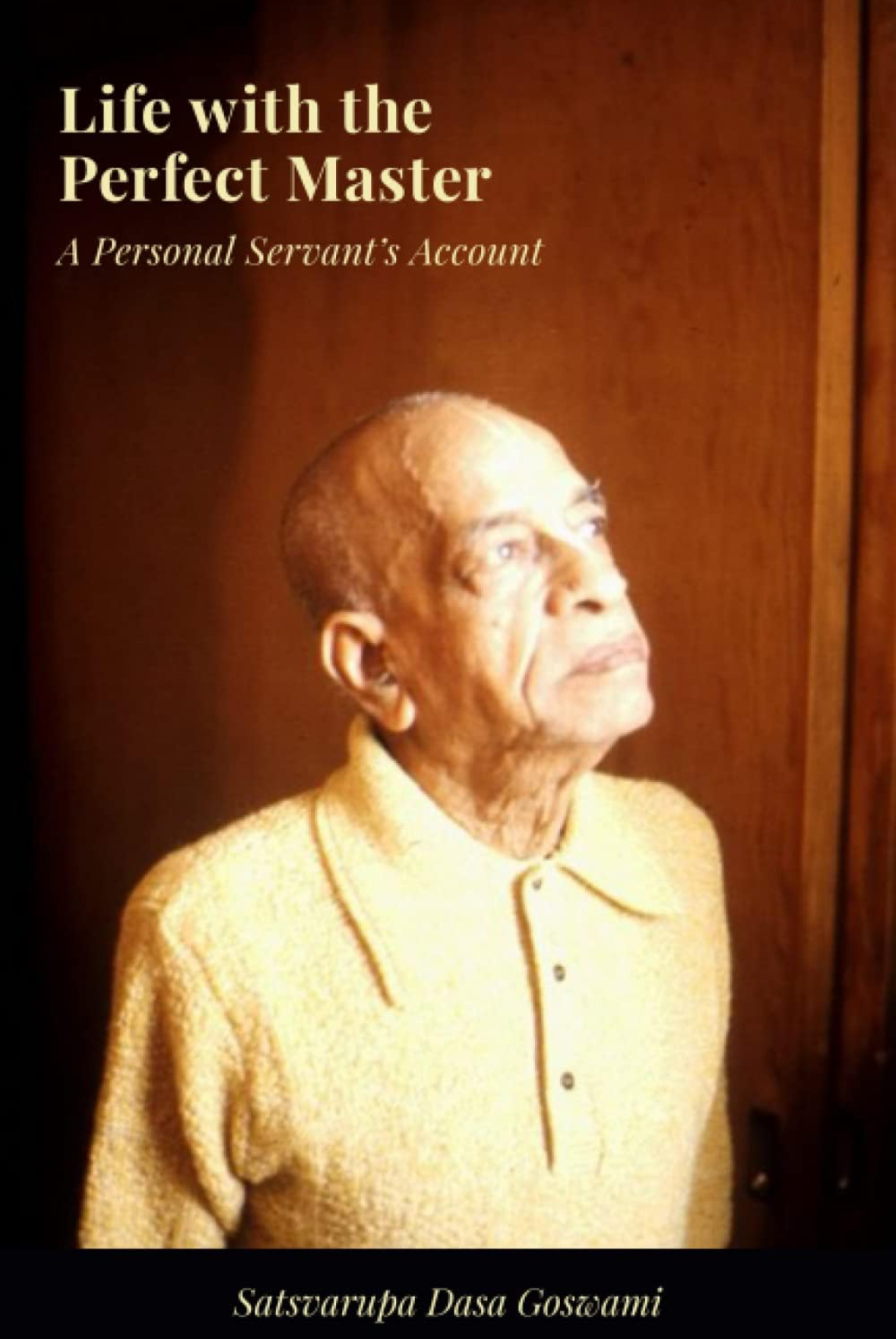
I have a personal story to tell. It is a about a time (January–July 1974) I spent as a personal servant and secretary of my spiritual master, His Divine Grace A.C. Bhaktivedanta Swami Prabhupäda, founder-äcärya of the International Society for Krishna Consciousness. Although I have written extensively about Çréla Prabhupäda, I’ve hesitated to give this account, for fear it would expose me as a poor disciple. But now I’m going ahead, confident that the truth will purify both my readers and myself.

First published by The Gītā-nāgarī Press/GN Press in serialized form in the magazine Among Friends between 1996 and 2001, Best Use of a Bad Bargain is collected here for the first time in this new edition. This volume also contains essays written by Satsvarūpa dāsa Goswami for the occasional periodical, Hope This Meets You in Good Health, between 1994 and 2002, published by the ISKCON Health and Welfare Ministry.

This book has two purposes: to arouse our transcendental feelings of separation from a great personality, Śrīla Prabhupāda, and to encourage all sincere seekers of the Absolute Truth to go forward like an army under the banner of His Divine Grace A.C. Bhaktivedanta Swami Prabhupāda and the Kṛṣṇa consciousness movement.

A single volume collection of the Nimai novels.
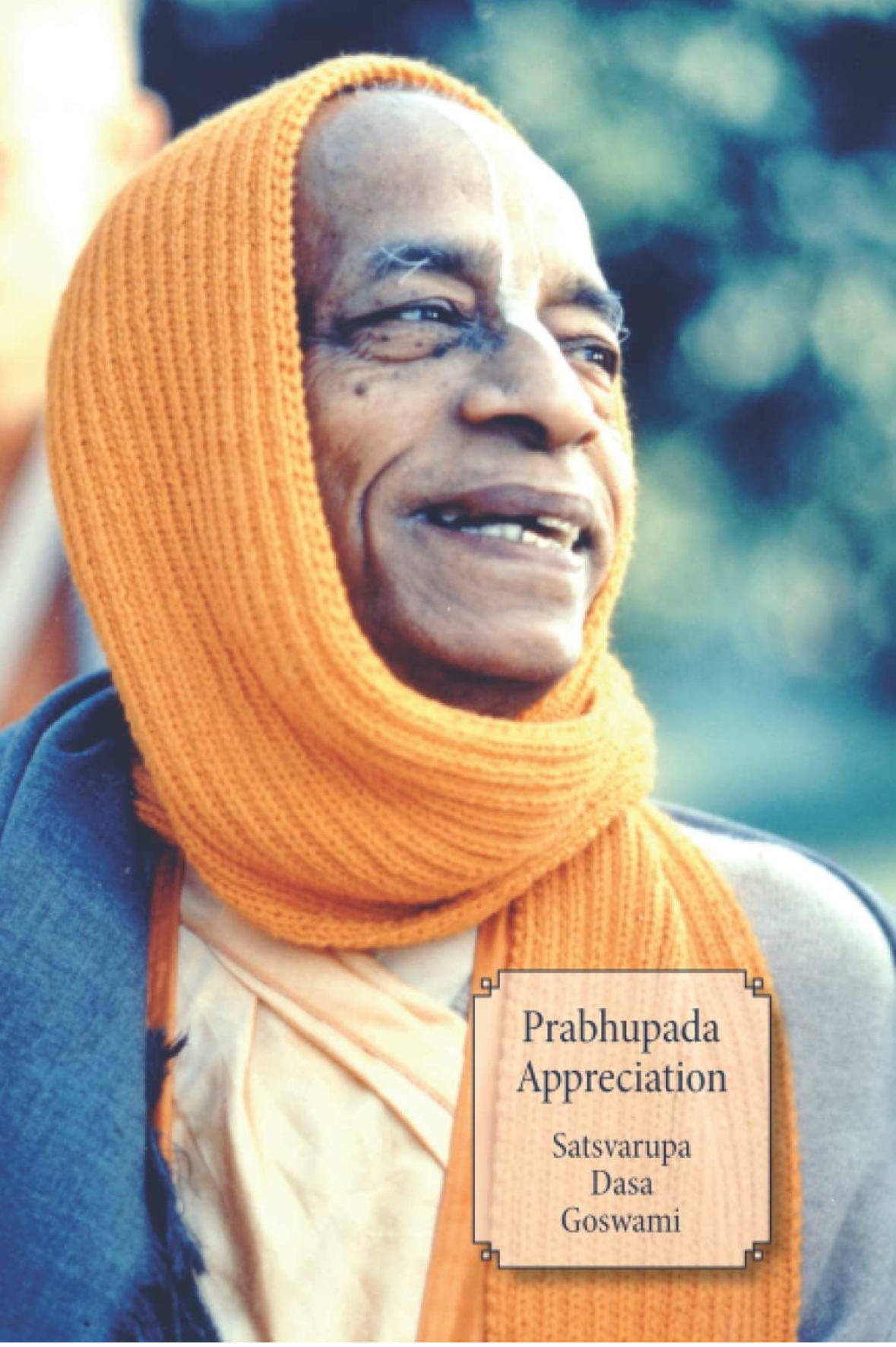
Śrīla Prabhupāda was in the disciplic succession from the Brahmā-Mādhva-Gauḍīya sampradāya, the Vaiṣṇavas who advocate pure devotion to God and who understand Kṛṣṇa as the Supreme Personality of Godhead. He always described himself as simply a messenger who carried the paramparā teachings of his spiritual master and Lord Kṛṣṇa.
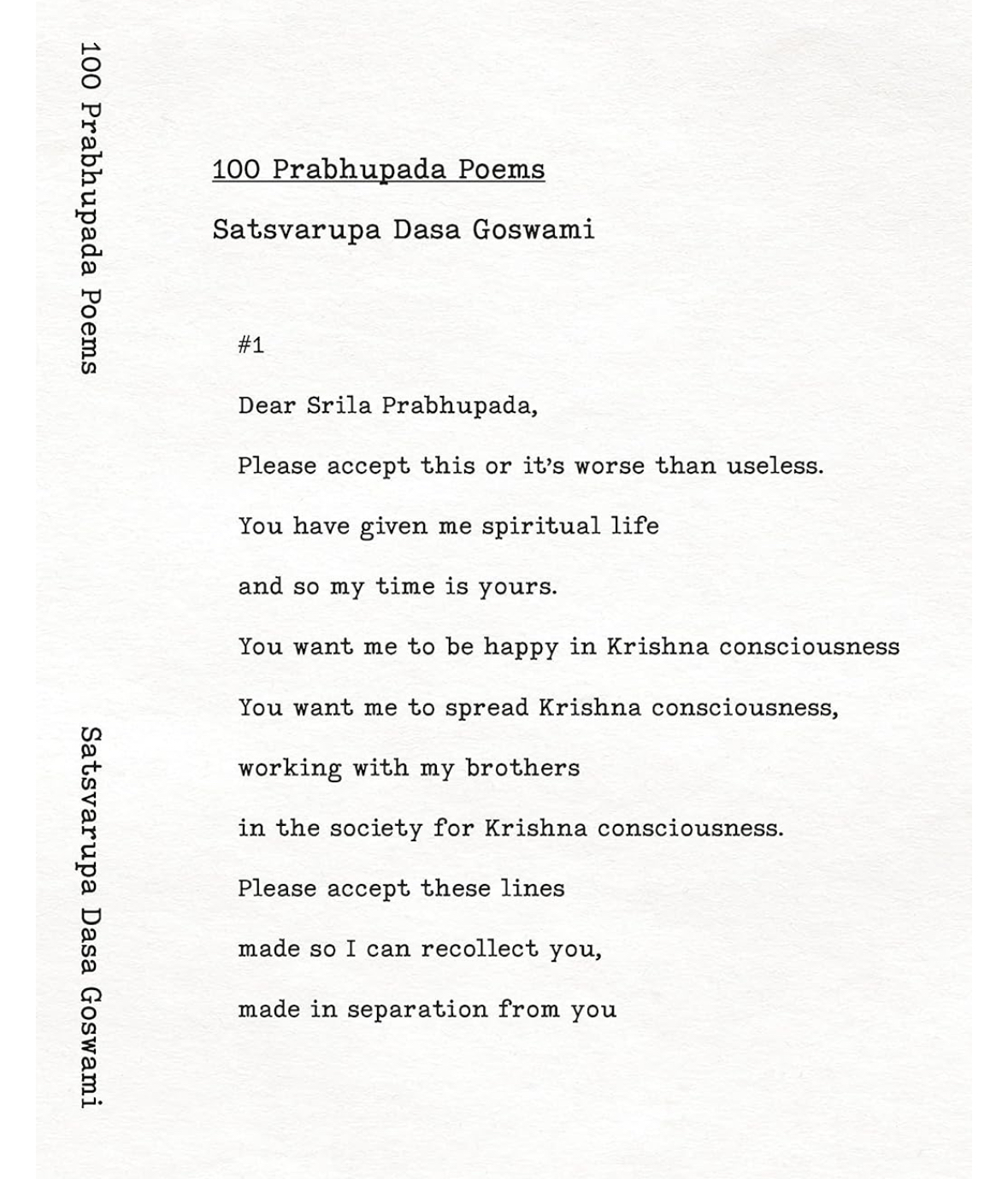
Dear Srila Prabhupada,
Please accept this or it’s worse than useless.
You have given me spiritual life
and so my time is yours.
You want me to be happy in Krishna consciousness
You want me to spread Krishna consciousness,
This collection of Satsvarūpa dāsa Goswami’s writings is comprised of essays that were originally published in Back to Godhead magazine between 1966 and 1978, and compiled in 1979 by Gita Nagari Press as the volume A Handbook for Kṛṣṇa Consciousness.

This second volume of Satsvarūpa dāsa Goswami’s Back to Godhead essays encompasses the last 11 years of his 20-year tenure as Editor-in-Chief of Back to Godhead magazine. The essays in this book consist mostly of SDG’s ‘Notes from the Editor’ column, which was typically featured towards the end of each issue starting in 1978 and running until Mahārāja retired from his duties as editor in 1989.
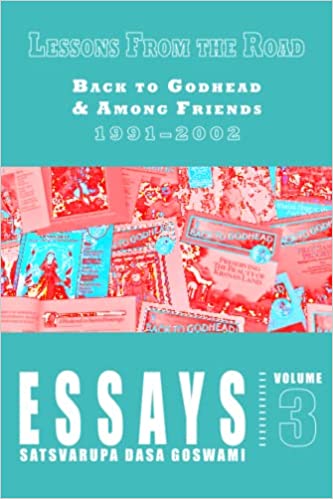
This collection of Satsvarupa dasa Goswami’s writings is comprised of essays that were originally published in Back to Godhead magazine between 1991 and 2002, picking up where Volume 2 leaves off. The volume is supplemented by essays about devotional service from issues of Satsvarupa dasa Goswami’s magazine, Among Friends, published in the 1990s.

“This is a different kind of book, written in my old age, observing Kṛṣṇa consciousness and assessing myself. I believe it fits under the category of ‘Literature in pursuance of the Vedic version.’ It is autobiography, from a Western-raised man, who has been transformed into a devotee of Kṛṣṇa by Śrīla Prabhupāda.”
 The Best I Could Do
I want to study this evolution of my art, my writing. I want to see what changed from the book In Search of the Grand Metaphor to the next book, The Last Days of the Year.
 a Hare Krishna Man
It’s world enlightenment day
And devotees are giving out books
By milk of kindness, read one page
And your life can become perfect.
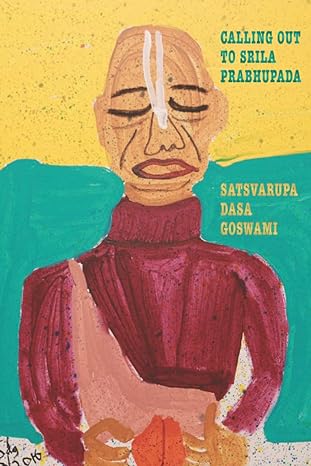 Calling Out to Srila Prabhupada: Poems and Prayers
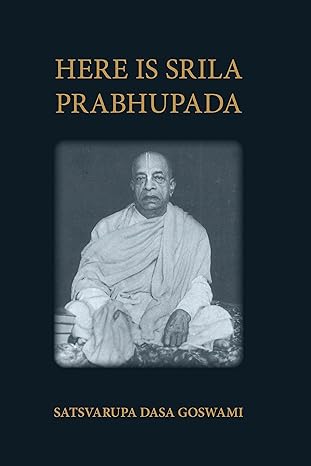
O Prabhupāda, whose purports are wonderfully clear, having been gathered from what was taught by the previous ācāryas and made all new; O Prabhupāda, who is always sober to expose the material illusion and blissful in knowledge of Kṛṣṇa, may we carefully read your Bhaktivedanta purports.
I use free-writing in my devotional service as part of my sādhana. It is a way for me to enter those realms of myself where only honesty matters; free-writing enables me to reach deeper levels of realization by my repeated attempt to “tell the truth quickly.” Free-writing takes me past polished prose. It takes me past literary effect. It takes me past the need to present something and allows me to just get down and say it. From the viewpoint of a writer, this dropping of all pretense is desirable.
 Geaglum Free Write
This edition of Satsvarūpa dāsa Goswami’s 1996 timed book, Geaglum Free Write Diary, is published as part of a legacy project to restore Satsvarūpa Mahārāja’s writings to ‘in print’ status and make them globally available for current and future readers.