
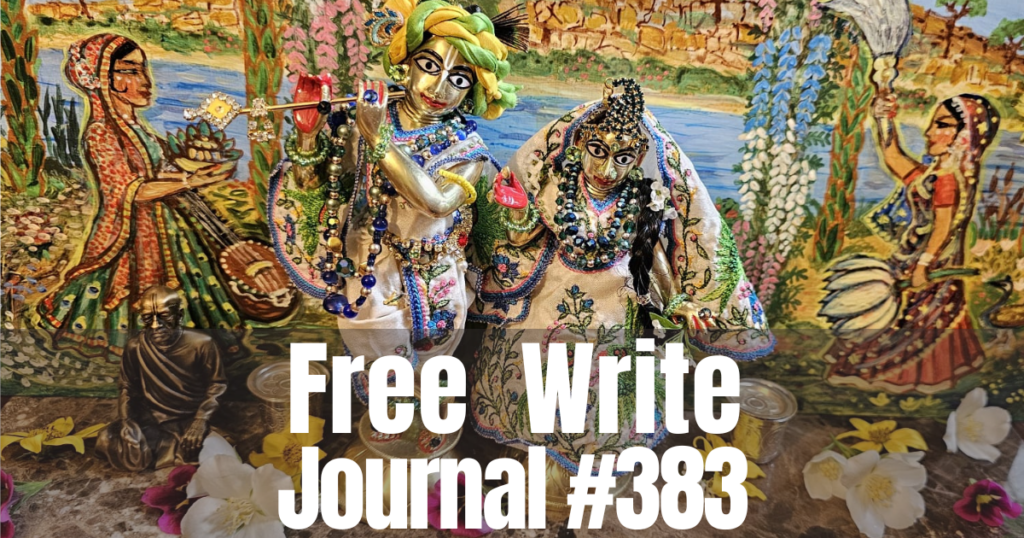
We need to expand our team of proofreaders as we aim to increase the rate of republication of Satsvarūpa Mahārāja’s books as well as new books that he writes.
This includes a need for fluent bilingual Spanish and English speakers to proofread Spanish translations (we currently have around 20 Spanish translations waiting to be proofread).
Anyone interested in this particular service should contact Manohara dāsa at [email protected]
If you would like to help, please contact Kṛṣṇa-bhajana dāsa at [email protected] or [email protected] and we will find you a service that utilizes your talents.
Half hour’s walk from here is a little shack by a manmade lake. A sign outside the shack reads, “Pibbles Fishing Club.” We are in the Hare Krsna chanting club. We fish for better chanting. We go on “fishing” all day long. Sometimes we see a fish jump out of the water—and inside into the ecstasies. Sometimes we catch a fish. Drop the metaphor because chanting isn’t killing anyone. One doesn’t like to compare this inoffensive, sweet act of surrender with hooking the fish. I just wanted to write and that image came to mind.
******
So better you stop writing now. Preserve your energies. Start in the days counting and chanting and uttering. It’s work all the way. No single mantra is very difficult, but there are so many you have pledged to make, so you have to work at it almost constantly until 5 P.M. Then an hour “free time” and then the 6 P.M. meeting—which lasted for an hour last night—and then to bed for sound sleep. Full day’s engagement.
******
Mantras one after another coming out of you. They’re given by God; they’re the nama-avatara. There’s tremendous sweetness and revelation that’s packed in the mantras. Krsna Himself is there, so it’s definitely worth my putting my attention to it and putting other things aside. Don’t think that this is hokey, that you’re exaggerating the glories of the holy name or even exaggerating the glories of your seven-day retreat. Don’t peter out on it; keep going these last two days strong as you can, and remind the devotees to do that too. It’s the real thing, so we can’t over-exaggerate it. This is big time, this is good stuff, this is the best, so don’t neglect it.
******
The body is full of suffering, but when you use it in Krsna’s service, you also get pleasures. How unfortunate are these animals that can’t come up to Krsna consciousness. All they know is eating, mating, sleeping, and defending. They’re so condemned. So we have to be kind to the human beings, give them a chance to hear about Krsna, and then show them that we’re happy and satisfied in Krsna consciousness.
******
One day at a time, and so now this day is ahead with good opportunities for many more rounds of japa and best association of devotees by Prabhupada’s grace. He’s taught us what it is to come together to chant God’s names and to do it in good company. Hare Krsna.
******
Just finished sixty-four rounds. The last three rounds were timed as 6.06, 6.08, and 5.50. I was chanting them at a rapid whisper but I could hear each syllable and mantra as well as when I do it slowly. But you can’t hear it as loudly as when you actually come up to vibrating sound with the diaphragm
******
Your thumb is a little stiff from all the bead finger-ing. Woke during the night several times. Hope this day I’ll be able to chant my rounds with care and attention. You discovered you can chant faster, but it’s got to be done carefully, in order to pass the test.
pp. 6-10
I am writing to you for your blessings to continue writing for the devotees. You have written perhaps the most important Vaiṣṇava scripture. It was a great favorite of Bhaktisiddhānta Sarasvati Ṭhākura. Our Śrīla Prabhupāda wrote in his diary when he was crossing the ocean to America while sailing on the old ship Jaladuta that he was getting solace simply by reading Caitanya-caritāmṛta—he said, “The Caitanya-caritāmṛta is my only solace.” At the end of your life, when you were stricken with many bodily disturbances, you still pushed on with your writing for the devotees and the pleasure of your spiritual master. Of all the Gauḍīya Vaiṣṇava literature, your Caitanya-caritāmṛta, composed towards the end of your life, is considered the jewel. Our Prabhupāda considered the Caitanya-caritāmṛta to be the PhD study of Lord Caitanya. We are very grateful to our Śrīla Prabhupāda, A.C. Bhaktivedanta Swami, for making his English translation of Caitanya-caritāmṛta, which is the most accessible version in the English-speaking world.
Kṛṣṇadāsa Kavirāja Gosvāmī, you
were one of the greatest saints
in Gauḍīya-Vaiṣṇava history.
That means you were a pure devotee of Kṛṣṇa.
You chanted a great number of rounds
of Hare Kṛṣṇa mantra every day.
You lived until a very old age
but finished your masterpiece,
The History of Lord Caitanya,
Caitanya-caritāmṛta.
This sacred book is considered one of the purest and greatest Vaiṣṇava scriptures. Bhaktisiddhānta Sarasvatī Ṭhākura said that the day would come when people would learn how to speak and read Bengali just so that they could comprehend the Caitanya-caritāmṛta.
In the year 1975 Prabhupāda became so upset that his books of Caitanya-caritāmṛta hadn’t been produced yet that he gave the BBT an incredible production deadline of two months. When the chief press manager heard this, he said to Prabhupāda, “This is impossible.” Prabhupāda replied, “Impossible is a word in a fool’s dictionary.”
After conferring with the other workers, the manager came back and told Prabhupāda, “We can do it, as long as you stay in Los Angeles to correct the Bengali transliteration and diacritics and inspire us to do this marathon.” The artists were commissioned to do a large number of illustrations to appear throughout the book. They worked so hard, twenty-four hours a day, that they went without proper sleep, so that even if one of them had not finished a painting, someone else would take over the painting for them. Devotees, typists, proofreaders and other workers were called in from all parts of the country to help in this marathon, which ultimately got completed by the deadline, and Prabhupāda was very pleased. Along with the work done in the studios, a devotee-photographer was dispatched to India to take many photos in India, pictures of holy places associated with Lord Caitanya to illustrate the book along with the text. In this way, seventeen volumes were completed in two months.
I read it as the volumes were coming out, and I gained a whole new impression of Lord Caitanya and the movement that He started. It quickly became my favorite of all Prabhupāda’s books and changed my perspective of Lord Caitanya.
In an opening section of your book, you state that this book on Lord Caitanya proves Him to be the most magnificent incarnation of all the incarnations of God. Rūpa Gosvāmī considered Lord Caitanya to be the most magnanimous and munificent form of the Divinity to ever appear. In the Caitanya-caritāmṛta we get an intimate picture of Lord Caitanya’s life.
Your Caitanya-caritāmṛta remains today as the finest translation into English of Caitanya-caritāmṛta in the bhakti tradition, which is the only way it could be understood properly.
pp. 55-61
We flew into New Delhi at two in the morning. Tejas dasa, the temple president, met us along with a few other devotees, each holding orange marigold garlands.
I had been to India for one month in 1973, living with Srila Prabhupada as a visiting G.B.C. secretary and performing many of the same services that I was doing now. I had found India exciting—less violent and without the heavy agitation of the West—but I had been somewhat bewildered by the heat, the primitive conditions, and the language barrier. I was glad to be experiencing India, therefore, in the protection of Prabhupada’s personal association.
The Delhi ISKCON center was in a small rented house. Srila Prabhupada’s room was located on the roof, and the Radha-Krsna Deities, whom he had named Radha-Parthasarathi, were also situated in a room on the roof. The February predawn air was freezing cold, but I attended the mangala-arati (rare for me), standing outdoors under the open sky and looking into the Deity room. The black, elegant form of Krsna and the white form of Radharani, both dressed in well-tailored nightclothes, received the devotees’ worship.
When the sun was up and Srila Prabhupada had taken breakfast, we started out for Vrndavana. Tamala Krishna Goswami, Prabhupada’s G.B.C. secretary for all of India, indicated I should sit in the back seat next to Prabhupada. I never took it for granted that I automatically had the privilege of riding with Srila Prabhupada, but Tamala Krishna said, “Of course. You are Prabhupada’s servant. You should always ride with him.” That was practical: I was carrying Srila Prabhupada’s luggage, and if there was anything he needed, it was I who would be expected to get it. It was for Prabhupada’s convenience that there existed such devotee-occupations as servant and personal secretary, but it was also the good fortune of a particular disciple to be able to ride like that with Srila Prabhupada. When taking that special seat beside His Divine Grace, I never ceased to count my blessings and to think about how to serve him during the car ride.
We were well on the way to Vrndavana, passing through the villages, farms, and undeveloped land, when our car came up behind a typical old Indian bus and our driver began honking his horn for room to pass. The bus was battered and poured thick black smoke from its exhaust pipe.
Prabhupada looked my way and said, “Do you have buses like this in America?” He knew very well from his years in America that this bus was a special specimen of Indian technological backwardness. “Even if you had a bus like this in America,” he added, “they wouldn’t allow it on the road.” Everyone shared a laugh with Srila Prabhupada, but I also took his remark in a personal way. I felt he was trying to reduce whatever culture shock he thought I might be experiencing. In case I was lamenting over the primitive Indian conditions, or wishing myself back in the land of velvetlike roads and Greyhound buses, Prabhupada was making a humorous comparison so that I could see the terrible Indian bus in a softer, more kindly light. At least Prabhupada’s words had that effect on me, and when he asked me if it was my first time in Vrndavana (which it was), I knew he was watching over me like a father. Srila Prabhupada did not dote or baby his disciples, but those few kind words were enough to bring my jet-lagged mind and body into sharp focus for appreciation of Prabhupada and our entrance into the holy dhama.
I did not expect Prabhupada to talk about Krsna’s vraja-lila just because we were entering Vrndavana. Thoughts of such spiritual pastimes were always alive within him wherever he was in the world, but he was also a very grave personality. He was silent during most of the trip, making a few comments about the progress of the ISKCON temple construction in Vrndavana. He had already fully described Vrndavana and Lord Krsna in his KRSNA book, and as our little Ambassador car came nearer to Mathura and Vrndavana I thought of the descriptions of lush vegetation, surabhi cows with milk-dripping udders, ecstatic cowherd men and women—and I saw that the present Vrndavana was suffering by comparison. Yet even I could feel an inkling of the Vrndavana atmosphere, and I recalled Prabhupada’s writing that one cannot enter Vrndavana just by the external act of purchasing a ticket or driving there in a car. But if I could ever expect to understand Vrndavana at all, there was certainly no better opportunity than to go there as a servant of Krsna’s pure devotee.
The place at Ramana-reti was just a building site. Metal rods were sticking up, a foundation was laid, but the only building was the first story of Prabhupada’s red brick residential house. His room wasn’t quite ready. The floor was dirt and bricks covered by a rug, the walls were damp, and the room itself was very cold. It was a large room that could serve as gathering place, and Prabhupada’s study fitted into one corner.
Prabhupada was very pleased. He sat at his desk smiling, thanking the devotees for working so hard. Surabhi, the disciple in charge of construction, admitted to Srila Prabhupada that they had worked up until the last minute before his arrival, and yet they still weren’t finished. The devotees and hired workers had toiled at a marathon pace day and night for weeks. Surabhi said that they had just cemented the walls in Srila Prabhupada’s room and had tried to dry them with special heating lamps. But that had brought out bugs and flies. So his room was in a rather crude state, but Prabhupada wasn’t at all critical; he was happy that they had done it. Yet he emphasized that everyone should continue to work hard and finish the entire Krishna-Balaram temple by Janmastami, seven or eight months ahead. It was asking a lot, but Prabhupada was serious. He was simultaneously very pleased with the crude state of his freezing cold room in Vrndavana, and at the same time he put before his devotees the difficult task of completing the work.
I set up my desk in a room next to Prabhupada’s. Anyone coming to see Prabhupada would have to pass by me, so that I could screen them. I knew from my previous month with Srila Prabhupada in India in 1973 that many Indians would be coming to see him, and if I let them all in, Prabhupada would have no time for anything else. Within minutes, people started coming by, but I told them that Srila Prabhupada wouldn’t be seeing guests until the evening. These were brijbasis, residents of Vrndavana, some of them old sadhus in saffron cloth with gray beards, or men with their wives, or poor, simple villagers. No one seemed satisfied to be denied entrance by an upstart young Westerner such as me, but to protect Prabhupada I took the risk and denied all except those whom I knew were important to Prabhupada, or those recommended by the temple president.
Sitting in my room, I began typing letters dictated by Prabhupada. Cooking duties were no longer required of me since Yamuna dasi, the wife of the temple president, Guru dasa, was a favorite cook of Prabhupada’s and expert at working under Vrndavana conditions. There was also a girl with a typewriter who was eager to type up Prabhupada’s Caitanya-caritamrta tapes, so I also relinquished that duty, with Prabhupada’s permission.
While on an errand for Prabhupada, I left his door unattended for a minute, and immediately a brijbasi man—one I had previously denied—slipped into Prabhupada’s room. I remanned my post, angry at the fellow for barging in. It seemed to me that very few of these visitors were serious about surrendering to Prabhupada.
But after a few minutes Prabhupada rang his bell. I entered and sat before Srila Prabhupada. The room was dark, even with the lights on, and the floors and walls were cold. But Prabhupada’s eyes had a special, beautiful glow. He was obviously more at home here in Vrndavana than at the Hong Kong Hilton.
“This man says that you wouldn’t let him in,” said Srila Prabhupada. I darted a look at the man, who was a middle-aged Indian, but I had to restrain my anger.
“I told him that you would have evening visiting hours,” I said.
“No, you should not have kept him out:’ said Prabhupada in a mild but reprimanding tone. “Who told you to keep him out?” I said that I was sorry. The man, however, repeated that I had rudely kept him out.
“They do not know,” said Prabhupada sympathizing with his guest. “They have no proper training.”
“Yes,” the man agreed, looking me over. “No training.”
I suspected that Prabhupada had reprimanded me to pacify the visitor, and I was sorry that Prabhupada’s time was now being taken up by a man who went on talking about himself.
pp. 45-51
Sound preserved—music and words.
Prahlada teaches us what’s to come. We could
waste our time on any variety of things if we put
our minds to it. But I know what it feels like to let go
on my trip to the shore of eternal gain.
Still the question: Why didn’t I do more?
But let go of lament—hold the beads and sing.
What other novelty and lasting grace?
I barricade myself against my failures and chant.
There’s rarely time for writing between poems—my
self demands more reading time.
It’s like he’s saying, “What good
will your three-minute speech do?” If I read one page
of Prabhupada’s books
I can become perfect.
Janmastami is less than a month away. I
read the prayers the demigods spoke to
Krsna in the womb.
The demigods sometimes prayed to Krsna
on His way home from the pastures. He was
always polite, but His parents felt the anxiety
of His delayed return.
I suddenly thought I knew better prayers
than these, as if I were better than them.
Does Krsna trust me to run the universe?
Do I serve the Divine Couple as well as the sun-god?
Can I glorify Vraja as Lord Brahma can?
How rare is bhakti.
These thoughts come out in poems and I dump
the images onto the page like apples out of a bag.
Still, the truth is simple.
Here goes the picture off a label from
some kind of pink toilet paper,
and some pink toilet paper itself,
Indian kind, and a piece of this drab yellow room,
a paint flake from the ceiling, an Idaho potato
from India, a form from the GBC for me to sign
asserting that I mean well and am standing on
the ISKCON rampart doing night watch,
ready to defend against all comers.
O devotees, I’m okay, still chanting,
my heart still beating that slow, steady beat.
The bird lands and pecks
on the square in Alfonso
Delhi Howrah Station
dizzy mind of dream
lost was it
a hawk or a crow
landing on the monument
or was it
my head?
I had better straighten out if I
want to go back to Godhead—free
of siren sounds of all types especially
the kind you hear when it’s raining
in India and
traffic noise
although for some Godbrothers such sounds
are the spiritual world what
with the opportunity to
pack a stadium with 400,000 people
—an audience worth preaching too!
Location: Inis Rath,
water up to the neck here but
no rats or mice,
a simple cabin
on New Year’s eve
or Gita-nagari cabin on Halloween
the memories that hold
and always a new book coming out
then going to that house in Puerto Rico
where live the savage dogs and rough
Puerto Rican natives and I think I am almost
nowhere.
Location: a well—it seems that location
points my way, brings dissonance to life
usually
where I find the pain and joy of writing
for my master—who has been rough and gentle
both, a rose and a thunderbolt
or the rain and the sun
but who gave me new life
and saved me.
Pain to go with the rainy day. Late afternoon.
Head just now freeing itself from the mist. A
ragged afternoon. I rest.
Krsna, Krsna, please appear
on my page, Lord of all.
What word do I know to call You?
Seeking through mental-spiritual space
memories of other ragged afternoons
New York City or elsewhere
thinking about the truth in the Upanisads
and what was a guy like me
doing in a place like that? Am I
still there?
Alone in my room. Still seeking on my own
terms, feeling the beat of old drums
or maybe it’s my heart beating
against my ribs—my chest
is so cold.
Fantasized I was a Franciscan monk or a Buddhist barefoot,
an Emily nut worshiping the God of the Upanisads.
I showed him the Dammapada and
he said, “Baka-waka”—he made fun of me, that Murray.
Didn’t like my searching.
Now I face pain almost daily
with a mighty Friend, although I still back out
and opt for pills so I can serve.
Rhinegold radicals write titles
that cover ISKCON’s realities—we’re not here
or there (Vraja) but living through
spring, it’s raining, and
autumn is not so far behind.
My head is full of colors.
I feel like a fakir with one reed
blowing in a tower. My poverty is almost intolerable
like in poor India where
vast chaos throws you down
and spits you out
and people’s dark faces inquire, “Who
do you think you are?” You respond with a sadhu persona,
which is all you know, then beg to be taken to ISKCON.
Look out and cross the ocean you
better go forward old man
it’s not becoming to move so frenetic
creaky limbs
bent forward.
Leaving the house I see Jayananda
sitting alone on cement—no
playmates
not even
a coat. Sand castles
molded in pails—his father
will be back tonight.
I am too fraught with pain
to enjoy the fresh air
but see the pits and bloody feathers
of an escaped bird.
I’m raspy.
Sorry. Not perfect, not
me.
Like Jayananda, I’m no
unrecorded, unsung hero
of bhakti.
I suppose I’ll go back to Godhead
eventually.
Ice-cold Pepsi Cola—none in
my room or even on my list
of desirable things.
I like Hiliter pens and sastras,
pleasant surprises arriving in packages
from America. I like strong, headache-free
days to serve (despite myself)
and for nerve and verve and
words that flow
so far they end up in poems.
I like sassafras, saffron, and hing,
cardamom, and Dr. Bronner’s soap:
“All one! All one! Dilute!”
I can easily spin out lists and
litanies, the profane and the holy,
to take me beyond the intellectual or
even mindless—a Kerouac list or a Ginsburg imitation
of “holy, holy, holy”—to crawl past
romanticized memories
forgetting the bad or the good
and ending always the same: I
survived.
Prabhupada taught me to
move over to love, to love
service, and to abandon old ties
and lonely apartments filled with
smelly cats,
death stalking me always
with such an unfriendly demeanor.
pp. 243-46
We have a tendency to worship or adore someone. We may neglect this tendency, or we may outgrow it as we become disgusted with our heroes and gods. But worship is a necessary function and is perfected in our relationship as loving servants of the Supreme Personality of Godhead. Śrīla Prabhupāda writes on this subject while discussing the word bhājate in his purport to Bhāgavad-gītā 6.47: “The English word ‘worship’ cannot be used in the same sense as bhaj. Worship means to adore, or to show respect and honor to the worthy one. But service with love and faith is especially meant for the Supreme Personality of Godhead. One can avoid worshiping a respectable man or a demigod and may be called discourteous, but one cannot avoid serving the Supreme Lord without being thoroughly condemned.”
Our worship of Kṛṣṇa is compulsory. It also arises in us as the most satisfying religious feelings. The worship should be educated, however, so that we worship the all-worshipable and not a minor god or ordinary person, or a demon or ghost. Thus the Bhāgavad-gītā discusses worship in the modes of ignorance, passion, and goodness. Dhruva Mahārāja is an example of someone who began his worship in a lower mode, but transformed it into transcendental worship. Guided by Nārada Muni, Dhruva worshiped and practiced austerities, and within a short time, he gained the darśana of Lord Viṣṇu.
When he saw Lord Viṣṇu, Dhruva Mahārāja said, “Now I am satisfied and I don’t want anything else but service to You.”
Sometimes we say that a superior person should not demand our respect; he should command it. In other words, we should be inspired to serve him for his superior qualities; he should not force us. Śrī Kṛṣṇa however is in a position to both command and demand: “Abandon all varieties of religion and just surrender unto Me. I shall deliver you from all sinful reactions …” (Bg. 18.66). Lord Kṛṣṇa possesses in full all the sixty-four qualities described in Bhakti-rasāmṛta-sindhu as well as infinitely more qualities—and therefore He is worshipable. Oṁ tad viṣṇoḥ paramaṁ padaṁ sada paśyanti sūrayo. And as stated in Bhakti-rasāmrta-sindhu, “Kṛṣṇa is worshiped not only by all living entities, including the great demigods like Lord Śiva and Lord Brahmā, but also by Viṣṇu expansions (forms of Godhead) such as Baladeva and Śeṣa” (NOD, Chap. 21, p. 182).
Lord Kṛṣṇa is also all-opulent. The sage Parāśara defined God as Bhāgavan, one who possesses six chief opulences in full: all wealth, all strength, all fame, all beauty, all knowledge, and all renunciation. Many persons possess riches, beauty, knowledge, etc., but no one can claim to possess them in entirety. “Only Kṛṣṇa can claim this because He is the Supreme Personality of Godhead” (Bg. 2.2, purport).
Although He has all opulences, Kṛṣṇa is not attached to them. And this renunciation is one of the opulences of God. He can give up the worship He receives and live without it if He desires. Kṛṣṇa displayed the quality of renunciation in many incarnations such as the Nara-Nārāyaṇa sages, in order to teach vairāgya to the world. In His devotional form of Lord Caitanya, He also appeared with the opulence of renunciation by accepting the sannyāsa order of life. This was to teach us that bhakti is involved with renunciation—vairāgya-vidyā nija bhakti-yoga—and He also did it to enjoy pastimes as a sannyāsī with His devotees.
******
Kṛṣṇa has all qualities. He is not quality-less. The Māyāvādīs think of the Supreme as without qualities. That is their misunderstanding. They are hampered by the idea that gūna (quality) must always be material. They want to reach nirvana, and they have no faith in śāstra or God. Perhaps they never gained the association of the pure devotees of the Lord—those who have realized to some extent the qualities of Bhāgavan Śrī Kṛṣṇa.
The pure devotee gives us his company freely, or he may withhold it. We become objects of his mercy when he speaks to us or stays with us or writes to us. Śrīla Prabhupāda told us, “People say God is dead or God has no qualities, but the Vaiṣṇava gives you God hand-to-hand.”
When we follow the order of the spiritual master, God is pleased with us and one day He reveals Himself to His sincere servitor: “I am like this.”
Only a fool or stubborn atheist will refuse to accept this path in favor of meditation on nirguṇa.
******
Examples of my not quitting this writing attempt as I write, mosquitoes have bitten my legs and left arm. I have an infection in my mouth. Do workers quit because of these problems? Do people not work because the climate is too harsh or they have physical handicaps? A person has to do his or her work, write his book, hoe his garden, etc., regardless of how the world goes on around him.
Happy is the person who finds his chosen work for Kṛṣṇa, blessed by the spiritual master, and with humble confidence continues it until the end. For such a person, the execution of his occupational duty merges into the execution of his eternal service to Śrī Kṛṣṇa. Obligatory labor becomes svadharma, the highest expression of self-realization. Finally, one does everything for the pleasure of Kṛṣṇa. The Lord is pleased by His devotee’s endeavor. Let us pray to attain such work. Don’t be puffed up into thinking no one can teach you how to work better. And don’t be lazy.
******
As you walk on the beach, stars above,
you have been hearing each day
of Kṛṣṇa and the gopīs
and so you think,
the ocean waves
pounding on the beach are like
the gopīs’ hearts beating
in separation from Kṛṣṇa.
You guess what it might be like
when the impressions get deep
and constant reference of thought
goes to kṛṣṇa-līlā.
Never mind that only a few know this.
That doesn’t make it less true.
Find it yourself
in hearing and chanting.
Then you can tell others.
pp. 159-61
These days are peaceful but I’m keeping up a momentum of extensive writing sessions. It is work. You have some expectation that it will be good. But you can’t demand of a process like this – “Am I going to go deeper? Is this session going to catch fire and reveal and confess? Where is the good poem I could take out of this for publishing?” No motives, but writing. And devotional service is the assumed purpose of it all even though not always explicit.
Krsna on the ranch, in the sky, even in hellish planets. In the hearts of worms, He’s transcendental.
In Kali-yuga what is attained in former yugas by meditation or sacrifice, is attained simply by chanting the holy names of God. Mukta-sangah param vrajet. Kirtana. Chant. Chant on your beads.
This is the purnima. Look up through the skylight and you will see a sky brighter than usual. The rays will fill the room enough to see objects faintly. As you chant. No disturbing sights. Just chant in the rays of LC’s moon and beg to be able to hear those names and ask the Supreme Lord, who’s in your heart, to keep you always faithful and affectionate to your spiritual master. One is supposed to pray always with petitions. But yes, you ask for strength to serve. And you try to listen, just hear what Krishna wants you to do.
Pray, recite and savor verses, strive to be a devotee. A lowly sadhaka practices his bhajana. I don’t try to think of Krishna’s activities in Vraja and myself a manjari. I just chant and try to hear.
The cars don’t go by here. When I walk at 5 A.M. I usually see deer or yesterday foxes.
Krsna Krsna Krsna. You could draw a picture, and as artists show you what words are not showing. How to serve Krishna in the best way.
Thank you, brother and sister. We live in a community and they help us to love and serve one another. Things come in the mail.
Krsna is.
Krsna is.
Is He an ordinary person, a nice person, is He a neighbor person? Krsna is the only reality and He is revealed in sastra. One verse I saw asserted that everything is revealed in sastra and there is no other way. SB is best for revealing the truth of Krsna and His incarnations and the superiority of devotional service. Lord Caitanya praised SB as the spotless Purana. And Cc. is full of instructions and the life of LC among His devotees, beautifully composed by KDK in his native tongue, Bengali.
Rendered into English by His Divine Grace, who translated and his disciples helped him. Translated from the Bengali. The purports, and now my own book of some favorite selections. When will it be published?
Oh, it’s nothing new
He told Svarupa Damodara, expose the rascal scientists. I am exposing the rascal self of me. Expose the scientists and toads.
You are not in a mood to
trip light fantastic
it seems what? Frivolous
or too much effort of your
own there’s a trail or flow
stream and you watch it and write it
down. That’s better for now but
’m not forbidding you
mouth truths
of Veda base.
I warned M., get the van ready time and he’s doing his best. He’s getting the thing ready before Janmastami. Roadworthy. And then we leave it behind in December.
Not a good year for van travel but don’t complain. You’re getting all this writing time.
Someone has little awareness what we are doing because he’s so busy. Hare Krishna comes straight from Krsna-loka.
I’d say it’s rough or nothing is coming if I were in that expectant mood. But better to just accept it. Editors must too. If you scan this later, be kind. At least it’s not offensive.
Eggs and meat and wine and such enjoyment. Abstain from that so you can devote yourself to full service and pleasing Krsna. Food and acts must be yajna to please Him. And violence to others He doesn’t like. He wants service. Sometimes a warrior devotee is violent to the violent demon.
For me, I need to be kind,
Brahminical, study his words,
teachings of the Lord
composed odes
be friendly
and tolerate what comes and
when you get a chance, paint
a picture in colors.
There are too many demands on me when I go to Vrindavan to do it then.
“Why do you keep your whereabouts a secret?” she asked. That’s my business.
Where are going and when will you be back?
Where are the sheep?
Sherpas, they call them. Lamas. Dhamas. Voidists on the ridge (The Snow Leopard).
Creative greeting cards. Avoid the billboards in Italy or any city. You’ll have to enter cities but beware.
He prefers to sandwich his own? Make sense not always.
It’s the unconscious makes sense too, he says.
The chance encounter is better than a plan. They have no faith in reason or institutions. Play surreal games. But I’m more earnest in seeking shelter in sastra and these things. You can draw a face, a walker, a talker. But even that isn’t coming.
Face mirror of self.
Hello. What do you want?
To say hello. And to state I am here, dear Lord Krishna. I am Your servant (a thousand times removed) practicing my penmanship. You may see I’m working in that way. Be a devotee, color and serve and walk and look forward to ending this and chanting japa – but in other activities there’s always something to be desired. Be patient then, be present in the act.
This is the same body with freckles or a little brown mole on the back of the left hand. That’s you with the nose and ears. Accept who you are. Move along. There is no way out. But human passages are not so long say farewell and do your work before your allotted time runs out.
What are you trying to achieve today?
Oh, it’s clear. He doesn’t know. Send us the manual (to run the machines) and Madhu will figure it out for himself.
Sri Krishna Caitanya Prabhu Nityananda.
I’ll stay out of that world.
Come here to be with you. The stories of Sanatana Goswami are still on my mind. Let it inspire you to visit Vrindavan and to be a better devotee, to increase your taste for chanting and hearing in devotional service.
Give them enough to chew on, to live on. There’s the mantra, Hare Krishna prayers given to us by His Divine Grace who was here recently enough so that we don’t have to make big changes in what he taught. He said it’s all right. He said, please work, my children.
(One hour, twelve handwritten pages, July 30, 1996)
pp. 74-78
The most important thing about Srila Prabhupada is that he is a self-realized, pure devotee in parampara. But where does that leave me? Do I have a place with him? Srila Prabhupada is important to me. I need a pure devotee in parampara to lead me out of the material world. I don’t want to be left behind, wandering in maya. I need him.
Although I sometimes express doubts about my relationship with Prabhupada, I usually feel quiet and assured about it. Certainly I am flawed, but I know he accepts me anyway. I have faith that he will help me now and always. Perhaps he will reprimand me, or perhaps he will give me something new to do for him. I’m not sure what to expect.
What I really doubt is whether I will respond to him as fully as I should or want to. Prabhupada is a giant compared to me; he has something very great to give me, and he is just waiting for me to want it enough before he will give it to me.
When I think of my relationship with Srila Prabhupada, I think the most crucial point is to always be able to turn to him. Perhaps that is why I prefer to remember him in the early days of ISKCON, when turning to Prabhupada was as easy as walking into his room. Our guru-disciple contract is still valid, perhaps even more valid now than it was twenty years ago, and I have come to value more his transcendental intimacy with Krsna. Prabhupada let it be easy at the beginning. But now I aspire for that greater intimacy.
This Here Is Srila Prabhupuda project is my attempt to meet Prabhupada again. I imagine I am walking on a tall, green mountain that is dotted with small villages and huge jungles. Prabhupada is known by all the people on the mountain, but each village has a different understanding of him. I want to meet him in these many different ways, but I have to climb through all the undergrowth to get to the next village. Once I am there, I can stay for days with the various people and their memories, but then off on my search again.
I fear Prabhupada’s displeasure. Pleasing the spiritual master is a delicate thing. As conditioned souls, we are so filled with our own desires. When we come under the discipline of the spiritual master, these desires are dovetailed by him in Krsna’s service.
What are my desires? I like to write for Prabhupada and for Krsna. I like to think my writing has preaching value and that it has some use in the ongoing mission of spreading Krsna consciousness. But sometimes I worry, “What if Prabhupada does not approve of my interest in writing, even though I am using it in Krsna consciousness?”
Anyway, this fear isn’t so big. What I mean by fearing his displeasure goes a little deeper than that. I am more afraid of losing touch with him—with him losing touch with me because I have deviated in some way. In that sense, I am more afraid of my own possible deviations—seeing him as an ordinary man, minimizing him in some abstract way, not reading his books, leaving his movement—than I am of Prabhupada.
I don’t want to ever lose Srila Prabhupada’s association. That is my unspeakable fear. But I don’t think it will ever happen. He is my eternal guru and I am his eternal disciple. He has been merciful enough to teach me to fear his displeasure.
Srila Prabhupada told us many things about his relationship with his spiritual master. One time, Bhaktisiddhanta Sarasvati Thakura reprimanded him when it appeared that Srila Prabhupada had diverted his attention from his guru maharaja’s lecture. When they first met, Srila Prabhupada debated with Bhaktisiddhanta Sarasvati about India’s independence. Prabhupada told us, “I liked being defeated by my spiritual master.” He dreamt of his spiritual master too, mostly that same serious dream in which Bhaktisiddhanta Sarasvati told Srila Prabhupada to take sannyasa.
His spiritual master praised him highly on a number of occasions for his attentive hearing and for his poetry and prose writings. He said, “Whatever he writes, publish it.” When Srila Prabhupada’s Godbrothers asked Bhaktisiddhanta Sarasvati to make Srila Prabhupada the president of the Bombay temple, Bhaktisiddhanta Sarasvati Thakura said, “It is better that he lives outside your company. He will do everything himself. You do not have to recommend him.”
After their first meeting, Srila Prabhupada had to travel away on business, but he often thought very fondly of his spiritual master. Of course, they had some personal meetings in which important things were conveyed to our Srila Prabhupada, especially his guru maharaja’s order, “If you ever get money, print books.” Then near the end of his guru maharaja’s life, they exchanged letters. Srila Prabhupada asked, “How may I serve you?” and his spiritual master replied, “You can explain in English our thoughts and arguments. This will do much good to yourself as well as to your audience. I have every hope that you can turn yourself into a very good English preacher if you serve the mission.”
How do these things apply to my relationship with Srila Prabhupada? I am happy to note the similarities: how his guru wanted him to be a writer in English, how he wanted him to express the age-old Vedic teachings in a new way, and how stress should be put on book publication. I also note that Prabhupada was given a lot of freedom by his spiritual master to develop in his own way. But the best example I can take from these anecdotes is that Srila Prabhupada molded his whole life to serve his guru’s mission. Srila Prabhupada gave all he had. In return, he was empowered by his guru’s blessings and the mercy of Lord Caitanya. Prabhupada was given the sakti to convince the fallen Westerners to become devotees and chanters of the holy name. Although I can take examples from his life with his spiritual master, I can’t, of course, imitate it. The point is, how to give ourselves to his order just as he gave himself to Bhaktisiddhanta Sarasvati’s order?
Viraha Bhavan Journal (2017–2018) was written by Satsvarūpa Mahārāja following a brief hiatus in writing activity, and was originally intended to be volume 1 in a series of published journals. However, following its completion and publication, Mahārāja again stopped writing books, subsequently focusing only on what became his current online journal, which began in August of 2018.

At first, I took it hard that I would have to live surrounded by the firemen, and without my own solitude. After all, for decades I had lived in my own house with my own books and my own friends. I was also now a crippled person who couldn’t walk, living among men who did active duties. But when Baladeva explained it to me, how it was not so bad living continually with other firemen and living in the firehouse with its limited facilities, I came to partially accept it and to accept the other men. I came to accept my new situation. I would live continually in the firehouse and mostly not go outside. I would not lead such a solitary life but associate with the other firemen.
Let me write sweet prose.
Let me write not for my own benefit
but for the pleasure of Their Lordships.
Let me please Kṛṣṇa,
that’s my only wish.
May Kṛṣṇa be pleased with me,
that’s my only hope and desire.
May Kṛṣṇa give me His blessings:
Kṛṣṇa Kṛṣṇa Kṛṣṇa Kṛṣṇa Kṛṣṇa he
Rāma Rāghava Rāma Rāghava
Rāma Rāghava rakṣa mām.
You mentioned that your pathway has become filled with stumbling blocks, but there are no stumbling blocks. I can kick out all those stumbling blocks immediately, provided you accept my guidance. With one stroke of my kick, I can kick out all stumbling blocks. —Letter by Śrīla Prabhupāda, December 9, 1972.
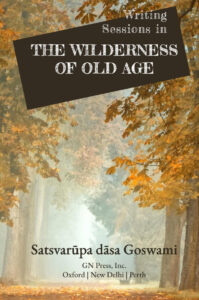
The Writing Sessions are my heart and soul. I’m trying my best to keep up with them. I am working with a few devotees, and they are far ahead of me. I wander in the wilderness of old age. I make my Writing Sessions as best I can. Every day I try to come up with a new subject. Today I am thinking of my parents. But I don’t think of them deeply. They are long gone from my life. Śrīla Prabhupāda wrote a poem when he was a sannyāsī, and he said now all my friends and relatives are gone. They are just a list of names now. I am like that too. I am a sannyāsī with a few friends. I love the books of Śrīla Prabhupāda. I try to keep up with them. I read as much as I can and then listen to his bhajanas.
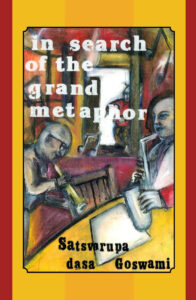
The metaphor is song. Explain it. Yes, particulars may not seem interesting or profound to readers who want structured books.
Wait a minute. Don’t pander to readers or concepts of Art. But Kṛṣṇa conscious criteria are important and must be followed. So, if your little splayed-out life-thoughts are all Kṛṣṇa conscious, then it’s no problem.
I am near the end of my days. But I do like the company of like-minded souls, especially those who are Kṛṣṇa conscious. Yes! I am prone to Kṛṣṇa consciousness. I have been a disciple of Bhaktivedanta Swami Prabhupāda for maybe almost sixty years. Sometimes I fail him. But I always bounce back and fall at his feet. It is a terrible thing that I sometimes do not have the highest love for him. It is a terrible thing. Actually, however, I never fall away from him. He always comes and catches me and brings me back to his loving arms.

This edition of Satsvarūpa dāsa Goswami’s 1996 timed book, Upstate: Room to Write, is published as part of a legacy project to restore Satsvarūpa Mahārāja’s writings to ‘in print’ status and make them globally available for current and future readers.
A factual record of the reform and change in ISKCON guru system of mid ’80s.

Readers will find, in the Appendix of this book, scans of a cover letter written by Satsvarūpa Mahārāja to the GN Press typist at the time, along with some of the original handwritten pages of June Bug. Together, these help to illustrate the process used by Mahārāja when writing his books during this period. These were timed books, in the sense that a distinct time period was allotted for the writing, during SDG’s travels as a visiting sannyāsī
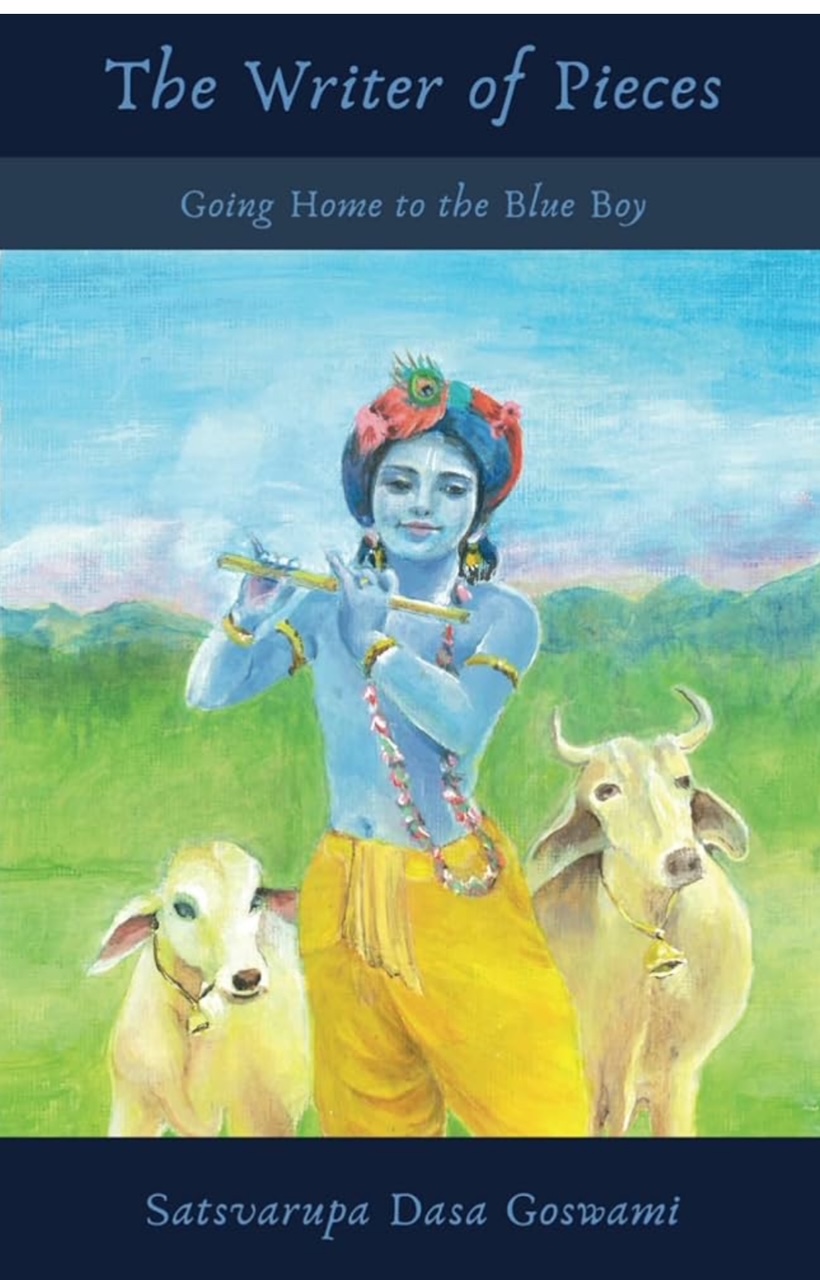
Don’t take my pieces away from me. I need them dearly. My pieces are my prayers to Kṛṣṇa. He wants me to have them, this is my way to love Him. Never take my pieces away.

Many planks and sticks, unable to stay together, are carried away by the force of a river’s waves. Similarly, although we are intimately related with friends and family members, we are unable to stay together because of our varied past deeds and the waves of time.
To Śrīla Prabhupāda, who encouraged his devotees (including me) To write articles and books about Kṛṣṇa Consciousness.
I wrote him personally and asked if it was alright for his disciples to write books, Since he, our spiritual master, was already doing that. He wrote back and said that it was certainly alright For us to produce books.
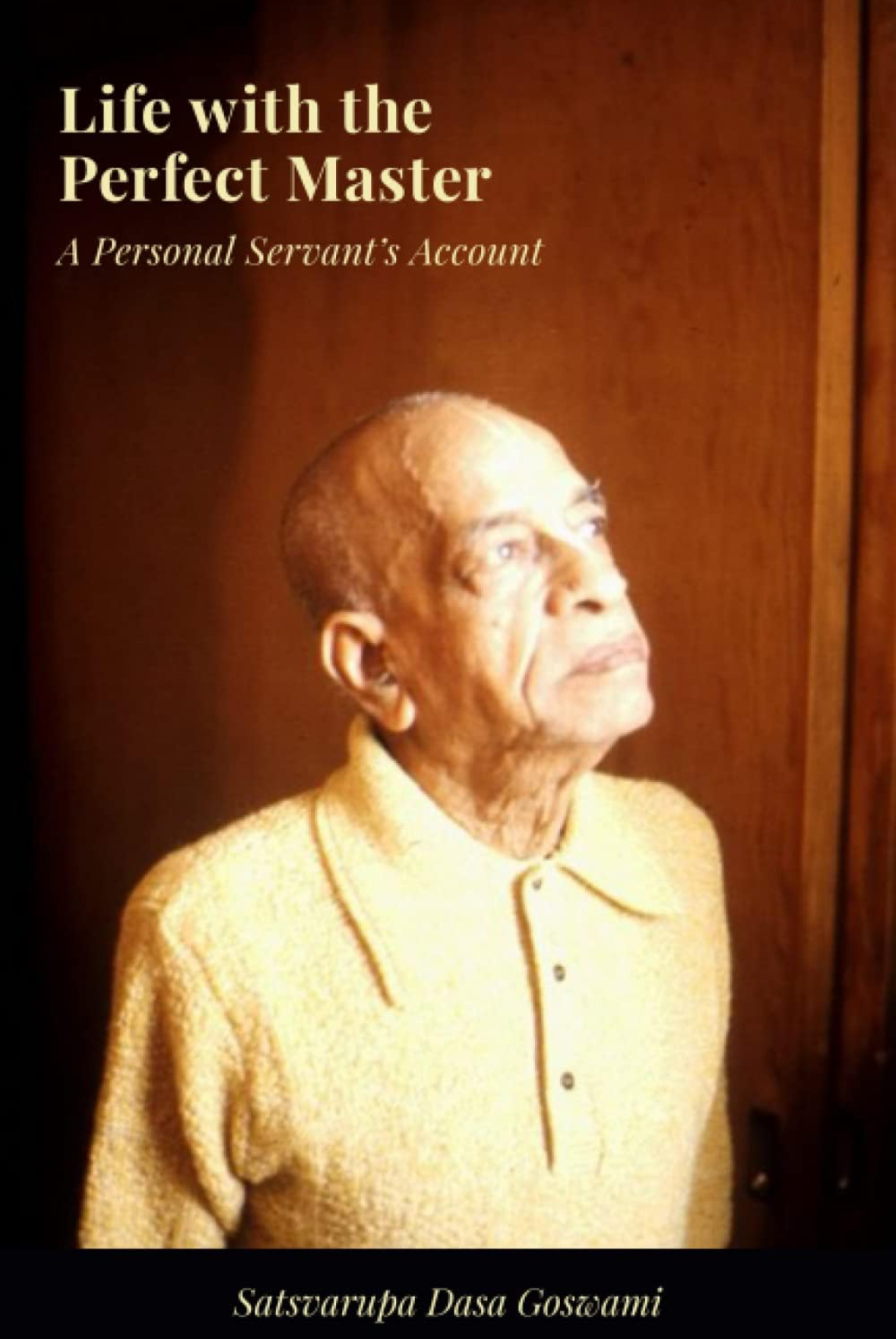
I have a personal story to tell. It is a about a time (January–July 1974) I spent as a personal servant and secretary of my spiritual master, His Divine Grace A.C. Bhaktivedanta Swami Prabhupäda, founder-äcärya of the International Society for Krishna Consciousness. Although I have written extensively about Çréla Prabhupäda, I’ve hesitated to give this account, for fear it would expose me as a poor disciple. But now I’m going ahead, confident that the truth will purify both my readers and myself.

First published by The Gītā-nāgarī Press/GN Press in serialized form in the magazine Among Friends between 1996 and 2001, Best Use of a Bad Bargain is collected here for the first time in this new edition. This volume also contains essays written by Satsvarūpa dāsa Goswami for the occasional periodical, Hope This Meets You in Good Health, between 1994 and 2002, published by the ISKCON Health and Welfare Ministry.

This book has two purposes: to arouse our transcendental feelings of separation from a great personality, Śrīla Prabhupāda, and to encourage all sincere seekers of the Absolute Truth to go forward like an army under the banner of His Divine Grace A.C. Bhaktivedanta Swami Prabhupāda and the Kṛṣṇa consciousness movement.
A single volume collection of the Nimai novels.
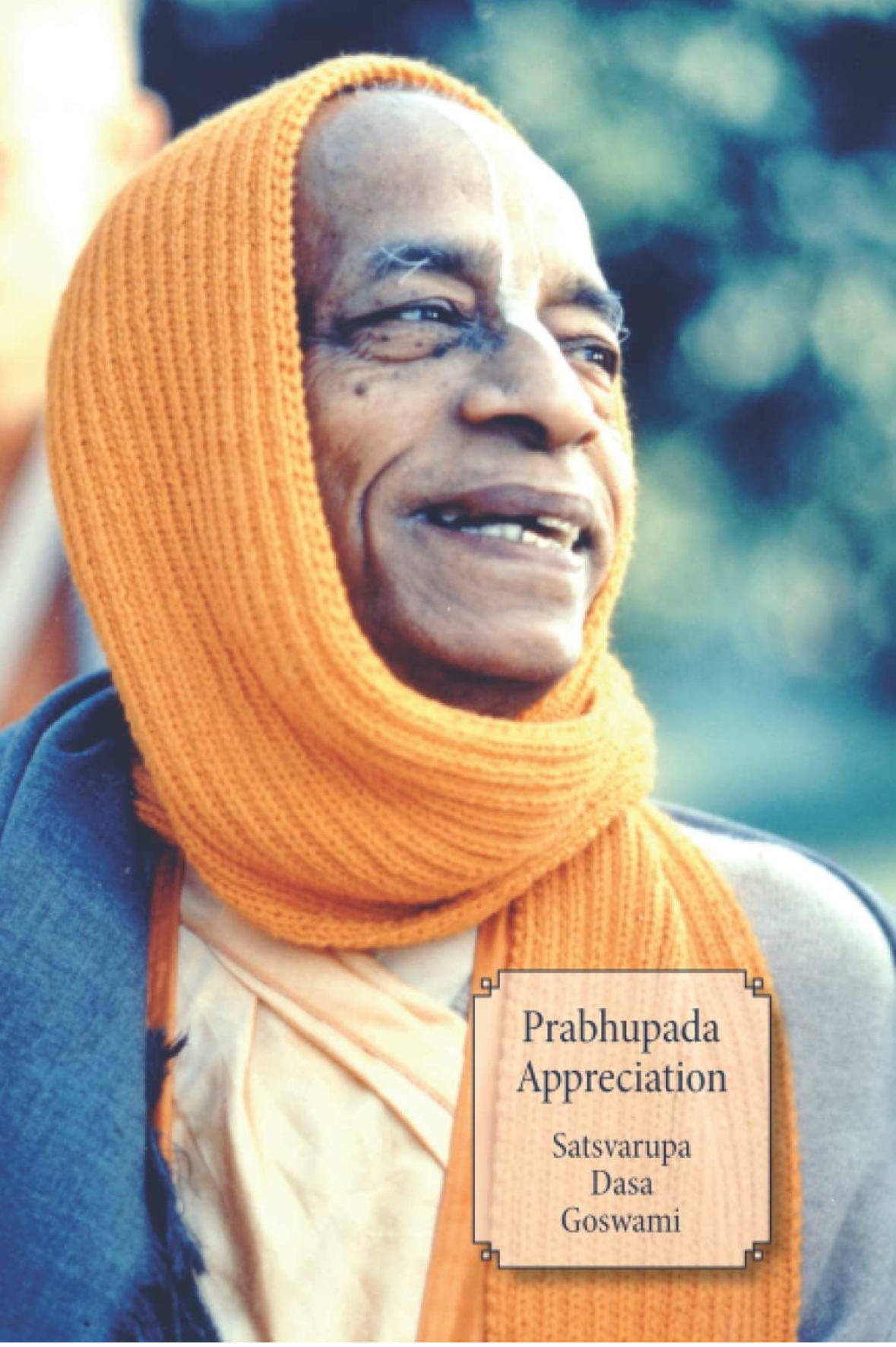
Śrīla Prabhupāda was in the disciplic succession from the Brahmā-Mādhva-Gauḍīya sampradāya, the Vaiṣṇavas who advocate pure devotion to God and who understand Kṛṣṇa as the Supreme Personality of Godhead. He always described himself as simply a messenger who carried the paramparā teachings of his spiritual master and Lord Kṛṣṇa.
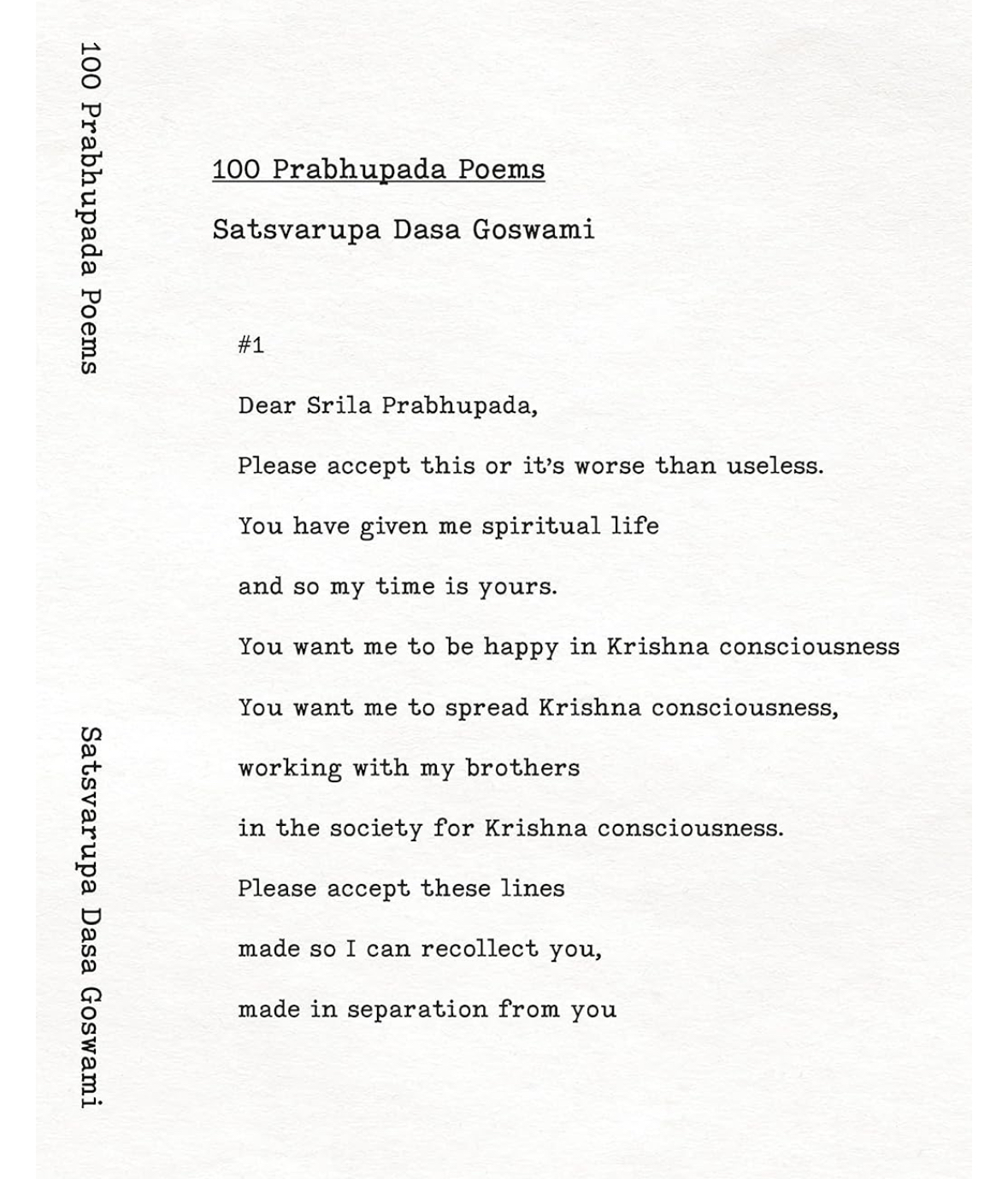
Dear Srila Prabhupada,
Please accept this or it’s worse than useless.
You have given me spiritual life
and so my time is yours.
You want me to be happy in Krishna consciousness
You want me to spread Krishna consciousness,
This collection of Satsvarūpa dāsa Goswami’s writings is comprised of essays that were originally published in Back to Godhead magazine between 1966 and 1978, and compiled in 1979 by Gita Nagari Press as the volume A Handbook for Kṛṣṇa Consciousness.

This second volume of Satsvarūpa dāsa Goswami’s Back to Godhead essays encompasses the last 11 years of his 20-year tenure as Editor-in-Chief of Back to Godhead magazine. The essays in this book consist mostly of SDG’s ‘Notes from the Editor’ column, which was typically featured towards the end of each issue starting in 1978 and running until Mahārāja retired from his duties as editor in 1989.
This collection of Satsvarupa dasa Goswami’s writings is comprised of essays that were originally published in Back to Godhead magazine between 1991 and 2002, picking up where Volume 2 leaves off. The volume is supplemented by essays about devotional service from issues of Satsvarupa dasa Goswami’s magazine, Among Friends, published in the 1990s.

“This is a different kind of book, written in my old age, observing Kṛṣṇa consciousness and assessing myself. I believe it fits under the category of ‘Literature in pursuance of the Vedic version.’ It is autobiography, from a Western-raised man, who has been transformed into a devotee of Kṛṣṇa by Śrīla Prabhupāda.”
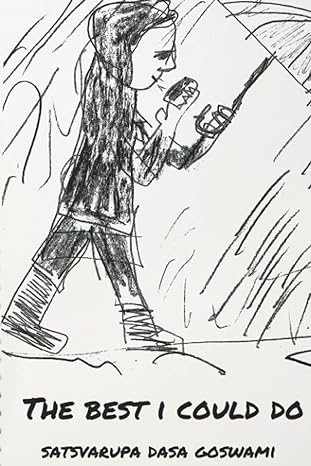 The Best I Could Do
I want to study this evolution of my art, my writing. I want to see what changed from the book In Search of the Grand Metaphor to the next book, The Last Days of the Year.
 a Hare Krishna Man
It’s world enlightenment day
And devotees are giving out books
By milk of kindness, read one page
And your life can become perfect.
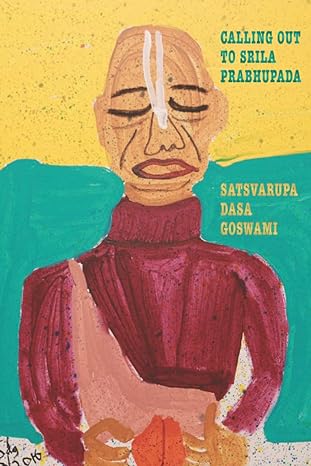 Calling Out to Srila Prabhupada: Poems and Prayers
O Prabhupāda, whose purports are wonderfully clear, having been gathered from what was taught by the previous ācāryas and made all new; O Prabhupāda, who is always sober to expose the material illusion and blissful in knowledge of Kṛṣṇa, may we carefully read your Bhaktivedanta purports.
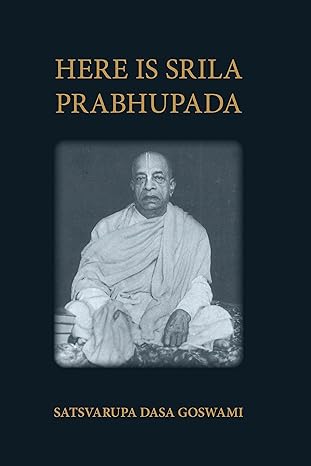
I use free-writing in my devotional service as part of my sādhana. It is a way for me to enter those realms of myself where only honesty matters; free-writing enables me to reach deeper levels of realization by my repeated attempt to “tell the truth quickly.” Free-writing takes me past polished prose. It takes me past literary effect. It takes me past the need to present something and allows me to just get down and say it. From the viewpoint of a writer, this dropping of all pretense is desirable.
 Geaglum Free Write
This edition of Satsvarūpa dāsa Goswami’s 1996 timed book, Geaglum Free Write Diary, is published as part of a legacy project to restore Satsvarūpa Mahārāja’s writings to ‘in print’ status and make them globally available for current and future readers.