

We need to expand our team of proofreaders as we aim to increase the rate of republication of Satsvarūpa Mahārāja’s books as well as new books that he writes.
This includes a need for fluent bilingual Spanish and English speakers to proofread Spanish translations (we currently have around 20 Spanish translations waiting to be proofread).
Anyone interested in this particular service should contact Manohara dāsa at [email protected]
If you would like to help, please contact Kṛṣṇa-bhajana dāsa at [email protected] or [email protected] and we will find you a service that utilizes your talents.
Your thumb is a little stiff from all the bead fingering. Woke during the night several times. Hope this day I’ll be able to chant my rounds with care and attention. You discovered you can chant faster, but it’s got to be done carefully, in order to pass the test.
******
Last night’s meeting went for over an hour. I began by playing a tape excerpt of Prabhupada saying Krsna consciousness can be executed by the tongue. “Chant Hare Krsna and when you get tired, take prasadam.” I said let’s go strong for the last two days of vrata. (We never made a formal vow, but we keep speaking of it as a vrata.) I said we want to say it’s great and wonderful on this vrata, but we may have gut reactions that we wish it were over. So be honest, but let’s not go downhill or peter out at the end. Keep up our expectations and give heart to it.
******
I ask the question, What would Srila Prabhupada say of our chanting sixty-four rounds in seclusion? I answer that he said more than sixteen minimum was good. Also we are taking a rare increase for only a week with hope it will improve the quality of our normal sixteen. And Srila Prabhupada said that our chanting should be with priti, with love, not mumbled inattentively.
******
I read from Caitanya-caritamrta, Adi 7, how Lord Caitanya followed the order of His spiritual master who called Him a fool and told Him to always chant the Hare Krsna mantra. I feel like a fool, don’t know anything, but I go on chanting with faith. Chant constantly was the order of Lord Caitanya’s guru, and it is an order given in an exemplary way—in other words, the bona fide spiritual master continues to give us that order. We can’t study Vedanta in this age (or go to raganuga), so let us chant constantly. By chanting you can see the lotus feet of the Lord and render Him direct service.
******
Madhu spoke how early in the morning he’s been offering prayers along with his japa, saying Siksastakam in between rounds and personal expressions like, “Please accept me.” He quoted statements about the mood of prayer. I thought that was a vital addition to my talk which focused more on mechanical aspects. (I’d spoken how I discovered I could chant much faster, save three minutes per round, if I whisper them audibly and breathe differently.) But he said after lunch he has no energy to pray. (I thought Krsna must be just as pleased with him even when he’s tired, as long as he uses his available energy in the service of the Lord.)
******
Manu read a prayer of Haridasa Thakura’s from Harinama Cintamani where he begs Lord Caitanya for the nectar of the holy name. Manu said he feels he is better able to control his mind this week, breaking habits of staying up late at night and instead telling his mind to go to sleep. He admitted he has been looking forward to the end of this week, but now he wants it to be good in the last two precious days.
******
Chanting and reading form the life of a devotee. Very nice to apply yourself to them. When you hear about Krsna, it’s bhagavata-dharma. And that’s all you need to know. Turn your attention to hearing about Krsna. Then you’ll preach. Or else how can you preach?
******
So men, so me
whatcha gonna do today?
We is gonna chant
Hare Krsna mantras all day
like a man working on
the dock all day off-loading
bananas.
(Beware the tarantula)
Yeah, me handled them
deftly and carefully,
under the eye of the foreman,
“Chant, chant” Day-oh!
Daylight come and me
wanna go home.
Harry Bellefonte sang but did he ever work like that? On stage with his shirt open the best good-looking guy, he worked the nightclubs, “Day-oh! Daylight come and me wanna go home”— back to Godhead.
We are not in that world. But we may learn from them rhythms and rhymes.
******
Our quest is good chanting. It’s the means and the end. It’s the medicine.
(Prasadam is the diet)
Even when it seems bitter to us jaundiced souls
let’s go on with it.
******
Hare Krsna Hare Krsna
you control the mind. Don’t let it control you. We look forward to many good times of elemental exercise in writing when Krsna consciousness will come to us naturally.
******
April 19, 6 A.M., another day. This morning I deliberately indulged in feverish literary planmaking while chanting japa. I’m guilty of it. I saw it happening and I said, “Well, all right, let me do it, these ideas are coming, I need to write them down. I’ve been waiting for these ideas and now they’ve finally come for a next book. Anyway, this is service too, to Krsna.” Typical rationalizations that I make. So nevertheless, I’m going on with the sixty-four round vrata and I’m not so far behind schedule. But I just wanted to admit that here on the morning walk.
pp. 344-50
ŚB 1.2.28-29
vāsudeva-parā vedā
vāsudeva-parā makhāḥ
vāsudeva-parā yogā
vāsudeva-parāḥ kriyāḥvāsudeva-paraṁ jñānaṁ
vāsudeva-paraṁ tapaḥ
vāsudeva-paro dharmo
vāsudeva-parā gatiḥIn the revealed scriptures, the ultimate object of knowledge is Sri Krsna, the Personality of Godhead. The purpose of performing sacrifice is to please Him. Yoga is for realizing Him. All fruitive activities are ultimately rewarded by Him only. He is supreme knowledge, and all severe austerities are performed to know Him. Religion [dharma] is rendering loving service unto Him. He is the supreme goal of life.
The Bhagavatam begins with the invocation om namo bhagavate vasudevaya. As explained in the first purport, “Obeisances unto the Personality of Godhead, Vasudeva, directly indicate Lord Sri Krsna, who is the divine son of Vasudeva and Devaki.” The name of Vasudeva is now chanted in each of eight Sanskrit lines establishing that He, Lord Krsna, the son of Vasudeva, is the only object of worship. After these two verses, anyone who asks, “Who is God?” must either be slow or stubbornly rebellious.
Each line of the sloka focuses on a particular process for realization of the Absolute, and in each case, the goal is service to Lord Vasudeva. For example, vasudeva-para veda. This means that throughout all the Vedic literatures, there is only one objective described: establishing one’s relationship and ultimately reviving our lost loving service unto Him [Sri Krsna]. Some of the Vedas may teach this in an indirect way, but they are part of the comprehensive Vedic scheme to gradually elevate everyone to worship the Supreme Lord in the mode of pure goodness. Those who claim that the Vedas lack an overall purpose, as some Indologists do, have no insight into Vedic siddhanta. “The Vedas are to know Me,” Lord Krsna says in the Bhagavad-gita, “and I am the knower and compiler of Vedanta.”
Similarly, the Vedic process of yajna or sacrifice is meant for realizing the truth about Vasudeva. Lord Visnu is sometimes called Yajna. All sacrifices are meant for His satisfaction. In the present age, there is little trace of bona fide yajnic ceremonies. Those who performed such sacrifices used to offer huge amounts of grains, ghee, and gold. The sacrifices were performed according to the exact science of chanting Vedic mantras. In the absence of wealth and brahminical expertise, however, the acaryas have recommended only Sri Krsna sankirtana-yajna for this age. “There is no other way, there is no other way, there is no other way in the age of Kali except to chant the holy names of the Lord.”
This verse also mentions yoga. Yoga is meant to help an aspirant contact the Supreme Lord. Asanas, meditation, and breath control performed separate from the desire to link with Krsna are just physical exercises. They calm the mind, but they have no essence. Those who are serious in their practices of mystic or astanga-yoga concentrate on the Paramatma form of Vasudeva. Prabhupada writes, “Paramatma realiza¬tion is but partial realization of Vasudeva, and if one is successful in that attempt, one realizes Vasudeva in full.”
Vasudeva-param-jnanam. The Bhagavad-gita analyzes the eighteen items useful in culturing knowledge. All of these culminate in devotional service to the Personality of Godhead, Krsna. “Culture of knowledge leading one to the transcendental plane of meeting Vasudeva is real knowledge.” This is also stated in the Bhagavad-gita where Krsna says bahunam janmanam ante, one may try to culture knowledge for many births, but only when he realizes vasudevah sarvam iti, that Vasudeva is everything, does he become a person of knowledge. If we accumulate knowledge at a university by studying in so many specialized departments, we don’t become knowledgeable. We may learn how to run machines or how to think astutely on subtle subjects, but we won’t gain liberation. If we don’t know how to do that—if we prolong our miserable lives in this material world—then all we know is nescience.
This doesn’t mean, however, that worldly and academic knowledge cannot be used in Krsna’s service. Prabhupada sometimes compares material knowledge to a string of zeros. If we put the one, Krsna, in front of all the zeros, then two zeros become 100 and three zeros become 1,000. That kind of knowledge leads the way to spiritual understanding. Therefore, science, psychology, and the arts can contribute to the sankirtana movement when utilized by a pure devotee.
“Tapasya means voluntary acceptance of bodily pains to achieve some higher end of life.” Prabhupada does not count the pains a demon may take to gain power as tapasya. Real austerity is to accept bodily inconvenience for the sake of knowing Vasudeva.
The meaning of religion has already been discussed in the Bhagavatam, and Prabhupada has offered many insights about the words “dharma” and “occupational duty.” Prabhupada has defined dharma as the unavoidable, constitutional nature of every living being. Our dharma is to render service to someone; in the highest sense, this “someone” means Krsna. Therefore, vasudeva-paro dharma.
All jivas are in the same predicament. We are pure souls outfitted in material bodies due to the misuse of our free will. The embodied jiva’s true purpose in life is to become free from this awkward combination of the temporary body and the eternal self. The conditioned soul is forced to act under God’s laws for the material energy. These laws are just suitable to govern prisoners. A person in this world, therefore, has to show Krsna his reformed state by sincerity if he wants to be released from the material energy and allowed to re-enter his original spiritual nature.
Shack Notes is almost undefinable, at least in the sense of examining a particular book’s genre. It is autobiographical, yet is it not an autobiography; it is diary, and yet it is not a collection of diary entries; it is self-exploration, yet it is done in the context of seeing the external world. Shack Notes is special. To write Shack Notes, I have deliberately slowed down my outer experiences in order to think out Krsna consciousness on the page. It is an attempt to explore the writing as Krsna conscious experience in itself. I have attempted to push it to the limits in hopes that writing would bring me deeper into my personal Krsna consciousness. It is also an inside look at a writer’s thinking.
The discovery of Shack Notes came from the ac-tual process of writing it, and thus it would be fitting to cull from the book some of the definitions of the work as they came to me.
“This is a book about writing in devotional service. I like to think of it as a book for writers, helping them through the process of writing and recognizing the challenges writers face. Those who are not writers can apply these principles to their own attempts in devotional service.”
“This book describes three weeks of my life. There is something very wonderful in trying to let go, in trying to quiet myself so Krsna can come forward. I am not saying it so clearly, but I think you know what I mean. I have allowed myself to become congested in spirit, insipid, and afraid over the years. To acknowledge that and let those parts of myself go is a blessing.”
“Shack Notes means spending three weeks in a wholehearted attempt to live entirely occupied by writing. The writing is centered on repeated attempts to evoke Krsna consciousness. Each attempt must start from scratch. I accumulate markings, some direct hits, sometimes a feeling of going nowhere . . . but gradually, I am gathering a growing conviction that writing itself is bhajana.”
“I love to write. That is why I keep doing it. It is awkward, tainted, flawed, I know: but it is love, and a love that helps others. I can learn to sing better, to compose more expertly.”
“This has been my aspiration in writing Shack Notes, that I can honestly translate physical and mental experience into Krsna conscious action, and that I can delve into my own inner meanings. I can only pray to Krsna to help me, and pray also that the experience of writing Shack Notes will become a meaningful spiritual journey.”
Shack Notes was born out of my having time between the writing of other books. It started out as writing practice, something personal just for myself, an experiment. As I gradually freed myself up and allowed myself to flow with the writing, I managed to accumulate a lengthy manuscript. Then material was selected from it and edited into its present form (what is presented here is only sixty percent of the total writing). I hope my readers will flow with me through this adventure in writing, and that they will find something useful in these pages.
The routine of the writing retreat is quiet and protected. I can’t complain. If anything, there is so much comfort that I may lack a certain struggle, a sense of hunger. My disciples pamper me. Despite the comforts, I don’t indulge in sense gratification. I follow a simple routine: I don’t overeat, I get up very early, I don’t mix with women. O Krsna, I desire to serve You by writing.
A, plane overhead. Hunger in this guy’s belly. At last, he harkens again to the voice within, looks at his watch—can’t you even go for thirty minutes?
In between writing projects. I don’t know what form to submit to.
Robins and a wood thrush. I saw a fox yesterday, watched him unobserved. Big pink flowers blossoming on a tree, just brushing the screen of this outdoor shack in my host’s backyard.
Trucks are moaning on the highway. Tires are rushing by outside the boundary of the forest. Route 80, Stroudsburg, Pennsylvania.
On the walk this morning, I thought of a few disciples who don’t write to me anymore. One tried hard to live in ISKCON temples, and he sent his child to gurukula. Somehow it didn’t work out for him, and now I hear he has moved back to his native country, has a full-time job in the city, and not much Krsna conscious practice. It’s not his fault, but it is unfortunate.
I thought of him, and I wondered how to help. By keeping in touch I can remind him of the importance of spiritual life. Now I hear from another disciple that she is hanging in there with her sadhana. She has an extremely heavy workload—a medical internship. She chants “car japa,” and she plays Krsna conscious tapes when she’s home relaxing as background sound. (“Better than spooky sound,” she says.) I encouraged her. What else could I do? Should I tell her not to be a doctor, that she should live in a temple? It’s not easy to advise people like that. There is no single solution for everybody’s problems.
I just try to encourage them.
Anyway, let me stay present with whatever comes up. Hear the robins and the traffic, and keep reading the mail.
`Yesterday I completed a major work (sorry if that sounds puffed-up), Prabhupada Meditations, Volume 3. Now I am jobless, seeking employment.
The present moment is an arc of time. It is not just 6:58 A.M., July 1, 1991, but an arc (like a rainbow) stretching from birth to death. I am in the home stretch—harvest time—last years with full facility for health and concentrated work. It’s now or never. That’s the present.
Shack notes, like former Gita-nagari “creekside notes,” are tangible. They are what I have now. The past is gone; it can never be recaptured. Don’t falsify it or try to relive it just to create writing.
The present: Lord Nrsimha’s photo on the cover of my diary. I am trying not to be anxious about not being employed in a writing project. I am employed in writing practice.
pp. 85-88
Some literary talk. I have Broken Vessels, by Andre Dubus, with foreword by Tobias Wolff. In his foreword, Wolff describes the nature of the autobiographical essay. He says he was curious to read Dubus’ essays because he himself has been grappling with the difficulties of writing short stories, which he describes as “years of working behind a mask.” He writes:
Of course, the confessional, ‘genuine’ persona is also a construct of the imagination—every coherent persona is—but it will inevitably take on a different voice and presence than the one we inhabit while telling stories.
The personal essay is different; it demands that we jump in with both our feet, yelling for all we are worth. It doesn’t reward authorial discretion, self-effacement, the arts that conceal art. Nor does it reward any of the civic virtues: tact; polish; reasonableness; noble, throat-catching sentiment; correct posture. There are, to be sure, many such writers, and they do very well for themselves, but I have to say they make me see red. I want to reach in and shake them by the jowls until their wisdom and smoothness and certainty crack wide open.
All this parading on the high road has nothing to do with the real possibility of the personal essay, which is to catch oneself in the act of being human. That means a willingness to surrender for a time our pose of unshakable rectitude, and to admit that we are, despite our best intentions, subject to all manner of doubt and weakness and foolish wanting. It requires self-awareness without self-importance, moral rigor without priggishness, and the courage to hang it all on the line. It’s a hard thing to do, and this is exactly what Andre Dubus has done here.
Certainly Dubus has written wonderfully and has led a courageous life—he was a Marine, then later, while helping people in a car accident, was hit by a car and crippled for life—but what I am looking for something neither Wolff nor Dubus display or even mention. I am looking for more jumping in with both feet and yelling, more being human, not only in the subject matter, but in the very way we write our sentences. These essays are carefully written and polished. If you’re going to hang it all out on the line, why not do it in the writing itself in the prose, in the actual sentences (or lack of them)?
Walking again. First raindrops.
Let’s hear from someone else. Someone is teaching how to live in community. Let’s listen. He says the same things I would say, and refers his audience to Srila Prabhupada’s purports and teachings. Same conclusion too.
Oh, now he is saying something more personal. He’s describing his own vision and drawing from Srila Prabhupada’s letters for support. His final punch line? We should live in this particular way, in this particular community, and pay our dues. We should follow his vision and do what he says. We should learn to love one another in the way he suggests. There is no other way.
Gulp. Where did you say the back door was? I’m starting to feel one of my headaches coming on.
There, I’m out. I am walking the few hundred yards back to the hut where I am staying. Breathe deeply at the diaphragm level. Fill your lungs with air. Relax. Like those tapes: imagine you are lying on a beach. Now sigh as you breathe out. Warm and heavy. Warm and heavy.
Time to answer the mail.
You want an accurate picture of the walk? How many are on it? Is it just me?
It’s hard to say. In a personal essay you jump in with both feet and give a genuine persona, but I prefer to sometimes play. That’s how I amuse myself because this is such a long hike and I become exhausted. So sometimes the pada-yatra swells to thirty or forty people and they hold a bhakti clinic.
Even as we’re walking, a man with a megaphone is giving us the anatomy of a japa round. It’s too complex for me. I would rather struggle with the actual round. What can he possibly do to help? Let him take care of his own chanting and be quiet.
In Russian they still use both a formal and an informal pronoun for “you.” The translator asked me, “In passages where you, Satsvarupa, are addressing your guru, you use the informal you, but should we change it to ‘thou’ in the Russian?”
I don’t know. We addressed him too informally? But that’s all we knew. We never said “thou” to Swamiji and he accepted us as we were while simultaneously beating us into shape. We allowed him to mold us.
As time passed, he became more stern, but still he was loving. It seems that the more stern he got, the more adept we became at hiding in the big institution. Oh, we knew we couldn’t hide from Krsna, and we couldn’t really hide from Prabhupada, especially not an old student like me. Therefore, I spent my time trying to catch his attention with some service he liked while harboring a secret desire to write creatively. I even began a fictionalized autobiography at the end of 1976 when I was in the guest room in the Amsterdam temple. I never showed it to anyone though. It was too contrived.
If Prabhupada were physically present now and I went to see him in Bhuvanesvara, and if he asked me what I was doing, I would try to explain free-writing.
But maybe that’s not my duty. How I write is my own burden. He would be more interested in the preaching results.
Lord Caitanya converted the Pathana soldiers. One of them was the king’s son. He became a strong devotee and famous in all the holy places. The Lord gave them all spiritual names. Srila Prabhupada says this is proof that mlecchas can become Vaisnavas and become spiritualized. Whoever criticizes this process is a fool, even if he calls himself jagad-guru.
The two Bengali devotees were trembling to see the soldiers. They were not as brave as the Rajaputa Krsnadasa or the Sanodiya brahmana. That’s all right. I’m like those Bengalis. I tremble whenever I’m in the hands of soldiers or the police. The main thing is never to give up the Lord’s service.
The Lord assured the soldiers that the Bengalis were His associates and that they had not plundered Him. He said He had a disease that resembled epilepsy. Actually, every time He thought of Krsna He experienced such intense ecstasy that He needed these men to protect Him.
“What ordinary living being can describe the pastimes of Sri Caitanya Mahaprabhu? I’ve only indicated the general direction in the form of codes. The pastimes and methods of Sri Caitanya Mahaprabhu are uncommon. Unfortunate is he who cannot believe even after hearing all these things. From beginning to end the pastimes of Sri Caitanya Mahaprabhu are uncommon. Just hear them with faith and accept them as true and correct. Whoever argues about this is a great fool. He intentionally and personally brings a thunderbolt down upon his head. The pastimes of Sri Caitanya Mahaprabhu are an ocean of nectar. Even a drop of this ocean can inundate the whole world with transcendental bliss.” (Cc. Madhya 18.224-28)
pp. 20-24
Choose the words. Or they choose you. Butterfly bush, carnation, thyme, sweet marjoram, cotton, lavender – a yellow pom-pom. You know the carnation, often seen on garlands, but it’s actually a plant that grows in the earth. Thyme, delicate little stems and leaves, tiny blossoms. The bay tree is a nice, waxy green, simple oblong leaves. These are the closest to this bench. A path of sunlight on yonder, low hill. The hill divided by borders of bush. A farm machine running unseen. I hear some children’s voices. Odd how crotchety I’ve become seeking silence. Noticing the sounds. Wind in leaves is pleasing. The tractor noise disturbs your hearing of the soothing wind in the trees.
Hare Krishna Hare Krishna. Crunch, crunch on the gravel path then up a step and I’m on the boards, planks and they have a bounce sound to them as my boot heel strikes them. And the sounds of the maha-mantra coming out of me. Once in a while I notice it. A big fly or bee (sound alike) speeds by.
I was reading a recommended book on the human shadow by Robert Bly. Work with the hidden, dark part of yourself. I can’t understand it much. They might say I neglect it to my peril. But I can’t follow so many paths. I’ll trust that if I trod the bhakti-marga it will include work on my shadow if that’s something I need to do. I want to make progress toward going back to Godhead. That’s the finished product. If I’m unfinished, undeveloped in other ways it doesn’t make much difference. You have to leave it behind anyway. It disappears, useless. Of course, unfinished karma you come back for. But if you become a complete person yet lack devotion to Krishna, your development is like husking the paddy after the rice is removed.
—EJW 31: All You Need Is Krishna Part One, pp. 236–37
Improvising? Yes, within yourself you let go to express. But I thought cela was no add or subtract from guru. You need to go to him and ask, “Now that I’m older, what do you think?” I have this conception of a mix of art and smart, of conditioning self and absolute. You see, all devotees are actually like that in consciousness, so I’m thinking to give it in a new way, rendering this as service, will you accept it? I can’t directly ask him but do it and get the answer – go ahead but at your peril. Peril? Pearls of wisdom this way and give the man I am. So, be a good fellow and you won’t find fault.
I do with the others, but their actual fault is no excuse for me to do whatever I like. I need to be a devotee who pleases others, preaches. I feel as long as I can preach and get some results, Srila Prabhupada will be pleased. He was, and is, a dynamic leader. If there are musicians, et cetera, for Krishna, why not poet-of-the-flow? The actual self trying to improve… In a warm room…
If I’m really serious about mixing and improvising, then it’s inevitable that my letter exchanges will also appear in EJW, although in a disguised form (to protect the innocent). Life and writing are not exactly the same thing but they mix. They interact.
This morning it was raining lightly when I started out and then started to rain heavier. Lots of circles of raindrops in the already deep puddles on the road. The creek was so noisy, but I almost paid it no attention as I went by. You can’t see that far. Can’t even see your own thoughts?
What do you mean by the mix? I mean, just go ahead and dedicate yourself more and more to allowing as much of life as possible to appear in writing. And yet at the same time, make an art of it. And all of it offered at the lotus feet of Srila Prabhupada and his movement. It can be done. So, don’t hold back.
—EJW 31: All You Need Is Krishna Part Two, 29–30
Hare Krishna, you better get your quota in, the hour is getting late. Nice sunny day, wind rustling the August trees and I’m pain-free. Of course, I’m a spirit soul and so always pain free, but I don’t know that. I live in conditioned consciousness. I have forgotten my relationship with Krishna and trying to revive it. Read out loud and recording Sri Hamsaduta with Madhu. Radha’s suffering in separation as related to Lalita is completely beyond my experience. It seems strange to remain “pain-free” and sit listening or reading in an easy chair about Her extreme despair. She’s kept alive only by one friend, Her hope that Krishna may return.
Hearing of Her serves to underscore the separation that we do know. We have a dull separation of the conditioned soul. Our grief is covered over. We don’t want to discover it. We want to be happy in relative forgetfulness of Krishna. But that’s not possible. One has to go through the intense feelings of love in separation especially if one wants to follow Krishna in the mood of the gopis.
Remembering Srila Prabhupada also requires feelings of separation. So, I think it will be good for me to hear repeatedly this very sad tale by Lalita to Krishna. It may open up the actual feelings of separation. I will grow in worshipful respect for what Sri Radha goes through, even if I can’t understand it.
—EJW 31: All You Need Is Krishna Part Two, pp. 169–70
pp. 19-25
tribhir guṇa-mayair bhāvair
ebhiḥ sarvam idaṁ jagat
mohitaṁ nābhijānāti
mām ebhyaḥ param avyayamDeluded by the three modes [goodness, passion and ignorance], the whole world does not know Me, who am above the modes and inexhaustible.
—Bhagavad-gita 7.13
During the 1960s, I made attempts at “mind expansion.” One time I meditated in a graveyard and tried to go beyond whatever thought came to my mind. I wanted to meet the spirits of the dead and go beyond that. At one point I fancied that I was again a very little boy and my mother was putting her fingers to her lips saying, “Shhh” softly, indicating that if we were very quiet, something wonderful would be revealed to us. In my graveyard attempt I said that word “Shhh” whenever a perception of the world came to my mind. Finally I broke through, performed a kind of mental somersault, and “discovered” that there was eternal existence beyond the grave. I got up from where I was sitting and walked confidently down the grass avenues between the gravestones, looking up at the sky and stars and knowing that there was life beyond death. I told myself I had achieved the Superego. So I walked home, carrying my umbrella in starry-eyed revelation.
The next day when I returned to my ordinary self, I thought that I had eaten “manna,” the food of heaven. I considered that I had become a liberated person. I imagined I was like a middle-eastern sultan who had nothing to do but enjoy himself in fabulously rich leisure. Since I had gone beyond every-thing in this world, now each moment would be eternally liberated. But what should I do now that I was liberated? I still had my ordinary material body, still lived in my room in my parents’ house, still had no job, and was still seen by everyone as a whimsical person who didn’t know what to do with his life. I didn’t seem liberated to others, and how could I tell them of my experience? At best I could only confide in a few friends and tell them of my latest trip, which was probably no more spectacular than their own psychedelic journeys. I don’t remember that I even bothered to tell anyone what had happened. After a while, the whole thing faded except for a theoretical conviction that there was life after death and that you could walk beyond the rows of the dead and enter the eternal, starry sky. I was disappointed.
As long as we are within the modes of material nature, no concocted efforts at self-realization will enable us to know the transcendent reality. Bhaktisiddhanta Sarasvati Thakura says, “The materialistic demeanor cannot possibly stretch to the transcendental autocrat who is ever inviting the fallen conditioned souls to associate with Him through devotion, or eternal serving mood.” The Supreme Lord is inviting us, but we can only know Him on His terms. It is a relief to hear the Bhagavad-gita verse in which Krsna says, “The whole world does not know Me who am above the modes.” Here the “whole world” means all of us in the modes of goodness, passion, and ignorance. We cannot know Him because we are entangled in our world of designations.
God’s personal features bewilder us. When we see a picture of Krsna we think He is an Indian legend or an anthropomorphic god. This is because we think of God while we are still under the influence of passion and ignorance. At best, if we attain the mode of goodness, we meditate on the impersonal spirit (Brahman). As Prabhupada writes, “When even those who are in goodness cannot understand, what hope is there for those in passion and ignorance?”
The ascending process cannot work. You can build fabulous mental castles in the air, but as high as they may go, they fall far short of the spiritual world. As stated in the Vedas, even if you could travel for millions of years on an airship which moved at the speed of mind, you would never approach the transcendental world. Even if you think you have outdone every other previous thinker and meditator, Lord Krsna is far, far beyond you. It is only our ignorance and vanity which move us to think we can approach Him on our own. As Bhaktisiddhanta Sarasvati says, “People are so much apt to indulge in transitory speculations even when they are to educate themselves on a situation beyond their empiric area of experiencing jurisdiction.”
If we really want to transcend the modes of nature, which bind us down with temporality and misery, we should consult the Vedic sages. These authorities have long ago chalked out the path beyond death and recorded it in Sanskrit codes for everyone to follow. There is no need to invent something new, which will surely be faulty due to our imperfect motives and tiny intelligence. (And in our attempt to reach the Absolute, any error will throw us far off the mark. We have seen a parallel to this in modern space travel, where a little mistake in computation or mechanical engineering results in fatal explosions on the launching pad.) Lord Brahma, one of the greatest authorities in Vedic knowledge, has therefore said that one should give up speculative attempts to know the eternal truth and should sit down and hear from pure devotees. This is the method of sabda, or faithful hearing.
Therefore it is really a simple act, to hear about Krsna. But it is rare that we come in contact with a person who has this knowledge, and rare that we reach the stage where we are willing and ready to hear. But once this miracle occurs, once a submissive, inquiring person meets up with an authorized representative of the Absolute Truth, it is not difficult. If we hear about Krsna and agree to follow His teachings, from that point we actually enter the path of liberation. We don’t achieve transcendence by a somersault in the graveyard, but by patient, regular hear-ing and practice. Yet from the very beginning we can understand that Krsna consciousness is durable and will not dissipate overnight.
In transcendence, we are not at a loss what to do. This was expressed by Sanatana Gosvami to Lord Caitanya. When the Lord said to Sanatana, “You are actually liberated,” Sanatana replied, “If I am liberated, then what is my duty?” By faithful hearing we receive transcendental orders to perform sadhana-bhakti, and that includes the order to preach this message to those who remain caught in the material modes of nature.
pp. 3-15
A devotional picture: me looking at Srila Prabhupada. I was surprised when I drew it because I saw myself suddenly fifty-five years old—wearing glasses, my lips sunken, wrinkles—sitting in front of Prabhupada. I was only thirty-seven when he left. He has never seen me in this older body. Therefore, I was surprised when this drawing manifested itself. It made me realize how drawings can create their own life, a new possibility in my relationship with Prabhupada.
In this painting, Prabhupada looks like a murti, his skin golden. He’s not looking at me. He seems absorbed in his kirtana. Or perhaps he is looking past me at the assembly of devotees. That’s the freedom of artwork, that you can place yourself right in front of your gurudeva, intent on getting his mercy, looking up to him with worshipful eyes, trying to penetrate his solemnity, his peace, and become absorbed in it.
I superimposed this drawing over Prabhupada’s pranama-mantras because that’s how I worship Prabhupada. I have placed this painting first because my love for Prabhupada is the beginning and essence of my spiritual life. Devotees sometimes ask why I put so much of myself in my writing (and drawing). What can I say? I exist. Prabhupada told me that the feeling that “I am something” is not wrong. I simply have to understand who I actually am. Then he taught me that I was Krsna’s eternal servant. Although I exist in a false conception, I exist in a real conception too. Here I have portrayed myself wearing tilaka, growing old, still trying to respond to Prabhupada’s drawing me to him. Submission to Prabhupada is not a manifestation of false ego, but of Prabhupada’s mercy. Therefore, this is not a drawing of my false ego, but of a person about to serve, who first comes before his spiritual master to beg permission and acceptance. Besides that, Prabhupada liked to see me. He liked to see all his disciples. He didn’t think we were ugly because he could see past the body to the soul. He was interested not in our expertise, but in our hearts. I offer this little book as service to him.
This is my rendition of the cover of a pamphlet Prabhupada brought with him to America. He intended it as both an advertisement and a preaching tool.
Prabhupada used his passport photo on the cover. That photo used to frighten me. He didn’t seem particularly friendly in the photo, but grave, like no one I knew.
Prabhupada didn’t seem masculine or feminine to me. He had attributes of both somehow. His beauty was not of this world.
In those days, I was still bound by style. Swamiji didn’t conform to style, not even to “swami” style. He was from another frame of reference completely. The other swamis we knew had long beards and magnetic smiles. Prabhupada’s gravity was impenetrable. It was clear that he had access to things incomprehensible to us. He could introduce us to Krsna’s world, to “India’s message of peace and goodwill.
My drawing doesn’t show all that—it’s more like a postage stamp version of the original—but you get the idea.
The ecstatic chanters with Swamiji in this painting come partly from my imagination and partly from typical characters of those times. Hayagriva has his beard and saffron dhoti, and it’s likely that the guy with the glasses who is studying Prabhupada is on drugs. Swamiji surrounded by wild Americans. At least there’s a good kirtana going on. The painting is crude because the people were crude. Prabhupada refined us little by little.
Whenever I draw Swamiji, I’m pleased to remember the simplicity and innocence of those days. Would I like to go back to those days? Perhaps I am holding onto some romantic conception of myself and my relationship with Prabhupada. I had so many material desires then. I must be in better shape now. But those days were full of freshness of hope and faith.
I wouldn’t really want to go back, at least not as I am now. That gives this art-remembrance a right to exist. Although it doesn’t exactly bring us back, it evokes the Krsna conscious spirit we had in 1966. Krsna consciousness in New York City. I was there! Swamiji was there! It happened, by Krsna’s grace.
Looks like Kirtanananda there—solemn, dark face, a happy face. We were each absorbed in our own fantasies. Swamiji told us, “Get up and dance.”
I call this painting “With the Swami in the Temple” because that’s where I want to be, at least in spirit. The spirit of 26 Second Avenue was summed up by Prabhupada: “These boys, you will see that they are practically thinking of Krsua twenty-four hours a day. We have so many engagements. We have manufactured engagements. Someone is typing, someone is editing, someone is writing, someone is distributing or dispatching, someone is cooking.” I don’t know whether we really can ever go back, but ultimately, that “going back” means returning to the spiritual world. That is the meaning of 26 Second Avenue.
Swamiji used to sit with us in the morning and say, “Chant one round.” Then he would give us a japa lesson.
We didn’t have beadbags in those days, and when we chanted together, Swamiji took his beads out of his bag and held them in his hands. We hung our beads around our necks as we chanted. We wore them out on the street too. Those red beads became the mark of the Hare Krsna chanters.
In his lectures he implored the audience to chant. He promised peace and prosperity, and he assured us it didn’t cost anything. He begged us to chant the holy name because Krsna is nondifferent from His name. He told us we could chant anywhere—in the factory, in the subway, in hell. How could we have chanted without Swamiji’s japa lessons? He was happy to give them to us. More than anything, he wanted us to chant. This is how he hoped to satisfy his guru and all the acaryas. It had to start with us practicing sadhana.
This is what it was like to be with him. This is an off-moment in a sense, and that’s why I wanted to paint it. He wasn’t lecturing. He was simply sitting with us, leaning over his table and allowing us to approach him to learn the art of chanting.

Viraha Bhavan Journal (2017–2018) was written by Satsvarūpa Mahārāja following a brief hiatus in writing activity, and was originally intended to be volume 1 in a series of published journals. However, following its completion and publication, Mahārāja again stopped writing books, subsequently focusing only on what became his current online journal, which began in August of 2018.

At first, I took it hard that I would have to live surrounded by the firemen, and without my own solitude. After all, for decades I had lived in my own house with my own books and my own friends. I was also now a crippled person who couldn’t walk, living among men who did active duties. But when Baladeva explained it to me, how it was not so bad living continually with other firemen and living in the firehouse with its limited facilities, I came to partially accept it and to accept the other men. I came to accept my new situation. I would live continually in the firehouse and mostly not go outside. I would not lead such a solitary life but associate with the other firemen.
Let me write sweet prose.
Let me write not for my own benefit
but for the pleasure of Their Lordships.
Let me please Kṛṣṇa,
that’s my only wish.
May Kṛṣṇa be pleased with me,
that’s my only hope and desire.
May Kṛṣṇa give me His blessings:
Kṛṣṇa Kṛṣṇa Kṛṣṇa Kṛṣṇa Kṛṣṇa he
Rāma Rāghava Rāma Rāghava
Rāma Rāghava rakṣa mām.
You mentioned that your pathway has become filled with stumbling blocks, but there are no stumbling blocks. I can kick out all those stumbling blocks immediately, provided you accept my guidance. With one stroke of my kick, I can kick out all stumbling blocks. —Letter by Śrīla Prabhupāda, December 9, 1972.
The Writing Sessions are my heart and soul. I’m trying my best to keep up with them. I am working with a few devotees, and they are far ahead of me. I wander in the wilderness of old age. I make my Writing Sessions as best I can. Every day I try to come up with a new subject. Today I am thinking of my parents. But I don’t think of them deeply. They are long gone from my life. Śrīla Prabhupāda wrote a poem when he was a sannyāsī, and he said now all my friends and relatives are gone. They are just a list of names now. I am like that too. I am a sannyāsī with a few friends. I love the books of Śrīla Prabhupāda. I try to keep up with them. I read as much as I can and then listen to his bhajanas.
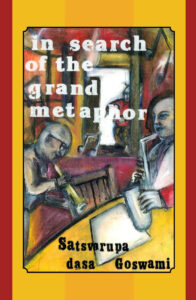
The metaphor is song. Explain it. Yes, particulars may not seem interesting or profound to readers who want structured books.
Wait a minute. Don’t pander to readers or concepts of Art. But Kṛṣṇa conscious criteria are important and must be followed. So, if your little splayed-out life-thoughts are all Kṛṣṇa conscious, then it’s no problem.
I am near the end of my days. But I do like the company of like-minded souls, especially those who are Kṛṣṇa conscious. Yes! I am prone to Kṛṣṇa consciousness. I have been a disciple of Bhaktivedanta Swami Prabhupāda for maybe almost sixty years. Sometimes I fail him. But I always bounce back and fall at his feet. It is a terrible thing that I sometimes do not have the highest love for him. It is a terrible thing. Actually, however, I never fall away from him. He always comes and catches me and brings me back to his loving arms.

This edition of Satsvarūpa dāsa Goswami’s 1996 timed book, Upstate: Room to Write, is published as part of a legacy project to restore Satsvarūpa Mahārāja’s writings to ‘in print’ status and make them globally available for current and future readers.
A factual record of the reform and change in ISKCON guru system of mid ’80s.

Readers will find, in the Appendix of this book, scans of a cover letter written by Satsvarūpa Mahārāja to the GN Press typist at the time, along with some of the original handwritten pages of June Bug. Together, these help to illustrate the process used by Mahārāja when writing his books during this period. These were timed books, in the sense that a distinct time period was allotted for the writing, during SDG’s travels as a visiting sannyāsī
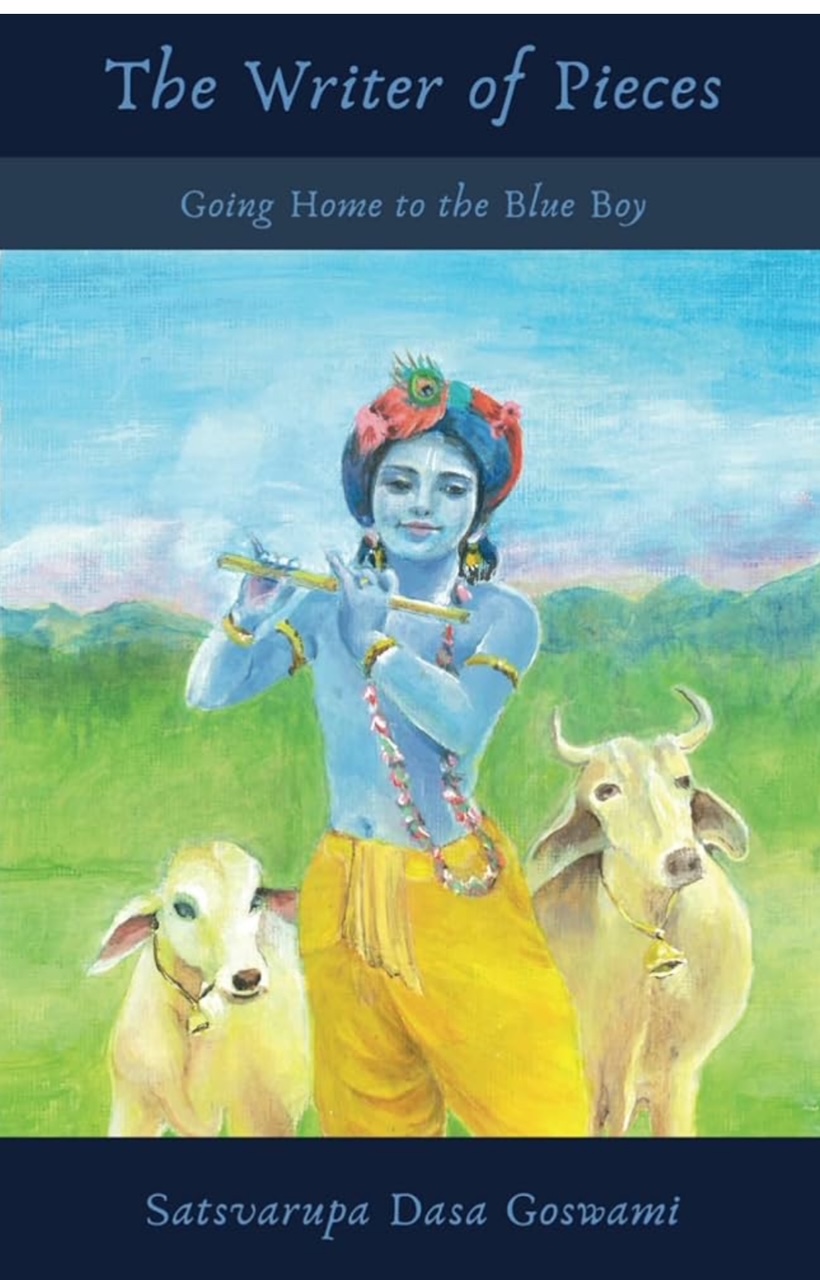
Don’t take my pieces away from me. I need them dearly. My pieces are my prayers to Kṛṣṇa. He wants me to have them, this is my way to love Him. Never take my pieces away.

Many planks and sticks, unable to stay together, are carried away by the force of a river’s waves. Similarly, although we are intimately related with friends and family members, we are unable to stay together because of our varied past deeds and the waves of time.
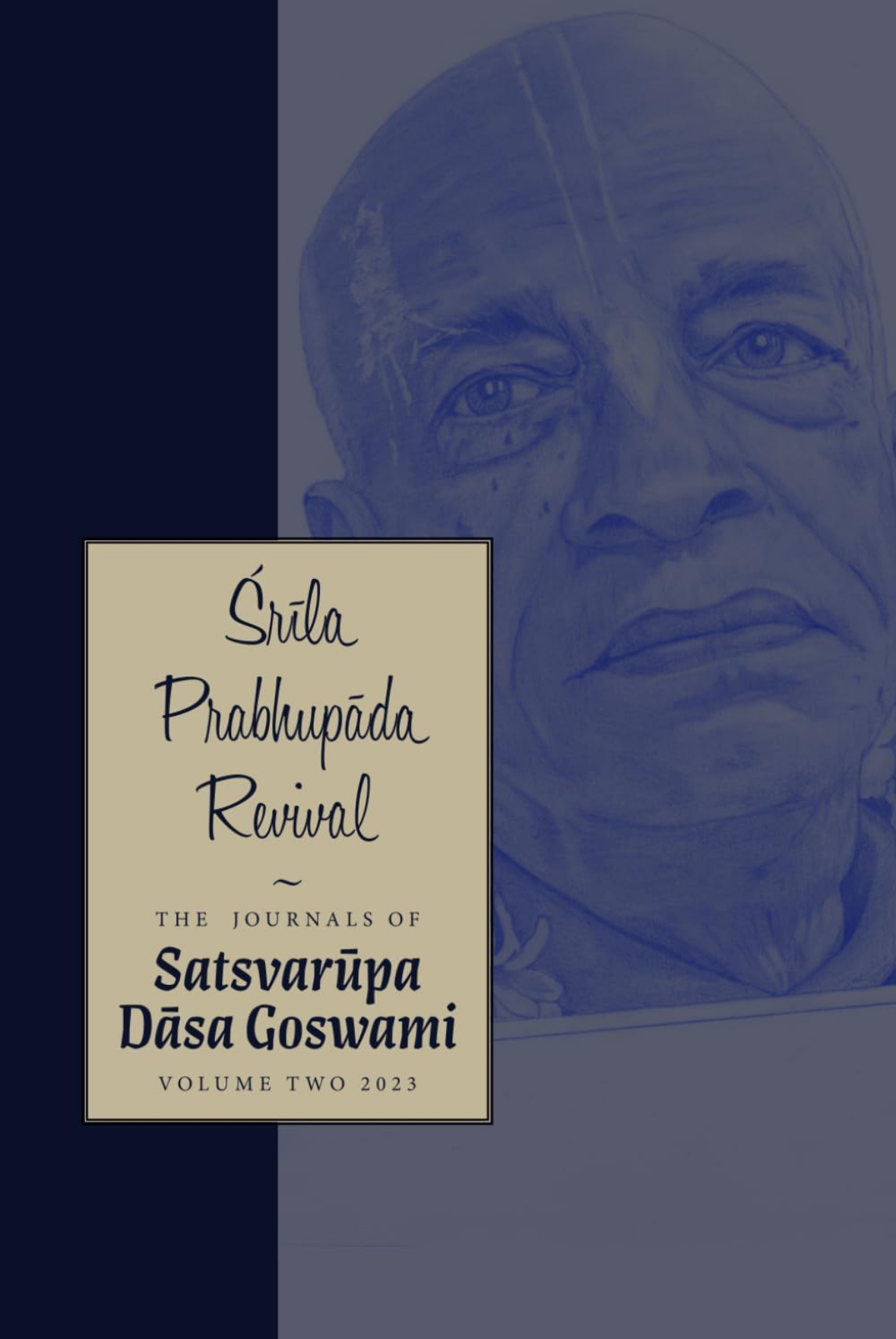
To Śrīla Prabhupāda, who encouraged his devotees (including me) To write articles and books about Kṛṣṇa Consciousness.
I wrote him personally and asked if it was alright for his disciples to write books, Since he, our spiritual master, was already doing that. He wrote back and said that it was certainly alright For us to produce books.
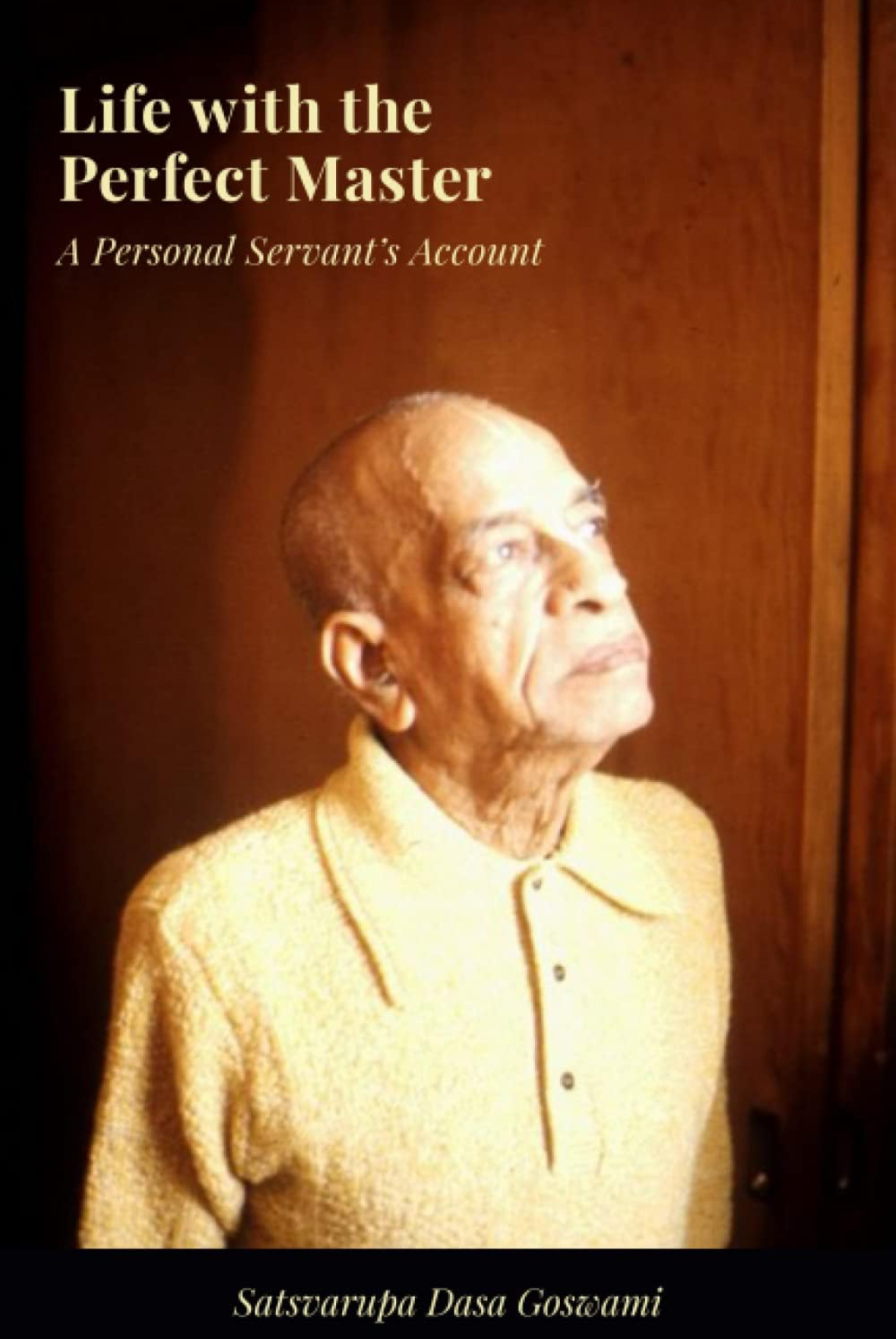
I have a personal story to tell. It is a about a time (January–July 1974) I spent as a personal servant and secretary of my spiritual master, His Divine Grace A.C. Bhaktivedanta Swami Prabhupäda, founder-äcärya of the International Society for Krishna Consciousness. Although I have written extensively about Çréla Prabhupäda, I’ve hesitated to give this account, for fear it would expose me as a poor disciple. But now I’m going ahead, confident that the truth will purify both my readers and myself.

First published by The Gītā-nāgarī Press/GN Press in serialized form in the magazine Among Friends between 1996 and 2001, Best Use of a Bad Bargain is collected here for the first time in this new edition. This volume also contains essays written by Satsvarūpa dāsa Goswami for the occasional periodical, Hope This Meets You in Good Health, between 1994 and 2002, published by the ISKCON Health and Welfare Ministry.

This book has two purposes: to arouse our transcendental feelings of separation from a great personality, Śrīla Prabhupāda, and to encourage all sincere seekers of the Absolute Truth to go forward like an army under the banner of His Divine Grace A.C. Bhaktivedanta Swami Prabhupāda and the Kṛṣṇa consciousness movement.
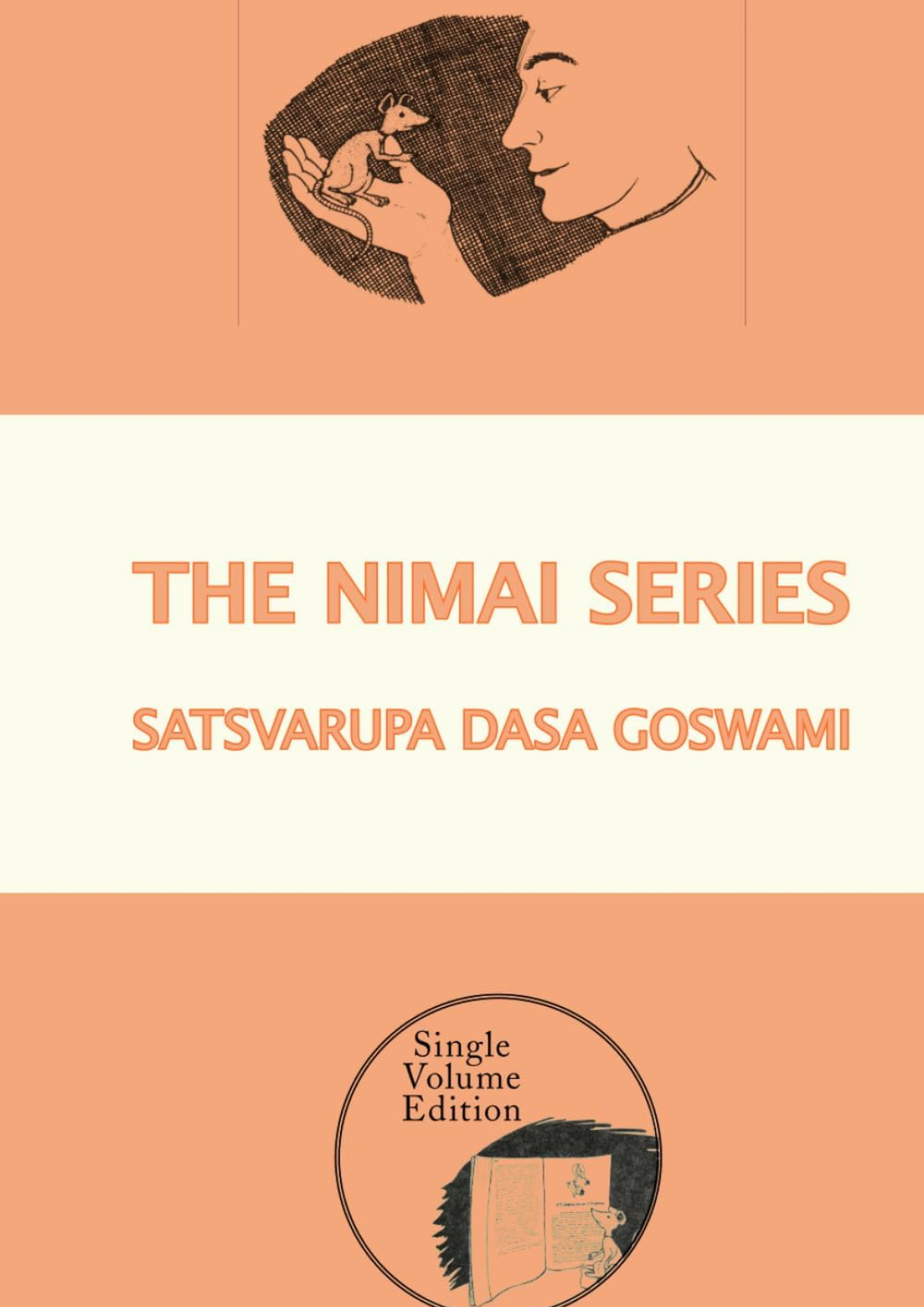
A single volume collection of the Nimai novels.
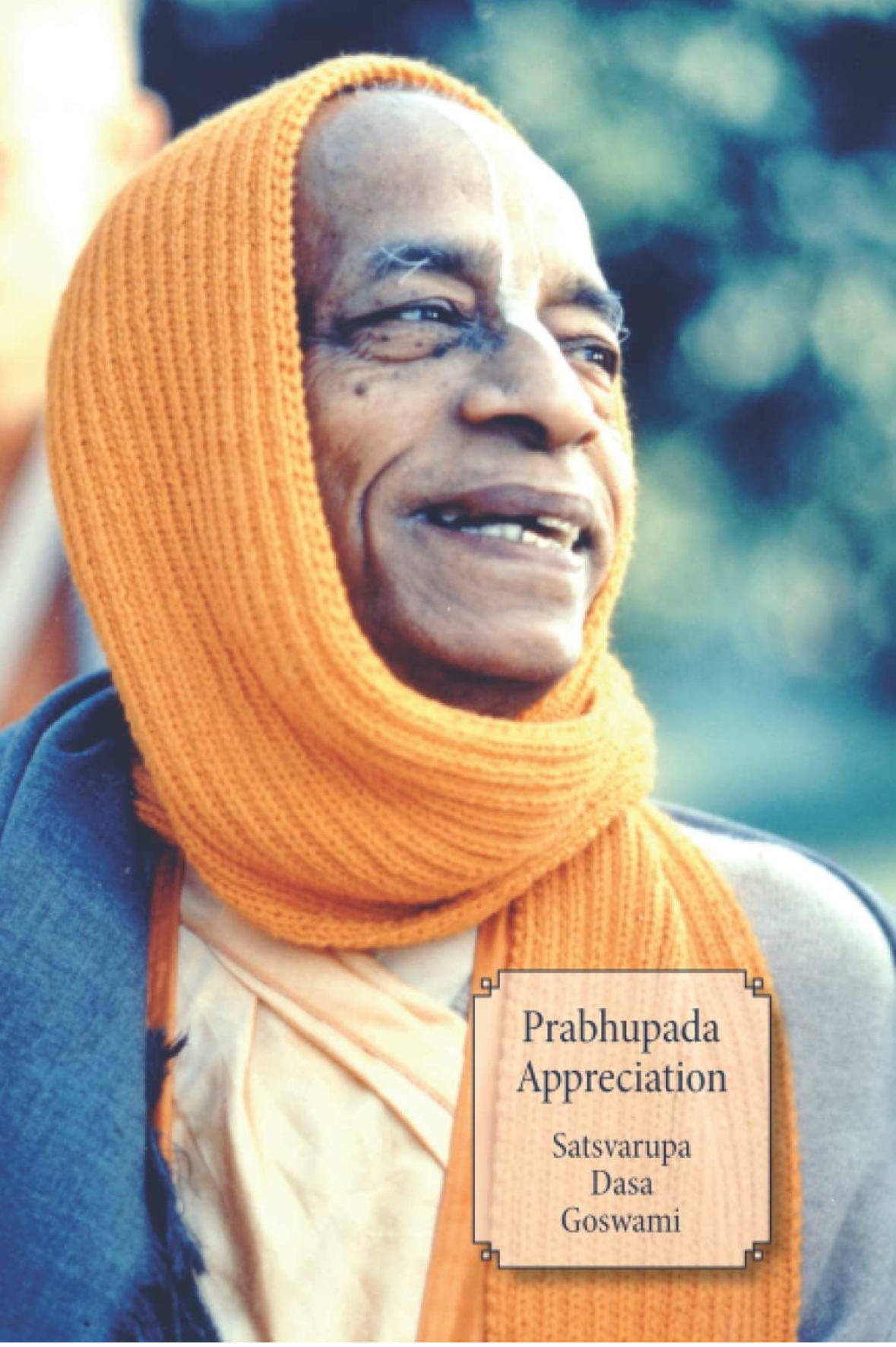
Śrīla Prabhupāda was in the disciplic succession from the Brahmā-Mādhva-Gauḍīya sampradāya, the Vaiṣṇavas who advocate pure devotion to God and who understand Kṛṣṇa as the Supreme Personality of Godhead. He always described himself as simply a messenger who carried the paramparā teachings of his spiritual master and Lord Kṛṣṇa.
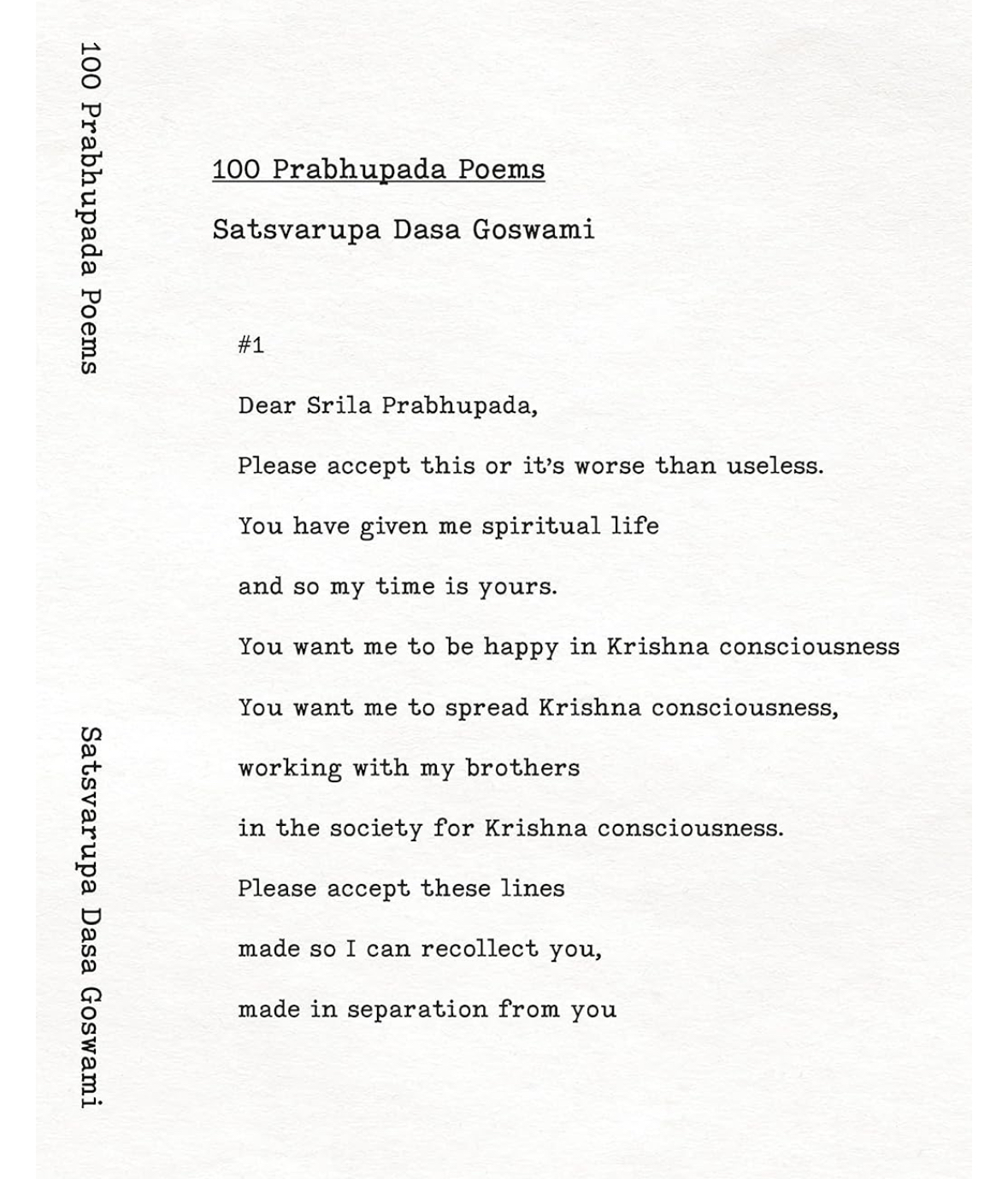
Dear Srila Prabhupada,
Please accept this or it’s worse than useless.
You have given me spiritual life
and so my time is yours.
You want me to be happy in Krishna consciousness
You want me to spread Krishna consciousness,
This collection of Satsvarūpa dāsa Goswami’s writings is comprised of essays that were originally published in Back to Godhead magazine between 1966 and 1978, and compiled in 1979 by Gita Nagari Press as the volume A Handbook for Kṛṣṇa Consciousness.
This second volume of Satsvarūpa dāsa Goswami’s Back to Godhead essays encompasses the last 11 years of his 20-year tenure as Editor-in-Chief of Back to Godhead magazine. The essays in this book consist mostly of SDG’s ‘Notes from the Editor’ column, which was typically featured towards the end of each issue starting in 1978 and running until Mahārāja retired from his duties as editor in 1989.
This collection of Satsvarupa dasa Goswami’s writings is comprised of essays that were originally published in Back to Godhead magazine between 1991 and 2002, picking up where Volume 2 leaves off. The volume is supplemented by essays about devotional service from issues of Satsvarupa dasa Goswami’s magazine, Among Friends, published in the 1990s.

“This is a different kind of book, written in my old age, observing Kṛṣṇa consciousness and assessing myself. I believe it fits under the category of ‘Literature in pursuance of the Vedic version.’ It is autobiography, from a Western-raised man, who has been transformed into a devotee of Kṛṣṇa by Śrīla Prabhupāda.”
 The Best I Could Do
I want to study this evolution of my art, my writing. I want to see what changed from the book In Search of the Grand Metaphor to the next book, The Last Days of the Year.
 a Hare Krishna Man
It’s world enlightenment day
And devotees are giving out books
By milk of kindness, read one page
And your life can become perfect.
 Calling Out to Srila Prabhupada: Poems and Prayers
O Prabhupāda, whose purports are wonderfully clear, having been gathered from what was taught by the previous ācāryas and made all new; O Prabhupāda, who is always sober to expose the material illusion and blissful in knowledge of Kṛṣṇa, may we carefully read your Bhaktivedanta purports.
I use free-writing in my devotional service as part of my sādhana. It is a way for me to enter those realms of myself where only honesty matters; free-writing enables me to reach deeper levels of realization by my repeated attempt to “tell the truth quickly.” Free-writing takes me past polished prose. It takes me past literary effect. It takes me past the need to present something and allows me to just get down and say it. From the viewpoint of a writer, this dropping of all pretense is desirable.
 Geaglum Free Write
This edition of Satsvarūpa dāsa Goswami’s 1996 timed book, Geaglum Free Write Diary, is published as part of a legacy project to restore Satsvarūpa Mahārāja’s writings to ‘in print’ status and make them globally available for current and future readers.