

We need to expand our team of proofreaders as we aim to increase the rate of republication of Satsvarūpa Mahārāja’s books as well as new books that he writes.
This includes a need for fluent bilingual Spanish and English speakers to proofread Spanish translations (we currently have around 20 Spanish translations waiting to be proofread).
Anyone interested in this particular service should contact Manohara dāsa at [email protected]
If you would like to help, please contact Kṛṣṇa-bhajana dāsa at [email protected] or [email protected] and we will find you a service that utilizes your talents.
Chant feelingly. Of course, if at any given moment you do not chant feelingly, you cannot go back and start your rounds again. What can be done? Push on, but keep trying. Kick out with heavy boots the poisonous snakes of sleep and gross sensualism. Then cry like a child for its mother, calling on the holy name, “O energy of God, O Kṛṣṇa, please let me serve You.”
******
King Kulaśekhara’s advice is important for proper chanting. At the time of death, it will be difficult to chant due to our physical condition. “Now that I am chanting in good health, let me die thinking of Kṛṣṇa.” Of course, we don’t want to die now; we want to live to serve. But now while our material minds and bodies are intact, we should chant in the mood that this is our last precious chance to concentrate and to depend fully on the holy name. With this sober reflection, you can drive out all auxiliary thoughts. Chant while you can.
******
Bhīṣmadeva also drove out all other thought at the time of his passing away. Scheming over this and that, letting the mind wander—at the time of death you will be forced to give up all these thoughts. But do it now and save yourself for chanting. Such pure chanting can save the whole world. “O Rādhā, O Kṛṣṇa, please engage me!”
******
Mind-wandering and drowsiness continue to be the main obstacles. The mind thinks over his latest schemes: “I can’t put certain things aside and simply chant!” But analyzing them, I see the things my mind dwells on are not so important that they couldn’t be suspended in favor of two and a half hours of concentrated japa. Put everything aside, and chant the holy name.
******
You should have already had a good evening’s rest; therefore, resist sleep. After fighting it off, you will get strength for japa. But if you yield to sleep, then your rounds may always be sleepy, poorly uttered, and inattentive, not just for one day but for months on end. The power of a bad habit is such that it may even become a bad habit for life, based on an illusion that you cannot fight off sleep. You say, “What can I do? It has overpowered me!” But the japa-yajña is not a mere physical exercise; it is dynamic and spiritual. Therefore, it contains force, and you can gain force if you resist the deadly undertow of sleep and poorly uttered rounds.
******
Japa is not a short burst but a long haul. One round after another, you have to enter gradually, deeply, into the mellows of the holy name—by numerical strength. It takes time. Keep chanting.
******
Chanting japa in the association of devotees helps. It’s too embarrassing to fall asleep in their presence. But no extensive talking with your japa partners; only Hare Kṛṣṇa, Hare Kṛṣṇa, Kṛṣṇa Kṛṣṇa, Hare Hare …
******
But you have to keep going. Two hours-plus can seem like a long haul if all you are doing is loudly repeating: Hare Kṛṣṇa, Hare Kṛṣṇa, Kṛṣṇa Kṛṣṇa, Hare Hare / Hare Rāma, Hare Rāma, Rāma Rāma, Hare Hare. But you have to go on, go beyond, push on, round after round without let-up.
pp. 52-55
To be truly compassionate requires faith. When we distribute the holy name, we are not just trying to help people hear krsna-nama but to awaken faith in their hearts. If we are faithless, how can we plant the seed of faith in others? The holy name itself is like fire—it will act on the heart of the hearer as He chooses—but Krsna has arranged for the holy name to be delivered through the devotees. Receiving the holy name is meant to be an exchange between devotees and anyone who will hear.
Even when we become more advanced devotees, our compassion may never reach the depth of Srila Prabhupada’s compassion, or the mood that Lord Caitanya expressed. We shouldn’t expect that. Instead, we will have to be satisfied to express compassion according to our capacity.
In his purport to Srimad-Bhagavatam 4.21.33, Prabhupada writes:
The question may be raised that since the Lord is supposed to be worshiped by great demigods like Lord Brahma, Lord Siva and others, how can an ordinary human being on this planet serve Him? This is clearly explained by Prthu Maharaja by the use of the word yathadhikara, “according to one’s ability.” If one sincerely executes his occupational duty, that will be sufficient. One does not need to become like Lord Brahma, Lord Siva, Indra, Lord Caitanya or Ramanujacarya, whose capabilities are certainly far above ours. Even a sudra, who is in the lowest stage of life according to the material qualities, can achieve the same success. Anyone can become successful in devotional service provided he displays no duplicity. It is explained here that one must be very frank and open-minded (amayinah). To be situated in a lower status of life is not a disqualification for success in devotional service. The only qualification is that whether one is a brahmana, ksatriya, vaisya or sudra, he must be open, frank and free from reservations. Then, by performing his particular occupational duty under the guidance of a proper spiritual master, he can achieve the highest success in life.
Srila Prabhupada is not specifically discussing compassion in this purport but general devotional service. Still, it is applicable. We are not disqualified from expressing our own compassion even if we are in a “lower status of life.” We should not become paralyzed by our lack of qualification in devotional service. It is also indicated here that we can express whatever devotion we have not only according to our capacity but according to our nature, our varna, and our asrama. We do not have to share a generic ex¬pression, but we can work as individuals. A ksatriya does not show his compassion in the same way as a brahmana or sudra.
The basis of our desire to share Krsna consciousness will still be our own faith in it. Although there have been many abuses perpetrated in the name of preaching, to whatever degree one of the underlying motivations to spread Krsna consciousness was faith in the process, to that degree it was effective. It is within our capacity to weed out selfishness in our spiritual lives, if only gradually, and as we do so, our preaching will become more effective. It is within our power to desire and seek purity. Purity includes freedom from the desire to exploit others. We are often not so pure, but if we are striving, our capacity to feel compassion will increase. Ultimately, we have to have faith in our own chanting. That will give us the strength to both make advancement and share Krsna consciousness with others.
Giving compassion according to our capacity and nature rather than always according to an imposed formula will also help us deepen our faith. I have found that true with my own writing. Being a writer is a deep part of myself; it is not something that will easily be eradicated. Therefore, let me use my desire and ability to write to show compassion to others. There are many examples in world literature of persons who tried to do the same thing. I think of Samuel Taylor Coleridge in his famous poem, “The Rime of the Ancient Mariner.” The poem was well crafted according to rhyme, meter, and metaphor, but it contained an important message which Coleridge hoped readers would take seriously. Coleridge was a romantic poet, interested in the supernatural, believing more in the innate goodness of human beings rather than their natural degradation, and revering nature.
“The Rime of the Ancient Mariner” tells the story of an old seaman who stops a man on his way to a wedding to tell his story. The seaman had needlessly shot an albatross, a bird of good omen, and his crew had hung the bird around his neck as a remembrance. Afterwards, the ship went through a series of ill adventures, resting for days on a becalmed sea, with the hot sun shining down upon them, the crew dying of thirst.
Water, water, every where, And all the boards did shrink;
Water, water, every where, Nor any drop to drink.
As the mariner, now alone on the ship, looks over the ship’s side in his distress, seeing the sea full of life, he despises it. Then he tries to pray:
But or ever a prayer had gusht,
A wicked whisper came, and made My heart as dry as dust.
Later, he again looks over the ship’s side, and sees water snakes mov¬ing in “tracks of shining white,” and this time he feels happy that they are alive:
O happy living things! no tongue Their beauty might declare:
A spring of love gushed from my heart, And I blessed them unaware.
This recognition of the sea snakes as creatures of God frees him from the curse that was placed upon him for killing the albatross. Thus he is saved. After returning to land, he finds that he must periodically tell the story of what happened to him to help his fellow humans become more kind to God’s creatures. The mariner’s words come to an end with the famous lines:
He prayeth well, who loveth well both man and bird and beast. He prayeth best, who loveth best All things both great and small; For the dear God who loveth us, He made and loveth all.
Literature (or other cultural expressions) should reach out with its compassionate message, and not just provide a sensitive telling of events or lives, but help people get in touch with their own feelings. Krsna conscious culture should awaken people’s devotion. People often don’t have the power to put into words what they are feeling; literature and other forms of art can help them do that. In that sense, culture is as uplifting as any more apparently direct expression of compassion. Not only does it help people bring out their own feelings, but it can remain available for generations.
We have to be careful not to be too glib in how we define compassion, or how we see our own expression of it. Krsna will accept what we can do according to our capacity, but we shouldn’t mistake self-interest for compassion. We can follow our natures in how we express ourselves, but we still have the responsibility to actually make offerings to Krsna of what we do and what we are.
pp. 46-58
Is there a contradiction, something wrong
in my whole attitude toward writing?
I want to perceive with my senses
but Krsna consciousness is only heard.
That’s all right—use your nose to
smell the incense offered to the Deity,
your tongue to chant.
I do those things wholeheartedly,
but what about what I
smell and write in my own life?
Can that be Krsna conscious?
That’s my question.
I think it can, but I have to be
careful. I’m not liberated
where whatever I do is spiritual
love of God. Yes, I can walk
the beach in Krsna consciousness
and remember my mother and
Queens, New York and bicycles, but
not to binge. It has to have purpose.
Why don’t I write more of Dhruva Maharaja and
songs the way great Vaisnavas wrote them—
the Alvars and the Six Gosvamis?
Am I afraid to extol the Bhagavatam?
No, not afraid.
Then ashamed?
No, not ashamed.
I want to live in Him,
empathize with Dhruva’s feelings of regret
while he stood face-to-face with the Supreme
Person from whom all universes come, all
species of life, the beasts, birds, devas, and humans.
But I also want to write that
I read of Dhruva while sitting on a beach,
the dawn sunlight flooding the Atlantic Ocean
and warming the air, brightening the sand, while a
small boat
was moored and bobbed up and down. I had the whole
place to myself. What about that?
So I sit on the beach, thinking over
when the day will come when
I will see the beloved Lord wherever
I turn, when I will live to serve only Him,
when I will write such prose and poems.
My dear Lord Krsna,
someone asked if we prayed
just to Prabhupada or to You.
I said, “Prabhupada taught us to pray
to Krsna. We see the Deity
on the altar and the Lord in His names
because the Swami said so.”
He said, “That’s great.
You get both guru and Krsna.”
Yes, I said, that’s the way
Prabhupada taught.
He never said he was God and that we
should chant his names.
Dear Lord Krsna, Sri Krsna,
I am reading again Your Bhagavad-gita
and hearing my master’s lectures.
He hammers home to all audiences
that You are the Supreme Person. Your
name is all-attractive.
You appear as Your son or prophet,
but especially as Krsna, whose
activities are most pleasing.
Lord Caitanya gives us
the easiest method to
reach the topmost.
Don’t talk of varnas, He said,
that is superficial. Direct
chanting of Hare Krsna
is love of God made easy.
If we still fail, what can be said?
No one knows I’m here
praying to You in my closet.
Not everything I do is prayer,
but You are everywhere, even in my
life of devotional service,
as ordered by my master.
I wish to know You better,
to serve You and love You.
Prabhupala tells us we can’t expect
to come to the standard of the gopis, who gave
their foot dust to the Lord. But try.
So I pray to serve You.
It was light when I walked,
so I found a dead mole on the path.
He was not eaten at and I wondered how
he came there to die. Did he take a few
last steps out of the grass
and fall dead in the middle
of the path? Black mole body,
curled tail. No good for anything now.
He’ll rot into the earth like the leaves.
After seeing him everything seems browner,
more real. The puddles shine.
Was he thinking? Talking to himself
like a creature in Wind in the Willows?
Or did he choke and die
with no bright thoughts?
A human can do better if he’s
practiced to chant God’s names.
Otherwise, no better than a black mole
toddling to a stop, keeling over,
and rotting into the earth while strangers pass.
I compiled references and comments
on the 64 qualities of Krsna from NOD.
Made it into a little book.
The editor said, “Add
more material on gentleness
and on the power of the holy name.”
Today I added it while walking.
It’s wonderful when we are treated gently
because that’s what we want. A sadhu
is gentle, relaxed.
I knew some readers will poke fun at this,
so I argued against their macho stance.
I said we all want to be treated gently
if only we could find someone
so powerful that his gentleness
wouldn’t be bluffed. I gave the example of Christ.
Now I’m thinking that sometimes Christ
wasn’t soft when he spoke of punishment for sin
and throwing away the chaff,
the useless disciples,
and he smashed the sellers outside the synagogue.
He blew the minds of rich men
and yelled, “Get thee behind me, Satan.”
He had sharp retorts for the Pharisees.
He didn’t condemn his persecutors, but asked
forgiveness.
He lived his word
and turned the other cheek.
I also thought that Prabhupada was gentle
with me because I have
a thin skin. I think we all do.
As for the power of the holy name,
I said it’s more powerful than atomic energy.
I wish I could get some of that power
and drive away my blues, my emptiness.
Then I could be patient and gentle
with others—if I knew the power
of the holy name was always ready
to enter me and I had nothing left to fear.
Yevtuschenko, Carver, Neruda—
poets who represent the people, their conscience,
speaking out against national infamies.
Is writing poetry like scribbling a note to be sent
into an underground to give hope?
I keep forgetting, Why do I do it?
Finally, before it’s
too late, I remember what even sensitive
Yevtuschenko or Neruda or Carver can’t
remember—that Krsna is the center,
that recitation of His name or something about Him
from sastra and the pure devotees
will be real amelioration. Because what’s
wrong in the world anyway? It’s not one
set of rebels against a government, it’s not
capitalists
or communists, but the gross neglect
of the soul, of knowledge of the soul—
neglect of recognition that there is a supreme
purusa and everything belongs to Him.
They say Kma consiousness is
a tacked-on canon I use to
resolve a poem that really should stay in the
sensual, compassionate poet’s realm.
No, it’s the center of all people and poets
and government control. It’s the difference between
untruth and reality, love and oppression.
It’s understanding both sides of the dual
wrongs and partial rights of this world—
seeing everything in Krsna. Do you think
He’s a Hindu god, you
fine poets? As if you,
Yevtuschenko, are yourself the forger
of the human soul.
Pre-dawn starts to fade and
bird songs appear, brahma-sabda.
I’m prepared to tell them
that first Sarasvati gave Lord Brahma
the klim krsnaya govindaya mantra
and then she blessed him to hear
Krsna’s flute, which
came out Brahmaji’s mouths
as klim kamadevaya vidmahi . . .
Although all the truths of the maidservants
of Krsna were not revealed to him,
he was able to sing, beginning
with cintamani-prakara-sadmasu.
Krsna is the source of all, and
those who are wise
serve Him in love.
It’s raining. I wear rubber
rain gear from head to foot and
walk the roads instead of the windy beach.
Chant, chant.
But I don’t beat my mind.
Chant anyway. It goes
deeper, it goes deeper than
I know it. God looks on.
Chant, chant.
I’m sorry I’m not better. I love
to write and publish,
so why don’t I love to chant?
You do, I tell myself. You do.
In your own way you do, like
that country song: “I’m always true to
you, darling, in my fashion, / I’m always true
to you, darling, in my way.”
I’m not endorsing poor japa,
just giving myself solace.
I love the life of chanting and
beads and bead bags and people
who chant and any sincere enthusiastic
praise of japa I hear.
Pebbly road,
gray with rain, no one else is awake.
Back indoors the raindrops roll off
my rubber coat and pants,
and I smile and talk with the men while
I keep this discovery of solace to myself,
until I write it here to help me remember.
pp. 49-54
The fortunate devotee will soon be delivered from material existence by the Lord. “The devotee does not desire any achievement other than pleasing the Supreme Personality of Godhead.” (Bg. 12.6–7, purport) He works for Krishna and at the same time chants Hare Krishna, Hare Krishna, Krishna Krishna, Hare Hare. Transferring the soul to a higher planet at the time of death requires great yogic ability, but the Lord Himself takes a devotee. “The devotee does not need to become very experienced in order to transfer himself to the spiritual sky.” The Lord is the deliverer. He comes riding on Garuda. Simply by chanting the Hare Krishna mantra, a devotee can approach the supreme destination easily and happily.
Don’t futilely try to deliver yourself. Surrender to Krishna, and He will do the needful. Yes, I know—chant Hare Krishna. Try to cleanse the mind of sinful impressions; all attachments to material is sordid pleasure. Pray to Lord Krishna.
“Just fix your mind upon Me, the Supreme Personality of Godhead, and engage all your intelligence in Me. Thus you will live in Me always, without a doubt.” (Bg. 12.8) So that’s a little lectio. A near-deaf man tries to hear. He presses the Braille letters in his blindness—how much is coming through? I hear that Krishna is God and He will deliver us to His abode of eternity, bliss, and knowledge when we surrender ourselves to His care, when we engage in devotional service.
Japa jokes are plenty
and serious advice.
Perhaps you fall to namaparadha
and I wonder when
the darkness will end.
Let’s man our battle stations. You have to push yourself some. Maybe be ready to put cold water on your face. Let’s see. Hankering for good japa, I goes at it as lambs to slaughter. What else can I do? The names are absolute.
May Krishna bless us, Christ bless us, they know the way. Hare Krishna, Hare Krishna, Krishna Krishna, Hare Hare. May the Lord of the universe see something good in me.
O Human At Best, you little microcosm, you little microwave oven, please cook us some buns and samosas. Give us bread for the world. Feed America first and India second and then England and Afghanistan. Do it by alphabetical order and however we may get the books out. But the people of Guyana may find the non-Hindu references odd and may ask, “Why do you write about your dreams, and what’s this pre-Krishna conscious stuff? Why references to poets and authors and baseball players?” My fellow Americans don’t much ask that question. I’ve gone over it.
Why are you not a powerful acharya? No one asks that. They ask, “Why don’t you study more sastra and come up with a different contribution? Can you tell us the history of ISKCON in relation to its Gaudiya Math predecessors?” It appears cut off in history. It is like American colonies in relationship to the British empire. The colonies became the U.S.A. but it took some time for them to know who they were.
Are you saying ISKCON is like that? We don’t know why you write those poems that move around on sound and skinny. Is it true you knew of some people coming over the border from Canada at a fisherman’s point? Did your lawyer tell you your lines? When you are dying and dead, will you be able to forgive and ask forgiveness of all you have done wrong? Krishna Krishna.
My attempt is to find Him in the current of words. Krishna Krishna. Hare Krishna mantra is the boat on which we all can ride to cross the dangerous waters of Kali-yuga. The captain of the boat is the spiritual master. Here we go, hang on tight and don’t let go.
You splashed your way madly, hoping for some sincere Krishna consciousness. Did it come? Who is the judge? Subjective—objective. Periods collide. You sweat. You live alone with friends. Celebrate the coming together of words. One’s praise, “Oh, you did great.” But knows it’s not good for the freehand in process to think that. Each time you write or paint, you want to find your solitary integrity.
Oh boy, that’s good. You are sure great. You’re the best. Or that stinks. You’re in maya. God will punish you.
B. said stop being centered in yourself, you should be centered in Krishna. But I say you can’t disappear. It’s you who has to think of Krishna and serve Him. And since we have so many obstacles in our way, we have to work with the self so he can be more fit to serve the Lord. In their lectures, however, they keep saying, “Don’t act for your own interest, act for Krishna’s pleasure only.” We can, I guess, preach an ideal standard that we don’t actually follow. But I feel hesitant about that.
Oh, good Saint Seraphim, you are a good man, tough nut. The thugs came and knocked him unconscious when he was standing in trance in his hermitage in the woods.
No big wind up. The dense green looks restful. Rest. Krishna, Krishna, pay attention to what you have to say. The Lord of mercy, Krishna, Krishna. Yawn and sprinkle tears.
Mist lying on top of the hill. I want to put it on record that I feel good—not just for this morning’s air and walk, but my whole situation in life, living here and serving the way I do. For those days and times when I feel doubtful that I’m doing the right thing, please look at today’s report. See the violet-colored clover.
In Kali-yuga there is nothing as valuable as Vaishnava books and behavior.
I Will Work
I need You.
I need You now.
I never should have forgotten.
Where is the ounce of sincerity?
How to increase it?
Give me that jnana
and mercy, if You will,
and I will work, and I will work.
Spirit soul in all beings, you are put there by God. Srila Prabhupada told us right. May I not forget Him. He’s the caitya-guru, and you may receive instructions from Him if you are pure. If you want to serve Krishna He’ll help, or if you want to go to hell, He’ll help. Which do you want?
I want to serve Krishna according to my inclinations.
Try to answer some mail, pup, and pet your pet and curse your enemy, the deep sea enemy of Arjuna who fought against them all on the chariot of Indra with Indra’s charioteer who at one point became bewildered by the Dhanava illusions—“I’ve never seen such darkness.”
Writing validated not by the institution but by the individuals and not in the sense that they’re doing it as part of a contract. Honest religion, honest medication, honest response—give picture of a person moving minute to minute on the path, a voice as honest as possible.
To what degree do I see Krishna in my life? I’m already perceiving the outer world and the life of my mind and thoughts. And intellectual life of books. Where is Krishna in all this? How much is He revealing Himself to me? The answer is He is here but I am not noticing sufficiently. I’m still largely covered, and perhaps I want to remain covered. Maybe I’m afraid of what would happen if Krishna personally “invaded” my life, took over and made me His. A truly saintly person wants this to happen and surrenders to Him.
pp. 98-101
SRILA PRABHUPADA speaks strongly in his purports about the attraction between men and women and how this attraction can devastate spiritual life. Śrīla Prabhupāda writes:
Material existence means living together as male and female and being attracted by one another. However, when one fully understands spiritual life, his attraction for the opposite sex becomes vanquished. By such attraction, one becomes overly attached to this material world. It is a hard knot within the heart.
—Śrīmad-Bhāgavatam 4.29.85, purport
In marriage that knot becomes especially strong, and people are not eager to be advised what to do about it. Sometimes people criticize the ācārya (Vedic teacher) by saying, “Why are you meddling in our private lives? You sādhus have your own business—worship, preaching, and so on. What business is it of yours what we do in the privacy of our marriage?”
There was an article called “Bishops in the Bedroom,” written by lay Catholics. They were criticizing their priests, saying, “We don’t want you involved in our sex life.” And “pro-choice” women, even more adamantly, don’t want any moralists, religionists, or politicians telling them what they can or can’t do with their bodies.
Materialists fiercely protect what they see as their right to engage freely in sex life. As Śrīla Prabhupāda says, “In all species of life the attraction between male and female is the basic principle of existence.”
It is a fact that the ācāryas are completely aloof from married life and its implications. They are aloof from the whole material world. Yet they are concerned. One time an elderly British man was inquiring from Śrīla Prabhupāda. The man admitted he didn’t know much about Kṛṣṇa consciousness but he was interested in hearing. After some talk about transmigration, the man said, “It seems to me that you are free by your spiritual development and that you didn’t have to come back. It seems you have come back because you wanted to, because you have a job to do.”
Śrīla Prabhupāda’s answer was matter of fact. “Yes, just like Kṛṣṇa. He comes, or sometimes Kṛṣṇa’s son comes, a great devotee, because the spiritual enlightenment of the fallen souls is required.” That is why saintly persons who have nothing to do with sex life and its entanglements—home, land, children, and money—instruct the attached householders.
From the attraction between man and woman, everything else grows:
Everyone comes to this material world attracted to sense gratification, and the hard knot of sense gratification is the attraction between male and female. By this attraction, one becomes overly attached to the material world in terms of gṛha-kṣetra-sutāpta-vittair—that is, home, land, children, friends, money, and so forth. Thus, one becomes entangled in the bodily conception of ‘I’ and ‘mine.’
The consciousness of “I” and “mine” directly correlates with sins like abortion. Śrīla Prabhupāda has explained that both the abortionist and the mother who chooses abortion will have to take birth again and again to suffer the same fate as the baby they have killed. Therefore, to try and save at least a few people from the horrible suffering awaiting them, the compassionate devotee preaches.
The great devotee Prahlāda Mahārāja also describes the knot that forms in the heart due to sexual attraction. In modern culture, sexual partners consider marriage optional, but in Vedic culture the attraction would always be regulated by marriage. But marriage makes the knot stronger, especially as children are born and one struggles to maintain the family. When one works hard to support his children, he wants to be respected by them, and by his co-workers. This tightens the knot of attachment. Devotees want to loosen this knot.
Married or single, we all have experience of this hard knot. Even if we ourselves have not tied a marital knot, we have all been children of our parents. I know that during my entire childhood I never once entertained the idea that I was anything but the son of my parents. My world rotated on the axis of my parents. Not until I was seventeen years old, did I begin to disagree with their world view or their view of me. Then began the struggle we all go through of trying to become free of our parents’ ideas and find our own identities.
Even after I left home and was living my own life, I still held to an image of myself as part of my family. I remember that when I met Śrīla Prabhupāda—I was already twenty-six years old—I called my parents to tell them the wonderful news. I even sent them our ISKCON Prospectus and told them how happy I was now that I had found something I could dedicate my life to.
They got angry. This wasn’t their religion. How dare I do something different? My father even told me, “If you stay with the Swami, we won’t have anything more to do with you.”
I knew he wasn’t bluffing. Although they were sentimental about their sense gratification, when their sacred codes of identity were challenged, they responded strongly.
After that phone call, I went upstairs to see Prabhupāda. I started crying as I related what had happened: “They told me that if I stay in Kṛṣṇa consciousness they won’t have anything to do with me anymore.”
Prabhupāda didn’t seem to take it too seriously. He didn’t lecture me about family attachment. He just looked at me, his eyes smiling.
I lost those parents, but in such a way that I accepted Śrīla Prabhupāda as my father, my real father. Later I wrote to Śrīla Prabhupāda to confirm this. He wrote back, “You have accepted me as father, so I have accepted you as my dear and real son. Relationship of father and son on the spiritual platform is real and eternal. On the material platform such a relationship is ephemeral and temporary.” He added, “Although I cannot give you anything as father, still I can pray to Kṛṣṇa for your more and more advancement in Kṛṣṇa consciousness.”
I was free, but only years later did I understand what I had gotten free from. One day I was distributing Back to Godhead magazines at Harvard Square. I looked around at so many conditioned souls, and I could see what family illusion was. I knew I wasn’t completely free of it myself, but what impressed me was how strong it is. Although it’s complete illusion, it’s almost impossible to escape. To identify yourself as a spiritual soul with your own unique relationship with Kṛṣṇa is difficult when you are surrounded by family members, especially materialistic family members. The hard knot of family affection is considered the biggest obstacle to spiritual life. But when one fully understands spiritual life, the illusion is vanquished.
—Back to Godhead, 28(3) (May 1994): LESSONS FROM THE ROAD
pp. 44-47
As we take to Krsna consciousness, read Srila Prabhupada’s books and hear lectures by his devotees, we gain a theoretical understanding of this philosophy. It is a vast philosophy with many details. “One will find in the Bhagavad-gita all that is contained in other scriptures, but the reader will also find things which are not to be found elsewhere.” (Bg. 1.1, purport) Gradually our theoretical understanding turns into convictions and realizations. But even after years of practice, a devotee may again misuse his free will and revert to the rebellious attitude which brought the soul into the material world. Prabhupada characterizes this rebellion as a duality of desire and hate. “Due to desire and hate, the ignorant person wants to become one with the Supreme Lord and envies Krsna as the Supreme Personality of Godhead.” (Bg. 7.27, purport) One form this rebellion takes is doubts towards the teachings of the revealed scriptures.
Let me give a practical example. While I was giving a seminar on vandanam, I explained my own practice of prayer. But I admitted that sometimes when I am praying to Krsna a doubt arises as to whether Krsna is really there and whether He hears me. One of the devotees attending the seminar said that he was a bit shocked to hear that a person who is supposed to be a spiritual guide could have doubts about Krsna. I admitted to him again that unfortunately I am not above it. Until one reaches the liberated stage, doubts will continue to come. They may not be serious, or they can become so grave that they can seriously impede our progress. We should not hide the fact and bluff as if we are perfect. We have to learn how to deal with the obstacles on the path.
One response to skepticism is to fight back with knowledge. This is recommended by Krsna in the Bhagavad-gita, and we may refer to this -response as the intellectual approach. Flush out that demoniac doubt and get it to speak to you. Enter into dialogue with your doubt. You can do this within your own mind or in a diary. Or it may be more helpful to talk with another devotee about it. Srila Prabhupada used to encourage debate on his morning walks. He would ask the devotees for opposing views—”What do they say?”—and he would train us to argue against the atheistic points of view.
Let me raise a couple of doubts and respond briefly to them by the intellectual or debate approach:
A reply to doubt number one:
You seem to equate all world religions with man-made myth-ologies. But the true science of God is beyond the creation of humankind and its poets. Do you think man is everything? Did humans create the sun and planets, do they create time and life and death? Can they control these forces? Not really, although puffed-up scientists may claim to. To begin to understand God and religion, you have to accept the existence of acintya-Sakti, or inconceivable powers beyond human understanding. Since time immemorial, spiritually-minded persons have inquired into the existence of the Supreme, and God has revealed Himself to them in sacred texts or scriptures. Kona consciousness honors the truths found in other scriptures, but also teaches something more—a nonsectarian science by which all religions can be appreciated in their highest essence. That science is known as Bhagavata-dharma or bhakti-yoga. Bhagavata-dharma refers to the universal religion that is passed down by God to humanity, wher-ever it may occur in the world. Those who are sincerely interested in ultimate truths may consult this science by the proper method, and see for themselves. It is certainly unlike any ordinary book.
A reply to doubt number two:
The name Krsna means “all attractive,” and it is the all-inclusive name of God. Krsna is revealed in the Bhagavad-gita and Srimad-Bhagavatam as the Supreme Personality of Godhead. Krsna devotees do not decry the “divine force” as revealed in other religions. It is not a narrow, sectarian process as you fear. For example, the Srimad-Bhagavatam describes the best devotee and the highest religion as follows: “The supreme occupation [dharma] for all humanity is that by which men can attain to loving devotional service unto the transcendent Lord. Such devotional service must be unmotivated and uninterrupted to completely satisfy the self.” (Bhag. 1.2.6) Does this definition of religion sound sectarian? It is not. It allows that wherever pure devotion to the Supreme Lord appears in a total way, that is the best religion.
You ought to inquire into the Vedic literature without a predisposition. If one is actually inquisitive, he is bound to gain spiritual insight from these texts.
Although these replies may be countered by the skeptic, we can counter-reply. As we go on preaching, we think of better arguments and we employ relevant sastric references. In the case of the dialogue within us, the skeptic will usually be subdued by this method.
The method of dialogue is very satisfying because the arguments that Prabhupada and the acaryas give are competent. There is no reason to be overwhelmed by doubts when they come.
In order to confidently answer doubts, you need to study the philosophy. Within the Bhaktivedanta purports you will find constant dialogues. The opposing view is presented, and the Vaisnava view is presented with reason as well as sastric evidence. By learning this method of answering skeptics according to Vedic knowledge, you can deal with your own doubts; “over and above this, the reader will be able to convert others to accepting God as a concrete principle.” (Bhag., Preface)
To address doubts that are expressed in modern terminology, we can take help from learned Godbrothers like Sadaputa Prabhu, Ravindra Svarupa Prabhu and others who are trained in science and Western philosophy. When we hear from our Godbrothers, we will understand that their presentation is also based ultimately on the sastras. Acaryas such as Jiva Gosvami have given classical arguments as to why perfect knowledge cannot be gained by any person in this material world, because all conditioned souls are hampered by four defects: (1) The tendency to make mistakes; (2) illusion; (3) cheating; and (4) limited senses. Perfect knowl-edge has to come from beyond these human defects, in the form of sabda-brahma, revelation by Vedic knowledge.
In addition to studying, the “field work” of preaching will strengthen a devotee’s convictions and arguments. Srila Prabhupada writes, “All devotees, especially preachers, must know the philosophy of Krsna consciousness so as not to be embarrassed and insulted when they preach.” (Bhag. 6.1.38, purport)
pp. 65-69
Lord Caitanya said something like this: “I have no love of God, not even a spot. It is not possible to have pure love of God and still live in the world in separation from the Lord. If I loved the Lord, then how could I live?” He is describing the most intense expression of love of God, and it produces severe unhappiness, but actually Lord Caitanya was feeling bliss. For myself, I cannot feel intensity in my forgetfulness of Srila Prabhupada. I follow and repeat his instructions, but I lack a personal touch. If I loved Srila Prabhupada, I would be in a different frame of mind.
Love of Krsna is so intense and bewildering that even a drop of it can drown the whole world. One feels madness—happiness of being with Krsna and sadness of separation. If the symptoms are not present, how can one claim to be a lover of Krsna? Similarly, if we do not feel bereavement that Prabhupada is not in this world directing us—as well as the conviction that he is still with us—how can we claim to be a “Prabhupada man,” Prabhupada nectar-hound, Prabhupada meditator and so on?
Prabhupada said that on the disappearance of the spiritual master, the disciple should cry. As a chaste wife is ready to climb onto the funeral pyre following her dead husband, the disciple should be ready to give up his life after the departure of the spiritual master. The way to do this is to serve the order of the guru. This is “giving up the life” in a positive sense. One may say, “I cried tears back in 1977. It has been a long time since then. What do you expect? I am sure Prabhupada wants us to go on functioning.” I agree. A Prabhupada disciple understands that his spiritual master has not “disappeared.” Prabhupada has entered the eternal lily of the Lord. His disciple continues to live by service, and, therefore, he is cheerful. Everything is okay.
Yet everything is not okay. We are without our guide on a daily basis. We feel incomplete. We seek relief, and often we find it in contact with Prabhupada. If we did not have ways to contact him, then it would be indeed difficult.
We approach him by listening to a lecture and bowing down before the Prabhupada murti. “I did it,” we should think. “I touched him, I made some contact today, so all is not lost.” Prabhupada is not sheer vani; he is not only in sound waves; he is not only printed words on a page. He is a living person.
Prabhupada is never far away, but we have to notice him. For example, when I feel envy toward my Godbrothers, I am able to check it somewhat by remembering Prabhupada. He is always there, just as the Supersoul is in the heart. All we have to do is remember and turn to him.
Prabhupada meditations do not have to be a huge effort. You do not first have to relax your body, do an asana, control your breath, and meditate on cakras for hours in order to come to an ultimate point. Just perform the simple act of turning to someone who is close. When we think and do something favorable for spiritual life, know that Prabhupada is the bestower of that Krsna conscious thought. When we find ourselves slipping into wrong actions and thoughts, Prabhupada will save us by his relevant instructions and by his glance.
I am talking about a ’66 kirtana. I am yearning to be within that circle again. I know about vani. I know about the Bhaktivedanta purports. I know about his urgent mission in the here and now. But I also want to be there in the old kirtanas.
His drum is a walking beat. It is like the thumping of your heart. Swamiji is the maestro. The karatalas are his rhythm section. We are his chorus.
We are dancing around him. This is better than stories of elves singing deep in a forest. This goes on in a storefront off Second Avenue, but you cannot hear it with ordinary ears.
He induced us to let go. He watched us. There were limits to the physical exhibition of spiritual emotions, but, internally, there were no limits. “Stay high forever.” Dancing, crying tears, perspiring, swaying . . . and steady rhythm. The person leading, Swamiji, knows exactly what he is doing. He is an authorized person in the spiritual realm. All we have to do is follow him. His beat is jazzy. He is unexpected. He is entering into our lives more and more as our bona fide guru.
Gradually he picks up the beat. The karatalas are splashing playfully at the surf-edge of the ocean. We jump and feel happy like children playing on the shore. This is the best thing that ever happened to us. This is why we left behind all the junk of our middle-class upbringings. This is why we rebelled. Hare Krsna, Hare Krsna, Krsna Krsna, Hare Hare / Hare Rama, Hare Rama, Rama Rama, Hare Hare.
Don’t try reading everyone’s mind and putting everyone down. Just let yourself get up and dance. You, too, are a funny, freckle-faced person with bulging eyes and crooked teeth, or you are just as fat or imperfect as everyone else. It doesn’t matter, because we are not these bodies. This is what Swamiji is teaching and he is leading us.
He does not mind if you have your fun—make your harmonies like a blues singer or dance your little step—it is not that important. Just give of yourself the way he wants you to: enter the Hare Krsna kirtana.
Faster and faster with Swamiji in the kirtana. I pray to be with him with words, to praise him and worship this kirtana. The chorus is swelling .. . Rama Rama, Hare Hare/ Hare Krsna, Hare Krsna, Krsna Krsna, Hare Hare . . . The karatala chorus is one shimmering sheet, and then it descends like bells, but Swamiji is the same—steady, virile, transcendental. At last we are released from misery. Soon the kirtana is going to end, but we will always come back for more. Hare Krsna, Hare Krsna, Krsna Krsna, Hare Hare/Hare Rama, Hare Rama, Rama Rama, Hare Hare. Hare Krsna, Hare Krsna, Krsna Krsna, Hare Hare/Hare Rama, Hare Rama, Rama Rama, Hare Hare.
Kirtana ends in a shimmering of last tinkles, harmonium chords, and then Swamiji’s pranamas. Breathing heavily, praying to stay with him. Craziness tries to re-enter our brains, but we are safe with Prabhupada. “All glories to the assembled devotees! All glories to the assembled devotees! All glories to the assembled devotees! Thank you very much.”

Viraha Bhavan Journal (2017–2018) was written by Satsvarūpa Mahārāja following a brief hiatus in writing activity, and was originally intended to be volume 1 in a series of published journals. However, following its completion and publication, Mahārāja again stopped writing books, subsequently focusing only on what became his current online journal, which began in August of 2018.

At first, I took it hard that I would have to live surrounded by the firemen, and without my own solitude. After all, for decades I had lived in my own house with my own books and my own friends. I was also now a crippled person who couldn’t walk, living among men who did active duties. But when Baladeva explained it to me, how it was not so bad living continually with other firemen and living in the firehouse with its limited facilities, I came to partially accept it and to accept the other men. I came to accept my new situation. I would live continually in the firehouse and mostly not go outside. I would not lead such a solitary life but associate with the other firemen.
Let me write sweet prose.
Let me write not for my own benefit
but for the pleasure of Their Lordships.
Let me please Kṛṣṇa,
that’s my only wish.
May Kṛṣṇa be pleased with me,
that’s my only hope and desire.
May Kṛṣṇa give me His blessings:
Kṛṣṇa Kṛṣṇa Kṛṣṇa Kṛṣṇa Kṛṣṇa he
Rāma Rāghava Rāma Rāghava
Rāma Rāghava rakṣa mām.
You mentioned that your pathway has become filled with stumbling blocks, but there are no stumbling blocks. I can kick out all those stumbling blocks immediately, provided you accept my guidance. With one stroke of my kick, I can kick out all stumbling blocks. —Letter by Śrīla Prabhupāda, December 9, 1972.

The Writing Sessions are my heart and soul. I’m trying my best to keep up with them. I am working with a few devotees, and they are far ahead of me. I wander in the wilderness of old age. I make my Writing Sessions as best I can. Every day I try to come up with a new subject. Today I am thinking of my parents. But I don’t think of them deeply. They are long gone from my life. Śrīla Prabhupāda wrote a poem when he was a sannyāsī, and he said now all my friends and relatives are gone. They are just a list of names now. I am like that too. I am a sannyāsī with a few friends. I love the books of Śrīla Prabhupāda. I try to keep up with them. I read as much as I can and then listen to his bhajanas.
The metaphor is song. Explain it. Yes, particulars may not seem interesting or profound to readers who want structured books.
Wait a minute. Don’t pander to readers or concepts of Art. But Kṛṣṇa conscious criteria are important and must be followed. So, if your little splayed-out life-thoughts are all Kṛṣṇa conscious, then it’s no problem.
I am near the end of my days. But I do like the company of like-minded souls, especially those who are Kṛṣṇa conscious. Yes! I am prone to Kṛṣṇa consciousness. I have been a disciple of Bhaktivedanta Swami Prabhupāda for maybe almost sixty years. Sometimes I fail him. But I always bounce back and fall at his feet. It is a terrible thing that I sometimes do not have the highest love for him. It is a terrible thing. Actually, however, I never fall away from him. He always comes and catches me and brings me back to his loving arms.

This edition of Satsvarūpa dāsa Goswami’s 1996 timed book, Upstate: Room to Write, is published as part of a legacy project to restore Satsvarūpa Mahārāja’s writings to ‘in print’ status and make them globally available for current and future readers.
A factual record of the reform and change in ISKCON guru system of mid ’80s.

Readers will find, in the Appendix of this book, scans of a cover letter written by Satsvarūpa Mahārāja to the GN Press typist at the time, along with some of the original handwritten pages of June Bug. Together, these help to illustrate the process used by Mahārāja when writing his books during this period. These were timed books, in the sense that a distinct time period was allotted for the writing, during SDG’s travels as a visiting sannyāsī

Don’t take my pieces away from me. I need them dearly. My pieces are my prayers to Kṛṣṇa. He wants me to have them, this is my way to love Him. Never take my pieces away.

Many planks and sticks, unable to stay together, are carried away by the force of a river’s waves. Similarly, although we are intimately related with friends and family members, we are unable to stay together because of our varied past deeds and the waves of time.
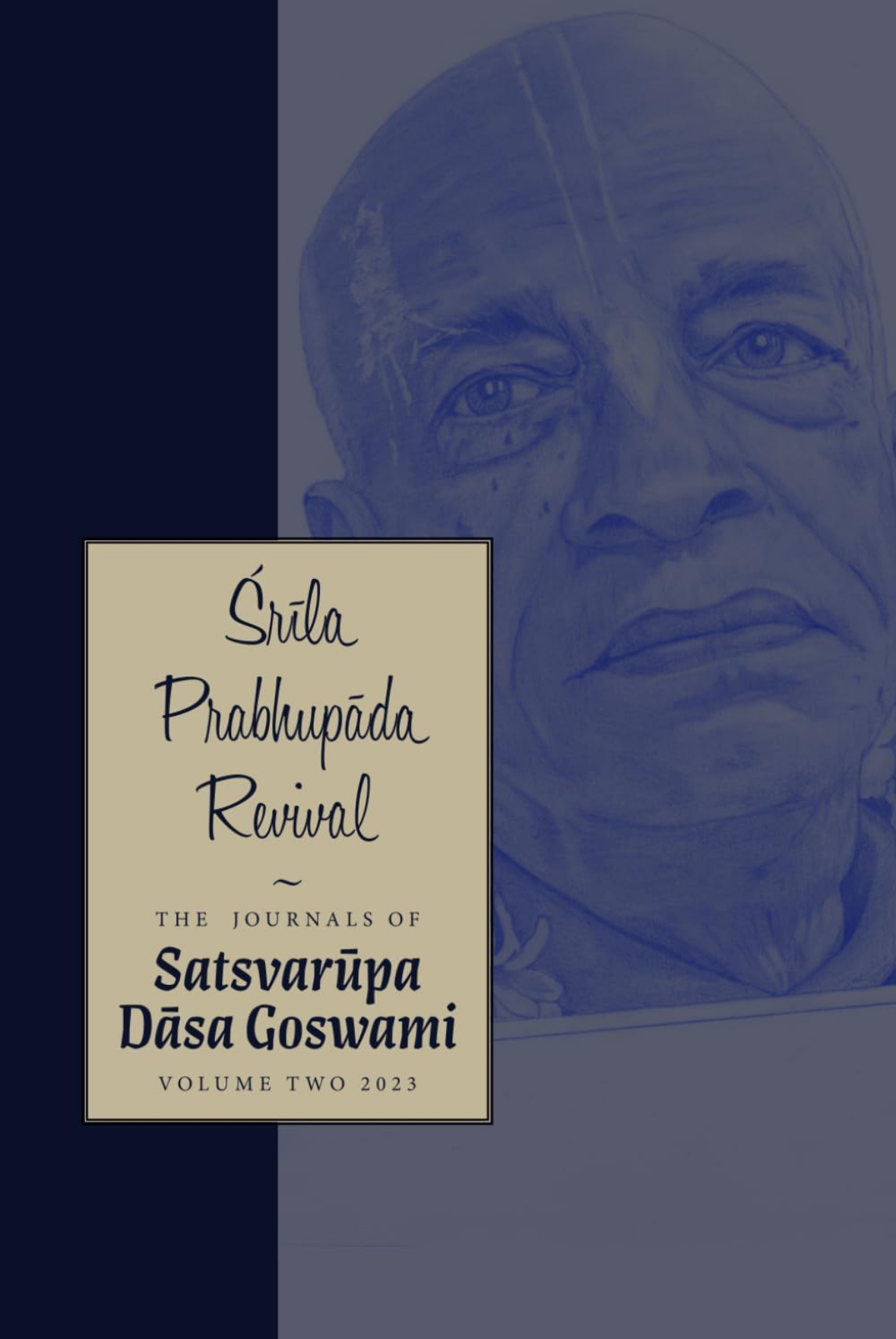
To Śrīla Prabhupāda, who encouraged his devotees (including me) To write articles and books about Kṛṣṇa Consciousness.
I wrote him personally and asked if it was alright for his disciples to write books, Since he, our spiritual master, was already doing that. He wrote back and said that it was certainly alright For us to produce books.
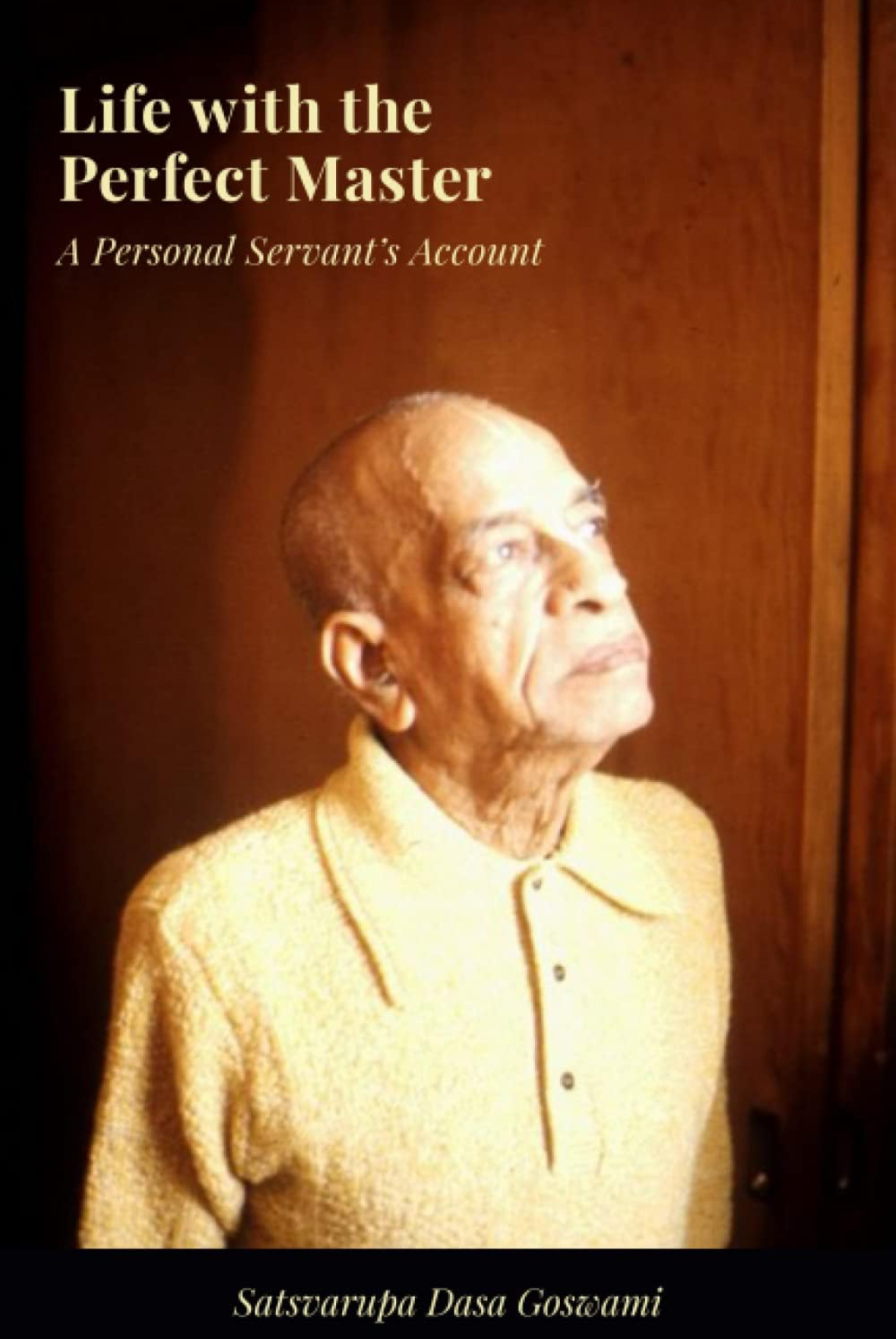
I have a personal story to tell. It is a about a time (January–July 1974) I spent as a personal servant and secretary of my spiritual master, His Divine Grace A.C. Bhaktivedanta Swami Prabhupäda, founder-äcärya of the International Society for Krishna Consciousness. Although I have written extensively about Çréla Prabhupäda, I’ve hesitated to give this account, for fear it would expose me as a poor disciple. But now I’m going ahead, confident that the truth will purify both my readers and myself.

First published by The Gītā-nāgarī Press/GN Press in serialized form in the magazine Among Friends between 1996 and 2001, Best Use of a Bad Bargain is collected here for the first time in this new edition. This volume also contains essays written by Satsvarūpa dāsa Goswami for the occasional periodical, Hope This Meets You in Good Health, between 1994 and 2002, published by the ISKCON Health and Welfare Ministry.

This book has two purposes: to arouse our transcendental feelings of separation from a great personality, Śrīla Prabhupāda, and to encourage all sincere seekers of the Absolute Truth to go forward like an army under the banner of His Divine Grace A.C. Bhaktivedanta Swami Prabhupāda and the Kṛṣṇa consciousness movement.
A single volume collection of the Nimai novels.
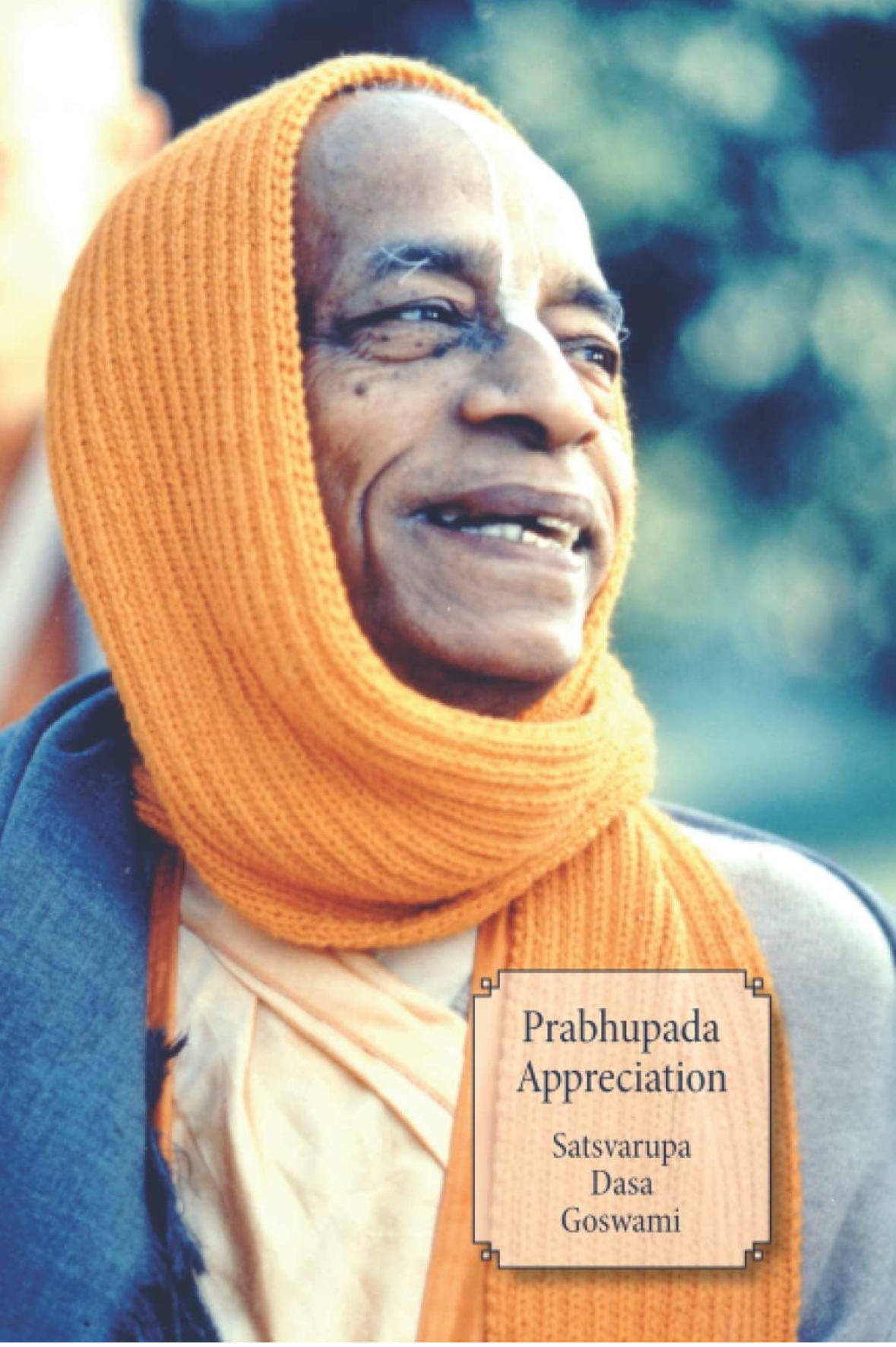
Śrīla Prabhupāda was in the disciplic succession from the Brahmā-Mādhva-Gauḍīya sampradāya, the Vaiṣṇavas who advocate pure devotion to God and who understand Kṛṣṇa as the Supreme Personality of Godhead. He always described himself as simply a messenger who carried the paramparā teachings of his spiritual master and Lord Kṛṣṇa.
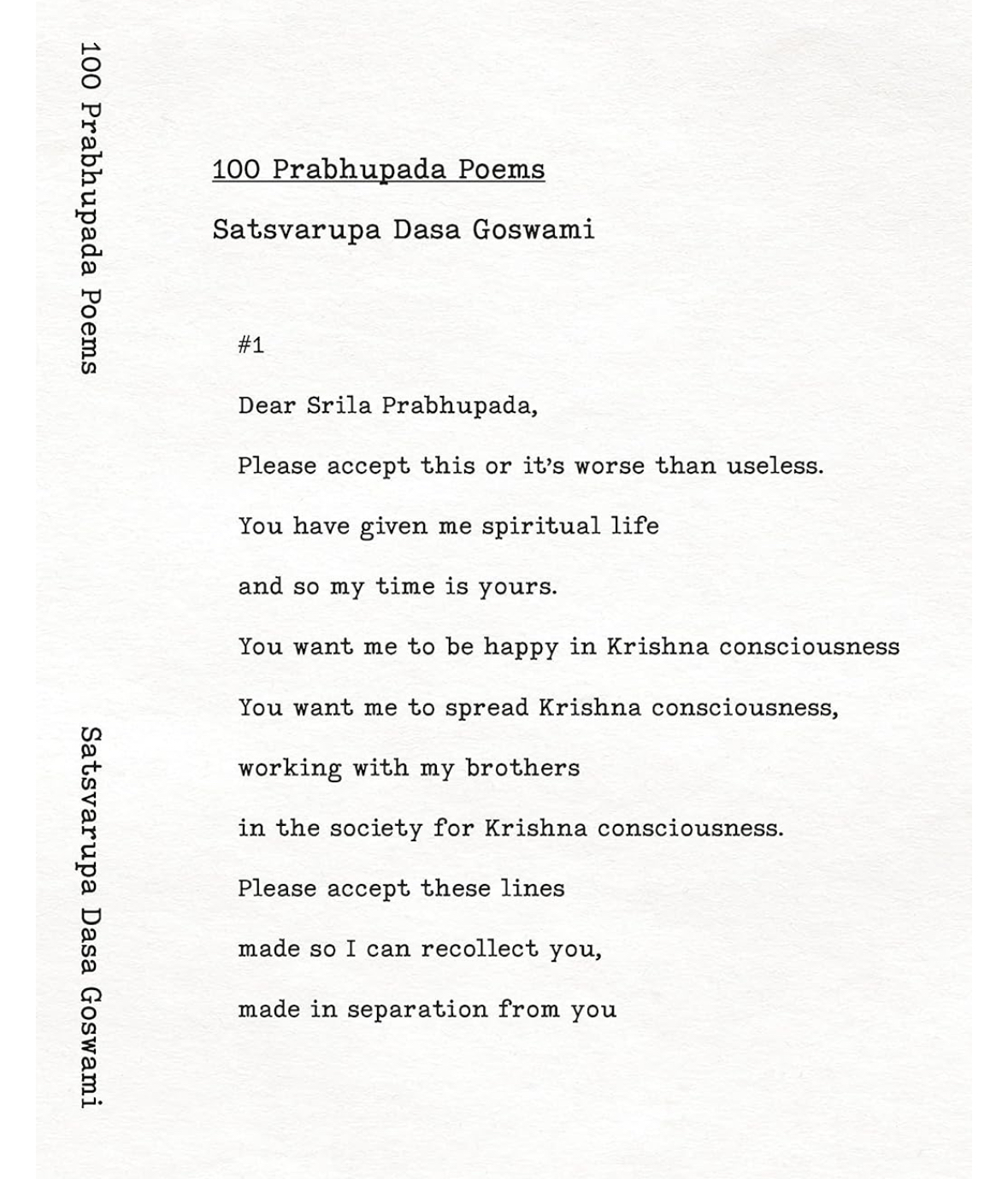
Dear Srila Prabhupada,
Please accept this or it’s worse than useless.
You have given me spiritual life
and so my time is yours.
You want me to be happy in Krishna consciousness
You want me to spread Krishna consciousness,
This collection of Satsvarūpa dāsa Goswami’s writings is comprised of essays that were originally published in Back to Godhead magazine between 1966 and 1978, and compiled in 1979 by Gita Nagari Press as the volume A Handbook for Kṛṣṇa Consciousness.

This second volume of Satsvarūpa dāsa Goswami’s Back to Godhead essays encompasses the last 11 years of his 20-year tenure as Editor-in-Chief of Back to Godhead magazine. The essays in this book consist mostly of SDG’s ‘Notes from the Editor’ column, which was typically featured towards the end of each issue starting in 1978 and running until Mahārāja retired from his duties as editor in 1989.

This collection of Satsvarupa dasa Goswami’s writings is comprised of essays that were originally published in Back to Godhead magazine between 1991 and 2002, picking up where Volume 2 leaves off. The volume is supplemented by essays about devotional service from issues of Satsvarupa dasa Goswami’s magazine, Among Friends, published in the 1990s.

“This is a different kind of book, written in my old age, observing Kṛṣṇa consciousness and assessing myself. I believe it fits under the category of ‘Literature in pursuance of the Vedic version.’ It is autobiography, from a Western-raised man, who has been transformed into a devotee of Kṛṣṇa by Śrīla Prabhupāda.”
 The Best I Could Do
I want to study this evolution of my art, my writing. I want to see what changed from the book In Search of the Grand Metaphor to the next book, The Last Days of the Year.
 a Hare Krishna Man
It’s world enlightenment day
And devotees are giving out books
By milk of kindness, read one page
And your life can become perfect.
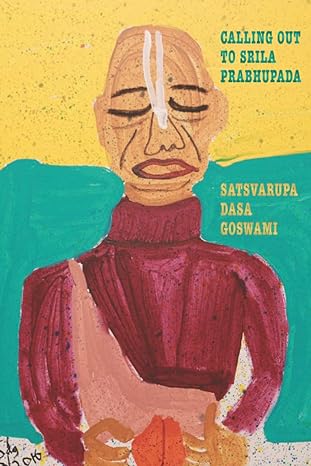 Calling Out to Srila Prabhupada: Poems and Prayers
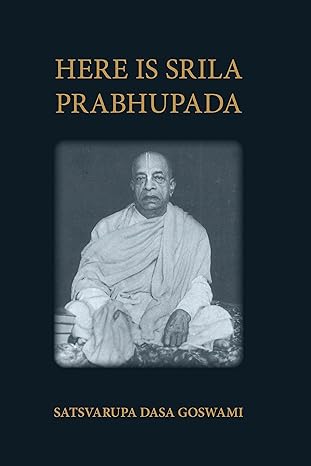
O Prabhupāda, whose purports are wonderfully clear, having been gathered from what was taught by the previous ācāryas and made all new; O Prabhupāda, who is always sober to expose the material illusion and blissful in knowledge of Kṛṣṇa, may we carefully read your Bhaktivedanta purports.
I use free-writing in my devotional service as part of my sādhana. It is a way for me to enter those realms of myself where only honesty matters; free-writing enables me to reach deeper levels of realization by my repeated attempt to “tell the truth quickly.” Free-writing takes me past polished prose. It takes me past literary effect. It takes me past the need to present something and allows me to just get down and say it. From the viewpoint of a writer, this dropping of all pretense is desirable.
 Geaglum Free Write
This edition of Satsvarūpa dāsa Goswami’s 1996 timed book, Geaglum Free Write Diary, is published as part of a legacy project to restore Satsvarūpa Mahārāja’s writings to ‘in print’ status and make them globally available for current and future readers.