
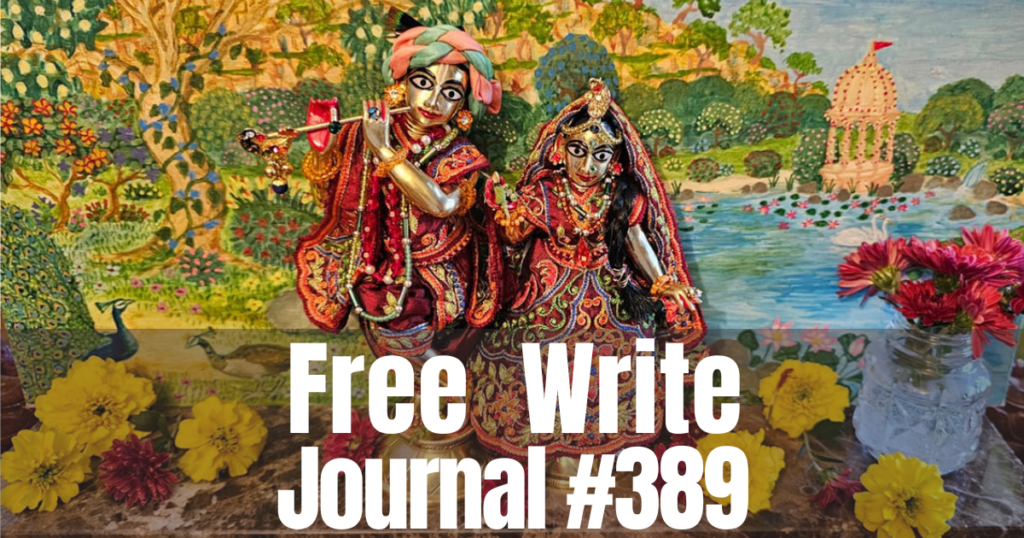
We need to expand our team of proofreaders as we aim to increase the rate of republication of Satsvarūpa Mahārāja’s books as well as new books that he writes.
This includes a need for fluent bilingual Spanish and English speakers to proofread Spanish translations (we currently have around 20 Spanish translations waiting to be proofread).
Anyone interested in this particular service should contact Manohara dāsa at [email protected]
If you would like to help, please contact Kṛṣṇa-bhajana dāsa at [email protected] or [email protected] and we will find you a service that utilizes your talents.
In the Padma Purāṇa it is stated that even a person whose life is completely sinful will be completely protected by the Lord if he simply surrenders unto Him. So, it is accepted that one who surrenders unto the Supreme Personality of Godhead becomes freed from all sinful reactions. And even when a person becomes an offender unto the Supreme Personality of Godhead Himself, he can still be delivered simply by taking shelter of the holy names of the Lord.
—The Nectar of Devotion
******
The Nectar of Devotion says that even if you offend the Supreme Personality of Godhead, you can still be delivered by the holy name. So what’s the difference? The name is a very merciful appearance of Kṛṣṇa. So easily you can associate with Kṛṣṇa. Nothing special is required—no austerities or rituals. The name is Kṛṣṇa; however, just as Lord Caitanya is Kṛṣṇa, but a very, very merciful Kṛṣṇa, so Kṛṣṇa becomes so merciful that if you approach Him in this form of the holy name, everything is forgiven. If you offend the Lord, you can still be delivered simply by taking shelter of the holy names of the Lord—Hare Kṛṣṇa, Hare Kṛṣṇa, Kṛṣṇa Kṛṣṇa, Hare Hare / Hare Rāma, Hare Rāma, Rāma Rāma, Hare Hare. In other words, the chanting of Hare Kṛṣṇa is beneficial for eradicating all sins. But if one becomes an offender of the holy names of the Lord, then he has no chance of being delivered. There is, however, a way to be excused for offenses at the feet of the holy name.
******
Śrīla Prabhupāda writes:
While chanting the holy name of the Lord, one should be careful to avoid the ten offenses. From Sanat-kumāra it is understood that even if a person is a severe offender in many ways, he is freed from offensive life if he takes shelter of the Lord’s holy name. Indeed, if a human being is not better than a two-legged animal, he will be liberated if he takes shelter of the holy name of the Lord. One should, therefore, be very careful not to commit offenses at the lotus feet of the Lord’s name.
—Śrīmad-Bhāgavatam 7.5.23–24, purport
******
Śrīla Prabhupāda lists the ten offenses. In his purport he states the tenth offense a little differently: “Not to awaken transcendental attachment for the chanting of the holy name even after hearing all the scriptural injunctions.” If you are so dead that even after hearing all these instructions, receiving the holy name from your spiritual master, and practicing the chanting, if you still don’t develop attachment for chanting the holy name—this is the tenth offense.
“There is no way to atone for any of these offenses. It is therefore recommended that an offender at the feet of the holy name continue to chant the holy name twenty-four hours a day. Constant chanting of the holy name will make one free of offenses, and then he will gradually be elevated to the transcendental platform on which he can chant the pure holy name and thus become a lover of the Supreme Personality of Godhead. It is recommended that even if one commits offenses one should continue chanting the holy name. In other words, the chanting of the holy name makes one offenseless.”
******
“The book Nāma-kaumudī recommends that if one is an offender at the lotus feet of a Vaiṣṇava, he should submit to that Vaiṣṇava and be excused; similarly, if one is an offender in chanting the holy name, he should submit to the holy name and thus be freed from his offenses. One should be very humble and meek to offer one’s desires and chant prayers composed in glorification of the holy name.”
—Śrīmad-Bhāgavatam 7.5.23-24 purport
******
Here is the prayer Dakṣa made to Lord Śiva (and that we can also make to the holy name for our offenses):
“I did not know the glories of your personality, and therefore I committed an offense at your lotus feet in the open assembly. You are so kind, however, that you did not accept my offense. Instead, when I was falling down because of accusing you, you saved me by your merciful glance. You are most great. Kindly excuse me and be satisfied with your own exalted qualities.”
******
Rūpa Gosvāmī prays in his Nāmāṣṭakam that one should be very humble and meek to offer one’s desires and chant prayers composed in glorification of the holy name:
O hari-nāma, the tips of the toes of Your lotus feet are constantly being worshiped by the glowing radiance emanating from the string of gems known as the Upaniṣads, the crown jewels of the Vedas. You are eternally adored by liberated souls such as Nārada and Śukadeva. O hari-nāma, I take complete shelter of You.
******
These are the kind of verses with which you can pray to the holy name. If you make offenses to Hare Kṛṣṇa, then it’s to Hare Kṛṣṇa that you must go for relief. You can’t get forgiveness for your offenses to the holy name except from the holy name. Just like if you offend a person, then you have to approach that person for forgiveness of your offense. You have to actually feel remorse. Otherwise, we may say, “The cure for offensive chanting is to go on chanting.” But you have to chant with the desire to improve. This is your way back to Godhead; you have to do it right. If that awareness doesn’t enter your mind and heart, then it will not be very easy to change, to reform.
******
Rūpa Gosvāmī has explained the reluctant chanting of the neophyte. He compares such a chanter to a man with jaundice. To a man with jaundice everything tastes bitter. But the cure of this jaundice disease is to regularly take the most concentrated sweet, like this rock candy. And even rock candy the jaundiced man tastes as bitter. But as he takes and takes, then gradually his normal taste returns, and he tastes the sugar as sweet. So Rūpa Gosvāmī compares this to the neophyte’s chanting of the holy name. He says that actually the holy name is the sweetest of all things. It is sweeter than any taste of the material world. The taste of success in material sense gratification is nothing compared to the taste of love of God by chanting Hare Kṛṣṇa. But because the neophyte devotee is still affected by material desire, the sweet name to him is also sometimes dry. But the cure is to regularly take this holy name, and that will return the spirit soul’s original taste for chanting the names of the Supreme Personality of Godhead.
pp. 21-28
Kṛṣṇa is bhakta-vatsala; He leans toward His devotees:
“… He is so magnanimous that He can give Himself to His devotees.”
I woke up late, 12:30 A.M., because a headache was lingering. Now there’s no time for sustained reading. Anyway, I don’t have to fake it that I’m absorbed in śāstra.
Still, I’ll write my bit, a word, “bhakta-vatsala,” Kṛṣṇa’s most wonderful quality. Once we start traveling in the van, our routine won’t allow me so much time for reading. Therefore, I had better grab a word like “bhakta-vatsala” and keep it with me as I drive on the dark highway.
The Kumāras and Śukadeva were perfected Brahman-realized saints, but they became attracted to Kṛṣṇa’s forms and pastimes. Out of compassion, Śukadeva Gosvāmī described Kṛṣṇa in Śrīmad-Bhāgavatam.
The gopīs and Kṛṣṇa’s queens were attracted to Kṛṣṇa’s handsome form and qualities. “Lord Kṛṣṇa even attracts the mind of the goddess of fortune simply by vibrating His transcendental flute (vaṁśī-gīta).” Vaṁśī—that word reminds me of the young Italian man who died in Vṛndāvana, Vaṁśīdhārī. Devotees pass away, and we don’t always remember them actively. He was not as famous as Gaura-Govinda Mahārāja or Gaurī dāsī. Vaṁśīdhārī—he was my disciple. After he died, I read from his diary and published excerpts from it in “Among Friends.” He was sweet, submissive, and intelligent, and he was forced to accept Kṛṣṇa’s will, which was pressed on him heavily in the form of early death. Elderly Dīnadayādra dāsa cared for him up until the end …
Write it down.
***
How was the serpent Kāliya so fortunate as to be touched by Kṛṣṇa? I wish …
This chapter is not a collection of Sanskrit definitions, but of verses describing the devotees who are attracted to Kṛṣṇa in different rasas. We have to give up our sectarian prejudices (“Kṛṣṇa is an Indian god”) and accept Him as the Supreme Personality of Godhead. Our Swami has ordered us to do so.
The Gosvāmīs of Vṛndāvana lived for the service of Lord Caitanyadeva and Rādhā-Kṛṣṇa. Follow them.
***
Even birds, animals, and trees are attracted to Kṛṣṇa’s qualities in Vṛndāvana. Seek to be attracted. Remain open to it. Don’t block your earholes, don’t deny yourself the darśana of the arcā-vigraha, and perform other favorable practices to inspire attraction.
***
If I say I cannot be attracted to Lord Hari because of my past sins, Caitanya-caritāmṛta tells me that devotional service burns away all sins and their reactions. But don’t go back and start new fires. Hari: He takes away sins and attracts us to Himself.
Śacīnandana Swami wrote me, “May your transcendental pen never tire.” Thank you. I don’t want to tire of life itself—the wonder of the dawn sunlight reflecting on the lake’s ripples and my attempt to steer righteously and humanly to Kṛṣṇa. I am human. To some degree we have to deny or restrain the base parts of our humanity, but human we remain. I like to write about it,
through illness
and jollity and doubt.
The first step in spiritual knowledge is to know that there is life after death. When we know this, we don’t waste time pursuing material opulence because it doesn’t free us from the cycle of birth and death. With this beginning knowledge, we can go on to become pure devotees. Cc. mentions the three factors that help us give up bad association and rise to the level of bhāva: (l) sādhu-saṅga; (2) kṛṣṇa-kṛpā; and (3) the nature of devotional service itself.
***
As I read and write, I look out the window at peaceful Lough Erne. A devotee is rowing from Inis Rath to Geaglum Quay. I leave here tomorrow. It will be a busy day of travel to Dublin and back up to Belfast. There won’t be time for concentrated reading or writing in the shelter of śāstra.
***
Great Brahmavādīs gained the association of devotees and became attracted to Kṛṣṇa.
pp. 32-37
Pee Wee Jones ran out of time
fell in rhyme in a
cold room. Took herb of
feverfew for headaches
frequent in the age of Kali
where only the holy name
can give us peace.
The sastras recommend this short
concentrated call for service
unto the Lord and Radha.
Say it and you’re lucky even while
talking to someone or insulted or
threatened, when you have to wait,
when you get a moment’s break
in a busy pace. Call to Krsna
by His names.
Winter planting. November. Now is
the time to decide. And act. Put
those little trees in, bulbs in,
stand back and let the action of nature take place
beneath the earth. Growing, writing
waiting for the outcome.
I couldn’t decide where to live
what to do—to travel or
reside in Ireland.
Then I decided to stay for the winter.
Will that decision last?
I’ve got heater, servant, house,
walk, bed—why leave it? Everything
is just right. Prolong my stay until
the cold weather is gone,
a sadhu on the backroads heading
to Lord Caitanya, wanting to make his children
happy, but not by attending
gala parties anymore.
How come my rounds
are getting so slow?
White-hairedi. The way of all old
sadhus in Vrndavana. I think of that holy
place from here.
I guess you heard we’re going to travel
not incognito but quickly so as
not to make a big scene where an
irate fanatic might attack me.
You may be surprised I’m leaving such
a paradise of self-expression to go
to America. My reason is to
get it done and then return.
Our literary mag came out today,
Discovering Our Voices. Mine is not
better than theirs, but I’m the elder, the
encourager. Some are good . . . each
a voice.
These poems could be transformed into
something dramatic or make-believe
so they’d stand out better. Or I could
wish for inspired vision
but at least this
cold clear sky,
branches etched,
and prayers.
I’ve got nothing special/ no one is
coming to see me/ the rain is raining.
“Glad to hear you are writing poetry.”
Where?
They say you have to suffer and be grateful
to be qualified.
And I know you need
to hear the Bhagavatam thoroughly to speak
with buddhi, bhakti.
Hare Krsna—waiting
for Madhu’s tomato-sauced
kicchari to offer to Prabhupada.
He’s wearing his magenta cadar
made by Lalita-manjari in Australia.
Prabhupada who loved us,
who spoke like a tough guy it sometimes seemed
to knock down those Mayavadis.
Offer that kicchari with old bread from the shelf.
Just glad I’m here. O Radha-
Govinda in red—any minute
now he will creak up these
stairs and in less than two weeks
I’ll have to leave.
“Glad to hear you’re writing poems”
and willing to go out
to help others. Glad to hear you’ll
endure pain and remember Krsna
even at the time of death.
(You will, won’t you?)
Don’t be afraid.
Krsna will protect.
Prepare to bless your enemies and
if you have to come down
with a serious entanglement, He’ll
always protect you. Even
more. That’s our philosophy.
I’m glad to hear you’re committed
to write it even if it hurts or
if you just don’t feel like writing it down.
‘Fraidy-cat. “Even a paranoiac
has enemies.” Stay in the safe zone
and you’ll never know. Fly low and
drop bombs—of love. Great teachers
dared. Dug out.
Now I write in my diary, “Good night.”
I know God is not my bodyguard,
but He is, too. My guide, guide,
my Lord whose form . . .
As Bhurijana was saying, this boy who wanders
around Vrndavana without shoes, holding
yogurt in His left hand is God, in control of everything.
‘Fraidy-cat, dovetail it, hide your face
in the Lord’s lotus feet …
O spiritual master
may you exonerate this fellow.
pp. 119-23
The devotees bow down at the first sight of Prabhupada in the morning, and after his lecture, and whenever they meet him during the day. And they murmur his pranama-mantras. Once in the Seattle temple, when the devotees bowed down after Prabhupada’s lecture, a college student raised his hand and said he did not want to bow down to anyone. Prabhupada replied that the boy would be forced to bow down even if he didn’t bow down to the pure devotee-spiritual master. He would be compelled to bow down to rebirth, death, disease and old age. The material nature does not allow us to go through life as some master of all we survey. The real question is, since you have to bow down to something or someone, you should find that person who is worthy bowing down to. Find that person whom when you bow down to him, you will be released from the necessity of other bowing down.
In 1966, when devotees first started bowing down at the feet of Prabhupada, some of the more rebellious spirits didn’t like it and went away. Gargamuni dasa asked Prabhupada if he should bow down even if he didn’t feel like it. Prabhupada said, “Yes.”
Prabhupada told the boy in Seattle, “You are wondering why all these people are bowing down, but they are wondering why you don’t bow down.”
Prabhupada’s disciples liked to bow down to him. They did not see it as a personality-cult worship, but recognition that Prabhupada was the representative of Lord Hari and should therefore be treated as good as Hari. Those who refused to bow down as Prabhupada passed by broke the Vaisnava etiquette and ran the risk of committing an offense to God’s representative. Bowing down to the superior is a very convenient process, and it does the heart good to do. Prabhupada received the obeisances humbly, and not for himself, but on behalf of his spiritual master in the parampara.
sei se parama bandhu, sei pita-mata
sri-krsna-carane yei prema-bhakti-data
sakala janme pita-mata sabe paya
krsna guru nahi mile, bhajaha hiyayaUnder ordinary circumstances one’s own father and mother are worshipable, but in every species one gets a father and mother. Far rarer is to get guru and Krishna. The spiritual master can bestow prema-bhakti to the those who have attained his mercy, therefore he is the topmost father, mother, and friend of everyone. (Caitanya Mangala, Madhya)
Wherever Prabhupada goes in his 11th floor suite in the 55th Street temple in Manhattan, he is surrounded by devotees who worship him and want to serve him. Tamal Krishna Gosvami wants to help him open the door to his room, Hari Sauri, dressed in his gamsha, is ready to give Prabhupada his massage, Ramesvara Maharaja wants to lead and guide the way and be the first to accompany him through the hallway. Prabhupada accepts all the service and attention in a matter-of-fact way, neither encouraging it nor discouraging it. It is 1976, and this is his first and last visit to the skyscraper temple. Things have changed completely from when he was first in New York City in 1965. At that time he was all alone with no one to help him and no money to meet his essential needs. He was staying in a windowless studio lent to him by an acquaintance yogi, Dr. Misra. Now he has more helpers than he needs, and he is maintaining them and engaging them as disciples for their own good. He doesn’t need ten people to walk down the hall with him or two hundred people to hear him lecture in the temple, but he accepts it as service to his Guru Maharaja.
This was why he came to America, to convert the westerners to Vaisnavas, and now it has come to pass. He does not accept it as glory to himself or as sense gratification but as duty, as a preacher. It is the purity of his success to allow all these men to surround him and to tend to him, even if it may be a little infringing on his privacy. He is the same person he was in 1965, humbly serving his spiritual master, but now he has money and men and women. It has not changed his heart in his original intent—to spread Krishna consciousness as a humble servitor of Bhaktisiddhanta Sarasvati and Lord Caitanya Mahaprabhu.
To get pure love of God you have to be with the pure devotees. It saves hundreds and hundreds of lifetimes. And we think I better go forward then and get that association. But then we ask ourselves What about my association with Srila Prabhupada, isn’t that sufficient? The answer is yes it is sufficient. Association with him is potent. But I have to take full advantage of it. I shouldn’t say that I’m not so advanced that I can do it by separation I need a siksa-guru. Rather I should increase my devotion to you in the way that is available to me.
Dear Srila Prabhupada, therefore I’m working these different avenues . . . looking at pictures. This picture of you sitting reading the Gaudiya Math edition of Brahma-samhita while I, a young grhastha with my beadbag around my neck am pouring the liquids on the Deities. I was lucky, lucky to be a devotee under your care that way. So young and you so lenient, old. In charge of all of us in the temple of Boston. Picture after picture Prabhupada leading us. On the Ratha Yatra parade or my getting initiated in 1972 in Los Angeles while you sat on the vyasasana. You said that if somebody gets initiated and promises in front of Krishna and the guru and so on then he has to keep that promise or he’ll not be good at all.
Hare Krishna. Jai Srila Prabhupada. I’m thinking of my relationship with you as I pray. Thinking of me as young when you were here. Now you’re gone, and I’m not young. What to do? I pray that you’ll always be with me and I know you will. I pray to remember you at the time of my death. Dear Srila Prabhupada, let me be your sisya. Hare Krishna Hare Krishna Krishna Krishna Hare Hare/ Hare Rama Hare Rama Rama Rama Hare Hare.
pp. 101-7
Satsvarupa Dasa Goswami
This article is based on a lecture given at the Third European Communications Seminar in Radhadesh, July 1992. It appears as a chapter in the 1977 book Readings in Vedic Literature: the Tradition Speaks for Itself’, published for use as a college textbook. This extract is an example of the depth of research and mode of presentation that is necessary if ISKCON wants to effectively communicate with an academic audience. The perspectives and conclusions presented show how Gaudiya Vaishnavism can find its voice and learn to speak for itself in the contemporary world.
The first Westerners to investigate the Vedic literatures were the British, in the last half of the eighteenth century. It is best to understand their work in the larger historical context of the British rule of India.
Early invaders of India included the Persians (600 BC) and the Greeks under Alexander the Great (300 BC). India’s first great Hindu empire, the Maurya Empire founded by Candragupta (300 BC), expanded under Emperor Asoka to embrace the whole sub-continent, and it also fostered Buddhism. After Asoka, assorted northern tribes invaded India, until the reign of another Gupta dynasty, which united a section of the country for centuries. In the seventh century the Arab Muslims began conquering India, and various Muslim leaders developed empires up until the Mogul Empire, whose chief ruler was Akbar. During the reign of Akbar’s son Jahangir (1605-1627), the British established their first trading station in India. The Portuguese had been the first Europeans to arrive, and they competed with the French and English for commercial control of port cities. Through treaties with local rulers, the trading companies became more powerful than the Mogul Empire. The companies received official monopolies from their governments and held huge armies of mercenaries. By defeating an Indian army at the Battle of Plassey in 1757, the British East India Company finally gained supremacy. Throughout the eighteenth century, the company made treaties or annexed areas by military campaigns; at last in full control of India, it ceded the country to the British government…..
To most eighteenth-century Englishmen (whether at home or abroad), religion meant Christianity. Naturally, racism played its part also. This attitude of Europeans toward Indians was due to a sense of racial superiority – a cherished conviction which was shared by every Englishman in India, from the highest to the lowest. Thus, upon arriving in India in 1813, the governor general, the Marquis of Hastings wrote, ‘The Hindoo appears a being merely limited to mere animal functions, and even in them indifferent . with no higher intellect than a dog.’
Without governmental sanction or license, the Christian evangelists came to India and proselytized to undermine the ‘superstitions of the country’. Alexander Duff (1806-1878) founded Scots College, in Calcutta, which he envisioned as a ‘headquarters for a great campaign against Hinduism’. Duff sought to convert the natives by enrolling them in English-run schools and colleges, and he placed emphasis on learning Christianity through the English language. Another leading missionary, a Baptist, William Carey (1761-1834), smuggled himself into India and propagandized against the Vedic culture so zealously that the British government in Bengal curbed him as a political danger. On confiscating a batch of Bengali-language pamphlets produced by Carey, India’s Governor General Lord Minto described them as ‘scurrilous invective . without arguments of any kind, they were filled with hell fire and still hotter fire, denounced against a whole race of men merely for believing in the religion they were taught by their fathers.’ Duff, Carey, and other missionaries gradually gained strength and became more aggressive; finally, they gained permission to conduct their campaigns without governmental license. The missionaries actively opposed the British government’s attempt to take a neutral stand toward Indian culture and worked with optimism for the complete conversion of the natives. They did not hesitate to denounce the Vedic literatures as ‘absurdities’ meant ‘for the amusement of children.
Historian Arthur D. Innes writes, ‘The educators had hardly concealed their expectations that with Western knowledge the sacred fairy tales of the East would be dissolved and the basis of popularly cherished creeds would be swept away.’ The suspicion of religious coercion disrupted British-Indian relations and in 1857 helped touch off the Sepoy Rebellion (of Indian mercenaries).
Such was the setting in which the first Indologists appeared. These first Vedic scholars did not form a unified political or academic party; they were variously conservative, liberal and radical. Sir William Jones, the first Englishman to master Sanskrit and study the Vedas, drew fire from the eminent British historian James Mill for his ‘hypothesis of a high state of Civilisation’. Typically, Mill believed that the people of India never had been advanced and that therefore their claim to a glorious past (which some of the early Indologists supported) was historical fantasy. However, by translating the Vedas for the Western reader and thus evincing the ancient Vedic genius, the scholars increased India’s prestige in the West. On the other hand, as Aubrey Menen has said, ‘It should be remembered that they (the English of the seventeenth century) were not the almost pagan English of today. Every man was a Christian, and it was a Christian’s duty to wash the heathen in the blood of the lamb.’ Nonetheless, some of the early scholars rather admired the Vedic culture they were investigating, even though they initially conceived of themselves as bearers of Christian light to the sacred darkness of the heathens.
Sir William Jones (1746-1794), Charles Wilkins (1749-1836), and Thomas Colebrooke (1765-1837) are considered the fathers of Indology. Jones was educated at Oxford and there began his studies in Oriental and other languages; he is said to have mastered a total of sixteen. In addition, he wrote a Persian grammar, translated various Oriental literatures and practiced law. After his appointment as judge of the Supreme Court, Sir William went to Calcutta in 1783. There he founded the Asiatic Society of Bengal and was its president throughout his life. He translated a number of Sanskrit works into English, and his investigations into languages mark him as one of the most brilliant minds of the eighteenth century. Sir William was not prone to invective against another’s religion, particularly the Vedic, which he admired. In his view the narratives of the East, like those of Greece and Rome, could enrich both the English tradition and the human mind. Notwithstanding, Sir William’s stance was that of ‘a devout and convinced Christian’. Thus, he described the Bhagavata Purana as ‘a motley story’, and he speculated that the Bhagavata came from the Christian gospels, which had been brought to India and ‘repeated to the Hindus, who ingrafted them on the old fable of Cesava (Kesava, a name for Krsna), the Apollo of Greece’. This theory has since been discredited since records of Krsna worship pre-date Christ by centuries. H. H. Wilson (1786-1860), described as ‘the greatest Sanskrit scholar of his time’, received his education in London and journeyed to India in the East India Company’s medical service. He became secretary of the Asiatic Society of Bengal (1811-1833), and medical duties notwithstanding, he published a Sanskrit-English dictionary. He became Boden Professor of Sanskrit at Oxford in 1833, librarian of the India House in 1836 and director of the Royal Asiatic Society in 1837. Titles credited to his name include Vishnu Purana, Lectures on the Religious and Philosophical Systems of the Hindus and Rig Veda, among others. He also contributed to Mill’s History of India and edited several other translations of Eastern literatures. In addition, he proposed that Britain restrain herself from forcing the Hindus to give up their religious traditions. Compared to the evangelists, he appears to have been a champion of the preservation of Vedic ideas.
W.H. Moreland et. al., A Shorter History of Indian Tradition.
J. Allan et al., The Cambridge Shorter History of India, p. 557.
H.H. Dodwell, ed., The Cambridge History of the British Empire, vol. five, p. 122.
House of Commons, ed., Observations on the State of Society, p. 1.
Robert Chatfield, The Rise and Progress of Christianity in the East, p 367.
(To Be Continued)
pp. 61-66
May I dedicate this to my
spiritual master? Unless you please
him you are nowhere. Only devotees
can understand this. Those without
a bona fide spiritual master will see it
as some kind of oppression or
false life.
I have a loving and sometimes stern
spiritual master. He is expert and
empowered by his spiritual master to
spread the mercy of Lord Caitanya all
over this world.
I am doing my best, I say,
to serve him.
If my expressions are tired it’s
my fault. Srila Prabhupada was strong up until his last breath; he said
he prayed to Krsna for enthusiasm,
and the Lord gave it.
He is eternal, we are all eternal.
He has gone to his nitya-lila.
We will all go somewhere.
It was a quick eleven years and the rest
of life is recounting it and living
out service in separation.
Separation is longer and more important
than brief meeting. I want to
live for him in my own way.
Dear Srila Prabhupada,
I write this as rain pours down
on our van roof. I’m dry
under lamp light, we are about
to leave this camping spot and head
for the ferry to Ireland,
a rendezvous for lots of writing.
I pray you won’t see me as a
nonsense, or motivated like
Ekalavya. I don’t want to be a
great writer. I write to please
you by achieving an honest state.
I do love it, but it’s work,
long and patient love like you gave
to us in ISKCON.
I don’t want to write to please myself
and just tag on “for Prabhupada.”
But I’ve got to tell it honest.
I’m trusting in your
guidance.
Prabhupada, I am in Wicklow. I went
on a walk. I am your disciple.
You know me. I heard they found a diary
you kept from January to July 1966;
it was a day-timer. They said I am mentioned
as giving a donation. Maybe it was
the $400, my savings
I was gonna use to go to some “green place”
I had in mind, Canadian island where I thought
I’d find peace and write for
maybe six months before coming back
to New York City.
Now by your grace I have
as much of green places
and writing as I desire.
But the goal of devotional service is different—
nothing is done for karmic gain
or knowledge for its own sake
without practical purpose.
Practical means you love Krsna
and He is pleased with you.
You do it by serving His servant.
I just read two poems in a book,
The Father by Sharon Olds
in which she tells how her father
is dying and how she felt
and how she thinks he felt.
It reminded me that Prabhupada passed away.
If I were to go back to that
it would take much effort and concentration. I don’t want to dig up my shortcomings
on such a painful subject.
I wasn’t basically wrong.
I sensed the end had come
and knew we could serve you in separation.
I was sure you would stay with us
in vani, and that I’d serve you.
But I fell so short
of appropriate loving feelings.
I remember your close servants.
They get eternal credit, even if
some of them went mad, and left your service.
Probably they will never leave you
and will remember you when they die.
I was a numbed stone.
Went to my room in the Guesthouse
tried to write a book on varnasrama to occupy myself and not think what was happening.
Actually I can’t recall,
don’t want to. I prefer
the Gaudiya Vaisnava philosophy that says, the pure soul goes on to nitya-lila
and his servants continue serving him.
And when each of his servants die,
it won’t be so horrible or painful
because they will call to you
and somehow they will join you.
That’s the scenario and it can work
if we remain cool and pray for conviction.
Until then I want to read your books
in which you never pass away
and in which I don’t falter,
your books, where Lord Krsna
creates the universes
and plays in Vmdavana with His parisads
In those books we can go on hearing,
guru and sisya
and we don’t need anything else.
Wherever I turn, Prabhupada’s wisdom. I find it mostly in a lack of wisdom
the nondevotees speak and act.
They don’t even know the first lesson,
“You are not this body.”
Prabhupada called them for that—
they don’t know who they are yet
they claim, I am scientist,
I am poet, philosopher,
I am president.
He charged them all with rascaldom.
We have to admit he’s right.
Most people don’t know you, Prabhupada.
They’re occupied with leaders
who don’t know Krsna.
“Men who are like hogs, dogs, camels and asses,
praise those men who never listen
to the glories of Lord Krsna.”
It was Sukadeva Gosvami who called them hogs
and Lord Krsna’s word is “mudha.”
Prabhupada said,
“My way is easy, I just repeat
like a parrot. I don’t have to research
like Dr. Frog. I can’t compromise.”
That’s my master. He’s headlong
further and further into Krsna consciousness,
daring anyone to stop him
but no one can. No one can check
Lord Caitanya’s movement.
We are sad we couldn’t keep up
the expansion of the Hare Krsna movement.
If he were here he’d make us understand and
feel full of hope.
Take it he is here,
and we can see it his way.
pp. 101-6
When we disciples of Srila Prabhupada first read about Raghunatha dasa Gosvami in the Caitanya-caritamrta, we immediately considered it one of the most inspiring and relishable life stories of a Vaisnava. It reminds me of one of my other favorite stories, the life of Narada Muni, as given in the First Canto of Srimad-Bhagavatam. We were inspired to hear how Raghunatha ran away from his parents. Even in previous centuries, great devotees had the same difficulties that devotees now experience in trying to join Lord Caitanya. Raghunatha was victorious in joining Lord Caitanya, and victorious in the life of renunciation and devotion.
Srila Prabhupada often told in detail the story of how Raghunatha dasa Gosvami gradually cut down his eating. At first he was receiving considerable money from his father, even though he was living as a renunciant. He would use the money to hold a festival and invite Lord Caitanya Mahaprabhu for prasadam. After a while, Lord Caitanya Mahaprabhu asked His secretary why Raghunatha wasn’t holding the festivals anymore. Svarupa Damodara said that Raghunatha thought it wasn’t proper to receive money from his parents while living as a renunciant, and so he stopped accepting it. Lord Caitanya Mahaprabhu approved and asked how Raghunatha was getting his meals. Svarupa Damodara said, “He stands by the gate at the Jagannatha temple and begs from passersby.” Later, when Lord Caitanya didn’t see Raghunatha at the gate, He asked how he was doing. Svarupa Damodara said Raghunatha had given up the begging practice, considering it to be like the activities of a prostitute approaching customers. Now he was eating by taking rejected rice from the drain in the kitchen. On hearing this, Lord Caitanya went to Raghunatha and ate some of the rejected rice. Raghunatha Gosvami tried to stop the Lord from taking the rice, saying it wasn’t fit for Him. But Lord Caitanya insisted and said, “This is nectarean food, why haven’t you invited Me to take it with you?” In this way Lord Caitanya showed His great approval of Raghunatha Gosvami’s renunciation in eating.
Prabhupada has warned us that if we attempt to imitate Raghunatha’s behavior, we will lose whatever standing we have in devotional service. Each of the Six Gosvamis showed a particular, extraordinary opulence in devotional service. For example, Sanatana Gosvami demonstrated Vaisnava humility and Jiva Gosvami demonstrated philosophical excellence. Raghunatha dasa Gosvami showed the example of renunciation.
Lord Caitanya came to teach renunciation: vairagya-vidya nija-bhakti-yoga. We hope to gradually become true followers of Raghunatha dasa Gosvami and not care for the demands of the body.
I offer my respectful obeisances unto the Six Gosvamis, who were engaged in chanting the holy names of the Lord and bowing down in a scheduled measurement. In this way they utilized their valuable lives and in executing these devotional activities they conquered over eating and sleeping and were always meek and humble, enchanted by remembering the transcendental qualities of the Lord.
—Sad-gosvamy-astaka, Verse 6
Raghunatha Gosvami is particularly associated with Radha-kunda, since he spent his last years there, and his bhajana kutir is located there. Devotees sometimes ask if they should go to reside at Radha-kunda or inquire from devotees living there about the mellows of Raghunatha dasa Gosvami’s devotional service or the mellows of Radha and Krsna. But Srila Prabhupada didn’t approve of this. We may go and visit when we are staying in Vrndavana, but we will not become real followers of Raghunatha dasa Gosvami by loitering at his bhajana-kutira or trying to become a retired babaji. Bhaktisiddhanta Sarasvati and Srila Prabhupada have condemned such imitative attempts. They want us to chant Hare Krsna in humility and prosecute preaching duties in the Krsna consciousness movement. In this way we can attain the favor of Raghunatha dasa Gosvami and the six Gosvamis.
Raghunandana Pandita was a resident of Srikhanda and the son of Sri Mukunda dasa. Raghunandana was among the devotees for whom King Prataparudra provided lodging and to whom he distributed prasadam when they traveled from Bengal to Orissa to take part in Lord Jagannatha’s Ratha-yatra with Lord Caitanya. Raghunandana danced with Lord Caitanya and other devotees in front of Lord Jagannatha at the festival.
Once Sri Caitanya Mahaprabhu spoke with Raghunandana and his father, Mukunda dasa, as well as another devotee from Srikhanda named Sri Narahari. Lord Caitanya asked Mukunda dasa, “You are the father, and your son is Raghunandana. Is that so? Or is Srila Raghunandana your father and you are his son? Please let Me know the facts so My doubts will go away.” Mukunda replied, “Raghunandana is my father, and I am his son. This is my decision. All of us have attained devotion to Krsna due to Raghunandana. Therefore, in my mind he is my father.” “Yes,” Sri Caitanya Mahaprabhu said, “it is correct. One who awakens devotion to Krsna is certainly a spiritual master.” The Lord then became very happy and compared Mukunda dasa’s love of Krsna to pure gold.
It would be nice if we could all bring our parents to Krsna consciousness in this lifetime, but we cannot expect it. We can be a “father,” however, for many persons, as we attempt to distribute Krsna consciousness to whomever we meet, young and old.
One can try to share Krsna consciousness with one’s mother and father, but if they will not hear—and if they detain us and distract us from the path of bhakti—then we may have to do as Raghunatha did and flee in the night. This will ultimately be a better service to our parents because a devotee automatically wins liberation for his kin.
Based on our karma and Krsna’s plans for us, different devotees have different relationships with their parents. Some maintain a superficial but dutiful connection and gradually in-fluence their parents to say the holy name, and accept prasadam. Some parents actually render direct service under the guidance of their “father” or “mother.” Some parents of devotees become softened when they see their grandchildren, born of Vaisnavas. But some parents force the devotee to a severe and permanent separation. This may be for the protection of the devotee, as arranged by Krsna. Whatever the arrangement, we should accept it as Krsna’s grace. Our father may be more like Mukunda dasa, or more like Hiranyakasipu. In either case, we give thanks to Krsna and go on with our service.
******
Hal Roth’s letter is really encouraging. He has again accepted some of my poems for Windchimes. He has also given me the names of haiku persons and places to visit in Tokyo. And his advice:
There are those who take a very narrow view of haiku and quote many rules on the genre. I am not one of them, as you have noticed from the selections of W.C. I agree completely with you that one can advocate through poetry. There are those who would say it is fine to advocate through poetry but not through haiku. I believe that is very narrow-minded. I personally do not choose to distinguish between haiku and senryu and believe the subjects to be addressed by this genre are limitless. If one cannot express what one is and feels through his poetry, then the poetry, or the definition imposed by some man on the poetry is at fault. I appreciate your confidence in me, but you must not pay too much attention to anything I say or anything anyone else says. I am not an expert. Some will tell you they are—hold them in suspicion. In your art you must first be true to yourself. If, in your poetic art, you choose to use the short form of one, two, or three lines, and if you choose to involve, often, the technique of internal comparison, and if you choose to present your art in a clear, concise manner, devoid of personal prejudice (I mean telling someone specifically what or how to feel), then you are a writer of haiku. At least this is my opinion. If it is yours, fine; if not, you will find your own.
Although Hal Roth’s definition of haiku is very free and open, I still feel constrained by the brevity required. Therefore, I liked this statement by Henderson, which he wrote in reviewing a book:
This is what I had hoped for—not only haiku, but also offshoots of haiku, poems inspired by haiku, the makings of a new, vital, American development.
Rupanuga’s letter is also encouraging, “Preaching means to the karma, the nondevotees, either by face to face or by writing books as you do. We can never forget how Srila Prabhupada came after us and captured us, and he expected us to run after the others also.”
Encouragement is such a powerful force. Now I must encourage those who have encouraged me. It can’t be bluffed, but even a small, sincere gesture can go a long way, helping others to Krsna.
pp. 1-4
Tachycardia /ˌta-ki-ˈkär-dē-ə/ n. (1889): relatively rapid heart action whether physiological (as after exercise) or pathological—compare BRADYCARDIA
He’s giving me lectures by a professor at the University of California, Berkeley, on Søren Kierkegaard’s Fear and Trembling. How will this help me in Kṛṣṇa consciousness? It can broaden your field of vision. The Lord asked Abraham to kill his only son, Isaac. He agreed to do it, in fear. We’ll have to see about that.
Go to a doctor tomorrow. Then ask Śāstra to do some typing for me. My chest is “congested” with lack of liberation. The World War II soldiers sat in despair. Dead sailors washed in with the tide. “Well,” she said, picking up his beer with a sigh, “we lost the war and that’s all there is to that.” (Charles Bukowski, “The Bombing of Berlin”)
Sun Tzu, the Chinese philosopher of war, didn’t speak
of particular battles and why they were fought but he
spoke on the principles of war
Long before that
Śrīla Vyāsadeva
narrated the greatest battle of all time
and why it happened.
I was keeping a diary about my indecision to go to Vṛndāvana:
I’ve been thinking I don’t want to go to Vṛndāvana next year. Too much austerity. My mind goes back and forth. I don’t like India. I like the comforts of the West. Too many people to meet in India, and the primitive conditions, noise, monkeys, crowds, filth, foreign tongue, foreign bodies. But at the present instant (influenced partly by Pārtha dāsa Goswami’s journal) I’m thinking you have to do some austerity. So why not do divine austerity? You can’t deny that a stay in Vṛndāvana is supposed to be good for you. It will be seen as good behavior by my monitors. But maybe I’ll even get benefit from it. I would want to stay in a secluded place, not the Krishna-Balaram Mandir. With one or two assistants. Do a japa retreat again. Maybe visit Chowpatty again, but the rigor of internal Indian travel is hard.”
Convincing myself to go to Vṛndāvana. It’s the right thing to do. But it will be hard. That’s not a reason not to go. Between now and then I should have lots of comfortable, easy time: another reason to do the tough thing later. Keep it to yourself how it causes you suffering, makes you morose, is an endurance trial. And try to find the good in it. There are innumerable statements in the śāstras about the value of visiting Vṛndāvana.
Bring your warm clothes. I’m pushing for it. This year it was so unusually cold in January-February that senior devotees fled from Vṛndāvana. But don’t anticipate that that will happen and avoid even attempting it. They say either you go in the cold off-season or your only other options are the unbearable summer, the unbearably crowded ISKCON festival, and the too-crowded Kārttika time.
I also think I am affected by the scandalous falldown and the fact that I have no doubt lost disciples because of it. But I think I overexaggerate this. There was no shortage of devotees who wanted to come and hear me speak in Māyāpura.
Whenever I speak with Nārāyaṇa, he is positive about spending January-February in Vṛndāvana. He boosts me up. He’s also in favor of my going to Italy in October and canceling the guru meeting in India in October.”
Swamis coming. Dhanurdhara Swami will be here in a few minutes and will stay for a week (at Śāstra’s). Guṇagrāhī Mahārāja will be here Wednesday and will stay for about a week. What will I do while they are here? Listen to Dhanurdhara Mahārāja’s Sunday morning lecture. Other lectures arranged. I’ll probably talk too, but it’s too soon to read this journal. Lectures give and take. You could read from the Caitanya-caritāmṛta, when Lord Caitanya goes on His southern tour.
When Lord Caitanya wanted to travel alone on a tour of South India, He gathered His devotees and spoke to them. When He told them He would travel alone without them, they were devastated. “Let some of us go with You,” they protested. He replied by complaining of how their concerns for His comforts hindered His attempt to strictly follow the sannyāsa rules. He wanted to go to Vṛndāvana just after accepting sannyāsa, but they tricked Him and brought Him to Advaita’s house in Navadvīpa. He said that Jagadānanda wanted Him to enjoy sense gratification, and out of fear of him, the Lord did whatever Jagadānanda wanted. If He sometimes did something against the suggestion of Jagadānanda, then out of anger he would not speak to Him for three days. The Lord said it was His duty as a sannyāsī to lie down on the ground and to bathe three times a day, even in the winter. But Mukunda became very unhappy when the Lord performed these austerities. Mukunda would remain silent, but Lord Caitanya knew his unhappiness, and that made Him twice as unhappy. Dāmodara was just a brahmacārī, but he kept a stick in his hand, “just to educate me.” Dāmodara treated the Lord as a neophyte and didn’t like the Lord’s independent nature. Therefore, He concluded, they should all stay in Nīlācala and let Him go free to go on tour alone. Lord Caitanya actually strictly followed the rules of sannyāsa, but when the devotees became so disturbed by Him, He could not tolerate their unhappiness.
“Although accusing them, Śrī Caitanya Mahāprabhu was indirectly indicating that he was very satisfied with their behavior in pure love of Godhead. Therefore, in verse 27 He mentions that His devotees and associates place more importance on love of Kṛṣṇa than on social etiquette. There are many instances of devotional service rendered by previous ācāryas. They do not care about social behavior when intensely absorbed in love for Kṛṣṇa. Unfortunately, as long as we are within this material world, we must observe social customs to avoid criticism by the general populace. This is Śrī Caitanya Mahāprabhu’s desire.” (Cc. Madhya-līlā, 7.29 purport)
Carrying the body around, piss it, clean it, dress it, struggle to put the wristwatch on, the stockings over cracked toenails, huffing and puffing with a fast-beating heart. Wake the deities, take them out of their beds, wash your eyeglasses—is it time for japa? Where is your dissatisfied mind going?
Viraha Bhavan Journal (2017–2018) was written by Satsvarūpa Mahārāja following a brief hiatus in writing activity, and was originally intended to be volume 1 in a series of published journals. However, following its completion and publication, Mahārāja again stopped writing books, subsequently focusing only on what became his current online journal, which began in August of 2018.

At first, I took it hard that I would have to live surrounded by the firemen, and without my own solitude. After all, for decades I had lived in my own house with my own books and my own friends. I was also now a crippled person who couldn’t walk, living among men who did active duties. But when Baladeva explained it to me, how it was not so bad living continually with other firemen and living in the firehouse with its limited facilities, I came to partially accept it and to accept the other men. I came to accept my new situation. I would live continually in the firehouse and mostly not go outside. I would not lead such a solitary life but associate with the other firemen.
Let me write sweet prose.
Let me write not for my own benefit
but for the pleasure of Their Lordships.
Let me please Kṛṣṇa,
that’s my only wish.
May Kṛṣṇa be pleased with me,
that’s my only hope and desire.
May Kṛṣṇa give me His blessings:
Kṛṣṇa Kṛṣṇa Kṛṣṇa Kṛṣṇa Kṛṣṇa he
Rāma Rāghava Rāma Rāghava
Rāma Rāghava rakṣa mām.
You mentioned that your pathway has become filled with stumbling blocks, but there are no stumbling blocks. I can kick out all those stumbling blocks immediately, provided you accept my guidance. With one stroke of my kick, I can kick out all stumbling blocks. —Letter by Śrīla Prabhupāda, December 9, 1972.
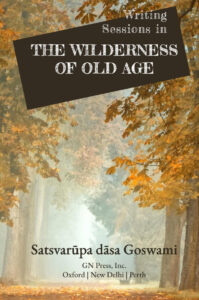
The Writing Sessions are my heart and soul. I’m trying my best to keep up with them. I am working with a few devotees, and they are far ahead of me. I wander in the wilderness of old age. I make my Writing Sessions as best I can. Every day I try to come up with a new subject. Today I am thinking of my parents. But I don’t think of them deeply. They are long gone from my life. Śrīla Prabhupāda wrote a poem when he was a sannyāsī, and he said now all my friends and relatives are gone. They are just a list of names now. I am like that too. I am a sannyāsī with a few friends. I love the books of Śrīla Prabhupāda. I try to keep up with them. I read as much as I can and then listen to his bhajanas.
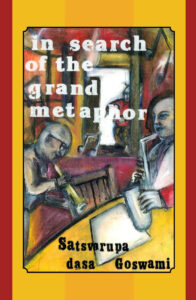
The metaphor is song. Explain it. Yes, particulars may not seem interesting or profound to readers who want structured books.
Wait a minute. Don’t pander to readers or concepts of Art. But Kṛṣṇa conscious criteria are important and must be followed. So, if your little splayed-out life-thoughts are all Kṛṣṇa conscious, then it’s no problem.
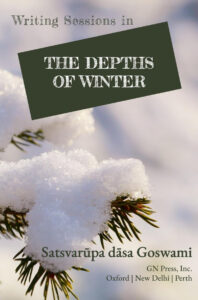
I am near the end of my days. But I do like the company of like-minded souls, especially those who are Kṛṣṇa conscious. Yes! I am prone to Kṛṣṇa consciousness. I have been a disciple of Bhaktivedanta Swami Prabhupāda for maybe almost sixty years. Sometimes I fail him. But I always bounce back and fall at his feet. It is a terrible thing that I sometimes do not have the highest love for him. It is a terrible thing. Actually, however, I never fall away from him. He always comes and catches me and brings me back to his loving arms.

This edition of Satsvarūpa dāsa Goswami’s 1996 timed book, Upstate: Room to Write, is published as part of a legacy project to restore Satsvarūpa Mahārāja’s writings to ‘in print’ status and make them globally available for current and future readers.
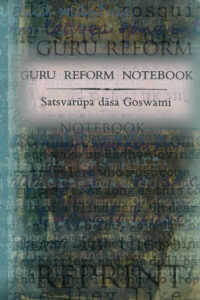
A factual record of the reform and change in ISKCON guru system of mid ’80s.

Readers will find, in the Appendix of this book, scans of a cover letter written by Satsvarūpa Mahārāja to the GN Press typist at the time, along with some of the original handwritten pages of June Bug. Together, these help to illustrate the process used by Mahārāja when writing his books during this period. These were timed books, in the sense that a distinct time period was allotted for the writing, during SDG’s travels as a visiting sannyāsī
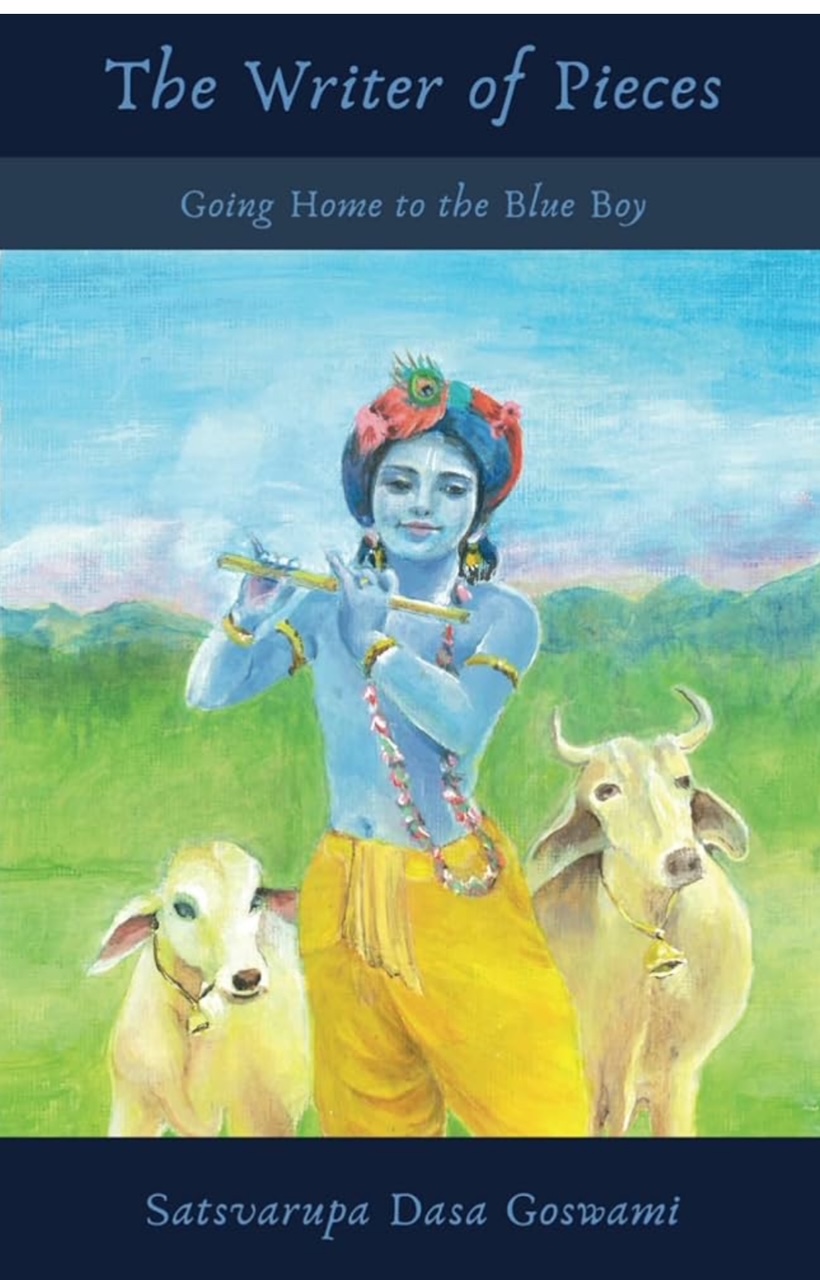
Don’t take my pieces away from me. I need them dearly. My pieces are my prayers to Kṛṣṇa. He wants me to have them, this is my way to love Him. Never take my pieces away.

Many planks and sticks, unable to stay together, are carried away by the force of a river’s waves. Similarly, although we are intimately related with friends and family members, we are unable to stay together because of our varied past deeds and the waves of time.
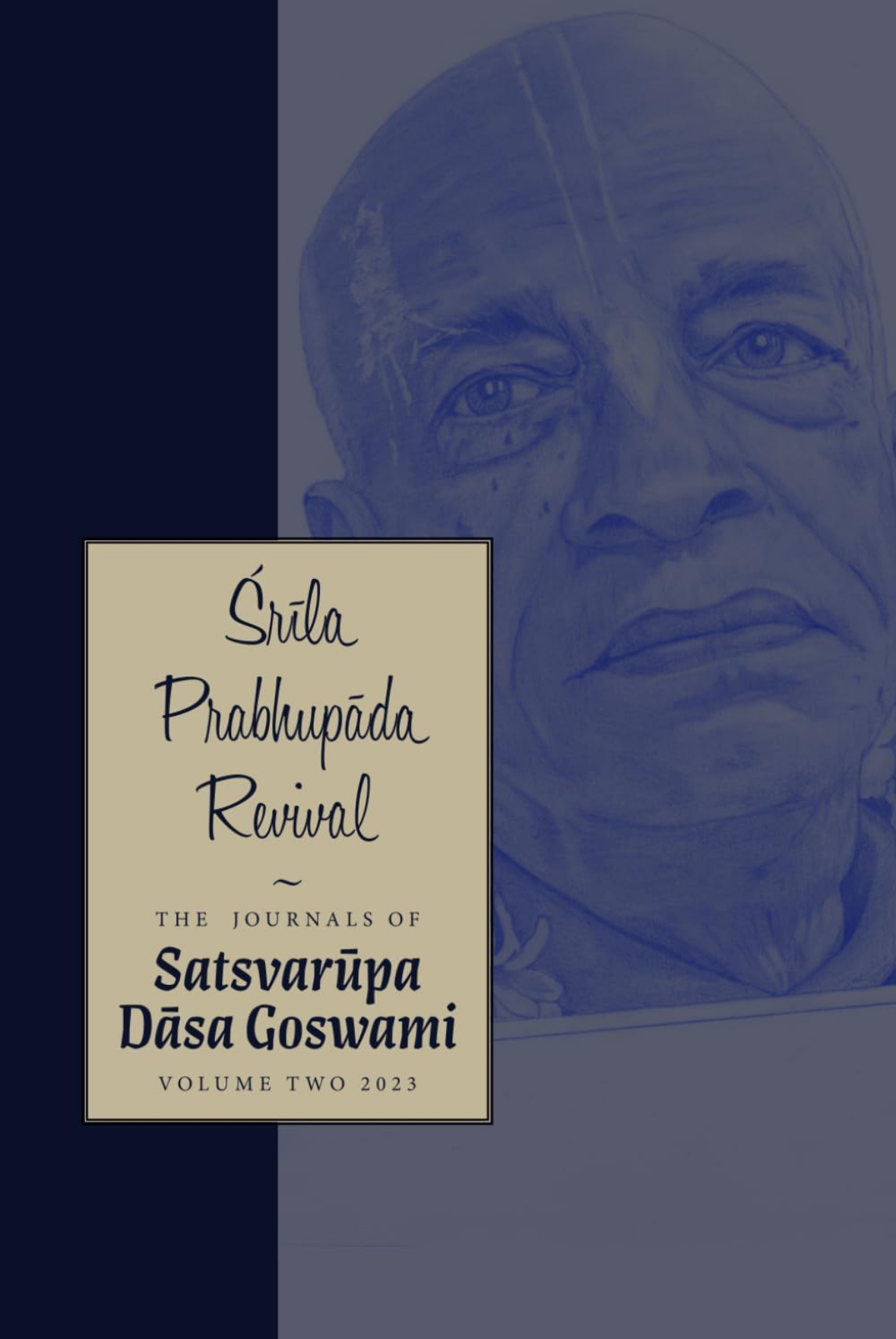
To Śrīla Prabhupāda, who encouraged his devotees (including me) To write articles and books about Kṛṣṇa Consciousness.
I wrote him personally and asked if it was alright for his disciples to write books, Since he, our spiritual master, was already doing that. He wrote back and said that it was certainly alright For us to produce books.
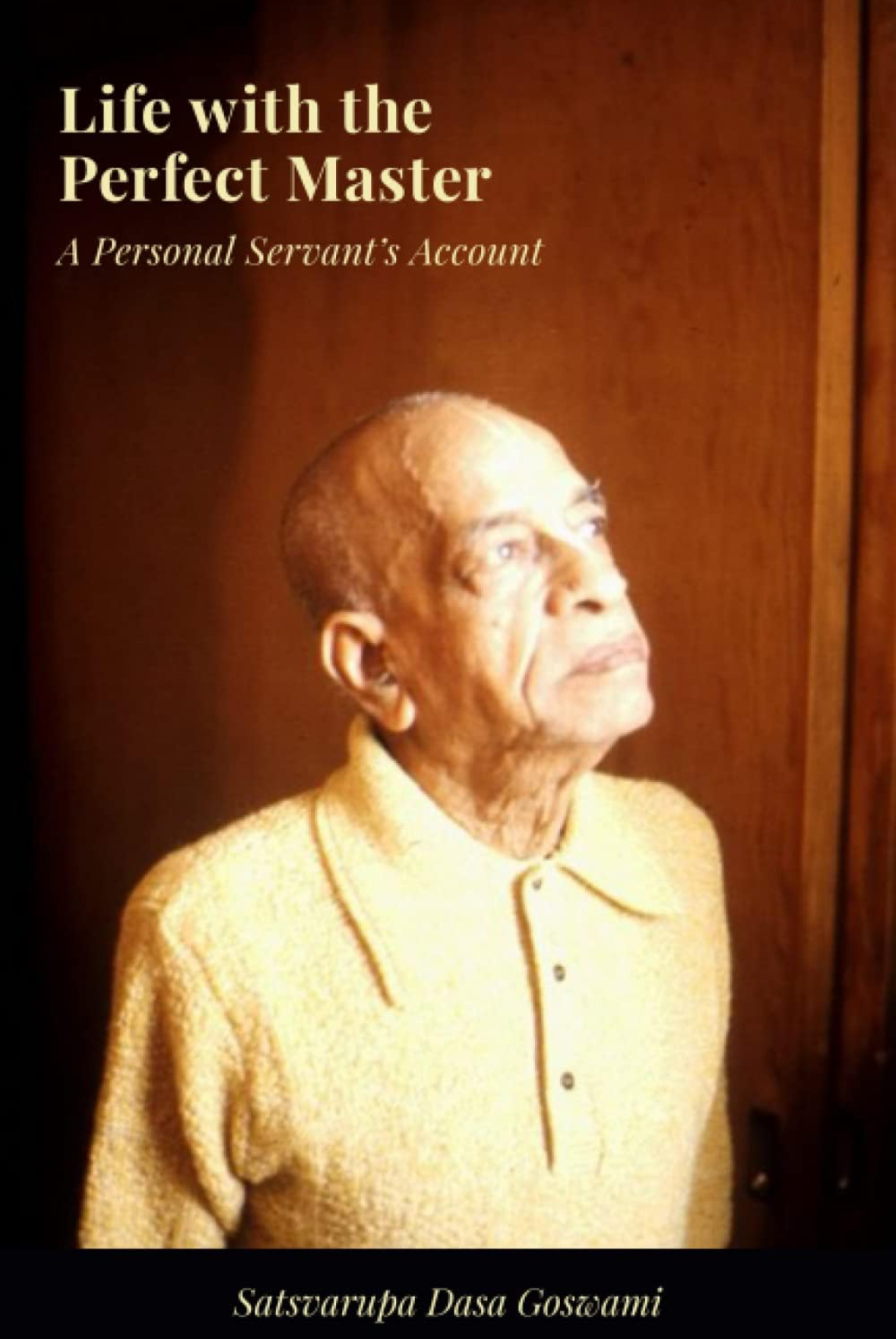
I have a personal story to tell. It is a about a time (January–July 1974) I spent as a personal servant and secretary of my spiritual master, His Divine Grace A.C. Bhaktivedanta Swami Prabhupäda, founder-äcärya of the International Society for Krishna Consciousness. Although I have written extensively about Çréla Prabhupäda, I’ve hesitated to give this account, for fear it would expose me as a poor disciple. But now I’m going ahead, confident that the truth will purify both my readers and myself.
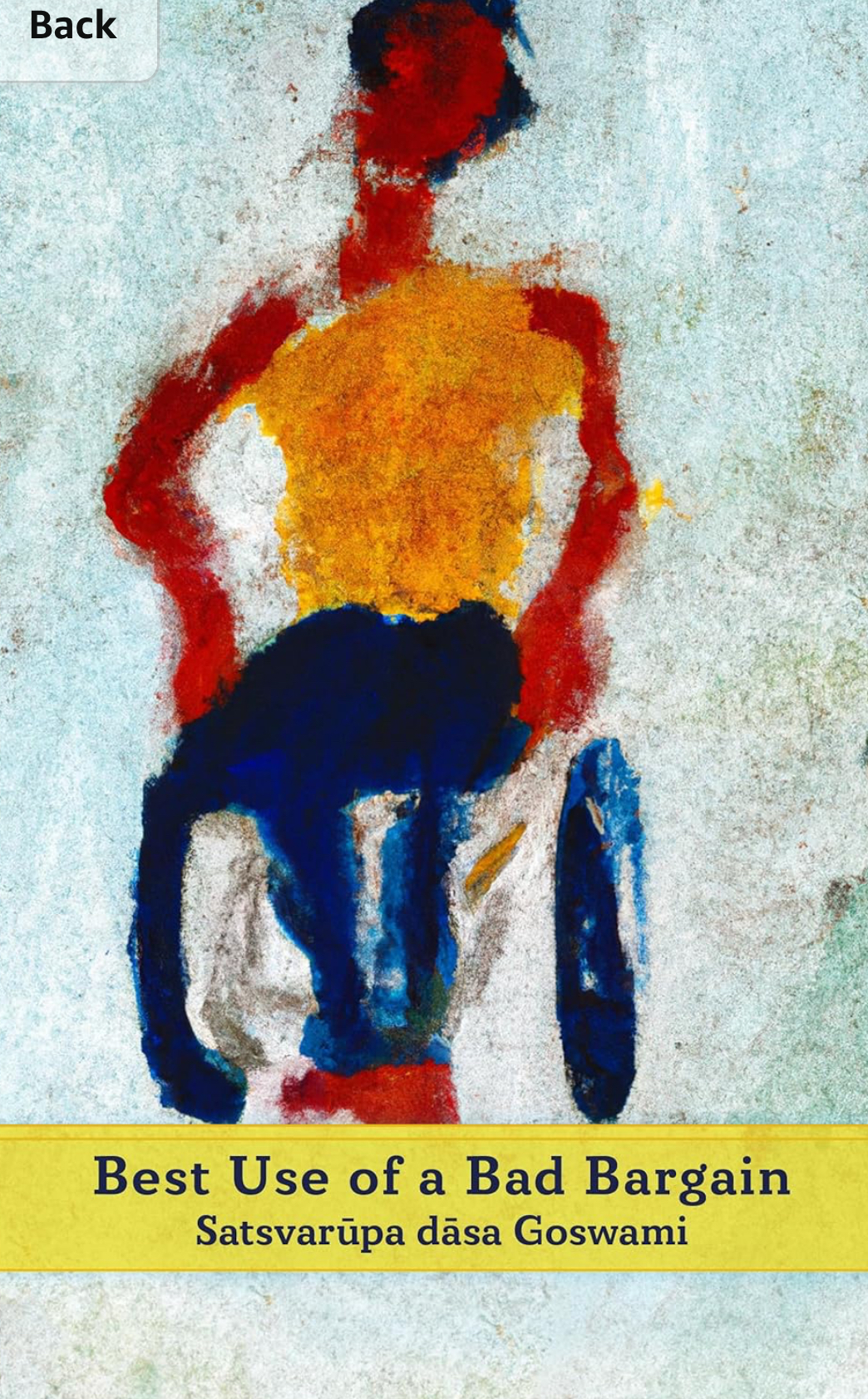
First published by The Gītā-nāgarī Press/GN Press in serialized form in the magazine Among Friends between 1996 and 2001, Best Use of a Bad Bargain is collected here for the first time in this new edition. This volume also contains essays written by Satsvarūpa dāsa Goswami for the occasional periodical, Hope This Meets You in Good Health, between 1994 and 2002, published by the ISKCON Health and Welfare Ministry.

This book has two purposes: to arouse our transcendental feelings of separation from a great personality, Śrīla Prabhupāda, and to encourage all sincere seekers of the Absolute Truth to go forward like an army under the banner of His Divine Grace A.C. Bhaktivedanta Swami Prabhupāda and the Kṛṣṇa consciousness movement.
A single volume collection of the Nimai novels.
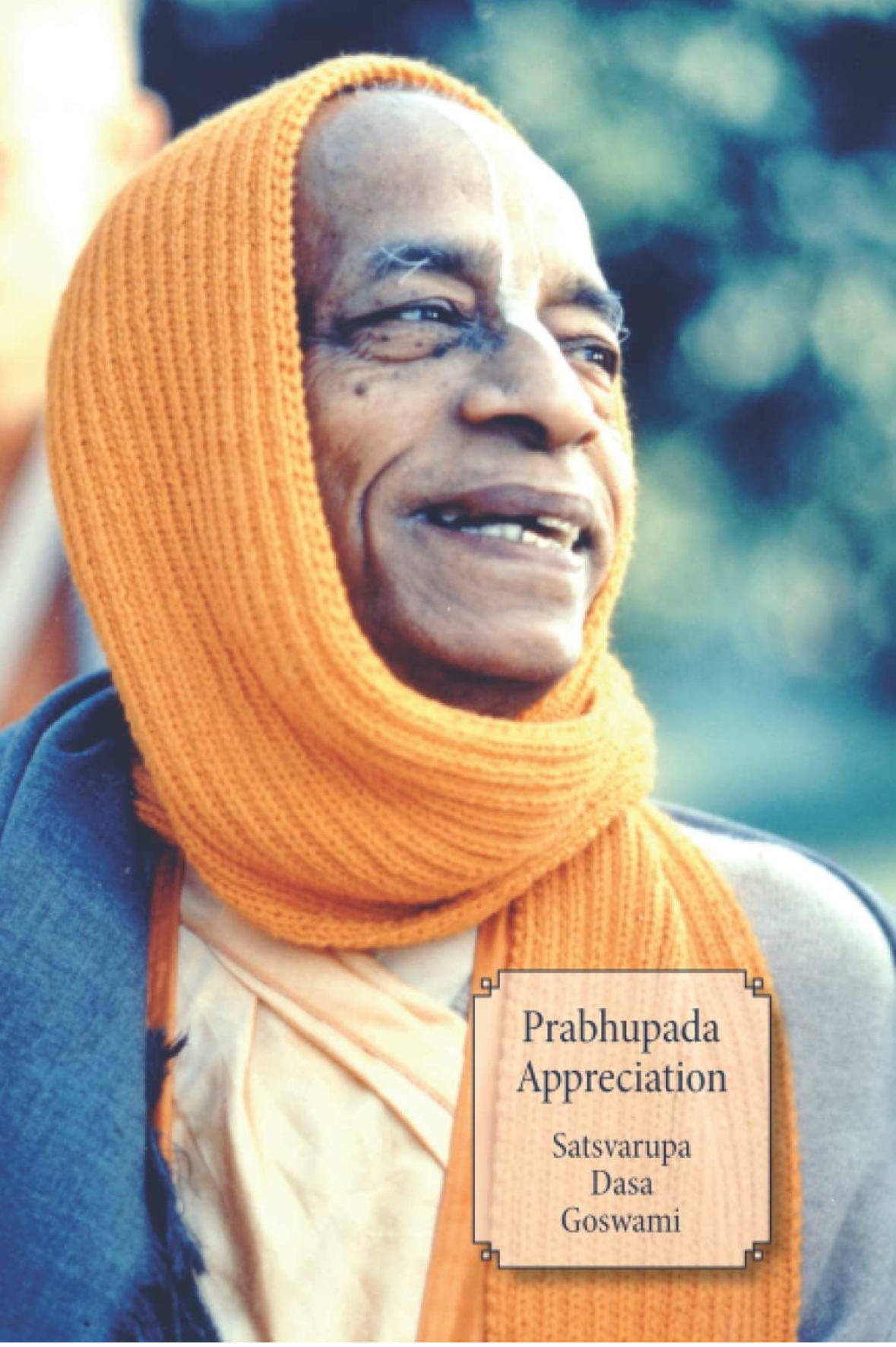
Śrīla Prabhupāda was in the disciplic succession from the Brahmā-Mādhva-Gauḍīya sampradāya, the Vaiṣṇavas who advocate pure devotion to God and who understand Kṛṣṇa as the Supreme Personality of Godhead. He always described himself as simply a messenger who carried the paramparā teachings of his spiritual master and Lord Kṛṣṇa.
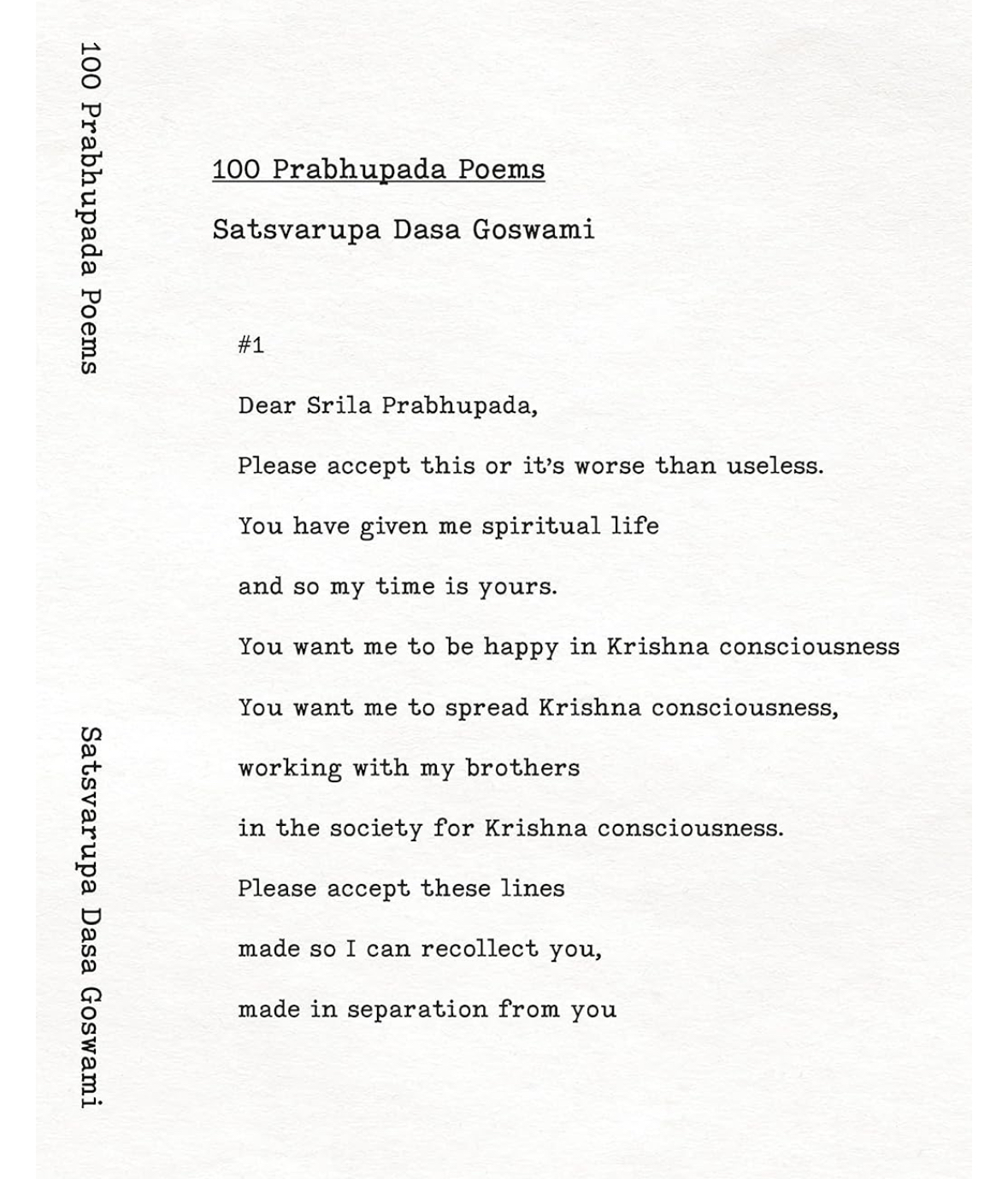
Dear Srila Prabhupada,
Please accept this or it’s worse than useless.
You have given me spiritual life
and so my time is yours.
You want me to be happy in Krishna consciousness
You want me to spread Krishna consciousness,
This collection of Satsvarūpa dāsa Goswami’s writings is comprised of essays that were originally published in Back to Godhead magazine between 1966 and 1978, and compiled in 1979 by Gita Nagari Press as the volume A Handbook for Kṛṣṇa Consciousness.
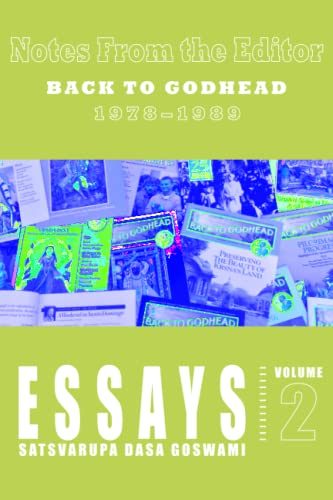
This second volume of Satsvarūpa dāsa Goswami’s Back to Godhead essays encompasses the last 11 years of his 20-year tenure as Editor-in-Chief of Back to Godhead magazine. The essays in this book consist mostly of SDG’s ‘Notes from the Editor’ column, which was typically featured towards the end of each issue starting in 1978 and running until Mahārāja retired from his duties as editor in 1989.
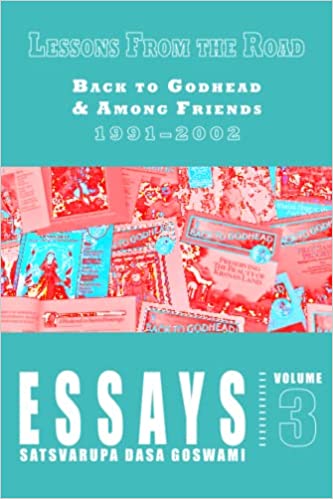
This collection of Satsvarupa dasa Goswami’s writings is comprised of essays that were originally published in Back to Godhead magazine between 1991 and 2002, picking up where Volume 2 leaves off. The volume is supplemented by essays about devotional service from issues of Satsvarupa dasa Goswami’s magazine, Among Friends, published in the 1990s.

“This is a different kind of book, written in my old age, observing Kṛṣṇa consciousness and assessing myself. I believe it fits under the category of ‘Literature in pursuance of the Vedic version.’ It is autobiography, from a Western-raised man, who has been transformed into a devotee of Kṛṣṇa by Śrīla Prabhupāda.”
 The Best I Could Do
I want to study this evolution of my art, my writing. I want to see what changed from the book In Search of the Grand Metaphor to the next book, The Last Days of the Year.
 a Hare Krishna Man
It’s world enlightenment day
And devotees are giving out books
By milk of kindness, read one page
And your life can become perfect.
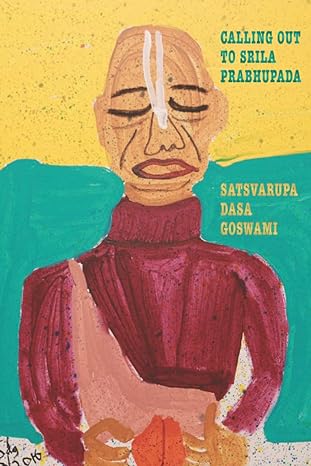 Calling Out to Srila Prabhupada: Poems and Prayers
O Prabhupāda, whose purports are wonderfully clear, having been gathered from what was taught by the previous ācāryas and made all new; O Prabhupāda, who is always sober to expose the material illusion and blissful in knowledge of Kṛṣṇa, may we carefully read your Bhaktivedanta purports.
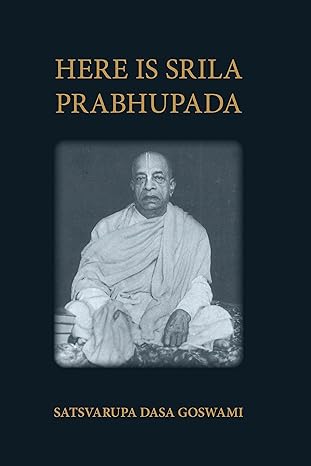
I use free-writing in my devotional service as part of my sādhana. It is a way for me to enter those realms of myself where only honesty matters; free-writing enables me to reach deeper levels of realization by my repeated attempt to “tell the truth quickly.” Free-writing takes me past polished prose. It takes me past literary effect. It takes me past the need to present something and allows me to just get down and say it. From the viewpoint of a writer, this dropping of all pretense is desirable.
 Geaglum Free Write
This edition of Satsvarūpa dāsa Goswami’s 1996 timed book, Geaglum Free Write Diary, is published as part of a legacy project to restore Satsvarūpa Mahārāja’s writings to ‘in print’ status and make them globally available for current and future readers.