

We need to expand our team of proofreaders as we aim to increase the rate of republication of Satsvarūpa Mahārāja’s books as well as new books that he writes.
This includes a need for fluent bilingual Spanish and English speakers to proofread Spanish translations (we currently have around 20 Spanish translations waiting to be proofread).
Anyone interested in this particular service should contact Manohara dāsa at [email protected]
If you would like to help, please contact Kṛṣṇa-bhajana dāsa at [email protected] or [email protected] and we will find you a service that utilizes your talents.
So while you are chanting, you don’t have to get to something else or go somewhere else or wait for “it” to happen, but you just have to realize that this is actually Krsna. Then, as you realize Krsna more, you get more into the chanting. You realize that the chanting is simply to chant Krsna’s name, and you want to do it more and more.
******
Of course, in a sense it is true that the chanting leads to a breakthrough and to higher understanding, but to higher understanding of the same thing—that Krsna is His name, that Krsna is actually His name. And then you realize it more—that actually Krsna is His name. Sometimes we gain a little understanding of it. We say, “You know, I’ve been chanting. I am understanding that actually the name is Krsna.” Or we may be reading and then understand, “Oh, actually the name is Krsna. Krsna is His name. Krsna is so wonderful, and Krsna is appearing in His name!” Improving chanting means realizing this more and more.
******
Just like with the Deity— Krsna is standing on the altar, so we keep going and seeing Krsna. The best way to take His darsana is to get more and more realization that Krsna is actually here. Not that you have to see a light coming from the Deity or see Him move, but He has come in this form. He’s exactly Krsna in this brass form. He’s not brass, He’s Krsna—but exactly as He is. The name is like this. The name is actually Krsna. Not that by chanting—then something else. But the sound vibration is Krsna. It’s just a matter of becoming submissive or receptive. Prabhupada uses the phrase “aural reception.” We produce this sound, and we hear it; this is yoga. Therefore, it’s such a simple process. We can make all advancement.
******
Chanting is done from the heart, as a way of life. That is inoffensive chanting. It is not just a technique. You have in the past been a victim of your uncontrolled senses. You should pray to Krsna when you chant, “Please save me from maya. Please save me from my raging senses. Please, Lord, engage my senses in Your service. Please let me chant Hare Krsna sincerely. Please do not let me go away from Your lotus feet into the jaws of maya.” This prayerful attitude as you chant, realizing your dangerous position, will be more effective than touching the tongue to the upper portion of the palate like the South Indian brahmana.
******
A few years ago on the inside cover of Back to Godhead we used an ad where different karmis would relate their experiences of chanting Hare Krsna. One man said, “It charges my batteries,” and others said different things. Prabhupada said, “That is all right, but you must also instruct them that they should take to the process.” Chanting involves the whole process. We don’t want people to introduce it in their lives as a cheap thing: “Oh, I chant because it relieves me of tension before I go to the executive board meeting,” or, “Before my performance, I chant Hare Krsna.” You have to take to the process.
Nama cintamani krsnas caitanya-rasa-vigrahah. Commenting on this verse, Srila Prabhupada said,
“. . .Gita or Srimad-Bhagavatam or Krsna’s name or Krsna’s form, pastimes, anything about Krsna—they are one. Therefore by chanting this Hare Krsna mantra, you directly contact Krsna. Krsna is the nami, and Hare Krsna mantra is His name. But they are nondifferent. Otherwise, how this Hare Krsna movement is so quickly appreciated all over the world? There’s no difference between chanting the Hare Kona mantra and meeting Krsna eye-to-eye, face-to-face. Simply one has to realize. The more you become purified by chanting Hare Krsna mantra, you will see Krsna face-to-face.”
******
“People are asking, ‘Can you show me God?’ You can see. Simply prepare your eyes. Simply prepare your ears, by hearing. Ceto-darpana-marjanam. So this is a very scientific, authorized, practical movement. You chant Hare Krsna mantra and you will realize that gradually you are advancing to meet Krsna face-to-face. It is possible.”
—Lecture by Srila Prabhupada 1/12/73 in Bombay
******
How can you control your mind by chanting? This is an honest question. Even if you don’t commit gross sinful activities, the subtle material desires in the mind, and the fact that the mind is uncontrolled makes you unable to chant. This is especially prominent in the age of Kali. The only solution is to work hard at chanting. Krsna says wherever the mind wanders bring it back under the control of the higher self. Just as when a parent takes care of a little child, the parent has to constantly see that the child does not go astray. The parent cannot say that the child should cooperate more and just stay in one place. But the parent lovingly has to constantly watch. In the same way, you have to lovingly and yet strongly discipline the mind and keep it concentrated on the holy name. Do not find fault with the process. And do not think that Krsna is not helping you. He has helped you by giving you Himself in His holy name. Now you have to take to the process sincerely and “God helps those who help themselves.”
I write these words as a humble offering in glorification of Śrīla Satsvarūpa dāsa Gosvāmī, my dear friend, senior godbrother, and an early disciple of His Divine Grace A. C. Bhaktivedānta Svāmī Prabhupāda.
It has recently occurred to me that devotees of the present generation—what to speak of those yet to come—may not be fully aware of the pioneering service he rendered over the course of his long and dedicated life in Kṛṣṇa consciousness. His publishing oeuvre is, without exaggeration, more extensive than that of any other living Vaiṣṇava, and its importance cannot be overstated.
From his seminal multi-volume Śrīla Prabhupāda-līlāmṛta to the introspective Japa Reform Notebook, from Nīti-śāstras: Sayings of Cāṇakya and Hitopadeśa as Quoted by Śrīla Prabhupāda to Mama Tejas: A Spark of My Splendor—one of my personal favorites—Satsvarūpa Mahārāja’s works illuminate Gauḍīya Vaiṣṇavism while simultaneously demonstrating how a devotee may be deeply personal, expressive, and artistic in presenting Kṛṣṇa consciousness.
Indeed, his disciples have undertaken the noble task of republishing his many books—numbering in the hundreds—in thoughtfully designed editions meant to nourish devotees of today and generations yet unborn.
Be it known: Satsvarūpa dāsa Gosvāmī joined Śrīla Prabhupāda at 26 Second Avenue in the early months of 1966. At that time, he was working as a social worker and cultivating his natural inclination as a writer. Who knew that Kṛṣṇa had a plan for him to become one of the preeminent writers of the Hare Kṛṣṇa movement?
In a spirit of sacrifice, he donated his earnings to help sustain the fledgling temple, and Śrīla Prabhupāda personally encouraged him to write for Back to Godhead magazine, and he soon became its chief editor. Later that same year, he was sent alone to establish a preaching center in Boston, marking the beginning of a lifetime of leadership and service.
He became one of the original members of the Governing Body Commission and accepted sannyāsa initiation in 1972. His service included extensive college preaching and numerous administrative responsibilities, yet throughout, Śrīla Prabhupāda consistently encouraged his literary efforts and expressed pleasure upon seeing his early works, such as Readings in Vedic Literature and Handbook for Kṛṣṇa Consciousness.
In 1978, he was entrusted by the GBC with the monumental responsibility of composing Śrīla Prabhupāda-līlāmṛta, the authorized biography of Śrīla Prabhupāda. It is said that Śrīla Prabhupāda himself had indicated Satsvarūpa dāsa Gosvāmī as a fitting author for such a sacred undertaking.
To accomplish this, Satsvarūpa Mahārāja assembled a dedicated production team, as the Bhaktivedanta Book Trust was then heavily engaged in numerous other projects. For nearly five years, this team labored with diligence and devotion, ultimately producing the original six-volume life of Prabhupāda.
Thereafter, the same team continued under the name Gītā Nāgarī Press, facilitating the publication of Satsvarūpa Mahārāja’s vast and varied literary output. His writings span biography, devotional practice, reflections on devotee life, prayer, essays, poetry, journals, fiction, and art. These diverse genres are unified by a striking honesty and transparency, offering readers an intimate glimpse into the inner life of a practicing devotee. Truly, within his works, there is something for everyone.
In addition to his literary achievements, Satsvarūpa dāsa Gosvāmī is also an accomplished and widely appreciated “outsider” artist—unschooled in the conventional sense, yet vibrant, immediate, and deeply alive in expression.
Over the course of his career, he produced more than 2,500 works of art, many of which are displayed in private homes and offices, while others have been incorporated into the design of Gītā Nāgarī Press publications. Notably, one hundred of his pieces were acquired by the Museum of Sacred Art for their permanent collection.
Although he has now ceased painting due to health considerations, his artistic legacy remains substantial and enduring. All of this was accomplished despite maintaining a heavy institutional workload of management during the 1970s, 80s, and 90s, and even while enduring chronic migraine headaches. During all of this, he also took on the role of initiating spiritual master, guiding many disciples to the goal of Kṛṣṇa Consciousness on Śrīla Prabhupāda’s behalf.
Now retired from extensive travel, he continues to write and to correspond with devotees, remaining ever engaged in the service of guru and Kṛṣṇa.
As we look toward the future, it is my sincere hope that devotees of all generations will come to know the name and person Satsvarūpa Dāsa Gosvāmī—through the recorded history of ISKCON and, most importantly, through his precious books.
His life stands as a testament to steady service, creative expression, and deep fidelity to the instructions of the spiritual master. If we take the time to hear his voice through his writings, we will find not only historical insight, but also guidance, vulnerability, and the living example of a devotee striving, with sincerity, to serve Śrī Kṛṣṇa at every step. In this way, his legacy will continue to instruct, inspire, and uplift all who encounter it.
pp. 117-19
Gray, not cold. The dead trees are marked with red paint, which means that our men will cut them down when they get to them. I have some thoughts which I call “intellectual,” meaning not fully realized. One is that this whole idea of inner life and prayer is, for me, just a dim, intellectual awareness I have received from different sources, such as people telling me or my reading the books. I have much more distance to go than I ever dreamed of in terms of making real spiritual progress. In fact, I am stopped. I have so many anarthas, but I tend to become complacent because of the great distance that I have been lifted up from an abominable place. That safe distance is due to Prabhupada’s mercy and the process which I have been practicing. My awareness of my fallen state is merely an intellectual realization. If somebody mentions, though, that I am not advanced, I say, “Umph! No, everything is all right.” However, I don’t really feel it. Therefore, there are no tears or grief.
Another intellectual inkling I have is that I am taking it easy and that I am not performing the necessary austerities. This has been on my mind since reading Dark Night of the Soul, where the author describes the terrible purgations the soul has to go through as God leads one along. If one is weak, He leads one along very slowly, interspersing the purgations with sweetness. So I may be thinking that I have found an easy way to get through life by Krsna consciousness. Partly, of course, there was more willingness to do rigorous work when I was younger, but now, as I grow older, it may be that I am looking for an easy way, for comforts by my seniority, by my official sannyasa position, and by my reputation. I let people serve me, I take it easy, and now I have illnesses, arthritis in my foot, and headaches—these can be used to take it easy and this is not good.
I also have an intellectual awareness that there is so much suffering in the world, as well as the fact that there is so much suffering I may have to go through—a kind of suffering of tearing myself away from illusions. I’m so reluctant, however, to bear or be aware of even a bit of this suffering. So Krsna is “protecting” me from it because it is so much my desire not to see it. Lately, though, I have been making those little prayers (I don’t know if Krsna takes them as sincere yet) where I am asking, “Please show me the truth. Please reveal my faults to me. Please give me my orders just as the military commander gives orders. I won’t go on my own, but if You give me the orders I will go.” Out of my intellectual awareness, I am trying to be truthful and honest—and go for it.

Another day at Gita-nagari. Gray, not very cold. Noon. I just prayed to the Lord and didn’t have the courage to pray for a “dark night of the soul” purgation under His hand. If that comes, I wish io accept it. I pray to accept it. However, I did pray that I can become purified and to increase my desire for reading Prabhupada’s books.
There is no conflict or contradiction between the fact that we hear about Krsna in the scriptures in many different ways and that we also want to address Him personally as an individual spirit soul under His Lordship. Rather, what we hear from the scriptures convinces us about the Lord’s existence and His greatness. That helps us to know we are speaking individually to the same Lord who is described in the transcendental literature. To begin a genuine prayer, though (and I consider myself as hardly even begun), it takes a very clear attitude, a mind not cluttered by lots of other voices. Then you can come to the core of whatever sincerity you have. So, for this, a certain way of life is good: a quiet life perhaps, or a life, even if stressful, in which you deliberately take time out to pray with concentration. Think of Krsna and talk to Krsna. It takes some effort of communication.
Hare Krsna. It’s sixty degrees, patches of sun, the leaves really almost leathery-looking. Different shades of brown only, brown and tan. You can hardly see any green and I don’t see any yellow at all, and no red. Everything is brown, whereas just very recently the colors were there. Just see how everything changes, and the trees are all simply wood except for a few trees here and there that are retaining some leaves. Gunshots echoing on this Friday afternoon where the deer are being slaughtered. Our land is a refuge for the deer, with some “No Hunting” signs up. It is also a refuge for devotees, and I am taking refuge in the hill with only the trees to hear me chanting and walking.
As far as prayer is concerned, it is going on in a mild kind of way. I am very thankful for the peace and quiet in which to pray. I know all kinds of complete changes are no doubt ready to be made by the Lord upon me. I am just an insignificant living entity, but I pray that the Lord will help me to become a better devotee. I am specifically speaking here about prayer to encourage myself to continue it. Yes, I will.
I cannot expect such ideal situations as this. This peace is the kind of thing one remembers, rather, when he is in the hectic situation. At Gita Nagari I can find peaceful solitude at least for half an hour just by walking out the door. This is the greatest wealth. At the same time, I am daily able to see Radha-Damodara and give lectures, etc. So when I am in more hectic surroundings, I can remember this peaceful forest, and my thinking about Krsna and praying to Krsna.
Even here, though, my prayer has been thinning out, diminishing. I haven’t been concentrating as much; I tend to think within myself, without turning to the Lord and Prabhupada. All I can say is I do desire to keep it up, and when I stray from it I feel sorry, and I just come back and do it again and try not to feel too much guilt. My Lord, I am happy to be in Your protection and Your care, just as I hope I will be happy when You may handle me more roughly, because You are my Lord unconditionally.
pp. 42-46
If one serves a spiritual master and inquires, then the spiritual master is very liberal and generous and glad to answer. In Kali-yuga one disagrees even with his spiritual master. One cannot leave the association of the spiritual master and then claim interpretation of his instruction.
If I say I love Krsna but I kick His devotee, what kind of love is that?
If I want to be Krsna conscious, I should live with devotees and the Deity, not that I “love Krsna” and go live in a train station.
Early morning walk in tiny paths, snowy park. He quoted verses about the life of a mendicant who takes clothes people throw in the street, etc.—the Japanese work so hard to live in nice houses. A mendicant only approaches them for their good. I commented that hippies in Hawaii might say they follow these verses. He said, “Therefore, vairagya is useless [without Krsna consciousness]. Monkeys also live in the forest and eat fruits, but they have many girl friends and sex life.”
Riding through industrialized Tokyo he commented how it is all karma, bringing on the next life. Animal life—do you want to live as animals or go back to Godhead?
Deviators claim they are above the rules and regulations of devotional service. He said we never are. Follow these rules or other rules—we must follow—traffic rules, rule of birth, death, old age.
“Rascals claim they are higher devotees, but they didn’t come to see me and pay obeisances.”
I asked about splits in the movement. He said there was no such thing—only insincerity. I chant sixteen rounds, follow the principles and preach, and you do also—there is no split, only if one is insincere and doesn’t follow.
He appreciated K., who couldn’t follow principles and left. Said G. was insincere for falling down, but was going on preaching without his conscience biting
That authority who is everyone’s authority is God.
A devotee said another devotee was planning how to take over the world for Krsna. Srila Prabhupada said this was very good. “Yes,” the boy said, “as long as it is not utopian.” No, Prabhupada said, even if it is utopian, it is very nice. After all, who is Krsna? He is not an ordinary man. Anything is possible if one sincerely wishes it for Krsna. He described how he came to the U.S.A. with no backing. (I was thinking of going preaching to a college to get devotees—utopian wish should be there: “I want these people to become Krsna’s devotees.”) Utopian for Krsna is all right.
He said he wanted to visit Dvaraka as he had never been there, and never been to Hardwar or other holy places all over India. “I was much more serious about hearing from my spiritual master than in visiting holy places. He noted this and he liked me for it.”
He said he knows the art, like karate, of pushing at a person’s weak point until he dies. In argument he said he finds out their weak point and pushes on it until they die.
A communist said that everything is based on economy, economy is the basic principle, even for Krsna conscious people. Prabhupada looked up economy in the dictionary. He said it actually means bodily comforts: eating, sleeping, mating, and defending. We have such economy in Krsna consciousness, but it is not our basic principle. The basic principle is transcendental loving service to Krsna. Please Krsna, then the economy problem is solved. Animals have no economic problem either, although they have no big philosophy. Men are all rascals who are not Krsna conscious. Communists, capitalists, all are taking and distributing poison by preaching on the bodily platform. If the communist sees material opulence and says, “Everyone should have poison in a gold pot,” will a sane man agree? “Here is poison in a gold pot.”
We say to everyone, “Come on.” Nonsectarian.
A devotee wrote him a letter saying, “You are doubting my business project and so I am not enthusiastic and I am beginning to doubt you.” Prabhupada said, “I do not doubt you as a sincere devotee, but I doubt your business capacity as no money is coming in. I am a layman. I don’t know the jewelry business, but if I doubt it, what is my fault?” Besides, the spiritual master can say to his disciple: “You are useless, you are stupid, you are a fool.” That is all right. Not that he has to flatter the disciple.
Starting out on a morning walk in Vrndavana, a devotee said, “You are like the hometown boy who made good. Here in Vrndavana the people are proud of you.” He said, “They should. They couldn’t do anything.”
On a walk in the parikrama area, a devotee saw female peacocks eating, and commented that the males are more beautiful among birds, also fish. Prabhupada said, “Among the humans, the women are.” Then, “Amongst Mohammedans, a man with big beard and mustaches is considered very beautiful.” The devotee said, “Then we are the least beautiful. We have no hairs.” Prabhupada: “Yes, nobody likes us. We are neither male nor female. No one knows who we are. That is very good. If you are attractive to neither male nor female, then you are liberated.”
Q: What is the difference between Goloka and Vrndavana?
A: None—but your mind is in America. Fix your mind at the lotus feet of Krsna and you are always in Vrndavana. Krsna is everywhere.
We cannot execute severe penances. Our penance is to try to reform the poor, crazy persons. Tapa means miseries. In any case, even if you try to live for comfort, it will be miserable. And if you think, “All right, it’s miserable, but let me enjoy,” still you will have to die. One should take the pains voluntarily for Krsna. He comes to save fallen souls; if you help a little, He’ll be pleased. He comes Himself, sends devotees, leaves books, but still we are mad for sense enjoyment. Our penance, therefore, is to try to reform (also those who come to ISKCON and are still troublesome).
pp. 41-47
SB 1.3.31
yathā nabhasi meghaugho
reṇur vā pārthivo ’nile
evaṁ draṣṭari dṛśyatvam
āropitam abuddhibhiḥClouds and dust are carried by the air, but less intelligent per sons say that the sky is cloudy and the air is dirty. Similarly, they also implant material bodily conceptions on the spirit self.
We cannot see the individual spirit soul within the body. We can only assume the soul is there by its symptoms. We use inference rather than sensory proof. If the body is active, we take it for granted, on the basis of scripture, that the soul is present. Similarly, we cannot see God, whose form is all-spiritual. We have to be highly qualified to see the Lord’s spiritual form.
Foolish persons mistake the physical form of the individual soul to be original form. Therefore, they misidentify a person with his outer covering. This is not completely wrong; the outer covering indicates the presence of an inner person. Prabhupada gives the example that when we see the President’s limousine we exclaim, “Here comes the President!” We’ve seen only the car, but we are likely to be correct that the President is indeed inside.
Those who want to see God immediately despite their disqualification are encouraged to meditate on the “outer form” of God in this material universe, the universal form. By understanding the size and power of the gigantic cosmos, they can begin to understand the breadth of God. Still, that form is imaginary—one could almost say mistaken. The mistake is described in this verse: when you see dust or clouds in the air you say, “The sky is cloudy, the air is dirty.” In fact, the air is separate from the dust. It is simply carrying the dust. It has not itself become dust.
Our inability to see living spirit is described in the Vedic verse, atah sri-krsna-namadi na bhaved grahyam indriyaih. With our present blunt material senses, we cannot appreciate Krsna’s presence in His holy name. When we render devotional service, however, especially starting with the tongue by tasting prasadam and chanting Hare Krsna, then gradually the spiritual senses become uncovered and we learn to see spiritual reality. Chanting Hare Krsna cleans the dust from the mind and enables us to see that Krsna and His name are nondifferent. Those who demand to see spirit at once, although they’re unwilling to practice the process of purification, are arrogant and foolish. It certainly makes sense that in order to understand any subject matter, we have to qualify ourselves to learn it.
One of the first things we learn in Krsna consciousness is that we are not this body; we are spirit soul. Even as we begin to practice Krsna consciousness, however, this basic realization eludes us. I remember Prabhupada quoting aham brahmasmi and my being thrilled to hear it. Still it is theoretical, even after all these years.
Is that depressing? It’s horrible to look at ourselves and see the gross material desires that still live in our minds and hearts. Why can’t we act more like the Vaisnava we actually are? Why the persistence of the material identity? Sometimes the “dirt and clouds” seem inseparable from our air. We have so deeply identified with matter for so long that it is almost impossible to overcome the habit. A soul in a man’s body thinks he’s a man or an American or the son of a particular family. A soul in a body sees himself as fat or thin, strong or weak. Maya will be conquered when we can understand with what we should identify.
I have been writing my memories of material experience. I think in all honesty it’s necessary for me to own up to them because I still dream of my old neighborhood, think of myself as a child, remember my parents, and so on. The fact is, however, none of my material experiences have any connection with me. I don’t defy this conclusion. In fact, I respect it as transcendental knowledge. It just seems so long before the practices of sadhana-bhakti take hold and I actually begin to understand and identify with my real self.
The pure devotee’s situation is different. We’re advised not to see the spiritual master’s body as faulty, for example. We are told that if we think of the spiritual master as his body, it’s the same as seeing the moon mixed in the clouds and thinking that they are moving together. The moon is actually far away, quite separate from the clouds.
Although we may be mistaken when we see the spiritual master’s body as material, however, we still worship that form. It is actually a spiritual form. It may be hard to distinguish all this, and perhaps it is not even necessary. If the spiritual master’s form becomes dear to us, then whether we understand it as matter or spirit, we are safe if we continue to worship him and follow his words. At least we will have the gist of understanding. How his body is spiritual is something we may have to understand in the future.
Similarly, when we see the worshipable Deity on the altar, we understand that it is Krsna Himself, although simultaneously we know that He is made of marble or brass. We also know, theoretically, that marble can act as spirit, and that Krsna has appeared to us in this so-called material form because we are not yet qualified to see His sac-cid-ananda form. In this case, although we lack higher understanding, if our basic attitude is right, we can still make spiritual progress by properly receiving, worshiping, and serving the spiritual form of guru and Deity. The Vedic verse describes, arcye viṣṇau śilā-dhīr guruṣu nara-matir vaiṣṇave jāti-buddhir viṣṇor vā vaiṣṇsnavānāṁ kali-mala-mathane: “If someone fails to understand that the Deity is spiritual, that the spiritual master is not ordinary, and that a Vaisnava doesn’t appear in a particular nationality but is spirit, then that person has a hellish mentality.”
On hearing all this, we can grasp how difficult it is to gain realization of even the ABCs in spiritual life. This fact should humble us. We are not masters of Krsna consciousness just because we have attended a few Bhagavatam classes and have spent a few years busily engaged in the activities of the Krsna consciousness movement. Do we really know the difference between spirit and matter? Do we really act on the spiritual platform in all that we do? If not, why do claim we are learned devotees? Better to go before the guru as Sanatana Gosvami did and admit our foolishness.
Count your change.
I mean, calm down.
Dear spiritual master, I need to feel
God’s unconditional love for me.
I need to feel you’ll cut me
down, call me “fool!” You have
the right and I don’t mind. Still, I want to
feel God’s unconditional love
for me. These words
come to mind.
I want you to accept me as
I am. When I said that
to one of my big leader
Godbrothers (who used to call me
friend), he said, “Why should
I accept you as you are? There is right
and wrong.” He reserved the
right in our friendship to decide when
I was wrong and he, like a car mechanic,
could take me apart, spread out my
parts, and put me together again—as a sign
of his favor—as he wished me to be.
“No thanks,” I said, and that ended that.
Now dear God, You have the right,
and Gurudeva too, but
I’d like to feel Your all-accepting love
for me.
Let me improve who I am.
You, if You like, even on hearing
this conditional statement or
demand, may send a thunderbolt
or remain indifferent.
I accept You in any case.
I’m just telling you how I feel on
this February 17 in 1996.
pp. 49-52
When Jagannatha was absent from the temple, Caitanya Mahaprabhu, who could not see Him, felt separation and left Jagannatha Puri to go to a place known as Alalanatha. (Madhya-lila 1.122)
Alalanatha is also known as Brahmagiri. This place is about fourteen miles from Jagannatha Puri and is also on the beach. There is a temple of Jagannatha there. At the present moment a police station and post office are situated there because so many people come to see the temple. (Madhya-lila 1.22, purport)
As we arrived at the gate, it was still dawn, and none of the pujaris were present. The temple is very old. The entire walled-in area is about a hundred feet wide by two hundred feet long, with large stone blocks for a floor. The main dome is constructed in the Jagannath Puri style, with a red flag on top. At the base of the dome are sculpted figures of powerful warriors fighting one another. There is also a sculpture of the boar incarnation: At the rear of the dome there is an inset sculpture of Nrsimha, with Hiranyakasipu on His lap. Halfway up the dome, large gargoyle-like figures jut out. Coming ’round the dome, I see an inset sculpture of Lord Vamana piercing the outer shell of the universe. All these are very old but in fairly good shape. Unfortunately, there is also graffiti by Oriyan youths, saying the equivalent of “Ravi was here, 1971.” In the rear of the courtyard is a smaller, white-washed Orissan-style temple.
There are three buildings in a row. The first and smallest structure (about twenty feet tall) is the Jaga-mohana, and it encloses the Garuda stambha. The second building (about forty feet high) is the Majhi Devla, which once enclosed the bodily impression of Lord Caitanya. The third tower (60 feet) is Bada Devla, the temple of Alalanatha.
Soon after we arrived, a sweeper woman came and unlocked the first temple for us. Within is a bas-relief of Garbhodaksayi Visnu, with Brahma on the stem of the lotus. The Garuda on the stambha has an interesting nose-beak, a combination of human and bird. On either side of the entrance to the next temple are painted murtis—Brahma on the left, and Siva on the right. The sweeper woman was quite friendly and offered me a handful of tulasi. But she had no key to allow us entrance into the next temple, so we waited for the pujari, who was supposed to have been there by six.
While waiting, we sat outside the temple and read aloud:
After seeing the bathing ceremony of Lord Jagannatha. Sri Caitanya Mahaprabhu became very happy. But when Lord Jagannatha retired after this ceremony, Lord Caitanya became very unhappy because He could not see Him. Due to the separation of Lord Jagannatha, Sri Caitanya Mahaprabhu felt great anxiety such as the gopis feel in separation from Krsna. In this condition He gave up all association and went to Alalanatha. The devotees following the Lord came into His presence and requested Him to return to Puri. They submitted that the devotees from Bengal were coming to Purushottama-ksetra. In this way Sarvabhauma Bhattacarya brought Lord Caitanya back to Jagannatha Puri. (Madhya-lila 11.62-64)
It thus appears that Lord Caitanya had a very intimate relationship with the Deity here. After the annual bathing ceremony of Lord Jagannath, the Lord is removed to His private apartment for a period of about twenty days, and for that duration of time Lord Caitanya intended to stay alone at Alalanatha. Krsnadas Kaviraj writes, “Both Nityananda Prabhu and Sarvabhauma Bhattacarya greatly endeavored to take Sri Caitanya back to Jagannath Puri.”
For us, it is mercy that the proprietors of this temple will allow us to enter and thus share in these pastimes of Lord Caitanya. We do not know what it is like to feel such intense separation from Lord Jagannath, yet we can appreciate .it somewhat by hearing of the Lord’s pastimes. Even today in ISKCON temples, Prabhupada’s followers sometimes feel transcendental separation from Jagannath during anavasara. Although we are neophyte devotees, we become accustomed to the daily darsana of our worshipable Jagannath Deity, and it’s a shock when His altar is bare.
By 6:25 A.M. another worshiper showed up, wearing only a brief dhoti and hugging himself in the chilly air. He chanted the maha-mantra (which is the first time I can recall hearing someone chant it since we have been in Puri).
As the sun began to rise we decided to explore the little temple in the rear of the courtyard. Within this temple we saw a full-size Sadbhuj Deity. The Deity is painted in various colors—green arms of Lord Rama and blue arms of Krsna. The golden sannyasi holds large tulasi beads in the right hand and a waterpot in the left, He is wearing a white cloth dhoti. At the base of the Deity is a sign that says “Sarbanga Chinha,” which means “the entire body-print of Lord Caitanya.” The rest of the small temple building is taken up with a large piece of stone which has imprints in it that are said to be of the Lord’s body while He was resting. One cannot exactly make out the shape of a human body, but there are definite imprints in different places. While we were taking the darsana of Sadbhuj and the Lord’s imprints, a small old lady came in and prayed in Oriya, “O Lord, You are my only life.” She then placed her beads on the imprint of Lord Caitanya’s body and at the feet of the Sadbhuj. She indicated Sadbhuj and said to us, “Caitanyadeva.”
When the pujari finally arrived, he gave us only a brief entry. The middle temple seems to be mostly empty, but we could see into the last temple—the beautiful form of Krsna, Alalanatha. He is a full-size Deity, with slim waist, very black and shiny. He has an arch surrounding Him made of the same marble as His body. Two small deities at His feet are Laksmi and Sarasvati. He wore gold tilak. His whole appearance is shiny and light and happy.
Of course, the transcendental emotions of this tirtha are far away from me, and I cannot reach them even if I travel for millions of miles at the speed of mind. Therefore, I can only speak of what I saw and felt: the friendliness of the sweeping lady, the devotion of the old woman at the Sadbhuj temple, and the guarded friendliness of the pujari. We also have in our hands pieces of sandalwood from the feet of Alalanatha and some stories of recent happenings at the temple. Srila Prabhupada’s purport gives us the clue how to go further. He says that after Lord Caitanya was induced to return from Alalanatha to Jagannath Puri, He felt unbounded lamentation due to separation from Lord Jagannath. But when the devotees began chanting the holy name congregationally, His mind was pacified by the ecstasy of chanting.
Prabhupada writes:
Being absolute, Jagannatha is identical in person, form, picture, kirtana and all other circumstances. Therefore when Caitanya Mahaprabhu heard the chanting of the holy name of the Lord, He was pacified. Previously, he had been feeling very morose due to separation from Jagannatha. The conclusion is that whenever a kirtana of pure devotees takes place, the Lord is immediately present. By chanting the holy names of the Lord, we associate with the Lord personally. (Madhya-lila 1.126, purport)
pp. 58-62
Today is the fifth day of seven. The sixty-four rounds are ahead of me as I write this. It’s a chore, but not a dreaded one. You just enter it and start swimming all day, two hours here, an hour there (on the walk), three hours in the living room with the fire in the fireplace, another three hours in the afternoon . . .
Hare Krsna Hare Krsna comes to mind when you wake. You sleep soundly.
Dreamt that Jesus worship was introduced in ISKCON and one devotee was representing it by wearing a picture of Christ on his T-shirt. He was like the figurehead or representative. That’s a real “dream” which will never happen in ISKCON as far as I can see. One reason in the dream for this worship was that when devotees already have faith (as some do in Jesus), then that is something rare and should be taken advantage of and used. That was their explanation why this would work although even in the dream people were doubtful and were aware that it was controversial.
In reality, it is a private thing, not a worked out theology or something to advocate—or worry about.
Sri-krsna-caitanya-prabhu nityananda. Chant the names of Gaurahari and Lord Nityananda.
It’s another day, and don’t take it for granted. Each one comes from God through His energies. I hope I can chant sixty-four rounds and not get a headache. Need about nine hours. Chant so you can hear the chanting. All glories to Sri Krsna.
Getting more feel that I want to write something perhaps different than the usual timed books, but not sure of what it is. Face the fact that “I’m a writer.” It needn’t be seen as a bad thing. Why does it have to be a covert operation? It’s obvious that I publish many books.
(Just heard a noise in this house. What if robbers came? Remember the shock when they took our passports and money from the parked car in Brooklyn? What to speak of direct confrontation with men? Not likely.) (Go on writing while you can.)
Last night I also read a statement that we should chant Hare Krsna mantra as practice for death. At death, Srila Prabhupada says even a person who has an accustom to chanting all his life may find it very difficult to chant. Therefore while we are healthy and able, we should use the time in the chanting. Then it’s more likely that we’ll be able to chant at the difficult hour. I said if I get notice of my death, I would probably do this, go somewhere and stop all else except chanting sixty-four (or more) rounds. Therefore, we are doing that now.
We give quotes and speak to encourage one another in the validity and rightness of this week vrata together.
While you can, chant. While the blood flows within the body and the bones are not cracked and you are not dead—chant.
Sure, there are many other services. I said it’s probably common in ISKCON to chant the sixteen rounds inattentively and get them out of the way. But this week we have gone beyond that. Since our vow is to do sixty-four each day, you can’t chant thinking, “I’ll get them out of the way as soon as possible and go on to more important activities of the day.” The chanting is the main activity.
And this is a written record of it.
The first two days here, the sun shone and it was gorgeous spring weather. Then a transition day, then two days rain and overcast sky. We don’t mind bad weather, remaining indoors is okay, taking shelter of the holy name.
Make your life simple.
Bhakti-rasa read Narada’s and Prabhupada’s advice that one should build a cottage (like the hunter did) and live there and chant Hare Krsna. People respected the chanter and brought him food. He lived simply. So where is your hut for chanting and your so simple and austere life? Srila Prabhupada said in his purport that you can build a hut with four logs and a grass roof and cleanse the inside—or you can live in a big city like New York or London and keep a tulasi plant there and go on chanting Hare Krsna and achieve full success.
If we develop the strong habit of chanting, then we can non-hypocritically tell people that spiritual life is very simple. All you need to do is take beads and chant Hare Krsna all the time, as Narada advised the hunter.
Sri-krsna-caitanya prabhu nityananda.
Cops and robbers. Financial woes. Drive to work in traffic jam. Eight hours or more at the workplace, drive back home in traffic jam. Problems at home. Where is the time for simple consciousness?
Now the upcoming challenge will be how much of this consciousness we can continue after our week is up. Our quota will go down to sixteen. Or can we keep a little increase? Can we stay above that offensive level of deliberate inattentive chanting where we mull over and live in our thoughts with the japa a mere background noise? I hope that there will be a continued improvement in my case.
I’m not an all-out lover of the holy names. But I do understand it is the most important (Prabhupada and the sastras say so) and it is the easiest access to love of God. Who but a stubborn fool will avoid it?
pp. 45-48
January 1989
Dear Father Thomas Merton,
It is the twentieth anniversary of your death and a new diary of yours has just been published. People are taking the occasion to praise you, and your books are selling well. I wanted to write to you also. Please allow me to introduce myself.
I am a disciple of His Divine Grace A.C. Bhaktivedanta Swami Prabhupada who I think you also know as the Founder-Acarya of the Krsna Consciousness Movement. In 1966 you wrote a foreword to Bhaktivedanta Swami Prabhupada’s translation and commentary, and this appeared in the first edition of Bhagavad-gjta As It Is.
From the ecumenical point of view, the connection between us is your interest in Eastern spirituality. I am also interested in Catholic spirituality, or more accurately, in the universality of spiritual experience. But particularly, I have noted your interest in the Vaisnava authors, as well as in Sankaracarya. I hope I am not presumptuous to share some thoughts with you.
Aside from theological considerations, I feel akin to you in a number of personal ways. Your own spiritual life was inextricably connected to your vocation as a writer. Your main writing was autobiographical, and your journals are perhaps your best loved works. You have presented your Church’s doctrines, but with an individual point of view, which laymen have been able to understand and appreciate. You also came to your religious vocation by a conversion from materialistic life, at the age of thirty-three. After your conversion, you dedicated your life as a celibate monk. You wrote poetry, and especially in your published diaries, you honestly revealed your doubts, and your discontents with some of the institutionalism of your Church. . . . While I don’t compare myself to such a renowned monk as yourself, on all these ways, I have similar interests and commitments.
My main service to my spiritual master is writing, and I mostly write in the same genres that you have chosen. I am also in the renounced order of life. I am an American who was picked up from a sordid life by my spiritual master in 1966, when I was 26 years old, living on the Lower East Side of New York.
I have enjoyed some of your diaries and other books. Most recently, I read A Vow of Conversation, and was intrigued at your growing need for inwardness, which is something that has also intrigued me.
I will try not to be preachy, but I feel confident I can share some reflections with you without offending your own devotion to Lord Jesus Christ and the Catholic Church. My spiritual master was a great preacher, a follower of Lord Caitanya Mahaprabhu, who is described in the Vedic literatures as a direct incarnation of Lord Krsna, the Supreme Personality of Godhead. Lord Caitanya and His followers were very compassionate and always desired to give Krsna consciousness to people. So all the followers of Srila Prabhupada (A.C. Bhaktivedanta Swami) are also, according to their individual capacity, interested in preaching the glories of Lord Krsna.
If this letter of mine results in further exchanges between us, I can write more at length. But if I have only one chance to speak to you, I would like to bring to your notice the jewel of bhakti which is present in the teachings of Lord Caitanya, and which is also elaborated in the translations and purports of Vaisnava literature by his Divine Grace A.C. Bhaktivedanta Swami Prabhupada. I think you will agree that the goal of religion is beyond petitioning God for material well-being, and it is also beyond the selfish desire only for one’s personal salvation. Lord Caitanya taught that all religious endeavor can be discussed in three stages: 1) awakening to our relationship with God (sambhanda), 2.) engaging in activities of that relationship, namely devotional service, and 3.) the final goal, which is prema-bhakti, pure love of God. This pure love of God is beyond meditation on the impersonal aspects of the Absolute Truth.
I noted in your Asian Journal that when you were traveling in India you read Vaisnava authors such as Ramanuja, and Bengali Vaisnava poets like Chandidasa, but you seemed to be more interested in Sankara. At least you transcribed more portions of his works into your diary. I also read a scholarly study, Thomas Merton and Eastern Religions, wherein the author said that you had more attraction for impersonal monism than for Vaisnavism. The author of that study was also surprised that you leaned more towards Sankara, since bhakti with its ultimate realization of love of God as a conjugal union between the lover and beloved, is similar to the “bridal mysticism” which is taught by St. John of the Cross and other Catholic mystics. I also was surprised, because I understood the ultimate Christian realization to be love of God through Jesus Christ—and not through an impersonal conclusion whereby one “merges” into Christ and loses individual identity. Further indication that you may be in this impersonal mood, is your absorption in Zen Buddhism and meditation, which was for you more serious study than your investigations of Indian bhakti, or even Sankara.
According to Lord Caitanya, who taught the exact same thing as Lord Krsna taught in Bhagavad-gita, the impersonal aspect of the Absolute Truth, as revealed in the Srimad-Bhagavatam, has three aspects: all pervading impersonal Brahman, localized Visnu (which is known as “God in the heart,” realized by the yogis) and the personal aspect, Sri Krsna, the Personality of Godhead. They are all different aspects of the one Absolute Truth, but the highest form is the Personality of Godhead. The science of Krsna is a vast subject, and something I can hardly broach in this first subject, and something I can hardly broach in this first letter to you. But when I read your Asian Journal, I so much wished to convey this to you, and also since I have developed a friendly feeling for you by reading your diaries, I cannot refrain from suggesting it to you. You were always an open thinker, ready to see God consciousness even in the conscientious thinking of atheists like Sartre. So surely you will be able to see the richness of pure theism in Krsna consciousness, as given in the Vedic literatures. I don’t know if this letter of mine can reach you or whether it is just a theoretical exercise—but I do sincerely wish I could communicate Krsna bhakti to “the late” Thomas Merton, wherever he may be.
If you get a chance, look into the teachings of Lord Caitanya, especially as given by His Divine Grace Srila Prabhupada in the Caitanya-caritamrta. I am sure you won’t be sorry.
One final point: I was moved to read of your increasing tendency for solitude and meditation. In this regard also, Lord Caitanya has given sound advice to those who have a yearning to escape the noise of this material world and to completely surrender to God. He has prescribed that in this age the best method is to chant the Holy Names of God. The process of contemplation or meditation, which was pioneered and fully developed in Vedic culture, really belongs to a past millennia, when people had very long life duration and a capacity to meditate which we do not have. You yourself experienced the frustration and inability to continuously practice meditation the twentieth century. So Lord Caitanya has kindly given us the method of chanting God’s names, either individually in the prayer-like japa, or in loud, melodious singing of kirtana for the benefit of other people. Even 5,000 years ago when Lord Krsna personally taught yoga meditation to His disciple, Arjuna, Arjuna said it seemed unendurable and too difficult to practice because of the wanderings of the mind. In reply, Lord Krsna assured Arjuna that he was actually the topmost meditator, because he had developed loving attraction to the Supreme Lord. In the present age, it is hardly possible to practice prolonged secluded meditation, and therefore the chanting of God’s names, according to the authorized names of God that one finds in his religion, is the best means for attaining love of God.
I hope this letter has been of some interest to you, and if we exchange any further, I am at your service. May you be well and advancing in love of God wherever you are
Yours sincerely,
Satsvarupa dasa Goswami
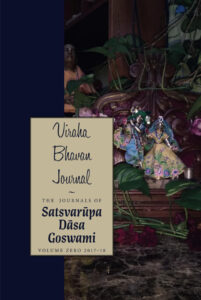
Viraha Bhavan Journal (2017–2018) was written by Satsvarūpa Mahārāja following a brief hiatus in writing activity, and was originally intended to be volume 1 in a series of published journals. However, following its completion and publication, Mahārāja again stopped writing books, subsequently focusing only on what became his current online journal, which began in August of 2018.

At first, I took it hard that I would have to live surrounded by the firemen, and without my own solitude. After all, for decades I had lived in my own house with my own books and my own friends. I was also now a crippled person who couldn’t walk, living among men who did active duties. But when Baladeva explained it to me, how it was not so bad living continually with other firemen and living in the firehouse with its limited facilities, I came to partially accept it and to accept the other men. I came to accept my new situation. I would live continually in the firehouse and mostly not go outside. I would not lead such a solitary life but associate with the other firemen.
Let me write sweet prose.
Let me write not for my own benefit
but for the pleasure of Their Lordships.
Let me please Kṛṣṇa,
that’s my only wish.
May Kṛṣṇa be pleased with me,
that’s my only hope and desire.
May Kṛṣṇa give me His blessings:
Kṛṣṇa Kṛṣṇa Kṛṣṇa Kṛṣṇa Kṛṣṇa he
Rāma Rāghava Rāma Rāghava
Rāma Rāghava rakṣa mām.
You mentioned that your pathway has become filled with stumbling blocks, but there are no stumbling blocks. I can kick out all those stumbling blocks immediately, provided you accept my guidance. With one stroke of my kick, I can kick out all stumbling blocks. —Letter by Śrīla Prabhupāda, December 9, 1972.

The Writing Sessions are my heart and soul. I’m trying my best to keep up with them. I am working with a few devotees, and they are far ahead of me. I wander in the wilderness of old age. I make my Writing Sessions as best I can. Every day I try to come up with a new subject. Today I am thinking of my parents. But I don’t think of them deeply. They are long gone from my life. Śrīla Prabhupāda wrote a poem when he was a sannyāsī, and he said now all my friends and relatives are gone. They are just a list of names now. I am like that too. I am a sannyāsī with a few friends. I love the books of Śrīla Prabhupāda. I try to keep up with them. I read as much as I can and then listen to his bhajanas.
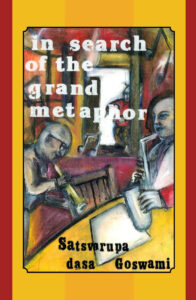
The metaphor is song. Explain it. Yes, particulars may not seem interesting or profound to readers who want structured books.
Wait a minute. Don’t pander to readers or concepts of Art. But Kṛṣṇa conscious criteria are important and must be followed. So, if your little splayed-out life-thoughts are all Kṛṣṇa conscious, then it’s no problem.
I am near the end of my days. But I do like the company of like-minded souls, especially those who are Kṛṣṇa conscious. Yes! I am prone to Kṛṣṇa consciousness. I have been a disciple of Bhaktivedanta Swami Prabhupāda for maybe almost sixty years. Sometimes I fail him. But I always bounce back and fall at his feet. It is a terrible thing that I sometimes do not have the highest love for him. It is a terrible thing. Actually, however, I never fall away from him. He always comes and catches me and brings me back to his loving arms.

This edition of Satsvarūpa dāsa Goswami’s 1996 timed book, Upstate: Room to Write, is published as part of a legacy project to restore Satsvarūpa Mahārāja’s writings to ‘in print’ status and make them globally available for current and future readers.
A factual record of the reform and change in ISKCON guru system of mid ’80s.

Readers will find, in the Appendix of this book, scans of a cover letter written by Satsvarūpa Mahārāja to the GN Press typist at the time, along with some of the original handwritten pages of June Bug. Together, these help to illustrate the process used by Mahārāja when writing his books during this period. These were timed books, in the sense that a distinct time period was allotted for the writing, during SDG’s travels as a visiting sannyāsī
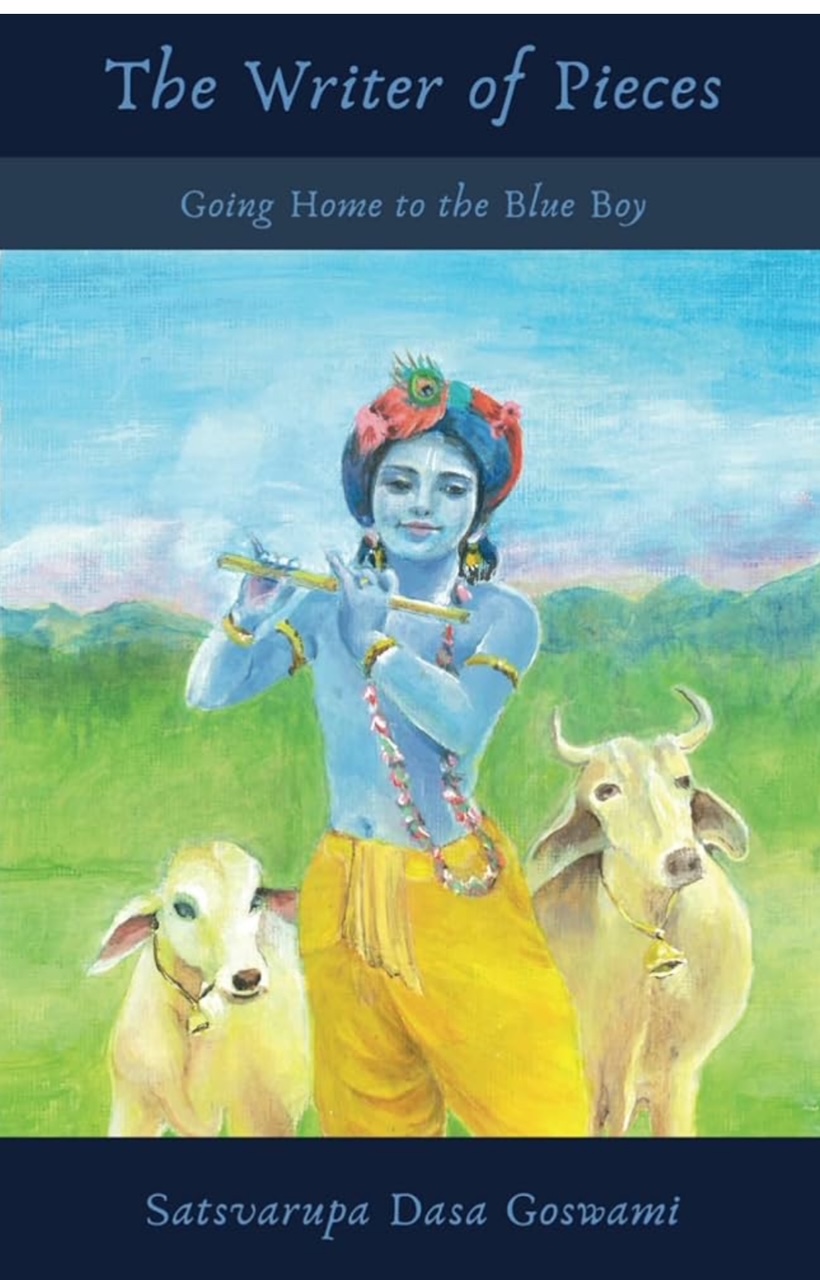
Don’t take my pieces away from me. I need them dearly. My pieces are my prayers to Kṛṣṇa. He wants me to have them, this is my way to love Him. Never take my pieces away.

Many planks and sticks, unable to stay together, are carried away by the force of a river’s waves. Similarly, although we are intimately related with friends and family members, we are unable to stay together because of our varied past deeds and the waves of time.
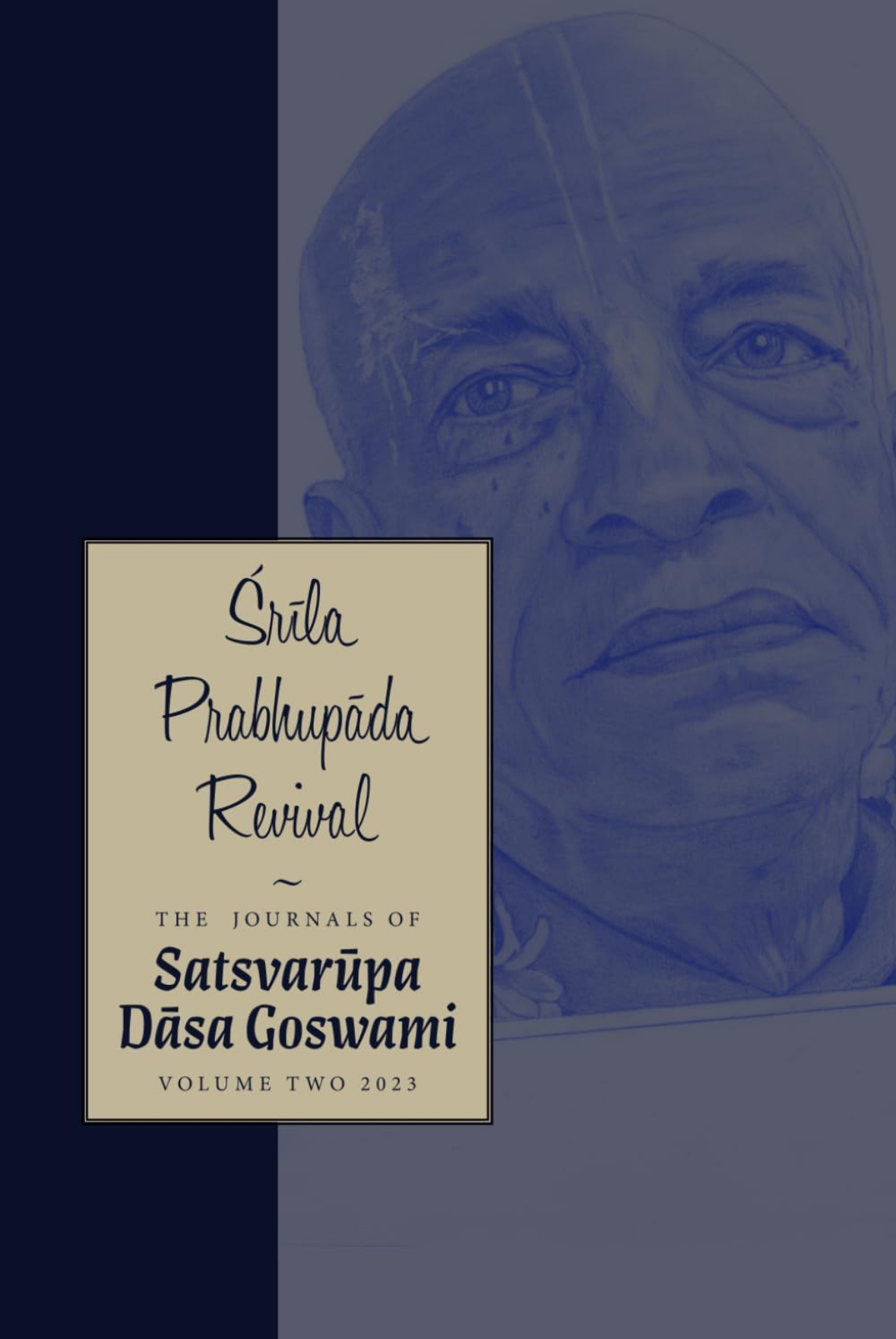
To Śrīla Prabhupāda, who encouraged his devotees (including me) To write articles and books about Kṛṣṇa Consciousness.
I wrote him personally and asked if it was alright for his disciples to write books, Since he, our spiritual master, was already doing that. He wrote back and said that it was certainly alright For us to produce books.
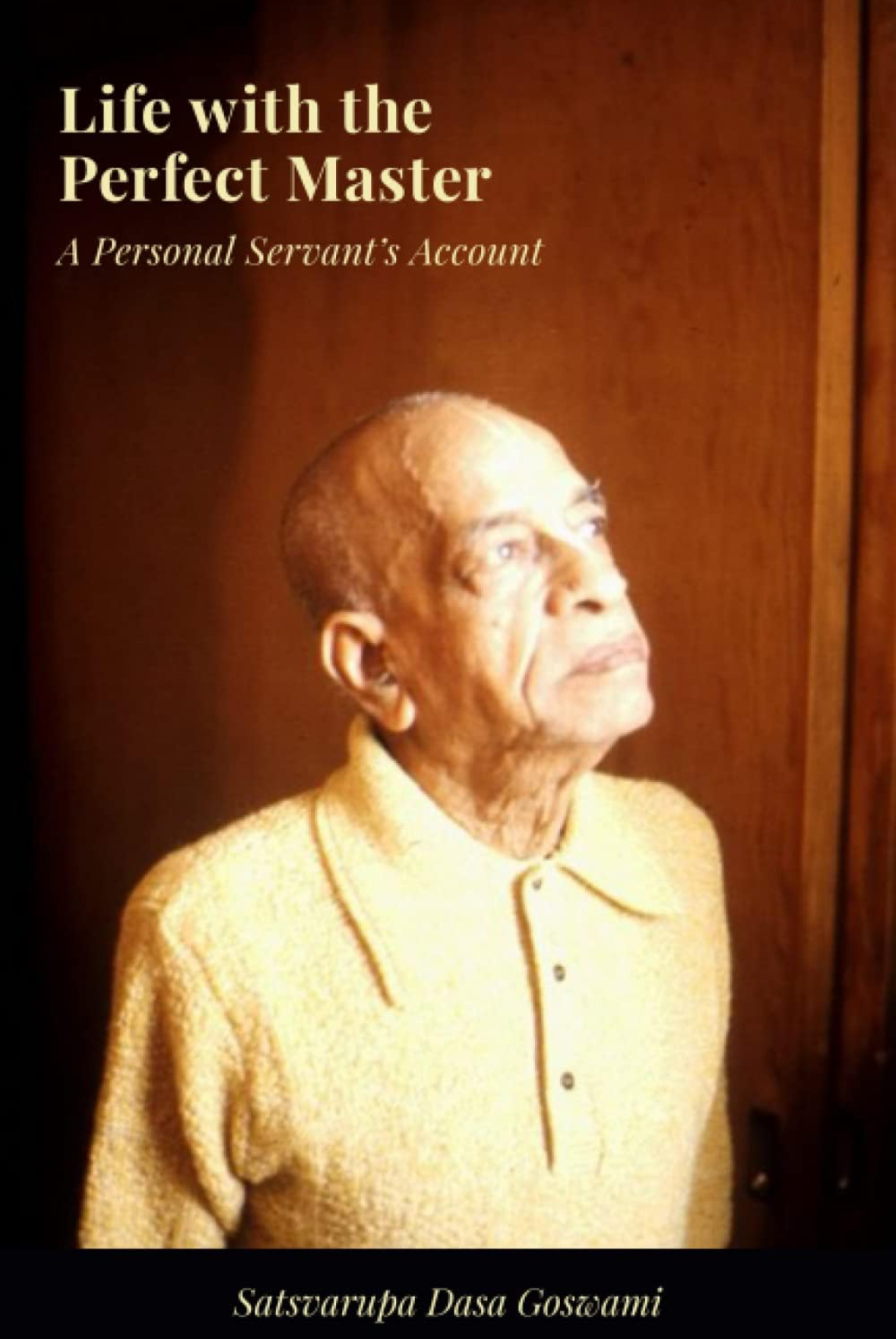
I have a personal story to tell. It is a about a time (January–July 1974) I spent as a personal servant and secretary of my spiritual master, His Divine Grace A.C. Bhaktivedanta Swami Prabhupäda, founder-äcärya of the International Society for Krishna Consciousness. Although I have written extensively about Çréla Prabhupäda, I’ve hesitated to give this account, for fear it would expose me as a poor disciple. But now I’m going ahead, confident that the truth will purify both my readers and myself.

First published by The Gītā-nāgarī Press/GN Press in serialized form in the magazine Among Friends between 1996 and 2001, Best Use of a Bad Bargain is collected here for the first time in this new edition. This volume also contains essays written by Satsvarūpa dāsa Goswami for the occasional periodical, Hope This Meets You in Good Health, between 1994 and 2002, published by the ISKCON Health and Welfare Ministry.

This book has two purposes: to arouse our transcendental feelings of separation from a great personality, Śrīla Prabhupāda, and to encourage all sincere seekers of the Absolute Truth to go forward like an army under the banner of His Divine Grace A.C. Bhaktivedanta Swami Prabhupāda and the Kṛṣṇa consciousness movement.
A single volume collection of the Nimai novels.
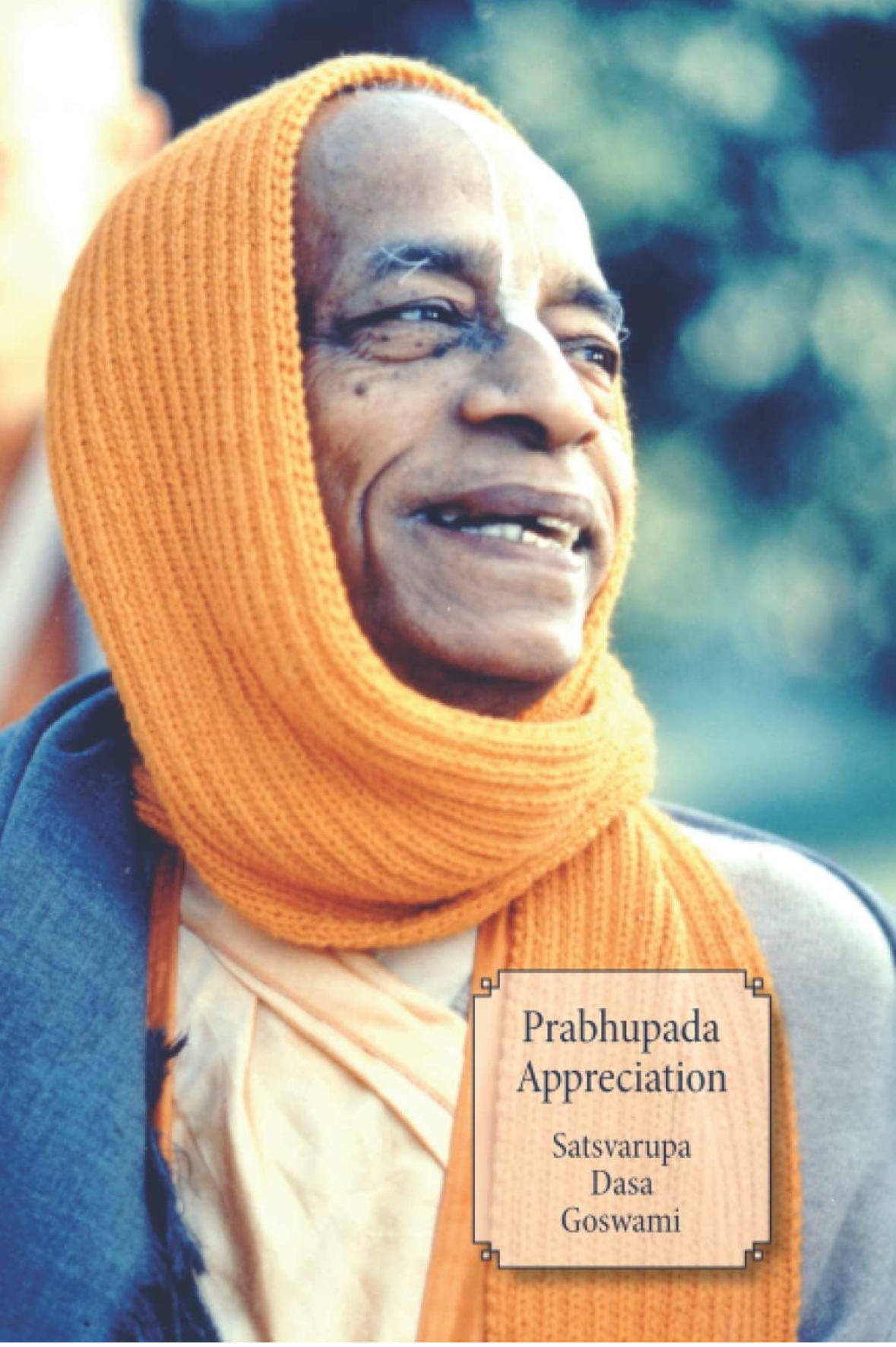
Śrīla Prabhupāda was in the disciplic succession from the Brahmā-Mādhva-Gauḍīya sampradāya, the Vaiṣṇavas who advocate pure devotion to God and who understand Kṛṣṇa as the Supreme Personality of Godhead. He always described himself as simply a messenger who carried the paramparā teachings of his spiritual master and Lord Kṛṣṇa.
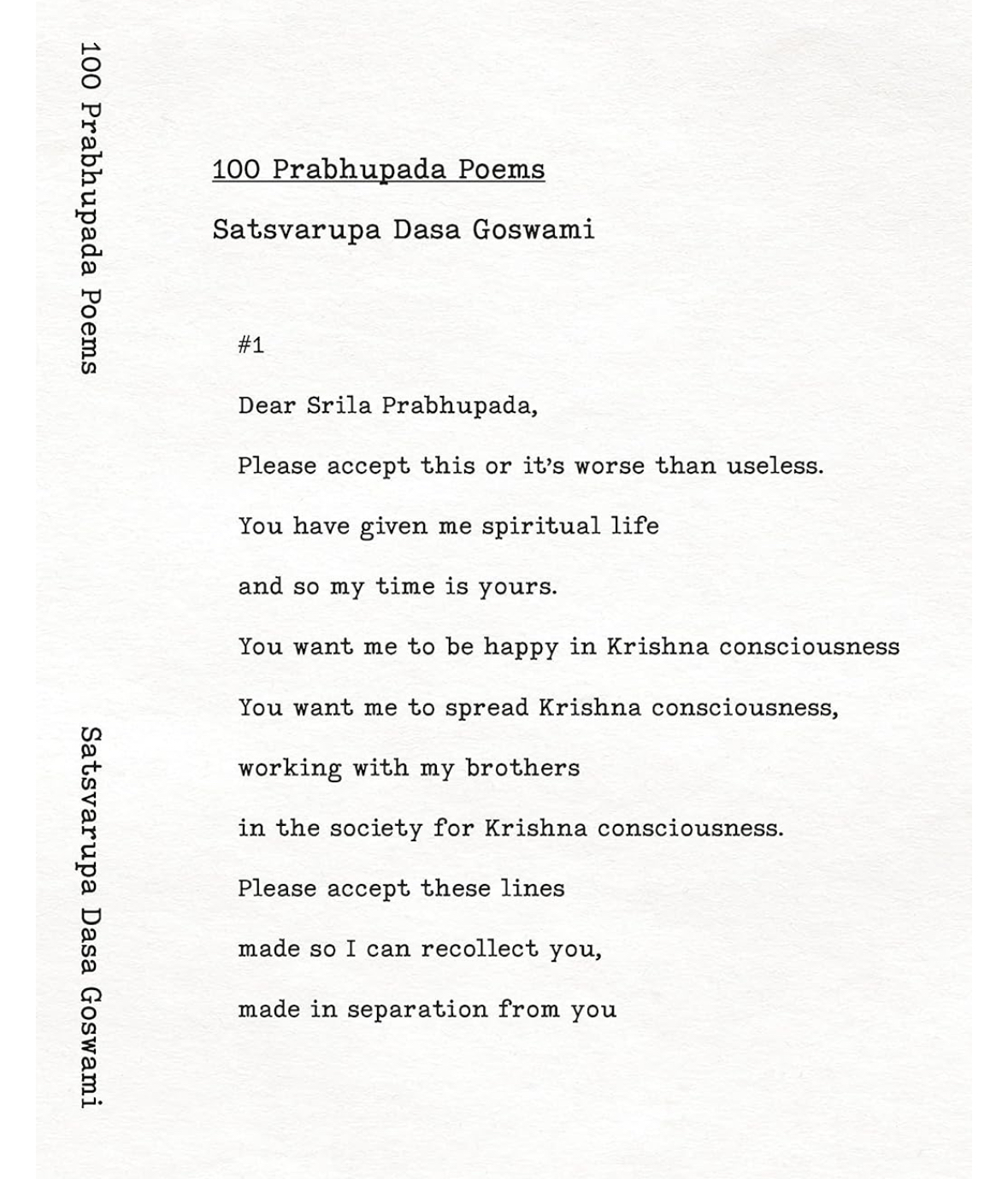
Dear Srila Prabhupada,
Please accept this or it’s worse than useless.
You have given me spiritual life
and so my time is yours.
You want me to be happy in Krishna consciousness
You want me to spread Krishna consciousness,
This collection of Satsvarūpa dāsa Goswami’s writings is comprised of essays that were originally published in Back to Godhead magazine between 1966 and 1978, and compiled in 1979 by Gita Nagari Press as the volume A Handbook for Kṛṣṇa Consciousness.

This second volume of Satsvarūpa dāsa Goswami’s Back to Godhead essays encompasses the last 11 years of his 20-year tenure as Editor-in-Chief of Back to Godhead magazine. The essays in this book consist mostly of SDG’s ‘Notes from the Editor’ column, which was typically featured towards the end of each issue starting in 1978 and running until Mahārāja retired from his duties as editor in 1989.

This collection of Satsvarupa dasa Goswami’s writings is comprised of essays that were originally published in Back to Godhead magazine between 1991 and 2002, picking up where Volume 2 leaves off. The volume is supplemented by essays about devotional service from issues of Satsvarupa dasa Goswami’s magazine, Among Friends, published in the 1990s.

“This is a different kind of book, written in my old age, observing Kṛṣṇa consciousness and assessing myself. I believe it fits under the category of ‘Literature in pursuance of the Vedic version.’ It is autobiography, from a Western-raised man, who has been transformed into a devotee of Kṛṣṇa by Śrīla Prabhupāda.”
 The Best I Could Do
I want to study this evolution of my art, my writing. I want to see what changed from the book In Search of the Grand Metaphor to the next book, The Last Days of the Year.
 a Hare Krishna Man
It’s world enlightenment day
And devotees are giving out books
By milk of kindness, read one page
And your life can become perfect.
 Calling Out to Srila Prabhupada: Poems and Prayers
O Prabhupāda, whose purports are wonderfully clear, having been gathered from what was taught by the previous ācāryas and made all new; O Prabhupāda, who is always sober to expose the material illusion and blissful in knowledge of Kṛṣṇa, may we carefully read your Bhaktivedanta purports.
I use free-writing in my devotional service as part of my sādhana. It is a way for me to enter those realms of myself where only honesty matters; free-writing enables me to reach deeper levels of realization by my repeated attempt to “tell the truth quickly.” Free-writing takes me past polished prose. It takes me past literary effect. It takes me past the need to present something and allows me to just get down and say it. From the viewpoint of a writer, this dropping of all pretense is desirable.
 Geaglum Free Write
This edition of Satsvarūpa dāsa Goswami’s 1996 timed book, Geaglum Free Write Diary, is published as part of a legacy project to restore Satsvarūpa Mahārāja’s writings to ‘in print’ status and make them globally available for current and future readers.