
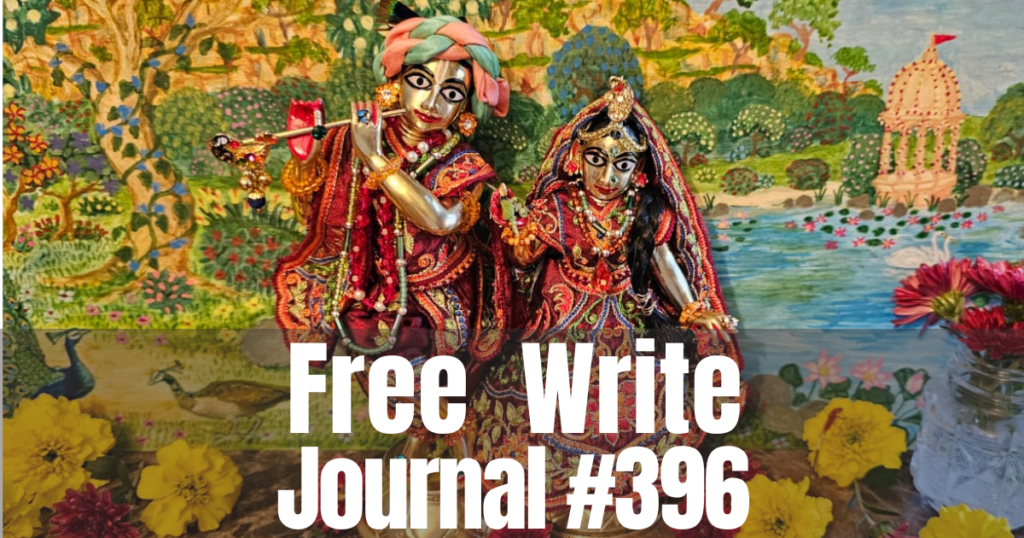
What
Meeting of Disciples and friends of SDG
Where
The Veterans of Foreign Wars Hall – 845 Hudson Avenue – Stuyvesant Falls, New York 12173
There is plenty of parking near the Hall. The facility is just a few minutes’ walk from SDG’s home at 909 Albany Ave.
Schedule
10:00 – 10:30 A.M. Kirtana
10:30 – 11:15 A.M. Presentation by Satsvarupa Maharaja
11:15 – 12:30 P.M. Book Table
12:30 – 1:15 P.M. Arati and kirtana
1:15 — 2:15 P.M. Prasadam FeastContact
Baladeva Vidyabhusana at [email protected] or (518) 754-1108
Krsna dasi at [email protected] or (518) 822-7636SDG: “I request as many devotees as possible to attend so we can feel the family spirit strongly. I become very satisfied when we are all gathered together.”
*******
Śrī Caitanya-caritāmṛta, Madhya-līlā 20.124–125: “O great learned devotee, although there are many faults in this material world, there is one good opportunity—the association with devotees. Such association brings about great happiness. . . . .”
Srila Prabhupāda: “Therefore, our Society is association. If we keep good association, then we don’t touch the darkness. What is the association? There is a song, sat-saṅga chāḍi’ kainu asate vilāsa, te-kāraṇe lāgila mora karma-bandha-phāṅsa (Gaurā Pahū, verse 3). Sat-saṅga. Sat-saṅga means association with the devotees. So the one poet, Vaiṣṇava poet, is regretting that, ‘I did not keep association with the devotees, and I wanted to enjoy life with the nondevotees. Therefore I’m being entangled in the fruitive activities.’ Karma bandha phāṅsa. Entanglement.” [Conversation with David Wynne, July 9, 1973, London]
We need to expand our team of proofreaders as we aim to increase the rate of republication of Satsvarūpa Mahārāja’s books as well as new books that he writes.
This includes a need for fluent bilingual Spanish and English speakers to proofread Spanish translations (we currently have around 20 Spanish translations waiting to be proofread).
Anyone interested in this particular service should contact Manohara dāsa at [email protected]
If you would like to help, please contact Kṛṣṇa-bhajana dāsa at [email protected] or [email protected] and we will find you a service that utilizes your talents.
Anyone who is proud can move his mouth and chant Hare Krsna, but he will not be able to experience the actual taste of serving the holy name, unless he becomes very humble. “I am very fallen. I am not a big independent living entity. I am simply dependent on Your mercy, so please give me attention or else I cannot stand.”
******
Why is it a struggle on some days to concentrate while on other days it is easier? This is the very definition of unsteadiness. When you become steady, it will be good every day. You can make advancement in japa when you always look forward to doing it, feel pleasure when you do it, and do it with steady consciousness. Another measure is that you will feel less material desires. That symptom is more important than exactly how much bliss you feel while fingering the beads.
******
When the spiritual master asks you to chant Hare Krsna, which he especially does at the time of your initiation, that is an order different than is given to you by any other person in Krsna consciousness. His request that you chant Hare Krsna, when you take it up, forms the most intimate, personal relationship between yourself and your spiritual master, and yourself and Krsna in disciplic succession. So this is the real link for your friendship and your dependence on his instruction.
******
We might say chanting is a kind of lazy intelligence—you’re just chanting. But it’s very important. So if you know this is a priority, then you have to control your mind. The world is not going to end in those two hours that you chant your rounds. Don’t interrupt them. But sometimes you do have to interrupt them, and we see it’s not good. We should try to have a peaceful life. Don’t arrange your life so it’s always subject to such interruptions, which become a habit. There’s emergency crisis management, but not that you just go from one crisis to another. Try to arrange your life so that you can chant your japa with concentration.
******
If you chant your rounds with great attention you can feel your connection with your spiritual master in that way. As you chant you should think, “I have been told by my spiritual master to chant Hare Krsna, and that alone will give me pure love of God. So I feel very confident in my spiritual master’s words. Therefore, I shall chant as he instructed me.” In this way, by saying the names of Krsna, you will think both of your spiritual master and the Supreme Lord.
******
My disciples ask me how to improve their personal relationship with their spiritual master. Therefore, I have told them that if they chant Hare Krsna with great faith in the order as I have given it to them, this will constitute a very intimate and completely transcendental relationship between ourselves. So this is also proof of the connection that exists between us for improving your chanting and hearing for approaching Krsna. Please continue this and increase it, so that by chanting and hearing all impurities will go from your heart and before the end of life you will be ready to go back to Godhead.
******
It is all right that you pray to Krsna to make you pure while chanting. You should pray to Him to help you hear better. The holy name will Himself make you pure. You don’t need to pray while chanting for some separate purification. Just pray to be able to hear better.
******
You must have a reserved period of time, whether it be in the afternoon or whenever, in which you are able to chant the balance of your rounds every day. The important thing is regulation and a good place and time to chant. Aside from that, the whole thing is up to your determination.
You just write don’t worry
bout nuthin Whatever you have to say.
Then he said I want to be a devotee.
but what does it cost?
It costs your whole life.
But how is that to be measured out?
It depends on the case.
Will there be unbearable pain? I heard (in Bali
Maharaja) that the Lord will give
strength to pass a test.
Are there sweet moments?
Of course.
Does it get boring? I know the answer.
I’ll sign my name as when I joined the
Navy, but I don’t really know what
I’m into.
Please make it possible. Give me
enough light to see at least a foot ahead.
Or, if I must be thrown into darkness…
let me remember and have some friends
We can’t promise you your way. Just
chant Hare Krishna and remember Lord Caitanya
and be absorbed
in preaching and then whatever happens
you’ll get through in the right
consciousness.
Easier said than done. You quote
the perfect scripture, and I’ve seen it in you,
but how do I?
pp. 106–7
***
Pause probably get interrupted. The door
is open and shut. The knocker is intruding. You
can’t have your own way. But for a while it may
seem so. Therefore, use it well. Don’t
get punished by the Lord when He comes
for your great waste of time in frivolous
or sinful pursuits.
So, I heard and made some songs
like others have done, but
I tried to make them my own.
Tried to remember the spiritual master
who came to us so kindly.
Tried to give a factual report
and in the way we write in
these times in the comic
mindset I can’t deny, I
sing these ditties maybe
not befitting the Supreme majestic,
the Vraja prince of teasing
gopis and that boy who pleased
his mother and the neighbors by
stealing butter.
I do worship here. I
massage my master daily.
Ah…what is there to say? An
underachiever…give me
strength and see what I may do
to preach the word of God
in towns and homes and be alive –
a preacher cannot be a dead man be
alive somehow even if it means to a
worldly beat, the song is You, Lord
Krishna, as we’ve been taught.
pp. 107–8
***
A vital Krishna conscious poem, say you
wanted to walk outside in the backyard
but coal smoke kept pouring down from the
chimney. So, it polluted my breathing, and I
had to come inside. Did you chant
Hare Krishna outside and inside?
Never mind. I’ll tell you later maybe.]
Inside, I read a little Srimad-Bhagavatam where
Srila Prabhupada was saying that those who have
taken the duty of preaching should be
kind and give others Krishna consciousness. I
thought about that for a while. Prayed
alone to my spiritual master to please
tell me what to do.
Then reading Zimmer poems and
Sandburg poems so you’ve got to
do your own. Your exact situation.
No mail, no bail necessary. Sandburg had one poem where he seemed to be talking of his parents: “You for the little hills and all the years alike / you with your patient cows… I’m going away.” Am I for the little hills and years alike and patient cows? It seems so. Take your choice, pray to your master what he wants of you. Be prepared to tell him honestly.
Maybe I can expand my limits. Travel again, care to lecture for my own purification. Keep praying that He’ll make it happen best for my surrender but in the meantime keep writing daily, schedule, the truth, as I catch it – and a quiet, uneventful life seems good for that – not too uneventful, that can’t happen anyway.
One of these days, hearing the Lord’s names, giving help to others…
pp. 115–16
***
We were happy to work on the journey to
Krishna consciousness and get corrected
by a cowherder of
erring calves and cows. Get into the camp
with all your brothers and sisters of KC
way.
Sing bing you know
you are going to frown and grip at pen
there is the man to help you
clock ticks and waits for my bhakti is
it a stream? Why are you worried?
Are you able to be on top, underdog?
Print dress sari and dhoti uniformed
members in tilaka don’t knock it
appear in your insides of spirit will
follow like rod in the fire.
I’m on the right track conversing with
devotee friends of Krishna on
preaching tactics and going quiet
when prajalpa enters
but to plan an attack on maya
is not maya.
Krishna, the truth is in my pocket
I’m a dead tree, a new sprig
in spring he’s still alive
don’t give up trying and
begging for descent
of suddha sattva
from the Lord, source of
all genius and carobs
and skies and puddle
Krishna consciousness is nice.
pp. 128–29
***
Preface, pp. i-vii
Śrīla Prabhupāda smashed Western culture and said it was no culture at all. Yet many millions of people live in Western culture, embrace it, and are educated in it. Those who join the Kṛṣṇa consciousness movement have also been influenced by it. Therefore, devotee-writers must face the existence of Western culture in its various forms, either to expose its bankruptcy, or in some cases, to appreciate its traces of morality and God consciousness.
But what is the value of remembering nondevotee books? Didn’t Śrīla Prabhupāda tell us to forget all this? Yes, he certainly did. The attitude of a preacher is summed up in this statement by Prabodhānanda Sarasvatī Ṭhākura:
“My dear Sir, I know you are a learned scholar who has read many books. I humbly bow before you placing a straw in my teeth. But although you are a great sādhu, I humbly request you to please kick out all this rascaldom, all this hogwash, and listen instead to the philosophy of Lord Caitanya.”
A similar mood is expressed by Nārada Muni in Śrīmad-Bhāgavatam:
Those words which do not describe the glories of the Lord, who alone can sanctify the atmosphere of the whole universe, are considered by saintly persons to be like a place of pilgrimage for crows. Since the all-perfect persons are inhabitants of the transcendental abode, they do not derive any pleasure there.
—Śrīmad-Bhāgavatam 1.5.10
When we took to Kṛṣṇa consciousness under Prabhupāda’s direction, we threw out all of our past conditioning and entered into the spiritual world. But as the Kṛṣṇa consciousness movement spreads around the world, it has to contend with Western culture. If someone asks us, “What do you think of Shakespeare’s plays?” it will not do to reply, “Who is Shakespeare?” People demand an explanation and evaluation, not just a categorical rejection. After all, many sincere persons have the conviction that there is something spiritual, profound and courageous in the writers they read. We will have to show that we also know the depth of those writers, and in some cases, sympathize by admitting that we too have been influenced by them.
When I first met Śrīla Prabhupāda in 1966, I was very attached to favorite authors. I expressed this to Prabhupāda. It would have hurt too much if he completely rejected them all as useless. When I presented their cases and said that they seemed to me to be God conscious in their own way, Prabhupāda sympathetically replied that their God consciousness was in their sincerity.
Newcomers to Kṛṣṇa consciousness have roots in Western culture, and even those who have been practicing bhakti-yoga for a few decades are still affected by the Western tradition. One time, when Śrīla Prabhupāda was taking a walk in Boston, he stopped for a few moments in front of a toy store window. I pointed out to Prabhupāda that the toys were mostly battleships and guns. I said, “This is what we played with as children instead of Rādhā-Kṛṣṇa dolls. Does this have an effect on us now?” Prabhupāda replied that the impressions are there. This doesn’t mean that we have to delve into the māyā of Western literature all over again. After receiving a treasure chest, why put it aside in search of a plastic trinket? Yet it is not wrong to come to terms with our past, especially once we are committed to Kṛṣṇa consciousness.
The purpose of my book is therefore mostly a warning that there is nothing of enduring value in Western nondevotional literature. I hope that it can serve as an explanation to those who are not yet acquainted with Kṛṣṇa consciousness but who are attached to Western literature. It may also please devotees to take a look down “memory lane” without danger, to reinforce their Kṛṣṇa conscious convictions.
There is a more personal reason for this book. I am drawn back to my own past and I want to purify it. I will tell of my search, naming the authors who helped me to cope with life. I will experience again why I had to go beyond them. I hope that this will convince others that they do not themselves have to read such authors in the search for truth.
I intend to go through the past honestly, so that the victory I will tell—of the supremacy of Kṛṣṇa consciousness—will not seem merely theoretical or dogmatic. May My Search Through Books please the Vaiṣṇavas. Although the subject matter is somewhat odd for a Kṛṣṇa conscious book, it is also odd and unprecedented that people born in mleccha civilizations can take to Kṛṣṇa consciousness. Therefore, I hope I can come through this adventure with memoirs and commentaries in the disciplic line of the Six Gosvāmīs and Śrīla Prabhupāda.
pp. 114-19
Dream–living as objects of scorn and threat, members of Hare Krsna. A Godbrother was the main character in the dream, and I was there. He was living in a place where he was always gaging the nature of this threat and whether it would be carried out. People mostly didn’t carry it out but periodically threatened, with knives and once broke down the doors. My Godbrother seemed equal to the challenge, brave. I didn’t want to necessarily give up my life.
Life went on without much violence or incidents but always threats and awareness of the fact that the attack could take place.
What does the dream mean? I can philosophize in a general way about it. But dreams are usually more personal – something to be felt by me now. But maybe a devotee’s dream-producer is preaching to him the general message of K.C. philosophy. We are threatened by time. Better clear yourself of karma and get ready to die. A devotee is in that sense marked out whereas others are not. They are unaware.
In reality, Western society is not so prejudiced against devotees, not to the point of constant threats of physical attacks against us just because we are devotees. But it could come to that. Or is there a symbolic meaning in dreaming it?
What did it feel like? You simply have to live with that condition. My Godbrother had one attitude toward it. He perhaps provoked more than was necessary. I might have lived with it in a different way.
Another unsolved puzzle. But it seems right to mention them. Don’t let them get completely lost before you mention them and allow them to enter waking consciousness with whatever they want to say. I’m not trying to shut out the voice of the unconscious.
Gradually attaining time for reading and writing in this health retreat. It came to us as a kind of gift situation. It was Nanda-kisora dasa who suggested it when we were in the doctor’s office. The doctor may have said something about it. The main improvement is to give up the allopathic pills. That took inspiration and mental decisiveness. But by Krsna’s grace, it’s already been achieved. One might say that there is no need to stay on here. But devotees paid for us to stay four weeks. Neither am I up to spending the weeks in Italy traveling to temples. We already said that we have finished by a one-week visit to Prabhupada-desa. Whoever wanted to see me came there then.
So, it’s yours, two more full weeks here and then ten or so days in Avignon. Try to use it to read and write. Return to SP in the feeling of appreciation, whatever you’re capable of right now in your life. Overcome prejudice and fault-finding toward your great well-wisher. Find the time of loving service to him and improve yourself. Then give it to others.
Reading and nodding but hanging on to the thread of interest. Maharaja Pariksit passed the first test of his guru when Maharaja Pariksit refused to accept atonement as the solution to sinful reactions. Atonement doesn’t remove the desire to again commit sinful acts. So, Sukadeva Goswami suggests jnana. But we will see that’s not good enough either if it lacks knowledge of the Supreme Personality of Godhead and His devotional service.
Love your littleness. Your fallenness? Be a servant of the Lord. Read, cram, think it over. One is meant to read the scriptures. I don’t know what the others are doing.
Trust open confession.
Do better. But nothing too stressful on the head. Therefore, I stopped reading and nodding because when you keep falling unconscious and regaining wakefulness, when the neck and head fall forward and you catch it, it’s a trip. Stay smooth and ready. But don’t waste time.
O Sukadeva Goswami, it is true what you say that if one doesn’t rid himself of bad karma, he’ll certainly have to suffer hellish miseries. We can think we are free of them – but are we? Keep on chanting, ceto-darpanam-marjanam. And work to help others. That is the spirit of the Vaisnavas.
Standing in the backyard chanting rounds by the little fence near the canal – suddenly I had a feeling of yearning. What was it?
At first, I thought maybe it was a yearning to be back into the heart of ISKCON temple life like I used to be. That complete confident security of purpose within Prabhupada’s mission, Prabhupada’s heart.
And so, I thought somehow, I’ve alienated myself from it and that I should find a way to get back into it.
But then I thought, no, it’s not there anymore, it’s gone. Certainly, I’m an ISKCON member but for me I can’t find that anymore the way it used to be.
Then I have to accept this loneliness. Staying on my own, writing and reading. But is it satisfying?
Or is the yearning just a yearning to be again clear about my connection with Prabhupada and to feel full appreciation for him in the innocent way I used to? Is it simply that I don’t have any taste for the holy names and I’m yearning for that?
Is the yearning good or bad?
Now that it’s over, I think the most significant was that it was not clear to me what I was feeling. My life is not even clear as to what I want and what I don’t want. And despite so much self-expression in writing, I don’t seem to know who I am.
Externally the purpose of my stay on this island is to monitor my health. Even though I seem to have passed through the first dramatic stage easily enough, it’s still my purpose to emphasize health repair. Therefore, I’m not plunging into a reading or writing marathon. Also, a dim kind of diffuse head-fog is always nearby. So, I’m not clear. This stay in Albarella cannot be a test of my strength but a building up of it for when I do go out.
So, I should not feel frustrated that I don’t have a hot theme for writing and I’m not reading as much as I would like to at top form.
Did so far today:
Oh, never-mind, you can’t quit writing, you can’t change so much.
I’m older to a point where I can’t truly relate to “it.”
Or maybe I’m exaggerating, imagining it – the difference between me and them, the distance of my alienation. Maybe I’m just near where I should be and similar to them (everyone is different anyway.
pp. 50-57
After taking the bitter tasting powders, Nimai thought that he was getting better. Since it was the appearance day of Lord Nityananda, he very much wanted to go with Puja and visit the Krishna-Balaram temple for the evening arati. Puja was reluctant at first to mix with so many Movement devotees, but Nimai persisted.
They entered into the midst of hundreds of Western devotees from different countries, as well as many Vrndavana pilgrims, all of whom had gathered for the festival. It was a few moments before the opening of the doors for the evening kirtana. As they waited, Nimai and Puja felt guilty and thought that they were being looked at critically. Nimai had not been shaving regularly, and his clothes were not so clean, and he imagined that devotees may have been looking at those things. He decided that even if they were criticizing, he wouldn’t care. As the doors were opening and the pujaris blew the conchshells, a cheer went up from the devotees.
And as the kirtana began, Nimai and Puja were able to forget their self consciousness. Everyone’s attention was fixed on the forms of the Deities, Gaura-Nitai, Krsna-Balarama, and Radha-Syamasundara, or on the chanting and dancing of the devotees. The dancers moved in lines back and forth before the Deities and then broke into a large circular dance. When some dancers left the circle to twirl about in the center, Nimai joined them. He was too weak to do any fancy dancing, nor was he ever able to do anything graceful. But he moved as best he could, a clumsy shuffle accentuated with leaps up and down as if on a basketball court. There were many drummers and karatala players. Those Indian devotees who were regular members of the Movement took part in the wild dancing, but others packed the walls and outer borders as curious spectators. The dancers changed into different patterns and the lead singer varied the melodies of the Hare Krsna mantra and sang bhajanas specially chosen for the Appearance Night of Lord Nityananda. Sometimes all the dancers grouped themselves in front of the altar of Gaura-Nitai, Who were dressed in the high standard of the Krishna-Balaram Mandir, tonight in tones of red and green. The Deities’ upraised arms showed Them clearly as the leaders of all the dancing and chanting, and sifting at Their feet were the unique forms of Srila Prabhupada and Bhaktisiddhanta Sarasvati, both wearing soft silk saffron and smiling mildly. The dancers moved to the middle altar and beheld the large forms of Krsna and Balarama. Everyone knew that Balarama was also Nityananda and relished, at least theoretically, the connection between the two Deities, and the way Lord Balarama leaned jauntily on the shoulder of His younger brother, Lord Krsna, the Supreme Personality of Godhead. The dancers moved to Radha-Syamasundara in madhurya-lila, and then back again to the middle of the floor where they could see all the Deities at once.
The formal arati stopped after the blowing of the conchshells, but the kirtana players continued. The leading kirtana men were shining with perspiration and beaming with energy. Nimai recognized only one or two devotees from America, but he felt he was with his family. They were all followers of Prabhupada and shared the confidential understanding of Krsna conscious philosophy. And at least in the kirtana, disagreements were put aside.
After a full hour, some of the ladies and gentlemen retired from the kirtana, but a large core of singers and dancers continued. Nimai felt faint. He had deliberately ignored his bodily pains in order to join the fun, but now the discomfort came back persistently—aching joints, a loose feeling in the bowels and stomach, and nausea. He sought out Puja dasa and asked if they could go back. Puja had been standing in the more staid ranks, but nonetheless he had been chanting the whole time. At Nimai’s suggestion, they left.
As they rode on their rickshaw through the mystical night, Puja remarked, “You dance pretty well for a sick man.”
“It was nice to be with all our Godbrothers,” said Nimai.
“Yes,” said Puja. “But I saw hardly any of the lead-ers. They were probably up in their rooms making politics.”
On returning to their asrama they found their room had been robbed. The door locks were broken and their possessions—tape recorders, sleeping bags, and suitcases—had been cleared out. Puja cursed and lamented at the loss of their return plane tickets, travelers checks, and his passport, which he had left in a suitcase. Puja decided to go at once to tell the police. Nimai lay down on the cement floor and covered himself with his War. But within minutes he had to rise and go to the latrine because of diarrhea. When he returned, he was shaking with chills. “Well, Chota,” he said, “at least we got to go to the kirtana.”
pp. 149-53
When Prabhupāda describes the Lord and His devotees we believe him. That is his potency. He convinced me in person when he came to the Lower East Side, and I was lucky enough to stumble into his storefront. He caught me in his net. I fell into the safety net of the entire sampradāya. He said, “Maybe you lived in India and now you have been born again to help spread Lord Caitanya’s movement [born in America to take it up under Prabhupāda].” That may be, but we were totally bereft of Kṛṣṇa consciousness until he came. If we had any pious credits, we had already spent them.
I had also used up the reserves of youthful health by which we can, at least for a limited time, burn the candle at both ends. I had used up my Irish Luck and my Italian sense of physical well-being. I had used up my cheer, my hope, my belief in the sanctity of friends. I was ready to take the plunge in ways I couldn’t foresee.
Then Prabhupāda came. He didn’t come to save me particularly, but to cast his net for all the lost students, Māyāvādīs, hippies, and whomever else should chance to fall into it.
Dear Kṛṣṇa, we pray to You, knowing You hear us. We repeat the words of our spiritual master: “The Lord Himself gives instructions from within the heart of a pure devotee who is constantly engaged in the service of the Lord. Such instruction is given not for any material purpose, but only for going back to home back to Godhead.” Therefore, I ask You, indwelling guide, please instruct me, even though I don’t qualify as a pure devotee. I ask Your mercy. I hope You can inspire me so I will be confident to live out my Kṛṣṇa conscious life.
I want You to be proud of me. If someone tries to shake me in my conviction, I won’t be bothered, because I am naiṣṭhikā. But You want me to earn that right not to be shaken. You see my craving to be an independent creator-writer, so You are leaving me alone to try to gain my little fame. Is that it? But at least I am writing here to say I don’t want that independent position, I don’t want to indulge myself in what I like if it is not good for my ultimate self-interest. Therefore, You have to correct me. You may think I don’t mean it, but I do.
I think I have “discovered” a method of combined reading and writing that I would like to follow for my whole life. I sometimes say that writing is my bhajana, but I may not really think out what I mean by that. It’s quite a claim to say that when you write with your own words, it qualifies as bhajana. Then when I read, I should take something that Prabhupāda said, express it, express my feelings about it, including an analysis of my present state, lack of surrender, etc., and weave it together as a reading and writing experience.
I doubt I will give up self-expressive writing. Today Prabhupāda said that we are not trying to kill desire, but to purify it, to use it in Kṛṣṇa’s service, to redirect it from our selfishness. He is strong on that point. He said that it is a Māyāvādī conception to try to become desireless, and it’s a vain attempt. Therefore, I hope that by writing as bhajana, and mixing that with reading Prabhupāda’s books, I can be most honest with myself and others.
There are still problems in trying to harmonize reading Prabhupāda’s books and writing. The reading requires that I slow down and become submissive and pure. Writing requires a different kind of energy. Sometimes I may want to consume what I read in writing without fully digesting it. For example, I may get a bright idea that I would like to write about prayer, so I take out my Bhagavad-gītā, choose a verse, and then start to pray in writing. But I’m going so fast. I haven’t dropped to a sincere enough level. The writer-self thinks, “I don’t have time to wait. Let me just write.”
******
This morning on the walk I saw a doe. She was standing on the open road, unaware of me. When I came within a few hundred feet, she sensed me and leaped across the road with those graceful arches which seem so ineffectual against a hunter’s gun. I could see her big white tail. Then I heard the crack indicating that there were more deer in the trees. I saw another deer suddenly flash her tail and disappear, white-tailed, into these woods.
******
In harmonizing reading and my writing, I don’t want to minimize writing. The writing is a gift from God. It’s so close to me that I really need to use it in Kṛṣṇa’s service. I just have to adjust things so that I don’t lose the integrity of the reading session. Even that “feverishness” is helpful, however. Because there’s an urge for self-expression, I take that urge to the purport and find something I can put to immediate use.
That kind of active seeking for Prabhupāda’s mercy is good. Still, I have to reconcile the different levels of energy. If there is sufficient time for both reading and writing, I don’t feel rushed to pull something out of the purport without actually experiencing it. That’s where things go wrong, when in the name of writing, you start saying things that aren’t true and that haven’t really happened yet. Then the very honesty which you desire in writing gets lost. Reading (and life itself) becomes a literary exercise instead of the real thing.
This is an exciting challenge for me because I have to keep writing in a way that is truthful and that goes beyond the literary game. Life is more important than literature, and certainly devotional service is more important than anything.
But it’s a mistake to think that in the name of humility, I shouldn’t write. I heard Prabhupāda say today that devotees should write vigorously and make propaganda against the scientists and speculators and philosophers. He may have been mainly thinking of devotees who are trained in science, but I think there’s also a place for American writers to bash on the head of the materialistic conceptions and speculations which make up the heritage of American literature. Write for Kṛṣṇa and defy the opposition. Give the people the mercy of Prabhupāda’s teachings. Don’t be silenced by inner critics but heed the call to write purely as the servant of the Lord.
pp. 61-66
A sign from God. His hand blessing His devotee, the sound of His voice. His garland drops from the Deity around a devotee’s bent neck. In a dream He appears. Sparrows on a hedge. Wake up and see. The signs are everywhere.
O Lord, O energy of the Lord, please engage me in Your service.
My life doesn’t permit me to say more. Experience first, then write about it. I can’t write a sequel to Chota’s Way saying that he went to Vrndavana and became a maha-bhagavata. What would I say? I only know that rye grass looks nice and means something. I also know some times are better than others, so I bide my time and pray for constant remembrance. And I write through all times. I can’t wait for Krsna consciousness, not for the millennium change or 1996 or Hong Kong going to the Chinese, for the promises of politicians or for my own perfection.
Free from all material conceptions of existence and never wonderstruck by anything, the Lord is always jubilant and fully satisfied by His own spiritual perfection. He has no material designations, and therefore He is steady and unattached. That Supreme Personality of Godhead is the only shelter of everyone. Anyone desiring to be protected by others is certainly a great fool who desires to cross the sea by holding the tail of a dog. (Bhag. 6.9.22)
Therefore, O killer of the Madhu demon, incessant transcendental bliss flows in the minds of those who have even once tasted but a drop of the nectar from the ocean of Your glories. Such exalted devotees forget the tiny reflection of so-called material happiness produced from the material senses of sight and sound. Free from all desires, such devotees are the real friends of all living entities. Offering their minds unto You and enjoying transcendental bliss, they’re expert in achieving the real goal of life. O Lord, You are the soul and dear friend of such devotees, who never need return to this material world. How could they give up engagement in Your devotional service? (Bhag. 6.9.39)
The secret’s out
but I’ve got another—
can a guy attain the prayer state?
Why does he dream of going
to see the guru and then the next night
of Allen Ginsberg receiving guests
himself among them, although he doesn’t
recognize that I’m a devotee and special?
Make your confessions.
Searching, hoping to walk again.
O Krsna, I pray,
the mantra in my
mind and down the
elevator to my heart.
Just theory still, I know. I am who I am when I face myself during mantra time. So give us an honest Hare Krsna struggling that good ol’ struggle to control his mind and senses and to love Krsna. No frills necessary.
Now touch your brow and get to work. Someone said, “I’m surprised he became a guru. I always thought of him as typist.” Others tittered when he said that. The objective picture.
Many happy returns.
He asked for a sign from God. Here’s one:
Go West, Young Man
Hey, how do I know that’s from God? Everything is from God.
(You spoofin?)
Here’s another:
Go East, Young John
Now you ISKCONites meet and establish what that means. “Go West” means that he should join California ISKCON either in L.A. or as a kamikaze in Badger. The words “young man” means he should join in a youthful spirit, the kind he had in the 1970s.
“Go East” means to throw off material allusions. Face the spotlife on the eternal journey. Young John, find them holy rivers.
Clear enough.
I look for the day when your memories will be
all ISKCON devotee times
and your body transformed into prasadam cells,
you go back only two times
when Hare Krsna is sung and the devotees
give you a bad time but it’s all in the movement.
Progresso, I forgot you for a moment. How are ya? I give you these days. Please accept them. I have nothing more. You have a sign from me—a wink and a palaver and a blarney smile (i.e., false) but intended to please, and I did work at it with trial webs and big sheets of paper and occasional straight dictation aimed at filling you. I do hope . . .
See you in Newcastle,
in a blues poem,
see you…
it’s 11 A.M.
Pardon me, Progresso, for such informal note-taking. You’re a playful book and I like you for that.
I hope you don’t mind
if I pause
to become a devotee.
Don’t object please
if I save my soul.
If I get serious and talk
Bhagavatam,
don’t get bored or glassy-eyed. It’s for your own good. I mean,
it’s not just a bitter Ayurvedic powder
or a sweetless health regime.
No, it’s just that I want to surrender to God’s way for me.
I’m planning a reading discipline. A reading discipline requires plans. The gremlin says, “I’ve seen it all before. It never amounts to much.” But I say I have many times made plans and carried them through. I have made schedules, created aims, quotas, and managed to read for three hours a day.
The subconscious resists. Somehow, it doesn’t like discipline. I don’t think this is the voice of the gremlin, but the voice of the creative self. He wants to work too, and reading is not so creative. It’s receptive.
I can’t deny the subconscious, so I will allow him to write his poems. We have no slaves in Krsna consciousness, either creative ones or receptive ones. Everyone is to be satisfied. Also, the subconscious is not always right. What if his resistance is due to his reluctance to surrender to Krsna? That’s at least possible—that I want to assert that I’m as much a person as He is, which is true, but as good as He is, which is not.
But a reading schedule. Srila Prabhupada will be pleased.
Strange how the mind and sub-persons speak up in turn and I try to heed them all and to balance their needs. But I tend to be an impartial judge. I listen to reason as easily as I listen to them.
A sign from God? Maybe this voice telling me to read more is it. How else could such an idea suddenly pop into my head after a nap?
Progress. We are all made for progress in the image of God, and this morning I quoted two Sixth Canto verses. We are up to reading the demigods’ prayers in relation to Vrtra. The demigods are devotees, but still their prayers are nice. They say they cannot comprehend the infinite Lord’s transcendental nature. He existed before creation, and they have only recently been born, so they have no ability to know Him. Therefore, they bow down at His feet. The Lord will instruct them to get Dadhici’s bones. Then Indra will fight Vrtra and we will come to hear Vrtra’s superior prayers.
Even a demon can be a devotee. Imagine that.
Friday night, and I’ve come to see the chariots. Three colorful Jagannatha chariots standing in a dark parking lot. I encourage the workers who will stay up all night. They are dirty and tired in their work clothes assembling the colorful chariots for Krishna to ride in. Anticipation of tomorrow. Four hundred devotees will be coming from Philadelphia, Boston, Baltimore, Washington.
******
HARE KRISHNA CENTER, the twelve-story Manhattan temple. I sit in the lobby waiting for the elevator and hear of a girl whose mother came to the temple crying because her daughter joined Krishna. Devotees are coming through the glass doors. I hear of a hybrid ape born in Atlanta. The New York Times says the ape is a breakthrough. Scientists are said to be thinking of crossing an ape with a human. They are trying to deny God. The New York temple is involved in a big court case; some people want to stop us from distributing our books.
In my room on the eleventh floor, I take rest under a smiling picture of Lord Krishna.
******
Saturday noon. At Fifty-ninth Street and Fifth Avenue the chariots are waiting. Forty feet high with spires atop. I bow to the statue of Srila Prabhupada which sits on an elegant throne in the second chariot. He is dressed in a saffron dhoti and short-sleeved kurta. He wears a wrist watch, and the soles of his soft feet show from beneath the dhoti. I take my seat beside him, and no sooner do I sit down than I discover a peacock fan beside me and begin fanning Prabhupada as we proceed down the avenue.
Young men, girls in saris, Indians, New Yorkers all are pulling the chariots. Silken towers billowing in the wind yellow, green, red, and blue. Slowly, majestically, we sail south. The sky is open above Fifth Avenue; it’s like being in a canyon and above is the blue, luminous, distant sky, with white clouds. The Lord of the Universe rides in splendor, and I am His servant’s servant.
What will I tell the people in Washington Square Park? It will be whatever Krishna allows me to say.
The police seem to be eyeing me curiously. They almost all wear mustaches, and all wear light blue shirts and dark blue pants, strapped with a waist load of gun, handcuffs, club, and pad for writing violations; our official protectors, walking peacefully along with the parade. Captain Coyle is the in-charge, stuck with the job.
“Stuck with it? I requested it,” says Captain Coyle. “Every year, somehow or other, the whole parade happens. You don’t know how it works and I don’t know how it works but every year it’s worked so far. Do you know why this parade happens?”
“Why?”
Captain Coyle: “Because the Swami said to have the parade down Fifth Avenue, and therefore the parade goes down Fifth Avenue. I saw your faces when the Swami joined the parade on Thirty-fourth Street back in ’76. I saw there was something special.”
******
Washington Square Park. Brahmananda Swami is manning the Question-and-Answer Booth. The police break up a bunch of “Jesus People” giving out pamphlets against Krishna consciousness. A policeman tells them, “One day out of the year the Hare Krishnas hold this festival, and everyone in New York likes it so why bother them?”
At the booth someone asks Brahmananda Swami what he thinks of NYU.
Brahmananda Swami: “As a graduate of NYU, I can say that I didn’t learn anything of value. Anything worthwhile I learned was from Srila Prabhupada.”
Question: “Then how come you are speaking so intelligently?”
Brahmananda Swami: “It was only after I met Srila Prabhupada that I learned anything.”
Question: “Why does the media treat you so badly?”
Brahmananda Swami: “That’s the media’s business. They are not going to tell you to chant Hare Krishna. But we have our own media—our books. That’s the real media.”
Question: “Why do you always hassle us for money?”
Brahmananda Swami: “What right do you have to challenge my right to ask you for money? The IRS demands your money on behalf of the government. We do the same. We are Krishna’s taxation department, and you have no right to challenge our right to ask for money.”
Thousands of free plates of prasada are distributed, and a big crowd stays to watch a two-hour play of the Ramayana. In my lecture to the crowd, I remind them: Washington Square Park was the site of the first public kirtana in America held by Srila Prabhupada in 1966.
******
“Are there any questions?” I ask. The small gathering of newcomers sit shyly, reluctant to answer. Now I am back in my room at the center, and Lord Jagannatha is back on His marble throne downstairs. Silence. No questions. Then… “Why doesn’t a spiritual master show miracles?”
Answer: “A yogi or devotee can develop mystic powers, such as being able to walk on water or to produce any object he desires, but such siddhis do not grant the actual goal of spiritual life: pure love of God. Often such powers mislead the yogi, and his followers begin to worship him as God. One who can awaken love of God in others is the real miracle worker. One time in India, at a large gathering, a man asked Srila Prabhupada whether he could produce miracles. Prabhupada, who was sitting on a stage surrounded by many of his Western disciples, gestured to his disciples and replied, ‘This is my miracle.’”
******
The eleven o’clock news. A doctor from Westchester is pulling on the chariot ropes, straining and sweating, his face bulging. As he pulls, a newscaster asks, “Do you think that this is a genuine religious experience?”
“Yes, definitely. This is definitely a genuine religious experience.”
None of us even know who the guy is. Like thousands of others, he had just grabbed the rope and pulled. He got Lord Jagannatha’s mercy.
******
It is warm, maybe ninety degrees. Alone, I walk to my window and look out at the proud, futile tower of the Empire State Building, its crowning floors lit up with floodlights. It is Saturday night, but the town seems different. A feeling as if the beast has a heart, the sinful machine has a soul within it somewhere. And it has been touched by the Ratha-yatra festival.
—Back to Godhead, 14(9) (September 1979): NOTES FROM THE EDITOR

Viraha Bhavan Journal (2017–2018) was written by Satsvarūpa Mahārāja following a brief hiatus in writing activity, and was originally intended to be volume 1 in a series of published journals. However, following its completion and publication, Mahārāja again stopped writing books, subsequently focusing only on what became his current online journal, which began in August of 2018.

At first, I took it hard that I would have to live surrounded by the firemen, and without my own solitude. After all, for decades I had lived in my own house with my own books and my own friends. I was also now a crippled person who couldn’t walk, living among men who did active duties. But when Baladeva explained it to me, how it was not so bad living continually with other firemen and living in the firehouse with its limited facilities, I came to partially accept it and to accept the other men. I came to accept my new situation. I would live continually in the firehouse and mostly not go outside. I would not lead such a solitary life but associate with the other firemen.
Let me write sweet prose.
Let me write not for my own benefit
but for the pleasure of Their Lordships.
Let me please Kṛṣṇa,
that’s my only wish.
May Kṛṣṇa be pleased with me,
that’s my only hope and desire.
May Kṛṣṇa give me His blessings:
Kṛṣṇa Kṛṣṇa Kṛṣṇa Kṛṣṇa Kṛṣṇa he
Rāma Rāghava Rāma Rāghava
Rāma Rāghava rakṣa mām.
You mentioned that your pathway has become filled with stumbling blocks, but there are no stumbling blocks. I can kick out all those stumbling blocks immediately, provided you accept my guidance. With one stroke of my kick, I can kick out all stumbling blocks. —Letter by Śrīla Prabhupāda, December 9, 1972.

The Writing Sessions are my heart and soul. I’m trying my best to keep up with them. I am working with a few devotees, and they are far ahead of me. I wander in the wilderness of old age. I make my Writing Sessions as best I can. Every day I try to come up with a new subject. Today I am thinking of my parents. But I don’t think of them deeply. They are long gone from my life. Śrīla Prabhupāda wrote a poem when he was a sannyāsī, and he said now all my friends and relatives are gone. They are just a list of names now. I am like that too. I am a sannyāsī with a few friends. I love the books of Śrīla Prabhupāda. I try to keep up with them. I read as much as I can and then listen to his bhajanas.
The metaphor is song. Explain it. Yes, particulars may not seem interesting or profound to readers who want structured books.
Wait a minute. Don’t pander to readers or concepts of Art. But Kṛṣṇa conscious criteria are important and must be followed. So, if your little splayed-out life-thoughts are all Kṛṣṇa conscious, then it’s no problem.
I am near the end of my days. But I do like the company of like-minded souls, especially those who are Kṛṣṇa conscious. Yes! I am prone to Kṛṣṇa consciousness. I have been a disciple of Bhaktivedanta Swami Prabhupāda for maybe almost sixty years. Sometimes I fail him. But I always bounce back and fall at his feet. It is a terrible thing that I sometimes do not have the highest love for him. It is a terrible thing. Actually, however, I never fall away from him. He always comes and catches me and brings me back to his loving arms.

This edition of Satsvarūpa dāsa Goswami’s 1996 timed book, Upstate: Room to Write, is published as part of a legacy project to restore Satsvarūpa Mahārāja’s writings to ‘in print’ status and make them globally available for current and future readers.
A factual record of the reform and change in ISKCON guru system of mid ’80s.

Readers will find, in the Appendix of this book, scans of a cover letter written by Satsvarūpa Mahārāja to the GN Press typist at the time, along with some of the original handwritten pages of June Bug. Together, these help to illustrate the process used by Mahārāja when writing his books during this period. These were timed books, in the sense that a distinct time period was allotted for the writing, during SDG’s travels as a visiting sannyāsī
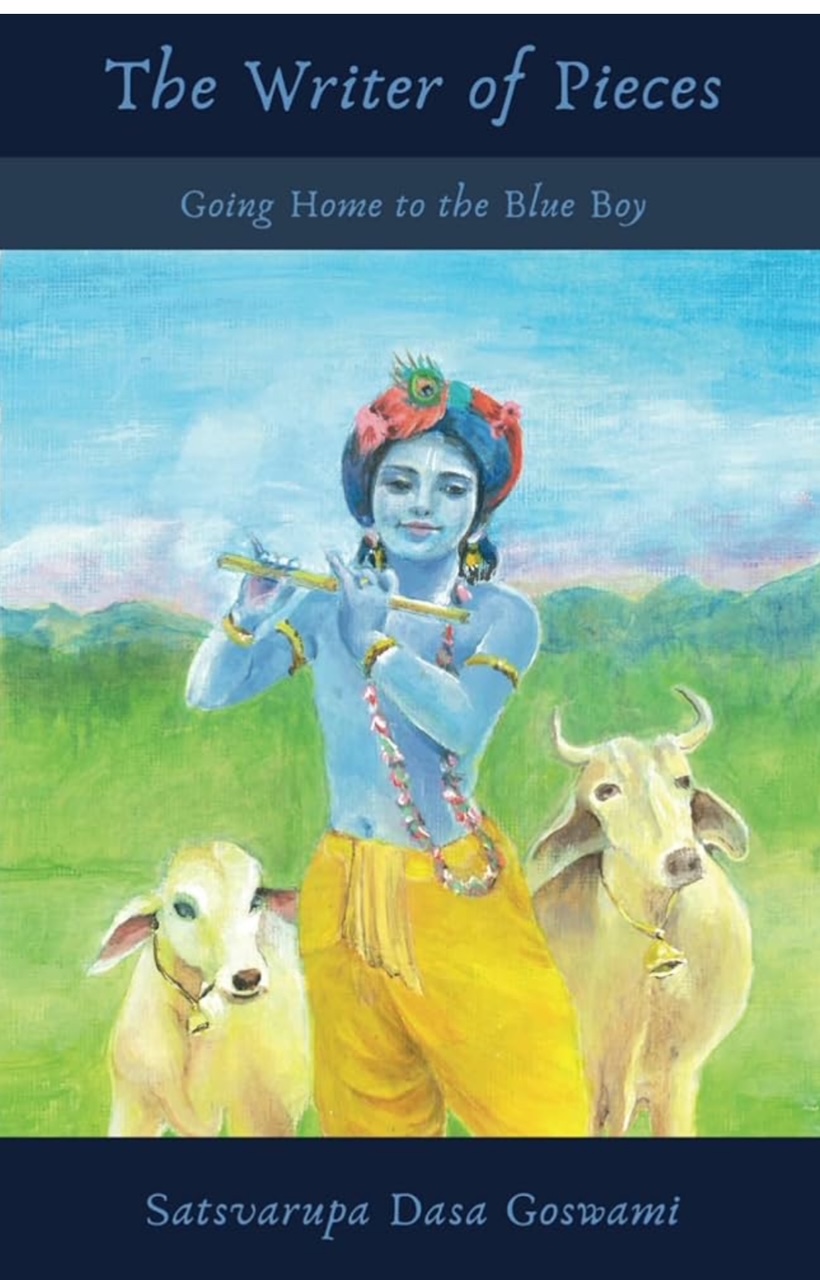
Don’t take my pieces away from me. I need them dearly. My pieces are my prayers to Kṛṣṇa. He wants me to have them, this is my way to love Him. Never take my pieces away.

Many planks and sticks, unable to stay together, are carried away by the force of a river’s waves. Similarly, although we are intimately related with friends and family members, we are unable to stay together because of our varied past deeds and the waves of time.
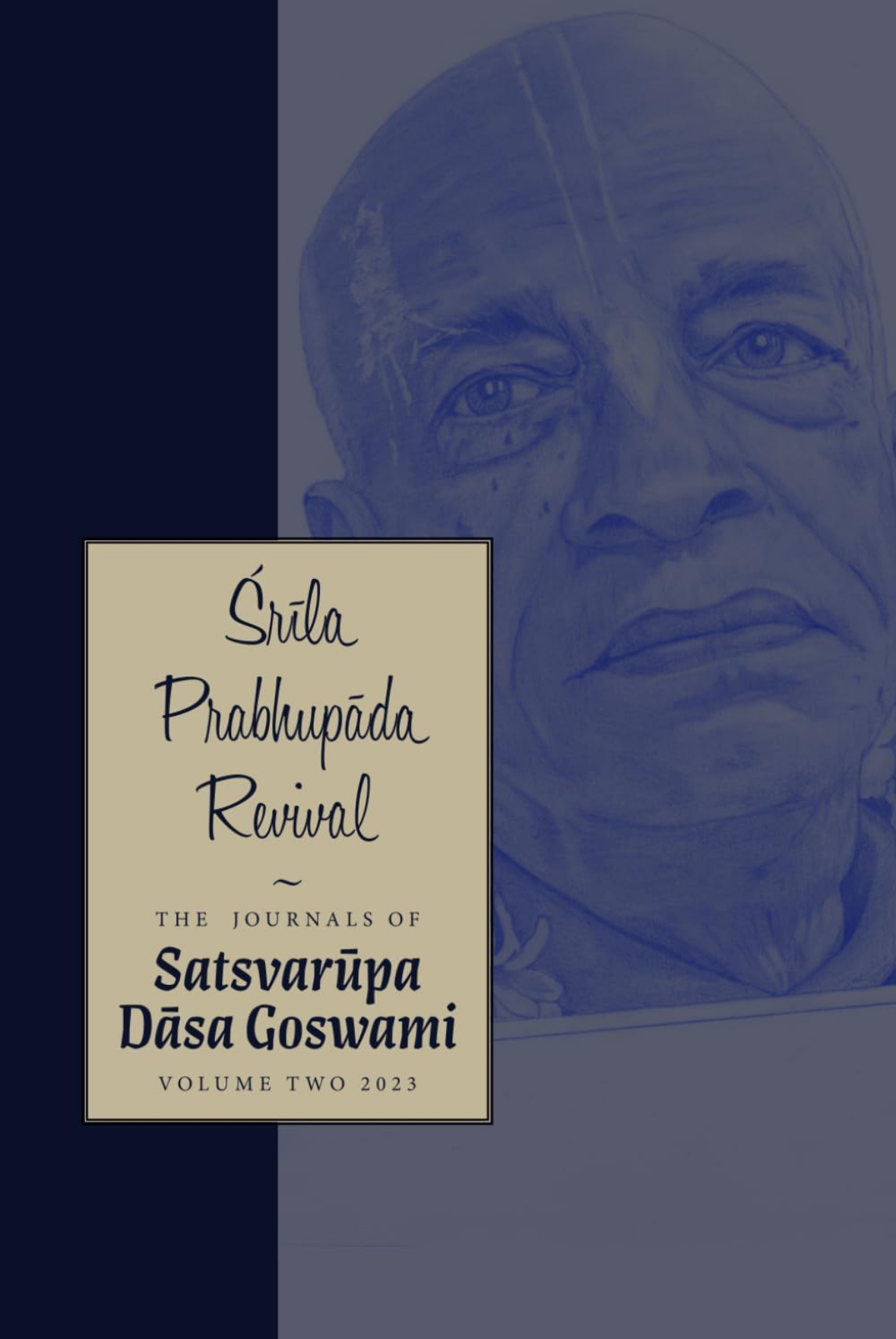
To Śrīla Prabhupāda, who encouraged his devotees (including me) To write articles and books about Kṛṣṇa Consciousness.
I wrote him personally and asked if it was alright for his disciples to write books, Since he, our spiritual master, was already doing that. He wrote back and said that it was certainly alright For us to produce books.
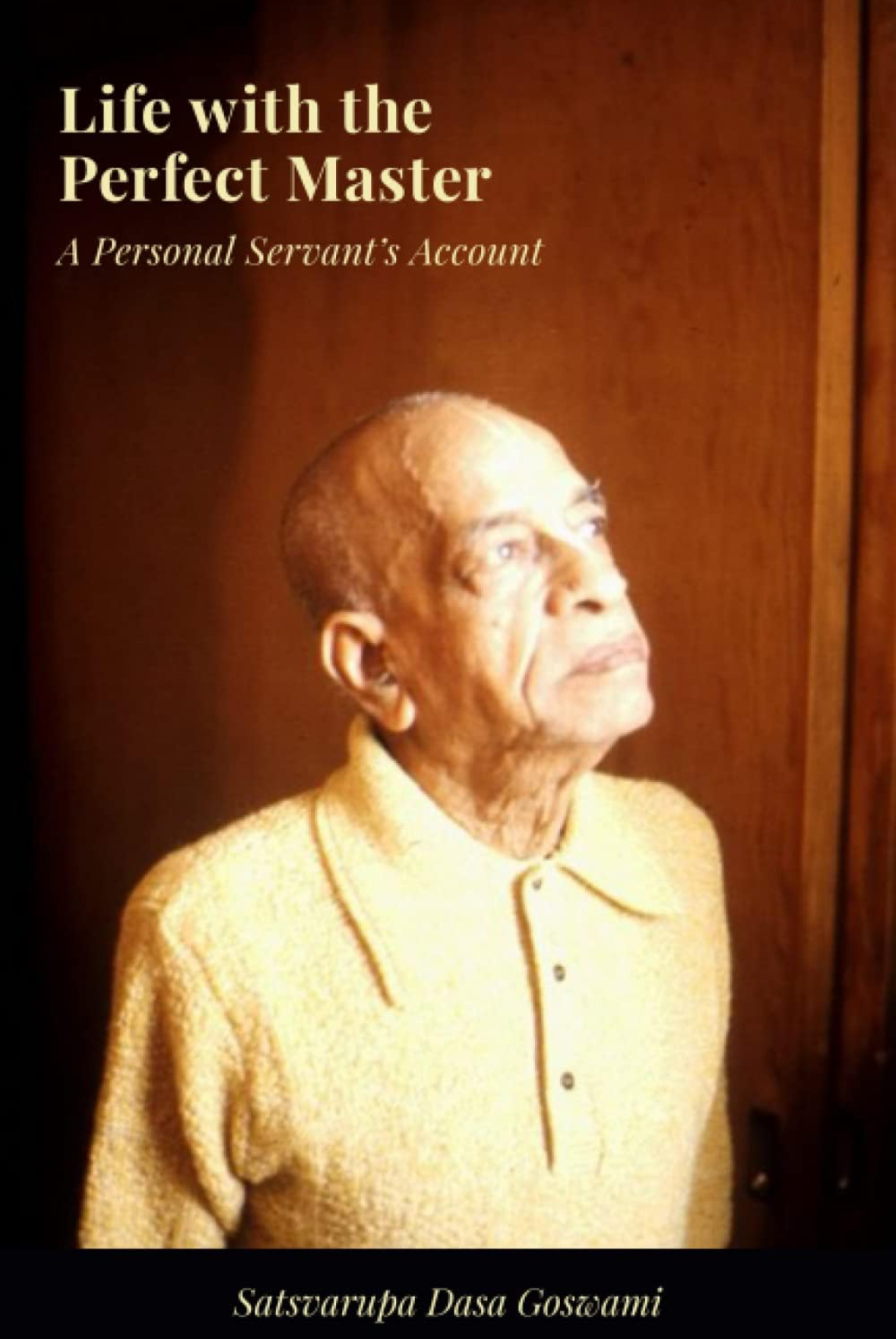
I have a personal story to tell. It is a about a time (January–July 1974) I spent as a personal servant and secretary of my spiritual master, His Divine Grace A.C. Bhaktivedanta Swami Prabhupäda, founder-äcärya of the International Society for Krishna Consciousness. Although I have written extensively about Çréla Prabhupäda, I’ve hesitated to give this account, for fear it would expose me as a poor disciple. But now I’m going ahead, confident that the truth will purify both my readers and myself.

First published by The Gītā-nāgarī Press/GN Press in serialized form in the magazine Among Friends between 1996 and 2001, Best Use of a Bad Bargain is collected here for the first time in this new edition. This volume also contains essays written by Satsvarūpa dāsa Goswami for the occasional periodical, Hope This Meets You in Good Health, between 1994 and 2002, published by the ISKCON Health and Welfare Ministry.

This book has two purposes: to arouse our transcendental feelings of separation from a great personality, Śrīla Prabhupāda, and to encourage all sincere seekers of the Absolute Truth to go forward like an army under the banner of His Divine Grace A.C. Bhaktivedanta Swami Prabhupāda and the Kṛṣṇa consciousness movement.
A single volume collection of the Nimai novels.
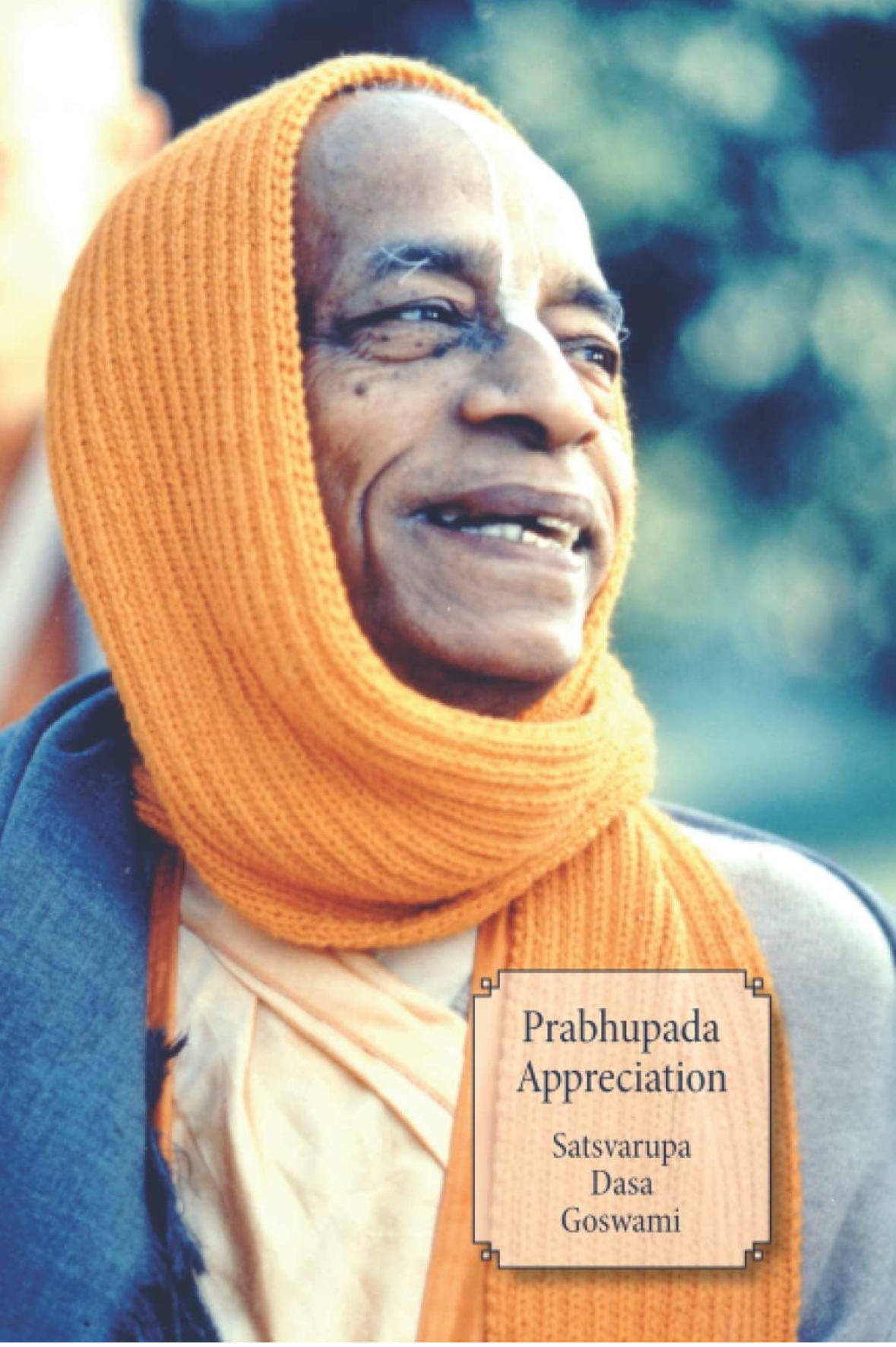
Śrīla Prabhupāda was in the disciplic succession from the Brahmā-Mādhva-Gauḍīya sampradāya, the Vaiṣṇavas who advocate pure devotion to God and who understand Kṛṣṇa as the Supreme Personality of Godhead. He always described himself as simply a messenger who carried the paramparā teachings of his spiritual master and Lord Kṛṣṇa.
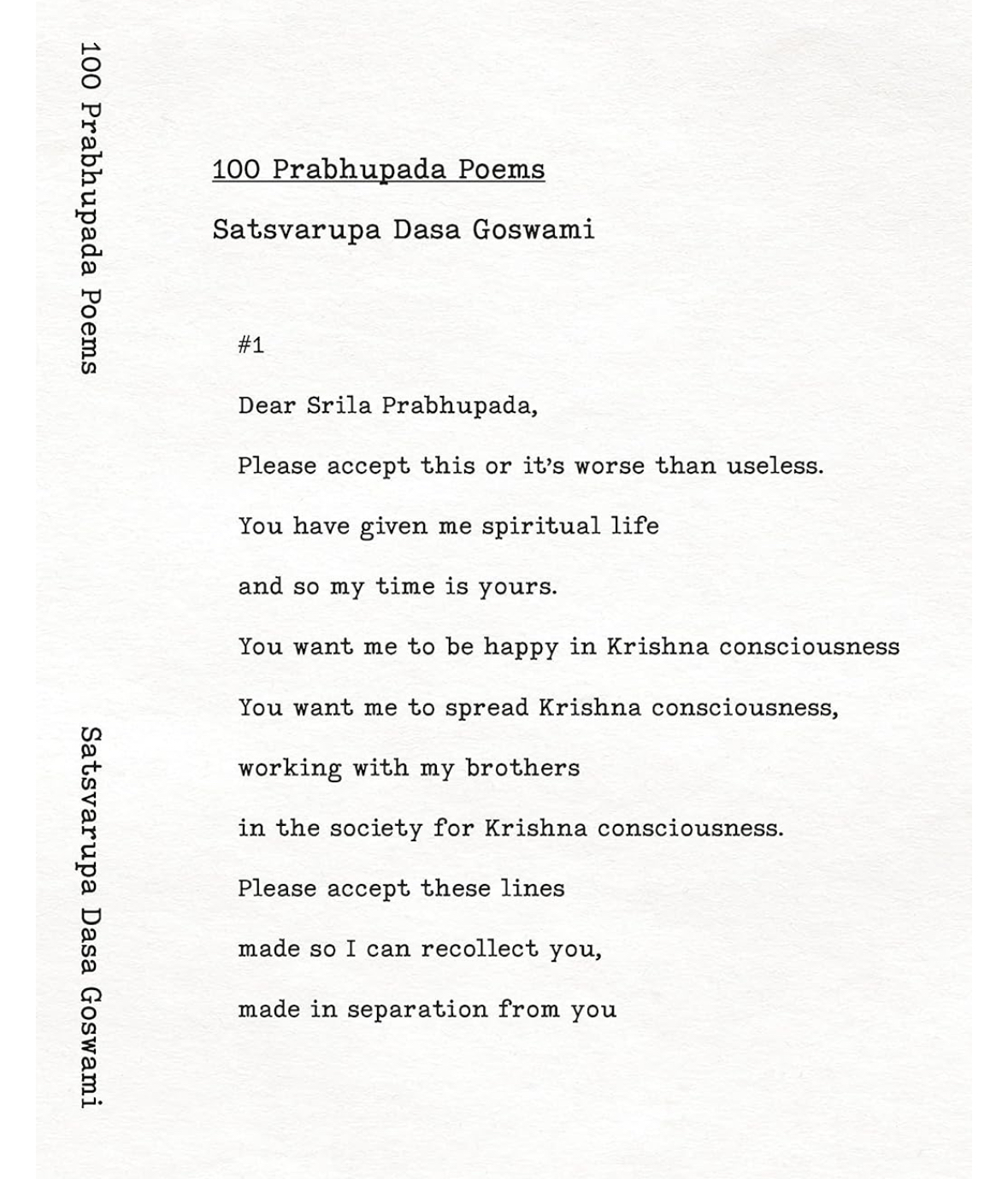
Dear Srila Prabhupada,
Please accept this or it’s worse than useless.
You have given me spiritual life
and so my time is yours.
You want me to be happy in Krishna consciousness
You want me to spread Krishna consciousness,
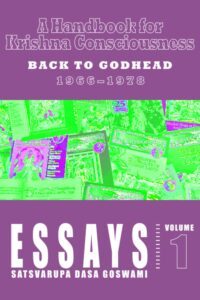
This collection of Satsvarūpa dāsa Goswami’s writings is comprised of essays that were originally published in Back to Godhead magazine between 1966 and 1978, and compiled in 1979 by Gita Nagari Press as the volume A Handbook for Kṛṣṇa Consciousness.

This second volume of Satsvarūpa dāsa Goswami’s Back to Godhead essays encompasses the last 11 years of his 20-year tenure as Editor-in-Chief of Back to Godhead magazine. The essays in this book consist mostly of SDG’s ‘Notes from the Editor’ column, which was typically featured towards the end of each issue starting in 1978 and running until Mahārāja retired from his duties as editor in 1989.
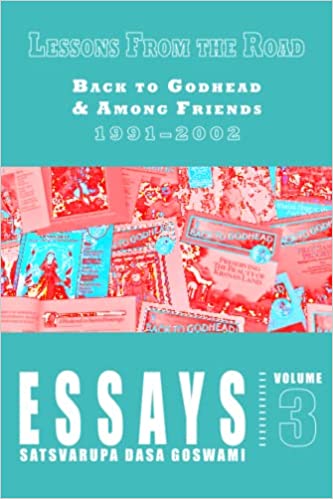
This collection of Satsvarupa dasa Goswami’s writings is comprised of essays that were originally published in Back to Godhead magazine between 1991 and 2002, picking up where Volume 2 leaves off. The volume is supplemented by essays about devotional service from issues of Satsvarupa dasa Goswami’s magazine, Among Friends, published in the 1990s.

“This is a different kind of book, written in my old age, observing Kṛṣṇa consciousness and assessing myself. I believe it fits under the category of ‘Literature in pursuance of the Vedic version.’ It is autobiography, from a Western-raised man, who has been transformed into a devotee of Kṛṣṇa by Śrīla Prabhupāda.”
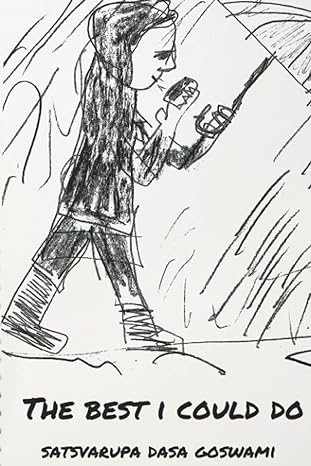 The Best I Could Do
I want to study this evolution of my art, my writing. I want to see what changed from the book In Search of the Grand Metaphor to the next book, The Last Days of the Year.
 a Hare Krishna Man
It’s world enlightenment day
And devotees are giving out books
By milk of kindness, read one page
And your life can become perfect.
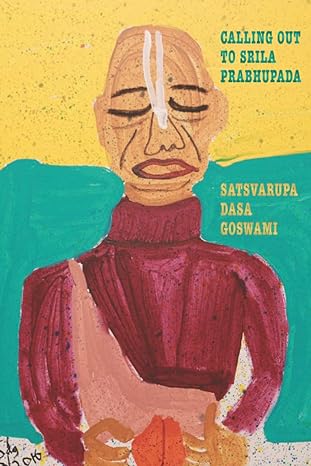 Calling Out to Srila Prabhupada: Poems and Prayers
O Prabhupāda, whose purports are wonderfully clear, having been gathered from what was taught by the previous ācāryas and made all new; O Prabhupāda, who is always sober to expose the material illusion and blissful in knowledge of Kṛṣṇa, may we carefully read your Bhaktivedanta purports.
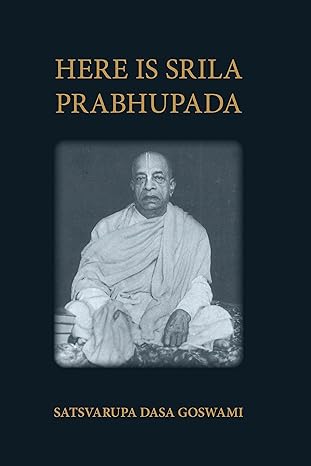
I use free-writing in my devotional service as part of my sādhana. It is a way for me to enter those realms of myself where only honesty matters; free-writing enables me to reach deeper levels of realization by my repeated attempt to “tell the truth quickly.” Free-writing takes me past polished prose. It takes me past literary effect. It takes me past the need to present something and allows me to just get down and say it. From the viewpoint of a writer, this dropping of all pretense is desirable.
 Geaglum Free Write
This edition of Satsvarūpa dāsa Goswami’s 1996 timed book, Geaglum Free Write Diary, is published as part of a legacy project to restore Satsvarūpa Mahārāja’s writings to ‘in print’ status and make them globally available for current and future readers.