

What
Meeting of Disciples and friends of SDG
Where
The Veterans of Foreign Wars Hall – 845 Hudson Avenue – Stuyvesant Falls, New York 12173
There is plenty of parking near the Hall. The facility is just a few minutes’ walk from SDG’s home at 909 Albany Ave.
Schedule
10:00 – 10:30 A.M. Kirtana
10:30 – 11:15 A.M. Presentation by Satsvarupa Maharaja
11:15 – 12:30 P.M. Book Table
12:30 – 1:15 P.M. Arati and kirtana
1:15 — 2:15 P.M. Prasadam FeastContact
Baladeva Vidyabhusana at [email protected] or (518) 754-1108
Krsna dasi at [email protected] or (518) 822-7636SDG: “I request as many devotees as possible to attend so we can feel the family spirit strongly. I become very satisfied when we are all gathered together.”
*******
Śrī Caitanya-caritāmṛta, Madhya-līlā 20.124–125: “O great learned devotee, although there are many faults in this material world, there is one good opportunity—the association with devotees. Such association brings about great happiness. . . . .”
Srila Prabhupāda: “Therefore, our Society is association. If we keep good association, then we don’t touch the darkness. What is the association? There is a song, sat-saṅga chāḍi’ kainu asate vilāsa, te-kāraṇe lāgila mora karma-bandha-phāṅsa (Gaurā Pahū, verse 3). Sat-saṅga. Sat-saṅga means association with the devotees. So the one poet, Vaiṣṇava poet, is regretting that, ‘I did not keep association with the devotees, and I wanted to enjoy life with the nondevotees. Therefore I’m being entangled in the fruitive activities.’ Karma bandha phāṅsa. Entanglement.” [Conversation with David Wynne, July 9, 1973, London]
We need to expand our team of proofreaders as we aim to increase the rate of republication of Satsvarūpa Mahārāja’s books as well as new books that he writes.
This includes a need for fluent bilingual Spanish and English speakers to proofread Spanish translations (we currently have around 20 Spanish translations waiting to be proofread).
Anyone interested in this particular service should contact Manohara dāsa at [email protected]
If you would like to help, please contact Kṛṣṇa-bhajana dāsa at [email protected] or [email protected] and we will find you a service that utilizes your talents.
One may question that if the holy name can take away more sins than the devotee can commit, why we still have to suffer sinful reactions? But those sinful reactions are given by Kṛṣṇa; it is no longer karma. There is no questioning why this is so. If Kṛṣṇa makes us take some token reaction, that is His mercy just so that we will actually be purified once and for all. Kṛṣṇa is all-good and just, so whatever He sends the devotee, the devotee accepts. That does not diminish the power of the holy name. We have to go on chanting the holy name and taking whatever reactions are there from the Lord. Then we may come to the stage of pure service to the holy name.
******
If you are always repeating the Hare Kṛṣṇa mantra whenever you can—within yourself or even aloud—it will solve many problems. If Kṛṣṇa is with you all the time, then you will not be in anxiety—if you can develop this constant chanting. It will take time to be able to always chant Hare Kṛṣṇa. Śrīla Prabhupāda used to say, “Chant sixteen rounds on beads and then innumerable rounds off the beads.”
******
The fifth offense in chanting is to consider the glories of chanting Hare Kṛṣṇa as imagination. This means that if one doubts that the chanting of Hare Kṛṣṇa actually is the name of God then that is actually negating the great benefits that are working on one. It is a kind of material skepticism. If you have no faith at all then that is a great offense, but if one has some faith but also has some doubt that is also offensive. Any doubt we have in chanting Hare Kṛṣṇa is offensive.
******
Prabhupāda answers the question, “What is the ultimate goal of chanting Hare Kṛṣṇa?”
“When one becomes accustomed to inoffensive chanting, then his fruit is that he is promoted to the stage of pure love of Godhead, or prema. This prema is the perfectional stage of consciousness and the most blissful by far.”
—Letter to Śivānanda, December 4, 1968
******
When I chant Hare Kṛṣṇa, I chant because Śrīla Prabhupāda brought the chanting and told me to chant. So, I’m chanting directly to Kṛṣṇa, but I don’t banish my spiritual master. The inference is always, “Well, can we get rid of the spiritual master and go directly to Kṛṣṇa?” But it’s not like that. You go directly to Kṛṣṇa through the spiritual master. He’s not in the way—Jesus Christ says he is the way. So the spiritual master is not in the way. He’s introducing you to your intimate relationship with Kṛṣṇa. So he says, “Chant Kṛṣṇa, Kṛṣṇa,” so I chant Hare Kṛṣṇa. I’m saying Kṛṣṇa’s name on his order.
******
If you have not received the mantra you are chanting in disciplic succession, it will not have effect. Your spiritual master doesn’t get in your way, because he is not material. Material body means defective vision, 20-20 is not perfect spiritual vision. Everyone needs this transparent guide. Sometimes people think, “We don’t want these priests, we don’t want these gurus. God is in our heart, let us just go to God.” But the spiritual master is a humble representative of Kṛṣṇa and I should approach with even more humility to accept Kṛṣṇa in this way. Because I may have personally been cheated before doesn’t mean that the system of disciplic succession is invalid. All a real spiritual master wants is that his disciple be fixed in his relationship with Kṛṣṇa, chant Hare Kṛṣṇa, and be happy in Kṛṣṇa consciousness. He doesn’t want money, he doesn’t want worship; he wants the disciple to go to Kṛṣṇa. He is competent to help him do that.
******
The Purāṇas say there are many gurus who are expert in taking your money, but a guru who can take your anxiety away and give you spiritual life is rare. The actual representative of Kṛṣṇa can relieve the fire of repeated birth and death.
******
We don’t adopt the process of chanting all day and night. Haridāsa Ṭhākura could do it, but if you try you will sleep and dream of different material desires. So just try to increase the quality of your chanting; that is the main thing.
******
Then the Bhattācārya asked Caitanya Mahāprabhu, “Which item is most important in the execution of devotional service?” The Lord replied that the most important item was the chanting of the holy name of the Lord.” Śrīla Prabhupāda writes in his purport, “When … asked … which item was most important, Śrī Caitanya Mahāprabhu immediately answered that the most important item [of the nine processes of bhakti] is the chanting of the holy names of the Lord—Hare Kṛṣṇa, Hare Kṛṣṇa, Kṛṣṇa Kṛṣṇa, Hare Hare / Hare Rāma, Hare Rāma, Rāma Rāma, Hare Hare.” In the next verse Lord Caitan`ya quotes the ‘Harer Nāma’ verse of the Bṛhan-nāradīya Purāṇa, and Śrīla Prabhupāda writes, “Because the people of this age are so fallen, they can simply chant the Hare Kṛṣṇa maha-mantra. In this way, they can rid themselves of the bodily conception of life and become eligible to engage in the Lord’s devotional service.”
—Cc. Madhya 6.241
pp. 40-46
In verse eight, Srila Rupa Goswami continues: ‘The essence of all advice is that one should utilise one’s full time, twenty-four hours a day, in nicely chanting and remembering the Lord’s divine name, transcendental form, qualities and eternal pastimes, thereby gradually engaging one’s tongue and mind. In this way, one should reside in Vraja or Goloka Vrndavana-dhama and serve Krsna under the guidance of devotees. One should follow in the footsteps of the Lord’s beloved devotees, who are deeply attached to His devotional service.’
Full-time bhajana is not possible for most of us because, as Prabhupada remarked, ‘You Westerners are too restless’. The early hours of the morning is the best time for sadhana and bhajana , but remedial work can also be done on sadhana at that time; ‘remedial’ means to correct a deficiency. Even if we have been devotees for a long time or are in an advanced position in the institution, we have to recognise that we all need remedial work. We have to be our own teacher and take special, intensive care to improve.
How do we do this? Plan ahead and take time for a retreat, even if it is in your attic. It should be a place where there are no disturbances and where personal improvements can be made. Pilgrimage to India can be done alone or with a few other devotees and will bring wonderful results – bad habits will be recognised and remorse felt. Sometimes devotees waste their time in India shopping and gossiping, but we should use this time to do this remedial work on our sadhana. Thinking ahead and even using writing can make a pilgrimage spiritually fruitful. Visiting the dhama is also a good time to chant more than sixteen rounds a day. The Padma Purana mentions that the remedy for offensive chanting is to chant constantly. This is not always possible, but during remedial work we can increase our quotas.
The next point in Rupa Goswami’s verse is that we should chant with the tongue. Prabhupada often told us not to chant in our minds but to vibrate the Hare Krsna mantra aloud. Sometimes devotees asked Prabhupada for more instruction on how to control the mind in chanting. He would never go into much detail but would merely say, ‘Hear. You should just hear.’ The devotees would reply, ‘But Prabhupada, how do we control the mind?’ He would answer, ‘Chanting controls the mind. Just hear.’ Although simple, this is a deep preliminary instruction. If we just hear – meaning, we stop the mind’s noise and listen with the ears to the sounds being vibrated by the tongue – the further stages will come. Conversely, if we don’t hear we will not be able to progress. Rupa Goswami tells us to chant with the tongue and then we will remember with the mind. The tongue enables us to go to the mental stage in chanting – thinking of Krsna’s lila.
Some devotees say that we are not supposed to think of Krsna’s pastimes when we chant, but that is not what Prabhupada said: ‘I think you should know that it is not offensive (to think of Krsna’s pastimes while chanting) but rather, it is required. One must try for the point where he simply hears Krsna, and immediately all of Krsna, His pastimes, His form, His quality, are in his thoughts of Krsna. One who cannot always think of Krsna, let him hear always “Hare Krsna”, and when he has perfected this art, then always he will remember Krsna, His activities, His qualities, etc.’
Bhaktivinoda Thakura says in Harinama-cintamani: ‘From the holy name, gradually the Lord’s form, qualities and pastimes blossom. The entire panorama of Lord Krsna’s pastimes is present in the holy name. This is an advanced stage in chanting.’ He further explains: ‘The introspective devotee must at first discard the ten offences and simply meditate on the holy name, trying to chant constantly. He should distinctly pronounce the holy name and meditate upon the transcendental sound vibration. When his chanting is steady, clear and blissful, he should try to meditate on the Syamasundara form of the Lord. With chanting beads in hand, his chanting and meditation should seek out the form of the holy name. He will indeed see with spiritual vision what the real meaning represents ..’ He even recommends sitting in front of the Deity to see the form while chanting.
The verse also recommends residing in Vraja. If we cannot go there we should learn to think of Vrndavana by reading books and meditating on the impressions we gathered when we went there, remembering the parikama sights and sounds and praying to the devotees of Vrndavana. This is a stage that we eventually have to practise if we want to go to Goloka-Vrndavana. This should be done under the guidance of an expert Vaisnava, and eventually we should follow a particular devotee in Krsna- lila, such as Mother Yasoda, a cowherd boy, a particular gopi or a manjari. Chanting, pronouncing, hearing in the mind and thinking of the form and pastimes of Krsna, leads to the ideal bhajana by which one can go back to Godhead.
Reading is as important as chanting. Rupa Goswami says that we should think about Krsna’s pastimes, but how can we think about them unless we regularly hear them? Prabhupada stated, ‘Whenever you get time, you should read my books.’ There is no limit to how much we should read if we can use that in Krsna’s service.
One way to read is to study, of which there are many different paths. One is to give lectures: if we are fortunate enough to give lectures in the temple, then we have to prepare by reading Prabhupada’s books. Writing – especially essays, for Back to Godhead and other Krsna conscious newsletters – requires that we read and prepare our topic. Taking VIHE courses also forces us to study. Aside from studying, reading, can, of course, be something that is simply done for enjoyment; sadhu-sanga, reading with others, can be a pleasant social act or an exchange of love. Reading every day with one or two friends or between husband and wife, is necessary on many levels. It is a nectarean activity which draws us away from pressing matters into transcendence; it strengthens relationships among devotees. We can also practise prayerful reading, praying and meditating on a small amount of material; thinking about how Krsna is speaking directly to us and praying that He will please reveal the meaning of the passage. Prabhupada encouraged variety; if reading is tedious, other methods should be tried to spark interest -anything that results in rapt attention is considered good.
Sadhana can be defined in a wider sense: spiritual advancement doesn’t only mean more chanting and reading, and less of other types of service. This may not be the right way for some devotees. We should think of the ideal state we want to achieve and how we will reach it. We can look forward to the time when we will not be so passionate and be able to read and chant more – but we shouldn’t wait too long. Prabhupada held morning and evening classes, but during the day he wanted his devotees to be active preachers.
The more we work at sadhana and improve our service attitude, the greater the reward. However, sadhana also requires austerity; Prabhupada made the point that the chanting of the maha-mantra must be accompanied by strict following of the four regulative principles. In this way, chanting would be effective immediately.
Remorse leads to rectification and by working at this – through sadhana and rendering service to the guru and ISKCON – we may receive Krsna’s mercy. This stage is known as vaidhi-bhakti, the clearing of anarthas from the heart. Rectification leads to reunion, the spontaneous stage which relishes Krsna’s service through His qualities, pastimes, form and name on the liberated platform. Reunion can mean a return to our original relationship with Krsna as His eternal servant.
pp. 64-69
About 4 A.M., Srila Prabhupada rang his bell. Entering with joy, I made my obeisances before Srila Prabhupada, who sat behind his dim desk light looking as solid as the Himalayas.
“Jaya, Srila Prabhupada!”
“Jaya. I want to see Tamala Krsna,” said Prabhupada.
“Yes, Prabhupada.” I was immediately on my feet and off to run the errand. But I couldn’t help feeling envious. “I am very unimportant,” I thought. “Prabhupada has many important things to discuss with Tamala Krsna, but not with me. I am just an errand boy because I am so unqualified!’
Tamala Krsna stayed in a small mud-baked but with a straw roof, and I knocked on his door and called him.
“Prabhupada wants to see you,” I said, and he hurried out. Together we walked back to Prabhupada’s room.
“Did he say why?” asked Tamala Krsna.
“No,” I replied, “I don’t know. He just asked for you!’
Opening the door to Prabhupada’s room for Tamala Krsna, I discretely stayed in my room and shut the door. But I could hear about half of what they were saying. As G.B.C. for India, Tamala Krsna was involved in carrying out all Srila Prabhupada’s plans for preaching in India and there were many things Prabhupada wanted to discuss with his man-in-charge. Tamala Krona Goswami was used to speaking very openly with Srila Prabhupada. He wanted to know Prabhupada’s mind on different subjects, and he also revealed his own views. At one point he asked rila Prabhupada whether it was better for a grhastha or a sannyasi to be in charge of the temples. They also discussed how much emphasis to put on different preaching programs and how to best engage the devotees. They discussed each of the ISKCON centers in India and various personnel, legal, financial, and spiritual problems. Prabhupada was particularly concerned with the construction schedule for the Krishna-Balaram temple.
I would have liked to have been inside the room to hear Prabhupada’s valuable instructions, but I had not been invited. And why should I be invited? I was the secretary-servant. My duty was to get Srila Prabhupada a fresh nim twig for brushing his teeth, to prepare his clothes, get his medicine, clean his room—and go get important devotees like Tamala Krsna for him to speak with. Feeling somewhat sorry for myself, I tried chanting my silent japa, but it was now more difficult than ever, as I was trying to listen at the door and as my mind was beating me with foolish thoughts.
It further occurred to me that if I wanted to take on more important managerial duties, there was nothing preventing me from doing so. It would not be unfitting if as we traveled I assumed the position of Srila Prabhupada’s representative, looking into the management, finances, and direction of preaching in each place. But that was not my inclination—to assert myself everywhere. Nor was I qualified. I should type the letters, do the menial duties and simply travel everywhere with Srila Prabhupada, I told myself. That satisfied Srila Prabhupada, so why shouldn’t it satisfy me? Just the fact that Prabhupada wasn’t kicking me out should have been enough to satisfy me. How could I be so ungrateful? Even the big leaders, although called in by Srila Prabhupada, would be left behind in their zones while I went on accompanying Srila Prabhupada everywhere. What did it matter if I was a menial servant? Wasn’t that my constitutional position?
In this way, I reasoned with myself as I stood in the darkness outside Prabhupada’s room. Prabhupada had called me just to get an important devotee so that he could speak with him. And if I was just a shoe-carrier and nothing more than that, that was due entirely to my own laziness and lack of surrender. And yet the other side of me—false pride—continued.
Eventually Tamala Krsna came out, and I got ready to accompany Srila Prabhupada on his morning walk. I recovered my wits, realizing I had had an attack of maya, resulting in restlessness in my service.
The air was cold enough to make white vapor as we breathed. But as the sun rose it would become warm. Enduring the weather was one of the honest austerities of Vrndavana, as was the lack of technological amenities. Desiring to cast off my foolish thoughts, I turned to Prabhupada as he began his walk.
“Srila Prabhupada,” I said, “it seems that India has all spiritual knowledge. But here they can’t even keep the electricity on, whereas in the West they have material advancement. So they should com¬bine. Is that possible?”
“Yes,” Prabhupada replied, and he seemed enlivened at what I had said, “that is my mission. To combine them:’ Along with about ten devotees, Prabhupada stepped into the sandy lane and walked in the direction of the old parikrama trail of Vrndavana.
“The material side is also necessary;’ he continued. “But in the West they even have a machine for shaving. It is all for the itching sensation, sex—that which is insignificant, abominable. The whole intelligence is being employed like a dog or cat.”
Off the lane we saw two babajis, wearing only small white cloths. They were crouched before a small fire, warming their bodies.
“Vrndavana is the gift of Rupa and Sanatana Gosvamis,” Prabhupada said, “The meaning of gosvami can be found in the prayers to the six Gosvamis. They were wealthy government leaders, but they gave up everything and became beggars, accepting one cloth and always thinking of the gopis. They gave contributions of many books so people could take advantage and become Krsna conscious. Now we see many imitations of Rupa Gosvami in Vrndavana today. We shouldn’t imitate the dress of Rupa Gosvami, while at the same time we cannot give up our cigarettes. It is the gift of Bhaktisiddhanta Sarasvati Goswami that we should not jump and try to change our garment all of a sudden. We should try to hear the Absolute Truth from realized souls, and then we can conquer Ajita, Krsna, the unconquerable”
One of Prabhupada’s disciples working on the Vrndavana project came closer to Prabhupada and asked,
“Prabhupada, some of the smarta-brahmanas are very caste conscious, and they don’t accept that Westerners can be brahmanas. What should we say to them?”
“Tell them that Bharata-varsa means the whole world;’ said Prabhupada. “The real term is Bharata-varsa, not India. Tell them that the first brahmana was not an Indian. That is Lord Brahma. We have knowledge which makes us brahmana, and they do not. They eat fish. They eat anything. But our men here in Vrndavana, should become actually gosvami. That means detached from sex end eating and sleeping. They must become actually gosvami by always engaging in Krsna’s service.
“Prabhupada,” another devotee came forward, “you are like the hometown boy who made good here in Vrndavana. The people are proud of you!”
“They should be proud;’ said Prabhupada dryly. “They couldn’t do anything” Together the group walked onto the parikrama trail where the Yamuna River used to flow. Many pilgrims were on their way to visit the temples, workers on bicycles and men with donkeys or ox carts carried their various wares. But almost everyone greeted Prabhupada, saying, “Jaya Radhe!” And he warmly responded, “Hare Krsna!”
pp. 151-53
A memory from Boston, 1969: The devotees gathered in the back of the Dodge van, preparing to go out on harināma saṅkīrtana at the Boston Commons. Both men and women filled every inch of the spacious van. They were all dressed in devotee clothes and made a brave and merry pose for the camera before the doors were shut. Once at the Commons, they piled out and formed a long line facing the avenue. People began to gather, and a few hecklers cried out. Soon the loud singing of the mantra drowned out the opposition. Bharadvāja led them, playing the mṛdaṅga, and several devotees clashed pairs of karatālas. It was a balmy summer day. As a crowd gathered, Girirāja and Jadurāṇī circulated among the people seeking donations for Back to Godhead magazines. The Hare Kṛṣṇa mantra chorus ebbed and flowed in a wave that would have pleased Śrīla Prabhupāda. This was a daily affair in the summer, and the devotees enjoyed their exhibition in the celebration and tension before the crowd. They chanted for about forty minutes and then took a break. If the crowd was not too unruly, one of the devotees would give a short speech. Prabhupāda had instructed that if the people were too noisy, they should just go on chanting. Control the mind and chant. Hare Kṛṣṇa Hare Kṛṣṇa Kṛṣṇa Kṛṣṇa Hare Hare / Hare Rāma Hare Rāma Rāma Rāma Hare Hare.
Japa is a big sea. You have to steer your ship through it with careful navigation and concentration. Otherwise, you won’t reach your destination. Going around in circles is not chanting with direct, on-course meditation. Chanting is done by a competent captain and navigator with enunciation and alertness at every moment. It’s not just a seaworthy act but a devotional, religious act, calling on God and His Consort to help you to stay in the waters on the direct path. Sometimes I chant as if I have the anchor down and go around in circles. Not much benefit in that. But the chanting is so wonderful that even the anchor trip is filled with absolute sound vibration. You make progress in Kṛṣṇa’s realm. But real chanting is staying on course. A straight line is the shortest distance between two points. Reaching the goal is meditation on Kṛṣṇa’s qualities, names, and forms.
When you miss your big block of japa in the morning, you have to remain calm and assure yourself that you’ll get them done during the day. There’s no doubt about it. Just be sure you don’t rush them. Stay calm and enunciate the mantras. Try in the future to ensure you get those big blocks in the morning, when you can stretch out and chant lots of mantras. We’ll be going to the beach, and I can chant there in the car. Keep the mind fixed on the goal of the mantras, the yearning to reach Rādhā and Kṛṣṇa. Reciprocate with Them in your mind. Chant from your lowly position, and reach out. You have nothing to regret, no reason to panic. Everything will go all right. You may just have to chant a little more in the late morning. But that will be fine also. Relax in your chair and utter the Hare Kṛṣṇa mantra in peace. With such a high priority to the mantras, you cannot fail. The pain of missing the big block of chanting early in the morning creates a greater desire to do them. Chanting Hare Kṛṣṇa is your greatest friend. You will not desert Him, and He will not desert you. Better than writing this essay, I should go and chant.
Chanting in a hurry
creates a worry.
Better to slow down
and reach the crown.
There’s no question you’ll reach the quota
not even an iota.
So don’t be anxious,
just feel your pulse
and pray to Hari
without a hurry.
The time is the same,
the boy is the same,
it’s just a little time difference,
so don’t make a big inference
that you failed Nāma Prabhu.
I have a small wave of loneliness nagging me in my own life. I don’t desire a wife or fame (na dhanaṁ na janaṁ na sundarīṁ), but I sometimes feel low because of the aloneness of my life. Most of the time I feel right about it, so I wouldn’t even call it a conflict. It is not something I am motivated to change. I don’t want more people in my life. But occasionally, a little voice of unhappiness speaks to me. I think it is my general lack of Kṛṣṇa consciousness. As Lord Caitanya prays in Śikṣāṣṭakam, “I do not desire a wife, fortune or fame. All I desire in my life is Your causeless devotional service, birth after birth.” I need to desire more to serve the Lord. I like the occupations I have—chanting, writing, living with my friends. I don’t need a change in my activities. But I hanker for more taste from them, just as this morning’s japa was not so good, as well as my noon gāyatrī. I shall pray to Kṛṣṇa for more taste in my devotional activities.
The Christian monks used to say, “Stay in your cell, and your cell will teach you all you need to know about prayer. My bhajana-kuṭīra is a safe and exciting place. I can have fun here. I can be with Kṛṣṇa, our Beloved.
I have come to improve the quality of my chanting and hearing. I’ll do it at the time of death, but I need to practice so that I can be attentive. Give to this practice. Make the mental effort. We learn from the words of Vṛtrāsura that a devotee of Lord Viṣṇu should not desire dharma, artha, or kāma. “But a devotee has no other desire than to serve the Supreme Personality of Godhead, both in this life and in the next” (Śrīmad-Bhāgavatam 6.11.23 purport).
My book Begging for the Nectar of the Holy Name contains statements on inability in chanting. They are clarified to show faith in the śāstra’s statements of the absolute mercy and power of the holy name. Thus, it is an acceptable book for devotees. What did I mean when I said that my present writing is not helpful? Because I can’t guarantee beforehand the neat resolution of my doubts or the release from aparādhas like inattention. I have to go through them. They are not already solved, and I am not already redeemed because I am the author of Begging, who brings Vedic texts to our rescue. I can’t wrap it up in the canon so quickly. Go the whole route. It may not be assuring enough for readers. But my primary act in writing is not to provide assuring reading but to help myself in my struggle.
This kind of writing is not selfish; we found it can produce the best kind of communication and assurance on a deeper level for more serious devotees.
Have faith in that process, despite critics.
The anonymous monk who wrote the book about the Jesus Prayer said that he had reached the stage where the chanting automatically continued in his heart without any effort on his part. The Gosvāmīs of Vṛndāvana also chanted like that. They were so enamored by the Hare Kṛṣṇa mantra that it filled them with love for Rādhā and Kṛṣṇa and kept them always connected to the Divine Couple. I usually don’t remember to chant when I am in the dentist’s office because I become so distracted, but I’m going to make more of an effort today. It really should be easy to take shelter when there is possible pain. Sometimes, however, others start talking to you, and if you are chanting, you can’t pay attention to what they are saying. As the Cub Scout motto says, “Do your best.” The Boy Scout motto is even better: “Be prepared.” Set your mind in advance with resolve to chant, and you’ll be prepared for whatever obstacles arrive.
pp. 15-22
Los Angeles
18th January, 1969
My Dear Satsvarupa,
Please accept my blessings. I am in due receipt of your letter dated January 11, 1969 and have carefully noted the contents. From this letter I can understand that texts number 6 and 7 are missing in the manuscript of the third canto which you have in Boston. The original manuscript is in New York, and when I go there, maybe in April, I will find this for you. In the meantime, you may skip four pages for these missing texts and continue numbering after skipping four numbers which will be filled in later. Convey my blessings to the three girls who are newly staying at the Boston temple, namely Joy Fulcher, Arlene Warmbrand and Rita. I hope you are all well.
Your ever well-wisher,
A.C. Bhaktivedanta Swami
I received this letter at our little Boston storefront on Glenville Avenue. By this time, we had rented an apartment across the street from the temple, and my wife and I lived there with the three girls Prabhupada mentions in this letter.
Getting a letter from Prabhupada was exciting for everyone in the temple. In this letter, as in many other letters Prabhupada wrote to me when I was in Boston, he asks me to “Convey my blessings to the three girls.” I didn’t have to convey his blessings because as soon as the girls read my letter, they felt Prabhupada had conveyed them himself. There was no question of them not reading the letter themselves. I couldn’t say, “Yes, I got a letter from Prabhupada, but it’s the temple president’s business and none of yours.” It was all the other devotees could do to restrain themselves from opening the letter before I got home from work.
Arlene was a typist. Prabhupada sent her to Boston from another center to help me type his dictation tapes. Although I was the only devotee typing Prabhupada’s dictation at that time, Arlene (later Arundhati dasi) eventually took it over as my other duties increased. Joy Fulcher (later Jahnava dasi) was from Seattle and Prabhupada sent her to Boston to help Jadurani paint.
Pradyumna lived in Boston too—in the temple basement, studying Sanskrit under Prabhupada’s direction and marking Prabhupada’s manuscripts with proper diacritics. He also audited a Sanskrit course at Harvard to complete his Sanskrit studies.
To taste these letter exchanges with Prabhupada, it’s useful to know a little background. ISKCON was very much a family in those days. Our relationships in the Boston temple were sweet, familiar, and innocent. These girls were respectful, pleasant, and cooperative. They felt wanted in Boston because Prabhupada had sent them and we had welcomed them.
Someone might think that three devotees joining a temple was not much of an event, but it was a real blessing. I had been in Boston for almost two years, and although we had done a lot of preaching and gone out regularly on harinama, no one had joined. To suddenly have three new devotees in the temple boosted our harin?ma party and made it more exciting for everyone. Just to have three more people at Bhagavatam class was wonderful.
Another point about those years is that devotees could choose their own services and live in whatever temples they liked, although eventually Prabhupada said we should ask his permission before leaving one temple for another. Prabhupada knew what service each devotee was doing, and he often claimed someone for one project or another. For example, I received a letter from Prabhupada informing me that Madana-mohana dasa, who had been living in New York, was planning to move to Boston. Madana-mohana had been indexing Prabhupada’s Bhagavad-gita and Prabhupada didn’t want him to stop his service just because he had moved.
This letter is an example of an exchange between Prabhupada as author and me as his typist. Just looking at this letter reminds me of all the pleasure I felt doing that service for him. I was able to learn so much about Krsna consciousness because of that service—Prabhupada was always speaking into my ears.
I don’t type with any accuracy anymore; I seem to have lost the ability. When I was typing for Prabhupada, however, I was competent and accurate and conscientious. I didn’t have an electric typewriter, but a manual one. I pounded away on that in the early mornings before anyone else was up. I had no other time to type in the day because I had to attend the morning program, chant my rounds, and work at the welfare office.
I began typing for Prabhupada even before I was initiated. When Prabhupada went to San Francisco, a man named Neal began typing for him. In the first letter I received from Prabhupada specifically addressed to me (January 1967), Prabhupada told me that Neal had left and asked whether I could take responsibility for typing his dictation. I continued to type for him until the end of 1969, when Arundhati finally took it over completely.
I cannot overemphasize how dear this service was to me, or how important. At this point in ISKCON’s history, Prabhupada was not a world traveler. Up until the early months of 1969, we see Prabhupada traveling all over America, writing and preaching. Still, I couldn’t travel with him because of my job and the fact that I was the president of that small Boston center. Therefore, to receive tapes from Prabhupada in the mail, always hearing his voice, him rustling pages and pressing the dictaphone button—and all the exchanges between author and typist—satisfied my longing to be with him.
By his mercy, I felt the philosophy passing through my being, not just through my mind, but entering into my flesh, blood, and bones. His words flowed through me constantly as I typed. I can’t express how grateful I am that he gave me such a connection to him, and so much of his association as he traveled.
His words would stay with me throughout my day. For example, I sometimes dozed on the bus on the way to work. As I nodded off, I would hear phrases from his purports running through my brain. I was also able to use what I heard from Prabhupada when giving lectures and writing my BTG articles. Prabhupada appreciated that.
In this particular letter, Prabhupada acknowledged my report that two texts were missing in the dictation. Even though it was an important message, I sent it in a letter to Prabhupada. We almost never made long distance calls at that time, and neither was Srila Prabhupada accessible by phone.
Prabhupada mentioned that he would take the missing texts from the manuscript he had in storage in New York. He was referring to the original manuscript he had brought with him from India, or to one he had typed himself at the beginning of his preaching in America. (Prabhupada personally typed up to the end of the Second Canto and was starting on the Third by the time he left for San Francisco in January of 1967.)
pp. 131-133
The Swami said, “I am not God,
but the guru is as good as God.”
For a week they misunderstood,
thinking he said that he
was God. They went to him and he clarified, “No, never God,
but servant of God.
But therefore you should honor.”
The Swami said we are going
on an outing to Dr. Mishra’s ashram,
to show them how to chant
with heart and soul
and to be together in the countryside. “One day you should also aspire
to get such a place for Krishna.”
The Swami said, “If I told you everything
at once you would faint.
You should all become devotees.”
Hours and hours of inquiry, days and nights
in learning and dreams
that the Swami is like Krishna and we Arjuna,
that the Swami is really like a beautiful youth.
Each wants to be alone with him
for the confidential exchange, to ask the questions
a little child can ask his father:
“Why is the sky blue?
Where does God come from?
Can I really be saintly and not slide back again?”
And taking private assurance from him.
LSD is not needed, the Swami said.
Your spiritual life is already here.
Whatever he said was passed around.
Slowly at first, some still skeptical
joking on his name, the Swami.
“Old Swami Cigars, Old Swami Rum,” they said.
But I said “Ah, don’t joke about him.”
“The Swami said we are going to the U.N.”
In sneakers and jeans, they rode the bus
to U.N. plaza, but were not allowed kirtan.
“This is a silent vigil.”
But Prabhupada adjusted. Standing erect,
with morning river breezes rustling his saffron,
he spoke and then sat with his boys,
chanting japa in a ring around the monument.
These vigils will never work, he said,
unless they turn to Krishna.
The Swami said, you can come to my room
in the off-evenings.
They lost the key and had to break the door,
then lost it again and forgot to replace the lock.
They used his bathroom but didn’t clean it.
They failed to allow an important visitor to see him,
slept through his classes,
argued with one another,
read Ramakrishna and then asked his permission to do so,
spoke loosely and slept extra hours,
hung around lazily in the storefront,
kept long hair and old musical tastes
and wondered how Krishna could really have
sixteen thousand wives.
The Swami said, what do you know?
You are wet behind the ears.
You only know your mother’s womb.
You are prejudiced in favor of the scientists
and proud of American highways.
You’re on the material platform.
You don’t know what you speak.
You’re like the rascals who are cheaters.
Your impersonal conception of Krishna is foolish.
What do you really know? You are simply rascals,
all nonsense rascals. Don’t mind if I say so.
The Swami said, just come and eat with us eac
noon,
all you want. (And there was no charge.)
Just come with the boys and sit
and take prasadam. Keith will cook.
I have taught him and called him Kitchen-ananda.
You just come and take all the hot rice,
hot sublis, hot chapatis, fresh food as you like,
to your heart’s content. Take more, take more!
Sit on the clean floor with plates in a circle.
Take prasad in the sunlit front room.
Say the prayers, and eat to your heart’s content.
And not just once, but never again go hungry.Don’t eat in a restaurant or go lonely with bad food.
Just come and I will be with you.
I will show you the best food, the best everything.
The Swami said, “Chant one round,”
and sat with the boys at 6 A.M.,
quiet sessions so as not to enrage
the neighbors. But eternal wisdom
was with him, in the fresh morning,
a revolutionary movement with this revolutionary thought:
Everything, including the telephone,
is actually spiritual, as long as
you use it in Krishna’s service.
There is no other qualification
for spiritual. Now take this knowledge and be strong, he said,
and next time we meet I will teach you more—such as how to share
this with others.
pp. 159-63
Nimai brought the mice for a last meeting with Gurudeva. He carried them in an empty Back to Godhead box. The mice always cleaned themselves carefully, but for this occasion Nimai had also washed them himself. They were shiny.
Gurudeva looked down into their box and tried to think what it might be like for a mouse to be a devotee. He had heard from Flora, about the art of telecommunications between humans and animals. She had said the important thing was to identify with the animal and try to understand what it was like to be that creature. In the case of the man who owned the intelligent dog Strongheart, the man said that one day he suddenly saw the dog not from the human perspective, but from the dogs’ point of view.
Gurudeva thought, “If a mouse were a devotee, what would he be like?” He tried removing some of the more immediate barriers, such as his repulsion for mice, which he was sure he derived from his mother, who was terrified of mice. Gurudeva looked at the mild but twitching creatures and noticed that they were alert and cautious. They had delicate large ears. They were nervous and timid. He also knew that they could fight if cornered, and they could subsist in difficult conditions.
Gurudeva reached in and softly stroked their heads. They were extremely tame, he thought, as he touched them and as they lowered their bodies and touched their heads to the floor.
“They look like they’re making obeisances,” said Gurudeva.
“They are,” said Nimai. “They know who you are.”
Nimai then dared to try what he had always hoped for—a communication between Chota and Gurudeva.
“Chota Prabhu,” said Nimai, “would you like to speak to Gurudeva?”
The mouse looked up and made a small sound. “Did you hear, Gurudeva?” asked Nimai. “He said Hare Krsna.”
“Yes, I think I heard,” said Gurudeva. And then Gurudeva spoke to the mice, “Hare Krsna, Chota, and Prabhus. So now you go and spread Krsna consciousness to your own group. Nimai has been very kind to you. You be kind to others. Krsna will be pleased.”
Nimai was satisfied and he took the mice back while making repeated obeisances as he left the room. Nimai knew that Gurudeva had not only approved of the mice, but had recognized the service of his eccentric disciple Nimai.
Nimai wanted to avoid any mushy sentiments in his last meeting with the mice. He read to them from his notebook where he kept relevant scriptural passages about animals receiving Krsna consciousness.
“This is from a lecture,” he said, “by Prabhupada in Vrndavana in 1972:”
(A devotee is reading from Nectar of Devotion): “Srila Rupa Gosvami has given a definition of auspiciousness. He says that actual auspiciousness means welfare activities for all people of the world!”
Srila Prabhupada:
“Yes. Just like this Krsna consciousness movement. It is welfare activities for all the people of the world. It is not a sectarian movement. Not only for the human beings but also for the animals—birds, beasts, trees—everyone. This discussion was made by Haridasa Thakura with Lord Caitanya. In that statement, Haridasa Thakura informed Him that by chanting the Hare Krsna mantra loudly, the trees, the birds, the beasts—everyone will be benefited. This is the statement of namacarya Haridasa Thakura. So when we chant Hare Krsna mantra loudly, it is beneficial for everyone.
“… If we chant the Hare Krsna mantra, it benefits everyone, not only human beings. My Guru Maharaja used to say if somebody complained that ‘we go and chant and nobody attends our meetings,’ Guru Maharaja would reply, ‘Why? The four walls will hear you; that is sufficient. Don’t be disappointed. You go on chanting if there are four walls, they will hear. So chanting is so effective it benefits even the animals, beasts, birds, insects, everywhere…. This is the best welfare activity in the world. . . . Spread Krsna consciousness.”
“How will we be able to hear these things when you are not here?” asked Chota.
“Hear as many classes as you can. Go to the place where they are speaking and hear the kirtanas. Just teach whatever I have told you,” said Nimai. “You know better than I do how to preach to mice. But repeat what I’ve said. Don’t invent anything.”
“And what if we just want to hear from you?” asked Yamala.
“I’ll be back in six months,” said Nimai. “I don’t know where you’ll be traveling then, but you might come back to the temple when I come.”
“Might come back?” said Chota. “We will.” “Another thing,” said Nimai, “is that you might try speaking to other human devotees. I don’t know how this works that we were able to talk. It just happened by Krsna’s grace, so maybe you can talk to others too.”
After speaking for a last time, Nimai went down and got into the car with Keava Prabhu. It was time to drive to the airport. Chota and his brothers were alone again, just as they had been many times when they went on their preaching tours. But this time was different. They climbed up to the window sill and watched Nimai’s car leave. Nimai waved toward the building in the direction of all the devotees. The mice continued to stand on the window sill stretching forward to see the street until finally the car disappeared in the distance of the dusty road. The mice began to cry in the grief of separation from their teacher, and longtime protector.
After a desolate silence, Chota took the lead, “All right Prabhus,” he squeaked. “Let’s go out on sankirtana.”
pp. 288-93
Religious life is suffering. To be authentic is harrowing, cutting to the bone. Does he really believe? He does it out of duty. But not a hypocrite. Trying, trying more. Crying, crying harder. Whoop the devil. Whoop lethargy. Write through pain and distraction, make it a tune you can love. Hear the technical value books with your mind fixed, simple above all.
It’s simple for the simple, difficult for the crooked. Sit at the feet of your guru, take in what he says absolutely, and try sincerely to carry out his tasks, take care of the other devotees’ needs. Be kind, compassionate to everyone, give them pure Krishna consciousness, books are the basis, read the guru’s, and distribute them, eat pure prasadam and nothing else. This is a hand sketch.
Religious life is routine. It is also scholarly. Bhakti is described as perfect in prema, reached by always chanting hari-nama, which brings about perceiving the guna (quality) and lila (pastimes) of the Lord. Thus you are beyond time and can see Radha and Krishna in Their asta-kaliya lila (pastimes divided throughout eight portions of the day and night). This is theoretical theology of raganuga for most of us. Therefore I say religion is routine, routine vaidhi or routine raganuga. Rare souls break through, saksad-darshan (direct vision) of Radha and Krishna. Don’t argue and theologize so much, just chant the holy name, Vaishnava dasa Thakur told his inquiring disciple Lahiri in Jaiva Dharma, a book by Bhaktivinoda Thakur.
In The Third Miracle, Frank Morrow, the miracle investigator, is finding false witnesses and finding himself to be a false witness before God. The book gets sexy too, for sales attraction, a Scribner paperback fiction, published by Simon and Schuster.
Religion is shelter. True dharma is our pillar, pillow, success. Prabhupada did nothing wrong. You can investigate him. His life was that of an ideal servant of his guru and the mission of Chaitanya Mahaprabhu. He took daring chances and remained pure. He came to America at an advanced age with no money or institutional backing. All he had was great faith in his prayer, “You have brought me here, oh Lord, now make me dance, oh make me dance, make me dance!” He is our shelter, the bona fide founder-acharya, the giver of hari-nama and diksha. He sent us on hard missions to propagate the cult, but with the assurance that it is for God, not for anyone’s sense gratification or self-emolument. Take shelter from the storms of vice, violence, corruption of every sort, the boredoms that breed death.
Religious life is demanding, nonduplicitous. He wants a few good men and women, like the U.S. Marines poster. No flapper, wafflers, but true souls who follow vows. If they do slip they can be picked up and forgiven, provided they don’t fall again.
Religious life is demanding, austere, for tapasvis. In summer weather in Vrndavana, he eats only four mangoes a day. Chants and hears holy sounds, nothing else. Cuts out all nonsense. Does whatever is required to please guru and Gauranga. He meets demands, like hitting a punching bag. He’s up to the occasion. He’s ready. He takes joy in work and chooses it instead of sleep. He acts young for his age and fights against the cancer. His life is demanding, but he does it with joie de vivre, the joy of a monk or nun. That’s not the joy of sense gratification but the joy of being detached from the same, the joy of meeting the demands as they come from Krishnaloka via the chain of parampara.
When religious leaders are involved in crime, as pederasts, child abusers, drug dealers, embezzlers, gamblers, thieves, even murderers, they are worse than ordinary mafia thugs—because they hide behind the protection of the crucifix and holy collar or the saffron robes and bowing down six times a day. They give their criminal booty to the church as if to absolve themselves of human crimes. But God never gave such orders to his men to pillage in the name of sacred appearance. The priests and monks are meant to be trusted in all matters, detached from money and sex and appetite for gross crimes. They are careful not to give religious orders a bad name. Religious criminals make the ashram stink and drive away innocent prospective recruits.
When religion is practiced in essence, it is the sweetest flower in the world. It is the only path worth living for. All other paths lead to the graveyards—skulls and skeletons. Religion is the hope of living hereafter in a spiritual body. And while on this earth, religion is the path of sacred virtues, ahimsa, nonviolence, global consciousness raising— teaching people of the soul and God, which mostly people have forgotten, the knowledge that adds the living dimension to all other dead emotions. Therefore, bhagavat-dharma (eternal religion) is the highest welfare work for humanity. So-called liberation theology works on a level of politics to free humanity from tyrants and enslavements in government.
But these are temporary gains. Changing peoples’ consciousness to God consciousness gives them eternal liberation, from which they can never be enslaved again.
Religious tide flows, you’ve been reading
fiction mundane and it filters dirt in your
brain. You pee in your bed. But majority
of your reading is transcendental high still
Bhaktivinoda Thakur, Sanatana Goswami,
memoirs of our Srila Prabhupada.
Religion flows like the Yamuna.
I should have asked him what it’s like living
in a topmost abode, does some of it filter
down to his consciousness? Surely he’s
protected as he takes part fulltime
in sadhana twenty-four hours a day.
I should have told him more I care for him,
it’s not just a routine
I phone him but affection underlying. I
don’t understand why we’re made to live
apart; the boss says it’s needed and
I have to read the cases
against our being together.
It makes a kind of legal
and psychological sense, and as
long as he’s enjoying Vrindavan and I’m
doing well here in CA, I’m
content to keep it
up and under higher orders.
Heart’s a different thing.

Viraha Bhavan Journal (2017–2018) was written by Satsvarūpa Mahārāja following a brief hiatus in writing activity, and was originally intended to be volume 1 in a series of published journals. However, following its completion and publication, Mahārāja again stopped writing books, subsequently focusing only on what became his current online journal, which began in August of 2018.

At first, I took it hard that I would have to live surrounded by the firemen, and without my own solitude. After all, for decades I had lived in my own house with my own books and my own friends. I was also now a crippled person who couldn’t walk, living among men who did active duties. But when Baladeva explained it to me, how it was not so bad living continually with other firemen and living in the firehouse with its limited facilities, I came to partially accept it and to accept the other men. I came to accept my new situation. I would live continually in the firehouse and mostly not go outside. I would not lead such a solitary life but associate with the other firemen.

Let me write sweet prose.
Let me write not for my own benefit
but for the pleasure of Their Lordships.
Let me please Kṛṣṇa,
that’s my only wish.
May Kṛṣṇa be pleased with me,
that’s my only hope and desire.
May Kṛṣṇa give me His blessings:
Kṛṣṇa Kṛṣṇa Kṛṣṇa Kṛṣṇa Kṛṣṇa he
Rāma Rāghava Rāma Rāghava
Rāma Rāghava rakṣa mām.
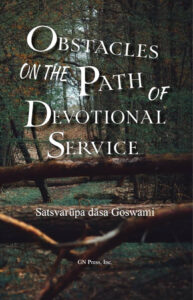
You mentioned that your pathway has become filled with stumbling blocks, but there are no stumbling blocks. I can kick out all those stumbling blocks immediately, provided you accept my guidance. With one stroke of my kick, I can kick out all stumbling blocks. —Letter by Śrīla Prabhupāda, December 9, 1972.

The Writing Sessions are my heart and soul. I’m trying my best to keep up with them. I am working with a few devotees, and they are far ahead of me. I wander in the wilderness of old age. I make my Writing Sessions as best I can. Every day I try to come up with a new subject. Today I am thinking of my parents. But I don’t think of them deeply. They are long gone from my life. Śrīla Prabhupāda wrote a poem when he was a sannyāsī, and he said now all my friends and relatives are gone. They are just a list of names now. I am like that too. I am a sannyāsī with a few friends. I love the books of Śrīla Prabhupāda. I try to keep up with them. I read as much as I can and then listen to his bhajanas.
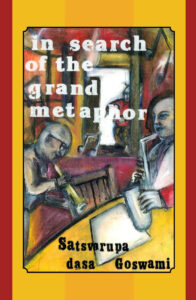
The metaphor is song. Explain it. Yes, particulars may not seem interesting or profound to readers who want structured books.
Wait a minute. Don’t pander to readers or concepts of Art. But Kṛṣṇa conscious criteria are important and must be followed. So, if your little splayed-out life-thoughts are all Kṛṣṇa conscious, then it’s no problem.
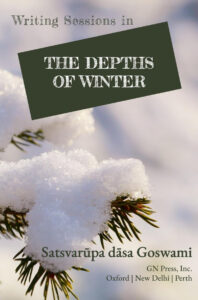
I am near the end of my days. But I do like the company of like-minded souls, especially those who are Kṛṣṇa conscious. Yes! I am prone to Kṛṣṇa consciousness. I have been a disciple of Bhaktivedanta Swami Prabhupāda for maybe almost sixty years. Sometimes I fail him. But I always bounce back and fall at his feet. It is a terrible thing that I sometimes do not have the highest love for him. It is a terrible thing. Actually, however, I never fall away from him. He always comes and catches me and brings me back to his loving arms.

This edition of Satsvarūpa dāsa Goswami’s 1996 timed book, Upstate: Room to Write, is published as part of a legacy project to restore Satsvarūpa Mahārāja’s writings to ‘in print’ status and make them globally available for current and future readers.
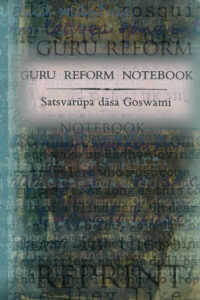
A factual record of the reform and change in ISKCON guru system of mid ’80s.

Readers will find, in the Appendix of this book, scans of a cover letter written by Satsvarūpa Mahārāja to the GN Press typist at the time, along with some of the original handwritten pages of June Bug. Together, these help to illustrate the process used by Mahārāja when writing his books during this period. These were timed books, in the sense that a distinct time period was allotted for the writing, during SDG’s travels as a visiting sannyāsī
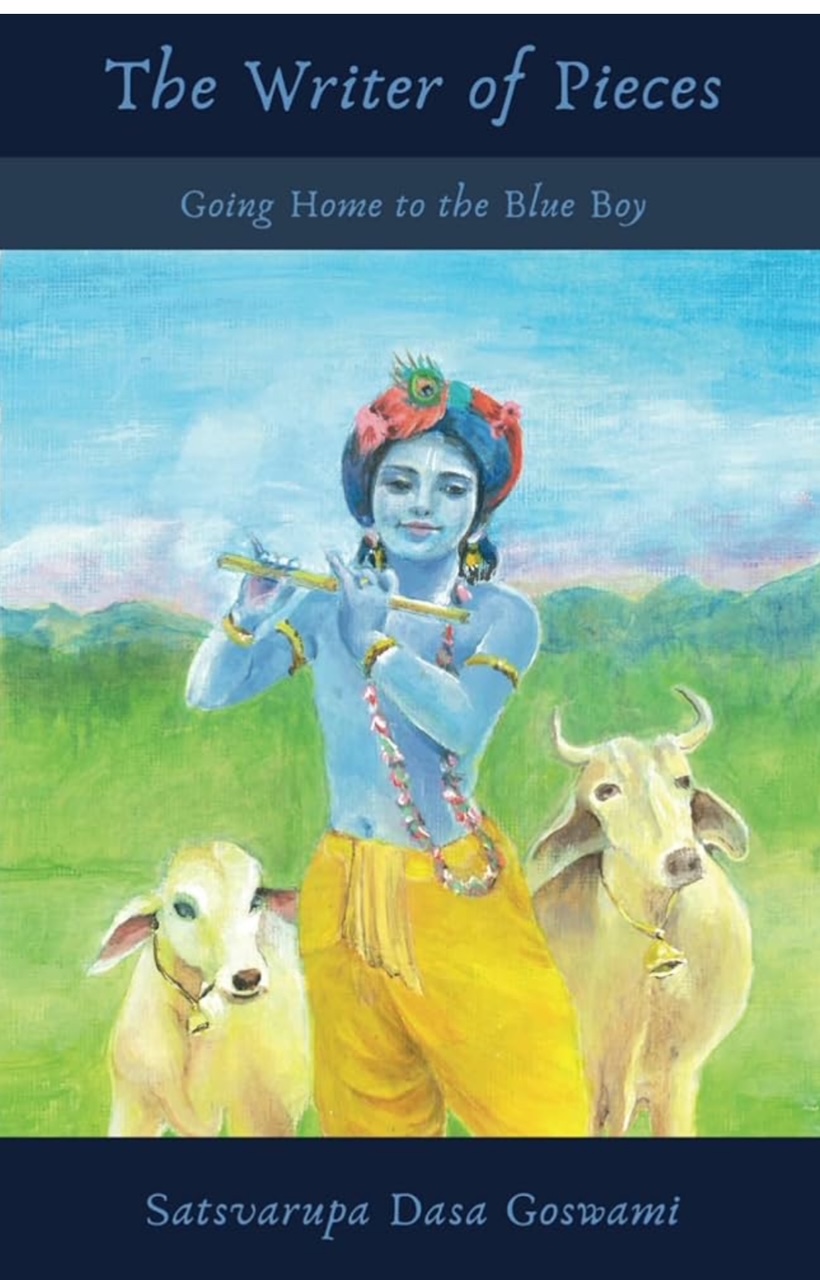
Don’t take my pieces away from me. I need them dearly. My pieces are my prayers to Kṛṣṇa. He wants me to have them, this is my way to love Him. Never take my pieces away.

Many planks and sticks, unable to stay together, are carried away by the force of a river’s waves. Similarly, although we are intimately related with friends and family members, we are unable to stay together because of our varied past deeds and the waves of time.
To Śrīla Prabhupāda, who encouraged his devotees (including me) To write articles and books about Kṛṣṇa Consciousness.
I wrote him personally and asked if it was alright for his disciples to write books, Since he, our spiritual master, was already doing that. He wrote back and said that it was certainly alright For us to produce books.
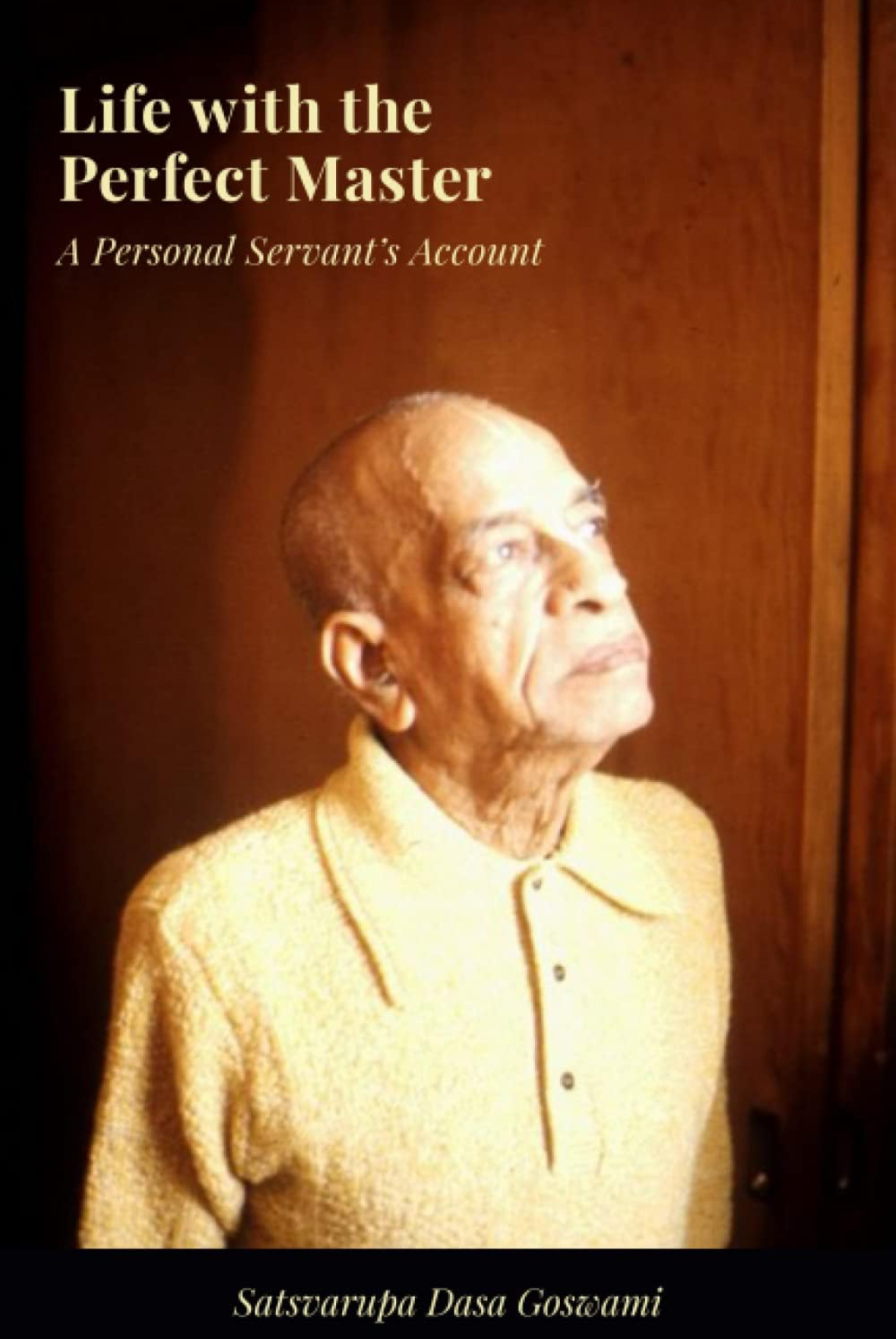
I have a personal story to tell. It is a about a time (January–July 1974) I spent as a personal servant and secretary of my spiritual master, His Divine Grace A.C. Bhaktivedanta Swami Prabhupäda, founder-äcärya of the International Society for Krishna Consciousness. Although I have written extensively about Çréla Prabhupäda, I’ve hesitated to give this account, for fear it would expose me as a poor disciple. But now I’m going ahead, confident that the truth will purify both my readers and myself.

First published by The Gītā-nāgarī Press/GN Press in serialized form in the magazine Among Friends between 1996 and 2001, Best Use of a Bad Bargain is collected here for the first time in this new edition. This volume also contains essays written by Satsvarūpa dāsa Goswami for the occasional periodical, Hope This Meets You in Good Health, between 1994 and 2002, published by the ISKCON Health and Welfare Ministry.

This book has two purposes: to arouse our transcendental feelings of separation from a great personality, Śrīla Prabhupāda, and to encourage all sincere seekers of the Absolute Truth to go forward like an army under the banner of His Divine Grace A.C. Bhaktivedanta Swami Prabhupāda and the Kṛṣṇa consciousness movement.

A single volume collection of the Nimai novels.
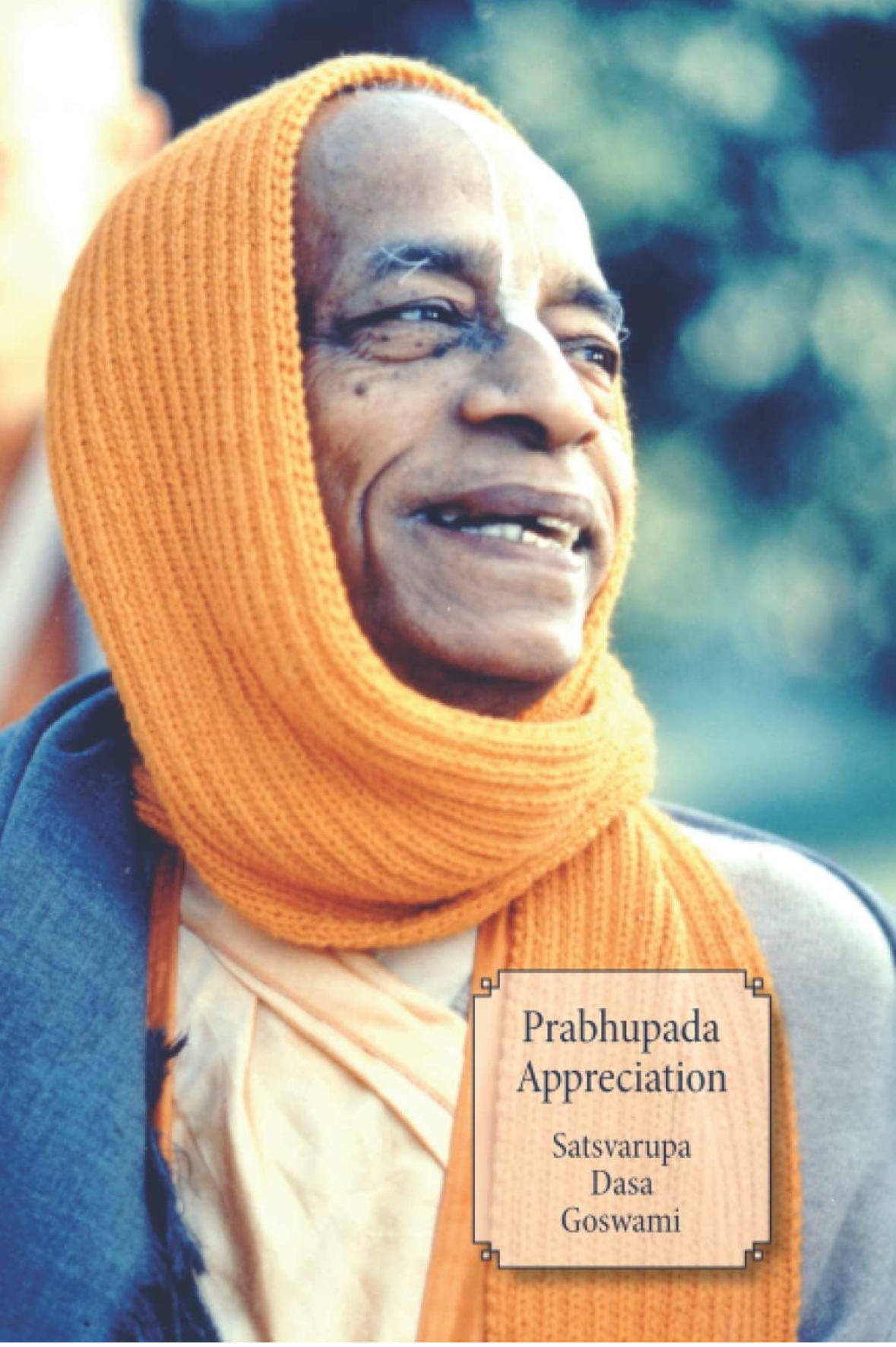
Śrīla Prabhupāda was in the disciplic succession from the Brahmā-Mādhva-Gauḍīya sampradāya, the Vaiṣṇavas who advocate pure devotion to God and who understand Kṛṣṇa as the Supreme Personality of Godhead. He always described himself as simply a messenger who carried the paramparā teachings of his spiritual master and Lord Kṛṣṇa.
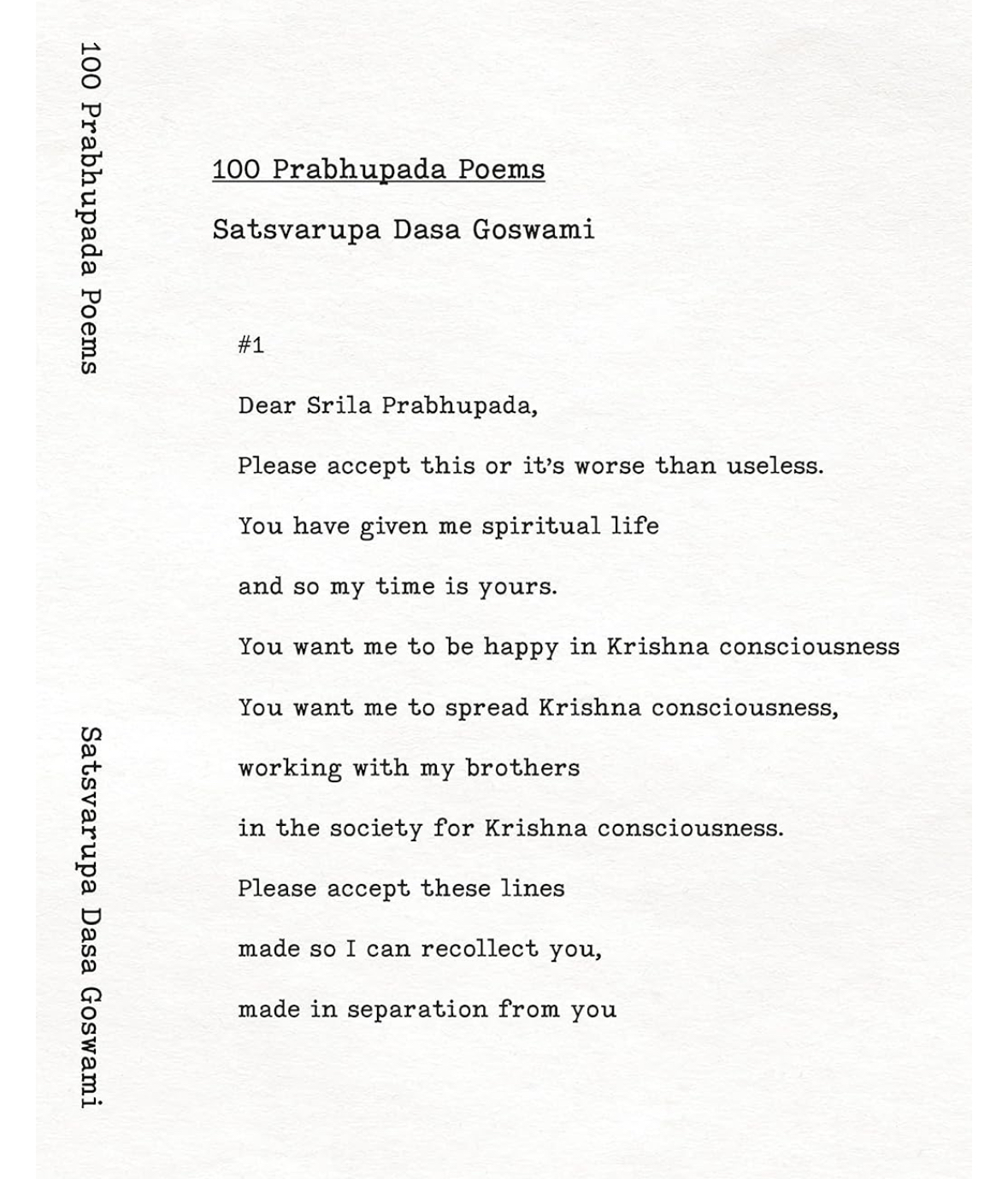
Dear Srila Prabhupada,
Please accept this or it’s worse than useless.
You have given me spiritual life
and so my time is yours.
You want me to be happy in Krishna consciousness
You want me to spread Krishna consciousness,
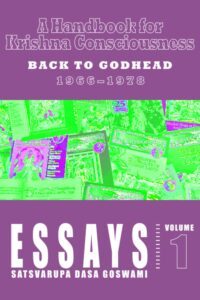
This collection of Satsvarūpa dāsa Goswami’s writings is comprised of essays that were originally published in Back to Godhead magazine between 1966 and 1978, and compiled in 1979 by Gita Nagari Press as the volume A Handbook for Kṛṣṇa Consciousness.

This second volume of Satsvarūpa dāsa Goswami’s Back to Godhead essays encompasses the last 11 years of his 20-year tenure as Editor-in-Chief of Back to Godhead magazine. The essays in this book consist mostly of SDG’s ‘Notes from the Editor’ column, which was typically featured towards the end of each issue starting in 1978 and running until Mahārāja retired from his duties as editor in 1989.

This collection of Satsvarupa dasa Goswami’s writings is comprised of essays that were originally published in Back to Godhead magazine between 1991 and 2002, picking up where Volume 2 leaves off. The volume is supplemented by essays about devotional service from issues of Satsvarupa dasa Goswami’s magazine, Among Friends, published in the 1990s.

“This is a different kind of book, written in my old age, observing Kṛṣṇa consciousness and assessing myself. I believe it fits under the category of ‘Literature in pursuance of the Vedic version.’ It is autobiography, from a Western-raised man, who has been transformed into a devotee of Kṛṣṇa by Śrīla Prabhupāda.”
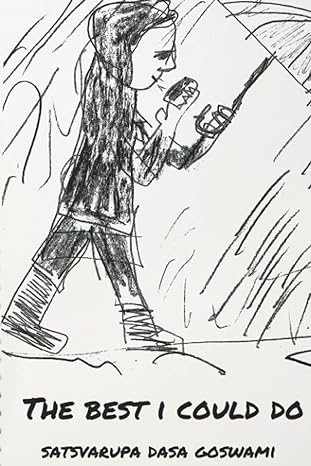 The Best I Could Do
I want to study this evolution of my art, my writing. I want to see what changed from the book In Search of the Grand Metaphor to the next book, The Last Days of the Year.
 a Hare Krishna Man
It’s world enlightenment day
And devotees are giving out books
By milk of kindness, read one page
And your life can become perfect.
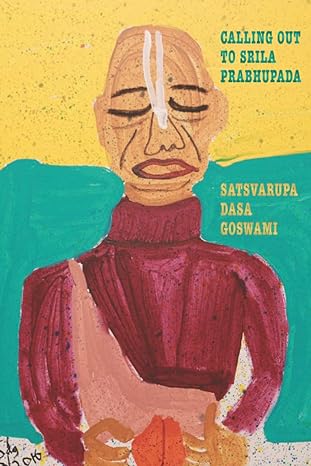 Calling Out to Srila Prabhupada: Poems and Prayers
O Prabhupāda, whose purports are wonderfully clear, having been gathered from what was taught by the previous ācāryas and made all new; O Prabhupāda, who is always sober to expose the material illusion and blissful in knowledge of Kṛṣṇa, may we carefully read your Bhaktivedanta purports.
I use free-writing in my devotional service as part of my sādhana. It is a way for me to enter those realms of myself where only honesty matters; free-writing enables me to reach deeper levels of realization by my repeated attempt to “tell the truth quickly.” Free-writing takes me past polished prose. It takes me past literary effect. It takes me past the need to present something and allows me to just get down and say it. From the viewpoint of a writer, this dropping of all pretense is desirable.
 Geaglum Free Write
This edition of Satsvarūpa dāsa Goswami’s 1996 timed book, Geaglum Free Write Diary, is published as part of a legacy project to restore Satsvarūpa Mahārāja’s writings to ‘in print’ status and make them globally available for current and future readers.