
We are still expanding our team of proofreaders as we aim to increase the rate of republication of Satsvarūpa Mahārāja’s books as well as new books that he writes.
As many of you know, during the July 4th festival just held, a total of 18 new and re-edited and published books were present, and we hope to present a similar number at Satsvarupa Maharaja’s Vyasa-puja observance this December.
Our call for proofreaders includes a need for fluent bilingual Spanish and English speakers to proofread Spanish translations (we currently have around 20 Spanish translations waiting to be proofread). Anyone interested in this particular service should contact Manohara dāsa at [email protected]
If you would like to help, please contact Kṛṣṇa-bhajana dāsa at [email protected] or [email protected] and we will find you a service that utilizes your talents.
The Ten Offenses
There are ten offenses in chanting Hare Kṛṣṇa. They involve not only the time when we sit down to chant japa, but our whole devotional life. These offenses—disobeying the orders of the spiritual master, committing deliberate sins on the strength of chanting, blaspheming the devotee—have to do with more than correct pronunciation of the names of the Lord. So whether we can carry out the orders of the spiritual master is our test. By the time you sit down to chant, it’s already determined by your service attitude—you’ve either already committed the offenses, or you haven’t. Offenseless chanting and following the spiritual master’s orders are interdependent.
By chanting carefully, you get the strength to follow the orders of your spiritual master, as you associate with Kṛṣṇa’s name. But we know that if you associate without offense, it is much more effective. Following the four rules and living in devotional service assures you of avoiding the ten offenses.
The chanting of Hare Kṛṣṇa has the power to eradicate all sins, but if you become an offender to the holy names of the Lord, then you have no chance of being delivered.
THE FOURTH OFFENSE is to minimize the Vedic scriptures and literatures in pursuance of the Vedic version. The scriptures are our guiding light, our direction. Without them it’s impossible to advance in Kṛṣṇa consciousness. Only by the mercy of the Supreme Lord’s incarnation as the śāstra has this information come to us—through guru, śāstra, sādhu. Guru is repeating śāstra, sādhus are repeating śāstra. I am the servant of the sādhus and the guru, so I hear the śāstra from the guru and sādhu; śāstra is my life. There’s no question of taking a mundane, speculative attitude and minimizing in any way the words of scripture. Our authority is Kṛṣṇa, and Kṛṣṇa speaks through the scripture. So this is our authority.
One may say, “Well, this statement is there in the śāstra, but we don’t take it literally,” or “It doesn’t mean this, it means something else,” or “These books were written a long time ago.” No, no. This is the word of Kṛṣṇa. There is no approaching Kṛṣṇa without these books.
We are defeating the atheistic iconoclasm against Kṛṣṇa consciousness by the strength of the śabda-brahma, the proof of the scripture, the sound vibration coming from Kṛṣṇa, coming from outside this material world, apauruṣeya. The absolute truth is coming down in this way, descending to us from the Lord through the authorized mahājanas. You cannot minimize the scripture and expect to chant Hare Kṛṣṇa. Whatever is stated you accept. All reason is there, but you accept on the basis of the proof of the śabda, or the sound.
Our Kṛṣṇa consciousness philosophy is based on the authority of Kṛṣṇa’s words manifested through the Vedas, brahmākṣara-samudbhavam. The Supreme Lord’s breathing is the Vedic knowledge. Don’t take it as some ordinary philosophy. Don’t be so over-intelligent as to foolishly minimize the Vedic injunctions, not realizing the actual knowledge. We don’t have to be original, inventive, or make something up. Rather, we have to repeat the words of Kṛṣṇa and follow the instructions already given by Kṛṣṇa and the mahājanas of the past. But if being mislead in some way or other, you take an atheistic, sophisticated attitude toward the scriptures and don’t understand their nature as absolute, axiomatic truth, then that is a great offense.
Our whole conclusion, our proof, is śabda-brahma, the scriptures, and we should never speculate on or minimize them. But neither should I just respect the scriptures by keeping them in a glass museum case—they have to be regularly heard. Not minimize the scriptures means that you study them, hear from them, without speculation but with submission and inquiry. If doubts arise, regularly reading and hearing from śāstra is the best way to remove these doubts. It is very important. So along with chanting we have to hear from these books so that we can become competent preachers and combat our own doubts, because everything is based on the authority of the scripture. We stand by the truth of śāstra.
pp. 68-72
What you are, I am made of. You are a gold ingot, I am a chip. Still, I feel the uniqueness of my own being as spirit soul, so let me utilize that in your service.
The letter on your desk today is to Patita Uddharana. How many different persons wanted to serve, and you somehow encouraged us all. Patita was supervising an ISKCON center in Columbus, Ohio. You told him to do the routine work—chanting, speaking, rising early, cleaning, cooking—and said that these are the backbone of all our activities. If preaching is strong, management will be strong. “Preaching is our real business, preaching and distributing books.”
You repeat the same instructions in many letters. Sometimes your secretaries wrote those words on your behalf and you signed the letters. I am reading your letters again. Let me carefully consider the instructions you gave in this way. After so many years, after hearing it so many times, after experiencing mixed feelings after so many changes in ISKCON and my own life, what does a phrase like, “Preaching is our real business, preaching and distributing books,” mean to me? I want to understand the spirit of it and carry it out in my own life. Preaching for me can mean preaching to the devotees, visiting ISKCON centers and devotees’ homes, and lecturing on hari-katha. Book distribution also means book appreciation—read your books and encourage book distribution. I can find ways to respond to your words.
lt’s a nice time of day. Late sunlight is slanting into your room, Srila Prabhupada, reflecting through the leaves. There is a sporadic procession of visitors this afternoon. The monkeys are screeching in your garden. Did they used to intrude and screech when you were here? Of course, we know how they took your slipper and interrupted your lectures at Radha-Damodara.
I spent a mere ten minutes with your books today and then started a reading log. I want to build up the disci¬pline again. My reading schedule has been depleted, but I’m not without hope that I can institute a reading reform in my life. Without reading your books, these visits to your rooms may be a bit hypocritical or sentimental. At least they are incomplete without the substantial darsana of submissive and alert reading.
Prabhupada, the temple president here said about my Radhastami lecture, “It was fantastic. Satsvarupa Maharaja at his best, in the mode of empowered Lilamrta.” I’m at my best and can satisfy the devotees best when I make inspired presentations of Your Divine Grace’s life. I seem to be useful in that way. My intentions, my personal campaign of “Back to Prabhupada” is not just a selfish thing; it will make me a pleasing and effective preacher.
I can relax in your room. I sit in the back, distant yet close. This is all the intensity I can take these days. The devotees are assembling out front for a Sunday afternoon harinama party into Vrndavana, but I don’t feel up to it. No one else is here in your room. You might be sitting here and I’m here with you as your servant and disciple, telling you, “Srila Prabhupada, they’re going on harinama. Can I get you a drink? Any prasadam you would like?” It’s Ekadasi and you might not want anything, but if you do, I can arrange for it.
As I write, I’m brought back out of the past to 1993. I look out the window and see two bhaktas from Russia, both named Alex, who want to take initiation from me. They would like to meet with me, but I avoid meetings. What do you think, Srila Prabhupada, of me initiating them and others? Should I stop, or is it my duty? One thing is clear: my only credential for initiating is my bona fide link to you. Today, so many people wanted to attend the meeting for my disciples that they couldn’t fit into the room. I have never even seen some of them before. Later I thought, “Why would anyone consider me a spiritual master?” The only answer is my connection to you.
Initiating disciples is a duty I perform for you. It is how I sacrifice myself and serve your movement, but I’m not always sure, and that’s one of the important items I’d like to hear from you about. I say “hear” from you, but I don’t expect a letter from the spiritual world or to hear your voice from the sky. If you could enlighten my intelligence so that I could know what you want . . . For now, I initiate only on an exceptional basis, a few a year.
Many of the ones I initiated over ten years ago have gone defunct.
I ask you about initiations, but let me also admit to you my inattentive japa. Please give me your mercy. Please help me. I could ask you for direction, but what more can you say? You have already said so much. Chant and hear. Serve the guru and the taste for chanting will come. Control the mind, the stubborn mind.
The sun is going down. Your last days and weeks in 1977 slipped away. The bell rang. You laid in bed and didn’t eat. Your body gradually stopped functioning. Long hours of silence. Chanting by your bedside. Young men at your bedside, eager to serve you, and very attached to their preaching zones and assignments in various places around the world. You trained us like that, to be dedicated to a temple or a service. When we came to see you, after a week or two we were restless to return to our prabhu-datta-desas. Partly, we wanted to be little lords in our zones, but the good result was that we wanted to fight on the battlefield as you ordered—to distribute books and to preach, to change the world into a Krsna conscious place.
You didn’t like us staying in Vrndavana with no real engagement. You wanted us to get out and preach, to go back to our field. I remember these things about you, Srila Prabhupada.
pp. 34-44
This advice isn’t everything,
but it’s important:
Listen to others and don’t
think yourself the only
one, the most special,
sensitive soul
ever created.
Because even special souls
have odd moments
such as the time I met a bearded goat
in the woods—all he needed to fulfill the cliché
was a pipe pressed to his lips
like an old Irish leprechaun.
He had only one horn
and perhaps that made him less dangerous
but goats have been known to rush people.
Was I safe because I was a special, sensitive soul?
And what about the rabbits
gamboling across pastures? What
is their defense against the sleek-running fox?
Now I know they have their
own ways of learning
I’m happy to clear my head
and say
alone or with a group
we work together each doing
his own thing
like in a Krsna conscious community
shared ethos the binding force
to make us a family.
Although we live each in our world I
walked to the quay, still speaking
to the gathering
walking my way at
my speed—what did I think,
that I was some guru with whom
everyone had to agree?
Someone quoted Kierkegaard: “If
I win all men to God but lose myself then all
is lost!” Prabhupada said if we win ourselves
but save no one else … then?
Cat on wall, deer in front yard
sharing a world
and me—do I share a world with these people
walking me to the quay?
I say I want to be alone because
I don’t help the sun to rise but only want to
celebrate as it soars over the trees.
The sun, after all, is special in these gray parts.
Boats cross the water and I continue to speak
to those attending,
gems officina
in payment for my lunch.
Out of affection for her they baked her a cake—
it was her birthday—but
the first guy who entered blew the surprise,
“Is there a party here?”
They ate the cake and left.
Large, limpid eyes, don’t be sad
we are a family, and then a child entered
crying. What had been done to her?
I tried to speak about Prabhupada’s disappearance
of joy and sorrow mixed, of what we feel in our
collective world when the child entered
bringing in the reality of a different sloka.
He knows his ego is going to be
caressed by a man he can’t trust.
That man says the softest, sweetest things
he’s a familiar friend, a
funny person, not so pretty
but that’s the whole point.
Krsna is perfect He’s no
funny Valentine
but luscious beauty in the gopis’ eyes,
always joking with Them and smoothing
their feelings with His ocean-deep words.
I am a bear He is
saying this in a new way.
I will not go to the altar of grief
because I plan to do my best, I
couldn’t—couldn’t make the mark
even though I spoke honest
and what Swami taught.
I came out in the rain but
could only give bear hugs devotee
hugs like a child then go back into my
wilderness cabin
to grow up some more,
cold in the early morning,
and worship Krsna.
Misty around the bend, walking
over snail trails, listening
to Prabhupada encourage us. We
have served him and he is willing
to lift us up.
I am a writer, although Prabhupada doesn’t
mention this service—I know I should write
for those in the West who have discovered Krsna
and who want to know
more. I plan and pray, hope
and write, don’t hide behind
amazing deeds I have never performed,
no fiction but what is.
I feel resolve, and walking down
the snaking hills, the mist
so heavy, a group of dogs
misses me. At the very bottom
the usual white mutt runs out
all bluff and
blocks my way, backing down
as I approach, stick in hand.
Then the Dobermans rush forward,
chained, ineffectual.
Resolve is interesting because
no one can keep you from it
except yourself.
Lead me on Lord of the Flies. It’s Sunday and we should
be in Church
here we are instead at the train station
reading our agnostic book.
No, those days are over. I read Prahlada
teaching his friends.
And I walked in the rain. O head vise, don’t visit me.
The way is the way
bang and wail it’s the same—
the worms come out wiggling
will cry in any season and
will bang on any day
and play and play we know that way.
So I was tellin’ this guy Words come from God/ I’m sure glad I’m not in jail, prison, Navy ship, barracks, factory, or schoolroom, but if you’ve got to go then spread the little remaining gold
juice time in ways
to befit a monk’s cause—help others wherever they are to become devotees.
I stay at center and assure others that’s the rap, you see? Any pause of boredom comes
and let it go away it will
like a trill.
Yesterday—you can forget it I suppose, drag it up, sad or lethargic
but Krsna asked you to shake it off and so you did.
I think a slow and aimless trumpet sound is like
wandering when you walk
trying to let nature
or what?
lead the way—the head
will do its thing but
what about the heart?
I came upon three swaybacked horses,
one with a white mark down its forehead,
but Madhu had cued me: they are
timid stallions, horses of
the logging crew.
They were blocking the left path so
I took the middle. It began
to rain.
Can I pray? Krsna, sometimes You seem
so far away. I cannot assume
that when I use a parrot’s prayer
I have attained You.
When I said this to myself outdoors
my own words shook me and became
clear. Suddenly You became dearer
than I can now recount.
Be here now—this
place. Don’t see wherever
you are as an awkward junction,
a mere bridge or time-killing passage
to somewhere else. This
is your life in Krsna consciousness.
You have books
beads the
Hare Krsna mantra.
You might surrender today.
Want to live—wanted to live—that day
he left, twenty years ago, to
live for him one hundred percent
and then die myself.
Can I be my own man yet
be his?
The routine is all
the quiet Krsna consciousness in my own room
the old way of remembering
and chanting, hearing
Krsna, Krsna
the best I can do.
I sit at his bedside in my memory
my Godbrothers present but me protected
from my own fears this time
my heart walled off and yet not
to feel the emotions of Prabhupada leaving me
finding my own soul.
Now I treasure alone-time
although I am not yet qualified to serve Vrndavana not yet, but I see the face of my dear Prabhupada and
think of ways to be with him.
Then I go to bed and blank out for
hours—dredge up a dream
don’t treat it as gospel but
my hand stops to record it for later
until I find the meaning of love
in each moment.
Prabhupada, a man prayed, I want to
become a chanter
and to pay for big words so I can bend them
to your service.
pp. 198-204
Here is Prabhupada on a morning walk, wearing his heavy woolen swami-cap, a grey cadar and tan sweater, piece of turtleneck jersey showing. It must have been a chilly morning. His face has so many expressions. He looks sad, tender, compassionate, thoughtful, transcendental in a world of his own.
He could switch from these moods from one to another as parts of his self. On a walk, people wanted to be near him, to ask him questions and hear his answers. It was not the same as words he wrote down in print, but the way he spoke them made it very different. He is carrying Krishna in his heart, and he is compassionate to share Him and teach Krishna consciousness to others. That is the main impression I get from this picture. He has wanted to create influence for his Guru Maharaja and for Lord Caitanya. For many years he was all alone, and no one would listen to him. His immediate family did not appreciate him because he did not have much money, and besides, he did not like that burden. Ever since he left home he wanted to preach for his Guru Maharaja, but he was not in a position to do so, and when he was free, his master’s Gaudiya Matha was ruined, and there was no organization to preach for.
But by the time this picture was taken he was at the peak of his influence in the International Society For Krishna Consciousness, his own branch of his master’s movement. He was very successful, and he had thousands of followers. He looks satisfied, loved but still very humble and in a sense all alone, carrying many disciples. They all loved him but could not possible understand his exalted status. They work hard for him and dedicate their lives for him and for this he is very appreciative and loves them all as his children. But ultimately he is alone, satisfied to see the book distribution, the Radha-Krishna worship, and the bright young faces. But alone with Krishna in his heart.
******
A peaceful, meditative moment, Srila Prabhupada is reading his own book in what appears to be his Los Angeles headquarters. He felt at home in his second-floor suite of several rooms and liked to spend weeks at a time there. In the early 1970s many devotees lived there, and many devotees visited him from all over America. He even invited the temple presidents of the U.S. centers to visit him in L.A. and see how things were conducted because he felt it was a standard to be followed by the other centers. It was his western-world headquarters.
Who knows the pleasure and absorption Prabhupada is deriving from reading his own published volume of Srimad-Bhagavatam? This was his main life’s contribution, and he liked to see how it came out. As I have mentioned, Prabhupada remarked that he did not write the books but they were written by Krishna. He read them not exactly like an author, with self satisfaction, but as a worshiper of Krishna, appreciating His presence in the book.
Prabhupada had great confidence in his books’ power to convince an objective reader to accept Krishna as the Supreme Personality of Godhead and to take up the life of devotional service. Only by devotional service could the misguided civilizations of the world find the right path to peace and prosperity. That is why Prabhupada emphasized in his lectures in Los Angeles, “Distribute books, distribute books, distribute books.” He was very much in touch with the book distribution movement and encouraged his disciples to go out in public places and approach people to give them books and take a donation for further printing. He insisted that his disciples not only distribute the books but study them, and here he is setting the example. “Yes, whenever you find time, read my books. Unless you read, how will you preach?”
******
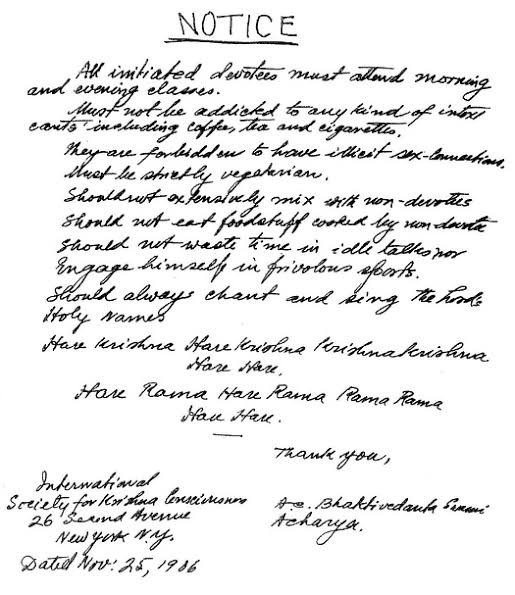
Prabhupada’s English handwriting is clearly legible. Why did he wait so late in the year; November 25, to post the rules for initiated disciples? Maybe he saw they were getting slack. He just wanted to make it official. At the first initiation in the summer the commitments were largely unknown and not
committed to by the initiates. They didn’t all know that they were pledging to follow for a lifetime. Some of the restrictions seemed hard to follow at first. Years of smoking cigarettes and of taking drugs and being habituated to sex had to be given up. These were deeply ingrained. But the taste of chanting the maha-mantra and the taking wholeheartedly to hearing from the Swami and honoring prasadam with him were enough to give up the old sins.
Prabhupada was one of the very few yogis or gurus in the west who made these demands. “Swami, you are very conservative,” Allen Ginsberg had said to Prabhupada, but Prabhupada had no intentions of giving up the regulative principles.
“The Notice” was a historical document, taped to the wall in the storefront without fanfare or announcement. We read it and gasped and said, “This is serious,” and “I accept it.”
******
This looks like an enactment of the sankirtana dancing of Sri Caitanya Mahaprabhu and His devotees. His associates used to join Him every year for four months, traveling from Bengal to Jagannatha Puri. At Puri they would hold wild, ecstatic sankirtana, especially at the Ratha Yatra festival, when the carts would be pulled from the temple to Gundica. Caitanya Mahaprabhu would lead the dancing and would manifest the eight ecstatic bodily symptoms of love of God. Seeing Him dancing and hearing Him cry and sing, the crowds would all join in and be tossed in the waves of spiritual emotions. He was so potent that by His dancing, everyone danced. When Lord Caitanya was on His tour of southern India, He even induced the tigers and elephants to dance with Him and chant in their way.
Here Prabhupada dances and induces his devotees and outsiders to join with him. On his right, his uniformed disciples raise their arms in the air and sway with him. On the left, the “villagers,” or long-haired residents of San Francisco, stand absorbed and transfixed in the Swami’s clapping and dancing. Perhaps one of them will one day shave his head or wear a dhoti
in the future. For now they are all joyously following the movements of the Swami, who dips and sways like a young man and brings even the demigods to come and watch the world acarya dance in Golden Gate Park, which has become as good as Jagannatha Puri in the time of Caitanya Mahaprabhu.
pp. 114-119
“This is my Guru Mahārāja,” I say as I introduce the beautiful statue, and they are impressed. Being Indians, they know the milieu—pūjā, gurus, figures such as Nṛsiṁhadeva. Here on these grounds there’s a mandira with a black Gaṇeśa mūrti and where Garuḍa usually stands in a Viṣṇu temple, there’s a mūrti of a rat, the carrier of Gaṇeśa.
⁜
Kṛṣṇa stories. Write about a guy in a health clinic who pursued hope in solitary moments and washed his own clothes.
⁜
Stones and bones. He
does a radio show,
a small cry from the throat.
Satisfied, but underneath
knows he has no access.
Wants to be sedate,
control his tongue, knows this
world is wild and cruel
and unjust, although Kṛṣṇa’s in
control. He won’t complain
or make a fuss, or
live a pretense.
Kṛṣṇa knows all, but He
doesn’t reveal Himself
to one like me. I am
self-centered and
can’t pray to Lord Hari
by repeating His names,
although I try. I utter
them two and a half hours at a
stretch. What do I
expect? O Gopīnātha!
Will you punish me and
then bring me to You?
I am not mad,
just a taster of poems
with big feet.
Bend over lad,
and touch yer toes.
It’s yoga time. Push
in your belly and
ventilate your wind.
⁜
During the mud pack in their treatment room, I felt I wanted to consult someone I could trust. I wanted to ask how best to serve. We want to surrender and take direction rather than always think on our own, but I couldn’t think of anyone in the world now who I could trust that fully. I respect my Godbrothers, but I want to approach someone in complete surrender and do what he said, regardless of my own point of view. There are Vaiṣṇava gurus in the world, but my guru has left us. I feel his absence.
Then I realized that I have to turn to Śrīla Prabhupāda in separation. I have to pray, “Please guide me even though you have left my mortal vision.” That’s the Vaiṣṇava philosophy. It’s not easy, but it is the only way I have. Śrīla Prabhupāda himself prayed to his guru in separation and said he very much felt his personal presence and encouragement. I feel right about this. I’m not a rebel for not surrendering to others. I want to follow Prabhupāda and learn to pray with more fervor for his direction.
⁜
Daydream: suppose Dr. Prakash asked me some questions and I began to preach to him. Where would that lead? He is leading a life unaware of Kṛṣṇa’s mercy. There’s little likelihood he would be responsive to my preaching, but I daydreamed that he accepted the philosophy and became inspired to worship Kṛṣṇa. Then I remembered Dr. Sarma and how adamant he was against surrender to Kṛṣṇa.
As a result of my daydream, I asked myself whether I had compassion, the desire to see someone take to Kṛṣṇa consciousness. Perhaps I don’t. Why not? Is it because I have seen so many who did take to it and later fell away? Is it because I can’t assure anyone that he will be well taken care of in his association with ISKCON? From these thoughts and guessing that I am lacking in that preaching spirit, I felt l would like to confess this to someone—but to whom?
This is writing practice, meant to bring me to pure love of God, meant for preaching. You know the theory. It’s the best way to reach true writing. I immerse myself in the life of Kṛṣṇa consciousness and my writing will be successful.
I just read powerful purports in the seventh chapter of the Ādi-līlā. One said that pure love of God is the goal beyond mokṣa. I’d had a violent dream in which the police and Marine Corps were fighting one another and with others. People were being horribly beaten. The soldiers returned from the fight with their wounds and stories of victory. I was one of these soldiers but had avoided this fight because it horrified me. I managed to pretend that I had participated in it while talking to the others, but as I ended that tour of duty, I resolved to run away from the Marines and no longer to be a part of it. I woke here in this peaceful, nonviolent atmosphere where our goal is not to fight but to develop better health habits. I was shocked to be a part of that world in the dream where love of God was completely forgotten.
I turned eagerly to read Caitanya-caritāmṛta, although I got up late—1:15 A.M.—after having had difficulty in falling asleep.
The purports were significant. One stated that pure love of God is far beyond all other goals. We shouldn’t imitate its symptoms. This made me think I shouldn’t complain that I still haven’t attained spontaneous chanting because it’s so rare. We have to go on working for it humbly. I wouldn’t want to imitate ecstatic symptoms, so what option do I have than to continue with as much enthusiasm as I can? At least I’m working toward the goal of life.
Śrīla Prabhupāda writes that all the spiritual masters want us to become followers of the pure devotees. The spiritual master is happy not when a disciple brings him money, but when he follows the regulative principles and makes spiritual advancement.
The other purport advocated preaching. We should preach to give others a chance to attain pure love of God. The spiritual master authorizes a devotee to become a preacher, but those who are less advanced prefer to chant Hare Kṛṣṇa in a solitary place. An advanced devotee is not adversely affected by associating with nondevotees if he is trying to give them Kṛṣṇa consciousness.
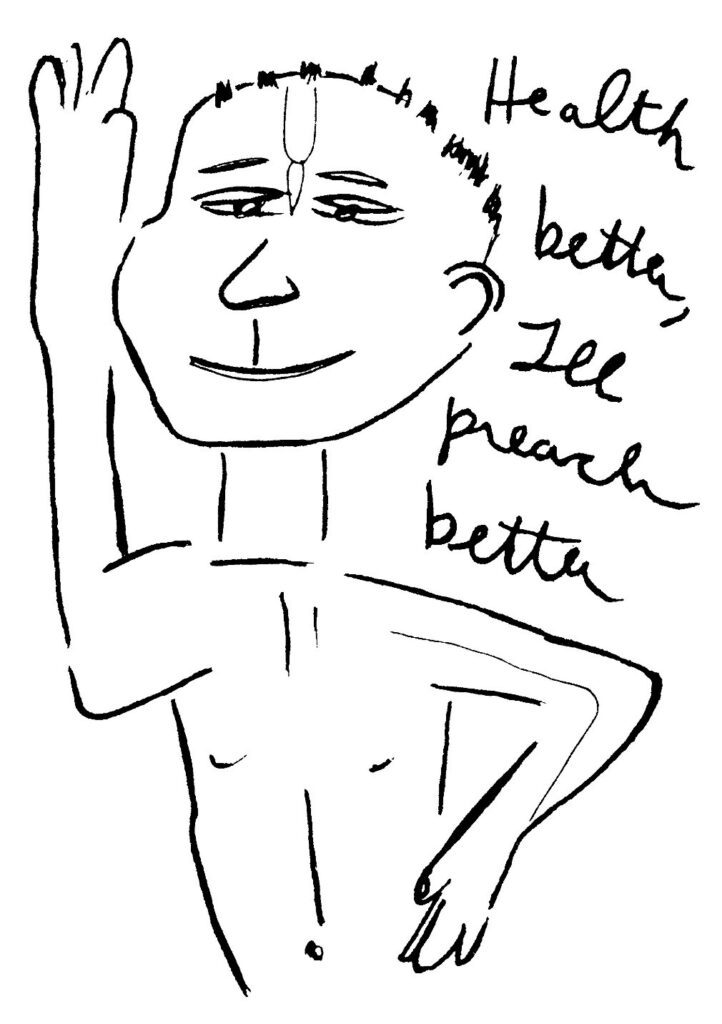
My duty is clearly described. If I get well, I should preach. At least I shouldn’t quit the preaching life I am already following—traveling to the temples in my van and writing books. I can’t seem to heroically increase it, but at least I’m doing something. I want to keep my resolve about this.
As for my sometimes disappointment in the nature of ISKCON preaching, the hype, etc., there’s probably not much I can do about that. It’s simply against my temperament. Still, we have to find a way to preach and stay connected to the movement. This is the challenge many devotees face. It would be easy to say the whole movement is impossible to work in and to quit trying.
pp. 198-203
I am allowed to listen to my inner voice directing me as to what I want to write. I want to go to where the process leads. If it leads me off into a France of the mind, then let me go there on the ferry or le shuttle. If it takes only thirty-five minutes to arrive and come back, then no problem. Or if I need to go somewhere else to follow the Muse from there, then let me go. If I want to live on the coast of France for a couple of months (if I’m lucky enough and find some absorbing work to do there), then I should be happy to remain.
“But this is grasshopper life! We should stick to our work and bite the bullet, not trail after some Muse.”
No, I don’t have to do that. I may have to move along. What that will mean for my pada-yard is that it will have to go ahead without me.
“Okay, then if you didn’t walk, where would you be?”
I drink water and worry. I think of Rousseau and how paranoiac he was, saying the whole world was against him when he was actually an extremely famous writer even in his own day. Yet the scholars say he was exiled from his homeland and that some of his books were officially banned in France. He had no intimate relationships with women, although he seemed to crave that, and his idea of the Noble Savage who would be accepted by society did not come true. I guess he felt the world was against him. At least he recorded what he felt. I may be disgusted to read his self-serving arguments in favor of Jean Jacques Rousseau, but I’m glad he said what he meant. A guy has to say what he means.
There is always a certain amount of duty to be done. Remember Little Dorrit in the Dickens novel? Our teacher made fun of her. Dorrit used to go around the castle with a big bunch of keys, humming merrily to herself. I think she may have been cheerfully saying, “Duty, duty.” Dickens held her up as ideal. We laughed at Little Dorrit, or am I confusing her with someone in Bleak House? But duty.
My duty is to get up at midnight and put on my socks no matter what I have to write. Or, if I decide not to write but to read, I still get up and put on my socks. I don’t feel so great today, but I got up anyway. I can’t find in myself the stuff to face all duties easily. I can’t go beyond duty to spontaneity. Regardless, I do my duty.
My duty is to dig deep in writing. It’s to be hard on myself, but not too hard. It’s to expect the stirrings.
If a skinny boy wants muscles, he has to work out. If a dreamer wants to play the guitar, he has to practice. Duty doesn’t mean working in such a way that you are removed from your initial joy and attraction for a task, but to feel deeper joy at accomplishment always costs something. We always have to move from joy to practice (including drudgery) to accomplishment.
Where the problem comes in is when we realize how much we love freedom. That’s natural, according to Prabhupada. Unfortunately, if we want results in this world, we have to work.
For example, the Hare Krsria mantra comes straight from Goloka. If we want to taste it, we have to chant it even when we don’t want to. We can’t keep hanging
our beadbag on the peg on the wall and expect that
we will taste the holy name.
How can I know
that my spiritual master wants me to walk? It’s
not enough to be proclaimed
patron saint of Canada and Serbia
for my ability to walk under duress and
wear out thirty pairs of shoes.
Because the moon is small and speaks
to me that here is a good place to chan t—
right there under that elm—
and I ought to stay and chant there.
This Pada-yatra- is a free-write book and we have
almost come full circle. We have circumambulated.
We have shown our respect. It is almost time to move
on to other questions: Can I give more time to
chanting now? Is there some other service I should be
doing? More reading? Can I measure up to what Krsna
and Prabhupada require of me? Since this book is
about prayer, I ask these questions.
The greatest authority in the Gaudiya Vai§rjava line is Sanatana Gosvami but he describes himself as nica jati, nica safigi, low-born and fallen because of his asso¬ciation with the Muslim leader who recruited him. Sanatana also said. “I am always suffering from the threefold miseries. Why is that? How do I get free? I don’t know what is good for me.”
Srila Prabhupada elaborates in his purport that there is danger at every step. The world is composed of misery. Those who are practicing Krsna consciousness, however, become free of suffering.
Sanatana goes on to say that despite this dangerous
condition, he is called pandita by the village men. Even
worse, he accepts the title because they claim it is true.
“They call me pandita, but I don’t even know who I
am.”
Fallen, and I admit to myself
that when I chant Hare Krsna
my heart remains wooden, stone, and
the Lord does not appear.
Yes, I admit it. I have only the outer shell
of His name, and
I cannot force Him to conic to me. I have
nothing to offer Him.
“Not yet,” He seems to say.
“You have not been tested enough.”
Or blessed enough.
Or I have been blessed, I have received
so much but I am still poor.
Can I admit to my offenses?
Then why do you accept that you are pandita?
A bird sits on the last telephone wire from America
to here. That wire stops at this house, but we have no
phone.
Lord Caitanya told Sanatana that He was pleased
after he had given up his valuable blanket. His words
constitute stiff instruction, something we have all
heard hundreds of times but haven’t realized. I am not
always even enthusiastic to repeat it to others,
although we are all in need to hear it. After all, I am
not above the struggle myself
What? Can’t an older fellow struggle?
I guess so, but we don’t expect him to be struggling
from such a low position. We don’t expect him to be dancing the bugaloo, but be composed, like Sanatana, or a junior version of him, wearing saffron mittens and saffron dress, his only heart’s concern to be a good fellow and die unadorned and nonscandalized.
Where is he going?
Where is the Mathura of Yadupati?
Where is the northern Koala of Raghunatha? Keep your mind fixed on the eternal.
When Sanatana read the note his brother had composed in Sanskrit, he became happy and decided to free himself. It was inspired writing, and it worked wonders on Rupa’s older brother. Even then, the poet Rupa knew how to touch the heart of an elevated soul. His words were meant to inspire meditation on the temporality of this world. Even the dhamas become overrun with weeds. Time kills all, even memory, so why be concerned? If you are now suffering, know for certain that it’s temporary.
I would like to remember Rupa Gosvami’s words when I am stuck in what appears to be a painful and endless situation, O pandita.
pp. 40-44
Prabhupada singing:
cintamani-prakara-sadmasu
People don’t know our innermost hearts. We go to a temple and people kindly make arrangements for us, buy us whatever we need—socks, a few votive candles—and things we don’t need—an extra large sweatshirt, food we can’t digest.
I am alone and you are alone, yet we’re together in Krsna consciousness (or if not, we’re thrown together as we hurdle through the universe). When you’re on an airplane, your weight is figured in collectively with all the other passengers’ weight. You become a collective entity. Then the plane propels itself forward and our destinies seem to become as collective as our weight, despite the fact that we all sit in different seats.
If you are sitting by an exit and for some reason you don’t want to open the exit door in an emergency (which admittedly can be difficult), and if you’re not prepared to give orders like a crew member, if you’re not prepared to look out the window and ascertain whether there’s too much fire or debris at your exit, and to lead your group of passengers to a safer exit—if you don’t think you are brave and strong enough to lead everyone into the ocean and out of the burning airplane—then you are supposed to im¬mediately tell the stewardess that you can’t cut the mustard. Those who are assigned to exit seats by chance have to face destiny in the face, but yes, even the exit-sitters are alone to face it in the shared, collective space of the airplane.
Prabhupada singing:
cintamani-prakara-sadmasu
I told them that poems don’t have to rhyme anymore. Just yesterday however, a young girl sent me her latest poem, which was full of rhymy chime.
Here’s a rhyme: O holy name,/ it’s no shame,/ don’t be to blame,/ you should take to the holy name.
A person named shame,/ can chant the holy name./ Don’t be a bive,/ and don’t forget to strive,/ and be careful of the jive/ that comes to mind.
I’m a free-verser,/ not a curser.
Krsna will help us tomorrow,/ so don’t sorrow.
Now if you want to chant the holy name,/ I say don’t blame/ me for singing a song/ which doesn’t belong/ in the repertoire of a pure devotee’s efforts because this particular jive (and you’ll pardon the word) is really absurd. Because Prabhupada gave us a way to bedevil ourselves. I mean to say (correction please), Prabhupada gave us a way to work if we’re not jerks. You’ll accept the board/ and you can afford/ to make the sacrifice of words,/ by which you go forward to chant, serve, and distribute books/ even if you get dirty looks/ in every nook/ and corner and cranny.
Keep on moving,/ keep on grooving/ on the bhakti-marga / and be happy.
Anyway, this girl wrote me a rhyming poem—not like the rhymes I just made, but a rhyming poem. Then at night I said, “We don’t rhyme poems anymore. This is the modern age. We use the free-verse form.”
“But why do you write this way? Where’s the straight presentation?”
“Look, I love it.”
“Yeah, but just because you love something . . . I love to snorkel, and my friend over there loves to dance like a Sufi. I thought you said we weren’t supposed to play frivolous sports. How come you can write poems? Who do you think you are, a disciple of William Carlos Williams? Do you still think you’re a Brooklyn College poet?”
“Of course not. The swami said I could write poems, and to be poetic is one of the twenty-six qualities of a devotee.”
“Yeah, well, we want Krsna, we want Rama, we want Radha, we want sankirtana. We want fired-up preachers. We want . ”
“Okay, okay, calm down.”
A babble of subpersons to end this radio show. Now everyone sit down, compose yourselves, and we’ll have a kirtana.
“I’ll lead.”
“No, I will lead. Everyone together: Hare Krsna, Hare Krsna, Krsna Krsna, Hare Hare/ Hare Rama, Hare Rama, Rama Rama, Hare Hare.”
pp. 298-304
Once there was a gurukula boy named Anu dasa who could talk to butterflies and flowers. They also spoke back to Anu dasa, and he could understand them. But they spoke to him so gently that no one else heard it. Or sometimes if a person came very close to where Anu was talking, and if the wind was right, they could hear the soft voices of the yellow and black butterflies and the red roses in conversation with the boy. Although Anu liked to talk of games and silly things and about eating when he was with the other boys, yet when he spoke to the butterflies—and sometimes he would also speak to birds who came and landed in the rose garden—he would speak only Krsna consciousness. He liked to preach to them.
Anu’s father asked his son, who was only six years old, “Anu, why do you talk to the butterflies?”
“I’m preaching,” said Anu, hoping his father would approve.
“You should preach to humans,” said his father. “That’s more important. What good could a butterfly do as a devotee, even if he could understand you?”
Anu replied, “They’re easier to talk to.” Anu remembered that he had once seen a man throw a bottle at devotees when they were chanting in a park. It had hit the devotee on the head.
“Anyway,” his father said, “I don’t mind if you do it. You can talk to the flowers and birds as practice. Then when you grow up, you can preach to humans.” So his parents allowed him to talk in the backyard garden, which he often did. In the summer he told the butterflies about Krsna, the lifter of Govardhana Hill, who protected all the residents, even the animals, birds, and plants, from the flood of India. He also told them of Lord Caitanya’s merciful chanting of Hare Krsna which even the birds and butterflies appreciated. In the winter months, Anu told the chickadees, who were quite friendly, how to chant and sing Hare Krsna. It seemed to Anu that the birds were peeping back to him “Hare Krsna, Hare Krsna” just like a parrot that Anu’s uncle kept in a cage which actually did say “Haribol! Hare Krsna!” and which everyone heard. Anu’s teacher also told him that there were parrots in Vrndavana, one of which spoke about Krsna and another which spoke about Radha.
But when Anu became a few years older, and he still only talked about Krsna to the lower creatures and not to the humans, his elders became a bit worried.
“He will be retarded,” his father said.
But his mother said, “Leave him alone, he’s only eight years old.”
Anu’s father was a very good preacher. He used to speak Lord Caitanya’s philosophy in college class-rooms and on the streets. He also distributed Prabhupada’s books, even though sometimes people cursed at him and the police said that they would put him in jail. His father was like Prahlada, who wasn’t afraid because he knew that Krsna would protect him. Even if someone did try to hurt a devotee, it was possible only to hurt his body, because the soul can never be cut or wet or burned or made sad or afraid—as long as a devotee remembers Krsna.
Anu’s father became more worried when the boy was ten years old and still preferred to talk alone in the garden, rather than in front of people. When Anu did talk to people he usually only said a few things like “Please pass the salt,” or “Yes I did my mathematics homework. Five times seven is thirty-five.” So people thought that Anu was funny.
One day when Anu was eleven years old, or maybe twelve, on a beautiful summer day in the garden, several monarch butterflies came to him and fluttered onto his hand.
“You have always been kind to us, to tell us of Krsna,” they said. And then a robin came by and said, “Yes, that’s true.” And the flowers nodded in agreement. By now Anu was so friendly with the creatures in the garden that even animals that normally killed each other did not do so by his influence. So on this day all the creatures were expressing their thanks to Anu. Then a particularly gorgeous red rose opened its petals and said softly to Anu, “The other flowers and birds have asked me to say to you that we think you are practiced enough and now you can try to tell about Krsna to the humans. Whenever you attempt to, if you just remember us, we will help you as best we can.”
Anu was very satisfied with the well-wishing words of the birds, butterflies, and flowers that he would be able to preach to humans, although humans were certainly harder to speak to, and they sometimes threw bottles.
Anu’s father had been patiently waiting for Anu to come and join him in his preaching, which he did every day. Every day his father would go out with a bag of Prabhupada’s books and come back at night with the bag empty or almost empty. By distributing books his father was satisfied in Krsna consciousness. Anu knew that the books were meant especially for human beings and in fact the birds and animals couldn’t understand them. And that was another reason why it was so important to learn to preach to humans.
When Anu told his father that now he was ready to preach, his father asked, “How did you finally grow up?”
“I practiced as you told me,” said Anu. “And the butterflies and birds and flowers told me that I should go now and speak to the humans. They said if I became afraid, that they would help me if I remembered them.”
“That’s a fancy story!” said his father. “But if it helps you to preach now, then it’s all right with me.”
And so the father and son went out together preaching, and although they did meet with difficult people, and even people who called the police and threatened them, the father and son made a good team. And Lord Krsna was pleased with them.
Later that day, Gurudeva passed Nimai dasa in the hallway and said, “Not bad for a start. But don’t go on a binge.”
Nimai knew that his “fable” was not much of a story. Gurudeva was just encouraging him. But it was good that Gurudeva had warned him, “Don’t go on a binge.” Because it seemed to Nimai that once he caught the knack of how to tell Krsna conscious stories, he would never want to stop.

Viraha Bhavan Journal (2017–2018) was written by Satsvarūpa Mahārāja following a brief hiatus in writing activity, and was originally intended to be volume 1 in a series of published journals. However, following its completion and publication, Mahārāja again stopped writing books, subsequently focusing only on what became his current online journal, which began in August of 2018.

At first, I took it hard that I would have to live surrounded by the firemen, and without my own solitude. After all, for decades I had lived in my own house with my own books and my own friends. I was also now a crippled person who couldn’t walk, living among men who did active duties. But when Baladeva explained it to me, how it was not so bad living continually with other firemen and living in the firehouse with its limited facilities, I came to partially accept it and to accept the other men. I came to accept my new situation. I would live continually in the firehouse and mostly not go outside. I would not lead such a solitary life but associate with the other firemen.
Let me write sweet prose.
Let me write not for my own benefit
but for the pleasure of Their Lordships.
Let me please Kṛṣṇa,
that’s my only wish.
May Kṛṣṇa be pleased with me,
that’s my only hope and desire.
May Kṛṣṇa give me His blessings:
Kṛṣṇa Kṛṣṇa Kṛṣṇa Kṛṣṇa Kṛṣṇa he
Rāma Rāghava Rāma Rāghava
Rāma Rāghava rakṣa mām.
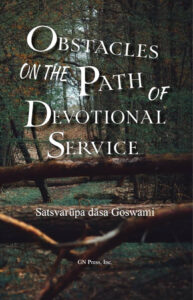
You mentioned that your pathway has become filled with stumbling blocks, but there are no stumbling blocks. I can kick out all those stumbling blocks immediately, provided you accept my guidance. With one stroke of my kick, I can kick out all stumbling blocks. —Letter by Śrīla Prabhupāda, December 9, 1972.

The Writing Sessions are my heart and soul. I’m trying my best to keep up with them. I am working with a few devotees, and they are far ahead of me. I wander in the wilderness of old age. I make my Writing Sessions as best I can. Every day I try to come up with a new subject. Today I am thinking of my parents. But I don’t think of them deeply. They are long gone from my life. Śrīla Prabhupāda wrote a poem when he was a sannyāsī, and he said now all my friends and relatives are gone. They are just a list of names now. I am like that too. I am a sannyāsī with a few friends. I love the books of Śrīla Prabhupāda. I try to keep up with them. I read as much as I can and then listen to his bhajanas.
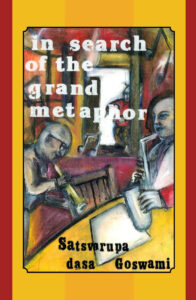
The metaphor is song. Explain it. Yes, particulars may not seem interesting or profound to readers who want structured books.
Wait a minute. Don’t pander to readers or concepts of Art. But Kṛṣṇa conscious criteria are important and must be followed. So, if your little splayed-out life-thoughts are all Kṛṣṇa conscious, then it’s no problem.
I am near the end of my days. But I do like the company of like-minded souls, especially those who are Kṛṣṇa conscious. Yes! I am prone to Kṛṣṇa consciousness. I have been a disciple of Bhaktivedanta Swami Prabhupāda for maybe almost sixty years. Sometimes I fail him. But I always bounce back and fall at his feet. It is a terrible thing that I sometimes do not have the highest love for him. It is a terrible thing. Actually, however, I never fall away from him. He always comes and catches me and brings me back to his loving arms.

This edition of Satsvarūpa dāsa Goswami’s 1996 timed book, Upstate: Room to Write, is published as part of a legacy project to restore Satsvarūpa Mahārāja’s writings to ‘in print’ status and make them globally available for current and future readers.
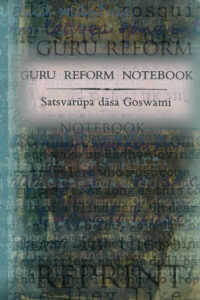
A factual record of the reform and change in ISKCON guru system of mid ’80s.

Readers will find, in the Appendix of this book, scans of a cover letter written by Satsvarūpa Mahārāja to the GN Press typist at the time, along with some of the original handwritten pages of June Bug. Together, these help to illustrate the process used by Mahārāja when writing his books during this period. These were timed books, in the sense that a distinct time period was allotted for the writing, during SDG’s travels as a visiting sannyāsī
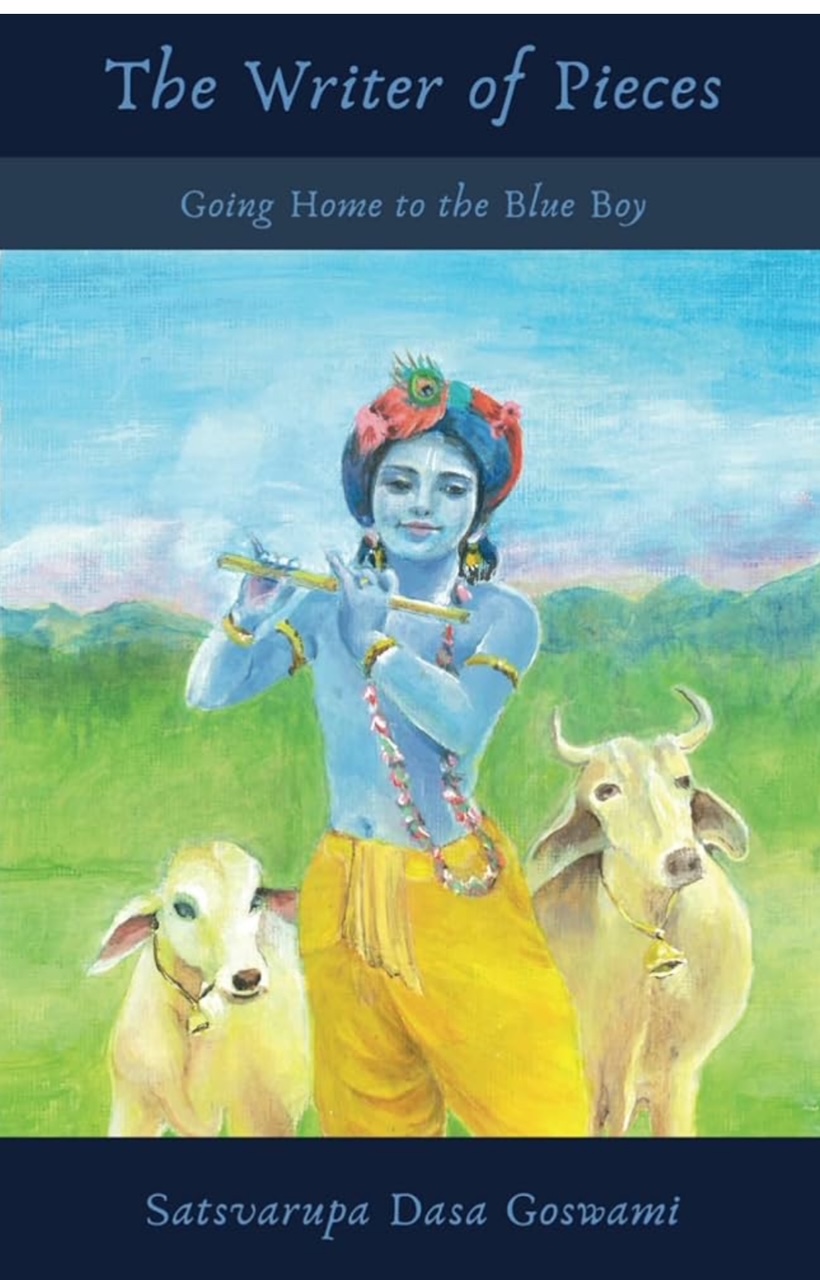
Don’t take my pieces away from me. I need them dearly. My pieces are my prayers to Kṛṣṇa. He wants me to have them, this is my way to love Him. Never take my pieces away.

Many planks and sticks, unable to stay together, are carried away by the force of a river’s waves. Similarly, although we are intimately related with friends and family members, we are unable to stay together because of our varied past deeds and the waves of time.
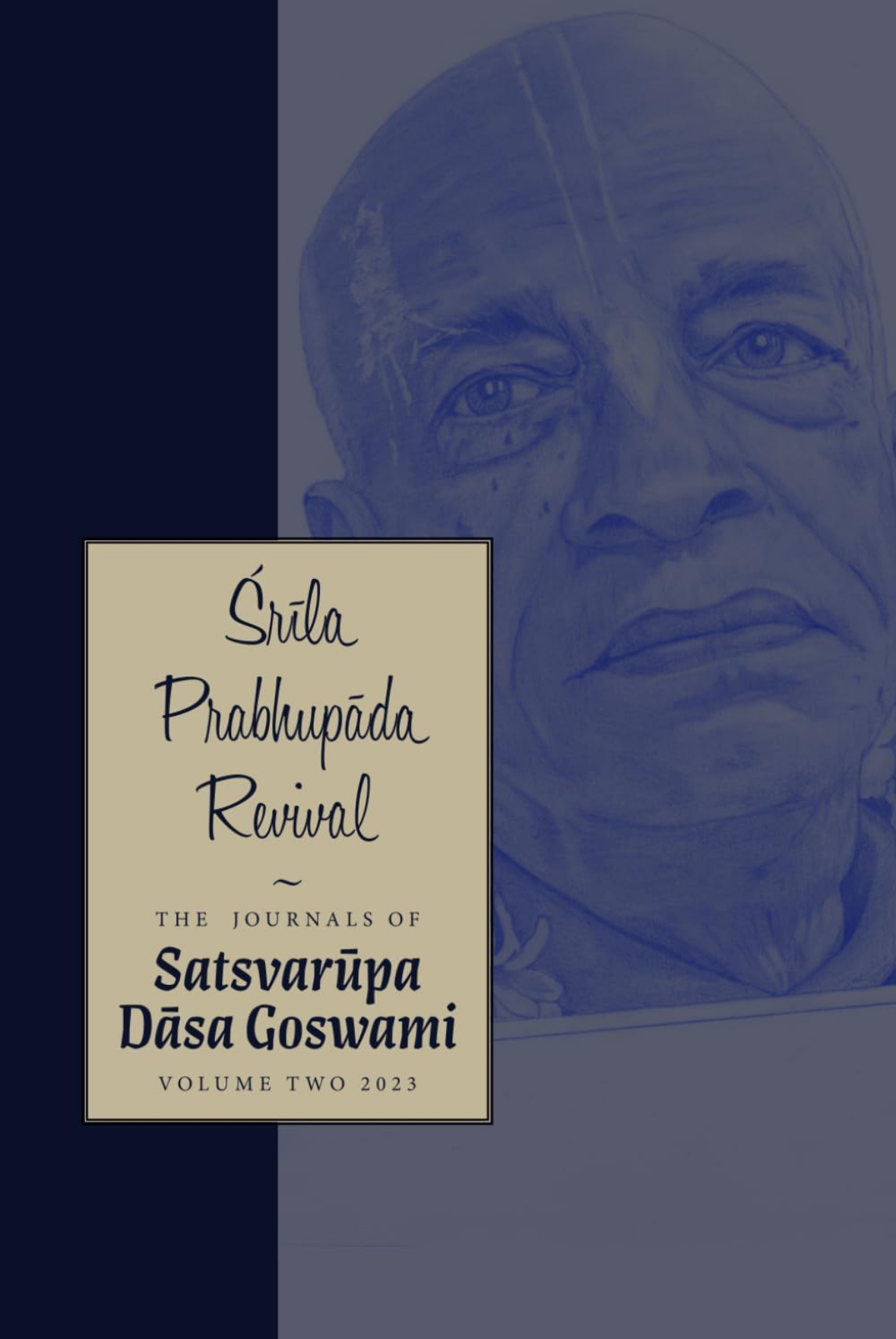
To Śrīla Prabhupāda, who encouraged his devotees (including me) To write articles and books about Kṛṣṇa Consciousness.
I wrote him personally and asked if it was alright for his disciples to write books, Since he, our spiritual master, was already doing that. He wrote back and said that it was certainly alright For us to produce books.
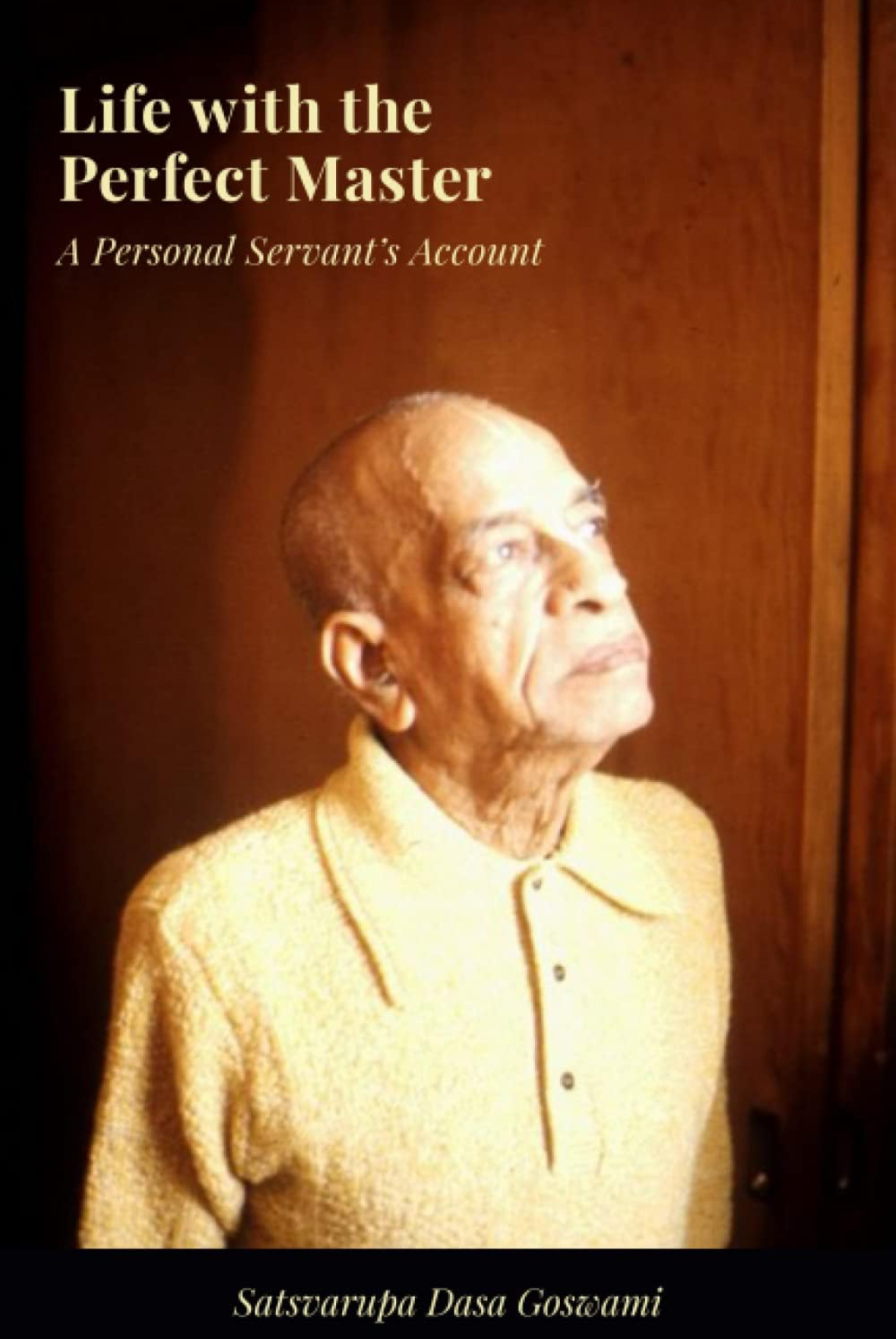
I have a personal story to tell. It is a about a time (January–July 1974) I spent as a personal servant and secretary of my spiritual master, His Divine Grace A.C. Bhaktivedanta Swami Prabhupäda, founder-äcärya of the International Society for Krishna Consciousness. Although I have written extensively about Çréla Prabhupäda, I’ve hesitated to give this account, for fear it would expose me as a poor disciple. But now I’m going ahead, confident that the truth will purify both my readers and myself.

First published by The Gītā-nāgarī Press/GN Press in serialized form in the magazine Among Friends between 1996 and 2001, Best Use of a Bad Bargain is collected here for the first time in this new edition. This volume also contains essays written by Satsvarūpa dāsa Goswami for the occasional periodical, Hope This Meets You in Good Health, between 1994 and 2002, published by the ISKCON Health and Welfare Ministry.

This book has two purposes: to arouse our transcendental feelings of separation from a great personality, Śrīla Prabhupāda, and to encourage all sincere seekers of the Absolute Truth to go forward like an army under the banner of His Divine Grace A.C. Bhaktivedanta Swami Prabhupāda and the Kṛṣṇa consciousness movement.
A single volume collection of the Nimai novels.
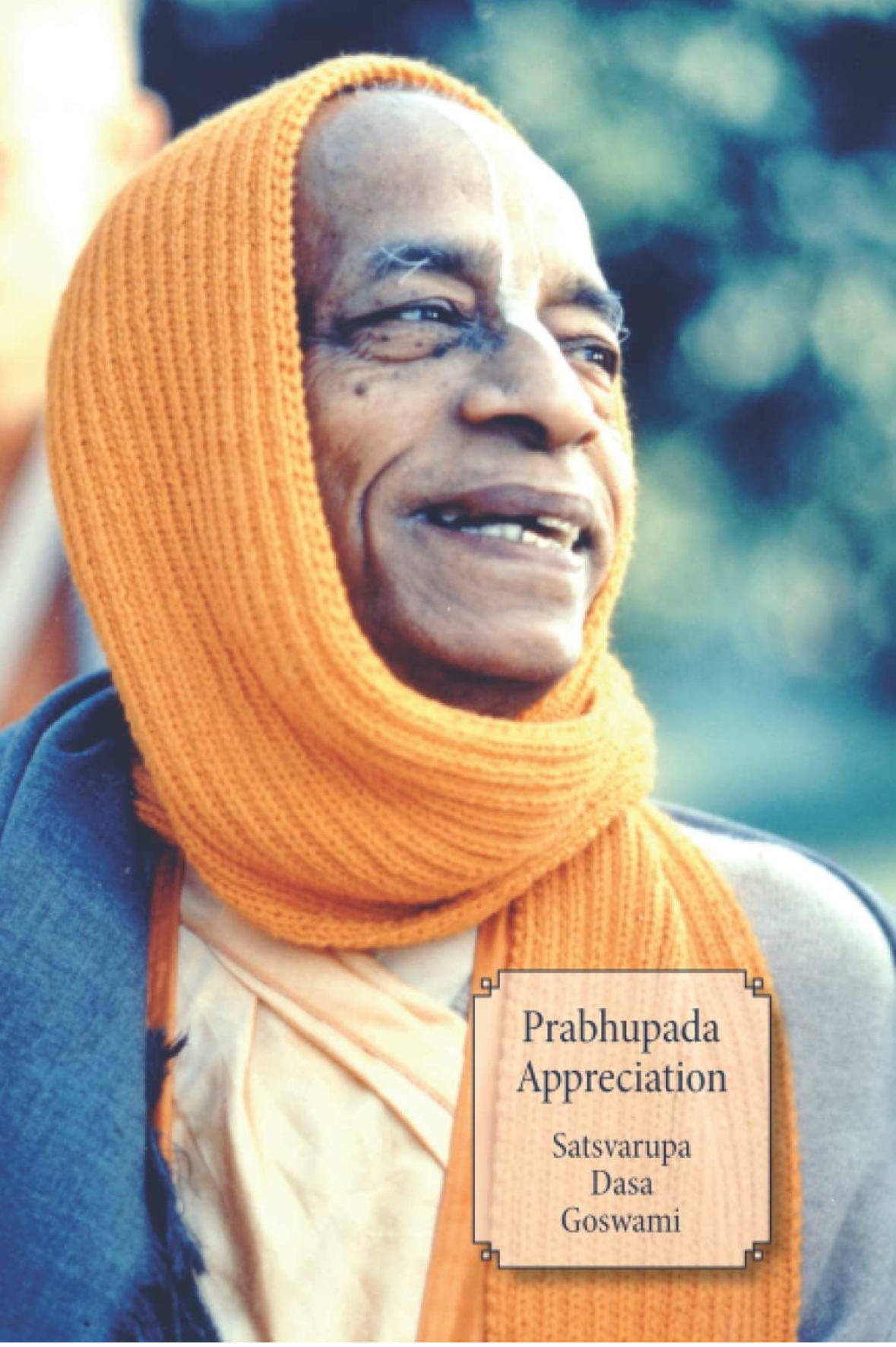
Śrīla Prabhupāda was in the disciplic succession from the Brahmā-Mādhva-Gauḍīya sampradāya, the Vaiṣṇavas who advocate pure devotion to God and who understand Kṛṣṇa as the Supreme Personality of Godhead. He always described himself as simply a messenger who carried the paramparā teachings of his spiritual master and Lord Kṛṣṇa.
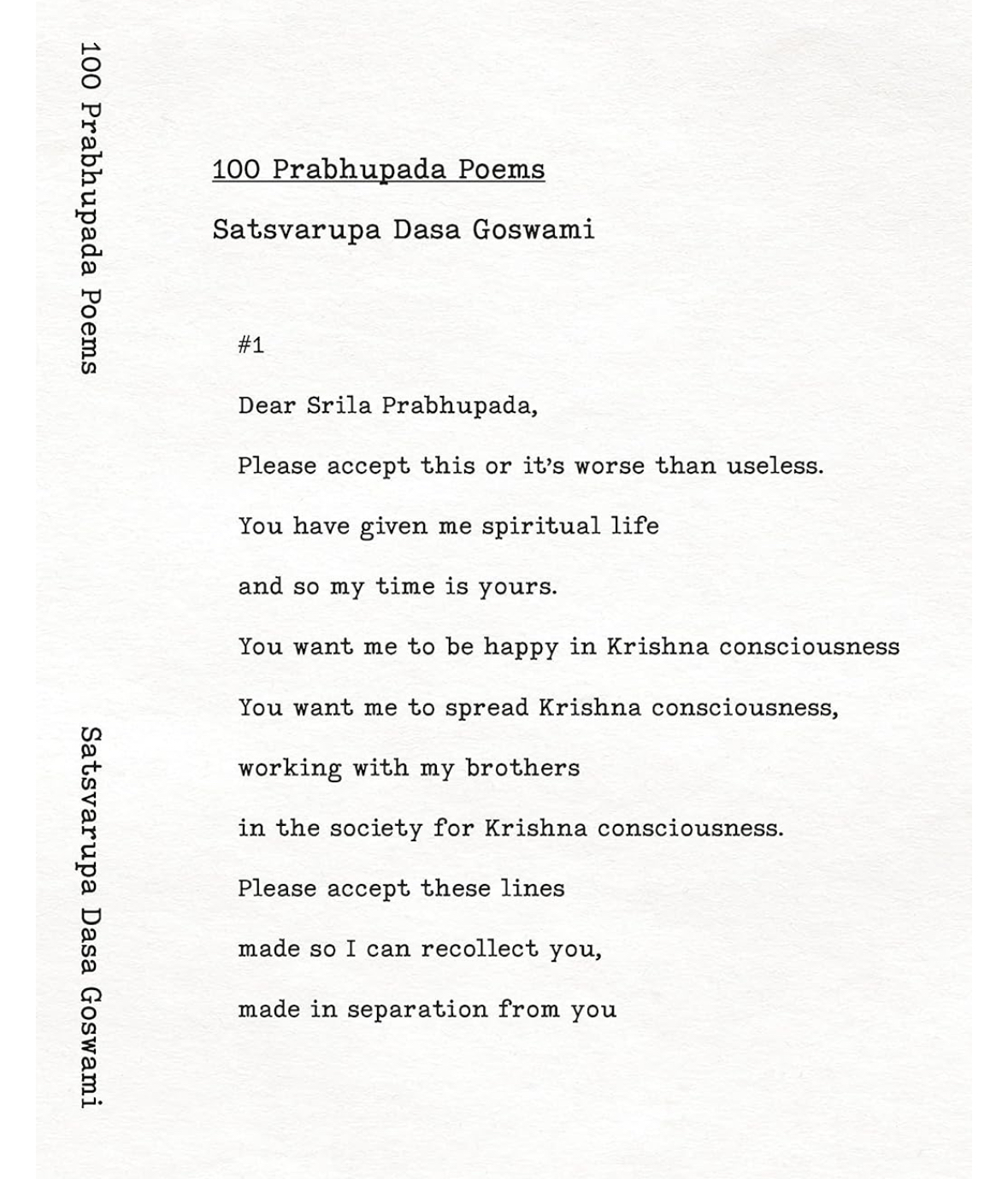
Dear Srila Prabhupada,
Please accept this or it’s worse than useless.
You have given me spiritual life
and so my time is yours.
You want me to be happy in Krishna consciousness
You want me to spread Krishna consciousness,
This collection of Satsvarūpa dāsa Goswami’s writings is comprised of essays that were originally published in Back to Godhead magazine between 1966 and 1978, and compiled in 1979 by Gita Nagari Press as the volume A Handbook for Kṛṣṇa Consciousness.

This second volume of Satsvarūpa dāsa Goswami’s Back to Godhead essays encompasses the last 11 years of his 20-year tenure as Editor-in-Chief of Back to Godhead magazine. The essays in this book consist mostly of SDG’s ‘Notes from the Editor’ column, which was typically featured towards the end of each issue starting in 1978 and running until Mahārāja retired from his duties as editor in 1989.

This collection of Satsvarupa dasa Goswami’s writings is comprised of essays that were originally published in Back to Godhead magazine between 1991 and 2002, picking up where Volume 2 leaves off. The volume is supplemented by essays about devotional service from issues of Satsvarupa dasa Goswami’s magazine, Among Friends, published in the 1990s.

“This is a different kind of book, written in my old age, observing Kṛṣṇa consciousness and assessing myself. I believe it fits under the category of ‘Literature in pursuance of the Vedic version.’ It is autobiography, from a Western-raised man, who has been transformed into a devotee of Kṛṣṇa by Śrīla Prabhupāda.”
 The Best I Could Do
I want to study this evolution of my art, my writing. I want to see what changed from the book In Search of the Grand Metaphor to the next book, The Last Days of the Year.
 a Hare Krishna Man
It’s world enlightenment day
And devotees are giving out books
By milk of kindness, read one page
And your life can become perfect.
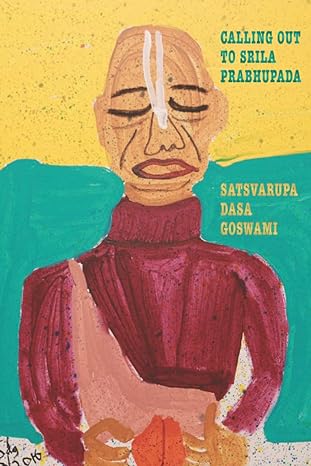 Calling Out to Srila Prabhupada: Poems and Prayers
O Prabhupāda, whose purports are wonderfully clear, having been gathered from what was taught by the previous ācāryas and made all new; O Prabhupāda, who is always sober to expose the material illusion and blissful in knowledge of Kṛṣṇa, may we carefully read your Bhaktivedanta purports.
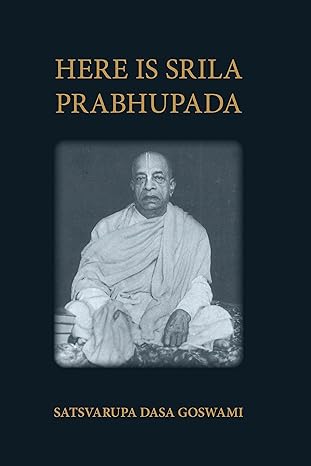
I use free-writing in my devotional service as part of my sādhana. It is a way for me to enter those realms of myself where only honesty matters; free-writing enables me to reach deeper levels of realization by my repeated attempt to “tell the truth quickly.” Free-writing takes me past polished prose. It takes me past literary effect. It takes me past the need to present something and allows me to just get down and say it. From the viewpoint of a writer, this dropping of all pretense is desirable.
 Geaglum Free Write
This edition of Satsvarūpa dāsa Goswami’s 1996 timed book, Geaglum Free Write Diary, is published as part of a legacy project to restore Satsvarūpa Mahārāja’s writings to ‘in print’ status and make them globally available for current and future readers.