

We are still expanding our team of proofreaders as we aim to increase the rate of republication of Satsvarūpa Mahārāja’s books as well as new books that he writes.
As many of you know, during the July 4th festival just held, a total of 18 new and re-edited and published books were present, and we hope to present a similar number at Satsvarupa Maharaja’s Vyasa-puja observance this December.
Our call for proofreaders includes a need for fluent bilingual Spanish and English speakers to proofread Spanish translations (we currently have around 20 Spanish translations waiting to be proofread). Anyone interested in this particular service should contact Manohara dāsa at [email protected]
If you would like to help, please contact Kṛṣṇa-bhajana dāsa at [email protected] or [email protected] and we will find you a service that utilizes your talents.
There are ten offenses in chanting Hare Kṛṣṇa. They involve not only the time when we sit down to chant japa, but our whole devotional life. These offenses—disobeying the orders of the spiritual master, committing deliberate sins on the strength of chanting, blaspheming the devotee—have to do with more than correct pronunciation of the names of the Lord. So whether we can carry out the orders of the spiritual master is our test. By the time you sit down to chant, it’s already determined by your service attitude—you’ve either already committed the offenses, or you haven’t. Offenseless chanting and following the spiritual master’s orders are interdependent.
By chanting carefully, you get the strength to follow the orders of your spiritual master, as you associate with Kṛṣṇa’s name. But we know that if you associate without offense, it is much more effective. Following the four rules and living in devotional service assures you of avoiding the ten offenses.
The chanting of Hare Kṛṣṇa has the power to eradicate all sins, but if you become an offender to the holy names of the Lord, then you have no chance of being delivered.
* * *
THE FIFTH OFFENSE is to consider the glories of the holy name to be imagination. The fifth offense and the sixth offense are similar—to take the chanting of Hare Kṛṣṇa as imagination or to consider the claims for the chanting to be exaggeration.
This morning we read that if a man practicing even a sinful life chants Hare Kṛṣṇa, he can become better than a brāhmaṇa. The śāstra also states that these sixteen syllables of the Hare Kṛṣṇa mantra contain all possible religious activities and rituals that are performed at great cost and labor. They are all accomplished just by chanting the mantra. The effect of chanting—that one finishes his material life and attains love of God—cannot be interpreted or exaggerated. Ajāmila saved himself at the time of death by chanting the name of Nārāyaṇa. Haridāsa Ṭhākura said that if one chants the holy name negligently or even inadvertently, he gets liberation. These are not exaggerations.
We have to free our minds from doubt and mundane speculation. We cannot understand God or the material universe or even our own body, so we have to hear from higher authority. We put any doubts before the spiritual master. His answers destroy those doubts. Then approach the śāstra and the holy name with full faith.
Our mundane critics take the Hare Kṛṣṇa mantra as a material sound, an imaginary sound. But Lord Caitanya says,
nāmnām akāri bahudhā nija-sarva-śaktis
tatrārpitā niyamitaḥ smaraṇe na kālaḥ
etādṛśī tava kṛpā bhagavan mamāpi
durdaivam īdṛśam ihājani nānurāgaḥ
Kṛṣṇa is coming in His name. Many, many names He has. Although He’s so easily approachable through His name, I don’t have any taste for it.
That is Lord Caitanya’s statement; the name is actually full of power. Kṛṣṇa has invested Himself in Hare Kṛṣṇa. So it is not something imaginary. The glorious descriptions of how Hare Kṛṣṇa cleanses the heart—ceto-darpaṇa-mārjanaṁ bhava-mahā-dāvāgni-nirvāpanaṁ—cleanses the dust of the heart from many, many lifetimes, puts out the fire of material life, and gives you a taste of the nectar for which you are always anxious—these statements are not imaginary. So we have to chant with faith in the glorification of the holy name.
Just by chanting Hare Kṛṣṇa you can go back to Godhead. So in the beginning you may not understand, but you have to have faith, and you have to learn from the śāstra—not from your own mental maneuverings—how the science of the holy names works.
pp. 270-72
In Bhagavad-gītā Lord Kṛṣṇa tells His disciple Arjuna, “I shall give you the most secret wisdom,” and our spiritual master, His Divine Grace A. C. Bhaktivedanta Swami Prabhupāda, declares that Kṛṣṇa consciousness is the most confidential knowledge. So, what is the secret? And how can it be found out? Like any good secret, Kṛṣṇa consciousness can only be revealed to one who can be trusted.
Śrīla Prabhupāda tells a story from his own life to illustrate what it is to be accepted in confidence. When he was only twenty-two years old, Śrīla Prabhupāda was placed as manager in charge of a department in the chemical concern of a Mr. Bose in India. Śrīla Prabhupāda’s father was a very intimate friend of Mr. Bose, and therefore the son was immediately able to take on a responsible post. From the very first day on the job, in fact, he was signing large checks on behalf of the company and was in charge of a number of workers in his department. Some of the older workers, however, were dissatisfied that a young man should suddenly be placed as their superior. Some of them were elderly and had been in the firm for forty years. After expressing their dissatisfaction among themselves, they finally decided to speak to Mr. Bose about the situation. When he was asked why the young man had at once been put in charge, Mr. Bose replied, “Oh, for that position I needed someone I could trust as my own son. I could only entrust the personal handling of my accounts in that department to him. His father and I are very close, and this young man is known to me practically as my son.” In short, Śrīla Prabhupāda’s qualification was his intimate friendship; he could be trusted confidentially.
Similarly, the secrets of Kṛṣṇa consciousness are revealed only to the confidential devotees of Lord Kṛṣṇa. What are these secrets? Often people watch the Hare Kṛṣṇa dancing and singing parties in the downtown streets of their cities, and they wonder about this mystery: Why is it that these boys and girls of American and European backgrounds have made this chanting of Hare Kṛṣṇa their whole lives? Also, people who visit any of the many temples of the International Society for Krishna Consciousness sometimes wonder why these young persons have changed from the normal ways of modern civilization and taken to a life centered on transcendental consciousness. They wonder what it is that is attracting so many young men and women to Kṛṣṇa consciousness, and sometimes they guess at the answers. But for most people it is a mystery.
Then there are those who have read or studied the sacred scripture Bhagavad-gītā, which forms the basis of the Kṛṣṇa consciousness philosophy. Bhagavad-gītā—another mystery. Great scholars and professors of religion and philosophy have applied their intelligence to Bhagavad-gītā, and they even attempt to teach it—but they cannot penetrate its mystery. They confess that they do not really know what it means. They are mystified. And, actually, Bhagavad-gītā deals with a subject that is very mysterious and is therefore generally called “the unknown.” What lies beyond death? What is eternity? What is God? Who am I? Why are we suffering? What is the purpose of existence? Where did we come from? The wonderful quality of the Bhagavad-gītā is that it clearly answers all these questions. And it reveals even greater mysteries besides—but only to devotees.
This brings up another important characteristic of confidential knowledge. “Confidential means,” Śrīla Prabhupāda says, “that not everyone will like it.” For example, a young father may want to show us a collection of photographs of his newly born baby, but if we are not friends of his, are we particularly interested in looking at a collection of baby pictures? No. Those pictures are actually confidential, and only those who are interested in the young man and his family want to see them, for they take real pleasure in looking at them. It is the same with knowledge about Kṛṣṇa consciousness.
Kṛṣṇa is God, the supreme controller. Kṛṣṇa is worshiped in churches, temples and mosques all over the world and the universes, and He is prayed to in thousands of different names, like Allah, Jehovah, etc. He is the one God without a second. Since time immemorial He has been coming Himself to the earth and sending His confidential messengers, incarnations and sages. He has sent His son, Lord Jesus Christ, and the prophet Mohammed. They have all proclaimed the same message: “You are all servants of God; kindly give up the senseless life of selfishness and just love God.”
But although the Supreme Lord has broadcast through scriptures and through His pure devotees that the way to end suffering and bring about peace and prosperity is to love God, the world remains in misery and ignorance, and very few actually take up the confidential path of loving service to God. Now, in the current scientific age, there is even much propaganda saying, “God is dead,” or, “There is no God.” Thus, people become confused by so many contradictory doctrines. There is even rampant hypocrisy among so-called representatives of God—cheaters posing as pure, confidential devotees. In this way, since the secret mystery of Kṛṣṇa consciousness has become covered up by man’s madness, people think, “Well, there may or may not be God, but it is too confusing—let me simply enjoy life for now. If there is God, He won’t mind.” Thus, they become content to be other than a friend of Kṛṣṇa’s. In despair, people turn to other activities, and they do not crave their original confidential association with Kṛṣṇa. They forget that it is even worth their interest or that it is at all pleasurable to associate with God. Actually, it is impossible to even exist without Him, since we are eternally His parts and parcels, and yet we have fallen into forgetfulness of this greatest love, which is the very purpose of life. Rather, people now seek confidential knowledge on how to improve sex desire, how to succeed in business, how to become famous in the world, or how to become God oneself through yoga exercise. These materialistic versions of confidential knowledge are available, but they are just illusions, like mirages on the desert, and therefore they cannot satisfy. Each of us is originally and forever a servant of God. To be a servant of God means to live eternally in bliss and knowledge, but in confusion and in lust for enjoying without Him we have thrown away the secret.
pp. 88-91
I don’t want to be presumptuous by talking about harināma. Maybe I can just listen to the holy names. But if talking can be preaching … I’m not inclined to say, “Don’t bother me, I’m chanting.” We don’t favor mauna over kṛṣṇa-katha.
I felt reticent this morning, even in communing with the plants, hills, and sky. I don’t know why. Maybe it’s because I knew they couldn’t converse with me about chanting. I preferred not to think about the livestock in the pastures at all. I heard them crying out as usual, and it reminded me how they are all waiting to be slaughtered. I just walked along under my two hoods, and prayed to stay under the mental hood of the chanting. There is nothing in the fourteen worlds except the chanting of the holy names.
Halfway through the walk, the sky became lighter, and a wind picked up. When I could finally see the morning weather, I saw a sky filled with heavy, gray clouds. I thought it would rain before I made it back.
Goloka dāsa asked me his questions. He’s with the group who came from America. He is excited to be in Ireland for the first time and is looking for personal exchanges with me. I am also enlivened to be with him.
Goloka is no exception to the rule of devotees admitting their chanting is inattentive, but he added, “Sometimes there is focus and some actual happiness derived from chanting.” I was more interested in hearing about his happiness than his inattention. Inattention is old stuff around here. We hear about it all the time. It’s a heart-breaker to have to speak positively about it—I feel like a hypocrite—”How much qualification is needed or what is the qualification to get the taste?”
Goloka said that he finds the best way to be attentive is to chant in a prayerful mood, “praying for spiritual things like ability to do my service to guru, prayers for taste, prayers to a particular Deity. Should this be cultivated, or is the goal a simple glorification of the holy name?”
All the prayers he mentioned are good. At our neophyte stage, we may not even know what it means to “make simple glorification of the holy name.” The most effective prayerful mood is given in Prabhupāda’s mini-translation of the Hare Kṛṣṇa mantra: “O Lord, O energy of the Lord, please engage me in Your service.” That prayer includes various kinds of services, and it certainly includes the service of glorifying the holy names. We want to serve Kṛṣṇa and His eternal associates in Vṛndāvana, but we know we can’t pray exclusively for that.
First, we have to pray to have our anarthas removed. Chanting itself will cleanse the dirt accumulated for many lifetimes together (ceto-darpaṇa-mārjanaṁ). Therefore, we stress attentive chanting. It’s not that we’re hung up on some technicality called “inattention,” as if it’s just another kind of mental gymnastics. But because we have faith in the holy name, and we know we are fallen, we long to surrender to the yajña of hearing the holy names. If only we could pay attention, then everything would be accomplished.
“Sometimes there is nothing but the vow to hold on to,” Goloka said. “At these times, hope for taste is so low and it turns mechanical …” At that time, he puts his beads down and goes and does something else for which he has more immediate taste. Then he goes back to the japa. “Sometimes it works, and sometimes it doesn’t, and I turn into a bead-pusher.”
It’s natural that each of us try different methods to bring about an immediate result. “Let me get a drink of water. Maybe when I come back my chanting will be less mechanical.” I try it and it works, or it doesn’t. Or it works this week and not next week. Somehow it doesn’t seem right to keep trying these different methods. We just have to be ready for a long, persistent endeavor. “A mui determinado” determination.
I think that we shouldn’t even look for immediate improvement, but instead look to make more effort in chanting, to give more devotion in terms of what we know is devotion. Devotion can be expressed by giving money, time, energy, and by sacrificing our interests for the cause. In terms of japa, we can give more time and energy to our chanting. When we make that sacrifice, that will be a positive symptom that we are becoming serious. But when we make the sacrifice, we shouldn’t immediately expect a result. Just giving time and energy is a symptom that the chanting is working on us.
pp. 36-38
I remember reading Blackboard Jungle by Evan Hunter. My friend, Charlie Joseph, became affected by it, and it made him want to become a juvenile delinquent. In the Blackboard Jungle, the kids called their teachers, “Hey, Teach.” So after reading it, Charlie Joseph tried it out in the classroom and called a few teachers, “Hey, Teach.” The James Dean movie, “Rebel Without a Cause,” had that affect also. It spoke to our mentality because we also had no cause to rebel against in the 1950s. One of the big scenes in the movie was in the police station. The policeman was saying, “What’s the matter with you?” James Dean started screaming, “Leave me alone! I don’t know!” It was thrilling to see him scream, full of teenage defiance. When you saw a movie like that or read a book like Blackboard Jungle, you picked up the beat and played it out in front of your parents and teachers. Your father might be talking to you and you would be listening as his son, but part of you would be acting like James Dean or some character you had read about thinking, “My parents don’t understand me. Nobody understands.”
******
Most of us are like sheep. We submit to anyone who “figures out” what life is all about, or who makes a cause or a slogan like, “The Rebel Without a Cause.” We admire the leaders’ intelligence, but we are not intelligent enough to see that actually, the heroes have not truly figured it out.
Here is what Śrīmad-Bhāgavatam says about misleaders:
Persons who are strongly entrapped by the consciousness of enjoying material life, and who have therefore accepted as their leader or guru a similar blind man, attached to external sense objects, cannot understand that the goal of life is to return home, back to Godhead, and engage in the service of Lord Viṣṇu. As blind men guided by another blind man miss the right path and fall into a ditch, materially attached men led by another materially attached man are bound by the ropes of fruitive labor, which are made of very strong cords, and they continue again and again in material life, suffering the threefold miseries.
—Śrīmad-Bhāgavatam 7.5.31
It is too easy and preachy to tell everyone, “Just follow your local Hare Kṛṣṇa devotees. They are the real leaders. As for authors, kick them all out and read only Śrīla Vyāsadeva and Śrīla Prabhupāda.” We want to say that, but we have to do it ourselves first. First you become a worthy follower. You read Śrīla Prabhupāda’s books before you tell others to. You kick out Time magazine and TV news and movies and videos and prajalpa. I mean me. We are supposed to be the Kṛṣṇa conscious writers and readers. Let’s do it. No more Evan Hunters for me.
Advice to parents from an old ISKCON student whose youth was misspent: Give your children a chance to chant and hear with you. They will thank you later. They will remember it in the end— Rāmacandra, the Pāṇḍavas, Lord Kṛṣṇa, the Supreme Personality of Godhead, the Hare Kṛṣṇa mantra, friends, reading and explaining Śrīmad-Bhāgavatam. But do not force it on them! Do not turn them off with boring, rambling lectures. Do not speak of sweet transcendence and then act cruelly. They will see your uncontrolled senses. Or they will see your peace in Deity worship. They will take seriously whatever you do. Let us not unnecessarily turn the children of Vaiṣṇavas into rebels without a cause.
pp 184-87
Vedic culture has a tradition of worshiping the paraphernalia and places (tīrthas) of the Supreme Lord and His devotees. Any place connected with the Lord’s pastimes is worshipable, and so also is the place connected with the Lord’s devotee. Lord Caitanya asked the Six Gosvāmīs to excavate the lost tīrthas of Vṛndāvana and He Himself set the example by visiting these places. Every place where Lord Caitanya bathed or crossed the river became a new worshipable site, and Pratāparudra Mahārāja ordered his soldiers to establish a memorial column at that place. “‘Indeed,’ said the king, ‘I will take my bath there. And let me also die there.’” (Caitanya-caritāmṛta, Madhya 16.115)
Bhaktisiddhānta Sarasvatī also memorialized the places where Lord Caitanya visited in South India by installing the impressions of Lord Caitanya’s footprints at the various sites, and Bhaktivinoda Ṭhākura rediscovered the birthplace of Lord Caitanya Mahāprabhu (yoga-pīth), which had become obscured by legend and time.
Śrīla Prabhupāda is in the same line as such great Vaiṣṇavas, and he is worshipable in the same way. Ārādhanānam sarveṣām, viṣṇu arādhanaṁ. (Padma Purana)
Śrīla Prabhupāda himself took shelter of Rūpa Gosvāmī’s Samadhi in Vṛndāvana and worshiped his own spiritual master’s Samadhi in Māyāpura. Our own delay in building Śrīla Prabhupāda’s Samadhi has been considered a difficulty in the spiritual well-being of the ISKCON devotees. Why is it so important? Because the samādhi shows the great significance of Śrīla Prabhupāda to nondevotees and guests alike, and it sets a permanent, physical worshipable monument for the devotees and followers of Śrīla Prabhupāda, underscoring his preeminence in their lives. It is an act of devotion and remembrance.
When one enters Prabhupāda’s rooms in Vṛndāvana, one becomes reverent. Simply by seeing the objects that he used and the place that he lived in, one can feel the presence of the great soul. This is the purpose of the museums dedicated even to mundane persons, such as memorials to U.S. presidents or famous writers and musicians. When visiting such places, one can imbibe a little of the spirit of the person who is being remembered. Museums honoring spiritual persons become great tīrthas. Mecca and Jerusalem are based on worship of the founders of Islam, Christianity and Judaism. Armies have fought over possession of relics such as Christ’s body or shroud, to have them placed in their own country.
For the devotees of Prabhupāda, his rooms are a sanctuary. We should visit them reverentially, go there to chant and pray, to come closer to Prabhupāda and to renew our commitments to serve him. His rooms are tīrthas and are available all over the world—Vṛndāvana, Māyāpur, London, Detroit, Los Angeles, Bombay, Toronto, etc. ISKCON’s local members and GBC maintain them.
Prabhupāda was a world preacher, and as such, his places of pastimes can be visited. These tours to places outside of ISKCON can revive our memory of Prabhupāda. Especially relishable is to tour his beginnings in New York City—the Bowery, 26 Second Avenue, Tompkins Square Park. Devotees and friends in the Boston area make a yearly pilgrimage and hold saṅkīrtana at Commonwealth Pier on the anniversary of Śrīla Prabhupāda’s arrival in the United States. Devotees can also visit where he worked to produce his Bhāgavatams before leaving for America. (Journal & Poems, Vol.3, pp. 267-70, by SDG )
It is especially important to approach such tīrthas in the correct mood, ready to serve the tīrtha by prayerful remembrance. It is a good idea to have a reading about the significance of the place. This will help imbue the visit with proper understanding.
Another memorial to Prabhupāda which the devotees worship is his mūrti. Prabhupāda personally installed mūrtis of himself and his spiritual master at the Kṛṣṇa-Balarama temple in Vṛndāvana. Śrīla Prabhupāda said, “There is no difference between me and my picture. Therefore we should honor and keep the pictures in that spirit. If we throw pictures this way and that way, that is offense. The name and picture are as good as the person in the spiritual world. In the material world either picture or person, everything is illusion.” (Letter, 72-9-6)
When Locana dāsa began making mūrtis of Śrīla Prabhupāda, Karāṇdhara sent pictures to Prabhupāda and asked for his instructions. Prabhupāda replied that “the spiritual master should be treated as good as the Deity … as good as God … “ (PN) Like the appearance of Kṛṣṇa in the Deity form, the appearance of Śrīla Prabhupāda in his mūrti is a special dispensation of mercy, allowing the devotees to engage in direct personal service to his transcendental form. And for one who has devotion for this deity, Śrīla Prabhupāda reveals himself.
The śāstras recommend worship of the guru by ārati and kīrtana. In 1974, Śrīla Prabhupāda allowed the guru-pūjā ceremony to be performed for him in Bombay, and in 1977, while instructing his disciples about the meaning of guru-pūjā, Śrīla Prabhupāda said that because the spiritual master enlightens the disciple with divya-jnāna, transcendental knowledge, the disciple feels obliged and thus worships the spiritual master. “This guru-pūjā is essential, just as the Deity worship is essential. It is not cheap adoration. It is the process of enlightenment, of divya-jnāna.” (Śrīla Prabhupāda-līlāmṛta)
pp. 1-4
Recently after a Sunday lecture, a guest asked me, “How do you surrender to God?” I told him that there are six symptoms of surrender and that Śrīla Prabhupāda mentions them in the preface to his translation of Caitanya-caritāmṛta. Lord Kṛṣṇa promises in the Bhagavad-gītā that He will take charge of anyone who surrenders to Him. The Supreme Lord is already maintaining the universe and all the souls within it, but this maintenance is being carried out by Ksirodakasayi Viṣṇu, His expansion. It is not directly being carried out by Kṛṣṇa. When Kṛṣṇa says He takes charge of His pure devotee, He takes direct charge.
A pure devotee is a soul who is forever surrendered to the Lord, just as a child is surrendered to his parents or an animal to its master. In the surrendering process, one should: (1) accept things favorable for discharging devotional service, (2) reject things unfavorable, (3) believe in the Lord’s protection, (4) feel exclusively dependent on the mercy of the Lord, (5) have no interest separate from the Lord, and (6) always feel oneself meek and humble.
—Cc., Preface
These six symptoms are the subject matter of Bhaktivinode Thakura’s Śaraṇāgati . It is crucial that we learn these symptoms and take them up.
Unfortunately, few people will advise us to follow the path of Śaraṇāgati . They are mistaken. Lord Kṛṣṇa says,
“Those who are not faithful in this devotional service cannot attain Me, O conqueror of enemies. Therefore they return to the path of birth and death in this material world” (Bg. 9.3).
There is a thin line between admitting inability to surrender and indulging in that misfortune. Gautama Muni was pleased with the young boy who admitted he was so lowborn that he didn’t even know who his father was. Gautama Muni accepted him because he was honest. A devotee’s obedience and good behavior are important.
Each of us has to go alone and remember our spiritual master’s instructions. We try to follow them, knowing that our shortcomings will be exposed. Śrīla Prabhupāda allows us to think of him when we are chanting; he is watching us. We do not behave improperly because we know that he is present. There are other ways to think of the guru’s presence when we chant, but despite our aspirations, we fail. We cannot pay attention. We remember incidents that arouse our lust, anger, or envy. We identify with the material body. A long-standing skepticism paralyzes our attempts to feel bhava. It’s true. You can’t just tell the conditioned soul, “Now be a good boy and don’t think anything bad. Just think of Kṛṣṇa twenty-four hours a day and don’t indulge in karma or jnana.” We fail. Then we think of our guru when we try to perform our bhajana and call out, “Please help me!” This is a real way to remember the spiritual master.
Think of him during your sadhana. We are permitted to be ourselves with all our faults—and to improve. Unless we give it this meaning, how can the guru be with us during bhajana? We need him to help us through the difficult passages, through attachment and illusion. He will not reject us, although he reserves the right to correct us. Maybe we won’t always be successful in following his direction on the first or second attempt. Neither can we guarantee that we will never commit that same mistake again. He doesn’t reject us for this. Without his mercy, we are helpless.
I appeal to the leniency of my spiritual master when I place my flawed offerings on the altar. Please find it sincere and acceptable. Please offer it to Kṛṣṇa. Only you can do that.
Why am I writing this? I am begging for mercy.
Years ago, I used to sing the Introductory Song to Śaraṇāgati every morning in the cabin at Gita-nagari. About fifty devotees would gather with me after a morning walk. I remember straining to reach the high notes in the second line of each stanza. Then I would read the translation. The theme of surrender is dear to all devotees. Managers and gurus sometimes used surrender to convince subordinates to perform. “Your duty is hard? Do it anyway! Surrender!” I sang this song to remind us.
The devotees who sang these songs with me are scattered now. They no longer collect money for the farm or teach in the gurukula. The children are no longer obeying their teachers. Some of them no longer surrender to the four rules or chant sixteen rounds. I’ve stopped singing Śaraṇāgati every day and I’ve stopped demanding that everyone surrender. Now I am working on myself.
Out of compassion for the fallen souls, Sri Kṛṣṇa Caitanya came to this world with His personal associates and divine abode to teach śaraṇāgati , surrender to the almighty Godhead, and to freely distribute ecstatic love of God, which is ordinarily very difficult to obtain. This śaraṇāgati is the very life of the true devotee” (Introductory Song, text 1).
The Lord taught this surrender in the form of harinama-sankīrtana. Prabhupāda called it “an easy and pleasant method of surrender: chant Hare Kṛṣṇa and dance, and whenever you get tired, take prasādam.”
He taught surrender to Kṛṣṇa, and He showed the ecstasy that comes to the loving bhakta. He gave that ecstasy out freely along with kṛṣṇa-nama. “The youthful son of Nanda Mahārāja, Sri Kṛṣṇa, hears the prayers of anyone who takes refuge in Him by this six-fold practice. Bhaktivinoda Thakura concludes the opening song by declaring himself the lowest among men. “But please make me the best of men by teaching me the ways of śaraṇāgati.”
The ways of śaraṇāgati are humility, dedication of the self, acceptance of the Lord as one’s only maintainer, faith that Kṛṣṇa will surely protect, execution of only those acts favorable to pure devotion, and renunciation of conduct averse to pure devotion.
pp. 250-53
We have a tendency to worship or adore someone. We may neglect this tendency, or we may outgrow it as we become disgusted with our heroes and gods. But worship is a necessary function and is perfected in our relationship as loving servants of the Supreme Personality of Godhead. Śrīla Prabhupāda writes on this subject while discussing the word bhājate in his purport to Bhāgavad-gītā 6.47: “The English word ‘worship’ cannot be used in the same sense as bhaj. Worship means to adore, or to show respect and honor to the worthy one. But service with love and faith is especially meant for the Supreme Personality of Godhead. One can avoid worshiping a respectable man or a demigod and may be called discourteous, but one cannot avoid serving the Supreme Lord without being thoroughly condemned.”
Our worship of Kṛṣṇa is compulsory. It also arises in us as the most satisfying religious feelings. The worship should be educated, however, so that we worship the all-worshipable and not a minor god or ordinary person, or a demon or ghost. Thus the Bhāgavad-gītā discusses worship in the modes of ignorance, passion, and goodness. Dhruva Mahārāja is an example of someone who began his worship in a lower mode, but transformed it into transcendental worship. Guided by Nārada Muni, Dhruva worshiped and practiced austerities, and within a short time, he gained the darśana of Lord Viṣṇu.
When he saw Lord Viṣṇu, Dhruva Mahārāja said, “Now I am satisfied and I don’t want anything else but service to You.”
Sometimes we say that a superior person should not demand our respect; he should command it. In other words, we should be inspired to serve him for his superior qualities; he should not force us. Śrī Kṛṣṇa however is in a position to both command and demand: “Abandon all varieties of religion and just surrender unto Me. I shall deliver you from all sinful reactions …” (Bg. 18.66). Lord Kṛṣṇa possesses in full all the sixty-four qualities described in Bhakti-rasāmṛta-sindhu as well as infinitely more qualities—and therefore He is worshipable. Oṁ tad viṣṇoḥ paramaṁ padaṁ sada paśyanti sūrayo. And as stated in Bhakti-rasāmrta-sindhu, “Kṛṣṇa is worshiped not only by all living entities, including the great demigods like Lord Śiva and Lord Brahmā, but also by Viṣṇu expansions (forms of Godhead) such as Baladeva and Śeṣa” (NOD, Chap. 21, p. 182).
Lord Kṛṣṇa is also all-opulent. The sage Parāśara defined God as Bhāgavan, one who possesses six chief opulences in full: all wealth, all strength, all fame, all beauty, all knowledge, and all renunciation. Many persons possess riches, beauty, knowledge, etc., but no one can claim to possess them in entirety. “Only Kṛṣṇa can claim this because He is the Supreme Personality of Godhead” (Bg. 2.2, purport).
Although He has all opulences, Kṛṣṇa is not attached to them. And this renunciation is one of the opulences of God. He can give up the worship He receives and live without it if He desires. Kṛṣṇa displayed the quality of renunciation in many incarnations such as the Nara-Nārāyaṇa sages, in order to teach vairāgya to the world. In His devotional form of Lord Caitanya, He also appeared with the opulence of renunciation by accepting the sannyāsa order of life. This was to teach us that bhakti is involved with renunciation—vairāgya-vidyā nija bhakti-yoga—and He also did it to enjoy pastimes as a sannyāsī with His devotees.
******
Kṛṣṇa has all qualities. He is not quality-less. The Māyāvādīs think of the Supreme as without qualities. That is their misunderstanding. They are hampered by the idea that gūna (quality) must always be material. They want to reach nirvana, and they have no faith in śāstra or God. Perhaps they never gained the association of the pure devotees of the Lord—those who have realized to some extent the qualities of Bhāgavan Śrī Kṛṣṇa.
The pure devotee gives us his company freely, or he may withhold it. We become objects of his mercy when he speaks to us or stays with us or writes to us. Śrīla Prabhupāda told us, “People say God is dead or God has no qualities, but the Vaiṣṇava gives you God hand-to-hand.”
When we follow the order of the spiritual master, God is pleased with us and one day He reveals Himself to His sincere servitor: “I am like this.”
Only a fool or stubborn atheist will refuse to accept this path in favor of meditation on nirguṇa.
******
As you walk on the beach, stars above,
you have been hearing each day
of Kṛṣṇa and the gopīs
and so you think,
the ocean waves
pounding on the beach are like
the gopīs’ hearts beating
in separation from Kṛṣṇa.
You guess what it might be like
when the impressions get deep
and constant reference of thought
goes to kṛṣṇa-līlā.
Never mind that only a few know this.
That doesn’t make it less true.
Find it yourself
in hearing and chanting.
Then you can tell others.
pp. 92-97
Sitting on a cot on the porch, the rain blows through the screen. I shut all the windows inside and the electricity is off. It has been raining hard now for over an hour. I see a white, black-faced monkey on the wall.
I look through the mail, but can’t answer more than three letters. So much human pain; so many problems. Sitting here, I think of my parents. I was reminded of them because I read the letter of a woman who is divorced and remarried. She says parents want to give everything to their children. My parents rejected me on such flimsy grounds. I don’t have the heart to grovel at their feet. They would only insult Srila Prabhupada and Krsna. If I want a relationship with them, I would have to listen to them. They haven’t changed their views—they will make no compromise. And they certainly don’t want to lose whatever little happiness and peace they have in their old age by confronting my rebellion and “deviant” values.
Sitting here with the rain blowing on me. Another man writes that he doesn’t feel Krsna’s love. He’s thinking of becoming a Christian. I think, “Here I am in Vrndavana, a conditioned soul, a product of my parent’s upbringing and my rebellion from that. Am I in touch with love of God?” It makes me feel distant. Then I remember my connection to Srila Prabhupada …
I sit here in the rain and look for my love. Who am I and where am I headed? Aside from the superstructure of Vedic values and theology, what is in my heart? Why am I so distant from everything, including myself? Will I have an awakening some day of a very basic kind?
That seems to be what I am looking for—something total. It should be Krsna conscious, but recognizable, basic, and human—the touch of Krsna and me being alive and surrendered to Him and to my spiritual master.
We read together.
The rain had just stopped
and was pouring down the eaves.
(Now as I write this, the toot
of the Radharani Express, 5 P.M.)
While he read Prabhupada
I was watching a hawk
partly concealed on a leafy branch.
He had orange feet and
kept fluffing his white plumage.
(Earlier I saw a brave chipmunk
teasing that hawk.)
The Lord’s mercy comes in His names
to whomever He decides
to give it.
We didn’t talk much. I
thought, whoever hears a
tape of this reading will notice
the Vrndavana parrots and
the rain left-over pouring off
the eaves.
As I write, I see my Godbrother
Kundali, walking the long roof
chanting japa and probably thinking.
Maybe he sees me writing
this poem. Say it’s for him.
When he asks me tomorrow about my sadhana, I’ll say, “The preliminary step to pure chanting is to express gratitude for the holy name’s mercy. Then feel remorse. Only after that can we rise to the hearing of the sound made by the tongue. And then the Vraja mood, as expressed in Upadesamrta. But in truth, I can’t claim even those first steps.”
My virtue is that I rise early and light candles. That’s nothing. I also bow down at the end of each round and recall the Panca-tattva. That’s not much either.
I may say that, but these are powerful mantras and they work even without our knowing it. The moonshine falls on a candala’s house. It doesn’t deny him. Hari-nama goes everywhere.
I no longer see Kundali walking on the roof. I’m performing this for myself, for my betterment, so that I may come to praise and serve guru and Krsna one day, and not my selfishness.
O parrots, you screech
and I do too
but you keep at it and I have
a deeper purpose. I’m a complicated human. Drat. Wish I were a sweet child of Hare Krsna love and philosophy (siddhanta),
an ample and firm
enlightened student or
master sannyasi preacher
breathing fire and
with muscles to preach,
but an honest-to-God
real article.
You should wish you were Srila Prabhupada’s secretary again. It’s January ’74 and you are ready to live for him. Or it is August ’74 and you are traveling in America selling his books. O Sats,
the trouble is
false ego,
is the world,
is this headache syndrome,
your attachment to breezes—
the world of
imaging and writing.
You’re a mad poet
born in New York City.
You’re a corporeal disease,
a complaint, shaking off dreams
like the crow shakes off
rainwater.
Merged in this instant
of Vrndavana sun after
rain. Can’t find Radha-
Krsna
in your heart.
You’re a sad case,
but not hopeless.
Your guru will
save you yet.
In the cold,
stumbling in the heavy sand-dirt,
all dark. In the distance,
a temple dome with a light on top.
My thoughts are not a pure devotee’s.
Thinking Western thoughts
while walking on Vraja ground.
In the distance the road is blocked
by an ox pulling a cart.
We pass them in silence.
Hare Krsna, Hare Krsna.
Without some yearning,
what is the use of staying
in Vrndavana?
O Vrndavana forest,
please be kind to me.
Dear Lord of Vaikuntha, Lord of Goloka, O You who say in Bhagavad- gita that there is no truth higher than You, please give us Your special mercy. You say You are equally kind to everyone, yet to one who serves You, You are a friend. You are in Him and he is Yours. Please allow us to be Your friends within the group to whom You are partial.
O spiritual master, O Lord Balarama, original spiritual master, teach me purity and loyalty to Srila Prabhupada. He is my eternal spiritual master and I want a deep, loving relationship with him.
O caitya-guru, Lord Krsna, please inspire me to serve my spiritual master under all conditions. Give me tolerance to do his bidding even when it’s difficult.

Viraha Bhavan Journal (2017–2018) was written by Satsvarūpa Mahārāja following a brief hiatus in writing activity, and was originally intended to be volume 1 in a series of published journals. However, following its completion and publication, Mahārāja again stopped writing books, subsequently focusing only on what became his current online journal, which began in August of 2018.

At first, I took it hard that I would have to live surrounded by the firemen, and without my own solitude. After all, for decades I had lived in my own house with my own books and my own friends. I was also now a crippled person who couldn’t walk, living among men who did active duties. But when Baladeva explained it to me, how it was not so bad living continually with other firemen and living in the firehouse with its limited facilities, I came to partially accept it and to accept the other men. I came to accept my new situation. I would live continually in the firehouse and mostly not go outside. I would not lead such a solitary life but associate with the other firemen.

Let me write sweet prose.
Let me write not for my own benefit
but for the pleasure of Their Lordships.
Let me please Kṛṣṇa,
that’s my only wish.
May Kṛṣṇa be pleased with me,
that’s my only hope and desire.
May Kṛṣṇa give me His blessings:
Kṛṣṇa Kṛṣṇa Kṛṣṇa Kṛṣṇa Kṛṣṇa he
Rāma Rāghava Rāma Rāghava
Rāma Rāghava rakṣa mām.
You mentioned that your pathway has become filled with stumbling blocks, but there are no stumbling blocks. I can kick out all those stumbling blocks immediately, provided you accept my guidance. With one stroke of my kick, I can kick out all stumbling blocks. —Letter by Śrīla Prabhupāda, December 9, 1972.

The Writing Sessions are my heart and soul. I’m trying my best to keep up with them. I am working with a few devotees, and they are far ahead of me. I wander in the wilderness of old age. I make my Writing Sessions as best I can. Every day I try to come up with a new subject. Today I am thinking of my parents. But I don’t think of them deeply. They are long gone from my life. Śrīla Prabhupāda wrote a poem when he was a sannyāsī, and he said now all my friends and relatives are gone. They are just a list of names now. I am like that too. I am a sannyāsī with a few friends. I love the books of Śrīla Prabhupāda. I try to keep up with them. I read as much as I can and then listen to his bhajanas.
The metaphor is song. Explain it. Yes, particulars may not seem interesting or profound to readers who want structured books.
Wait a minute. Don’t pander to readers or concepts of Art. But Kṛṣṇa conscious criteria are important and must be followed. So, if your little splayed-out life-thoughts are all Kṛṣṇa conscious, then it’s no problem.
I am near the end of my days. But I do like the company of like-minded souls, especially those who are Kṛṣṇa conscious. Yes! I am prone to Kṛṣṇa consciousness. I have been a disciple of Bhaktivedanta Swami Prabhupāda for maybe almost sixty years. Sometimes I fail him. But I always bounce back and fall at his feet. It is a terrible thing that I sometimes do not have the highest love for him. It is a terrible thing. Actually, however, I never fall away from him. He always comes and catches me and brings me back to his loving arms.

This edition of Satsvarūpa dāsa Goswami’s 1996 timed book, Upstate: Room to Write, is published as part of a legacy project to restore Satsvarūpa Mahārāja’s writings to ‘in print’ status and make them globally available for current and future readers.
A factual record of the reform and change in ISKCON guru system of mid ’80s.

Readers will find, in the Appendix of this book, scans of a cover letter written by Satsvarūpa Mahārāja to the GN Press typist at the time, along with some of the original handwritten pages of June Bug. Together, these help to illustrate the process used by Mahārāja when writing his books during this period. These were timed books, in the sense that a distinct time period was allotted for the writing, during SDG’s travels as a visiting sannyāsī

Don’t take my pieces away from me. I need them dearly. My pieces are my prayers to Kṛṣṇa. He wants me to have them, this is my way to love Him. Never take my pieces away.

Many planks and sticks, unable to stay together, are carried away by the force of a river’s waves. Similarly, although we are intimately related with friends and family members, we are unable to stay together because of our varied past deeds and the waves of time.
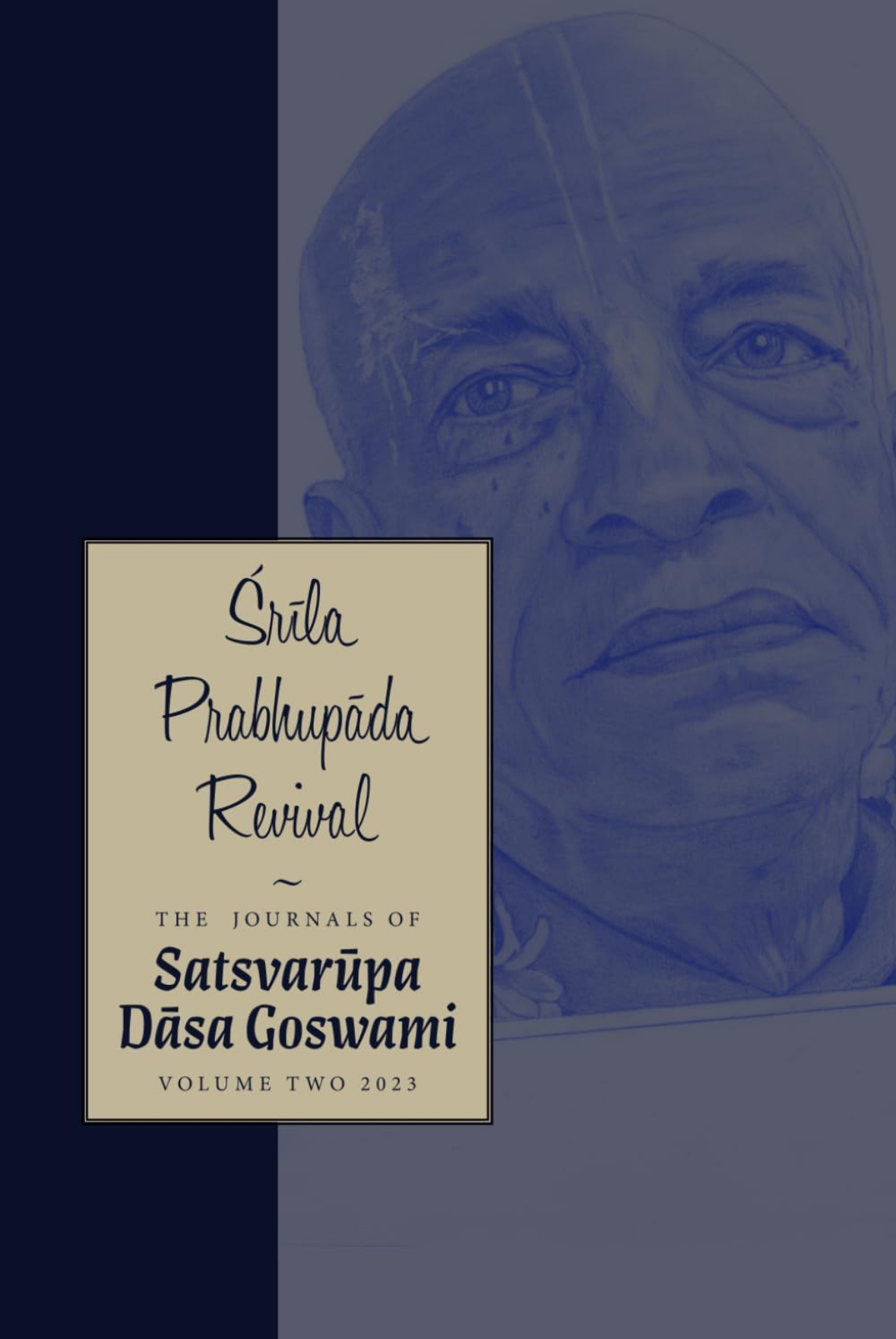
To Śrīla Prabhupāda, who encouraged his devotees (including me) To write articles and books about Kṛṣṇa Consciousness.
I wrote him personally and asked if it was alright for his disciples to write books, Since he, our spiritual master, was already doing that. He wrote back and said that it was certainly alright For us to produce books.
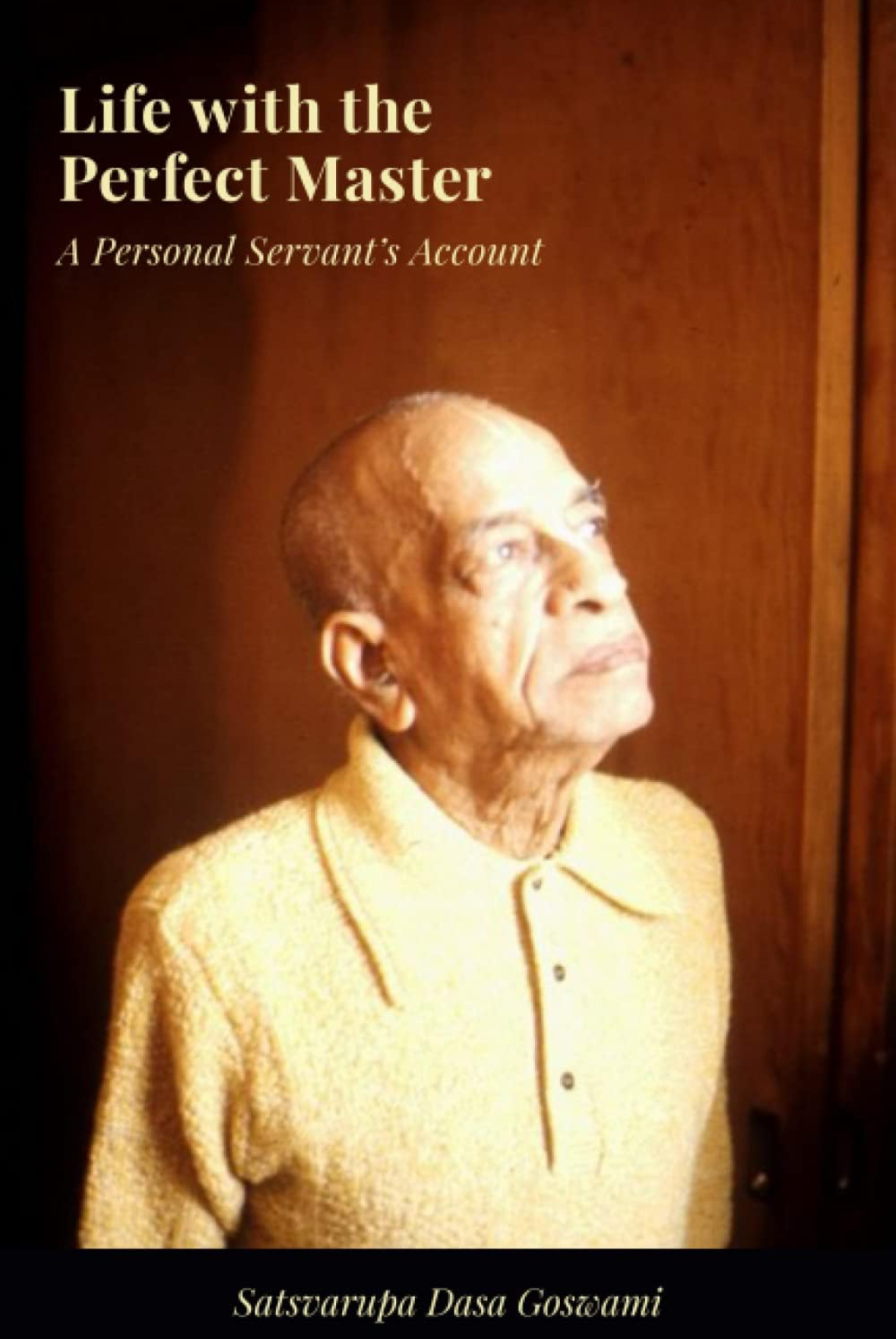
I have a personal story to tell. It is a about a time (January–July 1974) I spent as a personal servant and secretary of my spiritual master, His Divine Grace A.C. Bhaktivedanta Swami Prabhupäda, founder-äcärya of the International Society for Krishna Consciousness. Although I have written extensively about Çréla Prabhupäda, I’ve hesitated to give this account, for fear it would expose me as a poor disciple. But now I’m going ahead, confident that the truth will purify both my readers and myself.

First published by The Gītā-nāgarī Press/GN Press in serialized form in the magazine Among Friends between 1996 and 2001, Best Use of a Bad Bargain is collected here for the first time in this new edition. This volume also contains essays written by Satsvarūpa dāsa Goswami for the occasional periodical, Hope This Meets You in Good Health, between 1994 and 2002, published by the ISKCON Health and Welfare Ministry.

This book has two purposes: to arouse our transcendental feelings of separation from a great personality, Śrīla Prabhupāda, and to encourage all sincere seekers of the Absolute Truth to go forward like an army under the banner of His Divine Grace A.C. Bhaktivedanta Swami Prabhupāda and the Kṛṣṇa consciousness movement.

A single volume collection of the Nimai novels.
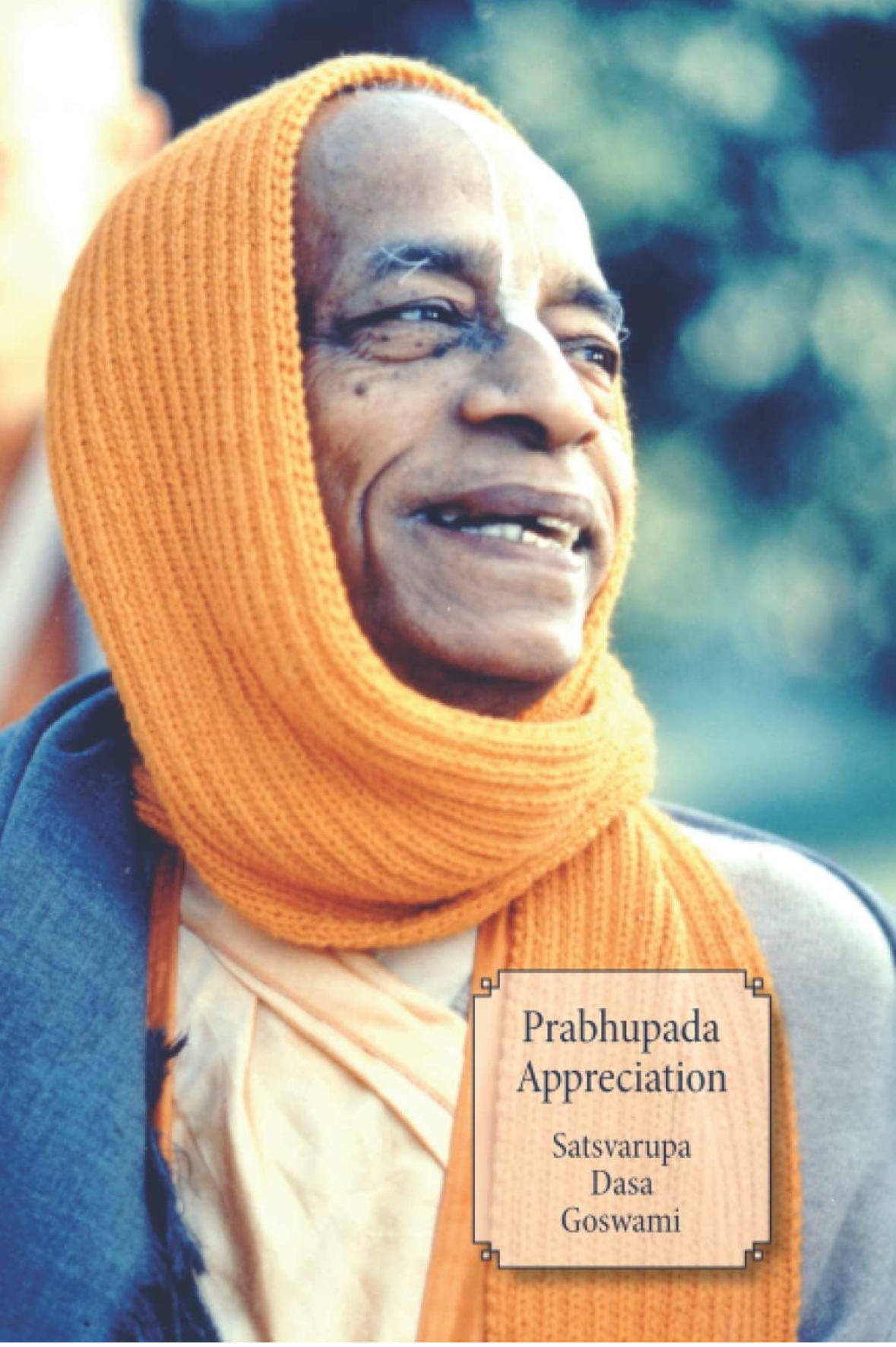
Śrīla Prabhupāda was in the disciplic succession from the Brahmā-Mādhva-Gauḍīya sampradāya, the Vaiṣṇavas who advocate pure devotion to God and who understand Kṛṣṇa as the Supreme Personality of Godhead. He always described himself as simply a messenger who carried the paramparā teachings of his spiritual master and Lord Kṛṣṇa.
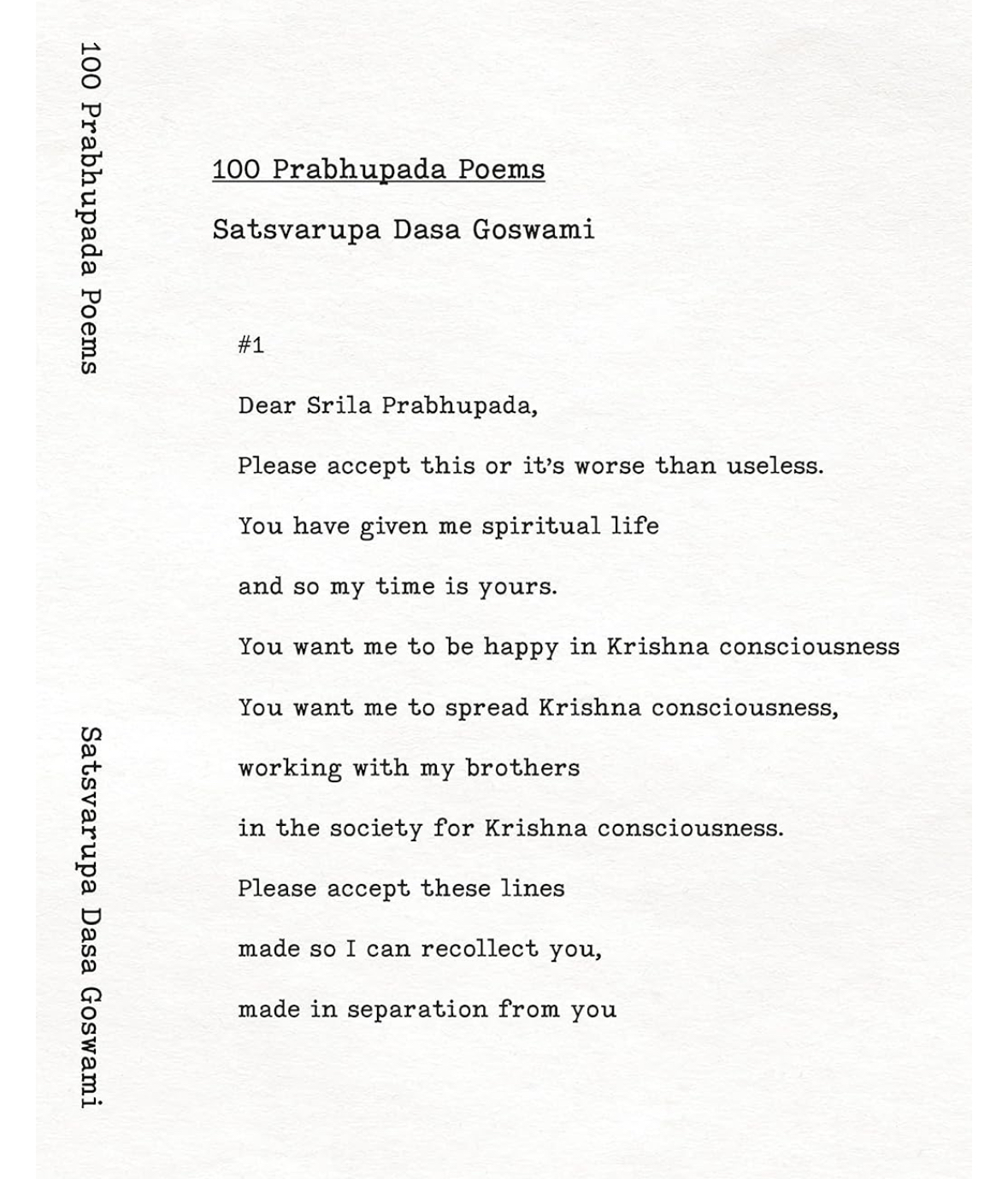
Dear Srila Prabhupada,
Please accept this or it’s worse than useless.
You have given me spiritual life
and so my time is yours.
You want me to be happy in Krishna consciousness
You want me to spread Krishna consciousness,
This collection of Satsvarūpa dāsa Goswami’s writings is comprised of essays that were originally published in Back to Godhead magazine between 1966 and 1978, and compiled in 1979 by Gita Nagari Press as the volume A Handbook for Kṛṣṇa Consciousness.

This second volume of Satsvarūpa dāsa Goswami’s Back to Godhead essays encompasses the last 11 years of his 20-year tenure as Editor-in-Chief of Back to Godhead magazine. The essays in this book consist mostly of SDG’s ‘Notes from the Editor’ column, which was typically featured towards the end of each issue starting in 1978 and running until Mahārāja retired from his duties as editor in 1989.

This collection of Satsvarupa dasa Goswami’s writings is comprised of essays that were originally published in Back to Godhead magazine between 1991 and 2002, picking up where Volume 2 leaves off. The volume is supplemented by essays about devotional service from issues of Satsvarupa dasa Goswami’s magazine, Among Friends, published in the 1990s.

“This is a different kind of book, written in my old age, observing Kṛṣṇa consciousness and assessing myself. I believe it fits under the category of ‘Literature in pursuance of the Vedic version.’ It is autobiography, from a Western-raised man, who has been transformed into a devotee of Kṛṣṇa by Śrīla Prabhupāda.”
 The Best I Could Do
I want to study this evolution of my art, my writing. I want to see what changed from the book In Search of the Grand Metaphor to the next book, The Last Days of the Year.
 a Hare Krishna Man
It’s world enlightenment day
And devotees are giving out books
By milk of kindness, read one page
And your life can become perfect.
 Calling Out to Srila Prabhupada: Poems and Prayers
O Prabhupāda, whose purports are wonderfully clear, having been gathered from what was taught by the previous ācāryas and made all new; O Prabhupāda, who is always sober to expose the material illusion and blissful in knowledge of Kṛṣṇa, may we carefully read your Bhaktivedanta purports.
I use free-writing in my devotional service as part of my sādhana. It is a way for me to enter those realms of myself where only honesty matters; free-writing enables me to reach deeper levels of realization by my repeated attempt to “tell the truth quickly.” Free-writing takes me past polished prose. It takes me past literary effect. It takes me past the need to present something and allows me to just get down and say it. From the viewpoint of a writer, this dropping of all pretense is desirable.
 Geaglum Free Write
This edition of Satsvarūpa dāsa Goswami’s 1996 timed book, Geaglum Free Write Diary, is published as part of a legacy project to restore Satsvarūpa Mahārāja’s writings to ‘in print’ status and make them globally available for current and future readers.