
I would like to inform my disciples and friends that by Krsna’s grace, on July 4th I was able to present several new books recently published by GN Press. Among them I want to point out to you California Search for Gold, Volumes 1 and 2: Restoring Commitment to the Holy Names.
This book tells of my attempt and ultimate success at chanting the holy names for 16 rounds. It is an important book for you to read and see how I recovered from my inability to keep the 16 rounds due to headaches and other problems in my health. Please read this book. Thank you.
—SDG
Satsvarupa Maharaja did not do so well before and after the July 4th book Festival at Stuveysant Falls. This year he “performed” well during the Festival but had a Parkinsons episode before and several after the Festival. These present as something like a panic attack with extra disorientation.
This sounds bad but I don’t think it is a permanent reversal though he is quite fragile. He is taking extra rest and still writing… his personal barometer of success.
We are still expanding our team of proofreaders as we aim to increase the rate of republication of Satsvarūpa Mahārāja’s books as well as new books that he writes.
As many of you know, during the July 4th festival just held, a total of 18 new and re-edited and published books were present, and we hope to present a similar number at Satsvarupa Maharaja’s Vyasa-puja observance this December.
Our call for proofreaders includes a need for fluent bilingual Spanish and English speakers to proofread Spanish translations (we currently have around 20 Spanish translations waiting to be proofread). Anyone interested in this particular service should contact Manohara dāsa at [email protected]
If you would like to help, please contact Kṛṣṇa-bhajana dāsa at [email protected] or [email protected] and we will find you a service that utilizes your talents.
You can develop love for Kṛṣṇa by chanting japa on the order of the spiritual master. If you have love for the order of the spiritual master, then that is the same as love for Kṛṣṇa. Kṛṣṇa will see you and say, “This devotee is so nicely struggling to chant because his spiritual master told him to chant.” He will be pleased by that love for your spiritual master’s order. So do not minimize the importance of the holy name.
******
In the Eighth Chapter of the Bhagavad-gītā, Arjuna asks, “What should one think of at the time of death?” So Kṛṣṇa says, “You should think of Kṛṣṇa at the time of death.” And then purport after purport, Śrīla Prabhupāda recommends the Hare Kṛṣṇa mantra, which he then prints in text after text. So this, he said, is the way to think of Kṛṣṇa. Immediately, by the name of Kṛṣṇa, it is the quickest way; it is the best way. Everything is there—His energy, His pastimes, His form. Everything is in His name. Nāma cintāmaṇiḥ kṛṣṇaś caitanya-rasa-vigrahaḥ. The name Kṛṣṇa is not different from Kṛṣṇa.
******
If by looking at the pictures you become distracted into different thoughts of intricate relationships between the Lord and His eternal associates, then it is not as good as simply chanting like anything. So it does not matter whether you look at a picture of Pañca-tattva or Kṛṣṇa or the Gosvāmīs, just as long as you chant and hear. The main thing in japa is not looking at pictures but chanting and hearing.
******
As you already know, the best way to cure anxiety is to chant Hare Kṛṣṇa. Often when I am traveling there are long delays, sometimes there are difficult conditions in some of the countries with the immigrations officials, sometimes we are detained, etc. Whenever there are long detaining situations or situations that demand tolerance, I always go on chanting in my mind, deliberately and steadily repeating the Hare Kṛṣṇa mantra.
******
In chanting you must submit your time, the attention of your mind, and your voice to the sound vibrations, and then eventually more and more submit your whole self to the holy name. You can simultaneously hear and also think of the prayer, “O Lord, please engage me in Your service.”
******
At the end of the list of ten offenses in The Nectar of Devotion, Prabhupāda has written, “Anyone who claims to be a Vaiṣṇava should be very careful about guarding against these offenses.” So if we claim to be a devotee, intellectually we must admit that this chanting is very, very important—especially in the time of danger. But when is that? That time is every time. Padaṁ padaṁ yad vipadām na teṣaṁ. At every step you chant the holy name.
******
Chanting is the heart of bhakti. It cleans the heart. The chanting of Hare Kṛṣṇa is so powerful—śṛṇvatāṁ sva-kathāḥ kṛṣṇaḥ puṇya-śravaṇa-kīrtanaḥ / hṛdy antaḥ stho hy abhadrāṇi vidhunoti suhṛt satām (Bhāg. 1.2.17). The Lord is in the heart, and when one chants Hare Kṛṣṇa, he becomes pious. It is the most pious activity; it is not just a matter of atonement to cleanse away what sins you have. When you chant Hare Kṛṣṇa, the Lord in the heart cleans away all sinful activities, and everything becomes auspicious.
******
As we chant more and more we realize that this chanting is keeping us within the spiritual energy. Also we can take the words of authority—Lord Caitanya said, “All glories to the saṅkīrtana movement which cleanses the heart of all the dirt accumulated for many lives.” By chanting, the fire of conditional life—repeated birth and death—is extinguished. “The saṅkīrtana movement is the prime benediction for humanity at large, and it spreads the rays of the benediction moon.” This means that as the moon starts out as a small sliver and grows to a full moon, so you start chanting Hare Kṛṣṇa faithfully (without offenses), and you will realize the full moon of love of God. “The life of transcendental knowledge increases the ocean of bliss and gives us a taste of the nectar for which we are always anxious.”
pp. 45-51
“My dear friends just see how the river bank is extremely beautiful because of its pleasing atmosphere . . . Also here the sands are clean and soft . . . “ (Bhag. 10.13.5).
Śrīla Prabhupāda must be found by me here. In his purport he speaks of the atmosphere and sands still prevailing “in the area where our Krishna-Balaram temple is situated.” I share this with devotees, but I want to experience it more deeply. You don’t have to wait until you are deeper. But still you try to go deeper for yourself, even while we share with others. The deeper you know Him, touch Him, then it will be real when you attempt to convey it. For example, sometimes you dream of Śrīla Prabhupāda. It is definitely him, our spiritual master, in the dream, but he may be a strange or shadowy figure, doing things he never quite did. In rarer dreams, Śrīla Prabhupāda is much more himself as we knew him. Such dreams of Srila Prabhupāda could be perfected until it was actually Srila Prabhupada revealing himself to you on the pretext of a dream.
Similarly, I may speak of Śrīla Prabhupāda and tell stories of him with varying degrees of potency and awareness.
Rise early and tell. You can’t write as he does. You don’t even know Sanskrit.
Dear Lord Kṛṣṇa,
(Write a letter, say a prayer)
May I go downstairs and
not be harmed
unless You want it for my
betterment
(as Nanda dāsa had to die)
may I chant with some
tiny improvement in paying attention—
not to me as “acarya” or
to what? My duties or
tunes of jazz in my head even
the ruler, the chalk—it
can be used in His service.
But Dear Lord, I ask the
mind, please focus on Your names and
my heart, (body too) may feel Your Rule
Your sweetness,
Your audārya kindness to
appear in Your name to
any one of us.
You ask that prayer, now go work with modicum of determination—I will go on doing it no matter what, I’ll count, I’ll count the names by rounds: blessed one, trying two, pacing three, albeit four, phony me five, but names are absolute, names are names, six, Kṛṣṇa in seven, hope in eight, the day may come nine, you push the counter beads and bow down in candlelight. Prabhupāda is here in his nighttime cādar, I hope he is not too warm, I chant tenth round see myself lost in inattention, make a few notes for the day. O Lord. Round eleven and thinking, “Ain’t I good. I wrote a good thing.” And if I am able to get a twelfth round done, I’ll do the rest later. It’s not easy to pay attention, it’s hard to love for one who has misused and cannot be much of a cowherd boy having seen too much lust and triviality and lost his dream—I don’t mean something from childhood in this one body, but this soul, the essence unknown to those experts who tell us to find in our bodies past ghosts and lost selves. I speak of what is here right now and light and consciousness —the eternal atma. It’s here now and also stretches back to eternity and it’s too subtle for you but it is as plain as the nose on your face.
Blind comet,
blind and stale cigar
of world,
I pray to chant—become
a simple man,
a scholar of nama
a not-seeking fame poet,
a sane fellow, mad only 4 more Name
because his friend Kṛṣṇa is
there and he can’t keep away
from chanting the scent and
sweetness drives him to
seek it again and again getting
it but not getting it all,
never,
only a drop can drown
the whole world.
My words are make-show. But there’s a real world too of spiritual emotions, which Kṛṣṇa awards to His dearmost. Go now down to the chanting room and practice humbly.
Bhaktivinoda may call it “going through the motions only,” yet he knows and all Gaudiya ācāryas know . . . how dear Śrīla Prabhupāda is to Lord Kṛṣṇa for giving it to us. We don’t forget who we were in this lifetime, but we chant praying for pure identity, formed in that way by our contact with Śrīla Prabhupāda.
Breakfast in eight minutes. Tomorrow, in addition to giving my last class in the seminar, I have to give the Śrīmad-Bhāgavatam lecture. I have chosen the verse I wrote in here earlier, 10.13.1. Only those who are advanced are able to relish more and more hearing the pastimes of the Lord. What do you want to say? Mostly I want to preach to myself, gear myself to return to regular reading practices. Do it by telling them that we all ought to do it. Choose a time, a place, a chair, a lamp, a book. I mean one book translated with commentary by our spiritual master. I almost don’t want to say his name, at least not cheaply. Everything gets cheap if you . . .
I’ve two references in the Bhagavad-gītā where Prabhupāda said reading is important. It takes our mind away from sense gratification and puts it on Kṛṣṇa. Just hear about Him and chant His holy names. That’s what we should do. But this doesn’t seem to be so substantial for a gāyātrī class. It’s like a pep-talk. Yes, “We should read, it’s good for us, do it, it’s the most important thing. Find little ways to put it into your life.” I don’t want to give just a pep-talk.
You could read the second verse also in that chapter. It enlarges the point about the difference between devotees and materialists. Both are intent about something. Materialists are intent on sex life. Devotees are paramahaṁsas. They use everything in the service of Kṛṣṇa. Those are some additional points. So if you can extend it to the second verse, then I think you’ll have enough. Describe the life of the devotees, always absorbed in these things. Not that they are over-afraid of this world or that they don’t use their full capacity. He is using everything in the service of Kṛṣṇa. We can do this when we have taste … blah, blah. Go ahead, tell them, tell them. If you like you can read a little more, the next verse also where Pariksit Mahārāja asks to be told confidential pastimes. And then the next verse where Kṛṣṇa is picking out a place for the pastimes on the bank of the Yamunā. I think this is a nice enough section to speak from. Also you can ad-lib.
Drutakarma, in his lecture, said we have to go out and preach to the nondevotees, especially destroying Darwin’s theory. It is not enough to destroy it in mock fights among ourselves. He called that “preaching to the choir.” I later said that Śrīla Prabhupāda told me preaching to devotees was more important, at least for me, than preaching to nondevotees. So I will encourage them to distinguish themselves from the karmis by being attached to Kṛṣṇa the way the karmis are attached to sense gratification. Don’t be in between one group and the other. Be paramahaṁsas. “You be paramahaṁsas,” Prabhupāda said.
I’ll do it the best I can in the classroom. Now it’s almost breakfast time. Then you take rest, the year’s spool is already running out, he laughed when he picked us up in the car (same man who did it last year.) He said “It seems like almost yesterday that I picked you up,” but a full year has gone by. (ha ha, what does it mean? That the whole show will be over, so do what you want best in devotional service.)
pp. 244-47
I am waiting in the car, writing to You. It’s quiet, and I hope I can reach You. I hope You will reveal Yourself to me. I mean, reach out to me. My words are my own, but ultimately, they are allowed to come by Your grace. I talk to You as a gift You give me. It’s very nice of You to do this for me.
I like to make stabs at estimating You, although You are infinite and unknown. Well, You are not exactly unknown. You are not the “Great Unknown.” You are knowable. But You’re not knowable in full. I have not shown enough greed to be granted Your direct darśana. I hear about You and Śrīmatī Rādhārāṇī, and I believe You Two are the topmost personalities in existence. But Your relationship is so confidential that You reveal it only to Your pure devotees, only those who are worthy of knowing You. Your relationship is amorous, and that’s another reason You don’t include impure persons in Your pastimes. Your devotees have to be clear of the material concept of life. They can’t see You Two as an ordinary male and female.
How am I doing at getting to know You? Am I improving? I do like Your arcā-mūrtis. I do like to hear the pastimes of Your parakīya relationship as long as it’s not told in too much detail. So I pray to You to allow me more progress in becoming intimate to Your love. My goal is to someday take part in Your pastimes, but that is a far distant goal. For now, I try to improve my chanting of Your holy names and hearing from Bṛhad-bhāgavatāmṛta, which cites the gopīs and especially Rādhikā as the devotees most worthy of receiving Your mercy.
And I write to You with my own pen. Please let me know You better. Let me stop committing offenses in the process of devotional service.
I sometimes miss You. I mean I don’t think of You. I miss Your holy names, I feel lonely. Today we read that a devotee feels dissatisfied. Bala pointed this out (it was in a commentary to Bṛhad-bhāgavatāmṛta), and he said it was a good sign because he knows that I’m often dissatisfied. So, if it’s a symptom of a devotee, then that’s auspicious for me. I feel I am not a worthy devotee, and Bṛhad-bhāgavatāmṛta declares that that is a symptom of a genuine devotee.
You know me well. You know everyone intimately. Please let me feel my intimate relationship with You. I want to experience that we are very close, which is the fact. Why can’t I feel that I know You as my most beloved companion and master? Why can’t I feel You as my great protector? Why can’t I feel all the symptoms of a surrendered devotee? You can allow this to come about if You are pleased with me.
I’m not planning to get out and preach. That is mostly because of my headaches, but also because of my inclination. I prefer to write to You and write to the devotees and post it on the website. This is my main way of preaching. I hope it pleases You and pleases my spiritual master and pleases readers. Somehow, I have to please You or my endeavors are futile. Pleasing You is the only worthy thing in this world, and failing to please You is the greatest failure. Please inspire me to change if necessary, so that I may please You more. Let me solve my conflicts so I can serve You unhampered by my own mental blocks. Removal of the blocks in service to You is my greatest desire, and if I sincerely pray, You will help me kick them away. Śrīla Prabhupāda once said he could kick all the blocks aside with one kick of his foot. May that happen for me.
Thank you for giving us Prabhupāda’s books. He is the perfect one to translate and give purports for this age. He has made You accessible in complete sets of the most important Vedic literatures. You trained his disciples to complete his work on Śrīmad Bhāgavatam and to go on to do Bṛhad-bhāgavatāmṛta and other vital books. They will be in Prabhupāda’s paramparā. Generations of seekers will come to these books and get the right understanding of You and Rādhārāṇī.
I have read all his books several times, but I have not read them again recently. Please bring me back to regularly reading Prabhupāda’s books. They give me the exact balance I need in understanding You, and they create loyalty in understanding Śrīla Prabhupāda. Hearing about You in these books is the primary practice of devotional service, along with chanting the Hare Kṛṣṇa mantra. Śravaṇaṁ kīrtanaṁ viṣṇu-smaraṇaṁ … Prahlāda Mahārāja has stated these as the first three of the nine principles of devotional service, and Rūpa Gosvāmī has elaborated on it in his Bhakti-rasāmṛta-sindhu. Prabhupāda once said every home should have a KṚṢṆA book. Actually, every home and every public library and university library should have a full set of all of his books published by the Bhaktivedanta Book Trust.
When we regularly and attentively read his books, we come to know You as certain reality. Prabhupāda said he did not write his books himself, but that You wrote the books through him. So they are Your books, they are literary incarnations translated into most of the major languages of the world. The distribution of these books continues to be a major service to Prabhupāda and a topmost welfare service to the people of the world.
Śukadeva Gosvāmī has proclaimed that You appear in the pages of Śrīmad-Bhāgavatam, and whoever hears them associates with You directly. In Bhagavad-gītā, we get to hear Your direct words, spoken from Your own mouth. The illustrations in Prabhupāda’s books, executed by his disciples, are “windows to the spiritual world.” And we can see Kṛṣṇa, Rādhā, and Your various incarnations with our own eyes, even before we reach the liberated state.
Let me return to the regular practice of reading from and speaking from Prabhupāda’s books for my own benefit and for the benefit of people who can hear me. Let me write my own books, influenced by his books, so they may qualify as “literature in pursuance of the Vedic version.” You’ve asked me to write, and the way to do so is in paramparā, following Your lead.
I remember the golden years when Your books were first coming out, and we eagerly opened the boxes and took out the books to read for the first time. Please keep us as enthusiastic as we were then, to sit somewhere and read the precious instructions, narrations, and prayers in the new cantos and the exciting adventure of reading all the līlā and instructions of Caitanya Mahāprabhu. It is all Your priceless gift to us, a gift we can’t repay. But we can dedicate ourselves to practice reading with devotion and showing our gratitude for what You have given. Thank you, Lord Kṛṣṇa, for giving us Prabhupāda’s books, which he says You have actually written. May we always enjoy them and remain keen students of their contents.
pp. 19-30
The happiness of brahmananda
is like the puddle made by a
calf’s hoof compared to the
ocean that is love of God.
Go downstairs now into the cold
bathroom. Brush your teeth. Say
hello and obeisances to Madhu
as he’s heating up water for my
bath.
Happiness is being able to write. At
midnight it went faster and more
than usual, my pen hand steady. “I
have not forgotten to free-write.”
We aspiring devotees know
something others don’t, but
we’ll each be tested.
There’s a vise in my head.
I’ll go to bed early.
Happy ideas: write a
lot. Stay here in
Ireland or a country like
it and they can know
you are here but you
won’t come out.
You may sell your van.
Don’t advertise you are here
but decide on it
and they can know.
Face yourself
in your cell.
Read Bhagavatam every
day. When vise comes, ease
out of the routine.
This is for myself but the
main idea is for everyone!
Happy to have Krsna consciousness
to sing about.
Happy to chant and read,
even though
I don’t do it right.
I got the right thing.
Krsna in Vrndavana
with His parisads.
Holy name,
muttering, uttering, clear
Hare Krsna Hare Krsna
Krsna Krsna Hare Hare
Hare Rama Hare Rama
Rama Rama Hare Hare.
Put “Krsna”
and “Caitanya” in your poem
and it’s redeemed.
These open secrets—
“Krsna is the Supreme.”
Happy with all things in this
life especially a lone peace to
write and read and draw.
Little things like exercise by
the open window on a
June morning, sky
clear blue
with clouds—Ireland.
Anticipating the Sunday lecture.
Hearing how the others are
doing, Madhu’s
singing career growing.
Midnight and the life
of reading—sitting up for
the next verse and purport and
thus coming to know Him
secretly, gradually.
If I get wrenched
away may I never forget
and always be grateful and
greedy for more.
Happy-sad-indifferent-
don’t know—check one—
or none of the above.
No ideas but things.
Nada-nirvana,
beyond all that is
supreme form of supreme
truth.
no foolin’ chant Hare Krsna,
count on beads.
Read Srimad-Bhagavatam,
live with devotees. Love
Vrndavana. Worship the
Deity. Be prideless. Don’t
waste time. Of
nine limbs of bhakti . . .
do one.
Prabhupada
comes back to me after my
performance at lecture in the schoolhouse.
Prabhupada wearing
his silk soft saffron
Swami hat, warm cadar
looks upon me.
Soon I’ll start the worship—
massage him, bathe him,
dress him again.
Happiness is absence of pain and
obvious danger and suffering.
There’s deeper happiness.
Ideas for making money and
for preaching—opening a
restaurant, doing nama-hatta on a
computer, going to England to sing
at Hare Krsna festivals, writing a
book. Making money, purifying it
yourself. Telling others good ideas
they can use.
Flowers dead in vase,
cow lowing in pasture
where she’s kept for
slaughter. Can you be
happy amid cruel nature
and men?
“Women have a different
psychological make up,” he explained.
We tried to understand “Women are
less intelligent” in a way that would
not offend.
I’d say I’m okay but you’d
misunderstand. Words fail
and that’s okay too. I want to
be known as a blissful
devotee. Served his
guru, Prabhupada.
A happy idea: to wake and read
the words of Devahuti in the last
chapter of Third Canto, then start
the Fourth. Alone in the house
all day but not lonely except in a
Krsna conscious way.
My gremlin doesn’t
like a plan for “One Hundred Happy
Ideas.” He wants at least
one unhappy fact to counter
the foolish happies.
But his time comes later. Lord
Brahma created Rudra who
immediately began to destroy everything
with his hordes. Brahma
said, “Go. Perform austerities
and wait until the time of
annihilation.
Don’t interfere
with creation.”
A natural, clear
sentence. What about the
temporary—appetite and lunch
(three different preps of potatoes
on Ekadasi)? What about a joke?
They are asat.
Pure bliss ananda in form,
loving Krsna.
Sometimes I just repeat it.
These helpful hints, man-made
are small-time.
The Great Idea in the mind of
God is loving service.
He wants to submit Himself to
best devotees. He’s
bhakta-vatsala, inclined to them.
Of all God’s glories that’s
the best. I want even a
little of His glory to brush over
me, assurance of His love.
They say pain has to
come first, but main thing is
nayam atma pravacanena labhyo . . .
Only to one whom He chooses
does He give His mercy.
A happy idea:
“Surrender to Me.”
Okay, Captain, take off this plane
called Morning Schedule:
heat water in the kitchen,
take a bath, back up here
all within half an hour.
Happy ideas for sale free.
Hey, you ought to first
live out your ideas before
peddling them.
A good Vaisnava idea is worth a
thousand Chinese sayings.
Krsna conscious ideas and actions—
even if you only think
eternal God, that’s
a form of service absolute and if
you serve Him with body mind and words,
that’s more. As you bathe and
work and eat and think.
The satisfaction
of pleasing Krsna. You don’t
know if you did that? But you
tried, working in parampara.
Prabhupada is here.
Queen Kunti said,
“You come to us in danger.
So let the dangers remain
because when we see You—
apunar bhava-darsanam,
we’ll see no more of birth and death.”
“That is real happiness,”
said Srila Prabhupada.
pp. 207-11
I welcomed the rain and thunder during the night because it blotted out the noise of local traffic. I also thought it might curb thieves, vandals, and other mischief-makers. Let it rain. I slept blissfully. (Yes, I do sometimes feel blissful.)
Now it’s Friday. Plenty is wrong in the world, but I will speak on a Bhagavatam verse that says King Prthu was a servant of the devotees. Say in this connection that the world is upside-down (don’t say “topsy-turvy,” or he won’t be able to translate it).
Devotees shouldn’t be sorry that they are not honored. One who is always looking for honor cannot surrender to the Lord. Haridasa Thakura didn’t want honor, and he did not fight to obtain the right to enter the Jagannatha Puri Mandir.
We shouldn’t even think of ourselves as devotees, but as servants of devotees. A Vaisnava is elevated and his influence is great. We should seek only to serve Krsna and please Prabhupada whether or not we are honored.
I overslept, so don’t have time to write now. I need to make up for the terrible, silent rounds I chanted yesterday due to the headache pain. I feel fortunate for whatever pain I feel—I deserve worse—but I’m also glad and grateful to be relieved of it and able to get back to my service. Yes, what I do is tiny, just as ISKCON Barcelona’s influence is tiny in this big city.
A motorbike whines nearby, but I’m safe and dry in this van. Even if we were to get attacked, Krsna would still be here in my heart.
People have to pay for their crimes in this life or the next. That’s karma. They come back in their next life and are subject to their reactions. People kill other people in all different ways; victims, refugees often, are pushed into open graves. Atrocious. Krsna consciousness can solve all the world’s problems because it teaches how to leave the world behind and go back to Godhead. I spoke the solid truths of Isopanisad last night—asurya nama te loka … Evil-doers go to hell. Devotees are honored in the spiritual world.
I am sorry if I hurt anyone’s Krsna consciousness. Now I want to work in my last days to set a decent example. Die trying.
Last few days of September
but by His grace we get more time.
Use it well. Chant and
dance and lecture and when
you eat, be grateful to Him.
Regret your wrongs, pray,
“Krsna, Prabhupada
let me hear holy names.”
The Barcelona temple is actually in the city of Barcelona, unlike many temples in ISKCON that go by the nearest city name. For example, the Prague temple is not actually right in Prague, and the Philadelphia temple is in the suburbs of Philadelphia. Traffic buzzes right by the front door of the Barcelona temple. It’s noisy and it’s hard to find parking spots. Right now, the street is being torn up in front of the temple—it just adds to the chaos. Still, the temple has a small, fenced-in, cement-covered front yard. The fence is high—you can’t see inside from the street—and the yard is sunken about three steps down from street level.
In this yard are two tall palm trees. It makes it feel like a haven, a monastery, in the middle of the city. Whenever I go through the gate (which we have to enter with our key), I feel the peace inside that yard. I find it appealing and protective, especially because it exists within a city.
One time we went in there and I saw a mataji walking back and forth chanting her japa. Another time a mataji was wheeling a child in a carriage. The ISKCON devotees can go to the temple there and get that shelter even though it’s just inches away from the street. The devotees also have tables set out front, and in good weather, they take prasadam out there. All glories to the sanctuary that ISKCON offers to the material world.
My excuse for not writing today has been that I’ve been answering mail. Tomorrow we leave at 5 A.M. Madhu told Hrdaya-Caitanya and Yadunandana that I will leave the temple room just at the end of tulasi-puja and M. will be waiting in the van. I will get into the van and it will start moving—so they had better be on time. I can’t remember when we last had four people in the van. It will be an interesting adventure, stopping for breakfast and pushing on to reach our japa spot by lunchtime.
One of the devotees asked me to speak tonight on Prabhupada. I asked him to have questions ready. I’m not preparing a Prabhupada lecture, but hoping to speak it extemporaneously. After this talk, I won’t give another for a week because of the increased japa. I just want to put everything aside and chant the holy name.
Oh, you think whatever you draw or write or think is interesting worthwhile Krsna consciousness? No, I don’t say that. I say the men who dig up the street put some new pipes down, then put cement over them, and now they’re putting cinder block squares over that. They make the finishing touches neat.
Walking out the temple front gate, I stepped into the fresh cement sidewalk. Of course, the cement was still wet. I didn’t think it was my fault—they should have put a board across it—but one of the workers grumbled at me. I couldn’t speak enough Spanish to express an apology, but I gestured that I was sorry and also that I was helpless to avoid it since there was no sign or warning or means for me to have known it was still wet. I think he realized that. M. said they should have been glad to accept the foot impression, but they didn’t see it that way.
Yeah, if he asks, “Tell us about Prabhupada’s compassion,” I can start with his compassion toward me. Don’t be afraid to repeat old stories or apologize for them. You’ve come all the way to Spain, a place unfamiliar with my vintage stories. That’s one of the reasons I have come here. I can tell the story of my giving Prabhupada a mango or even the one I told in Zurich last month of how Prabhupada saved lunch for me, or when I bought the Srimad-Bhagavatam volumes from him, or the time . . . whatever comes in that setting tonight. Maybe the devotees will be happy to hear stories of His Divine Grace and I can turn some of them into instructions for us today.
“Tell us about Prabhupada—our baby’s first word was ‘Tabu-pada.’ So you ought to be able to tell us your first meeting with him—go ahead.”
Yeah, well, he looked like Buddha. Did you hear that before? Is it true? Can I look back over shoulder and be with master?
Maybe fib or fudge a little to make it come out nice like a pie slice or the way the brick layer is forcing the cinder blocks to line up in a row just right.
He looked like Buddha. Long earlobes,
I see his smooth golden skin,
no kurta. He is saint from India
in Lower East Side. We
didn’t know. We chanted
with him. One day I had
to stay in late at my office
and couldn’t go for noon lunch. Noon lunch
with the Swami. So I phoned him and
said, Swamiji? I said, This is
Steve. Do you remember me?
Yes, he said.
I said I can’t come at twelve today,
can you save lunch for me?
He did. He put the plate on the
floor the way you would for
a dog.
Don’t stop me if you’ve heard
this. I need to continue and get in
touch with the best things that ever
happened to me. I need to honor them,
give them a fresh airing and speaking.
Oh yes, it may seem like I’m
claiming, “I’m very fortunate.” But it’s
just my way of praising him by
real live remembrance of the
person whom we all want to know—
or what’s the Centennial for?
pp. 92-95
Hare Krsna. Nine degrees so we’re dressed a little warmer. The roads have been scraped, even the roads in The Woods so I’m able to walk (crunch crunch) my usual route better than yesterday. After today there’s only two more days here.
Yesterday I came awake again in drawing and coloring, but this time I did it with words. I started writing on the big boards similar to the way I used to write poems in colors. I’m writing prose and poems what comes to mind and “illuminating” the page. Then sometimes I get an idea to draw something a little more extended, so I leave the board and go to another big sheet of paper and write on there. It’s fun, something to do to take advantage of this situation where I’m so spread out with an artwork area and Baladeva so willing to follow up—get me materials or take care of the sheets and boards once I finish marking them up. Hare Krsna Hare Krsna, Krsna Krsna Hare Hare/Hare Rama Hare Rama, Rama Rama Hare Hare.
This morning I read for an hour. Oh, that was really bliss, I felt so good and strong afterwards. Some of my drawings mentioned nourished. I even drew a picture of a mother nourishing her infant, and I said, “This is Mother Veda nourishing one child.” So you can see how reading can be building you up in so many ways, allowing you to express your Krsna conscious art with something to say rather than “Oh, I wish I had something to say.” I spoke about Maharaja Pariksit coming to hear from Sukadeva Gosvami, Hare Krsna Hare Krsna, Krsna Krsna Hare Hare, and drew some simple pictures. Main thing though is to let your hand go freely and not think I’m making art products, greeting cards, pieces to sell, pieces for people to hand in their room, books to make or whatever. That won’t help you, but just do your reading, do your chanting, and then write.
Chanting also to get the round done. I know that story. Crunch crunch, white snow. Now I’m at the end of one road, so turn around and come back and chant another round. Hare Krsna.
Walking up hill. Took my eyeglasses off because they got fogged and frosted. Heavy highway sounds —bumping tires, heavy trucks. The sky’s got no clouds and it’s so early though still the trees are very dark. Treetops, blue sky this cold morning. Turn to Krsna, He’s the warmth in the cold. He’s the life, the prana that allows you to live. Prabhupada said you can’t oblige Krsna. You can’t make Him act in a certain way that He should give mercy to someone and not somebody else. No control over Krsna, that conception is karma-kanda. But Krsna is actually independent just like a cloud may start to rain in one part of the sky whereas other clouds don’t release their rain. Krsna can rain down in one place and not another place. He’s not under anyone’s dictation. It’s also best that we don’t pray to Krsna to try to change his mind from something that He wants for us. But better to ask Him to let us appreciate and understand fully how He’s dealing with us, especially understand that full mercy is available. Sufficient mercy in the form of Bhagavad-gita, guru—hari guru vaisnava bhagavad-gita, sufficient mercy you can just take to it. Even bodily pains, adverse situations are another kind of mercy. Pray to do what Krsna wants us to do. To find out what He wants and then pray to do His will and not our own, and be happy and fulfilled in that. Hare Krsna Hare Krsna, Krsna Krsna Hare Hare/Hare Rama Hare Rama, Rama Rama Hare Hare.
Coming around the bend. Today he’s got the bigger car of the doctor’s, and it’s sitting there with two bright red lights. I can’t see so well without my glasses, but I sure can see those red lights and the car. Man approaching the car, that’s me. Yeah, I’m a man, not a boy. Not a big, rough man, but a man on earth, fifty-five years old. February already skidding quickly into 1995, January already gone. February moving along. Today is Advaita Acarya’s appearance, and we’re fasting. I’m getting closer to the car. Closer to Valentine’s Day, to Denver, to the Caribbean . . . Madhu is waiting in the car, and some car pomes too. If Krsna will allow me, let them be in devotion with a real voice. Hare Krsna.
9 degrees is serious you
could die in it except for
the heating systems.
Krsna, Krsna, Sukadeva a
pome’s got to heat …
No time to waste.
Why did Maharaja Pariksit give up
his kingdom when so many
were depending on him?
It’s 6:55 MON 6 (Feb).
He wanted to hear Srimad-Bhagavatam from
Sukadeva and
he was cursed to die
within 7 days. I’ve picked
out passages on virtues of
hearing Bhagavata for a class
Friday night. They’ve heard it
before, that’s okay. They need it.
As advanced devotees don’t tire of
hearing the nectar of krsna-lila, so
we don’t tire of wanting encouragement
in the good old struggle
to read something daily, to
remember that it’s more important
than other things we do.
So I drew a man reading
at a desk.
That’s a favorite of mine.
They say you should read
holding your finger under
the sentence and move it from
left to right. I do it sometimes.
Go slowly, look at Sanskrit and meanings.
Stop to think and feel.
Good ideas come. You are grateful.
An hour slips by.
You can go back early today if
you want, beg out on this car
pome, “Couldn’t think of more
to say . It was cold.”
The futility of any life outside of Krsna consciousness, such as W.B. Yeats. Just read a poem that said Yeats took monkey glands so he could have sex in old age. Disgusting guy on bills of Irish currency and gold coins. Poem of poet visiting Yeat’s grave. Thought I’d pass it up front to Madhu because it mentions many Irish places. I’d say, “It shows futility of life,” but I would interrupt his japa. Go ahead, share it. Later we can refer to it. While he reads, I’ll take another stanza.
Okay, he’s reading it and I am here Krsna Krsna Krsna. We have to leave here, and I’ll be a better man for it. Hare Krsna. Hare Krsna. Sukadeva. I’ve got to read Srimad-Bhagavatam—it is like a fix for a drug addict, and Srila Prabhupada said that analogy does serve in a certain sense. I feel weak if I go even half a day without a good shot. Yeah, so be it.
All glories to Lord Caitanya/harer nama eva kevalam.
pp. 31-35
It is an important discovery or recognition that we are publishing books not for casual readers but for a core who will be willing to go with me through my changes, through my mistakes and correction of mistakes, through my zigs and zags. They will see it as worthwhile. I’m writing so “much” one says. But it’s not the quantity only. It’s the fact that I must keep close to the changes I go through because by that method I become accustomed to more and more honesty. It becomes natural to tell the truth each day. But it leaves an inconsistent story. It exposes raw nerves. For example, it shows that I continue to fail to overcome certain habits like inattentive chanting. I’m also willing to admit when I’m happy and Krishna smiles to me. Now an editor and publisher would normally scoop off from this sort of writing a few excerpts of what they consider the best, highlights. But we are trying to keep the essence of it all. A library of one person’s trackings and he hopes, his slow but sure progress.
Sips at the Fount: Part One, pp.58-9
Rather that distill experience into a few moving lines, I need to write much of the time. If living is like breathing, it doesn’t seem enough to grasp four or five times in twenty-four hours, little words. Also, samadhi to be continuous needs to be kept up. You get out of touch otherwise. Link the times in which you don’t write to the times in which you write again. By practice you’ll get better at the clear utterance of your life onto the page. It can begin to breathe, bleed, and so on. I remember the author of The Cloud of Unknowing saying that during the day we get many aspirations to love God, but we tend to not notice them and they go away. If you write on the hour, you’ll be more likely to catch the aspirations for becoming Krishna conscious. I hope I can build on them.
Sips at the Fount: Part One, p.148
I’m in the hills: deeper and deeper, the hills of Wicklow. I walk alone, thank You Krishna for giving me this blessing. Hare Krishna Hare Krishna around the building and around again, the heart is gagged and covered but the mouth manages to mumble and jumble out the scientific mantras. Poor soul he is who can’t taste the nectar, will not taste and has tamas for a middle name. Round again, round again, one of these times he’ll stumble on a little piece of attention span, and then again he stumbles as if he drunk six cups of sake. He can’t control his mind, Hare Krishna is Krishna and Radha. Ask me and I’ll tell you. In writing I get my best chance at attention.
Sips at the Fount: Part One, p.150
Narottama dasa Thakura went to Vrndavana. I’m reading the story, tradition, legend, biography as Steven Rosen variously calls it. Narottama, the best of men. Then they could build me a Japanese garden here. Does that mean mostly stones? No upkeep. But it shouldn’t be for sunyavadi thoughts. See Krishna in your garden, chant His holy names. Linger by a shed containing turf and wood. Look at the moss-covered trees. Hide there when a car pulls up and someone enters the house. Look at the grass in the neighboring pasture On some days the cows or sheep may come close. There is nothing you can do to save them. Hare Krishna Hare Krishna.
Narottama. Your new free-floating approach to a schedule may evolve to something…you reach out for various books or things to do. What is best-suited? Read some Bhagavad-gita. Lord Krishna says the souls are superior to matter; they manipulate matter. Lord Krishna controls both the souls and matter. He’s known only by His devotees.
Sips at the Fount: Part One, p.151
When we speak of Srila Prabhupada’s visit to Boston in 1971, is it possible to go deeper? What do you mean? I mean…I don’t know what I mean.
O sakhi, what happens when we go to speak? You are reminiscing and that is light in some ways. But to be merely philosophical is also not what I mean when I say deeper.
Stop fool, don’t speak in this way. The gopis tease one another and they tease Krishna. When Lalita speaks harshly, Krishna says, “Is this Lalita becoming Mahakairava (Kali)?” Madhumangala says, “Krishna, You’re still dizzy from when the Trnavarta whirlwind spun You around, and therefore You think You see Radha, but it is just a golden flower.” Similarly, Radha becomes stunned when She see objects in nature that remind Her of Krishna. O Radhe, O mind, please stay…keep the body awake a little longer. He was deep asleep when the big alarm clock went off at midnight. Sleeping on the bottom of a lake with dreams I could not recall.
Sips at the Fount: Part Two, pp.28-9
Down came the rain. It was silence and he was glad for that. Krishna science. Little sips. You go to the sastra. Whoever thinks of Krishna. Or KRSNA book, Lord Brahma said fireflies can’t light up the sky and my attempt to outdo You is like that. I adore You, govindam adi purusam.
Sips at the Fount: Part Two, pp.62-3
A man in the moon can’t be seen by those who go there superficially. They go to the outer rim of the moon. The most important thing is to go to the spiritual planet and enter there. Go to the planet of Krishna and ask if you can be admitted. You don’t have to ask; if you are meant to go, you’ll be taken there. The pure devotee wants to serve Krishna, and the Lord wants to serve the devotees. He cried tears. He wrestled the demon to the ground. Prabhupada- bhajana, krsna-bhajana, devotees singing as they march on the road wherever they are.
Sips at the Fount: Part Two, p.100
Yesterday at this time I admitted that I am made up of all things that pass through me, voices and opinions of others. It seemed I had no other identity, couldn’t sustain a meditation other than fielding the news and noise coming through me. I hope that’s not so. But you’ll probably always have some of that. Therefore, let us use it in the service of Krishna. Catch some of it and make it into song or discourse. Even the great acaryas like Baladeva Vidyabhusana would take the opinions of opponents and make it his response. Thus, the purva-paksa method is followed by great teachers who assert the conclusions of Krishna consciousness. When I hear the opinions of others coming through me and I write it down, I hope I’ll be able to stand back and think, “All right, that was something I heard from another source. Now, what do I think? Who am I? What do I care about?”
EJW 32: Going on Holidays, p. 177
pp. 45-47
Back to Godhead blues: a medley of old songs interpreted into the bhakti perspective by Satsvarupa dasa.
Why, the daisies you’ve doodled, are they symbolic of your spiritual desires? They’re childlike flowers with big round balls and stocky oblong petals. Or are they popularized lotuses blooming to spiritual perfection?
I don’t know. They’re daisies, I guess, flowers of aspiration. Grow, daisy. Soak in the sunlight and turn like
a sunflower
reaching higher
never ceasing
to feel bhakti.
Protect thy stout stem
with prayer and service,
nourish the creeper
of desire for
Kṛṣṇa consciousness.
Kṛṣṇa consciousness is the best way. I, Satsvarupa dasa, do hereby endorse it. I write this without coercion, of my free will, and I accept the full responsibility for my words. Nothing can be solved by political maneuvering or diplomacy, and no well-intentioned policy can save us. Kṛṣṇa consciousness is the only answer. Although I realize it will be very difficult to convince people of this.
Aside: You seem to lack conviction. Therefore, this proclamation or oath or whatever it is, written in a satirical way. What’s the problem?
I think the problem is that it all just seems so impossible for ISKCON to have any great influence in the world. Even from the beginning I was cynical about that. I just don’t have that faith.
Prabhupāda said that a devotee was promising to give land in Alaska. I scoffed at it and he saw my lack of faith. It’s not that Prabhupāda was himself naive in thinking that we would get the land in Alaska, but he was willing to accept the offer and even spoke about developing a center there.
But the fact is, I have that kind of nature that’s not overly optimistic. Maybe it comes from my own timidity. What, Padayatra in America? Padayatra anywhere? The Centennial influencing people all over the world? Do you really believe it can?
So it’s hard for me to address the heads of nations and to tell them to practice Kṛṣṇa consciousness to solve the world’s problems. I believe that Kṛṣṇa consciousness is the only solution, but I see that we can’t even solve the problems in ISKCON. How can we hope to solve the problems of the whole world? It seems to me that we require such a revolution, such a superrace of devotees to bring this about, and I just can’t see it happening within my lifetime.
However, even though I admit my cynicism, it doesn’t make me unfaithful toward Kṛṣṇa consciousness. In other words, I may not believe that such a world revolution will take place while I’m around, but I do believe that the only possible answer is that such a revolution does take place.
Maybe I’m just looking for hope.
All glories to the pro-activists
and the biscuit bakers in the
ISKCON kitchens, and thanks to
the temple cat and the hat rack
in the lobby, and certainly my
respects to the donation box.
Thank you, U.S. government, for the free rolls
we offer at Food-for-Life outlets.
I guess we’ve just each got to find our service
and do the best we can.
So thanks to the written word and
any honesty we find,
and free time without a minute wasted.
Thanks to all the jokes except those
made in seriousness.
And here’s to self-improvement!
Sing better, stronger. Who knows?
Maybe you can put on a suit and tie and
visit the White House with a “Look
here, take to Kṛṣṇa consciousness” speech.
Or at least do more dignified writing.
Naw, just get better at what you do.
Just surrender, hear Bhāgavatam day and
night, love the devotees, perform acts
of kindness. Give a seminar on Prabhupāda ,
selected verses from
the Bhāgavatam , encouragement
in the war against inattentive chanting—
and when it gets tough, hang in there.
Be an example of fortitude, keep trying,
and depend on Him.
Progress, Jeffrey, progress. The man looked up and saw they were tearing down a perfectly good building. But it was slightly out of style, and they wanted to build a bigger one. Śrīla Prabhupāda said, “Building and breaking, building and breaking. This is the way of maya.” This is how the nondevotees make progress—build, break, build. Real progress is to stop the cycle of birth and death. Prabhupāda said that. Ultimate progress brings one back to Godhead. Indian sages lived in simple huts and didn’t avail themselves of amenities such as telephones or televisions, but they were progressive because they were satisfied with whatever they had and spent their valuable lives hearing and chanting the glories of the Supreme Personality of Godhead.
Progress, they say, is to build an underground tunnel from England to France so we can save a few hours in travel. All it is is progress in passion and ignorance. It’s the same progress that led Hitler to invade neighboring countries on behalf of the “living space” he felt was required for his German Aryan race. That progress led to World War II, which in turn cost millions their lives.
During the war, scientific progress led to the invention of the atomic bomb, which was a tremendous advancement over previous methods of killing people. Since then, the atom bomb has been replaced, and progress in nuclear warfare has led people to think that they can destroy the entire planet in minutes.
Progress.
One step forward, how many steps back?
O Kṛṣṇa, You told us not to fear. You said that our work for transcendence can never be lost and will never suffer diminution. Our assets are permanent.
Pain again behind the right eye. It didn’t start until after lunch today. Yesterday it came by 10 A.M. I must be making progress.
At least toward death. Time progresses—another irony. The march of time whittles down your life duration. How much more can I expect? Consider the arithmetic of your life. Progress leads to the grave.
Progressively worse in this age of Kali. 1994— progressing.

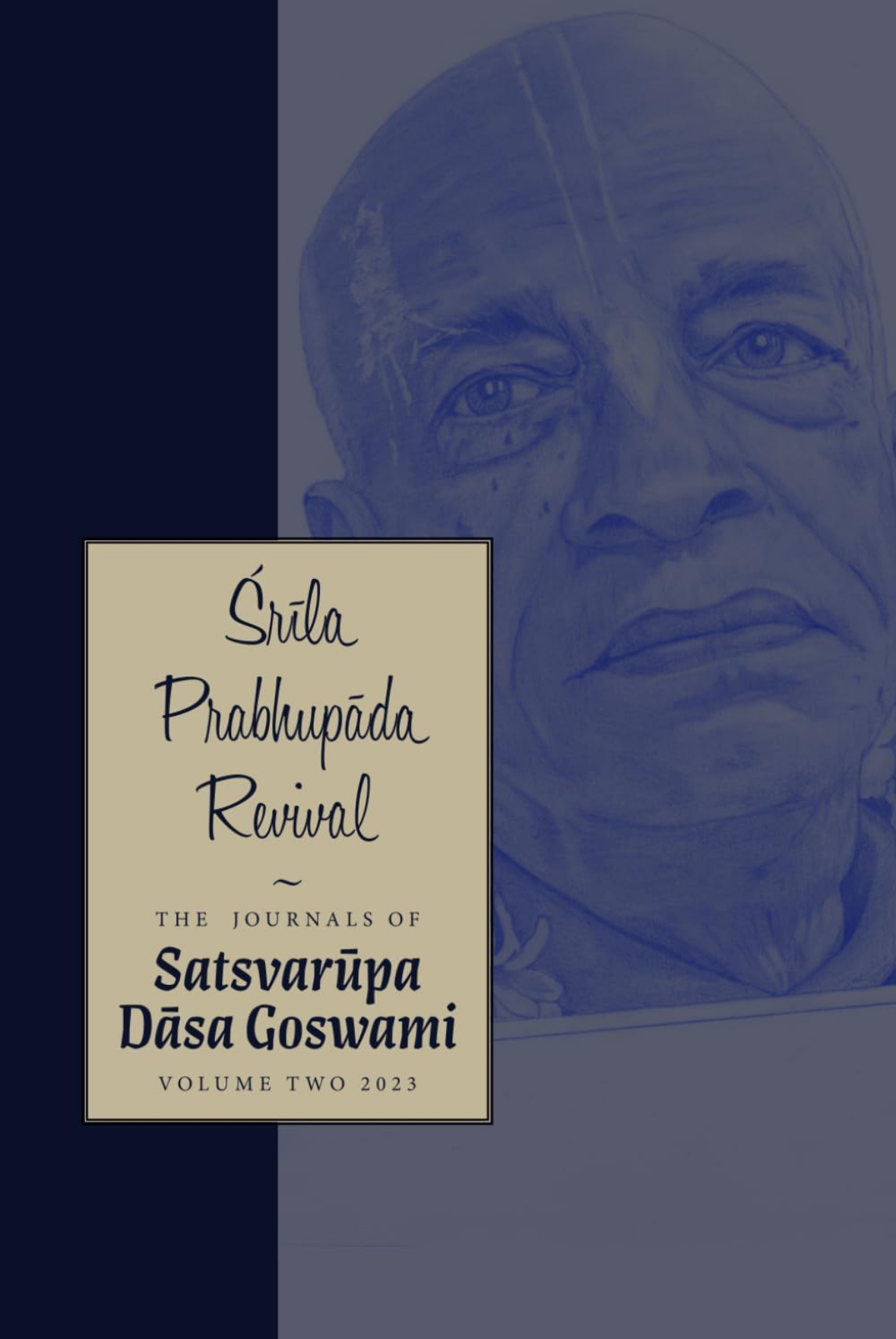
Viraha Bhavan Journal (2017–2018) was written by Satsvarūpa Mahārāja following a brief hiatus in writing activity, and was originally intended to be volume 1 in a series of published journals. However, following its completion and publication, Mahārāja again stopped writing books, subsequently focusing only on what became his current online journal, which began in August of 2018.

At first, I took it hard that I would have to live surrounded by the firemen, and without my own solitude. After all, for decades I had lived in my own house with my own books and my own friends. I was also now a crippled person who couldn’t walk, living among men who did active duties. But when Baladeva explained it to me, how it was not so bad living continually with other firemen and living in the firehouse with its limited facilities, I came to partially accept it and to accept the other men. I came to accept my new situation. I would live continually in the firehouse and mostly not go outside. I would not lead such a solitary life but associate with the other firemen.
Let me write sweet prose.
Let me write not for my own benefit
but for the pleasure of Their Lordships.
Let me please Kṛṣṇa,
that’s my only wish.
May Kṛṣṇa be pleased with me,
that’s my only hope and desire.
May Kṛṣṇa give me His blessings:
Kṛṣṇa Kṛṣṇa Kṛṣṇa Kṛṣṇa Kṛṣṇa he
Rāma Rāghava Rāma Rāghava
Rāma Rāghava rakṣa mām.
You mentioned that your pathway has become filled with stumbling blocks, but there are no stumbling blocks. I can kick out all those stumbling blocks immediately, provided you accept my guidance. With one stroke of my kick, I can kick out all stumbling blocks. —Letter by Śrīla Prabhupāda, December 9, 1972.

The Writing Sessions are my heart and soul. I’m trying my best to keep up with them. I am working with a few devotees, and they are far ahead of me. I wander in the wilderness of old age. I make my Writing Sessions as best I can. Every day I try to come up with a new subject. Today I am thinking of my parents. But I don’t think of them deeply. They are long gone from my life. Śrīla Prabhupāda wrote a poem when he was a sannyāsī, and he said now all my friends and relatives are gone. They are just a list of names now. I am like that too. I am a sannyāsī with a few friends. I love the books of Śrīla Prabhupāda. I try to keep up with them. I read as much as I can and then listen to his bhajanas.
The metaphor is song. Explain it. Yes, particulars may not seem interesting or profound to readers who want structured books.
Wait a minute. Don’t pander to readers or concepts of Art. But Kṛṣṇa conscious criteria are important and must be followed. So, if your little splayed-out life-thoughts are all Kṛṣṇa conscious, then it’s no problem.
I am near the end of my days. But I do like the company of like-minded souls, especially those who are Kṛṣṇa conscious. Yes! I am prone to Kṛṣṇa consciousness. I have been a disciple of Bhaktivedanta Swami Prabhupāda for maybe almost sixty years. Sometimes I fail him. But I always bounce back and fall at his feet. It is a terrible thing that I sometimes do not have the highest love for him. It is a terrible thing. Actually, however, I never fall away from him. He always comes and catches me and brings me back to his loving arms.

This edition of Satsvarūpa dāsa Goswami’s 1996 timed book, Upstate: Room to Write, is published as part of a legacy project to restore Satsvarūpa Mahārāja’s writings to ‘in print’ status and make them globally available for current and future readers.
A factual record of the reform and change in ISKCON guru system of mid ’80s.

Readers will find, in the Appendix of this book, scans of a cover letter written by Satsvarūpa Mahārāja to the GN Press typist at the time, along with some of the original handwritten pages of June Bug. Together, these help to illustrate the process used by Mahārāja when writing his books during this period. These were timed books, in the sense that a distinct time period was allotted for the writing, during SDG’s travels as a visiting sannyāsī
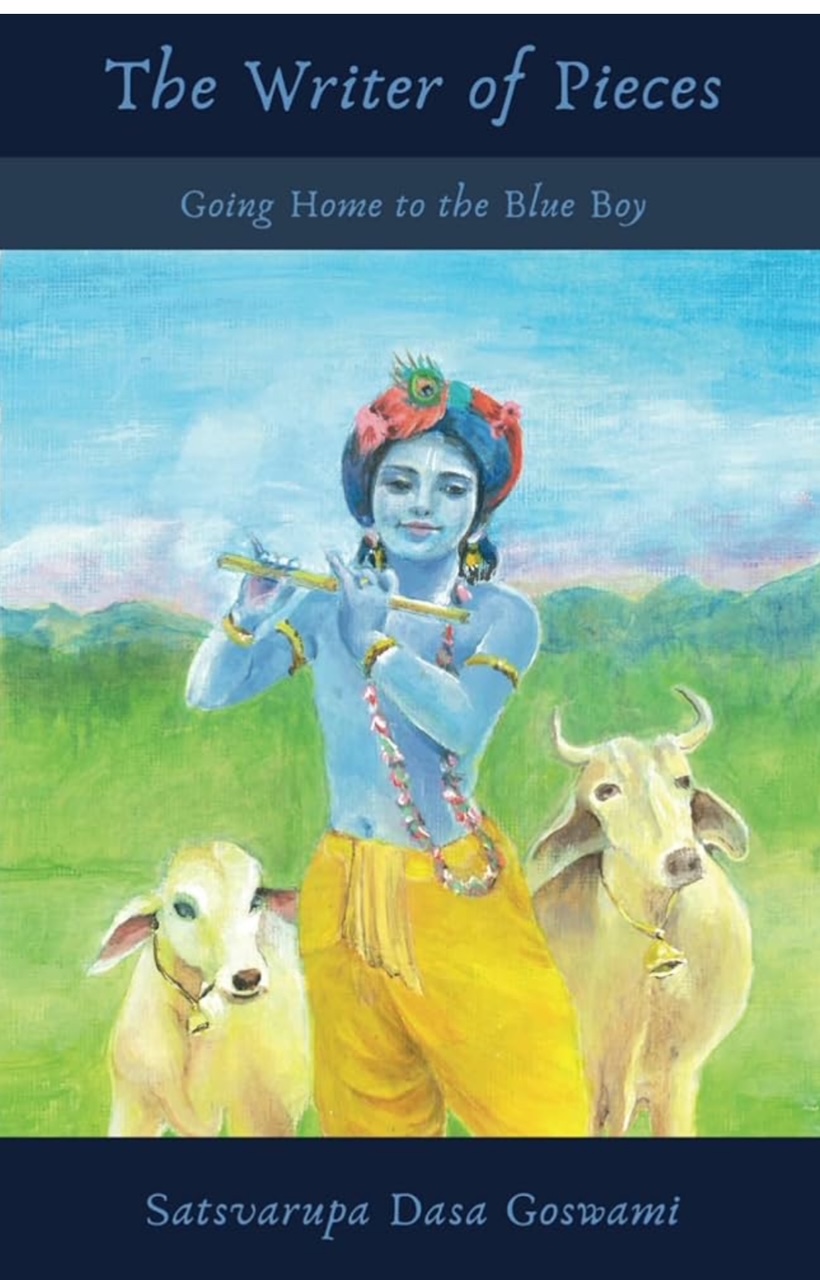
Don’t take my pieces away from me. I need them dearly. My pieces are my prayers to Kṛṣṇa. He wants me to have them, this is my way to love Him. Never take my pieces away.

Many planks and sticks, unable to stay together, are carried away by the force of a river’s waves. Similarly, although we are intimately related with friends and family members, we are unable to stay together because of our varied past deeds and the waves of time.
To Śrīla Prabhupāda, who encouraged his devotees (including me) To write articles and books about Kṛṣṇa Consciousness.
I wrote him personally and asked if it was alright for his disciples to write books, Since he, our spiritual master, was already doing that. He wrote back and said that it was certainly alright For us to produce books.
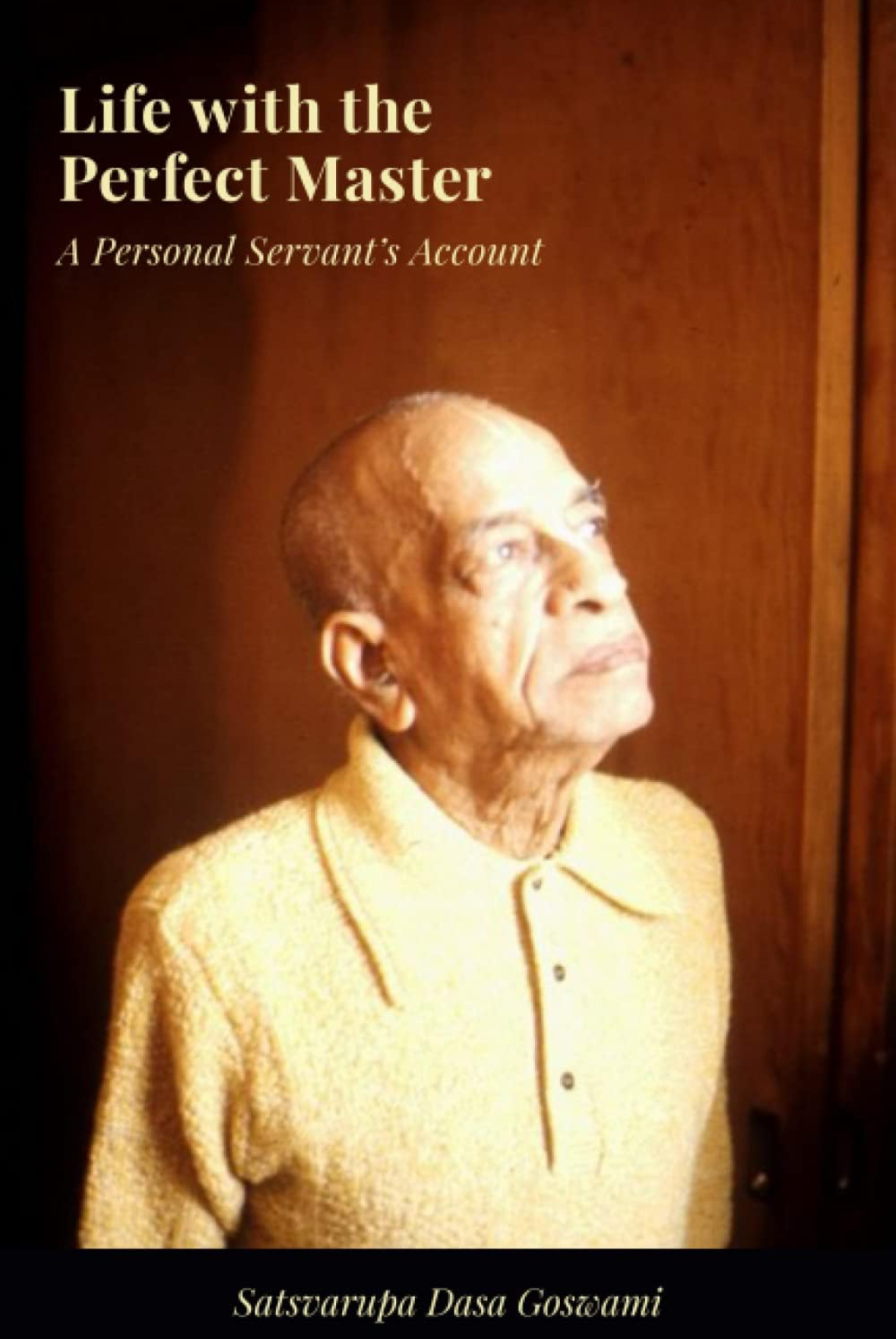
I have a personal story to tell. It is a about a time (January–July 1974) I spent as a personal servant and secretary of my spiritual master, His Divine Grace A.C. Bhaktivedanta Swami Prabhupäda, founder-äcärya of the International Society for Krishna Consciousness. Although I have written extensively about Çréla Prabhupäda, I’ve hesitated to give this account, for fear it would expose me as a poor disciple. But now I’m going ahead, confident that the truth will purify both my readers and myself.

First published by The Gītā-nāgarī Press/GN Press in serialized form in the magazine Among Friends between 1996 and 2001, Best Use of a Bad Bargain is collected here for the first time in this new edition. This volume also contains essays written by Satsvarūpa dāsa Goswami for the occasional periodical, Hope This Meets You in Good Health, between 1994 and 2002, published by the ISKCON Health and Welfare Ministry.

This book has two purposes: to arouse our transcendental feelings of separation from a great personality, Śrīla Prabhupāda, and to encourage all sincere seekers of the Absolute Truth to go forward like an army under the banner of His Divine Grace A.C. Bhaktivedanta Swami Prabhupāda and the Kṛṣṇa consciousness movement.
A single volume collection of the Nimai novels.
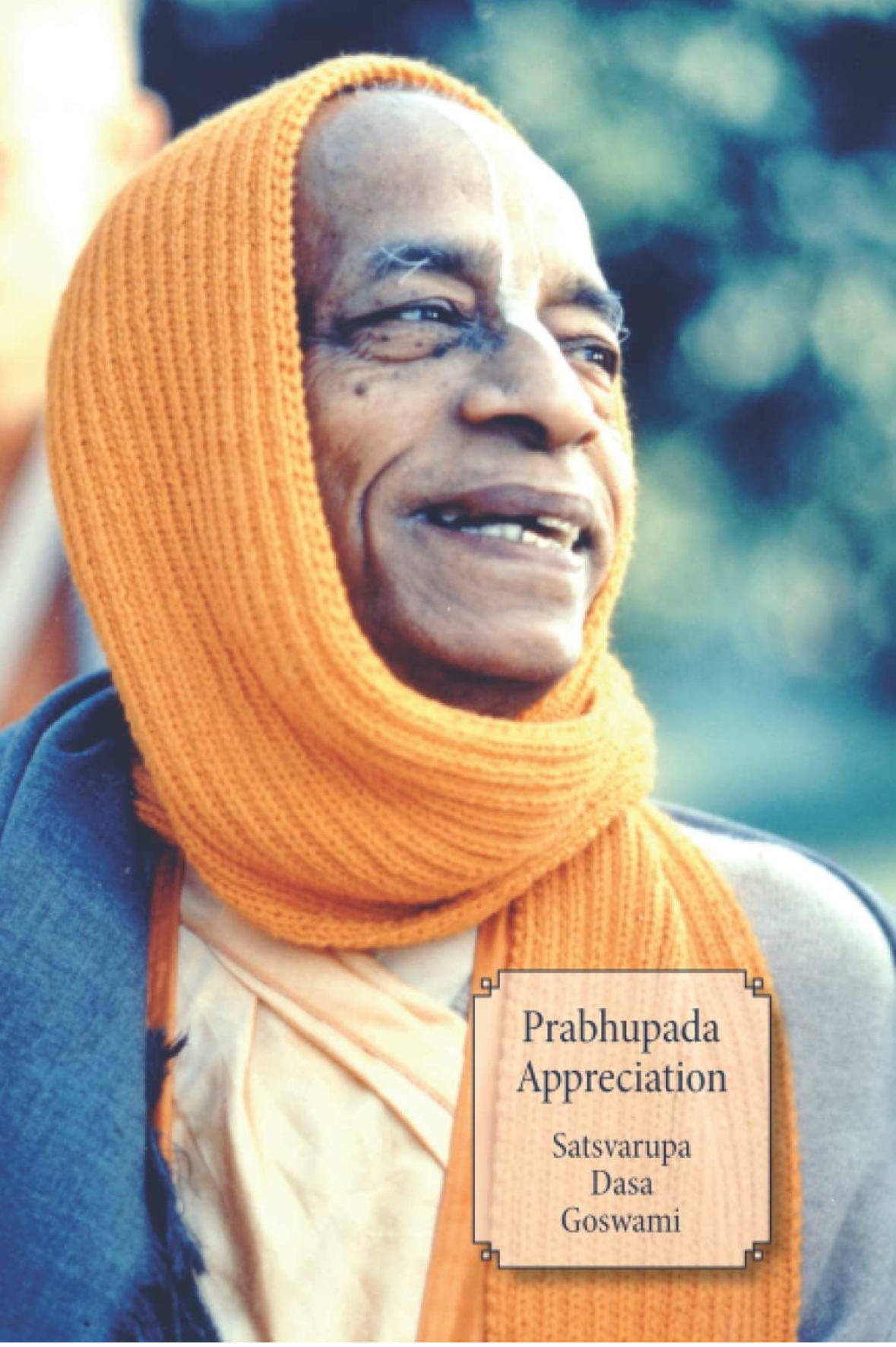
Śrīla Prabhupāda was in the disciplic succession from the Brahmā-Mādhva-Gauḍīya sampradāya, the Vaiṣṇavas who advocate pure devotion to God and who understand Kṛṣṇa as the Supreme Personality of Godhead. He always described himself as simply a messenger who carried the paramparā teachings of his spiritual master and Lord Kṛṣṇa.
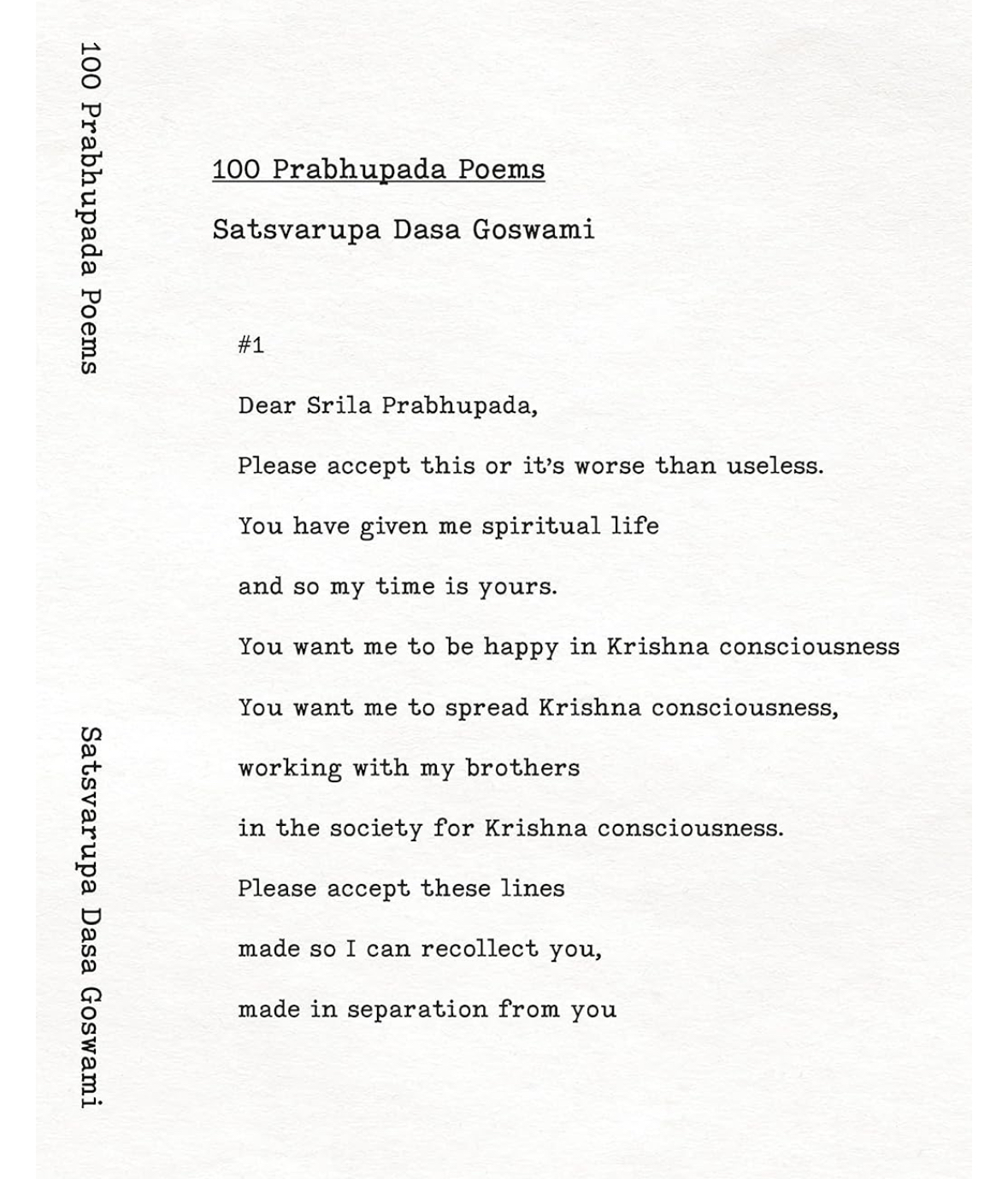
Dear Srila Prabhupada,
Please accept this or it’s worse than useless.
You have given me spiritual life
and so my time is yours.
You want me to be happy in Krishna consciousness
You want me to spread Krishna consciousness,
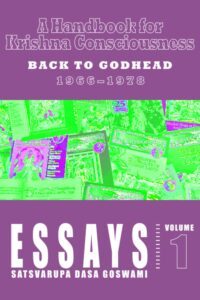
This collection of Satsvarūpa dāsa Goswami’s writings is comprised of essays that were originally published in Back to Godhead magazine between 1966 and 1978, and compiled in 1979 by Gita Nagari Press as the volume A Handbook for Kṛṣṇa Consciousness.

This second volume of Satsvarūpa dāsa Goswami’s Back to Godhead essays encompasses the last 11 years of his 20-year tenure as Editor-in-Chief of Back to Godhead magazine. The essays in this book consist mostly of SDG’s ‘Notes from the Editor’ column, which was typically featured towards the end of each issue starting in 1978 and running until Mahārāja retired from his duties as editor in 1989.
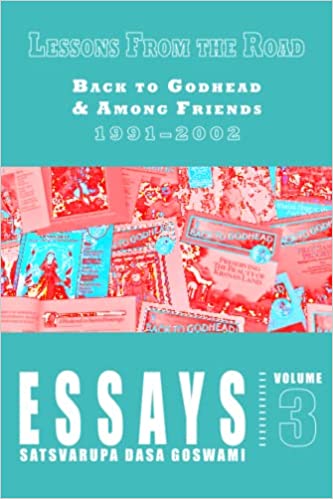
This collection of Satsvarupa dasa Goswami’s writings is comprised of essays that were originally published in Back to Godhead magazine between 1991 and 2002, picking up where Volume 2 leaves off. The volume is supplemented by essays about devotional service from issues of Satsvarupa dasa Goswami’s magazine, Among Friends, published in the 1990s.

“This is a different kind of book, written in my old age, observing Kṛṣṇa consciousness and assessing myself. I believe it fits under the category of ‘Literature in pursuance of the Vedic version.’ It is autobiography, from a Western-raised man, who has been transformed into a devotee of Kṛṣṇa by Śrīla Prabhupāda.”
 The Best I Could Do
I want to study this evolution of my art, my writing. I want to see what changed from the book In Search of the Grand Metaphor to the next book, The Last Days of the Year.
 a Hare Krishna Man
It’s world enlightenment day
And devotees are giving out books
By milk of kindness, read one page
And your life can become perfect.
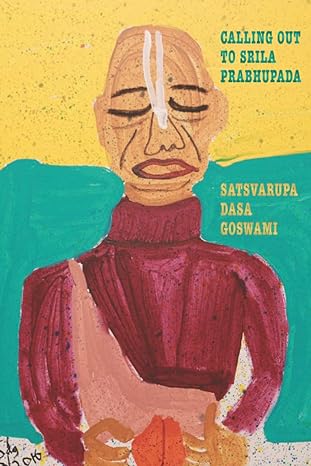 Calling Out to Srila Prabhupada: Poems and Prayers
O Prabhupāda, whose purports are wonderfully clear, having been gathered from what was taught by the previous ācāryas and made all new; O Prabhupāda, who is always sober to expose the material illusion and blissful in knowledge of Kṛṣṇa, may we carefully read your Bhaktivedanta purports.
I use free-writing in my devotional service as part of my sādhana. It is a way for me to enter those realms of myself where only honesty matters; free-writing enables me to reach deeper levels of realization by my repeated attempt to “tell the truth quickly.” Free-writing takes me past polished prose. It takes me past literary effect. It takes me past the need to present something and allows me to just get down and say it. From the viewpoint of a writer, this dropping of all pretense is desirable.
 Geaglum Free Write
This edition of Satsvarūpa dāsa Goswami’s 1996 timed book, Geaglum Free Write Diary, is published as part of a legacy project to restore Satsvarūpa Mahārāja’s writings to ‘in print’ status and make them globally available for current and future readers.