

What
Meeting of Disciples and friends of SDG
Where
The Veterans of Foreign Wars Hall – 845 Hudson Avenue – Stuyvesant Falls, New York 12173
There is plenty of parking near the Hall. The facility is just a few minutes’ walk from SDG’s home at 909 Albany Ave.
Schedule
10:00 – 10:30 A.M. Kirtana
10:30 – 11:15 A.M. Presentation by Satsvarupa Maharaja
11:15 – 12:30 P.M. Book Table
12:30 – 1:15 P.M. Arati and kirtana
1:15 — 2:15 P.M. Prasadam FeastContact
Baladeva Vidyabhusana at [email protected] or (518) 754-1108
Krsna dasi at [email protected] or (518) 822-7636SDG: “I request as many devotees as possible to attend so we can feel the family spirit strongly. I become very satisfied when we are all gathered together.”
*******
Śrī Caitanya-caritāmṛta, Madhya-līlā 20.124–125: “O great learned devotee, although there are many faults in this material world, there is one good opportunity—the association with devotees. Such association brings about great happiness. . . . .”
Srila Prabhupāda: “Therefore, our Society is association. If we keep good association, then we don’t touch the darkness. What is the association? There is a song, sat-saṅga chāḍi’ kainu asate vilāsa, te-kāraṇe lāgila mora karma-bandha-phāṅsa (Gaurā Pahū, verse 3). Sat-saṅga. Sat-saṅga means association with the devotees. So the one poet, Vaiṣṇava poet, is regretting that, ‘I did not keep association with the devotees, and I wanted to enjoy life with the nondevotees. Therefore I’m being entangled in the fruitive activities.’ Karma bandha phāṅsa. Entanglement.” [Conversation with David Wynne, July 9, 1973, London]
We need to expand our team of proofreaders as we aim to increase the rate of republication of Satsvarūpa Mahārāja’s books as well as new books that he writes.
This includes a need for fluent bilingual Spanish and English speakers to proofread Spanish translations (we currently have around 20 Spanish translations waiting to be proofread).
Anyone interested in this particular service should contact Manohara dāsa at [email protected]
If you would like to help, please contact Kṛṣṇa-bhajana dāsa at [email protected] or [email protected] and we will find you a service that utilizes your talents.
Hare Kṛṣṇa is our original taste. Srila Prabhupāda used to say, “ It is not an artificial imposition on the mind.” It has been going on for thousands of years all over India. It is not some mind control as the deprogrammers claim in their devious, material way. It is actually the original spiritual taste. So we say that if you chant, the taste comes back, like with the jaundiced man. The happiness that we are looking for life after life, all over the universe, in travels, in scholarship, in sex life, in nationalism, in everything, is to be found in the chanting process.
******
You should not accept a spiritual master unless you agree to chant this Hare Kṛṣṇa mantra daily. Lord Caitanya even accepted a spiritual master, Īśvara Purī, and His spiritual master told Him to regularly chant Hare Kṛṣṇa. And when He chanted, then He felt so much ecstasy of love of Godhead. But later the Māyāvādī sannyasīs questioned Him, “Why do You always chant Hare Kṛṣṇa?” They were more interested in impersonal meditation and studying the Vedānta-sūtra to reach a non-devotional conclusion. But Lord Caitanya replied, “The reason I chant Hare Kṛṣṇa is My spiritual master ordered Me to. He told Me, ‘You are not fit to understand the Vedānta-sūtra philosophy. You are foolish. Just chant Hare Kṛṣṇa.’” Of course, Lord Caitanya is not foolish, He is the Supreme Personality of Godhead. He was setting an example so that in the future people could not say that by meditation they have become God or that this Hare Kṛṣṇa chanting is for sentimental people. Lord Caitanya was establishing this as the highest form of yoga meditation for this age. Not only is it easy to perform, but it brings you greater perfection than any other method.
******
It is not “all right” to make up rounds for the previous day. It is an emergency measure. It is not good. But better than neglecting the rounds, you at least make them up the next day. It should not be a regular thing, and only in a very rare case should you on any single day not chant sixteen rounds. But in the event that you do fail to do so, then you have to make them up.
******
As I was chanting my japa in the company of disciples, I was lamenting how my japa is mechanical. Then I looked up at a painting on the temple wall. The painting was a crude rendition of Lord Caitanya dancing in kīrtana with His eternal associates. I could appreciate the artistry was crude. It then occurred to me that my japa and my other devotional service, although lamentably lacking, has a genuine standing within the realm of devotional service, just as this painting of Lord Caitanya does. This thought encourages me.
******
The lamentable gap exists—between where I am now and where I want to be in devotional service—but nevertheless, there is now a real place for me in pure devotional service. I pray to be able to see and appreciate it even as I can see Lord Caitanya’s pastimes in this simple devotional painting on the wall.
******
Walking with devotees in the scenic Irish forests. We went to an overlook above the rapids. There were unusual depressions and holes in the rocks caused by the water’s pouring over them for centuries of time. Pṛthu said, “It is like constant chanting which—” he paused to think of a phrase, and I added, “just as chanting wears away a stone heart.” It was his metaphor, and it struck me as wonderful. Like Śrīla Prabhupāda’s expression, “Little drops of water wear away the stone.” As Pṛthu said it, while we beheld the powerful water rapids—the white sluicing foam coursing over the rocks, the ever-fresh, clear water gradually, imperceptibly, boring holes in solid rocks—I saw what he said, that the chanting could eventually wear away our stone hearts, mine too.
******
The name of Kṛṣṇa is always Kṛṣṇa, pure and uncontaminated. Even if you are alone and even if at first you do not find the taste, you have to chant Hare Kṛṣṇa. There is a very relevant verse by Rūpa Gosvāmī in the Upadeśāmṛta. He compares a person who is chanting without taste to a person who has jaundice. The jaundiced patient is given sugar candy for a cure, but he still tastes the candy as bitter. Similarly, the neophyte chants the holy name, the sweetest of all things, but finds it dry and bitter. That is the proof of his material disease. But by going on chanting (just as the patient goes on eating the sugar candy), the cure comes.
******
It is not that by strict pronunciation we attain love of God. But when we struggle to pay attention and chant, Kṛṣṇa blesses us. We endeavor, and Kṛṣṇa blesses us. It is not by our endeavor that we conquer Kṛṣṇa and He is forced to reveal the holy name. It is not like arm wrestling.
pp. 65-71
sūta uvāca
iti bhītaḥ prajā-drohāt
sarva-dharma-vivitsayā
tato vinaśanaṁ prāgād
yatra deva-vrato ’patatSūta Gosvāmī said: Being afraid for having killed so many subjects on the Battlefield of Kurukṣetra, Mahārāja Yudhiṣṭhira went to the scene of the massacre. There, Bhīṣmadeva was lying on a bed of arrows, about to pass away. (S.B. 1.9.1)
If we hear about the passing away of Bhismadeva, it will enlighten us in understanding the significance of Srila Prabhupada. We want to understand the great soul in every activity he performs. His passing away, of course, is the last chapter of his pastimes in the material world. Lord Krsna and Lord Caitanya also passed away. That means literally “passed away”—out of our sight, into the next world. It’s not that they have ceased to exist.
Today we are reading about Bhismadeva’s passing away, which was very glorious. It was glorious because he gave wonderful instructions —and he gave them in a condition no ordinary person could have tolerated. He was shot through with so many arrows that he was lying in the warfield on a bed of arrows; yet he maintained his mental stability because he was a great yogi. He was not attached to his body, and he was able to give instructions to Yudhisthira. He was so great that Lord Krsna Himself came there just so Bhisma would be able to see Him as he passed away. And this ensured Bhisma and everyone else there that Bhisma returned to Godhead on leaving his body. Whatever anyone thinks at the time of death, that consciousness determines his next body. So everyone knew that Bhisma went back to Godhead.
One obvious parallel here with the life of Srila Prabhupada is that he was always in the company of Krsna and that he continued to be in Krsna’s company at the end of his life. Srila Prabhupada taught us,
“People say they want to see Krsna, but I say, ‘Do you have the eyes to see Krsna?’ Premanjana-cchurita bhakti vilocanena. You have to qualify your eyes with the salve of devotion; otherwise, you can’t see Krsna. You are so proud. You demand to see God. But you can hear God in His holy name. This is called nama-avatara.”
People ask, “Where is Krsna? He is supposed to come every age, so why isn’t He coming now?” The answer is that Krsna is here in the name “Krsna.” Lord Caitanya taught that Krsna is not different from His name. Sankirtana, the chanting of the holy name, is not different from Krsna. It is Krsna appearing in this age. The Hare Krsna mantra is Krsna. Srila Prabhupada, of course, is in disciplic succession from Lord Caitanya, through his spiritual master, Srila Bhaktisiddhanta Sarasvati, and this is the teaching for this age. Kalau tad dhari-kirtanat. “In the age of Kali, the best method for worshiping God is to chant the holy name.” In Satya-yuga, the recommended process was meditation. In Treta-yuga, it was to offer sacrifice. In Dvapara-yuga it was to personally worship the Lord. And now, in Kali-yuga — kalau tad dhari-kirtanat— the process is to chant the name of Krsna.
So during his last days, Prabhupada was surrounding himself with the holy name. His whole life had been dedicated to spreading the holy name to every town and village. For his passing away, he especially wanted to fill his room with devotees chanting Hare Krsna, and Krsna fulfilled that wish. Srila Prabhupada left his body in the most sacred place on earth, Vrndavana, surrounded by Vaisnavas. We are neophyte devotees, just recently picked up from the mleccha class, but anyone who chants Hare Krsna, even if he is born in a dog-eater family, has to be considered an exalted devotee who is qualified to perform Vedic yajna. Srila Prabhupada was surrounded by kirtana performed by the Vaisnavas he had created, who were qualified only by following his orders. And that kirtana was actually Krsna.
So just as Bhisma saw Krsna at the end, Srila Prabhupada also saw, Krsna. As Bhisma gave instructions from the bed of arrows, Srila Prabhupada also gave instructions from a position that was so painful and difficult that it seemed a humanly impossible feat. Srila Prabhupada had eaten almost nothing for six months, and his body was so emaciated. According to the doctors, his body was in such a condition that he was in intense pain. But Prabhupada remained completely collected and noble and grave. And he was teaching … until the end. He was teaching Svarupa Damodara das that life comes from life, not from matter. He was preaching and giving instructions to so many devotees. He was showing us that one should preach with every breath he has. And he was teaching us how to die.
The time of death, as King Kulasekhara prays, is very difficult. Death means that the soul cannot stand to live in the body any more. Everything collapses. Whatever the cause is—heart failure, electric shock, wearing out of the body—it means that the situation has become unbearable for the soul . For the soul to leave the body is not an easy thing. It causes great distress. Therefore, one should not take birth again, because every time he takes birth he will have to die again. And death is the most fearful thing for the living being. As Srila Prabhupada explains it: Imagine that you are a very lowly person but you have been promised that in your next life you will be born as a king. Someone might think, “Yes, I’d like to be a king in my next life!’ But then suppose someone says, “All right, you have to leave your present body right now, and then you can take the king’s body.” Nobody would want to do it, because to leave the body is such botheration for the soul. He is not supposed to die; he is supposed to live eternally in his spiritual body. To be in such an unnatural situation, in which he who doesn’t die has to die, is the greatest pain. So at the time of death, a person usually just thinks of the death rattle in his throat or the pain. King Kulasekhara prayed, “Please let me pass away, not in some prolonged contemplation of my bodily death, but just while I am chanting Hare Krsna. If I can meditate on You and then pass from this body, that would be good.”
But Srila Prabhupada taught us how it is possible to go step by step to death in Krspa consciousness. In one of his last days, he told one of our Godbrothers, Satadhanya Maharaja, “Don’t think that this isn’t going to happen to you.” Because one may tend to think, “Yes, Prabhupada has departed, but we are still here. We will carry on in our youthful way after his departure.” But the same thing is going to happen to us! He underwent what everyone has to undergo—death, which is so fearful —in a way that was perfect and glorious. When we have to go, we can cling to the memory of how a great soul left his body—always thinking of Krsna, surrounding himself with the medicine of chanting Hare Krsna, wanting to hear about Krsna, and being very detached from the misery of the material condition.
Acarya means one who teaches by example. And this last lesson that Srila Prabhupada gave us was one of his most wonderful and most important. He taught by his life and in his books. Whatever Srila Prabhupada did was instructive: the way he ate, the way he walked, the way he dressed, the way he lay down, the way he breathed, the way he moved. Everything a great soul does should be carefully studied —not imitated, but understood and followed. It’s meant to be followed.
Krsna Himself came to the Battlefield of Kuruksetra for the sake of Bhisma. “Seeing him (Bhisma) lying on the ground like a demigod fallep from the sky, the Pandava king Yudhisthira, along with his younger brothers and Lord Krsna, bowed down before him.” Krsna planned that not only would Bhisma be happy, but the Pandavas would benefit from his instructions. Yudhisthira was in great anxiety for having killed so many people, so he had gone to many great personalities, even Lord Krsna, and submitted, “I think my life is ruined. How can I make up for all this slaughter? Millions were killed at Kuruksetra just to reinstate me on the royal throne.” But no one could pacify his heart. Therefore, Krsna wanted the Pandavas to hear from Bhisma, who alone was able to give such great instructions even at the time of his death. So, Krsna likes to glorify His devotee.
Krsna enjoys playing different roles with His devotees, just so that He can taste transcendental pleasure. He doesn’t want to always act as God; sometimes He likes to act in human society and taste loving mellows with different devotees. And here He is reacting like an ordinary person. Srila Prabhupada also liked to do that: to submit to the care of his devotees and take their advice, although he was actually directing them. This especially was his mood at the end. “You just take care of everything. I’ll agree to whatever you say,” he told his servants and secretary. He let them direct him, even to the point of washing and feeding him, moving him, and consoling and encouraging him. He simply let them do as they liked.
pp. 244-47
This writing is coming from the blessing of feeling close to Prabhupada, although I am also far away.
Leave nothingness to the voidist philosophers. We can always do something. We can always open one of Prabhupada’s books.
“But on some days I feel so empty, even if I open the book I still feel blank.”
When that happens, I have no choice but to get over that slump. That much is in my power. I have to take hold of myself and say, “Prabhupada is here in this book. Why do I think I can’t get anything out of it?” At least I can go to the stone wall and say, “Prabhupada, please help me. What have I done that now your mercy seems withheld from me?” Prabhupada will answer.
We shouldn’t think that approaching Prabhupada is completely mystical or even unattainable. Approaching Prabhupada in deeper and deeper ways requires deeper and deeper prayer and service, an intensification of the whole consciousness, and then Prabhupada will reciprocate. But the question is always there, “Do you really want to be with him?”
If you want to be with him, you will have to examine the things that keep you away from him. Prabhupada is not keeping away from us; we may be pushing him away due to lack of clarity in our desire. Once we get some of the direct power of Prabhupada’s association, then all our negative thought patterns fall into place. We understand that they are like scratches that will continue to bother us until we are liberated. They are not important; rather, they are bothersome. In no way do they stop us from our main activity of loving Prabhupada wholeheartedly.
In the confidentiality of our exchange I ask you, “Who is Krsna? How can we find Him?” The answer is that He is found in the Vedic literatures, and by devotional service He will be revealed to us. This leads us to another question, “How can we find the patience to go on with regular service and always have confidence that this gradual pace is best?” The answer is that we have to be patient. There is no other way.
Prabhupada really is available to us. We are never devoid of his association. All we need is a little faith. We don’t have to give up our regular duties in Prabhupada’s service to go off and look for Prabhupada. Prabhupada (and Krsna) reveal themselves through our service. Although we speak of patience, we don’t have to wait ten thousand years before we receive any revelation; all we have to do is look around us.
We all hanker for ecstasy. Prabhupada translates Lord Caitanya’s words as, “The nectar for which we are always anxious.” We want nectar because we are ananda-mayo ‘bhyasat, our very nature is ananda. We are entitled to ecstasy, but due to misbehavior, we have forgotten where to find the nectar. We keep looking for ecstasy in illicit acts or in places where our pleasure causes pain to others. Prabhupada has taught us that with humility and contrition, we can seek the path of nectar in service to Krsna. He also teaches us to be patient with the dryness that comes due to all of our offenses.
We still have doubts. How do we know that the nectar of our service is actually the nectar of Krsna consciousness and not the usual folly of the conditioned soul? We have to consult. Now we are back to the point of this book: We have to consult our hearts, pray to Krsna, and especially consult with the spiritual master.
He’s making fun of me before I even begin.
I wanted to say goodbye to Wicklow
but he ruined it—
“Say ‘bye-bye,’ Stevie.” Let me take a new field before he gets there.
I’ll say hello to the magpies as they glide onto wet grass.
Hail to the all-gray solid sky—
I know where it comes from. Hello to Lord Krsna.
There are so many folks blabbering here on earth—
we get the wrong impression,
thinking there’s nothing else
or no meaning to anything.
But the Vedas make it clear—
Hare Krsna mantra is the main thing.
I know why
there is a chimney on a house,
and gulls fly.
I know whom to be thankful to
for a roof over the head
and how to turn to Him
when it’s bad.
Marking this place
as already traversed
I pack my blue bag
and get ready for Dublin.
Hare Krsna mantra is the main thing.
Here is a wonderful picture of Srila Prabhupada bending over from behind his desk at Bhaktivedanta Manor: His hands are touching gift wrappings, big ribbons and cellophane-covered flowers, a letter of congratulations from another admirer. Srila Prabhupada is not looking at the letter but glancing over to someone or something else in the room. It’s a candid moment behind the scenes.
Prabhupada, you seem comfortable in your Manor room. You have come to England to preach. Sunshine lightens the back of your head. A harmonium is in view. Four pieces of fruit on your table. I would say whoever or whatever you are glancing out at is receiving your mercy.
In the 1985 Vyasa-puja homage from New Mayapur, France, Ayodhyapati dasa longs for
“…. those moments in which our eyes would meet your penetrating glance, which would slice through all our pretentious coverings . . . revealed us as we really were . . . awkward and ashamed. . . . Or the times when all the devotees in the temple would gather around the envelope marked “Tridandi Goswami A.C. Bhaktivedanta Swami,” and close their eyes in an attempt to catch each drop of the nectar of your instructions as the letter was read. ‘Preaching is expanding . . . Be pure in heart, be free from duplicity or the desire for fame and honor. Go on sacrificing for Lord Caitanya and at the moment of death He will appear within your mind and take you back to Godhead.’ Because these moments filled us with such a burning zeal to love you and serve you, feeling the intimacy of your association, we cry out that they will never slip from our recollections into the oblivion of forgetfulness.”
pp. 173-76
The beautiful nature pictures from the Far East in Light of the Bhagavata. I relish the wise sayings. The devotee is not agitated by sex the way the ocean is not agitated by storms. The rain beats off the mountains, which remain steady like devotees in adverse conditions.
We’re back here with here-ness, getting through the day. Still sleeping heavily at nap times and lying awake at night because of the jet lag. It takes a while to recover.
No one’s book can enlighten me or inform me or teach me art. I can learn it only from my spiritual master.
The chestnuts I collected before I left here are sitting on the narrow windowsill in the shed. Jagged, ragged cloud bottoms against the light, golden-rayed clouds in today’s blue sky. In the season after the rains, the creatures are beautiful, like transcendentalists, in health and outlook.
(In the shed, under a dark sky)
When I am alone I have
no memory but whatever I read
in the morning while
someone slammed a door
and my eyes were bright with ideas
I’m back in rainy Eire
back in the shed
singing and dancing in head
knowing the most wonderful thing.
Someone said (in my mind)
maybe you lost something because you offended devotees
or the holy name and no one will tell you because
you won’t let them.
It’s that simple.
What now? Am I
shut out?
No, not shut out except by myself as I build a wall
around my house and prepare
a solitary desk. My ramparts, my reasons. Mert went back
and forth never sure, but
dancing in the waters of life.
Improvise means you start
out with each other listening true with esoteric ears. Public says, “Baloney!” I say, “Art.
Epiphany,” and intend it
to be something free
connected to Krsna
(isn’t everything?).
The lake flooded looks
gentle water spilled onto green weeds half submerged and trees but the people are okay.
Listen to the rain pattering on the roof of the shed. Hear the dog barking hoarsely. Picture of Radha and Krsna scotch-taped to the wall here was left alone while I was traveling. Listen to the rain. Feel the heat and the cold. Droplets hang¬ing on the windowpane slowly run down.
Thought of devotees I initiated who don’t write—Subala, Ambarisa. They were so young and fresh when I met them, and both of them insisted I initiate them. They used to make so many sacrifices to see me, like hitchhiking to southern Europe when I was there. Subala even hitchhiked the year he had his leg in a cast. Now one is occupied with a wife and making money, and the other with the Krsna consciousness of his yatra—what the preachers say to do. That guru who initiated them seems far away.
As for me, it all comes from
contact with the Swami but what we were before—we hurt each
other with words: “You jerk
you imitating Kerouac?”
It gets darker by the minute in this shed.
They’re all dumb
to KC despite
devotees pushing it in airports and despite the obvious light of truth.
I’m dumb to Krsnaloka and to “I’m not this body,” think only, “Give us rain and a new day.”
O master, you tell me in the writing you left: death comes to all to
me. If you who are the wisest of all also
succumbed to it, or
demonstrated it,
why would I think
I’m exempt?
Do I expect a swan
carrier bed, no incense
please
and to break out of this mold of all I have been in this life—even
when I’m filled up
with it now?
Do I expect such a dramatic rescue? Naw, I’ll just go on with the same last poems they can’t interpret.
Some utsaha devotee—how about Bhakta X?—can announce, “He died perfect, thinking
of Krsna, an excellent example.”
But I’ll know the truth
that I clung to the lotus feet of my spiritual master
that I merely
held on.
Stand outside the shed. Suddenly the rusty croak-alarm of a quail, and three of them lift slowly from a hidden place in the pasture. Remember? It was just before December when I used to stand outside the shed before returning to the house late in the afternoons. It’s the middle of winter now. Does the weather affect our moods? Is that why they drink so much alcohol in this land? I don’t know.
I do know that you can see rain on the individual grass blades if you look at them close enough. Has this narrow, marshy path been crushed into existence only by my feet? How is it possible? I live so much inside a small sect, and even within the sect I’m isolated. I don’t have enough significance to trod out a path. In the preface to Volume Five of Merton’s Diaries, it says he was of two minds, not satisfied even when he received his abbot’s permission to live in the hermitage. He used the word “absurd” a lot, a buzzword of the 1960s. I’m not Merton, although there are similarities, and I want to be more positive than he seemed to feel about the life I am choosing, although I cannot deny the duality I feel.
A sinner is forced to commit sins by habit; even punishment and atonement cannot rescue him.
Oh boy, teach me about jnana next. Yes, and then I’ll be able to cap the whole thing off by concluding that bhakti is the best method for everything—kecit kevalaya bhaktya. It is the only process that destroys material desires by replacing them with ardent desire for Krsna’s service. The next verse has a long, technical purport.
Open “O” of my mouth, yawn away as evening darkens into night. Living with such cycles, but no longer on the merry-go-round of material life. O Krsna, please help me to serve You.
He just wanted to give me a letter upon my arrival, so he wrote whatever came to mind, desperately, about his own enterprises, admittedly selfish, and handed it over. Then he was sorry that my reply seemed to misunderstand him. That’s an interaction. Craving intimacy. Answers are in the books, but we need the flesh-and-guts exchange too.
pp. 689-93
Give special attention to humans. Owls can turn their heads almost all the way around, but they can’t chant and dance or understand philosophy. Among the humans, these four hundred thousand species, please take care to protect this one, me, who is growing old and fragile. Keep him until he has to go, and feed him both grains and broccoli and clean water. He’ll hatch pages in return. I am hereby ensconced in the body parchment and machine and wish the soul to speak out as SDG under oath to confer tidings and my Swami’s blessings, who is very dear to Krishna on this earth
This one is different he
will stay awake he
promises.
His Boy Scout three-fingered
school salute. His hunger
for the prize.
Give me a child until
“he’s five years old,” and I’ll
turn him out
a devotee, said . . .
But if you ruin him
that will come back at you.
Oh, I was so far down
in mode of tamas
didn’t remember if my
indoor shoes were all I wore
outdoors.
Went up a hill peddling
yelling for God as I
went. Please.
Doesn’t He want
us to worship Him?
No, He wants you to
first come into His
service as a gopi
in earth-Vrndavana.
He wants you to
clear your act
as a sannyasi.
You can say I’m thinking
of the Supreme Lord.
Hare Krishna was pure.
See out there that’s
the demon
“Oh, I’ve never seen lilas
so terrific.”
Make it clear.
Keep at it, my friend.
I pray.
Oh, makers of Mexico
face masks
no resting place
wherefrom . . .
Now they’ll get to see
the daughter and son
move again.
Oh, write clear. It’s out
of your control.
He leans forward, helpless.
I will know, but the hand paints as much as the brain, and even the foot expresses its gratitude. It’s not just an etude to get it right, although that’s there too, I guess. They say my internal critic has to be in there too, pulling along with the rest of the subpersons. Otherwise, who will say, “Get it right”?
One bro said he’s
facing the doubts, says
it’s risky but he’s doing
it look them right
in the eye
come away bloodied,
offer the whole thing
to the master, “Here I
am like this.”
My approach has been different,
to try to chase them away,
all the mosquitoes.
He said I had thought you’d
do like that so
good luck
as they say in Oz
go mate or something
like
that.
Hang in there. Can they
protect me, my friends, or
are they like the fallible
soldiers Sukadeva mentions?
Maybe like that. Don’t count
on some legal sharp person
if Providence doesn’t want it
you’ll be raked over the coals.
One fellow said they are settling
his case out of court provided
he is willing to take a 2–3
month jail sentence.
He says he’s misunderstood
and I agree.
I am too.
We all are.
You take on one assistant after another for a term of office. As I did six months for Srila Prabhupada, and Hari Sauri did 18 months, and Srutakirti did more than that.
Good night, good night. You can’t sense their dwindling. Like nights that have gone to the West, they will never come back.
Injustice, tell of it and
get a Pulitzer Prize.
Hare Krishnas still seen
as playful foolish dangerous
too. Mind-blowing religion
like other cult religions
capable of mass suicide
abuse of their children
because we don’t know how
they think and act, they have
a completely different
consciousness, worship statues
have no sex or claim not to
look at their books:
women are like slaves.
Believe in mythical
gods. Sharp too
in presenting themselves as
normal.
Here read the list
of wrongs on them and
decide for yourself.
“As long as you are with
them, we don’t want
anything to do with you.”
I could hardly believe what
she said. I had a micro
cassette of it for future playing
but that got stolen along
with everything else when
the car was unattended
on Schermerhorn Street.
But I heard it and won’t
forget. I didn’t come
groveling. I stay proud
you could say, on the
high ground of Krishna consciousness.
Jayadvaita Swami has escorted his
mother twice around
India and now his sister.
But me, nothing. All right, it just brings
me back to my
one and only father
“We’ll get manual typewriters.” Yeah you better stock up on rice paper and paint brushes and all amenities gone. Flush.
Hare Krishna chanting still allowed in the park, in the good times. Hari Hari, the man responsible, please look after me and my children . . .
He likes to write, drifting off and coming back. After this we’ll chant and read the scripture. Tell them, “People, we’ve been given the grave charge of telling you about Lord Krishna. There are other forms of God, but (1) He is most attractive; and (2) He is the original.” That’s enough for a start. Tell us something about Krishna. He’s the cause of all causes. Actively so. Swami says so. We follow him and the Bhagavad-gita. I was willing to submit to the line of devotion, bhakti, which he gave. It was just my inclination at that time, it sunk as seeds and took root and grew quickly, and ever since I have continued it. I belong to this religion, what else can I say? Hare Krishna, Hare Krishna.
pp. 73-76
Don’t be anxious about your maintenance. Kṛṣṇa will provide. He takes care of His servants. This attitude can be taken up to different degrees. One may go on working hard and continue to be anxious about money-making and paying bills, yet have a certain satisfaction that the final outcome is up to Kṛṣṇa. Thus to some extent the worldly anxiety is reduced. After all, we’re not the doers. Bhaktivinode Thakura’s proposal seems more radical, that he will no longer make money or provide for his relatives, but instead he will engage full-time in chanting Hare Kṛṣṇa. Remember Mṛgāri the hunter who was saved by Narada? He was also worried about how he would survive when Narada told him to break his bow. But Narada assured him that he would arrange for his meals. So Mṛgāri spent his full time chanting in his little hut. Bhaktivinode Thakura sings, “I will serve You free from all anxiety, and at home, if any good or evil should occur, it will not be my responsibility” (Śaraṇāgati , 3.2.7).
The pure devotee is ready to do whatever the Lord wants and is not afraid of the outcome. He may continue earning money, or he may stop. Often he continues earning money just to set an example for others.
“So as not to disrupt the minds of ignorant men attached to the fruitive results of prescribed duties, a learned person should not induce them to stop work. Rather, by working in the spirit of devotion, he should engage them in all sorts of activities (for the gradual development of Kṛṣṇa consciousness)” (Bg. 3.26).
We desire to be full-time servants of Kṛṣṇa. We want no other occupation. Many of us have been full-time devotees for most of our adult lives. Externally, this means we haven’t had jobs, we have served in ISKCON. But ISKCON has its own anxieties about raising money and it has evolving attitudes as to what is the best way to go about it.
What is my duty as a sannyāsī? I don’t need a job, that’s clear. I should live as a bikṣu tridaṇḍi and accept alms. I should live according to what comes. I drive around in our Renault Master van and then fly to India once a year. Kṛṣṇa is providing. I try not to misuse this facility, because abusing it would be an anartha in bhakti. But at least I should be grateful enough to acknowledge that Kṛṣṇa is maintaining me.
We always wonder if we are doing the best thing. We want to be able to have a deep conviction in the direction our lives are taking. Kṛṣṇa is maintaining us, and up to a point, we also have to help ourselves. We trust Kṛṣṇa and we have to learn to trust our own intentions in Kṛṣṇa consciousness. The Mādhurya Kaḍambinī lists a symptom of unsteadiness as “indecision.” You go back and forth, back and forth, trying to decide what course to take even in spiritual life. It’s better just to plunge in and trust that Kṛṣṇa will take care of the results.
Do you want to be Kṛṣṇa conscious? The intelligence consults the self: “How do you feel about your surrender to Kṛṣṇa consciousness?” We consult even the senses and the body and the sub-persons. “Are you all right? Do you want to quit Kṛṣṇa consciousness or lessen it? Any other desires needing to be fulfilled? Are you convinced?” If you’re actually a devotee, all your selves will express their loyalty to this path. They may all have their own opinion as to how Kṛṣṇa consciousness will best be accomplished, though. The intelligence has to have control. It’s not as simple as it sounds.
Bhaktivinode Thakura describes himself as a dog in the Lord’s household:
“Chain me nearby and maintain me as You will. I shall remain at the doorstep, and allow no enemies to enter Your house” (Śaraṇāgati , 3.3.2).
He’ll eat whatever prasāda remnants are left by the devotees, and he’ll feast on them with ecstasy.
“Whenever You call, I will immediately run to You and dance in rapture.”
Kṛṣṇa, please engage me in Your service. Vanquish my reluctance and uncertainty of whether I can serve You, whether I can trust those who claim to represent You, whether the tasks are suitable for me. You gave me so much freedom because I asked for it. You gave me a “license” for sense gratification. It’s good to know my service is voluntary, but am I not Your servant, Your household dog? I pray to be able to sing honestly like Bhaktivinoda Thakura (and Raghunātha dāsa Gosvāmī), “I am Yours! I am Yours! I am Yours!”
“I will never think of my own maintenance, but rather remain transported by a multitude of ecstasies. Bhaktivinoda accepts You as his only support.”
Kṛṣṇa wants us to be free of false support systems. This is an important consideration. How we make our money, how we spend it, what standard of living we maintain—unless these are done properly, they will hamper our ability to please Kṛṣṇa. Lord Caitanya wanted Sanatana Gosvāmī to give away his valuable blanket before He would fully instruct him. The Lord was also happy when Raghunatha dasa stopped receiving his father’s income. Be free of false support and then inquire on the path that leads to deep Kṛṣṇa consciousness.
Everything in the universe happens by God’s will (including time passing and the cock crowing). The demigods act in obedience to that will. By the will of God, jivas are born and live out their karma in prosperity or ruin, joy or sorrow. Without His sanction, the tiny jiva is unable to do anything. A follower of śaraṇāgati surrenders to this will. It doesn’t take perfection in devotional service to attain surrender; it’s the first step. Only the stubborn fools continue to resist or think that there is no divine will.
Still, it’s a big first step. If we totally resign to surrender, then that surrender can deliver us to the further stages of devotion.
“You are my protector and maintainer. Without Your lotus feet there is no hope for me. No longer confident of my own strength and endeavor, I depend solely on Your will” (Śaraṇāgati 3.4.6-7).
Who is in touch with the great God? Who knows for sure how He operates in all things great and small? He who has faith and experience. Direct realization is rare. He who knows vāsudevaḥ sarvam iti is a mahatma. What am I compared to such a realized saint? I am someone who has sinned recently, but who repents it and realizes that the true taste of Krsna consciousness is better than playing it safe within religious codes. I am someone who has received the mercy of perfect Vaisnavas and yet hasn’t gone far with it.
“Bhaktivinoda is most poor, and his pride has been leveled. Now he lives or dies, as You wish” (Śaraṇāgati , 3.4.8).
pp. 191-96
Don’t rush, but keeping going for thirty-five minutes. Be serious and profound, I told myself. Yeah, but be real.
Kirtan Rasa telling me the importance of M. and I doing exercise. Yes, I say, but usually we don’t spare the time. Rather exercise the mind with pen or with japa, the soul, but I do find time to walk and maybe ten minutes of daily yoga poses, stretches. It’s got to be aerobic he says, to increase the heart rate and circulation.
Black seaweed exposed at low tide. The tape recorder cut off on me on my walk, but only toward the very end. Now what will I do?
The trouble with exercise is that it puts you on the bodily platform. Gopis don’t do pushups. But they churn butter. They run to Krsna. They dance. They walk into the forest. They walk to Syama-kunda and up and down Govardhana Hill. They play water sports in the Yamuna. They get nice exercise, especially in the rasa dance.
We are on such a lower platform it probably wouldn’t hurt us to exercise, especially if we keep in mind that we want to remain fit for serving Krsna and we can hear Prabhupada’s lectures while we do it. Otherwise, I sit all day and write and read, and that’s not good for my health.
Please write something spiritual. I can only write what I know and do. We read together in C.c. the Lord’s arguments against Sarvabhauma’s Mayavada interpretation.
Kirtan Rasa said, “But the Mayavadis would say that we too are interpreting when we say the verse apani-pado javano grahita means the Absolute Truth has no material hands and feet, but He has spiritual hands and feet.” He remarked this at end of our allotted time, and I said I didn’t want to pursue it right now.
I have a note to myself: “You keep writing in any session until you get the darsana.” Sometimes there are little peaks of darsana here and there, not that every writing session has a major climax wherein Krsna and Radha appear. It would be too easy to simply write out a verse in the notepad and say, “There’s the darsana.” Sometimes the darsana is a moment of truthfulness which tells me something about myself. It’s not Krsna appearing directly, but it enables me to remove a cataract.
The Upanisads say “O Lord, please remove that glaring effulgence so that I can see Your face. Please remove the brahmajyoti rays.”
Japa in the hallway of the house, sunlight strained through thick orange glass. Please, Lord, grace me just a little inch. Just a little mercy; I need it. If I can’t ask for this while I’m actually uttering the Hare Krsna mantra, then please accept it now. I am weak, headache prone, badly distracted, I pray.
Wash on the rocks of Brandon Bay. There’s sunshine on the very edge of the cliff and not where I am a few feet back. I don’t dare sit there.
Go inside; be alone. Kirtan Rasa is a sweet and loving person. He also is entangled in material life and not about to finish it yet. In that sense, his association doesn’t lead me way inside to the questions I seek.
Krsna, I need to be able to see clearly what I am doing wrong. I have some sincerity, but not enough. By becoming quiet and listening I can’t achieve Your mercy. But it appears to help.
M. bought a book by a local poet, Michael Funning, from Dingle. It’s called Optimism, not the last word in sophisticated, hip outlook. But he’s sensitive, speaks obliquely of hurts he’s received in love affairs and the healing nature of living close to the sea. It’s the sea of this Kerry Coast. I too could heal here if I could become quiet and learn to pray with a small self unto the Great Self. But now it’s not mystical relationships I seek, but Vraja consciousness. Somehow the Vraja consciousness has to replace my other yearnings.
We yearn to be protected by Krsna, soothed, treated, loved—given indication of His affection by His allowing us to hear hari-nama. Well, read how the gopis are the best lovers even when Krsna neglects them. How they want His happiness. Madhurya is hard for me because of traces of sex desire and impressions of male-female love. I’m like the cow who sees red in the barn, “Oh there’s a fire!”
Writing honestly means not seeking a literary climax or literary anything, structure, etc. Literary means make-believe in order to get an effect. And for an autobiographical writer it means you actually live or make believe you live through a problem, crises, enthusiasm, ecstasy, wisdom—in order to write it down. I would prefer to write without that.
I didn’t go to the cliff because fishing boats were passing by too closely, ruining the privacy of the seaside perch.
Maybe I’ll have to take a retreat or figure a way that will send me to Srila Prabhupada’s books with more concentration. I have drive for writing, but not the same for reading. Yet unless I read, what will I write. Even now it’s a hand-to-mouth existence for me as a writer; what I read today I put into my writing. Where is the hunger and the faith that by cramming the purports I will find what I am searching for—the darsana of Krsna and Radha and Prabhupada (in sadhaka and siddha form)?
In preparing for the seminar on C.c. Madhya 8, that may help me look up reference in books to present each lecture. It will be a more sastric discipline to prepare those lectures on topic related to the chapters.
One of the islands is shaped like that. I don’t know what the bump is on top.
Chanting japa up to thirty-two rounds in the hallway, 7:40 per round, to think that I want to think of prayer. Be grateful for any improvement.
When you think you have nothing to say, that’s not true. There is something preventing you from going ahead. There is always something you care to write, but almost always something blocking you from saying it. So you write something else instead, while waiting in the waiting room outside. When can I get in?
Krsna consciousness is intended for everyone.
The small stone walls all over Ireland. They don’t even grow potatoes anymore but import them. All cultural life is in one city, Dublin. Madhu laments what Ireland has become; it’s just another room in the madhouse of modern civilization.
A small open boat. The light is fading on the day’s kill. Rest, me hearties, until tomorrow. Then go out in your boots and kill again. Kill until the end of life when you meet your karma. The government has posted “No hunting” signs to preserve wildlife, but they kill sheep and cows with a sense of economic righteousness.
pp. 35-39
There was only one person in my family who was an actual Irishman. He was the most colorful individual of all the members of both sides of the family. Since he is single and the Italian-American side is many, I will give you a rundown of the Italian side before speaking of Jimmy Duncan.
I knew my Grandpa briefly. He died when I was about five years old. I remember my Uncle Mickey (the youngest brother) coming down the stairs in Grandpa’s house and saying, “Pop is dead.” I ran under the dining table and began eating nuts. There was a photo of him carrying me in his arms. I am a two-year-old white-haired boy, and he is a stout white-haired man with a big white mustache and a big belly and a big buckled belt. He spoke only Italian and coddled me as a tot, but we had no deeper relationship. His wife had died fairly young. I never knew her. She had five sons and two daughters, all of whom grew up strong and healthy. The oldest was Uncle Ralph. He was on the wild side. He used to speak about “flying the coop,” and he was known for leaving his wife and going on a spree. He wanted his freedom. My father used to say that if Ralph had only been a responsible leader, the five brothers could have organized themselves into a business, like a trucking business or something. But Ralph didn’t provide leadership for the younger brothers. The next oldest was Johnny. He was what we call in Krishna consciousness, “a sudra.” He was an uneducated laborer who drove a truck and had no talents except to do as he was told by a boss. He was married to a greasy-type Italian-American named Grace, who was a kind of slob, and they had three children. The next oldest was my father. He was a sane, responsible son. When there were fights between Guarino boys and other boys, he did the fighting. He tried to keep the other brothers in line. He and Mickey were the only ones to enter the armed services during the war, and he had the steadiest job, in the New York Fire Department. The next youngest was Mickey, who became a sailor, but then drifted after the war until he finally married and got an office job. He used to entertain at gatherings, stripping down to a hula skirt and imitating a Hawaiian female dancer and standing on a table and imitating Hitler giving a speech. Uncle Jimmy was the youngest. They called him an “anarchist” because he wore his black curly hair long (like Trotsky), and he had unusual interests like opera records and books. He used to play with the nephews and nieces and was affectionate with a corny sense of humor. On the women’s side there was Aunt Mary, who was a close friend of my mother’s during the war years. She was pretty in an Italian way. She was married to a man named Sal Sessa who was a presser, and they had three children. Finally there was Aunt Josephine, who had two fingers missing from a factory accident. She was stoical and serious. She was married to an Italian-American man and had two daughters. Her husband Joseph, had an Uncle Vincent who spoke only Italian.
On my mother’s side, her mother had passed away as well as her father, before I ever met them. She told stories of her mother coming as an immigrant to New York City and working as a laborer washing the steps of office buildings. She had sayings from her mother like “it will be done by God and the strength of my right arm.” And “be sure you eat before you go out.” All I know of her father was a photo of an effeminate-looking man with a mustache and a fiddle. They had four children. My mother Catherine, her sister Madeline and an older sister Nancy. A boy had been born named Jackie, but he died young. Aunt Madeline was a weak-willed kind of woman who married an unfaithful husband, my notorious Uncle Irv who my father called “shithead.” Aunt Nancy was the oldest daughter. She was a chain smoker and drank liquor and often hung her mouth open as if she were on a drug. I didn’t like being around Aunt Nancy or having to kiss her.
And then there was Jimmy Duncan. He was not a blood relative but was just introduced to us as “a friend of our mother’s.” He was a fiercely shy, anti-social kind of man. But he flourished in the little circle of my mother and her sisters. My father was friendly to him, and he looked up to my father. He had a red nose and was an alcoholic. He spoke with a strong Irish brogue, and it was the only Irish brogue I heard as I grew up. He worked as a janitor in the toilets on the subway system in New York City and lived by himself. He used the word “friggin” frequently and would exclaim “Can you beat that, boy?” He was a gambler on the horses at the race track. He would visit our family around three times a year. When he came he dragged at least two enormous cardboard cartons with him. These were gifts for our family. The cartons were tied in cords, and you could see him struggling down the street dragging them at his side.
He said he used to buy gifts and store them in his locker until it was time to pay us a visit. “Goddamn! Can you beat that, boy?”
He would enter the front door, and my father would help him with the cartons. Sometimes Jimmy would spit on the rug. Then with my sister and I in wide-eyed anticipation, my father would cut the ropes and open the first box. Mostly they were cheap toys. Trucks, dolls, balls, games, a bottle of sour balls, candy. There were a few bottles of good liquor also. Toy pistols, flags of Ireland, “Erin Go Bragh,” scarves, shirts, ties, sneakers. Most of the gifts were for Madeline and me. But the whiskey was for the grown-ups, and in the course of the day and evening Jimmy would hand out a couple of hundred dollars to my father. Sometimes Uncle Sal and Aunt Mary were there, and he gave them money also. He complimented Aunt Mary’s good looks and said, “She looks like a two-year-old filly.”
“Those friggin bastards!” He suspected someone had stolen something from the cartons, but it was highly unlikely. There were just so many items that it was hard to keep track of them all. My mother usually fed him eggs that were turned over lightly because that was what he liked to eat. And he drank. And my father and mother drank along with him. He didn’t treat us intimately, he mainly strew the gifts before us and left it at that. He would say a few things, that my sister was a pretty colleen and I was growing up to be a fine lad, “Can you beat that boy?” But we mostly humored him because there wasn’t much you could communicate to him with his brogue and his profanities. We all just made him feel at home and relaxed. His voice would get shrill with expletives as he drank more, but he seemed happy and at home with our family.
And that’s the portrait of Jimmy Duncan. He wore green suits and a green hat. He was larger than life. He represented Ireland to us, and he was all that we knew of the Irish. Just one shy, lonely man who worked in the toilets and sometimes hit it big at the track and had a soft spot for my mother who was his connection to her mother, his old friend. “Jeesus Christ! Can you beat that, boy?”

Viraha Bhavan Journal (2017–2018) was written by Satsvarūpa Mahārāja following a brief hiatus in writing activity, and was originally intended to be volume 1 in a series of published journals. However, following its completion and publication, Mahārāja again stopped writing books, subsequently focusing only on what became his current online journal, which began in August of 2018.

At first, I took it hard that I would have to live surrounded by the firemen, and without my own solitude. After all, for decades I had lived in my own house with my own books and my own friends. I was also now a crippled person who couldn’t walk, living among men who did active duties. But when Baladeva explained it to me, how it was not so bad living continually with other firemen and living in the firehouse with its limited facilities, I came to partially accept it and to accept the other men. I came to accept my new situation. I would live continually in the firehouse and mostly not go outside. I would not lead such a solitary life but associate with the other firemen.
Let me write sweet prose.
Let me write not for my own benefit
but for the pleasure of Their Lordships.
Let me please Kṛṣṇa,
that’s my only wish.
May Kṛṣṇa be pleased with me,
that’s my only hope and desire.
May Kṛṣṇa give me His blessings:
Kṛṣṇa Kṛṣṇa Kṛṣṇa Kṛṣṇa Kṛṣṇa he
Rāma Rāghava Rāma Rāghava
Rāma Rāghava rakṣa mām.
You mentioned that your pathway has become filled with stumbling blocks, but there are no stumbling blocks. I can kick out all those stumbling blocks immediately, provided you accept my guidance. With one stroke of my kick, I can kick out all stumbling blocks. —Letter by Śrīla Prabhupāda, December 9, 1972.
The Writing Sessions are my heart and soul. I’m trying my best to keep up with them. I am working with a few devotees, and they are far ahead of me. I wander in the wilderness of old age. I make my Writing Sessions as best I can. Every day I try to come up with a new subject. Today I am thinking of my parents. But I don’t think of them deeply. They are long gone from my life. Śrīla Prabhupāda wrote a poem when he was a sannyāsī, and he said now all my friends and relatives are gone. They are just a list of names now. I am like that too. I am a sannyāsī with a few friends. I love the books of Śrīla Prabhupāda. I try to keep up with them. I read as much as I can and then listen to his bhajanas.
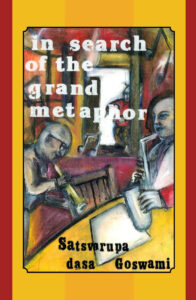
The metaphor is song. Explain it. Yes, particulars may not seem interesting or profound to readers who want structured books.
Wait a minute. Don’t pander to readers or concepts of Art. But Kṛṣṇa conscious criteria are important and must be followed. So, if your little splayed-out life-thoughts are all Kṛṣṇa conscious, then it’s no problem.
I am near the end of my days. But I do like the company of like-minded souls, especially those who are Kṛṣṇa conscious. Yes! I am prone to Kṛṣṇa consciousness. I have been a disciple of Bhaktivedanta Swami Prabhupāda for maybe almost sixty years. Sometimes I fail him. But I always bounce back and fall at his feet. It is a terrible thing that I sometimes do not have the highest love for him. It is a terrible thing. Actually, however, I never fall away from him. He always comes and catches me and brings me back to his loving arms.

This edition of Satsvarūpa dāsa Goswami’s 1996 timed book, Upstate: Room to Write, is published as part of a legacy project to restore Satsvarūpa Mahārāja’s writings to ‘in print’ status and make them globally available for current and future readers.
A factual record of the reform and change in ISKCON guru system of mid ’80s.

Readers will find, in the Appendix of this book, scans of a cover letter written by Satsvarūpa Mahārāja to the GN Press typist at the time, along with some of the original handwritten pages of June Bug. Together, these help to illustrate the process used by Mahārāja when writing his books during this period. These were timed books, in the sense that a distinct time period was allotted for the writing, during SDG’s travels as a visiting sannyāsī
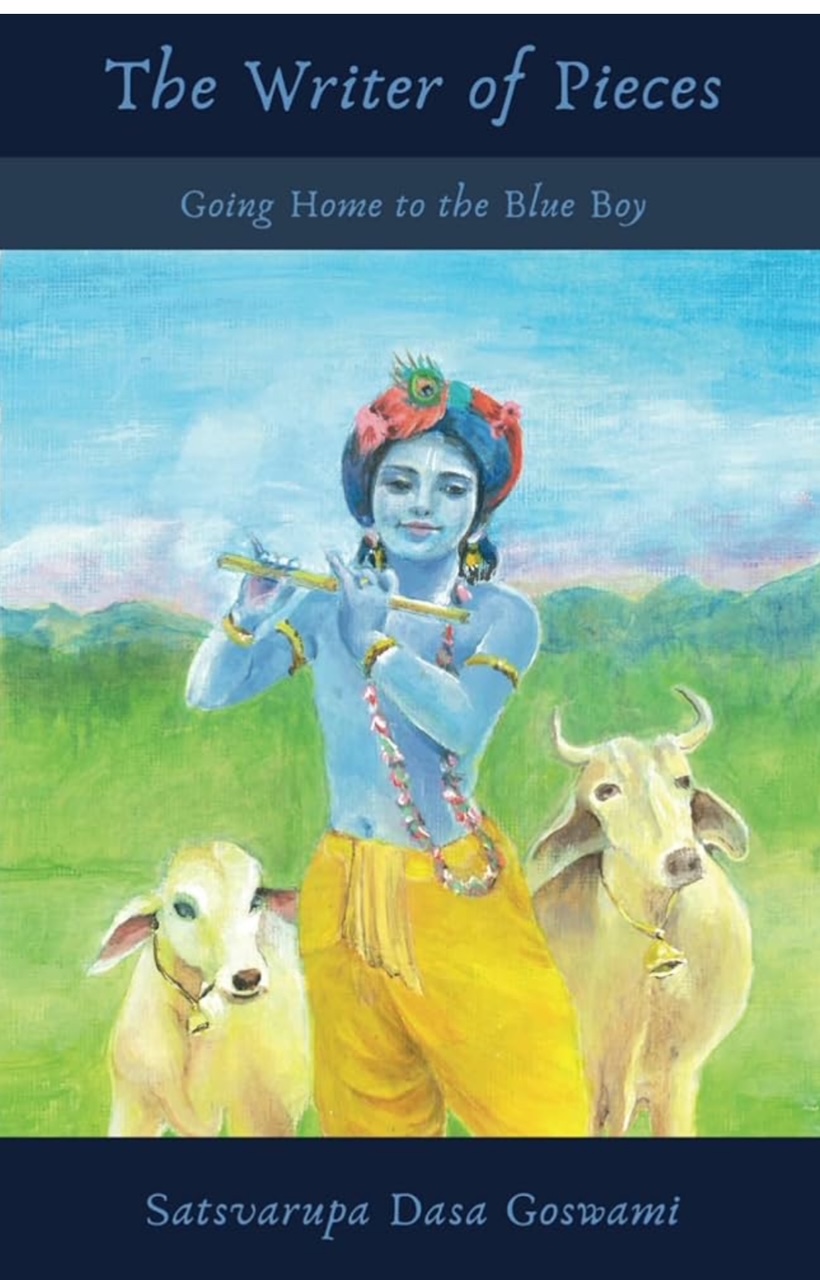
Don’t take my pieces away from me. I need them dearly. My pieces are my prayers to Kṛṣṇa. He wants me to have them, this is my way to love Him. Never take my pieces away.

Many planks and sticks, unable to stay together, are carried away by the force of a river’s waves. Similarly, although we are intimately related with friends and family members, we are unable to stay together because of our varied past deeds and the waves of time.
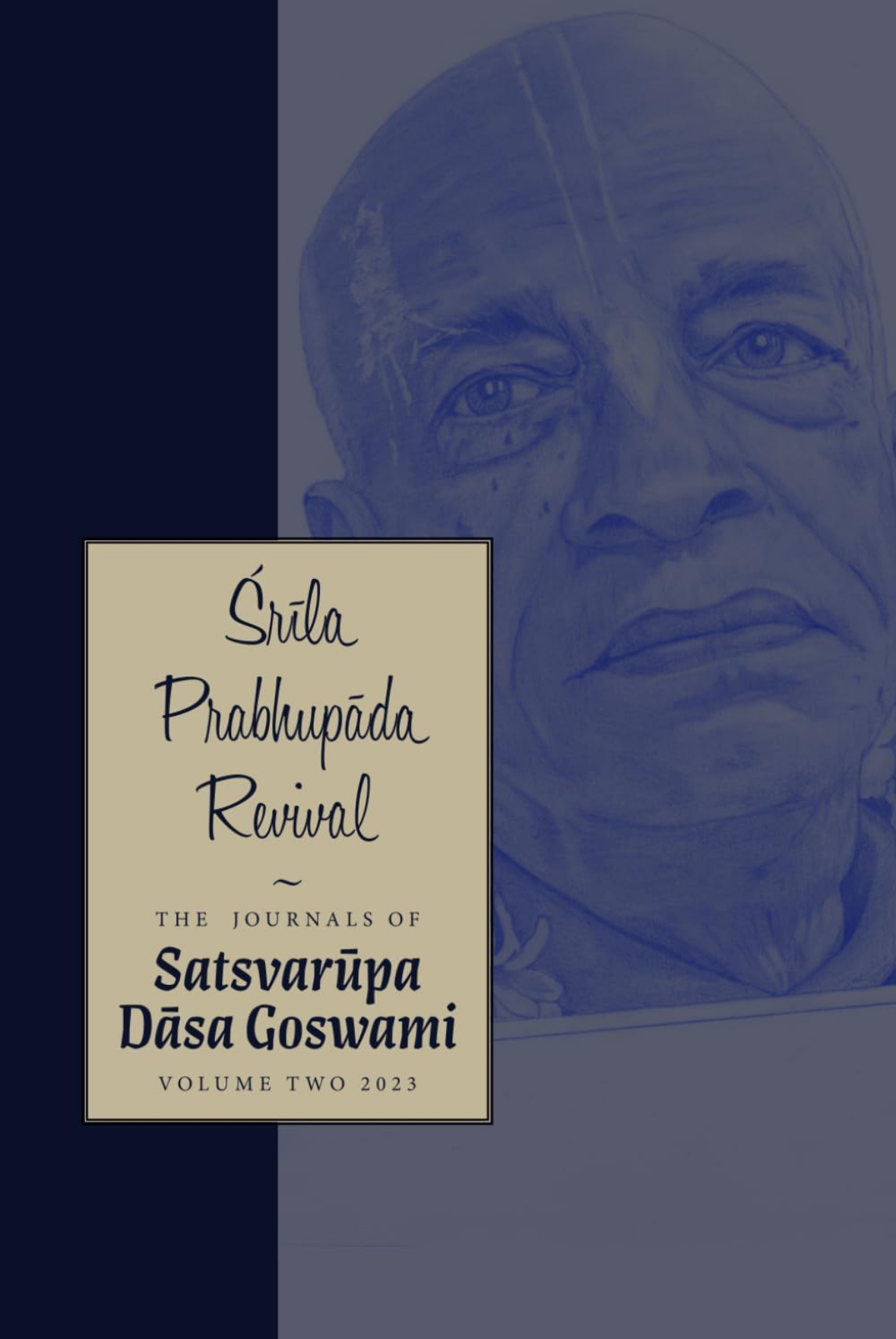
To Śrīla Prabhupāda, who encouraged his devotees (including me) To write articles and books about Kṛṣṇa Consciousness.
I wrote him personally and asked if it was alright for his disciples to write books, Since he, our spiritual master, was already doing that. He wrote back and said that it was certainly alright For us to produce books.
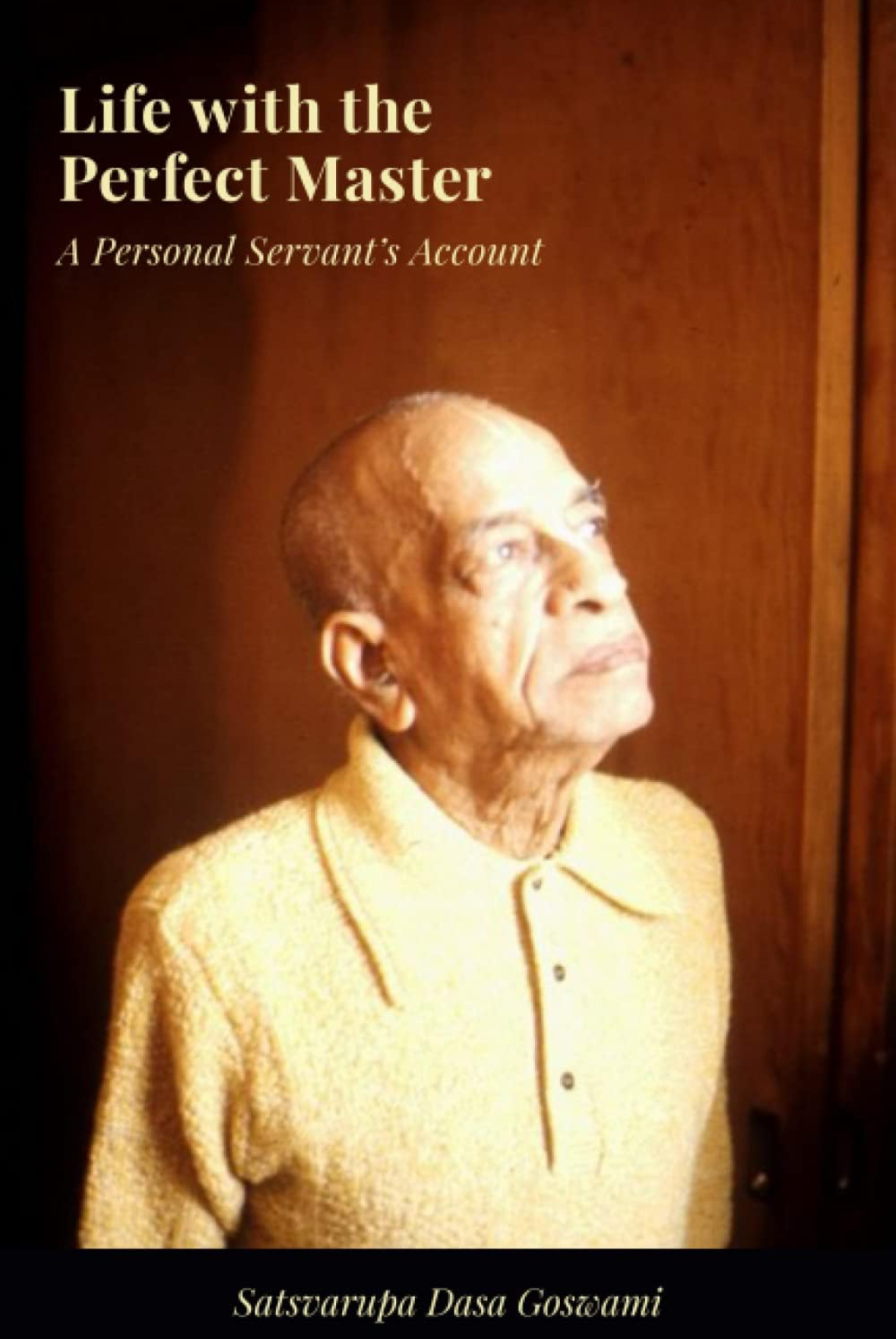
I have a personal story to tell. It is a about a time (January–July 1974) I spent as a personal servant and secretary of my spiritual master, His Divine Grace A.C. Bhaktivedanta Swami Prabhupäda, founder-äcärya of the International Society for Krishna Consciousness. Although I have written extensively about Çréla Prabhupäda, I’ve hesitated to give this account, for fear it would expose me as a poor disciple. But now I’m going ahead, confident that the truth will purify both my readers and myself.

First published by The Gītā-nāgarī Press/GN Press in serialized form in the magazine Among Friends between 1996 and 2001, Best Use of a Bad Bargain is collected here for the first time in this new edition. This volume also contains essays written by Satsvarūpa dāsa Goswami for the occasional periodical, Hope This Meets You in Good Health, between 1994 and 2002, published by the ISKCON Health and Welfare Ministry.

This book has two purposes: to arouse our transcendental feelings of separation from a great personality, Śrīla Prabhupāda, and to encourage all sincere seekers of the Absolute Truth to go forward like an army under the banner of His Divine Grace A.C. Bhaktivedanta Swami Prabhupāda and the Kṛṣṇa consciousness movement.
A single volume collection of the Nimai novels.
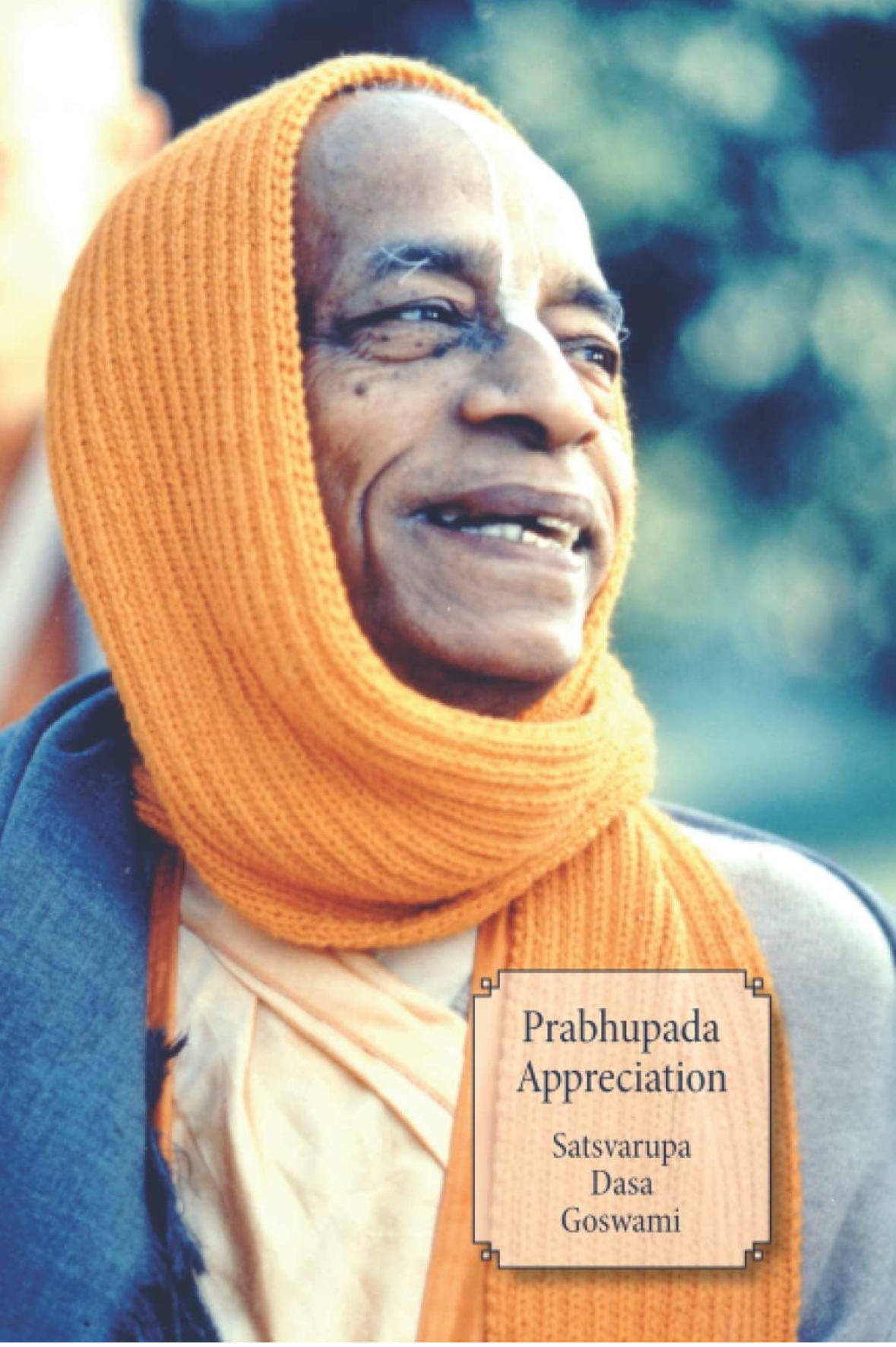
Śrīla Prabhupāda was in the disciplic succession from the Brahmā-Mādhva-Gauḍīya sampradāya, the Vaiṣṇavas who advocate pure devotion to God and who understand Kṛṣṇa as the Supreme Personality of Godhead. He always described himself as simply a messenger who carried the paramparā teachings of his spiritual master and Lord Kṛṣṇa.
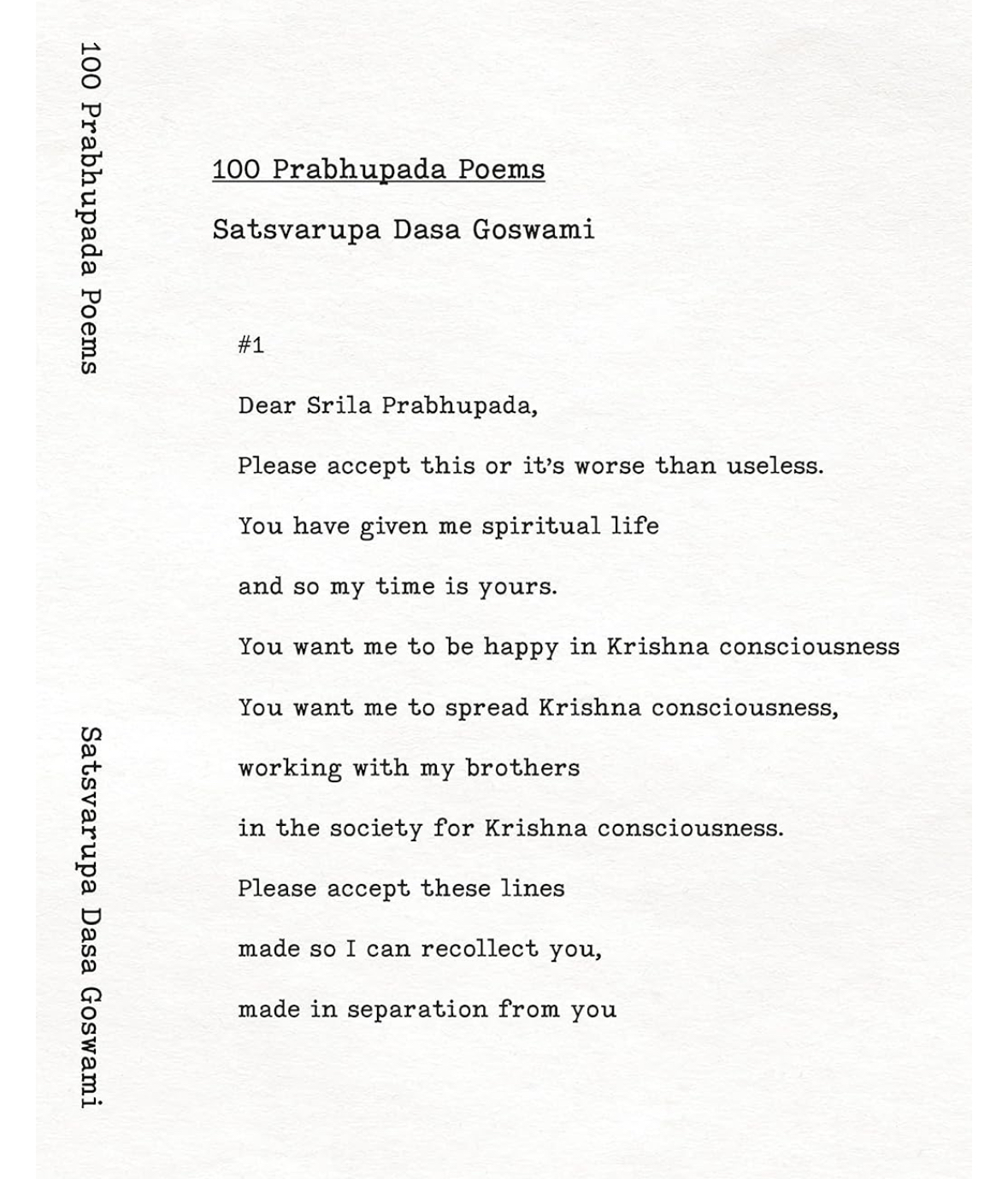
Dear Srila Prabhupada,
Please accept this or it’s worse than useless.
You have given me spiritual life
and so my time is yours.
You want me to be happy in Krishna consciousness
You want me to spread Krishna consciousness,
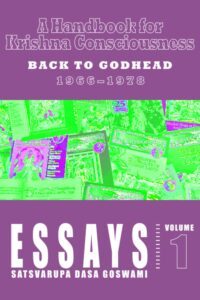
This collection of Satsvarūpa dāsa Goswami’s writings is comprised of essays that were originally published in Back to Godhead magazine between 1966 and 1978, and compiled in 1979 by Gita Nagari Press as the volume A Handbook for Kṛṣṇa Consciousness.

This second volume of Satsvarūpa dāsa Goswami’s Back to Godhead essays encompasses the last 11 years of his 20-year tenure as Editor-in-Chief of Back to Godhead magazine. The essays in this book consist mostly of SDG’s ‘Notes from the Editor’ column, which was typically featured towards the end of each issue starting in 1978 and running until Mahārāja retired from his duties as editor in 1989.
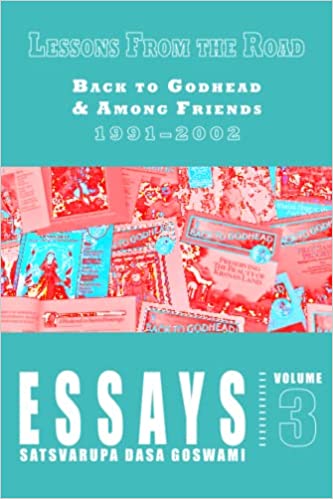
This collection of Satsvarupa dasa Goswami’s writings is comprised of essays that were originally published in Back to Godhead magazine between 1991 and 2002, picking up where Volume 2 leaves off. The volume is supplemented by essays about devotional service from issues of Satsvarupa dasa Goswami’s magazine, Among Friends, published in the 1990s.

“This is a different kind of book, written in my old age, observing Kṛṣṇa consciousness and assessing myself. I believe it fits under the category of ‘Literature in pursuance of the Vedic version.’ It is autobiography, from a Western-raised man, who has been transformed into a devotee of Kṛṣṇa by Śrīla Prabhupāda.”
 The Best I Could Do
I want to study this evolution of my art, my writing. I want to see what changed from the book In Search of the Grand Metaphor to the next book, The Last Days of the Year.
 a Hare Krishna Man
It’s world enlightenment day
And devotees are giving out books
By milk of kindness, read one page
And your life can become perfect.
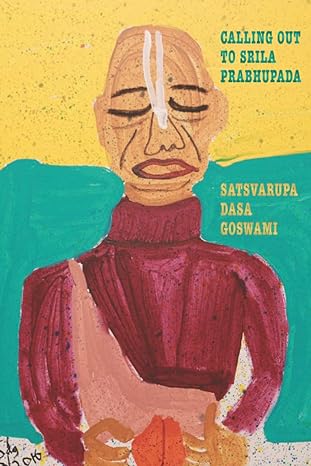 Calling Out to Srila Prabhupada: Poems and Prayers
O Prabhupāda, whose purports are wonderfully clear, having been gathered from what was taught by the previous ācāryas and made all new; O Prabhupāda, who is always sober to expose the material illusion and blissful in knowledge of Kṛṣṇa, may we carefully read your Bhaktivedanta purports.
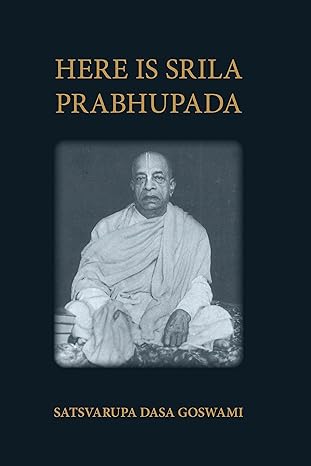
I use free-writing in my devotional service as part of my sādhana. It is a way for me to enter those realms of myself where only honesty matters; free-writing enables me to reach deeper levels of realization by my repeated attempt to “tell the truth quickly.” Free-writing takes me past polished prose. It takes me past literary effect. It takes me past the need to present something and allows me to just get down and say it. From the viewpoint of a writer, this dropping of all pretense is desirable.
 Geaglum Free Write
This edition of Satsvarūpa dāsa Goswami’s 1996 timed book, Geaglum Free Write Diary, is published as part of a legacy project to restore Satsvarūpa Mahārāja’s writings to ‘in print’ status and make them globally available for current and future readers.