
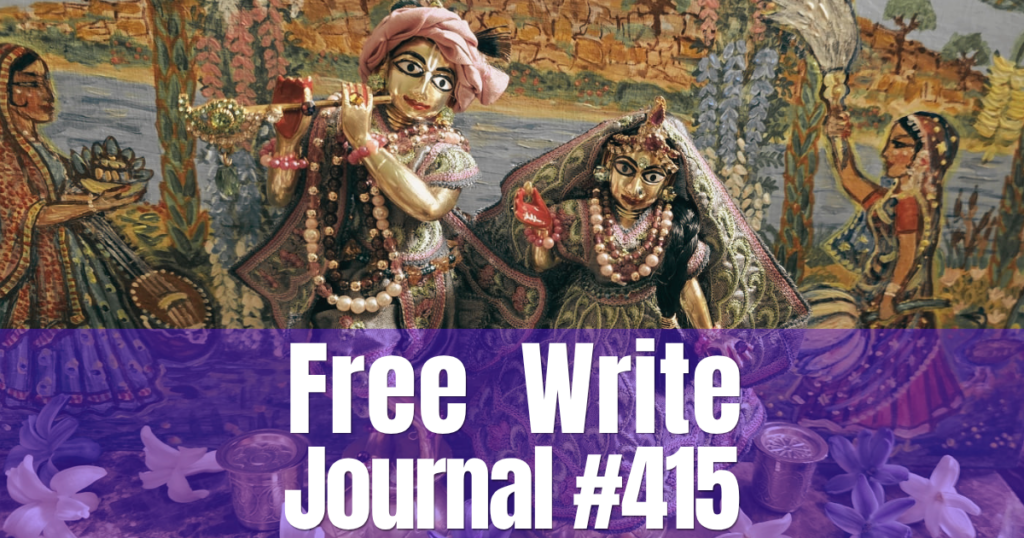
There are ten offenses in chanting Hare Kṛṣṇa. They involve not only the time when we sit down to chant japa, but our whole devotional life. These offenses—disobeying the orders of the spiritual master, committing deliberate sins on the strength of chanting, blaspheming the devotee—have to do with more than correct pronunciation of the names of the Lord. So whether we can carry out the orders of the spiritual master is our test. By the time you sit down to chant, it’s already determined by your service attitude—you’ve either already committed the offenses, or you haven’t. Offenseless chanting and following the spiritual master’s orders are interdependent.
By chanting carefully, you get the strength to follow the orders of your spiritual master, as you associate with Kṛṣṇa’s name. But we know that if you associate without offense, it is much more effective. Following the four rules and living in devotional service assures you of avoiding the ten offenses.
The chanting of Hare Kṛṣṇa has the power to eradicate all sins, but if you become an offender to the holy names of the Lord, then you have no chance of being delivered.
******
THE SIXTH OFFENSE is to interpret the holy name. In the śāstra are many different statements of the holy name’s powers. The Nārada-pañcaratra declares that chanting the holy name protects one from the bad effects of this age, Kali-yuga. The Kali-saṇtāraṇa Upaniṣad says that the mahā-mantra contains within its syllables all other mantras and Vedic rituals. It is so powerful.
So don’t interpret—the chanting actually works something on the mind, it hypnotizes the mind, or it’s meant for meditating on Brahman, or any subtle interpretation. Hear. Learn. What your guru and the śāstras say about the holy name is the literal understanding. Don’t make some interpretation from your own concoction. When we were first chanting in Tompkins Square Park, Allen Ginsberg was there, and a reporter asked him, “What is this chanting?” He said, “It is a biological thing. The release of oxygen by constant chanting produces ecstasy in the body.” Where did he ever hear this? By his fertile poetic imagination. This is his concoction. Or sometimes people say the devotees are hypnotized. These are material explanations. And don’t invent so-called spiritual interpretations either. Once one girl told Prabhupāda, “When I chant, I see in my brain a big red light. What should I do?” “Just keep chanting,” Śrīla Prabhupāda said. “It will go away.”
So we must have faith in the Vedic authority of guru and śāstra. For example, the scriptures say that in the Age of Kali by chanting Hare Kṛṣṇa you can become free of all contamination. However, one who wants spiritual life finds it very difficult in this material world. Material life is full of suffering, yet everyone is trying to enjoy; and even their little enjoyment is only suffering. Their attempt to increase enjoyment increases their suffering, with more and more agitation for sex life, intoxication. One can practically feel it increasing his suffering, but he goes on trying to enjoy the holocaust. This is māyā, illusion; this will not make us happy. So how to remain spiritual in such an atmosphere?
We are given the information, harer nāma harer nāma harer nāmaiva kevalam: Chanting Hare Kṛṣṇa in this Age of Kali will save you. But if you think, “No, I don’t believe it. How can these names, simply singing or reciting names save me? Yes, I want to get out of this material world, but how can this chanting help me?”—this is offensive. Don’t make up your own understanding of what the chanting does, or refuse to believe the benedictions ascribed to the chanting of Hare Kṛṣṇa. Haridāsa Ṭhākura explained that the shadow of the holy name chanted even with offense, even inattentively, would give one liberation. One doubter heard and said, “Haridasa Ṭhākura, you are exaggerating. How can it be that just by the shadow of the name one gets liberation?”
Haridāsa Ṭhākura replied, “Don’t doubt it. This is the statement of śāstra. The holy name is so great that Ajāmila chanted the word Nārāyaṇa at the time of his death, and he was saved. Do not be doubtful.”
“You may say that,” the man said, “but if the shadow of the holy name does not give liberation, then I shall cut off your nose.”
So everyone was very much offended by this man, who later lost his own nose because Kṛṣṇa took the insult to His devotee so seriously. If it’s in the śāstra, don’t take it differently—imagination, interpretation, or exaggeration. What the śāstra or guru or sādhu says about the holy name is authoritative; it is not for some upstart to interpret. The name of Kṛṣṇa is not different from Kṛṣṇa. It is not a symbol; it is not a physical yoga for breathing. Kṛṣṇa is Kṛṣṇa, and Kṛṣṇa is His name. As you can’t speculate on inconceivable Kṛṣṇa by argument and logic, so also the name is inconceivable. You can only understand it in paramparā. Don’t try to interpret the holy name.
The following poem comes from a conversation with a Godbrother not long ago. We talked about conditions in the USA today, and I admitted they are so disturbing to me, and I couldn’t understand them also, what was being done by our president, acting very wrongly, alienating practically the whole rest of the world against America by his policies. So I spoke to my Godbrother openly about this. He responded with a kind, personal letter, full of useful, grounded advice which has given me great solace. Parts of his letter have formed the poem below:
The challenge to the institution
is to remain a friend of
everyone. But when greed
and wickedness masquerade
as political leadership
the individual has an obligation
to speak out strongly
******
what’s a rather helpless
intellectual who loves literature
do in a troubled world?
******
I must become more the person
Prabhupada trained me to become.
I have spent a lifetime
keeping a record of the inner life
of a devotee. Keep doing that.
******
Only don’t shut the door on
the world outside my room
let some some of its cries come through
the window. Respond to them
with the vocabulary Prabhupada gave us.
******
That is neither political
Activism nor withdrawal.
It is service.
******
Let me write about what happens
inside myself when I read something
that frightens me. Write about the
temptation to hate someone I
believe is doing harm.
******
Write about immigrants and the devotees
I knew in Trinidad and Guyana.
Write about jazz and what Black
musicians taught me about another
world of experience.
Write about Prabhupada arriving in a
country convulsed by Vietnam
and racial conflict and nevertheless
seeing all human beings as spirit souls.
******
Write about the little ISKCON
I loved
with my brothers and sisters
and what was beautiful about it.
Write about what happened when
power entered our institution
and what that taught me
about the dangers of institutions becoming
ends in themselves
******
By chanting Hare Krsna every day,
thinking of the sufferings of other people
and putting words on a page that help
others understand how to lead a richer
life—I will not be useless.
I will be useful, empowered and important.
pp. 54-62
You moved intent as an arrow.
You went to Mrs. Morarjee for travel fare
and she said, “Yes.”
But only after you
insisted that you would not die en route,
as her officers feared.
So she gave you fare,
a room on the old steamer
going West.
But the P-form was a problem.
The agent said “No” because
your patron was a private person,
not an institution.
So it seemed after so much effort
you would be blocked by this
one last bureaucratic snarl
and you wouldn’t be able to come to us.
Although you so much wanted to break out,
since India was stifling and unreceptive,
but at this last bureaucratic door,
you were blocked by
the Bank and Government of India.
They should have been glad
to send you as their ambassador,
but they were cripple-minded.
So you spoke up for yourself,
“No, this is not right.
Give my file to your superior.”
The clerk complied, and his officer
came out to where you sat
in a Bombay government waiting room
and said, “Swamiji, don’t worry,
I have passed your case.”
That too was Krishna.
After that, everything else was ready.
Scindia’s agent
bought you some clothes.
You packed a bag of dry cereal
and took an umbrella.
You printed a flyer
“India’s Message of Goodwill,”
and you went to Calcutta,
rode in a taxi down to the dock,
and walked up the gangway,
carrying a suitcase,
your books arriving separately.
Now, only the ocean’s storms
separated you from us.
On our side,
the hour was very late,
but not too late.
No one was waiting for you in exactly the form
in which you were coming,
yet we were aching for you nonetheless—
as parched land awaits rain,
as a lost child awaits the mother,
as a lonely lover awaits the beloved,
as the soul aches for God.
The dumb tongues stuck, unable to utter “Krishna,”
the blind groped,
the mad went madder, incurring reactions;
and every moment more jivas fell
off the cliff of human life, down
into the abyss of tamo-guna.
Inching from the weathered pier,
the black-hulled Jaladuta
moved toward the seas, bearing him to America.
By the law of the Almighty,
the ship floated in water.
By His will only,
the clouds in the skies moved.
Out of fear of Him,
the planets were spinning in tremendous orbits,
and by His inscrutable, sweet will,
the pure devotee was coming,
to rescue the damned
Kshatriyas cast out from Bharatavarsha
ran further West, where people are more ignorant
(the Vikings tried to cross and plunder).
Unaware of Lord Chaitanya’s advent,
Columbus sought a westward route.
Mayflower pilgrims came running
to start a new theocracy,
without liberation from birth and death;
ready to endure hard times,
they killed birds and gave thanks to God.
Unlimited voyages West ensued,
as immigrants entered New York’s harbor illusioned,
free of old sufferings, plagued by new.
In 1965 a Jaladuta voyage seemed only another,
a small black merchant ship
making her roundabout way from India.
His face turned out to where he saw no land,
but endless moving hills beneath the sky.
Below the deck, in simple saffron dress,
occasionally he spoke with the captain and his wife,
respectable figures who saw him as a traveling saint.
Not a recluse, he cooked kichari and shared it
and talked about Krishna with the ordinary seamen.
The Bay of Bengal was like the ocean of birth and death.
He was alone with his inner thoughts,
reading the poem of Krishna das Kaviraj,
at which the metal bulkheads fell away
and he beheld the fair sight
of Lord Chaitanya singing and dancing.
The sea was a bridge of time separating him;
it was a huge deep for a tiny soul afloat,
but endurable by His will.
The traveling was rough
but sheltered by the Lord
—at sea and yet beyond.
His mission was underway,
despite the injunction against swamis crossing.
On Janmastami and on his own (69th) birthday
he refused to be daunted
by the vast energies of water and sky.
He held to his purpose.
The sea was his route, the pathway to his service,
and not to be begrudged.
Deep down the ship prowed,
then rose high, mounting a swelling wave
in a sea-sick rhythm and roll.
In the hold, in a small, cramped cabin,
sitting up or lying down,
there was no comfort
from the sea-tossed roll and pitch
as rain poured down on the Bay of Bengal.
More rain on the Red Sea.
Sudden pains in his chest
made him think he would die.
Were Scindia’s agents right,
that he would die at sea?
What is the pain of a pure devotee?
Only he and Krishna knew
what he was willing to do
to serve his Lord in any condition.
If we like we can ask,
“Why was Haridas Thakur beaten?
Why were the Pandavas exiled and harassed?
Why Prahlad tortured by his father?
Why Rama banished? Christ crucified?”
But we cannot demand the answers.
The Lord unfolds His plans
as He pleases,
and the devotee knows
it is best for all.
Prahlad never doubted:
“If God is almighty and just,
why am I, a devotee, being tortured?”
In confronting the demon,
he did not suffer,
but remembered Krishna
and attained the Lord’s abode.
Prabhupada tolerated
two attacks in two days.
But if it comes again,
I will not survive.
The rains and winds persisted.
On the night of the second day
Prabhupada had a dream;
Lord Krishna in His many forms
was rowing a boat
and encouraging him along.
Lord Matsya, who saved the Vedas from the flood,
waved him on. To protect the Vedas
from the ocean of vices,
Prabhupada must reach the West
and print and distribute his books.
The West was drowning in sins,
and Indian gurus were drowning
the Vedic message
in a sea of bogus speculation.
Come Prabhupada!
You can cross this sea—
the Lord is here!
Lord Kurma of the nectar-churning lila
urged him on to America
to churn the sankirtan-amrta.
Mohini Murti stole the nectar
in favor of the devas,
but if Prabhupada could reach his goal
he would give immortal quaffs of hari-nama
to one and all.
Therefore the Lord was blessing him.
As the moon and gods came forth
from the churning of Mandara Hill,
so during the friction between demons and devotees,
Srila Prabhupada appeared.
And in his hour of attacks at sea,
he beheld the Lord in His many forms.
Come Prabhupada!
You can cross this sea—
the Lord is dear!
Lord Nara Hari’s divine advent
is to kill the miscreants,
and He encouraged Prabhupada
with His fierce demeanor,
which vanquishes the demons’ false dominion
and assures the followers of Prahlad.
The enemies would not touch
a hair on Prabhupada’s head,
but he would kill them all
with the healing, cleansing weapon of the Holy Name.
False threats and illusions
cannot sway the Lord’s devotees,
but Prabhupada must come at once
because until now the sons of demons
have never met the teachings of Prahlad
or known the protection of Nrsimhadeva.
As sons of demons they have only suffered,
sometimes longing for another world.
Come Prabhupada!
You can cross this sea—
with the Lord there is no fear!
Balarama and Krishna also assured,
“Come along.”
They appeared to him in a most delightful way,
running and frolicking in the forests of Vraja—
the all-attractive Lord and His brother,
who deliver the most fallen as Gaura and Nitai.
Let the Americans also share this nectar—
Krishna is not “the Hindu god.”
The Americans will gladly embrace Him—
Krishna with flute and Balarama with plow.
The Westerners can relearn to love Them,
since all are eternal spiritual souls,
servants of Krishna and Rama.
Come Prabhupada!
You can cross this sea—
the Lord is here!
Srila Prabhupada. you will cross this sea
because the Lord desires.
pp. 63-68
Hare Krsna Hare Krsna, I will not abandon Thee, precious mantra given to me by my spiritual master. I will chant You all the days of my life, until and including the hour of my death.
Please stay with me, holy names. I don’t know anything. I need your love. You are God in most convenient form.
I embrace you, Harer Nama. You reciprocate.
You are given to me in disciplic succession.
Hare Krsna is my days and nights. On beads he gave me. My Swami, my leader has kindly said, “Chant Hare Krsna.” We are writing and that’s good too. But don’t neglect your chanting.
In regards to chanting Hare Krsna mantra, you can rest assured that there will never be a resolution forbidding it. As for impetus to do it, that will come from your own practice and relationship with your spiritual master and with hari-nama.
Half hour’s walk from here is a little shack by a man-made lake. A sign outside the shack reads, “Pibbles Fishing Club.” We are in the Hare Krsna chanting club. We fish for better chanting. We go on “fishing” all day long. Sometimes we see a fish jump out of the water—and inside into the ecstasies. Sometimes we catch a fish. Drop the metaphor because chanting isn’t killing anyone. One doesn’t like to compare this inoffensive, sweet act of surrender with hooking the fish. I just wanted to write, and that image came to mind.
So better you stop writing now. Preserve your energies. Start in the days counting and chanting and uttering. It’s work all the way. No single mantra is very difficult, but there are so many you have pledged to make, so you have to work at it almost constantly until 5 P.M. Then an hour “free time” and then the 6 P.M. meeting—which lasted for an hour last night—and then to bed for sound sleep. Full day’s engagement.
Thank you for writing it down.
Okay, see you later.
Almost 6 A.M. at the lake. What a difference a day makes. This morning is quite clear and very cold. Just over the lumpy hill I see a moon which is three-quarters full, I think it’s on the wane, and it’s quite mottled. A large part of it is not whitish, but gray and mottled. Fascinating material world, clouds and diffused, dusty, pink color in it—almost pink. The little man-made lake here is all chilly looking, and it’s beautiful but you realize it’s silly and the demoniac purpose to stock fish so that people can come up here to the Pibbles Fishing Club and sit up here and think that they’re in the middle of nowhere away from their troubles while they kill the fish. Prabhupada says even the most hectic businessman wants peace and quiet. That’s the aim of life, and that’s why they come on the weekends to places like this where they can forget everything.
That’s what we’re doing here at the retreat, coming to this place to put aside our duties. Bhakti-rasa said yesterday that even Krsna conscious life is very complicated. In fact, it’s more complicated than many people’s material lives. I’m sure it is for him as a temple president and all the things he has to deal with in our institution and all the demands and preaching and dealing with people’s lives and everything. It’s very complicated. Spiritual life is not so simple. We have to do that for preaching, but we shouldn’t forget the simple essence of it is there, the chanting of Hare Krsna. That’s what we’re trying to do this week.
I’ve been thinking—not really thinking, but more simmering—about what I may be able to write next month in the time I have. Time runs out and you’re aware it’s precious and your powers are temporarily given by Krsna, and you want to do something, so before it’s too late, I can make some nice book. It seems like I’m not going to be content just to do improvising for the whole month, but I want to see if I can get some idea beforehand and get into it.
But these kinds of thoughts I would like to push aside at least for these few days and concentrate on the mantras. Mantras one after another coming out of you. They’re given by God; they’re the nama-avatara. There’s tremendous sweetness and revelation that’s packed in the mantras. Krsna Himself is there, so it’s definitely worth my putting my attention to it and putting other things aside. Don’t think that this is hokey, that you’re exaggerating the glories of the holy name or even exaggerating the glories of your seven-day retreat. Don’t peter out on it; keep going these last two days strong as you can, and remind the devotees to do that too. It’s the real thing, so we can’t over-exaggerate it. But we’re not going to be sentimental and over-exaggerate our own taste, but be sober about it and all that. However, this is big time, this is good stuff, this is the best, so don’t neglect it.
Mornings are so beautiful when you can take a walk. You look around and try to “report” on the sky and the colors, but you’re unable to. I’ve seen what you’ve written, how it looks later. It seems too analytical and the words look flat and you talk about skies having some gray in them and a little pink in them and they’re fluffy and they’re moving slowly over hills. It just doesn’t make it. You have to actually be out here and feel the chilly air and be able to move your legs and see the sky for what it is.
I picked out a morning walk on a retreat, somewhere like Ballyferriter, where you can walk down to Smerwick Harbor and try to think of the sounds and the sounds of the birds and cool air. I don’t want to eternally walk, I just want to walk for an hour. Part of the pleasure is that you’re heading back to house and you’re anticipating breakfast and time to use for your own Krsna conscious purposes. This is really certainly a paradise on earth.
So naturally I gravitate to these times as the very best times of my life. They’re not offending anybody and not violent to anybody. Of course, Prabhupada defines violence as not giving people Krsna consciousness because they’re heading for their deaths, so we shouldn’t just be seeking some paradise that doesn’t help others. Therefore I contend that if I know what paradise is, then I can convey it to others in books. If I can convey my own satisfaction as a person who knows, has contacted paradise, and who says that it’s only paradise because I have contact with Krsna consciousness, then these places, coming alone to them, is not wasted or selfishness. That’s one rationale for it.
The body is full of suffering, but when you use it in Krsna’s service, you also get pleasures. How unfortunate are these animals that can’t come up to Krsna consciousness. All they know is eating, mating, sleeping, and defending. They’re so condemned. So we have to be kind to the human beings, give them a chance to hear about Krsna, and then show them that we’re happy and satisfied in Krsna consciousness.
As I talk, I’m coming closer to the Mark Cottage with our Renault van parked outside. We’re into our Europe Tour ’95. Nice days ahead, if Krsna desires, so let’s make something out of them. But one day at a time, and so now this day is ahead with good opportunities for many more rounds of japa and best association of devotees by Prabhupada’s grace. He’s taught us what it is to come together to chant God’s names and to do it in good company. Hare Krsna.
pp. 30-36
Let us go more stately now. Consider direct praises of Lord Kṛṣṇa, the Supreme Personality of Godhead.
The Lord is not a metaphor. Yet the Vaiṣṇava poets use metaphors to convey the beauty of Śrī Kṛṣṇa, comparing His eyes to lotus petals and so on. Unless one is expert in metaphor (and it used to be, Sanskrit was also required), one cannot describe the pastimes of the Lord. For example, the KṚṢṆA book portrays the full moon night in śarat season, when Kṛṣṇa desired to perform the rasa dance with the gopīs. “With the rising of the moon, the whole sky appeared smeared by red kuṅkumā. When a husband long separated from his wife returns home, he decorates the face of his wife with red kuṅkumā. This long-expected moonrise of the śarat season was thus smearing the eastern sky.”
The metaphor is to help us see the absolute world of which we have no experience. The metaphor draws from experience of this world and is always inadequate to fully describe Kṛṣṇa’s pastimes and personal beauty. His eyes are much more beautiful than the petals of a lotus in this world. But we have no standard to view Kṛṣṇa by, and so the worldly natural beauty gives us at least a point of view. It is comparable to locating the moon in the sky by saying that it is found between the branches of a tree.
Sometimes the poets frankly say that Kṛṣṇa’s beauty defeats whatever worldly example they might give. The Lord’s beauty scorns the moon, it spits at the beauty of gold, it embarrassed the grandeur of a mountain top, it comes to peace talks with coral and emeralds. It mocks the taste of heavenly nectar.
“O Lord whose face eclipses the sweetness of the moon … O Lord who sings like a maddened cuckoo, O Supreme Personality of Godhead, I pray that the restless bumblebee of my heart may someday meet You face to face” (Śrī Aśtadaṣa-cchandaḥ-stava, by Rupa Gosvāmī ).
In describing Kṛṣṇa , we don’t seek for one grand metaphor. Krsna is Himself the Absolute reality; there is no truth higher than Him. An allegory is used to allude to a higher truth. An author creates a fictive character who embodies some higher principles of morality. His character is a symbol for something else.The principles the author wishes to convey, his message is real and not the specific character or his life story. This is not the case with Śrī Kṛṣṇa . Mattaḥ parataraṃ nanyat. All the worlds are strung upon Me like pearls on a thread, Śrī Kṛṣṇa says. Yes, He uses an analogy. Kṛṣṇa is the thread and “everything” is strung upon Him. But the analogy is just a form of picture making to enable us to see more clearly the absolute supremacy and personal truth of the Supreme Lord.
Nityo nityānām cetanaś cetanānām … He is the eternal person, and we are all eternal with Him. But He alone maintains all beings.
I pray to approach with full faith the personhood of Kṛṣṇa through the persons who are His pure devotees. Devotional service is the medium for pleasing Kṛṣṇa. We are all His eternal servants. That too is a reality and not a metaphor.
So metaphors serve as ways of expressing Kṛṣṇa’s transcendental qualities. They are offerings made by sincere souls dedicated to serving and praising Him. We describe the devotees also in terms of metaphors. Their minds are clear like the sky in autumn when there are only white clouds. Their minds are like a candlelight in a windless place. Their mercy is compared to an ocean, kṛpa-sindhu. They are like kalpa-vṛkṣas, trees that can award whatever you desire. They are as soft as roses, but sometimes as hard as thunderbolts.
Do I dare speak in my own voice about Lord Śrī Kṛṣṇa? Be careful, you are not so competent. That is one reason I seem to write more of myself than of God. I am a fool and there is no harm in splashing some ink as I tell of my patched career. But I cannot draw a funny-looking cartoon of the Supreme Personality of Godhead. He is not a joke or plaything, at least not for me. (The gopīs sometimes treat Him that way, but they are completely pure eternally, or they have passed through all fires of ordeal in order to become his paramour lovers.)
Dear Lord,
Laksmi-devi sits on Your chest,
the tulasi leaves are pleased
to sit upon Your lotus feet,
and devotees like Prahlada offer You
prayers and words of pure
devotion. What can I add?
Dear Lord, please accept me.
I know You wish all good
for me. I want to take up
my place in Your eternal service.
Śrīla Prabhupāda wrote,
“If the Lord grants liberation even
to an enemy like Śiśupāla,
then surely the preachers
of the Kṛṣṇa consciousness movement
who spread His glories,
who endure insults and
even death on behalf of the Lord,
are guaranteed to return to Him.
Of this there is no doubt.”
Dear Lord, I am chanting Your holy
names. I cannot get so far.
Please descend and penetrate the
covering. Please dwell in my heart.
Give me the courage and strength to
chant the holy names in earnest—
crying for the real thing,
service to nāma.
Please teach my intelligence to
serve my spiritual master
with unstinting devotion
to his order.
Dear Lord, when You appeared
as Lord Caitanya,
You converted Sārvabhauma Bhāṭṭcarya
(and millions of lesser scholars)
and You happily declared,
“My mission in Jagannatha Puri is
now fulfilled!
I have converted a person like
Sārvabhauma Bhaṭṭācārya. I shall now be
able to attain Vaikuṇṭha without fail.”
I liked to hear Your exultation
as a preacher and Your expectation
to go back to Godhead after
converting one logician into a
pure devotee.
I’d like to go too, and escape
the horrors of a Kali age.
But You may want me to stay
more lifetimes. You may be
arranging special mercy for me:
crushing my material desires
so that I may turn to You only.
Inconceivable One Lord,
no one can know all of Your glories.
But You are always a person and
all energies and demigods are
subordinate to You.
I feel relief and purification
in speaking of You.
Although I can’t claim to know You,
I may speak what I have heard.
And it is right.
Paramparā.
All glories to the Lord
of the universe!
pp. 13-16
butterflies in tiger lilies
silent backyard japa
cobwebs on my bike.
While walking in the garden, I thought of different sayings how one can find happiness without traveling, or without making extraordinary endeavor. I think there are Buddhist sayings which describe this. “Why should you look/ for treasure abroad?/ Within yourself you/ have a bright pearl!” There’s also an old popular song, “True happiness lies/ right under your eyes/ back in your own backyard.” But I also thought of the transcendental reason why a devotee travels. In my case, since I am confined to stay at home, I should certainly try to find Krsna consciousness in my backyard. But of course, there’s no question of “finding” spiritual truth unless one is fortunate enough to contact the spiritual master. And once one contacts a spiritual master, and becomes initiated, he should take on the duty of helping others in Krsna consciousness. For this he may travel.
The concept of “happiness in the backyard” is a consolation for me at present, and it is true only because I have the real fortune of associating with Prabhupada. But the knowledge he has given me is not meant to be kept in my own little acre. Prahlada Maharaja states, yes, I am happy wherever I sit down, but what about all the poor fools who live in illusion in the big cities? If I remained here just to be a peaceful, poetic hermit, that would be my sense gratification. But now I can hardly travel into the backyard from my bed. Therefore, as a by-product to this physical breakdown, Krsna is consoling me: “Listen to the birds,” He says. “Look at the bright grass. This is My picture. Enjoy it and describe it nicely.”
Tamala Krsna Goswami phoned from Hong Kong and talked with Baladeva. He was thinking of coming to visit me, but when he heard how I was indisposed he decided not to disturb me. Gurudeva gave his opinion that my illness is a completely spiritual matter under Krsna’s control.
I often meet rabbits while walking, and I usually describe them sarcastically as stupid and fearful when I discuss it later with the devotees. Some of the rabbits can’t seem to see or hear me approach and don’t move an inch even as I step right by their tails. I know they are actually very frightened of me, and that I could easily kill them, yet they seem unaware. Even if I say, “Hut!” they just jump a few feet into the underbrush as if they think they are now safe. Perhaps they feel familiar toward me, but I think the real case is that they are either scared stiff, or their senses are giving them no protection from the imminent danger. I keep deriding the behavior of these rabbits and don’t see any good quality in their vulnerability. But just now, thinking it over, I thought of how one could appreciate the rabbits’ helplessness.
Sometimes we see great pure devotees also live in a similar state of helplessness in terms of their complete dependence on Krsna. It was in that mood that Draupadi finally gave up trying to protect herself and depended on Krsna. Bhaktivinoda Thakura also prays to Krsna, “You may destroy me or save me as You like.” When I am walking by, the rabbits seem to take that attitude, “Destroy me or save me as you like.” So as Prabhupada advises us to see the good lessons in nature, I think that the rabbits may teach me complete dependence on Krsna, even in the face of death.
Srila Prabhupada used to compare the pure devotee to a sold animal who has no need to concern himself with being maintained or abused; the sold-out animal is simply at the mercy of its master. Marobi rakhobi—yo iccha tohara/ nitya-dasa prati tuya adhikara: “Slay me or protect me as You wish, for You are the master of Your eternal servant” (“Manasa Deha Geha,” from Saranagati). Mare krsna ache ke, ache krsna mare ke: “If Krsna saves, then no one can kill, and if Krsna wants to kill, then no one can save.”
Rabbit, teach me helplessness.
Bhima the sheepdog, teach me barking bravery (as when you ran down the bank to chase off the cigarette-smoking, beer-drinking canoers).
Trees and meadows, teach me tolerance.
Bees, teach me honey-tasting.
Birds, please teach me inspired Krsna songs.
Creek, teach me to flow, twigs, teach me to bend, and
Rocks, teach me to resist.
Skies, please teach me of the reflection of the glow from Krsna’s body.
Ants, teach me to organize. Flowers, teach me to bloom.
All nature’s gurus, I beg of you, please teach me of Krsna in all things, and how to serve Him selflessly.
My worry! My body!
When will I be free?
“Sounds like you’re griping here,” marks my editor in red pen.
The smiling apostate
from the witness stand
claimed,
“Chanting Hare Krsna, I
was like a dog chasing its tail.”
Now he’s seducing women
misusing the name of Christ.
Squatters’ rights — “I saw her first!”
The bullfrog bellers.
Everything is in Krsna
in its own way,
even the glowworm.
But I can only see it now and then.
pp. 547-51
Surat
19 December, 1970
Boston
My Dear Satsvarupa,
Please accept my blessings. I beg to acknowledge receipt of your letters dated November 30th, December 3rd and 8th, 1970, along with a correspondence with one E. Michael Kelly. I have read your reply to Mr. Kelly and I find it very nice. Such important persons should be carefully instructed so they may aid us in spreading Krsna consciousness.
I have seen the layout proposal for the first pages of our new edition of Bhagavad-gita As It Is and it is fully approved by me. I shall immediately write one preface to the enlarged edition as you have requested and send it as soon as possible. I have written to Karandhara that the money for printing according to Advaita’s estimate of $17,000 should be realized from London. London book sales have nothing to do with my book fund. They have got 2,500 copies of KRSNA or in other words $20,000 worth of books, so they can send $17,000 for printing of Bhagavad-gita, immediately. It is a good proposal to print 10,000 copies; 5,000 for India and 5,000 for U.S.A.
I am very much pleased with the two latest chapters from Srimad-Bhagavatam—The Process of Creation and The Cause of all Causes. They are so much satisfactory and I am very eager that they should be produced by ISKCON Press at a regular pace . . . .
Hope this will meet you in good health.
Your ever well-wisher,
A. C. Bhaktivedanta Swami
******
. . . In the first paragraph Prabhupāda mentions my correspondence with E. Michael Kelly. I don’t remember him specifically, but I had begun to correspond with a number of people, some of whose names I would see in the newspaper under an essay they had written on morality or another topic that was relevant to us. On rare occasions, I would get people’s names from letters that had been sent to the temple. I tried to write thoughtful, philosophical letters, similar in mood at least to the letters Prabhupāda wrote in the l940s and ‘50s. In my letters I tried to appear broadminded but earnest, introducing Kṛṣṇa consciousness as an important philosophy and movement with the power to solve world problems. I encouraged the recipients of my letters to give Kṛṣṇa consciousness careful consideration. E. Michael Kelly, among others, had responded, so I sent his letter to Prabhupāda to show how I was preaching. Prabhupāda replies, “Such important persons should be carefully instructed.”
It gave me great satisfaction to send such things off to Prabhupāda. I sent a variety of things to him over the years—taped kīrtanas, lectures, and more letters—and Prabhupāda, was always encouraging. It made me feel close to him, even when he had begun to tour the world. Some devotees felt that they shouldn’t write while Prabhupāda was traveling, that it was too much to expect our letters even to catch up with him, but I continued to write weekly. I had learned in the Navy that if you wanted to receive mail, you had to write letters yourself. Receiving mail was important to sailors, and it was important to devotees too. For me, it was a wonderful outlet to be able to use some form of writing to reach out to people. Prabhupāda constantly stressed the importance of preaching, and this was a way I could preach that engaged my natural abilities.
In the next paragraph Prabhupāda speaks about his new Bhagavad-gītā. ISKCON Press had prepared the full edition.
It’s fascinating to think about how Prabhupāda had been giving classes at 26 Second Avenue from a different translation of Bhagavad-gītā. But even in those days we were typing his own translations and purports. Therefore I was quite familiar with the full edition of Prabhupāda’s Bhagavad-gītā, since I was the main typist. It was a disappointment when Macmillan agreed to print only an abridgement of it.
Although some of us had read other translations of Bhagavad-gītā, we were aware that we needed to hear this scripture from Kṛṣṇa’s pure devotee, Śrīla Prabhupāda. Prabhupāda often said that other translations contained misinterpretations and that their authors had used Kṛṣṇa’s words to eliminate Kṛṣṇa. Our pre-Kṛṣṇa conscious conception of this mystical book was erased by Prabhupāda as easily as he erased our Māyāvādī leanings. We were grateful when Prabhupāda’s Bhagavad-gītā became available.
I remember selling magazines in Harvard Square. I stopped one young man, a follower of Maharishi Mahesh Yogi, who taught Transcendental Meditation. This young man said he was familiar with Bhagavad-gītā because Maharishi had already published its first six chapters. But that’s all he ever published. This man told me that according to Maharishi, verse forty-five of the second chapter was the essential verse in Bhagavad-gītā because it explained TM. TM, he said, was authorized by Bhagavad-gītā. Verse 2.45 is about rising above the modes of nature: “The Vedas deal mainly with the subject of the three modes of material nature. O Arjuna, become transcendental to these three modes. Be free from all dualities and from all anxieties for gain and safety, and be established in the self.” Maharishi considered this a description of Transcendental Meditation, because this meditation was supposed to lift the practitioners above the modes. Even in those days, we were able to defend Bhagavad-gītā against such misconceptions and explain the real purport of the work.
pp. 16-18
Would Śrīla Prabhupāda approve of my saying I like solitude and my implying that I am an introvert? Doesn’t he like his followers to work hard in the association of devotees?
My answer is that I lived many years associating with lots of devotees in temples, and in my decades as a sannyāsī I traveled widely and lectured, in colleges and temples, etc. I admit I spent much time writing, and that leaves you alone. (When you write, you also pray).
My increasing proclivity for solitude has come about in my sunset years, when invalidity and old age confines me to not being inclined or able to live more socially.
I say that I am a solitary, but technically I am not in solitude like a monk in his cell. I live with two or three permanent assistants, and one or two guest servants who stay a short time. And there are the fair-weather visitors, who I discussed yesterday at this time in the morning. Prabhupāda was pleased with active service, but he said when one grows old or senior or “mature,” he can sit down in Māyāpura and chant Hare Kṛṣṇa. Bhajanānandī life is meant for the mature. I am restricted from active preaching by Parkinson’s disease and COPD (Chronic Obstructive Pulmonary Disease). The neurologist who diagnosed my Parkinson’s said, “You are fortunate because you can do what you like to do while sitting in a chair.” He said often that’s not the case, but people with serious illnesses become upset at their condition. I want to know that Prabhupāda is pleased. Now that he has disappeared from mortal view, it is not as easy to know whether he is pleased or whether we are doing something wrong. One way to know he is pleased is that I perform my basic sādhana. This is a sign that I have his mercy even though I am incapacitated. If I wrote and stayed alone, but didn’t practice sādhana, that would be disobedient. And I know that Prabhupāda is pleased because devotees are pleased with most of my books.
Śrīla Prabhupāda, the Founder-Ācārya of ISKCON, was beset throughout his ISKCON mission with many illnesses. He traveled around the world thirteen times in jet planes but didn’t seem to get jet-lagged or tired of traveling. He said he traveled so much “to keep my disciples alive.” He slept only a few hours at night and then got up at 1:00 A.M. and worked on his translations and purports. He met with many guests, managed the movement—oftentimes contending with disciples who were not always obedient, and who were almost always quarreling with one another. He gave interviews all day. He always lectured to the devotees or to big audiences in public halls. As for his lectures to the devotees who gathered in big numbers in the temples, he sometimes lectured twice a day. In his whole life, through his boyhood and youth, he always lived a pure, clean life and was never contaminated by sinful activities or debilitating habits. But I am not Śrīla Prabhupāda and cannot imitate him. Before I met His Divine Grace at age 25, I was living a reckless life. He picked me up and saved me. Prabhupāda was transcendental and specifically empowered to preach all over the world, following his guru’s orders with full faith.
Śrīla Prabhupāda did have an inclination to go alone and just spend time writing his books. I was his personal servant for some time, and he asked, “Where could I go that I would see nobody’s face?” I replied to him that perhaps he could go to Hawaii, because in the past he had good experience of writing there and not being disturbed. Prabhupāda rejected that idea and said, “Even if I go to Hawaii, I will receive many letters disturbing me.” So out of duty, and responsibility to maintain ISKCON, Prabhupāda had to sacrifice his desire to sit down and write without disturbance; he specifically wanted to finish all the cantos of the Śrīmad-Bhāgavatam, as well as many other books. He asked his disciples, especially the responsible leaders, to take over the management of ISKCON. One attempt to do this was his forming the GBC, a body of devotees who had responsibilities in different zones in the world. But he found out despite having a GBC, so many problems came to him for final solution. This kind of thing troubled his mind, and on nights like that he couldn’t write. So, I cannot be expected to perform as he did as a śaktyāveśa avatāra, leading an ever-growing movement and meeting much opposition from the nondevotee world.
pp 322-24
A proof of love is chanting 16 rounds of japa daily. Do you?
No, because I have a serious illness. For decades I chanted the quota daily, and I hope to again if I can overcome this anxiety disorder of anticipatory migraine. Gradually I will improve, slow but sure. All my life I’ll be crippled. But I’ll work devotedly for Krishna. I’m His servant and a servant of His servant, Prabhupada.
My romance was to go into
seclusion in CA and
practice holiness. 16
rounds right away,
see Lord Chaitanya.
You really thought that?
I hadn’t figured it out, but
I thought that Jim would be
alone so he’d approach
holiness. So naïve, I’d
forgotten I’m in the
grips of severe daily
migraine.
Could a saint chant
despite it, be very austere?
For me it was foolish.
Within two days I saw I could
write no romance of the
holy man alone.
He’d have to be comfortable,
take meds, be subpar,
so he could be alone but
that would be for gradual
easing out and relaxing.
You could write a book
but it would not be
a story of quantum leap.
“My romance” with the acharyas,
all in ecstasy, sitting in a row at
Radha-Damodar temple
honoring simple prasada
or 10,000 miles away but in
that spirit of Vrindavan.
If not “romance,” we can have
reality? The phone rang while
I was writing this poem, “My Romance.”
I’ll answer letters tonight after
supper. We will slip through the
late afternoon and then he can
see me to bed.
To bed with hopes of nonhorrible
dreams but a bright turn in
the CA privacy. Where could
we go? Another way
to be holy. Talk to God?
Look at His face. Don’t
be complacent.
You see the predicament swamiji is in? It starts with a curse—or call it karma or God’s will—that takes the form of the psychophysical disease with a pedigree name, It’s basically getting headaches and having to sleep a lot. You need to take medicine. You need to stop the pain. The pain must be stopped. So I have kept the pain management under control. I am following that course and not some course where you get a lot of pain but can’t do anything. However, I cannot chant my 16 rounds or read books. A little later I will tell you the importance of reading spiritual books for spiritual life according to a Christian book.
So, I am in a bind. The answer is to be patient and optimistic and gradually recover. But literarily speaking, it really is a puzzle for this book. I had the most laughable naivety that I was going to come to California and write a book of holy transformation. But I soon found out nothing could happen that quickly. Now what should I write about? Shall it just be a diary of the slow reality in progress that I make here? Turn a sharp corner and start writing a different book? Not that I’m damning. I’ve got a wonderful setup here in a house for seclusion. My little bit of genius will pull me through so that something readable will come here, and not my complacency.
Who knows, maybe there’s a story around the corner? In Sanatorium, it took 400 pages before the story began. Tra-la-la. And those 400 pages were probably the best in the book.
Opening story to no story,
soul looking for tiny
soul in the heart.
Powered ray can show
you God and the universe.
Be humble, kind to
others, read about God
and the others. She said
she wants to
de-Indianize her love of
God and feel just the
essence. I know what
she feels. That’s what
I’m approaching. Prabhupada brought
us to India and now we are seeking
some essence as if more than
Radha and Krishna. He translated
each word.
He did more than Prabhupada.
I don’t believe it. I want my
own father. But remembering
those days of 1970 was
fun.
Bring me back to the
full-blown essence with
nothing material,
nothing left out,
nothing mundane,
me full of joy to
give truth I believe—
and that only to many others.

Viraha Bhavan Journal (2017–2018) was written by Satsvarūpa Mahārāja following a brief hiatus in writing activity, and was originally intended to be volume 1 in a series of published journals. However, following its completion and publication, Mahārāja again stopped writing books, subsequently focusing only on what became his current online journal, which began in August of 2018.

At first, I took it hard that I would have to live surrounded by the firemen, and without my own solitude. After all, for decades I had lived in my own house with my own books and my own friends. I was also now a crippled person who couldn’t walk, living among men who did active duties. But when Baladeva explained it to me, how it was not so bad living continually with other firemen and living in the firehouse with its limited facilities, I came to partially accept it and to accept the other men. I came to accept my new situation. I would live continually in the firehouse and mostly not go outside. I would not lead such a solitary life but associate with the other firemen.
Let me write sweet prose.
Let me write not for my own benefit
but for the pleasure of Their Lordships.
Let me please Kṛṣṇa,
that’s my only wish.
May Kṛṣṇa be pleased with me,
that’s my only hope and desire.
May Kṛṣṇa give me His blessings:
Kṛṣṇa Kṛṣṇa Kṛṣṇa Kṛṣṇa Kṛṣṇa he
Rāma Rāghava Rāma Rāghava
Rāma Rāghava rakṣa mām.
You mentioned that your pathway has become filled with stumbling blocks, but there are no stumbling blocks. I can kick out all those stumbling blocks immediately, provided you accept my guidance. With one stroke of my kick, I can kick out all stumbling blocks. —Letter by Śrīla Prabhupāda, December 9, 1972.

The Writing Sessions are my heart and soul. I’m trying my best to keep up with them. I am working with a few devotees, and they are far ahead of me. I wander in the wilderness of old age. I make my Writing Sessions as best I can. Every day I try to come up with a new subject. Today I am thinking of my parents. But I don’t think of them deeply. They are long gone from my life. Śrīla Prabhupāda wrote a poem when he was a sannyāsī, and he said now all my friends and relatives are gone. They are just a list of names now. I am like that too. I am a sannyāsī with a few friends. I love the books of Śrīla Prabhupāda. I try to keep up with them. I read as much as I can and then listen to his bhajanas.
The metaphor is song. Explain it. Yes, particulars may not seem interesting or profound to readers who want structured books.
Wait a minute. Don’t pander to readers or concepts of Art. But Kṛṣṇa conscious criteria are important and must be followed. So, if your little splayed-out life-thoughts are all Kṛṣṇa conscious, then it’s no problem.
I am near the end of my days. But I do like the company of like-minded souls, especially those who are Kṛṣṇa conscious. Yes! I am prone to Kṛṣṇa consciousness. I have been a disciple of Bhaktivedanta Swami Prabhupāda for maybe almost sixty years. Sometimes I fail him. But I always bounce back and fall at his feet. It is a terrible thing that I sometimes do not have the highest love for him. It is a terrible thing. Actually, however, I never fall away from him. He always comes and catches me and brings me back to his loving arms.

This edition of Satsvarūpa dāsa Goswami’s 1996 timed book, Upstate: Room to Write, is published as part of a legacy project to restore Satsvarūpa Mahārāja’s writings to ‘in print’ status and make them globally available for current and future readers.
A factual record of the reform and change in ISKCON guru system of mid ’80s.

Readers will find, in the Appendix of this book, scans of a cover letter written by Satsvarūpa Mahārāja to the GN Press typist at the time, along with some of the original handwritten pages of June Bug. Together, these help to illustrate the process used by Mahārāja when writing his books during this period. These were timed books, in the sense that a distinct time period was allotted for the writing, during SDG’s travels as a visiting sannyāsī
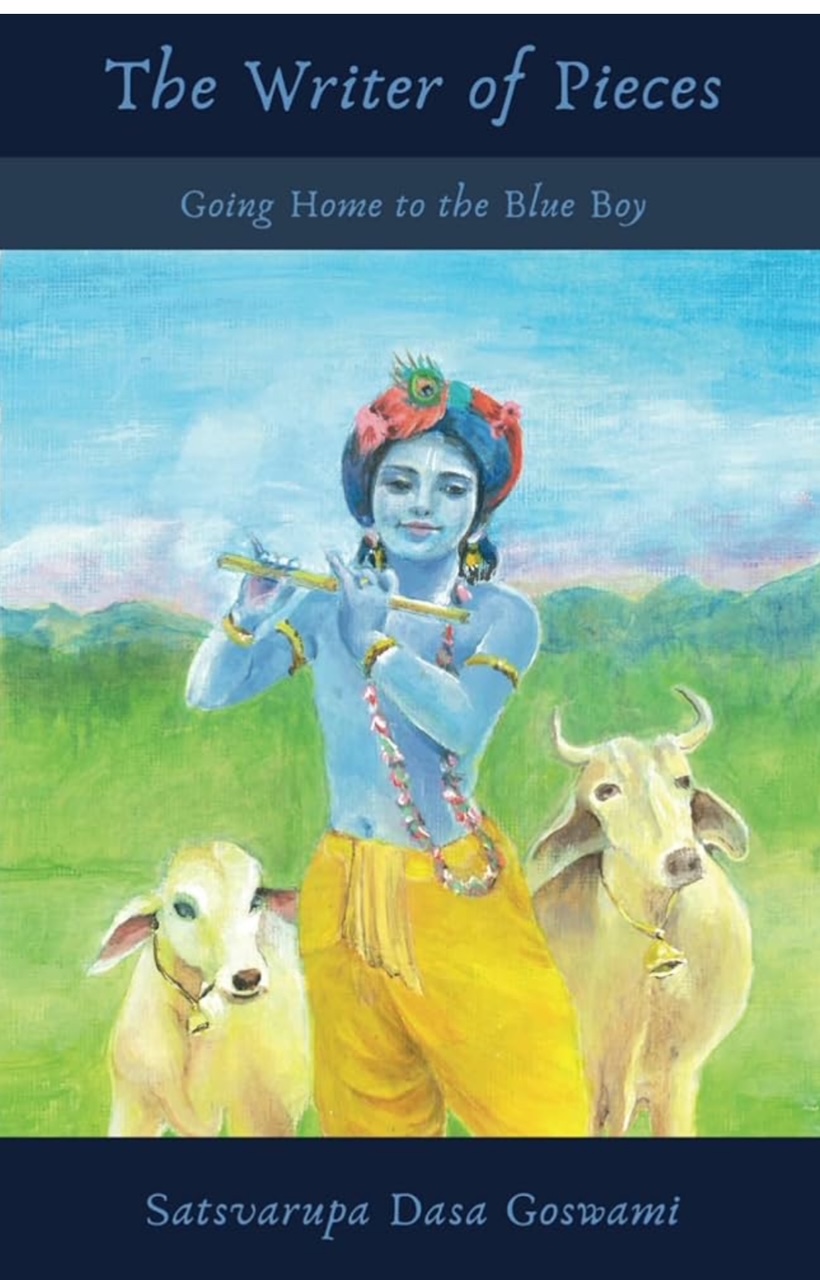
Don’t take my pieces away from me. I need them dearly. My pieces are my prayers to Kṛṣṇa. He wants me to have them, this is my way to love Him. Never take my pieces away.

Many planks and sticks, unable to stay together, are carried away by the force of a river’s waves. Similarly, although we are intimately related with friends and family members, we are unable to stay together because of our varied past deeds and the waves of time.
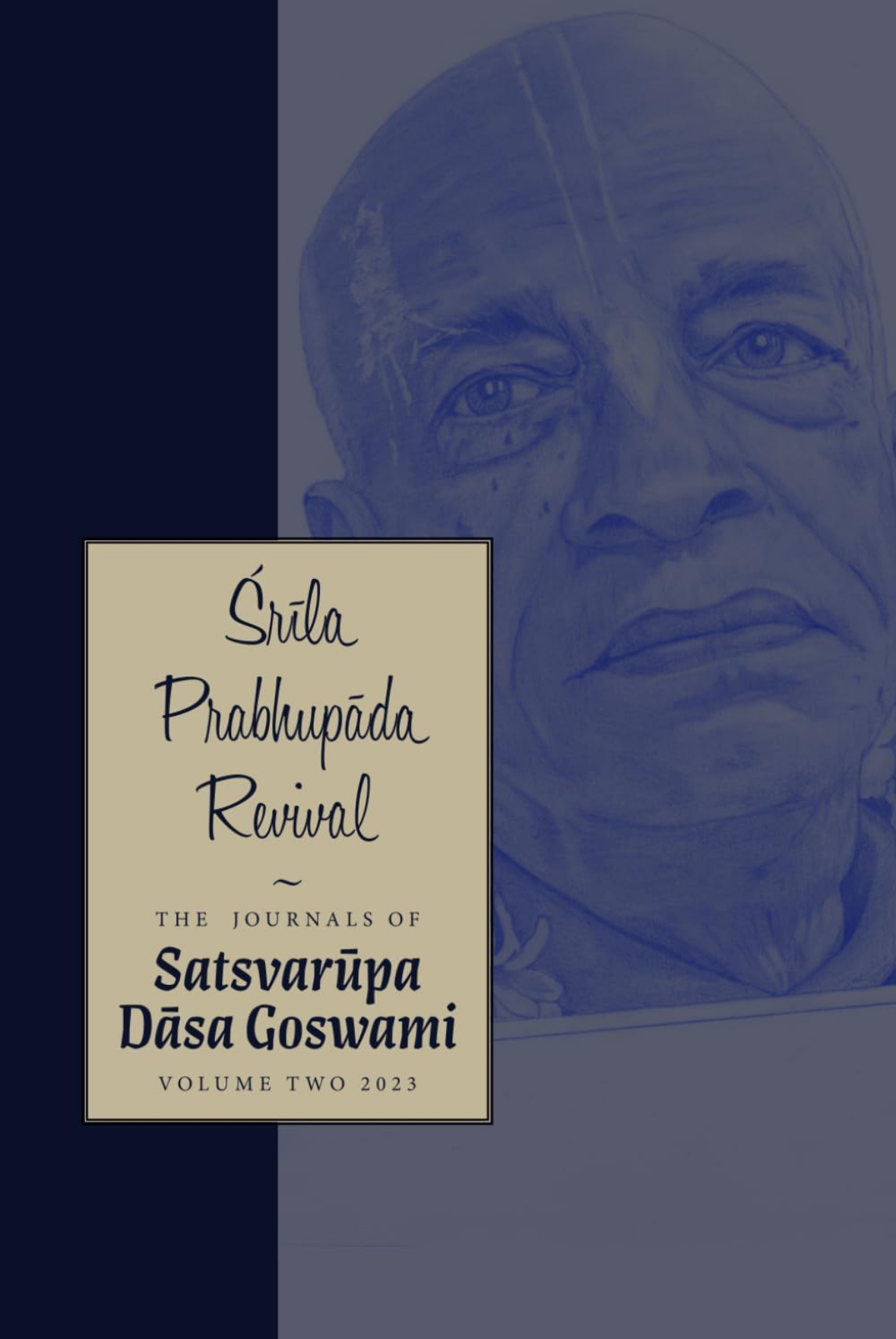
To Śrīla Prabhupāda, who encouraged his devotees (including me) To write articles and books about Kṛṣṇa Consciousness.
I wrote him personally and asked if it was alright for his disciples to write books, Since he, our spiritual master, was already doing that. He wrote back and said that it was certainly alright For us to produce books.
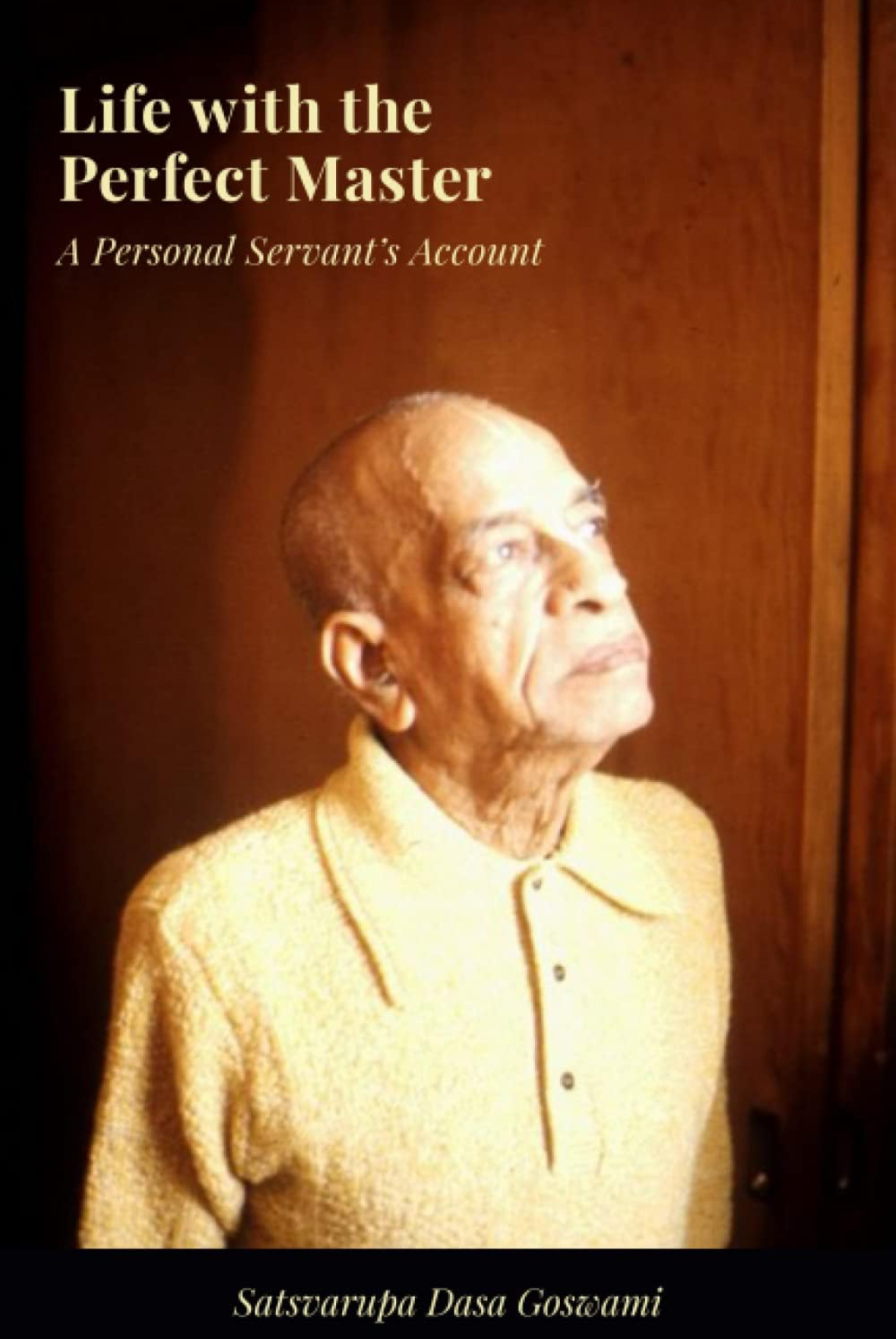
I have a personal story to tell. It is a about a time (January–July 1974) I spent as a personal servant and secretary of my spiritual master, His Divine Grace A.C. Bhaktivedanta Swami Prabhupäda, founder-äcärya of the International Society for Krishna Consciousness. Although I have written extensively about Çréla Prabhupäda, I’ve hesitated to give this account, for fear it would expose me as a poor disciple. But now I’m going ahead, confident that the truth will purify both my readers and myself.

First published by The Gītā-nāgarī Press/GN Press in serialized form in the magazine Among Friends between 1996 and 2001, Best Use of a Bad Bargain is collected here for the first time in this new edition. This volume also contains essays written by Satsvarūpa dāsa Goswami for the occasional periodical, Hope This Meets You in Good Health, between 1994 and 2002, published by the ISKCON Health and Welfare Ministry.

This book has two purposes: to arouse our transcendental feelings of separation from a great personality, Śrīla Prabhupāda, and to encourage all sincere seekers of the Absolute Truth to go forward like an army under the banner of His Divine Grace A.C. Bhaktivedanta Swami Prabhupāda and the Kṛṣṇa consciousness movement.
A single volume collection of the Nimai novels.
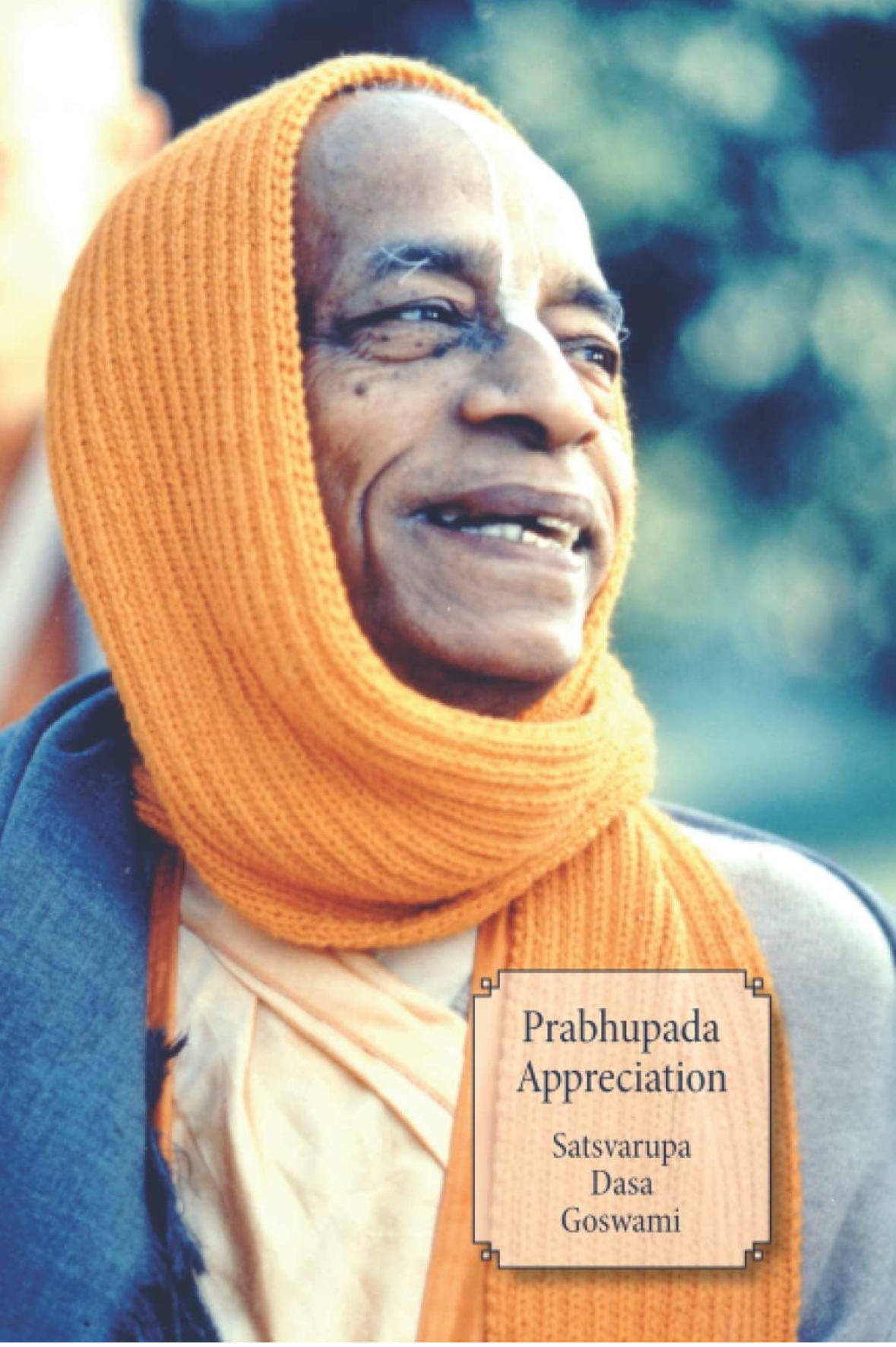
Śrīla Prabhupāda was in the disciplic succession from the Brahmā-Mādhva-Gauḍīya sampradāya, the Vaiṣṇavas who advocate pure devotion to God and who understand Kṛṣṇa as the Supreme Personality of Godhead. He always described himself as simply a messenger who carried the paramparā teachings of his spiritual master and Lord Kṛṣṇa.
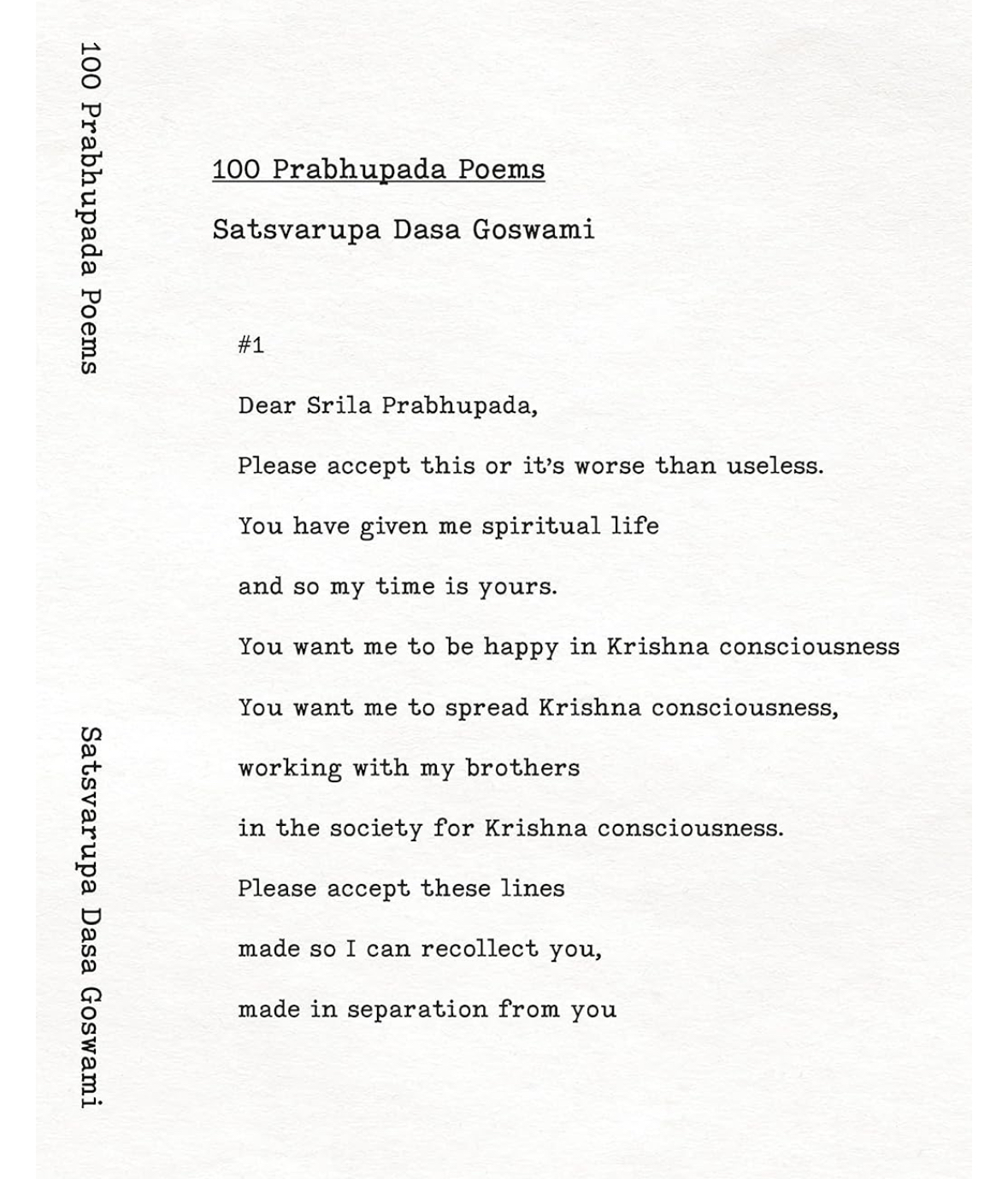
Dear Srila Prabhupada,
Please accept this or it’s worse than useless.
You have given me spiritual life
and so my time is yours.
You want me to be happy in Krishna consciousness
You want me to spread Krishna consciousness,
This collection of Satsvarūpa dāsa Goswami’s writings is comprised of essays that were originally published in Back to Godhead magazine between 1966 and 1978, and compiled in 1979 by Gita Nagari Press as the volume A Handbook for Kṛṣṇa Consciousness.

This second volume of Satsvarūpa dāsa Goswami’s Back to Godhead essays encompasses the last 11 years of his 20-year tenure as Editor-in-Chief of Back to Godhead magazine. The essays in this book consist mostly of SDG’s ‘Notes from the Editor’ column, which was typically featured towards the end of each issue starting in 1978 and running until Mahārāja retired from his duties as editor in 1989.

This collection of Satsvarupa dasa Goswami’s writings is comprised of essays that were originally published in Back to Godhead magazine between 1991 and 2002, picking up where Volume 2 leaves off. The volume is supplemented by essays about devotional service from issues of Satsvarupa dasa Goswami’s magazine, Among Friends, published in the 1990s.

“This is a different kind of book, written in my old age, observing Kṛṣṇa consciousness and assessing myself. I believe it fits under the category of ‘Literature in pursuance of the Vedic version.’ It is autobiography, from a Western-raised man, who has been transformed into a devotee of Kṛṣṇa by Śrīla Prabhupāda.”
 The Best I Could Do
I want to study this evolution of my art, my writing. I want to see what changed from the book In Search of the Grand Metaphor to the next book, The Last Days of the Year.
 a Hare Krishna Man
It’s world enlightenment day
And devotees are giving out books
By milk of kindness, read one page
And your life can become perfect.
 Calling Out to Srila Prabhupada: Poems and Prayers
O Prabhupāda, whose purports are wonderfully clear, having been gathered from what was taught by the previous ācāryas and made all new; O Prabhupāda, who is always sober to expose the material illusion and blissful in knowledge of Kṛṣṇa, may we carefully read your Bhaktivedanta purports.
I use free-writing in my devotional service as part of my sādhana. It is a way for me to enter those realms of myself where only honesty matters; free-writing enables me to reach deeper levels of realization by my repeated attempt to “tell the truth quickly.” Free-writing takes me past polished prose. It takes me past literary effect. It takes me past the need to present something and allows me to just get down and say it. From the viewpoint of a writer, this dropping of all pretense is desirable.
 Geaglum Free Write
This edition of Satsvarūpa dāsa Goswami’s 1996 timed book, Geaglum Free Write Diary, is published as part of a legacy project to restore Satsvarūpa Mahārāja’s writings to ‘in print’ status and make them globally available for current and future readers.