

What
Meeting of Disciples and friends of SDG
Where
The Veterans of Foreign Wars Hall – 845 Hudson Avenue – Stuyvesant Falls, New York 12173
There is plenty of parking near the Hall. The facility is just a few minutes’ walk from SDG’s home at 909 Albany Ave.
Schedule
10:00 – 10:30 A.M. Kirtana
10:30 – 11:15 A.M. Presentation by Satsvarupa Maharaja
11:15 – 12:30 P.M. Book Table
12:30 – 1:15 P.M. Arati and kirtana
1:15 — 2:15 P.M. Prasadam FeastContact
Baladeva Vidyabhusana at [email protected] or (518) 754-1108
Krsna dasi at [email protected] or (518) 822-7636SDG: “I request as many devotees as possible to attend so we can feel the family spirit strongly. I become very satisfied when we are all gathered together.”
*******
Śrī Caitanya-caritāmṛta, Madhya-līlā 20.124–125: “O great learned devotee, although there are many faults in this material world, there is one good opportunity—the association with devotees. Such association brings about great happiness. . . . .”
Srila Prabhupāda: “Therefore, our Society is association. If we keep good association, then we don’t touch the darkness. What is the association? There is a song, sat-saṅga chāḍi’ kainu asate vilāsa, te-kāraṇe lāgila mora karma-bandha-phāṅsa (Gaurā Pahū, verse 3). Sat-saṅga. Sat-saṅga means association with the devotees. So the one poet, Vaiṣṇava poet, is regretting that, ‘I did not keep association with the devotees, and I wanted to enjoy life with the nondevotees. Therefore I’m being entangled in the fruitive activities.’ Karma bandha phāṅsa. Entanglement.” [Conversation with David Wynne, July 9, 1973, London]
We need to expand our team of proofreaders as we aim to increase the rate of republication of Satsvarūpa Mahārāja’s books as well as new books that he writes.
This includes a need for fluent bilingual Spanish and English speakers to proofread Spanish translations (we currently have around 20 Spanish translations waiting to be proofread).
Anyone interested in this particular service should contact Manohara dāsa at [email protected]
If you would like to help, please contact Kṛṣṇa-bhajana dāsa at [email protected] or [email protected] and we will find you a service that utilizes your talents.
If you are feeling great happiness in chanting Hare Kṛṣṇa, that is the good result. Always chant in the service mood. We are not chanting to enjoy sensations, even spiritual sensations. We should chant to serve Kṛṣṇa. The eighth offense to chanting is to consider it as a pious activity or to use it for some utilitarian purpose. This means the meaning of the chanting is to serve Kṛṣṇa: “O Rādhā, O Kṛṣṇa, please engage me in Your service.” As you chant, pray to become the unalloyed servant in your particular service to Kṛṣṇa.
******
etan nirvidyamānānām
icchatām akuto-bhayam
yogināṁ nṛpa nirṇītaṁ
harer nāmānukīrtanam“O King, constant chanting of the holy name of the Lord after the ways of the great authorities is the doubtless and fearless way of success for all, including those who are free from all material desires, those who are desirous of all material enjoyment, and also those who are self-satisfied by dint of transcendental knowledge.”
Śrīmad-Bhāgavatam 2.1.11
******
“A devotee either in danger or in happiness constantly chants the Hare Kṛṣṇa mantra. When he is in danger he is immediately relieved…. This is the absolute nature of the mahā-mantra. Either in danger or in happiness, it can be chanted without limitation.
—Śrīmad-Bhāgavatam 4.12.21, purport
******
To improve your japa, very scrutinizingly read over and memorize the Śikṣāṣṭakam prayers of Lord Caitanya.
******
If you are still thinking that life in the stool pile is the purpose of human existence, then it is something like insanity. In such a condition you cannot afford to chant japa “like background music.” You have to cry to Kṛṣṇa. And if you cannot cry, then you have to cry because you cannot cry. By cry, I simply mean take with all seriousness your japa time and hear with all your heart.
******
As far as sleeping in japa, if you get a good six hours of rest you should be able to avoid it. Keep walking. Put water on your face if necessary. Pray to Kṛṣṇa to help you concentrate. The focal point is the sound of the name and the prayer, “O my Lord, please engage me in Your service.” You can take shelter of Kṛṣṇa by taking shelter of the devotees.
******
It is most important that you follow this vow of chanting Hare Kṛṣṇa sixteen rounds a day. Of all the spiritual master’s instructions, this is the most important. Of course, our movement is very active, and we have many things to do besides chanting sixteen rounds. But unless we chant the sixteen rounds, then we cannot do anything. If we try to do some service, it will be almost like karma. And after a while we will not be able to perform service. We will lose enthusiasm.
******
The reason we make a solemn vow—you must do it—is because in the neophyte stage we do not have a taste for chanting unless we are ordered to do it. The liberated soul takes great pleasure in chanting Hare Kṛṣṇa. And even the beginner takes pleasure, but sometimes he may be whimsical or distracted and not want to chant. But the spiritual master insists that you always chant sixteen rounds every day. In this way you will approach the stage where you will always chant with spontaneous attachment and love for the holy name.
******
Make some little improvements and build on them steadily. A lot of this may involve minor, personal habits. Someone, whenever he sits down, falls asleep when he chants. So it will be a big step for him if he doesn’t sit down anymore. Someone else discovers that if he eats too much at night, then he can’t chant in the morning, so he stops doing that. Little practical things like this will help improve your chanting. But the philosophy is there too. Be vigilant against offensive chanting.
pp. 55-58
Nārāyaṇa-kavaca made a list of points to prove that it is beneficial for me to chant my japa in Vṛndāvana dhāma, even if I am experiencing difficulties in doing so. The list is as follows:
At the risk of becoming repetitious, I want to write some more about my discussion with NK about chanting japa in Delaware and in Vṛndāvana. It’s a fact that my chanting has not been as good in Vṛndāvana. I am not as attentive, I do not time my rounds accurately, I do not chant with speed, I am drowsy. This has made me depressed and desire to return to my bhajana kuṭīr in Delaware, but Nārāyaṇa has pointed out some profound reasons to appreciate my chanting in the holy dhāma and not regard this as something lesser or something to be eager to leave. He has referred to the śāstras, which repeatedly tell us that Hare Kṛṣṇa in Vṛndāvana is superior and brings you close to Kṛṣṇa. Even a little time spent chanting in Vraja brings you immeasurable benefits that cannot be found outside. We have to take these statements on the authority of the scriptures, sādhus and gurus. And the personal feelings that I am having are also auspicious. I am feeling separation from my own bhajana-kuṭīr, and that is a good thing. When I return there, I will also be able to feel separation from Vṛndāvana, even though I am not feeling the pleasure of it now. The impressions, purifications, and austerities that I am undergoing will all be there for me as rewards when I return to the USA. So I should not regard it as a waste of time or a negative thing to chant Hare Kṛṣṇa, even though it is difficult, and even though the performance is less in Vṛndāvana. Be happier here and be benefited by immense advantages, japa in Kṛṣṇa’s abode. It is not something you have to immediately perceive, but it is a fact. And I am gaining every day that I chant here. I will surely notice it when I return to the yellow submarine. I have a fear that I will not be able to return to the perceivable standards I was keeping in Delaware, but I should not be afraid. After some initial adjustment, I will surely be able to chant better there, and the memories of Vṛndāvana will increase my standard rather than confuse me or reduce it. Therefore, each day that I struggle here is a gain, and it is being noticed by Kṛṣṇa. I am begging Him to grant me increased devotion for japa here and after I return to Delaware. And I desire to return to Vṛndāvana again and chant better than I am doing this time.
We are planning to allow Rasbihari Lal & Sons, the booksellers at Loi Bazar, permission to print Gita-nagari Press books. The main condition would be that he does not change any word from the original copies. We can make some provision that we receive a financial commission for the sales. It would be very nice to have wide distribution and to make the books accessible, since he has worldwide customers linked to his store. He has repeatedly asked permission to print my books, so he knows that there is a demand for them. Our desire is to distribute books as much as possible. Īśāna distributes in Russia, and we are happy that she distributes thousands of books. The quality of Rasbihari Lal’s books is excellent, so NK and I will go visit him and try to solidify a deal for their printing my books.
NK and I have agreed to give Rasbihari Lal bookseller permission to sell my books as long as they do not change anything in the text. We will go visit them and make a deal. The main thing is to find new ways to distribute them.
Living in your room in Vṛndāvana. A change of bed sheets last night. It is comfortable getting under the sheets and exchanging “goodnight,” and then the lights going out. The temperature is ideal. You soon fall asleep. You can be anywhere on earth, but you are in Vṛndāvana. You are soaking up good credits now. Anyone who lives only two seconds in Mathurā is cleansed from his sinful activities. Can you feel the auspiciousness? Is it happening even if you do not feel it? Do not live with offenses in the dhāma. Be at least neutral and believe what the Vrndāvana–mahimāmṛta says about the power of visiting or living in Vṛndāvana. I am coming down. Less people attended my evening class last night. Are they are getting bored? Maybe last night (Saturday) was special, and a bigger attendance will turn out tonight. Sometimes the plot of Vidagdha-mādhava is hard to follow, as when Subāl changes into the dress of Rādhārāṇī. Why does he do that? Just to trick Jaṭilā?
Monkeys running and crawling and squealing on the rooftops. So far they have not given me any trouble. Each night Rama Raya sings beautifully with harmonium, then I read from my writings, then we have a group reading from Vidagdha-mādhava. The out-loud reading gets a bit tedious, but we stick with it. Twice a day, Bhāgavat gives me a massage. Its relaxing, but the second one is a little prolonged, and we are almost late for the evening reading.
pp. 15-19
According to Vedic culture, there are four stages of life. . . . Finally he gives up both wife and children and remains alone to cultivate Krsna consciousness and that stage is called san-nyasa, or the renounced order of life. Yet Krsna indicates that for a sannyasi, renunciation is not all. In addition, there must be some duty. What is the duty of a sannyasi, for one who has renounced family life and no longer has material obligations? His duty is a most responsible one: it is to work for Krsna. Moreover, this is the real duty for everyone in all stages of life.
“In everyone’s life there are two duties: one is to serve the illusion, and the other is to serve the reality. When one serves the reality, he is a real sannyasi. When one serves the illusion, he is deluded by maya.
One who is unattached to the fruits of his work and who works as he is obligated is in the renounced order of life, and he is the true mystic, not he who lights no fire and performs no work.’ (Bg. 6.1) Everyone is working and expecting some result. One may ask what is the purpose of working if no result is expected? A remuneration or salary is always demanded by the worker. But here Krsna indicates that one can work out of a sense of duty alone, not expecting the results of his activities. If one works in this way, then he is actually a sannyasi; he is in the renounced order of life.”
Everyone serves, therefore better to serve reality. This is the platform of knowledge. By sannyasa, the renounced order of life, we refer to one who has come to this platform. Sannyasa is a question of realization, not social status.
Vasudevah sarvam iti—after many births, when one comes to the platform of real knowledge, he ‘surrenders unto Me.’ Why many births? If the ultimate goal of life is to surrender to Krsna, why hesitate? Why not surrender immediately? When one comes to understand that point of surrender, he becomes a real sannyasi . . . Krsna never forces . . . surrender is a result of transcendental love.
My Dear Satsvarupa,
Please accept my blessings. I beg to acknowledge receipt of your letter from Cleveland dated June 26, 1972 and I have noted the contents with great pleasure. Similarly I have received such nice letters from Rupanuga and Hridayananda, and I am very much satisfied that you are all feeling the serious nature of this sannyasi mission. So far you are concerned, I am especially stressing the importance of our Dallas Gurukula for training up the next generation of Krishna consciousness preachers. This is the most important task ahead. I am seeing practically how wonderful the children are coming out. Therefore, we shall be very very vigilant and careful to maintain the highest standard of temple atmosphere and conduct in Dallas. You may install Radha-Krishna Deities and worship Them very, very gorgeously. Simply by associating with the elderly members, the children will learn everything. So the quality of the elderly members must be also very much to the standard of excellent Vaisnavas, otherwise the children learn by example and they will very easily be misguided if their senior God-brothers and Godsisters are themselves neglectful. I shall certainly come there to Dallas to see how things are going on as soon as there is opportunity. We must develop our Krishna consciousness school at Dallas to be the model for education in all the world, and let anyone see our Krishna consciousness children and they will immediately understand the importance and necessity for such education amongst the citizens at large. Otherwise, the children of your country and other countries they are simply growing up to be sophisticated animals, so what good will their education do? But if they will agree to try to understand our Krishna consciousness education or way of life and allow their children to be educated by us, they will see them come out as the topmost citizens, with all good qualities such as honesty, cleanliness, truthfulness, loyalty, etc. So that is a very important work, and you are especially responsible to make it successful. All other GBC men should give you all assistance for building up the standard there.
You mention that you are no longer much occupied with seeing that the rent and mortgage is paid and that the incense is sold, but GBC means to be occupied with everything in the zone. It is not that now we are preachers we can neglect all other points. No, the GBC member is supposed to know everything and anything about the condition and situation of all matters within his jurisdiction. That is the meaning of secretary. So because we are engaged in many fields of activity, I am especially relying upon that knowledge of my GBC assistants and secretaries to manage everything properly. But if we do not take time to understand how the financial matters are going on, then at any moment we may experience some calamity due to our inattention to these matters. Therefore, you should try to keep yourself always informed how the financial matters are improving and keep your watchful eye on every feature of our Krishna consciousness activity. That is also part of preaching work. I am also preaching daily. But I am at the same time managing everything, seeing the statements of accounts, going to the bank, giving advice on every topic, like that. Just now I have purchased one apartment house with seven apartments just adjacent to the L.A. temple and very soon we shall invest in similar properties. So practically-there is no question of my neglecting the financial matters of the society, and similarly, you shall do as I am doing. That is your real business. So far your questions, Yes, it is good we must be able to preach effectively at a moment’s notice or under any conditions of circumstances also. As you begin to study the
Sanskrit words, in each word you will find a treasure house of different understandings.
Hoping this meets you in good health.
Your ever well wisher,
. . . Only those who have passed their lives in practicing the regulative principles of religion, who have acted piously and who have conquered sinful reactions can accept devotional service and gradually rise to pure knowledge of the Supreme Personality of Godhead. . . . This elevation is possible in Krsna consciousness in the association of pure devotees, for in the association of great devotees, one can be delivered from delusion.
It is stated in the Srimad-Bhagavatam (5.5.2) that if one actually wants to be liberated, he must render service to the devotees . . . but one who associates with materialistic people is on the path leading to the darkest region of existence. . . . All the devotees of the Lord traverse this earth just to recover the conditioned souls from their delusion.
pp. 69-73
Very, very few of us can spend our full-time chanting. Prabhupāda says that constant chanting is the activity of a very mature—in fact, liberated—devotee. But we may feel that we’re not doing enough with only sixteen or twenty-five rounds. One way to feel better about this is to realize that all our activities can contribute to good japa. Be conscious of it, be deliberate. Understand that if you are cruel to someone, or if you find fault, or overeat, or are a nonsense in one way or another, it’s going to affect your japa. Everything you do either contributes to or works against your chanting. It makes me think of the athletes who train for years to perform in the Olympics. Their actual performance is over in a few hours, but they train for it and protect themselves from injury twenty-four hours a day. They make sure they get sufficient rest, eat the best foods, and don’t do anything that could damage their chances of success. And they think positively.
It’s also nice to think about saintliness in a general way. Certainly, to intone or sing the holy name of Kṛṣṇa is saintly life at its best. Especially in Kali-yuga, the saṅkīrtana-yajña is the life of saints. If we want to become more saintly, we have to behave properly and observe all the rules and regulations of Vaiṣṇava life. Kṛṣṇa consciousness is not something you just switch on and off—it’s a full-time occupation.
******
“Both the offenseless chanting and the following are interdependent.”
Mathurā dāsa said this line gave him hope of a way to improve his attention in chanting. Without this holistic attitude, paying attention almost seemed like a meditator’s feat to him. How does one chant sincerely? Is there a certain emotive quality in the way you say the words or the way your face looks? It must be more than that.
“Sometimes it seems a little ethereal,” Mathurā said, “hard to grasp or define, the endeavor for sincere and attentive chanting. But if my japa and service are connected, I can try to improve my service, and that will help my japa.”
We have to be careful about that and keep the balance. Don’t think, “I can’t chant nicely, so I’ll just concentrate on my service and that will be my ‘chanting.’” Following the analogy of the Olympic athlete, despite all her preparation, the ice skater has to go spontaneously onto the ice as if she’s doing it for the first time. The practice and rehearsals have helped, but now her performance will have to be strictly improvised. In chanting, there is plenty of sincere action and attentive work to be done during those two to three hours a day. They themselves are the peak performance of sincere devotional service. That is why we say it’s so important to give chanting prime, early morning time. We should be well rested and then chant when the world is not so loud or passionate as it becomes later in the day.
Sincerity is expressed by such simple things as refusing to fall asleep during japa. How can you be sincere and yet continue to sit back in a too-comfortable position, inviting drowsiness? Show sincerity by having the guts to sit up with a straight back. If drowsiness comes, spray water on your face or stand up. “My dear Lord, I really want to serve You. Hare Kṛṣṇa Hare Kṛṣṇa, Kṛṣṇa Kṛṣṇa Hare Hare / Hare Rāma Hare Rāma, Rāma Rāma Hare Hare.”
The very fact that we can’t spare more than three hours a day in chanting means that we should make the most of it. Give it your best, sincere effort.
******
This morning as I was walking, I was conscious of when it was coming to an end. It began in obscurity and ended in clarity, at least in terms of the sky and the land.
I don’t advocate devotees chanting most of their rounds outdoors, and certainly not that they miss attendance at the temple maṅgala-ārati, but for most of the year, we can observe the dawn either outdoors or through the windows, even while attending the temple program. Dawn usually occurs, in fact, during the period which temples designate as “japa time.” While we chant, we can witness the spectacular yet gentle transformation known as dawn. The dawn can have a favorable psychological effect on us. Haridāsa Ṭhākura uses dawn as a metaphor to explain nāmābhāsa. He says that at night, we are afraid of robbers and ghosts, but with the first rays of dawn, we lose fear. With the first rays of the chanting of the holy names of Kṛṣṇa, all our sins are destroyed.
Taking the metaphor further, we chant in the darkness of offense and drowsiness, but if we persist and if we pray for Kṛṣṇa’s mercy as we chant, then everything will grow lighter. With the rising of the sun comes the hope that one day we can chant in love of God. Day after day we chant during this cosmic transformation, and surely it works to suggest that change within our hearts and souls.
Many poets and thinkers have expressed profound appreciation for the early morning hours, and they sense, sometimes despite their agnosticism, the awakening of God consciousness during that time. In Walden, Thoreau tells us how he was ever attentive to observe the dawn. He says he doesn’t imagine in any way that he actually assisted the sun to rise; it was enough for him just to attend that glorious function. The nature-lover sees it almost as a liturgy, or morning temple program. Because he hasn’t yet come to the stage of being able to appreciate the personal form of Kṛṣṇa as we see in the arcā-vigraha in the mandira, he goes to greet the Deity in the form of the rising sun and cannot help but feel in awe of God’s creation.
It’s not required by our Kṛṣṇa conscious practices that devotees observe the dawn, but since so many devotees are inclined to love nature, they needn’t feel any conflict. The natural spirit of enlivenment, purity, and well-being that comes when we are sensitive and awake during the early hours can be dovetailed by chanting Hare Kṛṣṇa and awakening to the highest truth, even while the earth awakens. Kṛṣṇa’s sun sheds light into darkness. Kṛṣṇa—sūrya-sama; māyā haya andhakāra.
pp. 12-16
The Personality of Godhead Kapila continued: when the living entity is unaffected by the modes of material nature, because he is unchanging and does not claim proprietorship, he remains apart from the reactions of the modes, although abiding in the material body, just as the sun remains aloof from its reflection on the water.
—Śrīmad-Bhāgavatam 3.27.1
The Śrīmad-Bhāgavatam is fixed with stories—Nārada taking to Kṛṣṇa consciousness at five years old, Dhruva going to the forest as a child, Prahlāda Mahārāja standing up to his father, Devahūti and Kardama traveling in their aerial mansion—but there is another type of story we encounter as we read the Śrīmad–Bhāgavatam. That is our own story. We read of the symptoms of pure devotional service, and we ask, “How am I doing?” We read of the soul dragged to hell and ask, “Is that me?” Our story is when we measure ourselves against the stories Vyāsadeva tells.
This verse tells the story of a devotee who has become detached from the material world. Consider this. Imagine it has happened to you. You live in the world, but you are not of the world. You no longer feel the world’s shocks and pull the way ordinary people do. You are absorbed in Kṛṣṇa’s mission, preaching, trying to convert others to Kṛṣṇa consciousness. You are lost in chanting the holy name. You don’t know exactly what time it is or what you are doing.
Or, like Śrīla Prabhupāda, you are focused in time and place. You are prepared to purchase property for a temple and not get cheated. You are prepared to talk with worldly men and women and give them Kṛṣṇa consciousness. Your thoughts are always with Kṛṣṇa in Vṛndāvana. You are fighting like Arjuna, on Kṛṣṇa’s behalf.
Am I like the devotee described in this verse? That devotee is compared to the sun in the sky. Only the sun’s reflection appears in the pond—the sun is fixed in the sky. When wind blows the water in the pond, the reflection ripples, but the sun is aloof from rippling. How enviable to be there in the sky, removed from the struggle of senses and mind. How enviable not to hanker for food or drink or sex. Or, even if you feel those drives, to be distant from it.
Where am I, in the sky? Or am I in the pond, shattered by the breezes, tossed by the waves of material nature? Which story is mine? Both?
I move through the day. Today we are celebrating the appearance of Bhaktisiddhānta Sarasvatī Ṭhākura. Madhu asks me if I would like to take lunch at 12:30 since we have fasted from breakfast. I sit outside, but it’s windy. I watch flowers at dawn. It’s cold, but they open to the light. If I could sit still long enough and do nothing else, I could watch their slow-motion opening.
I think of Han Shan and Thoreau. They were hermits. They had their places and said to the world, “Why don’t you find your own cold mountain and stay aloof from the commerce and cheating and politics?” Han Shan’s cold mountain was a rocky, icy climb. He lived there in ascetic Buddhism. Our way is different. Which is your story? Where is your place?
The devotee in the Bhāgavatam verse is changeless. What does that mean? He eternally dovetails his energy with the Supreme Lord. He is fixed. He doesn’t go to the world of sense gratification. No change, only duty under the order of the spiritual master. I was a young person in ISKCON. Now I’m almost fifty-five. No change, still a Hare Kṛṣṇa devotee. I don’t belong to this world.
The devotee is without a sense of proprietorship. He doesn’t claim his activities belong to himself. He acts for guru and Kṛṣṇa.
I can’t say whether I like that—I am attached to my body and my material conceptions—but I would like to float off. I would like to have the Out of Body Experience that takes you once and for all to the spiritual world for eternal life. We can have this experience even while appearing to live in this world.
It’s a fascinating subject. Even for the period of time in which you read and consider it, it is happening. At that moment, you don’t belong to your nation or sexual designation. You are not a brāhmaṇa, or a kṣatriya, a Hindu or a Catholic. You are a servant of God. You don’t belong here.
That’s the story. I have said what I wanted to say. I am left with my yearning. I imagine my friends going to my room, but I am no longer there, like Dhṛtarāṣṭra who left with Vidura without telling anyone. Go to a tīrtha the way Ajāmila went to Hardwar, and practice chanting Hare Kṛṣṇa to perfection. Use your facilities in devotional service and no longer be available to the modes of nature.
While reading this Bhāgavatam verse early this morning, I dozed for a few moments. My head fell forward, and I began to daydream—something with the phrase “Gone with the wind.”
When I awoke, I asked myself, “What does that mean to you, ‘Gone with the wind’?” It’s an old Hollywood movie based on a particular novel by Margaret Mitchell. But to me it means an era that’s gone. The antebellum South is gone. So is my boyhood spent on Staten Island. In the Hollywood film, Sherman’s soldiers burned down the southern mansion. The plantation was all burning up. Clark Gable was kissing the heroine with the catchy name—Scarlett O’Hara.
******
My being the guru-in-residence at Gītā Nāgarī when it was a flourishing community of a hundred is gone with the wind. Autumn winds blow and scatter leaves. It’s all over now. What you were is gone, and that’s good! In a similar way, you will be gone from this world.
Our stories are evolving as we read the Bhāgavatam. We move along. We may not yet be pure devotees aloof from our bodies, but at least we are not dogs or cats. We are fortunate.
On this day we fast all morning. Then we will offer flowers to the picture of our grand-spiritual master. We will also chant the holy name. We are Kṛṣṇa dāsa. We are unchanging. We don’t own our activities. We don’t even own our stories. Kṛṣṇa is the Lord. We are actually in the transcendental world. Or that is what we want.
pp. 139-42

Sitting on an old sled up here, I was thinking, “My dear Lord Krsna, please have mercy on this sinner,” trying to concentrate on what I should pray, getting some line of thought going and words going. I was tending to be quiet, though. Just being quiet is not impersonalism. I am sure sometimes some of Krsna’s devotees in the spiritual world don’t always have to talk with Him. They just sit and be with Him and enjoy His company, serving Him as He likes. They don’t always have to crank out a stream of words to the Lord and to Srila Prabhupada, but just think in Their direction.
Even the forest and trees are all taking shelter at the lotus feet of Krsna. One can just sit here and feel a kind of oneness and humility and peace, but it is Krsna conscious. You are chanting and you are thinking and, even if you are not thinking, you are being with the Lord and Prabhupada and just healing yourself, sitting and becoming aware that They are in control. At least sometimes, contemplation can be like this, especially when I really can’t think of something to say.
Perhaps what I am really after, in terms of petit-ions, is just to be able to pray and to turn to Krsna as often as possible—constantly during the day—as Brother Lawrence of the Resurrection advised. Just turn to the Lord and be with Him. What you say to Him is whatever is meaningful for you. Just be with Him as your worshipful Lord.
I am simply petitioning the Lord for spiritual strength and for being corrected. I need the bala, the spiritual strength, so that I can face all the calamities and difficulties which life brings, and not try to hide from them or think I am just too weak. Then I ask the Lord for the willingness to be righted. I know I must be way off in different ways that I am not willing to face up to, and so I ask Krsna, “Although it will be difficult to go through, allow me to go through the changes required to right me. Even though it will mean upsetting some things that I am enjoying now.” If they be illusions, why enjoy them as comforts?
Rain tinkling. I remember Teresa of Avila saying that a real prayer should have real action. So to sit down on a sled up here in the woods and to think, should result in getting up with some bright idea for service to Krsna, some new appreciation for the devotees, or remembering that you want to pick a topic for a lecture tomorrow. Prayer should result in overcoming the dull feelings, feelings of contamination. In this way, we get new life from prayer and then we know it is good. After prayer we should bound up from our sitting positions and just head off in a new direction for practical service. Since that new direction is supplied by the Lord, we should be thanking Him as we go to execute more service to Him. Don’t think it was your own bright idea.
My dear Lord, my dear Srila Prabhupada, please engage me in Your service. I won’t let self-doubts entirely stop me from praying, although I know my prayers are not very pleasing because they are so filled with petitions and intentions. I don’t really carry out my intentions, and my petitions are impure, but at least I come into Your presence, my Lord. You have invited us all and said that we are sukrtinas as long as we come to You. Akamah sarva-kamo va moksa-kama udara-dhih tivrena bhakti-yogena yajeta purusam param.
My dear Lord and Prabhupada, I also make the prayer of a writer, although I know writing can be misused and can distract us from Krsna consciousness. However, there is no harm in writing whole-heartedly if it’s actually done knowing that oneself is a tiny servant and in need of the Lord’s protection at every moment. If he tries always to link readers to Krsna, then it can be a very good service. We even say that Prabhupada’s most important service was writing. I know my way is precarious because I have been writing about myself, which is not so much done by Vaisnavas, but I do it because I have to work with what I have, what I say, and because in this age people like easily accessible literature. I have taken this step somewhat boldly and maybe independently, my Lord. Now is it extra bold of me to ask You to protect me, to purify this literature more and more so that the entire work becomes more obviously a linking of people to the Real Hero, Krsna Himself, and to the great gurus who are the previous acaryas? Let it be clear that this literature is not a distraction of readers from that goal, but bringing them to the lotus feet of Prabhupada. My triumph is to do it myself, to link myself with Prabhupada.
Hare Krsna. This is my last day here at Gita Nagari; for the next three weeks we will travel around the U.S. It seems that prayers especially come when I am in some country place for solitary walks. That’s the nice part of being alone sometimes, even if you are doing important preaching duties: to talk to Krsna without other thoughts, even active thoughts for your service. It’s a kind of reminder to make sure that your service is being done consciously and not just in superficial activism. Therefore, both have to be there: action in the service of the Lord and actual consciousness of the goal.
pp. 159-63
Keep an eye on Kṛṣṇa. If you can’t surrender, then at least chant, Śrīla Prabhupāda writes. Sixteen rounds are essential.
Report in here and leave record. But not just for the sake of a log or record. That is a clerical function or like a ship’s log kept by men on watch. It is just a history that no one reads except for official purposes. I’ve seen sometimes our security guards at Hare Kishna Land, Mumbai. They keep records of their standing watch, and this paperwork preoccupies them in a life of boredom with nothing else to do. My writing shouldn’t be like that, perfunctory.
But I do feel the need to record some things in that way of a daily round. The first signs of a flashing pain (no matter how slight) in the right eye are important to me because they warn me that I can’t even do this function of writing. They tell me I have to pull the plans right away. Can’t write long or passionately, have to decide what to do aside from the desire to go all out in writing or reading. What care and repair for the body?
That’s an example of why I do write down log material, “Slight flashing light in right eye. Reluctant to get up at midnight … Ship is plying smoothly. Steady as she goes.”
Harumph. Be quiet. Others are asleep. I like people to sleep while I write. Then I chant softly to not wake them. I’m a considerate person at least in that way—don’t disturb their sleep.
******
Last two days here, lots of packing to do. Madhu says he works slower as part of the general slowing down (growing older). I don’t think he’ll do this again, outfit a whole van from scratch. I also may not “forever” be willing to travel like this. We are hopeful of at least this October-November tour, but it occurred to me that it could be a bust. I might get so many headaches and pills cannot check them. And the whole thing gets out of control and we come back (like Francis of Assisi comes back from the Crusades) ill and apparently defeated—but try to turn that too into a victory for the spirit.
But if as we start out, we do get more headaches, that doesn’t mean we instantly push the panic button and come back. Tolerate and suffer for a while, staying in the van, lying down in the bunk there, not seeing people or giving temple classes until I get clear of the headache.
******
Steady as she goes. The tugboat, the boat crossing the sea, old boat, engine holding up but with a problem. Keep moving and chanting Hare Kṛṣṇa. Keep yourself together for giving the class today.
At 5:15 A.M. we do physical exercises but only if we feel up to it. And listen to Aindra’s kīrtanas.
******
Goodbye again, Geaglum. Rushes, weeds blowing by the lakeside. The little prefab shed poised there. When on the lake strait you can see the little shed in the field on the edge of the forest. It’s a good place to start. I’ve felt that I cannot write unless I go out there, it is so congenial for starting you.
Read a little I must each day, says Madhu. He’s been so busy with the van these months, he hasn’t read. But now he’s installed a fifteen-minute-at-least shot early in his day to read Bhagavad-gītā. He feels its potency and his need for it. No other regular program of śravaṇam. Take it. We are not ordinary workers. Try to improve your chanting. I will give standard references to the devotees, that of all the instructions of guru, the order to chant sixteen rounds is most important. Which of the nine principles is the most important? I’ll hold their attention with this talk. Now, I have only three minutes left on my schedule. Then sit as calmly as possible but move rapidly and quietly through mantras softly uttered. Wear a surgical glove of thin rubber. Hare Kṛṣṇa Hare Kṛṣṇa—my writing contains mantras. Give the mantra freely to others. Encourage people to chant the Hare Kṛṣṇa mantra. It’s the panacea in this age. No other way. But to be most effective, avoid ten offenses. Chant.
“Can’t,” they say. They are too sophisticated and will never chant. I cannot convince nondevotees. My congregation is those who already know they should chant, who have vowed to chant. Inner preaching is equally important to preaching to the nondevotees. All preachers have to cooperate and preach to various groups—nuns in the Midwest, college students, Navy kids, cookie bake moms, and disciples growing older, hear my talk.
Time is up.
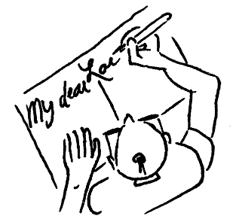
Almost over these writing sessions and the Geaglum stay. Didn’t write today in the shed, busy loading van. What goes in and what stays in the house-storage? Go through many items, socks, crayons, books, funny why you decide one way or another. Slim down, then take on weight while head fogs but I delay taking second pill of the day.
Class on japa went okay. Disciples. Holy name. Abhaya says, “I tried saying prayers of forgiveness to the holy names but I never improve so it seems no use, offensive, to keep asking forgiveness.”
Yeah, I say, so then pray, “Please give me the strength, please let me improve. Try your best, your worst, your mediocre.” Don’t pray as you can’t; pray as you can.
Walk or sit, calm or loud. My motivation in chanting? It’s okay I tell her.
How to develop humility?
I tell her—something.
Questions and comments.
pp. 44-47
Sorry I couldn’t get another Writing Session in here today. We went to Bhaktivinoda’s place. I spoke there in quiet before the crowd came and then again. Now I seem to have caught a cold.
I wrote a letter and said I need a tailor-made program to get through life or the material world. But the world doesn’t always arrange or allow for Satsvarupa to have it his way. In which case I “rebel” and get a headache. But if I can control the situation, I don’t get a headache. I said I am amazed how ISKCON devotees, young ones and also leaders, go seven hours in a morning program and then only begin their day and go nonstop until one o’clock. I said my full days of participation like that are over. I wrote in this letter that I am pursuing a career of personal writing which I began with Journal & Poems in 1986 and which has evolved…I do it mostly for myself comma but some of it can be edited and shared.
Maybe after tonight’s meeting I can come back and do a poem and then some more. Initial reluctance to sit and write is, I suppose, part of the India experience. But it is worth writing.
I ventured an opinion in private that the kailash on top of Srila Prabhupada’s samadhi looks too big. Alex said all architects who come also think like that. The strangeness is the mixture of different styles, Western and Eastern comma which he said is typical of everything in ISKCON. There is classical handsomeness in the marble dome, like the Jefferson Memorial but the “gold” kailash on top looks like a big, gaudy thing, stuck on the top of a Christmas tree. Oh well, he said, it’s done, and will stay there 150 years. He said books are better than buildings becauEntering the Life of Prayerse books are eternal. I thought, “Well, they are ‘eternal’ only if someone keeps putting them in reprints.”
I’ve got a headache.
“You are avoiding raganuga” he said, “while
I’m pursuing it and feel acaryas are
encouraging me when I pray at their
Samadhi in Vrndavana.”
His guru has gone simple, asserts,
“It’s all in Prabhupada’s books.”
But I don’t want to bully him from
my superior position as father.
“Are you tired?” I asked the 50 disciples
after an hour. But they looked alert.
I keep going commenting from Prabhupada’s
’66 diaries daring to expose my own thought
as “not best comma but best for me.”
“How do you develop selfless service for
the guru?” she asks. I’m at a loss to
answer precisely because
I don’t know myself!
Then did you bluff an answer?
Is this your poem or are you
too busy with your family tonight?
Sore throat, sniffles, give them all.
You can “write me letters.” Pretend he can
take care of disciples but admits
There’s a limit.
A stack of new letters on my desk but
I chose to come here to you, big page
and blue felt ink. Goodnight, they’re
singing namamisvaram, weather changing,
I spouted out all I could, their
faces, best wishes…I lingered on
a Zen line, “When you carry wood,
carry wood, when you draw water,
draw water” and said it can be included
within Krishna consciousness. When you
chant japa, chant japa, when you
go to mangala-arati, be there. One
devotee raised his hand and said, “I’ve been
keeping a journal here in Mayapur and
I’m noticing
the details.” I had no comment.
No comment? Yeah! Details, Kaliya, and
the main thing also – the chanting
and hearing
and surrender day by day. Be here now –
no other way. Oh – Srila Prabhupada,
serve, a pure
devotee has no desire for anything
except his immediate engagement.
And that is spontaneous bhakti.
Not raganuga? Sorry, this is tonight.
Bang, it’s Diwali candles on railings
of stone, I noticed them all right as I
came out of the old GBC room wearing two
garlands, not a GBC member but
Mayapur mercy in later years I’m
teaching disciples, “Krishna is God.”
Spending time with them in the
same room where I was silent and
gagged and finally gave up in pain and
was carried out: resigned.
BANG. It could be a bad night, no sleep
just loud explosions and louder explosions
until 1 or 2 A.M.? We’ll see, the world
is rumbly out in darkness plains of
Mayapur and candles burn down. I’m here.
Told them Krishna is God and yet a cow-
herd boy. Do you know what you
are talking about? Is it aisvarya, is
it madhurya, is it Prabhupada? I speak
what I think he’s teaching in his books
and they listen, they listen and question,
driving me to be sincere. “If Mayapur
doesn’t accept offenses, then where
do the offenses go?” I don’t know.
I don’t know. “What does it mean that
Mayapur is Prabhupada’s place of worship?”
I shoot from the hip. I can’t hear them
because of electric fans. Give me a break.
Bang. Bang. Lie down and hear the
rockets exploding and people and music ex-
tending for miles. I’m safe but blasted
by the vibration I hate. Give me
peace I plead, but Krishna wants me
to serve these devotees in noisy places
like Prabhupada did in New York.
Women, lads, give out sweets, stumble
out the door of the old GBC room in
two garlands of campaka and up here,
Lord, Lord, I’ll see You when I
qualify. Please forgive me, please
give me strength to go on talking that
I’m faithful and Krishna is God and may these
devotees take it . . . . Okay, right, go
try with lights out to absorb the night
of explosions with earplugs.
Hard day yesterday enduring sharp pain of “old pain” behind my right eye. Years ago, it used to be worse. Went to bed by 5 P.M. And it went away overnight. I still have a heavy cough in my lungs, last stages (I hope) of a Mayapur cold.
Seem to have lost the thread and impetus of these “Karttika Papers.”
Also, we are cutting short our stay in India.
Also! I am taking back my original Prabhupada murti. He’s here in these rooms and I intend to massage and bathe him. M. will have a box made for carrying him. He’s heavy. I won’t be able to carry my new typewriter. It’s either-or – either Prabhupada or the typewriter. So, I’ve decided I need the murti, want to be with him.
Navadvipa wrote me a letter hinting how tasty it is to be going to see Maharaja. So, I want to be Prabhupada’s servant and realize that tastiness again. Please come to me, Prabhupada, or rather, please draw me to you!
May I write,
is the be-bop prose and prosody
necessary?
Allowable?
Cough, cough.
Mayapur birds screeching. Heavy Prabhupada is back in my care. How could I have forgotten him? He’s back; he was always mine and now he’s mine again.
“Beautiful deity, Deity,” said Rupa-Raghunatha who’s been worshiping him all these years.
Prabhupada’s back. He looks nice. Make a box for him.
pp. 1-18
Don’t become annoyed if you suddenly remember
that you can’t live forever
and the vandals have torn down
the “ISKCON Farm” sign once again,
and karmis are buying up houses
formerly owned by devotees.
Do what you can,
talking freely to your Lords.
Welcome back.
******
The curtains opened and I saw Them again,
with Lalita and Visakha.
Kalachandji is right there.
And this is just the beginning.
******
I have been hearing from devotees in Vrndavana,
that unless I go there I can’t feel anything.
“You have to get the mercy directly.
The dirt in any room in Vrndavana
is conscious, not like dirt in the West.
One grain can fulfill all your desires.”
But aren’t Lalita and Visakha
Their most intimate friends?
Isn’t Radha’s smile right here?
Can’t I come to Vraja with Damodara?
******
If it’s easier for people like me
to walk through autumn leaves in boots,
if we like to eat prasadam with brown swiss ghee
and if we feel comfortable here,
is that to be held against us?
I’ll go to India, but I’m just saying
Krsna is here.
******
On the last day of Karttika
there’s a brilliant moon
high over the temple.
During mangala-arati I think of Iraq.
Will there be a war?
I also thought of the mouse
who came out early in my room.
******
The pujari blocked my view,
as she held the mirror,
wiped the floor,
did everything with care.
Why should I be upset
if Damodara is enjoying?
******
Right now the way I feel
and the way it is,
is fine and
there’s nothing else I have to seek.
******
Praying to to Vrnda-devi,
“Please allow me to become
the maid-servant
of Radha and Krsna in Vrndavana.”
******
November,
the young deer crackling the leaves.
If only they knew,
they would never leave Gita-nagari.
******
I waved the incense, flame and flower,
and placed a drop of water
in the palm of each devotee
as they came to water her.
Touch her earth, dance around.
For 20 years I never thought deeply
of the meaning of the song:
“I beg you to make me a follower
of the cowherd damsels of Vraja . . .
Thus within my vision I will
always behold the beautiful pastimes
of Radha and Krsna.”
Touch her earth,
dance around.
******
I just remembered a poem a young devotee wrote,
about 22 years ago. Her name was Himavati
and the poem went like this:
The forest is calling me,
but I prefer to stay indoors,
washing Krsna’s dishes.
******
Watching the leaf boats
around the bend of Tuscarora creek—
long columns of reflected tree trunks . . .
The wind is up, last leaves fallen.
But I prefer to write Prabhupada Meditations.
******
1 A.M. and
Turiya next door
has been up for an hour
chanting his rounds
in his small shack.
I wash my face,
write something.
******
Sighting the fawn,
watching clouds pass overhead,
and you tromp and tromp
on the hardening ground.
Can’t pay attention to
the Lord in His names.
Outdoors is helpful,
but will I have to wait
many future births?
As the deer stands frozen,
looks at me but can’t see me,
so I am dumb to the sweetness of hari-nama:
Yet He’s with me as I walk.

Viraha Bhavan Journal (2017–2018) was written by Satsvarūpa Mahārāja following a brief hiatus in writing activity, and was originally intended to be volume 1 in a series of published journals. However, following its completion and publication, Mahārāja again stopped writing books, subsequently focusing only on what became his current online journal, which began in August of 2018.

At first, I took it hard that I would have to live surrounded by the firemen, and without my own solitude. After all, for decades I had lived in my own house with my own books and my own friends. I was also now a crippled person who couldn’t walk, living among men who did active duties. But when Baladeva explained it to me, how it was not so bad living continually with other firemen and living in the firehouse with its limited facilities, I came to partially accept it and to accept the other men. I came to accept my new situation. I would live continually in the firehouse and mostly not go outside. I would not lead such a solitary life but associate with the other firemen.
Let me write sweet prose.
Let me write not for my own benefit
but for the pleasure of Their Lordships.
Let me please Kṛṣṇa,
that’s my only wish.
May Kṛṣṇa be pleased with me,
that’s my only hope and desire.
May Kṛṣṇa give me His blessings:
Kṛṣṇa Kṛṣṇa Kṛṣṇa Kṛṣṇa Kṛṣṇa he
Rāma Rāghava Rāma Rāghava
Rāma Rāghava rakṣa mām.
You mentioned that your pathway has become filled with stumbling blocks, but there are no stumbling blocks. I can kick out all those stumbling blocks immediately, provided you accept my guidance. With one stroke of my kick, I can kick out all stumbling blocks. —Letter by Śrīla Prabhupāda, December 9, 1972.

The Writing Sessions are my heart and soul. I’m trying my best to keep up with them. I am working with a few devotees, and they are far ahead of me. I wander in the wilderness of old age. I make my Writing Sessions as best I can. Every day I try to come up with a new subject. Today I am thinking of my parents. But I don’t think of them deeply. They are long gone from my life. Śrīla Prabhupāda wrote a poem when he was a sannyāsī, and he said now all my friends and relatives are gone. They are just a list of names now. I am like that too. I am a sannyāsī with a few friends. I love the books of Śrīla Prabhupāda. I try to keep up with them. I read as much as I can and then listen to his bhajanas.
The metaphor is song. Explain it. Yes, particulars may not seem interesting or profound to readers who want structured books.
Wait a minute. Don’t pander to readers or concepts of Art. But Kṛṣṇa conscious criteria are important and must be followed. So, if your little splayed-out life-thoughts are all Kṛṣṇa conscious, then it’s no problem.
I am near the end of my days. But I do like the company of like-minded souls, especially those who are Kṛṣṇa conscious. Yes! I am prone to Kṛṣṇa consciousness. I have been a disciple of Bhaktivedanta Swami Prabhupāda for maybe almost sixty years. Sometimes I fail him. But I always bounce back and fall at his feet. It is a terrible thing that I sometimes do not have the highest love for him. It is a terrible thing. Actually, however, I never fall away from him. He always comes and catches me and brings me back to his loving arms.

This edition of Satsvarūpa dāsa Goswami’s 1996 timed book, Upstate: Room to Write, is published as part of a legacy project to restore Satsvarūpa Mahārāja’s writings to ‘in print’ status and make them globally available for current and future readers.
A factual record of the reform and change in ISKCON guru system of mid ’80s.

Readers will find, in the Appendix of this book, scans of a cover letter written by Satsvarūpa Mahārāja to the GN Press typist at the time, along with some of the original handwritten pages of June Bug. Together, these help to illustrate the process used by Mahārāja when writing his books during this period. These were timed books, in the sense that a distinct time period was allotted for the writing, during SDG’s travels as a visiting sannyāsī

Don’t take my pieces away from me. I need them dearly. My pieces are my prayers to Kṛṣṇa. He wants me to have them, this is my way to love Him. Never take my pieces away.

Many planks and sticks, unable to stay together, are carried away by the force of a river’s waves. Similarly, although we are intimately related with friends and family members, we are unable to stay together because of our varied past deeds and the waves of time.
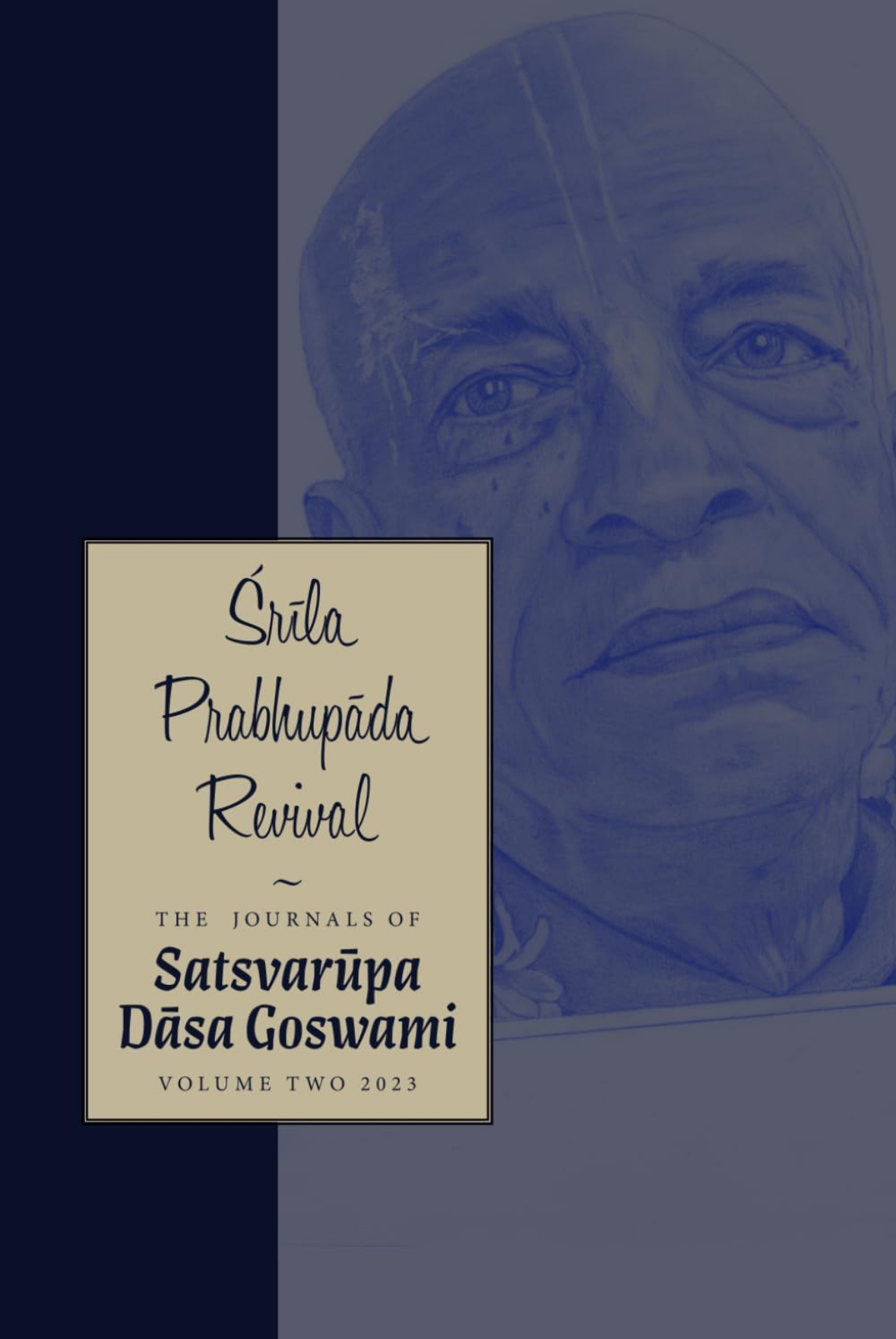
To Śrīla Prabhupāda, who encouraged his devotees (including me) To write articles and books about Kṛṣṇa Consciousness.
I wrote him personally and asked if it was alright for his disciples to write books, Since he, our spiritual master, was already doing that. He wrote back and said that it was certainly alright For us to produce books.
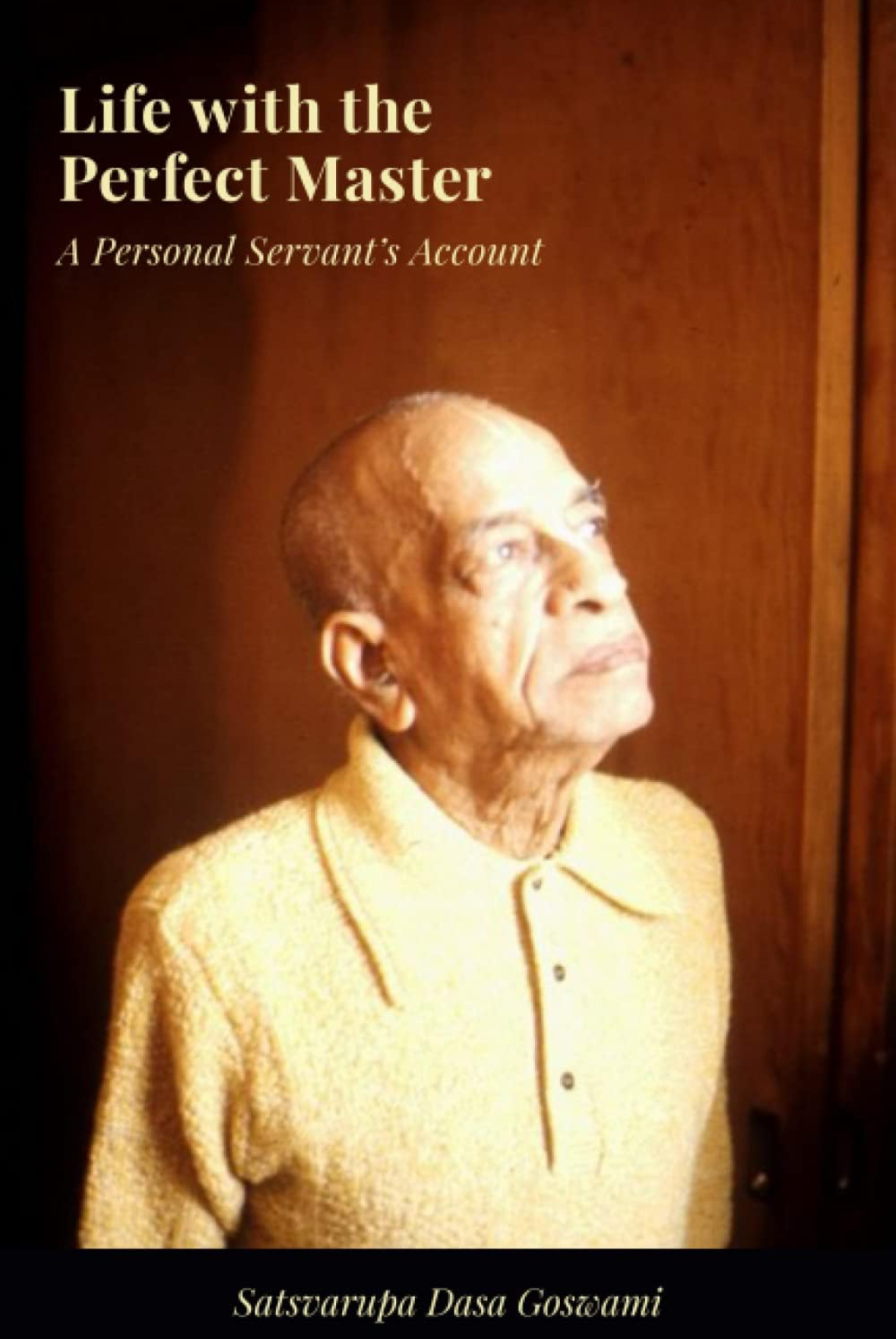
I have a personal story to tell. It is a about a time (January–July 1974) I spent as a personal servant and secretary of my spiritual master, His Divine Grace A.C. Bhaktivedanta Swami Prabhupäda, founder-äcärya of the International Society for Krishna Consciousness. Although I have written extensively about Çréla Prabhupäda, I’ve hesitated to give this account, for fear it would expose me as a poor disciple. But now I’m going ahead, confident that the truth will purify both my readers and myself.

First published by The Gītā-nāgarī Press/GN Press in serialized form in the magazine Among Friends between 1996 and 2001, Best Use of a Bad Bargain is collected here for the first time in this new edition. This volume also contains essays written by Satsvarūpa dāsa Goswami for the occasional periodical, Hope This Meets You in Good Health, between 1994 and 2002, published by the ISKCON Health and Welfare Ministry.

This book has two purposes: to arouse our transcendental feelings of separation from a great personality, Śrīla Prabhupāda, and to encourage all sincere seekers of the Absolute Truth to go forward like an army under the banner of His Divine Grace A.C. Bhaktivedanta Swami Prabhupāda and the Kṛṣṇa consciousness movement.

A single volume collection of the Nimai novels.
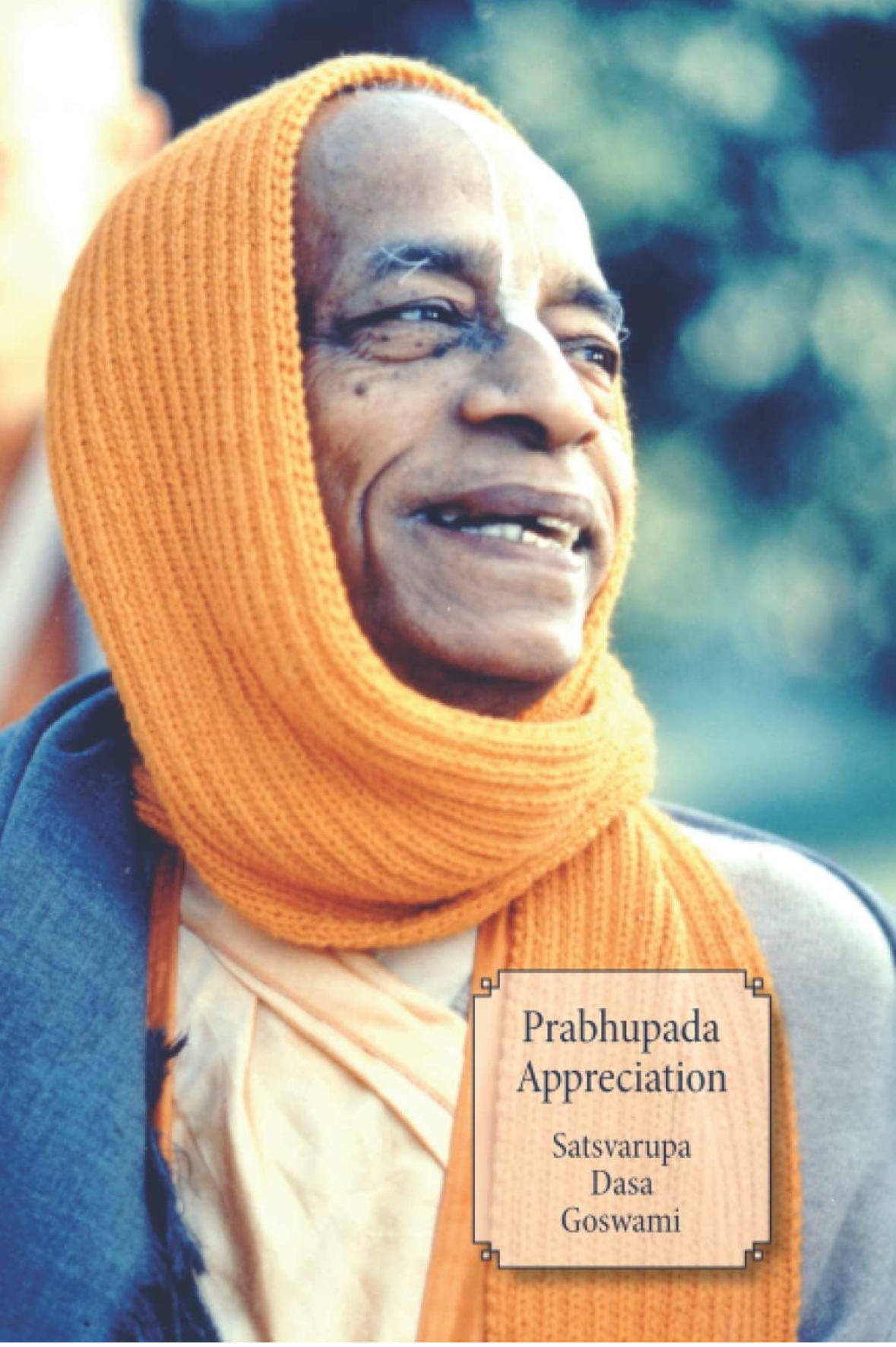
Śrīla Prabhupāda was in the disciplic succession from the Brahmā-Mādhva-Gauḍīya sampradāya, the Vaiṣṇavas who advocate pure devotion to God and who understand Kṛṣṇa as the Supreme Personality of Godhead. He always described himself as simply a messenger who carried the paramparā teachings of his spiritual master and Lord Kṛṣṇa.
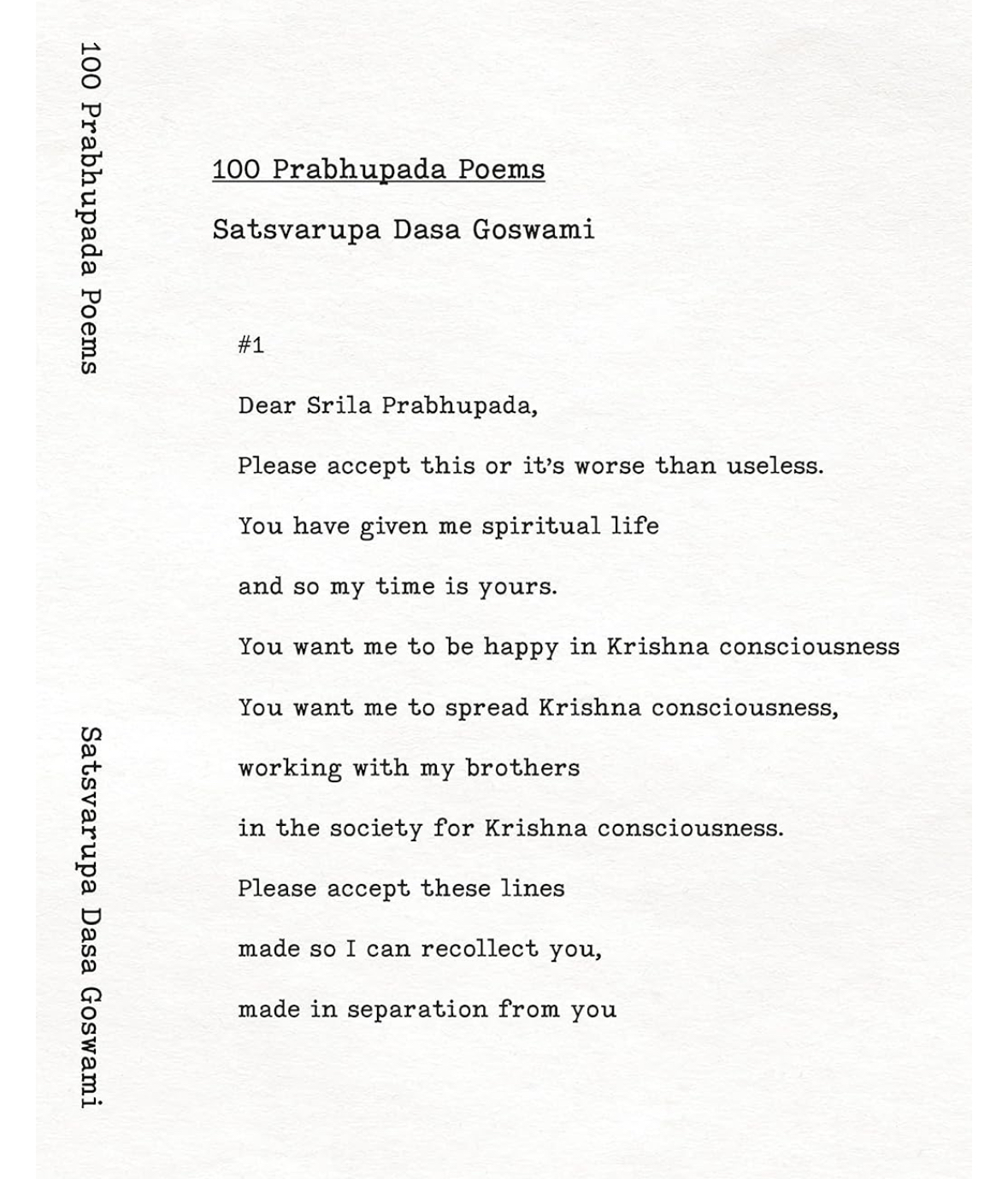
Dear Srila Prabhupada,
Please accept this or it’s worse than useless.
You have given me spiritual life
and so my time is yours.
You want me to be happy in Krishna consciousness
You want me to spread Krishna consciousness,
This collection of Satsvarūpa dāsa Goswami’s writings is comprised of essays that were originally published in Back to Godhead magazine between 1966 and 1978, and compiled in 1979 by Gita Nagari Press as the volume A Handbook for Kṛṣṇa Consciousness.

This second volume of Satsvarūpa dāsa Goswami’s Back to Godhead essays encompasses the last 11 years of his 20-year tenure as Editor-in-Chief of Back to Godhead magazine. The essays in this book consist mostly of SDG’s ‘Notes from the Editor’ column, which was typically featured towards the end of each issue starting in 1978 and running until Mahārāja retired from his duties as editor in 1989.

This collection of Satsvarupa dasa Goswami’s writings is comprised of essays that were originally published in Back to Godhead magazine between 1991 and 2002, picking up where Volume 2 leaves off. The volume is supplemented by essays about devotional service from issues of Satsvarupa dasa Goswami’s magazine, Among Friends, published in the 1990s.

“This is a different kind of book, written in my old age, observing Kṛṣṇa consciousness and assessing myself. I believe it fits under the category of ‘Literature in pursuance of the Vedic version.’ It is autobiography, from a Western-raised man, who has been transformed into a devotee of Kṛṣṇa by Śrīla Prabhupāda.”
 The Best I Could Do
I want to study this evolution of my art, my writing. I want to see what changed from the book In Search of the Grand Metaphor to the next book, The Last Days of the Year.
 a Hare Krishna Man
It’s world enlightenment day
And devotees are giving out books
By milk of kindness, read one page
And your life can become perfect.
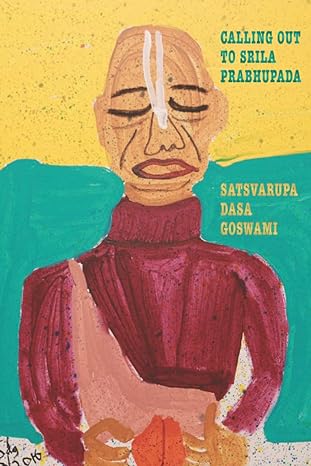 Calling Out to Srila Prabhupada: Poems and Prayers
O Prabhupāda, whose purports are wonderfully clear, having been gathered from what was taught by the previous ācāryas and made all new; O Prabhupāda, who is always sober to expose the material illusion and blissful in knowledge of Kṛṣṇa, may we carefully read your Bhaktivedanta purports.
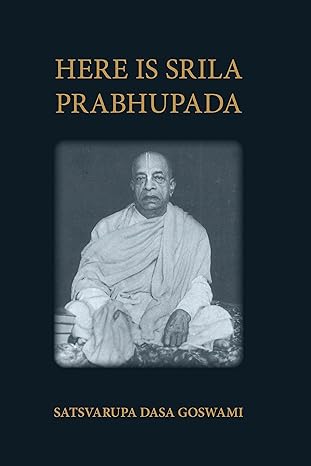
I use free-writing in my devotional service as part of my sādhana. It is a way for me to enter those realms of myself where only honesty matters; free-writing enables me to reach deeper levels of realization by my repeated attempt to “tell the truth quickly.” Free-writing takes me past polished prose. It takes me past literary effect. It takes me past the need to present something and allows me to just get down and say it. From the viewpoint of a writer, this dropping of all pretense is desirable.
 Geaglum Free Write
This edition of Satsvarūpa dāsa Goswami’s 1996 timed book, Geaglum Free Write Diary, is published as part of a legacy project to restore Satsvarūpa Mahārāja’s writings to ‘in print’ status and make them globally available for current and future readers.