

What
Meeting of Disciples and friends of SDG
Where
The Veterans of Foreign Wars Hall – 845 Hudson Avenue – Stuyvesant Falls, New York 12173
There is plenty of parking near the Hall. The facility is just a few minutes’ walk from SDG’s home at 909 Albany Ave.
Schedule
10:00 – 10:30 A.M. Kirtana
10:30 – 11:15 A.M. Presentation by Satsvarupa Maharaja
11:15 – 12:30 P.M. Book Table
12:30 – 1:15 P.M. Arati and kirtana
1:15 — 2:15 P.M. Prasadam FeastContact
Baladeva Vidyabhusana at [email protected] or (518) 754-1108
Krsna dasi at [email protected] or (518) 822-7636SDG: “I request as many devotees as possible to attend so we can feel the family spirit strongly. I become very satisfied when we are all gathered together.”
*******
Śrī Caitanya-caritāmṛta, Madhya-līlā 20.124–125: “O great learned devotee, although there are many faults in this material world, there is one good opportunity—the association with devotees. Such association brings about great happiness. . . . .”
Srila Prabhupāda: “Therefore, our Society is association. If we keep good association, then we don’t touch the darkness. What is the association? There is a song, sat-saṅga chāḍi’ kainu asate vilāsa, te-kāraṇe lāgila mora karma-bandha-phāṅsa (Gaurā Pahū, verse 3). Sat-saṅga. Sat-saṅga means association with the devotees. So the one poet, Vaiṣṇava poet, is regretting that, ‘I did not keep association with the devotees, and I wanted to enjoy life with the nondevotees. Therefore I’m being entangled in the fruitive activities.’ Karma bandha phāṅsa. Entanglement.” [Conversation with David Wynne, July 9, 1973, London]
We need to expand our team of proofreaders as we aim to increase the rate of republication of Satsvarūpa Mahārāja’s books as well as new books that he writes.
This includes a need for fluent bilingual Spanish and English speakers to proofread Spanish translations (we currently have around 20 Spanish translations waiting to be proofread).
Anyone interested in this particular service should contact Manohara dāsa at [email protected]
If you would like to help, please contact Kṛṣṇa-bhajana dāsa at [email protected] or [email protected] and we will find you a service that utilizes your talents.
What if you think of the day’s devotional service when chanting your rounds? It is not so easy to stop the flow of our thoughts. So better you are thinking of devotional service than māyā. But as far as possible try to steer your thinking back to the sound vibration of the holy name. Then after such absorption in chanting you can go forth to your day’s activities in the best condition.
******
Chanting is the first service—śravaṇaṁ kīrtanaṁ viṣṇoḥ smaraṇam. So, when your service attitude and all your service has come up to the offenseless position, then you automatically become perfect. This is very important.
******
There are many names for God throughout the universe, but Kṛṣṇa is the supreme name according to Vedic knowledge. Therefore, Lord Caitanya Mahāprabhu recommended the chanting of Hare Kṛṣṇa as the supreme means for realization in this age. —Rāja-Vidyā
******
You can diagnose the cause of your slow progress in self-realization as offensive, inattentive chanting. This has also been called failure to develop ecstatic love even after so many instructions on the matter. Beware of complacency in your devotional service. It is all a disease of hearing—a hearing deficiency.
******
By not hearing the philosophy one falls into illusion. He imagines injustices, difficulties, and becomes snared into material plan-making, etc. He forgets his own identity as a servant of the servant of the servant of Kṛṣṇa, and his mental activity replaces his concentration on his rounds—his japa becomes afflicted.
This illness in advanced stages results in a variety of maladies (vaiṣṇava-aparādha, guru-aparādha, blooping) and that can culminate in death (spiritual).
******
Take preliminary precautions to protect yourself from serious illness. Just as a person developing sniffles and sneezing may dress warmly, drink brahmāstra juice, etc., a person who finds himself “elsewhere” when chanting japa should immediately take precautionary measures.
******
Shake your mental laziness. Ultimately such a complacent attitude in japa means that you think you will never die. If you were conscious of your true position and how, factually, death could come at any moment, then your japa would not be so nonchalant. You would actually be grasping for the lotus feet of Kṛṣṇa in desperation—that in whatever small amount of time destined you, you must perfect your life, perfect your heart, and the only means is through the mercy of Lord Kṛṣṇa through His holy name.
******
If one chants and accepts the holy name as a material vibration, he falls down. One should worship and chant the holy name of the Lord by accepting it as the Lord Himself. During the chanting of the holy name, the tongue must work; the tongue is sevonmukha-jihvā—it is controlled by service.
—Caitanya-caritāmṛta
******
By our living submissively in Kṛṣṇa consciousness we are becoming entitled to reap the fruits of chanting Hare Kṛṣṇa. So now we just have to adjust those things that are preventing us from tasting or from obtaining the wealth. Committing these ten offenses prevents us from chanting Hare Kṛṣṇa purely, but many of them are avoided by the different regulative activities during the day—every day. We say, “Don’t sleep when you chant. Don’t mispronounce. Control your mind, and then it will come.” And other adjustments are there. Like one boy gave me this stereo system. It has so many complicated switches. So everything is working—the speakers are working, all the electronics are working. But there are so many switches sometimes somebody flicks one switch and turns the whole thing into the radio or turns off the something-or-other, and then it doesn’t work. It doesn’t mean everything is useless. But you have to see, “Oh, this switch.” You turn it, then immediately the sound comes.
satsvarupabhidam vande vinitam sadhu-bhusanam
bhakti-granthana naipunyam bhaktivedanta siksitam
Standing out among the many credits of Satsvarupa Maharaja: Following Srila Prabhupada, he’s ISKCON’s most accomplished author. With nearly two hundred books, he’s certainly the most prolific.
But the books themselves are outstanding. First of all—and above all—they’re Krsna conscious. They glorify Krsna, they delve into the philosophy and practice of Krsna consciousness, they express Krsna conscious teachings and realizations, they bring readers closer to Krsna.
Then too, his books have a high literary quality. They’re the works of an author with his own voice, his own words, his own thoughts. This is what Srila Prabhupada called realized knowledge—the traditional teachings, brought into oneself, thought about, understood, and given new shape in one’s own words. And so, most often, his books are deeply personal. They represent Krsna consciousness as it pertains to the author himself—to his own challenges and accomplishments, his own doubts and convictions, his own people and surroundings, his own life. And so, as Srila Prabhupada said, we get “old wine in a new bottle”—or, in this case, two hundred new bottles.
And the bottles are of all sorts. That is to say, Satsvarupa Maharaja has written in a wide spread of genres: essays, memoirs, fiction, poetry, biography, autobiography, scriptural commentary, personal reflection, guides to practice and doctrine, and more. Looking for fiction? Come read Satsvarupa Maharaja. Poetry? Read Satsvarupa Maharaja. Guidance and inspiration in chanting japa and reading Srimad-Bhagavatam? Again, read Satsvarupa Maharaja. ISKCON history? Prabhupada pastimes? Pastimes of Krsna and His incarnations? Come read SDG.
His books have sometimes been ahead of their time. Decades before today’s proliferation of books and workshops for better japa, Satsvarupa Maharaja was there with such writings as Japa Reform Notebook. During the height of the “zonal guru era,” he aroused controversy with Guru Reform Notebook. Even the straight-laced Readings in Vedic Literature was bold and revolutionary in spotlighting the biases and Christian-colonialist agendas of the first Indologists. And all this, of course, stands aside from Srila Prabhupada-lilamrta, the great history of Srila Prabhupada’s life.
Srila Prabhupada wrote that contributing some literary work for the benefit of others is “the first duty of a person in the renounced order of life.” And Satsvarupa Maharaja has produced not only some literary work but an entire literature, a body of work unique in itself.
We can hardly keep up with him. He can write faster than we can read. I predict that scholars in the future will comb through his works for insights on the Hare Krishna movement, its Founder-Acarya, its devotees—and Satsvarupa Maharaja himself. Devotees young and old will discover his books and find new inspirations and realizations, And readers yet to become devotees will be drawn in by Krsna conscious books that are intriguing, challenging, alive, and pleasing to read.
And so: Our humble respects again and again to our dear friend, the extraordinary author Satsvarupa dasa Goswami.
Jayadvaita Swami
Brooklyn, New York
I read Jayadvaita Maharaja’s appreciation of my writings. I look up to him as a superior devotee, better preacher. (He lectures boldly several times a week, or rather, every day!) I offer my obeisances to his lotus feet. He doesn’t want to accept many disciples, but when they come and humbly ask him for shelter, what can he do? He will accept the best, the most qualified, those who can actually help him in his service to Srila Prabhupada. He once called a certain intelligent devotee a “smart cookie.” Those are his words for someone else, but they describe Jayadvaita Maharaja. You can’t get up early enough to outsmart him. He continues to be a leader of any worthwhile grass-roots reform movement. He’s controversial and he likes it that way. He’s as straight as an arrow in upholding what we can call “Prabhupada’s way.” He was with Prabhupada’s ISKCON from the beginning, and he knows firsthand what Prabhupada taught and what he desires to be followed. Go against Jayadvaita Maharaja at your risk. He’s whipped me a few times for deviating, so I know the bite of his whip. Although he catches me when I step too far out of line in my taste for experimentation, he has always “had my back,” as the saying goes. He has continued to suppo me and defend me in my lowest hours. He’s a great friend and guardian, seeing that I don’t quit the boundaries of the bona-fide ISKCON.
He has now become the author and publisher of important books, and Srila Prabhupada says books are the basis. His first book was Vanity Karma, and it won a significant literary prize. Next he wrote The Vanaprastha Adventure, and this has caught the attention of ISKCON’s older devotees. He has several other books in the making. Thus Jayadvaita’s following the maxim that the first duty of a renounced person is to write books.
Watch out for Jayadvaita Maharaja’s promised outpouring of books! All faithful followers of Srila Prabhupada, please listen carefully to what Jayadvaita Maharaja is saying. If you are deviating, not chanting your rounds, or leading a lazy life, look out for Jayadvaita Maharaja. He will catch you in your deviancy. Maharaja talks the talk and walks the walk—another well-worn expression, but applicable here, in this lifetime loyal devotee of Srila Prabhupada.
Satsvarupa dasa Goswami
pp. 119-122
It’s almost 3 P.M. Why do I write? What interests me? I like to create little interesting portraits with human beings in them, stories in Kṛṣṇa conscious prose and poetry to amuse and interest readers. William Carlos Williams writes in Spring and All, “In the imagination, we are from henceforth (so long as you read) locked in a fraternal embrace, the classic caress of author and reader. We are one. Whenever I say, ‘I’ I mean also, ‘You.’ And so, together, as one, we shall begin.”
He wanted to capture the moment. Of the reader he says, “The thing he never knows and never dares to know is what he is at the exact moment that he is. And this moment is the only thing in which I am at all interested.”
No story this, but raw notes. Qualms. In Nature Cure you practice restraint, not indulgence. What about in writing? Discipline is to write only truth and to not be attached to publishing it or even making it come out “right”.
Sometimes I doubt that process. Actually, I doubt it every day. The poor readers have to read through it all. It’s like having a neurotic husband and having to listen to the same complaints every day. A good wife will encourage him, and he may try to free himself, but the path is not always clear.
******
Two cleaning ladies, the old one and younger one, just knocked on the door. “Clean, clean?” No, I say, you already cleaned today. They don’t understand English. They think I’m refusing them for some other reason. I guess they don’t know that another lady cleaned this morning.
I realized today that I forget from moment to moment what I am thinking of. I guess that’s the nature of the mind. Instead, I resort to writing about what I recently read in Śrīla Prabhupāda’s books or what I heard him speak on tape. That is my poverty as a thinker, but it’s also a virtue to simply present Prabhupāda. If I’m concerned about readers, then I can know that I am giving them the best thing when I repeat my spiritual master’s teachings.
Now my whole pre-dawn bhajana has to be done by sitting without back rest on the bed under the mosquito net. Madhu counted twenty mosquitoes sitting on his net waiting for the opportunity to bite him. Even if you stay under the net, but your hand or head touches the net during sleep, they get you. “Hey, guys, he’s touching! Let’s get him!”
******
From this morning’s reading: pariṇāma-vāda or vikāra, the teachings of the transformation of energies of the absolute, is taught by Lord Caitanya and the Vaiṣṇavas. Śaṅkara denies this and says that the Absolute’s oneness doesn’t change. He thought Vyāsadeva was mistaken, and he opposed theism all over the world.
O kid, posing
like a pretzel, what are you
doing?
I’m making my body resilient
for a little while longer, so I can
move lightly, be lighthearted,
and please Kṛṣṇa in
all my activities.
May He be pleased with
me and see that I’m ready to
leave the world to
reach Him 100%
for His pleasure and
the pleasure of His devotees.
******
The factory connected to this clinic produces bottled drinking water. Their engine is running all night, or is that the generator? Whatever it is, it spoils the silence. They say it may rain today.
It will be nice to go to Vṛndāvana again. I hope my health will have improved from being here, but I don’t expect it. This body is meant for pain. There is no way to free myself from it. Even while sitting in the hip bath this morning, a fierce mosquito bit me in four places, causing big swellings. I could become absorbed in the misery and meditate on mosquitoes as my enemies instead of thinking of Kṛṣṇa, but that is only more misery.
The Viṣṇu Purāṇa states that the material nature encourages fruitive activity. Therefore, the jīva who has fallen under its spell works hard to please his body and to find enjoyment in matter. He doesn’t want to hear the teachings of the Vedic sages because he can’t see that he will die. Rather, he prefers to chase after Cārvāka’s “ghee.” After all, death ends all.
Kṛṣṇa consciousness is the art of all work.
******
This morning’s japa looming up before me. It’s a vigorous workout here under my net. But now my mind is blank, my feelings blank, and I’m trying to connect with them through this pen.
I am not Mighty Mouse
soaring up to the sky while wearing a
trailing opera cloak.
I am just a bloke or
better, a spirit soul,
covered with mud. The
hose of bhakti-sādhana
washes it away.
Hari-nāma removes the
layers of māyā.
No point asking how badly I chant,
or, “Are the rounds good?” But surrender
to Nāma Prabhu, the holy name.
Fall at His feet
like the lost offender you are.
Beg Him to sprinkle a few drops
of His mercy on you so
that you may rise from
the pit of despair
where you are distracted by
a thousand mental mosquitoes.
Please give me the strength to work in
Your saṅkīrtana movement
in this world.
******
Laḍḍu-Gopāla,
they may not care
for You,
but
during corpse pose
I went off somewhere
to think of You, and felt happy to write
my journey through
life. I am
just a tiny integer
at Your feet.
The Indian doctor tries
to stay active. To do good, he says.
He says he is
sixteen pounds underweight but strong.
I think, bhārata-bhūmite haila—
I prefer to do good
as my Swami’s celā.
This sprightly sannyāsī hopes
to be on the road next year,
to write and preach
to feel fresh and faithful.
Spent a busy morning in the simple therapies here. Do I feel keen hunger? No breakfast, of course. Stay on course. Humility’s the dad of other virtues.
******
I seek a way to better
writing. Kṛṣṇa will tell me
something.
A white rabbit here holds
the trash barrel to its bosom,
“Use me please.”
Gaṇeśa’s temple bell
rang when the fat boy paid
his last visit and prayed,
“Make me well and
prosperous like New York City”
before he left us.
Now we are alone with the little girl
in red choli and gold sari
who chastely, feebly stays
in the back of the gym
while M. and I try
our best to stay
balanced in that one-legged pose.
******
Use time well. Learn to improve your service. Be humble and grateful and determined. The writing remains similar, but I hope to improve in the same genre. If newness comes, let it come of its own accord.
pp. 18-22
We made it to Vrndavana. Baladeva found us a house only five minutes from the Krishna-Balaram Mandir. I already spoke with Navadvipa dasa on varied topics, like how demanding it is to follow the teachings of raganuga and harmonize it with what Prabhupada is and what he teaches.
I propose a discipline of reading Srila Prabhupada’s books daily. I propose that bhakti-yoga is beyond my intellect, so I should pray. I propose bowing down physically and mentally, praying to become infused with humility and Krsna consciousness. I pray to be able to write.
Madhu says if it doesn’t work out in this asrama, we can move over to the Krishna-Balaram Mandir. We are still moving in, keeping only the essentials in the room in case we get robbed. They say a chowkidar with a gun patrols this area at night. No candles yet. Mosquitoes?
Leftover jet lag, Air France atmosphere . . . Navadvipa unshaven like a Vraja sadhu, me in the habit of shaving daily.
I woke to a loud noise and thought someone might be smashing the lock. Then I heard Madhu chanting loudly. I thought he must be scaring off an intruder, but when I went to his room, he said he was up because he was being bitten by mosquitoes. The noise I heard was him chasing a roach with a cup. Anyway, now we’re both up.
If I am to follow my “be here now” policy, I would have to start by describing the crickets. They make such a pleasing sound. I am writing with a Sheaffer “No Nonsense” pen. I also have indigestion and I wonder what is ahead for me during this monsoon season.
I will be reading Srila Prabhupada’s books as a discipline. A theme has been introduced—or it has appeared —I have to come to terms with the deeper implications of inquiry into raganuga. Navadvipa dasa told me that all the ISKCON devotees involved so far are all reaching a similar conclusion: we are insignificant. Direct service to Srimati Radharani is far away. We are aware that it is the conclusion of the Gaudiya Vaisnava acaryas and we are intrigued by it. But it is far away.
It is at this point I begin my visit to Vrndavana. I have my ways of spending time—planning out the lectures I will give here later, reading, praying, going to Mathura, and writing. The first four weeks are for writing.
******
As soon as we got out of the little van yesterday, I made prostrated obeisances in the dust. This place where we are staying is not an official tirtha; you won’t find it in the guidebooks. But we have a “lakeside” property. At least I can sidestep the “lake” to get in the front gate.
“They should not expect to serve him sentimentally but should work hard. Devotional service was dynamic. Prabhupada wanted his disciples to help him with his projects to serve his guru maharaja—projects which, if successful, could save the world from misery” (Srila Prabhupada-lilamrta, Vol. 5, p. 235).
What about preaching? What about his tears of compassion for suffering souls? Is this “lesser” than the inner mood of Raghunatha dasa Gosvami … whose tears were in separation from Radha? How to get through these various levels of teaching and viewpoints without minimizing any Vaisnava? We want to serve our guru maharaja. I want to do something to serve the people—at least some of them—who come to this movement.
******
We were stopped three or four times by police on our way out here from Delhi. Finally, we had to pay a fifty-rupee fine. Baladeva pointed out that this is only one side of India. Then he gave some examples of the other side: on his way to his room last night, some men stopped him and asked, “Swami, could you please come to our room?” They plied him with sincere questions. They were visiting Vrndavana from Delhi and were confused by the variety of answers they had received at different temples. Their questions: “Why did Krsna go to Dvaraka? If Vrndavana is the land of Krsna, why do the people here chant “Radhe, Radhe”? Do you really believe in transmigration? Can you explain it in the light of modern science?” Baladeva stayed up for three hours answering their questions and finally, one man began to cry tears of gratitude. Finally, he had received the answers in a way he could accept—by hearing from a follower of Prabhupada.
My main purpose here is to write without pretense. Dear reader, I have faith in this, so please bear with me.
O creatures residing in Vrndavana, this is 1992. I am a pilgrim to your land and I want to record some of your glories. I attempt it in an odd fashion, sometimes bemused at you, sometimes disturbed, usually at a distance, a stranger. But I mean no harm.
Please tell me what is below the surface of the dhama. How are Radha-Krsna’s pastimes which I read about in Sanskrit poetry, being manifest today? I am not an archeologist trying to dig up the facts. I really want to know. I know I am unqualified, but I still desire to serve the vrajavasis life after life.
******
The well water is salty—I can still taste it in my mouth. I hope that chowkidar’s whistle keeps the dacoits away. Madhu and I turned our passports and money over to the safe at the guesthouse. All I have left of interest to a dacoit is a few pens, and I won’t part with them easily.
I’m writing this on the roof of—what should I call this place? The asrama? Cricket Hall? Anyway, the roof is nice. I can see the ISKCON Gurukula from here.
“Mathura . . . Syama … Yamuna …” the loud-speaker across from Fogel Asrama is trying to get my attention. “Jaya Sri Radhe!” Now a kid takes the microphone and shouts a few words.
Sadhus walking this way in that orange they wear . . . This land belonged to Swami Bon’s Oriental Institute. It is mostly open field and footpaths.
It should be obvious that even equipped with the best pen and a secluded place, I won’t be able to at-tain the state of advanced Krsna consciousness. We have to serve the Vaisnavas and please the spiri¬tual master to get that. Otherwise, we get the result of our desires. I may write and someone may even read it, but what will be left in the end? The desire to fulfill our dreams leaves us holding only the work, the struggle. I am not saying this specifically to cut myself down. But it is something that has to be considered. We have to use our time well with the proper motivation.
pp. 231-235
I was with Prabhupada as his secretary for two weeks in Bhuvanesvara. We were far away from any big group of devotees, so those who were with Prabhupada at this remote outpost were able to get his association frequently and personally. For morning walks, we went through the park. Prabhupada stopped to look at the flowers and said, “How can they say there is no God?” We went through a zoo once, but mainly we walked in the park. The ground was unpaved, and the weather was warm, although it was January. Prabhupada looked beautiful in his saffron. He was beginning to have that illness which was an indication of his last days with us, and this was his last year. He was, nevertheless, in full spirits and alert consciousness. The illness hampered him only because he could not travel as much or do all the things he wanted to do.
On one walk, Prabhupada was scoffing at the theory of chance as a basis for life and creation. Bhagavata dasa said, “Actually, Isaac Newton disproved that theory of chance.” Hari Sauri mentioned a book that he had read, Life Has No Meaning. Prabhupada responded with a mere, “Humph.”
Then Prabhupada said, “Does that mean life has no meaning, but the rascal’s words in the book do have meaning?”
I took this as a cue to enter with some of my pet intellectual attachments.
“Life has no meaning, but we have to give it meaning.” I was trying to present the case of the atheist existentialists to Prabhupada. It was not that long ago that I was reading those books and believing in them. I was not presenting their case as something I though unimportant; it was something within my own psyche.
I said, “That is the glory of man: he finds the meaning. He gives the meaning to the meaningless.” When I said that, I felt a twinge of pride at my eloquence. I even thought that the other devotees could not really appreciate me because I was so intellectual and eloquent. I was not like others who might give Prabhupada crude, distorted things to think about—I was giving him some straight existentialism, relevant to the times in which Prabhupada was living.
Prabhupada was not impressed with me though. He did not respond. Some of the other devotees repeated their lines about a book called Life Has No Meaning and how it had won the Nobel Prize.
I spoke out again. This was unusual for me, but since there were so few of us on the walk, and since the devotees who were present were not heavy competitors, I felt more inclined to step forward and speak on behalf of the existentialists.
I said, “They say you have to face up to that uncertainty of no meaning, and just live your life without taking meaning from the sastra.”
“Simply take from him,” Prabhupada responded.
“Each person has to find within himself the meaning,” I said. Existential atheism was usually the furthest thing from my mind. I was faithfully engaged in duties as Prabhupada’s secretary, typing his letters, massaging him, but now all these old attachments started bubbling up. Rather than be silenced by Prabhupada’s first rebukes, I persisted.
“Then why you are distributing the meaning?” Prabhupada asked. This was his usual method, to address the person he was talking to by forcing him to identify with the person he was presenting. I was willing to play the role.
“Why are you anxious to give some meaning?” Prabhupada repeated. With this remark, Prabhupada exposed the motivation of the preachers of “no meaning.” If they believed in what they said, they should let people live their own lives without coming to take the Nobel Prize for being spokesman. This silenced me and I fell into saying, “Ummm.” Was it true that the “no meaning” philosophers had such a low motivation? Prabhupada said that they simply should not speak.
Sometimes you read in history about the wonderful atmosphere of ancient days in Athens when Socrates would walk with his students. However, in Bhuvanesvara Park in 1977, we knew something more transcendental than ancient Athens. Being with Prabhupada when he allowed us to express ourselves and when he answered these theories transported us beyond time and space. We lived in ideas in the invigorating form of a mock debate with the spiritual master.
Hari Sauri said, “Krishnamurti has written thirteen books, and the purport is that no one needs a guru.”
Bhagavata added, “At the end of one book he writes, ‘When you finish this book, you can throw it away.”
“He has written thirteen books? Throw it away.” Prabhupada sounded disgusted.
“One exponent of this philosophy,” I said, “is Albert Camus. He said, ‘Do not try to lead me, because I may not want to follow you. And do not try to follow, because I may not be capable of leading you. But walk beside me and be my friend.’ He said that by writing his books, he was not trying to lead other people, but to free them from false following, from following any absolute philosophy.” By now I was feeling heady. I was speaking up on a morning walk for one of the first times, not just with a cryptic remark or a distorted version of the materialists, but with some favorite lines from Camus for Prabhupada’s consideration. I thought that now, at least, the atheists were being given a better chance to present their side, and I, too, would be more satisfied to hear Prabhupada’s reply to an accurate statement.
“Then he has to follow you,” Prabhupada replied. “Because by taking your instruction, I shall stop following others. I will have to follow you.”
“Yes,” I agreed.
“Then what is the benefit? Instead of following others, I shall follow you. My following is still there.”
“Hmmm,” I said. “They claim they do not want to be leaders, but actually they do.”
“That means rascal. What he says, that is contradictory, that is rascal.” Again Prabhupada had exposed their motives. Perhaps I was doubtful whether that was actually their motive, but Prabhupada was so down-to-earth about it. He was unhampered by false reverence for these intellectual idols. He saw them for what they were—people who wrote books to gain fame as international authors, but who propound the philosophy that no one should teach anything. Prabhupada saw the innate hypocrisy in it. (I can say, in retrospect, that if one researches the personal lives of such existential philosophers as Sartre and Camus, he will certainly find much to corroborate Prabhupada’s point.) Prabhupada was not debunking them unfairly; he was getting at the root of their contradictory position.
As we walked along in our group, with Prabhupada’s cane punctuating the sounds of our tramping, Prabhupada began chanting the Hare Krsna mantra.
Prthu-putra, a French-born sannyasi, added, “Camus committed suicide at the end of his life.”
Prabhupada was not sufficiently interested to continue the discussion. We went on in silence for a little while. Prabhupada greeted a passerby, “Jai.”
Eventually, we began talking again on a different topic. On the previous day, Prabhupada had asked to hear some of the charges the anti-cultists were making against our movement, and I began mentioning some of them. Our conversation continued in that direction until the end of the walk.
pp. 42-47
Excessive leniency will produce many faults, while strictness will build good character. Therefore, be strict, not lenient, with the son or disciple.
The dictionary defines the word “strict” as follows: “characterized by or acting in close conformity with requirements or principles; stringent or exacting in or in enforcing rules, requirements, obligations, etc.; stern, severe, strict laws; closely or rigorously enforced or maintained.” Those of us who experienced Prabhupada’s personal treatment may question whether Prabhupada followed this definition to the fullest. Certainly, Prabhupada was always encouraging us. He once told us that Bhaktivinoda Thakura was “eighty percent lenient.” In order for Krsna consciousness to be spread to the Western world, especially in the beginning, Prabhupada also had to be lenient. Yet he approved of Canakya’s statement and sometimes quoted it. “Don’t be angry, but it is the business of the teacher and the father simply to find out your mistakes, not to find out your good things. . . . If you simply pat, then there will be so many faults. . . . And if you chastise, oh, they will be very much qualified.”‘
Prabhupada told us the story about the thief and murderer who was about to be killed by the government for his crimes. As one of his last requests, he asked to see his mother. As his mother came close, he leaned over and bit her ear. The criminal exclaimed, “Mother, in my childhood when I used to steal, you indulged me and did not punish me. Because of this leniency, I have come to this awful end.”
Devotees prefer to be reprimanded by their gurus than praised. Srila Prabhupada was fond of recalling the time when he was reprimanded by his spiritual master. “So far we are concerned, when our spiritual master used to chastise, we took it as a blessing.” Srila Prabhupada tells us how he was fond of hearing his spiritual master speak. Once, while Bhaktisiddhanta Sarasvati Thakura was lecturing, a retired doctor leaned over to say something to our Prabhupada. Prabhupada then turned to this retired doctor, but Srila Bhaktisiddhanta Sarasvati Maharaja saw them and became angry. Prabhupada says, “He saw that my attention was drawn by him. He chastised me like anything . . . First he chastised the doctor, `Do you think that because you pay sixty rupees a month you have purchased us?’ A very strong word he used. Then he turned and said to me, ‘Do you think that I am speaking for others? You have learned everything? You are diverting your attention. Why don’t you come up here and speak instead of me?”‘ This was not a chance occasion, but Srila Bhaktisiddhanta Sarasvati regularly reprimanded his disciples. “A little discrepancy he would chastise like anything. But we liked it very much.”
Other devotees also liked to be reprimanded or chastised. Advaita Acarya saw chastisement from Lord Caitanya as nectar, and He tried in one way or another to make the Lord angry enough to chastise Him. When Sanatana Gosvami heard Lord Caitanya reprimand Jagadananda Pandita, he said, “Sir, You are making Jagadananda drink the nectar of affectionate relationships, whereas by offering me honorable prayers, You are making me drink the bitter juice of nimba and nishinda. When Lord Caitanya became very hard, however, and banished someone from His association, no one wanted to experience that chastisement.
Similarly, we should accept the guru’s reprimand as mercy, and we should look for that attention from him. If we see that our spiritual master is not willing to be strict with us, then we should look within ourselves and determine whether we have given him the power over us that he needs to discipline us. The spiritual master has to be careful about applying stricture on an unsurrendered disciple, because if the disciple disobeys, it will be worse than if he was not given any instruction at all.
Srila Prabhupada was particularly attentive to ISKCON’s development in India, and he personally supervised many of the financial and managerial details. It was inevitable, therefore, that he would see his disciples’ faults in these areas and then reprimand them. When one of the managers became depressed by Prabhuoda’s criticisms, Prabhupada explained his teaching principle in a letter:
I know you are working hard and sincerely. I have no business to criticize you, but as head of the institution or your spiritual master, it is my duty to find out your faults. Even Caitanya Mahaprabhu presented Himself as faulty before His spiritual master. To remain faulty before the spiritual master is a good qualification so he is subjected to rectification. But if one thinks he is all perfect then there is no scope for rectification. Don’t be sorry when I find fault. That is my primary duty. Canakya Pandita says one must find fault with disciples and sons, it is good for them. (Letter, April 20, 1974)
As Prabhupada’s disciples advanced, they found themselves being corrected more often by their spiritual master. Prabhupada reprimanded them in different ways according to who they were and how serious their mistakes were. A newcomer might sit with his feet to the Deity in front of Prabhupada and receive a public correction, but if one of his senior disciples did the same thing, Prabhupada would speak strongly: “You are supposed to be a sannyasi! What kind of example is this?”
We could say that the reprimands were heavier for an older devotee because the older devotees were more advanced and more surrendered, but it is also true that the reprimands were heavier because those devotees were leading the movement. They were more capable of committing mistakes that affected many devotees. In 1974, Prabhupada gave a lecture in which he said that the Lord “punishes His GBC.” He went on to explain how Yamaraja is one of the twelve mahajanas and how he was punished and had to take birth as Vidura.
This Canakya sloka has some similar characteristics to Verse Three. After ten years of enforced discipline, a child reaches the age of sixteen and becomes a friend. This implies that the child or disciple is trustworthy and able to control his senses because he has achieved a higher taste.
For example, the devotees in Vrndavana had to get their checks signed by Prabhupada and by a man in Delhi whom Prabhupada trusted before they were able to spend any money. Prabhupada was strict about how money was spent, and he didn’t trust his disciples’ discretion in spending it. It’s true, however, that if the devotees could prove their trustworthiness, Prabhupada would relax his strictures. The system of checks and balances would remain intact, but Prabhupada would allow the devotees to take the responsibility upon themselves and sign the checks themselves.
pp. 542-46
Pure devotional service to Kṛṣṇa is rendered without any interest separate from the Lord. Lord Kapila teaches how the aṣṭāṅga yogi meditates on the four-armed form of the Lord in the heart, but the pure devotees prefer to meditate on the Śyāmasundara form in Goloka-Vṛndāvana. The yogi sits in āsana and practices remembrance (smaraṇam), but the devotees engage in active service and are always able to think of Kṛṣṇa. Moreover, the perfected yogīs and devotees see the spirit in all living beings.
Reading Śrīmad-Bhāgavatam opens my perception of the Lord. Prabhupāda condemns the impersonalists’ viewpoint that the Lord is only imagination and not a person. Kṛṣṇa, You are actual, the Supreme Person, the absolute fact. You are the source of all light and all life. Everything comes from You. And yet You remain an eternal youth.
I wish to approach You in writing. I ask You to allow me to speak to You. I don’t want to be an outsider. I like the way Augustine speaks to You. He is telling You the history of his sinful activities and how he turned away from You. I do not feel the need to speak of my inequities here, and You already know them. But I want to speak of my relationship with You and how I have tried to be Your devotee. I have served my spiritual master in many fields, and now I do it mostly by staying in my place and writing and reading and chanting and occasionally going out and seeing people here. I ask You to accept this quiet life of devotional service and make Yourself known to me in these ways. Please do not withhold yourself from me. Lord Kapila was pleased with His mother when she asked the Lord to kindly explain Himself for the benefit of fallen living beings. Therefore He was compassionate to her. I want to speak to You in ways that will be helpful to others. Let them hear of Your glories and of my attempt to reach You.
You are kind enough to come into my room and illuminate my chanting. May you also illumine my words. I believe You are the kindest and most important person in my life, You and my spiritual master. You’ve both given me many gifts. You have chiefly given me this gift of a human form of life and a chance to worship You. I wish I could take more advantage of it. Please give me the impetus to do so. I want to go on reading about You in Śrīmad-Bhāgavatam because there You reveal everything I need to know. Please forgive and discount my distractions. Let me use the peaceful hours to be with You. I should never desert You.
Prabhupāda points out that the devotees choose to worship You in different forms, like Sītā-Rāma, Lakṣmī-Nārāyaṇa, etc. So I choose to worship You as Rādhā-Kṛṣṇa. Let the vision of You and Śrīmatī Rādhārāṇī in the groves of Vṛndāvana appear before me. And let the pastimes of Lord Caitanya play before my eyes. Let me realize these through the sound vibrations of Your holy names. Let me pay attention when I chant. I am not bereft of the greatest opportunity, and so I should not think so. Let me cherish my hope; it is not make-believe. Oh You who are adored and known so well by the Six Goswamis and their associates, let this latecomer, crippled and outworn, be part of your pariṣads. Don’t kick him away. See that he is trying and give him a little corner in your heart.
The forms of devotional service are very basic and easy to perform. I am practicing the ideal behaviors, and I should not berate myself for it. But there is always room for improvement, within my limitations. I’m not sure what more I can do.
I had a dream that my sister and I went traveling. We went to a place that was a hangout for young wanderers—just a very simple place. We went in there, and it turned out to be the basement of the Los Angeles Hare Kṛṣṇa temple that we found instead. We couldn’t find the wanderers. Many old devotees were there. They were very quiet and were just hanging around, kind of sorrowfully but mildly, pensively, not having any kīrtana. I recognized some of them. They were friendly. When we went to look for the wanderers, I was hesitant at first. My sister said, “Don’t be hesitant on an adventure like this. It can turn out to be a good thing.” So in the basement, I found a few wanderers among the Hare Kṛṣṇa people, and I went up to them. They were young. I started speaking to them indirectly, telling them that there was something wonderful and that they could experience it. They were curious, and they gave me some grape juice. When I drank the grape juice, I started chanting Hare Kṛṣṇa very ecstatically. They could see that I was doing it and that I was a Hare Kṛṣṇa person. My chanting was genuine. I kept it up for a long time, and then all the people in the temple started chanting with me, and that was wonderful. I finally got too tired to chant anymore and I stopped. Then I said to them, “Now do you have this experience when you chant and when you drank the grape juice?” They said, “No, we didn’t have it.” I said, “Then we can talk further another time about the experience,” and I left them, but it was a wonderful occasion. My chanting was genuine, and the preaching experience was genuine, and they were affected by it, too. I felt that I was able to influence these young people because of my maturity in years.
It’s still early, and I want to get back to sleep, so let me just put this nice dream aside and try to get back to sleep.
pp. 100-5
It was a good day for having your teeth pulled out, thought Sid Frances as he rode in the back seat of the car on the way to the dentist. He was an American in Italy. He was a devotee of Krsna, or as he said, “I’m aspiring to be a devotee.” It did look like a good day in terms of the sky, though the traffic was congested. You could always see some good in it. Sid remembered reading in Srila Prabhupada’s books that a great soul magnifies the good he sees in others, whereas puffed-up Daksa criticized the greatest Vaisnava, Lord Siva.
Ah, it will be all right, he thought. His car companions were quiet. It was Spring. They drove fast except when the traffic got slow. I’m not afraid of dental pain or having no teeth, thought Sid and he was surprised with himself. By coincidence that morning he had read about the demigod named Pusa who had lost all his teeth at the hands of Lord Siva’s followers. When Daksa had cursed Siva, this Pusa smiled and so his appropriate punishment was to have his teeth taken out. Later Lord Brahma approached Lord Siva and asked him to forgive the offenders.
“Give Pusa back his teeth, please,” said Lord Brahma.
But Lord Siva said, “The demigod Pusa will have to chew only through the teeth of his disciples, and if alone, he will have to satisfy himself by eating dough made from chickpea flour. But the demigods who have agreed to give me my share of the sacrifice will recover from all their injuries” (Bhag. 4.7.4).
This is interesting, thought Sid. Although Lord Siva forgives easily, he continued the punishment of Pusa and Daksa and others. Srila Prabhupada wrote, “He could not use his teeth for eating, since he had laughed at Lord Siva, deriding him by showing his teeth.” Of course if I mention this to my friends, thought Sid, they would say that it doesn’t apply in my case. They could say many sadhus in Vrndavana have no teeth; it’s just what happens with old age and in India poor people and mendicants don’t have the money to go to the dentist. But maybe their hearts are clean. So here I am going to the dentist. After he pulls them—and they won’t all come out at once as in the case of Pusa who had to suffer without anesthesia at the hands of a demon who sat on his chest and knocked him out—they will give me good false replacements. But there may be an interim where I have to drink my food. So maybe I could put in a bid for chickpea flour, on the authority of Bhagavatam.
The car stopped at the entrance to the Autostrata. The driver reached out and took a ticket from the ma-chine. A recorded voice of a woman said something Sid couldn’t understand except at the end she said Arrive derci. He remained silent in his thoughts. He was wondering if he had committed an offense. Maybe his inattentive chanting was the cause or something he had said blasphemous.
I am an author who incidentally is about to have his teeth removed today. It’s a notable milestone in life. But I don’t think like fictional Sid Frances, that I’m an offender. Oh it may play through my mind. But I am
more amused by it than anything else. To me the loss of teeth is an occasion for realizing that you are not your body. It’s a good joke; something to talk about, although I’m not even sure you can speak once they’re out. I’ll use it as one of those earned moments where you can practice mauna without the devotees telling you you’re in maya.
I can get back to Sid and his car, but what’s the use if his worry is made-up? There is enough real worry in the world, or rather unnecessary worry, worry by people who cannot think of Krsna as their protector. A fictional worrier could serve a good purpose I suppose. It could teach a moral. He could realize that he has it easy in life and that even if he can’t think of an offense for which he has lost his teeth, his very position in material life is one of an offender to the Supreme. Why seek to exonerate yourself? Realize that you are meant to suffer as long as you have a body. This would have to come through the story, not by my saying so. Let’s get back to Sid.
They drove along prayerfully. The dentist did not show up for the 7:15 A.M. appointment. Sid and his men waited in the car. They looked like gangsters. The gela-taria owner came to clean his store. Sid stayed in the car and watched. Then he fell asleep and dreamt of a little pet dog, his own, at least in the dream. The poor dog was growing old. Sid gave him some food, and the dog managed to behave with a little interest in life. Strange dream, the vulnerable, little pet dog . . . and then it disappeared.
Sid and the city. Remember Symphony Sid?
There are two people who have got to get together. There is Sid who’s about to be toothless (if the dentist shows up) and there’s me the author who is also about to have his teeth removed after the needle goes in and you taste the bitter liquid of local anesthesia. Sid and I have that in common. We also both thought of the demigod Pusa. What a coincidence.
I could talk with Sid by cellular telephone or deus ex machina, but I’d prefer not to. I don’t like his looks. He looks like Sid Caesar in a comedy skit. I mean he’s a character in a grade-B Hollywood movie. He wears a fedora and an unpressed suit. He is realistic fiction and that’s too formidable for me. But what Sid and I have in common is that we both desire to be serious. He in his way and me in mine. But does serious mean realistic fiction? Can’t you be serious in another way?
The author doesn’t mind going to the dentist. Maybe Sid can go in first. Maybe I’ll need him there. When it’s my turn and I lean back and close my eyes and try to relax my feet and legs as they tense up . . . I could see Sid in my mind’s eye. Think of what to do with him. Or where’s he going on his own? He could have such interesting adventures if he’d be willling not to mix with women or have dirty thoughts or complex…
I could better spend my time chanting Hare Krsna on this day. Celebrate it with flowers offered to your spiritual master. And why not be straightforward? Without any rigamarole, just tell Madhu, “When my teeth come out could you make bread with chickpea dough? A demigod who lost his teeth ate that way.” (I wouldn’t want to eat something someone else had chewed.)
Just be straightforward. But Sid is already loose. I wish him well. Hey Sid, chant Hare Krsna, there’s nothing to worry about. People lose their teeth every day. The real thing is to chant Hare Krsna Hare Krsna, Krsna Krsna Hare Hare/Hare Rama Hare Rama, Rama Rama Hare Hare.

Viraha Bhavan Journal (2017–2018) was written by Satsvarūpa Mahārāja following a brief hiatus in writing activity, and was originally intended to be volume 1 in a series of published journals. However, following its completion and publication, Mahārāja again stopped writing books, subsequently focusing only on what became his current online journal, which began in August of 2018.

At first, I took it hard that I would have to live surrounded by the firemen, and without my own solitude. After all, for decades I had lived in my own house with my own books and my own friends. I was also now a crippled person who couldn’t walk, living among men who did active duties. But when Baladeva explained it to me, how it was not so bad living continually with other firemen and living in the firehouse with its limited facilities, I came to partially accept it and to accept the other men. I came to accept my new situation. I would live continually in the firehouse and mostly not go outside. I would not lead such a solitary life but associate with the other firemen.

Let me write sweet prose.
Let me write not for my own benefit
but for the pleasure of Their Lordships.
Let me please Kṛṣṇa,
that’s my only wish.
May Kṛṣṇa be pleased with me,
that’s my only hope and desire.
May Kṛṣṇa give me His blessings:
Kṛṣṇa Kṛṣṇa Kṛṣṇa Kṛṣṇa Kṛṣṇa he
Rāma Rāghava Rāma Rāghava
Rāma Rāghava rakṣa mām.
You mentioned that your pathway has become filled with stumbling blocks, but there are no stumbling blocks. I can kick out all those stumbling blocks immediately, provided you accept my guidance. With one stroke of my kick, I can kick out all stumbling blocks. —Letter by Śrīla Prabhupāda, December 9, 1972.

The Writing Sessions are my heart and soul. I’m trying my best to keep up with them. I am working with a few devotees, and they are far ahead of me. I wander in the wilderness of old age. I make my Writing Sessions as best I can. Every day I try to come up with a new subject. Today I am thinking of my parents. But I don’t think of them deeply. They are long gone from my life. Śrīla Prabhupāda wrote a poem when he was a sannyāsī, and he said now all my friends and relatives are gone. They are just a list of names now. I am like that too. I am a sannyāsī with a few friends. I love the books of Śrīla Prabhupāda. I try to keep up with them. I read as much as I can and then listen to his bhajanas.
The metaphor is song. Explain it. Yes, particulars may not seem interesting or profound to readers who want structured books.
Wait a minute. Don’t pander to readers or concepts of Art. But Kṛṣṇa conscious criteria are important and must be followed. So, if your little splayed-out life-thoughts are all Kṛṣṇa conscious, then it’s no problem.
I am near the end of my days. But I do like the company of like-minded souls, especially those who are Kṛṣṇa conscious. Yes! I am prone to Kṛṣṇa consciousness. I have been a disciple of Bhaktivedanta Swami Prabhupāda for maybe almost sixty years. Sometimes I fail him. But I always bounce back and fall at his feet. It is a terrible thing that I sometimes do not have the highest love for him. It is a terrible thing. Actually, however, I never fall away from him. He always comes and catches me and brings me back to his loving arms.

This edition of Satsvarūpa dāsa Goswami’s 1996 timed book, Upstate: Room to Write, is published as part of a legacy project to restore Satsvarūpa Mahārāja’s writings to ‘in print’ status and make them globally available for current and future readers.
A factual record of the reform and change in ISKCON guru system of mid ’80s.

Readers will find, in the Appendix of this book, scans of a cover letter written by Satsvarūpa Mahārāja to the GN Press typist at the time, along with some of the original handwritten pages of June Bug. Together, these help to illustrate the process used by Mahārāja when writing his books during this period. These were timed books, in the sense that a distinct time period was allotted for the writing, during SDG’s travels as a visiting sannyāsī

Don’t take my pieces away from me. I need them dearly. My pieces are my prayers to Kṛṣṇa. He wants me to have them, this is my way to love Him. Never take my pieces away.

Many planks and sticks, unable to stay together, are carried away by the force of a river’s waves. Similarly, although we are intimately related with friends and family members, we are unable to stay together because of our varied past deeds and the waves of time.
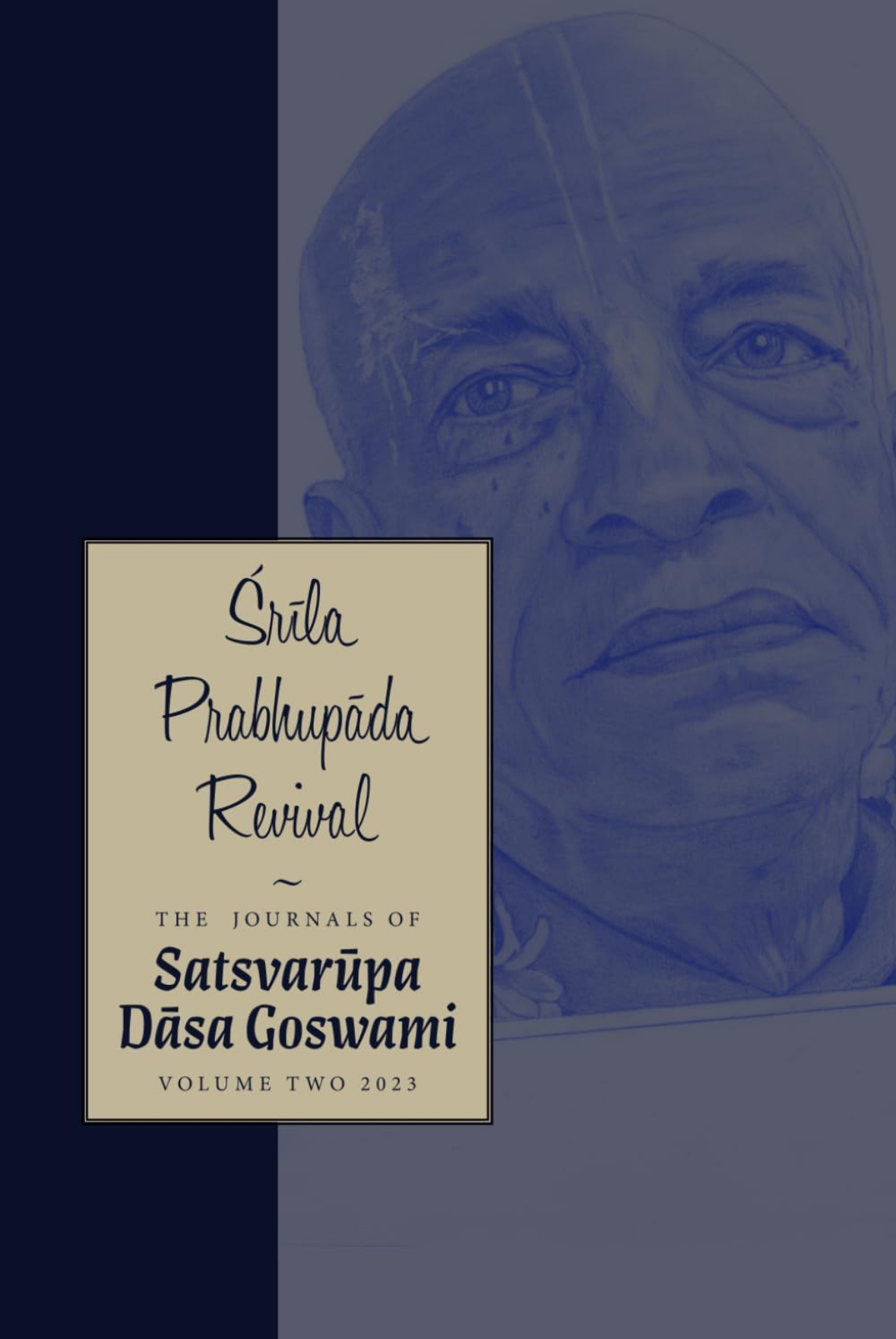
To Śrīla Prabhupāda, who encouraged his devotees (including me) To write articles and books about Kṛṣṇa Consciousness.
I wrote him personally and asked if it was alright for his disciples to write books, Since he, our spiritual master, was already doing that. He wrote back and said that it was certainly alright For us to produce books.
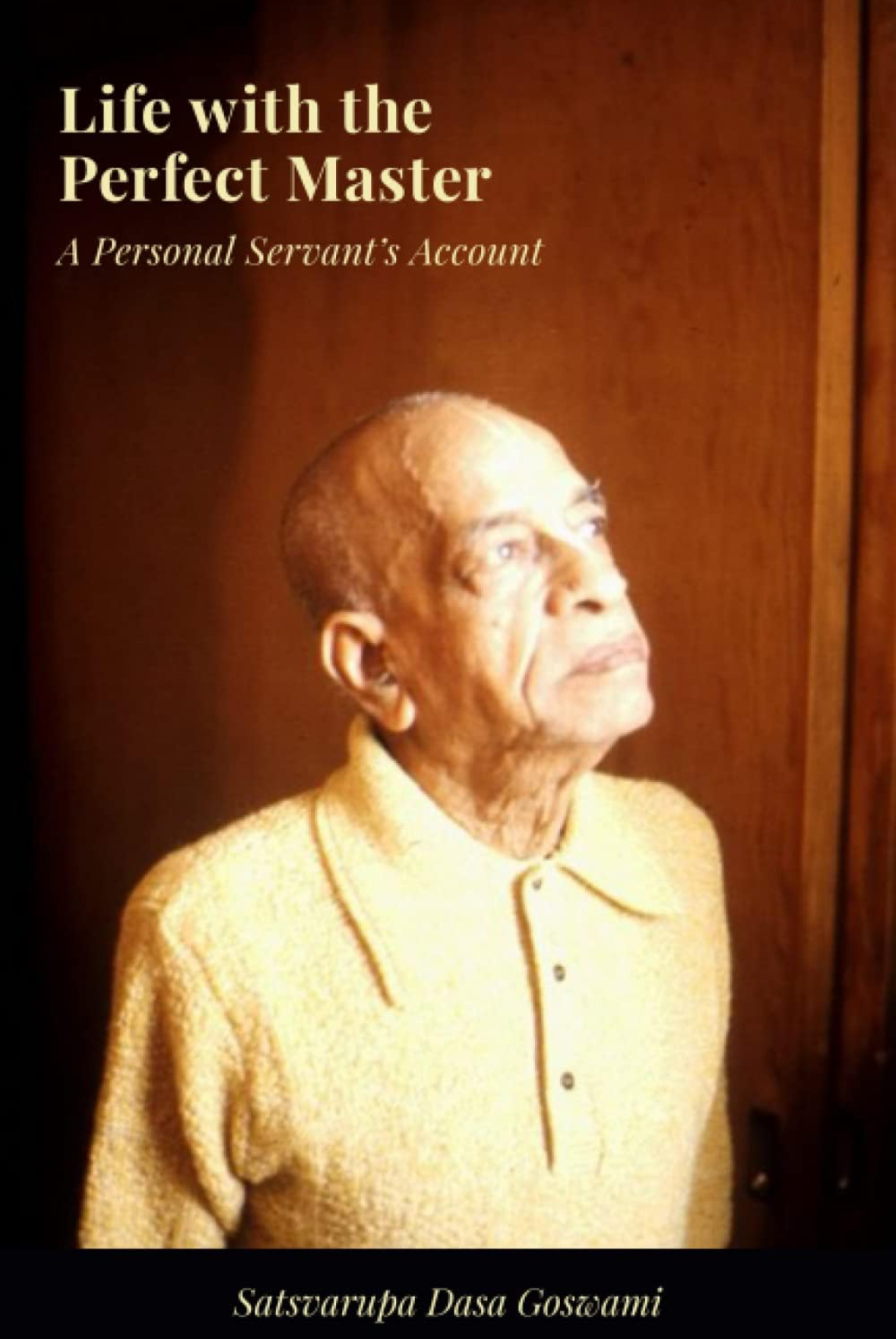
I have a personal story to tell. It is a about a time (January–July 1974) I spent as a personal servant and secretary of my spiritual master, His Divine Grace A.C. Bhaktivedanta Swami Prabhupäda, founder-äcärya of the International Society for Krishna Consciousness. Although I have written extensively about Çréla Prabhupäda, I’ve hesitated to give this account, for fear it would expose me as a poor disciple. But now I’m going ahead, confident that the truth will purify both my readers and myself.

First published by The Gītā-nāgarī Press/GN Press in serialized form in the magazine Among Friends between 1996 and 2001, Best Use of a Bad Bargain is collected here for the first time in this new edition. This volume also contains essays written by Satsvarūpa dāsa Goswami for the occasional periodical, Hope This Meets You in Good Health, between 1994 and 2002, published by the ISKCON Health and Welfare Ministry.

This book has two purposes: to arouse our transcendental feelings of separation from a great personality, Śrīla Prabhupāda, and to encourage all sincere seekers of the Absolute Truth to go forward like an army under the banner of His Divine Grace A.C. Bhaktivedanta Swami Prabhupāda and the Kṛṣṇa consciousness movement.

A single volume collection of the Nimai novels.
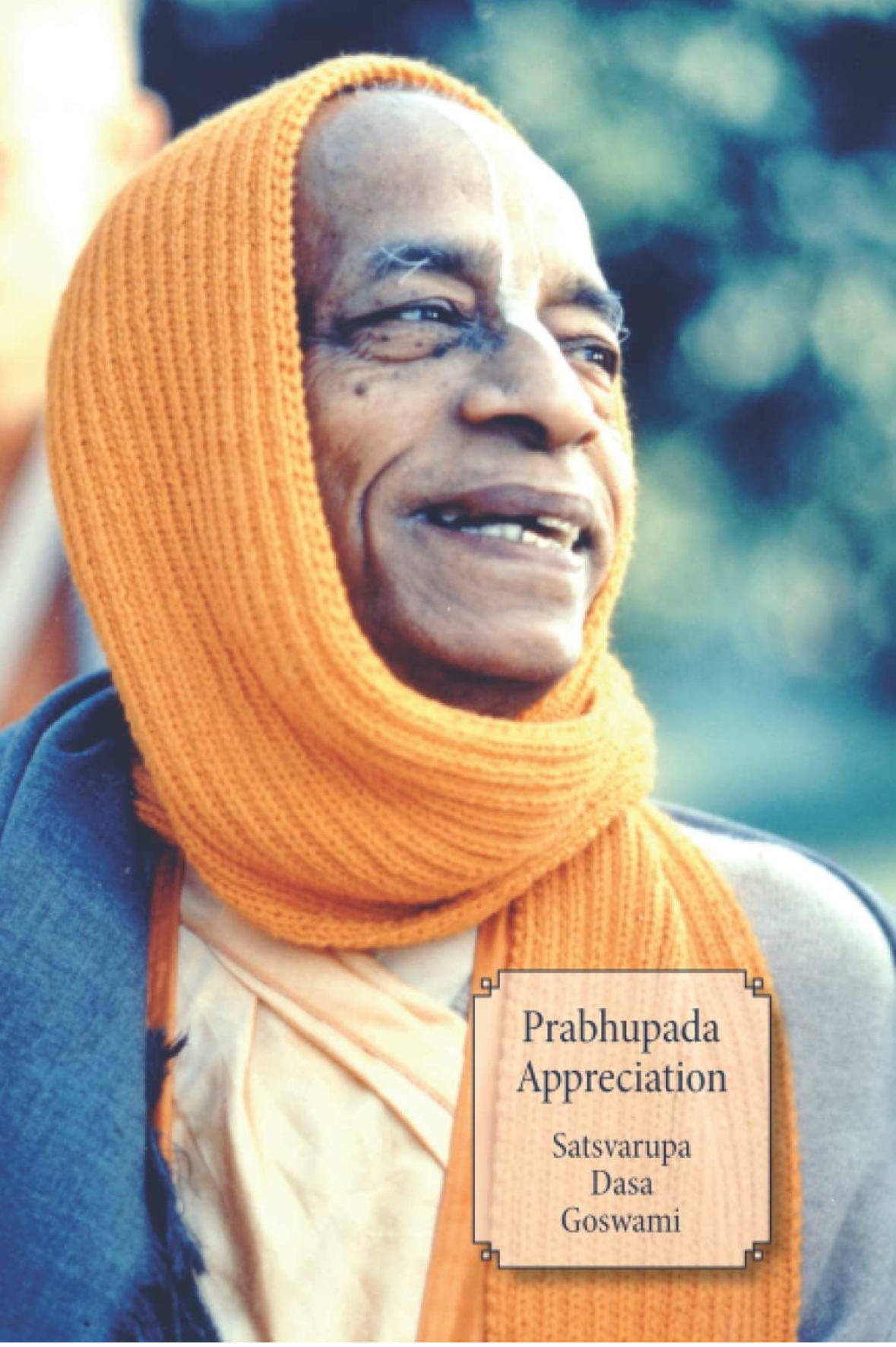
Śrīla Prabhupāda was in the disciplic succession from the Brahmā-Mādhva-Gauḍīya sampradāya, the Vaiṣṇavas who advocate pure devotion to God and who understand Kṛṣṇa as the Supreme Personality of Godhead. He always described himself as simply a messenger who carried the paramparā teachings of his spiritual master and Lord Kṛṣṇa.
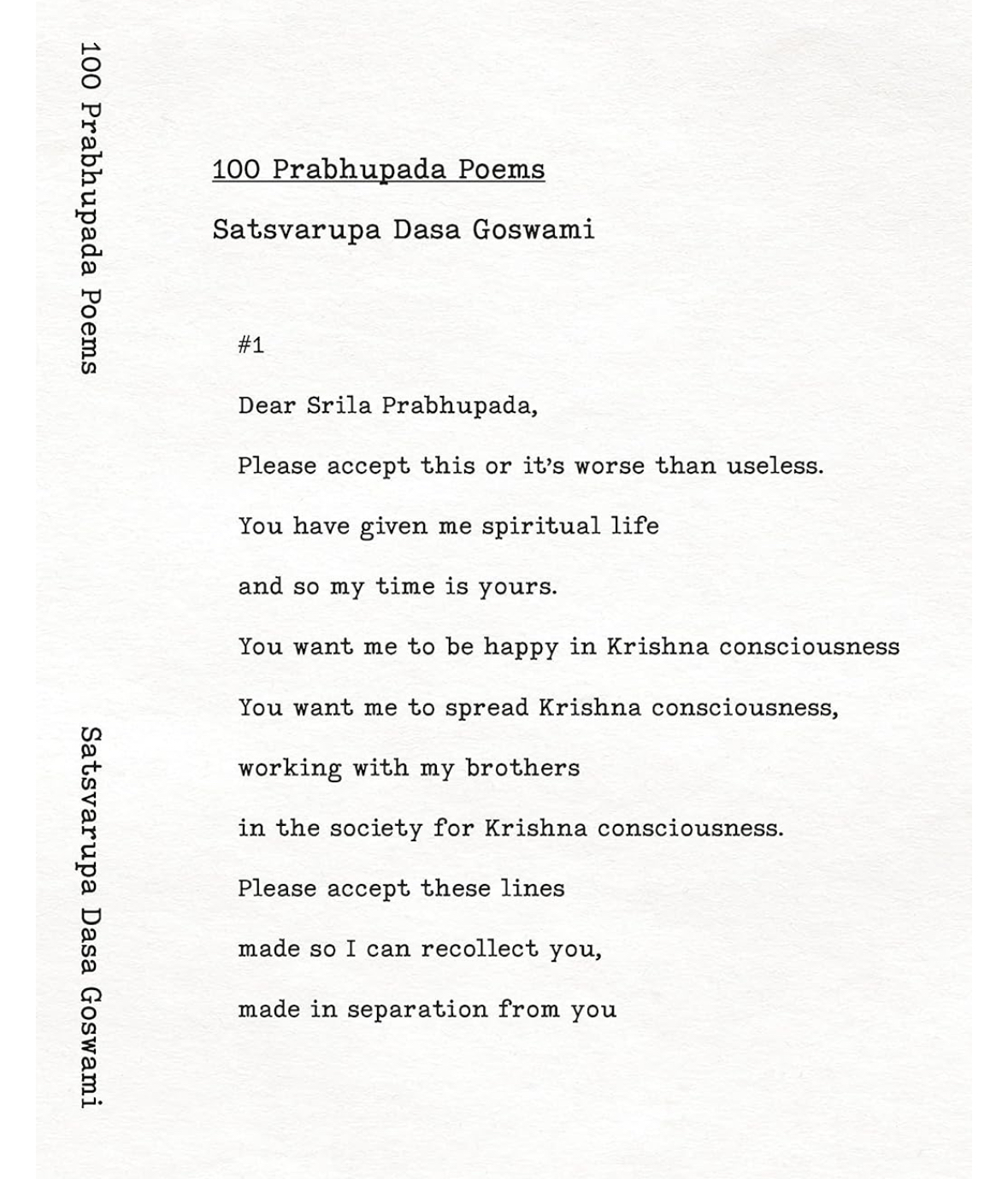
Dear Srila Prabhupada,
Please accept this or it’s worse than useless.
You have given me spiritual life
and so my time is yours.
You want me to be happy in Krishna consciousness
You want me to spread Krishna consciousness,

This collection of Satsvarūpa dāsa Goswami’s writings is comprised of essays that were originally published in Back to Godhead magazine between 1966 and 1978, and compiled in 1979 by Gita Nagari Press as the volume A Handbook for Kṛṣṇa Consciousness.

This second volume of Satsvarūpa dāsa Goswami’s Back to Godhead essays encompasses the last 11 years of his 20-year tenure as Editor-in-Chief of Back to Godhead magazine. The essays in this book consist mostly of SDG’s ‘Notes from the Editor’ column, which was typically featured towards the end of each issue starting in 1978 and running until Mahārāja retired from his duties as editor in 1989.

This collection of Satsvarupa dasa Goswami’s writings is comprised of essays that were originally published in Back to Godhead magazine between 1991 and 2002, picking up where Volume 2 leaves off. The volume is supplemented by essays about devotional service from issues of Satsvarupa dasa Goswami’s magazine, Among Friends, published in the 1990s.

“This is a different kind of book, written in my old age, observing Kṛṣṇa consciousness and assessing myself. I believe it fits under the category of ‘Literature in pursuance of the Vedic version.’ It is autobiography, from a Western-raised man, who has been transformed into a devotee of Kṛṣṇa by Śrīla Prabhupāda.”
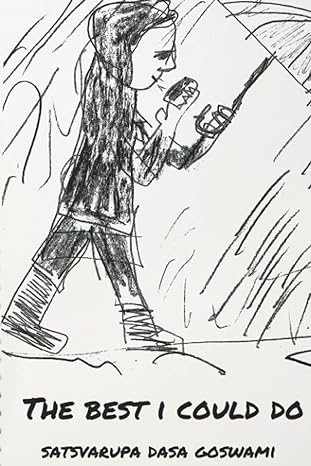 The Best I Could Do
I want to study this evolution of my art, my writing. I want to see what changed from the book In Search of the Grand Metaphor to the next book, The Last Days of the Year.
 a Hare Krishna Man
It’s world enlightenment day
And devotees are giving out books
By milk of kindness, read one page
And your life can become perfect.
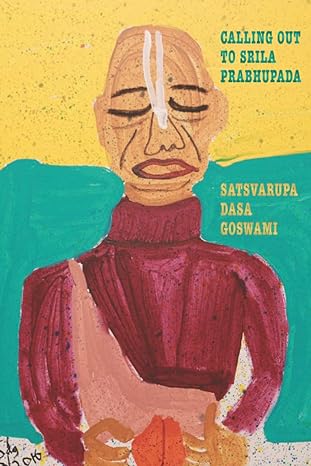 Calling Out to Srila Prabhupada: Poems and Prayers
O Prabhupāda, whose purports are wonderfully clear, having been gathered from what was taught by the previous ācāryas and made all new; O Prabhupāda, who is always sober to expose the material illusion and blissful in knowledge of Kṛṣṇa, may we carefully read your Bhaktivedanta purports.
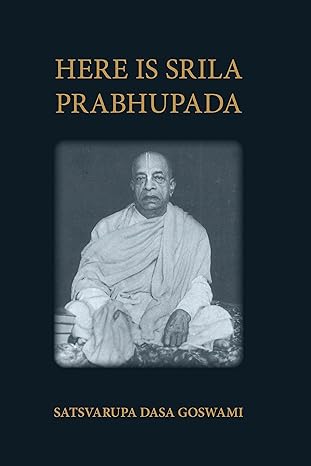
I use free-writing in my devotional service as part of my sādhana. It is a way for me to enter those realms of myself where only honesty matters; free-writing enables me to reach deeper levels of realization by my repeated attempt to “tell the truth quickly.” Free-writing takes me past polished prose. It takes me past literary effect. It takes me past the need to present something and allows me to just get down and say it. From the viewpoint of a writer, this dropping of all pretense is desirable.
 Geaglum Free Write
This edition of Satsvarūpa dāsa Goswami’s 1996 timed book, Geaglum Free Write Diary, is published as part of a legacy project to restore Satsvarūpa Mahārāja’s writings to ‘in print’ status and make them globally available for current and future readers.