

What
Meeting of Disciples and friends of SDG
Where
The Veterans of Foreign Wars Hall – 845 Hudson Avenue – Stuyvesant Falls, New York 12173
There is plenty of parking near the Hall. The facility is just a few minutes’ walk from SDG’s home at 909 Albany Ave.
Schedule
10:00 – 10:30 A.M. Kirtana
10:30 – 11:15 A.M. Presentation by Satsvarupa Maharaja
11:15 – 12:30 P.M. Book Table
12:30 – 1:15 P.M. Arati and kirtana
1:15 — 2:15 P.M. Prasadam FeastContact
Baladeva Vidyabhusana at [email protected] or (518) 754-1108
Krsna dasi at [email protected] or (518) 822-7636SDG: “I request as many devotees as possible to attend so we can feel the family spirit strongly. I become very satisfied when we are all gathered together.”
*******
Śrī Caitanya-caritāmṛta, Madhya-līlā 20.124–125: “O great learned devotee, although there are many faults in this material world, there is one good opportunity—the association with devotees. Such association brings about great happiness. . . . .”
Srila Prabhupāda: “Therefore, our Society is association. If we keep good association, then we don’t touch the darkness. What is the association? There is a song, sat-saṅga chāḍi’ kainu asate vilāsa, te-kāraṇe lāgila mora karma-bandha-phāṅsa (Gaurā Pahū, verse 3). Sat-saṅga. Sat-saṅga means association with the devotees. So the one poet, Vaiṣṇava poet, is regretting that, ‘I did not keep association with the devotees, and I wanted to enjoy life with the nondevotees. Therefore I’m being entangled in the fruitive activities.’ Karma bandha phāṅsa. Entanglement.” [Conversation with David Wynne, July 9, 1973, London]
We need to expand our team of proofreaders as we aim to increase the rate of republication of Satsvarūpa Mahārāja’s books as well as new books that he writes.
This includes a need for fluent bilingual Spanish and English speakers to proofread Spanish translations (we currently have around 20 Spanish translations waiting to be proofread).
Anyone interested in this particular service should contact Manohara dāsa at [email protected]
If you would like to help, please contact Kṛṣṇa-bhajana dāsa at [email protected] or [email protected] and we will find you a service that utilizes your talents.
So somehow, we are chanting, and we are not able to fully associate with Kṛṣṇa. We have to see what is the fault, whether it is inattention and the mind wandering. Of course, I am assuming that we are following the four rules and that we are actually motivated after Kṛṣṇa. Then only do these things apply. If our motive is right, then we will by and by learn how to chant correctly. Then our service to Kṛṣṇa will be enhanced, very very much. We are not talking about trying to just drown in some ecstasy all the time. We want to enhance our service. Just like someone saying, “Oh, I am very troubled with sex life.” But when Kṛṣṇa comes in His holy name, then we will see these other things as pale. We will just want to be the servant of Kṛṣṇa.
******
It seems that the good servant is also good at serving the holy name; specifically at the time of uttering his sixteen rounds.
******
To be concerned at one’s deficiencies in improving japa is the first requirement. Otherwise, if we just absentmindedly go on chanting without even stopping to think that our chanting needs improvement, then where is the question of actually improving? But if you are actually concerned, you have to do something about it. Do not simply allow yourself to stay on the mental platform. Just as we do not allow our senses to do what they like in other areas, so also the mind has to be restricted and brought under the control of the intelligence. You may not be able to control your mind every second of the day, but you should not become helpless and just let it roll on. Do your best, and Kṛṣṇa will help you as you struggle to chant in the morning.
******
Prabhupāda instructed everyone to chant sixteen rounds a day. That is a fact; we chant Hare Kṛṣṇa because Prabhupāda told us to. Although the name of Kṛṣṇa is fully nectarean and we should chant it spontaneously, we actually chant it on the order of our spiritual master. And whatever sweet taste we get progressively in chanting we also know is due to the mercy of our spiritual master, who has given us the hari-nāma.
******
We want to serve Kṛṣṇa, and chanting itself is service. In fact, the mahā-mantra, consisting of the three words hare, kṛṣṇa, and rāma, means, “O Lord, O energy of the Lord, please engage me in Your service.” So, the chanting in itself is a prayer to Kṛṣṇa to engage us further in His devotional service. If one is able to continue chanting like this, he can become purified of all sinful reactions from previous lives, because the chanting washes away all the accumulated dirt in the heart, ceto-darpaṇa-mārjanam.
******
If we chant the holy name, Kṛṣṇa takes that as giving love, even though our hearts are hard and devoid of feeling. Kṛṣṇa regards any little effort favorably. A gulf of qualitative difference lies between the little love offered in our beginning chanting and the love of Haridāsa Ṭhākura and Lord Caitanya’s chanting. In the prayers of lamentation by the ācāryas, like Narottama dāsa Ṭhākura and Bhaktivinoda Ṭhākura, they take the role of the conditioned soul. They cry out that they have no devotion for Kṛṣṇa, and yet within this lamentation is purification. If I lament my sinful nature and yearn for Kṛṣṇa conscious love, then that is also an expression of love, is it not? At least I desire to have that love. So this is sādhana. Although I lack spontaneous love, I chant Hare Kṛṣṇa, because I have some love for the order of my spiritual master, rascal that I am.
******
Bhaktisiddhānta Sarasvatī says duṣṭa mana, tumi kisera vaiṣṇava? “My dear mind, what kind of devotee are you? Simply for cheap adoration you sit in a solitary place and pretend to chant the Hare Kṛṣṇa mahā-mantra. But this is all cheating.” So he is speaking to the heart about the cheating propensity that we all have to some degree; it can manifest itself even in such a pure activity as chanting Hare Kṛṣṇa. He’s talking about solitary chanting—a bābājī trying to get some credit. But in other ways also we may try to impress people that we are some kind of great chanter of the holy name. But especially he refers to this solitary bhajana. So, we should not cheat.
******
Early in the morning, walking, working, chanting the holy name, bead after bead, round after round, hour after hour, it takes hard work and endurance.
pp. 104-8
Dear Srila Prabhupada, I was a fool. So were we all. My dear Lord Krsna, here’s a picture of an elephant. Why do I critique others’ works and love my own? Give forgiving love to all, is that the required spirit? But with intelligence. Lie on that bed a few minutes and let the mind drift. Yet there is no time to lose. We need to hear about Krsna. Use your time well.
Oh boy, he goes up and down his musical scales and I don’t so much like the exercise. I want something straight and simple with an identifiable feeling to go with, not a tour de force of a religious maestro. Just give me devotional service performed by a human being who tries to dovetail what he is in Lord Hari’s service. No fancy stuff. Krsna, are You there? Do You hear this? Am I avoiding blasphemy and aparadha? Please guard me against it. I’m one of your innumerable servitors, a disciple of A. C. Bhaktivedanta Swami Prabhupada.
Oh, I have no loving affair. I have no wide-awake take. I am coming up out of my body to the world of ideas. Please go above the mental and intellectual. Face to face in spirit.
Five minutes isn’t much. I wanted to say more. But I had to pause to absorb the beauty and forget myself. A sweet walk and talk with you. Even if they break us up they cannot take away our Krsna consciousness. As long as we pray to the Lord for service.
Oh man, I have to tell you something. I’m on a long-distance connection. Can you hear me? Okay, here’s the news—silent Sats has gone bonkers. He’s writing stuff he calls a mist, a mix. What? You say that’s nothing new? You already knew that? All his books have been like that since Shack Notes? I’m wasting your time with old news? Let him do his nonsense? Okay, boss, as you say. Yeah, I’ll call you only when something new and significant happens.
Who are you, preacher? Unless you know, how can you tell others what to do? It’s important to know yourself. Each devotee has to do that introspective work. Otherwise . . . I want to warn them against preachers who would presume to guide them but who don’t even know who they are.
My way is not your way. I don’t tell people how to live their lives. Even mine I’m not sure. If I go to the place between Delhi and Agra, will I just be shown my own lack of adhikara and laulyam? What’s the use of that? Get ground into the dirt and be envious of those who are better at it than I. I can’t believe what they believe. It hasn’t entered my heart. I try to console myself that even here, this solitude with Krsna consciousness will allow me to be with the Vrndavana Lord and please His pure devotee.
Does it bring you peace of mind? Yes, if I can eventually fall asleep in my bed. Not on the floor? No, in a bed. Not begging for your food? No, sometimes asparagus tips. Then where is your renunciation? Four rounds, sixteen rules—yes, six rules, ten symptoms, left-face, right-face, pledge of allegiance. Synthesis and antithesis. Pure devotion is one, imperfect reality is two, and the result is you and me in our living movement.
Who is contrite?
Who is right?
Who is wrong but right?
Good night not in sight. No fight except with fear itself.
Maybe the fear of death will straighten you. You know you’ll get no relief by dying because you have to come back here.
Oh, if I could only go there.
You don’t have the laulyam. Not yet.
Return? You mean as in those dreams of re-enrolling in college and the Navy and so on?
Oh, please
give me hari-nama
and humble heart
and guru’s shelter.
I asked, “At death, does consciousness continue or is it lost?” I never got an answer to that. He says the same soul goes on, but you forget your past body. But then . . . it’s almost like an entirely different person each life. I guess I am inordinately attached to my present identity. I grasp it. It’s all I know, me, old me, crippled me, art me, solitary me, growing old and pained. Me until the end and then gone forever. It was just a wisp, a spot life in the eternal journey of the self.
So what if it’s a little hard?
Life is tough in the material world
sukha-dukha, asat
and all that. Those who reach
up into the nama have
grasped the essential lesson.
When your Rover has
gone he’s just another
dog. When your Mother
has finally gone at 90+
you hear it indirectly
in a letter and you have
no special feeling.
Maybe later. “Mother died today
or maybe it was yesterday we really
can’t be sure.” She cursed you and
you broke her heart. We
both ask forgiveness.
I hope her Christ—in whose bosom
I’m sure she lies—
will not curse me in
my Krsna camp. He knows
I did what I had to.
I could not abandon him, Srila Prabhupada
although I did it all
wrong with my fanatical
ways.
I’m going crazy trying to formulate a title for this volume. Whatever I pick might be dropped out in editing, but it seems important to get it right. It’s a kind of title that describes the heart of my effort—Devotional Service: Writing My Life. That’s it, pure and simple. An extended and perhaps too pompous (self-important) version is Devotional Service: My Life as Lit. I want to convey two main points. One is that the writing venture is my main form of service to Prabhupada and his movement. The other point describes the nature of this writing-offering. Its subject is my life. Whatever I do in daily Krsna conscious life—struggles, thoughts, obedience, yearnings, mistakes, suffering, rejoicing, dryness, final affirmations—this is the material for this book. Live and write it and offer it to Prabhupada and Krsna.
Got nothing new to report. It’s all there in Bhagavad-gita already, and we all know what to do. Why we don’t do it is the mystery.
pp. 231-36
(Prabhupāda starts out by saying that we have discussed in our last meeting …)
We should eat after yajña. Our food is coming by the grace of God. We should not be so much interested in sense gratification. (By offering food in yajña) we become enlightened in spiritual life.
The humans are different from the animals. The animals engage themselves in only four things—eating, mating, sleeping and defending. These four necessities of animal life are not needed by the soul (but we are in a diseased condition). I have to put myself under treatment for the three miseries of life: ādhyātmika—those pains caused by one’s body or mind, ādhibhautika pains—those caused by other living creatures, and ādhidaivika pains—those due to supernatural disturbances.
We humans have more developed consciousness. We have to work. (There is ordinary work without yoga) but in karma-yoga you spiritualize your work.
Some people are trying to go to higher planets. But this is like trying to move from being a C-class prisoner to an A-class prisoner. You are not removed from prison life. Nature (like being in prison) is forcing us to act.
What do you have (what do you possess?) Everything is given to you (by God).
We are misusing our free will by indulging in sense gratification.
When I say that industry is not required. But no, work has to be done in yajña. Arjuna was a military man (he was not a Vedāntist, a brāhmaṇa, a sage etc.). He was a military man, but how did he become the greatest of the devotees? By karma-yoga. In the beginning he was hesitating whether to fight. In the end he decided to fight so both at the beginning and at the end he was a military man. You don’t have to change your position and become a mendicant like me.
Now one is working for sense gratification. But we have to work for Kṛṣṇa. It is not difficult. You don’t have to change (your way of life).
The battle was organized by Kṛṣṇa. There is always a supreme supervisor. We have to dovetail. In the beginning Arjuna said, “No” to fighting. In the end (of Bhagavad-gītā) he said, “Yes, I will fight.” We have to become a yes-man. Now we say, “No.” Correct this. If someone says, “There is no government,” he is a mad man. Similarly, if one says there is no God, he is a mad man.
We have consciousness and consciousness, is a symptom of the presence of the spirit soul.
You don’t know how your body is working (when you eat food, and it is digested and distributed in the body).
When the consciousness is gone, then the whole body stops working. The whole cosmos has consciousness, a superior consciousness. Can you deny it? (Prabhupāda seems to be directly asking the audience to challenge him.)
We are part and parcel of the Supreme Consciousness. We have to dovetail. Why has the Supreme expanded Himself into many? The answer is because He wants enjoyment. It is like the father who wants to have many children so he can enjoy them.
Yajña frees one from all contamination.
We have to eat, but we need to control it. There are other senses in the body. The tongue is the most uncontrollable: śarīra abidyā-jāl, joḍendriya tāhe kāl. We are offering (our food to Kṛṣṇa). Nothing is stopped. The other day we had feasting. Those who are serious (will offer their food to God). “What do you think, Mr. Green?” We can hear Mr. Green from the audience saying that the feast was very nice. This process has unlimited pleasure. Rāma means enjoyment. Bhakti is the highest. The bhakta is always trying to please Kṛṣṇa. What is the difficulty? We have to become a yes-man. Begin karma-yoga, we begin with eating.
One may say, “Why bother with yajña?” But the answer is (you have to) it is for your interest. Anna means grains. They are produced from the land. The cow’s milk has many vitamins, but from dry grass do you get vitamins? Prabhupāda says when he was a family man, he had a servant who was very stout and strong. Prabhupāda asked him, “What do you eat (that makes you so strong)?” The servant answered, “I eat corn (the audience added “cornmeal”).” Greens are for humans. Your body depends on food and food comes from the rain and rain comes from yajña. Prabhupāda says the other day he was talking with Mr. Karl about the reign of Mahārāja Yudhiṣṭhira, when everything was in abundance. There is supernatural power.
(Everything is in the scripture.)
Prabhupāda begins a verse from the Bhagavad-gītā:
annād bhavanti bhūtāni
parjanyād anna-sambhavaḥ
yajñād bhavati parjanyo
yajñaḥ karma-samudbhavaḥAll living bodies subsist on food grains, which are produced from rains. Rains are produced by performance of yajña [sacrifice], and yajña is born of prescribed duties.
Life becomes spiritualized. There are proper directions in spiritual life. Even in driving a car there are directions, like “keep to the right” and “stop at the red light.”
If you devoted your life to sense gratification (you will be doomed).
Hare Kṛṣṇa.
(The audience was quiet while Prabhupāda was lecturing. When he ends, he asks if there are any questions. No one has any questions. He begins a kīrtana.)
In these early 1966’s lectures, Prabhupāda often speaks of controlling the tongue by offering your food to Kṛṣṇa as sacrifice. He says the tongue is the most difficult to control of all the senses, but if you control the tongue the other senses will come under control. He was able to demonstrate this principle of yajña in the Bowery loft by cooking a feast with the devotees (or people who came to the loft) and he said that they should do it in their own homes.
******
I am no longer writing a secret journal. I write privately but I intend to publish them so that my friends and readers of the future can read them. A small audience. I want the slower recording of Śrīla Prabhupāda chanting japa. I am experiencing a Prabhupāda revival in my life. The fire sirens go off here at Stuyvesant Falls, 04:00 P.M. Every twelve years they have a Kumbha-melā. I pray to go back home, back to Godhead at the end of this life. Prabhupāda encouraged us to aspire for it he would take me where He desires. He writes down what his mind dictates. “The faithful transcriber.” “Kṛṣṇa is the Life Force of my words” (I explained why these titles are not egotistical in the books).
pp. 161-66
A specialty listed by Prabhupada as characteristic of transcendental writing is that the Lord helps the devotee write. This does not mean that the Lord must dictate every word for a book to qualify as “transcendental,” although, of course, we also see that example in the history of how Vyasadeva composed the Srimad-Bhagavatam or Krsnadasa Kaviraja Gosvami composed the Caitanya-caritamrta.*
Any devotee can preach, whether in speech or in writing, simply by strictly repeating the teachings of his bona fide spiritual master. A writer uses literary tools to deliver a message. Even a devotee who may have to struggle and pray and labor and use his intelligence to write can be helped by Krsna. This characteristic of Vaisnava writing, therefore, is an important one to understand. By his dependence on Krsna, a devotee attains the qualification to write in Krsna consciousness. In his purport, Prabhupada writes, “Since a devotee writes in service to the Lord, the Lord from within gives him so much intelligence that he sits down near the Lord and goes on writing books.” (Adi 1.39, purport)
Such dependence on Krsna requires humility. When speaking about the Caitanya-bhagavata, Krsnadasa Kaviraja Gosvami humbly states, “What a wonderful description he has given of the pastimes of Lord Caitanya! Anyone in the three worlds who hears it is purified.” This statement reveals the non-envious, joyful spirit of the Vaisnava. Neither Vaisnava writers nor readers resemble mundane scholars. Krsnadasa Kaviraja Gosvami and Vrndavana dasa Thakura were almost contemporaries. In the material world, a scholar takes the biography of one of his contemporaries and steps on it to increase the value of his own writing: “Of course, I have read Professor Jones’ biography on this subject. It is a very nice beginning work, filled with the author’s good intentions. However . . . ” The scholar then lists his colleague’s mistakes, his wrong vision of the hero, and tries to convince the reader that his colleague’s biography was useless. Fortunately, however, we have this scholar’s work on the same subject to enlighten us. Krsnadasa Kaviraja Gosvami tells us that he is simply eating the remnants of Vrndavana dasa Thakura’s work.
In his purport to Adi 8.72-3, Prabhupada states that to write transcendental literature, a devotee must be empowered. Prabhupada defines this empowerment as freedom from the four defects of the conditioned souls.
Therefore, are ISKCON devotees empowered or authorized to write transcendental literature? We cannot make any automatic claims that everything we do is perfect. Neither are we on the level of Srila Prabhupada or Krsnadasa Kaviraja Gosvami. However, Prabhupada instructed all his followers to write. If we take this order sincerely, we will be authorized. Working under authorization allows us to become empowered.*
* Here is a selection of statements about writing from other sources:
“My Guru Maharaja, when he was selecting articles to be published in The Harmonist, if he sees simply that there is several times the writer has written, `Krsna,’ Lord Caitanya,’ like that, he passes immediately, ‘All right. It is all right. So many times he has uttered Krsna, so it is all right.'” (Srila Prabhupada lecture, 6/6/69, New Vrindaban)
Here is something Prabhupada heard Hayagriva’s mother say. (At that time, Prabhupada still called him Howard, even though he was initiated.) Hayagriva’s mother had written Prabhupada a letter telling him that she liked him and his books, and that “People who aren’t devotees may write books, and they may make a lot of noise in the world, but it won’t last.” Prabhupada loved that phrase, “make a lot of noise in the world, but it won’t last.” He said, “I very much like what Howard’s mother has written very nicely. If you talk of Krsna, you enjoy yourself and you give enjoyment to many others. But if you talk materialistic, you can create some noise. What is the exact word she has used? Noise. So if you are a good writer, if you are a good thinker, then just think of Krsna and write. Then it will please you and it will please all others. Our Back to Godhead is for that purpose. And if you write some fiction, you can please some man and create some noise for some time, but it will be useless after some time.”
Prabhupada wrote a letter to Ranadhira in which he praised Ranadhira’s writing. Ranadhira was not a particularly literary person—he mainly engaged in business—but if Ranadhira can be commended in this way, we can also feel hopeful about our own writing.
Prabhupada writes: “I liked your letter very much. You are a very descriptive writer and I enjoy very much your descriptions and use of words. Actually, if we are engaged in writing and speaking on behalf of Krsna, this is the best process for advancing in Krsna consciousness. Such activity forces us to think very clearly on the subject matter in order to speak or write and convince others. So I think you should develop your ability for writing and spend some time writing articles for Back to Godhead.”
A Vaisnava author must receive permission from guru and Krsna. Krsnadasa Kaviraja Gosvami refers to the various devotees who instructed him or encouraged him to write the Caitanya-caritamrta as his giksa-gurus. In addition to their order, he approached Madana-mohana in Vrndavana and asked His permission.
From a 1971 lecture: “We are writing books. If you sit down and write some article on Krsna, that means you have to concentrate on Krsna’s activities, devotees, and that very process will purify your heart. Therefore, we always recommend to our students that you write articles. Read our books.”
From a 1972 lecture: “Realization means you should write. Everyone of you. What is your realization? What for this Back to Godhead is? You write your realization, what you have realized about Krsna. That is required. It is not passive. Always you should be active. Whenever you find time, you write. Never mind two lines, four lines, but you write your realization. Writing means smaranam and then you have to remember what you’ve heard from your spiritual master.”
What does it mean for a devotee to have his service confirmed in the heart? There are two kinds of confirmation, direct and indirect. Baladeva Vidyabhasana went before the Deity of Govinda and was directly inspired to write a commentary on the Veclanta-sutra. Similarly, Krsnadasa Kaviraja Gosvami also received direct confirmation when he was offered Madana-mohana’s garland.
Confirmation can also come in an indirect way in the form of intelligence supplied by the Lord. If a devotee does not receive direct confirmation, he can continue to seek confirmation by examining his motives and trying to purify his intelligence. Krsna will reciprocate with the devotee and then confirm his direction. A devotee can also receive confirmation through other devotees.
pp. 20-32
Prabhupada
comes back to me after my
performance at lecture in the schoolhouse.
Prabhupada wearing
his silk soft saffron
Swami hat, warm cadar
looks upon me.
Soon I’ll start the worship—
massage him, bathe him,
dress him again.
Happiness is absence of pain and
obvious danger and suffering.
There’s deeper happiness.
Ideas for making money and
for preaching—opening a
restaurant, doing nama-hatta on a
computer, going to England to sing
at Hare Kr§ha festivals, writing a
book. Making money, purifying it
yourself. Telling others good ideas
they can use.
Flowers dead in vase,
cow lowing in pasture
where she’s kept for
slaughter. Can you be
happy amid cruel nature
and men?
“Women have a different
psychological makeup,” he explained.
We tried to understand “Women are
less intelligent” in a way that would
not offend.
I’d say I’m okay but you’d
misunderstand. Words fail
and that’s okay too. I want to
be known as a blissful
devotee. Served his
guru, Prabhupada.
A happy idea: to wake and read
the words of Devahati in the last
chapter of Third Canto, then start
the Fourth. Alone in the house
all day but not lonely except in a
Krsna conscious way.
These helpful hints, man-made
are small-time.
The Great Idea in the mind of
God is loving service.
He wants to submit Himself to
best devotees. He’s
bhakta-vatsala, inclined to them.
Of all God’s glories that’s
the best. I want even a
little of His glory to brush over
me, assurance of His love.
They say pain has to
come first, but main thing is
nayam atma pravacanena labhyo . . .
Only to one whom He chooses
does He give His mercy.
A happy idea:
“Surrender to Me.”
Queen Kunti said,
“You come to us in danger.
So let the dangers remain
because when we see You—
apunar bhava-darsanam,
we’ll see no more of birth and death.”
“That is real happiness,”
said Srila Prabhupada.
A voice is chattering inside. The
mechanical man crosses his legs,
takes off his wool cap and scarf.
He’s aware he’s sitting in front of
Prabhupada.
Grin crooked.
I don’t want to go to Him,
not yet. I don’t know who
I am or what I love.
Happy ideas:
keep searching gently, take a
morning walk, read Srimad-Bhagavatam
even if you don’t love it.
You say, “I don’t want to go yet to
where my spiritual master is but I am
with him now every day listening to
his speeches and reading his books.”
I don’t know what will happen.
“Trust in Krsna.”
The gopis‘ joy is the
happiness of Krsna.
They desire it intensely.
Srimati Radharani says, “If
Kra takes pleasure in making
Me miserable, I will
consider that misery
the greatest happiness.”
Who can understand this?
I’m happy to be chanting.
I wish you all well.
Be—happy, sad,
remember
too. Give people
Krsna consciousness wherever you are.
This is the best idea
and that’s why He gave it,
Lord Caitanya.
pp. 34-37
I risked coming to the shed even with a little headache, because I wanted to write. Good. This is your discipline for October too. Try to say something each day. If it’s too hard to write with a pen on some days, you can talk. Pick up a Dictaphone, say what time of day it is and speak, speak travel data and any thoughts and feelings. Don’t worry, “But it’s increasing the volume of the book.” Please don’t bother about that. I have to keep telling you that.
I like your colored drawings. Poems are something else. You don’t “have to” write anything. It’s all gratis. It’s all your self-expression.
******
By His grace I am writing this. Even if the headache gets worse. I got my afternoon session in. Tomorrow morn 9 A.M. I speak to the devotees. Say I don’t know anything about the holy name except what’s in the scriptures and I will speak, however, what I know. I will address the problem some have, to chant sixteen rounds. Rock bottom. We may also consider improving the quality. Even if you do chant sixteen rounds every day, when we discuss it, it will underline for you the need to do it, so you appreciate and never fall below that.
Sixteen rounds and four rules.
******
You load sixteen rounds
and whaddya get?
Another day older
and deeper in—
attraction to the habit
of hari-nāma dīkṣā vow.
I promise I will
never abandon it,
sixteen rounds and whaddya
get?
Infinite mercy and freedom
from laws of karma—
liberation.
******
Keep going a full half-hour and then quit and go back in … the weeds are blowing, we will be gone from this peaceful place.
No turning back from our decision to move, travel, vamoose. We are off. Yes, you have a yearning to remain in this quiet place and write like this each day. But it’s good to get out. Within one week I’ll have three disciple’s meetings, one here in Geaglum, one in Belfast, and one in England.
That’s pretty good, Gurujī.
Get out and try and you’ll have adventures to write even if it’s the inner adventures that are scratched by enduring the outer ones. What can you write on a late-night ferry?
This silver pen, I keep wanting to give it up but it has a nice feel to it. Why don’t you stay with it? Each pen can help you in its own way. Best result of this week of writing sessions is to get me attached to (liking) the feel of the pen in the hand and a habit of writing. I like the shed. We will have no shed in the van but learn to adjust to confined space. Rest your head and hear the music in earphones as best you can. Khichari, no big desserts. Send tapes out, your life is what it is.
Holy Kṛṣṇa protect us,
we know the real thing
God not vague
but coming in Gītā
and learned sages love for
Him
transferred to me and you.
Haribol.
******
Keep an eye on Kṛṣṇa. If you can’t surrender, then at least chant, Śrīla Prabhupāda writes. Sixteen rounds are essential.
Report in here and leave record. But not just for the sake of a log or record. That is a clerical function or like a ship’s log kept by men on watch. It is just a history that no one reads except for official purposes. I’ve seen sometimes our security guards at Hare Krishna Land, Mumbai. They keep records of their standing watch, and this paperwork preoccupies them in a life of boredom with nothing else to do. My writing shouldn’t be like that, perfunctory.
But I do feel the need to record some things in that way of a daily round. The first signs of a flashing pain (no matter how slight) in the right eye are important to me because they warn me that I can’t even do this function of writing. They tell me I have to pull the plans right away. Can’t write long or passionately, have to decide what to do aside from the desire to go all out in writing or reading. What care and repair for the body?
That’s an example of why I do write down log material, “Slight flashing light in right eye. Reluctant to get up at midnight … Ship is plying smoothly. Steady as she goes.”
Harumph. Be quiet. Others are asleep. I like people to sleep while I write. Then I chant softly to not wake them. I’m a considerate person at least in that way—don’t disturb their sleep.
******
Last two days here, lots of packing to do. Madhu says he works slower as part of the general slowing down (growing older). I don’t think he’ll do this again, outfit a whole van from scratch. I also may not “forever” be willing to travel like this. We are hopeful of at least this October-November tour, but it occurred to me that it could be a bust. I might get so many headaches and pills cannot check them. And the whole thing gets out of control and we come back (like Francis of Assisi comes back from the Crusades) ill and apparently defeated—but try to turn that too into a victory for the spirit.
But if as we start out, we do get more headaches, that doesn’t mean we instantly push the panic button and come back. Tolerate and suffer for a while, staying in the van, lying down in the bunk there, not seeing people or giving temple classes until I get clear of the headache.
******
Steady as she goes. The tugboat, the boat crossing the sea, old boat, engine holding up but with a problem. Keep moving and chanting Hare Kṛṣṇa. Keep yourself together for giving the class today.
At 5:15 A.M. we do physical exercises but only if we feel up to it. And listen to Aindra’s kīrtanas.
******
Goodbye again, Geaglum. Rushes, weeds blowing by the lakeside. The little prefab shed poised there. When on the lake strait you can see the little shed in the field on the edge of the forest. It’s a good place to start. I’ve felt that I cannot write unless I go out there, it is so congenial for starting you.
pp. 355-58
In the material world, a beautiful young woman grows old, and her face turns into the look of a rotten peach. Her gentleman counterpart loses his muscles and interesting looks. Everyone changes like this as they grow older. Only in the spiritual world do folks maintain their beauty and mutual attraction and stay together forever with the Supreme Personality of Godhead.
******
When they were about to part, a gentleman asked the lady, “When will we meet again?” She answered with one word: “Krsna.” He took it to mean if they would ever meet again, it would be by the will of Krsna, nothing else.
******
There’s an old Japanese poem that describes a man and a woman like ripe peaches on a tree. They have great attraction for each other. But as they grow older and older, the “peaches” grow rotten, and attraction for them goes away.
In Goloka Vrndavana Krsna first manifests as a charming baby. He drinks His mother’s breast milk.
As He grows a little older, He plays with His cowherd friends.
When He grows to adolescence, He and the cowherd girls of an equal age fall in love with each other and have sportive pastimes of love.
Unlike in the material world, Krsna never grows older than adolescence
about sixteen years (and He perpetually enjoys loving pastimes with the girls, boys and cows of Vrndavana).
A few devotees of Krsna and Radha, even when they grow older, do not lose their charming ardor for the cowherd boy. If they are perfectly pure in their relationship with Him, they transfer at the time of their leaving this world to the spiritual world, where all is sat-cid-ananda vigraha.
******
Bewildered souls live in the material world and suffer the pangs of material suffering.
There is no release from the pangs of nature for them.
But one who is fortunate to meet a pure devotee spiritual master
can be rescued from his bewilderment.
He is taught to avoid the mayic attractions.
He stays pure under the shelter of his Guru Maharaja. He becomes closer and closer to guru and Krsna and serves them with all his heart and soul.
When it’s time for him to kick off his mortal coil
he doesn’t actually die like an ordinary jiva
but he goes back to the spiritual world for forever-blissful pastimes with his guru, Krsna and all the pure parisads of Vraja.
They are protected by the Lord Himself, and His ever-watchful ones.
They follow this motto: “Whoever Krsna protects
no one can kill
whoever Krsna desires to kill, no one can protect.
Whoever stays in the protection of the pure devotees
never fears the asuras
and never ever falls down.
(Even if he slips, the Lord forgives
and protects him and maintains
his position as a fixed-up devotee.)
******
As I grow older, the remaining sand in my hourglass trickles down to the bottom.
I take shelter in poetry because the Lord and my guru
want me to do it as a legacy to my friends.
I am a spiritual juvenile or neophyte
and I have no hope of making verses
like the great Vaiṣṇava poets of the past.
But my own Guru Maharaja, Śrīla Prabhupāda
encouraged me from the beginning to “write! Write one or two lines praising Krsna.” In addition to praising Krsna, I love His friends, who are my friends also, and pure devotees. They also like to write poems
and I do my duty and encourage them.
Neophyte poet, show me your verses
and share them with likeminded souls.
As Swamiji encouraged me in making poems right
since 1966, he will encourage you also
if you speak with heart and soul.
Even if you’re a beginner spiritualist, you can benefit by hearing
the English poet, William Blake’s
“Introduction to Songs of Innocence”:
And I made a rural pen,
And I stain’d the water clear,
And I wrote my happy songs
Every child may joy to hear
******
I have two typists and I’m not sure who to dictate to. One is supposedly more confidential than the other. But they are both confidential. The difficulty is with myself.
There is a verse in Shakespeare that goes something like this, not exactly like this but roughly like this: “The fault is not in our stars but in ourselves.” I cannot speak deeply. I cannot speak honestly on a Dictaphone. But here I am with three points, and yet on another Dictaphone I have spoken more points. But I don’t know where that Dictaphone is right now.
I really want to talk to Krsna but I get so confused and try to hide the truth. I don’t speak straight—I’m trying to hide the truth. Besides that, I am a disoriented person because of my P. disease. Disoriented. “You are disoriented,” Baladeva sometimes says to me. I try to hide the truth from myself. I have more than one Dictaphone, and I say different things on the different ones. The batteries run low, and that’s another problem.
O Krsna, why don’t You allow me to speak the truth? Sraddha said to me that ever since she was a young teenager, she heard Hridayananda Maharaja speaking about the Mahabharata. He has been talking about the Mahabharata since he was many years younger than he is now, and now he is writing his multi-series of Mahabharata in modern language. He is far ahead of us all.
pp. 355-58
One achieves bhakti by giving up sense gratification and mundane association.
Visaya refers to the objects of sense enjoyment, and one who indulges in sense enjoyment is called a visayi. A visayi cannot succeed in devotional service. The acaryas therefore set down regulations for eating, mating, and so on. Narada states that one should not only give up gross practices of sense indulgence but should even stop thinking of sense gratification. The word sanga-tyaga indicates that one should refrain from associating with sense objects even within the mind and heart. The acaryas of all religions so consistently recommend such renunciation of sense pleasure that the need for it may seem a truism. But to practice it is not easy. And yet if we want to advance in bhaktiyoga, practice it we must. As Lord Krsna says, “What is called renunciation you should know to be the same as yoga, or linking oneself with the Supreme, 0 son of Pandu, for one can never become a yogi unless he renounces the desire for sense gratification” (Bg. 6.2).
The Krsna conscious method of renunciation is to engage the mind and senses in devotional service. As Srila Rupa Gosvami says in his Bhakti-rasamrta-sindhu (2.255):
anasaktasya visayan
yatharham upayunjatah
nirbandhah krsna-sambandhe
yuktath vairagyam ucyate“When one is not attached to anything but simultaneously accepts everything in relation to Krsna, one is situated above possessiveness.”
An active devotee is more complete in his renunciation than one who rejects material things without knowledge of their relationship to Krsna. This method of yukta-vairagya gives one great freedom, but it must be done rightly. Srila Prabhupada writes, “One should, however, note that after doing something whimsically he should not offer the results to the Supreme Lord. That sort of duty is not in the devotional service of Krsna consciousness. One should act according to the order of Krsna, [which] comes through disciplic succession from the bona fide spiritual master” (Bg. 18.57, purport). In short, sinful activity cannot be brought under the purview of “offering everything to Krsna.” Indeed, Srila Prabhupada would not accept disciples unless they agreed to follow the four regulative principles—no illicit sex, no intoxication, no gambling, and no meat-eating.
Renunciation is possible because of the higher pleasure attainable in spiritual life. As Krsna states in the Bhagavad-gita (2.59),
visaya vinivartante
niraharasya dehinah
rasa-varjah raso ‘py asya
param drstva nivartate“Although the embodied soul may be restricted from sense enjoyment, the taste for sense objects remains. But ceasing such engagements by experiencing a higher taste, he is fixed in consciousness.”
In his purport to this verse, Srila Prabhupada compares the restriction from sense enjoyment mystic yogis observe to the restrictions a doctor places upon a patient that forbid him from taking certain types of food. In neither instance is the taste for the forbidden pleasures lost.
“But,” Srila Prabhupada writes, “one who has tasted the beauty of the Supreme Lord, Krsna, in the course of his advancement in Krsna consciousness no longer has a taste for dead, material things. Therefore, restrictions are there for the less intelligent neophytes in the spiritual advancement of life, but such restrictions are good only until one actually has a taste for Krsna consciousness.”
Previously Narada has stated that it is not sufficient merely to hear about spiritual life or to tell others about it without actually practicing it and realizing its fruits oneself. And so the sadhana-bhakta actually practices—he avoids., lusty attachments on the strength of his vows, and Krsna helps him from within. Eventually he relishes a higher taste and loses the desire for sense gratification. Bhakti-yoga, being a transcendental science, yields the expected results when carefully followed.
The phrase sanga-tyagat, which Narada uses here, also appears in Srila Rupa Gosvami’s Upadesamrta. According to Rupa Gosvami, sanga-tyaga, by which he means “abandoning the association of nondevotees,” is one of the most important requirements for the execution of pure devotional service. When Lord Caitanya was asked to define a Vaisnava, He replied, asat-saitga-tyaga—ei vaintava &dm “Characteristically, a Vaisnava is one who gives up the association of worldly people, or nondevotees” (Cc. Madhya 22.87). Just as asat-sanga increases our material attachment and impedes our devotional service, so sadhu-sanga furthers our devotional service by helping us become attached to Lord Krsna and detached from the practices of nondevotees.
In the Srimad-Bhagavatam Lord Kapila advises His mother, Devahuti, that while material attachment is the greatest entanglement for the spirit soul, “that same attachment, when applied to the self-realized devotees, opens the door of liberation” (Bhag. 3.25.20). In his purport, Srila Prabhupada writes, “This indicates that the propensity for attachment cannot be stopped; it must be utilized for the best purpose. Our attachment for material things perpetuates our conditioned state, but the same attachment, when transferred to the Supreme Personality of Godhead or His devotee, is the source of liberation.”
This sutra contains a stern order for the aspiring devotee: “If you want to progress in bhakti, you must give up sense gratification and material association.” In his Bhagavad-gita purports, Srila Prabhupada writes,
The supreme occupation for all humanity is that by which one can tell us how we should approach such orders:
“The Lord instructs that one has to become fully Krsna conscious to discharge duties, as if in military discipline. Such an injunction may make things a little difficult; still, duties must be carried out, with dependence on Krsna, because that is the constitutional position of the living entity” (Bg. 3.30, purport).
Lethargy in the face of these orders should be thrown off. The alternative is great unhappiness, more than we can imagine, as the soul falls down into lower species of life, birth after birth.
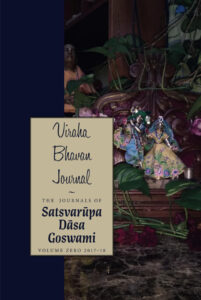
Viraha Bhavan Journal (2017–2018) was written by Satsvarūpa Mahārāja following a brief hiatus in writing activity, and was originally intended to be volume 1 in a series of published journals. However, following its completion and publication, Mahārāja again stopped writing books, subsequently focusing only on what became his current online journal, which began in August of 2018.

At first, I took it hard that I would have to live surrounded by the firemen, and without my own solitude. After all, for decades I had lived in my own house with my own books and my own friends. I was also now a crippled person who couldn’t walk, living among men who did active duties. But when Baladeva explained it to me, how it was not so bad living continually with other firemen and living in the firehouse with its limited facilities, I came to partially accept it and to accept the other men. I came to accept my new situation. I would live continually in the firehouse and mostly not go outside. I would not lead such a solitary life but associate with the other firemen.
Let me write sweet prose.
Let me write not for my own benefit
but for the pleasure of Their Lordships.
Let me please Kṛṣṇa,
that’s my only wish.
May Kṛṣṇa be pleased with me,
that’s my only hope and desire.
May Kṛṣṇa give me His blessings:
Kṛṣṇa Kṛṣṇa Kṛṣṇa Kṛṣṇa Kṛṣṇa he
Rāma Rāghava Rāma Rāghava
Rāma Rāghava rakṣa mām.
You mentioned that your pathway has become filled with stumbling blocks, but there are no stumbling blocks. I can kick out all those stumbling blocks immediately, provided you accept my guidance. With one stroke of my kick, I can kick out all stumbling blocks. —Letter by Śrīla Prabhupāda, December 9, 1972.

The Writing Sessions are my heart and soul. I’m trying my best to keep up with them. I am working with a few devotees, and they are far ahead of me. I wander in the wilderness of old age. I make my Writing Sessions as best I can. Every day I try to come up with a new subject. Today I am thinking of my parents. But I don’t think of them deeply. They are long gone from my life. Śrīla Prabhupāda wrote a poem when he was a sannyāsī, and he said now all my friends and relatives are gone. They are just a list of names now. I am like that too. I am a sannyāsī with a few friends. I love the books of Śrīla Prabhupāda. I try to keep up with them. I read as much as I can and then listen to his bhajanas.
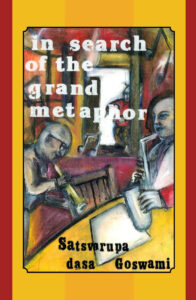
The metaphor is song. Explain it. Yes, particulars may not seem interesting or profound to readers who want structured books.
Wait a minute. Don’t pander to readers or concepts of Art. But Kṛṣṇa conscious criteria are important and must be followed. So, if your little splayed-out life-thoughts are all Kṛṣṇa conscious, then it’s no problem.
I am near the end of my days. But I do like the company of like-minded souls, especially those who are Kṛṣṇa conscious. Yes! I am prone to Kṛṣṇa consciousness. I have been a disciple of Bhaktivedanta Swami Prabhupāda for maybe almost sixty years. Sometimes I fail him. But I always bounce back and fall at his feet. It is a terrible thing that I sometimes do not have the highest love for him. It is a terrible thing. Actually, however, I never fall away from him. He always comes and catches me and brings me back to his loving arms.

This edition of Satsvarūpa dāsa Goswami’s 1996 timed book, Upstate: Room to Write, is published as part of a legacy project to restore Satsvarūpa Mahārāja’s writings to ‘in print’ status and make them globally available for current and future readers.
A factual record of the reform and change in ISKCON guru system of mid ’80s.

Readers will find, in the Appendix of this book, scans of a cover letter written by Satsvarūpa Mahārāja to the GN Press typist at the time, along with some of the original handwritten pages of June Bug. Together, these help to illustrate the process used by Mahārāja when writing his books during this period. These were timed books, in the sense that a distinct time period was allotted for the writing, during SDG’s travels as a visiting sannyāsī
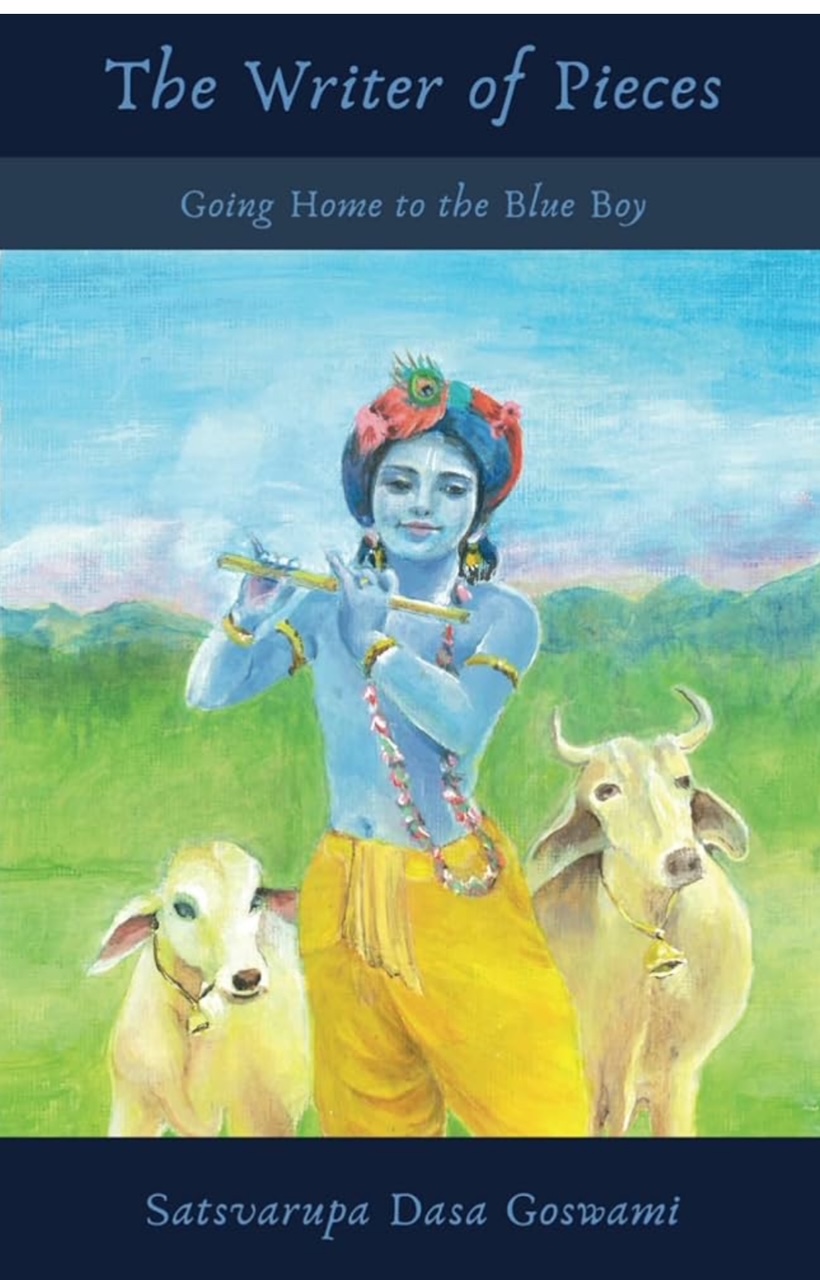
Don’t take my pieces away from me. I need them dearly. My pieces are my prayers to Kṛṣṇa. He wants me to have them, this is my way to love Him. Never take my pieces away.

Many planks and sticks, unable to stay together, are carried away by the force of a river’s waves. Similarly, although we are intimately related with friends and family members, we are unable to stay together because of our varied past deeds and the waves of time.
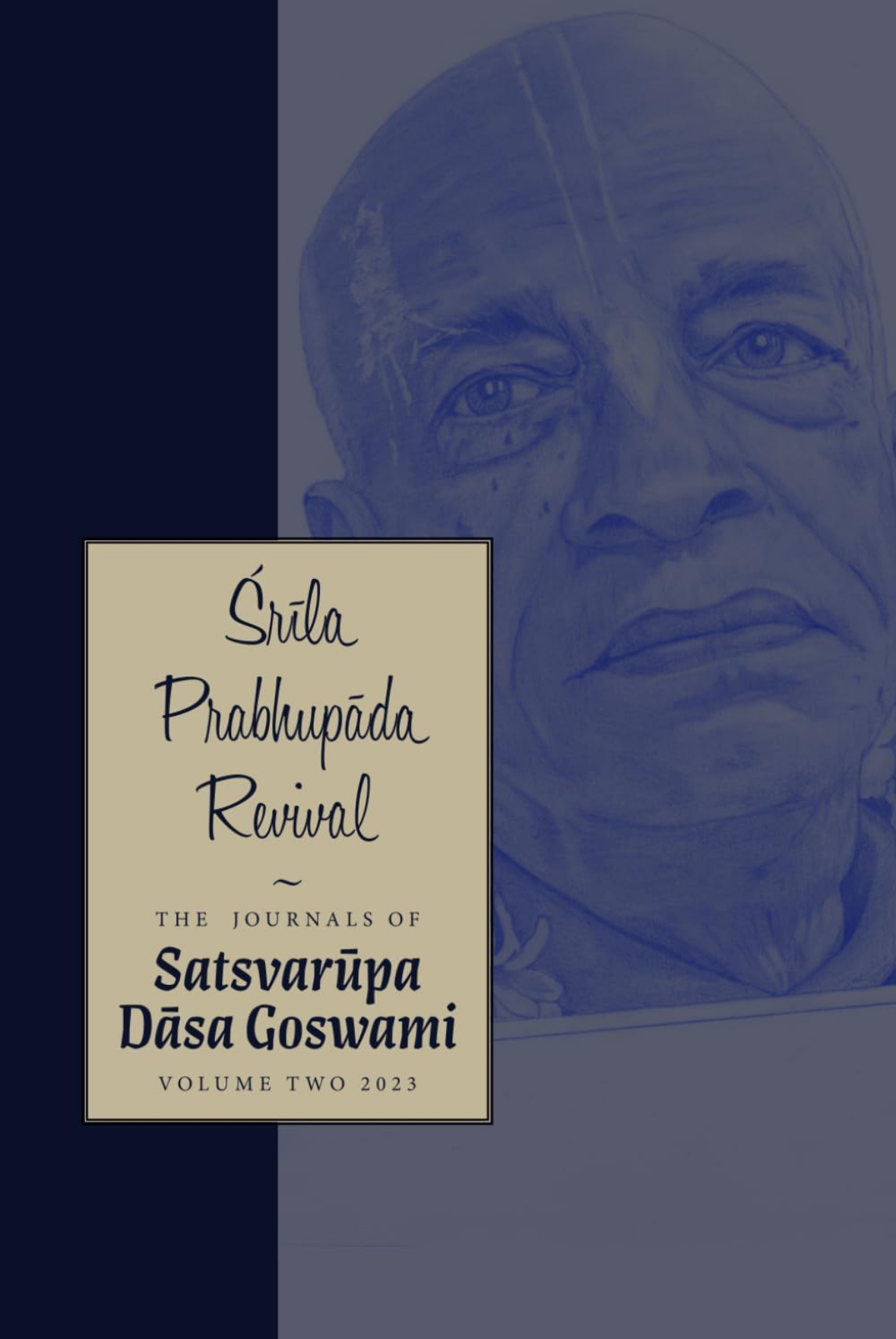
To Śrīla Prabhupāda, who encouraged his devotees (including me) To write articles and books about Kṛṣṇa Consciousness.
I wrote him personally and asked if it was alright for his disciples to write books, Since he, our spiritual master, was already doing that. He wrote back and said that it was certainly alright For us to produce books.
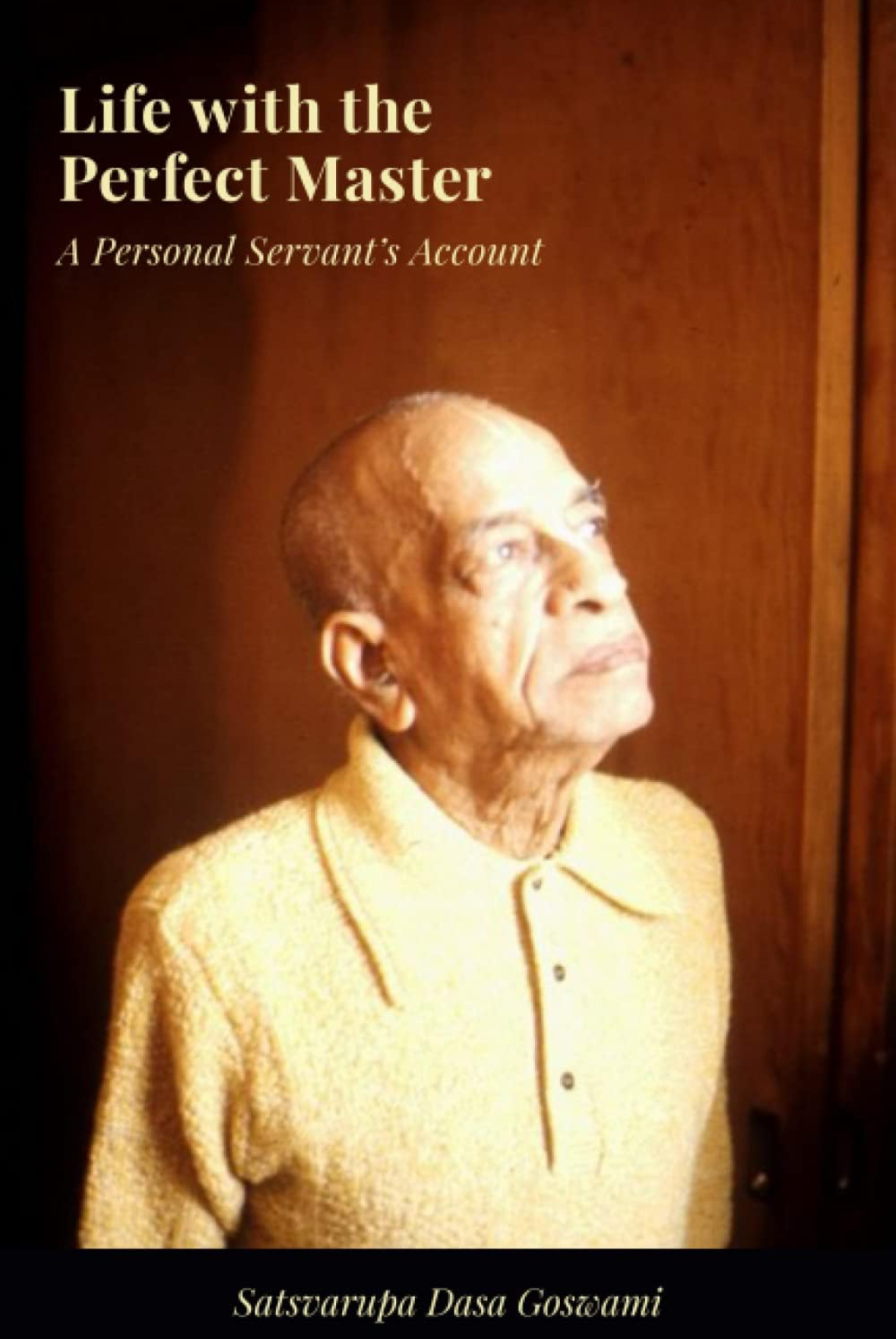
I have a personal story to tell. It is a about a time (January–July 1974) I spent as a personal servant and secretary of my spiritual master, His Divine Grace A.C. Bhaktivedanta Swami Prabhupäda, founder-äcärya of the International Society for Krishna Consciousness. Although I have written extensively about Çréla Prabhupäda, I’ve hesitated to give this account, for fear it would expose me as a poor disciple. But now I’m going ahead, confident that the truth will purify both my readers and myself.

First published by The Gītā-nāgarī Press/GN Press in serialized form in the magazine Among Friends between 1996 and 2001, Best Use of a Bad Bargain is collected here for the first time in this new edition. This volume also contains essays written by Satsvarūpa dāsa Goswami for the occasional periodical, Hope This Meets You in Good Health, between 1994 and 2002, published by the ISKCON Health and Welfare Ministry.

This book has two purposes: to arouse our transcendental feelings of separation from a great personality, Śrīla Prabhupāda, and to encourage all sincere seekers of the Absolute Truth to go forward like an army under the banner of His Divine Grace A.C. Bhaktivedanta Swami Prabhupāda and the Kṛṣṇa consciousness movement.
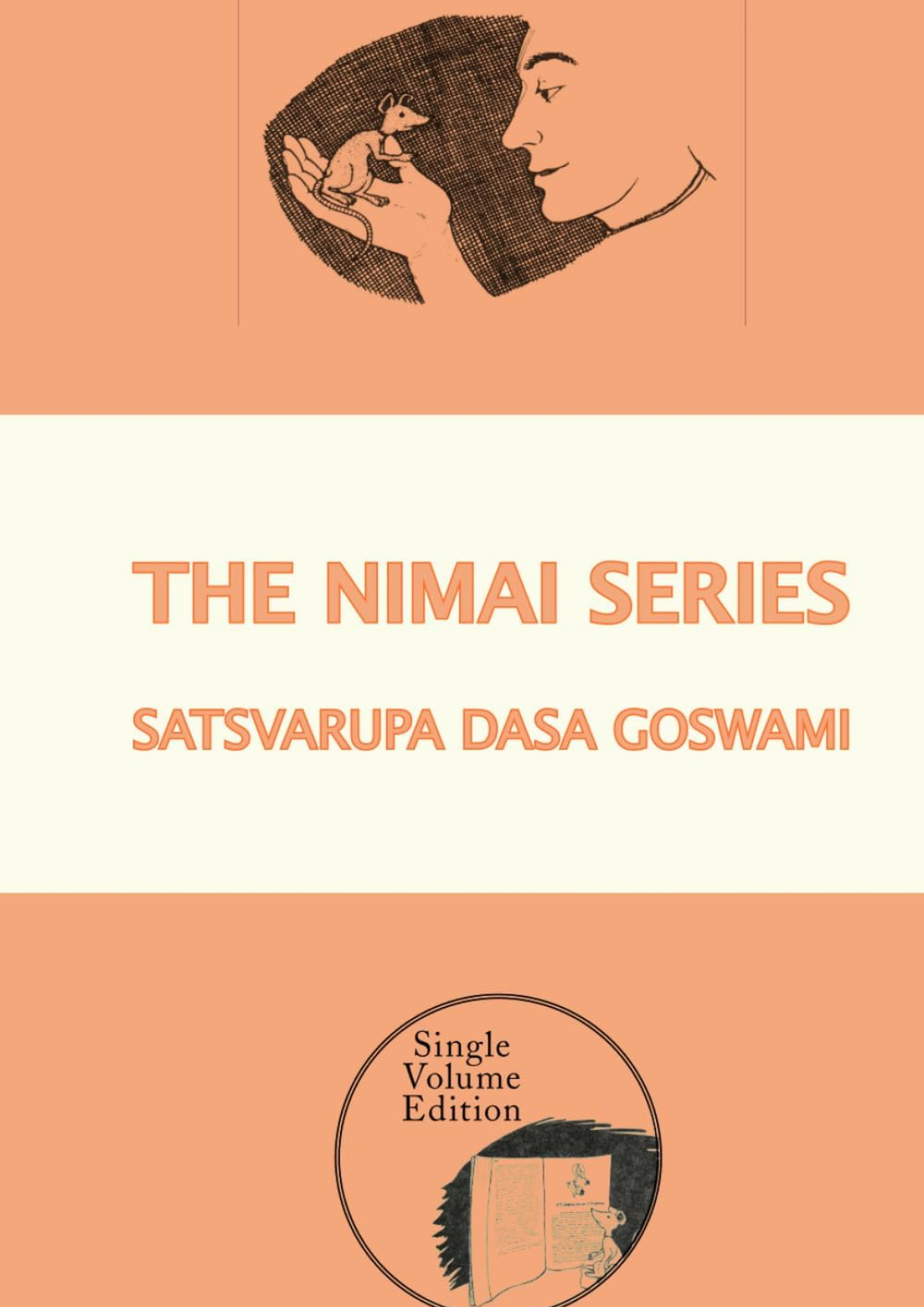
A single volume collection of the Nimai novels.
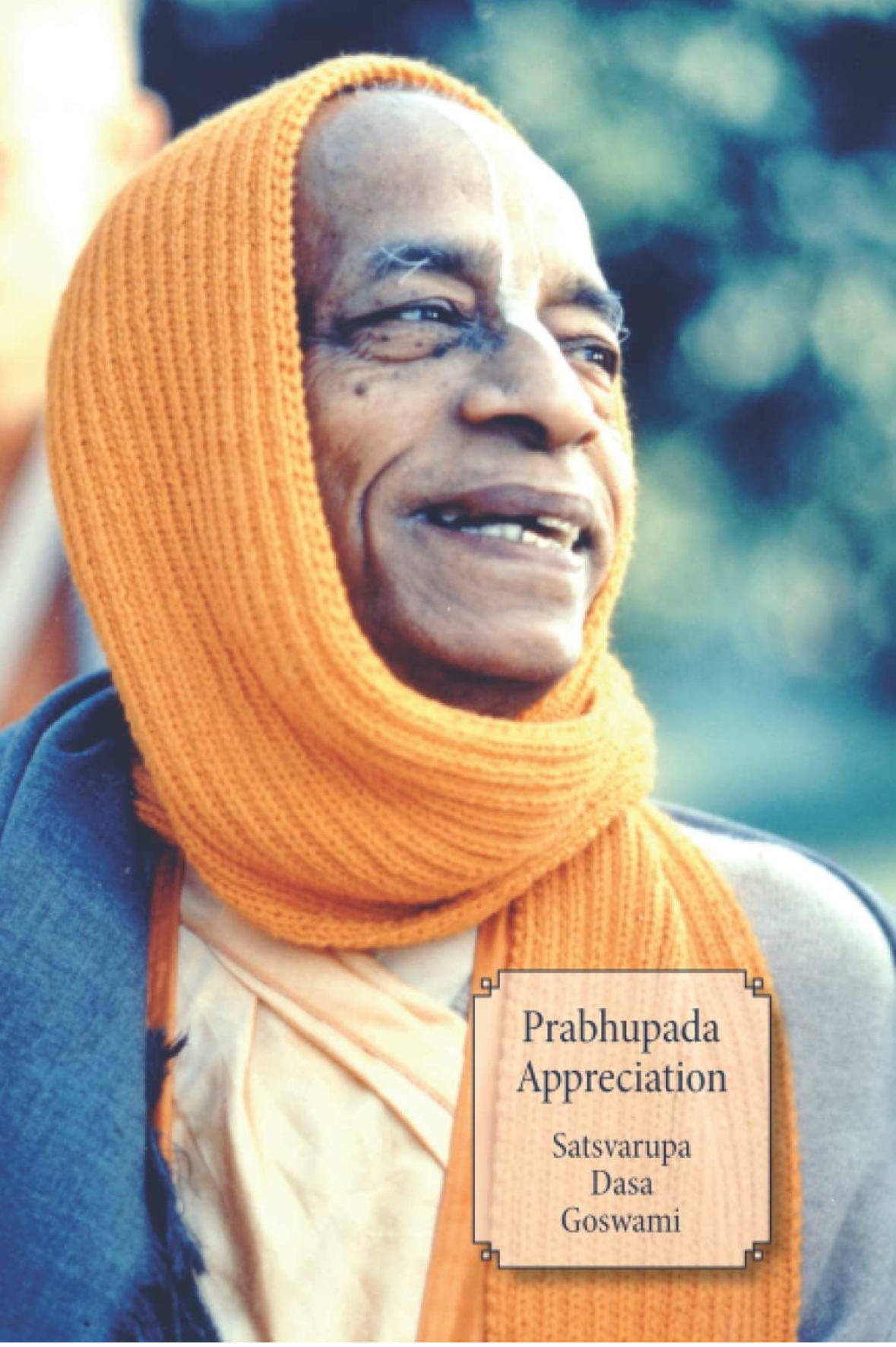
Śrīla Prabhupāda was in the disciplic succession from the Brahmā-Mādhva-Gauḍīya sampradāya, the Vaiṣṇavas who advocate pure devotion to God and who understand Kṛṣṇa as the Supreme Personality of Godhead. He always described himself as simply a messenger who carried the paramparā teachings of his spiritual master and Lord Kṛṣṇa.
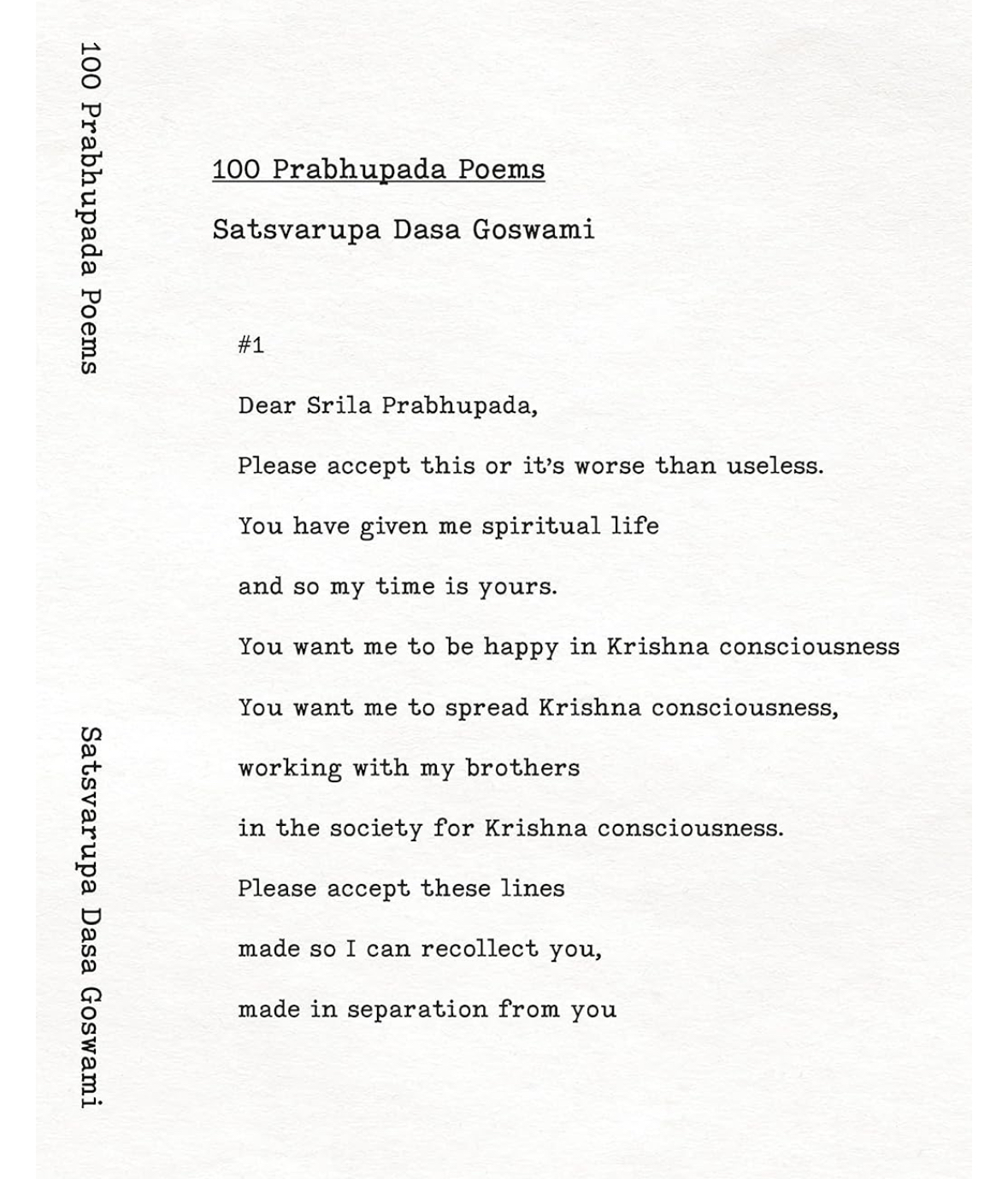
Dear Srila Prabhupada,
Please accept this or it’s worse than useless.
You have given me spiritual life
and so my time is yours.
You want me to be happy in Krishna consciousness
You want me to spread Krishna consciousness,
This collection of Satsvarūpa dāsa Goswami’s writings is comprised of essays that were originally published in Back to Godhead magazine between 1966 and 1978, and compiled in 1979 by Gita Nagari Press as the volume A Handbook for Kṛṣṇa Consciousness.
This second volume of Satsvarūpa dāsa Goswami’s Back to Godhead essays encompasses the last 11 years of his 20-year tenure as Editor-in-Chief of Back to Godhead magazine. The essays in this book consist mostly of SDG’s ‘Notes from the Editor’ column, which was typically featured towards the end of each issue starting in 1978 and running until Mahārāja retired from his duties as editor in 1989.

This collection of Satsvarupa dasa Goswami’s writings is comprised of essays that were originally published in Back to Godhead magazine between 1991 and 2002, picking up where Volume 2 leaves off. The volume is supplemented by essays about devotional service from issues of Satsvarupa dasa Goswami’s magazine, Among Friends, published in the 1990s.

“This is a different kind of book, written in my old age, observing Kṛṣṇa consciousness and assessing myself. I believe it fits under the category of ‘Literature in pursuance of the Vedic version.’ It is autobiography, from a Western-raised man, who has been transformed into a devotee of Kṛṣṇa by Śrīla Prabhupāda.”
 The Best I Could Do
I want to study this evolution of my art, my writing. I want to see what changed from the book In Search of the Grand Metaphor to the next book, The Last Days of the Year.
 a Hare Krishna Man
It’s world enlightenment day
And devotees are giving out books
By milk of kindness, read one page
And your life can become perfect.
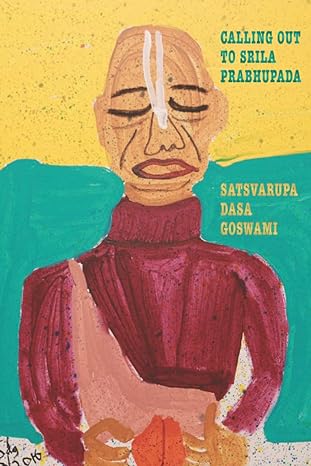 Calling Out to Srila Prabhupada: Poems and Prayers
O Prabhupāda, whose purports are wonderfully clear, having been gathered from what was taught by the previous ācāryas and made all new; O Prabhupāda, who is always sober to expose the material illusion and blissful in knowledge of Kṛṣṇa, may we carefully read your Bhaktivedanta purports.
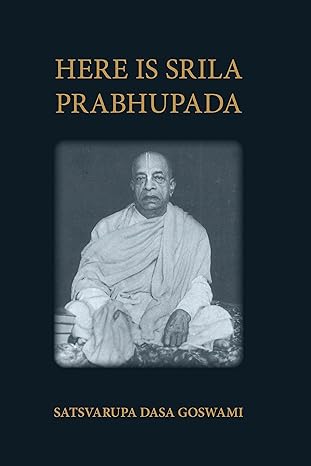
I use free-writing in my devotional service as part of my sādhana. It is a way for me to enter those realms of myself where only honesty matters; free-writing enables me to reach deeper levels of realization by my repeated attempt to “tell the truth quickly.” Free-writing takes me past polished prose. It takes me past literary effect. It takes me past the need to present something and allows me to just get down and say it. From the viewpoint of a writer, this dropping of all pretense is desirable.
 Geaglum Free Write
This edition of Satsvarūpa dāsa Goswami’s 1996 timed book, Geaglum Free Write Diary, is published as part of a legacy project to restore Satsvarūpa Mahārāja’s writings to ‘in print’ status and make them globally available for current and future readers.