

We are still expanding our team of proofreaders as we aim to increase the rate of republication of Satsvarūpa Mahārāja’s books as well as new books that he writes. As many of you know, during the July 4th festival just held, a total of 18 new and re-edited and published books were present, and we hope to present a similar number at Satsvarupa Maharaja’s Vyasa-puja observance this December. Our call for proofreaders includes a need for fluent bilingual Spanish and English speakers to proofread Spanish translations (we currently have around 20 Spanish translations waiting to be proofread). Anyone interested in this particular service should contact Manohara dāsa at [email protected]
If you would like to help, please contact Kṛṣṇa-bhajana dāsa at [email protected] or [email protected] and we will find you a service that utilizes your talents.
There are ten offenses in chanting Hare Kṛṣṇa. They involve not only the time when we sit down to chant japa, but our whole devotional life. These offenses—disobeying the orders of the spiritual master, committing deliberate sins on the strength of chanting, blaspheming the devotee—have to do with more than correct pronunciation of the names of the Lord. So whether we can carry out the orders of the spiritual master is our test. By the time you sit down to chant, it’s already determined by your service attitude—you’ve either already committed the offenses, or you haven’t. Offenseless chanting and following the spiritual master’s orders are interdependent.
By chanting carefully, you get the strength to follow the orders of your spiritual master, as you associate with Kṛṣṇa’s name. But we know that if you associate without offense, it is much more effective. Following the four rules and living in devotional service assures you of avoiding the ten offenses.
The chanting of Hare Kṛṣṇa has the power to eradicate all sins, but if you become an offender to the holy names of the Lord, then you have no chance of being delivered.
******
THE SEVENTH OFFENSE, a very great offense, is to commit sinful activities willfully while chanting Hare Kṛṣṇa. Sometimes this is practiced in different religions: one gets forgiveness from the priest by confessing his sins, but then he immediately commits the sins again. Certainly, the representative of God is empowered to release you from sins, if you actually ask for forgiveness, but not that you deliberately go out and sin again. “This chanting process is a very good instrument because it will purify me from the sins that I intend to repeatedly commit.” This is offensive treatment of the holy name. And if repeatedly, repeatedly, a person does not reform in activity, then he cannot expect that just by asking forgiveness the thing is resolved. There has to actually be reform.
You have promised the spiritual master before the fire, before the devotees, before the Deities. Now don’t make plans for sinful life. “This is my plan. I will chant Hare Kṛṣṇa, I will commit some sinful activities, and the chanting again will cleanse me. But I have no intention of actually stopping these sinful activities. I will use the chanting for my benefit.” This mentality—confessing sins, getting benediction, and continuing sinning—is condemned. It will greatly hamper your advancement. We may wonder, “Oh, I have been chanting for so long. Why don’t I feel effect?” This is why. Śrīla Prabhupāda said, “You can chant vociferously for millions of years and not make advancement, if you do not chant as a devotee and try to avoid these offenses.”
We may make a mistake; that can be rectified. But if you actually plan to make a career of chanting Hare Kṛṣṇa and breaking the rules, then you will not advance at all. It will ruin your devotional creeper. Be honest and sincere. The śāstras are so deep, people cannot understand them. Even the sages at Naimiṣāraṇya are asking, “Please explain them to us.” Therefore, to simply follow the scriptures is not sufficient. But you have to follow someone who can explain the scriptures: mahājano yena gataḥ sa panthāḥ.
If you chant the holy name of God, follow these rules, and are sincere, you will have realized the conclusion of the Vedas. If we can stay fixed like that—“Now the spiritual master is the representative of God. He gave me this name. I cannot break these rules. I don’t care what anyone says. I just have to stay compact. Even if I don’t know so many things, this one thing I have to do”—then you go to the topmost perfection.
When we take initiation, we take on responsibilities we did not have before as nondevotees. Now if we commit offense, it is even more shameful than the offense of the nondevotee, just as a policeman who steals is more shameful than an ordinary citizen. So being given this great gift, we shouldn’t use it as an instrument in sin.
One may think, “I am very weak. I was brought up in a different way. I cannot follow the rules and regulations, but I will chant Hare Kṛṣṇa.” But deliberate wrongdoing is offensive. If you are going to commit sinful activities and try to clear it up by chanting, then you are misusing the holy name. The name is not meant for cleaning up your dirty situation, so that you can again do some dirty thing with a clean slate, and again chant Hare Kṛṣṇa, and again do a sinful activity. Don’t use the holy name in your nefarious plans like that. Approach the holy name when you want to serve Kṛṣṇa, glorify Kṛṣṇa, and ask Kṛṣṇa to take you back in eternal devotional service. That is the power of Hare Kṛṣṇa.
Anyone practicing chanting for some time knows himself its good effect. He can feel that it is purifying him. I remember in the beginning when I was going to chant at the temple, I asked a former friend of mine to come with me. He chanted with us, and afterwards I asked him what he thought of it. He admitted that it was very refreshing. So people can feel that this cleansing brings happiness. We also know that by chanting one is cleansing oneself from sinful desire, and this also brings relief. But if you take advantage of this cleansing yet deliberately do not stop your sinful activities, this is the greatest offense. You cannot commit some sinful activity like taking intoxication or committing illicit sex and then afterwards take to the chanting of Hare Kṛṣṇa with no real intention of stopping your sinful activity, using the chanting as a part and parcel of your sinful life. Just like these people who become very drunk. The next morning they have a hangover, so they take Alka Seltzer or something like that. The idea is get some relief and then again get drunk. They are not taking the medicine to stop forever but so they can enjoy again.
So if anyone uses Hare Kṛṣṇa mantra in this way, this Hare Kṛṣṇa which is actually Kṛṣṇa Himself, which is only intended for developing pure love of God, then this is a very great offense. So many terrible sins can be committed in this world, even murder. Still these sins can be forgiven by chanting Hare Kṛṣṇa. But if you commit offense to the holy name, then how can you be released? The holy name is our last hope. So avoid this seventh offense at all costs. Be very careful not to fall into some kind of inadvertent, deliberate sinful life in the name of being a devotee. Don’t pick up bad examples from others’ bad activities. Be exemplary. You have to reform.
Take the holy name in earnestness. You have vowed to chant at least sixteen rounds every day and to obey the four rules; they go together. When Jagāi and Mādhāi were forgiven of all their sins as they took the holy name, Lord Caitanya also said, “But now no more sins. Whatever you’ve done is of no consequence, so you don’t have to bother about it. But no more. Now chant Hare Kṛṣṇa and be peaceful.” That is the nature of the forgiveness of Kṛṣṇa; He can forgive anything. But now don’t sin any more. And this is possible if we simply take our position as the servant and depend on Kṛṣṇa and Kṛṣṇa’s right direction.
Dear Srila Prabhupada,
Please accept my humble obeisances. All glories to you.Pradyumna dasa, the production manager of the Srila Prabhupada Tributes series, who works under the inspiration of Jayadvaita Maharaja, who is the one who conceived this whole project of a yearly Tributes book for all of Prabhupada’s initiated disciples—everyone who is initiated, no matter what their status.
I noted in the invitation for this year’s book that it will be a historic 60th anniversary edition recognizing 60 years since you, Srila Prabhupada, founded ISKCON and began your extraordinary mission to share Krsna consciousness with the world. I am fortunate to take part in this year’s book and at the same time appear on “the number one podcast of ISKCON—the Namarasa/Vyenkatta Bhatta interview. In my case, I was picked up personally by you some 60 years ago (my initiation being September 23, 1966) from the gutter, a very fallen sinful-addicted wretch living in bad association in New York City’s Lower East Side. The two podcasters invited me to their show in the beginning of 2026, and I was able to speak of my early memories of you, Swamiji, and this was much to the pleasure of thousands of devotees who had never been present or heard about these pastimes of yours, and how you struggled in the beginning, and how you gathered less than ten men (or boys as you called us), and with compassion, courage and unwavering devotion, raised us at first as a small family.
To this present day I still recall those early days as my favorites because you, Prabhupada, were so accessible to us. And for myself personally, I really needed special attention from you—and you gave it freely and saved me. I promise I will never forget your individual attention and kindness toward me, and I will never leave your feet or abandon your mission. I have an irresistible desire to remember the early days with you, but not at the cost of acknowledging how wonderfully you and your followers have expanded your desires and seen the movement grow, purify itself of its anarthas, become more and more potent and populated with sincere souls over the years and decades. Now it is 60 years since you began and since I joined also. And while I may have a special sentiment for the early days with you when you were so close to us, I don’t do this by negating that you actually wanted your movement to grow bigger and bigger, and this has come about by your grace and by the potency you placed in the hearts of your initiated disciples.
The invitation to this year’s Tributes book stated that last year 230 “heart-felt offerings” were submitted, with “each wondering if he was closer to Srila Prabhupada.” So, I hope many more than a mere 230 people can take part in submitting homages to you. When anyone who was initiated can submit an homage, he doesn’t have to be one who came in the very beginning, but he can be anyone who received the mercy of your diksa during your lila of manifested preaching in the world. Of course, you are continuing to be the preeminent guru for all the devotees in ISKCON. And devotees who only recently joined your movement are open to receiving the nectar and empowerment to preach just as much as the early ones received, if not more.
I personally do not have so many years left to live in this body, since I’m already 86 and in failing health. I don’t know what you have in store for me in the next life, but I pray that I may join with you and go back to Godhead, as you have hinted it is possible in one lifetime. If I have to come back many lifetimes, I still pray to be faithful to you. Let me not forget the wonderful early days, and let me not abandon you ever at any point but stay with you and help contribute to making ISKCON a greater and greater institution, an institution with heart and right behavior, and love for you, dearest Srila Prabhupada.
Hoping I may be with you on this earth for many more Tributes books, but when I have to go, I hope I will still be able to take part as your disciple and stay with you, either in this world or eventually making progress back to Godhead.
Yours in service, a fallen, faulty servant,
Satsvarupa dasa Goswami
pp. 24-30
Sumati Morarji, you were
an executive woman in charge
of a steamship line.
You generously gave Śrīla Prabhupāda
free passage in your ship
the Jaladuta, even though you were
very concerned about his health.
The captain of that old ship
was Captain Pandia. The voyage to America
took thirty-five days. Captain Pandia followed
after Prabhupāda and heard some of his lectures.
He also provided appropriate bhoga
for his offerings and attended
Prabhupāda’s celebration
of Janmāṣṭamī.
Prabhupāda was sponsored
for permission to go to America
by the Agarwals (Gopal and Sally)
and Prabhupāda stayed
at their house in Butler, Pennsylvania
for three weeks and was very curious
to learn the ways of America.
I am writing to you as a disciple of A.C. Bhaktivedanta Swami Prabhupāda to thank you for sponsoring him to come to America.
You gave him a nice experience on his first visit to America and welcomed him into your home. He stayed at the Butler YMCA, but he came to your home to take meals which he cooked himself and shared with you. You were very kind to arrange an interview with the local newspaper to introduce him to the local Butler community. You also invited people to your house to meet him and ask questions. He enjoyed playing with your young son Brij and was thrilled to witness his first steps.
You lived longer than your husband, and you were more active in promoting Kṛṣṇa consciousness. You used to speak at functions where people were gathered and tell them about the wonderful visit when the Swami came to your home. You were like an advocate for Kṛṣṇa consciousness. As long as you lived, you attended Kṛṣṇa conscious functions and told the people the intimate affairs of Prabhupāda when he lived at your house. You told how you gave Prabhupāda a big bag of coins to help support him when he left your home to be on his own. You developed a true motherly love for our Prabhupāda and felt a parting when he left. You and your husband are now both gone from this world, but you will always be remembered by the devotees of Kṛṣṇa consciousness for your original steps to introduce the Swami to your home and treat him kindly.
He learned so much about America in the three weeks he stayed with you, and he was happy to be there. But he had bigger tasks to achieve, and he felt he could not achieve them in the small American town of Butler. So, although you were reluctant to see him go, he had to go on to fulfill his spiritual master’s order for spreading Kṛṣṇa consciousness, which he did all over the world. The devotees of Kṛṣṇa consciousness will always be grateful to you, Sally, and Gopal for welcoming Prabhupāda to America, and for giving him a nice visit and a good start.
Thank you very much,
The devotees of Kṛṣṇa consciousness
Dr. Misra, you were the yogi
who gave Prabhupāda a place to stay.
You were an impersonalist and used
to get into arguments
with Prabhupāda. But always you
would settle your arguments
and be friends again.
Prabhupāda would cook for you
and you said, “he saved my life
with his prasādam.” You would
not allow him to preach
Kṛṣṇa consciousness openly
to your devotees, but you did
allow him to lead wonderful kīrtanas
at your country ashram
which ultimately brought
some of them to
Kṛṣṇa consciousness
back in the city.
A big sign with these words hung above a storefront at 26 Second Avenue. It was a gift shop which particularly sold matchbooks and little figures. In time, the devotees of the Hare Kṛṣṇa movement rented the empty storefront and turned it into a temple for the Hare Kṛṣṇa movement. They kept the big sign, “Matchless Gifts,” hanging above the doorway. It seemed a perfect sign for a spiritual temple, indicating that Kṛṣṇa carried the matchless gifts.
You are my original spiritual home in New York City with Prabhupāda. I have many fond memories of you and Swāmījī from this place.
Prabhupāda said, “Those were happy days.” Even today, I go back to you for solace. We learned how to chant Hare Kṛṣṇa from Swāmījī within your protective walls. You were a haven against the miseries and challenges of the Lower East Side. We could always come to you for safety.
I am glad to hear the devotees are planning to restore you to your former ambience, because that is how I remember you from my “childhood” with Swāmījī. Your life was simple. You had one sink which was placed near Swāmījī on one side of the dais. (He used to sometimes spit apple peels into the sink.) You had a well-worn wood floor which had obviously seen much traffic over the years. Although you were old, your shelter was enhanced by the overall presence of Swāmījī. I hope that same presence can be preserved and enhanced to give his shelter within your walls to devotees now and in the future. Even small details of what it was like then, such as the doorknob on the bathroom he used, are dear to my heart and bring back fond memories. You were never freshly painted for years, but you had the homely feel of the “original family house.” It seemed better when nothing had changed for years. It gave the feel of our “childhood home.” Even the simple paintings brought back from India by the Mott Street boys added authenticity and charm to our newfound temple. Even though you gave shelter to “homeless devotees” at night, during the day you were an attractive place to perform devotional service. Of course, we wouldn’t want devotees and friends to stay overnight anymore, but at least the memory of that time should not be lost. Also, we wouldn’t expect you to remain always the same exactly, with a pile of stinky shoes, for example. Any little detail is important, like the little piece of paper announcing the daily program by the Swami in our window.
You were the legendary park of the hippie era on the Lower East Side. Swāmījī took advantage of your atmosphere, where many young people gathered, and went out with his devotees and held public kīrtana. It was a sensation! Many people gathered to watch our kīrtana, and some joined with us. One characteristic of our kīrtanas was that quite a few musicians used to join us and play their instruments in harmony with Prabhupāda and his boys. Swāmījī would lead the kīrtana vigorously for more than an hour. We boys of Swamiji joined in the chorus of the Hare Kṛṣṇa mantra. Although some onlookers would heckle us, you provided shelter for our newfound free expression. We were not afraid when you were present with us. One of the devotees brought a used oriental rug, and Swāmījī and some of the boys sat on that old rug under the famous elm tree now called the “Hare Kṛṣṇa tree” (and there is even a permanent brass plaque there, with words commemorating that this is the Hare Kṛṣṇa tree). The significance of the Hare Kṛṣṇa tree being an elm tree is that it survived the horrible blight that killed most of the elm trees in America. It was blissful singing for hours with you, Swāmījī, one of the highest days of happiness that we enjoyed. Even on days when Swāmījī didn’t go out with us, his presence was still felt, and we had courage on our own, with his chanting behind us. Many years have passed since the Hare Kṛṣṇa movement first went out and began its chanting in your park.
The movement is now spread literally all over the world, and devotees go outdoors chanting and dancing to the Hare Kṛṣṇa mantra. We will always remember the first chanting in October of 1966, when the most brave Swāmījī went out with his little band of motley followers and dared to break the American silence. The early days of Tompkins Square Park, when the devotees chanted for the first time, will never be forgotten. One can return to that park any day, visit the Hare Kṛṣṇa tree and the memorial plaque. Now this act of devotees gathering to chant in a park or anywhere outdoors that can attract onlookers to the holy name can be enacted, and we can always remember the very first time we did it.
pp. 249-52
As we grow older in Krsna consciousness and see that we have to sustain our spiritual lives for an entire lifetime, it becomes more important to be satisfied. When we were younger, we thought satisfaction was sense gratification, something to be renounced. Of course, the scriptures tell us that spiritual satisfaction is the only true satisfaction. It comes from satisfying the Supreme Self, Lord Hari, Krsna. But as neophytes, we think we are not qualified to experience that bliss, and, therefore, we renounce it. We perform our services for our spiritual master, and we are satisfied if he is pleased with us. But our guru wants us to be personally satisfied also. He knows we cannot work nicely unless we are.
There is a strong aspect of renunciation within spiritual satisfaction. Srila Prabhupada said that one should accept whatever comes without much striving, and be satisfied with it. As soon as you want more materially, then you become dissatisfied. The quest for attaining devotional service should also generate a kind of dissatisfaction. We become painfully aware of our anarthas, our lack of love, our apparent lack of progress. That can be healthy. But this dissatisfaction does not counteract the need we have for personal satisfaction. We have to feel satisfied in our ordinary routines, our devotional observances, our chanting, serving, preaching, worshiping the Deity, our living with devotees. If we are not satisfied with our lives in devotional service, how can we go on? We are pleasure-seeking beings (ananda-maya) by nature. If we don’t find pleasure now in our spiritual routines, we will eventually reach out and seek pleasure in the material world.
My poor spirit is no concern of yours
and it’s not even poor. No use complaining.
I do my little bit, exercising outdoors.
Maybe these days aren’t meant for poetry.
Can I coax you out, Muse?
Give me the pen
and let me write in the shack—
My Lord, You are the center.
And this may be my worst mistake—
not to find You more important than I.
As we read in the story of
the brahmanas’ and wives,
they brought Krsna into their hearts
through the eyes,
and embraced Him therein.
Prabhupada says they
are like mystic yogis in a union of One,
but both lover and Beloved continue to exist.
We can read it.
Walk looking up at the thrush
who every early morning
sits on a branch in the same tree
and sings an hour as the sun rises.
The tractors sit on the home sites,
and at this time of day I have nothing to say
but Hare Krsna, Hare Krsna, Krsna Krsna,
Hare Hare—
and I ease up on my envy as I think
of each person.
Walk quickly back,
stopping to pick a weed with big white
flower atop—
it carries a yellow spider whom I flick away.
Now the flowers are in brass vases,
stooping over the picture of Radha-Damodara,
It’s time to get out there and write,
stay awake!
We have what no one else has. We look around for help from others, and we want to be understood. (By “we,” I mean the community of Krsna conscious devotees.) We are seen as intensely insular and sectarian, although some know us better as ordinary people with links to the world like everybody else. But the special thing we have is access to Krsna, especially Krsna in His name and in His Vrndavana feature. That is what we have and it should make us humble and eager to share Him with whomever we can find who wants to receive Him.
I am in one small corner of the Krsna consciousness movement.
The spiritual journey is marked by questions. What are some of mine right now? “What can I write?” “When will I die?” I do not dare ask, “What will happen then?” That question is too big, and it is not meant for now. Now I should ask the one question Srila Prabhupada asked his spiritual master, “How can I serve you?” Death will come in its own time, and I will go where the higher authorities decide.
Other questions devotees ask: Why am I not utterly submissive and obedient? But obedient to who? To Krsna and guru? To their representatives? Which ones? The GBC? Which members of the GBC?
Who makes up the questions in your life? How do you know when you have actually received an answer? How do you know when to follow?
We need to ask ourselves these questions and understand that it will take time to get the answers. Even if Srila Prabhupada answered you immediately, it would take time for his answer to sift down from your mind to your heart.
Another question: “What do I want?” That seems to be a realistic question. And another: “Do I even know yet how to ask a question?”
At least I know how to answer questions: I turn to the instructions of my spiritual master. “What do I want?” I have already assimilated his teachings enough to be able to answer that one: I want to be happy and strong, humble and renounced. I want to attain the twenty-six qualities of a devotee. I also want time to read and write. I want to behave properly as a sannyasi. I want so many things, and each day I have to rethink this question. Answers are easy to come by, but they change with the passing of time. Getting to the unchanging essence is the difficult part.
pp. 32-34
Prabhupada singing:
he krsna karuna-sindho dina-bandho jagat-pate
gopesa gopika-kanta radha-kanta namo ‘stu te
jayatam suratau pangor mama manda-mater gati
mat-sarvasva-padambhojau radha-madana-mohanau
What to do, what to do? Sitting in a room, the guest room of the Vicenza temple in Italy. Srila Prabhupada is up from his post-lunch rest with his beadbag in his hand. The murti chants for many hours a day. I want to set up a Dictaphone and book for him at 1 A.M. so he can do his translation work too.
Sometimes he takes rest, and sometimes he takes prasadam. I’m in such a rush sometimes that I don’t make nice prayers when I offer him prasadam. Rather, I bow passionately at his feet without slowing down. Externally, my life may seem very slow to somebody else, but still I can’t seem to slow down and say the prayers, can’t slow down and say gayatri. I’m always moving from one thing to another. I even eat fast. But Prabhupada is here, and he gives me some sanity and a chance to feel close to him.
I’ll be in this room for only one more day. Then we’re moving on again. There’s a picture of Prabhupada here—that really wonderful one where he’s wearing a rust-colored cable knit sweater. They used it for a Christmas marathon poster one year: “Prabhupada wants YOU to go out and distribute books. Go out and get the mercy . . . ” “If you really want to please me…” That was the line they used.
It looks like the picture was taken in an airport because he’s sitting on a black, leather-looking chair. I wonder what city it is. But there he is, leaving his boys and girls in one place to go to them in another.
That’s all you can see clearly. His garland—the gardenias and other flowers. His cane—the bamboo one, which means it’s probably early 1970s. Dear Srila Prabhupada. He’s sitting straight, not cross-legged. Paramahamsa parivrajakacarya, looking pleased, smiling, but we can’t see his teeth, the corners of his mouth turned down, compassion in his eyes. Our Srila Prabhupada.
It’s wonderful and it’s right that in this movement everyone worships him and looks to him. I’m trying to do that by studying his words and trying to stay under his gaze.
Prabhupada spoke in a lecture (1972 in Vrndavana). I heard today on the srama eva hi kevalam verse. He said the most important thing is hearing. That means kirtana hearing or Bhagavad-gita, Srimad-Bhagavatam. Sthane sthitah sruti-gatath tanu-veiri manobhir. Sthāne sthitāḥśruti-gatāṁ tanu-vāṅ-manobhir. Then he said, “This is the purpose of Vrndavana. . . . As in Vrndavana, this place Vrndavana, there are so many people who are hearing about Krsna, wherever you hear about Krsna, that is Vrndavana.” Vrndavana is not limited to a certain place, Vrndavana means wherever you can hear about Krsna.
He then referred to that year’s Janmastami which he spent at New Vrindaban. There were hundreds of devotees there, he said, and it was as good as this Vrndavana. There was tulasi, there was kirtana, he was speaking bhagavata-dharma. “Of course, this Vrndavana in India is special. It is established. When Krsna comes to this world, He comes here. ”
You know, hearing Prabhupada speak is wonderful. He says things that he’s always said before, but if you listen carefully, sometimes you get—what can I call it? Realization? New clarity? His words just click, and you can’t quite express that feeling that you get to someone else except with a certain force of conviction. Then your own clarity becomes expressed by it.
I really took heart from that lecture. It means that my traveling in the Western world can be as good as living in Vrndavana. It’s a fact that when you go to Vrndavana, there are obstacles to Vrndavana consciousness and to Vrndavana bhajana. If for me, Vrndavana means a heavy emphasis on dealing with others, on the institutional program, on different opinions and socializing and ritual—then how is that Vrndavana? Vrndavana means chanting and hearing about Krsna, and being in that mood as much as possible. I may be able to do that better somewhere else. Prabhupada said that, even while in Vrndavana, lecturing at the Radha-Damodara temple. He didn’t make a cult out of it—”Vrndavana only”—but said that Vrndavana is all over the world when we concentrate on hearing and chanting. I caught a glimpse of it when he said that and how we should aim for Vrndavana consciousness wherever we are.
pp. 11-15
Devotee: What should you be thinking about when you’re chanting? What do you think about when you’re chanting?
Prabhupāda: “Chanting? You simply hear. When you say ‘Hare Kṛṣṇa,’ you try to hear the very sound, ‘Hare Kṛṣṇa.’ That’s all. Nothing more. This is meditation.”
—Lecture on Madhya-līlā 6.254,
January 8, 1968, Los Angeles
******
Devotee: Prabhupāda, when we first got to chant Hare Kṛṣṇa, a way to concentrate is to just concentrate on the vibration. Should we try to strive for …
Prabhupāda: “No, concentrate on the vibration. Simply hear. It is very easy. If I say “Hare,” you can hear, even without concentration … but if you hear attentively, that is required…. But don’t misinterpret according to your own fertile brain. No, just hear Kṛṣṇa, what Kṛṣṇa says, as it is.”
—Lecture on Bhagavad-gītā 13.4,
April 20, 1974, Hyderabad
******
“Don’t speculate in the mind; simply hear. That is the process.”
—Letter to Dānavīra, Nairobi, September 27, 1971
******
All I want, life after life, is unmotivated devotional service to You.
—Cc. Antya 20.29
******
Prabhupāda: “I have come to Hare Kṛṣṇa—please engage me in Your service. That is my life. I have done all this nonsense life after life. They are not satisfied. Therefore, my business is to serve. I have come to You. Please accept me.”
—Room conversation, January 8, 1977, Bombay
******
Prabhupāda: “One should feelingly pray and become eager to render his particular type of service to the Lord … In other words, one should learn how to cry for the Lord. One should learn this small technique, and he should be very eager and actually cry to become engaged in some particular type of service. This is called laulyam, and such tears are the price for the highest perfection.”
—The Nectar of Devotion, Chapter 9, “Submission”
******
Blessings from hari-nāma,
please bless us, Lord.
A writer of pieces—
we have only a little time, bless us Lord Caitanya and Lord Nityānanda, Śrīla Prabhupāda, Kṛṣṇa and the Pañca-tattva.
Jaya Śrīla Prabhupāda,
please forgive me.
Jaya Gaura-Nitāi
May the Lord bless us,
we don’t have much time left.
HKM. Sixteen words and thirty-two syllables.
For those with a spot-life,
“Four score and seven years ago.”
Tempus fugit.
He’s only got a little piece of pie.
We should chant Hare Kṛṣṇa constantly.
Swāmījī gave me my beads,
they were large red wooden ones.
We chanted one hundred and eight mantras together.
I promised not to sin.
He pronounced my spiritual name:
Satsvaroopa—
“the inner form of truth”
and he added, “the servant of.”
The father blesses the son,
Kṛṣṇa loves Rādhā,
Rādhikā loves and dominates Kṛṣṇa.
Blessings from hari-nāma
Please bless us, Lord
a writer of pieces
we have only a little time bless us,
Lord Caitanya and Lord Nityānanda
Jaya Śrīla Prabhupāda,
please forgive me.
Jaya Gaura-Nitāi.
We chanted in congregation
and the Lord was pleased with us
but yesterday we were sick
and could not do our exercises
in the big bike or cart
the physical therapist will be displeased
he’ll push us nevertheless
******
“If one chants this mantra, he will never get tired. The more one chants, the more his heart will be cleansed of material dirt, and the more the problems of his life within this material world will be solved.”
—The Science of Self-Realization, Chapter 5
This is not true for me—that I can chant Hare Kṛṣṇa twenty-four hours a day. I’m not on the spiritual platform, which is absolute. I get exhausted or bored. I pray to reach the standard of nonstop chanting. O Lord, please grant me that freedom.
The sinful old man named Ajāmila called out the name of his little son, who was also called Nārāyaṇa, and messengers of God came to his rescue. At the same moment, the messengers of death came to pull his soul to hell. But because he had called on the name “Nārāyaṇa,” he was saved from death. Such is the power of the name of Nārāyaṇa. The messengers from hell were chased away, and the old man who called out, “Nārāyaṇa!” was delivered to the spiritual world.
“By chanting the Hare Kṛṣṇa mahā-mantra, one’s heart becomes cleansed, one’s love for Kṛṣṇa and eternal relationship with Him is revived, and one goes back to Godhead.”
… when by chanting the Hare Kṛṣṇa mantra we are cleansed of all dirty things … we shall be able to understand very easily that Kṛṣṇa is the only object of love … learn how to love Kṛṣṇa and always be engaged in His service … then one can very easily go back home, back to Godhead, our real relationship with the Lord is revealed, and we eternally engage in our eternal relationship.
—Śrīmad-Bhāgavatam 10.3.37–38, purport
******
“All that is necessary is careful listening. We have to listen to Bhagavad-gītā, and we have to chant the names of Kṛṣṇa and listen to them carefully. We should not be puffed-up, falsely thinking that our knowledge is great and that we are very learned. We need only become a little gentle and submissive to hearing the messages from Kṛṣṇa.”
—Raja Vidya: The King of Knowledge, Chapter 4, pp. 40-41
pp. 320-23
I have a right to talk of my headache syndrome. How I deal with it is part of my spirituality. It has severely hampered my active service. But for over thirty years, it is the definition of who I am as a conditioned soul, and so it is integrally involved with my relationship with Krsna. The fact that I live under its yoke is part of my submission to Krsna’s will. I do not complain to Him or blame Him. I accept it as a mystery, either my karma (token reaction) or Krsna’s personally handling me for His best interests in my advancement. If I despaired and whined about it, it would be better left unsaid. But since I am so committed to personal writing, I can’t omit it anymore than I can omit reports of my daily japa.
I punctuate my diary with daily reports as a matter of fact. Since it is so limiting and frequent, I consider it my responsibility to tell the world what’s happening in this regard. One could choose to be silent as some writers have about their physical maladies, and I honor them for that. But I don’t think others should find fault with me for taking the opposite course. As I say, it’s not a material thing, because I am not a material person. It’s a spiritualist’s burden. As long as one does not pity oneself, to speak of recurring headaches is fair game and grist for the writer’s mill. It’s one of the most important and prominent features of my life.
I retired from the GBC twenty years ago beause my headaches were intolerable and I could not attend the meetings. The meetings caused stress, which brought on migraine attacks. Yet I’ve continued writing in between headaches, and even traveling and living in a van when I was younger and stronger, as a sannyasi and initiating spiritual master. I took up a painting career. Sometimes I would start a painting and feel a headache coming and have to stop and lie down. But I’ve always used what pain-free hours I have to perform my basic sadhana and preaching and writing, painting, and occasional lecturing and meeting with disciples.
I’ve heard St. Thomas Aquinas had debilitating migraine headaches, but he never wrote about it in his lofty theological treatises, proving the existence of God and so on. He was a theologian. I am a writer of theology, but I am also committed to writing the little life. The little way, as Thérèse of Lisieux called it. You offer yourself to God directly, as you are, and make offerings of love out of the daily fabric of your life. If pain in the head happens to be a major part of your life, you have to find a way to offer that to Krsna also. You patiently wait through a headache as a form of devotional service. You take medication to get back the quality of your life so that you can do something besides waiting. And so my readers will be bearing with me through a series of mentions of headaches, and I hope I will behave in an exemplary way in pain so that it does not become a detriment to communication but a kind of inspiration even. You, too, have your pains and burdens, just as I do, and we have to accept them in a submissive spirit as part of Krsna’s plan for us. If I can do it, you can do it. So I don’t hide the facts.
My little essay on headaches has encouraged me to write more on the subject. I have several times referred to the last line in a poem by John Milton, “They also serve who only wait.” I like it very much because it indicates that even an invalid who is unable to perform concentrated bhajana can act in devotional service to the Lord. By passively waiting in faith for the time when he can pray again, he endures his pain and being an invalid, and this counts as seva.
I recall Ravindra Svarupa Prabhu giving the example of a writer who sits all day doing nothing but staring out the window. A person demands of him, “What are you doing?” He replies, “I am working!” This indicates that a writer needs to cogitate, sometimes for long periods of time, before he can come up with something to say. But in free writing, one doesn’t wait; he comes out with whatever flows from the typewriter, as long as it is not unpalatable. “All the news that’s fit to print”:
pp. 99-103
Dear Lord, I want the chance to serve you. I pray like the priests of King Nabhi that You please give me the chance to render You some service. I know You don’t need my services or any paraphernalia, but You like devotion. I pray to develop it for You.
We talk of writing practice, how it develops, how you get better at it and at writing in general, but it has no real end product. Okay, I know that, but I still want to offer it as service to You. It’s sadhana. I know You don’t need my writing sessions or my mantras, but this is the way I beg and show my dedication.
Lord Krsna is the sun and moon and the evening and all things and in all hearts as Supersoul, but no one knows Him. Whenever I get to that verse in the Gita, it touches off something in me. I want to stay with it—seventh chapter—where He says He is all things, both material and spiritual, the origin and the dissolution. He meets us at every point in life.
“Deluded by the three modes, the whole world does not know Me, who am above the modes and inexhaustible.” (Bg. 7.13)
We do know Krsna, at least to some degree, by Srila Prabhupada’s grace. In my dream, a devotee was with me to help me through, and in the same way, Krsna is with me. It’s a pity the world doesn’t know Him. Can we devotees help? “Hardly one knows Me in truth.” I look forward to living with the scriptures, and especially the verses spoken by Lord Krsna.
In the spirit of hurrying along in travel, saying farewell, and receiving help from friends, being well-disposed toward them, and seeing in all this that Lord Krsna is all-pervasive and above the modes, I say hello to Progresso. I know we will be together only briefly, but we will travel on in life always together from this small contact. Sound sentimental? How can you make friends with a book you’re writing? It’s real.
I have no other friends
to delay me. I can divide
the lines wherever I want.
It doesn’t have to come out
right. I serve Lord Krsna
day and night. As I hurry at
the ferry terminal I am not
afraid. Externally I rush back
with my luggage and I am told
that they may gyp me, but inside
I’m not worried because
Thou art with me. You
have arranged for my safe journey;
as long as I think of You I
am safe and can help others
who are distressed.
All glories to the Lord of
the universe, who is the Lord
of adi-rasa and all rasa.
His pure devotees do whatever they can to serve Him, including becoming thieves (they did this in South India, Srila Prabhupada says), and the gopis would even become prostitutes for His pleasure.
You know, you live in metaphors and that’s okay as long as you keep your feet on the ground.
But if the Lord wants me to fly through? I will jump in kirtana.
Metaphor of dying and rushing along. I say “metaphor,” but it’s my reality too. The Hare Krsna mantra is not a figment of my imagination.
The reason I dreamt of Gaurahari was that I saw him in a few photos with His Divine Grace on a morning walk. We were each fortunate to be there. Gaurahari was chanting on his beads beside Prabhupada. Bhavananda was beaming in Brooklyn at the ISKCON Press warehouse; Advaita dasa in his green printer’s uniform was smiling despite himself, escorting Prabhupada around the premises. I and other skinny GBC men walked along with them. That was our chance to be with him. Recall the sweetness of being with all those devotees focused on Prabhupada and living his adventure.
All aboard. Don’t delay. Get your tickets. Let’s get going. And write your notes wherever you go and offer them as service (nervous) to Lord Hari:
Planning for travel?
Don’t forget His Divine Grace.
Trying to sleep at night?
Chant Hare Krsna to put yourself to rest.
Afraid in the dark? Chant
the Lord’s name. Had a dream
and want to understand it? Think in
terms of your spot life in the
eternal journey. What is the subconscious trying to tell you?
You have unfinished business? Then find a devotee to help you and take things seriously as much as you can. “Don’t come back for another life,” says Bhaktisiddhanta Sarasvati. He didn’t. Of course, he was just visiting. I’m here under different conditions. Time runs out on all before you know it.
On queue, chant
while running chant
while writing chant Hare Krsna and
if you get a spare minute,
chant—I mean, and
read Srimad-Bhagavatam.
Progresso; make progress. I love to serve in a torrent of words. It’s a way to love.
Progresso is an Italian word, like arrivederci, farewell.
Progresso should be clean, no hype, transcendental. Does this make sense? Yes, it does. I know this is an unusual book.
Imagine missing the chance to go back to Godhead because you wanted to draw cartoons and became attached for your own pleasure. I can’t go out on harinama and book distribution or protest at the White House or Bhaktivedanta Manor or anywhere, but I can stay at my desk and draw ducks and interpret dreams and write squiggly lines in a hurry to disarm my false ego a hundred times, then look up in triumph and say, “I just renounced something! I performed an act of devotion!”
Well, I’ve got to use what I’ve got.
The Jaladuta has been turned into scrap metal. Srila Prabhupada has gone back to Godhead. His Chippiwada rooms are collecting dust. The Srimad¬Bhagavatam is preserved with his translations and Bhaktivedanta purports.
And the memory of walking with him is preserved in these photos. I grab at them nowadays, and keep them in albums to carry with me.
Murray, Steve, you missed the boat. I still remember you though. I’m no Narada, but may you be blessed. I clung to Srila Prabhupada and gave up our association because you were confirmed atheists. I couldn’t be soft on that. But may you be blessed to one day chant Hare Krsna. I walked with Prabhupada. I’m no Narada, but I walked with Prabhupada. (I have the photos here to prove it.)
pp. 92-97
This
Lord Krishna
Blackish, plump
Standing on the shoulders
of His pals,
His two hands around the
covered bowl of butter
hanging on ropes from the ceiling,
has stolen my understanding.
Yasoda is ducking out the door.
He reaches two hands for the bowl.
The Selfsame One God Who descended
as the Hog,
and Nosed out the Globe when the
Earth was put in a filthy place by demons,
The Same One Lord Who
As Nrisingha the half-man half-lion
Split apart a pillar and leaped
for grabbing demon Hiranakasipu
in His Nails of Lotus Palms,
has stolen my understanding.
Pious sage-monkeys of Vrindaban
reach out paws to
receive butter from His Hand.
He stands on the backs of His pals,
His arms held over His head,
hands around the butter-bowl.
All Glories to the Master of the Universe!
Yes, this Hare Krishna
if you practice in a dream
that you are chanting Hare Krishna
you are dancing in the temple
you are seeing Lord Jagannath
you are seeing Lord Krishna
you are talking with Swamiji
or your friends, it is simply practice.
Just like a businessman sees in a dream
he is dealing with some customer. Why?
The whole day he has done that.
The whole day and night
if you engage simply in chanting Hare Krishna
you will be in Krishna Consciousness
very easy
Versified by
Satsvarupa Das Brahmacary
Krishna Consciousness is the science of God realization. By this science, we can understand that all living entities are parts and parcels of God. As samples of the Whole, the Supreme Personality of Godhead, we share the same qualities as He. God is all blissful, and so, originally, we are blissful. As He possesses all knowledge and as He is eternal, similarly we, in our natural position, are eternal and knowing. According to all authoritative Vedic Scriptures, such as The Bhagavad Gita (Song of God), Srimad Bhagwatam, and Upanishads, as well as The Holy Bible and Koran, the difference between God and the living entities, or parts and parcels, is that God is great and we are small. He is infinite and we are infinitesimal. Since we are small parts and parcels of the Supreme, we are apt to be covered by ignorance; when this occurs, our bliss and eternity become temporarily suspended. This ignorance is due to the misuse of our free will. And true freedom for us is to act with dependence on God, Who is the Absolute Truth, the Source from Whom everything emanates. At the ultimate stage, the goal of life for all human beings is to attain love of God as the topmost perfection.
In this current age, material science is predominating over all subjects, including the tenets of religion. It is, therefore, a very enlivening matter that we can understand the principles of eternal religion, or “Dharma,” from the point of view of the modern scientist. The materialistic scientist, however, too often takes for granted that the ultimate source of energy is simply a material combination. By execution of the spiritual science of devotional service in Krishna Consciousness, one can understand the true position of matter as a mass of ingredients only, whereas the spirit is the Creator and mover. The Creator may remain unseen in the background, but that does not mean that there is no Creator. All beings must learn the necessary information whereby they can admit the existence of a gigantic intelligence behind the gigantic form of the material universe. The Supreme Being, Who has such a gigantic intelligence—quantitatively greater than ours—is the ultimate Creator, the all-attractive Personality of Godhead, Sri Krishna.
The eternal religion, called in Sanskrit “Sanatan Dharma,” has no history of beginning or end. By the analytical processes of modern science, we can see that Sanatan Dharma is the business of all the living beings of the Universe. This Sanatan Dharma, being without bounds, is necessarily non-sectarian. When a man professes to belong to a particular faith with reference to time and the circumstances of birth, then he claims to be a Hindu, Moslem, Christian, Buddhist, etc. These are non-eternal designations. A Hindu may change his faith to become a Moslem, or a Moslem may change his faith to become a Christian. But in all circumstances, the change of religious faith does not allow a person to change his eternal engagement—the engagement of rendering service.
Service, according to the Vedic sources, is the eternal “Dharma,” or religion of the living entity. Whatever position one may be in—in terms of time or space—he is always rendering service to someone outside himself. This is true not only for man, but for all species of life without exception. And because it is an eternal engagement, the “religion” of service can never begin or end or be transmuted. Its existence is absolute, just as the spiritual existence of the living being himself is absolute.
Krishna Consciousness means rendering direct and favorable service to the Source of everything. Only by the process of direct service to the Lord can the living entity become free from the transmigration of the soul through the world of material miseries, characterized by disease, old age, birth and death. Only by loving service can he go back to Godhead, back to the eternal spiritual realm, and take part in the eternal pleasure prevailing there.
In this present age, called the Age of Kali (hypocrisy and quarrel), the method of liberation prescribed by the Scriptures is to chant the Holy Names of God continually. God or Krishna is non-different from His Name, because He is Absolute and all-powerful. Therefore, He is in His Name. God is everywhere, and so He is present in His Name. The utterance of the Name “Krishna” is the establishment of a transcendental sound vibration. By this simple process of chanting the Absolute Names of God, as contained in the Maha Mantra or Great Chanting—HARE KRISHNA, HARE KRISHNA, KRISHNA KRISHNA, HARE HARE / HARE RAMA, HARE RAMA, RAMA RAMA, HARE HARE—one’s life will become sublime. It is only a question of taking one’s already existing “religion,” or tendency to serve, and consciously redirecting it to the perfect object of service, Krishna. Such purified consciousness is the ultimate state of spiritual achievement for the living entity.
Back to Godhead, Vol. 1 #19 (1968)

Viraha Bhavan Journal (2017–2018) was written by Satsvarūpa Mahārāja following a brief hiatus in writing activity, and was originally intended to be volume 1 in a series of published journals. However, following its completion and publication, Mahārāja again stopped writing books, subsequently focusing only on what became his current online journal, which began in August of 2018.

At first, I took it hard that I would have to live surrounded by the firemen, and without my own solitude. After all, for decades I had lived in my own house with my own books and my own friends. I was also now a crippled person who couldn’t walk, living among men who did active duties. But when Baladeva explained it to me, how it was not so bad living continually with other firemen and living in the firehouse with its limited facilities, I came to partially accept it and to accept the other men. I came to accept my new situation. I would live continually in the firehouse and mostly not go outside. I would not lead such a solitary life but associate with the other firemen.

Let me write sweet prose.
Let me write not for my own benefit
but for the pleasure of Their Lordships.
Let me please Kṛṣṇa,
that’s my only wish.
May Kṛṣṇa be pleased with me,
that’s my only hope and desire.
May Kṛṣṇa give me His blessings:
Kṛṣṇa Kṛṣṇa Kṛṣṇa Kṛṣṇa Kṛṣṇa he
Rāma Rāghava Rāma Rāghava
Rāma Rāghava rakṣa mām.
You mentioned that your pathway has become filled with stumbling blocks, but there are no stumbling blocks. I can kick out all those stumbling blocks immediately, provided you accept my guidance. With one stroke of my kick, I can kick out all stumbling blocks. —Letter by Śrīla Prabhupāda, December 9, 1972.

The Writing Sessions are my heart and soul. I’m trying my best to keep up with them. I am working with a few devotees, and they are far ahead of me. I wander in the wilderness of old age. I make my Writing Sessions as best I can. Every day I try to come up with a new subject. Today I am thinking of my parents. But I don’t think of them deeply. They are long gone from my life. Śrīla Prabhupāda wrote a poem when he was a sannyāsī, and he said now all my friends and relatives are gone. They are just a list of names now. I am like that too. I am a sannyāsī with a few friends. I love the books of Śrīla Prabhupāda. I try to keep up with them. I read as much as I can and then listen to his bhajanas.
The metaphor is song. Explain it. Yes, particulars may not seem interesting or profound to readers who want structured books.
Wait a minute. Don’t pander to readers or concepts of Art. But Kṛṣṇa conscious criteria are important and must be followed. So, if your little splayed-out life-thoughts are all Kṛṣṇa conscious, then it’s no problem.
I am near the end of my days. But I do like the company of like-minded souls, especially those who are Kṛṣṇa conscious. Yes! I am prone to Kṛṣṇa consciousness. I have been a disciple of Bhaktivedanta Swami Prabhupāda for maybe almost sixty years. Sometimes I fail him. But I always bounce back and fall at his feet. It is a terrible thing that I sometimes do not have the highest love for him. It is a terrible thing. Actually, however, I never fall away from him. He always comes and catches me and brings me back to his loving arms.

This edition of Satsvarūpa dāsa Goswami’s 1996 timed book, Upstate: Room to Write, is published as part of a legacy project to restore Satsvarūpa Mahārāja’s writings to ‘in print’ status and make them globally available for current and future readers.
A factual record of the reform and change in ISKCON guru system of mid ’80s.

Readers will find, in the Appendix of this book, scans of a cover letter written by Satsvarūpa Mahārāja to the GN Press typist at the time, along with some of the original handwritten pages of June Bug. Together, these help to illustrate the process used by Mahārāja when writing his books during this period. These were timed books, in the sense that a distinct time period was allotted for the writing, during SDG’s travels as a visiting sannyāsī
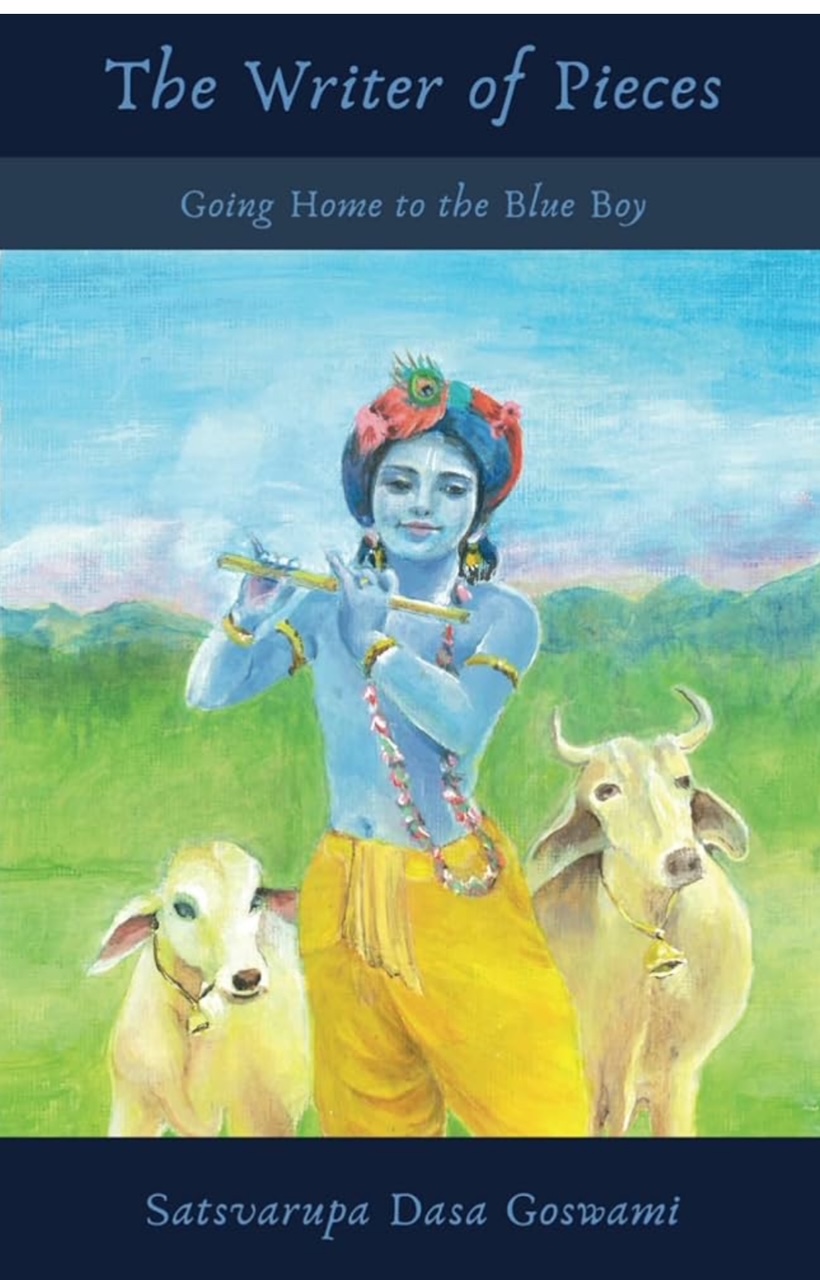
Don’t take my pieces away from me. I need them dearly. My pieces are my prayers to Kṛṣṇa. He wants me to have them, this is my way to love Him. Never take my pieces away.

Many planks and sticks, unable to stay together, are carried away by the force of a river’s waves. Similarly, although we are intimately related with friends and family members, we are unable to stay together because of our varied past deeds and the waves of time.
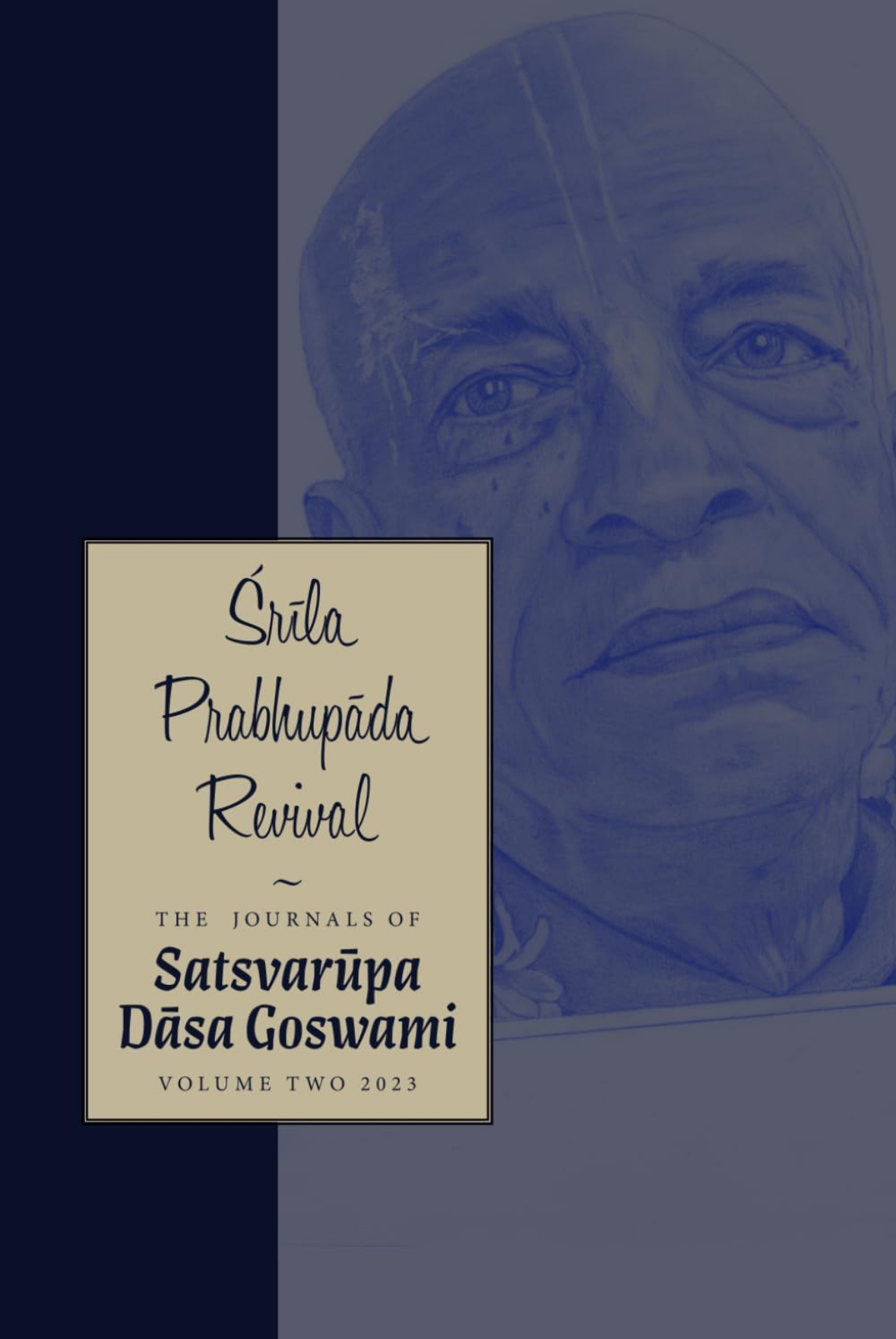
To Śrīla Prabhupāda, who encouraged his devotees (including me) To write articles and books about Kṛṣṇa Consciousness.
I wrote him personally and asked if it was alright for his disciples to write books, Since he, our spiritual master, was already doing that. He wrote back and said that it was certainly alright For us to produce books.
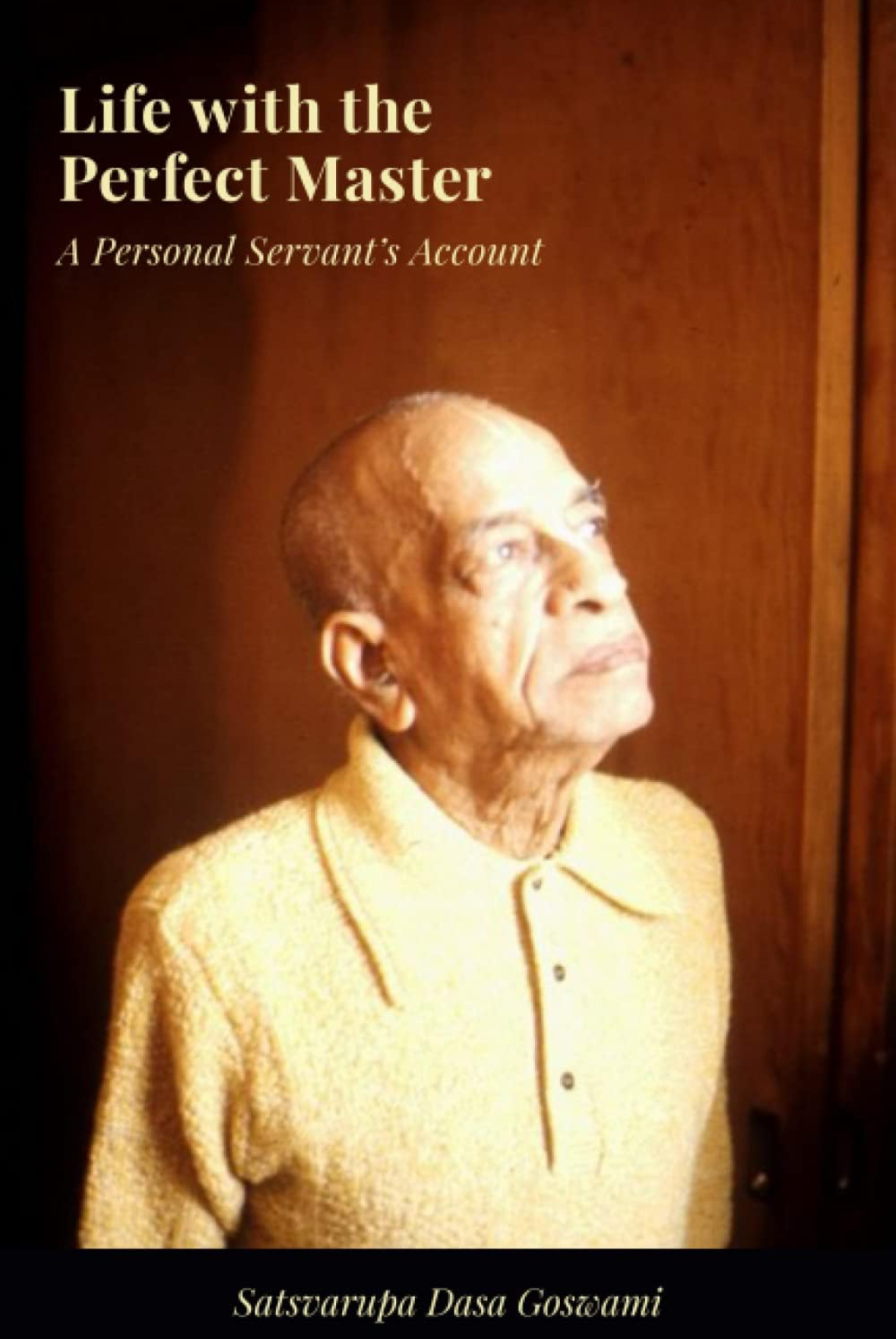
I have a personal story to tell. It is a about a time (January–July 1974) I spent as a personal servant and secretary of my spiritual master, His Divine Grace A.C. Bhaktivedanta Swami Prabhupäda, founder-äcärya of the International Society for Krishna Consciousness. Although I have written extensively about Çréla Prabhupäda, I’ve hesitated to give this account, for fear it would expose me as a poor disciple. But now I’m going ahead, confident that the truth will purify both my readers and myself.

First published by The Gītā-nāgarī Press/GN Press in serialized form in the magazine Among Friends between 1996 and 2001, Best Use of a Bad Bargain is collected here for the first time in this new edition. This volume also contains essays written by Satsvarūpa dāsa Goswami for the occasional periodical, Hope This Meets You in Good Health, between 1994 and 2002, published by the ISKCON Health and Welfare Ministry.

This book has two purposes: to arouse our transcendental feelings of separation from a great personality, Śrīla Prabhupāda, and to encourage all sincere seekers of the Absolute Truth to go forward like an army under the banner of His Divine Grace A.C. Bhaktivedanta Swami Prabhupāda and the Kṛṣṇa consciousness movement.

A single volume collection of the Nimai novels.
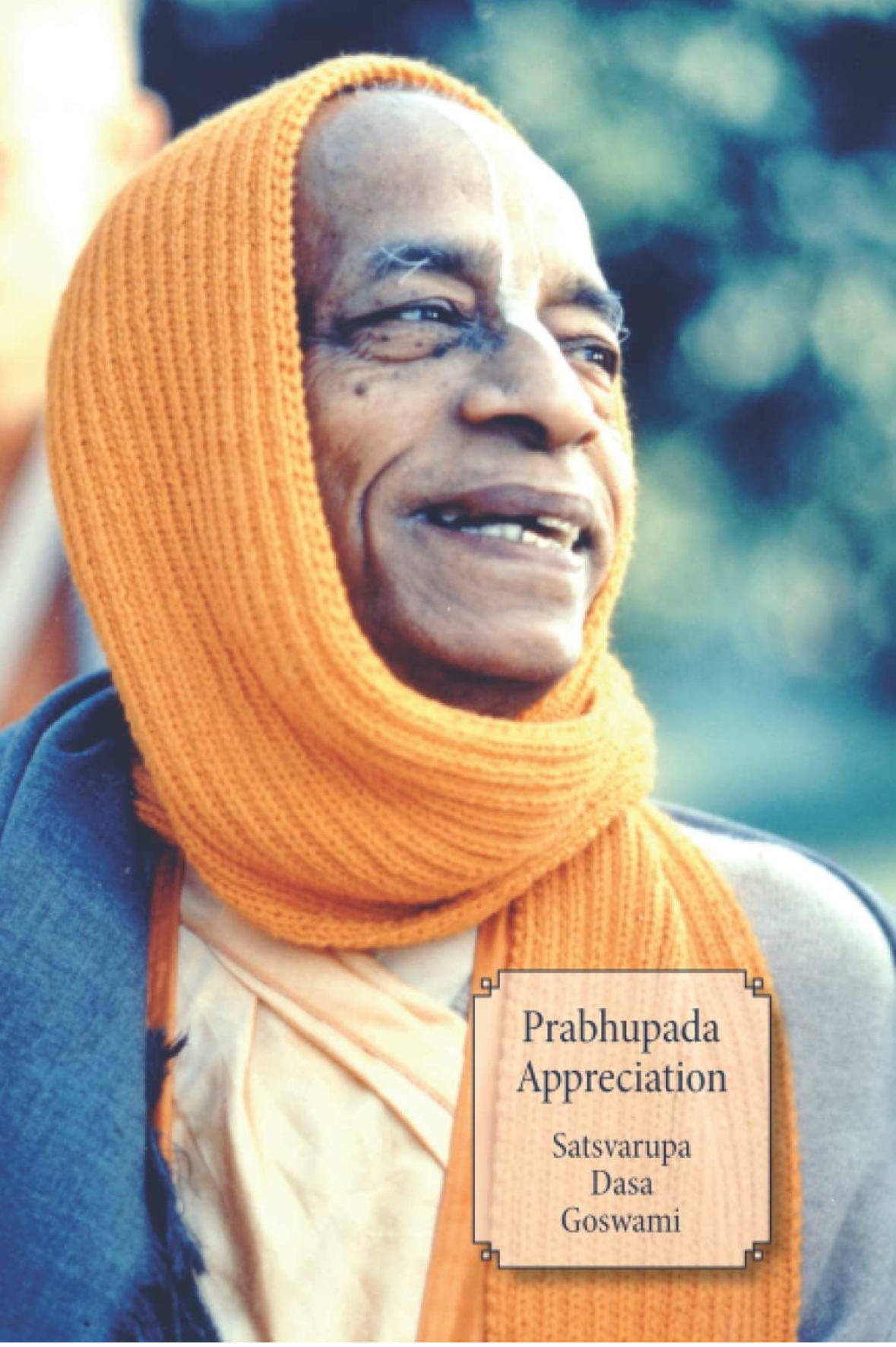
Śrīla Prabhupāda was in the disciplic succession from the Brahmā-Mādhva-Gauḍīya sampradāya, the Vaiṣṇavas who advocate pure devotion to God and who understand Kṛṣṇa as the Supreme Personality of Godhead. He always described himself as simply a messenger who carried the paramparā teachings of his spiritual master and Lord Kṛṣṇa.
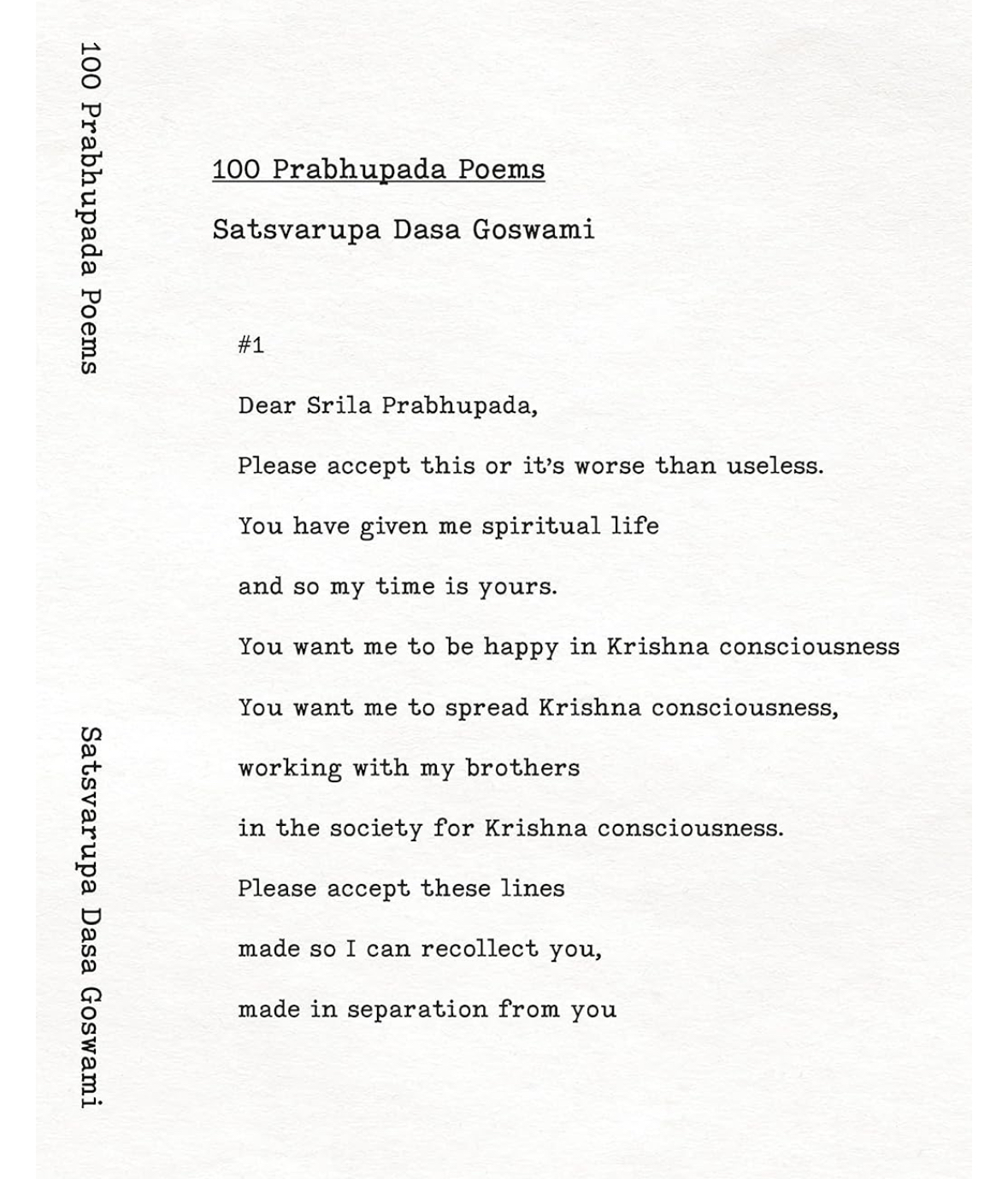
Dear Srila Prabhupada,
Please accept this or it’s worse than useless.
You have given me spiritual life
and so my time is yours.
You want me to be happy in Krishna consciousness
You want me to spread Krishna consciousness,
This collection of Satsvarūpa dāsa Goswami’s writings is comprised of essays that were originally published in Back to Godhead magazine between 1966 and 1978, and compiled in 1979 by Gita Nagari Press as the volume A Handbook for Kṛṣṇa Consciousness.

This second volume of Satsvarūpa dāsa Goswami’s Back to Godhead essays encompasses the last 11 years of his 20-year tenure as Editor-in-Chief of Back to Godhead magazine. The essays in this book consist mostly of SDG’s ‘Notes from the Editor’ column, which was typically featured towards the end of each issue starting in 1978 and running until Mahārāja retired from his duties as editor in 1989.

This collection of Satsvarupa dasa Goswami’s writings is comprised of essays that were originally published in Back to Godhead magazine between 1991 and 2002, picking up where Volume 2 leaves off. The volume is supplemented by essays about devotional service from issues of Satsvarupa dasa Goswami’s magazine, Among Friends, published in the 1990s.

“This is a different kind of book, written in my old age, observing Kṛṣṇa consciousness and assessing myself. I believe it fits under the category of ‘Literature in pursuance of the Vedic version.’ It is autobiography, from a Western-raised man, who has been transformed into a devotee of Kṛṣṇa by Śrīla Prabhupāda.”
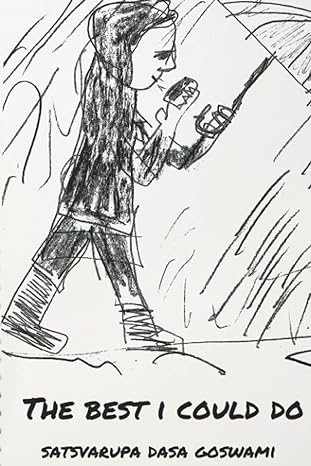 The Best I Could Do
I want to study this evolution of my art, my writing. I want to see what changed from the book In Search of the Grand Metaphor to the next book, The Last Days of the Year.
 a Hare Krishna Man
It’s world enlightenment day
And devotees are giving out books
By milk of kindness, read one page
And your life can become perfect.
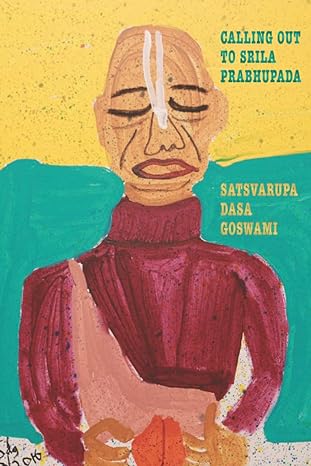 Calling Out to Srila Prabhupada: Poems and Prayers
O Prabhupāda, whose purports are wonderfully clear, having been gathered from what was taught by the previous ācāryas and made all new; O Prabhupāda, who is always sober to expose the material illusion and blissful in knowledge of Kṛṣṇa, may we carefully read your Bhaktivedanta purports.
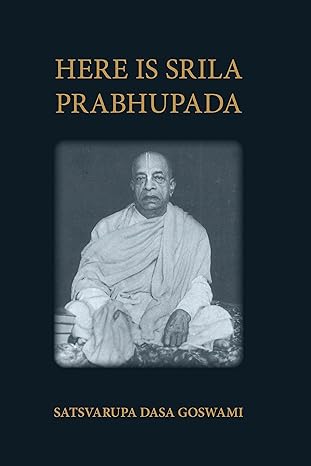
I use free-writing in my devotional service as part of my sādhana. It is a way for me to enter those realms of myself where only honesty matters; free-writing enables me to reach deeper levels of realization by my repeated attempt to “tell the truth quickly.” Free-writing takes me past polished prose. It takes me past literary effect. It takes me past the need to present something and allows me to just get down and say it. From the viewpoint of a writer, this dropping of all pretense is desirable.
 Geaglum Free Write
This edition of Satsvarūpa dāsa Goswami’s 1996 timed book, Geaglum Free Write Diary, is published as part of a legacy project to restore Satsvarūpa Mahārāja’s writings to ‘in print’ status and make them globally available for current and future readers.