

We are still expanding our team of proofreaders as we aim to increase the rate of republication of Satsvarūpa Mahārāja’s books as well as new books that he writes. As many of you know, during the July 4th festival just held, a total of 18 new and re-edited and published books were present, and we hope to present a similar number at Satsvarupa Maharaja’s Vyasa-puja observance this December. Our call for proofreaders includes a need for fluent bilingual Spanish and English speakers to proofread Spanish translations (we currently have around 20 Spanish translations waiting to be proofread). Anyone interested in this particular service should contact Manohara dāsa at [email protected]
If you would like to help, please contact Kṛṣṇa-bhajana dāsa at [email protected] or [email protected] and we will find you a service that utilizes your talents.
The Ten Offenses
There are ten offenses in chanting Hare Kṛṣṇa. They involve not only the time when we sit down to chant japa, but our whole devotional life. These offenses—disobeying the orders of the spiritual master, committing deliberate sins on the strength of chanting, blaspheming the devotee—have to do with more than correct pronunciation of the names of the Lord. So whether we can carry out the orders of the spiritual master is our test. By the time you sit down to chant, it’s already determined by your service attitude—you’ve either already committed the offenses, or you haven’t. Offenseless chanting and following the spiritual master’s orders are interdependent.
By chanting carefully, you get the strength to follow the orders of your spiritual master, as you associate with Kṛṣṇa’s name. But we know that if you associate without offense, it is much more effective. Following the four rules and living in devotional service assures you of avoiding the ten offenses.
The chanting of Hare Kṛṣṇa has the power to eradicate all sins, but if you become an offender to the holy names of the Lord, then you have no chance of being delivered.
******
THE EIGHTH OFFENSE is to consider the chanting of Hare Kṛṣṇa to be a pious ritual like those described in the karma-kāṇḍa section of the Vedas. It is again an offense to misunderstand the nature of the holy name and to chant for some pious material cause.
One prays to God for relief from material things. “Please God, see that my family gets some money. Please improve my health. Please see that I get a nice wife, that my business improves.” Chanting should not be used like that—for good health, or for some nationalistic cause, or to bring about some change in the weather, or to get some money, or even for some humanitarian cause. We cannot take it as a material, pious act, chanting the holy name to gain some utilitarian, material thing from God, as we try through pious activity. There is even a group that openly chants for material benefits. At their meeting, testifying to the power of the mantra, someone will say, “I have my experience that I wanted a guitar, and I chanted the mantra, and the next day I got this guitar. So it is a very good mantra.”
One can pray to God, and that’s pious. But we don’t chant Hare Kṛṣṇa to approach God in a material way. Don’t use the name as that kind of prayer. Only utter the name when you want to serve Kṛṣṇa. “O Kṛṣṇa, O energy of Kṛṣṇa, please engage me in Your service.” Not, “O name of Kṛṣṇa, O energy of Kṛṣṇa, please serve me.” We don’t chant like that. When you want to glorify the Lord, you chant Hare Kṛṣṇa. You serve God. And one service is—śravaṇaṁ, kīrtanaṁ—chanting His name. Chant like that. Don’t chant to God to help you with some mundane situation. Chant to become His devotee, not for some material benefit. We should not think that chanting is like pious activity or materialistic religion where the worshiper is trying to get some material benefit in exchange for his little bit of God consciousness. If you glorify Kṛṣṇa as His eternal servant, you automatically receive all benefit.
Even after initiation if I have to suffer from my past, if there is some token punishment from Kṛṣṇa for my ultimate purification, I chant Hare Kṛṣṇa, not with desire for relief; rather, “O Kṛṣṇa, please engage me in Your service. Hare Kṛṣṇa. Please save me from māyā—māyā in the form of miseries, māyā in the form of material pleasure. Please engage me in Your service.” When one goes on chanting like that, he becomes eligible to go back to Godhead.
As we said, the chanting of Hare Kṛṣṇa can bring liberation, but that is not its purpose. The purpose of chanting is beyond liberation. It’s to glorify God, to serve Him. Chanting is service to Kṛṣṇa. We are praying to be engaged in Kṛṣṇa’s service. So just chant in the mood of glorifying Kṛṣṇa: “Kṛṣṇa, You are very great. I am very tiny. Without You, I am nothing. But I am so small, please help me chant. Please engage me in Your devotional service.” Not, “Please Kṛṣṇa, make this come about. Make that come about.” Don’t make the name serve you, but serve the name. You have to understand that chanting Hare Kṛṣṇa is pure spiritual glorification of service to God. Kṛṣṇa is pleased to hear His holy name uttered by His pure devotee. This love of Kṛṣṇa that we want so much will be enhanced more and more as we chant just like that—helplessly. “O Kṛṣṇa, O energy of Kṛṣṇa! Please, I’m chanting, but I’m still stuck. Please, bring me into Your spiritual energy, free of all these anarthas. I just want to serve You.”
We chant to serve God, by calling His name. He likes very much our chanting His holy name to develop our love for Him. Not that He is in need, an incomplete person—“You please chant.” No. He is complete in Himself, and He has unlimited servitors. He doesn’t need your extra chanting, but He’s very pleased if you serve Him by chanting His holy name—“O Kṛṣṇa, O energy of Kṛṣṇa, please engage me in Your service. Hare Kṛṣṇa.” He is pleased to hear His name chanted by His fallen devotees. “He’s coming back to Me. He’s trying to approach Me by chanting My name. Very nice.” The substance of the chanting is to please Kṛṣṇa. And Kṛṣṇa can take care of everything else.
Our initiation into the chanting of Hare Kṛṣṇa is actually a glorification of God, a spontaneous, authorized process to request the Lord, “Please accept us in Your service. Please accept us in the disciplic succession, and please let us chant the holy name so that we can become Your pure servants.” We are not praying for some material benefit; that is ritualistic religion. This Hare Kṛṣṇa chanting is not that, material; it is purely spiritual from the soul to God.
So chanting Hare Kṛṣṇa is transcendental to material results. But it gives the best results, for everyone. It spreads the benediction of the holy name. Therefore, Lord Caitanya says ceto-darpaṇa-mārjanaṁ bhava-mahā-dāvāgni-nirvāpanaṁ. “All glories to the chanting of the holy name. It cleanses the heart of all the dirt accumulated for many lifetimes and puts out the fire of repeated birth and death. It is the ultimate of all transcendental knowledge, it increases the ocean of transcendental bliss, and it gives us a taste of the nectar for which we are always anxious.” He glorifies the holy name for its good work among mankind. As the moon turns full in the sky, day after day, as one chants Hare Kṛṣṇa in the society of Kṛṣṇa conscious devotees, the benediction of the moon of Lord Caitanya will increase and increase, even in Kali-yuga, and everyone will benefit. Their own moon of love of God will grow. It is far more than some pious activity.
One chants Hare Kṛṣṇa: “My dear Lord, You may do whatever You like with me. You may make me brokenhearted by not being before me. You may handle me roughly in Your embrace. But I am Your servant always. I want to chant Hare Kṛṣṇa in that way.” Study these Śikṣāṣṭakam verses and you can understand how to chant in pure devotion.
The chanting is the fallen soul’s cry for Kṛṣṇa. “Please engage me in Your Lordship’s service.” That is the best we can do, the best service for Kṛṣṇa and for others also. Whatever desire we have to help others is best enacted on the purified platform of devotional service, spreading the glories of the name to others, because only by the holy name can anyone become free of suffering in this age. So take the holy name and give it to others. That is service. But don’t make the name your servant or even think of it as some prayer in the service of humanity. It is purely transcendental glorification of Kṛṣṇa by the devotee, in pure devotional service. And that is the most auspicious welfare work for the entire universe.
September 7, 2026
vanca kalpatarubhyas ca krpa sindhubhya eva ca
patitanam pavanebhyo vaisnavebhyo namo namah
I knew Rupanuga Prabhu from 26 Second Avenue. He joined soon after me. He was the first respectable working man with a wife and child to surrender to the Swami. He didn’t like it that the “temple” was kept dirty with roaches and stains from the syrup used on the breakfast “heavenly porridge.” He complained to others, but they didn’t clean up. I liked him as soon as I met him. He was strong in body and presence—practically the only respectable-looking Hare Krsna for meeting the public.
He told me that when he wanted to get initiated, he prepared a little speech to ask Swamiji. It began something like this: “Swamiji, I would like to practice Krsna consciousness.” And it went on like that for a number of sentences. But before he could even get to his sixth sentence, Swamiji said, “Yes, I will accept you.”
He went out chanting with us in Tompkins Square Park, and I remember him being present when Swamiji and the boys recorded the Hare Krsna mantra on the Happening record album. When I hear that recorded kirtana now, I think I can distinguish Rupanuga’s voice from the rest. I soon found out that he worked in the Department of Welfare in New York City, as I did. Whereas I was only a caseworker, Rupanuga was in a higher position as a supervisor. When I went into the office for the first time with a shaved head, the top boss called me in and asked me what I was doing like this. I told him that a colleague in another borough also shaved his head and wore tilaka. They called up Rupanuga, and when they found out he also worked for the Welfare Department and was a supervisor, they went easy on me and let me be.
When Swamiji left New York City for San Francisco in mid-January 1967, he sent me to open a center in Boston, and Rupanuga and his wife and his young son, Ekendra, moved to Buffalo, N.Y., where there was a big university. It was in Buffalo that Rupanuga met with incredible success in recruiting students to join ISKCON and become initiated disciples of Srila Prabhupada. The roll call of young men and women who joined and became initiated by Prabhupada while Rupanuga was temple president is long and contains many who later became leading devotees in the movement. I don’t contain the exact list of how many and who got initiated under Rupanuga dasa’s leadership, but perhaps someone will produce it. Needless to say, his success in recruiting devotees quickly was unprecedented in ISKCON.
I was in Boston all this time Rupanuga was gaining so many disciples for Prabhupada, I found it difficult to recruit even a few. He had some incredible shakti and made himself very dear to Srila Prabhupada.
I regularly exchanged letters with him and was able to maintain a close friendship.
When he left Buffalo, I gradually lost close touch with Rupanuga, but I will always look up to him as a superior preacher.
Rupanuga passed away at age 87. I am 86 now, and may be soon joining Rupanuga dasa. I pray he is with Srila Prabhupada now, since he was such a Prabhupada man, and I will eventually meet up with him in the spiritual world.
pp. 429-32
Early morning, July 4. It was peaceful. Not a single firework. The inmates slept peacefully. At 5:00 o’clock the newspapers were delivered. Jojo took one, then stood in the middle of the sanatorium and in a very loud voice read aloud, as if he was the town crier. He began shouting verbatim from the newspaper:
“‘An immense throng of people gathered in front of City Hall on July 9, 1776, to hear the Declaration of Independence read aloud in public for the first time. Colonists no more, they had cast off the yoke of British rule. Freedom from oppression was an intoxicating no-tion. Excitement built to a fever pitch in the two weeks after the signing of the document in Philadelphia on July 4, 1776. Interest was heightened because native son Phillip Livingston was one of the signers. The crowd jammed Market Street and filled Hudson Street down to the river to hear the reading.’”
“Hey, knock it off, Jojo. It’s only 5:00 in the morning. You’re being intrusive. Stop this reading out loud,” called out Mother Arthritis. But Jojo continued.
“‘When in the course of human events it becomes necessary for one people to dissolve the political bands which have connected them with another,’ the reader began, and the crowd responded exuberantly, the applause and sincerity of expression born of resilience and bravery being such as the ancient city had never witnessed,” Collier Reynolds wrote in the Albany Chronicle, a book of local history published at the start of the twentieth century.
“‘The excitement of Independence Day faded quickly in light of the harsh realities of the revolutionary war.
“‘It wasn’t until 1895 that Albany began marking Independence Day with large celebrations and parades. The fireworks came in later years.’
“Also in today’s front page, we see the headline, ‘Bush Pressed CIA on Terror: Internal Review Says President Put Heat on the Agency to Prove Link Between Saddam and al-Qaeda Before War.’ ‘The Bush administration pressed the CIA before the war on Iraq to look for evidence of close cooperation between al-Qaeda and Saddam Hussein, but the agency found no proof, according to a CIA internal intelligence review. The review also reaffirmed that U.S. intelligence agencies had no creditable reports that Saddam knew in advance about the September 11, 2001, terrorist attacks on New York and Washington. Polls have found that a majority of Americans are convinced there was clear evidence of a connection between Iraq and al-Qaeda.’”
Jane came running out of her room. She went to the foot of Jojo’s bed and in a commanding voice and with body language said, “Time out, Jojo.”
Jojo immediately stopped reading the newspaper.
“Swami Swims told you yesterday not to agitate the devotees by talking so loud in the morning like this. Give us our peaceful mood that we’ve come here for. Give us our peaceful day.”
“All right, Jane,” he said obediently. She turned on her heel and walked back to her room.
Swami Swims got on the telephone to reach Jojo’s counselor. Even while the connection was being made, he knew that he had failed to be assertive enough yesterday. He was just too hassled with other things he had had to do, and so he hadn’t left a de-finitive enough impression on Jojo that there was to be no more reading aloud of newspapers. He had wimped out and gone off to paint in the art room. There was always a constant challenge between some of the inmates and the older members. The younger or more challenging inmates were like children trying to see how much they could get away with. When they saw that they could get away with a challenge, they just kept going and going. But as soon as their challenge was stopped, as Jojo’s was with Jane’s strong “Time out!,” then the confrontation was over.
pp 32-34
My Dear Lord Kṛṣṇa …
——————————————————————
You have made today a lovely spring day. The sun is shining in a blue sky, and the temperature is a moderate seventy degrees. Many flowers are blooming, and the well-kept suburban lawns are bright green and not too short. An occasional homeowner is out walking his or her dog. This is a pleasant, quiet neighborhood. I am glad to be living here, keeping mostly to my yellow submarine bhajana-kuṭīra. Although I’ve had headaches for over thirty years, I’m so grateful I don’t have a worse, more debilitating disease. I’m also grateful for the company I keep in this house. Daily posting of The Yellow Submarine: My Bhajana-Kuṭīra is a deep satisfaction to my life. My daily japa efforts are my “juice”. For all these things and many more, I thank You, Lord.
The residents of Vraja are very thankful to You for Your many blessings on them. You personally subdued the poisonous snake Kāliya and drove him from the Yamunā. You took the place of all the cowherd boys and calves that Brahma kidnapped and satisfied their parents that You were actually their children – thus giving them the opportunity to treat You as their son. There are countless other ways You please the Vrajavāsīs by Your intimate dealings with them. In these pastimes, You acted in Your nara-līlā, Your humanlike form, which is far superior and more attractive than Your form as Lord Nārāyaṇa and Lord Viṣṇu in the Vaikuṇṭha planets.
I am grateful that You allow me to worship You as Rādhā Govinda and Gaura-Nitāi. You treat us to honor Your prasādam which Nārāyaṇa cooks for us. You let us bathe You and put You to bed each night. In the morning, You allow us to awake You and place You on the altar, where You stand with Rādhā and receive our glances through the day. You allow us to offer You plates of prasādam and take from those special plates. By these exchanges of Deity worship, You increase our faith in You as a person, our worshipable master.
You allow us to hear readings from the Bṛhad-bhāgavatāmṛta, by Sanātana Gosvāmī, and the Śrīmad Bhāgavatam, by Śrīla Vyāsadeva, thus increasing my knowledge and attraction to You in Your dealings with Your devotees, such as Mahārāja Parīkṣit, Śukadeva Gosvāmī, Nārada Muni, and Gopa-kumāra. These books are the best in world literature and are literary incarnations of Yourself. I become truly educated and learned by hearing them and sparing myself from mundane speculative books or impersonal books of religion. I have no desire to attain a Ph.D. in various mundane fields but want to become completely conversant with the huge library of bhakti śāstras. Prabhupāda’s translations and purports are outstanding among the Vaiṣṇava literatures, and I am reading his books on a regular basis. They give a unique understanding of You and Your entourage because Prabhupāda has written them in a simple, accessible style, retaining all the deep meanings while presenting it in a transparent way. Prabhupāda has said, “If you want to know me, read my books,” and I am not missing that rare opportunity.
By approaching You in the nine processes of devotional service (chanting, hearing remembering You, serving Your lotus feet, etc.), I am getting to know You. It is very rare that a living entity can know You, but I feel You are giving me this opportunity. By writing to You, I am approaching You in my heart, and You are revealing Yourself to me in my heart. In the Bṛhad-bhāgavatāmṛta, Pippalāyana Muni says we come to know You not through our senses but through the mind and soul. I feel this is beginning to happen with me. Please give me more years of life to make advancement in knowing and loving and serving You. I am grateful for all that You have already given me, but I am eager to receive more. I am only a neophyte, and if I am hoping to return back to Godhead (which I am, very much), then I need much more mercy and advancement. While thanking You for what I have already received, I plea for much more. I have not yet attained the goal of human life (prayojana), prema, pure love of You. Please help me to take the many more steps that are required to reach Your lotus feet.
pp. 386-88
I remembered my ISKCON wife and visiting her when she was an artist at the Brooklyn temple so many years ago. I was the temple president of a diminished Boston temple. She always seemed more intelligent than I was, but maybe she was just more assertive. I wanted to be big, like Bhavananda and others, who were doing something wonderful. When I saw her in Brooklyn, we went as husband and wife to talk in a park. She said something to encourage me—she preached to me. But I left her still wanting to be a big devotee. I’ve since learned that it’s better to be small. I always competed behind the scenes. Now mostly alone in the ISKCON boat with a few friends to encourage me. Turned off and unavailable to all critics except my own.
I couldn’t write those
kind of original imaginative
poems like myths.
I only know my own life.
He fixed the skirt of Radharani
better than I did. I said
“You should do it every day.”
I forgot something good I
was just going to say, something
not offensive or egotistical.
Something Krishna conscious but natural.
What was it?
You are so busy you don’t have time to cut your fingernails, but you must chant your minimum quota of japa. Could someone reintroduce me to Srimad-Bhagavatam or Caitanya-caritamrta? Oh, I read it enough times in this life. No, you’ve already forgotten so much. Favorite words, beginning poems, forgotten? Scared? Afraid? Come with me and listen. Hear, here. Let’s go together. Do you remember the time? Krishnaites on parade.
I crave privacy at certain times of the day. It’s a real invasion when someone walks in just when I want to write or I’m thinking of something important. Reminds me of that very first memory of this lifetime: I was trying to dress myself and surprise my mother. She shouldn’t have come in on me, but she did and I burst into tears. I still can’t control the world.
Hey man, get me some pens, I need to write a confession and a scenario. I need to think they are worthwhile. I have to make the call—yes this is good. Don’t cry in your beer (or milk). Don’t go sending your ms to the publishers. Just write from the—heart. Like a racehorse, a workhorse. Oh it sounds like such an enslaved life. At one point the doctor, seeing me stressed out, said, “You can look at the birds and trees without writing about them.”
We will say that this here thingamajig . . . He asked, “Is there a need of God or not?”
The theologian answered, “No need.”
“What about the scientist?”
Svarupa Damodara said, “They will say there is no need, unless there is God, we cannot conceive of how things are going on.”
Srila Prabhupada gave the example of government. Countries have abandoned monarchy, but now there is a president. Why? Because leadership is needed. And in ISKCON, he said, we elect a president, and above him, the GBC, and above that I am. You are listening from your little bolt hole in the year 2001.
You say this too is a way to worship and follow. You noted that some of the people on the walks, Karandhara, for example, are missing in action. Off somewhere else now. That doesn’t negate the good service they did back then. Rameshvara hadn’t even appeared yet, or he was Karandhara’s secretary. After Karandhara left, he became prominent. Jayatirtha . . . Names on the waves on the crashing surf at Venice Beach or Juhu Beach. Srila Prabhupada . . .
pp. 320-23
Devotees take reasonable precautions, considering our diet and medicines to avoid illness or to treat illnesses we already have. Śrīla Prabhupāda encourages this attitude: “If you are feeling tired, you may take rest. Your body is very valuable. It is dedicated to Krishna, so you must take care of the body very carefully” (Letter, August 12, 1971).
We may also note, however, that Śrīla Prabhupāda so much wanted us to remain active and wanted to remain active himself that he sometimes recommended we push on with our Krishna conscious activities despite illness or possible risk to health. He writes, “So far as possible, I’m taking care of my health, but Krishna’s service must be executed even at the risk of life” (Letter, January 23, 1968).
In a similar mood he writes:
Physically and mentally we may be disturbed sometimes, but we have to stand erect on the spiritual platform. I may inform you in this connection, that I am at present moment physically unfit. I am having always a buzzing sound in my brain. I cannot sleep soundly at night, but still I am working because I try to be on the spiritual platform. I hope you shall try to understand me right and do the needful. Hope you are well.
—Letter, January 15, 1968
Despite our enthusiasm and cautions to avoid disease, we all will fall sick at one time or another. It is one of the four-fold miseries. No one can be entirely free of it. The time comes when each of us will be sidelined. But we can gain something Krishna conscious from those times. When we are forced to decrease our active service, we are also forced to give up the illusion that we can always fulfill our own plans and that, we will always be well. We can become humbled when we see that even without our active participation, the Krishna consciousness movement continues onward. Our service is appreciated by other devotees, but it is not absolutely needed. Krishna can always send someone else to do our work.
Therefore, we gain humility and a clearer awareness of our minute size and limited capabilities. One time when I became sidelined with prolonged illness, I wrote a poem expressing these feelings:
My list of “Things to Do”
falls to the side.
All I do is rest.
Yet one cry to Krishna
is worth a hundred days
of marching in pride.
Śrīla Prabhupāda said we should remain on the spiritual platform even when we are ill. But what can we do when we have so much pain or if we are unable to move and think properly? We can do only what Krishna allows us to do. Śrīla Prabhupāda writes:
Devotion does not depend on the body, and in spite of all difficulties, we can chant, so long we have got the tongue—and even we have got no tongue, we can chant in our mind … Therefore, do not think that because you are sometimes sick or weak that you are not making any advancement and that you are disappointing me, no … Simply if you are able to always chant Hare Krishna that is the same as following all the other regulative principles.
—Letter, February 12, 1972
We have to be patient when we are ill. Our service may be just to wait and see what Krishna desires. If we have a debilitating condition, then we can take up some service which is appropriate for an invalid such as typing letters. We may have to learn to be satisfied with a new type of service.
As we lie in bed alone, we also can come more to the heart of what it means to offer our very selves to Krishna. Lord Caitanya says, “O son of Mahārāja Nanda, I am Your eternal servant, but somehow, I have fallen into the ocean of birth and death. Please, therefore, pick me up from this ocean of birth and death and fix me as one of the atoms at Your lotus feet.” Lord Caitanya doesn’t say that we have to serve Him in a particular active way, but He says we should offer ourselves to Him in humility and surrender.
Illness can be a friend because it is a condition more similar to death than good physical health. Good physical health is temporary, but illness reminds us of the fact that the body is not ultimately meant for pleasure and that it must eventually break down. The pains of our illness can remind us that we are heading toward the inevitable pain of death. Therefore, we are forced to remember Krishna in our distress and that’s good practice for the time of death. Śrīla Prabhupāda writes:
This body is today or tomorrow finished. We should not be very much bothered about the body. Trees also live for thousands of years, but that does not mean a successful life. A successful life is one of Krishna consciousness.
—Letter, February 26, 1977
Śrīla Prabhupāda mixed both attitudes toward illness in his instructions to his disciples. In the same letter I just quoted he closed the letter, which was to Jayānanda, by saying, “Hope this finds you improving in your health.”
A similar letter expressed both the attitudes toward ill health:
This body belongs to Krishna and therefore we must always keep it in healthy condition to the best of our ability, but if due to some past sinful activities, we are suffering some bodily miseries, we should not be discouraged. Devotional service must continue under all circumstances. This material body is actually a bad bargain because it is prone to suffer, but we must make the best use of this bad bargain. That means to always be engaged in the service of Krishna without fail.
—Letter, April 19, 1975
While we are healthy, we must work to our full capacity. Prahlāda Mahārāja told his young schoolmates that Krishna consciousness should be executed full force especially when they were young and while the body is “stout and strong and not embarrassed by dwindling.” If we are forced to slow down or stop our activities due to physical illness, then we have to accept it graciously as Krishna’s will. Part of that acceptance is to recognize that we can continue performing devotional service—devotional service is ultimately not dependent on the body.
pp. 110-13
Dear Lord,
I’m reading Antya-līlā, Chapter 5, “How Pradyumna Miśra Received Instructions from Rāmānanda Rāya.” There’s sublime information in this chapter, and I was able to read some of it with attention. A brāhmaṇa named Pradyumna Miśra went to Lord Caitanya and asked to hear kṛṣṇa-kathā. Lord Caitanya sent him to Rāmānanda Rāya. One line I particularly liked was when they finally got to meet and Rāmānanda Rāya asked him what kind of kṛṣṇa-kathā he wanted to hear. Pradyumna Miśra replied, “Kindly tell me about the same topics you spoke about at Vidyānagara.” I thought it was brilliant and daring of Pradyumna Miśra to ask to hear the same things that Rāmānanda Rāya discussed with Lord Caitanya at Vidyānagara.
I also noticed, as if for the first time, that Rāmānanda Rāya was acting in his body as a maidservant of the gopīs (dāsī-bhāva) when he personally instructed the beautiful young girls in how to act in his drama for Lord Jagannātha. Although the purport gives a full warning that no one can imitate this, it’s equally an assertion of that stage of perfection where one can meditate purely on his siddha-svarūpa. The degree to which Rāmānanda Rāya attained this stage of perfection, however, is only attainable by him. Although he was in the material world, he did not think as a male. Rather, he was absorbed in the conception of himself as an assistant of the gopīs.
When Pradyumna Miśra inquired from Lord Caitanya about Rāmānanda Rāya, Lord Caitanya quoted important verses about how hearing about the rāsa dance will remove lust from a person’s heart. Prabhupāda underlines that such hearing has to be done with great faith.
This section is yet another example of how we can be satisfied by reading Prabhupāda’s books. All the nectar is there—as much as we can expect to take—along with the warnings.
******
Rāmānanda Rāya drowned Pradyumna Miśra in kṛṣṇa-kathā. The two of them didn’t even notice that a whole day had passed until the servant came in and said, “The day has already ended” (Cc. Antya 5.66). That evening Pradyumna Miśra went to Lord Caitanya and expressed his great happiness at having heard about Kṛṣṇa from Rāmānanda Rāya. He said, “Rāmānanda Rāya is not an ordinary human being” (Cc. Antya 5.71). Rāmānanda Rāya had told Pradyumna Miśra that whatever he had spoken was not coming from himself but from the higher intelligence of Lord Caitanya. To this Lord Caitanya remarked, “This is a natural characteristic of those advanced in devotional service. They do not personally speak of their own good qualities” (Cc. Antya 5.78).
******
Books such as Caitanya-caritāmṛta teach one hundred percent surrender to Kṛṣṇa. Śrīla Prabhupāda lectures on that standard also. This is one of the main distinguishing features of the Kṛṣṇa consciousness movement, aside from the specifics of Kṛṣṇa worship, Vṛndāvana-līlā, and so on. The devotees are trained in an uncompromising philosophy. Even the basics of the four rules and sixteen rounds are extraordinary as preliminary initiation vows for all devotees. Many religious systems allow for many more compromises and even teach compromise as part of their theology.
This sometimes creates an actual gap between what the members of ISKCON are able to do and what they preach as their standard. This can lead to hypocrisy. Nevertheless, the standard is clear, despite failures and hypocrisy. It’s sometimes hard to bear and hard to hear: one should not allow any pleasure for his own gratification but should live simply for Kṛṣṇa’s pleasure. Yet we are taught that love of God is easy and that it can be achieved just by singing, dancing, and taking prasādam—if done in the right attitude.
******
Seems like I’m always/often
going to get sick during the day,
head fog and that’s the end of
physical clarity, strength.
Then I can’t write but only think about it for the next time when I’m clear.
******
Sing of the fog—it’s like a vise closing slowly. The pill relaxes it. How many am I up to per day?
I read with at least a liking
and like to tell you about
the ecstasy of great devotees—
Rāmānanda Rāya and Pradyumna Miśra—
conversing about Kṛṣṇa all day long.
They didn’t even notice that the day
had passed
whereas I would have noticed
after one hour
the fog, the vise in the head,
or glanced at my wristwatch,
“How long is this going to go on?”
Kṛṣṇa-kathā in small bits
and segments surrounded by
rest in bed,
restless to go outside the house
but can’t say to others what’s
on my mind—
I’d like to be strong
to love Kṛṣṇa and śāstras.
I read in small segments not only because of physical weakness but because I lack bhāva, hunger. Acknowledged. I move on and return. Cc. journey by one who ain’t so great. Tomorrow, we’ll schedule a gathering at which I will read and comment to them from Madhya-līlā’s “How All the Residents of Vārāṇasī Became Vaiṣṇavas”—how Lord Caitanya praises the Bhāgavatam. I’ll also tell them to read regularly. I’ll say, “I do.”
pp. 85-88
The interview goes on in a noisy place, perhaps it’s an airport, or a waiting place for airplanes, or some noisy place where people are talking and babies are crying, and so on.
Prabhupāda asks, “Any questions?”
They ask, “Tell us your purpose for being in New York City.” Prabhupāda says “We are in between travels. We are next going to London. And of course, we have a temple in New York.”
Question: “What can you say to people who don’t know about your movement?”
Prabhupāda: “It’s a little difficult, our movement …”
Question: “Why do your followers dress the way they do and beat drums?” (Whenever Prabhupāda says something definitive, many of his followers who are present make a big cheer, and they even beat a drum.)
To this question, Prabhupāda says, “This is our preaching method” (so it will draw their attention).
Question: “Can this be done without the special dress your students wear?”
Prabhupāda: “Yes.” Then Prabhupāda says, “Dress is not important.” (The dominant interviewer has a very abrupt manner. Yet he remains polite. He even says things like, “Maybe I may be swimming in ignorance.” And he says things like, “Perhaps it’s just a matter of difference of perception.”) And then he insists on Prabhupāda answering a particular question. Prabhupāda gives an answer, but the man says, “Perhaps you don’t understand me. I’m asking you . . .”
A lady asks, “Who makes the decisions (in ISKCON), the men or the women? Who makes the decisions?”
Prabhupāda says, “We follow the decision of Kṛṣṇa.”
The “dominant” interviewer asks Prabhupāda at what age did he realize the highest truth?
For quite a few questions back and forth, Prabhupāda doesn’t directly answer at what age he realized the highest truth. He answered that he was born into a pious family. And he answered that Kṛṣṇa consciousness should be started at a young age. The interviewer persisted and said, “That is not my question, Swami. I want to ask you in what age, in your particular incarnation, did you realize the highest truth?”
Prabhupāda finally answers, “Four or five.” Then he says something like this to the interviewer— “And I can teach you the absolute truth too.” (The devotees go wild with cheering and a drum.)
The interviewer asks, “Have all your followers reached the highest truth?”
Prabhupāda answers, “Yes.”
The interviewer asks, “What have you done to help humanity? What do your disciples do as active service?”
Prabhupāda says he gives the most important service. “The real service is to give a person freedom from birth, death, disease and old age. I am giving that.”
The interview ends with Prabhupāda and the man not coming to a conclusion of agreement. The interviewer says something like, “Perhaps we disagree in some respects …”
In the interview, the question came up, “Who is superior, men or women?”
Prabhupāda replied by giving the statistics he had heard, that a woman’s brain is such-and-such ounces, and a man’s brain is much larger. The devotees cheered loudly at this.
One of the devotees (it sounded like Srutakirti) said, “You have been defeated.”
The woman interviewer said, “I am not going to pursue that line of logic.”
******
Volume One of The Journals, Worshiping with the Pen, should arrive here in about a week. I began it in March 2022. My editor said one of the best sections is where I express my joy in writing. I don’t remember what I said, and I’m looking forward to reading it again. The journal-keeper and teacher, Lucile Shaw, says that re-reading an old journal can be more exciting than reading a great novel. She is referring to the person who is continuing to write a journal as it looks back at journals kept in the past. I’m looking forward to experiencing that personal “thrill,” but I also write for new readers in the present and future.
******
We have set up a mechanical system that sends messages back to the people who write me letters. The message reads: “SDG won’t be answering mail until after the Fourth of July due to his laryngitis.” This will allow me to follow Ekendra’s practice when he caught laryngitis from overusing his throat muscles in narrating the SPL audiobook. He tried many treatments to cure his disease, and he wrote to me about his practice: “Resting my voice seems to be the best medicine.” The automatic message will assure my correspondents that I will write to them again as soon as my throat clears up.
******
I am missing the two-and-a-quarter hour out-loud reading on Zoom with about a dozen disciples. They are missing it too. I told them not to hold the sessions without me. Am I depriving them of hearing and chanting of Cc.? But I want to be part of it, with them. I greet each of the devotees when the reading is over. They are from countries in different parts of the world. It is sweet. I and they get much spiritual nourishment twice a day from Śrīla Prabhupāda’s books. I look forward to joining them again. “Resting my voice seems to be the best medicine.”

Viraha Bhavan Journal (2017–2018) was written by Satsvarūpa Mahārāja following a brief hiatus in writing activity, and was originally intended to be volume 1 in a series of published journals. However, following its completion and publication, Mahārāja again stopped writing books, subsequently focusing only on what became his current online journal, which began in August of 2018.

At first, I took it hard that I would have to live surrounded by the firemen, and without my own solitude. After all, for decades I had lived in my own house with my own books and my own friends. I was also now a crippled person who couldn’t walk, living among men who did active duties. But when Baladeva explained it to me, how it was not so bad living continually with other firemen and living in the firehouse with its limited facilities, I came to partially accept it and to accept the other men. I came to accept my new situation. I would live continually in the firehouse and mostly not go outside. I would not lead such a solitary life but associate with the other firemen.

Let me write sweet prose.
Let me write not for my own benefit
but for the pleasure of Their Lordships.
Let me please Kṛṣṇa,
that’s my only wish.
May Kṛṣṇa be pleased with me,
that’s my only hope and desire.
May Kṛṣṇa give me His blessings:
Kṛṣṇa Kṛṣṇa Kṛṣṇa Kṛṣṇa Kṛṣṇa he
Rāma Rāghava Rāma Rāghava
Rāma Rāghava rakṣa mām.
You mentioned that your pathway has become filled with stumbling blocks, but there are no stumbling blocks. I can kick out all those stumbling blocks immediately, provided you accept my guidance. With one stroke of my kick, I can kick out all stumbling blocks. —Letter by Śrīla Prabhupāda, December 9, 1972.

The Writing Sessions are my heart and soul. I’m trying my best to keep up with them. I am working with a few devotees, and they are far ahead of me. I wander in the wilderness of old age. I make my Writing Sessions as best I can. Every day I try to come up with a new subject. Today I am thinking of my parents. But I don’t think of them deeply. They are long gone from my life. Śrīla Prabhupāda wrote a poem when he was a sannyāsī, and he said now all my friends and relatives are gone. They are just a list of names now. I am like that too. I am a sannyāsī with a few friends. I love the books of Śrīla Prabhupāda. I try to keep up with them. I read as much as I can and then listen to his bhajanas.
The metaphor is song. Explain it. Yes, particulars may not seem interesting or profound to readers who want structured books.
Wait a minute. Don’t pander to readers or concepts of Art. But Kṛṣṇa conscious criteria are important and must be followed. So, if your little splayed-out life-thoughts are all Kṛṣṇa conscious, then it’s no problem.
I am near the end of my days. But I do like the company of like-minded souls, especially those who are Kṛṣṇa conscious. Yes! I am prone to Kṛṣṇa consciousness. I have been a disciple of Bhaktivedanta Swami Prabhupāda for maybe almost sixty years. Sometimes I fail him. But I always bounce back and fall at his feet. It is a terrible thing that I sometimes do not have the highest love for him. It is a terrible thing. Actually, however, I never fall away from him. He always comes and catches me and brings me back to his loving arms.

This edition of Satsvarūpa dāsa Goswami’s 1996 timed book, Upstate: Room to Write, is published as part of a legacy project to restore Satsvarūpa Mahārāja’s writings to ‘in print’ status and make them globally available for current and future readers.
A factual record of the reform and change in ISKCON guru system of mid ’80s.

Readers will find, in the Appendix of this book, scans of a cover letter written by Satsvarūpa Mahārāja to the GN Press typist at the time, along with some of the original handwritten pages of June Bug. Together, these help to illustrate the process used by Mahārāja when writing his books during this period. These were timed books, in the sense that a distinct time period was allotted for the writing, during SDG’s travels as a visiting sannyāsī

Don’t take my pieces away from me. I need them dearly. My pieces are my prayers to Kṛṣṇa. He wants me to have them, this is my way to love Him. Never take my pieces away.

Many planks and sticks, unable to stay together, are carried away by the force of a river’s waves. Similarly, although we are intimately related with friends and family members, we are unable to stay together because of our varied past deeds and the waves of time.
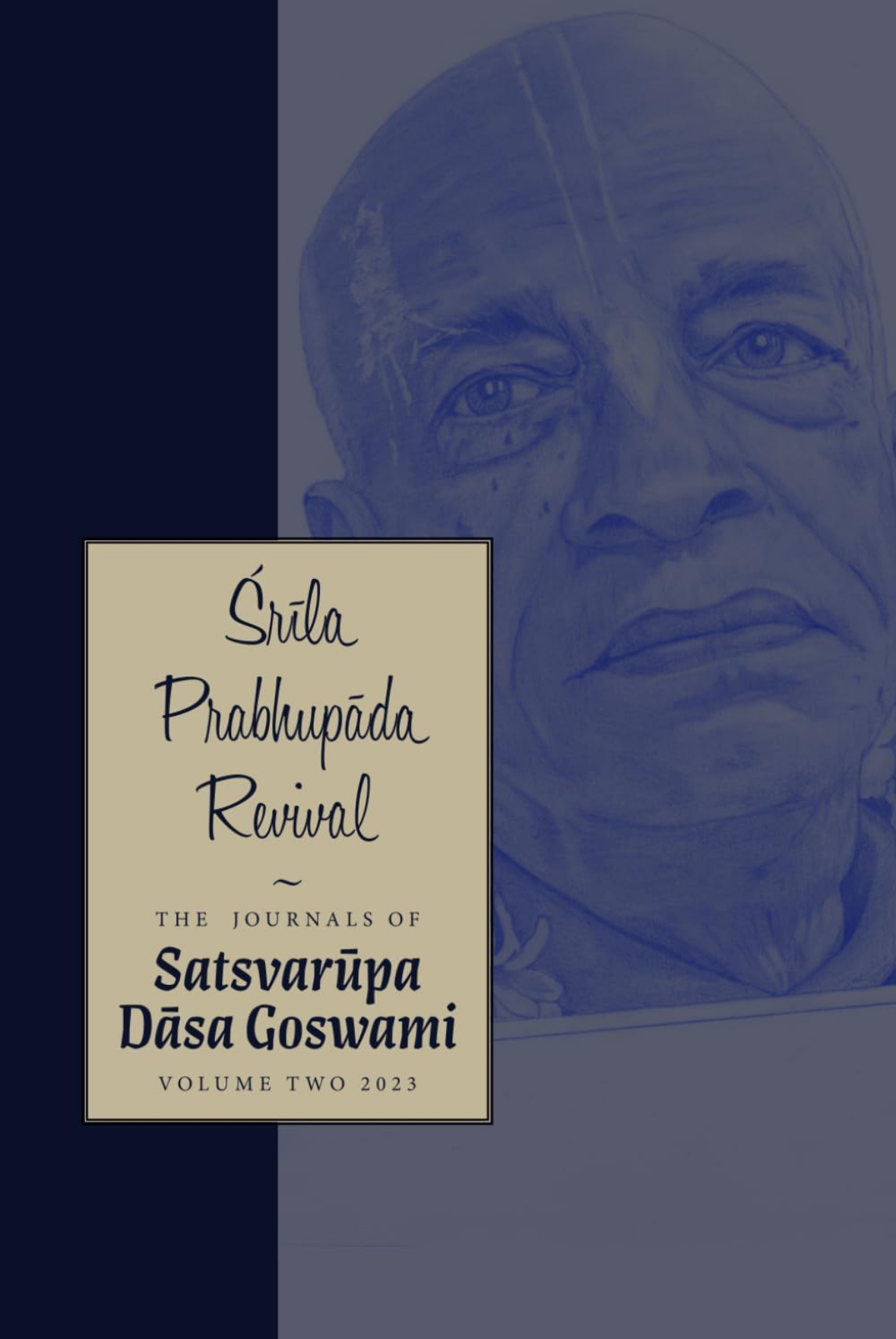
To Śrīla Prabhupāda, who encouraged his devotees (including me) To write articles and books about Kṛṣṇa Consciousness.
I wrote him personally and asked if it was alright for his disciples to write books, Since he, our spiritual master, was already doing that. He wrote back and said that it was certainly alright For us to produce books.
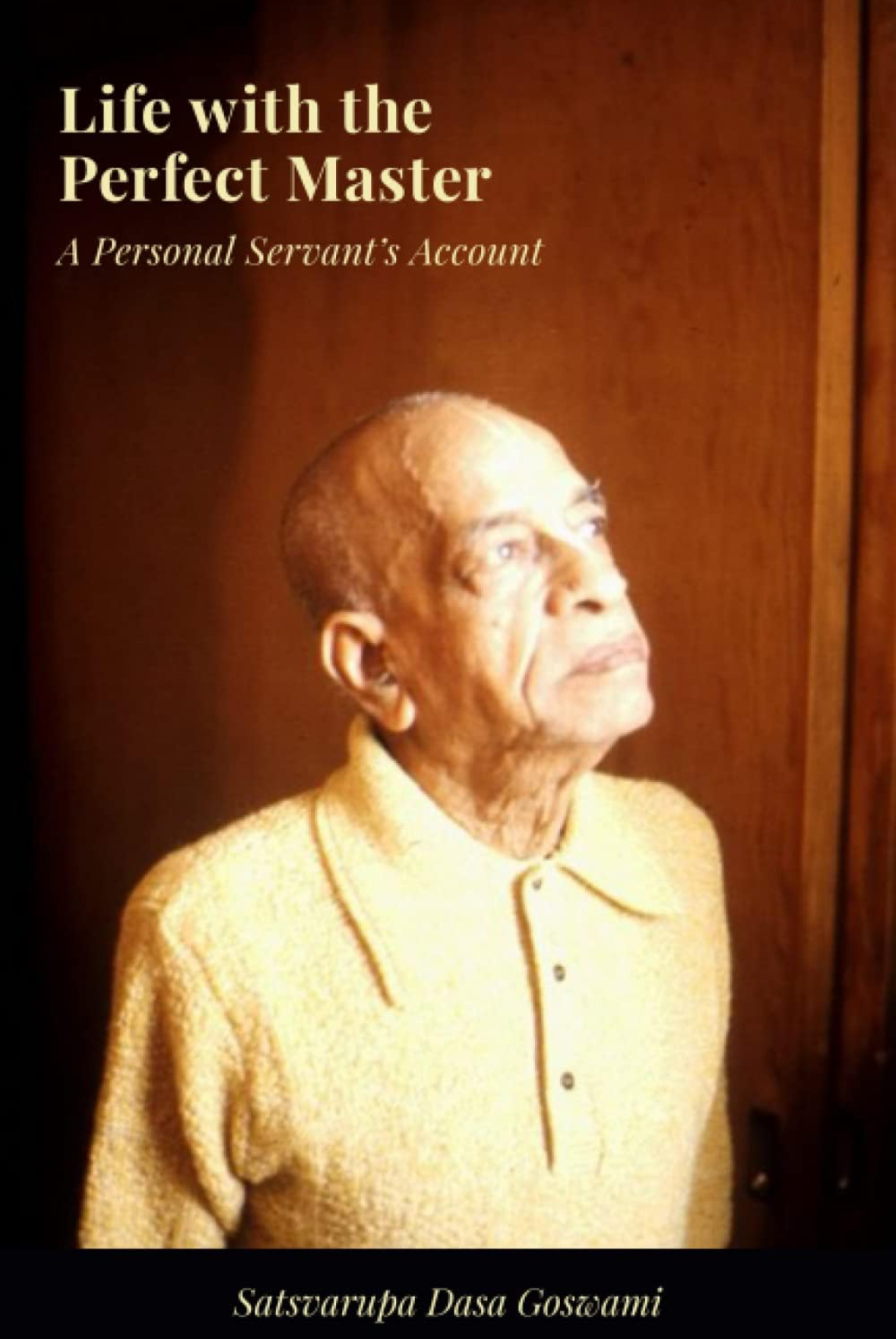
I have a personal story to tell. It is a about a time (January–July 1974) I spent as a personal servant and secretary of my spiritual master, His Divine Grace A.C. Bhaktivedanta Swami Prabhupäda, founder-äcärya of the International Society for Krishna Consciousness. Although I have written extensively about Çréla Prabhupäda, I’ve hesitated to give this account, for fear it would expose me as a poor disciple. But now I’m going ahead, confident that the truth will purify both my readers and myself.

First published by The Gītā-nāgarī Press/GN Press in serialized form in the magazine Among Friends between 1996 and 2001, Best Use of a Bad Bargain is collected here for the first time in this new edition. This volume also contains essays written by Satsvarūpa dāsa Goswami for the occasional periodical, Hope This Meets You in Good Health, between 1994 and 2002, published by the ISKCON Health and Welfare Ministry.

This book has two purposes: to arouse our transcendental feelings of separation from a great personality, Śrīla Prabhupāda, and to encourage all sincere seekers of the Absolute Truth to go forward like an army under the banner of His Divine Grace A.C. Bhaktivedanta Swami Prabhupāda and the Kṛṣṇa consciousness movement.

A single volume collection of the Nimai novels.
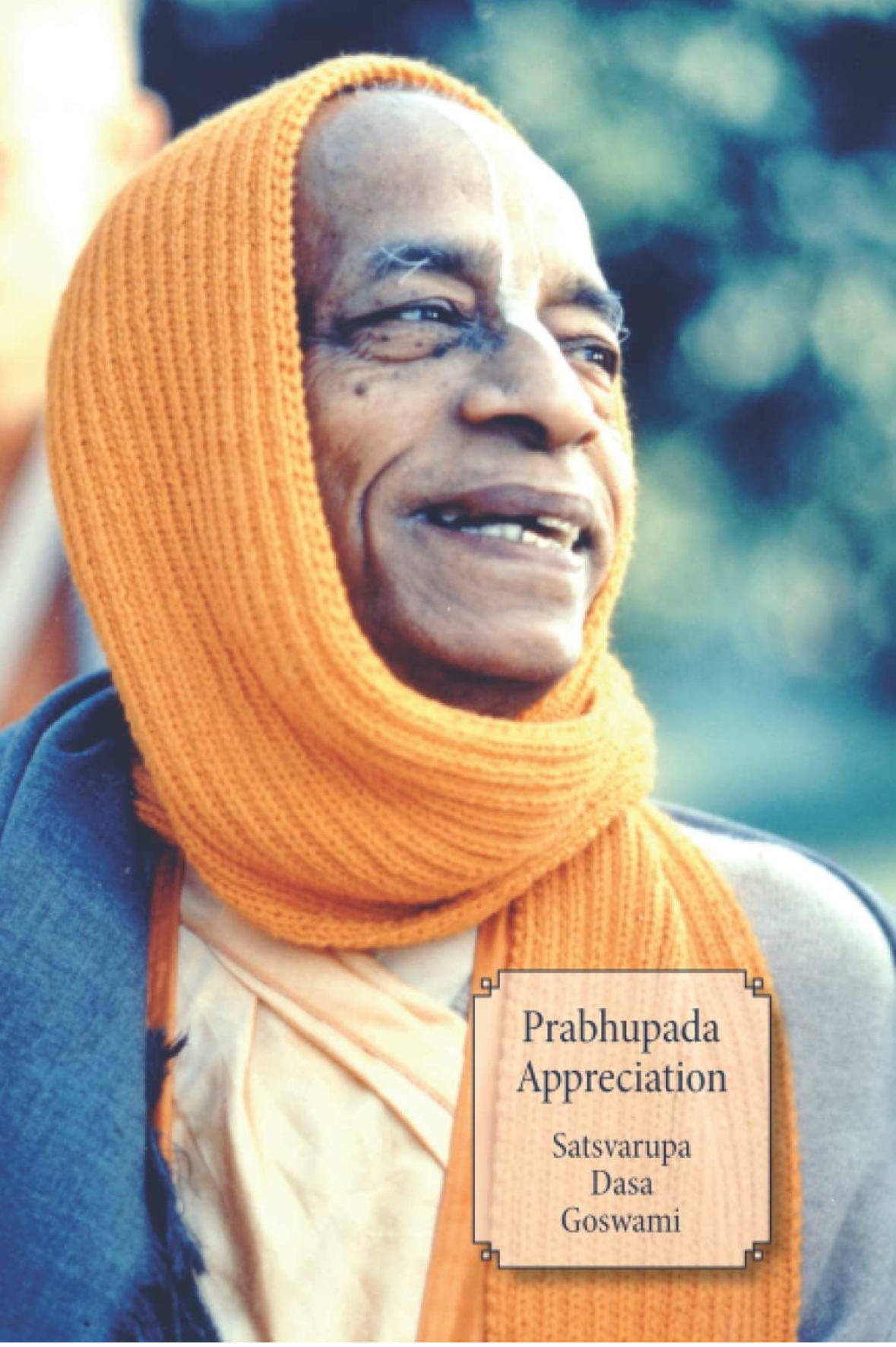
Śrīla Prabhupāda was in the disciplic succession from the Brahmā-Mādhva-Gauḍīya sampradāya, the Vaiṣṇavas who advocate pure devotion to God and who understand Kṛṣṇa as the Supreme Personality of Godhead. He always described himself as simply a messenger who carried the paramparā teachings of his spiritual master and Lord Kṛṣṇa.
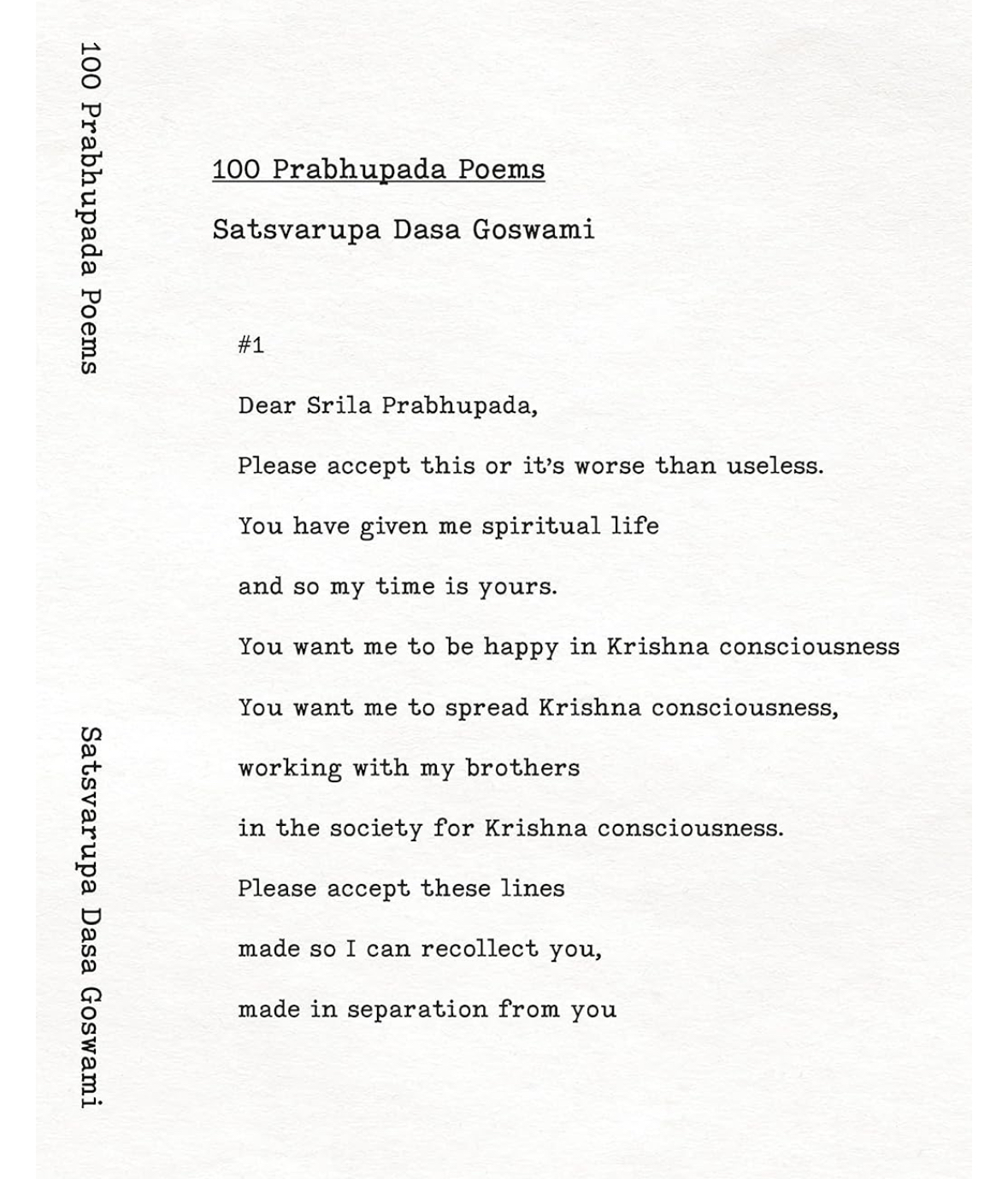
Dear Srila Prabhupada,
Please accept this or it’s worse than useless.
You have given me spiritual life
and so my time is yours.
You want me to be happy in Krishna consciousness
You want me to spread Krishna consciousness,
This collection of Satsvarūpa dāsa Goswami’s writings is comprised of essays that were originally published in Back to Godhead magazine between 1966 and 1978, and compiled in 1979 by Gita Nagari Press as the volume A Handbook for Kṛṣṇa Consciousness.

This second volume of Satsvarūpa dāsa Goswami’s Back to Godhead essays encompasses the last 11 years of his 20-year tenure as Editor-in-Chief of Back to Godhead magazine. The essays in this book consist mostly of SDG’s ‘Notes from the Editor’ column, which was typically featured towards the end of each issue starting in 1978 and running until Mahārāja retired from his duties as editor in 1989.

This collection of Satsvarupa dasa Goswami’s writings is comprised of essays that were originally published in Back to Godhead magazine between 1991 and 2002, picking up where Volume 2 leaves off. The volume is supplemented by essays about devotional service from issues of Satsvarupa dasa Goswami’s magazine, Among Friends, published in the 1990s.

“This is a different kind of book, written in my old age, observing Kṛṣṇa consciousness and assessing myself. I believe it fits under the category of ‘Literature in pursuance of the Vedic version.’ It is autobiography, from a Western-raised man, who has been transformed into a devotee of Kṛṣṇa by Śrīla Prabhupāda.”
 The Best I Could Do
I want to study this evolution of my art, my writing. I want to see what changed from the book In Search of the Grand Metaphor to the next book, The Last Days of the Year.
 a Hare Krishna Man
It’s world enlightenment day
And devotees are giving out books
By milk of kindness, read one page
And your life can become perfect.
 Calling Out to Srila Prabhupada: Poems and Prayers
O Prabhupāda, whose purports are wonderfully clear, having been gathered from what was taught by the previous ācāryas and made all new; O Prabhupāda, who is always sober to expose the material illusion and blissful in knowledge of Kṛṣṇa, may we carefully read your Bhaktivedanta purports.
I use free-writing in my devotional service as part of my sādhana. It is a way for me to enter those realms of myself where only honesty matters; free-writing enables me to reach deeper levels of realization by my repeated attempt to “tell the truth quickly.” Free-writing takes me past polished prose. It takes me past literary effect. It takes me past the need to present something and allows me to just get down and say it. From the viewpoint of a writer, this dropping of all pretense is desirable.
 Geaglum Free Write
This edition of Satsvarūpa dāsa Goswami’s 1996 timed book, Geaglum Free Write Diary, is published as part of a legacy project to restore Satsvarūpa Mahārāja’s writings to ‘in print’ status and make them globally available for current and future readers.