

We are still expanding our team of proofreaders as we aim to increase the rate of republication of Satsvarūpa Mahārāja’s books as well as new books that he writes. As many of you know, during the July 4th festival just held, a total of 18 new and re-edited and published books were present, and we hope to present a similar number at Satsvarupa Maharaja’s Vyasa-puja observance this December. Our call for proofreaders includes a need for fluent bilingual Spanish and English speakers to proofread Spanish translations (we currently have around 20 Spanish translations waiting to be proofread). Anyone interested in this particular service should contact Manohara dāsa at [email protected]
If you would like to help, please contact Kṛṣṇa-bhajana dāsa at [email protected] or [email protected] and we will find you a service that utilizes your talents.
There are ten offenses in chanting Hare Kṛṣṇa. They involve not only the time when we sit down to chant japa, but our whole devotional life. These offenses—disobeying the orders of the spiritual master, committing deliberate sins on the strength of chanting, blaspheming the devotee—have to do with more than correct pronunciation of the names of the Lord. So whether we can carry out the orders of the spiritual master is our test. By the time you sit down to chant, it’s already determined by your service attitude—you’ve either already committed the offenses, or you haven’t. Offenseless chanting and following the spiritual master’s orders are interdependent.
By chanting carefully, you get the strength to follow the orders of your spiritual master, as you associate with Kṛṣṇa’s name. But we know that if you associate without offense, it is much more effective. Following the four rules and living in devotional service assures you of avoiding the ten offenses.
The chanting of Hare Kṛṣṇa has the power to eradicate all sins, but if you become an offender to the holy names of the Lord, then you have no chance of being delivered.
******
THE TENTH OFFENSE is after so many instructions to still be attached to material things, not to have faith in the chanting of Hare Kṛṣṇa but to maintain material attachments.
I am not this body. Ahaṁ brahmāsmi, not ahaṁ mameti. Ahaṁ mameti means: “I think I am this body.” I think whatever this body is, that’s me, and things in connection with this body are mine. These are false material conceptions. So the test of your progress in chanting Hare Kṛṣṇa is how much you have given up these ideas. One should not chant Hare Kṛṣṇa and persist in these bodily conceptions of life. If you maintain material attachments and habits, despite being given so many instructions, then you don’t have full faith in the holy name, and this is the tenth offense. It is expected that by chanting you will not remain perpetually in the state of false ego, thinking, “I am this body, and things in relation to this body are mine.”
Of course we don’t expect the beginner to be on an advanced platform. If someone wants to spend some time with us to chant and take prasādam, then we are happy to serve him. But if someone says, “I want to make all advancement. I want to serve the Lord. I want to get free of this material world,” then he’s advised to follow more strictly. And if he becomes initiated, at that time one is himself a preacher, and he’s chanting Hare Kṛṣṇa under vow. Now he works diligently to chant offenselessly, because he wants to make full, fast progress so that in this one lifetime he can go back to Godhead by his offenseless chanting.
But even after so much Kṛṣṇa consciousness and chanting, if you don’t understand ahaṁ brahmāsmi—“I am not this body”—and act with detachment—vairāgyā-vidyā—then your chanting is offensive. Not that you are like an ordinary materially attached person chanting Hare Kṛṣṇa. We encourage everyone to chant, even the drunkard—“Chant Hare Kṛṣṇa under any condition”—but initiation means new birth and rapid progress, as long as you avoid these offenses.
pp. 286-89
On Ekadasi in Bombay, it is traditional to read from the Srila Prabhupada-lilamrta or the Conversations books. This morning we gathered in Prabhupada’s room on the fifth floor of the tower and read from a 1967 conversation where Prabhupada described scenes of caitanya-lila for a dramatic performance. He wanted Hayagriva to write the play and then the devotees to act it out. Devotees asked me to read the section. As I did, I felt moved by it.
I also told this story in the biography. It was humorous because of the contrast between Hayagriva and Srila Prabhupada. Prabhupada is obviously tasting the ecstasy of Lord Caitanya’s lila. He was in the mood of the different lilas, sometimes very jolly and sometimes transcendentally sad, as when he described the disappearance of Haridasa Thakura. Hayagriva was hearing these pastimes for the first time and obviously didn’t understand so much of what Prabhupada was describing. For example, when Prabhupada told him about Ksira-cora Gopinatha, Hayagriva thought it was Lord Caitanya as a sannyasi who stole the condensed milk. He also had trouble pronouncing all the names.
I listened to a Prabhupada lecture tape while I took prasadam today. This tape was from 1969. He had devotees reading aloud from the Bhagavad-gita, and then he would interrupt them to comment. One devotee read from the purport that there is no void anywhere in God’s existence. Prabhupada said that this was a fact. Wherever you go on land or air or sea, there will always be some form of life.
I think this is also true about Prabhupada consciousness. There is no void of Prabhupada’s presence for us in ISKCON. We’re never without Prabhupada as long as we’re following some duties. Today, for example, I talked with a disciple about his service; later I spoke with a Godbrother who is on the GBC about how I can help him in his zone as a sannyasi. All of these things are connected to Prabhupada, even if specifically we were not recounting memories of him or repeating what he wrote in his books.
This morning, the devotee giving class gave a heavy book distribution lecture to enthuse us about the Prabhupada marathon. Later in the day, I read this in the Caitanya-caritamrta:
“Without accepting a bona fide spiritual master coming in disciplic succession, one cannot find out the real purpose of devotional service. Therefore, one has to accept the shelter of a bona fide spiritual master and agree to be directed by him. The first business of a pure devotee is to satisfy his spiritual master, whose only business is to spread Krsna consciousness” (Cc., Madhya 19.167, purport).
Prabhupada’s statements about spreading Krsna consciousness make us wonder, “How will I do this?” Sometimes we may become turned off by devotees who stress preaching as the only service if they have a narrow-minded conception of what preaching is, yet we cannot avoid Prabhupada’s emphasis on spreading Krsna consciousness. In this way Prabhupada arrests us. He stops us and asks us what we are doing to spread Krsna consciousness. If we reply, “Nothing,” then we cannot expect Prabhupada to be pleased. We cannot have favorable “meditations” without satisfying the spiritual master “whose only business is to spread Krsna consciousness.”
But we also have to recognize that that response within us may come in different ways. We have to begin preaching immediately or at least prepare ourselves to preach. We also have to develop our internal Krsna consciousness along with external action.
I appreciate the way Prabhupada stops us. He is right, of course. We don’t need to be guilty about our lackings, or fearful that we won’t be able to come up to Prabhupada’s standards; we simply have to find a way to respond that works for us. Prabhupada is not narrow-minded. He wants to evoke within us some kind of response so that, according to our capacity, we can “tell everyone we meet about Krsna.” One other point: our response should be as simple and direct as we can make it.
Today was a day of distractions as my morning program was interrupted by airplane travel. Toward the afternoon, however, I managed to pick up Prabhupada’s Bhagavad-gita As It Is and look at it. I had a motive; someone suggested to me that I might be asked to lecture at the house where we are staying. But by Prabhupada’s grace, I found more than just some lecture preparation when I read the book.
I was able to sense the great power Prabhupada actually had to convert nondevotees into lovers of Krsna. Even today there are many devotees of Krsna (we might even say many pure devotees) living in holy places like Vraja. But these devotees mainly live within a small orbit of influence over others. One can philosophize and say that on the highest level, everything is already perfect and within Krsna’s control. But the fact that billions of living entities are suffering without knowledge of Krsna is reality. Therefore, all glory should be offered to the Lord’s mercy by which He grants release to those who are suffering in samsara. All glories to the agent He uses for this purpose, our Srila Prabhupada.
From Prabhupada’s preface in Bhagavad-gita As It Is:
The Krsna consciousness movement is essential in human society . . . everyone should know how God, or Krsna, is great, and everyone should know the factual position of the living entities. Everyone should know that a living entity is eternally a servant and that unless one serves Krsna, one has to serve illusion in different varieties of the three modes of material nature and thus wander perpetually within the cycle of birth and death…..
Prabhupada wrote about this and then he came to America and persuaded us to take to Krsna consciousness.
I also realized how many devotees have come to Krsna consciousness by reading the Bhagavad-gita. We had no intention of becoming devotees, but somehow Prabhupada was able to get through to us. He was able to convince us in a nonsectarian way about the fact that we are suffering under the modes of nature. Krsna is our only relief. It is this wonderful Sakti, this compassion, the effectiveness of Prabhupada’s preaching that made me feel deep appreciation as I read the Gitit’s preface. It made me want to tell others about Prabhupada.
Recognizing Prabhupada’s compassion in his writings also gives deeper meaning to my new awareness that Prabhupada has an identity beyond what I know. I can only pray to him to save me. I am glad to return to his standard Bhagavad-gita teachings. Just to read his righteous indignation against those who misinterpret Bhagavad-gita, his strong assertions that Bhagavad-gita is for the whole world and that the whole world is in illusion, and his direct guidance to the lotus feet of Krsna, are very relishable and nourishing. Prabhupada is the great acarya for introducing people to Krsna consciousness. As he writes, “This knowledge constitutes a great science, and each and every living being has to hear for his own interest.” And Prabhupada is also the acarya who will take us past our initial faith to the higher stages of nistha, bhava, and prema.
pp. 79-89
I spoke softly, “Krsna is
speaking,” and heard it.
I want to be religious,
mystical enough to beat the mystique of
monk and Hare Krsna person and
prayer illusions and experience
something real.
I want to appreciate the Lord’s
words, spoken directly to each
of us.
I walked to the bridge. It took
twenty-five minutes. Now it’s
raining. I am upstairs. These
are words of innocence and
experience. Breakfast soon.
I want spirit, dripping down
mercy. I want to hear and feel
even as I walk the road
surrounded
by hills.
I want spirit, to teach it in a
classroom to devotees, something not
ordinary, not academic: how to hear
the Lord speak and how to pray.
Goodnight. Chanting myself to
sleep….
Just serve Govinda and
your obligations are paid to
sages, fathers,
animals, vegetables, corpses,
nations, demigods . . .
Just serve Govinda.
I can’t explain so expertly how
Krsna consciousness is
nonsectarian. Essayists attempt it—
His partiality is impartial, He favors those
who are impartial, whether one is
Jew, Christian, or Hindu, if they love Him.
I can’t always get it straight.
I admire those who do.
I write my tale of a day
each day.
What I know, what comes down
and what I read and comprehend in
my master’s books.
Tomorrow is Radha’s day.
Next week, Vamanadeva, Bhaktivinoda Thakura.
This is the September season when
Prabhupada arrived in America and
Haridasa Thakura disappeared in Puri
before Lord Caitanya. Goodnight. We are
not mad or insidious
or brilliant. God is all.
Sridama and I walked together.
We didn’t talk because I don’t
speak Italian and he doesn’t speak
English. He walked behind me,
letting me
be alone, but he was there.
I looked back a few times to make
sure. He in white pants, purple
jacket, both
of us carried walking sticks on
up the hill. I’m older,
the guru, he the disciple,
but we are both fallible men.
I tell him in sign language
that this hill is steep.
“If you don’t want to walk it,
you can wait here.” But he
comes along up my hill and into
the dense forest. Today it’s misty
dark at 5:30 A.M. Yesterday I
saw the brilliant moon and
talked about it into
my Sony machine: “A great
treat, almost looks like a car
headlight.” Then I added, “Hare Krsna,”
because my moon talk
was not Krsna conscious.
The incline is too sharp. I stop for
breath. I feel a pebble in my boot
and stop
to remove it while Sridama watches.
All the while we chant and
that makes it special. As Ajamila
chanted his son’s name, “Narayana,” we
chant God’s names because we’ve been told
to. Krsna, Hare, and Rama.
I think of telling Sridama in sign language
to pray when he chants,
but that would be presumptuous
since I can’t do it myself. He has
no questions. It starts to rain.
Sati passed away.
Lord Siva, angry, snatched
a hair from his head and laughing
crazily, threw it to the
ground. The giant demon
Virabhadra was born. Lord Siva
ordered him:
burn down the arena and kill Daksa.
(Stop me if you’ve already heard this,
or would you like to hear it again?)
I feel squeamish to read of the
ghosts and goblins whose yellow
and gray bodies ran into
the women’s tents to “threaten” them.
They urinated into the sacrificial fire.
They arrested the escaping
demigods. Virabhadra caught Daksa
and tried to cut off his head, but he
couldn’t until he
looked around and saw the “wooden
device” used to slaughter sacrificial
animals.
With that, he successfully beheaded the
prajapati and kicked out Pusa’s
teeth because he smiled when Lord
Siva
was insulted. Then they burned down the
arena and left, shouting.
Sati died, but no one dies. She was
reborn as Himavati.
Meanwhile, the surviving brahmanas appealed to
Brahma, who told them to surrender to Siva.
I plan to write into the heart
of this today, three times a day,
writing sessions, whatever comes.
My outer life is quiet.
I have no memories of me as a WW II pilot
or as a child wetting the bed or as a lover
talking into the night and who was exposed in
a poem. It’s just me on a stiff chair, me
and my spiritual master and Krsna and out the
window at dawn the houses near the lake and
this writing.
Sign with pointed arrow
for the hikers who pass here.
The light on in the
rich people’s estate but
they never come here to enjoy it.
The brown snail on the road.
I didn’t have time to stop for
him although he was beautiful
sticking out of his shell home,
his long, slimy head with antennae.
Hello—good-bye, I walked fast
over him, but didn’t step on him.
My red beads. I hope
to hold on to them my whole
life, or what’s left of it. The beads
ought to be able to outlast me.
I can patch them if one
cracks open like an autumn chestnut.
Chant, chant. I use my head but
don’t know how to chant in the heart.
Maybe I’m too orthodox and have to
learn. I think I’m far out, but actually
I’m a timid and conservative soul
and don’t know
what it takes to love.
I saw no one at all on the walk,
although a bird feared my approach.
Walked into the tent of
tree forest, leaving no shadow.
I counted and counted
9, 10, 11, and 12—my
rounds. The hard dirt.
Steer to Krsna, my constant refrain.
Delight to be listening
over a new tape recorder to
“The Teachings of the Vedas Personified.”
I didn’t know it was so pleasurable. I
thought it was all arguments against Mayavadis,
which it is. But he was saying
chanting and hearing, chanting and hearing
are so important a devotee doesn’t even
care for liberation. He simply wants to go
on
chanting and hearing Hare Krsna Hare Krsna, Krsna Krsna Hare Hare/ Hare Rama Hare Rama, Rama Rama Hare Hare.
There was a nice prayer by Sridhara Svami inserted,
and a discourse on sad-darsana.
I thought, “I’ll tell them what I heard and
that will be my preaching:
chanting and hearing are important.”
That is my pixie dust, although
I know there are plenty of other things you
could tell devotees to motivate them
to produce results
in a preaching movement.
pp. 165-71
Last night, Madhu read to me the chapter about Prabodhananda Sarasvati from O. B. L. Kapoor’s book, The Gosvamis of Vrndavana. It seems that Prabodhananda Sarasvati’s life is shrouded in mystery, and the book discusses the possible reasons why he was not mentioned or quoted by the other Gosvamis of Vrndavana. Some scholars even raise doubts about his authorship of Radha-rasa-sudhanidhi. The Vallabha sampradaya may have themselves authored that book. By the end of the chapter, I felt not completely satisfied, which is not how I felt when I read the chapter about Raghunatha Bhatta Gosvami. I realize that in one sense, it is necessary to hear the different opinions—we shouldn’t be naive or too simple in our understanding of the different personalities in Gaudiya Vaisnava history—but on the other hand, there was too much wrangling instead of straight krsna-katha.
It occurred to me that the equivalent could take place a hundred years from now if scholars write about the various arguments and controversies that concern ISKCON today. A future reader could get completely absorbed in the controversies and miss the actual quality of life that we are leading now. Worse still, we could become so absorbed in the various controversies that we miss living the quality of life that Prabhupada has offered us. We’re usually so close to the events as they happen and so filled with the emotions that arise in their midst that we have no objective vision anyway. Although there is certainly value to subjective recollection, we should realize that subjectivity does not paint the complete picture. Therefore, I prefer not to discuss the controversies. They will pass.
Saint John of the Cross wrote about this topic. He said that in these times of rocky seas, he wanted to cling to something solid in life: his devotion to God. The steady factor in my life is whatever sincere devotional service I can offer to Srila Prabhupada. That is most worthy for me to remember. Just this morning I heard Prabhupada telling how the boy Narada Muni was blessed by the Vedanta-vadis. Prabhupada said that anyone who serves a pure devotee, the spiritual master, or a Vaisnava by eating the remnants of his food, or washing his dishes or cleansing his feet, will get spiritual benefit. We don’t have to become Vedic scholars; by our rendering service, Krsna will automatically reveal Himself in the heart.
Fortunately, I have been given many opportunities to realize the import of this statement in this lifetime, and they are most worthy of remembering. Even if I also remember the awkward moments with Prabhupada, the mistakes I committed and the ways in which I failed, such memories are still within the context of living in his grace. Although I have been offensive and have fallen short, as long as I try to be obedient and to follow my nature as his disciple, he doesn’t kick me away.
What I call “controversies” or things that are too troublesome to discuss are actually different forms of not being simple and straight in service to guru. I can own up to my own participation in some of the contro-versies in ISKCON and see them for what they are, but I prefer not to dwell on them. They don’t disqualify me from returning to the simple life where I belong. No one has done anything so wrong that he cannot be forgiven and accepted back into simple service to the sampradaya.
I remember looking out my window at the cabin that was my home by the Tuscarora Creek. The creek was an olive-drab color much of the time, and I found it attractive as it reflected the trees’ light. Usually it was a slow, lazy creek, with not even enough water in it to row a boat, but after a heavy rain, it would course like a river. Then people would row by, Pennsylvanians on holiday. It always startled me to see them go by, rowing through our private land as if they had a right.
The creek seems to be something from my past, just one of the things I have renounced or that has renounced me. It was dear to me, but like so many things, our coming together was coincidental and doomed to end. I remember Paramananda saying how special it was to live by a creek. He said that people who didn’t live by a river didn’t know how important it was. I was glad that he was sensitive to my feelings and that he also liked the natural setting, the seasons and moods of a creek.
The creek was frozen in winter, the tree boughs on the bank hanging over it, heavy with snow. I took many walks on the back road that runs parallel to the Tuscarora. Often I would sit in a particular place to watch the creek and hear it coming around the bend. It was always peaceful, and it soothed the stress of GBC management and Gita Nagari pressures. I felt I was with Krsna in nature.
But bit by bit I renounced it. Now it will never be the same. The house in which I lived is now too big for me and I no longer lay claim to it. I’m not the emperor of far-flung lands I used to be where I could claim large rooms for my personal use. I don’t feel bad about it, although I reserve a special place for it in my memory.
pp. 218-21
tat sarvaṁ naḥ samācakṣva
pṛṣṭo yad iha kiñcana
manye tvāṁ viṣaye vācāṁ
snātam anyatra chāndasātWe know that you are expert in the meaning of all subjects, except some portions of the Vedas, and thus you can clearly explain the answers to all the questions we have just put to you.
By studying Srimad-Bhagavatam we become self-sufficient and learned in the essence of the Vedic literature. As already stated, “This beautiful Bhagavatam, compiled by the great sage Vyasadeva [in his maturity], is sufficient in itself for God realization. What is the need of any other scripture?” (Bhag. 1.1.2) Srila Prabhupdda adds: “Realization is more important than parrot-like chanting.”
There are various kinds of gurus, Vedic teachers, priests, and brahmanas , and all of them serve a purpose within a varnasrama society. (Of course, we are not discussing those who teach bogus doctrines or who misbehave in the name of guru or brahminical status.) Of all the Vedic teachers, the sad-guru, or pure devotee of Krsna who teaches us of our eternal relationship with God is the most important. Such a guru is capable of guiding us in the practices of sadhana-bhakti and helping us to elevate ourselves gradually toward spontaneous love of God. He is the essential link to our going back to Godhead.
The Bhagavatam refers to such a guru as “the person bhagavata.” His spiritual advancement is so complete that his character contains within it the qualities of brahminical life: peacefulness, self-control, austerity, purity, tolerance, honesty, knowledge, wisdom, and religiousness. Still, he may or may not be conversant with some of the karma-kanda sections of the Vedas. ‘That is not a measure of his perfection. The real perfection of the sad-guru is that he always remembers Krsna and never forgets Him. Of all the rules and regulations, this one is foremost: smartavyah satatam visnur/ vismartavyo na jatucit.
While praising Haridasa Thakura, Lord Caitanya stated that some devotees behave well but don’t preach, while others preach but don’t behave well. Haridasa, however, did both of these things excellently. To do both is to be fully conversant with the essence of Vedic knowledge. ‘This is more important than understanding the ritualistic prescriptions for dharma, kama, and artha.
Again Srila Prabhupada is a perfect example of one who has understood the essence of the Vedas and who preached Vedic dharma without emphasizing ritualistic practices. Caste brahmanas criticized Prabhupada for this and for his awarding his Western-born disciples with brahmana and sannyasa status. Srila Prabhupada acted perfectly according to time, place, and person, however, as the empowered representative of Lord Caitanya. It was not possible for him to follow all the rules and regulations of Vedic society in New York City. Where’s the sacred river? The tulasi plant? The temple? If Prabhupada had been too bound by the rules and regulations of his own sannyasa initiation, he would not have been able to preach in the West since some rituals claim that a sannyasi is not supposed to cross the ocean. Neither would he have been able to remain in America where there was no facility to perform daily rites. Prabhupada was more interested in preaching. Therefore he was able to survive in the West and preach Krsna consciousness. Why? Because he knew that the Vedic rituals were not the same as performing pure devotional service. Even without them, devotees could learn to love God.
And Prabhupada did introduce an abridged form of Deity worship in the ISKCON temples. Now his disciples are adding to the details, making the worship more elaborate and fixed. Ultimately, however, they too have been trained in the spirit of doing what is favorable for spreading Krsna consciousness and for our own devotional development. If we become too absorbed in rules and regulations without understanding the point, it will turn out unfavorable for bhakti. Rupa Gosvami refers to this mentality as niyamagraha, or attachment to the letter of the law without understanding the law.
Prabhupada gave us a streamlined and yet potent practice of essential duties, as was his right to do as an empowered acarya. We do not need to add or subtract from his program. Neither should we think we are missing anything by not performing the many rites and samskaras performed in Hinduism. Rather, we can be confident that whatever we have not been given has been deliberately omitted; better to concentrate on what Prabhupada did give and never neglect it.
It is inspiring to hear how Srila Rupa Gosvami remained absorbed in his study of the Bhagavatam even at the expense of knowing other portions of the Vedas. If a devotee has the energy and interest to make himself more qualified, better he use his time to enter deeper into bhakti rather than to branch out into learning Vedic rites and rituals. Our time (and capacity to understand) is limited; we should pursue that which is most essential to us and helpful to others. Study of the Bhagavatam is listed in Bhakti-rasamrta-sindhu as one of the most potent forms of devotional service. We should not neglect it in favor of something else.
Was Sukadeva Gosvami or Suta Gosvami distracted by problems in the course of their Bhagavatam recitation? Maybe the field was muddy because it rained, or dacoits surrounded the camp. There’s no mention of it. All we hear is what they spoke. Occasionally the Bhagavatam reminds us of the setting: Maharaja Pariksit, Sukadeva Gosvami, the assembled sages, the king’s fasting, his lack of fear in the face of death. Occasionally Sukadeva praises him for his enthusiasm. Occasionally we hear that some persons present didn’t appreciate everything that was being said, especially when Sukadeva began to describe the Tenth Canto pastimes with the gopis. Little glimpses of a life beyond the actual hearing, but not much. I’d like to follow that example—tell what is already written in Prabhupada’s purports and expand on it a little.
pp. 110-13
Baladeva says we can sleep until 12:30. I have not been able to sleep except in patches. I don’t mind, as long as I can sleep sometimes and then wake up. When I was a youngster, I used to pray like this: “Hail Mary, full of grace, the Lord is with thee. Blessed art thou among women, and blessed is the fruit of thy womb, Jesus.”
Now I am eighty-six years old. I do not have long to go.
I “pray” with free-writing. I say different things that come to my mind. Blessed is Lord Krsna, the King of them all. He is the Supreme Personality of Godhead. His eternal Consort is Srimati Radharani.
I like and want to produce good reading. I want to leave a legacy for others to read. I haven’t memorized Vedic prayers, and I don’t tend to read them from a book. Let me free-write some:
O Lord Krsna, You are the Supreme Personality of Godhead. Your eternal Consort is Srimati Radharani.
I’d like to pray to Gaura-Nitai. They are the most lively personalities.
Bless me, Lord, who have a pain in my lower right abdomen. What does it signal? Can I go from this world as bravely as Kadamba Kanana Maharaja, who took no food or drink, no pain pills, and was silent and tolerant and praying all the time? What about the time the doctor put a long needle in Prabhupada’s spine and I, who was perhaps the only one present, asked him, “Prabhupada, did that hurt?” He answered me evenly, “We are tolerant.” The Welsh poet wrote while his father was dying, “Do not go gentle into that good night … Rage, rage! against the dying of the light.”
I have a severe pain in my lower right abdomen. This may mean something ominous for the body. But I will bear with it like my brave Godbrothers, who have tolerated pains that brought about their deaths. I may become one of them. When it gets too severe, I go to the doctor. I show him where the pain is, but often he can’t figure it out.
After all, I have lived a long life. But I want to live longer and write sweet odes to my masters.
I received a letter from a devotee who says he feels very guilty because he doesn’t love Krsna enough. I am like that too. I don’t love my Lord enough.
******
I have written on my own four books on japa. I am known for encouraging devotees in their japa. So we have a nice set of books to encourage devotees in this primary practice of sadhana. Prabhupada is quoted: Of all the instructions of the spiritual master, the instruction to chant sixteen rounds daily is essential.” My editor asks me to write a fifth book on japa. But I told him it is not possible.
I quote Haridasa Thakura and Lord Caitanya in dialogue, when Haridasa Thakura was ill with the disease of “not chanting his quota of rounds,” Lord Caitanya said to him, “You are already liberated. Now you can reduce the number of rounds you chant.” Haridasa replied to the Lord: “Please let me tell You my true desire. I know that You are soon going to wind up Your pastimes on earth. I don’t want to be here when You are gone. What I want is to pass away before You do. Please grant me this wish: let me pass away in Your sight. Let me die before You do.” The Lord said nothing except that He would be very sorry to live without Haridasa. But He said He would be back later and see him again. Later the Lord returned with many of His men and began chanting Hare Krsna. Haridasa got the benefit of seeing and hearing the Lord’s associates chanting the holy name while Haridasa passed away. Lord Caitanya then picked up Haridasa in His arms and danced with him, although he was now passed away. He then did something like bring Haridasa down to the sea and bathe him. He danced with the body of Haridasa in His arms. Thus He fulfilled the last desire of Haridasa Thakura.
I like to tell that true story of Haridasa Thakura rather than the prayer
(which I barely remember) which I chanted in my youth—“Hail Mary, full of grace, the Lord is with thee. Blessed art thou among women, and blessed is the fruit of thy womb, Jesus,” or maybe the correct prayer is “Holy Mary. mother of God …” They are sweet and poignant prayers in the Vedic tradition, where a devotee of Krsna begs the Lord to let him die before Krsna passes away. I can’t remember any of them exactly right now. But the pastime of Haridasa Thakura and Lord Caitanya is sufficient for now. I know there are others where the devotee asks to pass away before Lord Caitanya.
pp. 221-24
There was a long delay waiting for the luggage. I sat alone while Puja stood in line to change his money. Then I decided to write a letter to Chota and put all these feelings of separation into a concrete form of communication. Here’s my letter:
February 20, 2:30 A.M.
Dear Chota, Yamala, and Arjuna Prabhus,
Please accept my humble obeisances. All glories to Srila Prabhupada.
How are you? I have been devastated by losing the spiritual taste of associating with you. This especially happened almost immediately after I was alone on the plane from Guyana. Now I have started to recover by cultivating feelings of separation. Chota, tonight you were present in my thoughts. That is one reason I’m writing this letter, just to put down the date and time so that when we meet again, you can see if you were also thinking of me.
I think you will be surprised to know that I have come all the way to India for the first time in my life. It happened very fast when a devotee offered me a free ticket. I don’t know exactly why I’m here, except I didn’t want to go back to my old temple. I am hearing some different things, and I think I just have to work out my own plans for a while.
In case you are feeling sad (like me) about our not being together, I have some advice. Remember the teachings about vapuh and vani? The Vaisnava conclusion is that although being personally present with a devotee is very relishable, it’s more important to be with them through instruction. Prabhupada has said that we live together through the sound vibration. That means the instruction and, of course, the chanting. When we chant, even if we’re in different parts of the world, we’re together. Which is more important, the vapuh or the vani? I’m sure you’ll give the right answer and this will help you when you apply it.
I think of your preaching activities. Sometimes I feel very protective, but I know there’s nothing I can do and also that Krsna is protecting you. You are very brave souls, braver than me. I don’t know why it is that Krsna puts me in the position of giving you advice, since I should follow your example. Actually I do follow your example, especially when I think how you are mice, very tiny creatures, but you have big hearts like mahatmas and you risk your life for Krsna by going out to preach. Even though I can’t do the equivalent of what you do, I take heart in the fact that even if you are in one sense doing little things, you are offering them sincerely to Krsna. I am limited in a different way, due to my own timidity (I don’t know why they say mice are timid!), but I’m hoping that I can be sincere and that Krsna will accept me and help me to improve.
Anyway, I know you like to hear some advice which I can pass down because I’ve heard it from the older devotees and Prabhupada’s books. So Prabhupada would sometimes advise preachers not to overendeavor. You should always stay peaceful and do the types of sadhana that I taught you, especially in the morning. Don’t become so passionate about preaching that you just run here and there. Also, you don’t have to unnecessarily risk your lives. Try to do things in a calculated way. There will be dangers enough without your making wild risks. Prabhupada used to quote, “discretion is the better part of valor.” Another thing I thought of is that if you do find favorable response among the mice there, you should try as soon as possible to find a more serious one and train him up. If you can train up at least one local devotee-mouse, then the mission can be assured of continuing, even if something should happen to you.
Maybe when I come to Guyana we can go somewhere else and stay together permanently. Maybe we can do as Yamala suggested and stay on the farm and you can live free, but we could be together.
Have you talked to any other humans? Or do you have any better understanding of how it works? I haven’t. But when I see different animals, I am much more aware now that they can hear the holy name, and so I chant to them. And I feel more inclined in that way towards humans also. That is the mercy of your association.
I’ll let you know what happens with me. Here is another nice passage I found from the scriptures. It’s from the Caitanya-caritamrta section describing Lord Caitanya’s chanting to the animals. When Lord Caitanya saw that the tigers and deer were following Him, he quoted a verse describing Vrndavana. It goes like this:
Vrndavana is the transcendental abode of the Lord. There is no hunger, anger or thirst there. Though naturally inimical, both human beings and fierce animals live together there in transcendental friendship.
—Srimad-Bhagavatam 10.13.60
In the same section, it’s described how Lord Caitanya was followed by peacocks and different birds who were all maddened by the Lord’s chanting the holy name of Krsna. And when He chanted “Haribol!” even the trees and creepers became happy to hear Him. In this connection Prabhupada writes the following purport:
The loud chanting of the Hare Krsna mantra is so powerful that it can even penetrate the ears of trees and creepers—what to speak of animals and human beings. Sri Caitanya Mahaprabhu once asked Haridasa Thakura how trees and plants can be delivered, and Haridasa Thakura replied that the loud chanting of the Hare Krsna mantra would benefit not only trees and plants but insects and all other living beings. One should therefore not be disturbed by the loud chanting of Hare Krsna, for it is beneficial not only to the chanter but to everyone who gets an opportunity to hear.
—Caitanya-caritamrta, Madhya-lila 17.45, purport
Bye for now, I’m thinking of you in the service of guru and Krsna,
Nimai dasa
pp. 24-25
Krishnadasa Kaviraja tells a final extraordinary incident about Haridasa Thakura wherein he asks us to hear about it without putting forth dry arguments for the incident which is beyond material reasoning, and one must believe in it with faith.
One day Haridasa was sitting in his cave reciting the holy name very loudly. At that time a woman appeared in the courtyard. She was no common prostitute but a kind of celestial goddess and the beauty of her body was so bright that it tinged the entire place with a yellow hue. The scent of her body perfumed all directions.
She told Haridasa that he was beautiful and qualified and she desired union with him.
Haridasa was immovable, for he was deeply determined. He told her he had taken a vow to chant a large number of names and only when he was finished could he do what she desired. At his invitation, the woman sat and heard his chanting. In the morning she went away. For three nights she came and heard his chanting, and then she revealed herself to him. She said she was the illusory energy of the Supreme Lord and she had come to test him. She asked that Haridasa please instruct her about the ecstasy of chanting the Hare Krishna mantra. She said that she had formerly received the name of Lord Rama from Lord Shiva, but she begged for the name of Krishna. Haridasa instructed her, and Maya left with great pleasure.
I heard the pastime with faith,
and it enhanced my japa to think
of Haridasa avoiding
the allurements of Mayadevi.
I chanted in peace and thought
if Maya tempted this tiny
jiva I would be able to
withstand her by following
in the footsteps of Haridasa Thakura
and go on chanting.
The poem-song is offered to Radharani.
When I perform arati to Her I
address Her as the hladini-sakti
of the Lord.
I say Krishna will never enjoy
a woman of the material world.
He enjoys with His own
pleasure potency, and there
is no tinge of sense gratification. I admit
I don‘t have entrance to these
love affairs. But I like reading
Bhaktivinoda Thakura‘s Bhajana-rahasya where
he advocates that one should aspire
to be a gopi-manjari and take birth
as a cowherd girl in Vraja and marry a
cowherdsman. But one doesn‘t enjoy with
one‘s husband. One makes a parakiya
relationship with Krishna. In the case
of the manjaris, they don‘t want a
direct relationship with Krishna. Even if He
tries to force Himself on them,
they cry, “Go away! This
body belongs to Radharani!” They
please Krishna by making
arrangements for rendezvous with Radhika.
I enjoy my private arati
to Radha and Krishna
and express these manjari aspirations
because all the Gaudiya acaryas are in
that mood, and I think that there is nothing wrong
in praying that way in
the morning. It is done with musical kirtana
with my musician friends and we
do it with rhythm in mind
in love of Radha-Syama.
pp. 217-220
Srila Prabhupada wrote in India with a practical aim to start the Krsna consciousness movement. He needed men and money. He wrote, deeply absorbed in the philosophy, and he also felt the great need for it. He saw the misguided populace of India and of the world. He sought a revolution.
Keep your mind fixed on your service. It’s a struggle, Srila Prabhupada. The mind is such a rascal. The Avanti brahmana said it’s the cause of all our woes. I want to serve you, Srila Prabhupada. You are with me in your lectures and books. I’m gradually becoming more absorbed in them. Hare Krsna. All glories to the Lord of the Universe!
Diary, reminding myself.
All this is well known to you.
The apple of my eye. I want that to be Lord Krsna and the Lord’s devotees. I am the old and lean horse who comes to the edge of the river during a storm. I won’t attempt to cross over while young strong horses are being swept away in the flood. But I’m also hunting the white rhinoceros in my own way, through the writing ambition. I want to follow the example of Radharani’s love, which is “important and yet devoid of pride.” Please accept me.
And be a well-wisher of other devotees.
But if I mostly go alone for the time being, I think it’s okay. I do surface and participate at appropriate times. I do need improved health, so I’m going to give some attention to it in India.
I want to travel to temples by plane and van. This requires stamina. The headaches can become a thing of the past. I could have a productive old age. Colin Powell is two years old than me, in good health, and about to enter the most vigorous stage of his life’s mission as he runs for the U.S. Presidency. So at 56, I shouldn’t think I can’t “run for office.” But for me, I shun politics. I’m already not in good health, and I find that politics, even in ISKCON, or what we call management and even socializing, are too demanding for me. It’s not my psycho-physical nature. And at present, it’s not possible.
So you go your way, confident it’s a valid contribution to ISKCON. If you hear a Godbrother say otherwise, don’t flinch. You know what you have to do.
I want to pursue it more. I don’t have any radical changes in mind. Just to pursue it as it is is radical, the frequency of the retreats, the hidden nature of it, the degree of solitary life and emphasis on writing. No friends. But I’m happy this way (“I am lonely, I am lonely, I am best so.”) and productive.
Krsna, Krsna.
No one knows what’s best
for me but the Supreme Lord
and Srila Prabhupada.
I offer my services to them.
Do I serve in a “karma-yoga” spirit, deciding what I want to do and offering it in a conditioned way? Maybe, but then let me dovetail it and purify myself. They say God’s will for us is to increase our service in what makes us most grateful and enthusiastic. Don’t try to emphasize that which you don’t like to do. Become enlivened, enjoy work, happy spirit. Hey, I like devotional service.
This will bring me to the higher stage of doing only what Krsna likes me to do. At present, I can’t even claim I know in a detailed way what the Lord wants of me. I know He wants me to follow the six principles of saranagati, and to give all I have—prāṇair arthair dhiyā vācā—in His service. He wants me to chant hari-nama, avoiding the ten offenses. Srila Prabhupada makes it clear he wants us all (me not excluded) to preach in a cooperative way. But the details . . . even the phrase “cooperate” among Godbrothers is one I am not going to have interpreted to me by others. I’ve done that for many years. Now I am doing what enlivens me and seems most important for directly carrying out my “sealed” orders in the little time remaining in my life.
The author of Caitanya-caritamrta is writing eternally. Or he is a gopi-marijari. But while he was here on earth, he carried out the writing function in a most grand way. I’m just a tiny mote of dust, at best, seeking shelter at the feet of my spiritual master who brings me into the company of the great Gaudiya Vaisnava acaryas and into the presence of Lord Caitanya. I’m also with devotees of ISKCON. Do it in my way but do it, a positive contribution.
Don’t forget to bring the mind back to hearing the syllables of Hare Krsna mantra. Don’t forget to serve your guru. Hare Krsna Hare Krsna, Krsna Krsna Hare Hare/Hare Rama Hare Rama, Rama Rama Hare Hare.
This is the way to serve as best you can.
Run out of things to say but still have time to speak? Make plans here? But you want to perform, make a nice diary entry for the start of day.
Anything goes but a sober
poet wants to glorify God.
Doesn’t kick over the pee pot just because he’s run out of an agenda of words.
Sings aria of peace and love of Krsna.
O Lord who taught us in Bhagavad-gita,
please bless us all to read
Your book with fervent devotion.
Please appear to us in Your words.
O jagad-guru, Prabhupada,
I pray your followers will
make a great Centennial celebration
and I too take part as befits
my apart and solitary nature.
Gold, pure gold,
pure nectar
practical work
he gave us all these.
I need not be intimidated
just because I’m not on the bus
touring India with 150 men and women
or working in the Centennial office
in New Delhi or Alachua.
We each have a role to play.
My orders are with me,
in my heart and I’m busy
carrying them out.
In such a sacred mission, so personal, let no one’s brusque and unthought words dislodge me from my offering service in the way I see best, as I think He has ordained. And offer that same respect to others.
Thinking oneself lower than the grass, more tolerant than the tree, other honor to others, don’t expect it for yourself. In such a state of mind, one can chant constantly. Trnad api!
The time is here and running. Pajamas I don’t wear. But I read his books at midnight and again two other choice times in the day. The diary elf watches and helps guide us on our destined course.
In a writing session last May, I advocated freedom of expression. Said as long as I follow rules of a devotee, it’s good to serve in a spontaneous way, not crusted over by rules only or out of touch with emotions, body, your humanness. Sing a song of whole self (a pocketful of rye) and it will be an appealing song.
I don’t do it as a clever technique for being appealing. I have to pay the full price. That is, write a lot and without attachment to result. From that will come usable materials. The more you talk to yourself, the more it’s interesting for others. Talking to myself is valuable. I talk to God, imagine I’m alone with Him, alone with my spiritual master.
When you write with whole heart, not self-conscious, you will be with others. It’s my method of being with folks to be a bit apart.
When I wrote Srila Prabhupada-lilamrta, I felt it was best that I be brahminical, not involved in ISKCON controversies and opinions. From a nonfeverish and neutral position (not seeking power and position), I could best write of His Divine Grace.
So the writing life is like that, and it’s a good dividend. Stay out of controversies and do your thing on a level that won’t threaten others but will be substantial. How? By addressing the basics, need for all devotees is to chant and hear submissively, accentuating the inner life, introspection, integrity, happiness of self, quality time well used, get ready for your death. And honor the services of others. Take care of your body, mind, and spirit. Nonviolent preaching. Now I will go and do japa.
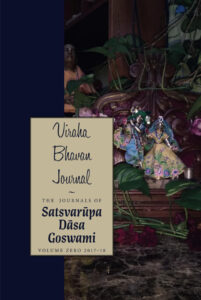
Viraha Bhavan Journal (2017–2018) was written by Satsvarūpa Mahārāja following a brief hiatus in writing activity, and was originally intended to be volume 1 in a series of published journals. However, following its completion and publication, Mahārāja again stopped writing books, subsequently focusing only on what became his current online journal, which began in August of 2018.

At first, I took it hard that I would have to live surrounded by the firemen, and without my own solitude. After all, for decades I had lived in my own house with my own books and my own friends. I was also now a crippled person who couldn’t walk, living among men who did active duties. But when Baladeva explained it to me, how it was not so bad living continually with other firemen and living in the firehouse with its limited facilities, I came to partially accept it and to accept the other men. I came to accept my new situation. I would live continually in the firehouse and mostly not go outside. I would not lead such a solitary life but associate with the other firemen.
Let me write sweet prose.
Let me write not for my own benefit
but for the pleasure of Their Lordships.
Let me please Kṛṣṇa,
that’s my only wish.
May Kṛṣṇa be pleased with me,
that’s my only hope and desire.
May Kṛṣṇa give me His blessings:
Kṛṣṇa Kṛṣṇa Kṛṣṇa Kṛṣṇa Kṛṣṇa he
Rāma Rāghava Rāma Rāghava
Rāma Rāghava rakṣa mām.
You mentioned that your pathway has become filled with stumbling blocks, but there are no stumbling blocks. I can kick out all those stumbling blocks immediately, provided you accept my guidance. With one stroke of my kick, I can kick out all stumbling blocks. —Letter by Śrīla Prabhupāda, December 9, 1972.
The Writing Sessions are my heart and soul. I’m trying my best to keep up with them. I am working with a few devotees, and they are far ahead of me. I wander in the wilderness of old age. I make my Writing Sessions as best I can. Every day I try to come up with a new subject. Today I am thinking of my parents. But I don’t think of them deeply. They are long gone from my life. Śrīla Prabhupāda wrote a poem when he was a sannyāsī, and he said now all my friends and relatives are gone. They are just a list of names now. I am like that too. I am a sannyāsī with a few friends. I love the books of Śrīla Prabhupāda. I try to keep up with them. I read as much as I can and then listen to his bhajanas.
The metaphor is song. Explain it. Yes, particulars may not seem interesting or profound to readers who want structured books.
Wait a minute. Don’t pander to readers or concepts of Art. But Kṛṣṇa conscious criteria are important and must be followed. So, if your little splayed-out life-thoughts are all Kṛṣṇa conscious, then it’s no problem.
I am near the end of my days. But I do like the company of like-minded souls, especially those who are Kṛṣṇa conscious. Yes! I am prone to Kṛṣṇa consciousness. I have been a disciple of Bhaktivedanta Swami Prabhupāda for maybe almost sixty years. Sometimes I fail him. But I always bounce back and fall at his feet. It is a terrible thing that I sometimes do not have the highest love for him. It is a terrible thing. Actually, however, I never fall away from him. He always comes and catches me and brings me back to his loving arms.

This edition of Satsvarūpa dāsa Goswami’s 1996 timed book, Upstate: Room to Write, is published as part of a legacy project to restore Satsvarūpa Mahārāja’s writings to ‘in print’ status and make them globally available for current and future readers.
A factual record of the reform and change in ISKCON guru system of mid ’80s.

Readers will find, in the Appendix of this book, scans of a cover letter written by Satsvarūpa Mahārāja to the GN Press typist at the time, along with some of the original handwritten pages of June Bug. Together, these help to illustrate the process used by Mahārāja when writing his books during this period. These were timed books, in the sense that a distinct time period was allotted for the writing, during SDG’s travels as a visiting sannyāsī
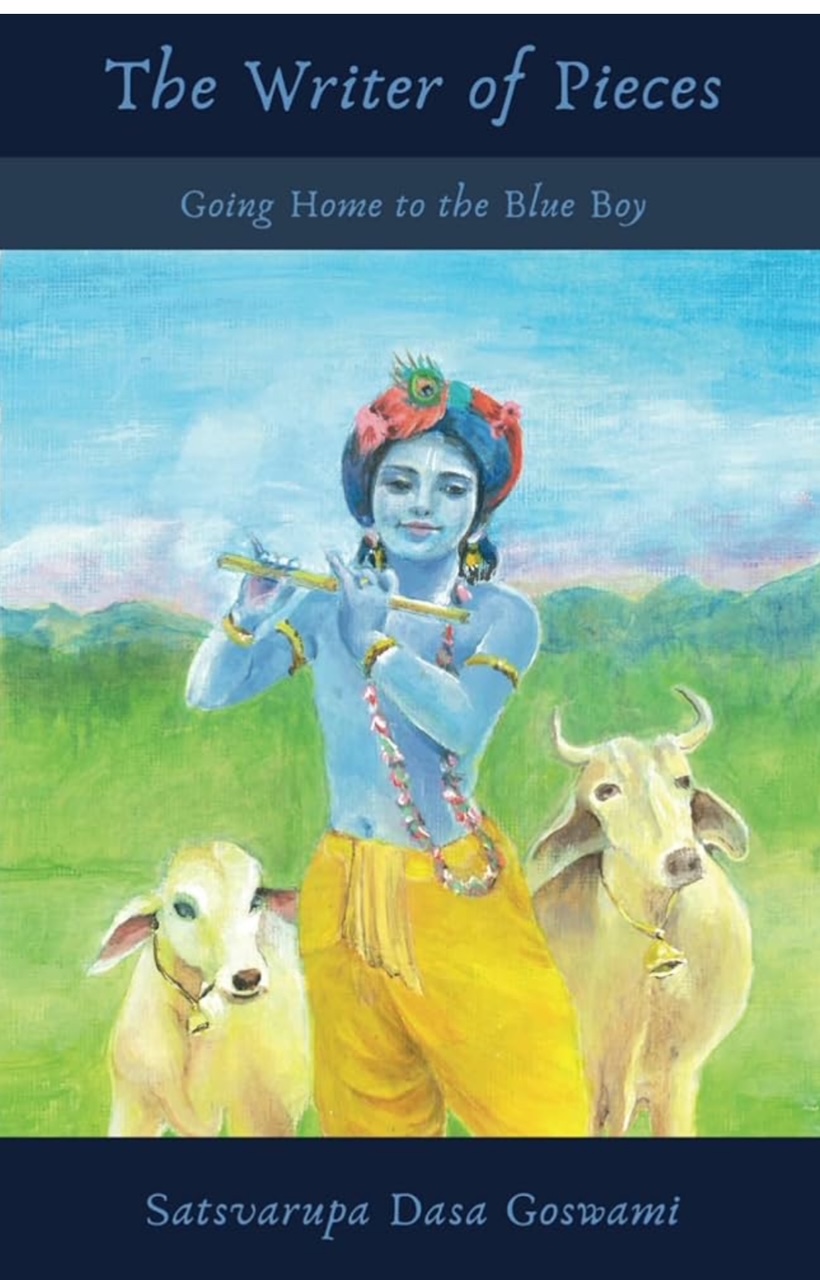
Don’t take my pieces away from me. I need them dearly. My pieces are my prayers to Kṛṣṇa. He wants me to have them, this is my way to love Him. Never take my pieces away.

Many planks and sticks, unable to stay together, are carried away by the force of a river’s waves. Similarly, although we are intimately related with friends and family members, we are unable to stay together because of our varied past deeds and the waves of time.
To Śrīla Prabhupāda, who encouraged his devotees (including me) To write articles and books about Kṛṣṇa Consciousness.
I wrote him personally and asked if it was alright for his disciples to write books, Since he, our spiritual master, was already doing that. He wrote back and said that it was certainly alright For us to produce books.
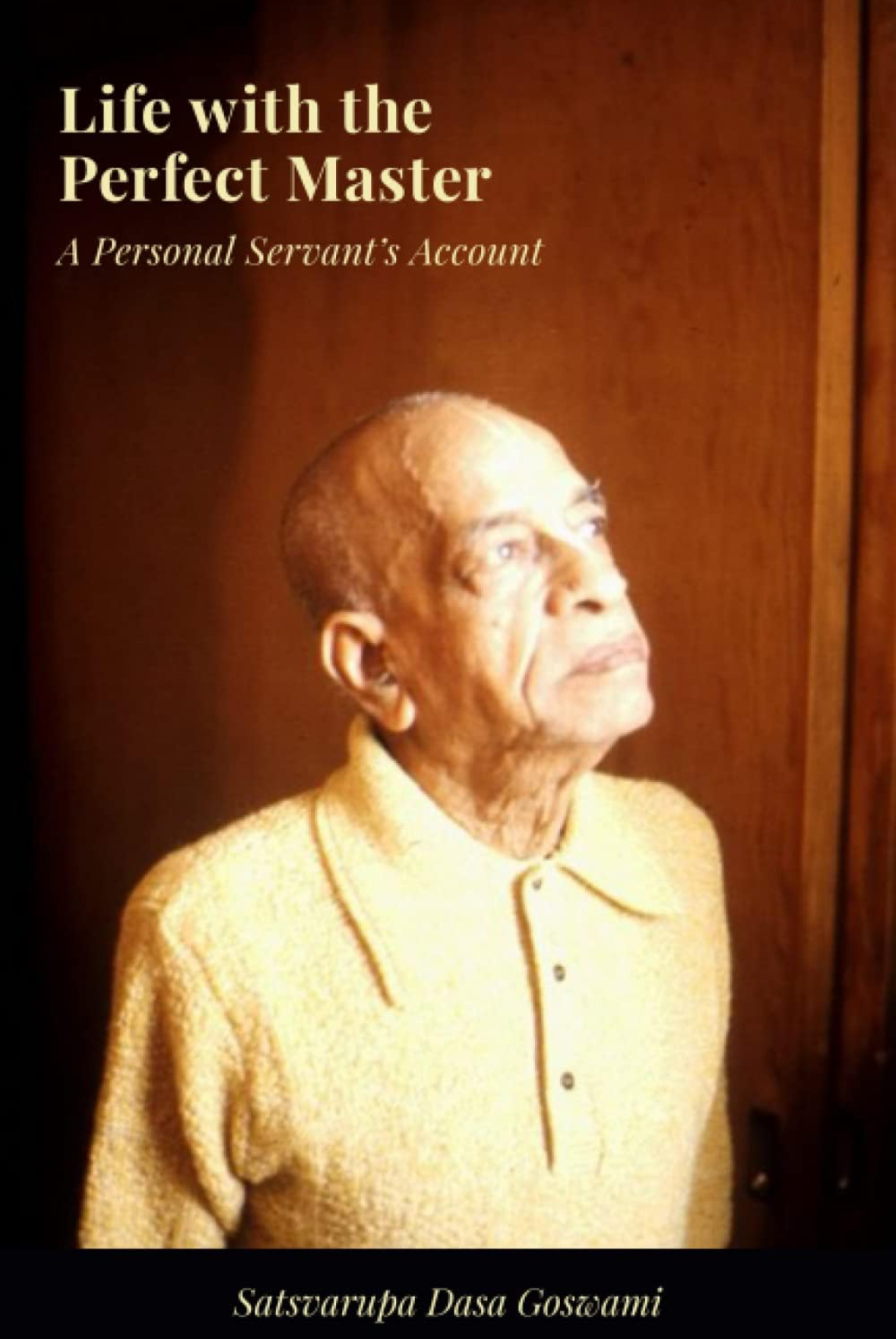
I have a personal story to tell. It is a about a time (January–July 1974) I spent as a personal servant and secretary of my spiritual master, His Divine Grace A.C. Bhaktivedanta Swami Prabhupäda, founder-äcärya of the International Society for Krishna Consciousness. Although I have written extensively about Çréla Prabhupäda, I’ve hesitated to give this account, for fear it would expose me as a poor disciple. But now I’m going ahead, confident that the truth will purify both my readers and myself.

First published by The Gītā-nāgarī Press/GN Press in serialized form in the magazine Among Friends between 1996 and 2001, Best Use of a Bad Bargain is collected here for the first time in this new edition. This volume also contains essays written by Satsvarūpa dāsa Goswami for the occasional periodical, Hope This Meets You in Good Health, between 1994 and 2002, published by the ISKCON Health and Welfare Ministry.

This book has two purposes: to arouse our transcendental feelings of separation from a great personality, Śrīla Prabhupāda, and to encourage all sincere seekers of the Absolute Truth to go forward like an army under the banner of His Divine Grace A.C. Bhaktivedanta Swami Prabhupāda and the Kṛṣṇa consciousness movement.
A single volume collection of the Nimai novels.
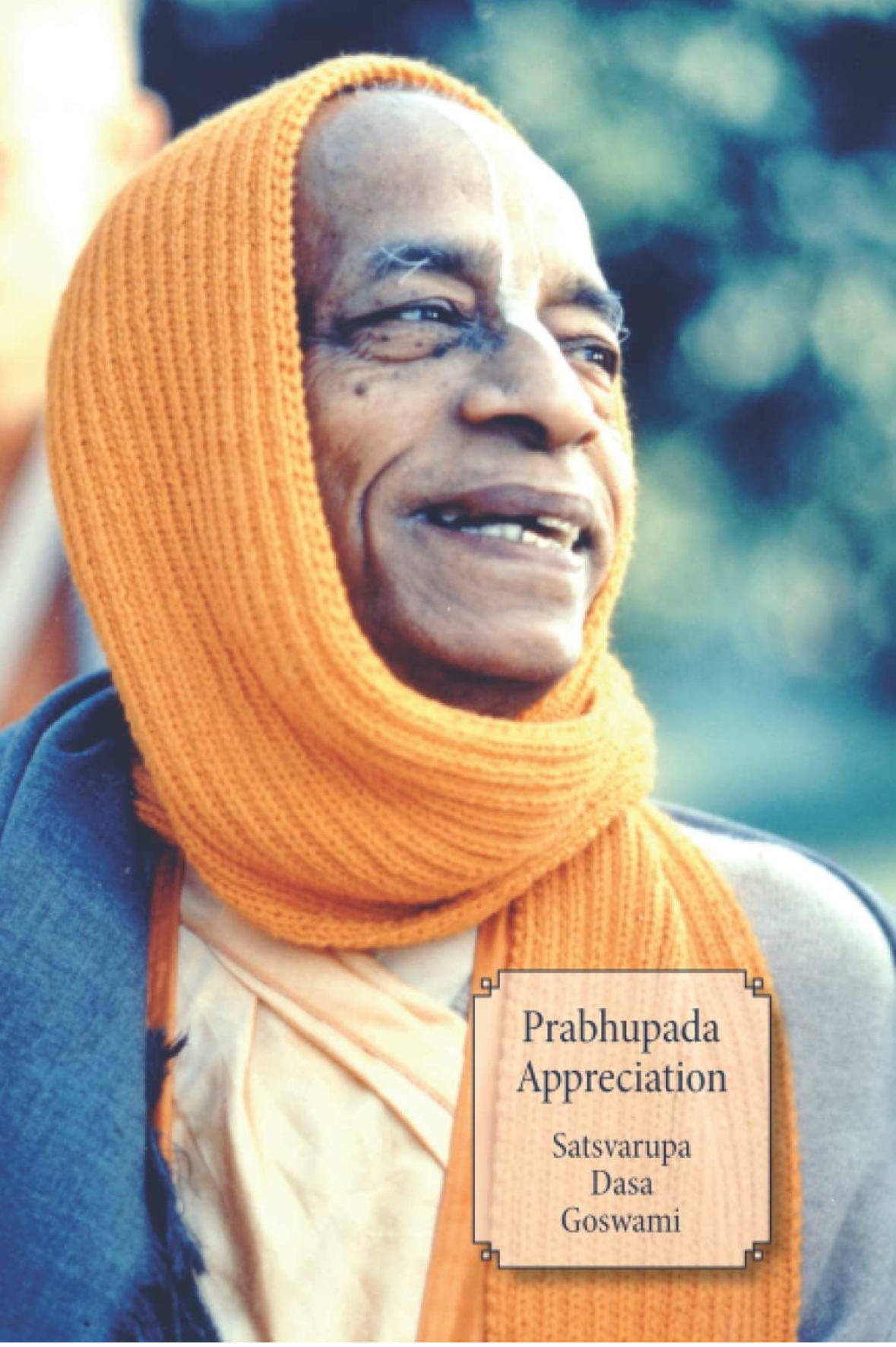
Śrīla Prabhupāda was in the disciplic succession from the Brahmā-Mādhva-Gauḍīya sampradāya, the Vaiṣṇavas who advocate pure devotion to God and who understand Kṛṣṇa as the Supreme Personality of Godhead. He always described himself as simply a messenger who carried the paramparā teachings of his spiritual master and Lord Kṛṣṇa.
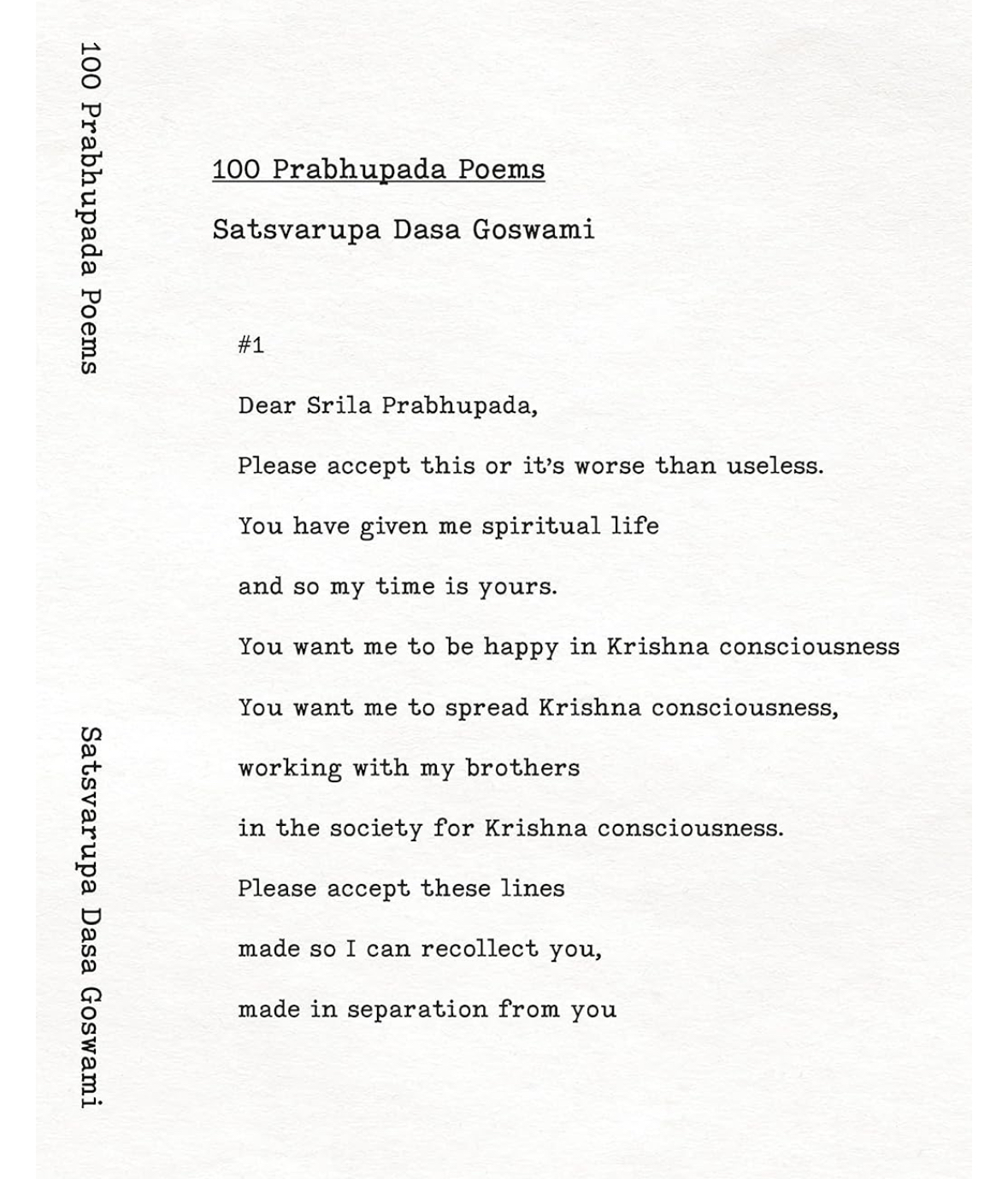
Dear Srila Prabhupada,
Please accept this or it’s worse than useless.
You have given me spiritual life
and so my time is yours.
You want me to be happy in Krishna consciousness
You want me to spread Krishna consciousness,
This collection of Satsvarūpa dāsa Goswami’s writings is comprised of essays that were originally published in Back to Godhead magazine between 1966 and 1978, and compiled in 1979 by Gita Nagari Press as the volume A Handbook for Kṛṣṇa Consciousness.
This second volume of Satsvarūpa dāsa Goswami’s Back to Godhead essays encompasses the last 11 years of his 20-year tenure as Editor-in-Chief of Back to Godhead magazine. The essays in this book consist mostly of SDG’s ‘Notes from the Editor’ column, which was typically featured towards the end of each issue starting in 1978 and running until Mahārāja retired from his duties as editor in 1989.
This collection of Satsvarupa dasa Goswami’s writings is comprised of essays that were originally published in Back to Godhead magazine between 1991 and 2002, picking up where Volume 2 leaves off. The volume is supplemented by essays about devotional service from issues of Satsvarupa dasa Goswami’s magazine, Among Friends, published in the 1990s.

“This is a different kind of book, written in my old age, observing Kṛṣṇa consciousness and assessing myself. I believe it fits under the category of ‘Literature in pursuance of the Vedic version.’ It is autobiography, from a Western-raised man, who has been transformed into a devotee of Kṛṣṇa by Śrīla Prabhupāda.”
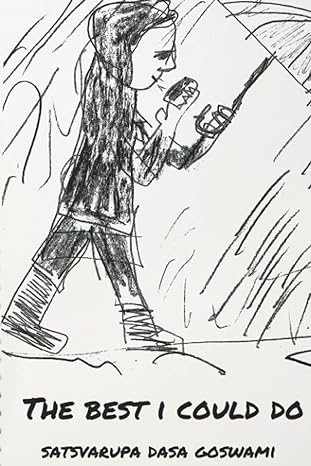 The Best I Could Do
I want to study this evolution of my art, my writing. I want to see what changed from the book In Search of the Grand Metaphor to the next book, The Last Days of the Year.
 a Hare Krishna Man
It’s world enlightenment day
And devotees are giving out books
By milk of kindness, read one page
And your life can become perfect.
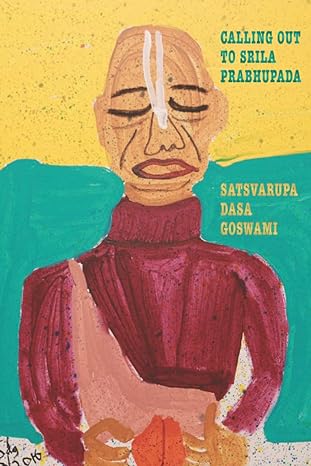 Calling Out to Srila Prabhupada: Poems and Prayers
O Prabhupāda, whose purports are wonderfully clear, having been gathered from what was taught by the previous ācāryas and made all new; O Prabhupāda, who is always sober to expose the material illusion and blissful in knowledge of Kṛṣṇa, may we carefully read your Bhaktivedanta purports.
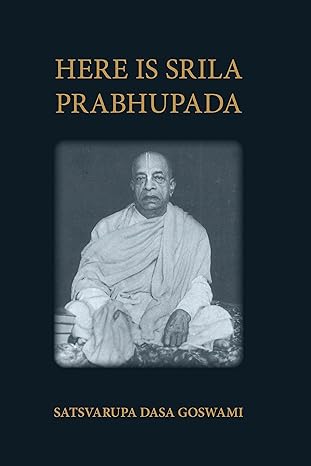
I use free-writing in my devotional service as part of my sādhana. It is a way for me to enter those realms of myself where only honesty matters; free-writing enables me to reach deeper levels of realization by my repeated attempt to “tell the truth quickly.” Free-writing takes me past polished prose. It takes me past literary effect. It takes me past the need to present something and allows me to just get down and say it. From the viewpoint of a writer, this dropping of all pretense is desirable.
 Geaglum Free Write
This edition of Satsvarūpa dāsa Goswami’s 1996 timed book, Geaglum Free Write Diary, is published as part of a legacy project to restore Satsvarūpa Mahārāja’s writings to ‘in print’ status and make them globally available for current and future readers.